
Render by Negativ
Okinawa, Japan
2025 - TBC
NOT A HOTEL Co., Ltd.
'vertex' hotel
Render by Negativ
Render by Negativ
Render by Negativ
Render by Negativ
01
02
03
04
Preserving the island’s unique coastal and marine ecosystems
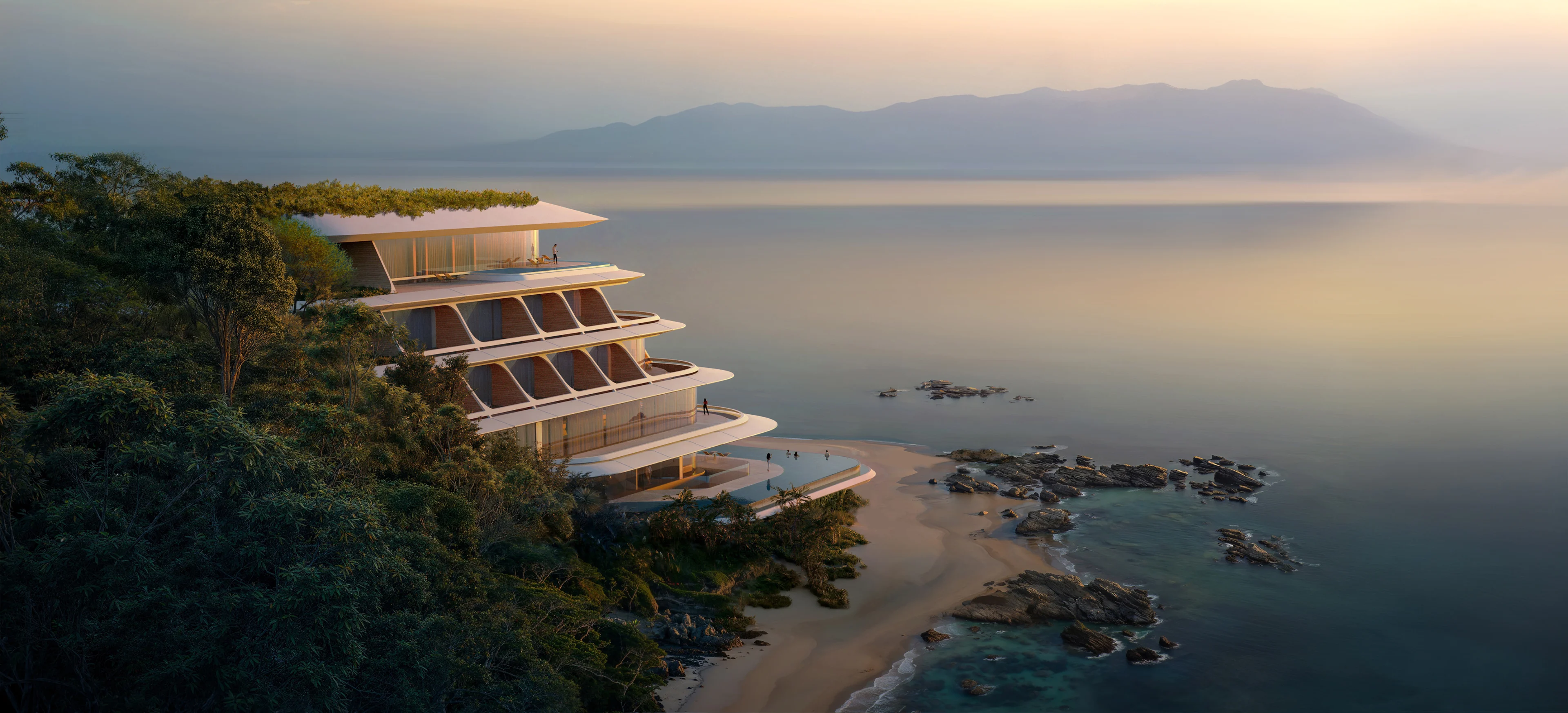
The inaugural vertex hotel will be on the island of Okinawa. ZHA's design continues the firm’s relationship with Japan that began four decades earlier with internationally acclaimed designs for intricate pavilions, buildings and interiors informed by the country’s landscapes and urbanism, creative tradition and immaculate craftsmanship.
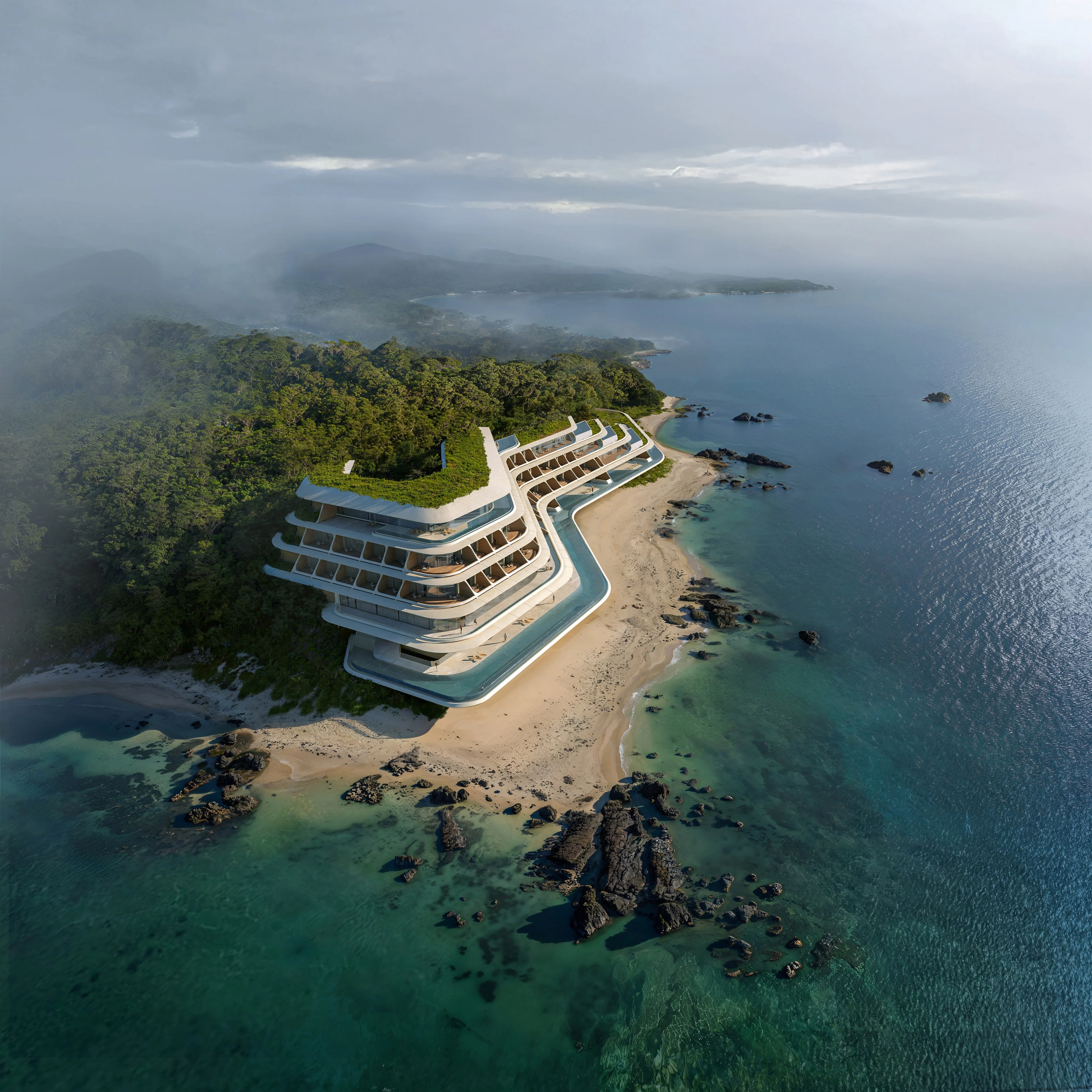
Nestled between the turquoise waters with white sand beaches of Okinawa’s Bay and the steep terrain of the surrounding forest, the design has been carefully integrated within its 25,322m² site to mitigate environmental disturbance. Offering uninterrupted ocean views and privacy for each villa, the hotel includes facilities and amenities of the highest standards for guests and residents.
Conceived to preserve the island’s unique coastal and marine ecosystems, environmental considerations have been a guiding principle shaping the hotel’s architectural design and engineering, site strategy, material selection and procurement, as well as the development of specialist construction processes to minimise environmental impact.
ZHA’s design ‘floats’ above the landscape
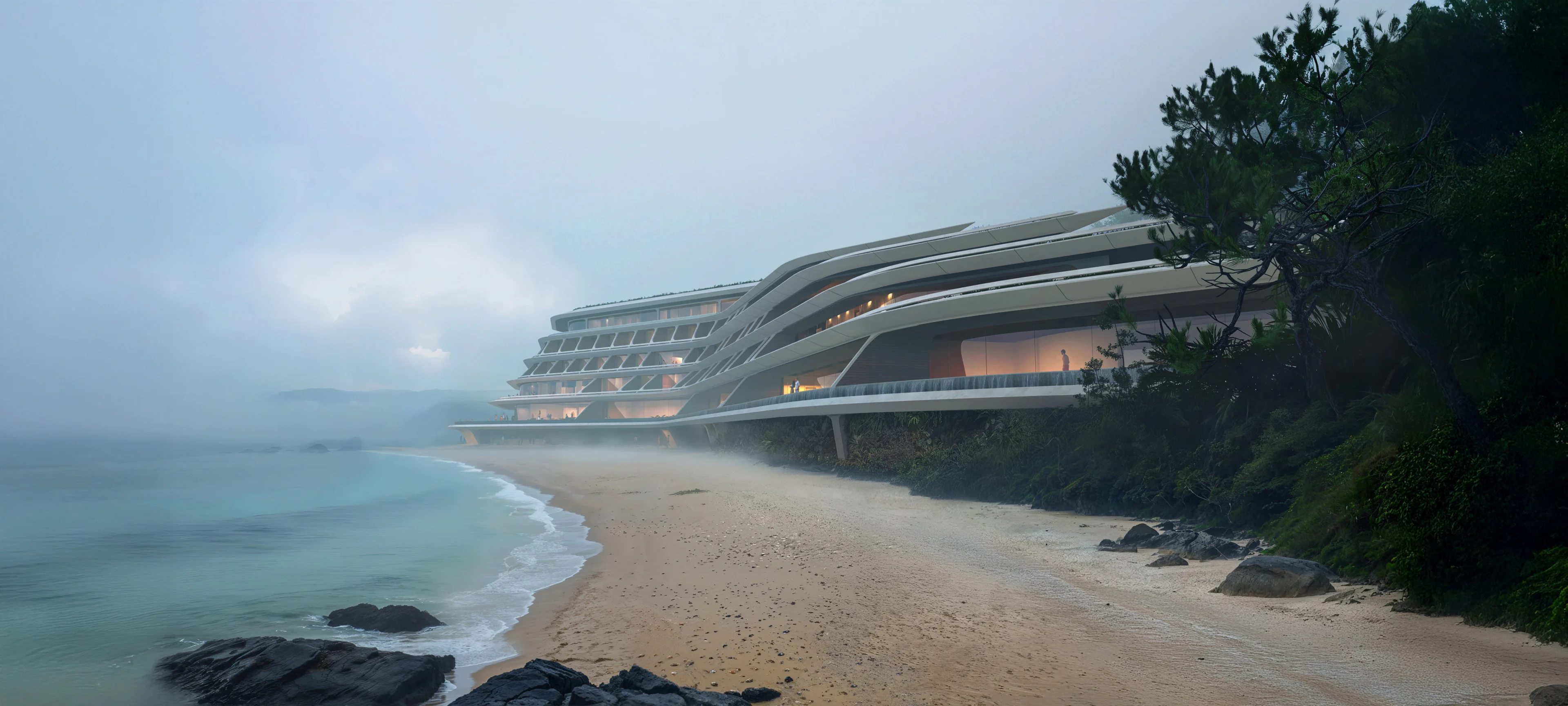
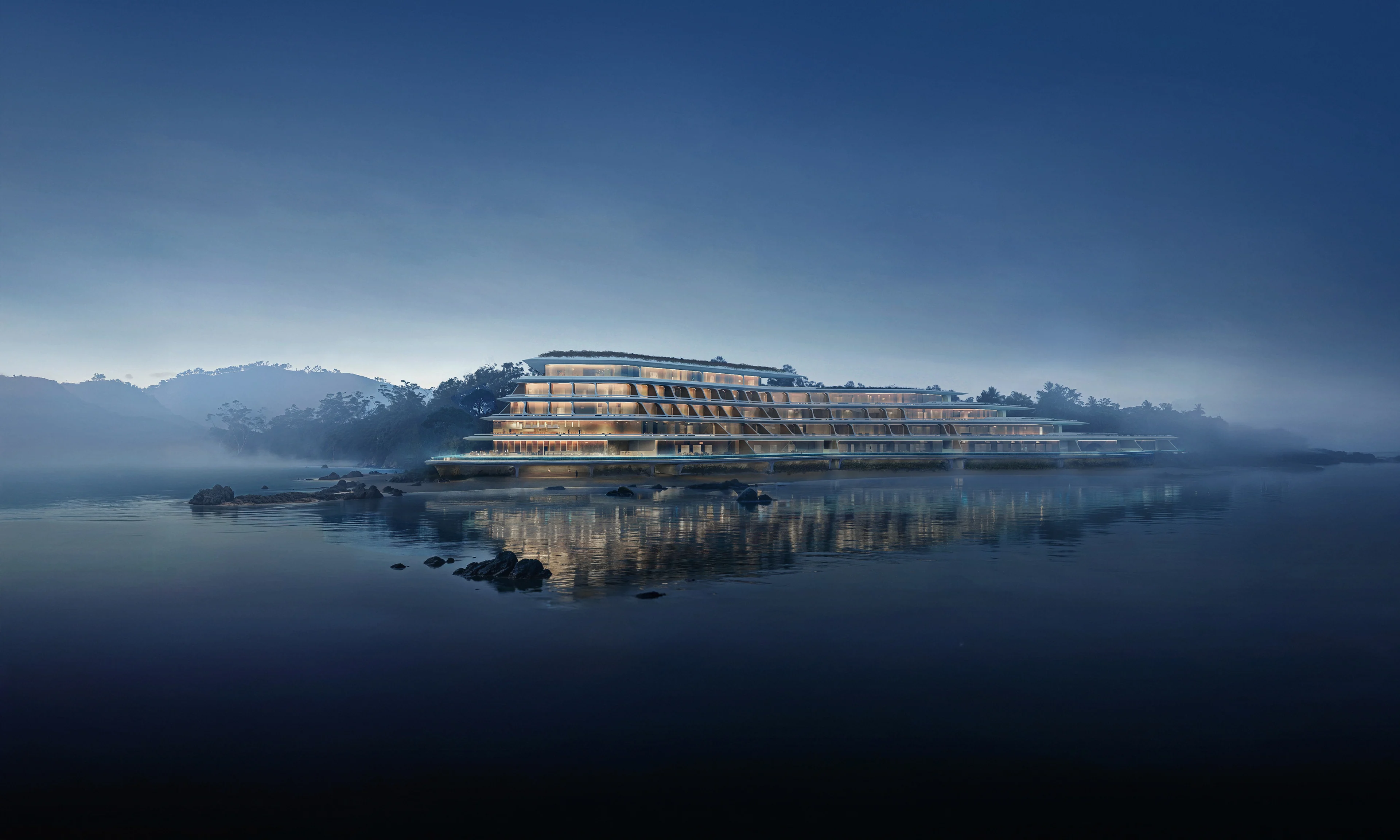
The hotel’s architecture is defined by the contours of the site’s Ryukyu Limestone formations and the surrounding forest. Composed of Pleistocene coral reef sedimentary layers initially deposited 400,000 years ago, this unique geology and its humid microclimate cultivate a dense subtropical rainforest along the coast. Led by stringent requirements and guidelines established by the island’s forestry commission and marine conservationists in addition to the local environmental authorities, ZHA’s design ‘floats’ above the landscape at the narrow boundary between the forest and beach to significantly reduce its footprint within these two natural ecosystems and maintain the site’s biodiversity.
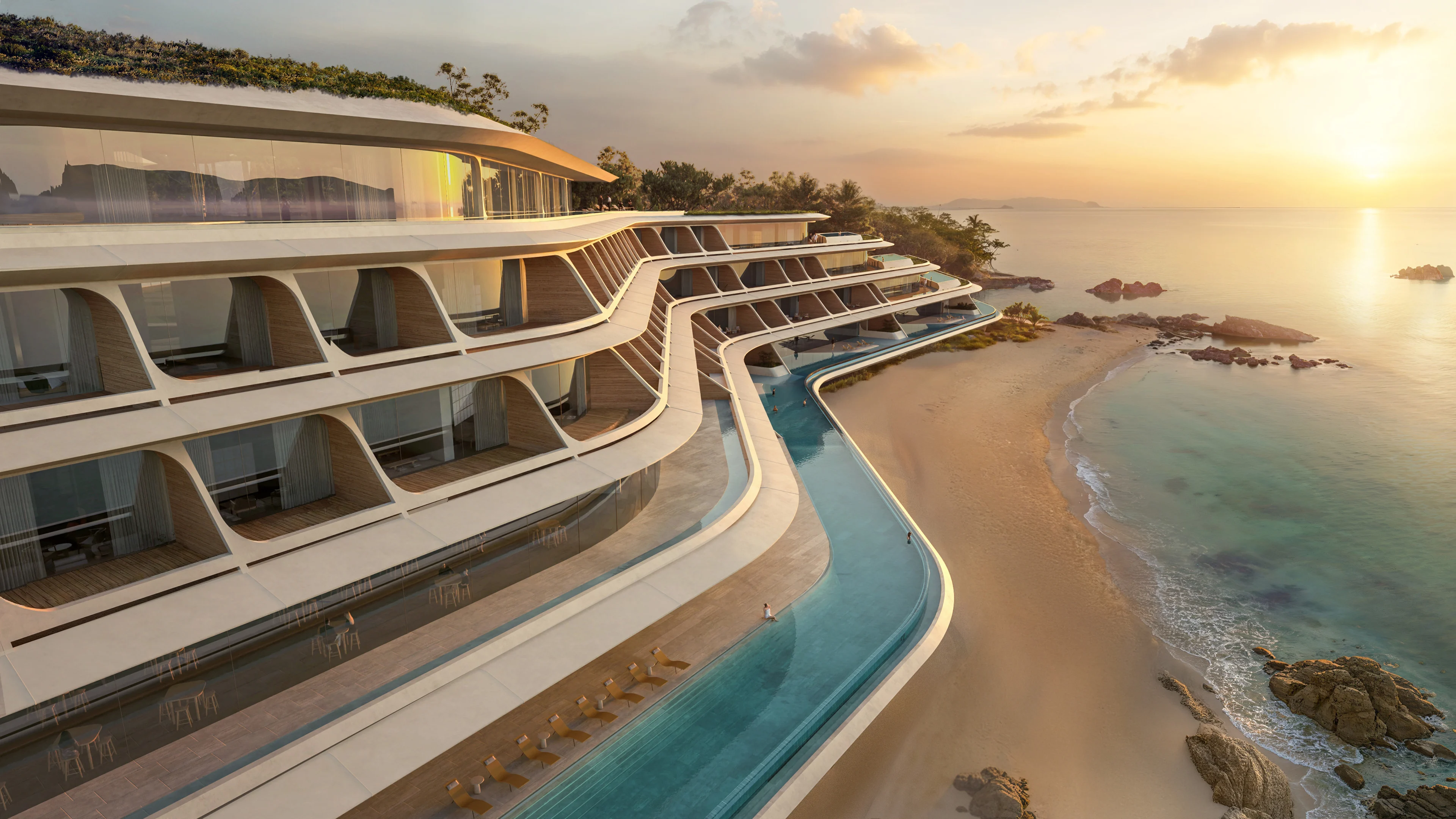
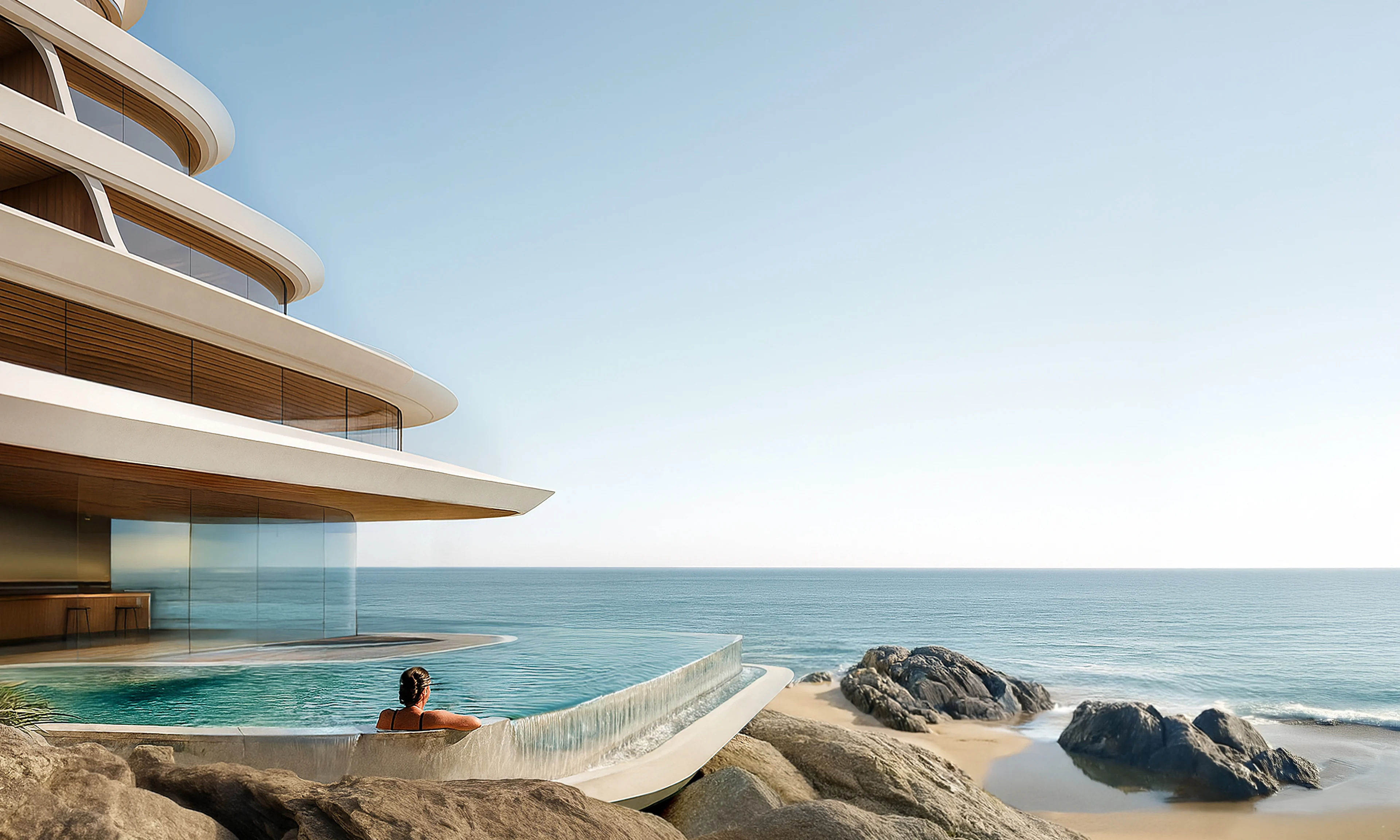
A continuation of the existing rock formations within the site, the design follows the contours of the shoreline, articulated as a series of stepped horizontal terraces, courtyards and gardens that echo the site’s varied topography. The composition, orientation and materiality of the hotel have been informed by detailed investigations of its oceanfront site. Variations in temperature, humidity, rainfall, prevailing winds, solar irradiation and air quality, as well as fluctuations in daily ground and sea conditions, have been mapped throughout the year to build comprehensive digital models. These models have informed the design’s development and refinement to enhance the comfort of residents and guests, prioritise ocean views, in addition to optimise the hotel’s environmental performance within Okinawa’s humid subtropical climate.
Showcasing craftsmanship of master builders and artisans
A twelve-month analysis of the site’s daily solar irradiation determined the design of the hotel’s distinctive canopies which extend from the structure to describe a series of sheltered terraces that mirror the topography of the site and cascade towards the shoreline. A contemporary interpretation of the pronounced overhangs and deep eaves evident within the island’s traditional vernacular architecture, these bespoke canopies create a variety of shaded outdoor living spaces and walkways for residents and guests.
The hotel extends the rich tradition within Okinawa’s historical architecture of showcasing the exacting craftsmanship of master builders and artisans working with the region’s finest materials. Intricately carved Okinawa pine and limestone from local quarries, as well as ceramics produced in nearby workshops, embed the hotel within its surrounding landscape and continue the island’s unique cultural heritage.
Render by Negativ
Incorporates advanced engineering measures
Designed to optimise the prevailing Kāchibē winds that blow inland from the ocean during the island’s humid summer months, the architecture promotes natural ventilation in all communal areas, guest rooms, suites and villas. Located within the Pacific Ocean’s East Monsoon weather system, the hotel’s structure elevates all facilities at least 6.5 metres above the high-water line and has been designed to weather the intense wind forces, precipitation and storm surges of the region’s summer typhoons. This structure also incorporates advanced engineering measures to withstand impacts of seismic events on the island’s coastline.
Mitigating impact to local ecosystems during construction and operations, the modular structure and facade systems are comprised of meticulously crafted prefabricated components finished with a unique tone and texture to echo the fine white sands of the region’s coral beaches. Embodying a circular approach to construction, these precision engineered concrete elements will incorporate recycled aggregates sourced from the islands’ redundant structures that have reached the end of their operational lifecycle.
Ludovico Lombardi, ZHA Project Director, explains: “Informed by the site’s remarkable topography, the design is a continuation of ZHA’s ongoing research of composition and materiality that is driven by explorations of landscape formations evident in nature. The stepped canopies of the hotel gently transition from the unique geology of the shoreline to the dense vegetation of the rain forest—giving uninterrupted views of the ocean and a deep connection to the surrounding environment, while providing a sense of privacy that enriches user experience and charts a journey through the varied natural ecosystems of the region.”
Hospitality
Explore more of our hospitality projects
From a resort in Macau inspired by Old Hollywood glamour to the dramatic public space of a Dubai hotel, see our latest hospitality projects.
The Cascades
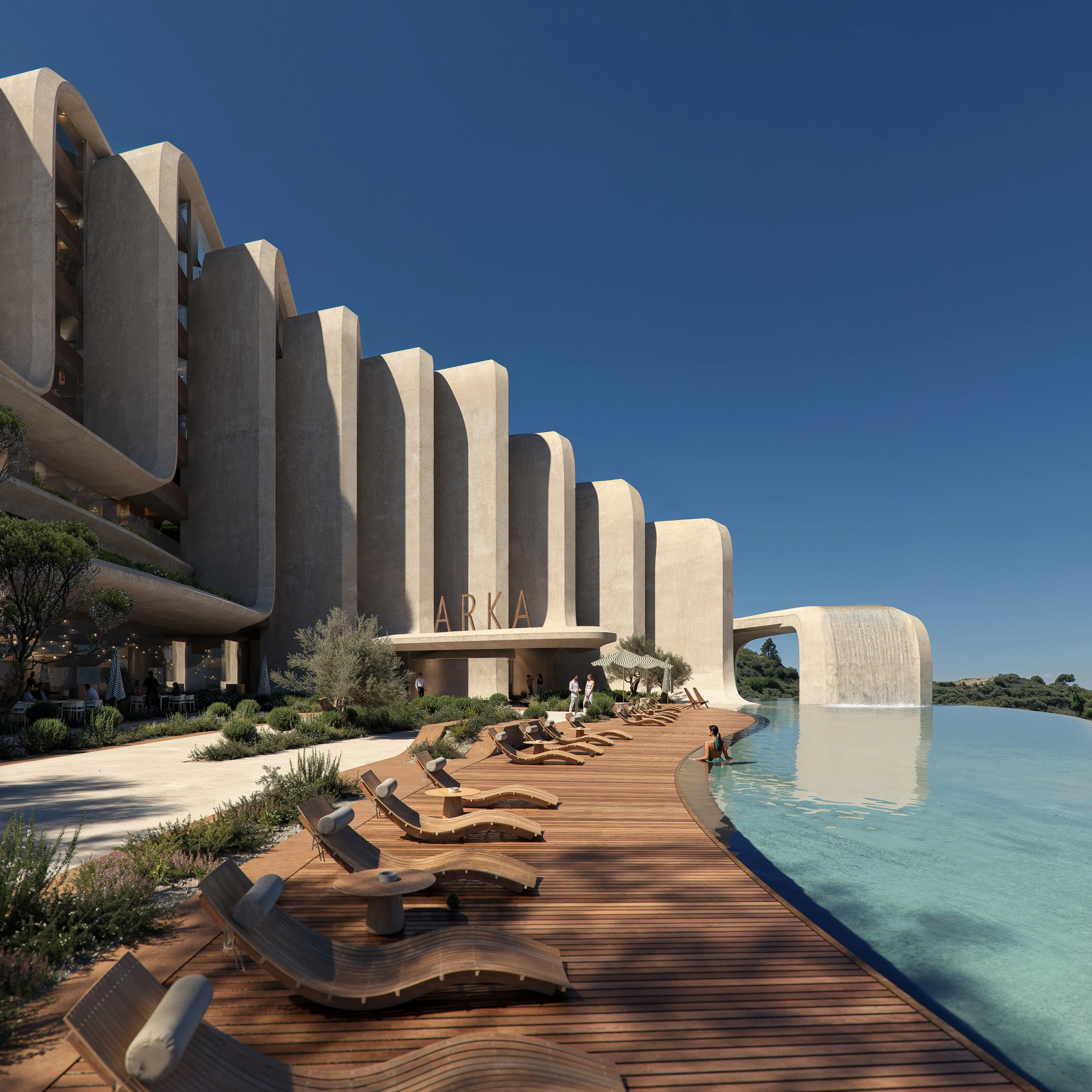
Located in Kodra e Diellit, the fastest-growing district of Tirana, the Nest and Cascades are new additions to the community. Renowned for its colourful post-communist architecture and vibrant café culture, Tirana is the capital of Albania with almost one million residents living within its greater metropolitan region. Progressing rapidly towards European Union membership, the Albanian economy is predicted to grow significantly in the coming years—with Tirana as the centre of its growth.
The Magazine Restaurant
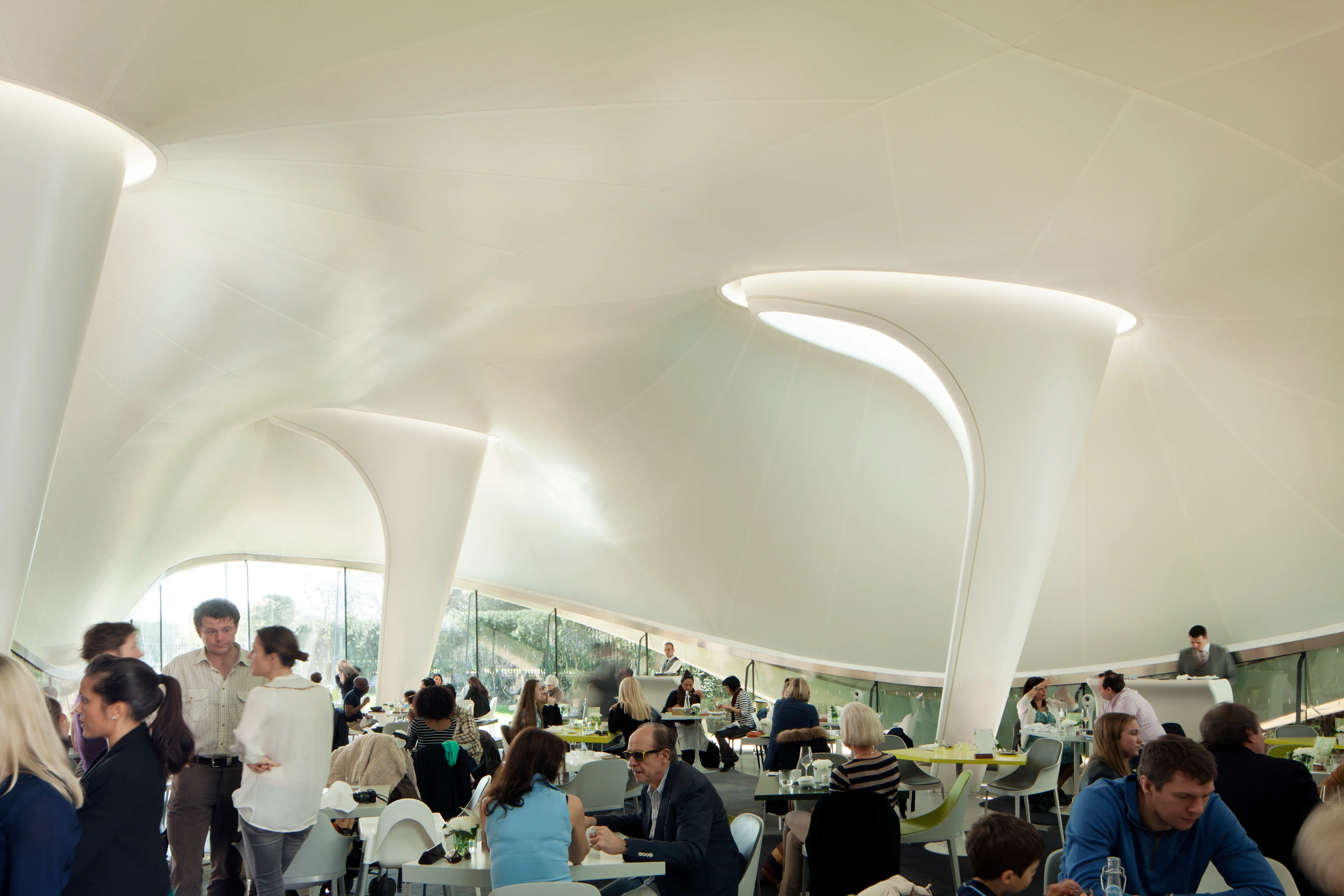
The Serpentine North Gallery consists of two distinct parts, namely the conversion of a classical 19th century brick structure – The Magazine – and a 21st century tensile structure. The Serpentine North Gallery is thus – after MAXXI in Rome – the second art space where ZHA have created a synthesis of old and new.
Photograph by Laurian Ghinitoiu
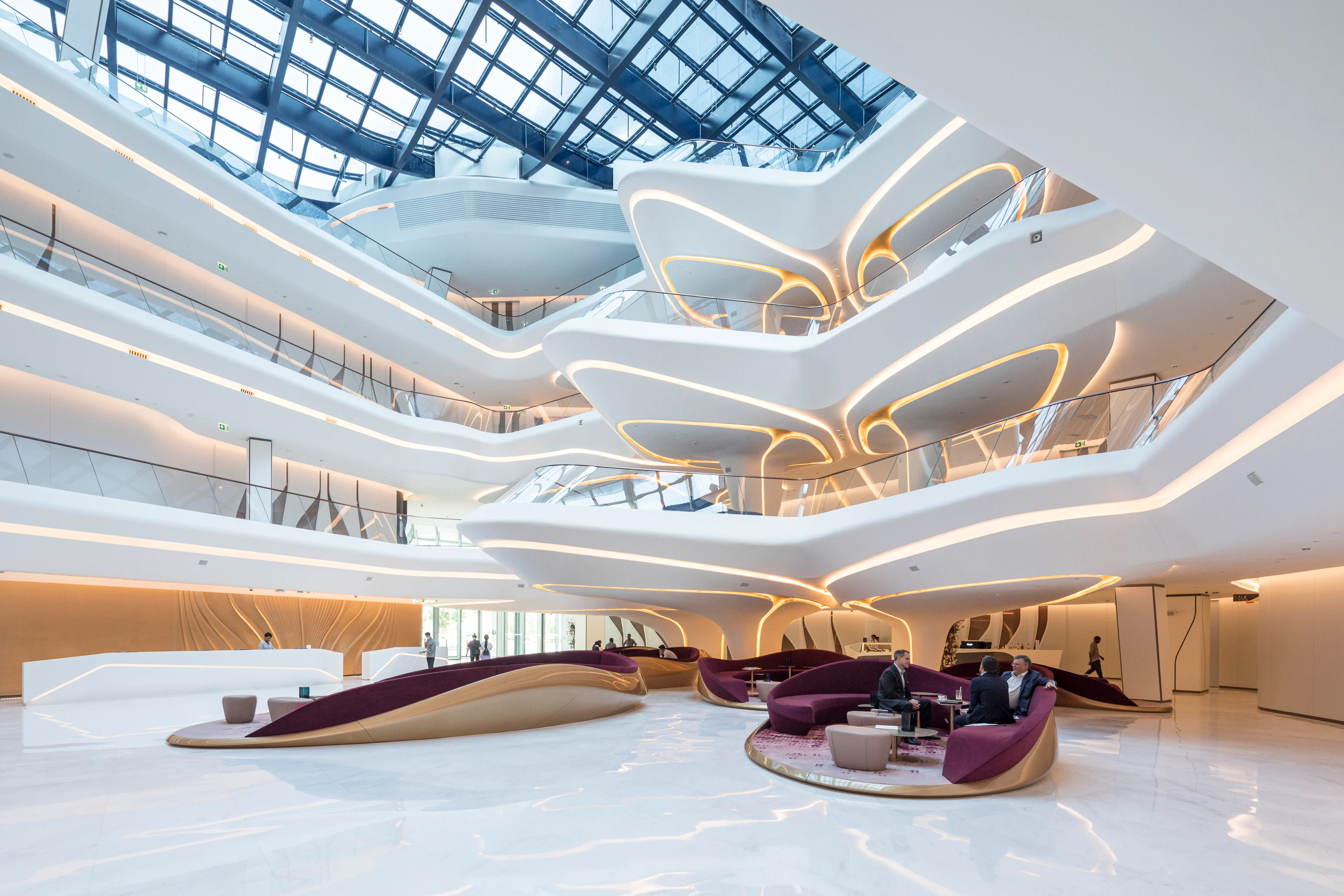
Atrium
ME Dubai Hotel
Home to the new ME Dubai hotel, the Opus is located in the Burj Khalifa district adjacent to Downtown Dubai and Business Bay on the Dubai Water Canal. Exploring the balance between solid and void, opaque and transparent, interior and exterior, the design was presented by ZHA in 2007. It is the only hotel in which the firm designed both the architecture and the interiors to such an intricate degree, including bathrooms and furniture within the scope.
Photograph by Chris Dalton, Courtesy of Romeo Collection
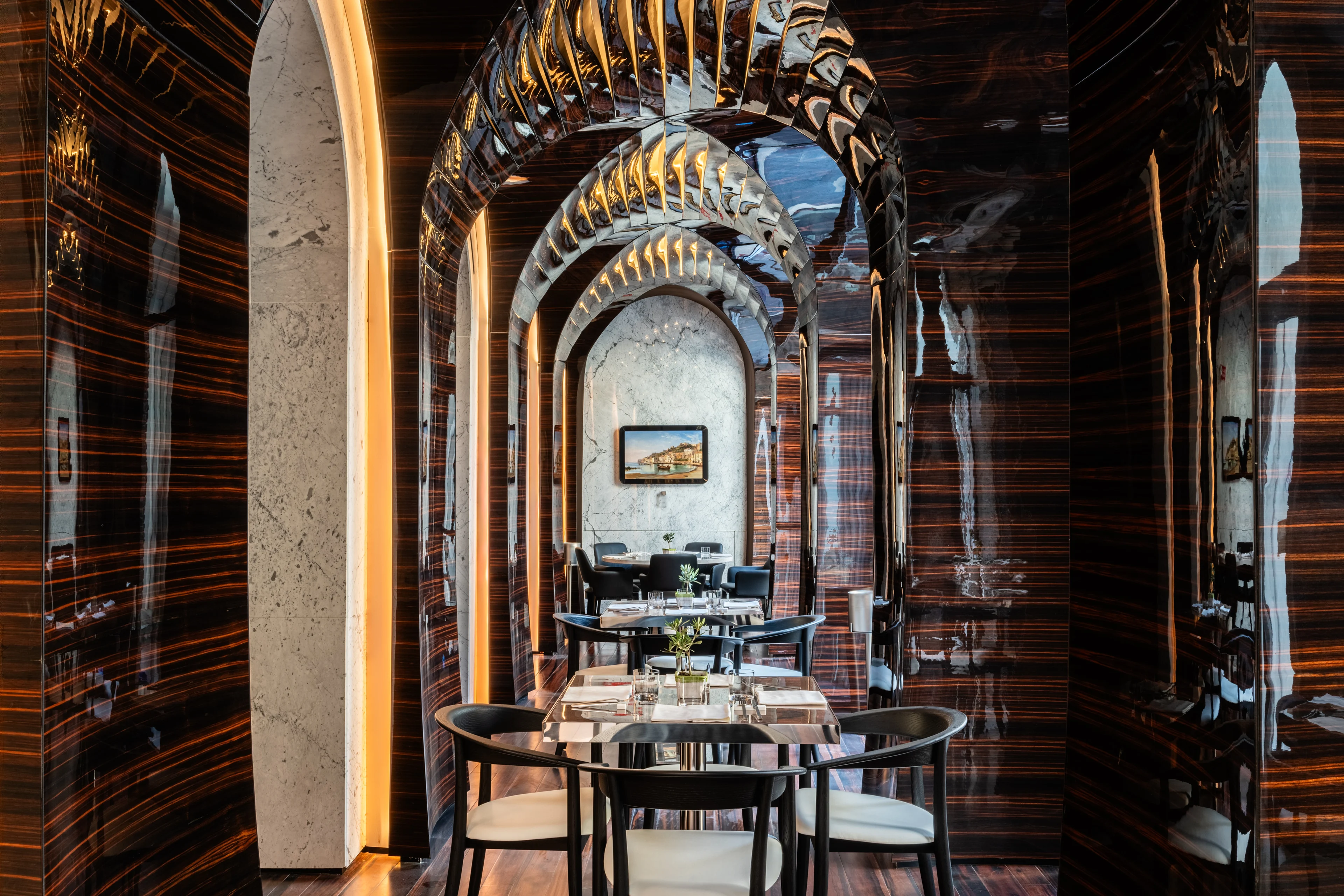
Bistro
Romeo Roma Hotel
From the beginning of her career, architect Zaha Hadid sited her buildings in the air, floating buildings on shadow, light, and seams of space that lifted volumes above the ground, relating her work to another tradition—Rome’s. In designing the hotel conversion of the Palazzo Capponi, Hadid and her team at ZHA started where Baroque architects ended their palimpsest - at the vaulted ceilings.
Render by XUniverse
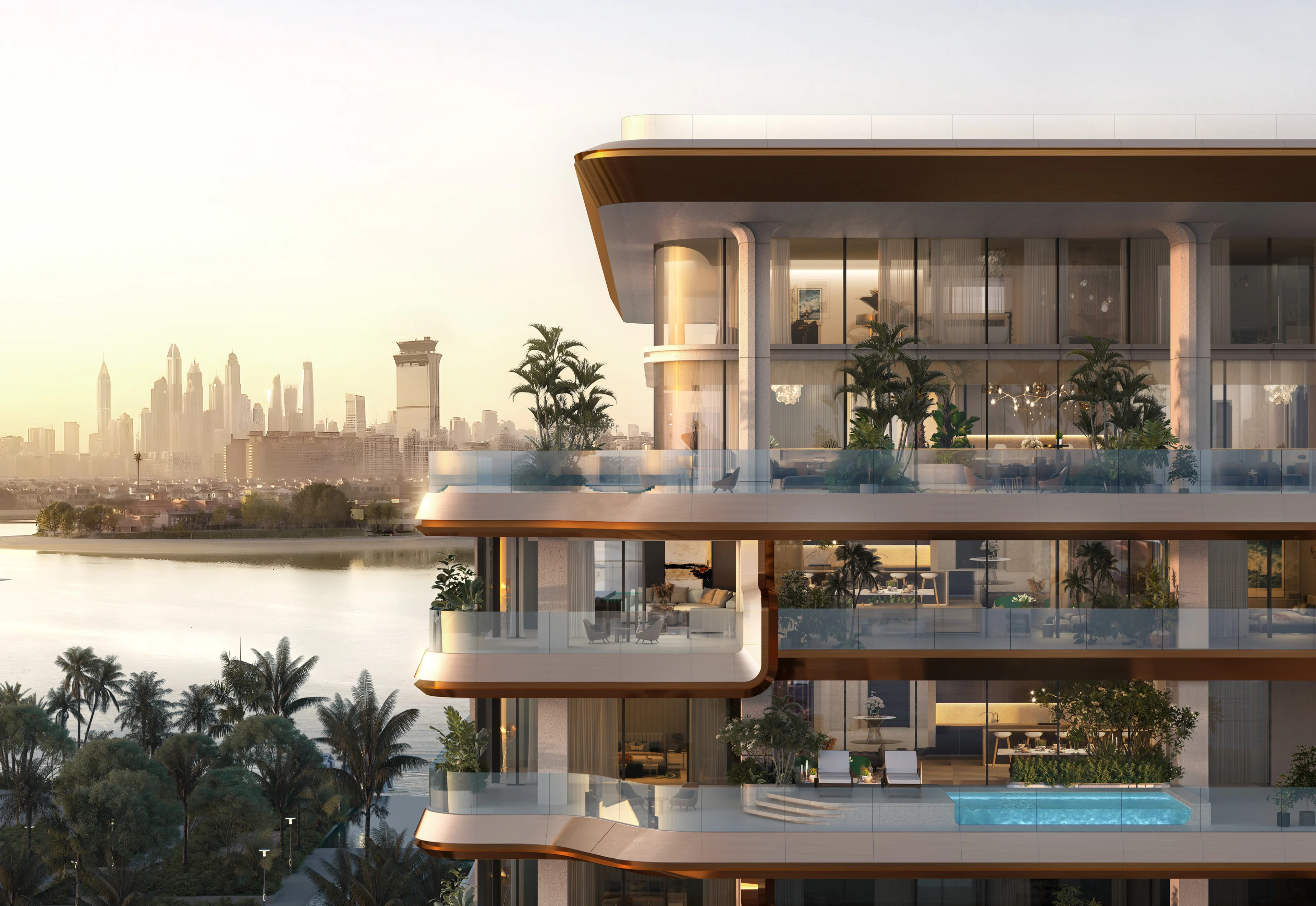
The Alba Residences & Hotel
The Alba is a new US$1.9 billion mixed-use beachfront development designed by ZHA for Omniyat on the Eastern Crescent of Palm Jumeirah with panoramic views of Dubai’s coast and skyline.
Render by Flyingarchitecture
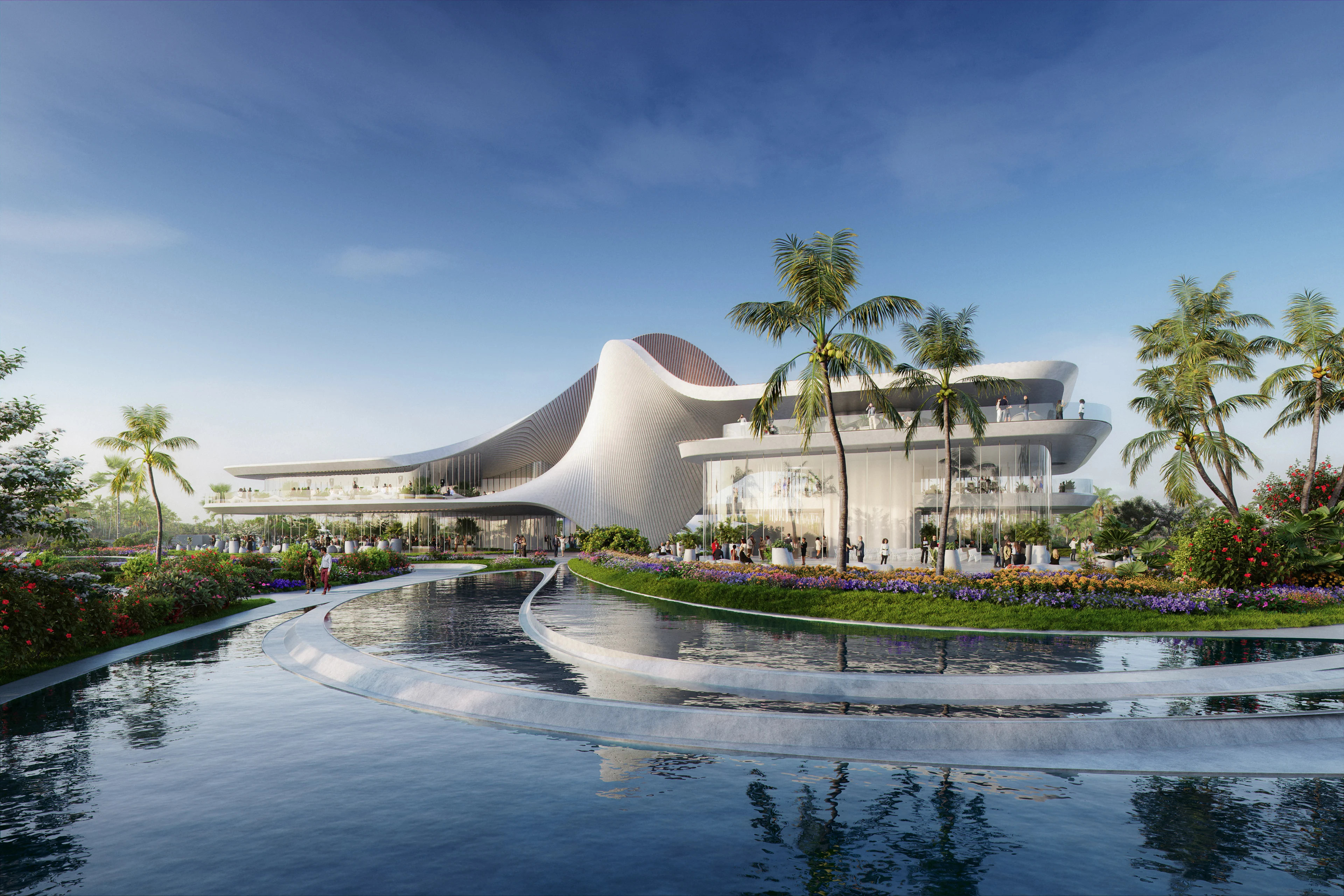
Habacoa Yacht Club
Habacoa Yacht Club
Located on South Abaco in The Bahamas, Habacoa is set to become North America’s most comprehensive marina accommodating the largest yachts on the seas, together with bespoke residences for the world’s yachting community. Projected to open in 2027, Habacoa’s developers have selected ZHA to design both the Yacht Club and Nightclub & Casino.
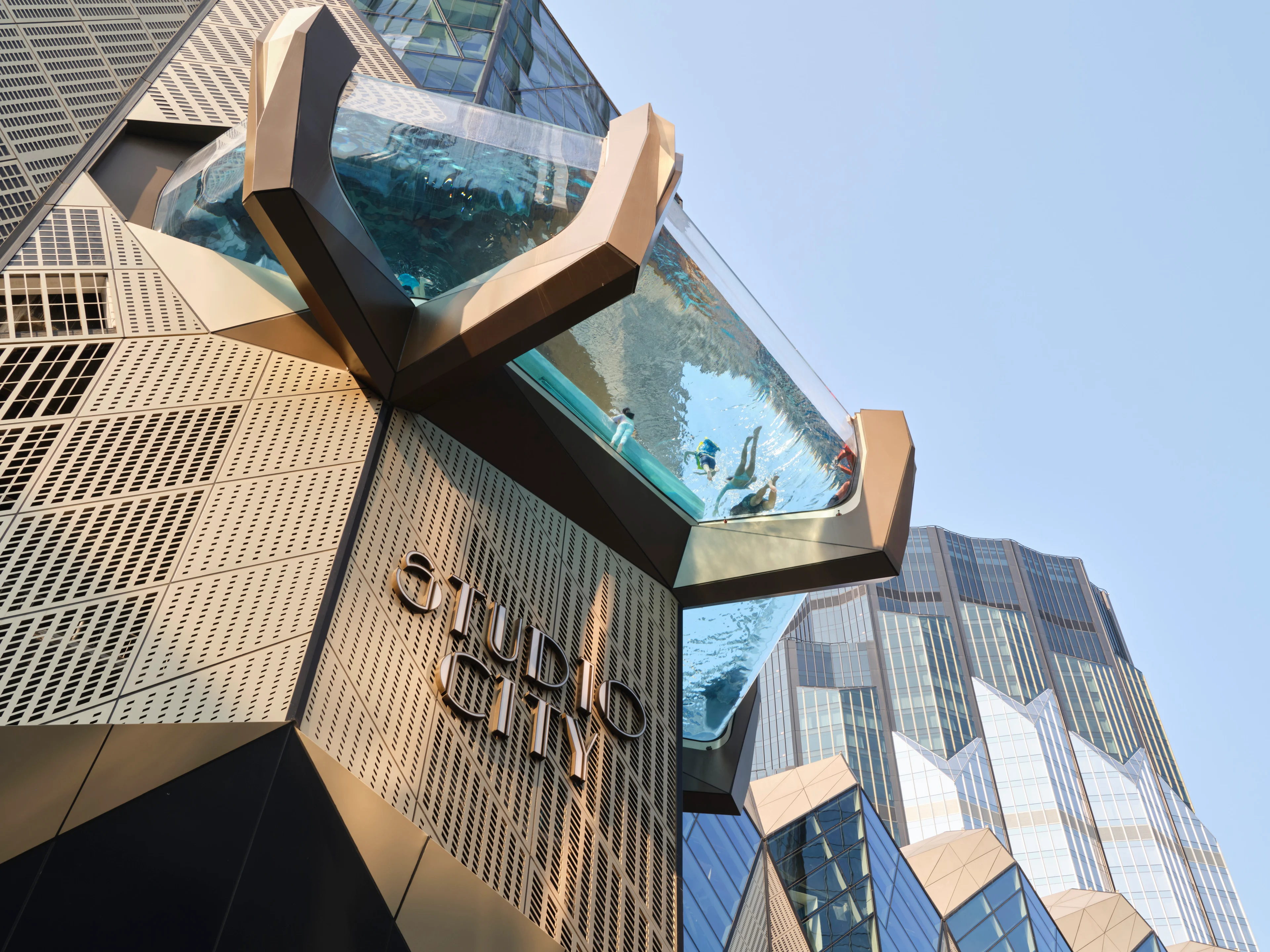
Photograph by Xue Liang 薛亮
Studio City Phase 2
Located in the Cotai district of Macau adjacent to the Lotus Bridge crossing with mainland China, the Hollywood-inspired Studio City resort has welcomed guests and visitors to the city since 2015.
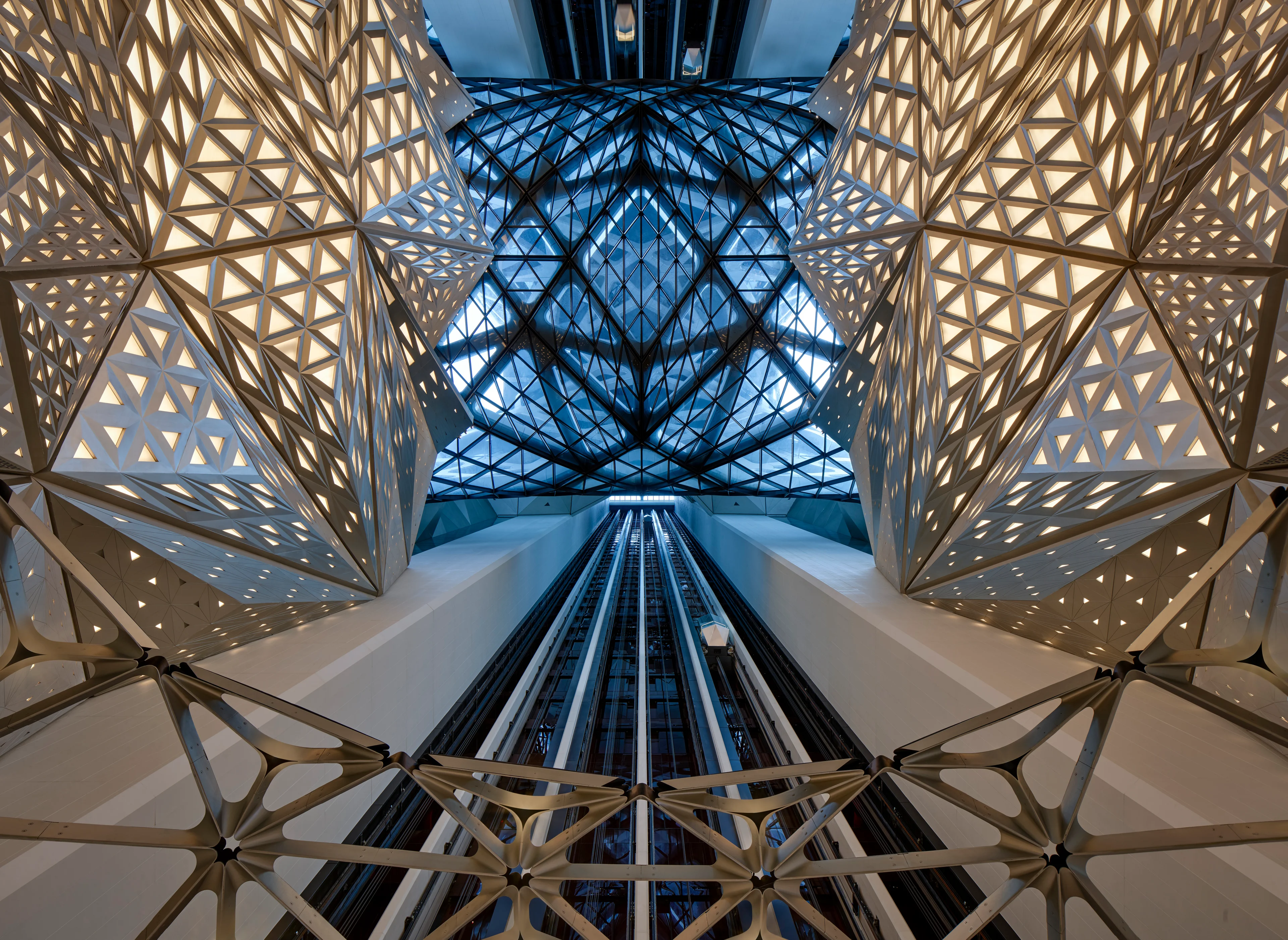
Photograph by Virgile Simon Bertrand
Morpheus Hotel & Resort at City of Dreams Macao
The world’s first free-form high-rise exoskeleton optimises the interiors by creating spaces that are uninterrupted by supporting walls or columns. Three horizontal vortices generate the voids through the building and define the hotel’s dramatic internal public spaces.
01
02
03
04
05
06
07
08