
London, United Kingdom
2009 - 2013
The Serpentine Trust
The Magazine Restaurant
Photograph by Luke Hayes
POSTCARD IMAGE
Photograph by Ed Reeve
Photograph by Ed Reeve
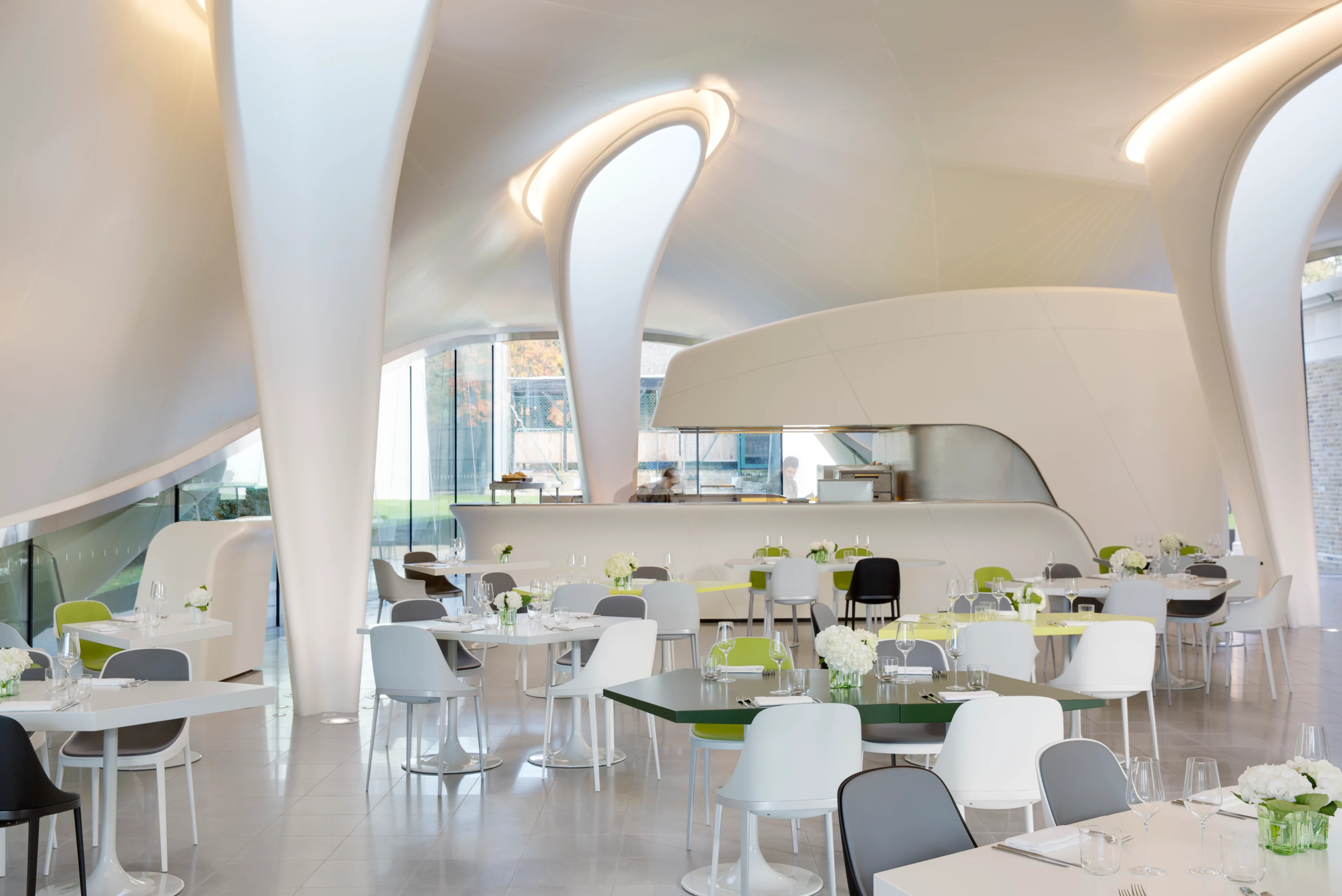
Photograph by Ed Reeve
01
02
03
04
A synthesis of old and new
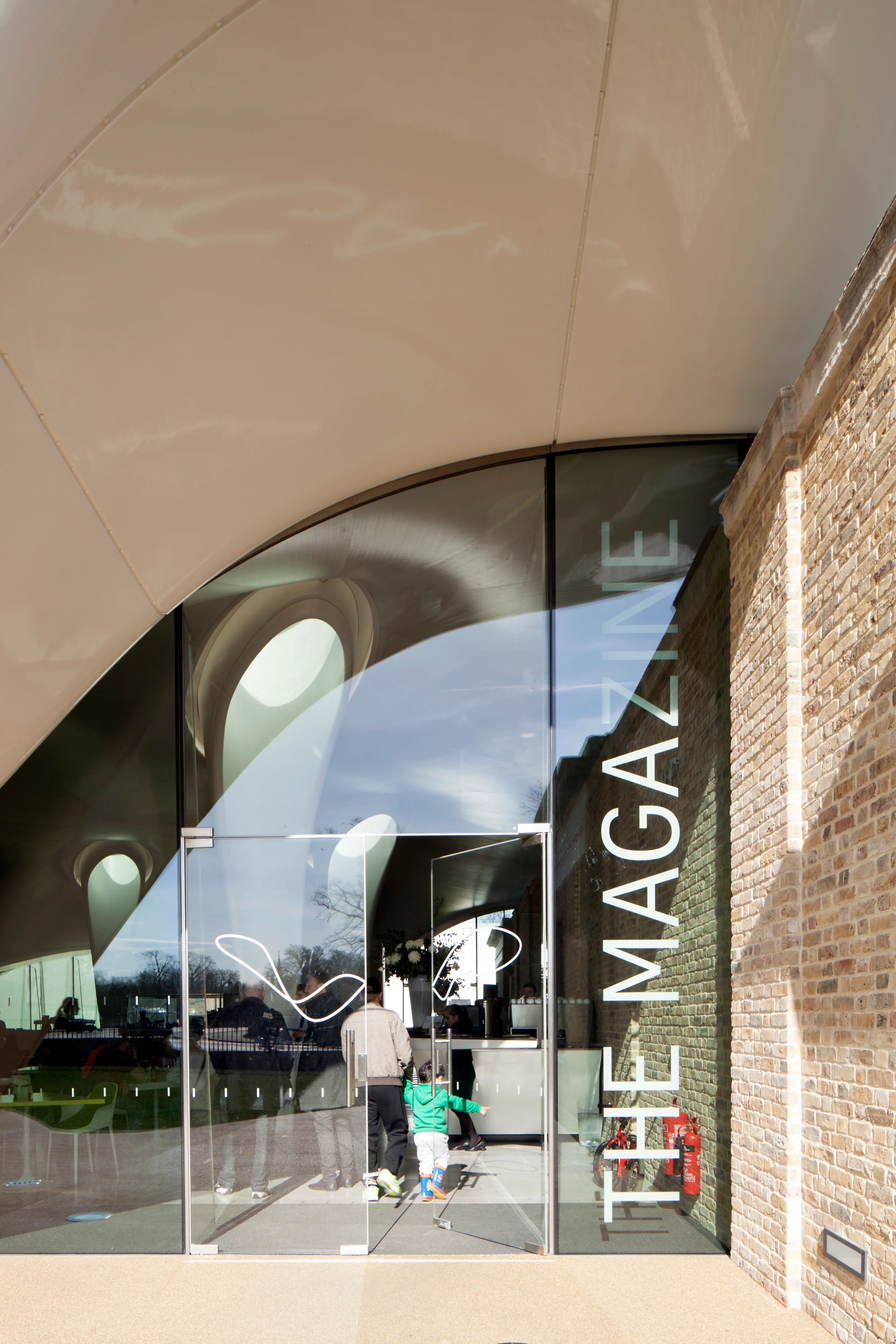
The Serpentine North Gallery consists of two distinct parts, namely the conversion of a classical 19th century brick structure - The Magazine – and a 21st century tensile structure. The Serpentine North Gallery is thus - after MAXXI in Rome - the second art space where ZHA has created a synthesis of old and new. The Magazine was designed as a Gunpowder Store in 1805. It comprises two raw brick barrel vaulted spaces (where the gunpowder was stored) and a lower square-shaped surrounding structure with a frontal colonnade. The building continued to be in military use until 1963. Since then Royal Parks used the building for storage. The Magazine thus remained underutilised until now. Over time, much amendment and alteration has occurred inside the historic building and its surroundings.
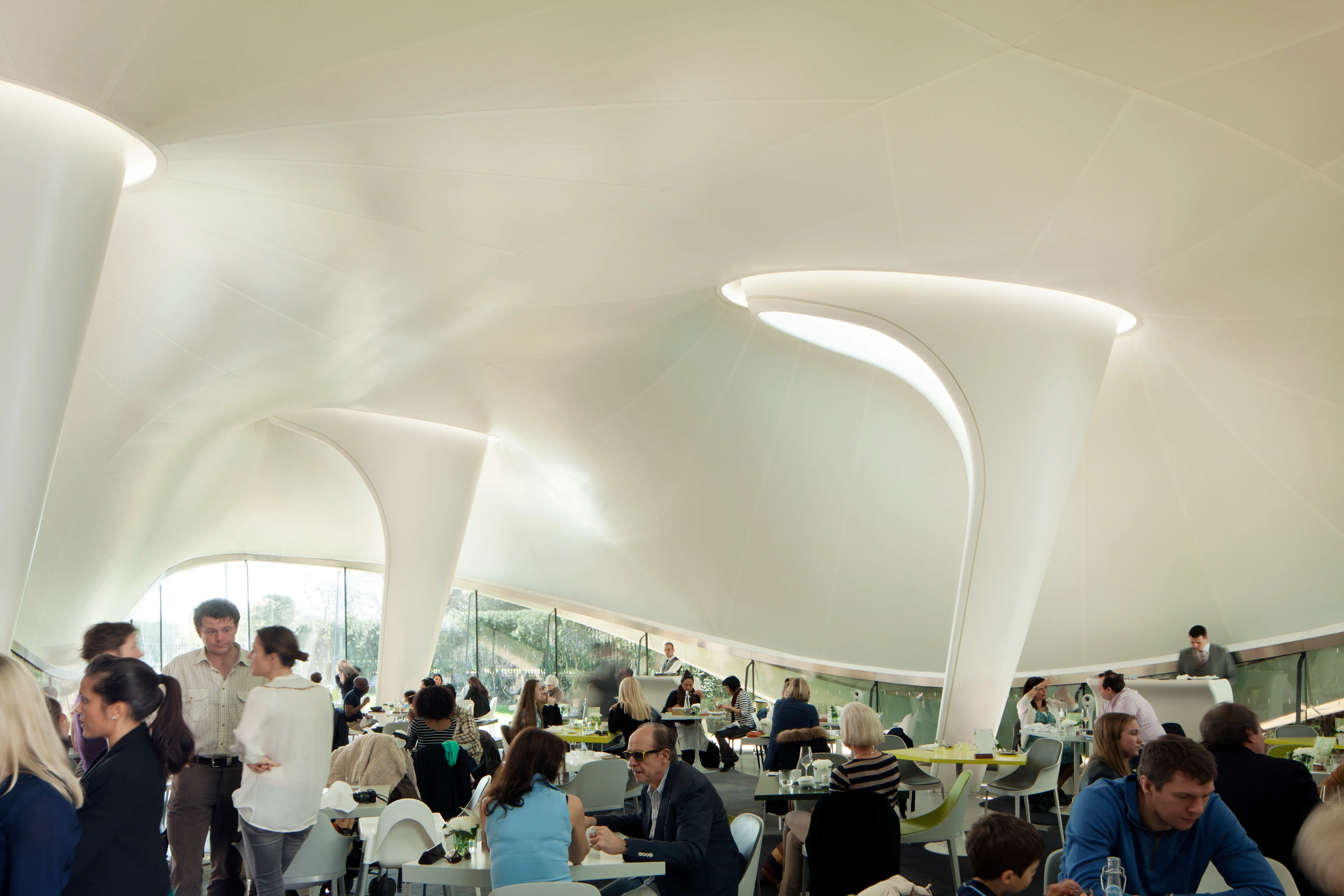
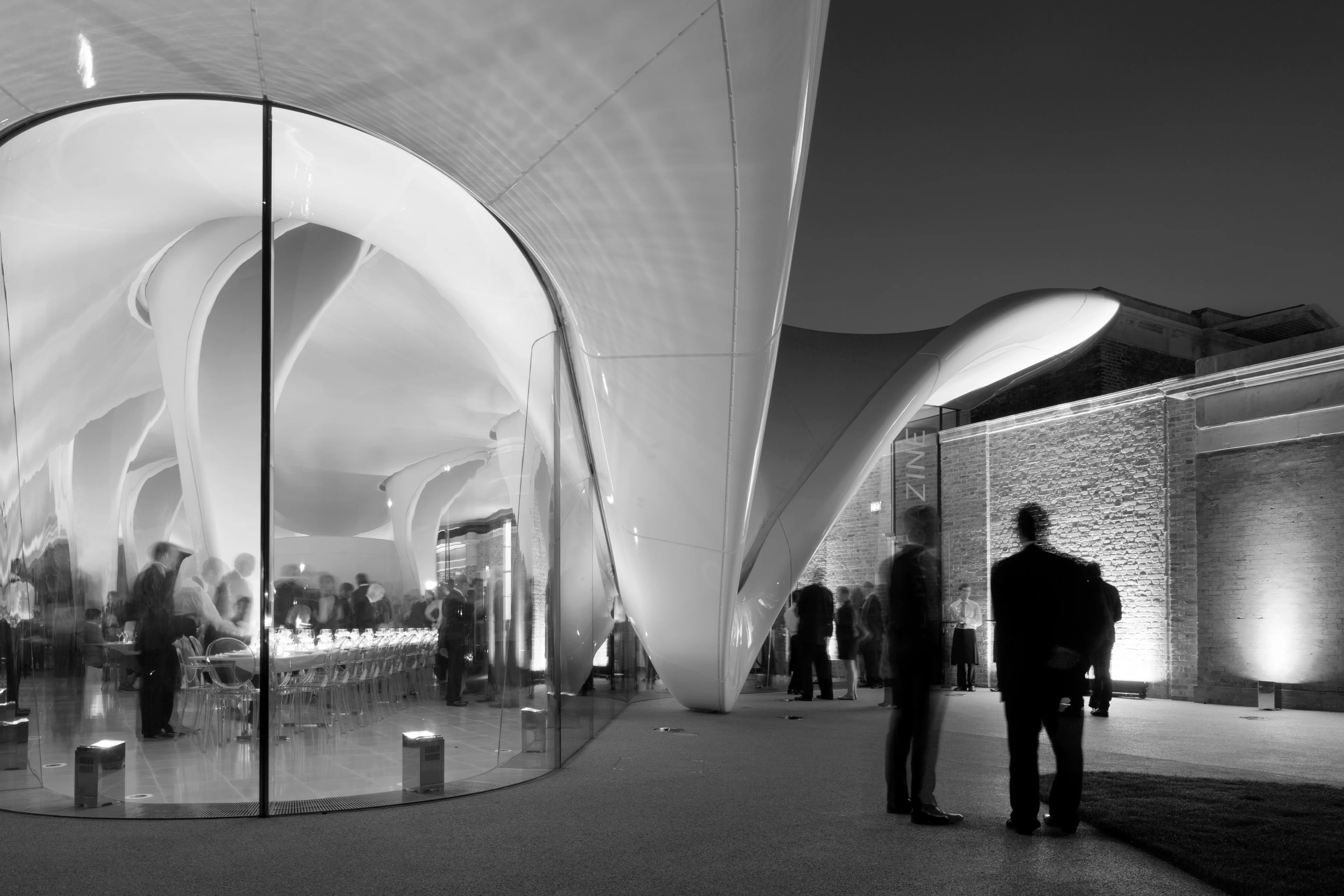
The extension contains a generous, open social space that we expect to enliven the Serpentine North Gallery as a new cultural and culinary destination. The extension has been designed to complement the calm and solid classical building with a light, transparent, dynamic and distinctly contemporary space of the 21st century. The synthesis of old and new is thus a synthesis of contrasts. The new extension feels ephemeral, like a temporary structure, although it is a fully functional permanent building. It is our first permanent tensile structure and realization of our current research into curvelinear structural surfaces.
A tailored glass-fibre membrane
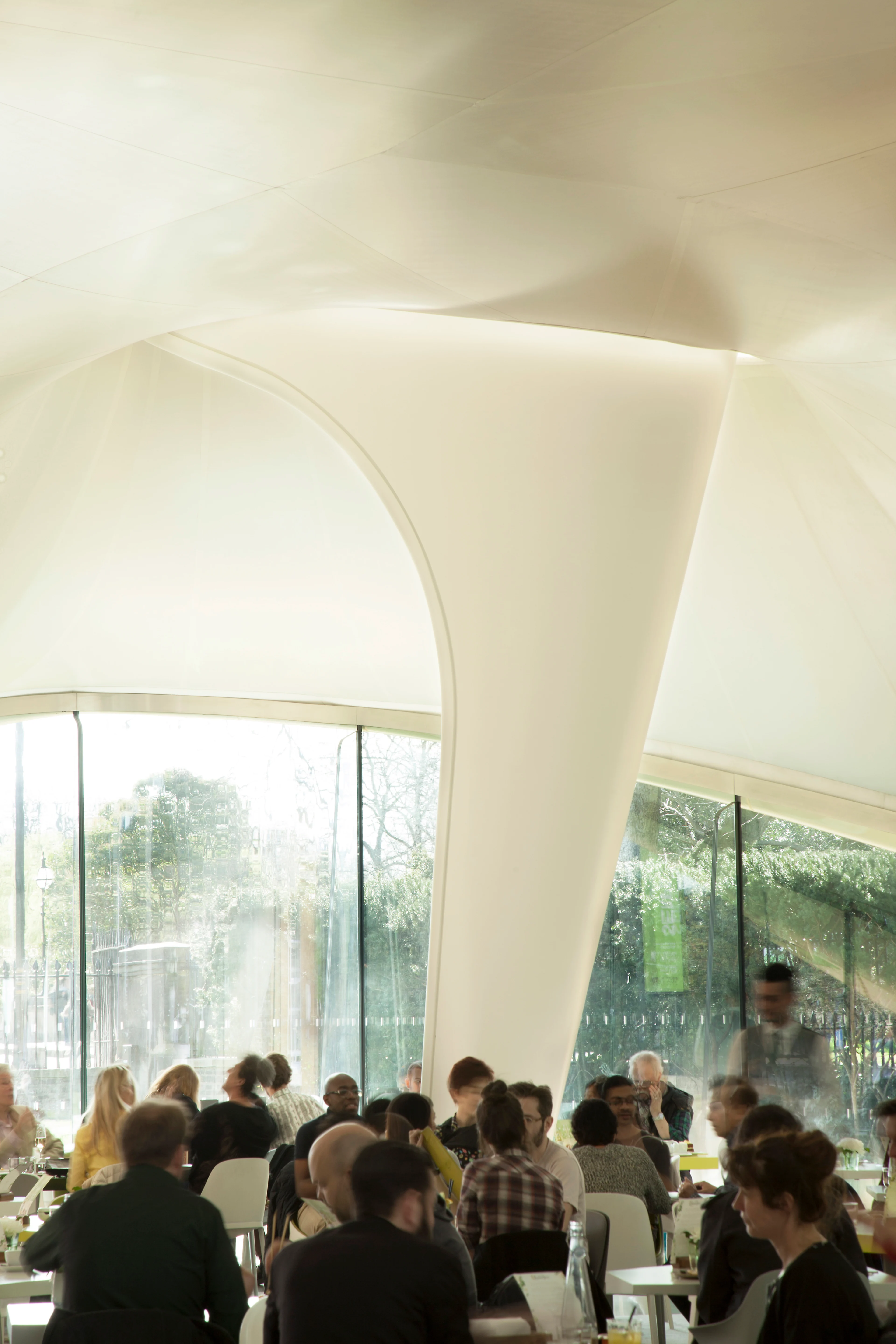
The tailored, glass-fibre woven textile membrane is an integral part of the building’s loadbearing structure. It stretches between and connects a perimeter ring beam and a set of five interior columns that articulate the roof’s highpoints. Instead of using perimeter columns, the edge beam - a twisted ladder truss supported on three points - dips down to the supporting ground in front, in the back, and on the free west side.
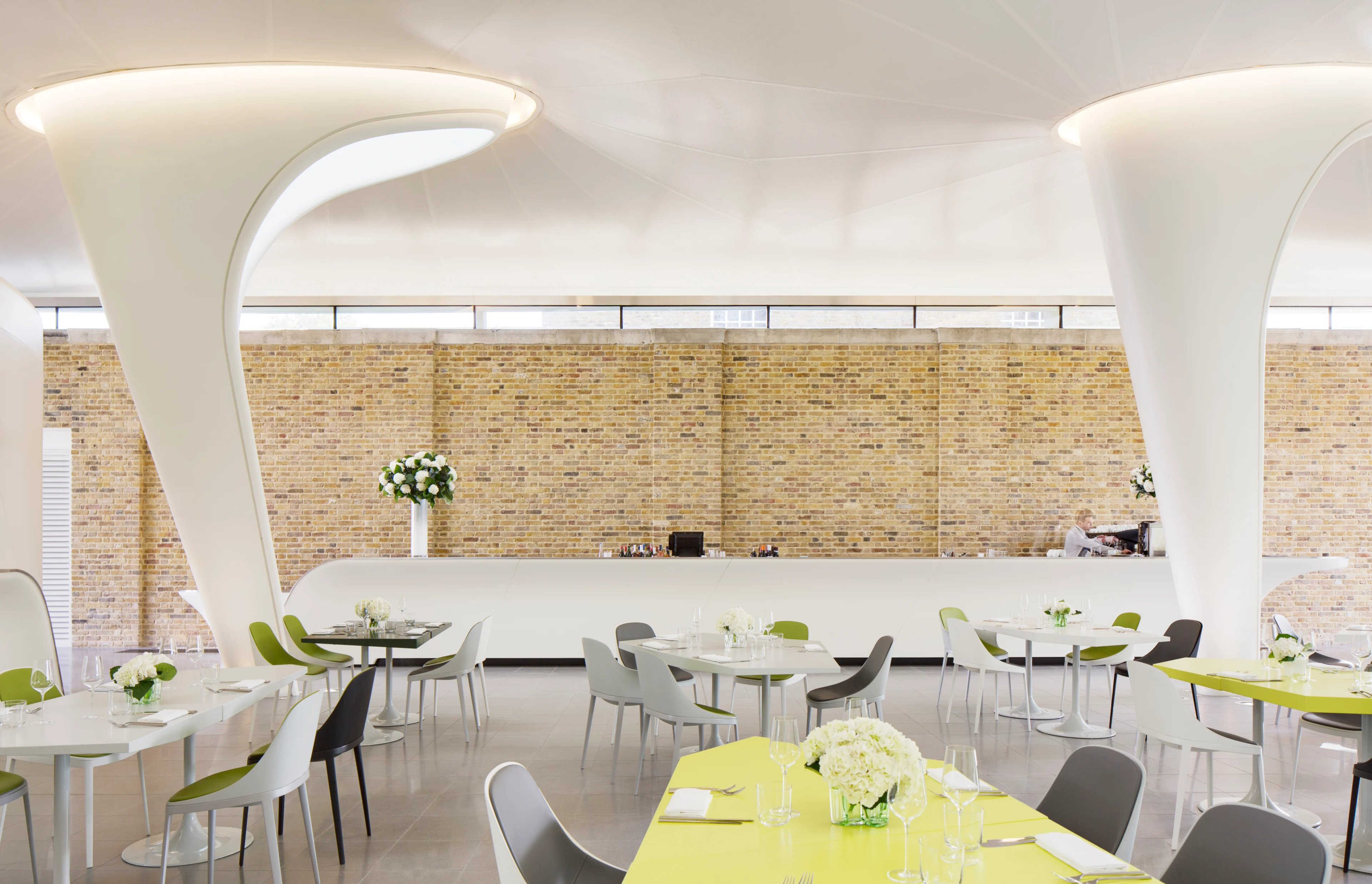
On the east side this edge beam (and thus the roof of the extension) swings above the parapet of the Magazine. A linear strip of glazing gives the appearance that the roof is hovering above the Magazine without touching. The Magazine’s western exterior brick wall thus becomes an interior wall within the new extension without losing its original function and beauty. This detail is coherent with the overall character of the extension as a ‘light touch’ intervention.
Sculptural, organic fluidity
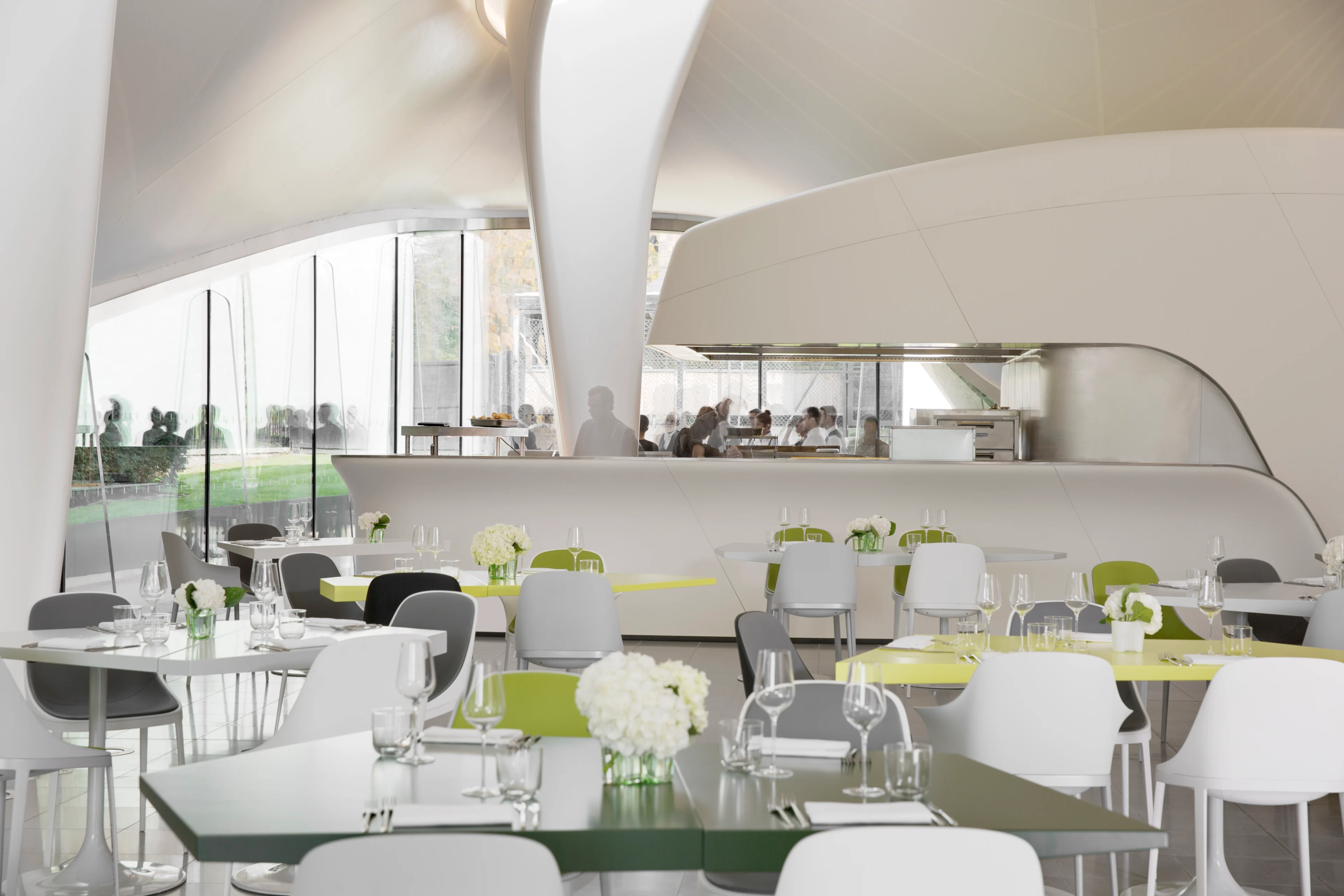
The envelope is completed by a curved, frameless glass wall that cantilevers from the ground to reach the edge beam and fabric roof. The interior of the new extension is a bright, open space with light pouring in from all sides and through the 5 steel columns that open up as light scoops. The anticlastic curvature of the roof animates the space with its sculptural, organic fluidity. The only fixed elements within the space are the kitchen island and a long smooth bar counter that flows along the Magazine’s brick wall. The tables, banquets and chairs are designed as a continuous Voronoi pattern, reminiscent of organic cell structures. Our aim is to create an intense aesthetic experience, an atmosphere that seems to oscillate between being an extension of the delightful beauty of the surrounding nature and of being an alluring invitation into the enigma of contemporary art.
Hospitality
Explore more of our hospitality projects
From a resort in Macau inspired by Old Hollywood glamour to the dramatic public space of a Dubai hotel, see our latest hospitality projects.
The Cascades
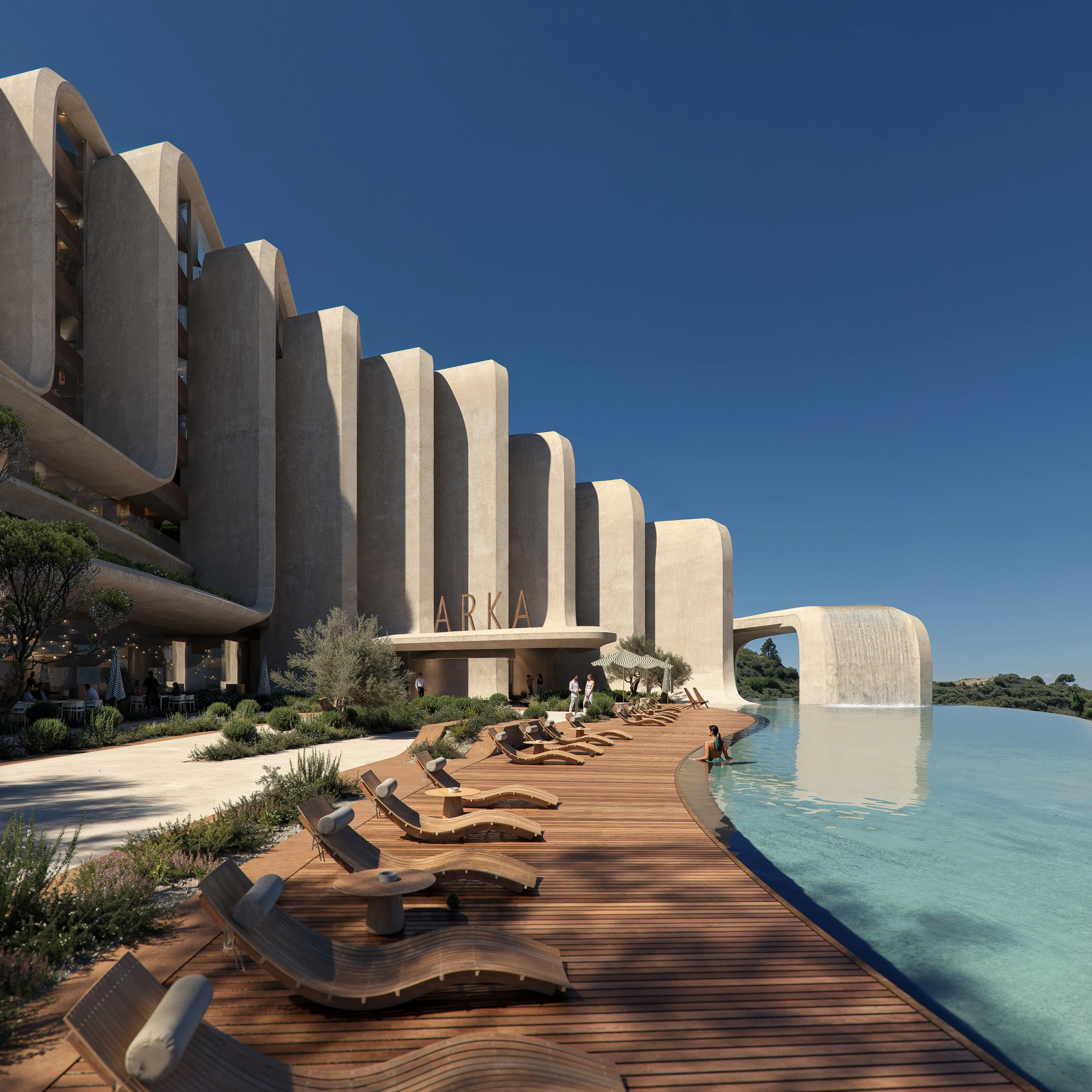
Located in Kodra e Diellit, the fastest-growing district of Tirana, the Nest and Cascades are new additions to the community. Renowned for its colourful post-communist architecture and vibrant café culture, Tirana is the capital of Albania with almost one million residents living within its greater metropolitan region. Progressing rapidly towards European Union membership, the Albanian economy is predicted to grow significantly in the coming years—with Tirana as the centre of its growth.
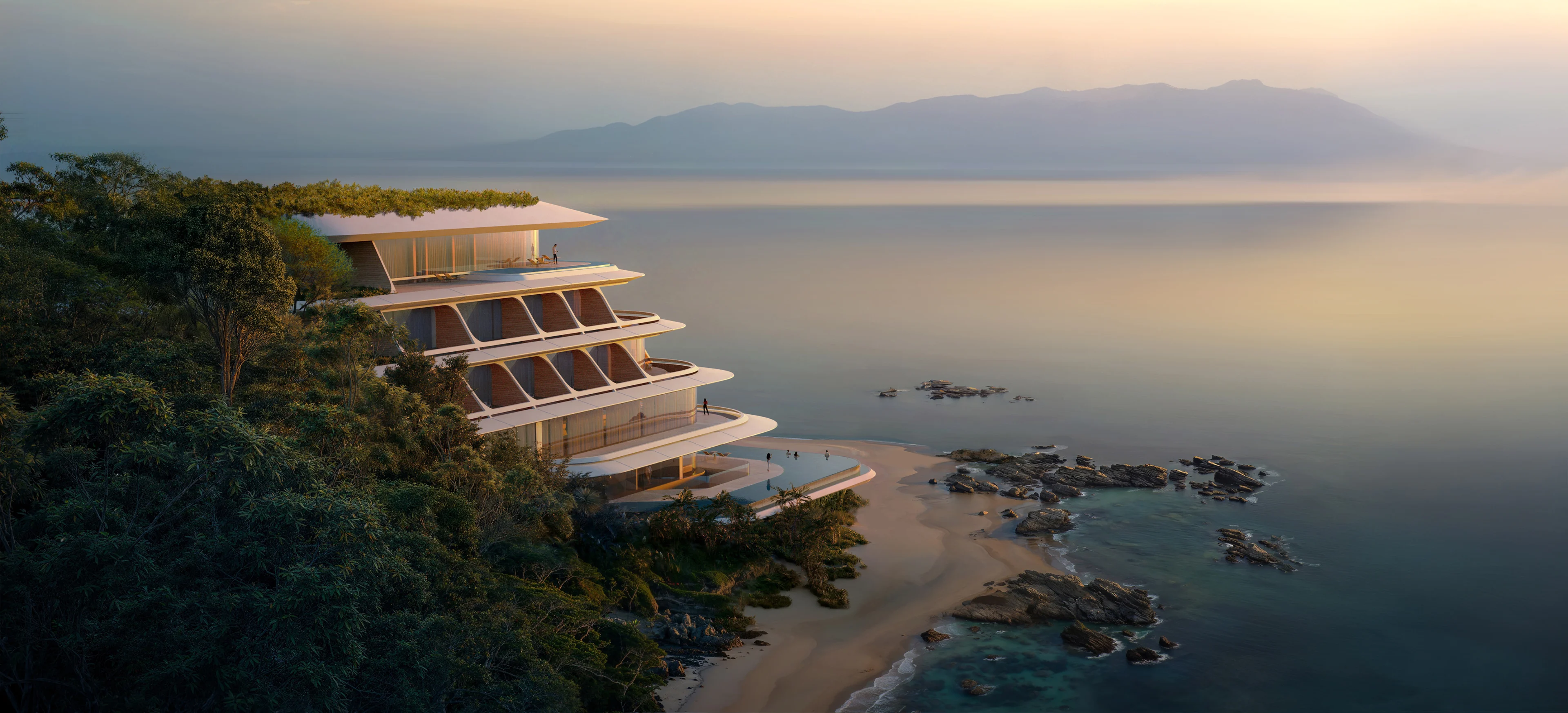
Render by Negativ
'vertex' hotel
NOT A HOTEL has launched its first hotel brands: HERITAGE by NOT A HOTEL reinterprets architectural heritage, such as temples and museums, through a contemporary sensibility. vertex by NOT A HOTEL embodies design at the intersection of architecture and technology.
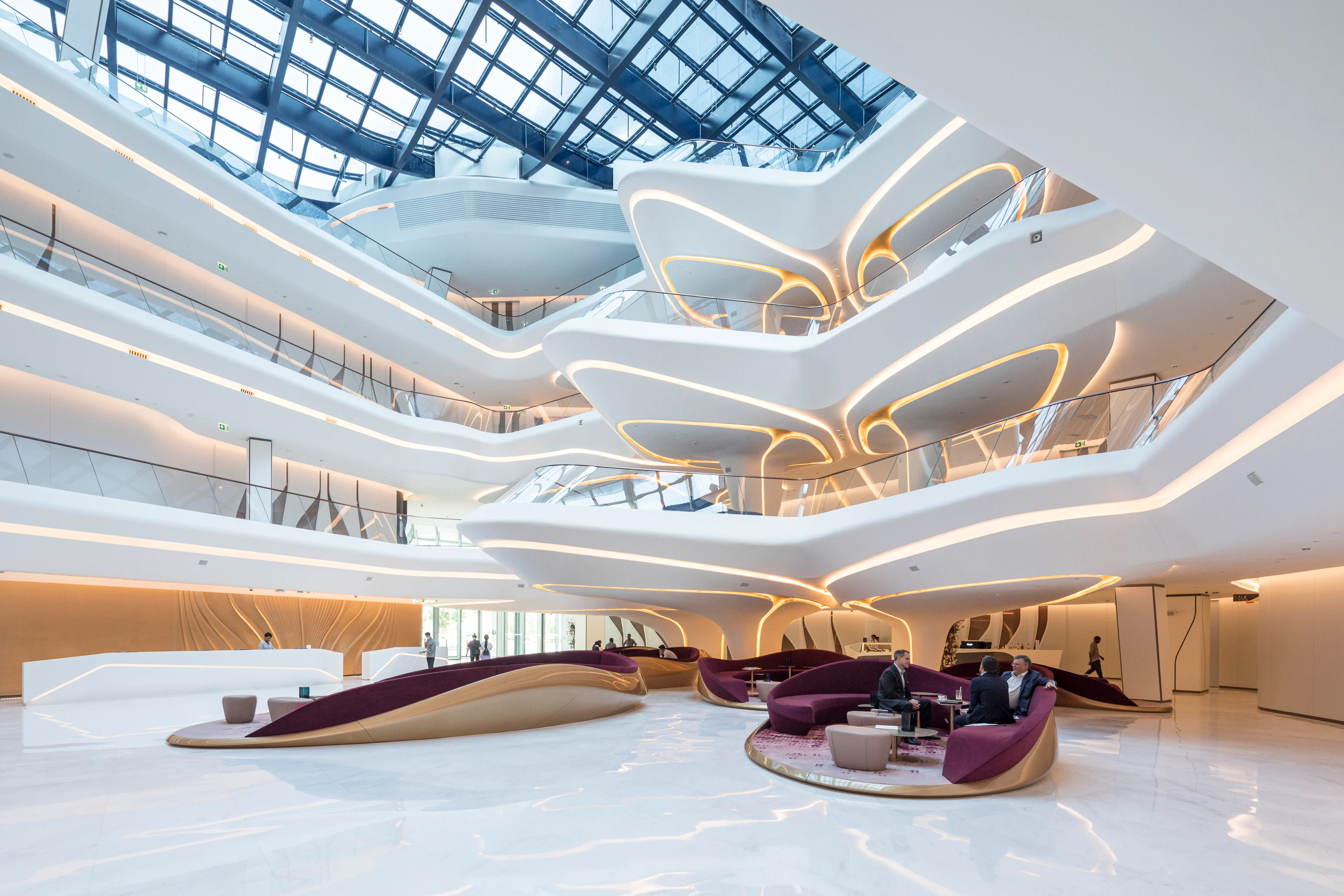
Photograph by Laurian Ghinitoiu
Atrium
ME Dubai Hotel
Home to the new ME Dubai hotel, the Opus is located in the Burj Khalifa district adjacent to Downtown Dubai and Business Bay on the Dubai Water Canal. Exploring the balance between solid and void, opaque and transparent, interior and exterior, the design was presented by ZHA in 2007. It is the only hotel in which the firm designed both the architecture and the interiors to such an intricate degree, including bathrooms and furniture within the scope.
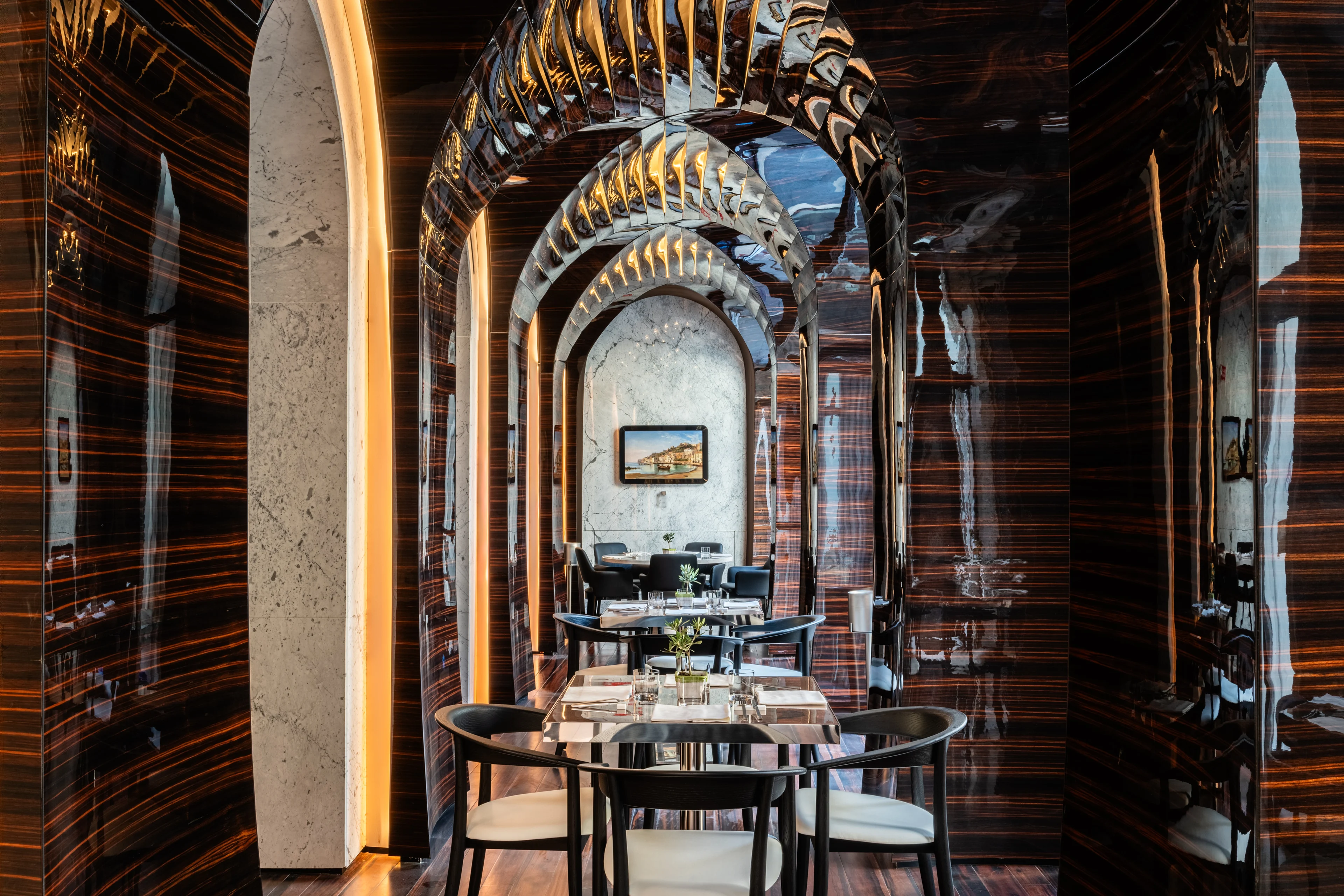
Photograph by Chris Dalton, Courtesy of Romeo Collection
Bistro
Romeo Roma Hotel
From the beginning of her career, architect Zaha Hadid sited her buildings in the air, floating buildings on shadow, light, and seams of space that lifted volumes above the ground, relating her work to another tradition—Rome’s. In designing the hotel conversion of the Palazzo Capponi, Hadid and her team at ZHA started where Baroque architects ended their palimpsest - at the vaulted ceilings.
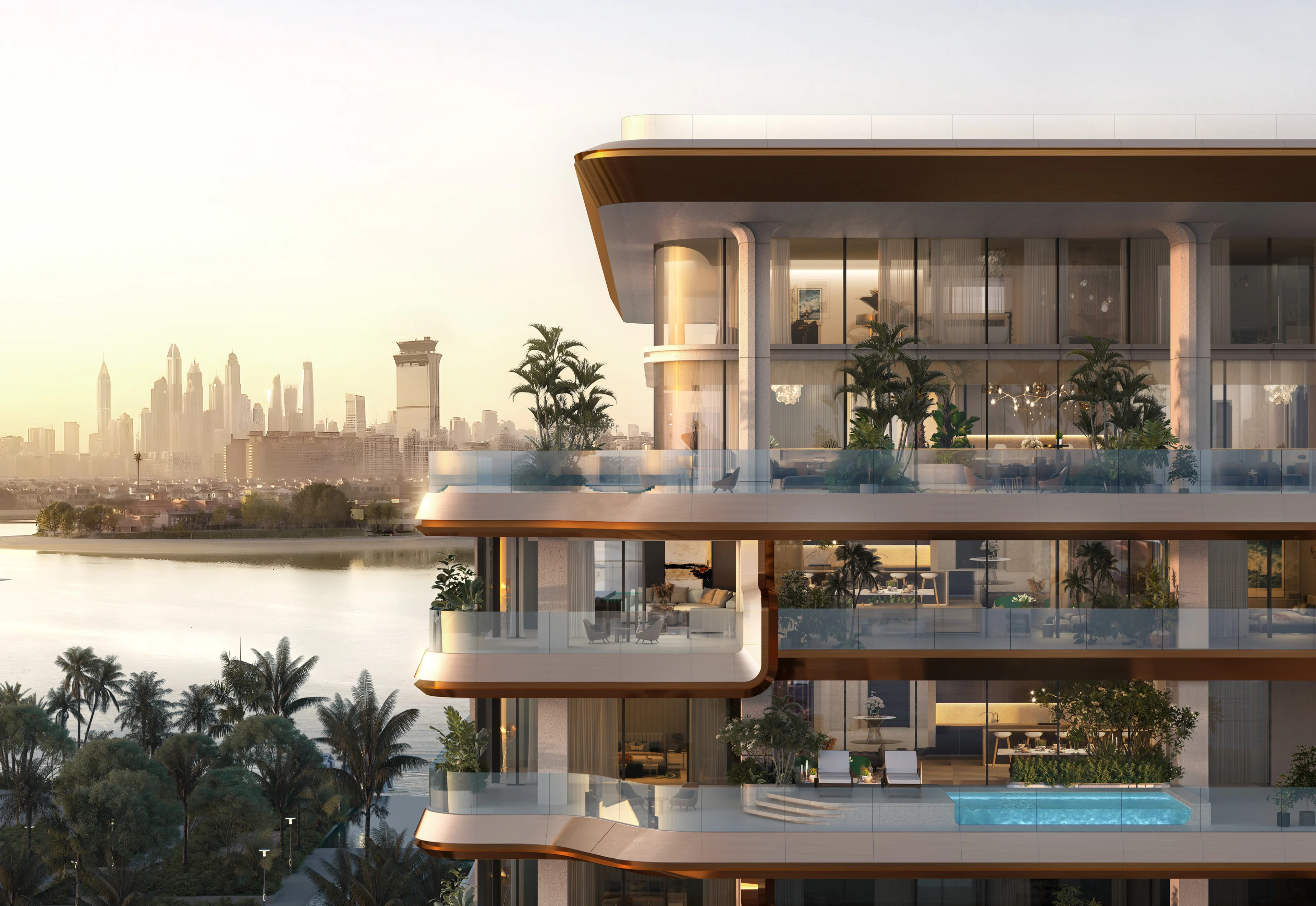
Render by XUniverse
The Alba Residences & Hotel
The Alba is a new US$1.9 billion mixed-use beachfront development designed by ZHA for Omniyat on the Eastern Crescent of Palm Jumeirah with panoramic views of Dubai’s coast and skyline.
Render by Flyingarchitecture
Habacoa Yacht Club
Habacoa Yacht Club
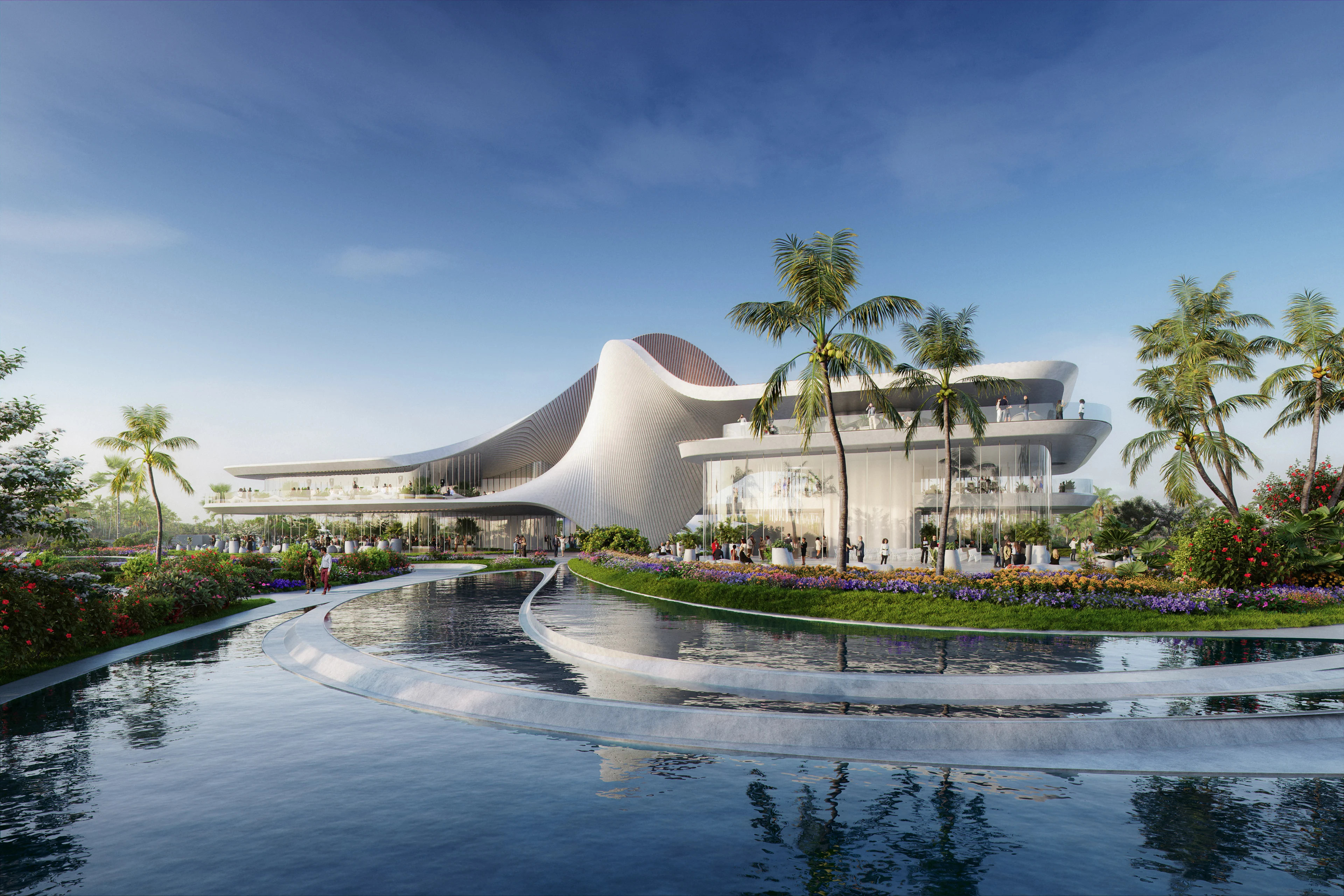
Located on South Abaco in The Bahamas, Habacoa is set to become North America’s most comprehensive marina accommodating the largest yachts on the seas, together with bespoke residences for the world’s yachting community. Projected to open in 2027, Habacoa’s developers have selected ZHA to design both the Yacht Club and Nightclub & Casino.
Photograph by Xue Liang 薛亮
Studio City Phase 2
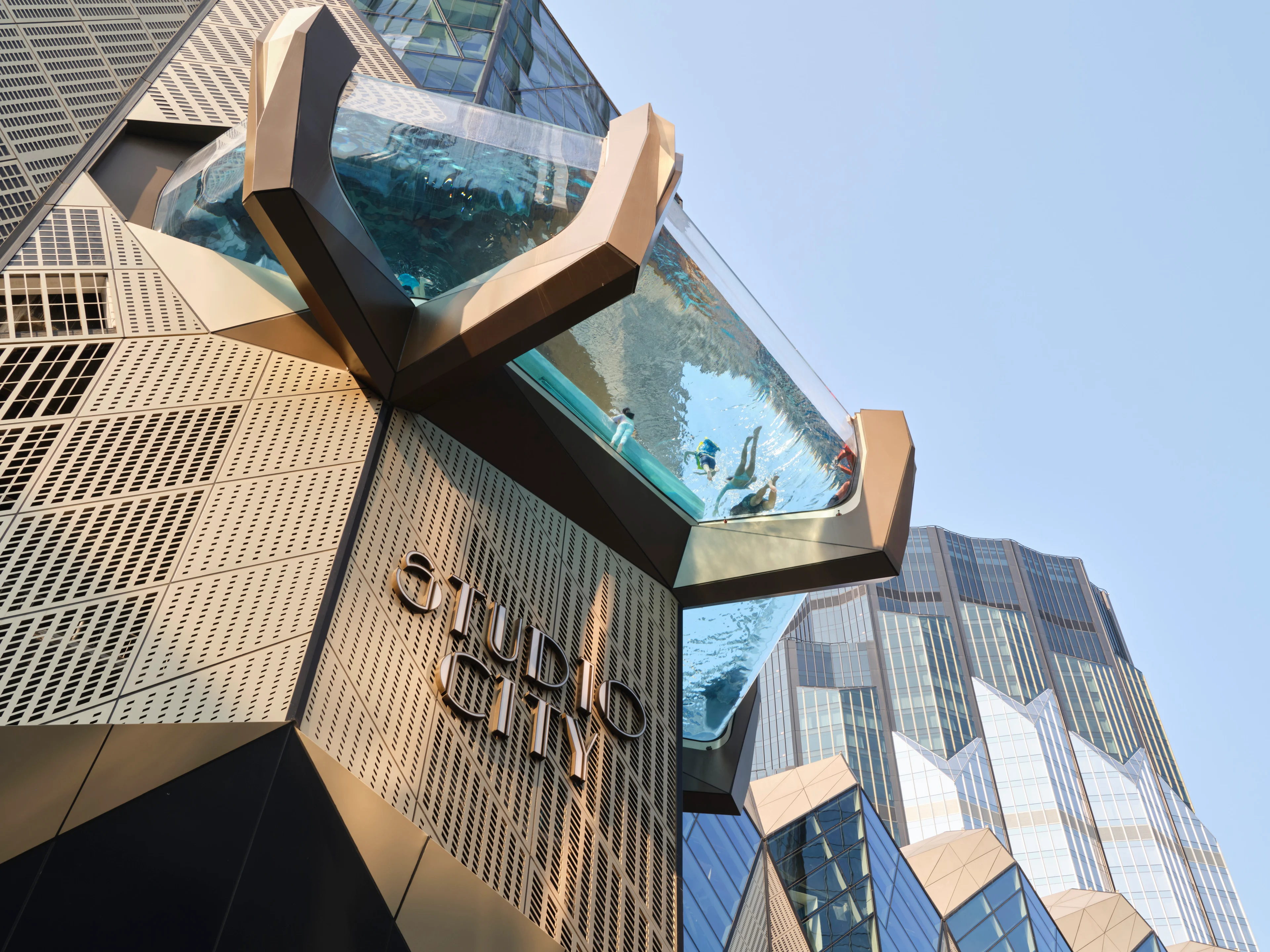
Located in the Cotai district of Macau adjacent to the Lotus Bridge crossing with mainland China, the Hollywood-inspired Studio City resort has welcomed guests and visitors to the city since 2015.
Photograph by Virgile Simon Bertrand
Morpheus Hotel & Resort at City of Dreams Macao
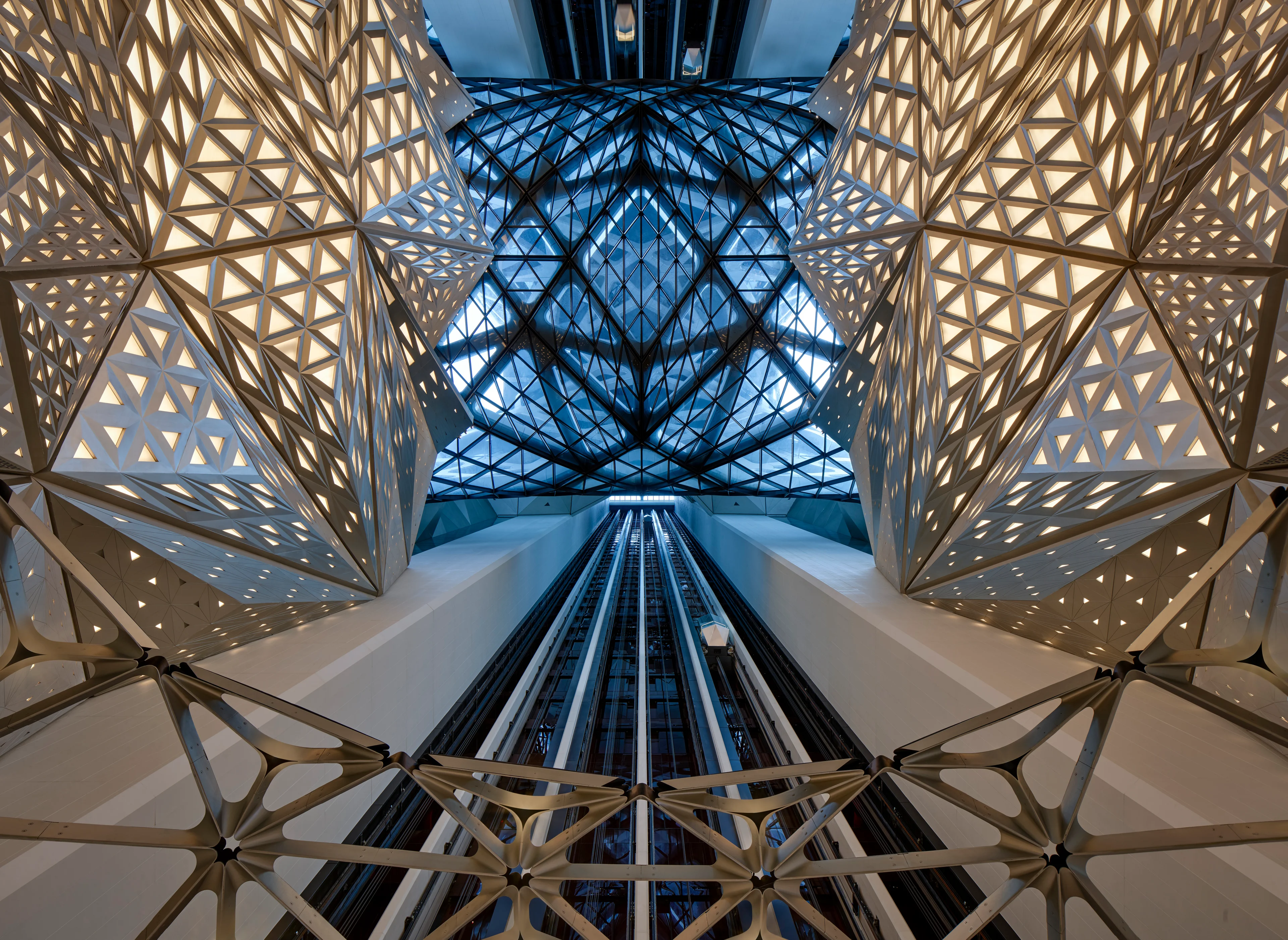
The world’s first free-form high-rise exoskeleton optimises the interiors by creating spaces that are uninterrupted by supporting walls or columns. Three horizontal vortices generate the voids through the building and define the hotel’s dramatic internal public spaces.
01
02
03
04
05
06
07
08