
Photograph by Joel Chester Fildes
Manchester International Festival July 2009
Manchester, United Kingdom
2009 - 2009
Manchester International Festival
JS Bach Chamber Music Hall
Photograph by Ruud van Gessel
Holland Festival June 2010
Photograph by Joel Chester Fildes
Manchester International Festival July 2009
Photograph by Ruud van Gessel
Holland Festival June 2010
Photograph by Luke Hayes
Manchester International Festival July 2009
01
02
03
04
Carving out a spatial and visual response to the intricate relationships of Bach’s harmonies
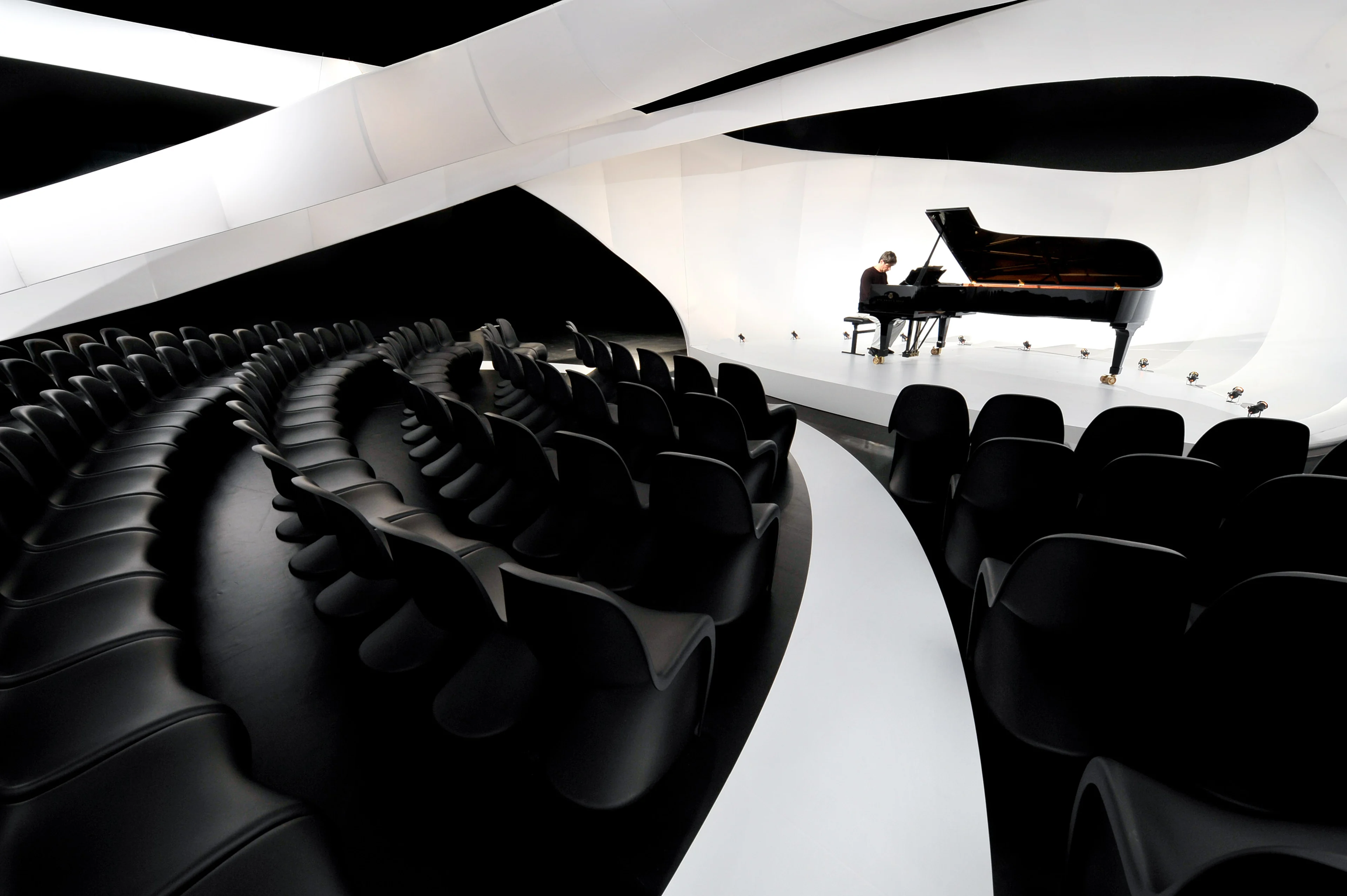
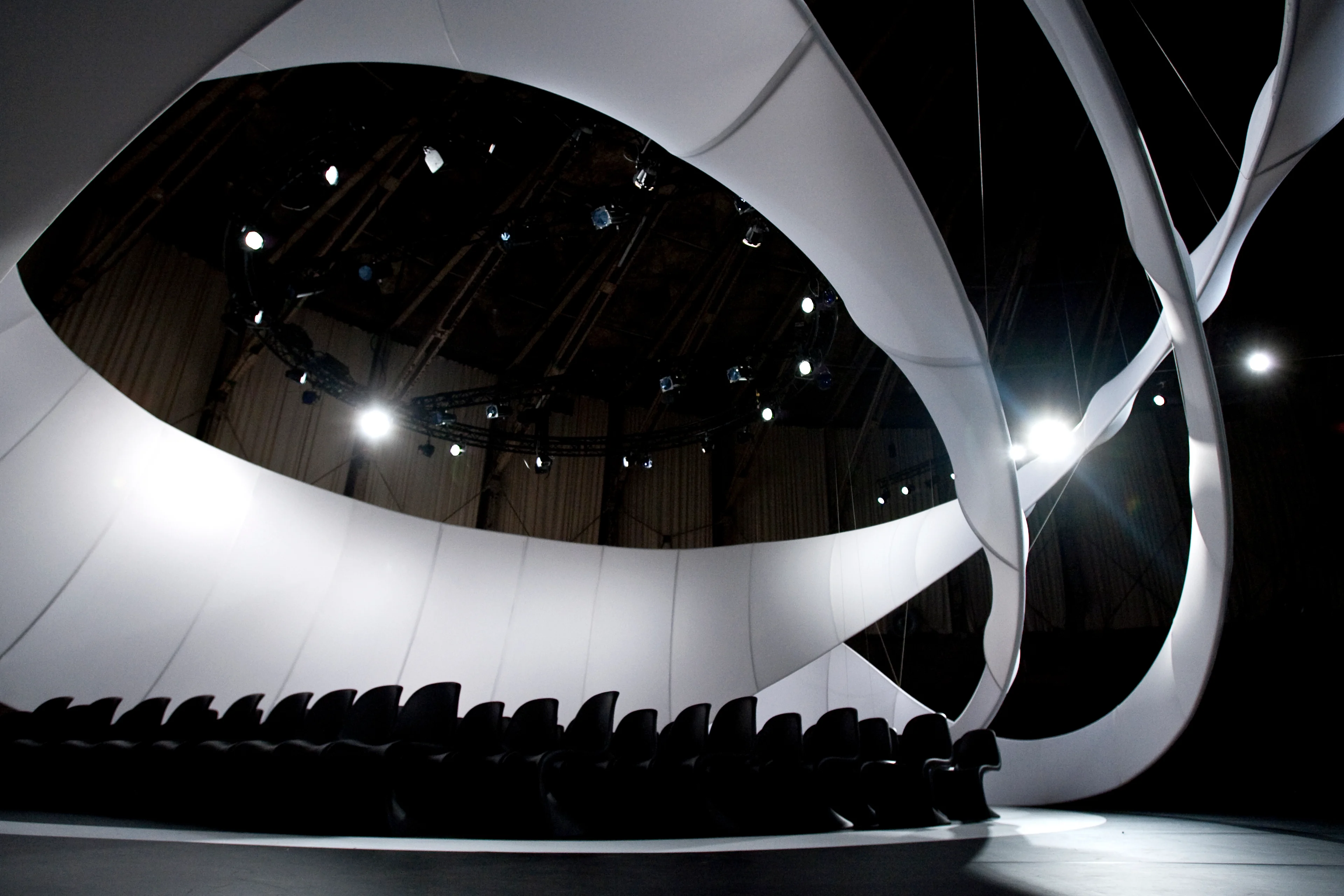
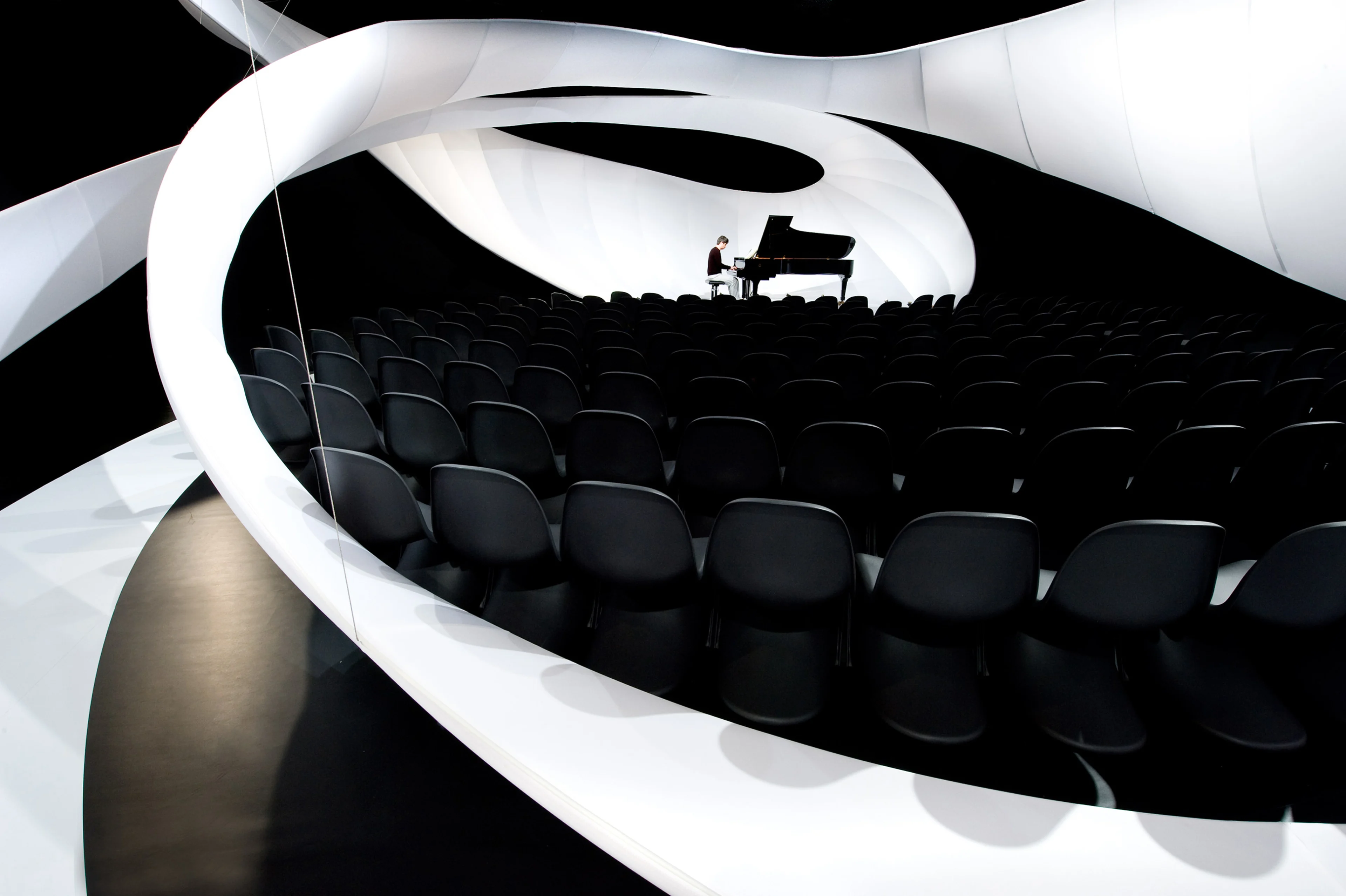
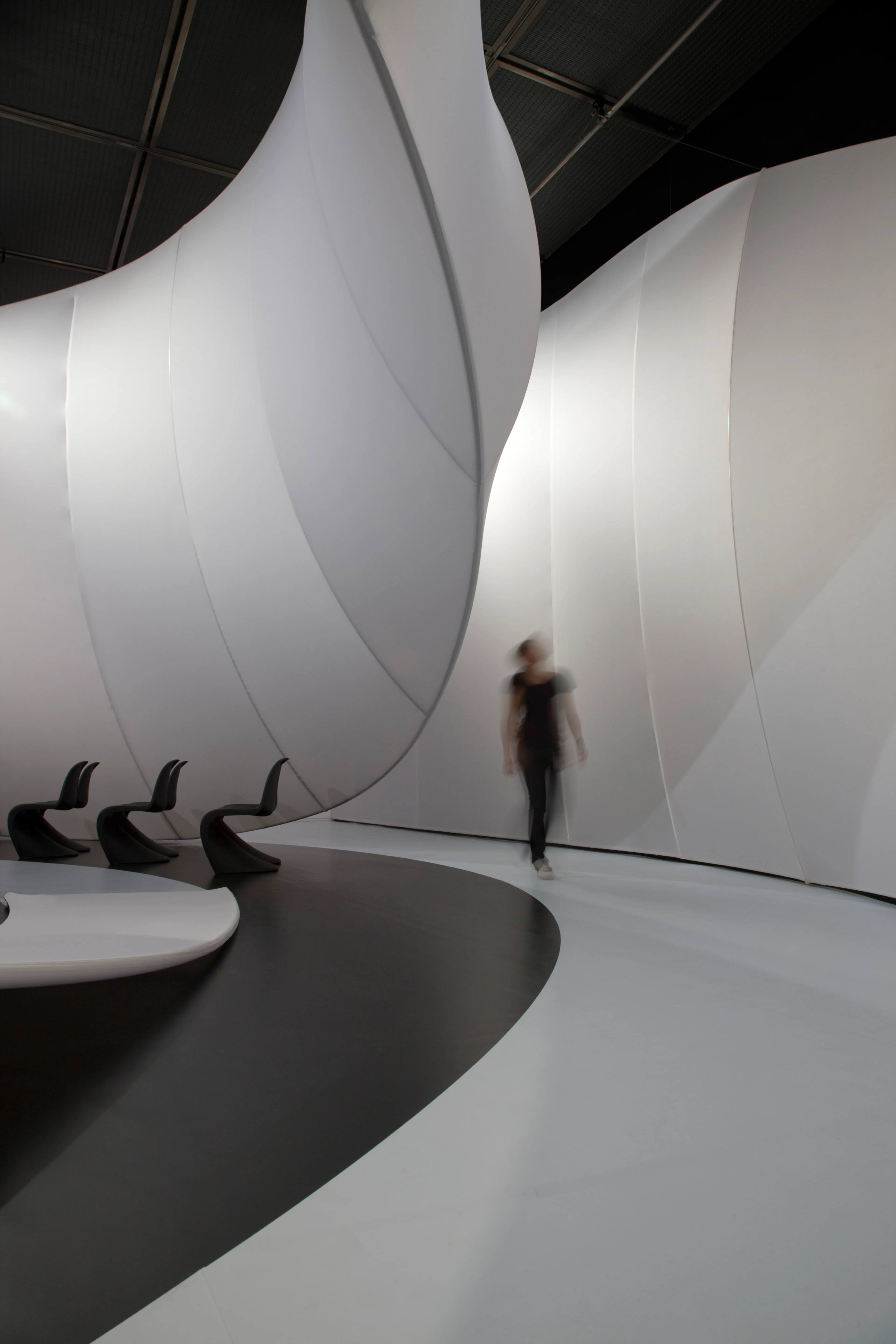
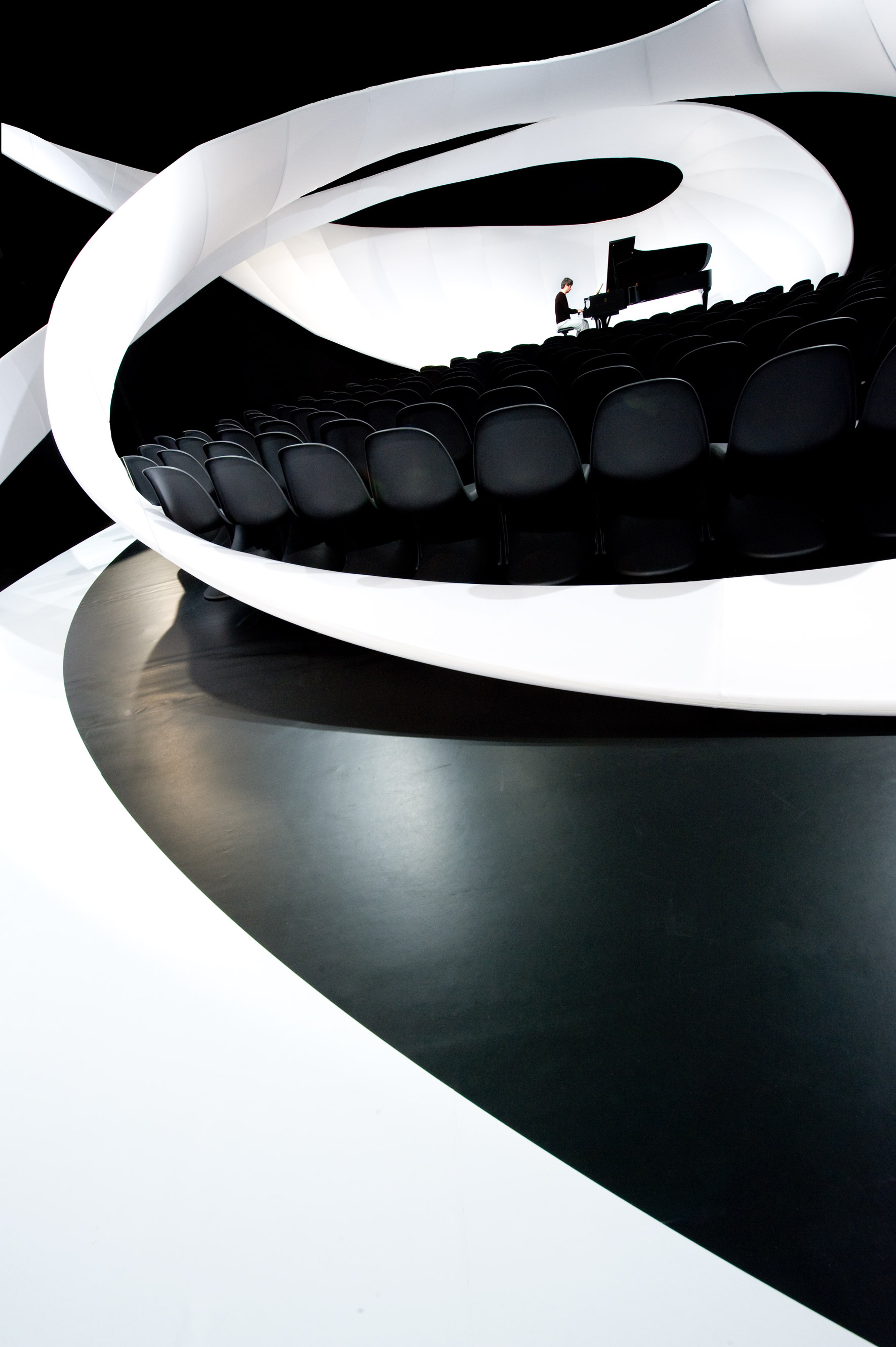
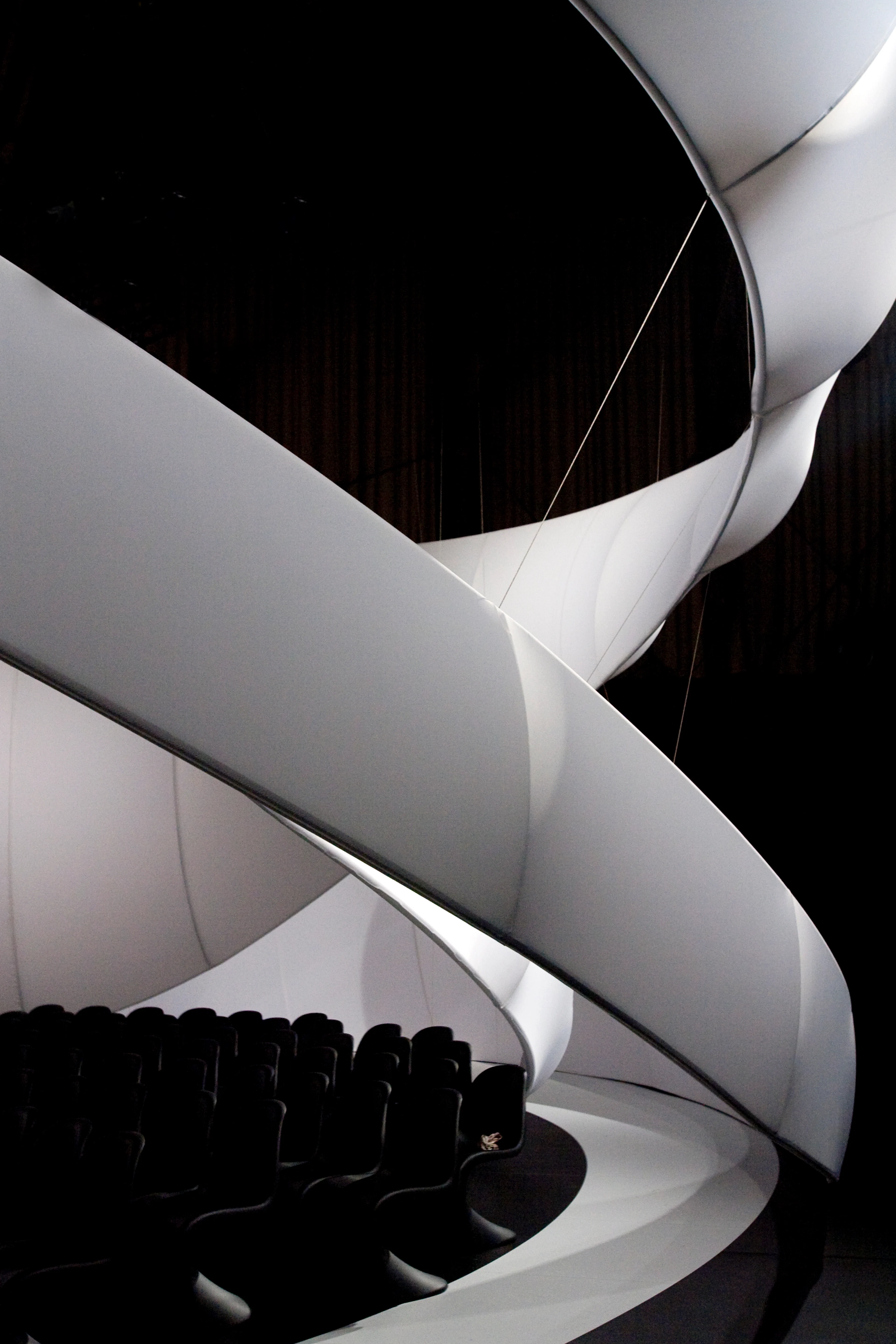
ZHA have created a unique chamber music hall specially designed to house solo performances of he exquisite music of Johann Sebastian Bach. A voluminous ribbon swirls within the room, carving out a spatial and visual response to the intricate relationships of Bach’s harmonies. As the ribbon careens above the performer, cascades into the ground and wraps around the audience, the original room as a box is sculpted into fluid spaces swelling, merging, and slipping through one another.
“The design enhances the multiplicity of Bach’s work through a coherent integration of formal and structural logic. A single continuous ribbon of fabric swirls around itself, creating layered spaces to cocoon the performers and audience with in an intimate fluid space.” said Hadid.
The process of realizing the design involved architectural considerations of scale, structure and acoustics to develop a dynamic formal dialogue inseparable from its intended purpose as an intimate chamber music hall. A layering of spaces and functions is achieved through the ribbon wrapping around itself, alternately compressing to the size of a handrail then stretching to enclose the full height of the room. Circulatory and visual connections are continually discovered as one passes through the multiple layers of space delineated by the ribbon.
01
02
Photograph by Ruud van Gessel
Holland Festival June 2010
Enhancing the acoustic experience of the concert while spatially defining a stage
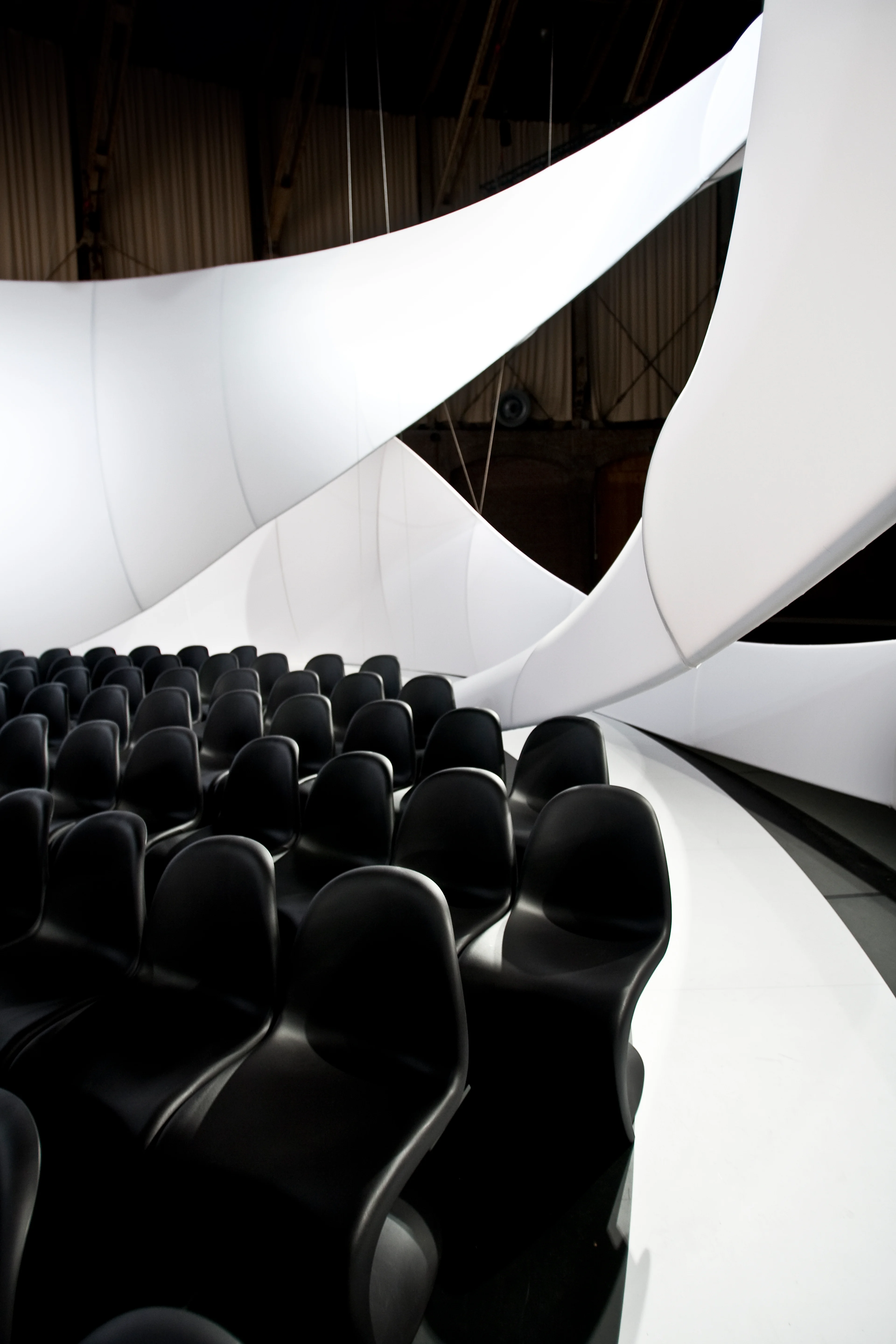
The ribbon itself consists of a translucent fabric membrane articulated by an internal steel structure suspended from the ceiling. The surface of the fabric shell undulates in a constant but changing rhythm as it is stretched over the internal structure. It varies between the highly tensioned skin on the exterior of the ribbon and the soft billowing effect of the same fabric on the interior of the ribbon. Clear acrylic acoustic panels are suspended above the stage to reflect and disperse the sound, while remaining visually imperceptible within the fabric membrane. Programmed lighting and a series of dispersed musical recordings activate the spaces between the ribbon outside of performance times. The installation is designed to be transportable and re-installed in other similar venues.
Pivotal to its function is the performance of the ribbon. It has been designed to simultaneously enhance the acoustic experience of the concert while spatially defining a stage, an intimate enclosure, and passageways. It exists at a scale in which it is perceived as both an object floating in a room as well as a temporal architecture that invites one to enter, inhabit and explore.
Installations + Pavilions
View our other installations and pavilions
ZHA's installations and pavilions utilises our cutting-edge research to push material capability to its full potential. At the forefront of innovation, we explore the limits and possibilities of contemporary construction methods.
Photograph by Jacopo Spilimbergo
Origin
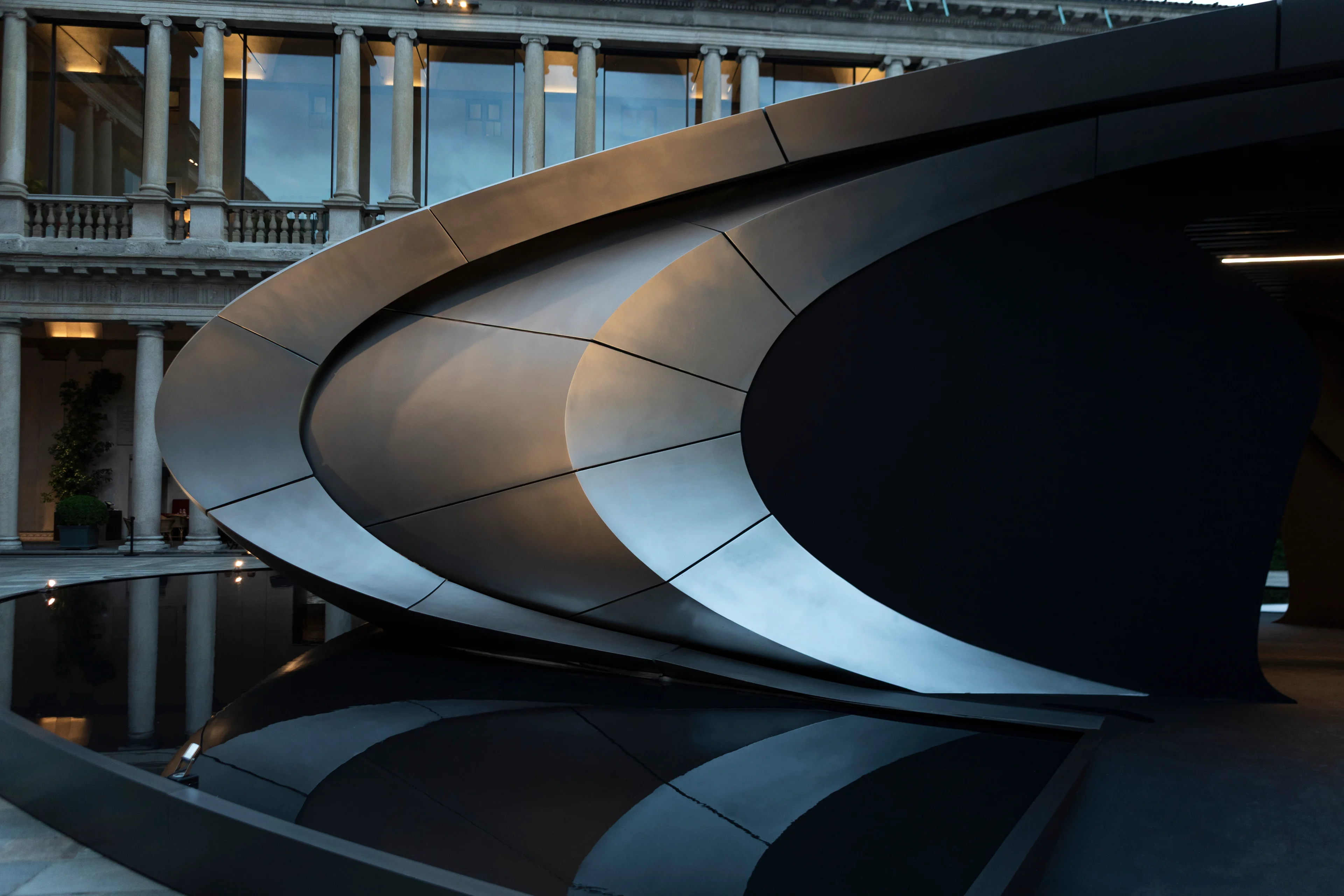
A collaboration between Audi and ZHA, Origin was conceived an immersive installation serving as a portal to an investigation of the principles defining Audi's new design philosophy: clarity, technicality, intelligence, and emotion.
Photograph by Alessandra Chemollo
Venice Biennale, May 2021
‘High-performing Urban Ecologies’ Installation Venice Biennale
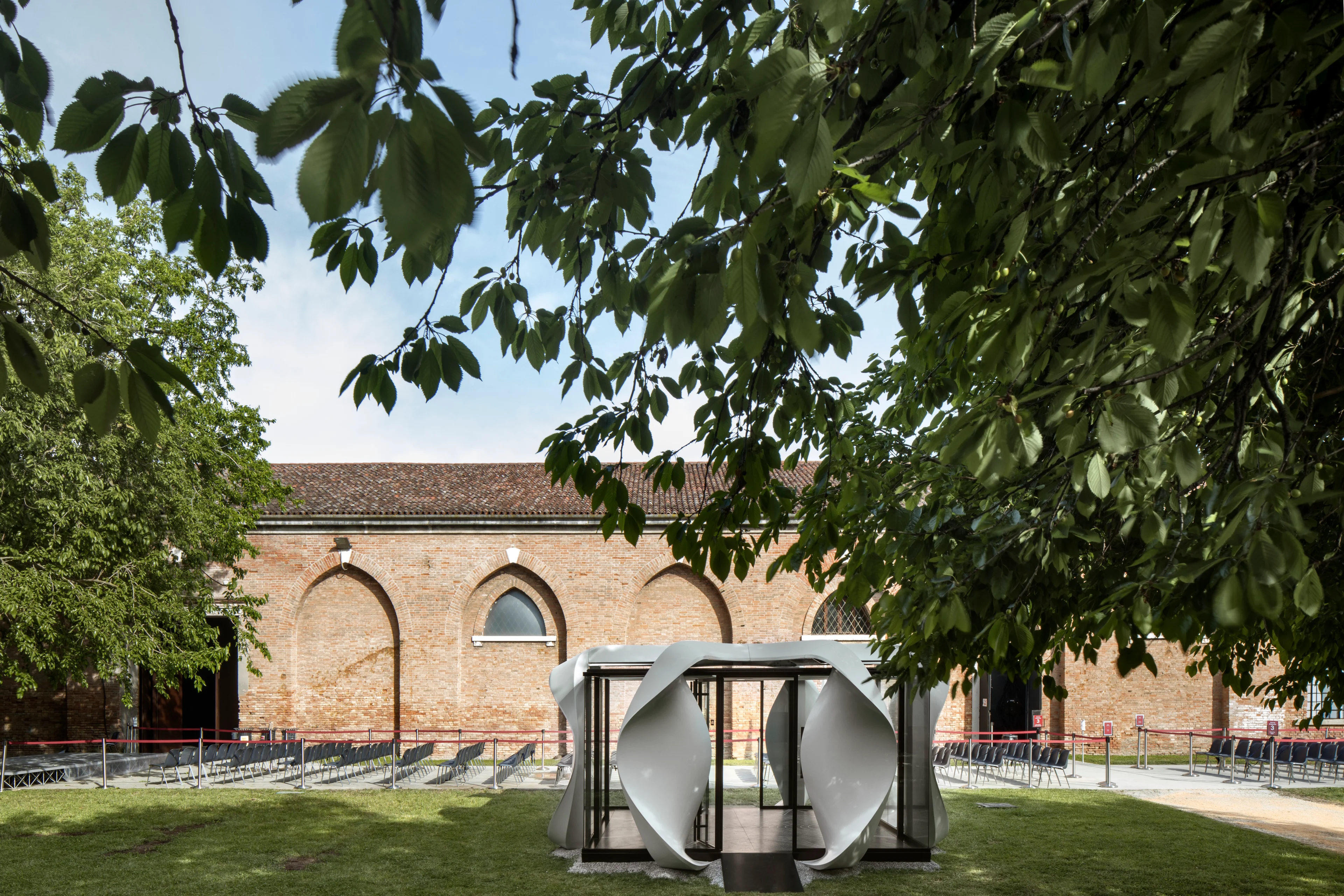
The ‘High-performing Urban Ecologies' installation by ZHA responds to the ‘Resilient Communities’ theme of this year’s Italian Pavilion curated by Alessandro Melis for the Venice Architecture Biennale 2021.
Unconfined
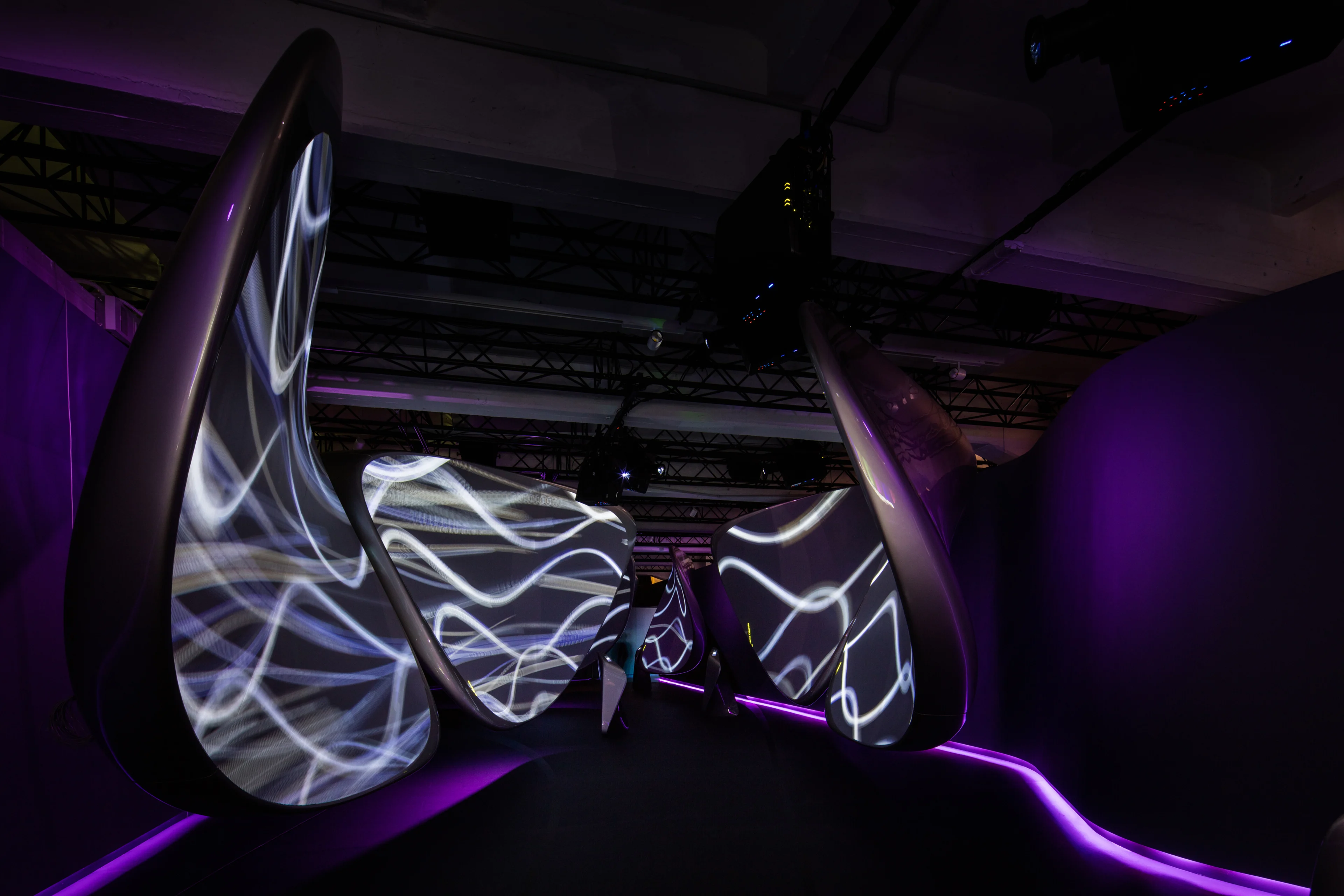
Samsung collaborated with ZHA and digital art and design collective Universal Everything, to present ‘Unconfined’, an installation showcasing the story of the Galaxy S8 that centres on the unity of design, technology and experience. Visitors journey through an immersive environment inspired by the new device, creating digital installations that bring to life the Galaxy design philosophy.
01
02
03