
Photograph by David Bombelli
City Life Milano Residential Complex
Milan, Italy
2004 - 2014
City Life Consortium
CityLife Residences
Photograph by Michele Natasi
City Life Milano Residential Complex
City Life Milano Residential Complex
Photograph by David Bombelli
City Life Milano Residential Complex
City Life Milano Residential Complex
Photograph by Hufton + Crow
City Life Milano Residential Complex
City Life Milano Residential Complex
01
02
03
04
05
06
Characterized by a sinuous fluid line
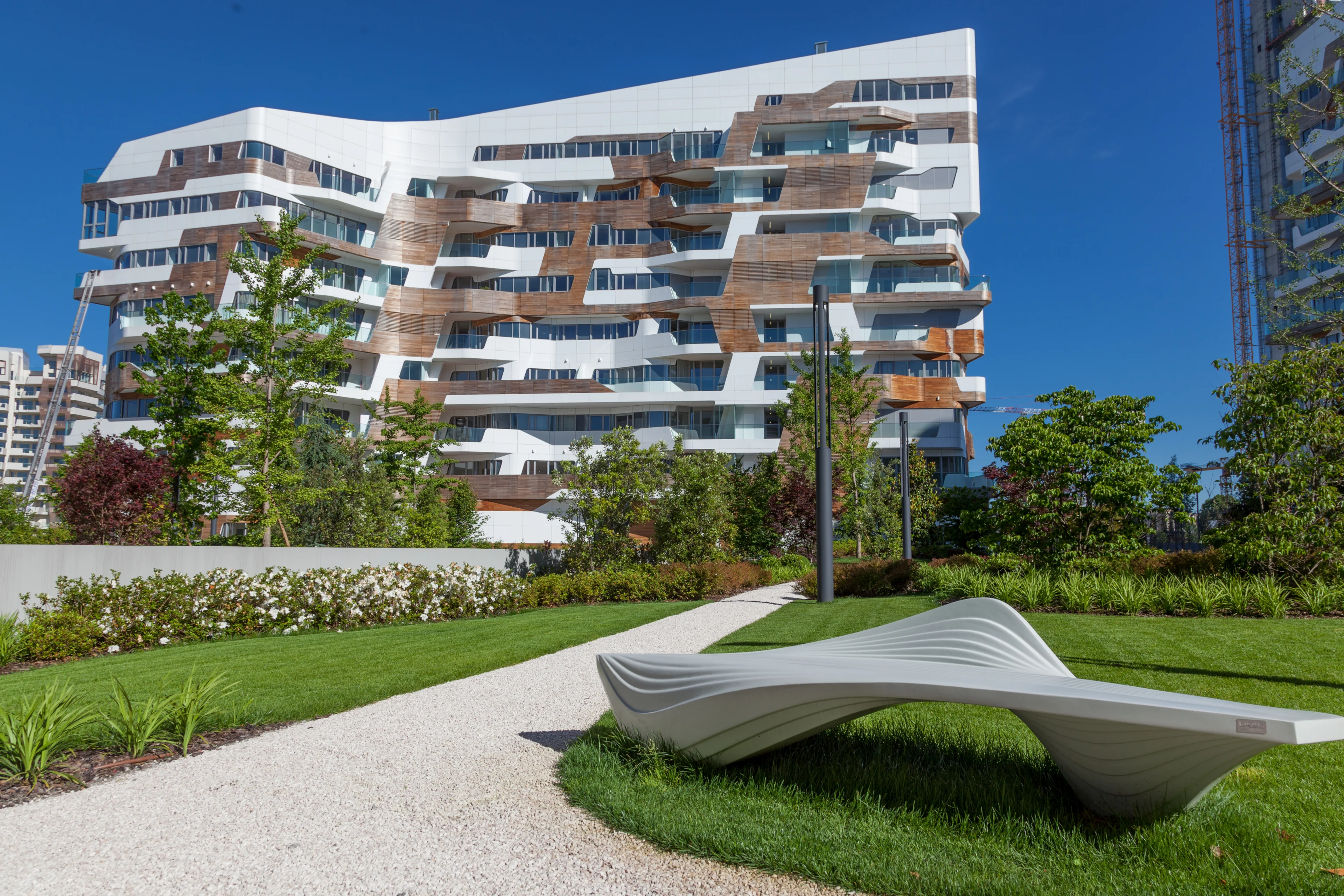
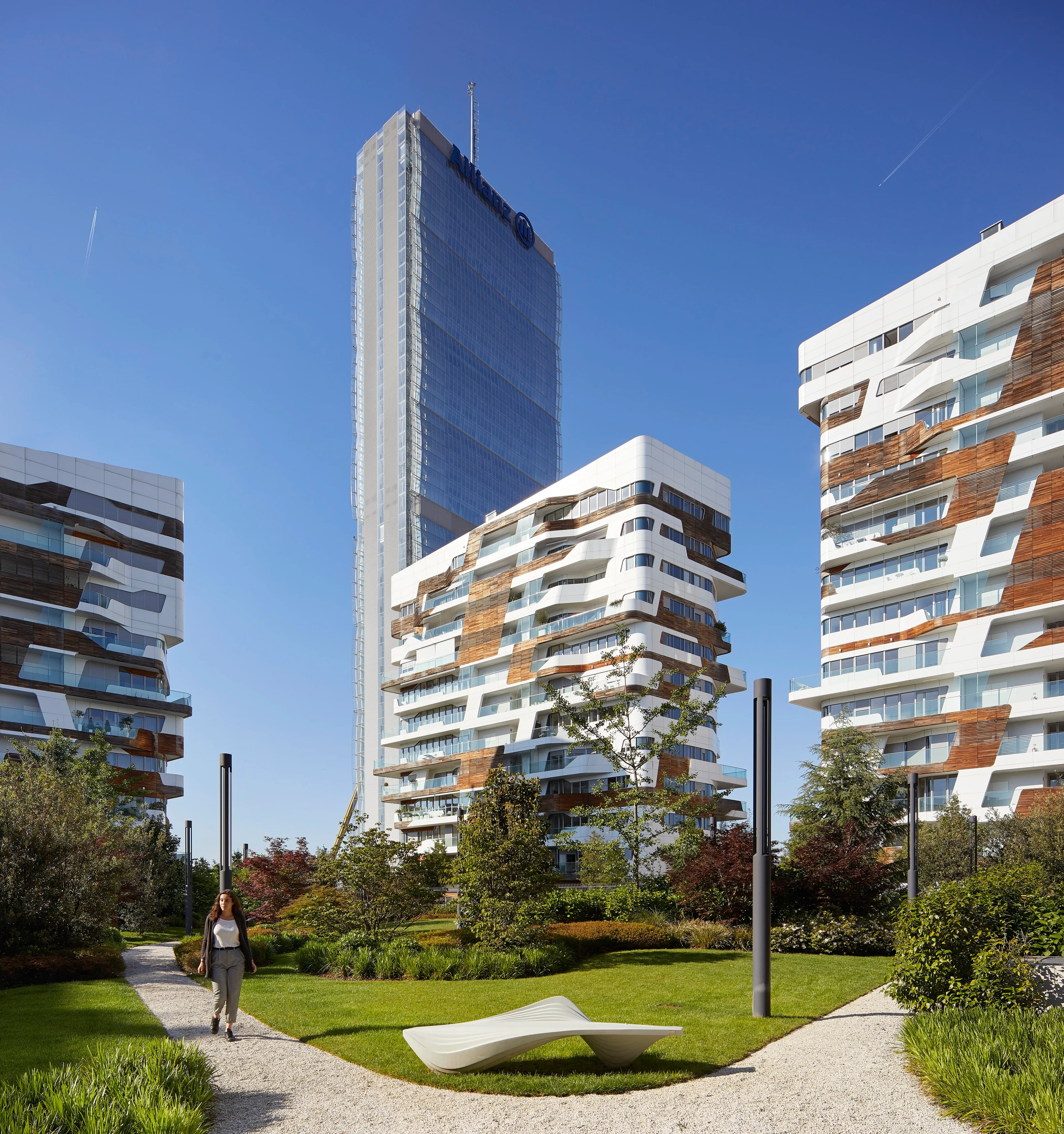
The Residential plot is composed by 7 linear buildings set along a continuous path around two land areas: Rc1, including buildings C1-C2-C3 and Rc2 with buildings C4-C5-C6-C7. The land areas are divided by a strip of public park.
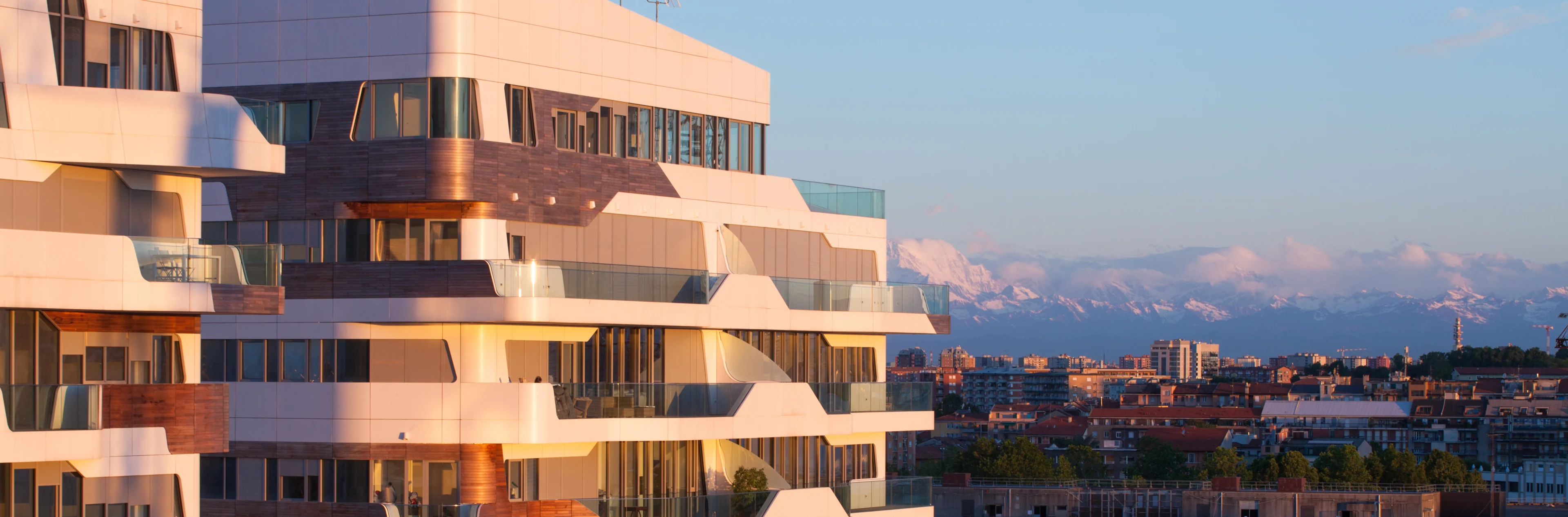
The buildings can accommodate up to 230 luxury apartments, with common facilities. The skyline of the residential complex is defined and characterized by a sinuous fluid line. The roof outline raises continuously from building to building, starting from 5-storey C2 building facing Piazza Giulio Cesare it reaches its maximum height at building C6 13th floor, thus ideally setting a unified and unique skyline.
Great care has been given to site and buildings orientation, taking into account environmental and comfort requirements so that most apartments face south-east and at the same time allocate the best views from the terraces, towards the city or the public park.
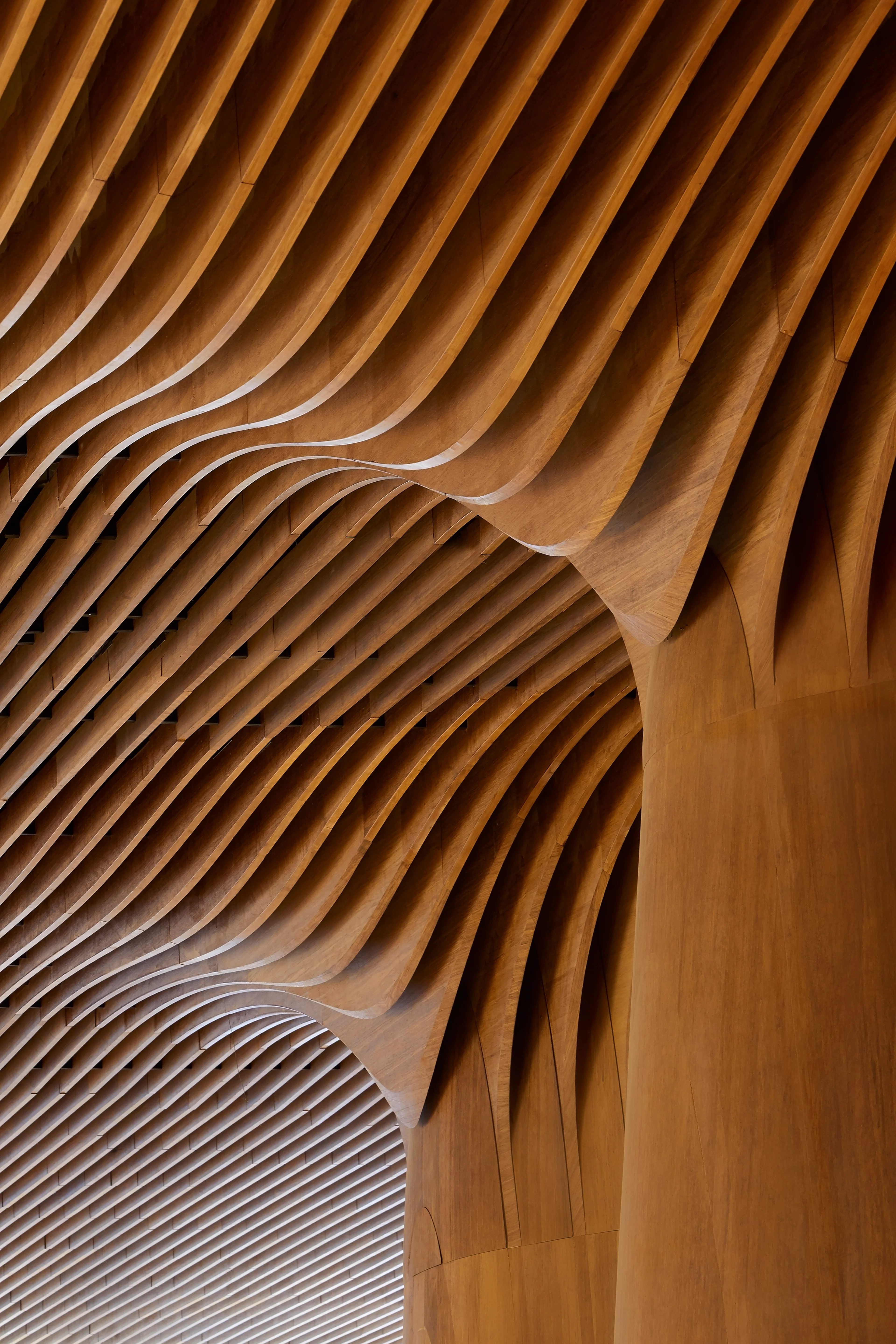
Photograph by Hufton + Crow
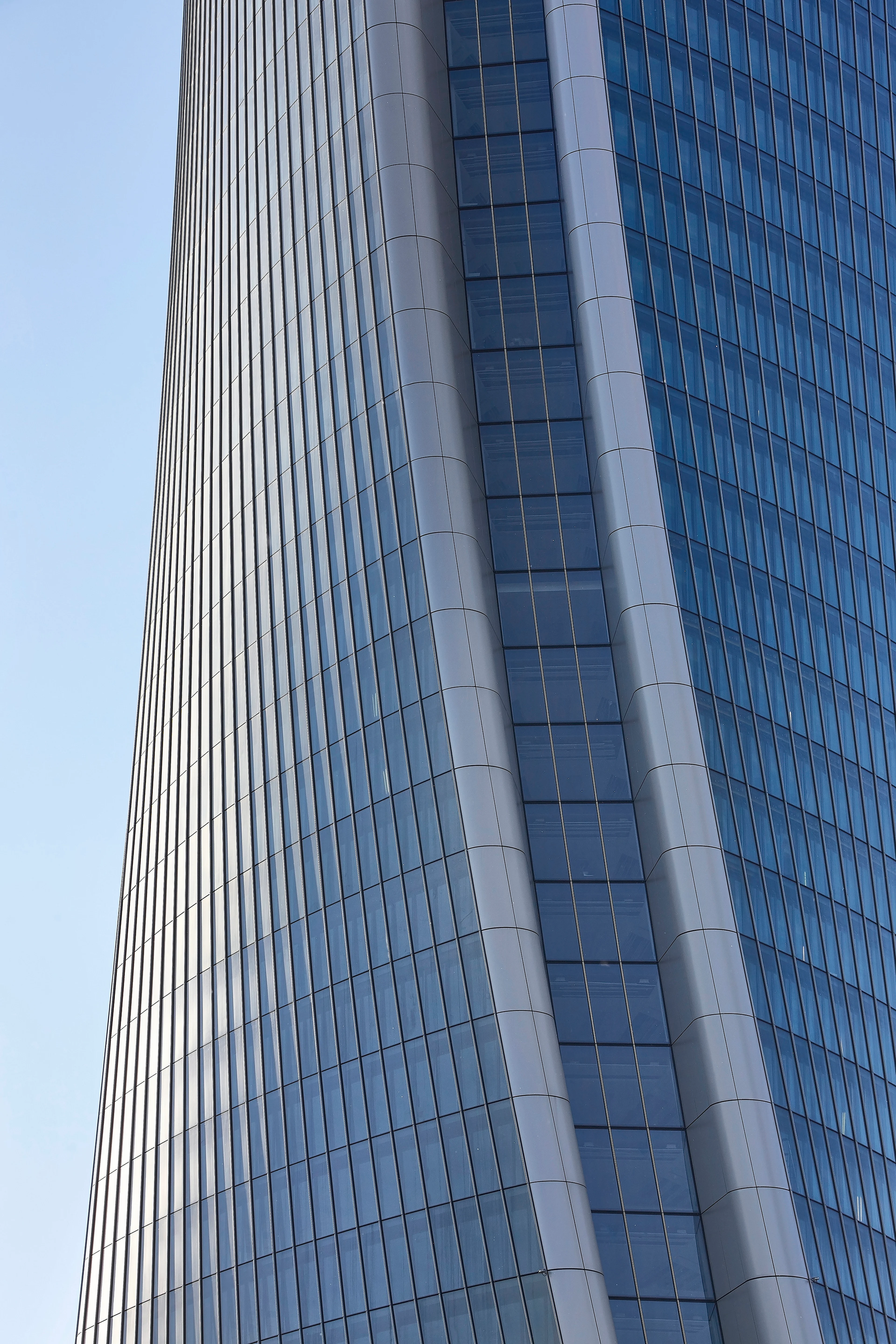
Generali Tower - Shopping Centre (Podium Interior - lower ground floor)
CityLife Projects
CityLife Residences is within the CityLife masterplan that has redeveloped Milan’s abandoned trade fair grounds following the fair’s relocation to Rho Pero in 2005. Explore our other projects within the CityLife Materplan
Reassuring yet dynamic
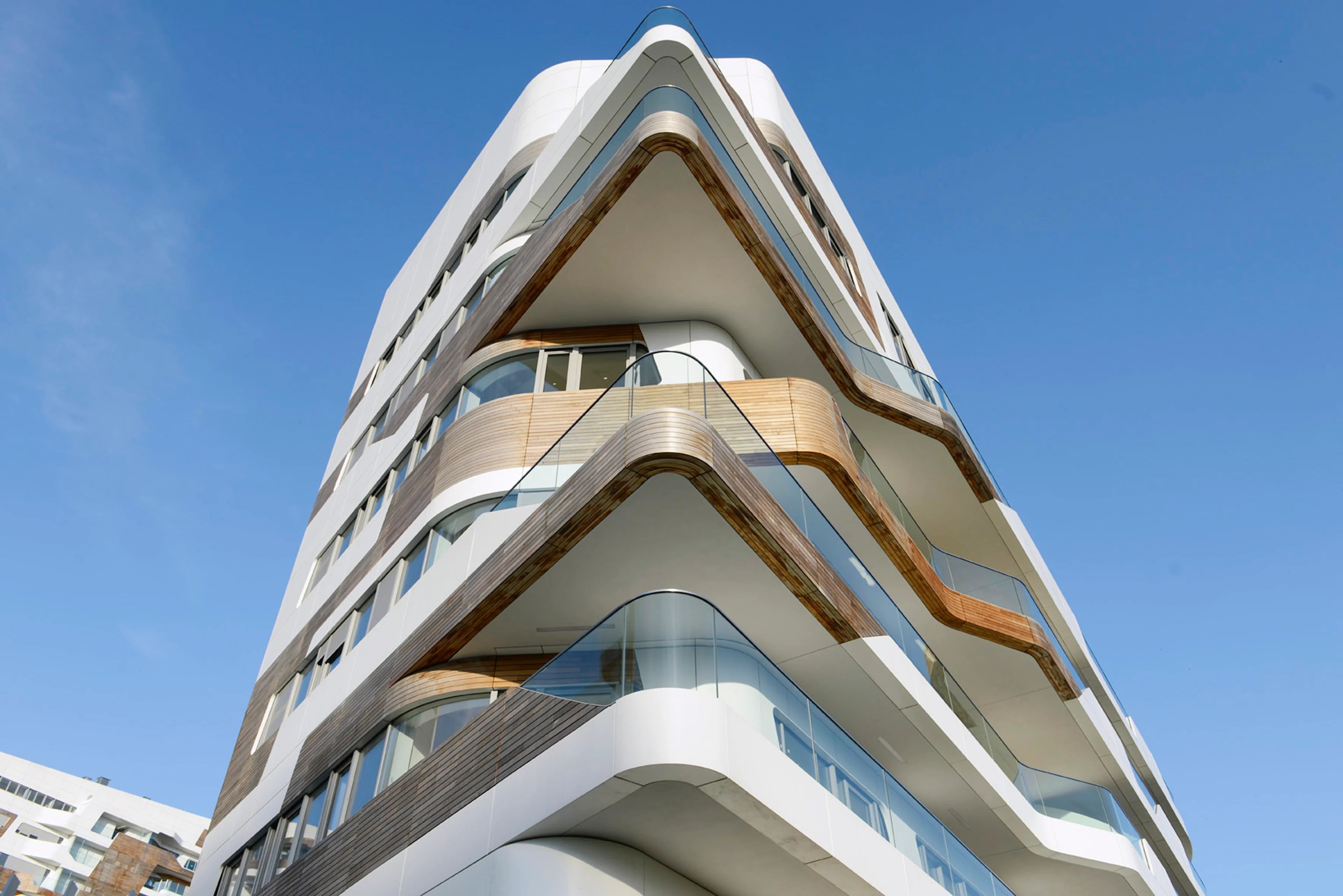
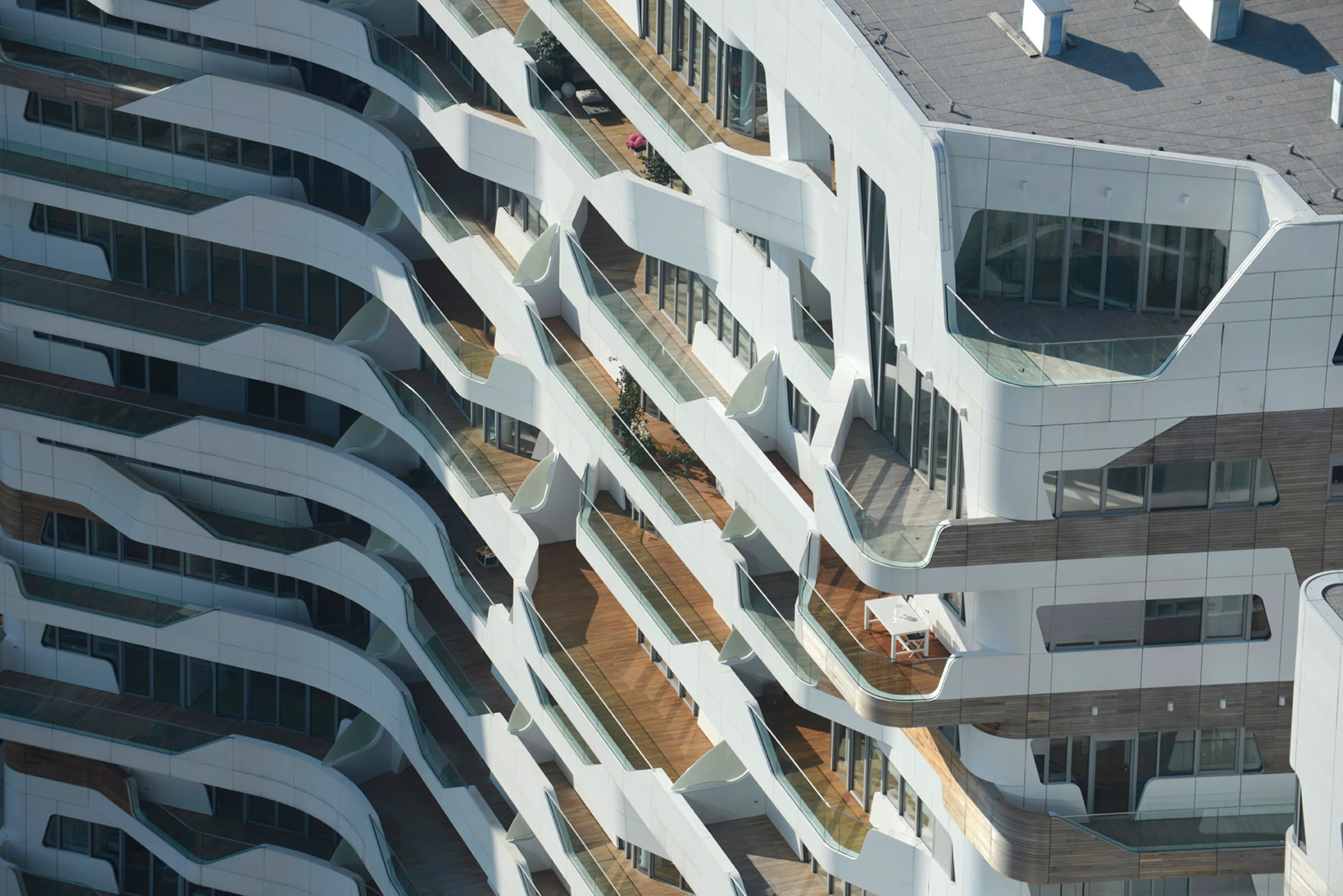
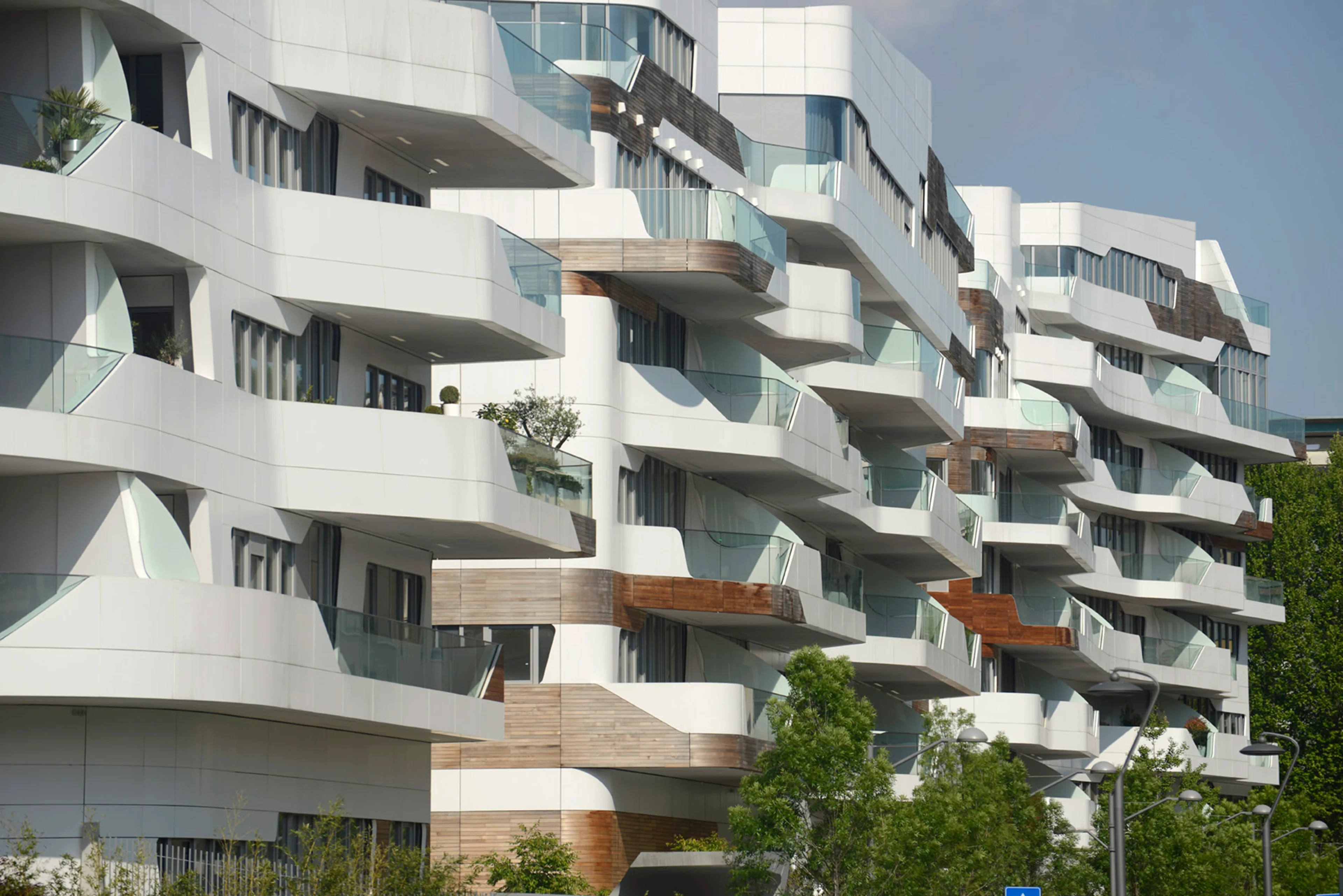
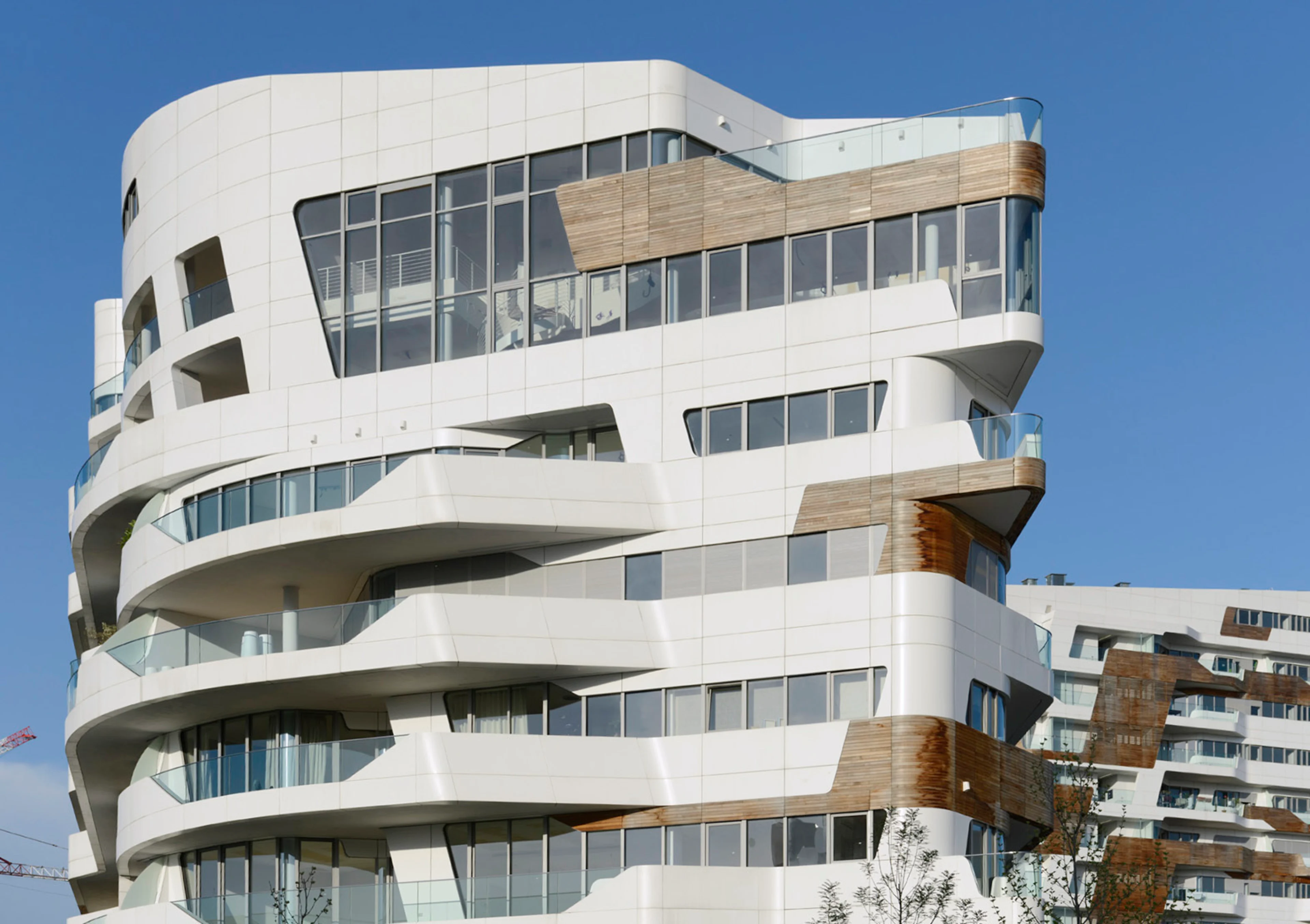
The façades design involves continuity and fluidity: the volumetric envelope of the buildings is defined by a curvilinear movement of balconies and terraces, opening up into a rich variety of private spaces, both interior and exterior, echoing the landscape below.
The façade materials - fiber concrete panels and natural wood panels - emphasize this complex volumetric movement and at the same time give a private and “domestic” quality to the interior of the residential courtyard.
At ground level, the double-height lobbies are flooded with light by large openings stretching from floor to ceiling, designed to confer strong visual continuity with the park.
Although great consideration has been given to the ground floor design and morphology, the project is formally defined mainly by the roof profile and the intense urban horizon it generates. This strategy was determined by the awareness of forthcoming towers looking upon the residential roofs and by the strong will to engender, within the inner courtyard, a completely new residential landscape, reassuring yet dynamic.
Residential
Explore more of our residential buildings
From the renovation and extension of Monaco’s historic Le Schuylkill tower to a new 128,000 square metre waterfront development in Dubai, discover our latest residential projects.
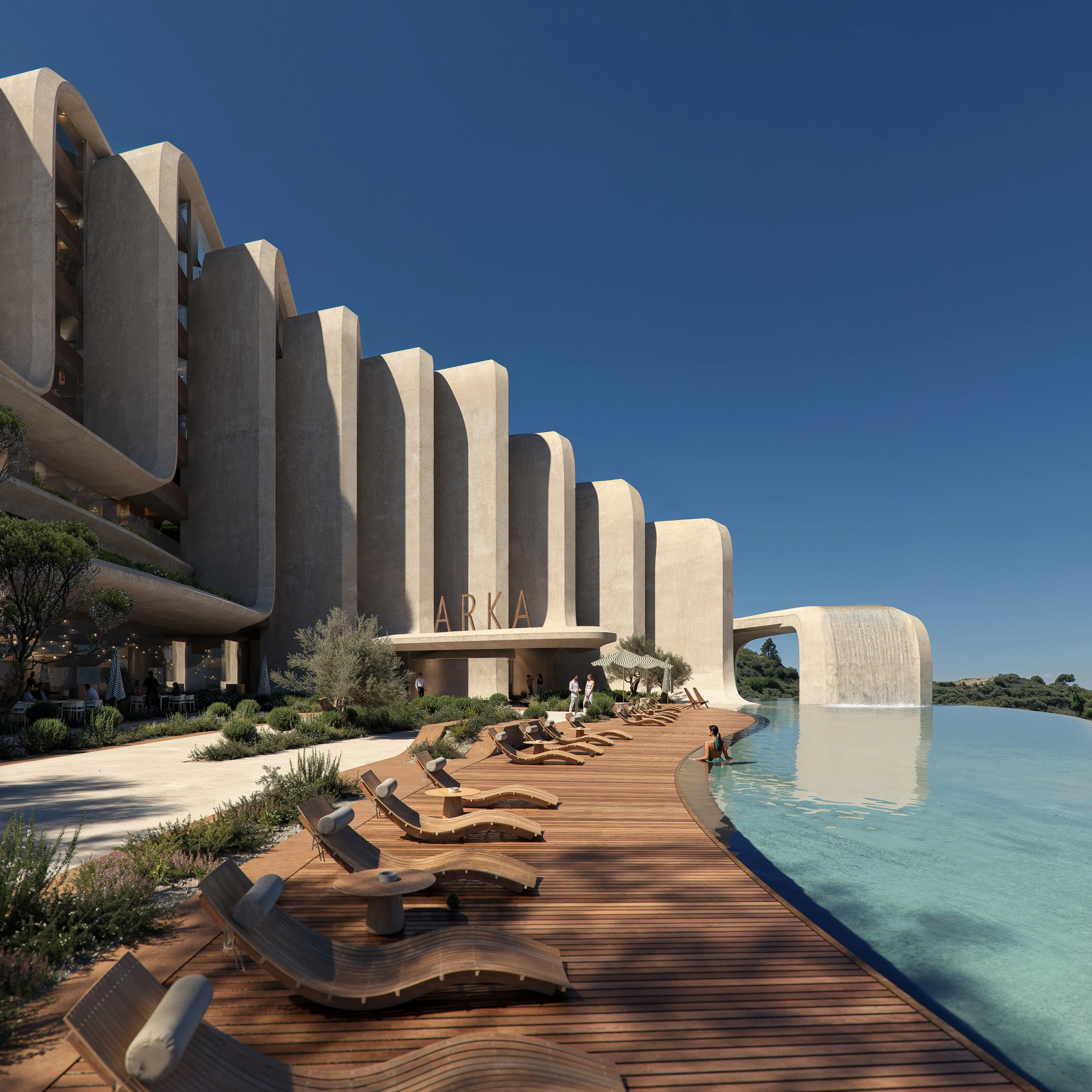
The Cascades
Located in Kodra e Diellit, the fastest-growing district of Tirana, the Nest and Cascades are new additions to the community. Renowned for its colourful post-communist architecture and vibrant café culture, Tirana is the capital of Albania with almost one million residents living within its greater metropolitan region. Progressing rapidly towards European Union membership, the Albanian economy is predicted to grow significantly in the coming years—with Tirana as the centre of its growth.
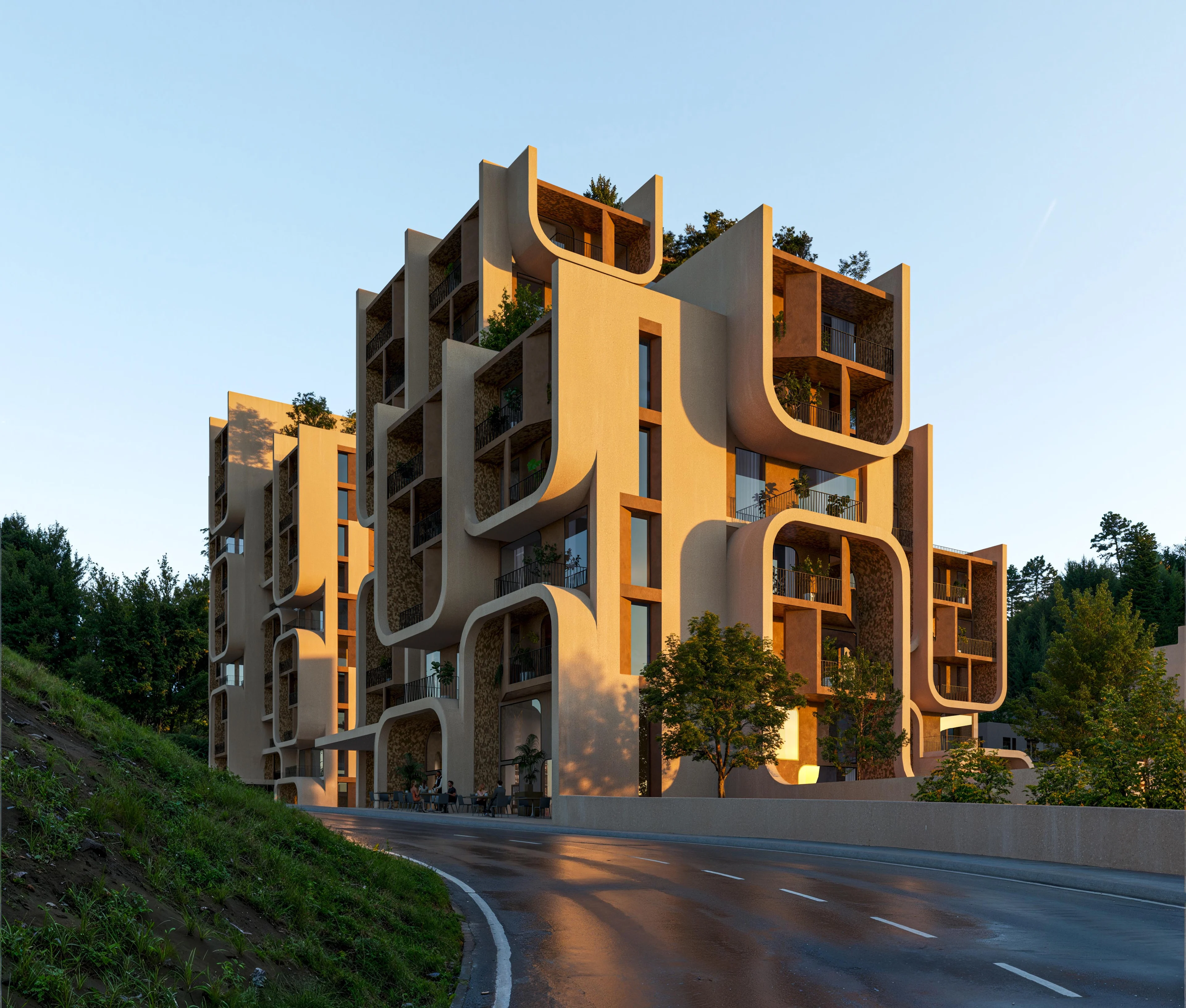
The Nest
Located in Kodra e Diellit, the fastest-growing district of Tirana, the Nest and Cascades are new additions to the community. Renowned for its colourful post-communist architecture and vibrant café culture, Tirana is the capital of Albania with almost one million residents living within its greater metropolitan region. Progressing rapidly towards European Union membership, the Albanian economy is predicted to grow significantly in the coming years—with Tirana as the centre of its growth.
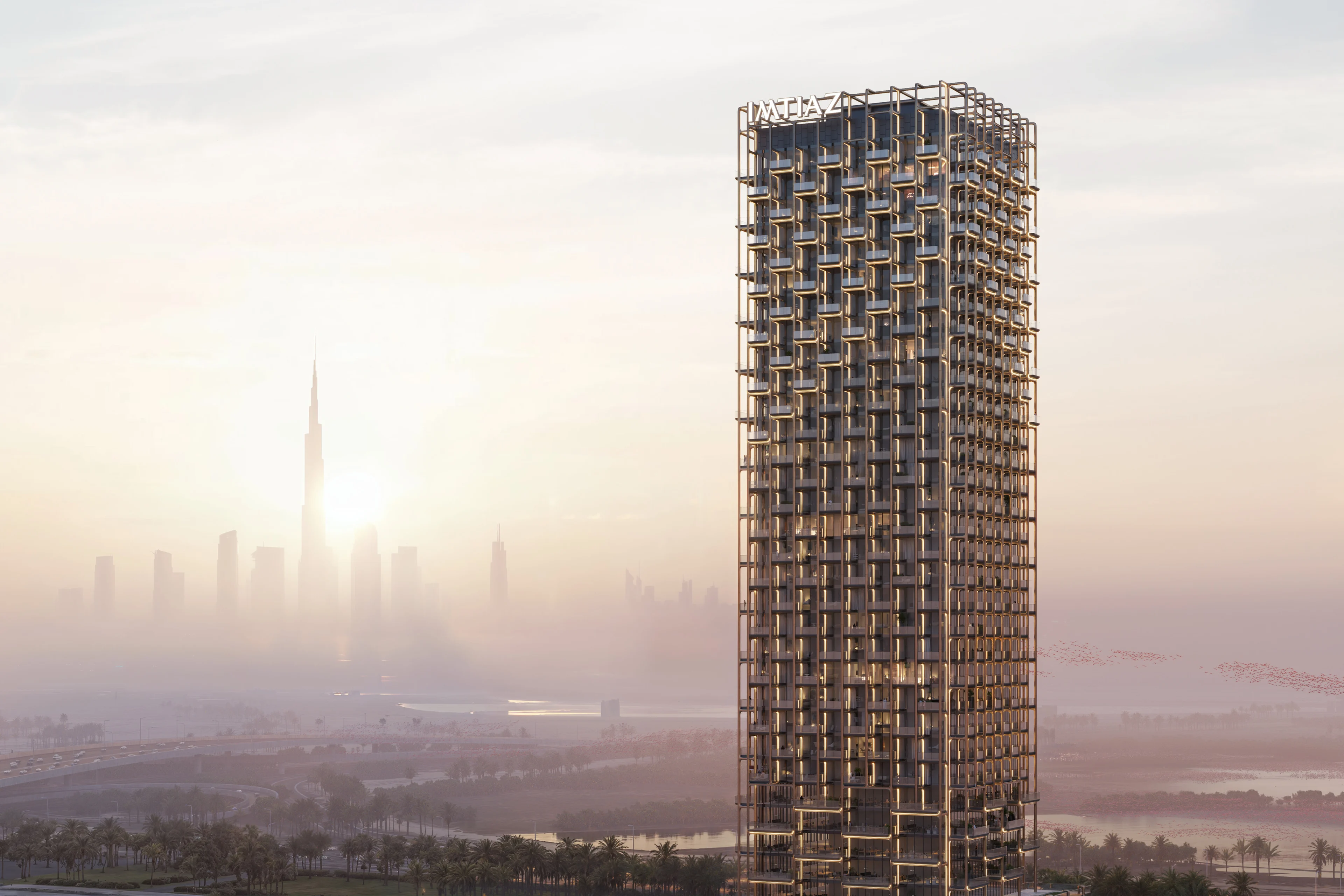
Render by Bloomimages
Symphony Tower
Located a short distance from Downtown Dubai and the Dubai Design District, Symphony Tower is situated within the new Horizon district of Dubai between the city's Meydan Racecourse and the waters of Ras Al Khor.
Render by DAMAC
Sales Launch January 2025 100% DD
The Delmore
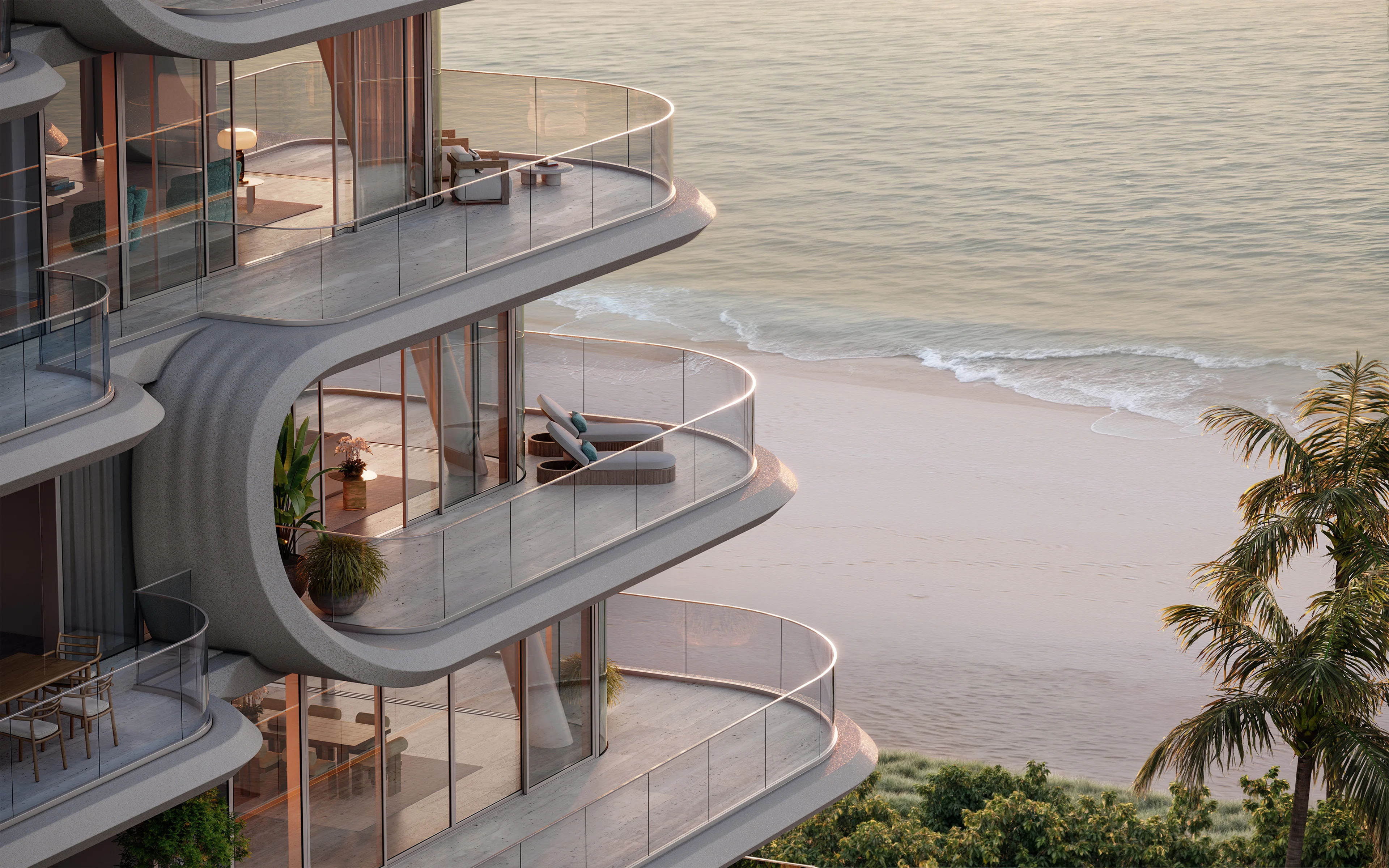
Situated on the beach at Surfside, The Delmore’s design is defined by its location and environment. ZHA’s detailed analysis of the oceanfront site mapped fluctuations in solar radiation, temperature, humidity, prevailing winds, air quality, rainfall, in addition to the variable ground and sea conditions throughout every day of the year.
Oystra
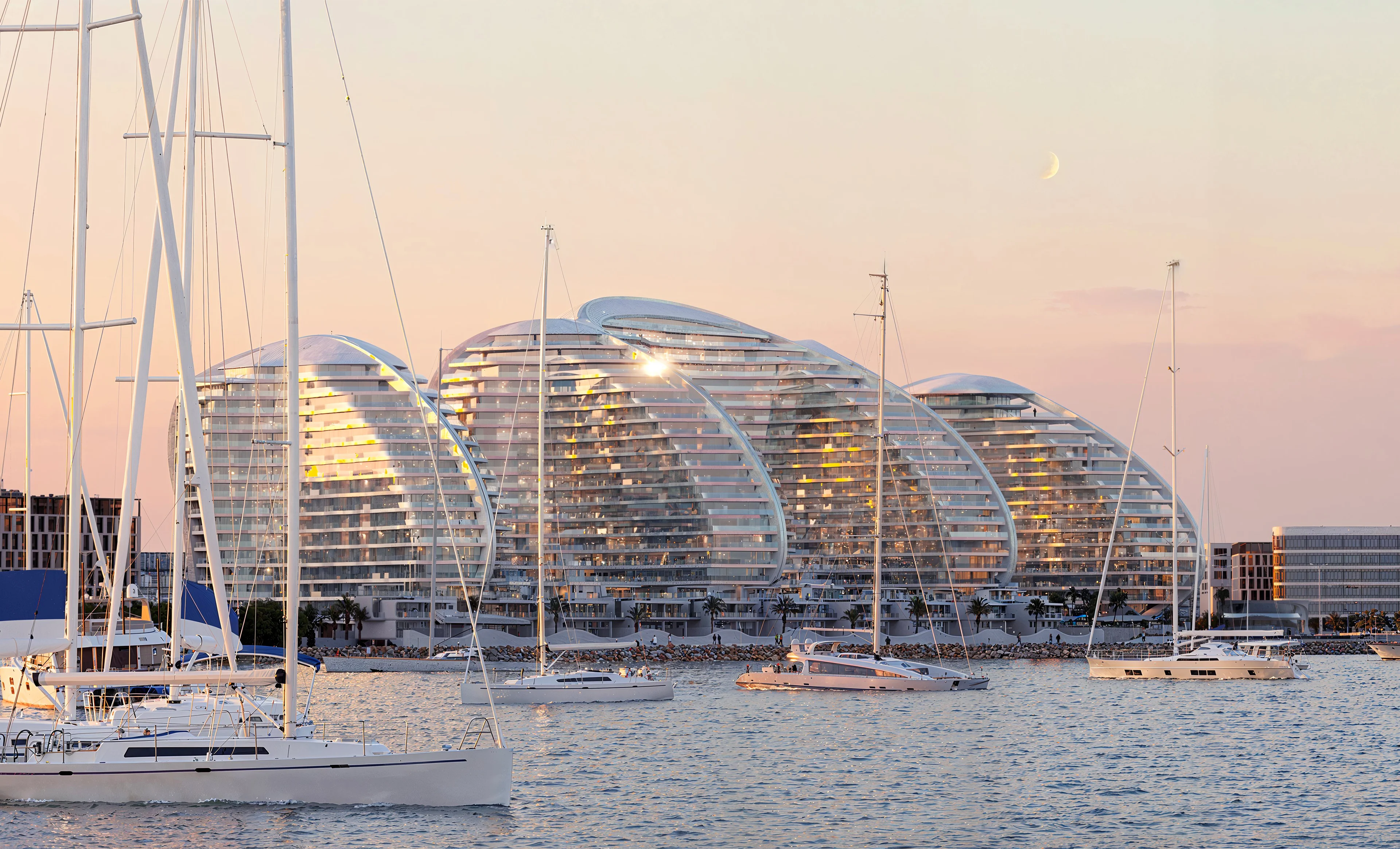
Located on Al Marjan Island in Ras Al Khaimah, UAE, Oystra is a 128,000 square metre seafront development of 950 one- to four-bedroom apartments, duplexes, penthouses, and waterfront villas, together with extensive shopping, dining and leisure amenities.
Cityzen Mixed-Use Development
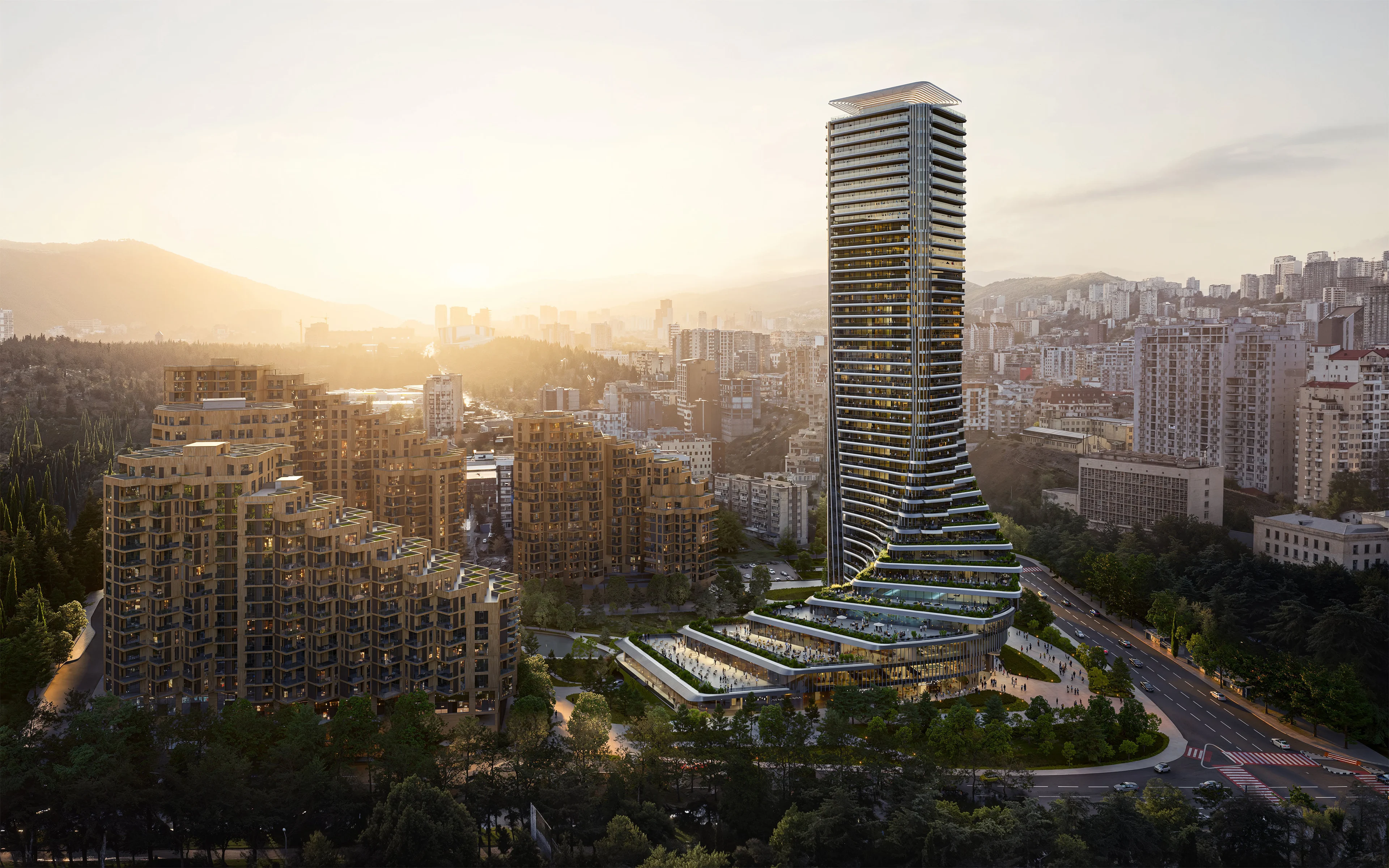
Serving as the gateway to the Cityzen community, a new civic hub in the west of Tbilisi, Cityzen Tower is ZHA's first project in Georgia.
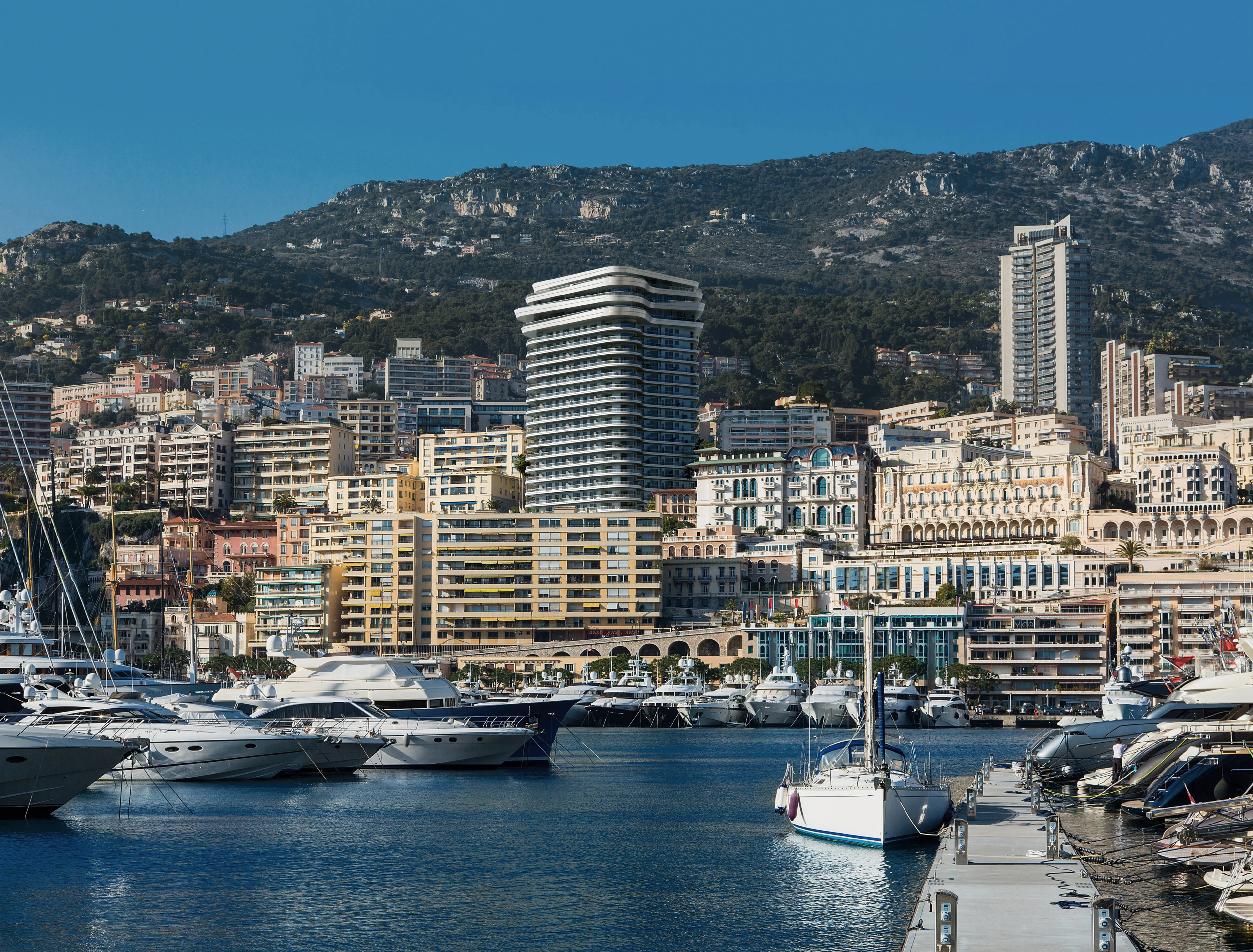
_Photo by John Kellerman courtesy Alamy, montage by MIR
Le Schuylkill
ZHA was appointed together with local practice Square Architecte to renovate and extend Le Schuylkill Tower. Construction works have begun with completion planned in May 2027. With 188 apartments from small studios to four-bedroom family units, the existing tower sits on a steep site with a 22m gradient between its north and south boundaries.
Render by Atchain
The Grove Residences
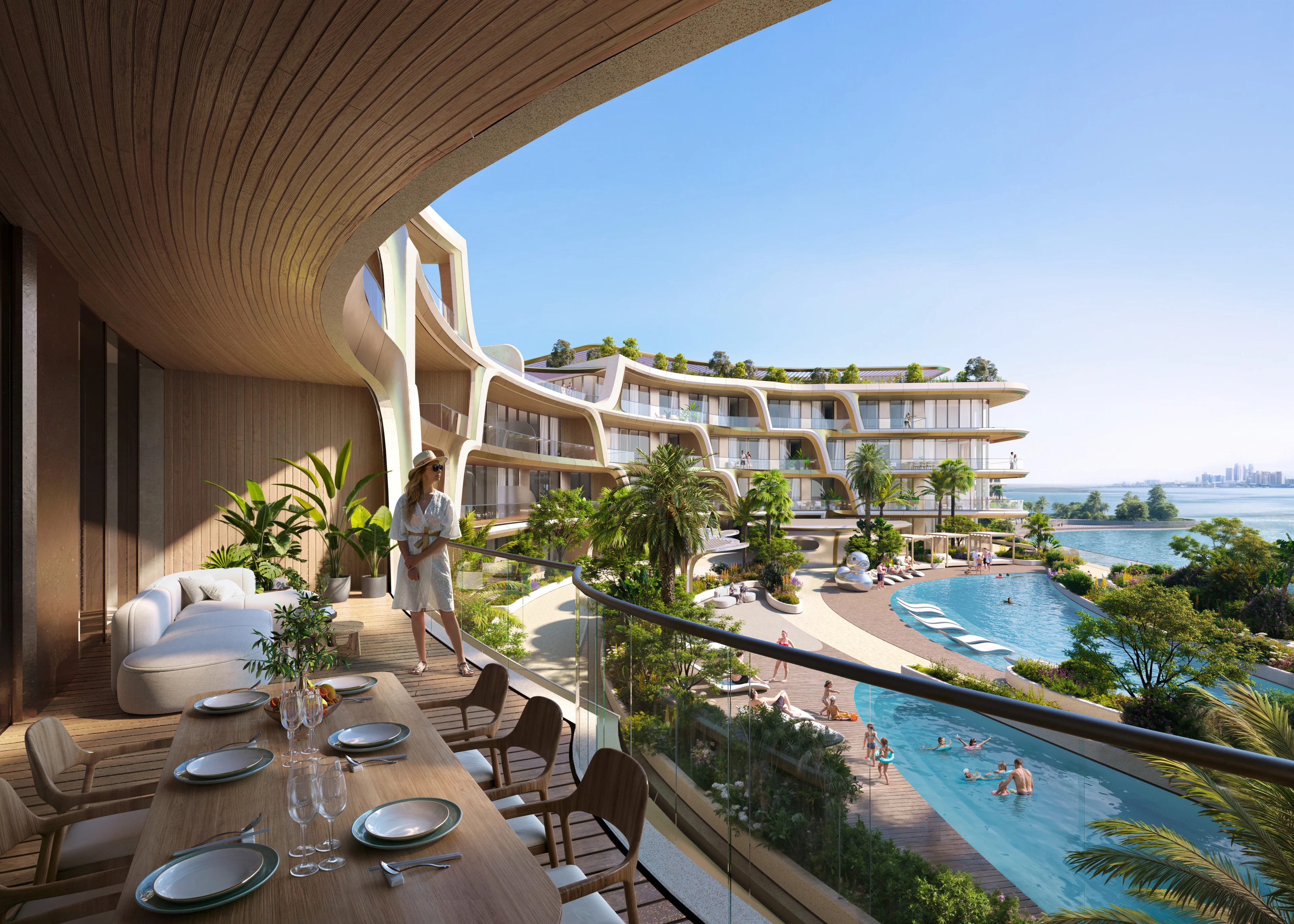
Comprised of 293 apartments offering panoramic views of Qetaifan Bay and the Lusail skyline, The Grove has been designed with its waterfront promenade as the heart of the community.
Render by XUniverse
The Alba Residences & Hotel
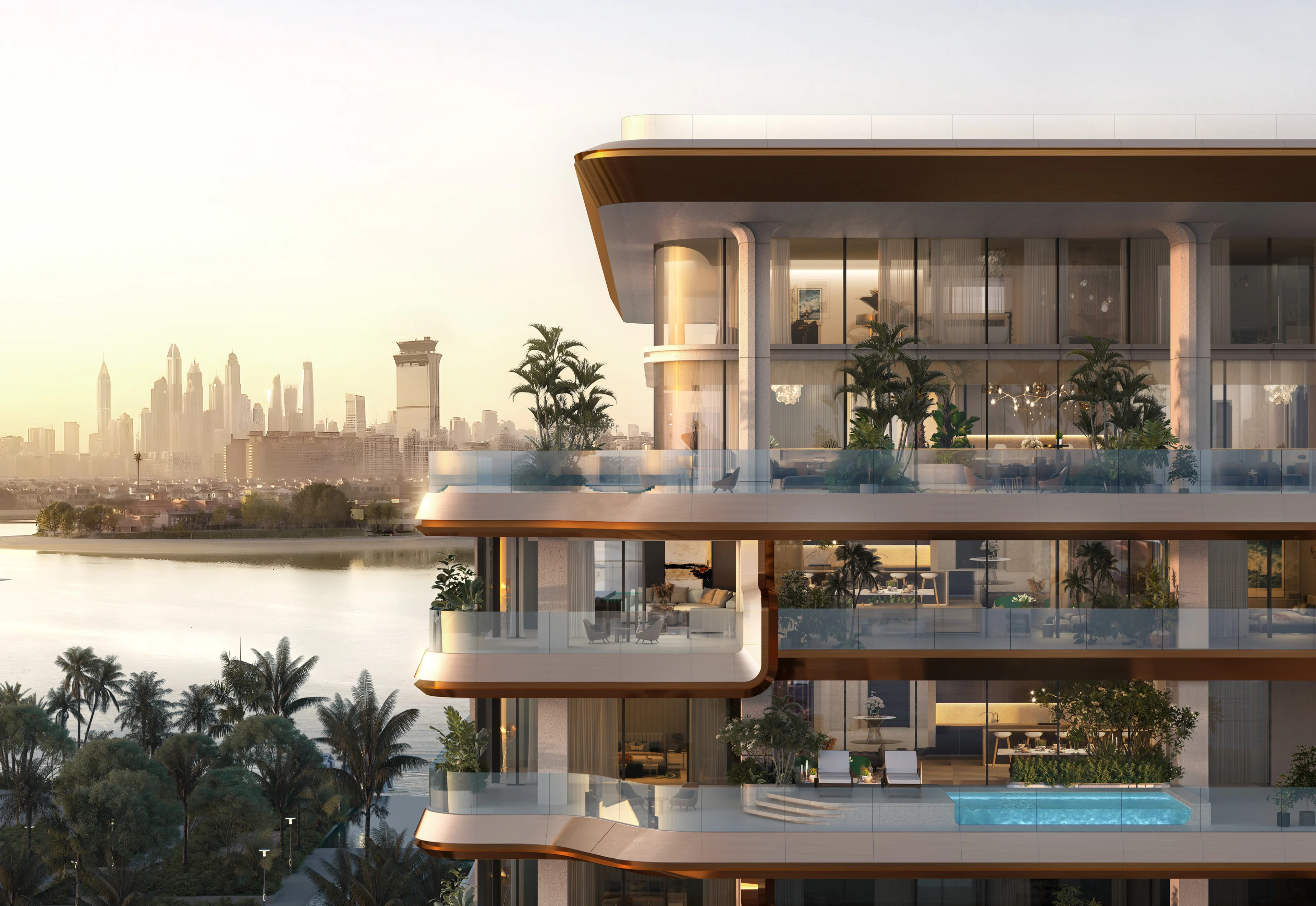
The Alba is a new US$1.9 billion mixed-use beachfront development designed by ZHA for Omniyat on the Eastern Crescent of Palm Jumeirah with panoramic views of Dubai’s coast and skyline.
Photograph by Luke Hayes
Mews House
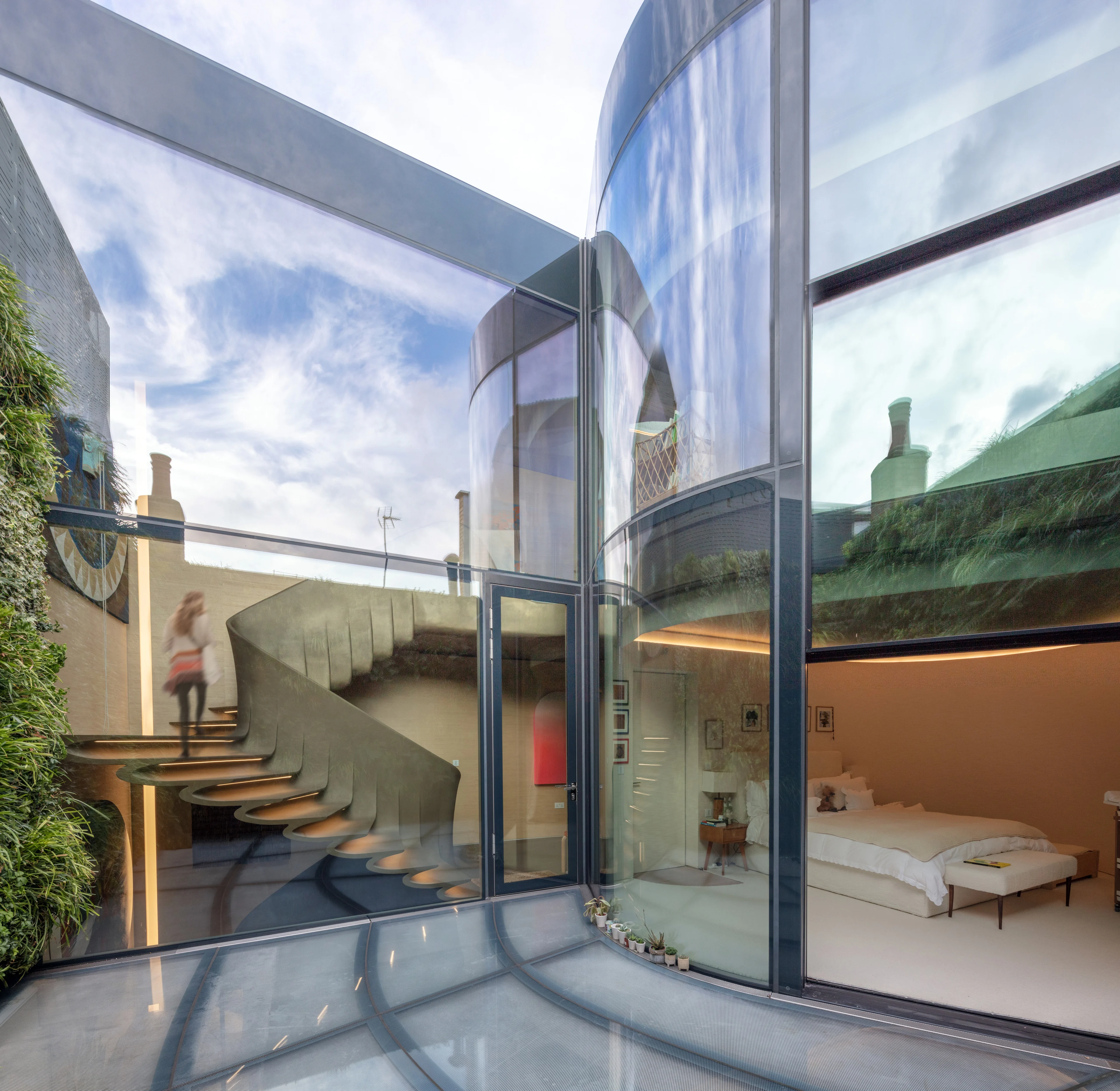
Mews House is an innovative architectural solution built on a restricted urban site within one of London’s historic conservation areas
Render by Brick Visual
Roofline
Jockey Club i-Village at HKUST
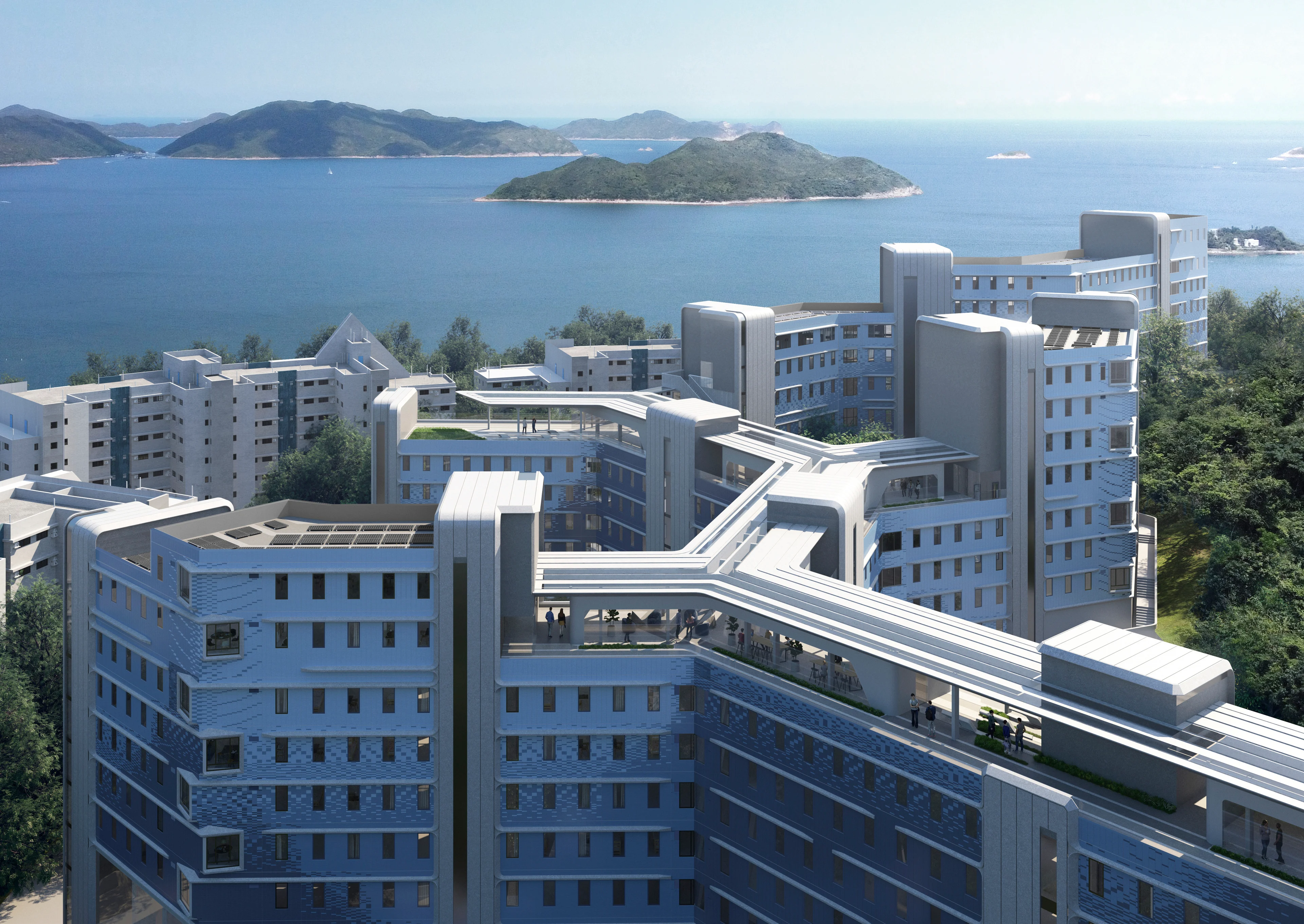
Established in 1991, Hong Kong University of Science & Technology (HKUST) has become a leading research institution consistently ranked amongst the best in Asia and around the globe. Over half of the university’s 16,000 students enrolled in the 2019-2020 academic year are from overseas, creating an urgent demand for new residential facilities within its Clear Water Bay campus.
Photograph by Hufton + Crow
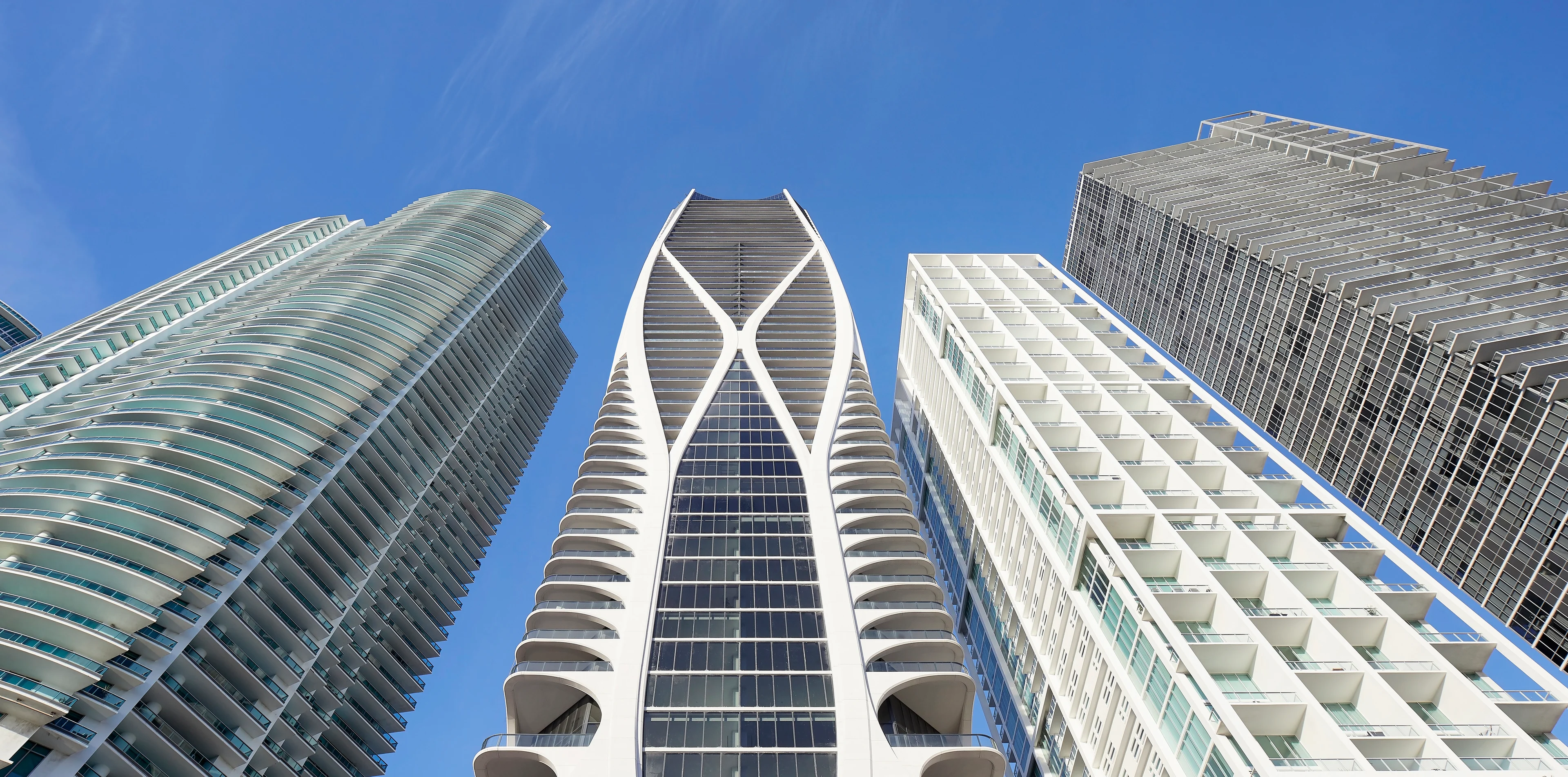
One Thousand Museum
One Thousand Museum is a 62-storey residential tower opposite Museum Park in Miami. With views across Biscayne Bay, this popular 30-acre park was redeveloped in 2013 as one of downtown Miami's primary public spaces and includes the city's new art and science museums.
Courtesy of ZHA
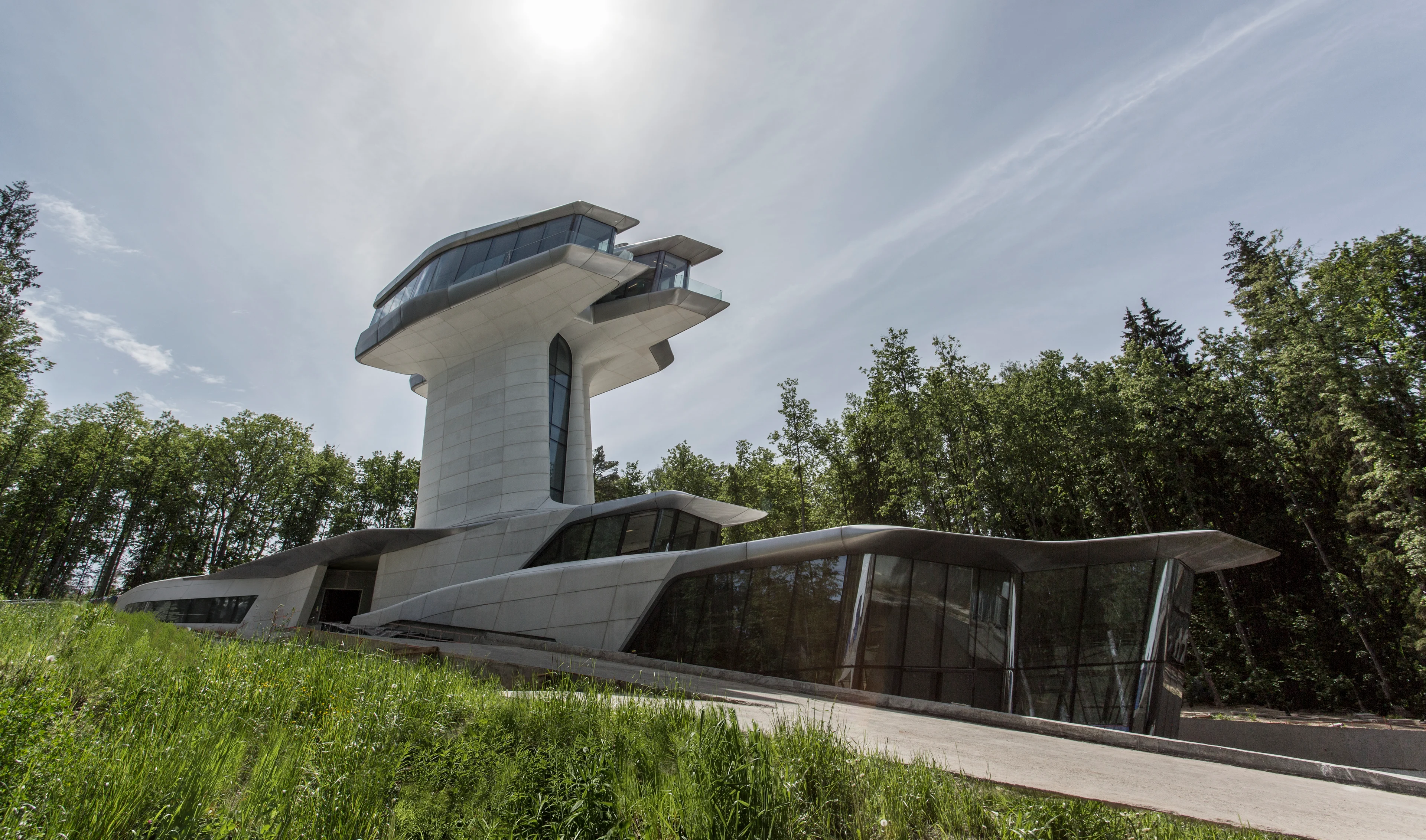
Capital Hill Residence
The client explained to the architect, “I want to wake up in the morning and just see blue sky”, to which Zaha replied, “You realise you have to be above the trees?” The form of the residence is defined by its natural topography with fluid geometries emerging from the landscape and remaining partially embedded within the hillside.
Photograph by Hufton + Crow
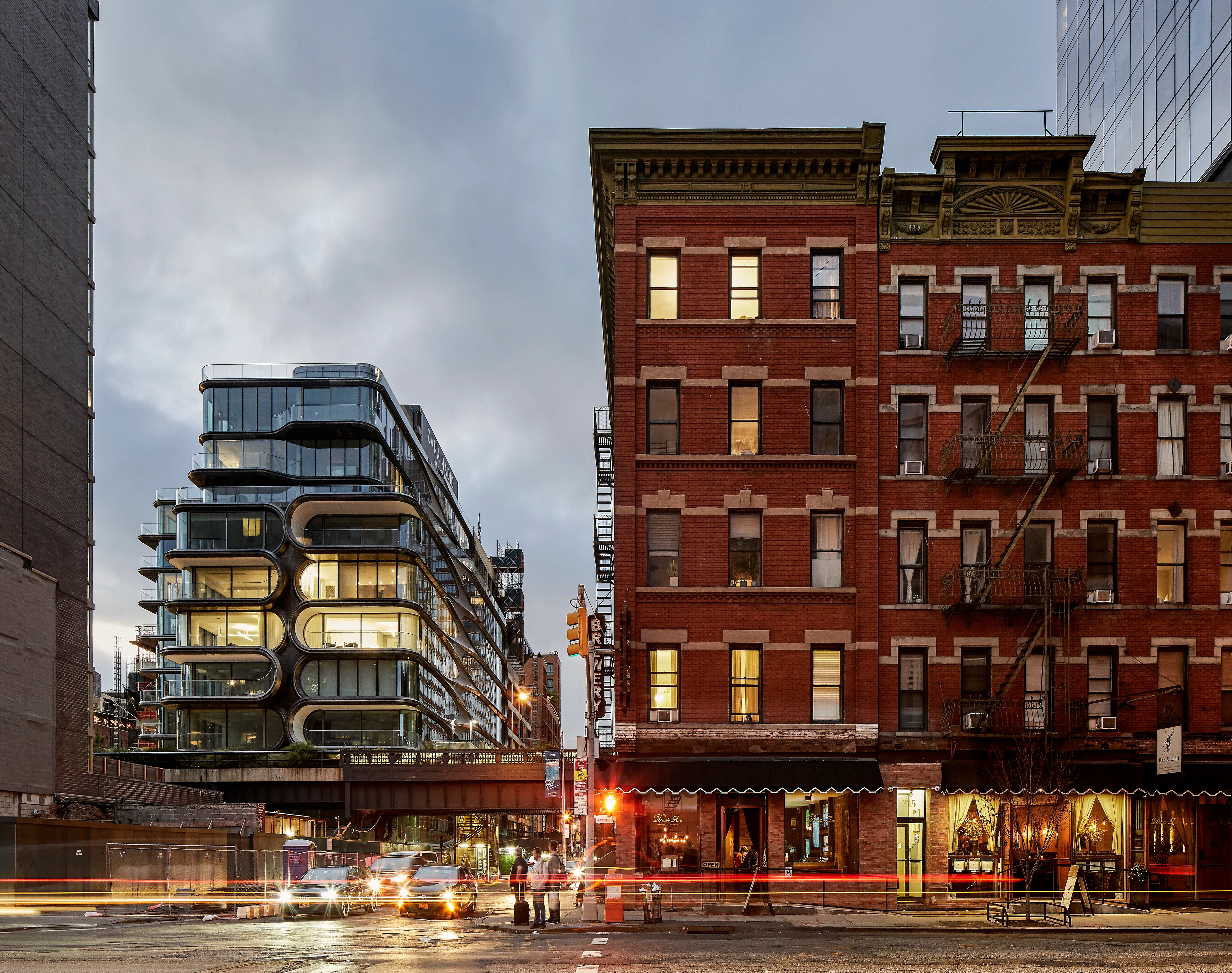
520 West 28th
There is a powerful urban dynamic between the streets of New York and the High Line, a layered civic realm that has developed over generations and in many iterations. 520 West 28th conveys this contextual relationship, applying new ideas and concepts to create the latest evolution of the site’s rich history.
Photograph by Hufton + Crow
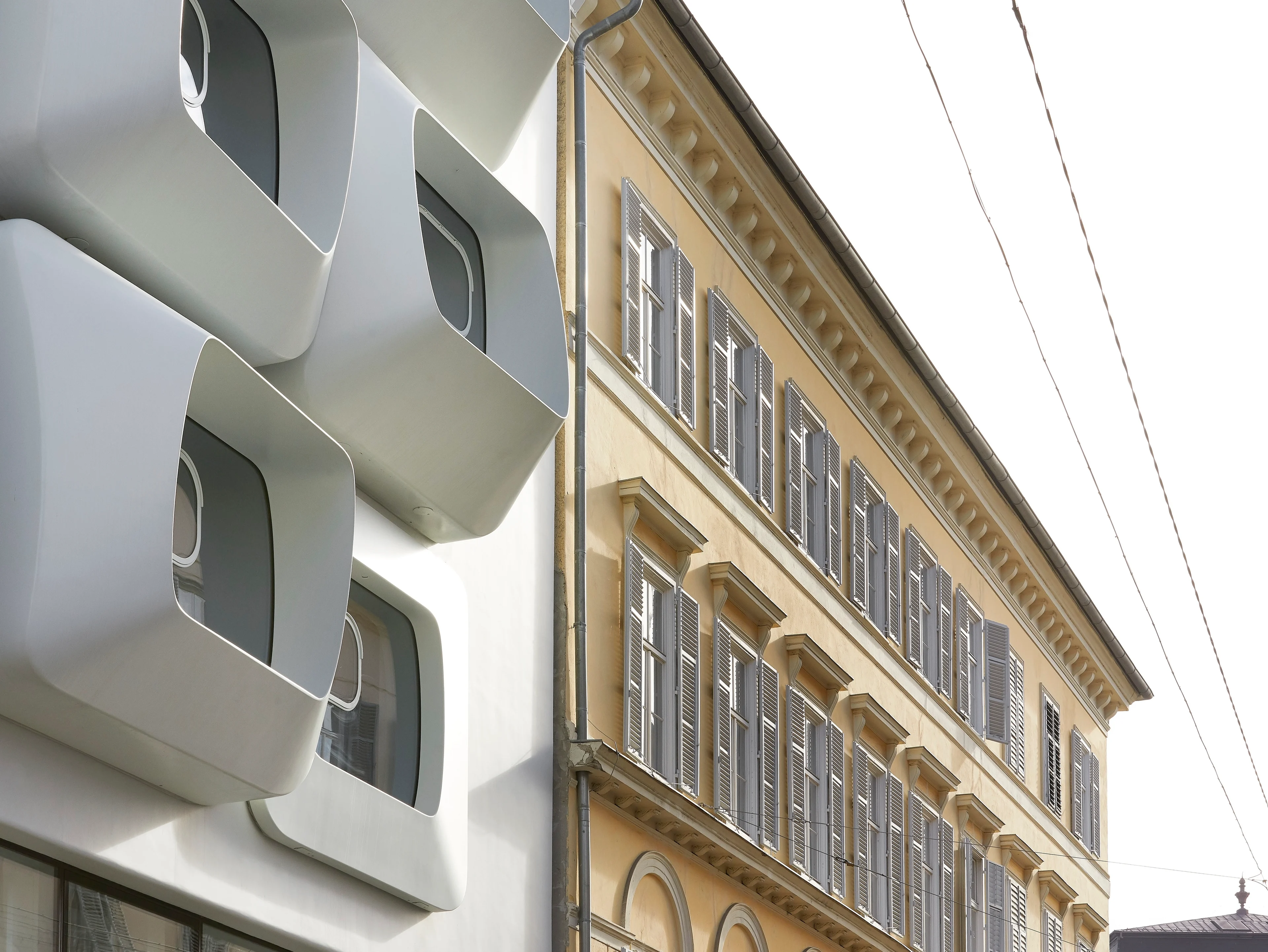
Argos Residences
Home to six universities and two polytechnics, the city of Graz has a long history as a seat of learning and innovation. Continuing this tradition of welcoming pioneers from around the world, Graz’s 60,000 students, academics and local businesses generate an increasing demand for visitor accommodation in the city whose population has grown by 20% since 2001.
01
02
03
04
05
06
07
08
09
10
11
12
13
14
15