
Photograph by Xue Liang 薛亮
Guangzhou, China
2016 - 2021
LKK Health Products Group (LKKHPG)
Infinitus Plaza
Photograph by Xue Liang 薛亮
Photograph by Xue Liang 薛亮
Photograph by Xue Liang 薛亮
Courtesy of ZHA
Photograph by Xue Liang 薛亮
01
02
03
04
05
Designed to nurture connectivity, creativity and entrepreneurship
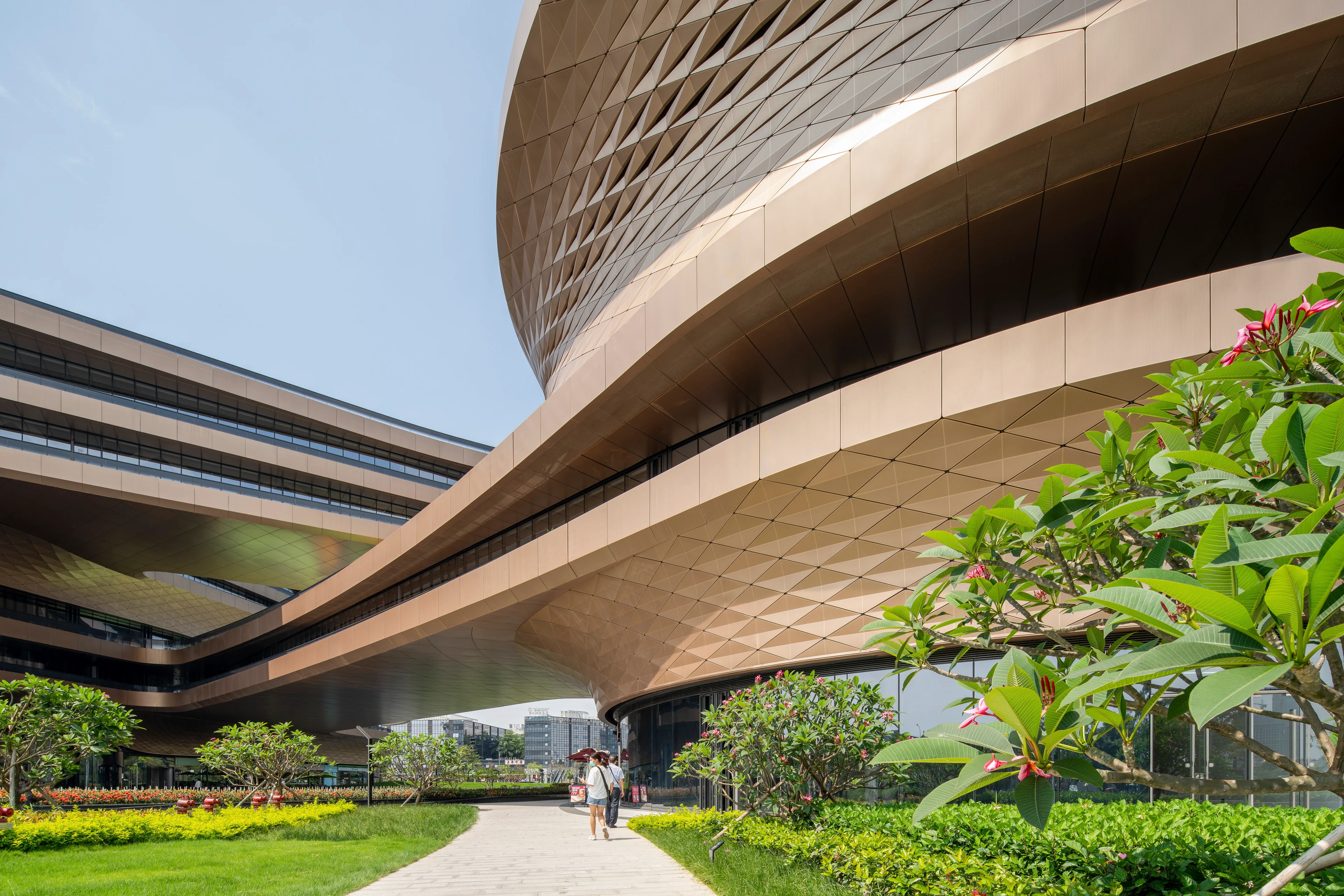
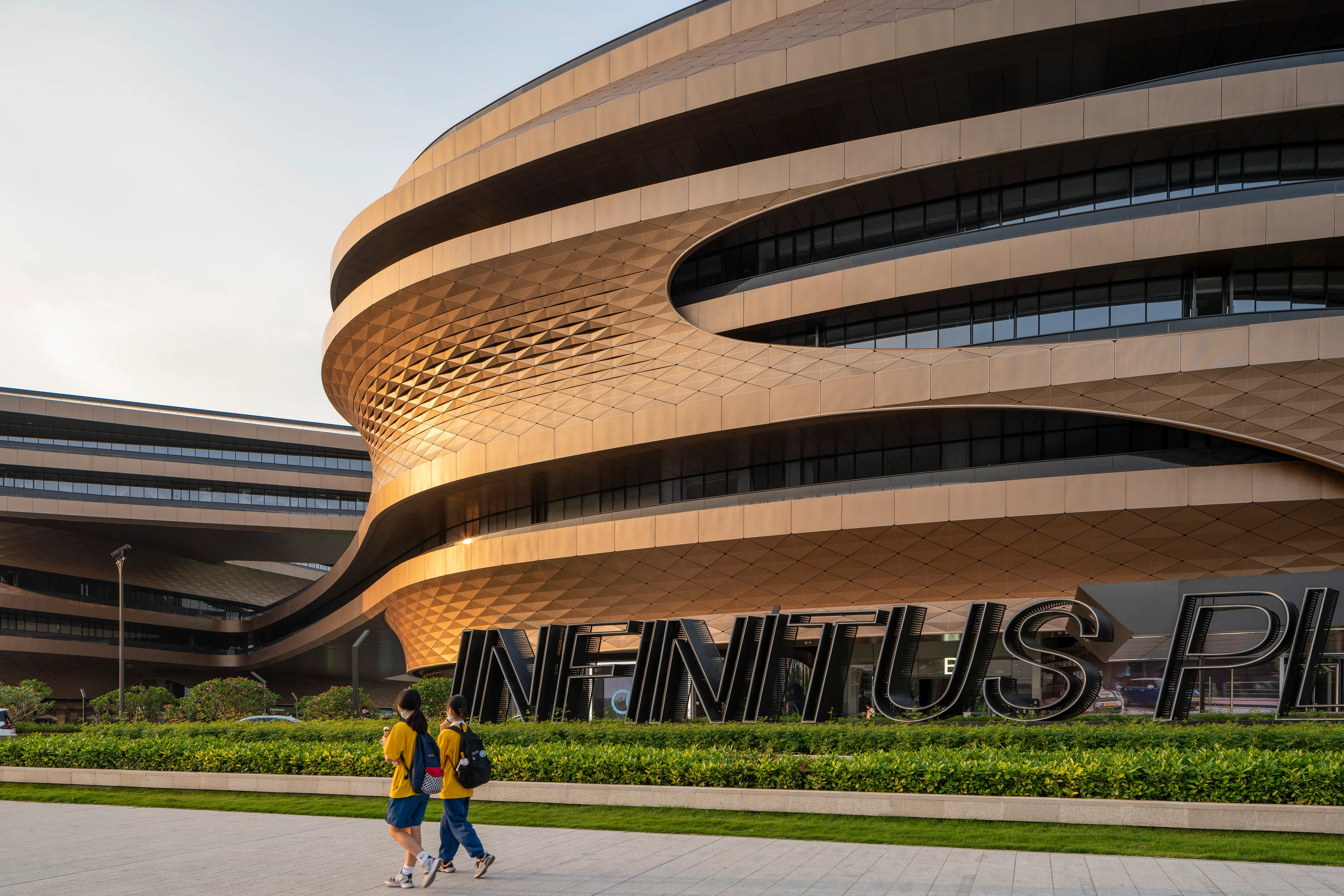
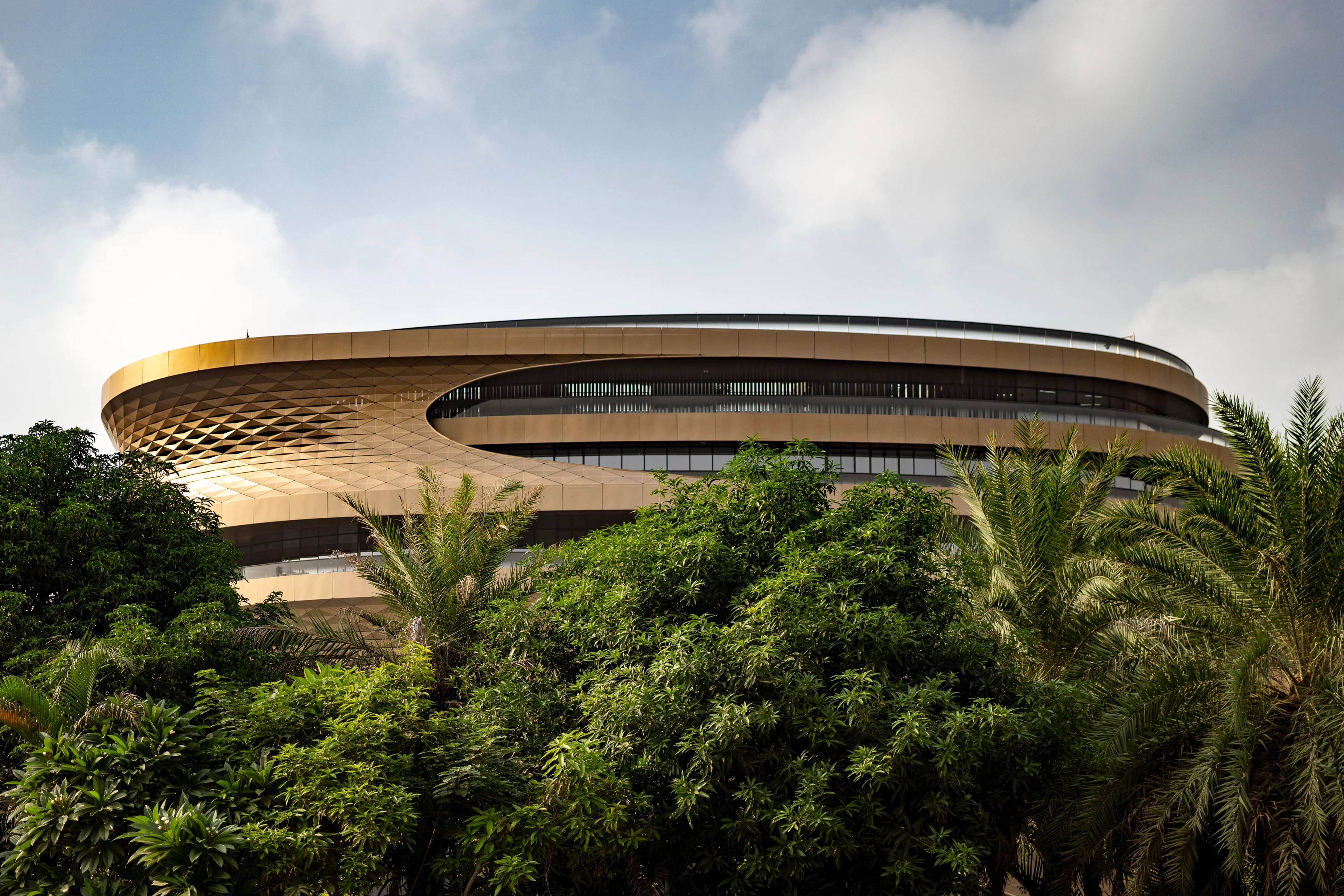
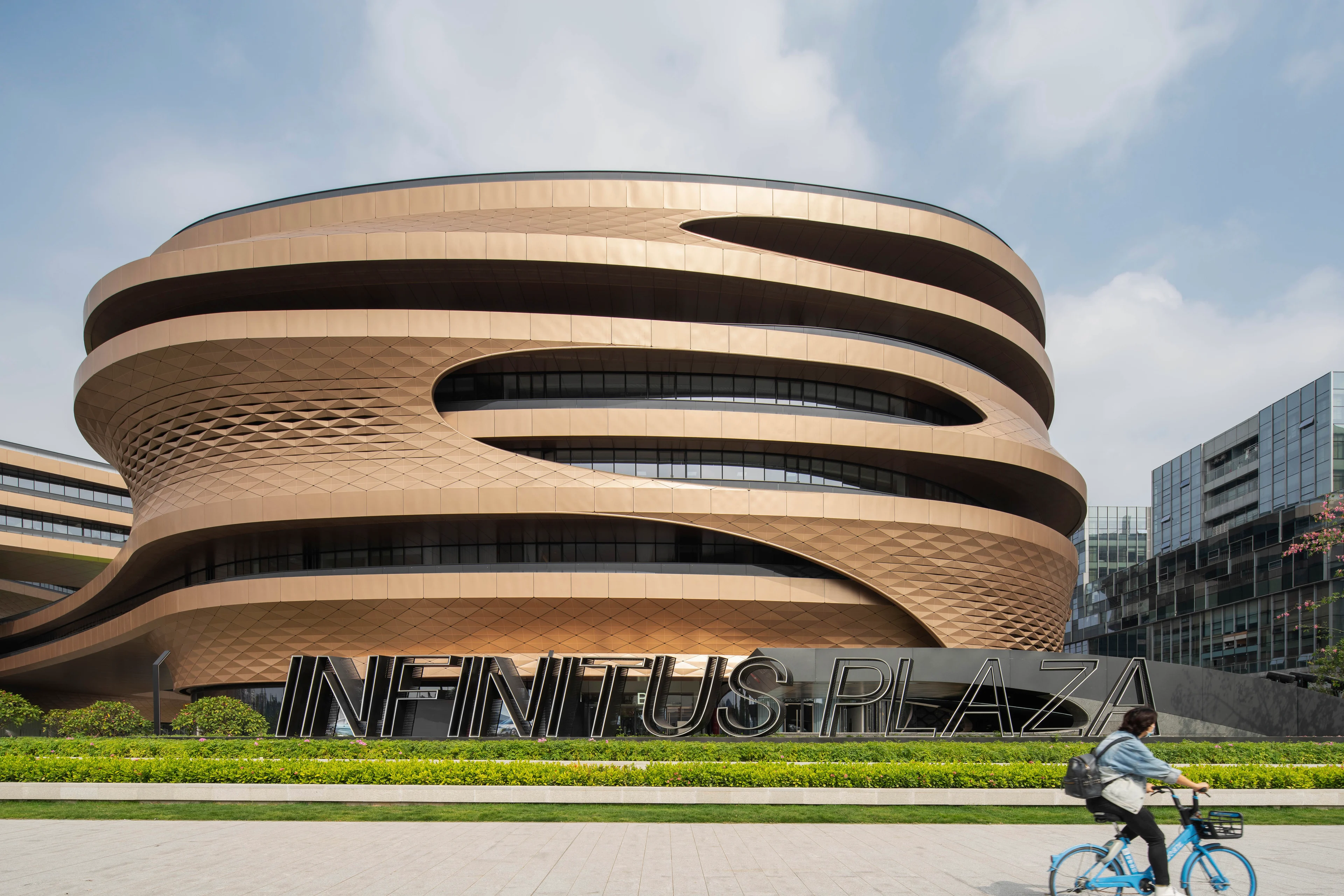
Infinitus Plaza is the new global headquarters of Infinitus China. Incorporating work environments designed to nurture connectivity, creativity and entrepreneurship, the new headquarters also includes the group’s herbal medicine research facilities and safety assessment labs as well as a learning centre for conferences and exhibitions.
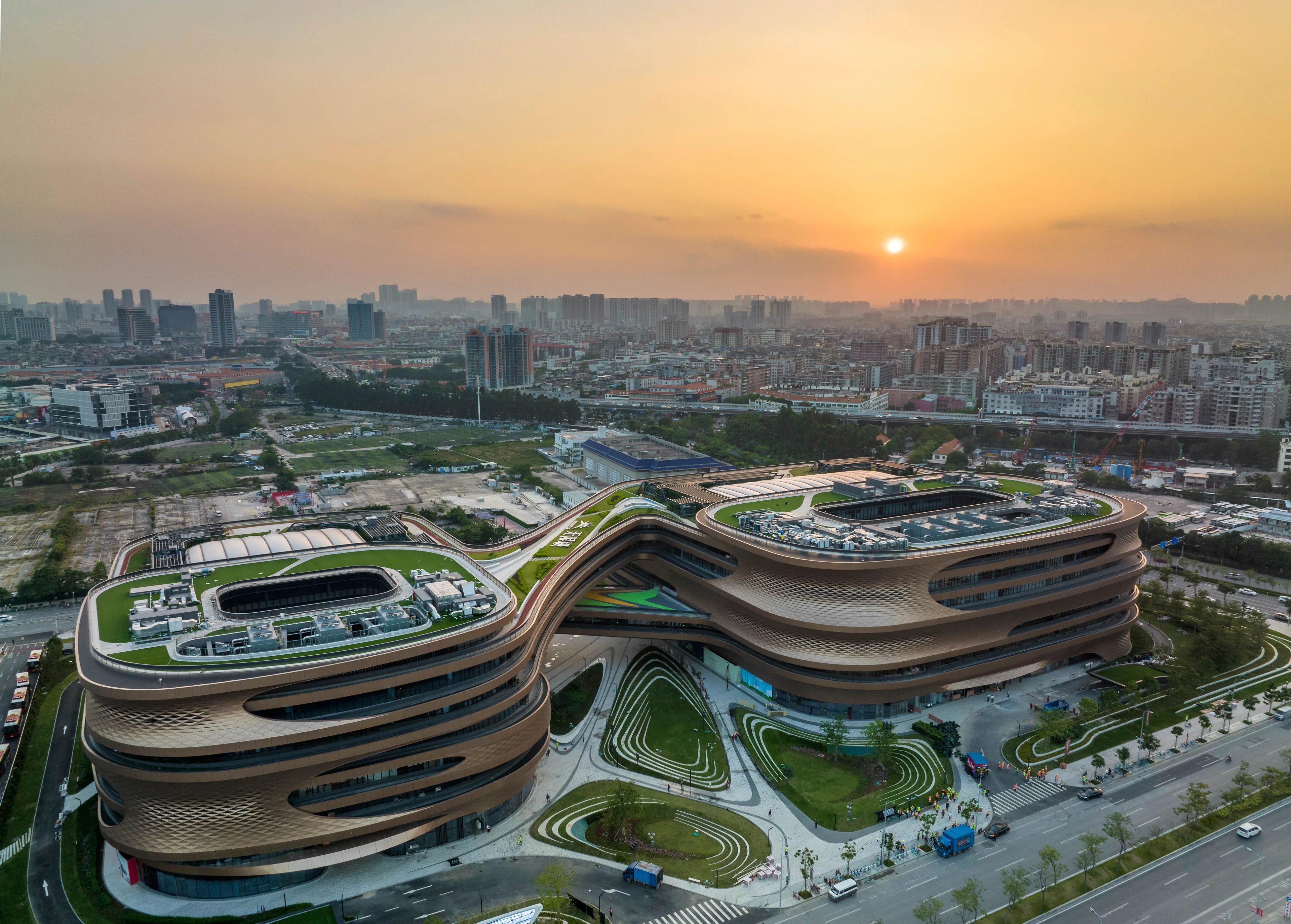
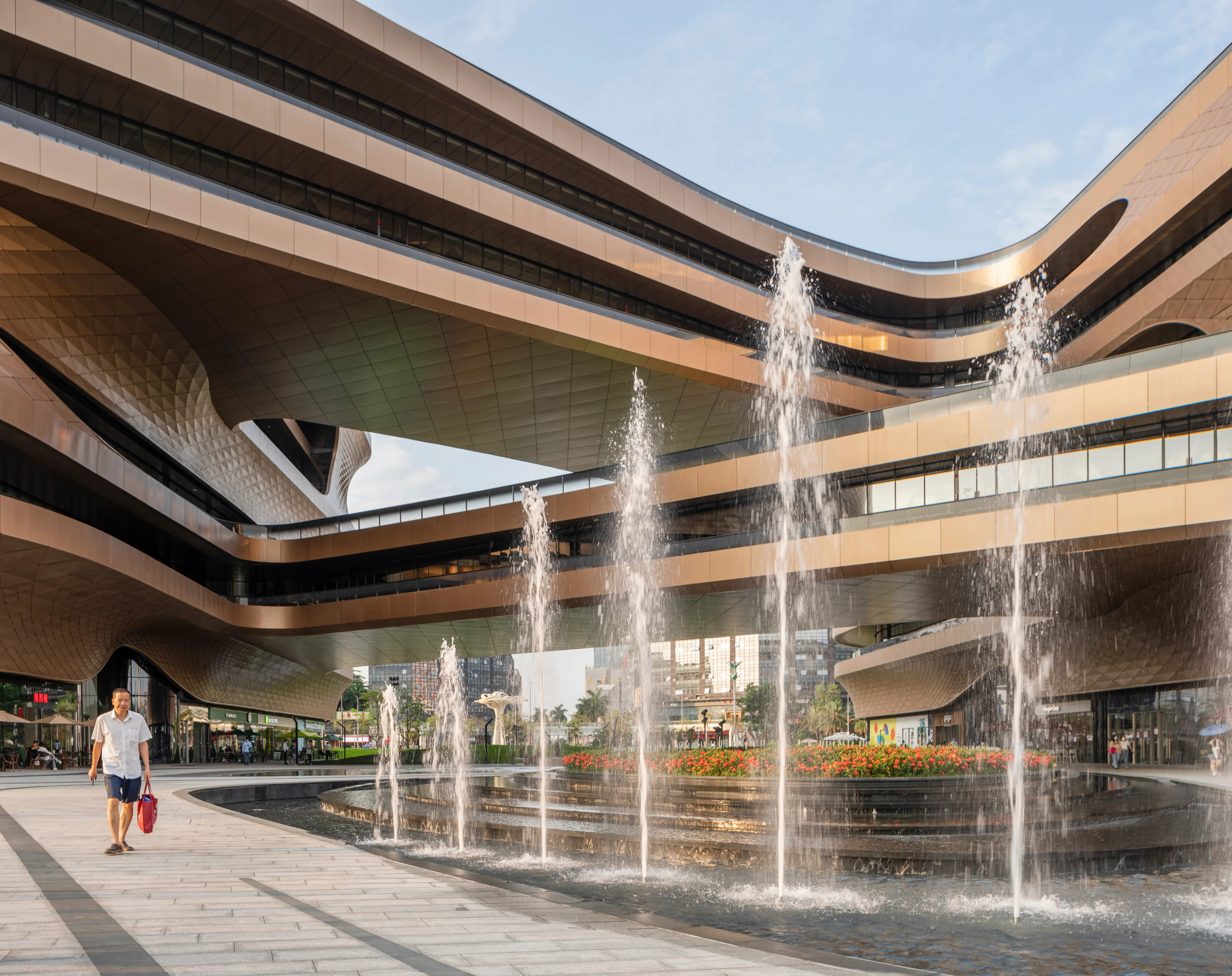
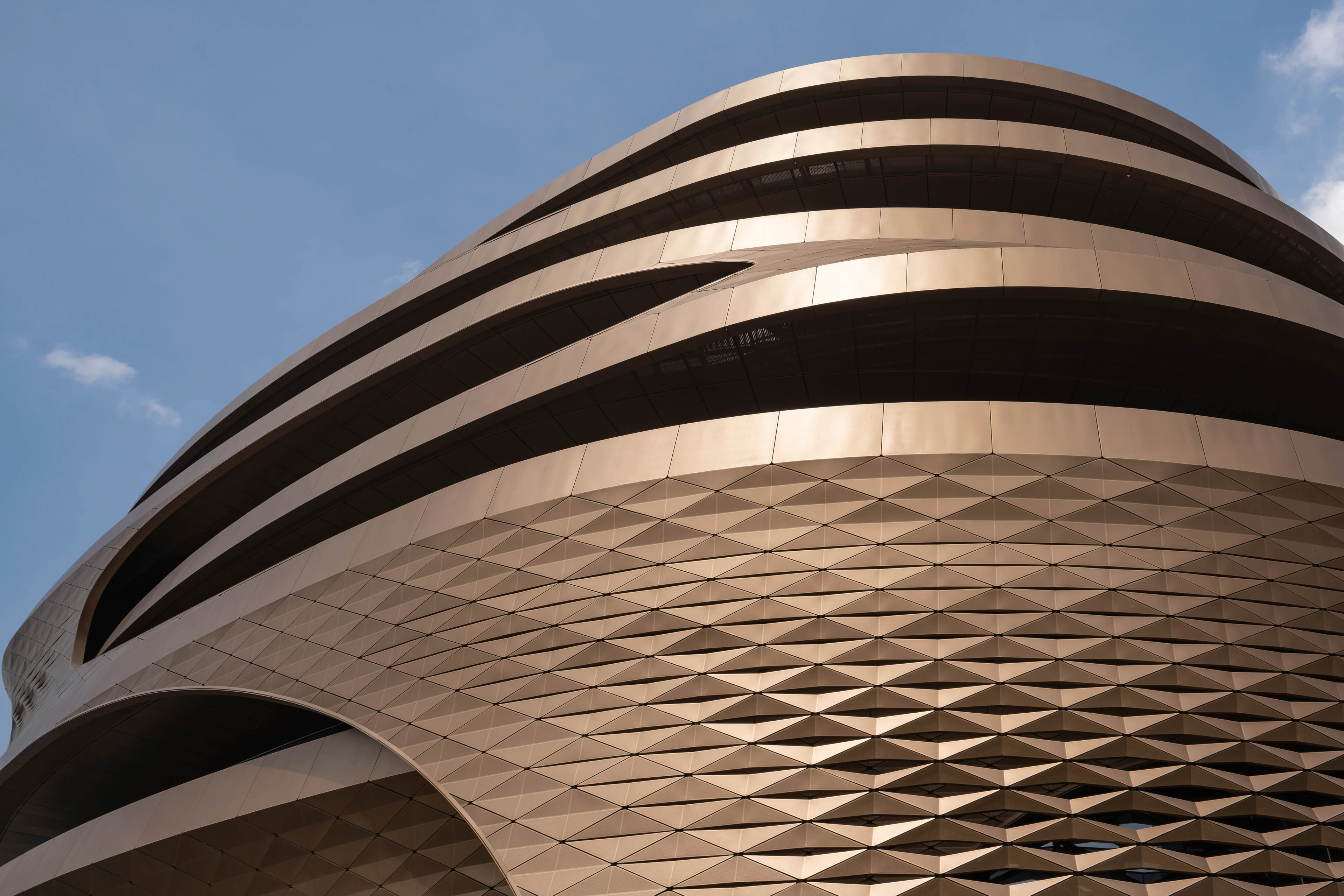
The 185,643m2 Infinitus Plaza defines a gateway to the new Baiyun Central Business District. Built on the site of the decommissioned Baiyun Airport, the new district links Guangzhou’s city centre with Feixiang Gongyuan Park and the new communities within the former airport’s redevelopment. Located adjacent to Feixiang Park station on Line 2 of the Guangzhou Metro, Infinitus Plaza straddles the metro’s sub-surface tunnel, dividing the headquarters into two buildings that interconnect at multiple levels.
Photograph by Xue Liang 薛亮
Constructed to LEED Gold certification
Situated within Guangzhou’s humid subtropical monsoon climate, Infinitus Plaza has been designed and constructed to LEED Gold certification and the equivalent 3-Stars of China’s Green Building Program with its life cycle carbon emissions calculated at 15.3% embodied carbon and at 84.7% operational carbon emissions.
Optimisation of the structure has reduced the amount of concrete required and increased the proportion of recyclable content. 25,088.33 tonnes of recycled materials have been used in the construction of Infinitus Plaza, primarily: steel, copper, glass, aluminium alloy profiles, gypsum products and wood.
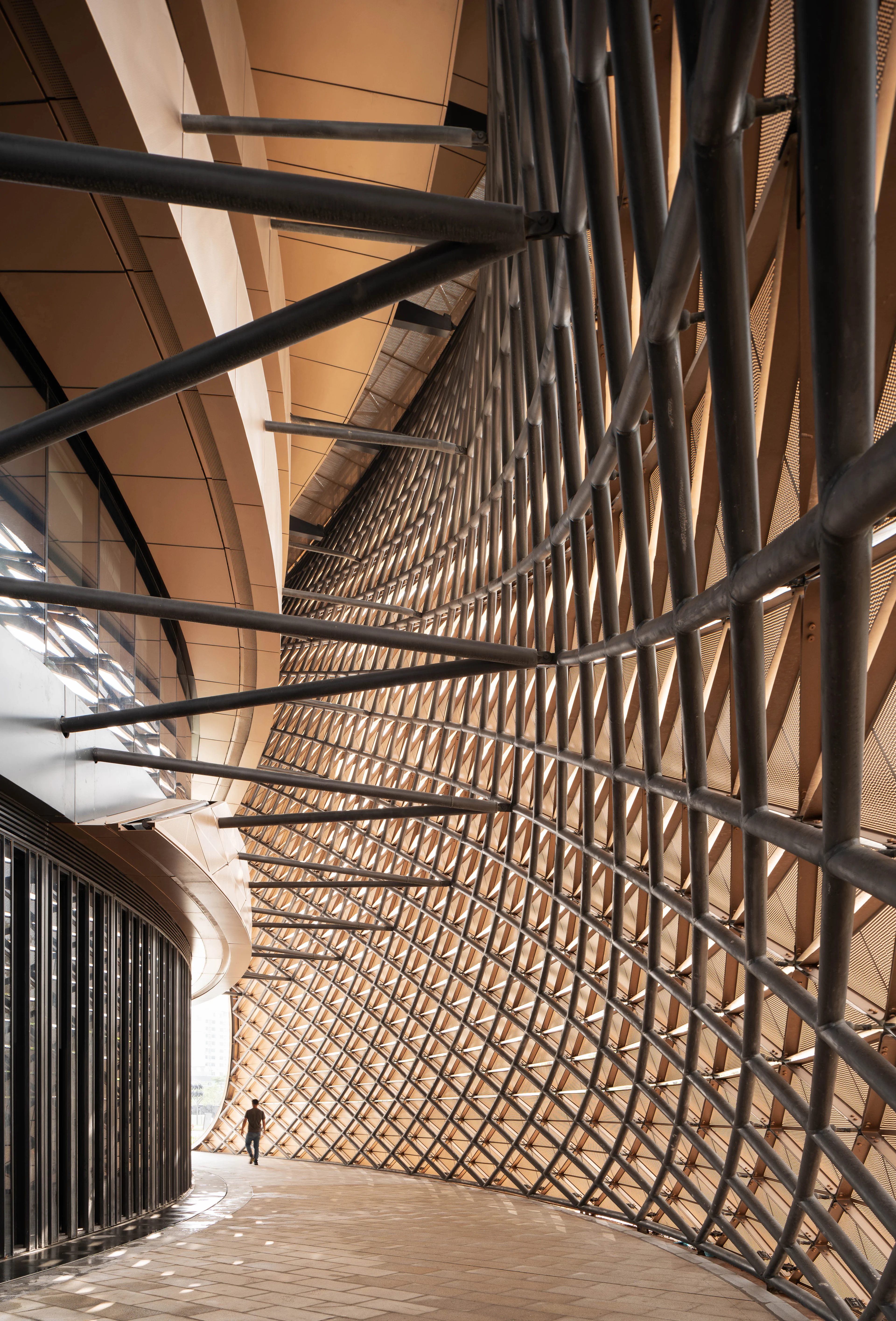
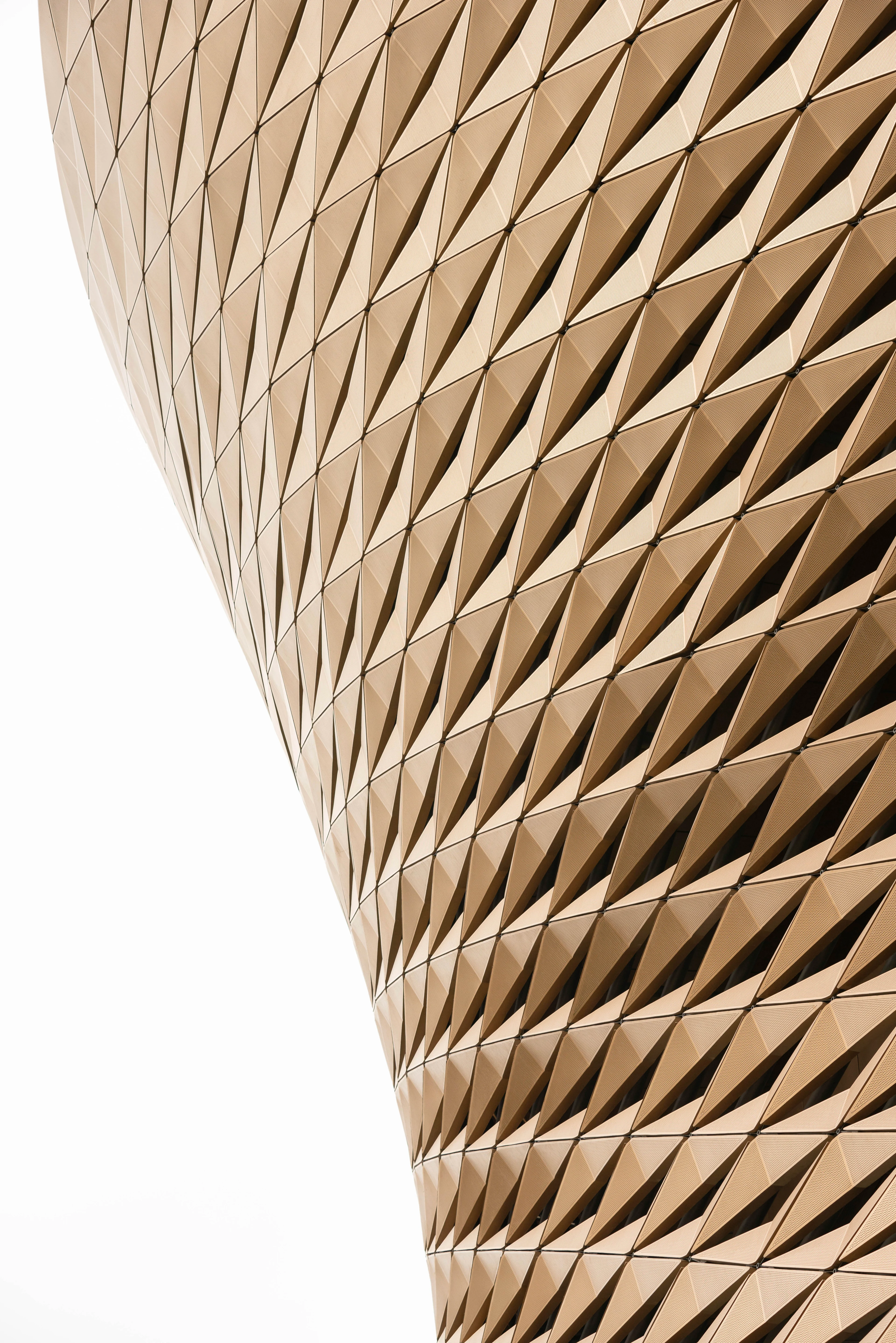
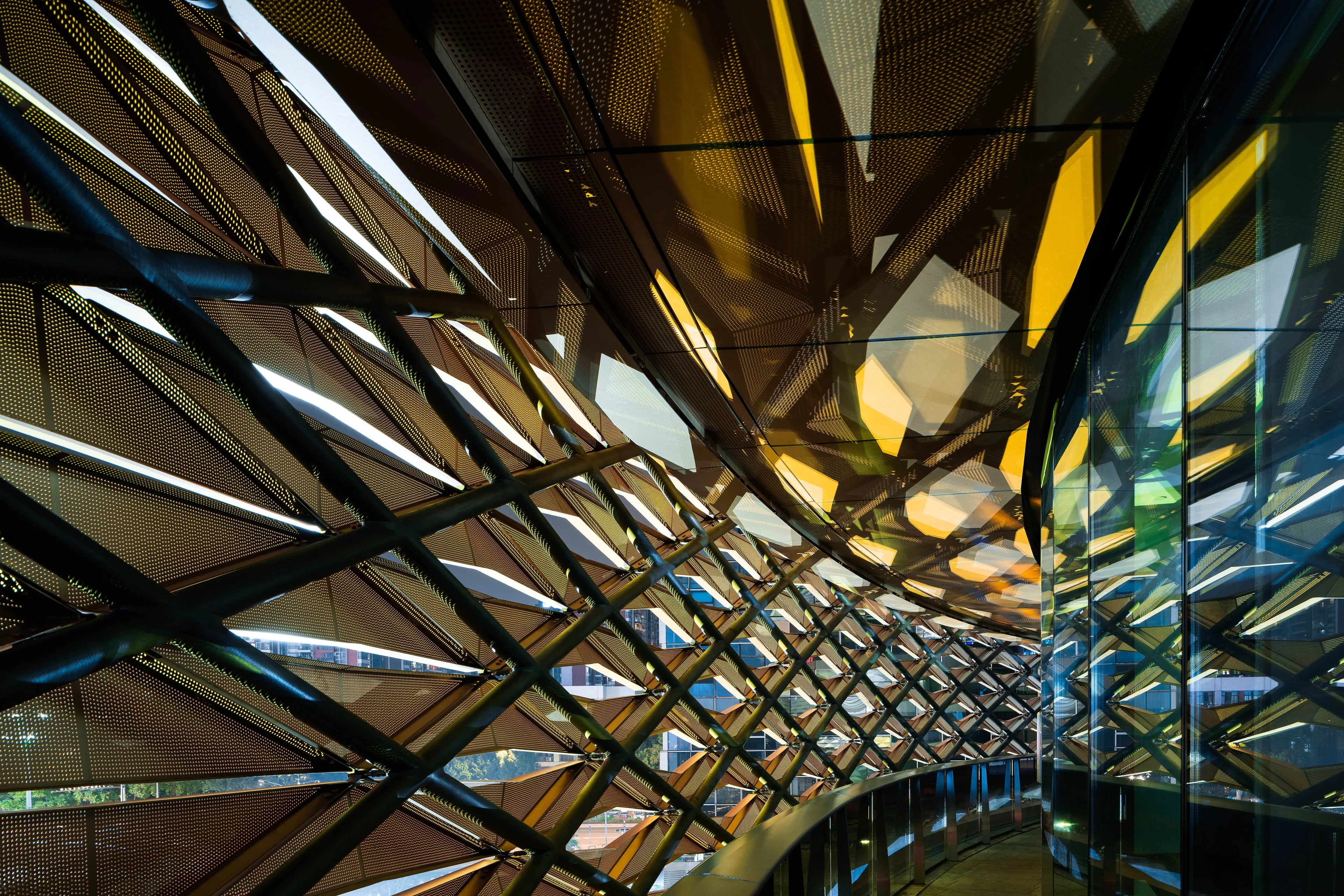
Annual solar irradiation analysis has determined the width of the outdoor terraces to self-shade the building. This analysis has also defined the external perforated aluminium shading panels to optimise reductions in solar heat gain. These measures, together with double-insulated low-E glazing provide effective shading and heat insulation that ensures good natural light throughout the building while reducing solar heat gain and energy consumption.
Operated by the building’s smart management system and powered by photovoltaics, a network of sprinklers spray atomised particles of collected rainwater onto the ETFE membrane roof above each atrium to dissipate heat by evaporative cooling. This translucent, double-layered ETFE membrane roof incorporates a 60cm cavity of compressed air.
Photograph by Xue Liang 薛亮
Photograph by Xue Liang 薛亮
Courtesy of ZHA

Courtesy of ZHA
01
02
03
04
A variety of flexible communal spaces
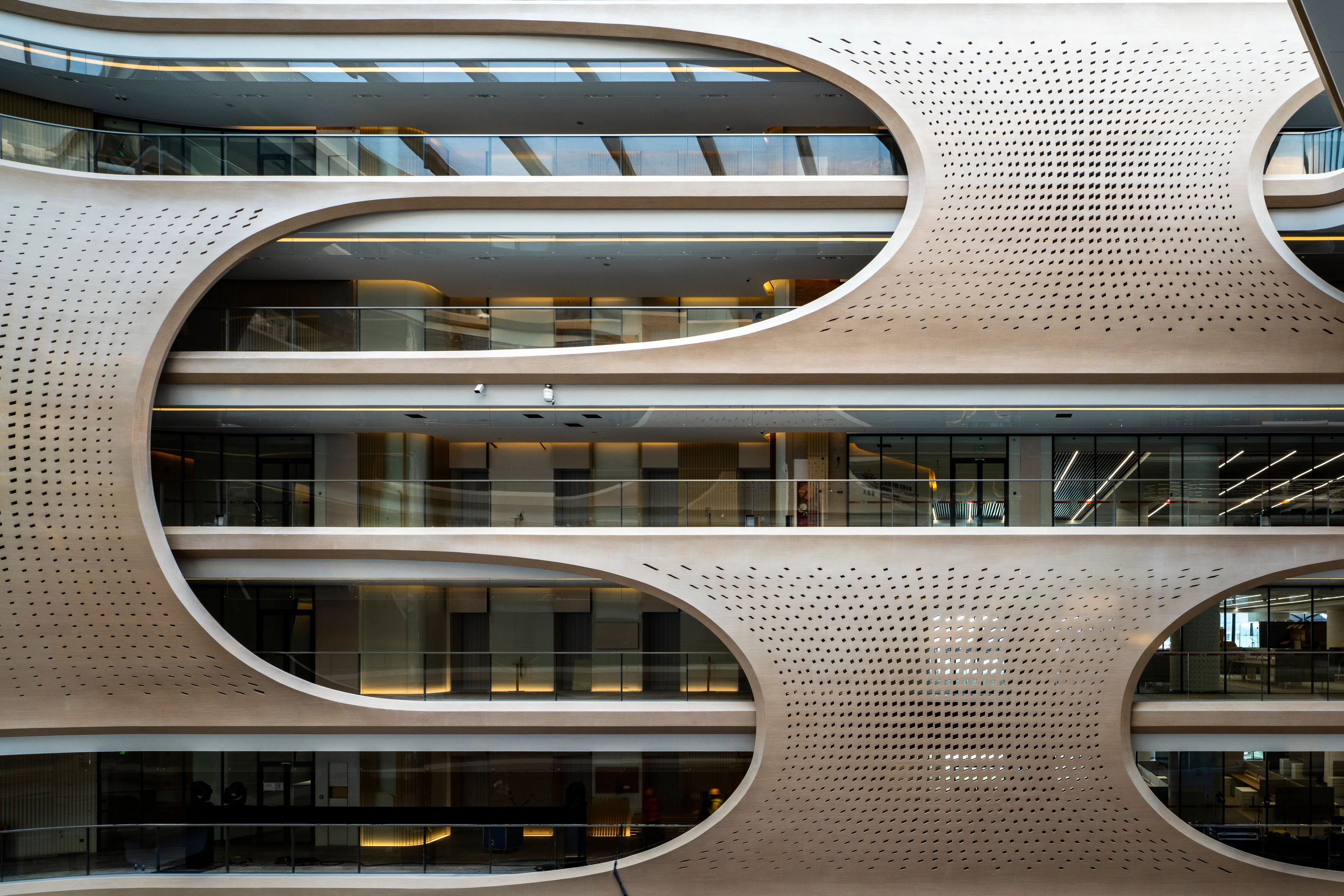
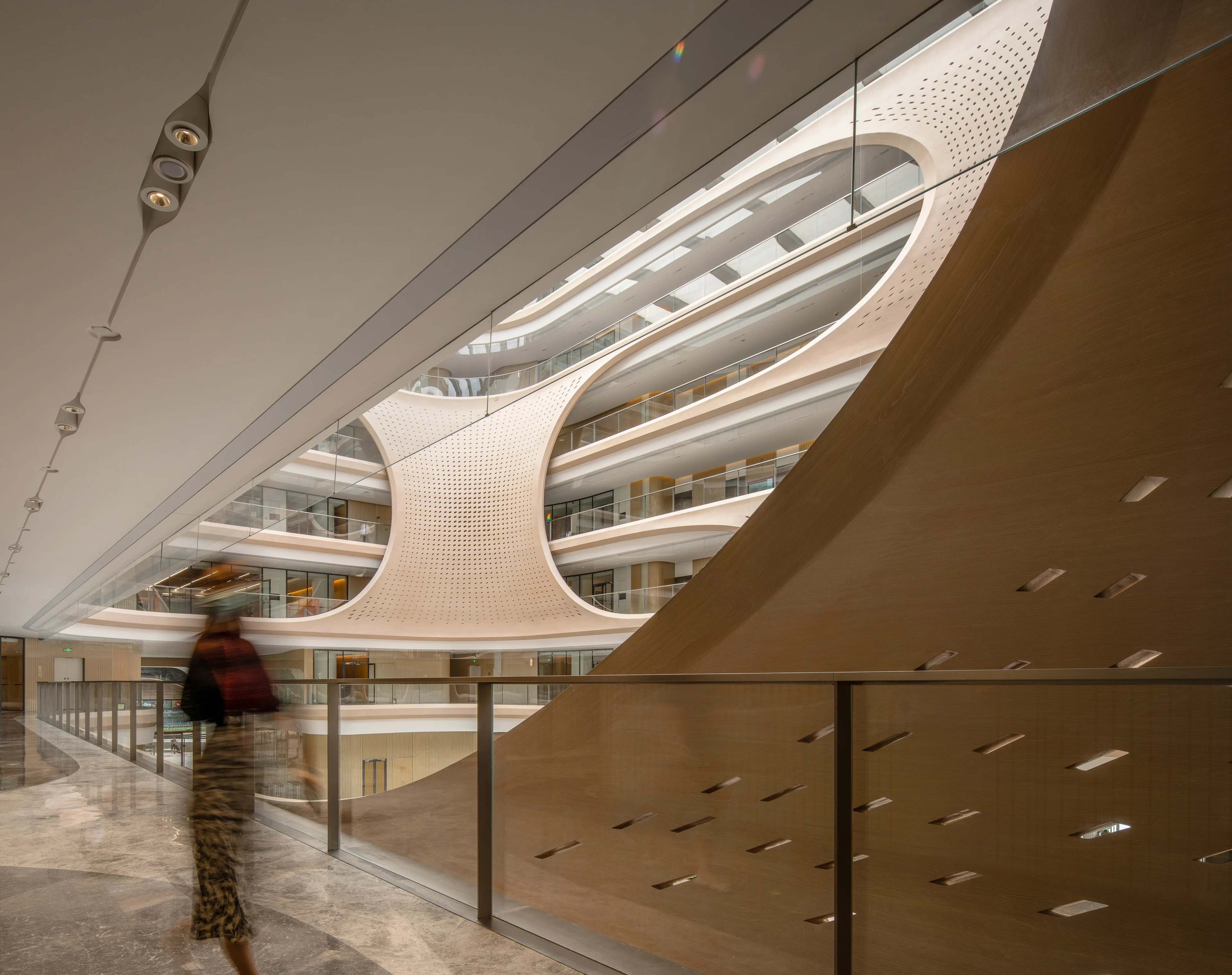
Establishing collaborative work spaces that are healthier and more adaptive to new ways of working, Infinitus Plaza is designed over eight storeys as a series of infinite rings that enhance interaction and communication between all departments.
Arranged around central atria and courtyards, echoing the symbol for infinity “∞”, the design creates a variety of shared indoor and outdoor spaces that build the strong sense of community (Si Li Ji Ren) which defines Infinitus’ corporate culture.
The interconnecting bridges house a variety of flexible communal spaces for employees that promote individual and overall wellness including gym and exercise rooms, recreation and relaxation zones as well as restaurant and cafe. The bridges also connect the plaza’s offices with further shopping and dining areas.
Photograph by Xue Liang 薛亮
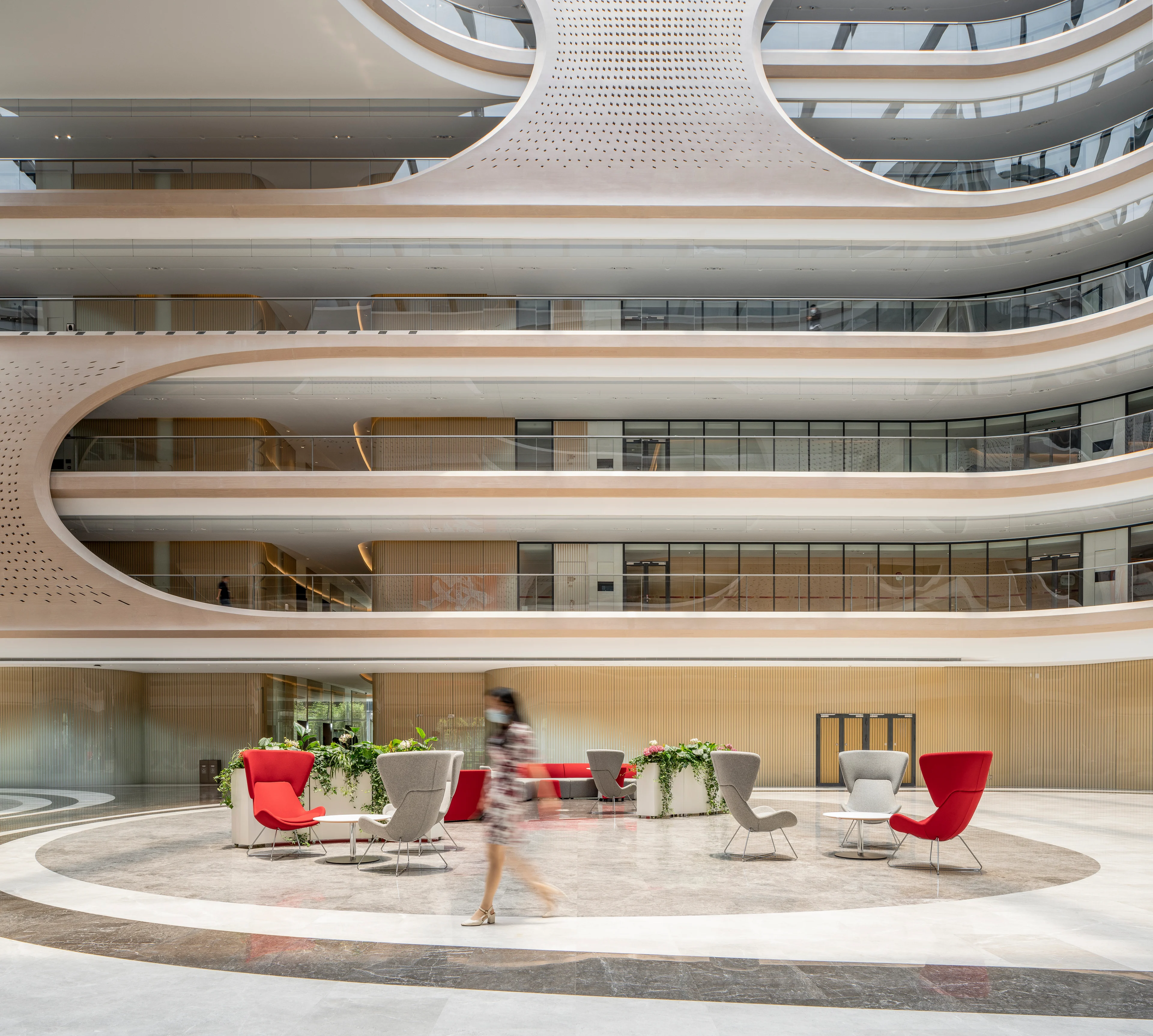
Photograph by Xue Liang 薛亮
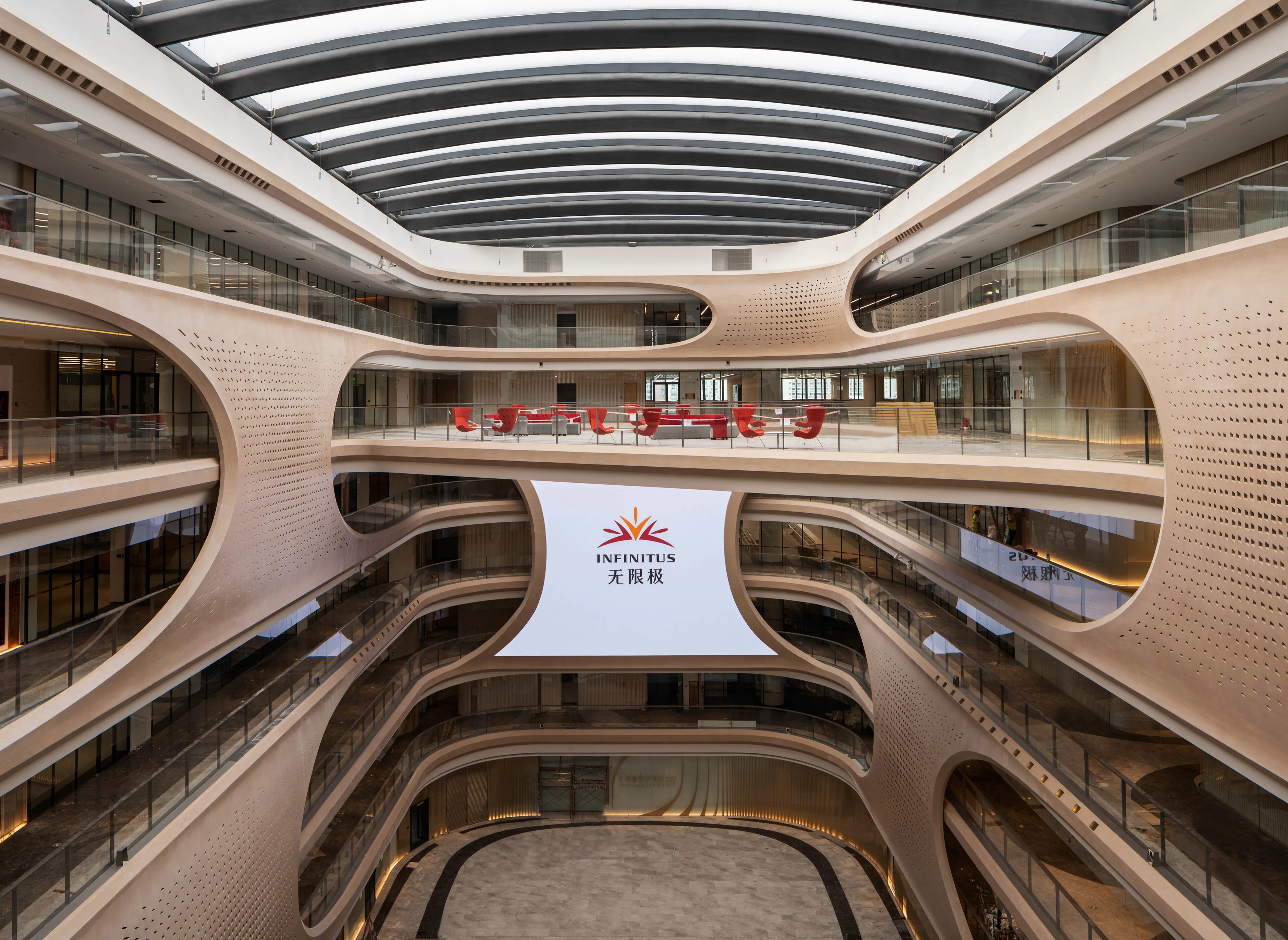
Photograph by Xue Liang 薛亮
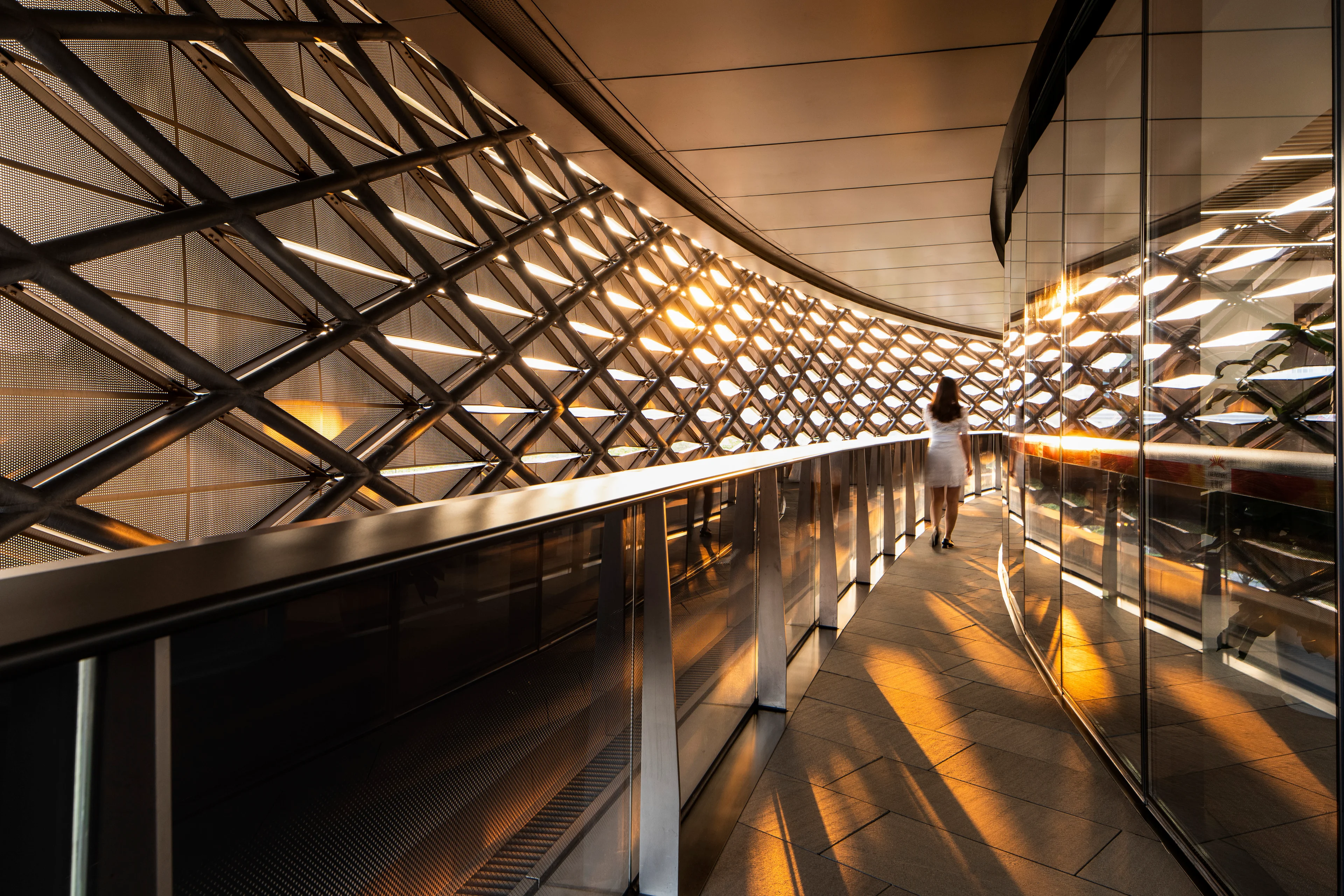
Photograph by Xue Liang 薛亮
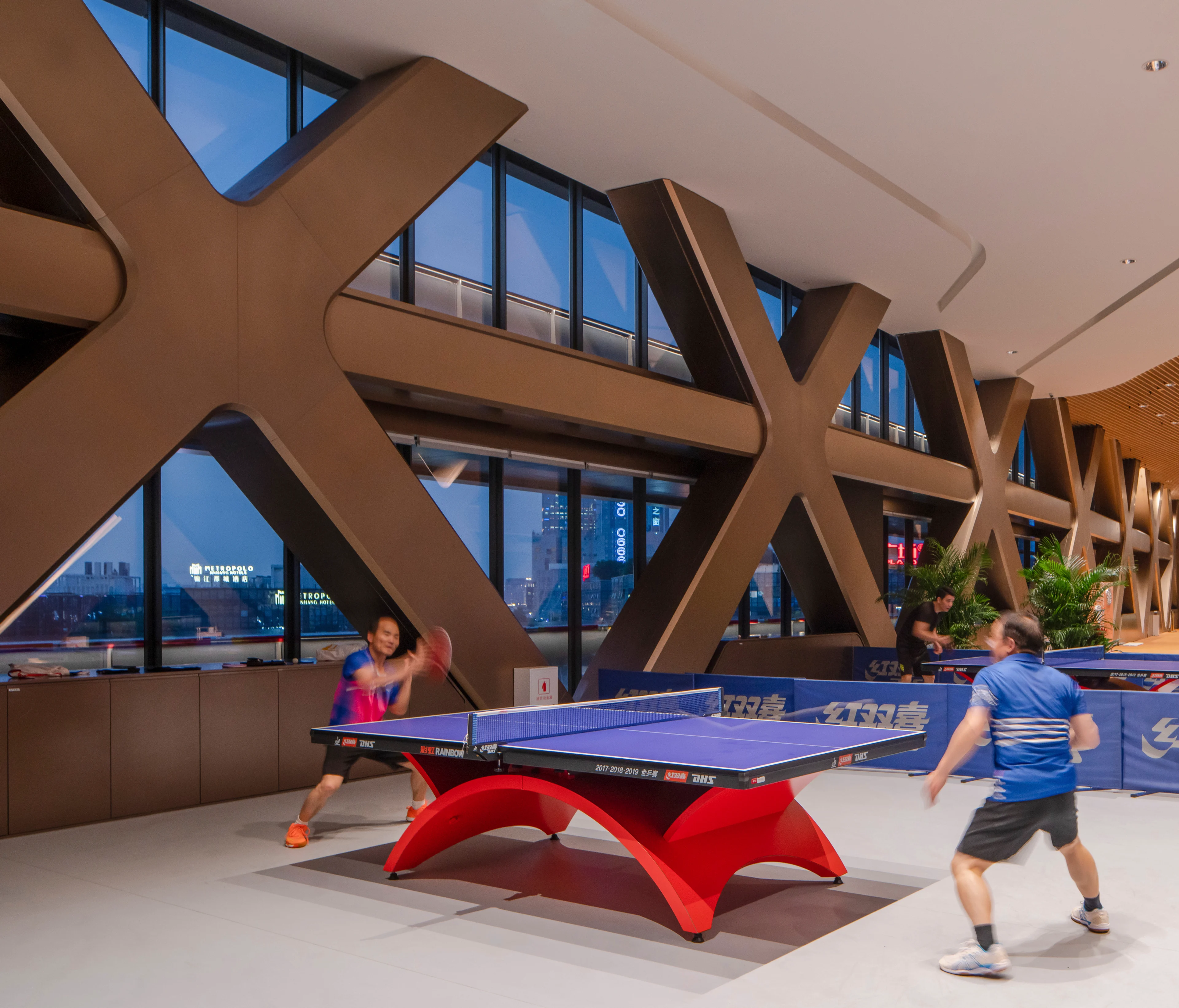
Photograph by Xue Liang 薛亮
Photograph by Xue Liang 薛亮
01
02
03
04
05
06
Smart building management system
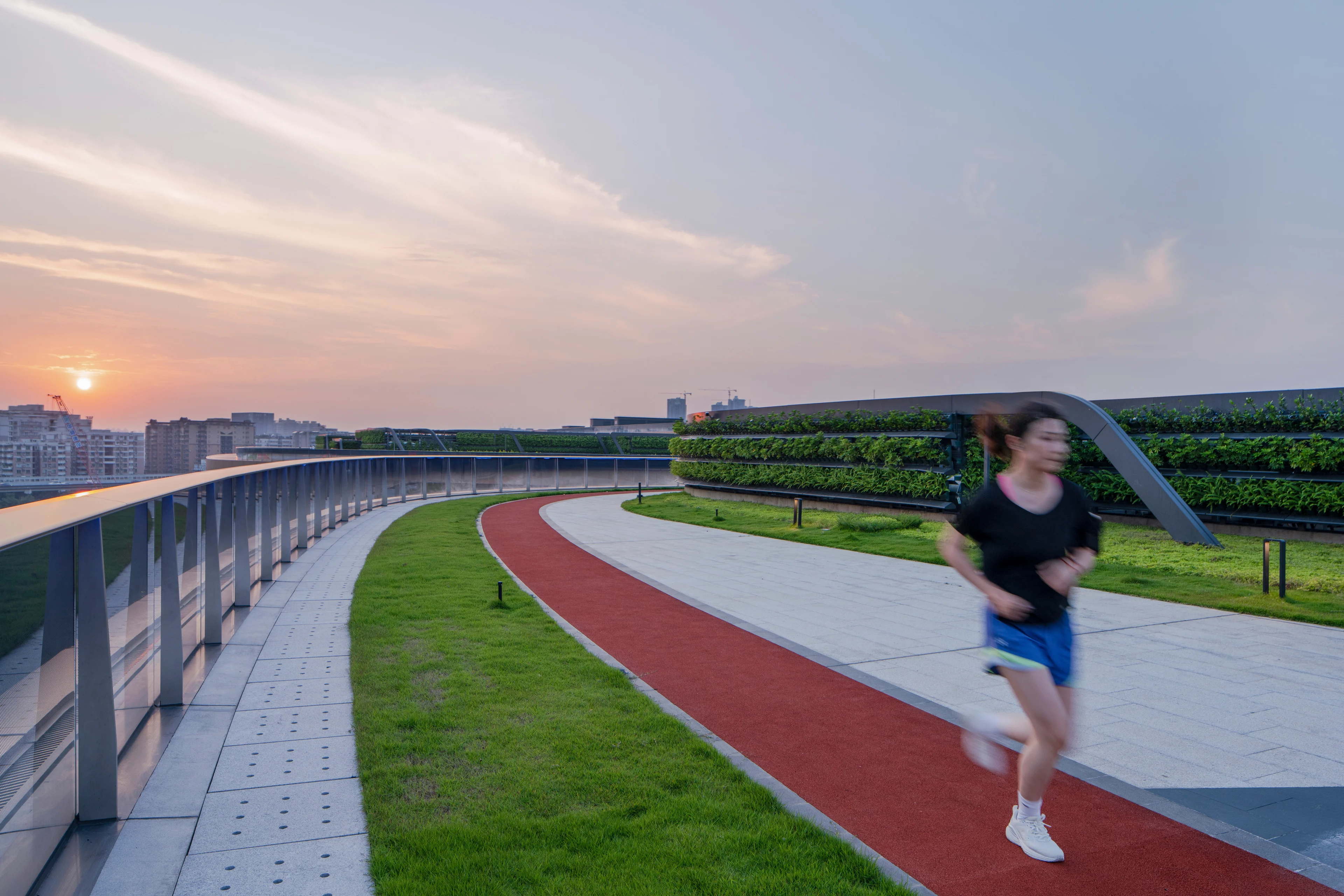
Activated when the membrane’s exterior surface is heated to 35°C by solar radiation, spraying for 3-4 minutes every half an hour will cool its surface temperature by 14°C, effectively lowering interior temperatures by 5°C. The rooftop solar water heating further reduces energy requirements. The project’s system of rainwater collection, filtration and reuse also supplies micro-irrigation to the surrounding landscaping. The gardens on the roof of the 3rd, 7th and 8th floors grow herbs and plants native to the region and are naturally irrigated. These outdoor communal areas are linked together with the rooftop jogging track and walking paths. Green roofs comprise 49.36% of the project’s total roof area.
Equipped to monitor temperature, carbon dioxide, PM2.5 particulates and other pollutants, the building’s smart management system with fresh air linkage ensures indoor air quality, detecting the level of occupancy and automatically adjusting for optimal comfort with minimal energy consumption while also learning to accurately predict daily occupancy trends for increased efficiencies.
Anchoring Guangzhou’s new Baiyun Central Business District as a national centre for China’s health and wellness industries, Infinitus China’s new headquarters combines innovative design and construction technologies with proven sustainability strategies to create new work environments that unite all departments and enhance communication throughout the group.
Offices
Discover more of our office buildings
From a Sharjah company headquarters designed to achieve net-zero energy consumption to a tower that anchors the masterplan for a newly revitalised district of Milan, discover our latest office buildings.
Render by Devisual
Z8 Tower
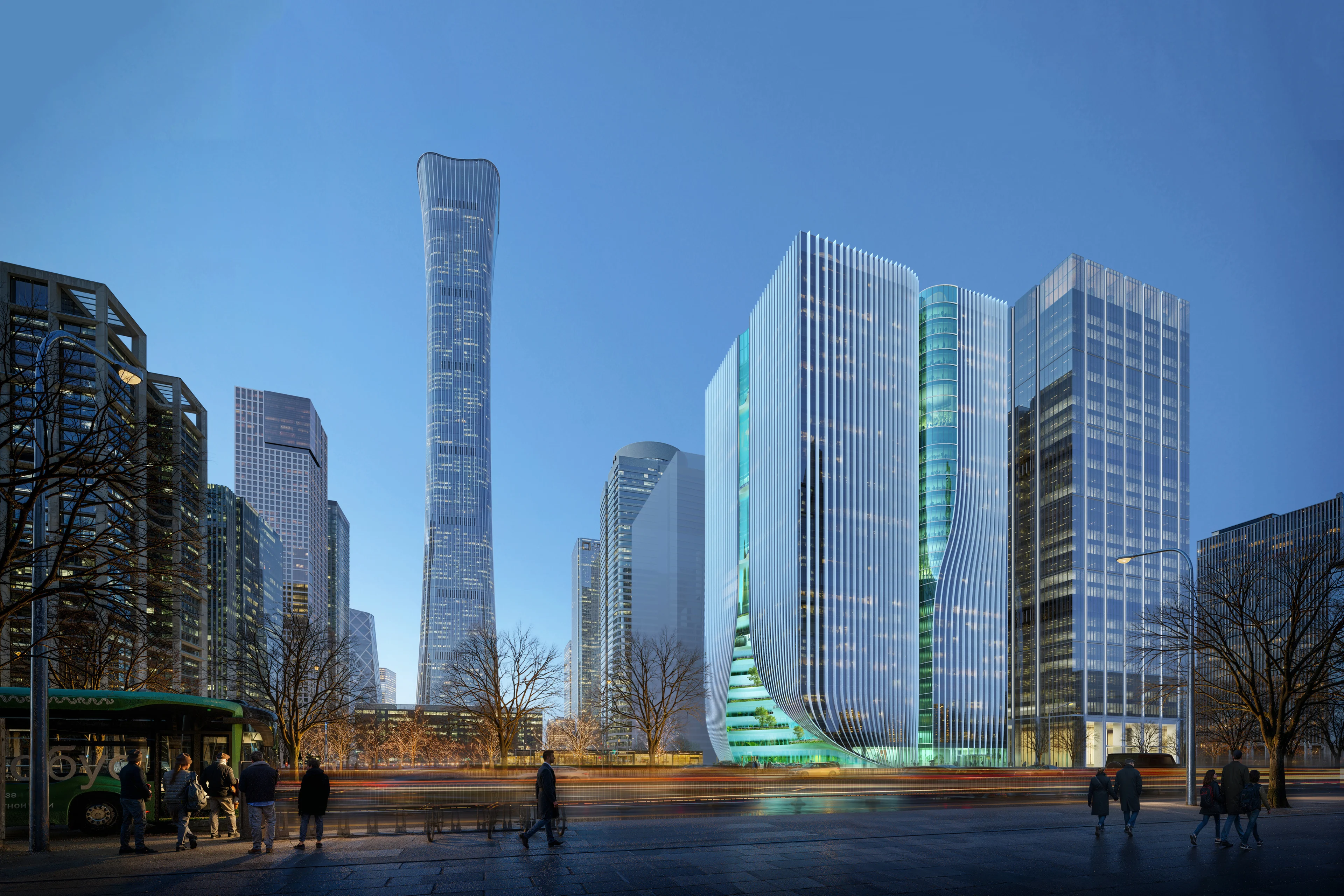
Located in the core of Beijing’s Central Business District (CBD) at the intersection of Jianguo Road and Jinhe East Road, the new Z8 Tower faces the CBD’s central park and is defined by the historic alignment and urbanism of the city’s Chang’an Avenue.
Photograph by Hufton + Crow
National Bank of the Republic of Kazakhstan
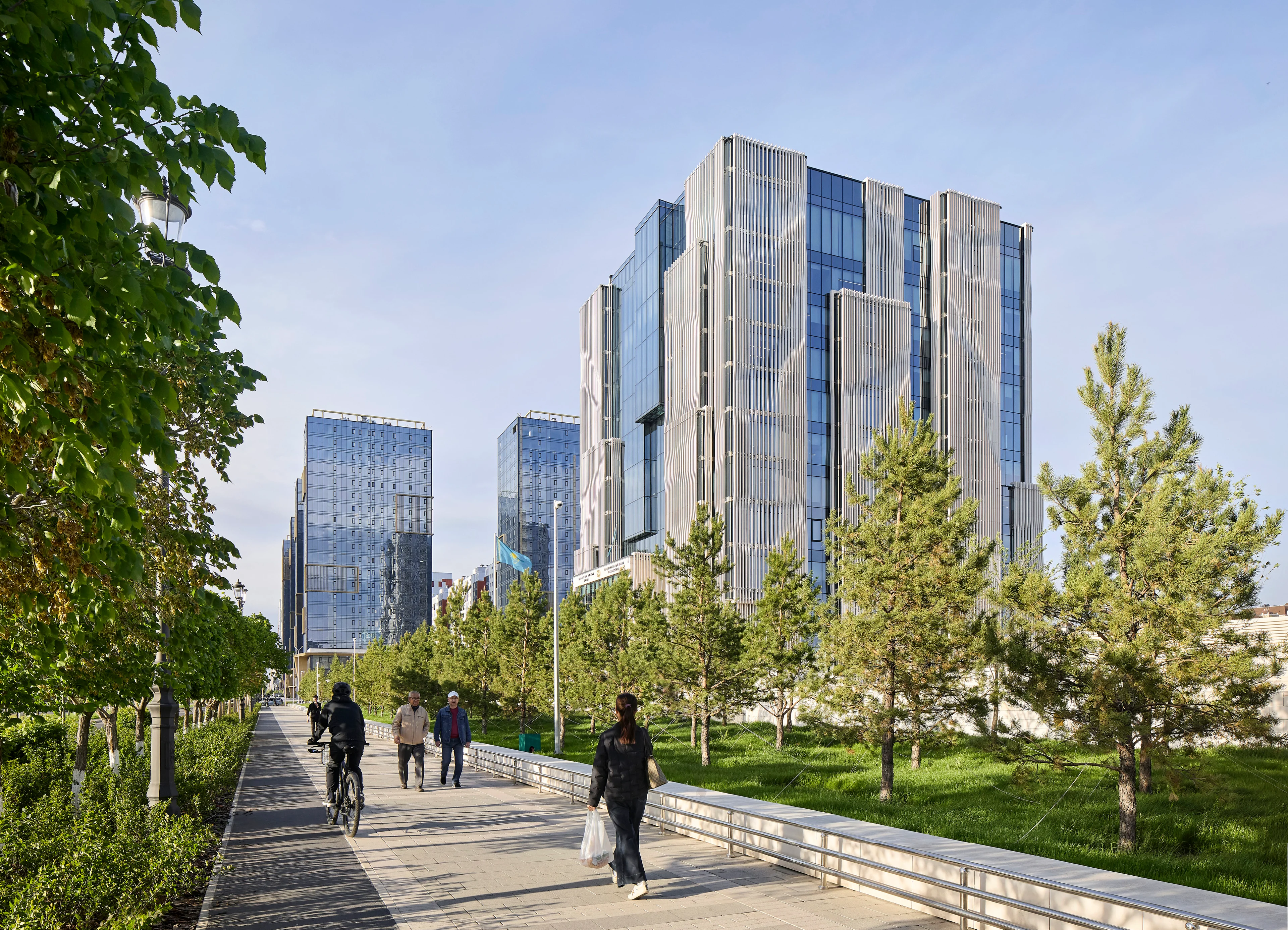
The new headquarters of the National Bank of the Republic of Kazakhstan (NBRK) in Astana houses the bank’s departments within a single, integrated campus accommodating up to 800 employees and conveys the institution’s longstanding commitment to fiscal stability.
Alta Tower
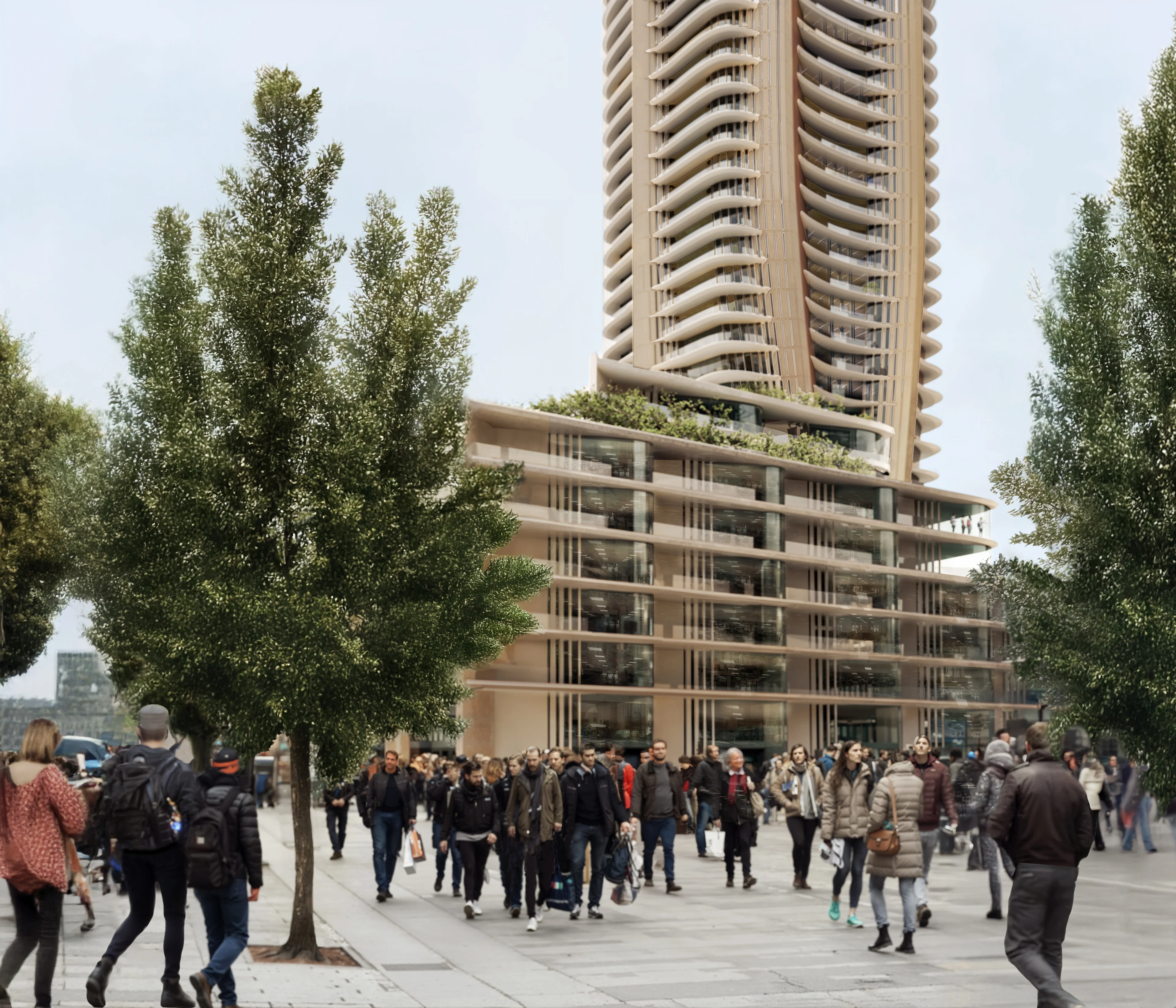
ZHA collaborating with Bureau Cube Partners (BCP) has been selected as winners of the international competition to design the new Alta Tower in New Belgrade, Serbia.
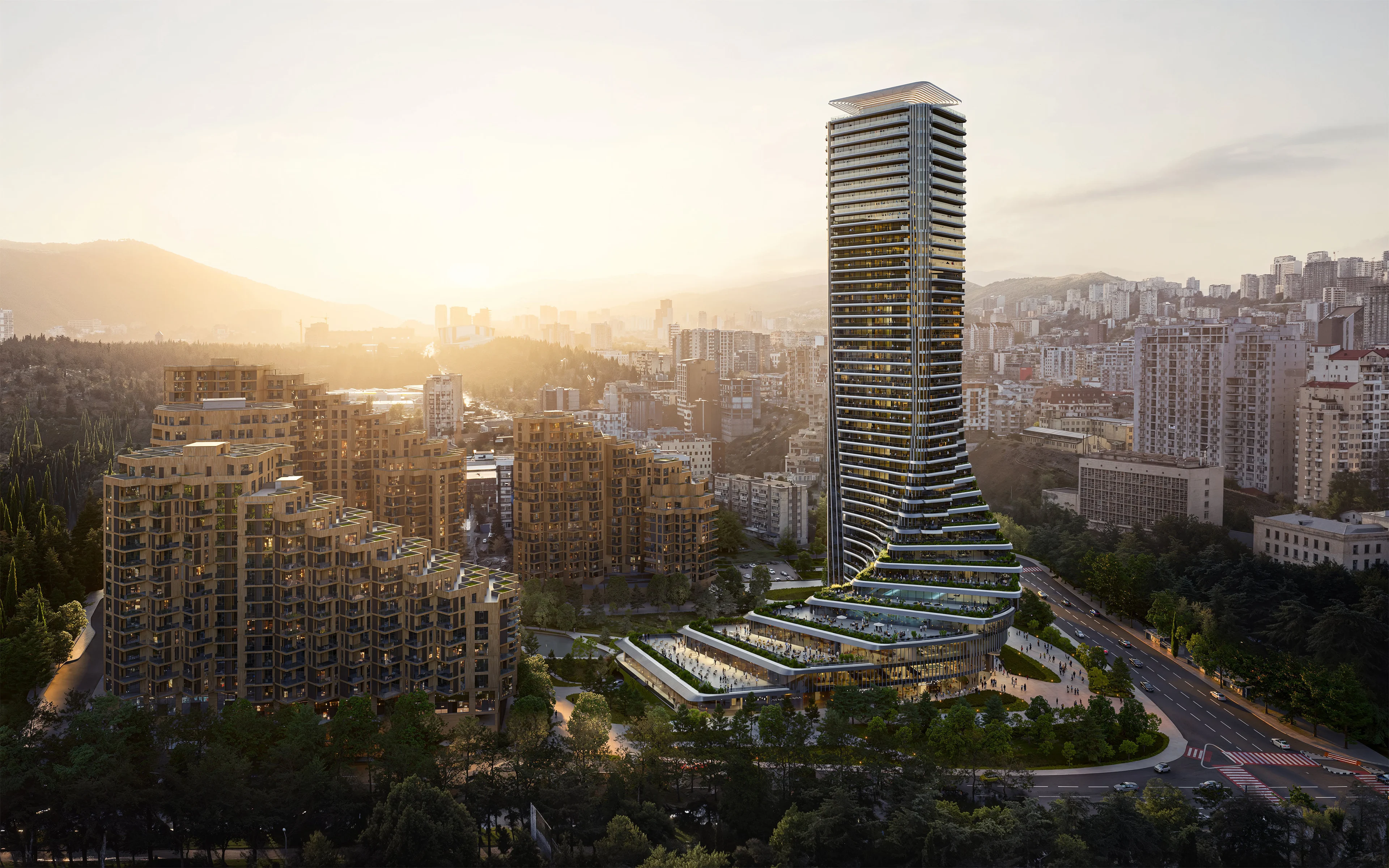
Cityzen Mixed-Use Development
Serving as the gateway to the Cityzen community, a new civic hub in the west of Tbilisi, Cityzen Tower is ZHA's first project in Georgia.
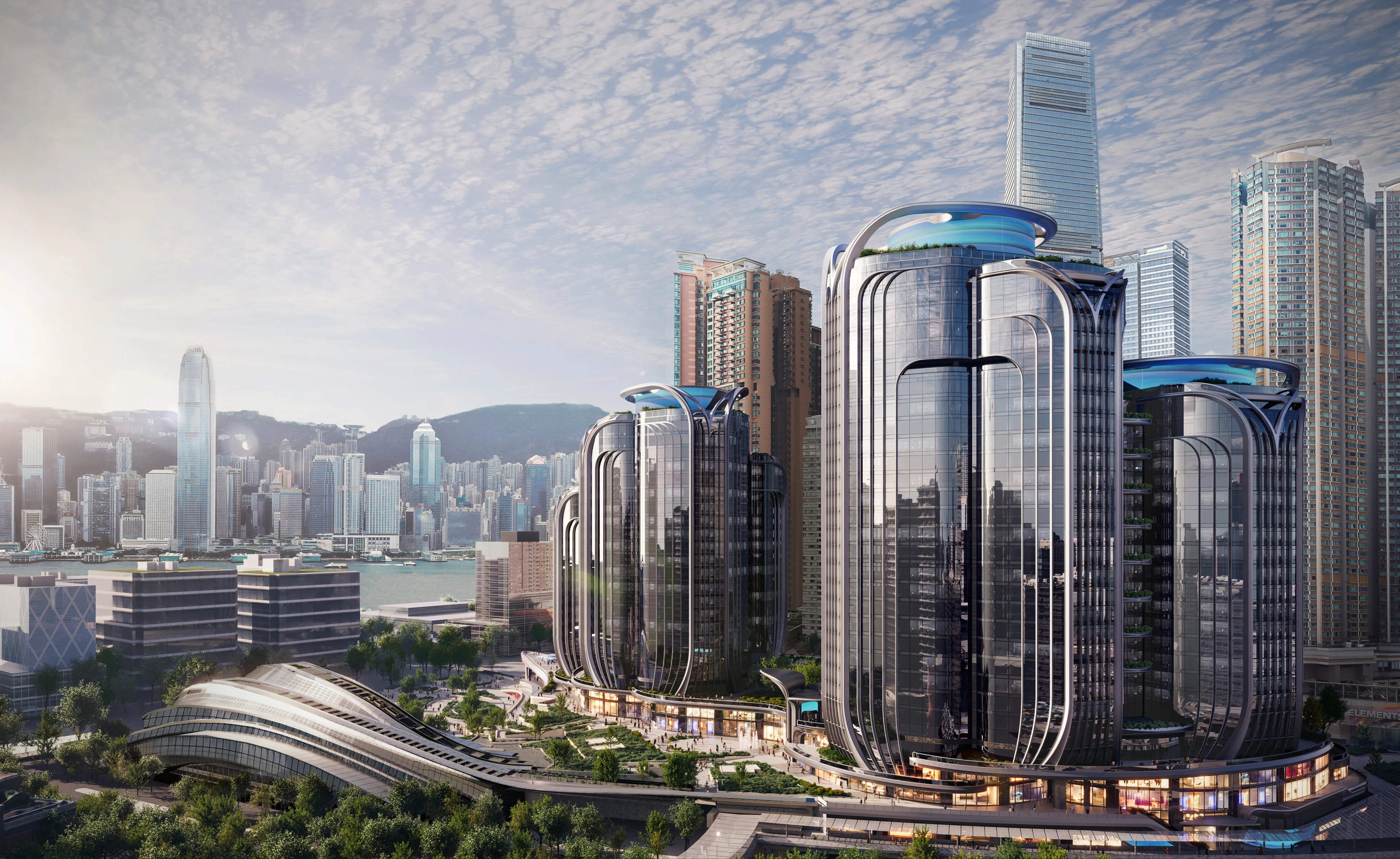
Render by Hayes Davidson
International Gateway Centre
Adjacent to the West Kowloon Cultural District, the 3.2 million sq. ft. development above Hong Kong’s High Speed Rail West Kowloon Terminus connects established and emerging neighbourhoods with a network of public gardens and landscaped plazas.
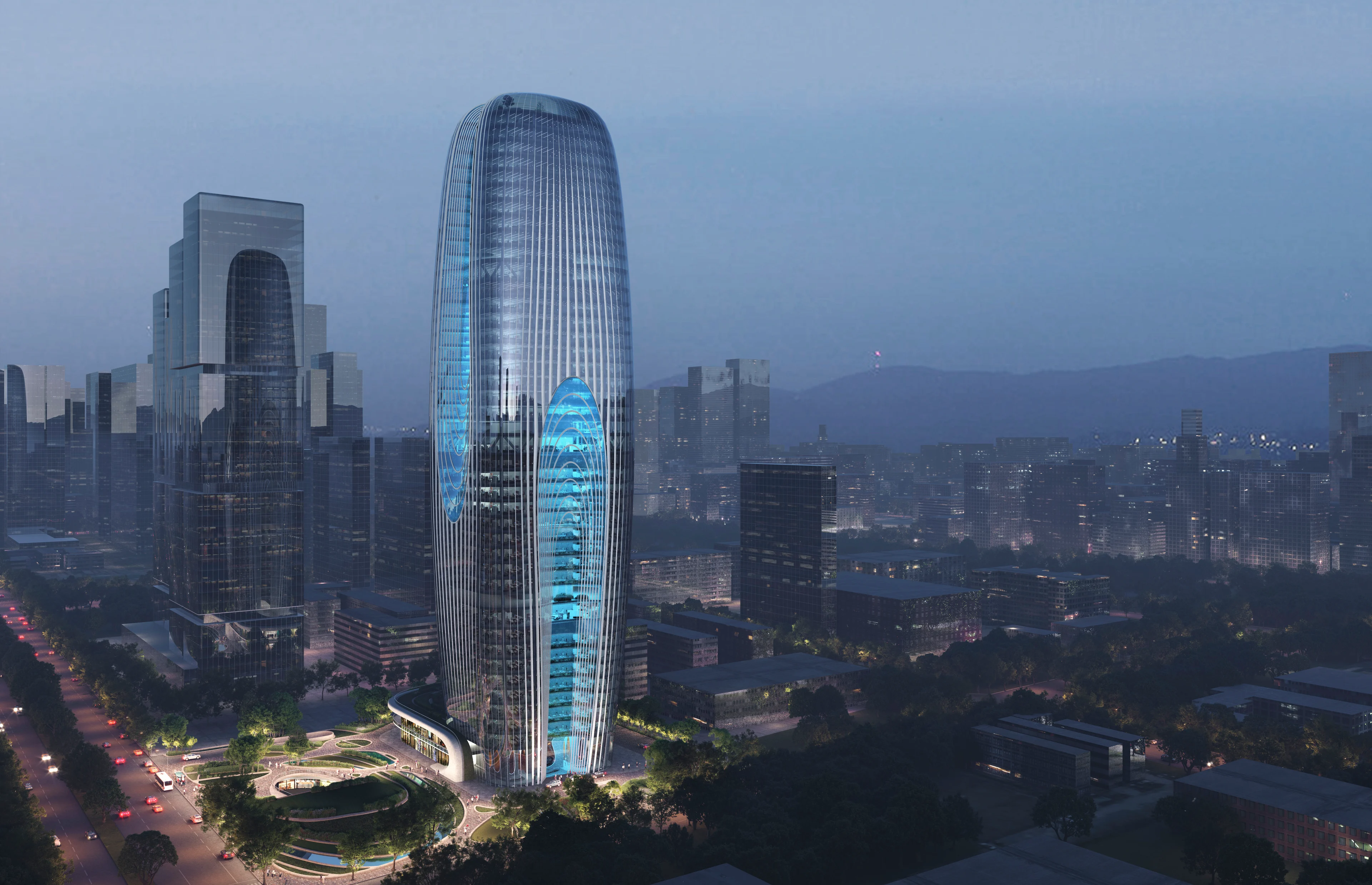
Daxia Tower
Demarcating the centre of Xi’an’s business district, Daxia Tower’s gently curving silhouette is accentuated by layers of patterned glazing and dramatic atriums that bring natural light deep into its floorplates. Creating a cascade of planted interior terraces that echo mountainside waterfalls, each atrium gives panoramic views over the historic city and the growing high-tech zone.
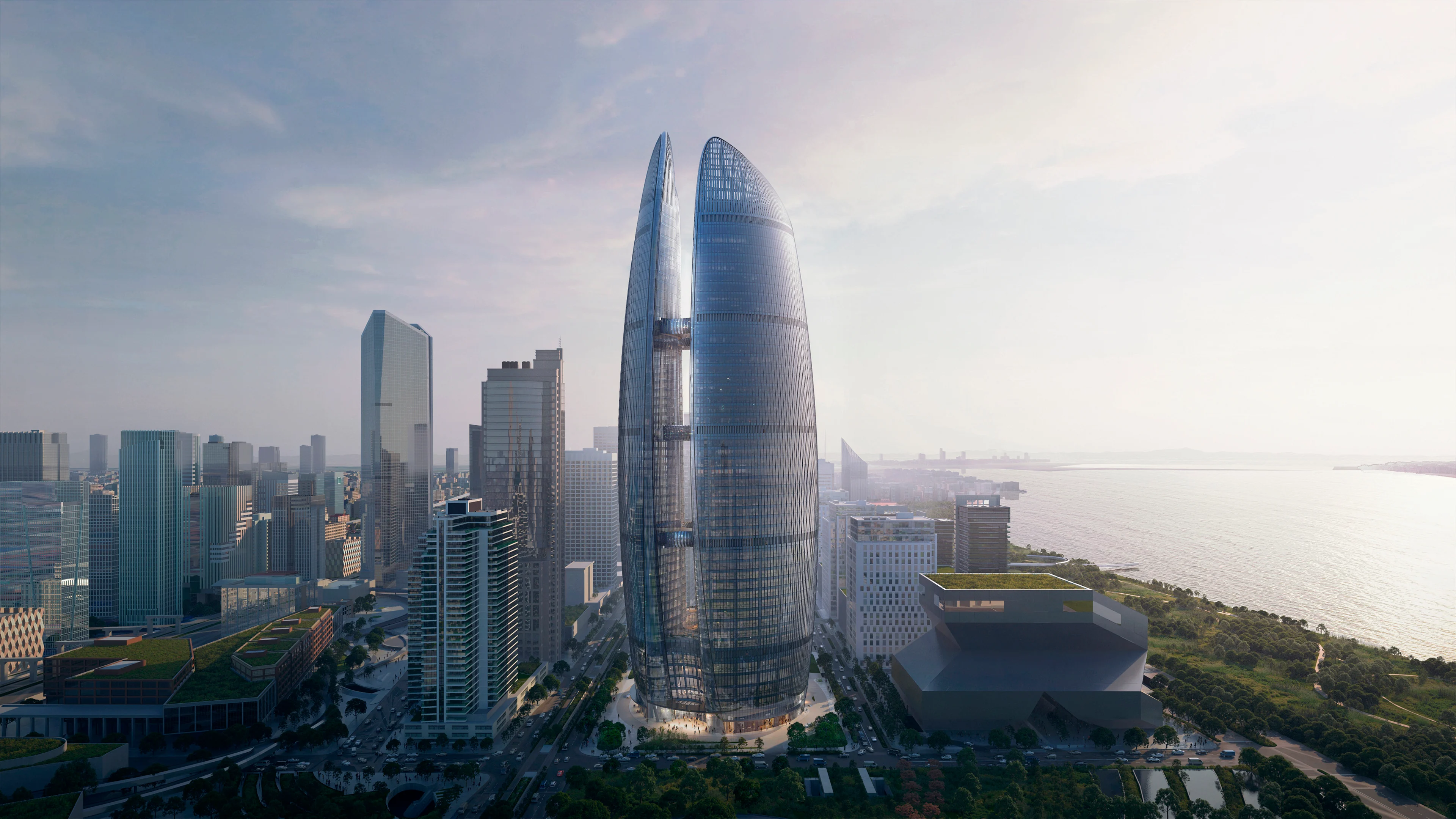
Render by Negativ
Taikang Financial Centre
The new Taikang Financial Centre will be a centre of excellence, developing effective systems and networks that will provide a new ecosystem of support for people of all ages across China. Using the new technologies developed within the Taikang Financial Centre, the group will continue its commitment to supporting community development, healthcare, education and well-being throughout the country.
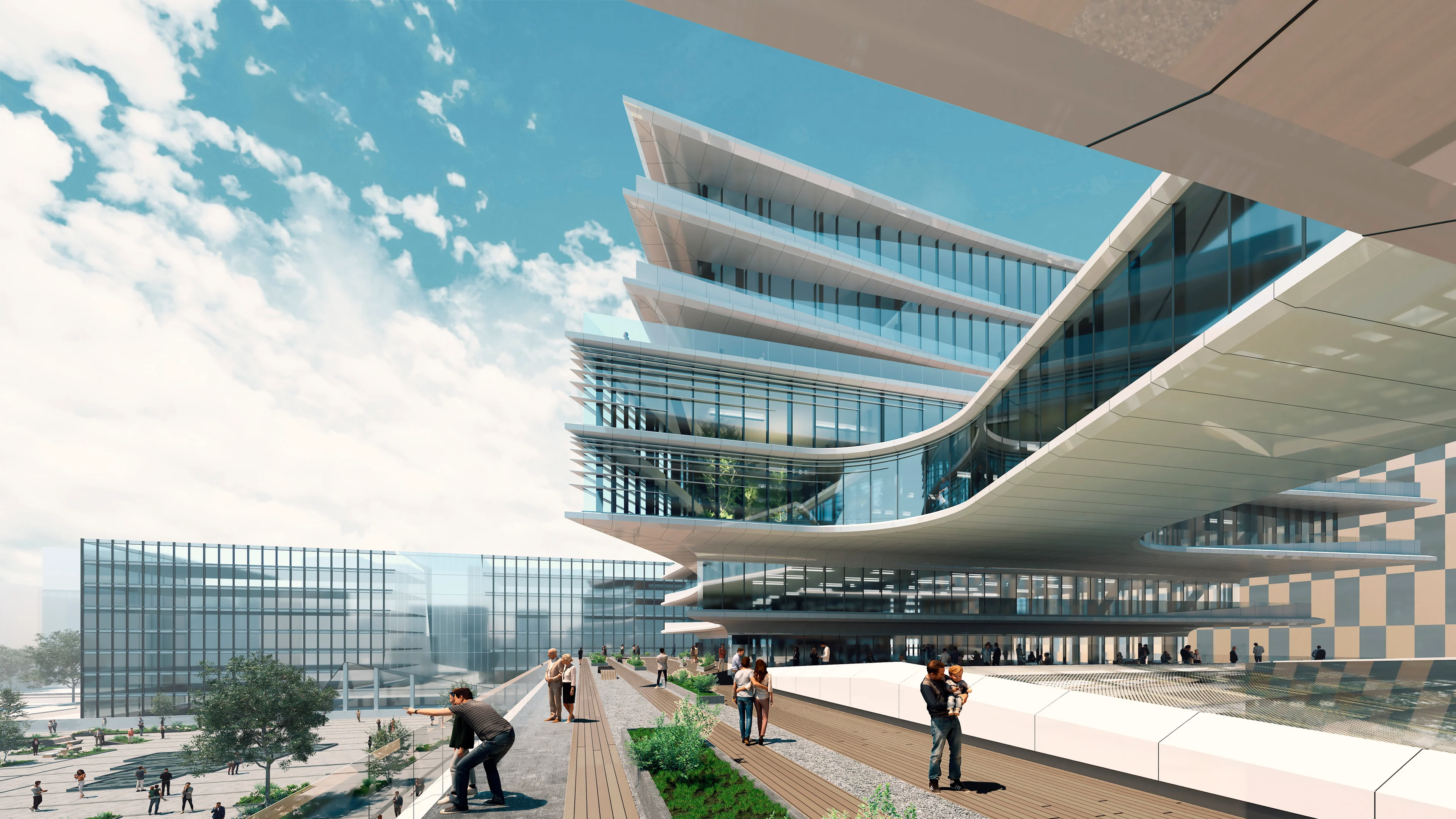
Vilnius Business Stadium
Integrated within the Vilnius City Plan and the popular public square adjacent to the site, Business Stadium Central will be a new gathering place for the city.
Courtesy of Brick Visual
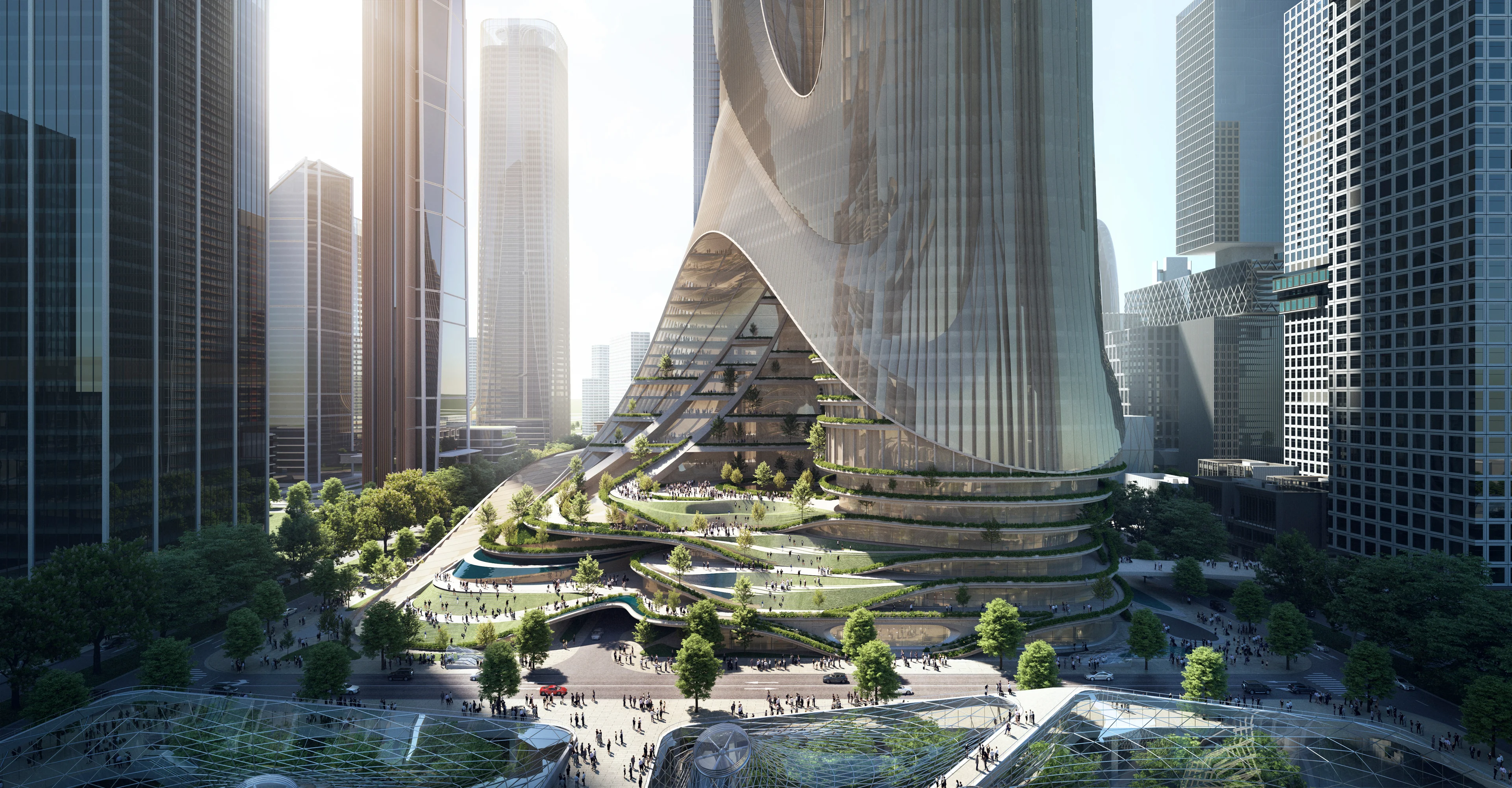
Tower C in Shenzhen Bay Super Headquarters Base
The design of Tower C integrates the city and nature within its central green axis with the transit orientated development (TOD) of Shenzhen’s new spine, creating a ‘superscape’ that will become a tower of the future within the Super Headquarters Base.
Photograph by Virgile Simon Bertrand
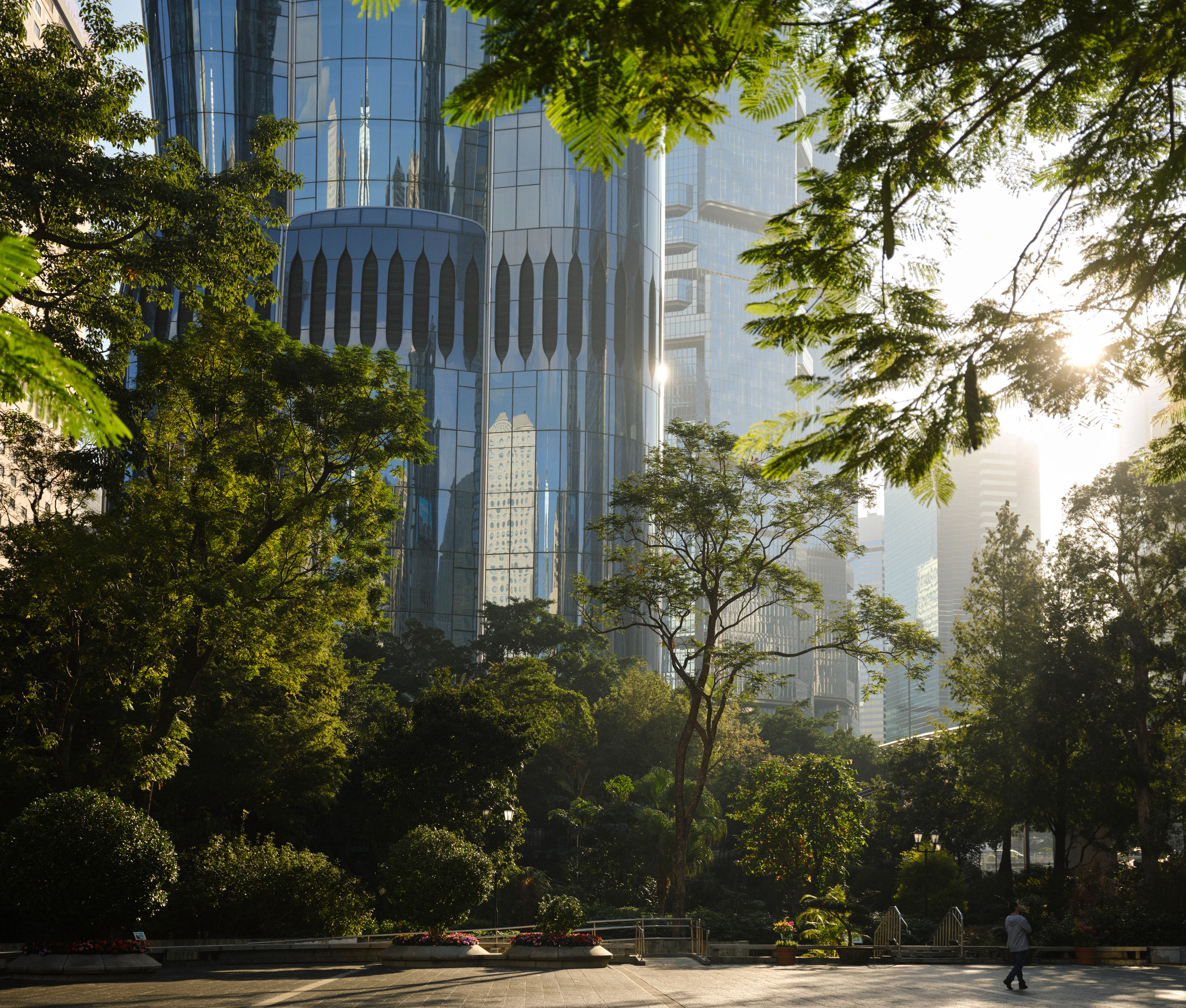
The Henderson
Developed on the world’s most valuable site purchased by Henderson Land, the 36-storey tower's design shelters new civic plazas enveloped by nature, creating an urban oasis in the centre of the city. Accommodating enhanced workplace flexibility, the building’s smart management system creates a contactless pathway for all occupants, eliminating all contact with communal surfaces.
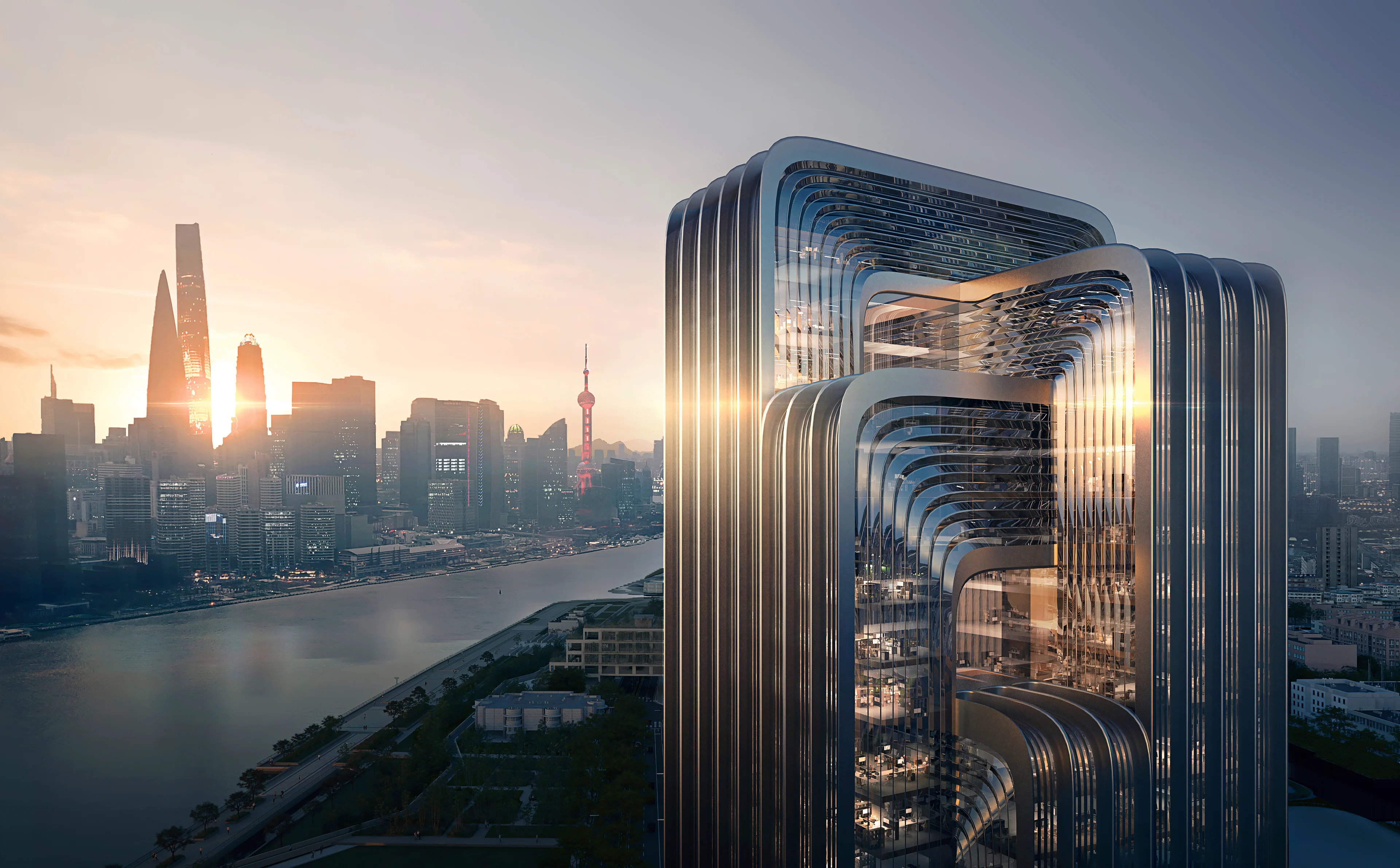
CECEP Shanghai Campus
The 218,000m² campus sets new benchmarks for the city in energy conservation, energy efficiency and sustainability.
Courtesy of ZHA
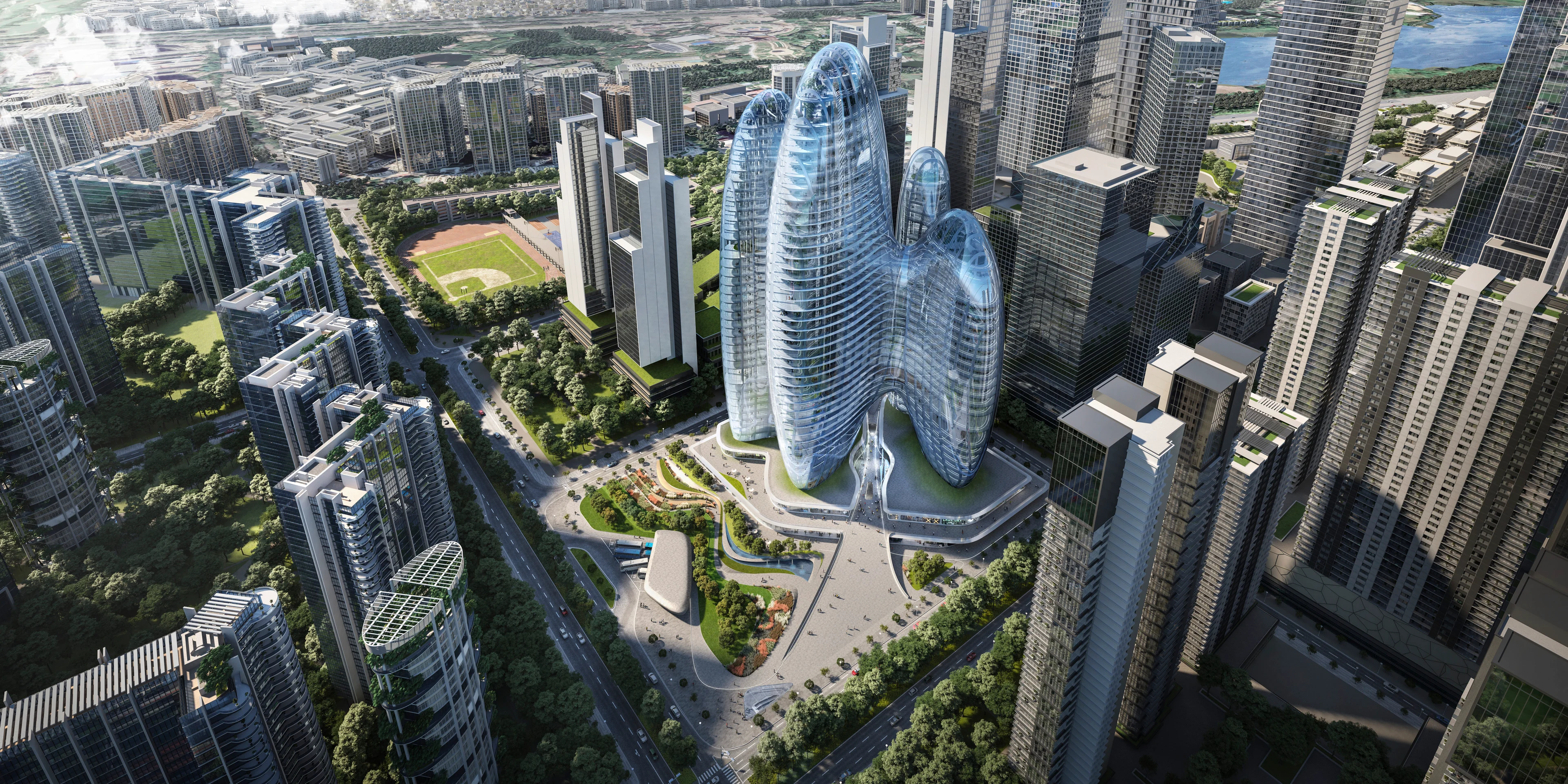
OPPO Headquarters
Conceived as four interconnected towers reaching a height of 200m (42 floors), the 185,000 sq.m design incorporates two towers of flexible, open-plan spaces linked by a 20-storey vertical lobby, and two external service towers providing vertical circulation.
Photograph by Hélène Binet
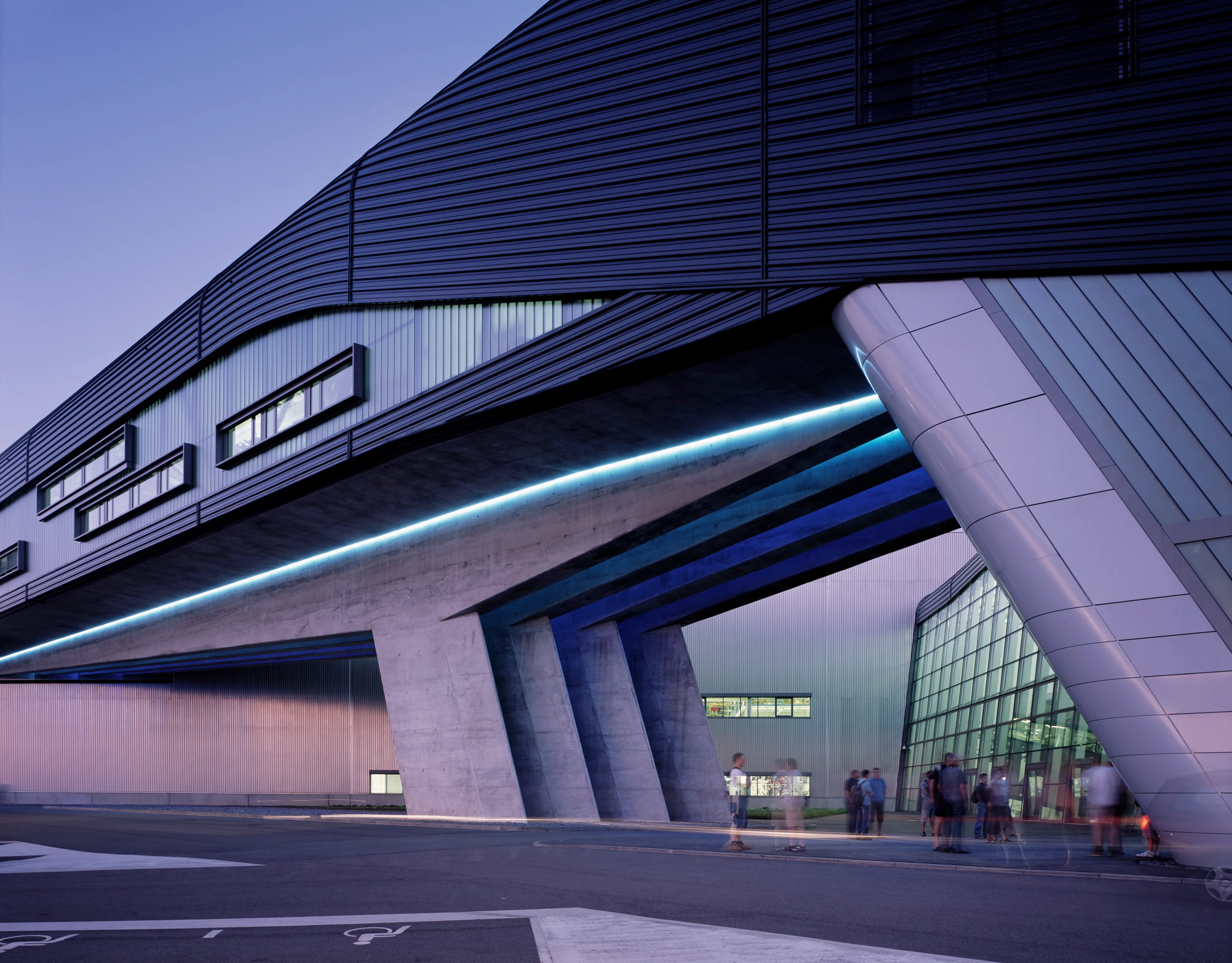
BMW Central Building
Our Central Building for BMW constituted a radical reinterpretation of the traditional office – transforming the building and the functions it contains into a more dynamic, engaging ‘nerve-centre’ or ‘communication knot’ – funneling all movement around the manufacturing complex through a space that transcends conventional white collar/blue collar spatial divisions.
Photograph by Hufton + Crow
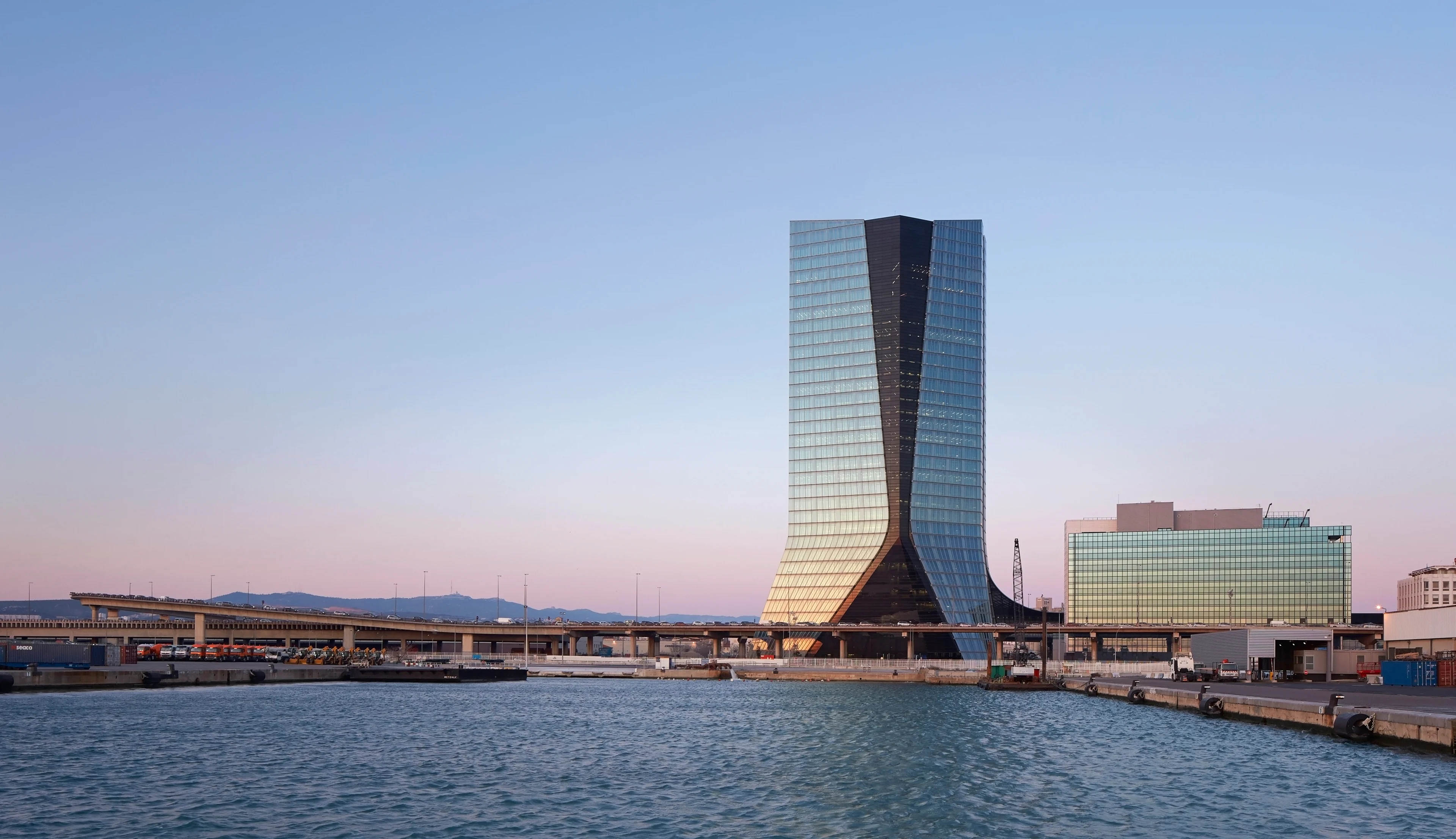
CMA CGM Headquarters
Rising in a metallic curving arc that slowly lifts and accelerates skywards into the dramatic vertical geometry of its revolutionary forms. With its ultimate coordinate 142.8 metres above the ground, a gateway to the city from both land and sea, an iconic vertical element that interacts with Marseille’s other significant landmarks.
Photograph by Hufton + Crow
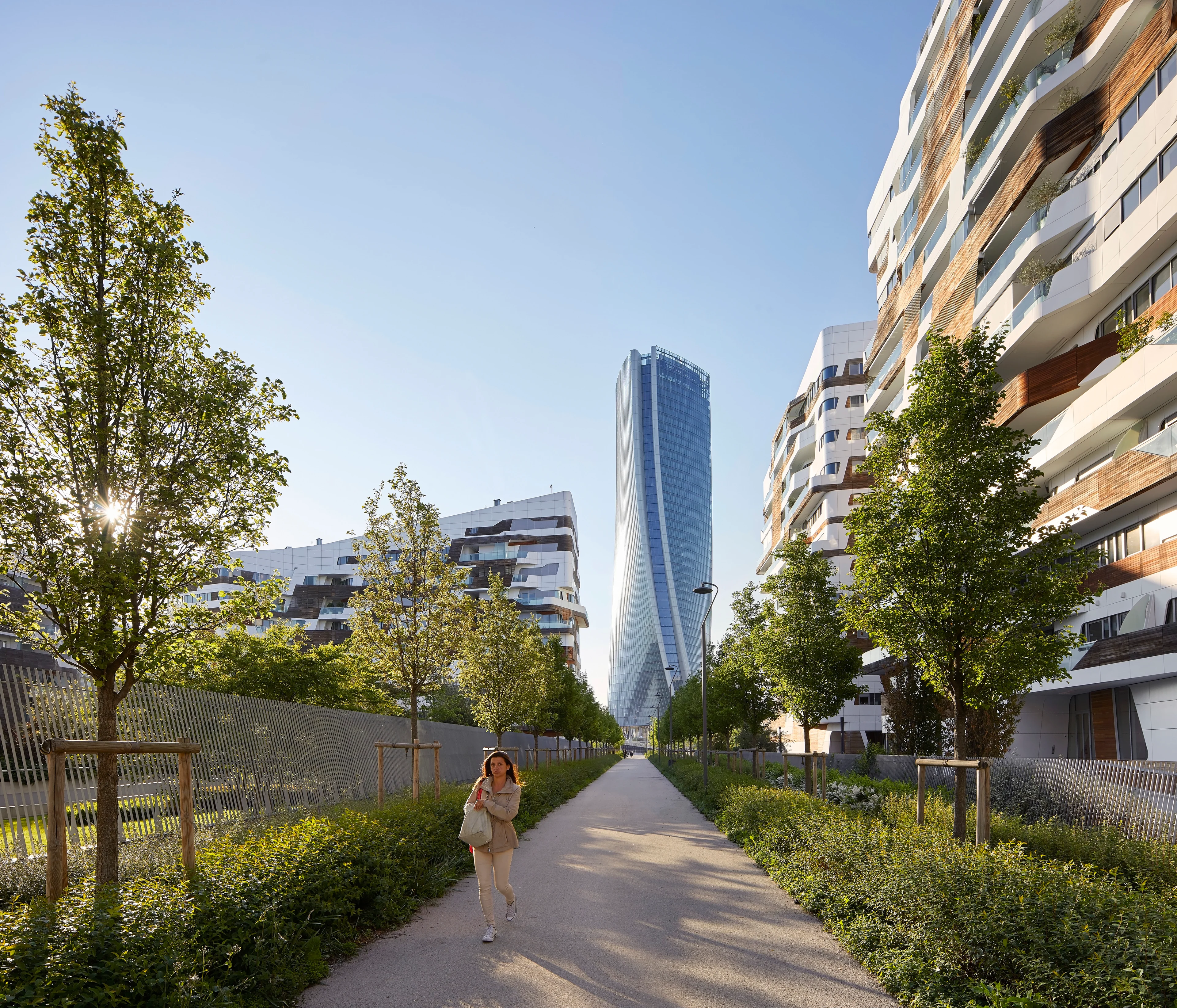
Generali Tower
Generali Tower
Generali Tower is within the CityLife masterplan that has redeveloped Milan’s abandoned trade fair grounds following the fair’s relocation to Rho Pero in 2005.
01
02
03
04
05
06
07
08
09
10
11
12
13
14
15