
Courtesy of Soho China, photograph by Jerry Yin
Beijing, China
2009 - 2014
SOHO China Ltd.
Wangjing SOHO
Photograph by Xue Liang 薛亮
Photograph by Xue Liang 薛亮
Photograph by Xue Liang 薛亮
Photograph by Xue Liang 薛亮
Courtesy of Soho China, photograph by Jerry Yin
01
02
03
04
05
One of the most popular locations for tech start-ups
Wangjing SOHO is located in northeast Wangjing Soho Beijing between Fourth and Fifth Ring Roads. Served by Wangjing and Wangjing East subway stations on Line 15, and the Wanjing West interchange station with Line 13 - as well as the Futong and Wangjing South stations to be built as part of the new of the Line 14 - the site is near the Airport Expressway approximately halfway between Beijing’s Capital Airport and the centre of the city. Access to each of these key transport links has contributed to the fluid composition of Wangjing SOHO.
Developed in the mid-1990’s as a large residential area approximately 12 kilometres from the city center, Wangjing has also become a key hub for Beijing’s IT and telecommunications, home to Chinese and International technology companies including Microsoft, China Telecom, AlcatelLucent, Sony and Panasonic, as well as global manufacturers such as Siemens, Daimler and Caterpillar. Many of Beijing’s IT companies are also located in Wangjing with these multi-national firms, which has in turn made Wangjing one of the most popular locations for the capital’s innovative tech start-ups such as Momo. Subsequently, there is an increasing demand for a variety of flexible office spaces in Wangjing: from units with the smallest floor area to suit new firms with a single employee - yet also offering the possibility for expansion; to offices with a large open-plan arrangements to house the Beijing headquarters of a global IT corporations.
Responding to the flows of the city
With the ongoing development of increased housing and transport links to the rest of the city, and many respected educational and cultural institutions such as Beijing Number 80 High School, the China Central Academy of Fine Arts and 798 Arts District, Wangjing has developed into a diverse community in the creative and IT sectors. The opportunities offered by the IT and telecommunications industries have established Wangjing as an important employment, residential, transport, educational and cultural hub in the north-east of Beijing; integral to the multi-modal urban plan for the capital that does not impact existing social and infrastructure networks in the centre of the city.
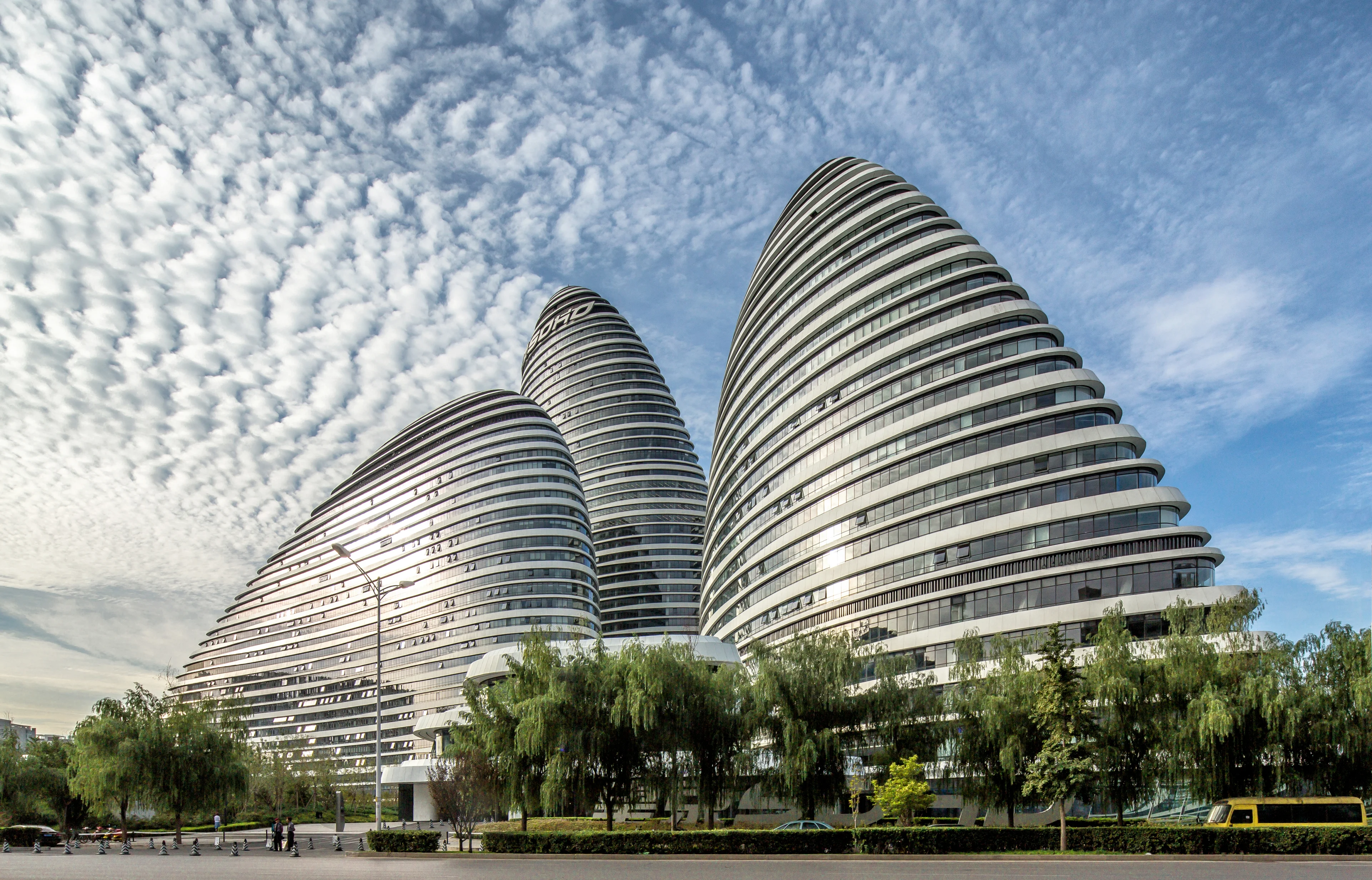
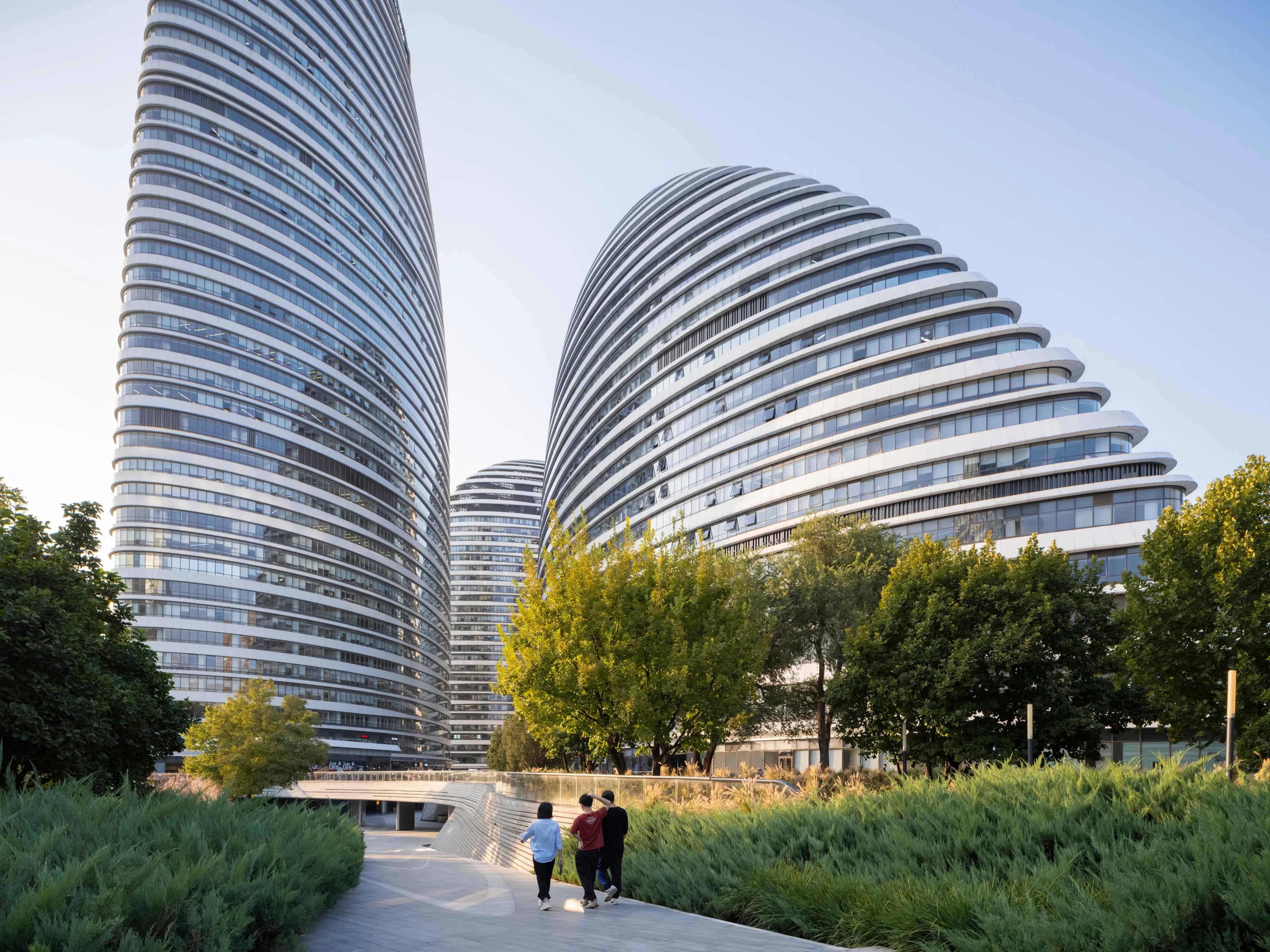
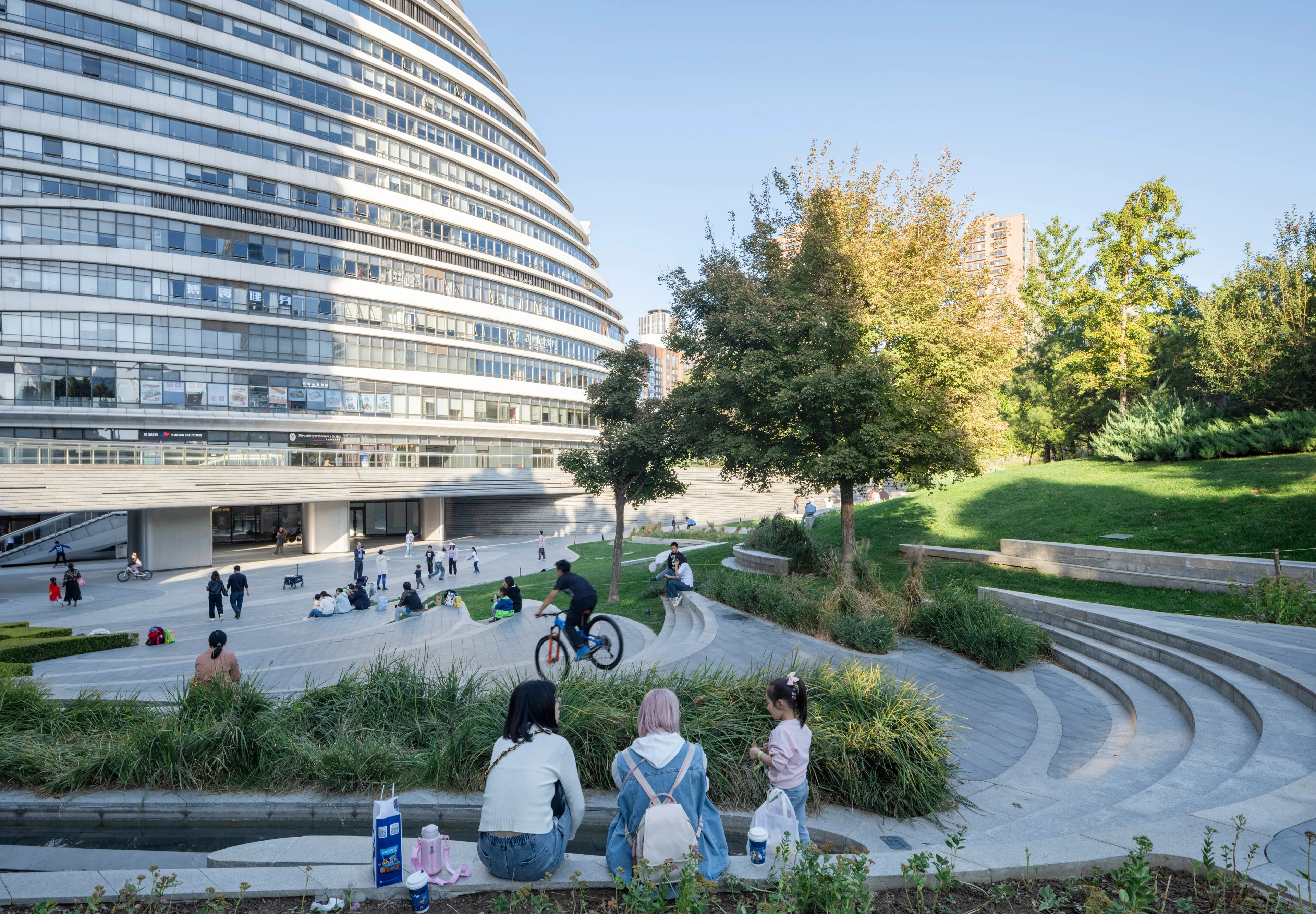
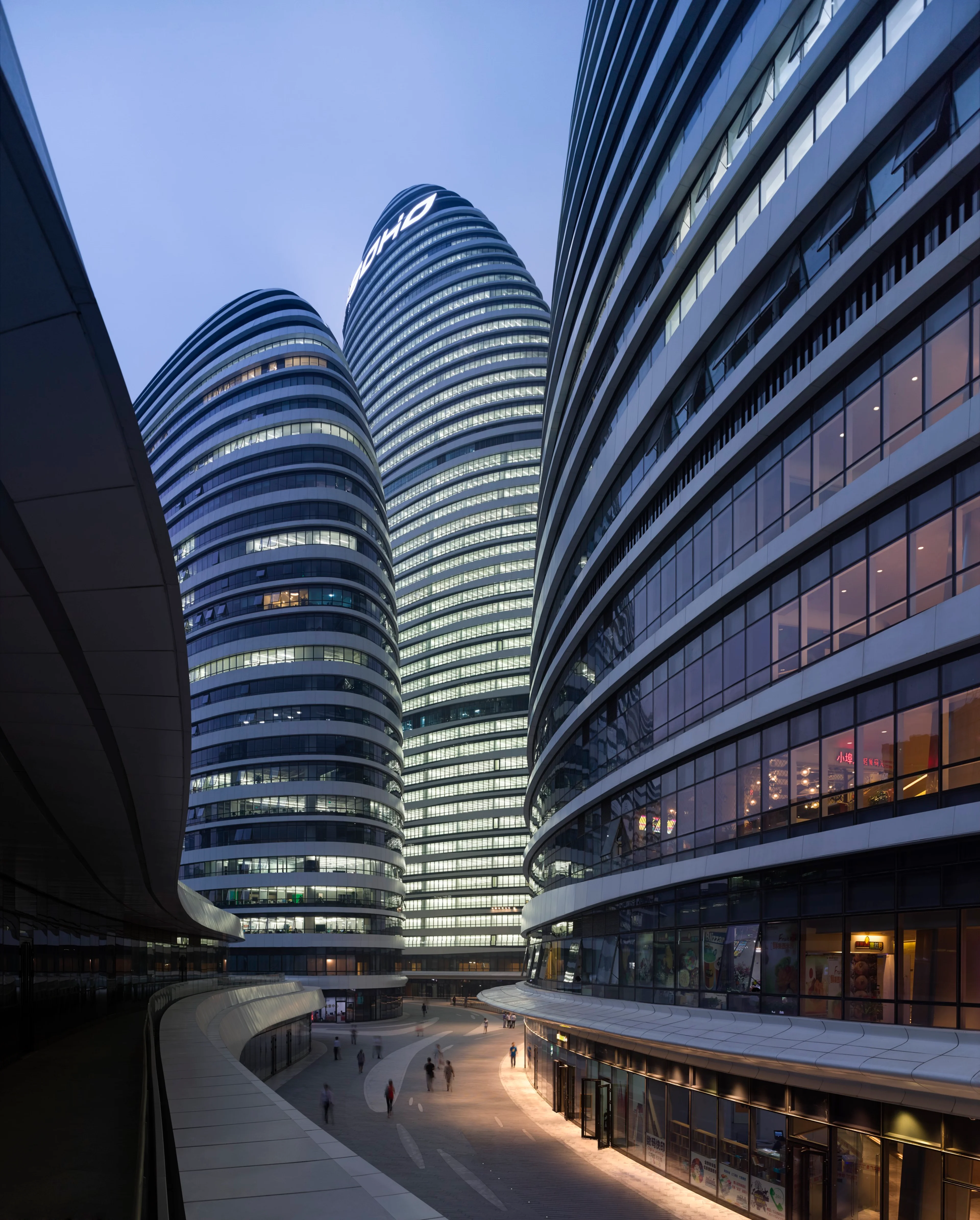
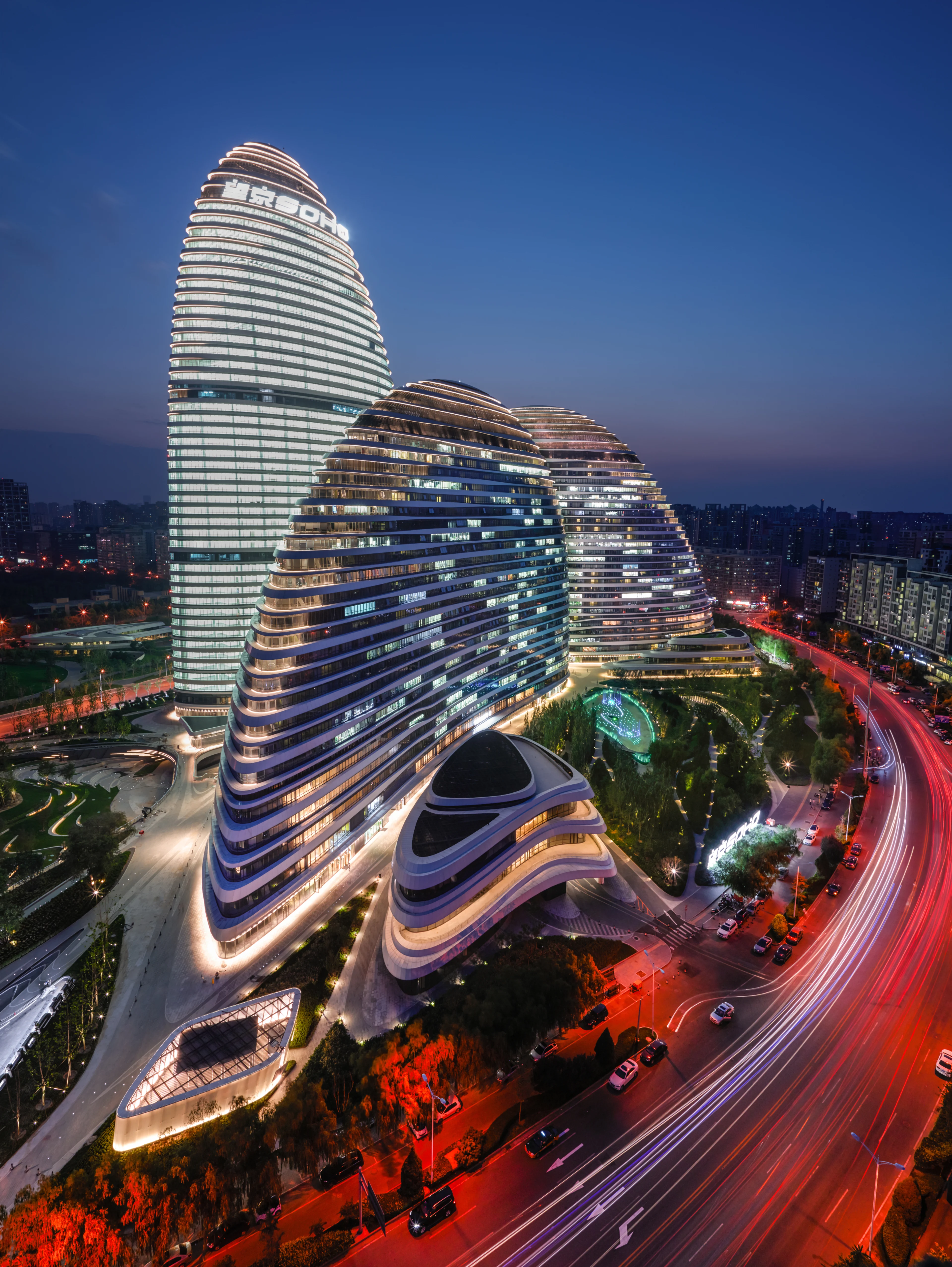
Located in Wangjing’s centre, Wangjing Soho is a mixed-use development consisting of three towers 118, 127, 200 meters in height designed as three interweaving ‘mountains’ that fuse building and landscape to bring together the surrounding community with a new 60,000m2 public park. The design responds to the flows of the city and allows natural daylight into each building from all directions. The juxtaposition of the tower’s fluid forms continuously changes when viewed from different directions; appearing as individual buildings in some views, or as a connected ensemble in others. The orientation and composition of the towers has been defined to direct visitors and staff to the various transport links that surround the site . The cohesive design of the project creates an anchor and identity for the growing Wangjing community.
Flowing into public gardens and courtyards
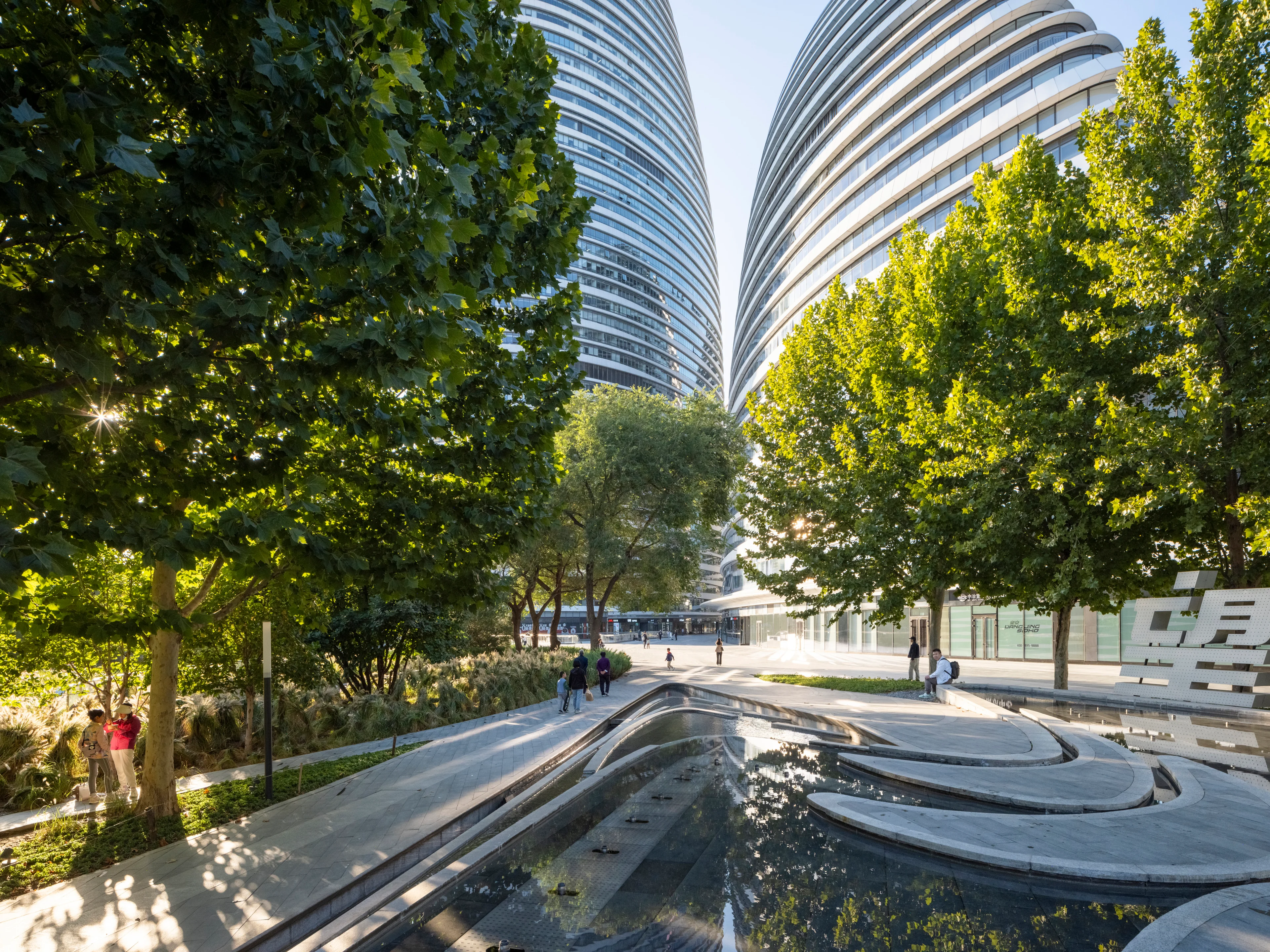
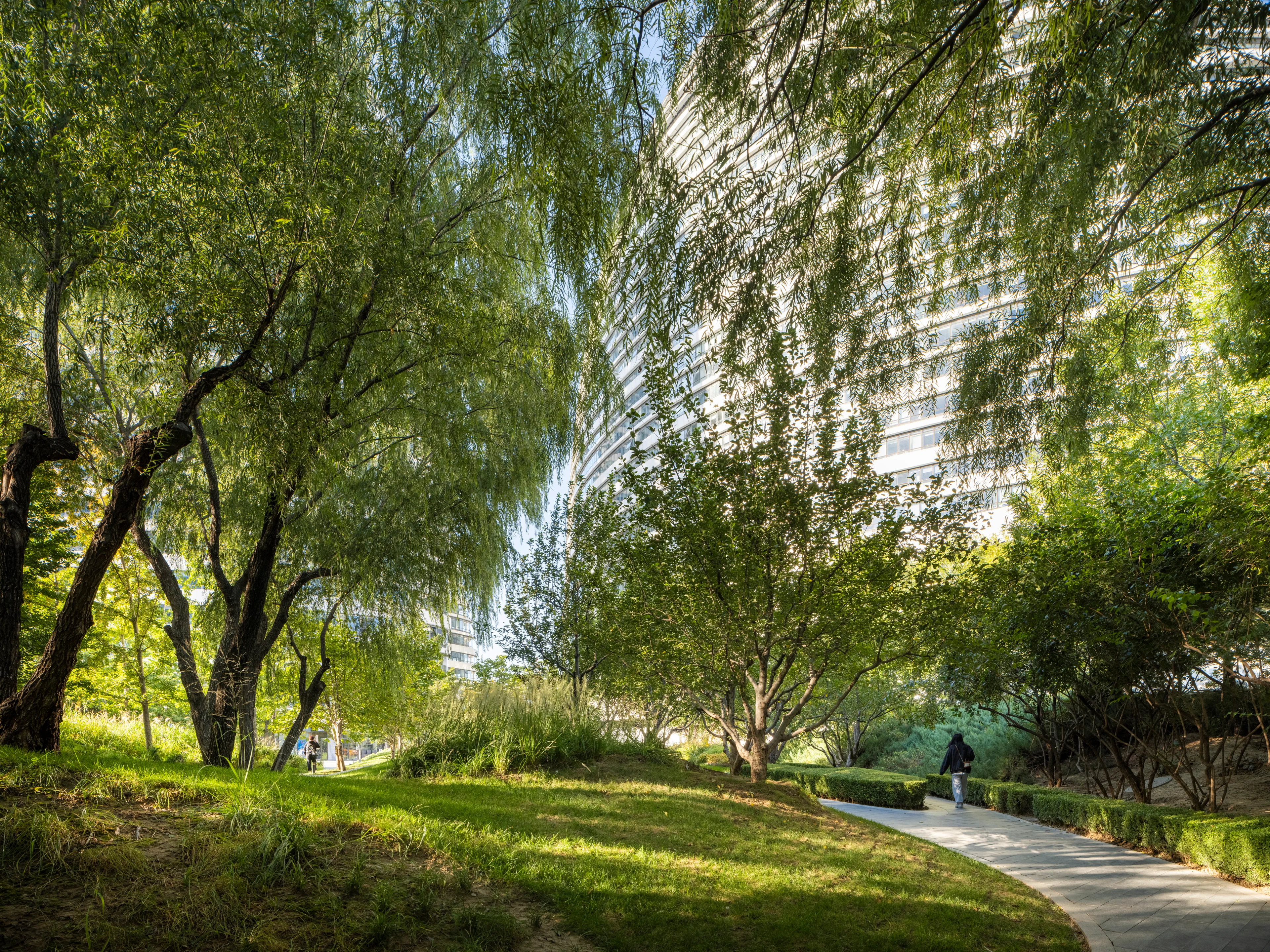
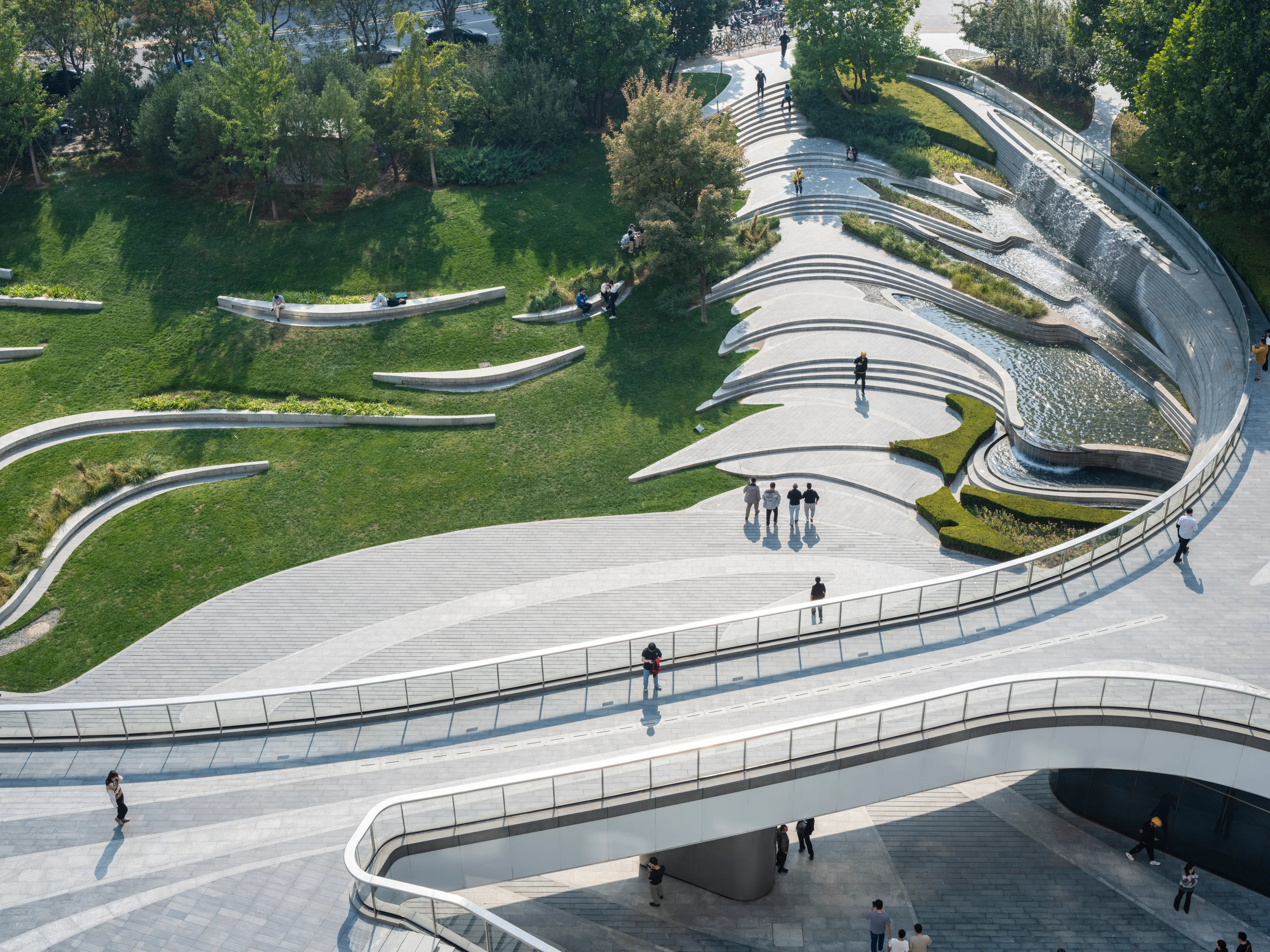
Dividing the total 560,000m2 built area required by the client into three smaller buildings has reduced the scale of the project, in comparison to a single building placed on the 115,393m2 fan-shaped site. Large public spaces open 24 hours a day include a park to the south and landscaped gardens to the north, east and west with activity zones and water features that have already become popular areas for the local community. The large entrance lobbies for each tower face outwards towards the city and extend through each building to the central shopping street and plaza in-between the towers that in turn flows into public gardens and courtyards.
The total above-ground floor area of Wangjing SOHO is 392,265m2, with four levels below ground totalling 129,000m2 that includes secure parking for 8256 bicycles and showers for cyclists. Priority charging spaces for low-emission vehicles are also included within the basement car park.
The thin floor plates provide flexible, open-plan office space and the tapering section of each tower provides the extensive natural daylighting to each office, retail and lobby. Windows on every floor of the towers open to enable each office to be naturally ventilated whenever appropriate.
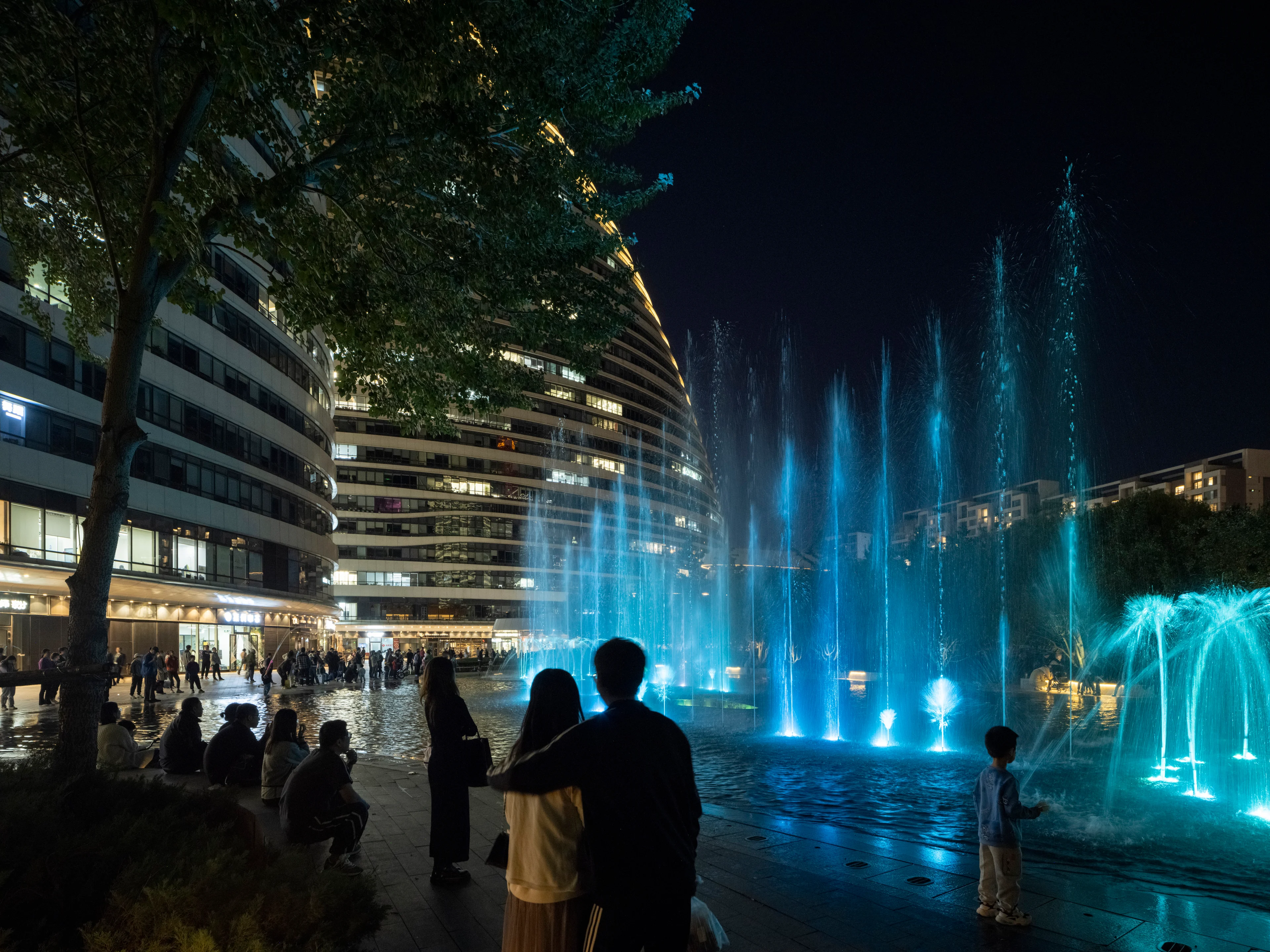
Photograph by Xue Liang 薛亮
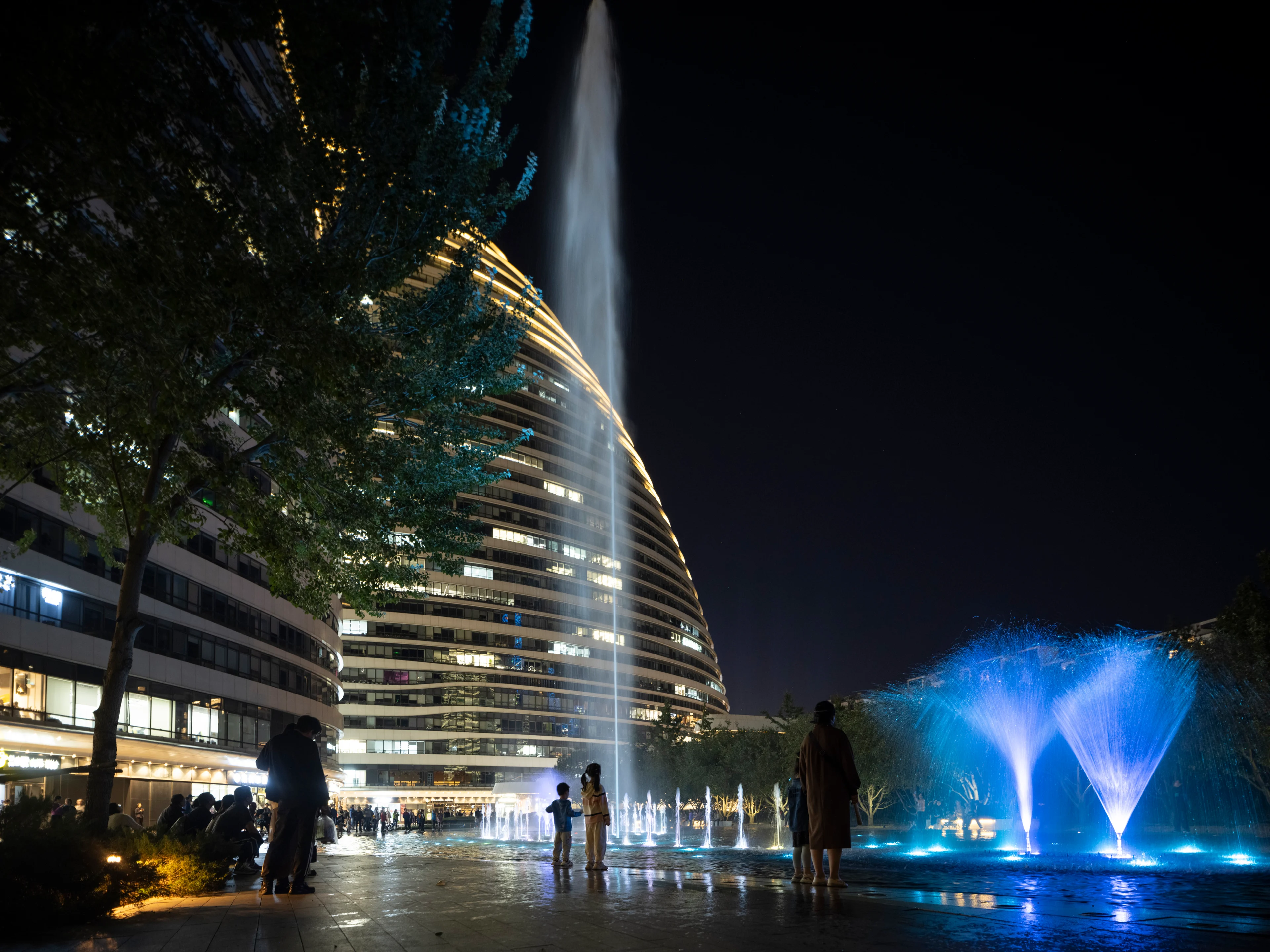
Photograph by Xue Liang 薛亮
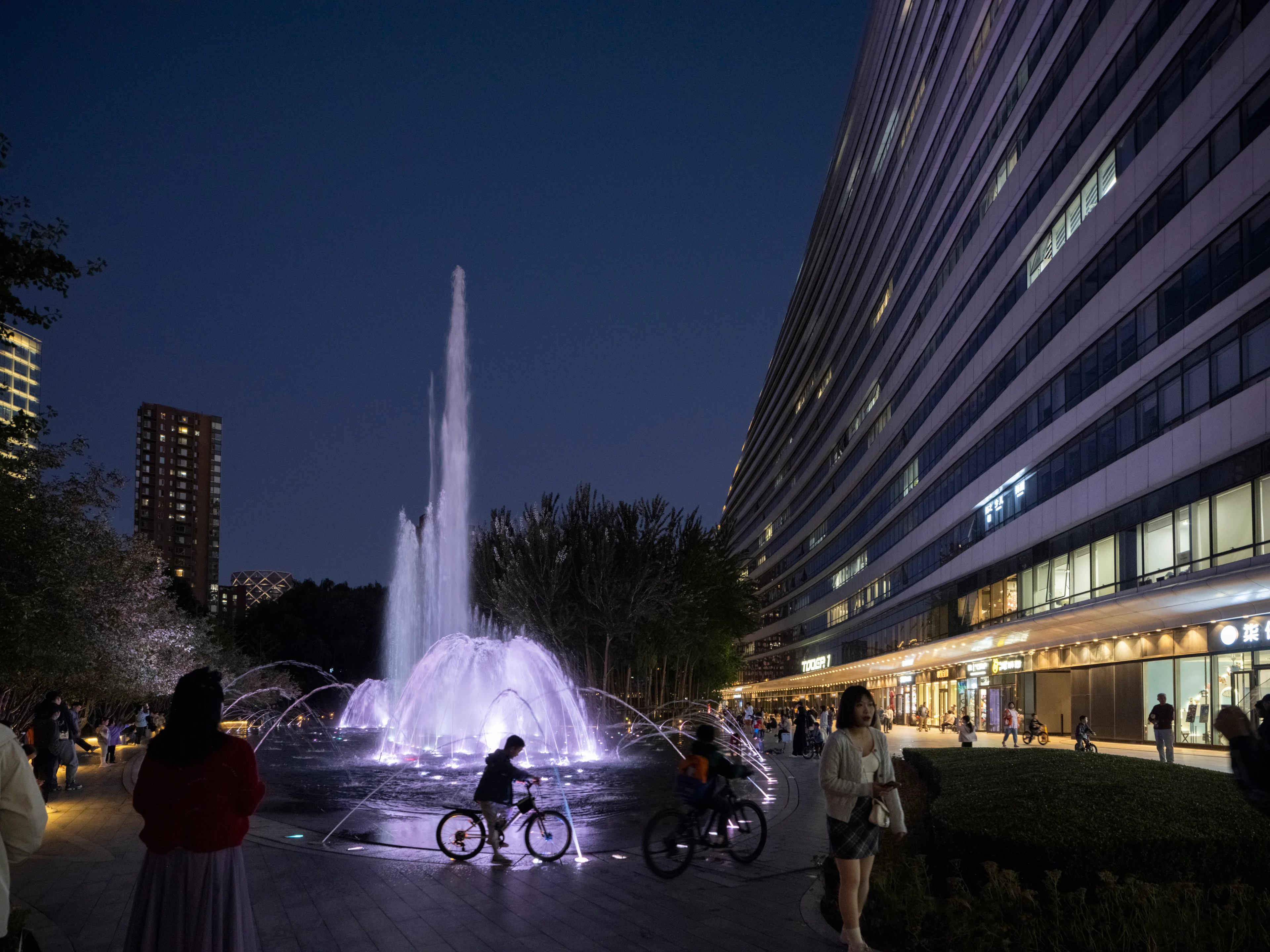
Photograph by Xue Liang 薛亮
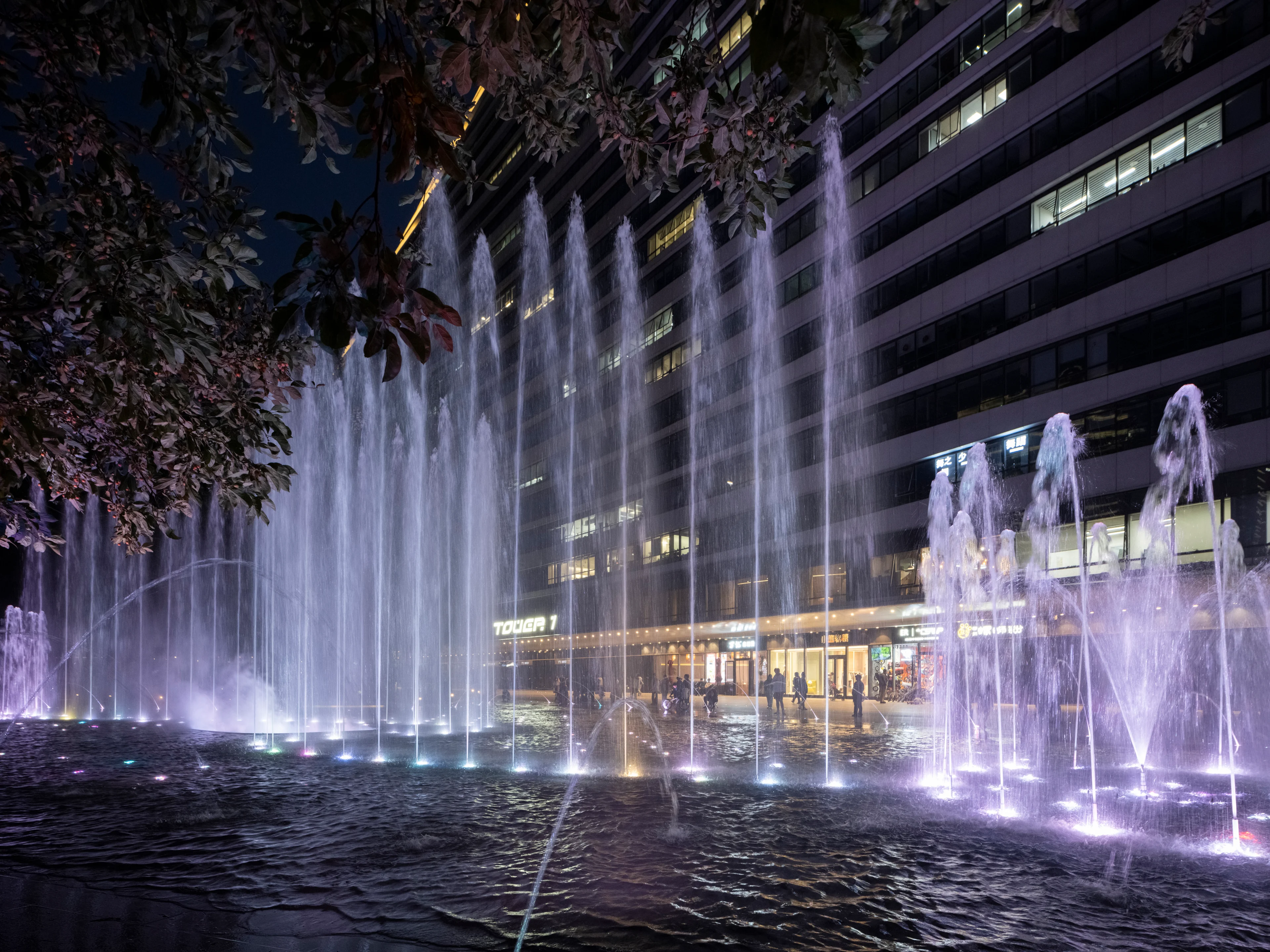
Photograph by Xue Liang 薛亮
01
02
03
04
Eliminating the pollution sources
Double-insulated unitized low-e glazing systems (U=1.7W/m2oC and SC= 0.4) and horizontal ribbons of white aluminium external louvers provide overhangs for sun shading as well as maintenance terraces and water collection. The envelope insulation (U=0.55 W/m2oC) reduces heating/cooling requirements and MEP systems are also designed to reduce emissions, potable water usage and energy consumption in Beijing’s extreme weather, including: heat recovery from the exhaust air; energy efficient control sensors; grey water reuse system and low flow-rate fixtures; energy monitoring systems; high-efficiency pumps, fans, boilers and chillers. Simulation test results for Wangjing SOHO list a 42% reduction in annual water potable water and 12.8% reduction in energy costs from ASHRAE standard buildings.
Low VOC interior materials are carefully chosen to eliminate the pollution sources from within, and the fresh air rate per person provided exceeds the ASHRAE standard by 30%. High efficiency filters are installed in the air handling system to remove PM2.5 particles.
Towers 1 and 2 of Wangjing Soho were sold out before completion. Tower 3 has been retained by SOHO China and leased as temporary office space booked via the SOHO 3Q app. 90% of the tower 3’s inaugural leasing tenants are the innovative companies in Beijing’s rapidly developing IT and Telecommunications sectors that comprise Wangjing’s growing business community.
Offices
Discover more of our office buildings
From a Sharjah company headquarters designed to achieve net-zero energy consumption to a tower that anchors the masterplan for a newly revitalised district of Milan, discover our latest office buildings.
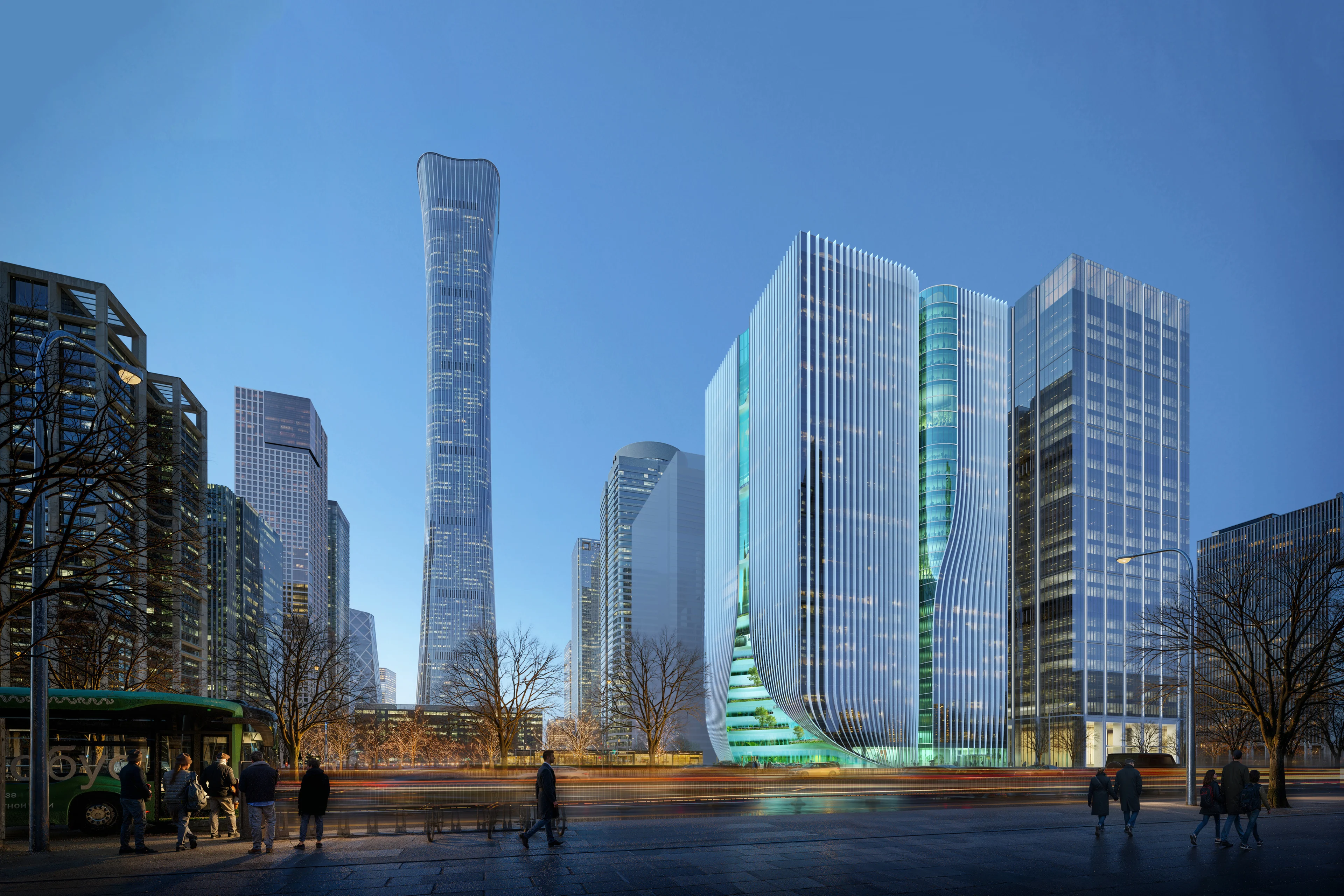
Render by Devisual
Z8 Tower
Located in the core of Beijing’s Central Business District (CBD) at the intersection of Jianguo Road and Jinhe East Road, the new Z8 Tower faces the CBD’s central park and is defined by the historic alignment and urbanism of the city’s Chang’an Avenue.
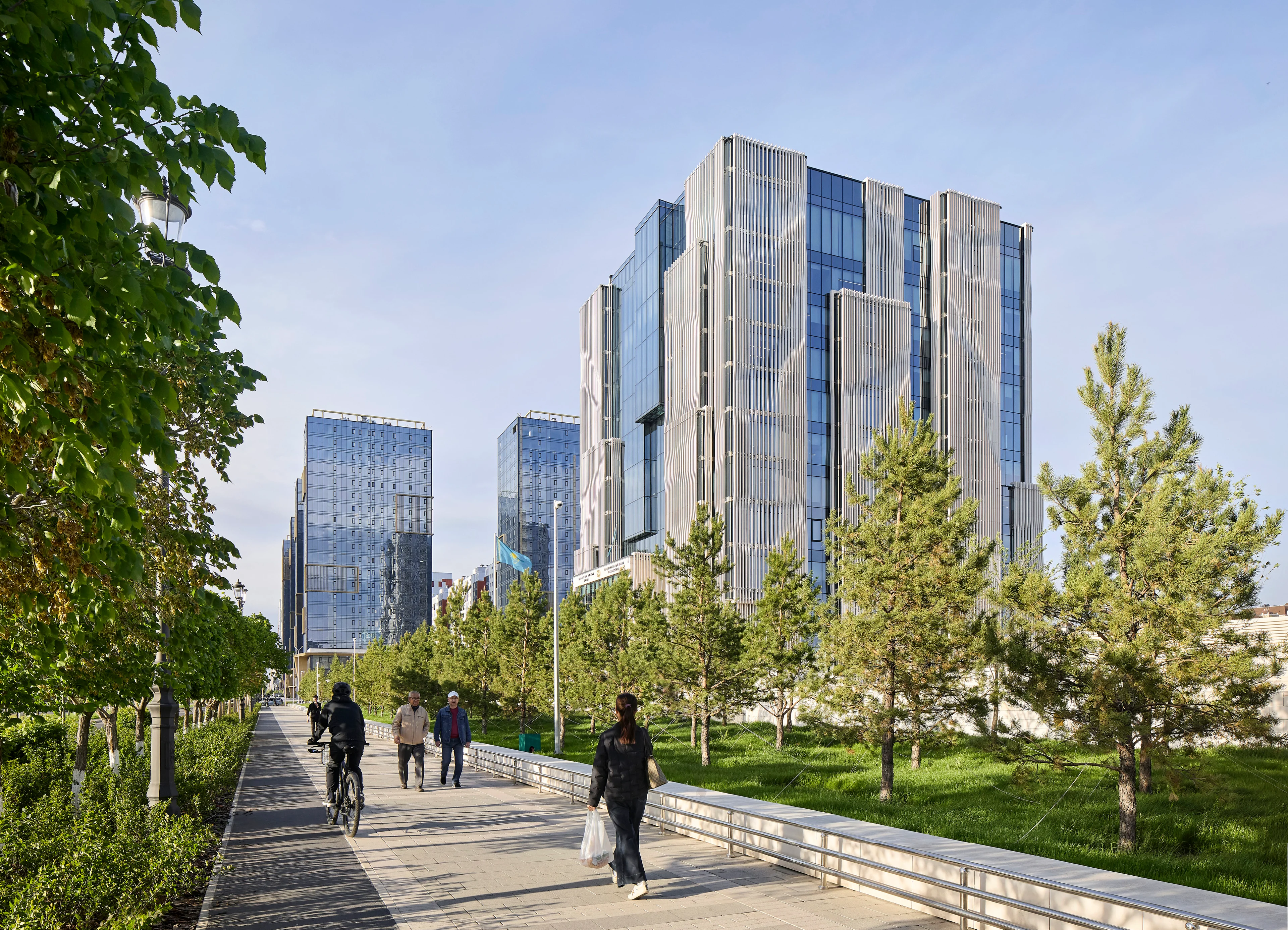
Photograph by Hufton + Crow
National Bank of the Republic of Kazakhstan
The new headquarters of the National Bank of the Republic of Kazakhstan (NBRK) in Astana houses the bank’s departments within a single, integrated campus accommodating up to 800 employees and conveys the institution’s longstanding commitment to fiscal stability.
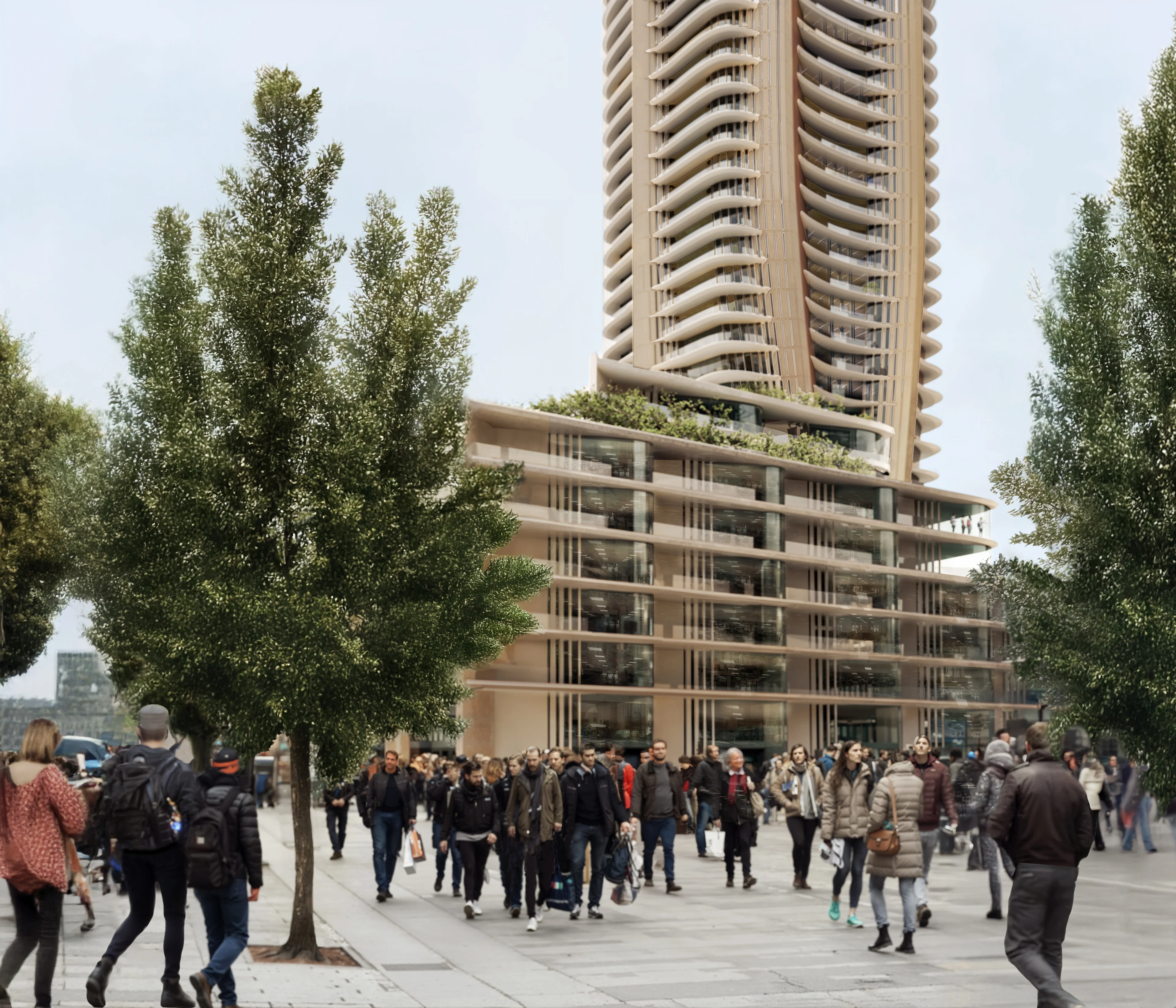
Alta Tower
ZHA collaborating with Bureau Cube Partners (BCP) has been selected as winners of the international competition to design the new Alta Tower in New Belgrade, Serbia.
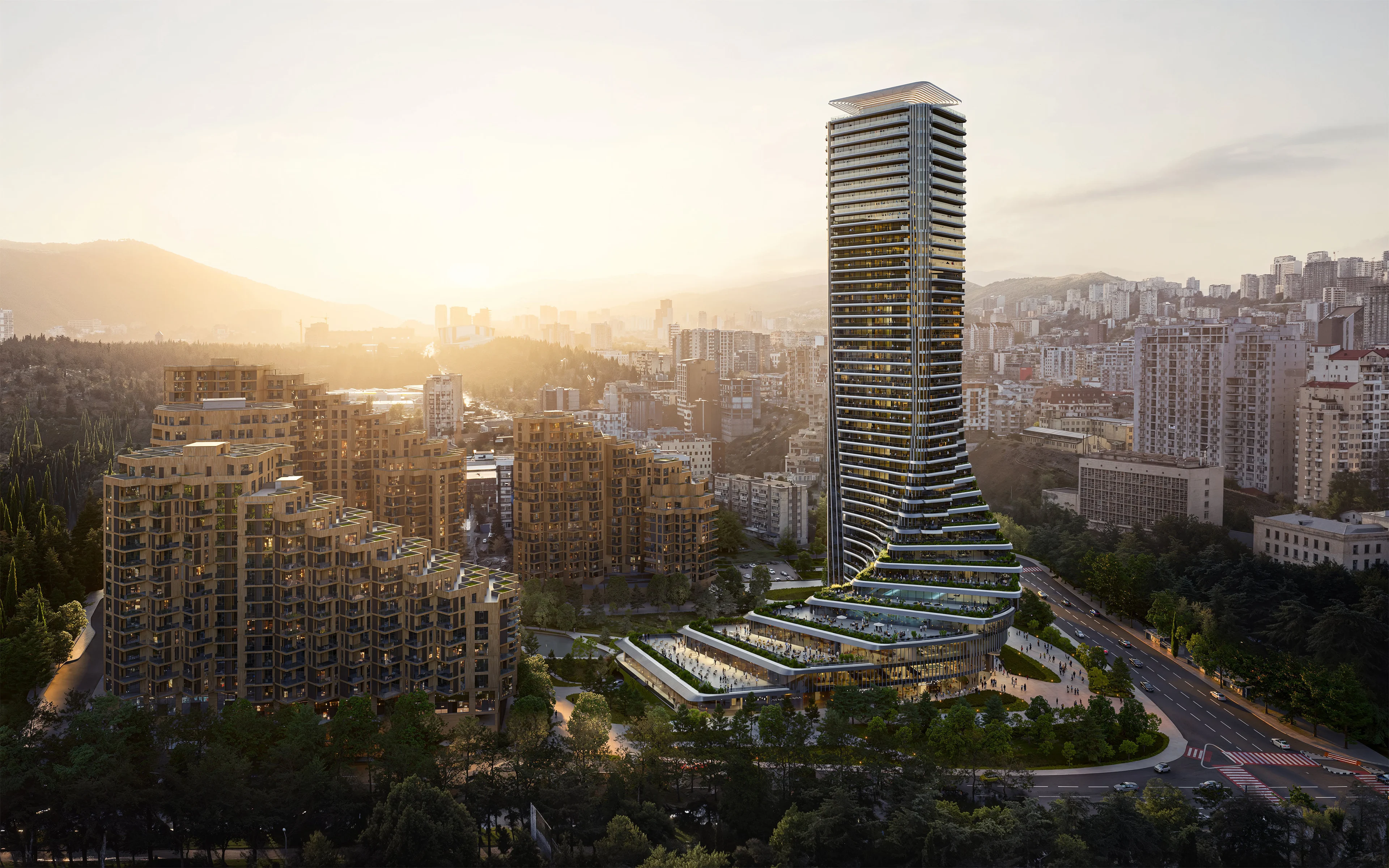
Cityzen Mixed-Use Development
Serving as the gateway to the Cityzen community, a new civic hub in the west of Tbilisi, Cityzen Tower is ZHA's first project in Georgia.
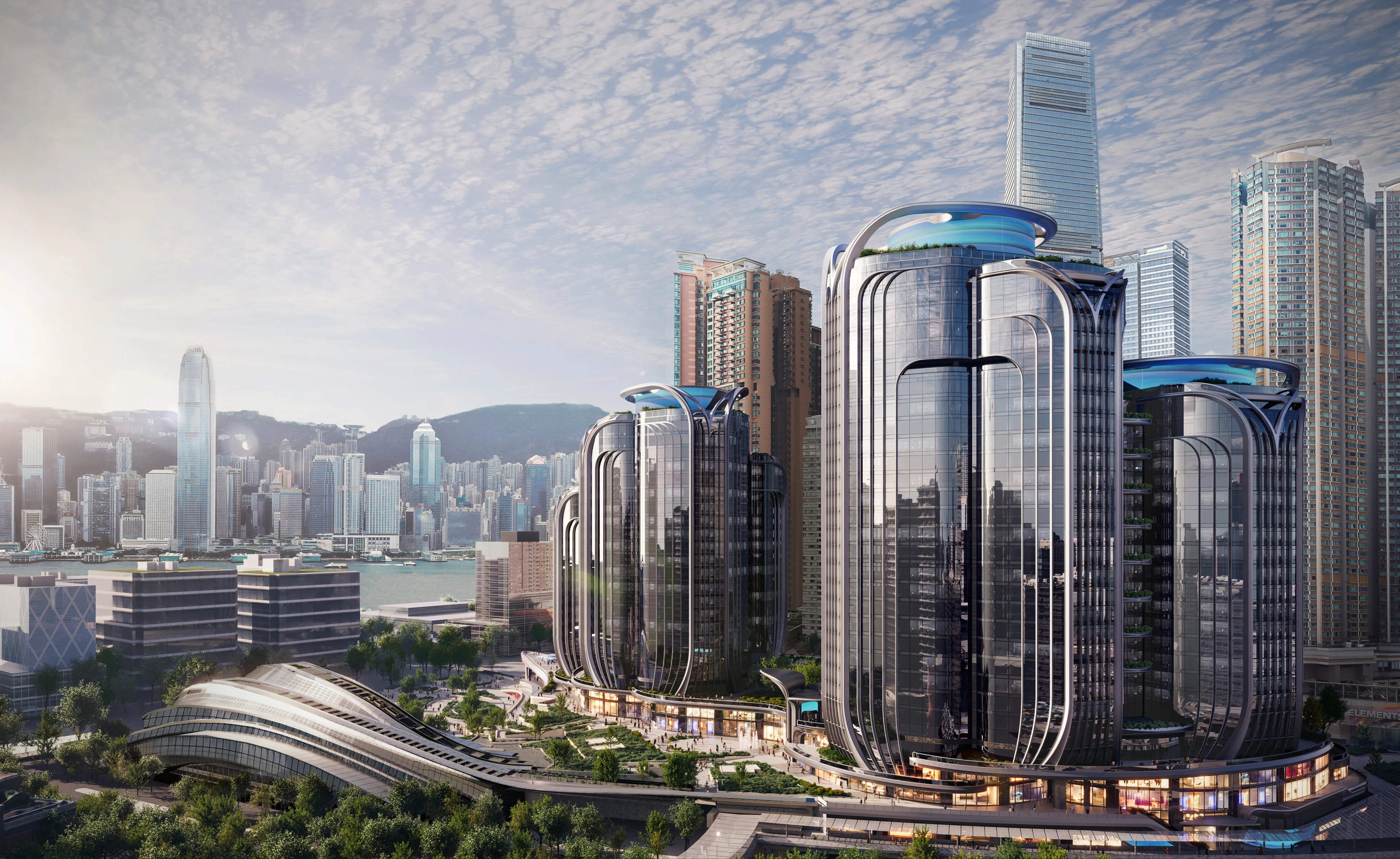
Render by Hayes Davidson
International Gateway Centre
Adjacent to the West Kowloon Cultural District, the 3.2 million sq. ft. development above Hong Kong’s High Speed Rail West Kowloon Terminus connects established and emerging neighbourhoods with a network of public gardens and landscaped plazas.
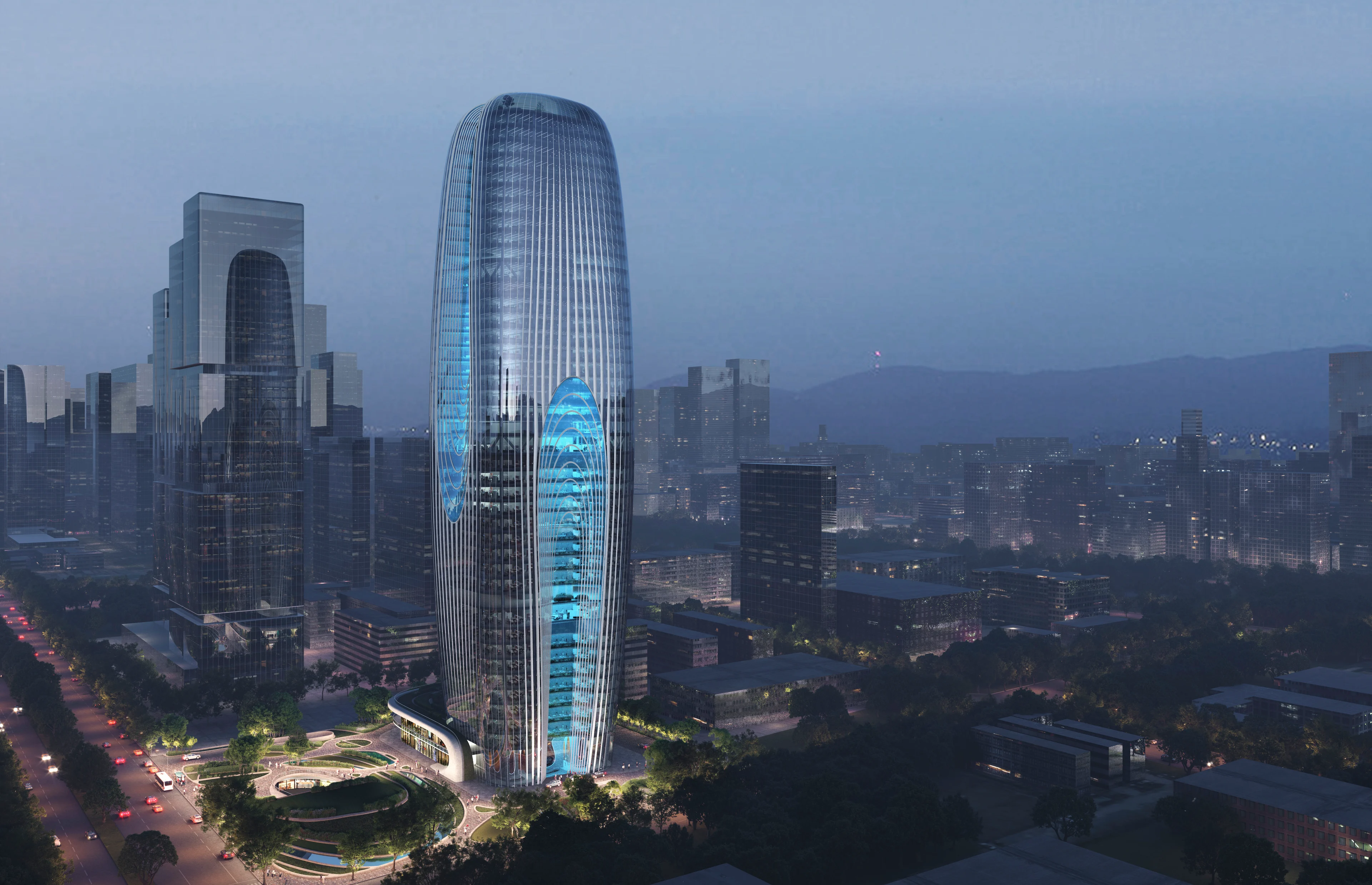
Daxia Tower
Demarcating the centre of Xi’an’s business district, Daxia Tower’s gently curving silhouette is accentuated by layers of patterned glazing and dramatic atriums that bring natural light deep into its floorplates. Creating a cascade of planted interior terraces that echo mountainside waterfalls, each atrium gives panoramic views over the historic city and the growing high-tech zone.
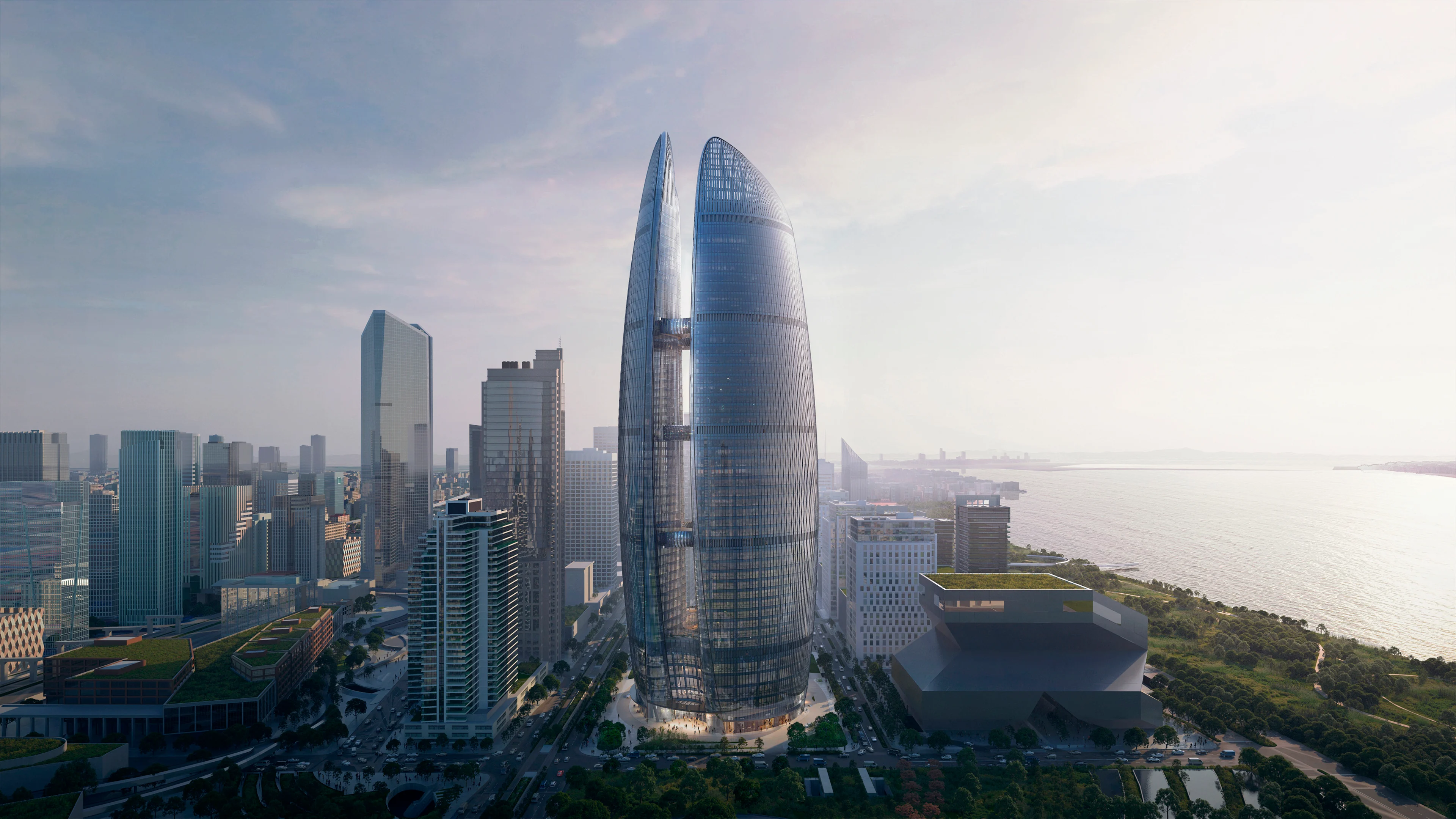
Render by Negativ
Taikang Financial Centre
The new Taikang Financial Centre will be a centre of excellence, developing effective systems and networks that will provide a new ecosystem of support for people of all ages across China. Using the new technologies developed within the Taikang Financial Centre, the group will continue its commitment to supporting community development, healthcare, education and well-being throughout the country.
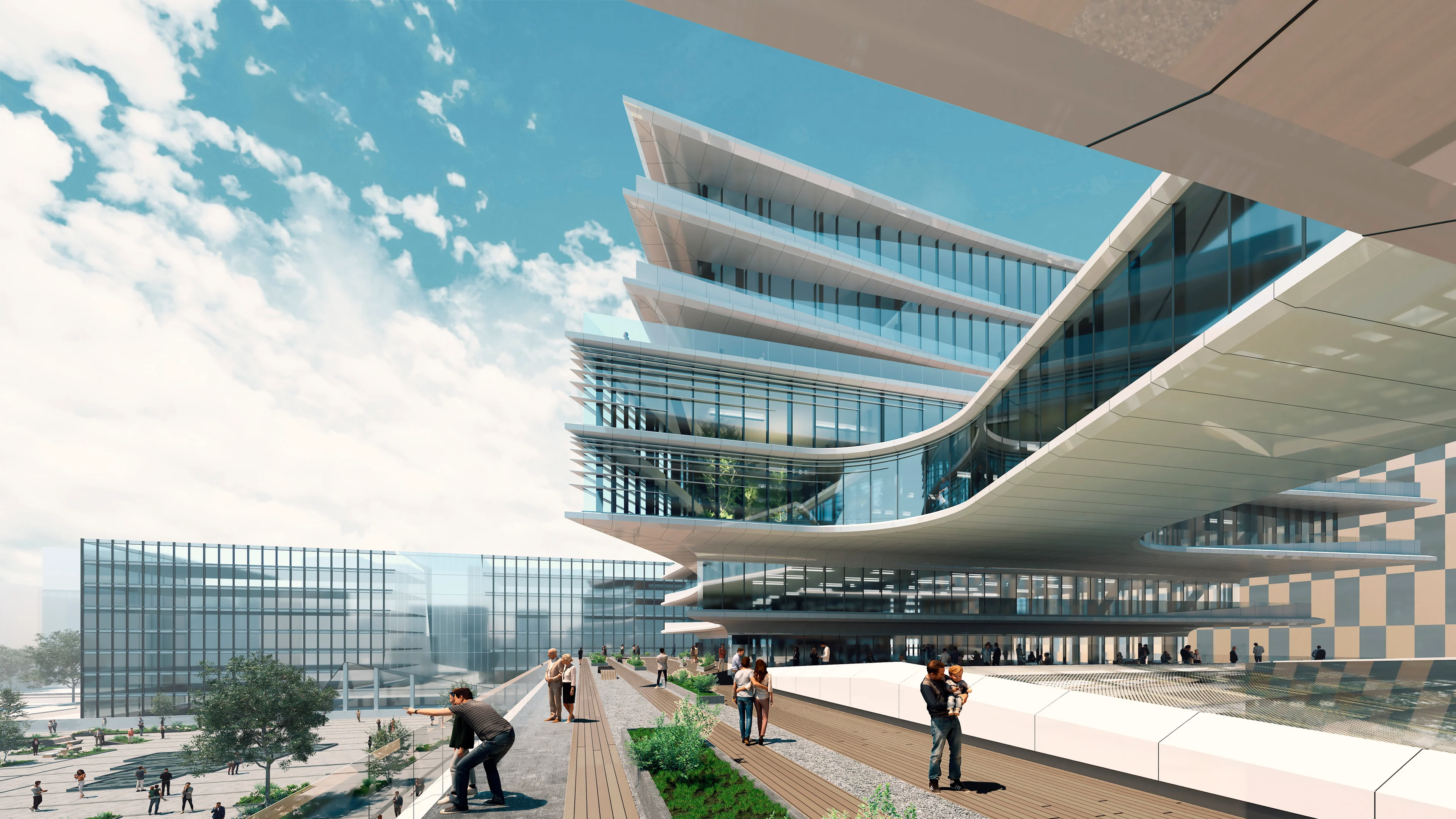
Vilnius Business Stadium
Integrated within the Vilnius City Plan and the popular public square adjacent to the site, Business Stadium Central will be a new gathering place for the city.
Courtesy of Brick Visual
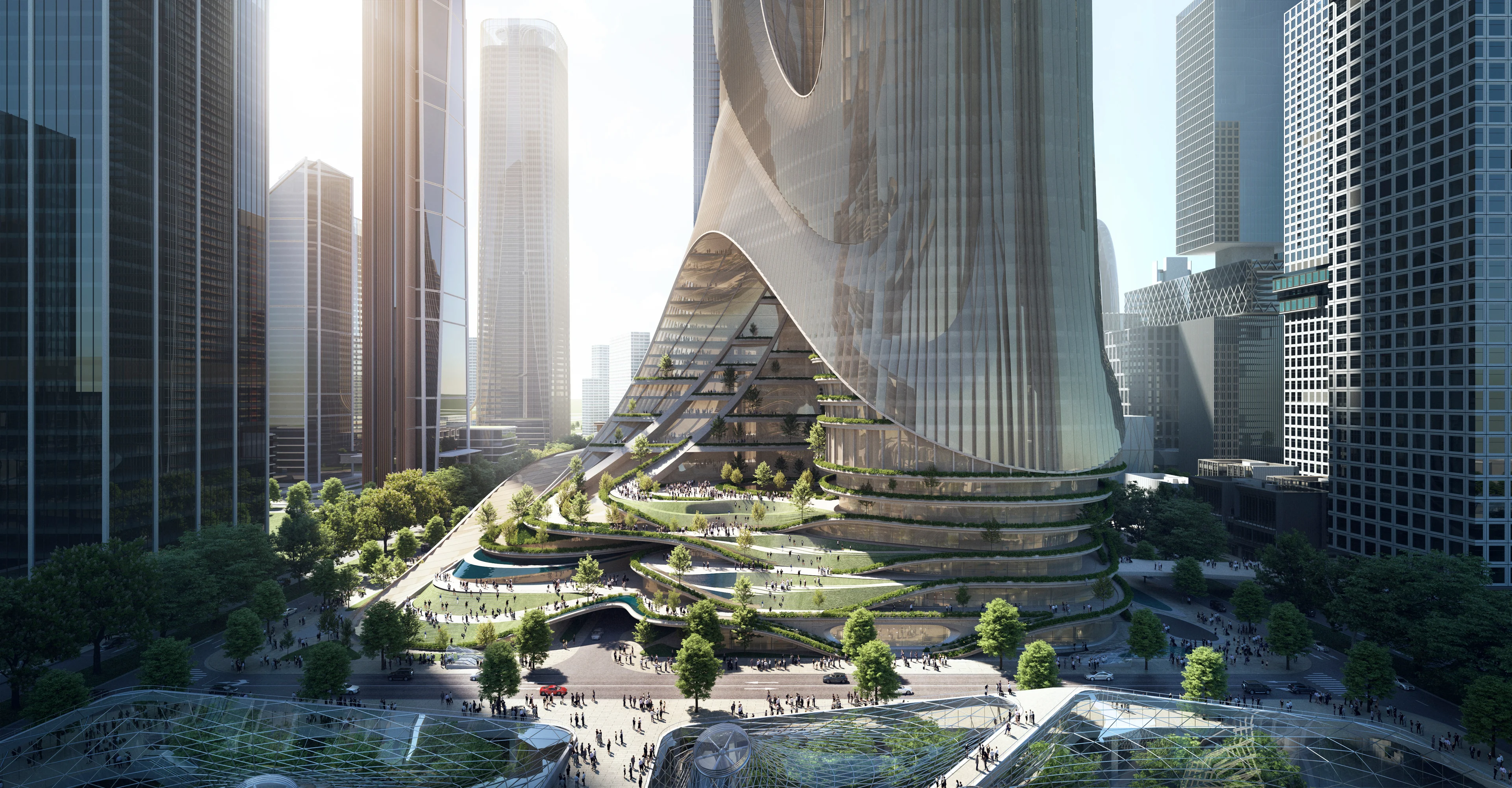
Tower C in Shenzhen Bay Super Headquarters Base
The design of Tower C integrates the city and nature within its central green axis with the transit orientated development (TOD) of Shenzhen’s new spine, creating a ‘superscape’ that will become a tower of the future within the Super Headquarters Base.
Photograph by Virgile Simon Bertrand
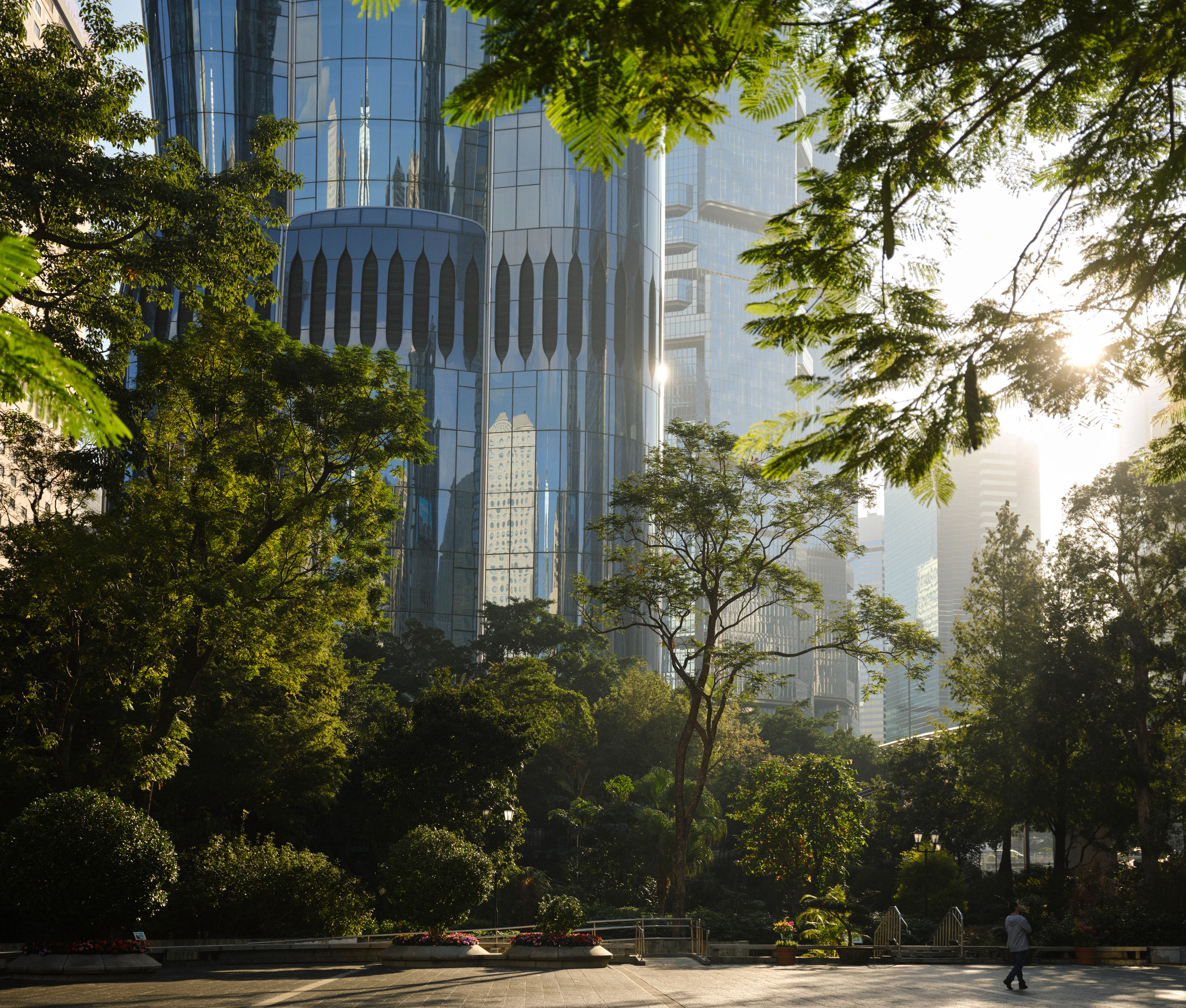
The Henderson
Developed on the world’s most valuable site purchased by Henderson Land, the 36-storey tower's design shelters new civic plazas enveloped by nature, creating an urban oasis in the centre of the city. Accommodating enhanced workplace flexibility, the building’s smart management system creates a contactless pathway for all occupants, eliminating all contact with communal surfaces.
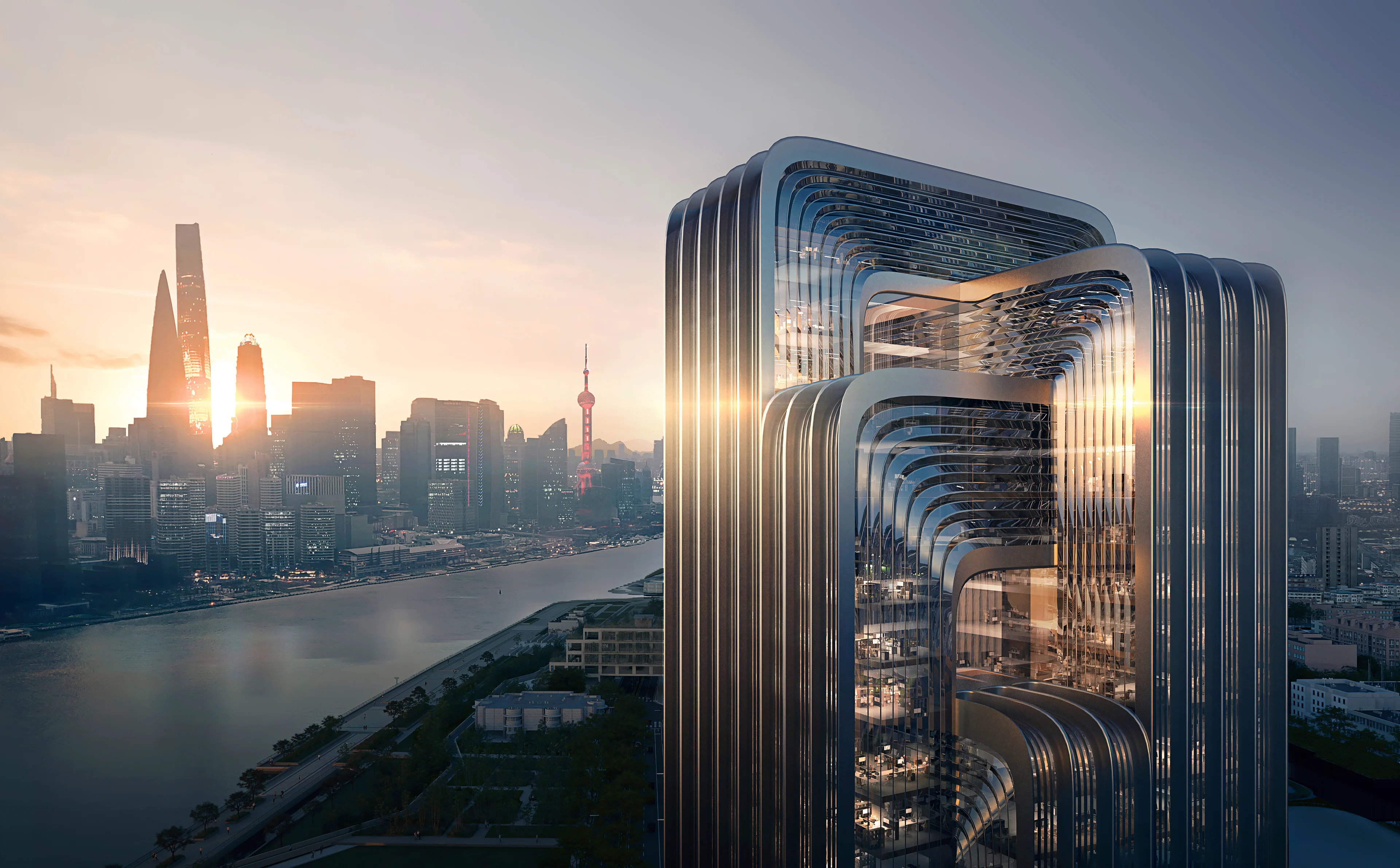
CECEP Shanghai Campus
The 218,000m² campus sets new benchmarks for the city in energy conservation, energy efficiency and sustainability.
Courtesy of ZHA
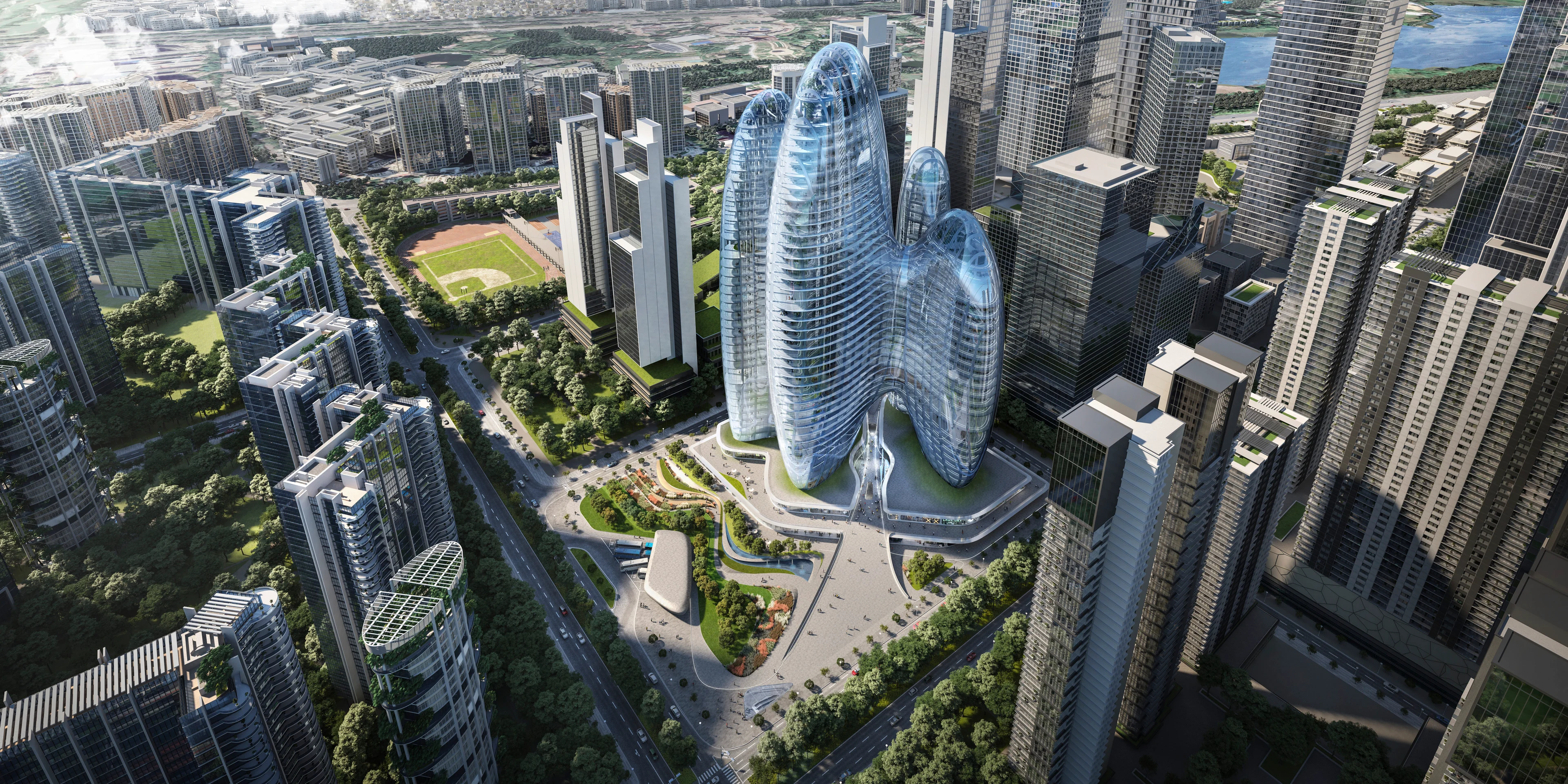
OPPO Headquarters
Conceived as four interconnected towers reaching a height of 200m (42 floors), the 185,000 sq.m design incorporates two towers of flexible, open-plan spaces linked by a 20-storey vertical lobby, and two external service towers providing vertical circulation.
Photograph by Hélène Binet
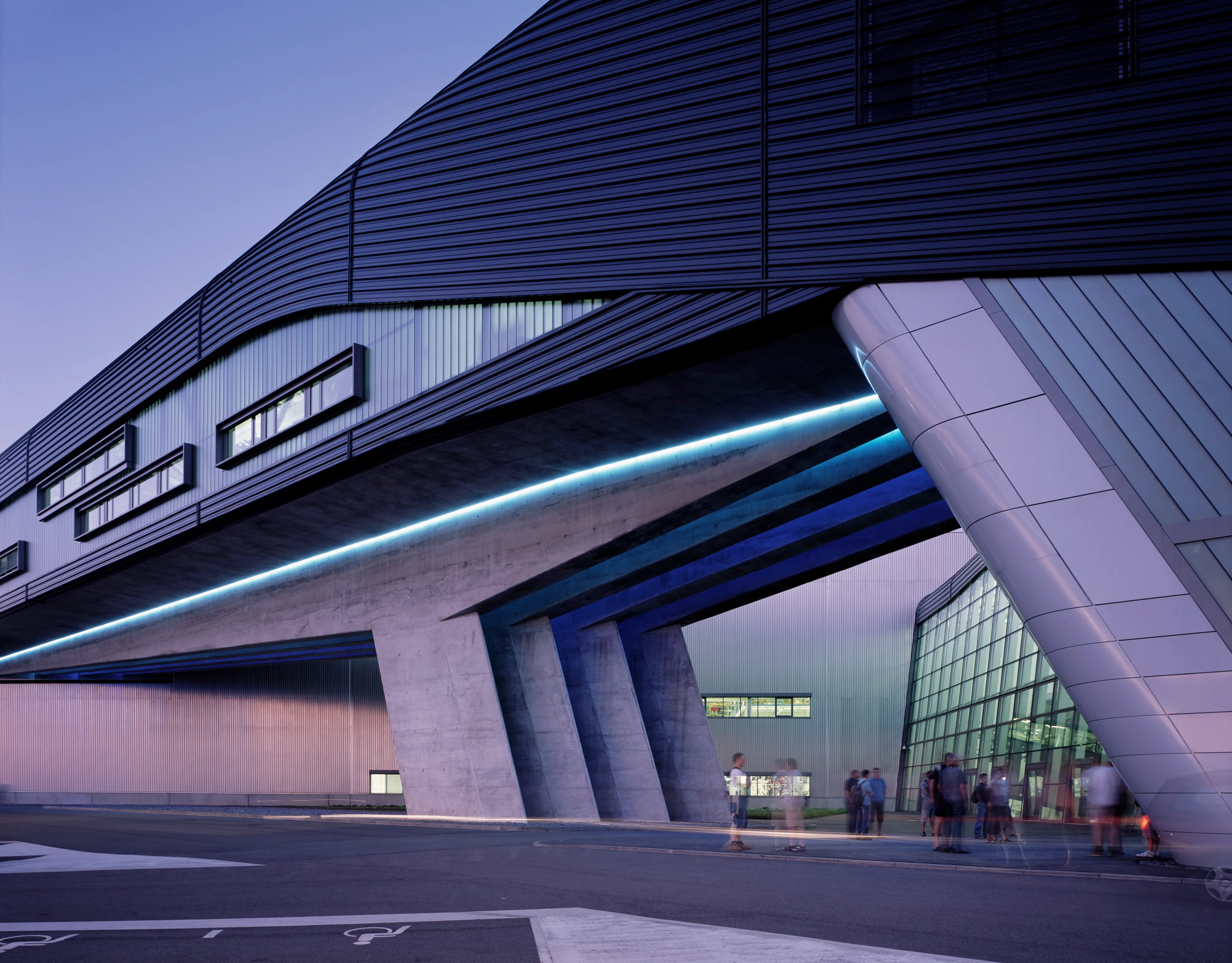
BMW Central Building
Our Central Building for BMW constituted a radical reinterpretation of the traditional office – transforming the building and the functions it contains into a more dynamic, engaging ‘nerve-centre’ or ‘communication knot’ – funneling all movement around the manufacturing complex through a space that transcends conventional white collar/blue collar spatial divisions.
Photograph by Hufton + Crow
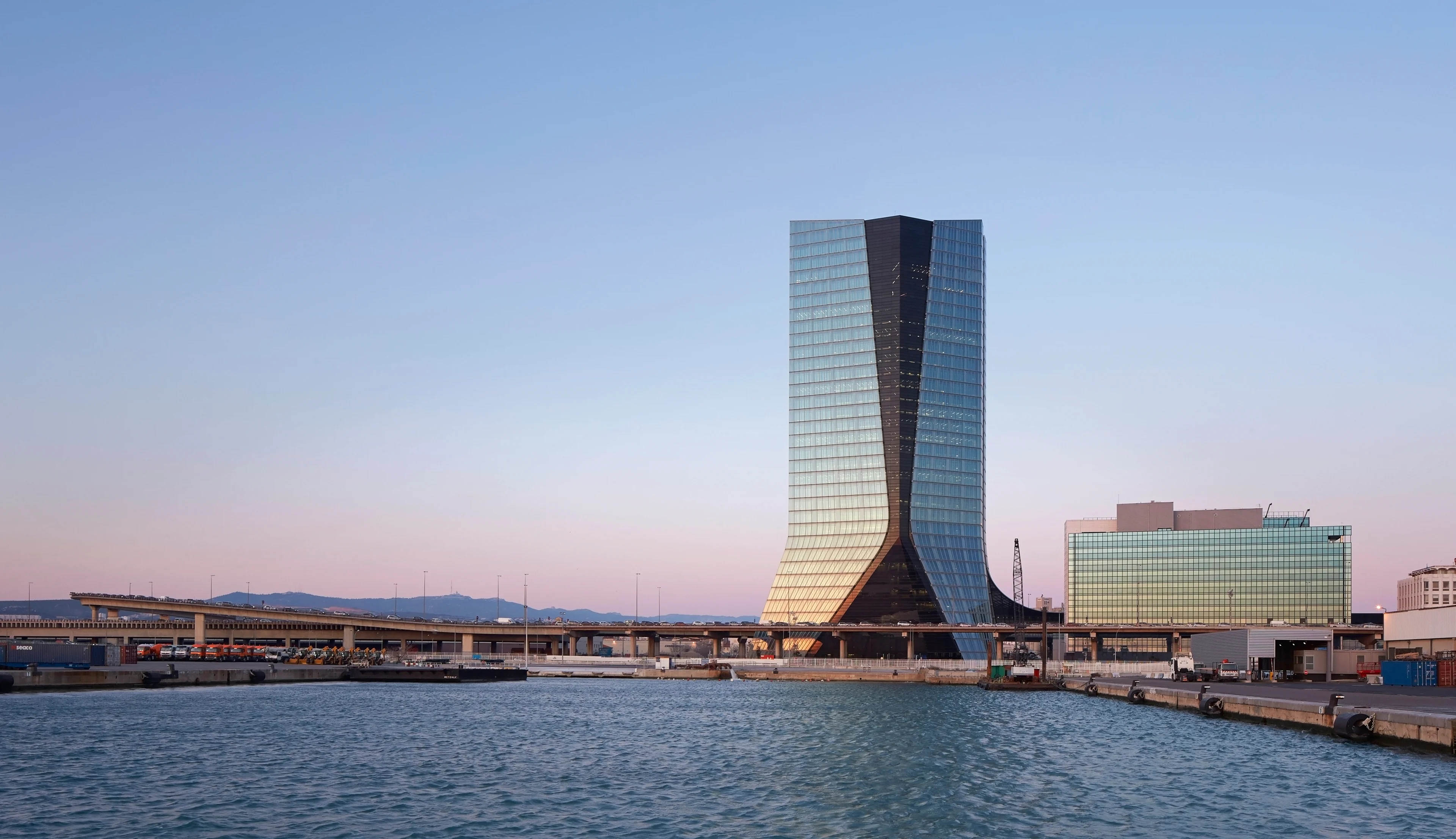
CMA CGM Headquarters
Rising in a metallic curving arc that slowly lifts and accelerates skywards into the dramatic vertical geometry of its revolutionary forms. With its ultimate coordinate 142.8 metres above the ground, a gateway to the city from both land and sea, an iconic vertical element that interacts with Marseille’s other significant landmarks.
Photograph by Hufton + Crow
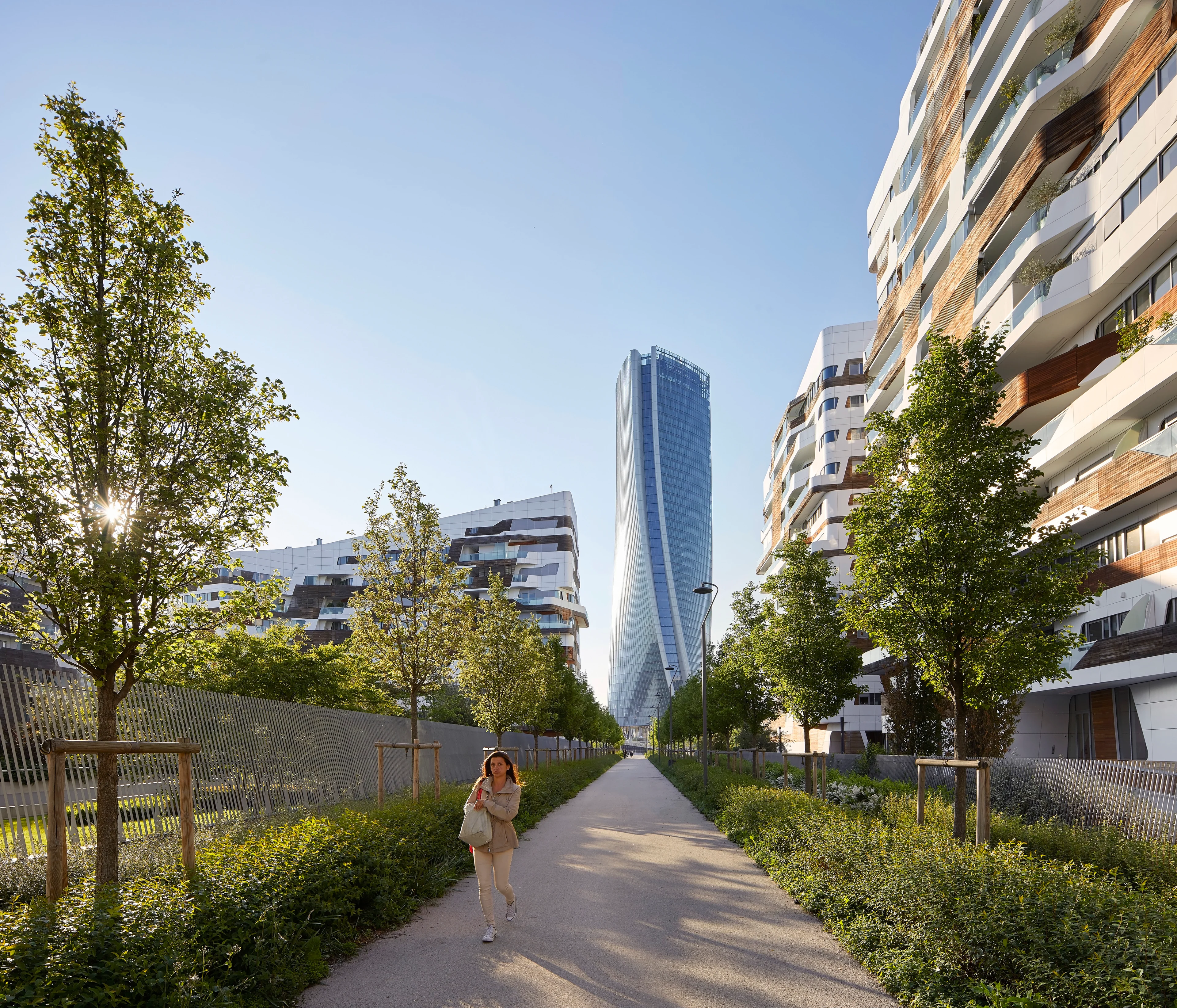
Generali Tower
Generali Tower
Generali Tower is within the CityLife masterplan that has redeveloped Milan’s abandoned trade fair grounds following the fair’s relocation to Rho Pero in 2005.
01
02
03
04
05
06
07
08
09
10
11
12
13
14
15