
Photograph by Hélène Binet
Antwerp, Belgium
2009 - 2016
Antwerp Port Authority
Port House Headquarters
Photograph by Hélène Binet
Photograph by Tim Fisher
Photograph by Hufton + Crow
Photograph by Hufton + Crow
Photograph by Tim Fisher
01
02
03
04
05
A site within Europe's second largest shipping port
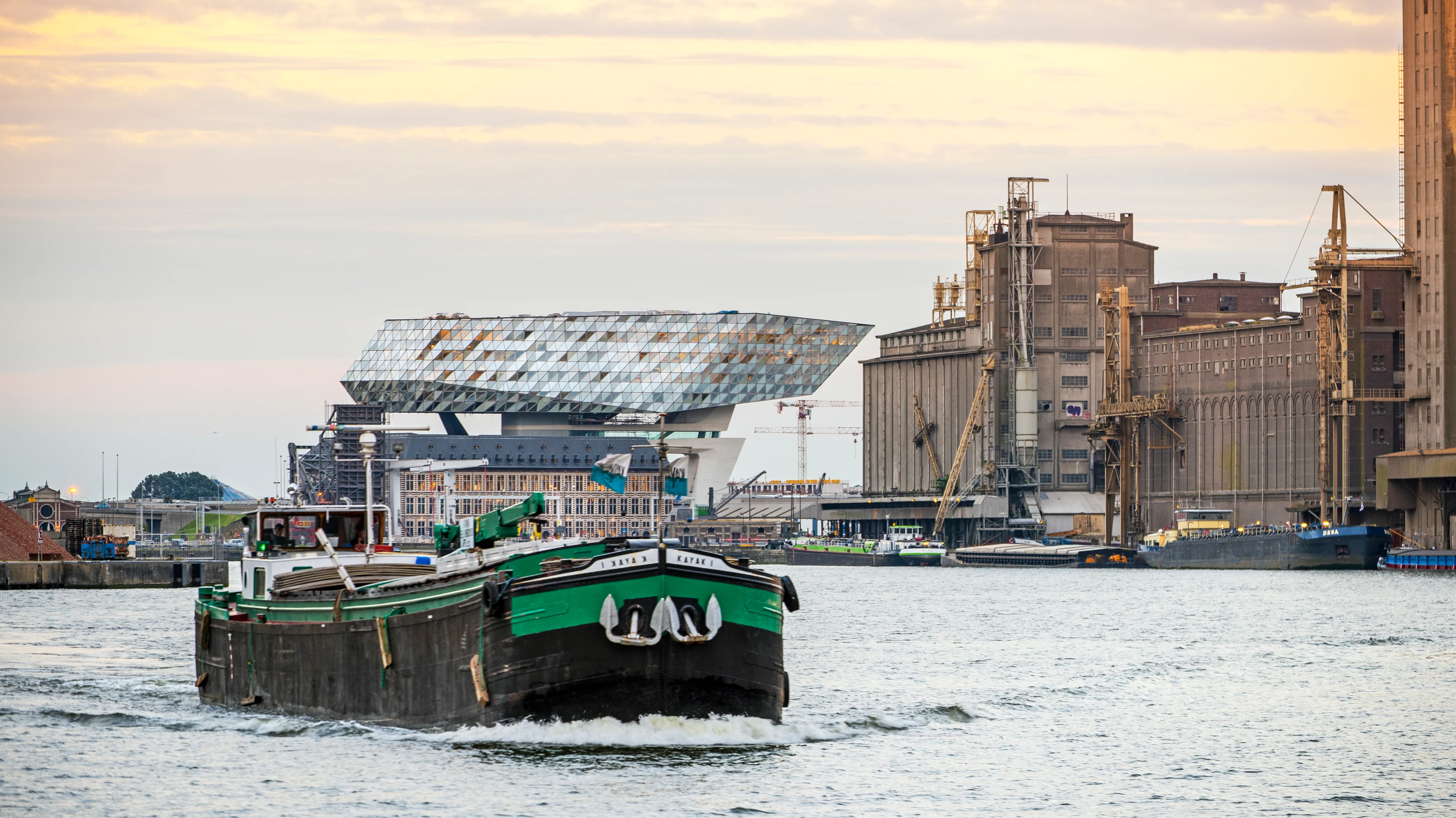
With 12 km of docks, Antwerp is Europe's second largest shipping port, serving 15,000 sea trade ships and 60,000 inland barges each year. Antwerp handles 26% of Europe's container shipping, transporting more than 200 million tonnes of goods via the ocean-going vessels that call at the port and providing direct employment for over 60,000 people, including more than 8,000 port workers.
Indirectly, the Port of Antwerp ensures about 150,000 jobs and has ambitious targets for future expansion to meet the continent's growth and development over the next century.
In 2007, when the former 1990s offices of the Port of Antwerp had become too small, the port determined that relocation would enable its technical and administrative services to be housed together, providing new accommodation for about 500 staff. The port required a sustainable and future-proof workplace for its employees, representing its ethos and values in an ever-expanding local and international arena.
As the threshold between the city and its vast port, Mexico Island in Antwerp's Kattendijk dock on Quay 63 was selected as the site for the new head office. The waterside site also offered significant sustainable construction benefits, allowing materials and building components to be transported by water, an important requirement to meet the port's ecological targets.
Following the construction of a new fire station with facilities needed to service the expanding port, the old fire station on the Mexico Island site - a listed replica of a Hanseatic residence - became redundant and relied on a change of use to ensure its preservation.
This disused fire station has to be integrated into the new project. The Flemish government's department of architecture, together with the City and Port authorities organized the architectural competition for the new headquarters.
Photograph by Tim Fisher
A new volume that ‘floats’ above the old building
ZHA’s design is informed by detailed historical research and a thorough analysis of both the site and the existing building. Marc Van Peel, president of the Port of Antwerp, said: “There was only one rule laid down in the architectural competition, namely that the original building had to be preserved. There were no other requirements imposed for the positioning of the new building. The jury was therefore pleasantly surprised when the five shortlisted candidates all opted for a modern structure above the original building. They all combined the new with the old, but the design by ZHA was the most brilliant.”
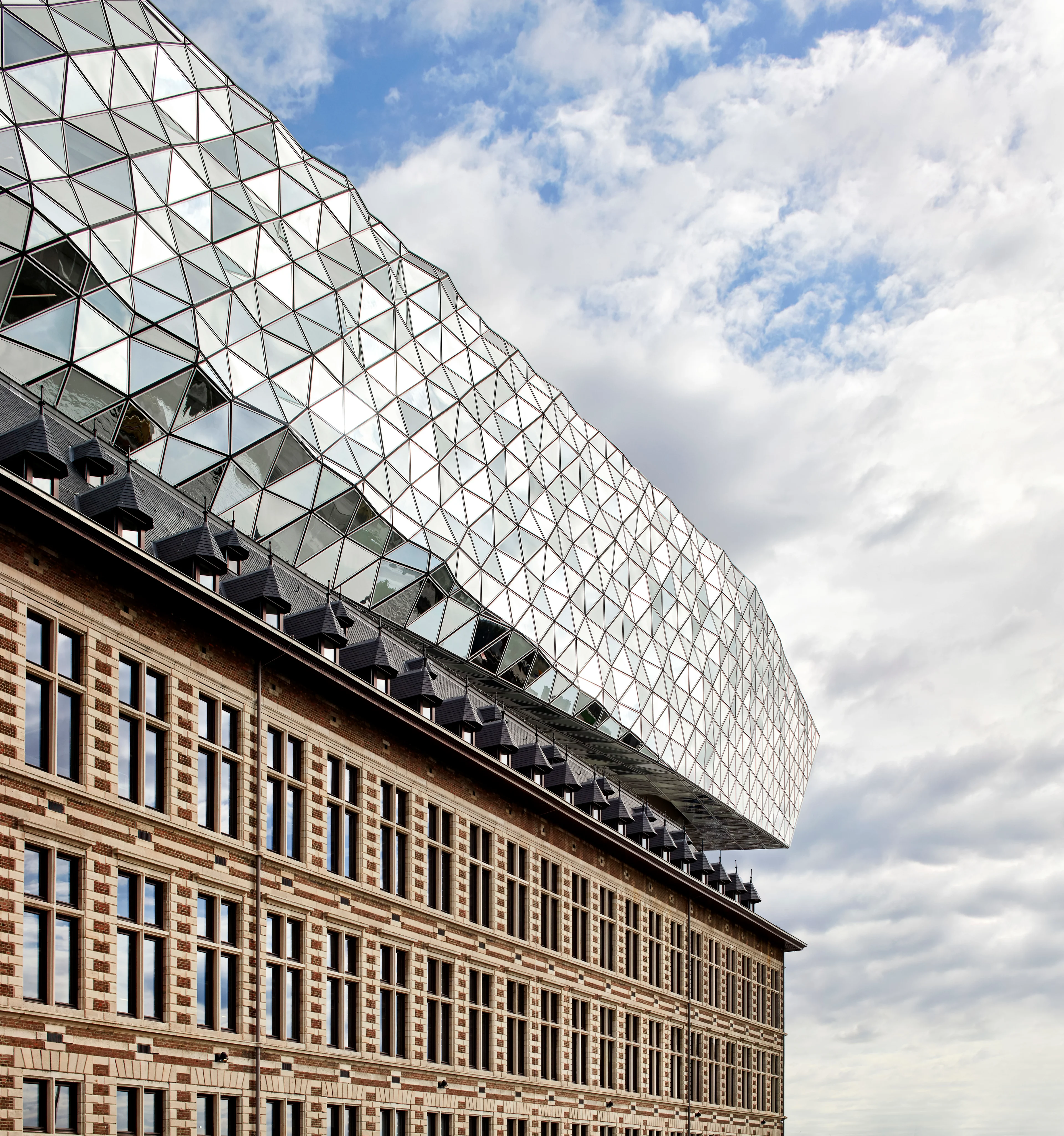
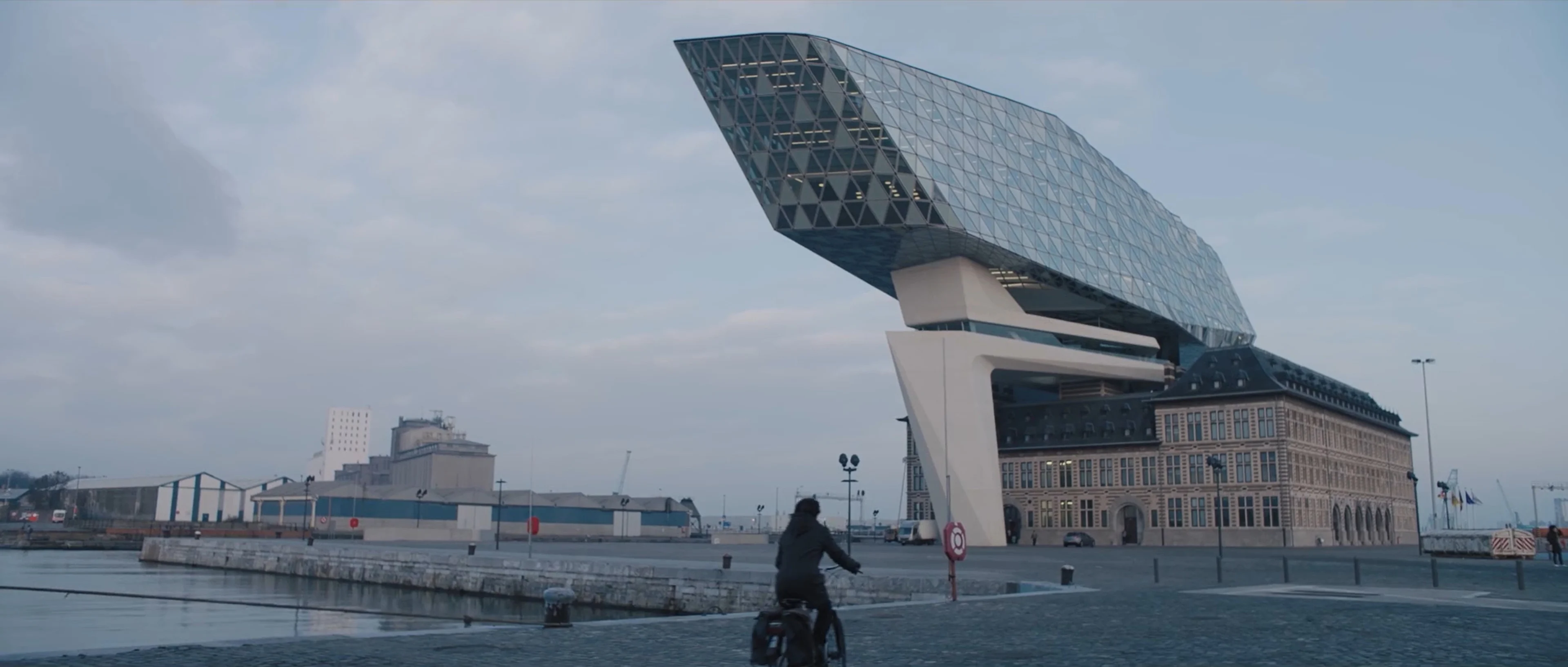
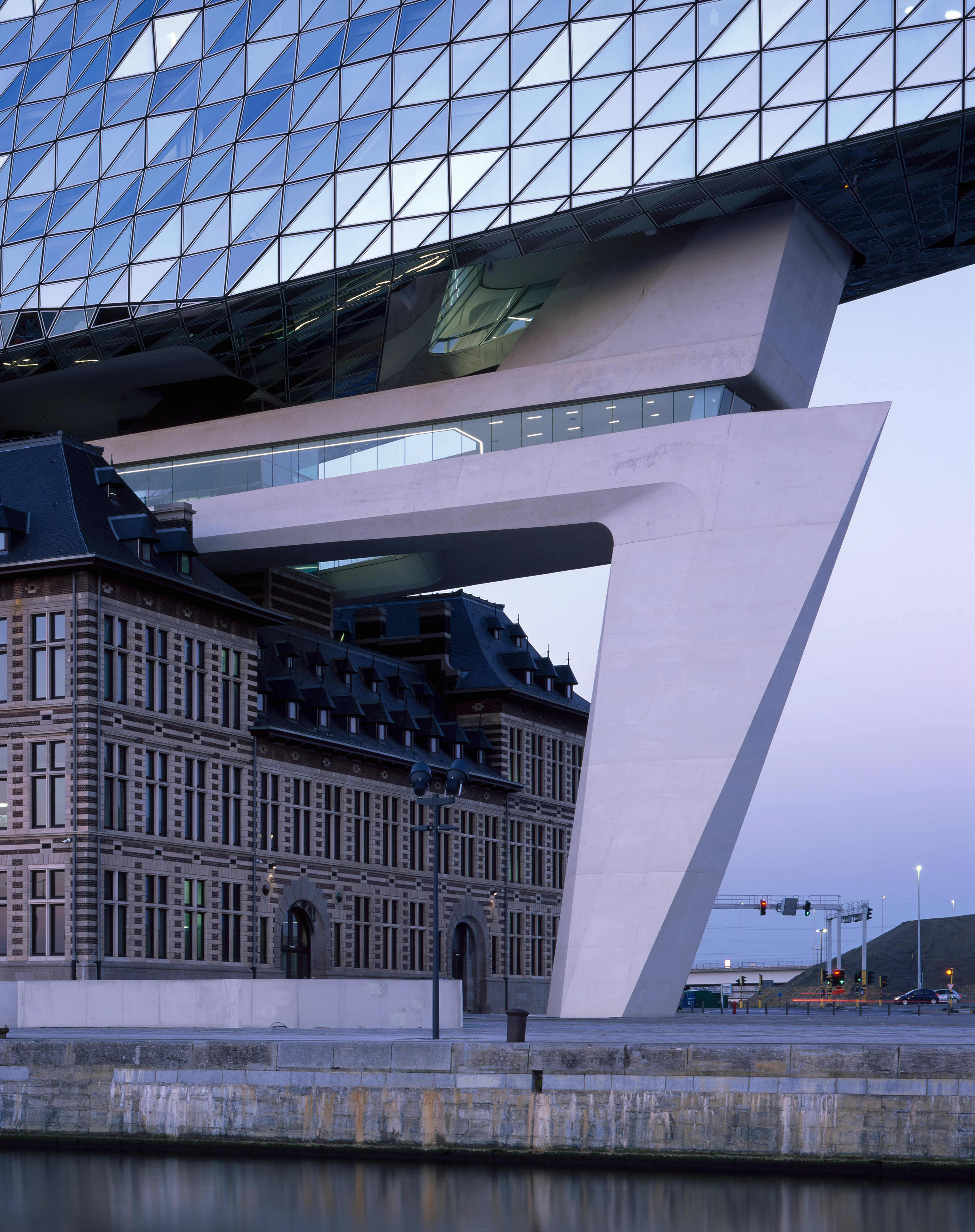
Working with Origin, leading heritage consultants in the restoration and renovation of historic monuments, ZHA’s studies of the site’s history and heritage are the foundations of the design which firstly emphasizes the north/south site axis parallel with the Kattendijkdok linking the city centre to the port. Secondly, due to its location surrounded by water, the building’s four elevations are considered of equal importance with no principal façade. ZHA’s design is an elevated extension, rather than a neighbouring volume which would have concealed at least one of the existing facades. ZHA and Origin’s historic analysis of the old fire station also highlighted the role of its originally intended tower - a grand, imposing component of the fire station’s Hanseatic design. Its bold vertical statement, intended to crown the imposing volume of the building below, was never realised.
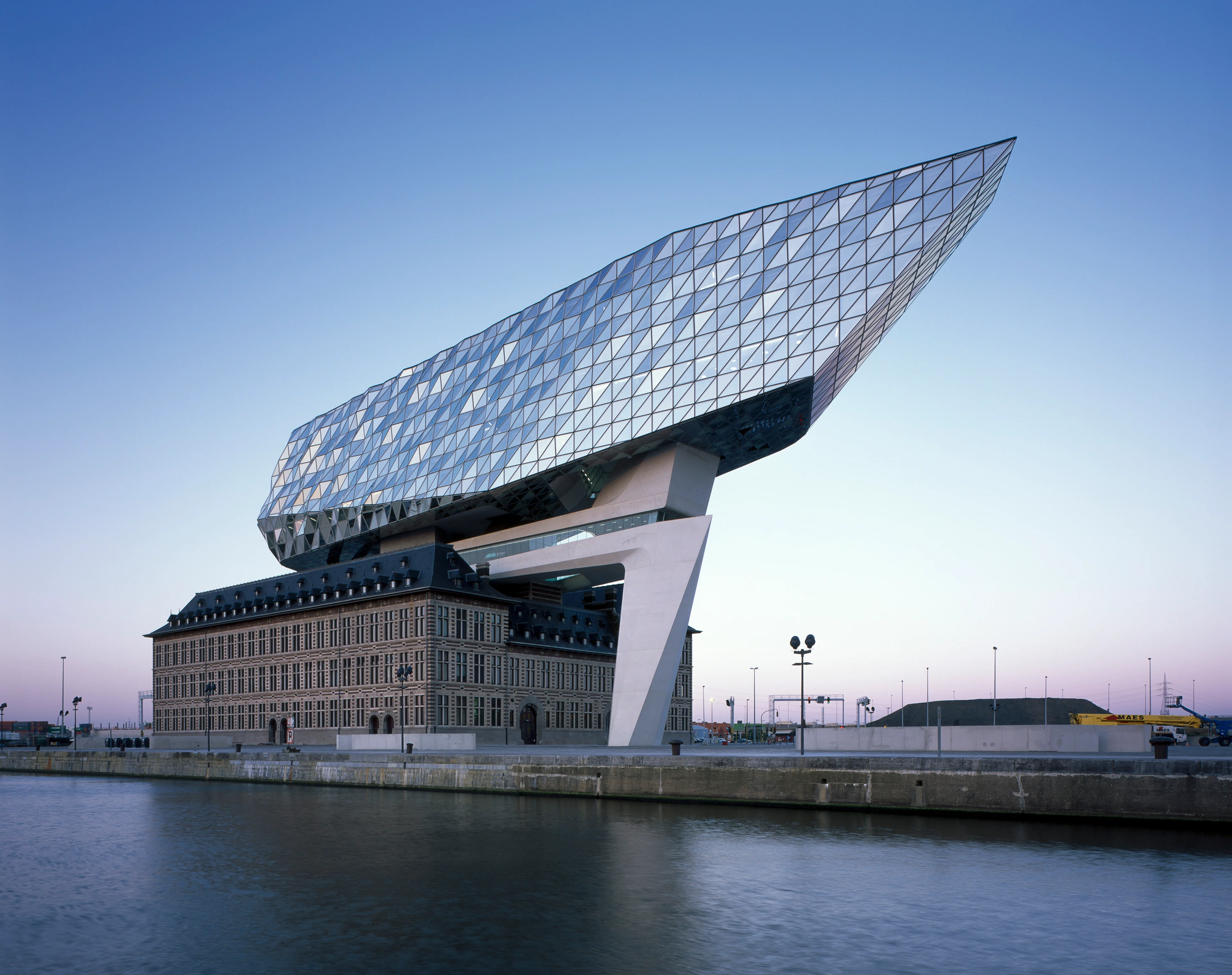
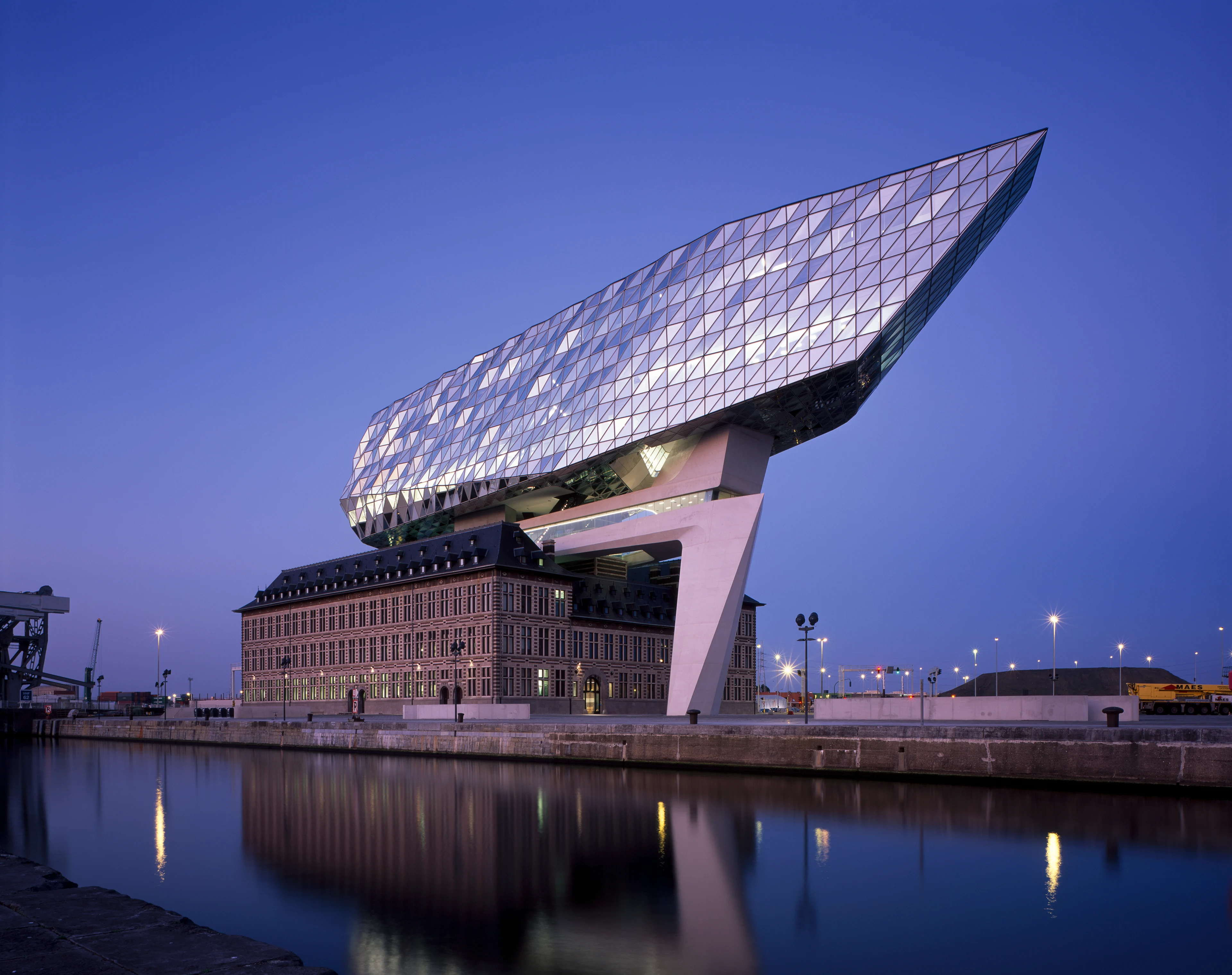
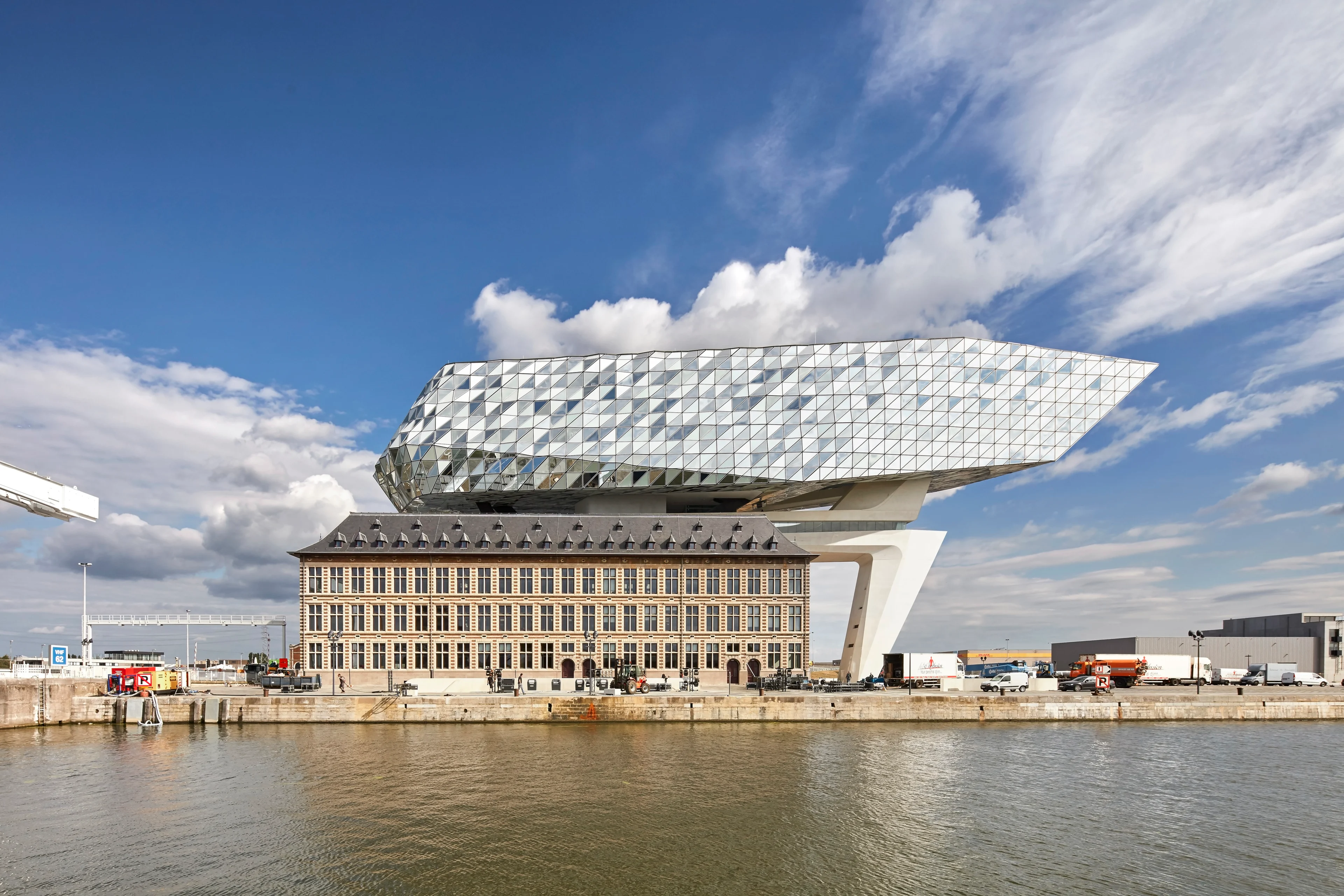
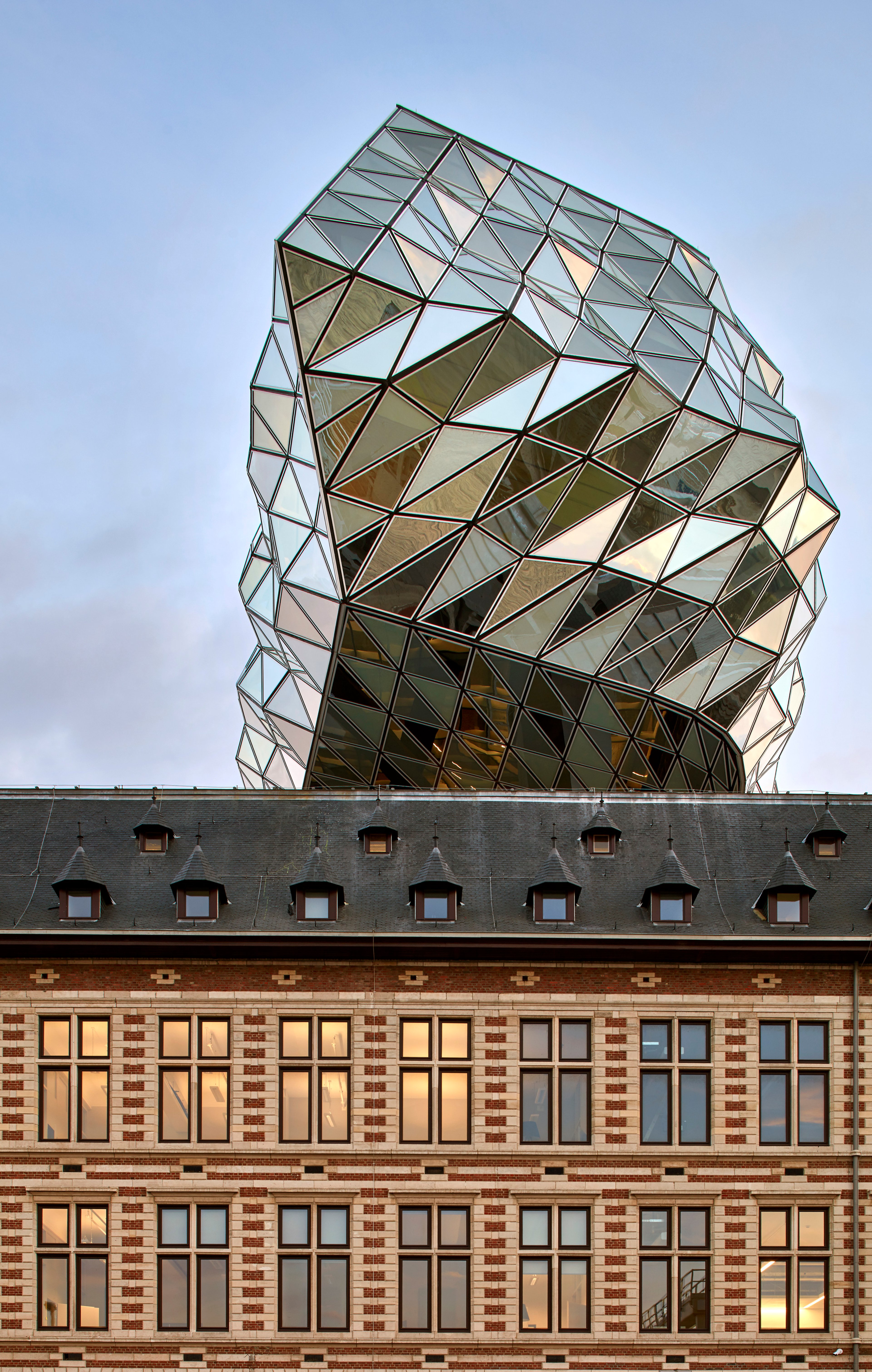
These three key principles define the design’s composition of new and old: a new volume that ‘floats’ above the old building, respecting each of the old facades and completing the verticality of the original design’s unrealised tower. Like the bow of a ship, the new extension points towards the Scheldt, connecting the building with the river on which Antwerp was founded.
Photograph by Hélène Binet
A glazed surface that ripples like waves
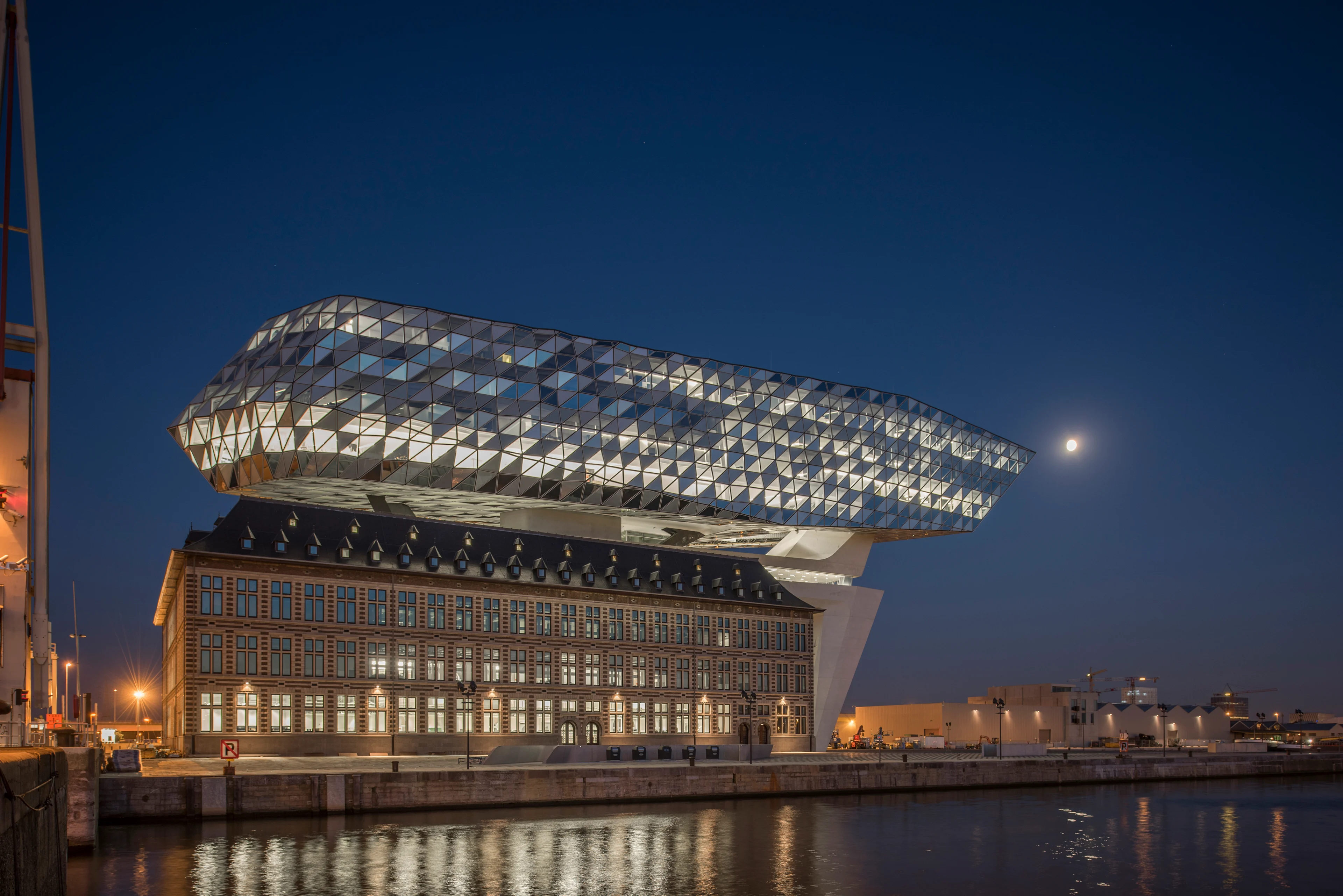
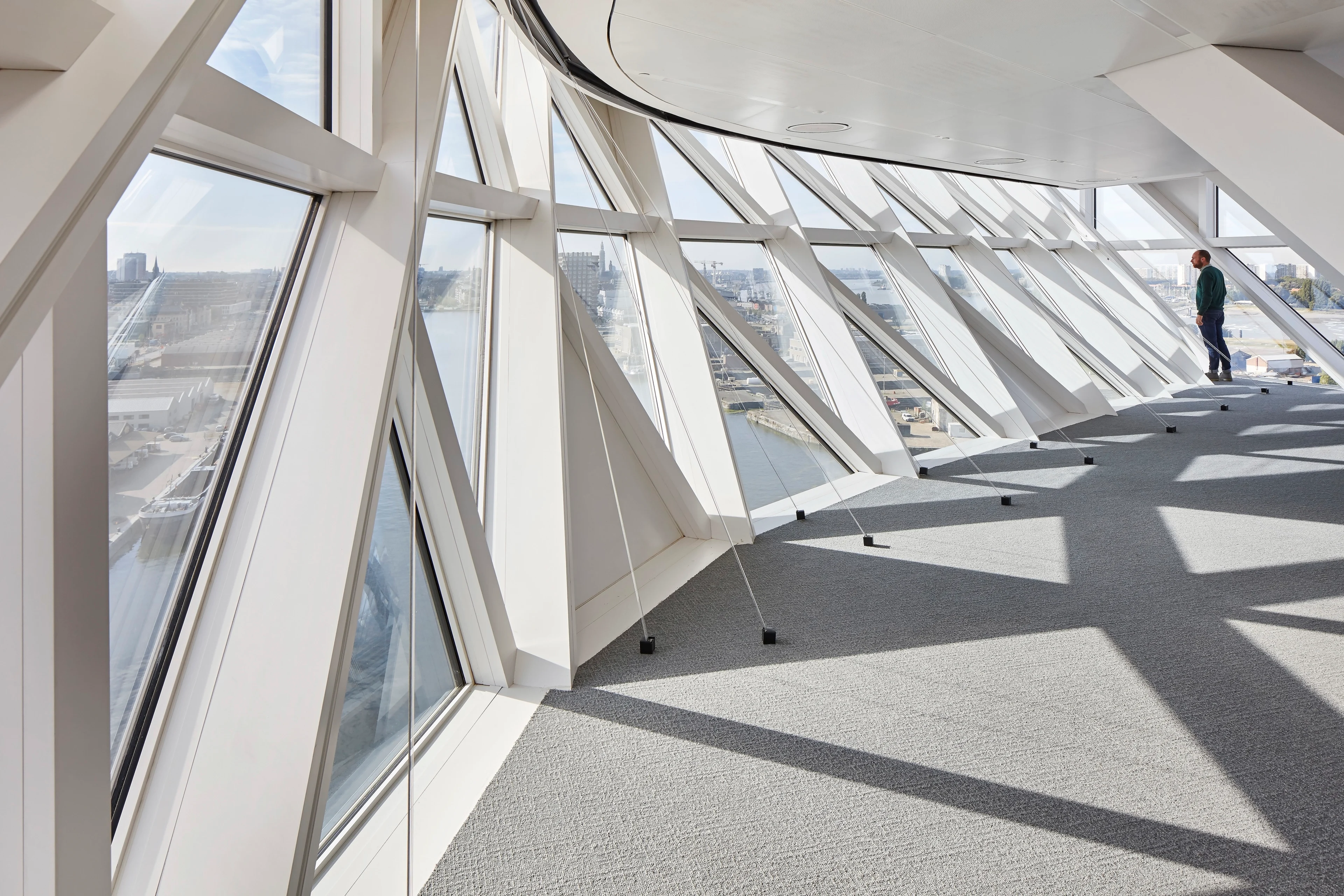
Surrounded by water, the new extension’s façade is a glazed surface that ripples like waves and reflects the changing tones and colours of the city’s sky. Triangular facets allow the apparently smooth curves at either end of the building to be formed with flat sheets of glass. They also facilitate the gradual transition from a flat façade at the south end of the building to a rippling surface at the north. While most of the triangular facets are transparent, some are opaque.
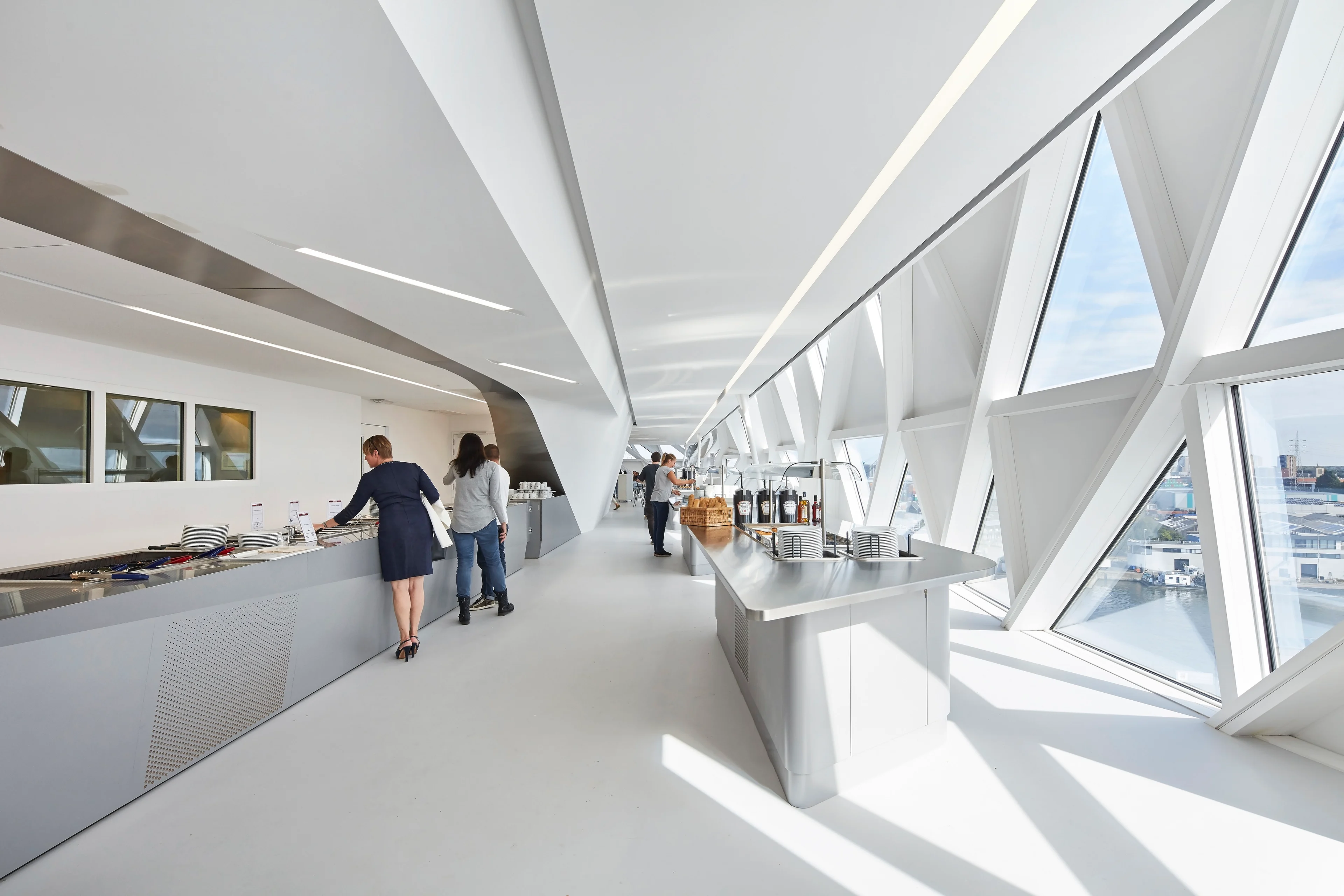
This calibrated mix ensures sufficient sunlight within the building, while also controlling solar load to guarantee optimal working conditions. At the same time, the alternation of transparent and opaque façade panels breaks down the volume of the new extension, giving panoramic views of the Scheldt, the city and the Port as well as providing enclosure.
The façade’s rippling quality is generated with flat facets to the south that gradually become more three-dimensional towards to the north. This perception of a transparent volume, cut to give the new building its sparkling appearance, reinterprets Antwerp’s moniker as the city of diamonds.
The new extension appears as a carefully cut form which changes its appearance with the shifting intensity of daylight. Like the ripples on the surface of the water in the surrounding port, the new façade reflects changing light conditions.
An 'activity based office'
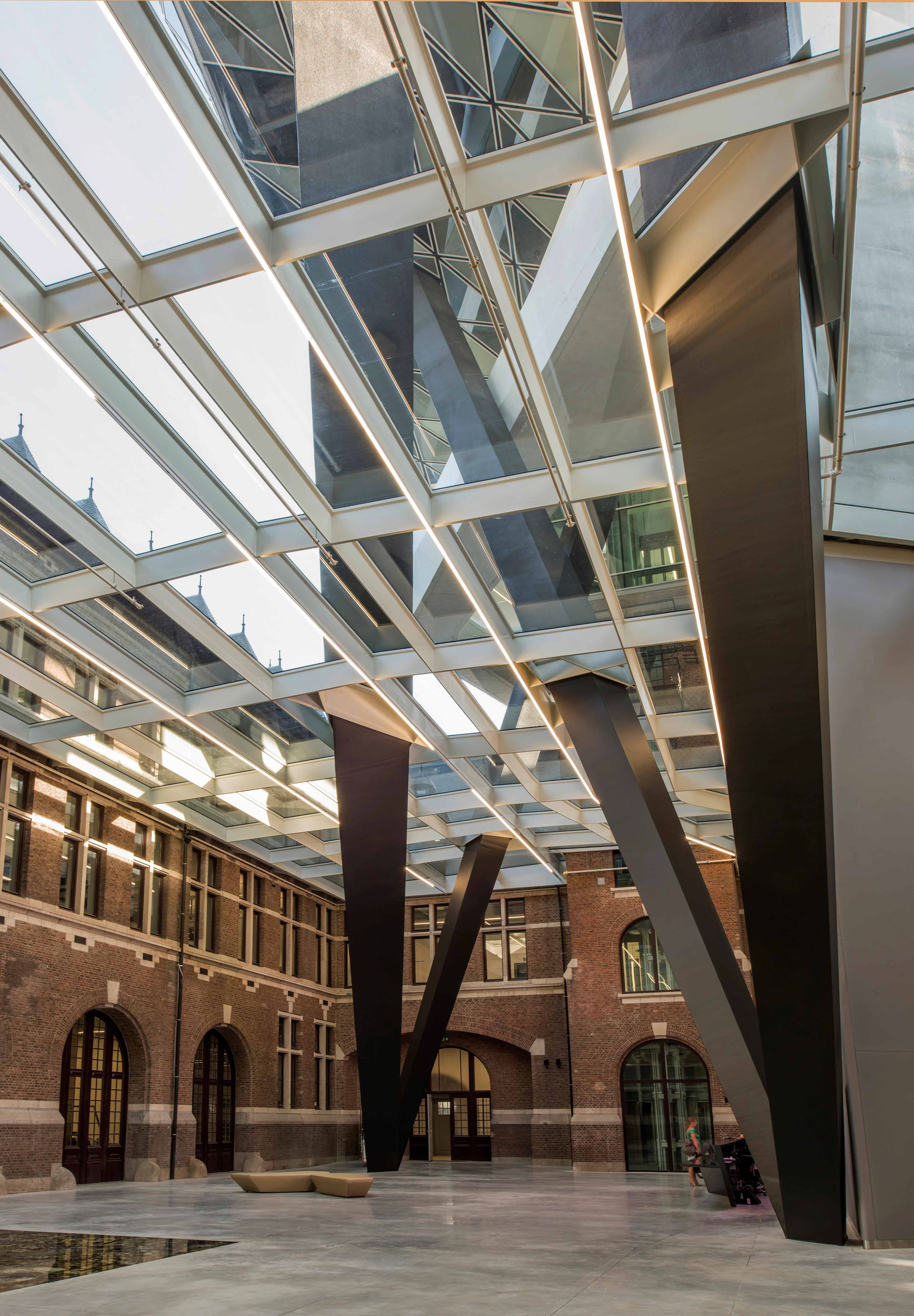
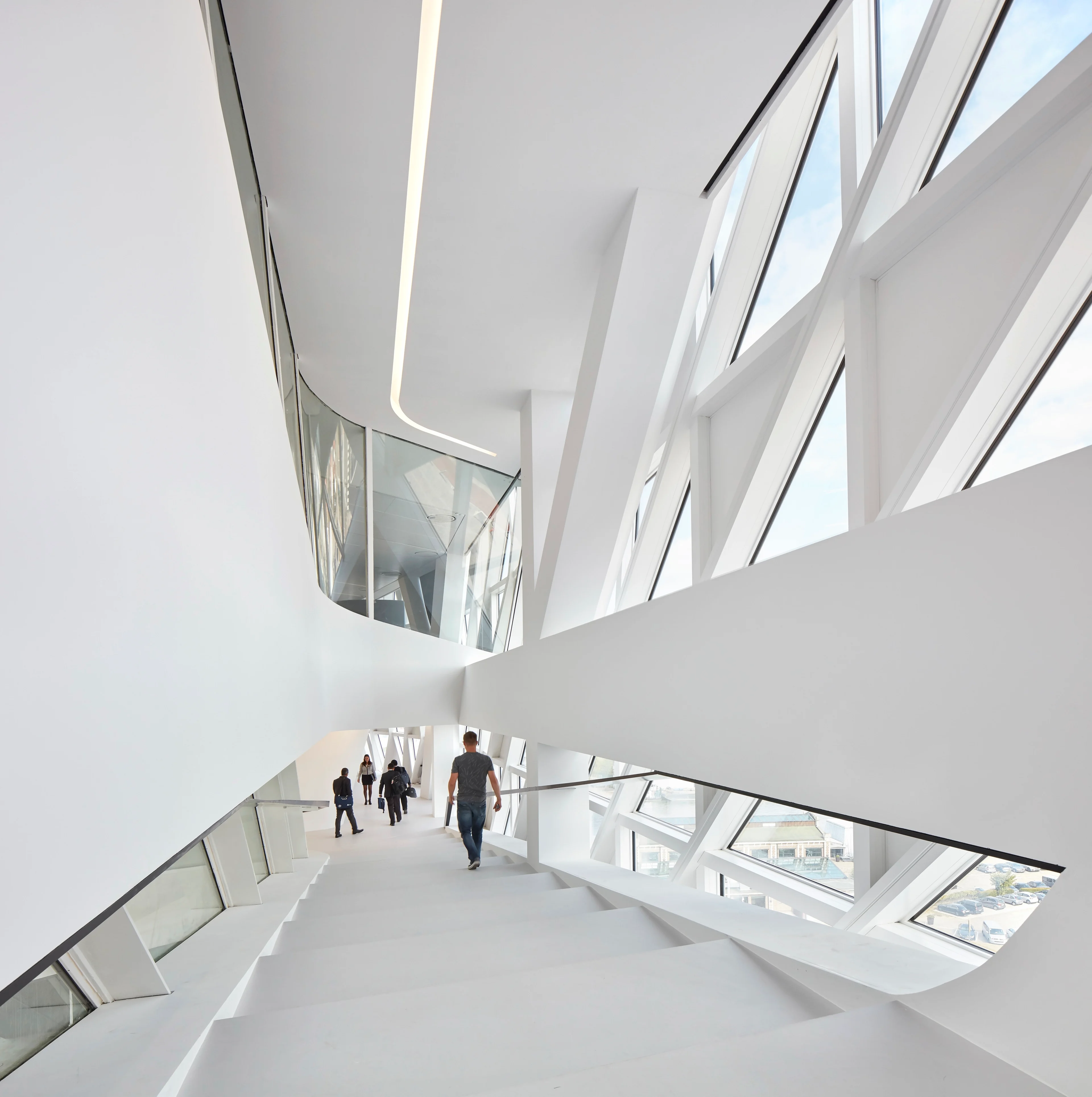
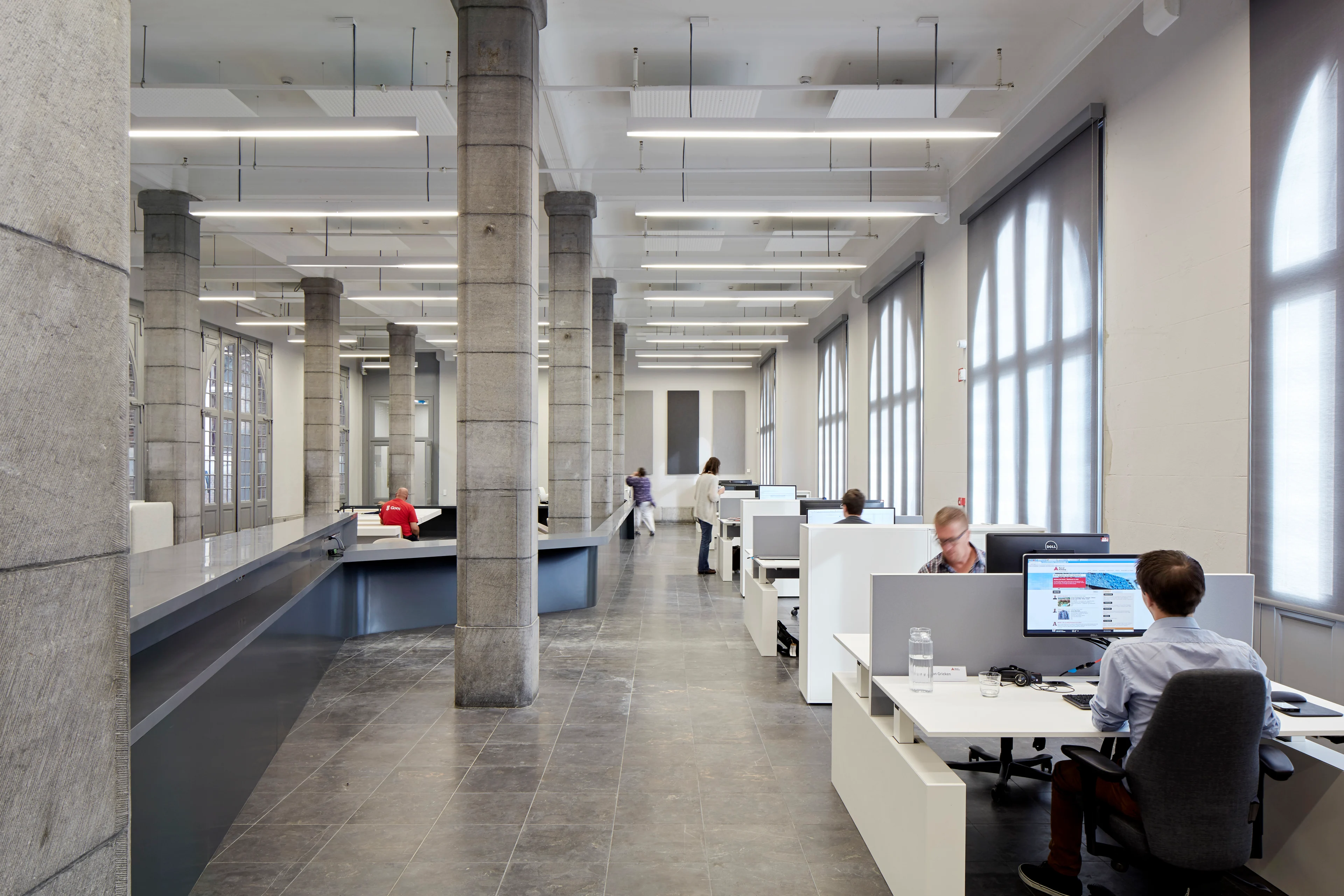
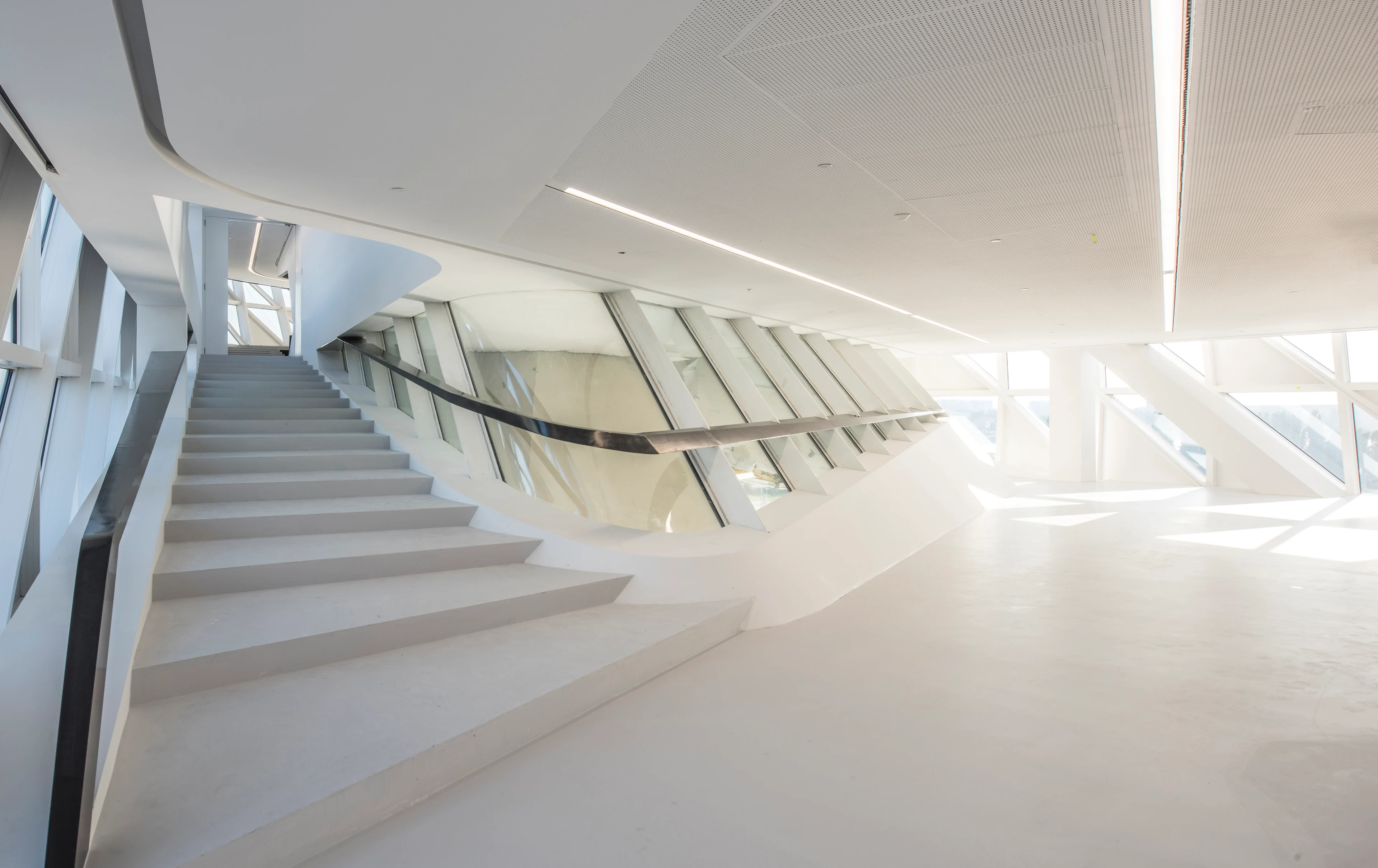
The old fire station's central courtyard has been enclosed with a glass roof and is transformed into the main reception area for the new Port House. From this central atrium, visitors access the historic public reading room and library within the disused fire truck hall which has been carefully restored and preserved.
Panoramic lifts provide direct access to the new extension with an external bridge between the existing building and new extension giving panoramic views of the city and port.
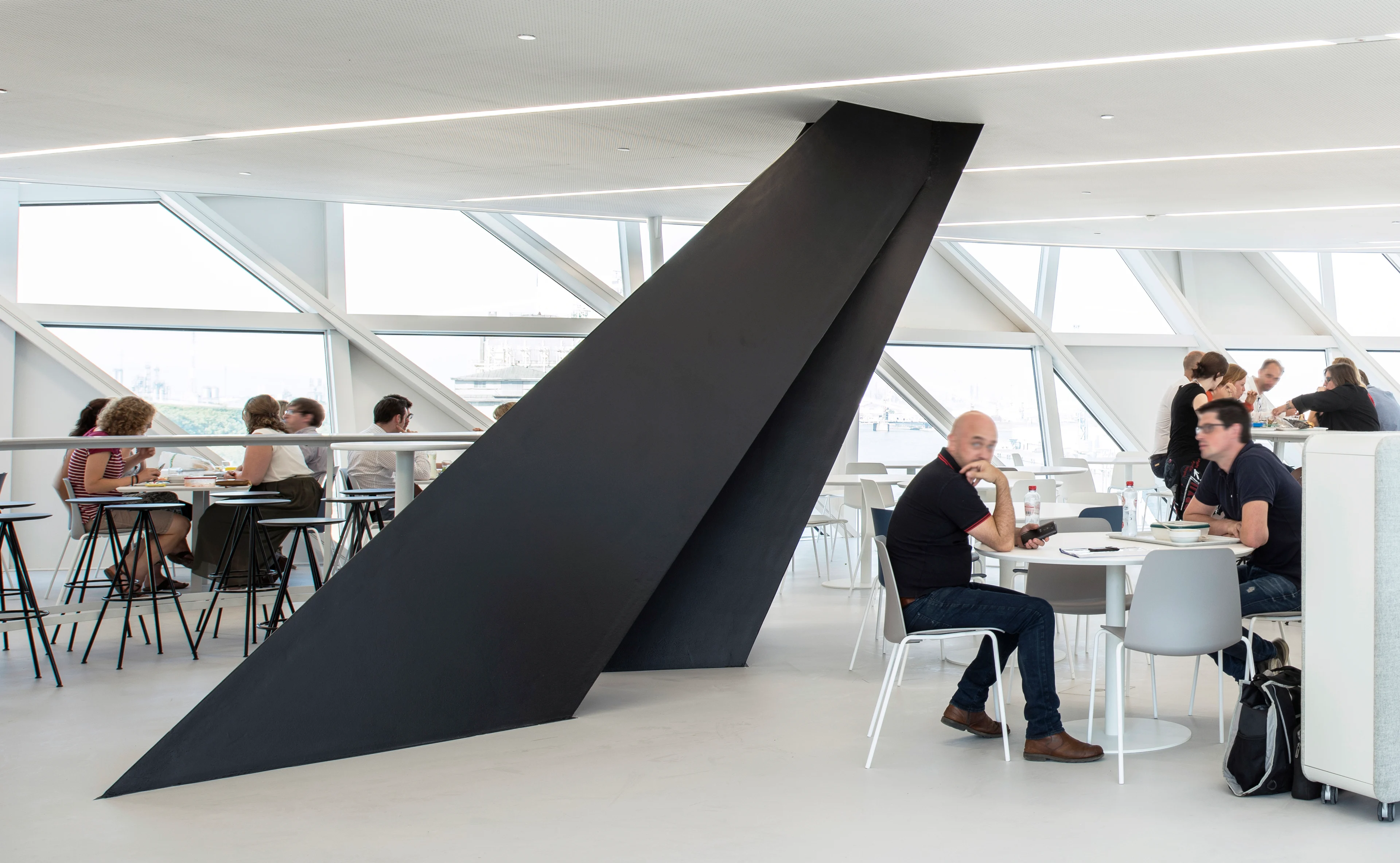
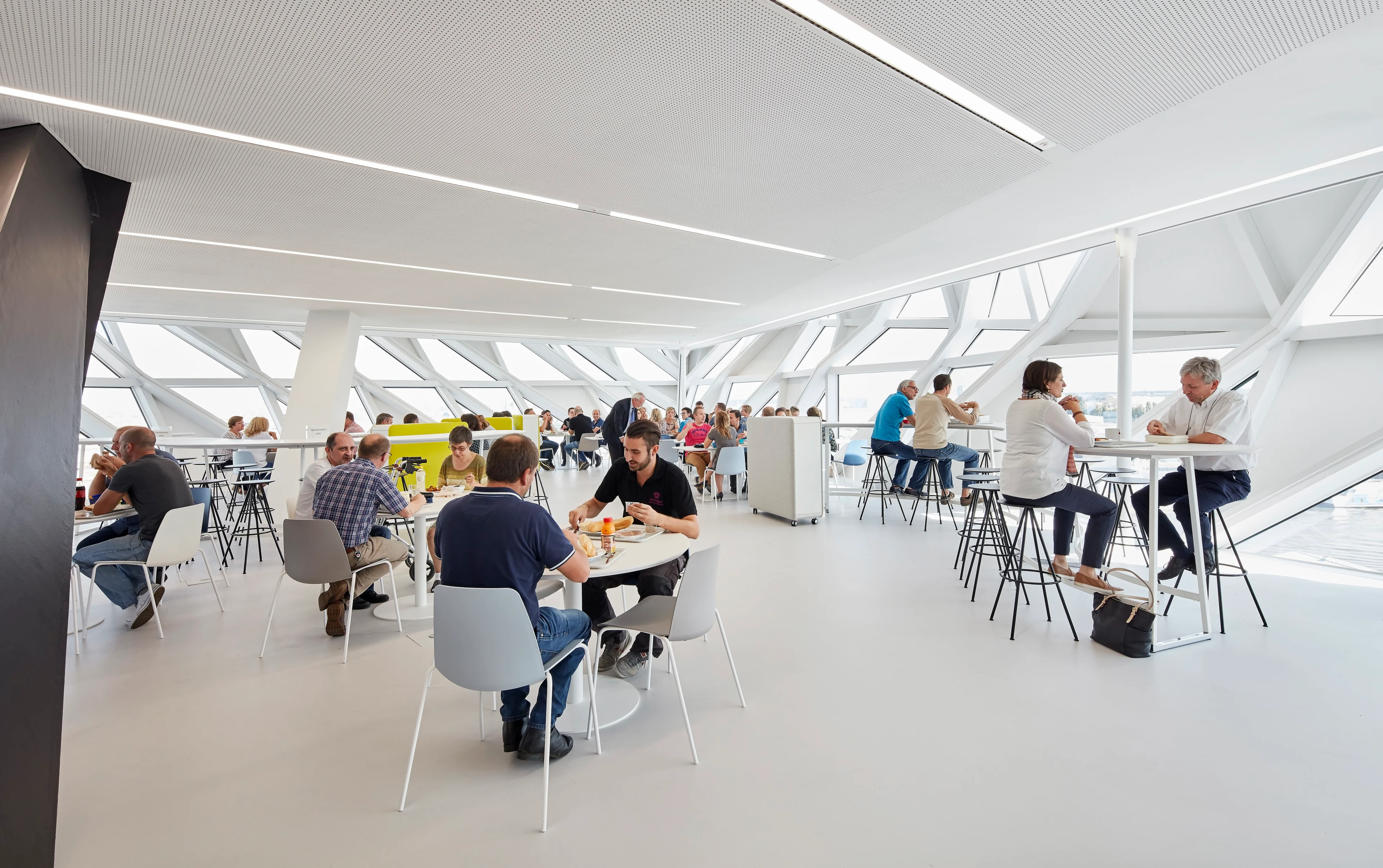
The client requirements for an 'activity based office' are integrated within the design, with related areas such a the restaurant, meeting rooms and auditorium located at the centre of the upper levels of the existing building and the bottom floors of the new extension. The remaining floors more remote from the centre, comprise open plan offices.
Photograph by Tim Fisher
Photograph by Hufton + Crow
Photograph by Hufton + Crow
Photograph by Hufton + Crow
Photograph by Hufton + Crow
Photograph by Hufton + Crow
Photograph by Tim Fisher
01
02
03
04
05
06
07
A sustainable and energy-efficient design
Collaborating with services consultant Ingenium, ZHA developed a sustainable and energy-efficient design reaching a ‘Very Good’ BREEAM environmental rating. Despite the challenges of integrating with a protected historic building, high standards in sustainable design were achieved by implementing effective strategies at each stage of construction.
A borehole energy system pumps water to a depth of 80m below grade in over 100 locations around the building to provide heating and cooling. In the existing building, this system uses chilled beams. In the new extension, it uses chilled ceilings. Waterless lavatory fittings and motion detectors minimise water consumption while building automation and optimal daylight controls minimise artificial lighting.
With constant references to the Scheldt, the city of Antwerp and the dynamics of its port, married with the successful renovation and reuse of a redundant fire station - integrating it as a fully-fledged part of its headquarters - the new Port House will serve the port well through its planned expansion over future generations.
Marc Van Peel said: “The architectural style of the original building, a replica of the former Hansa House, recalls the 16th century, Antwerp’s “golden century.” But now above this original, a contemporary structure in shining glass has been built, which I am sure, represents a new golden century for Antwerp.”
Offices
Discover more of our office buildings
From a Sharjah company headquarters designed to achieve net-zero energy consumption to a tower that anchors the masterplan for a newly revitalised district of Milan, discover our latest office buildings.
Render by Devisual
Z8 Tower
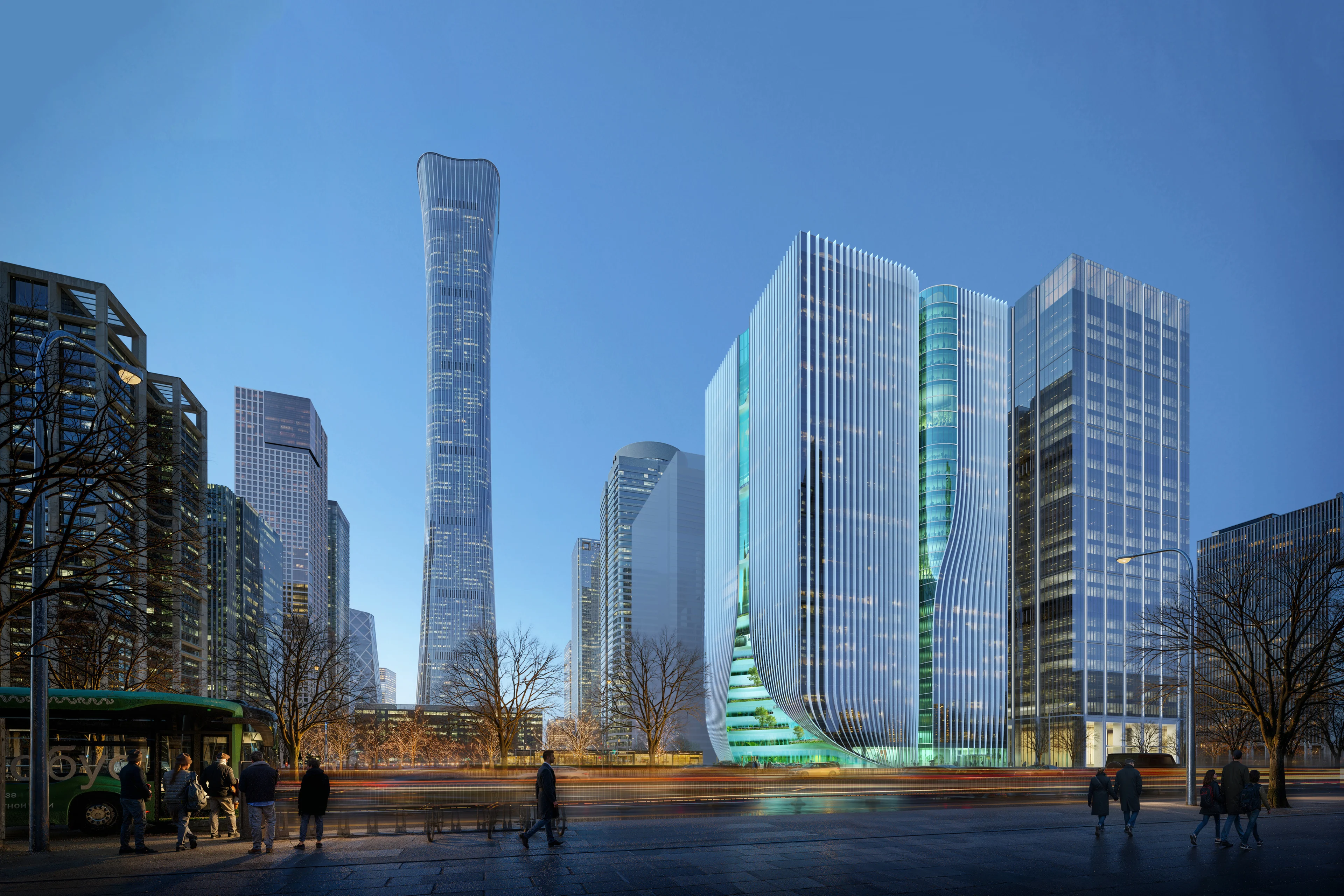
Located in the core of Beijing’s Central Business District (CBD) at the intersection of Jianguo Road and Jinhe East Road, the new Z8 Tower faces the CBD’s central park and is defined by the historic alignment and urbanism of the city’s Chang’an Avenue.
Photograph by Hufton + Crow
National Bank of the Republic of Kazakhstan
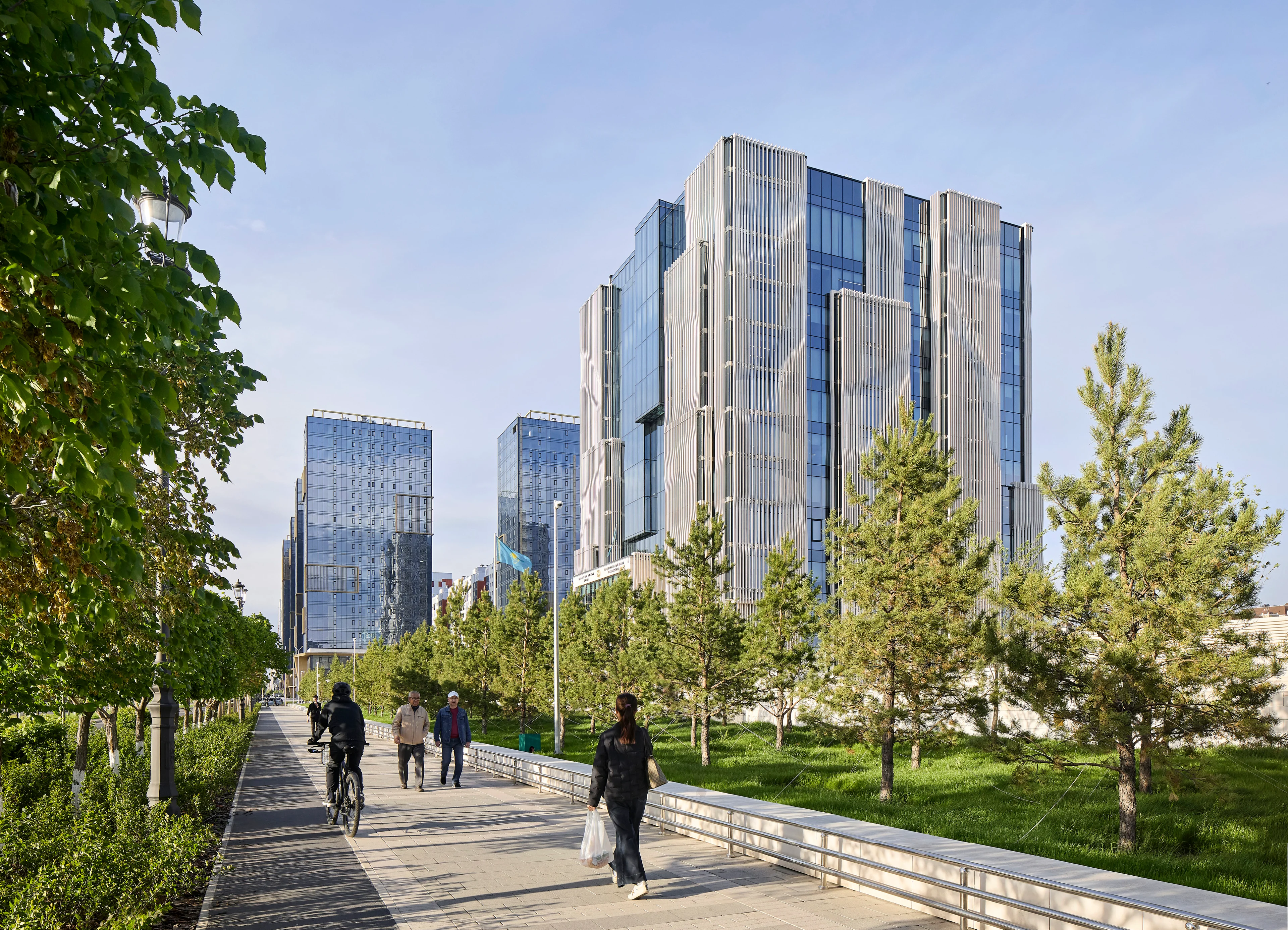
The new headquarters of the National Bank of the Republic of Kazakhstan (NBRK) in Astana houses the bank’s departments within a single, integrated campus accommodating up to 800 employees and conveys the institution’s longstanding commitment to fiscal stability.
Alta Tower
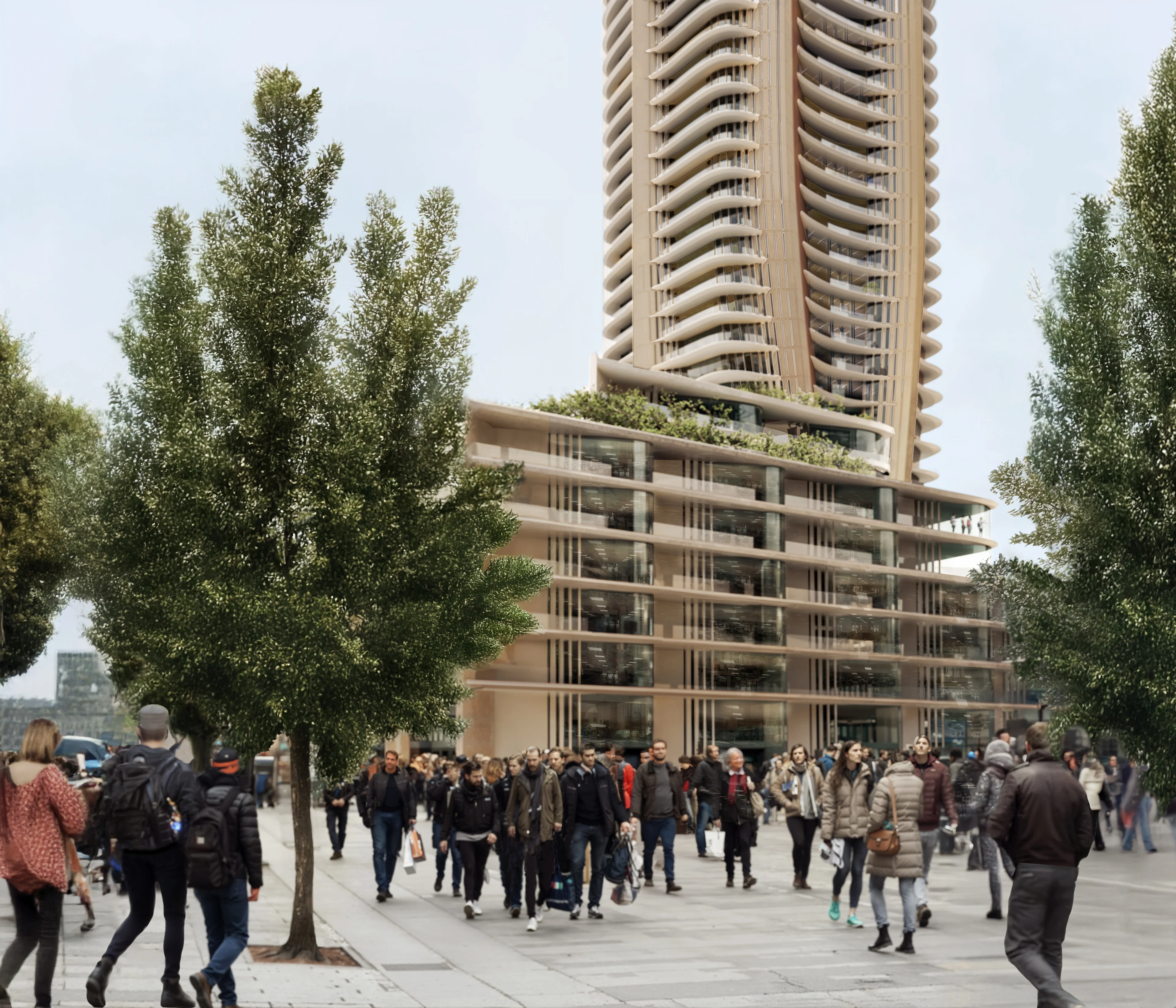
ZHA collaborating with Bureau Cube Partners (BCP) has been selected as winners of the international competition to design the new Alta Tower in New Belgrade, Serbia.
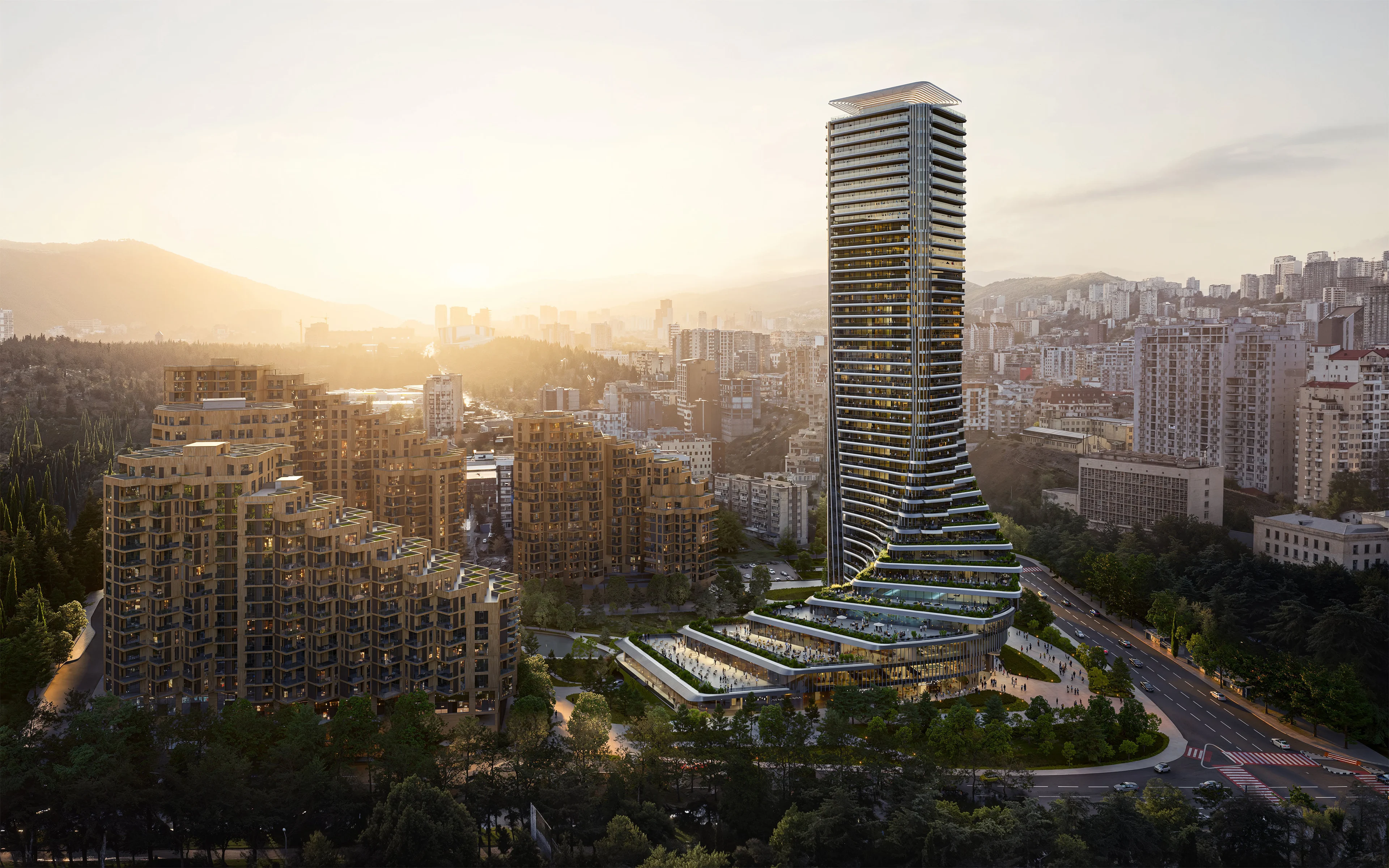
Cityzen Mixed-Use Development
Serving as the gateway to the Cityzen community, a new civic hub in the west of Tbilisi, Cityzen Tower is ZHA's first project in Georgia.
Render by Hayes Davidson
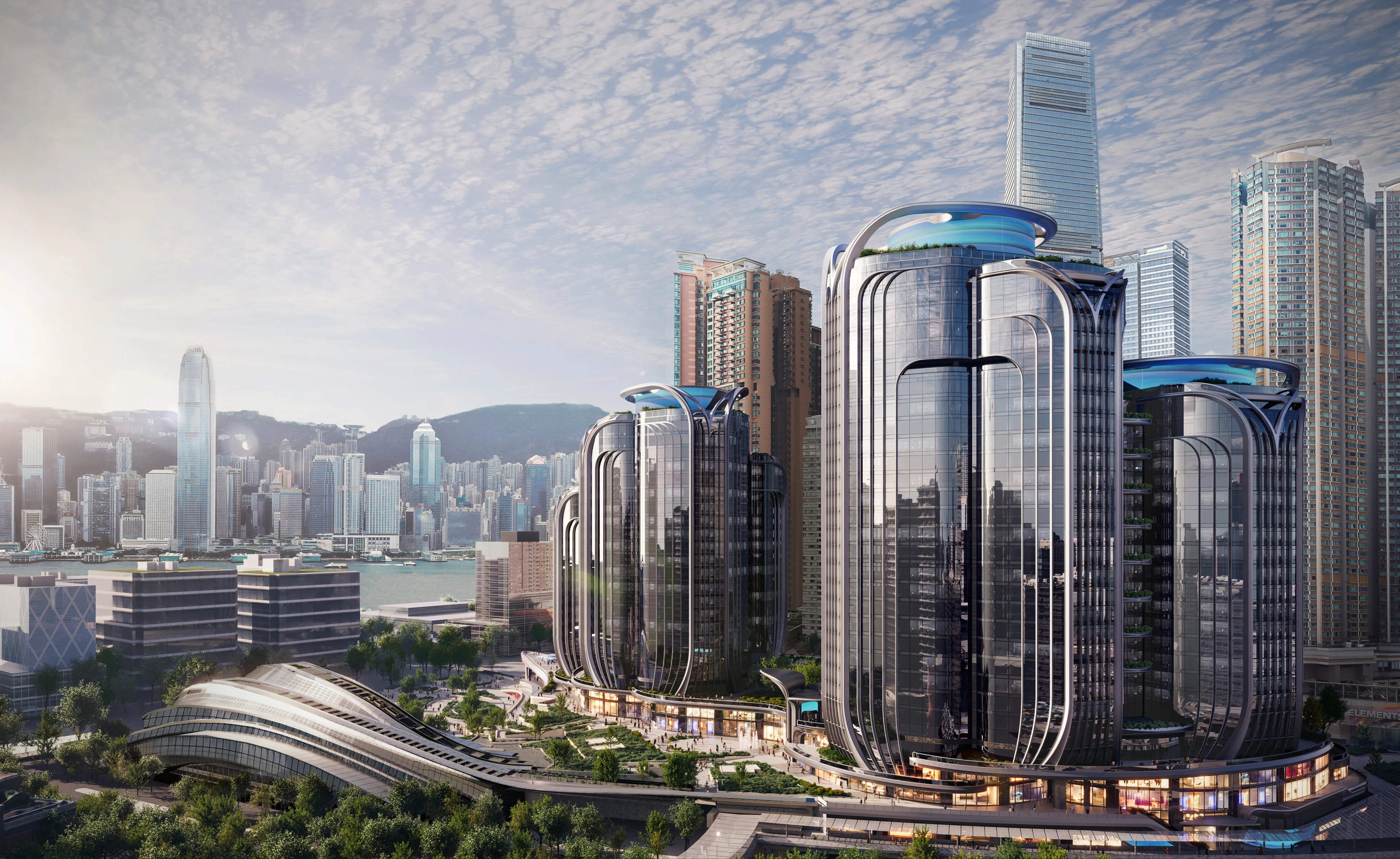
International Gateway Centre
Adjacent to the West Kowloon Cultural District, the 3.2 million sq. ft. development above Hong Kong’s High Speed Rail West Kowloon Terminus connects established and emerging neighbourhoods with a network of public gardens and landscaped plazas.
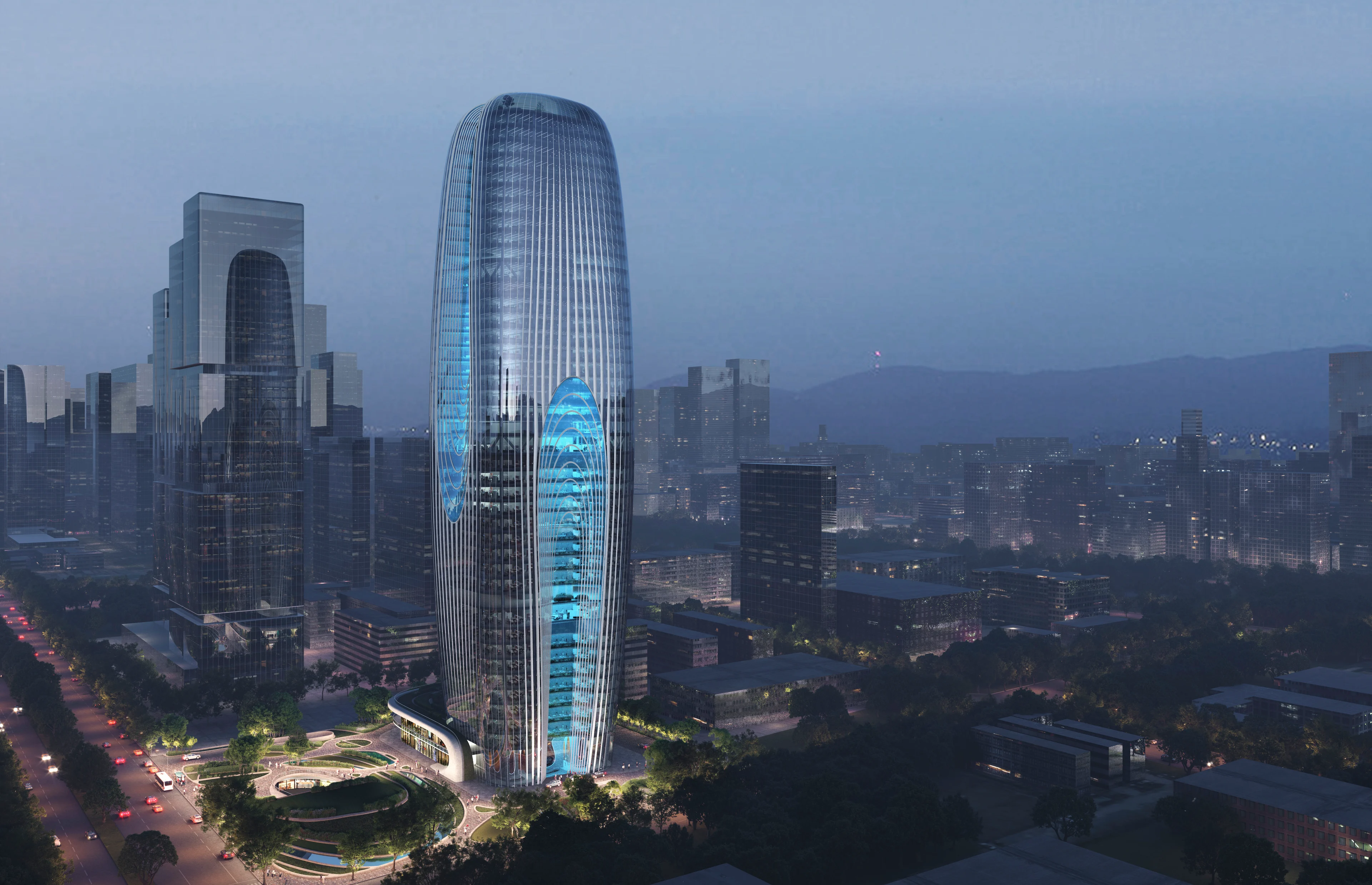
Daxia Tower
Demarcating the centre of Xi’an’s business district, Daxia Tower’s gently curving silhouette is accentuated by layers of patterned glazing and dramatic atriums that bring natural light deep into its floorplates. Creating a cascade of planted interior terraces that echo mountainside waterfalls, each atrium gives panoramic views over the historic city and the growing high-tech zone.
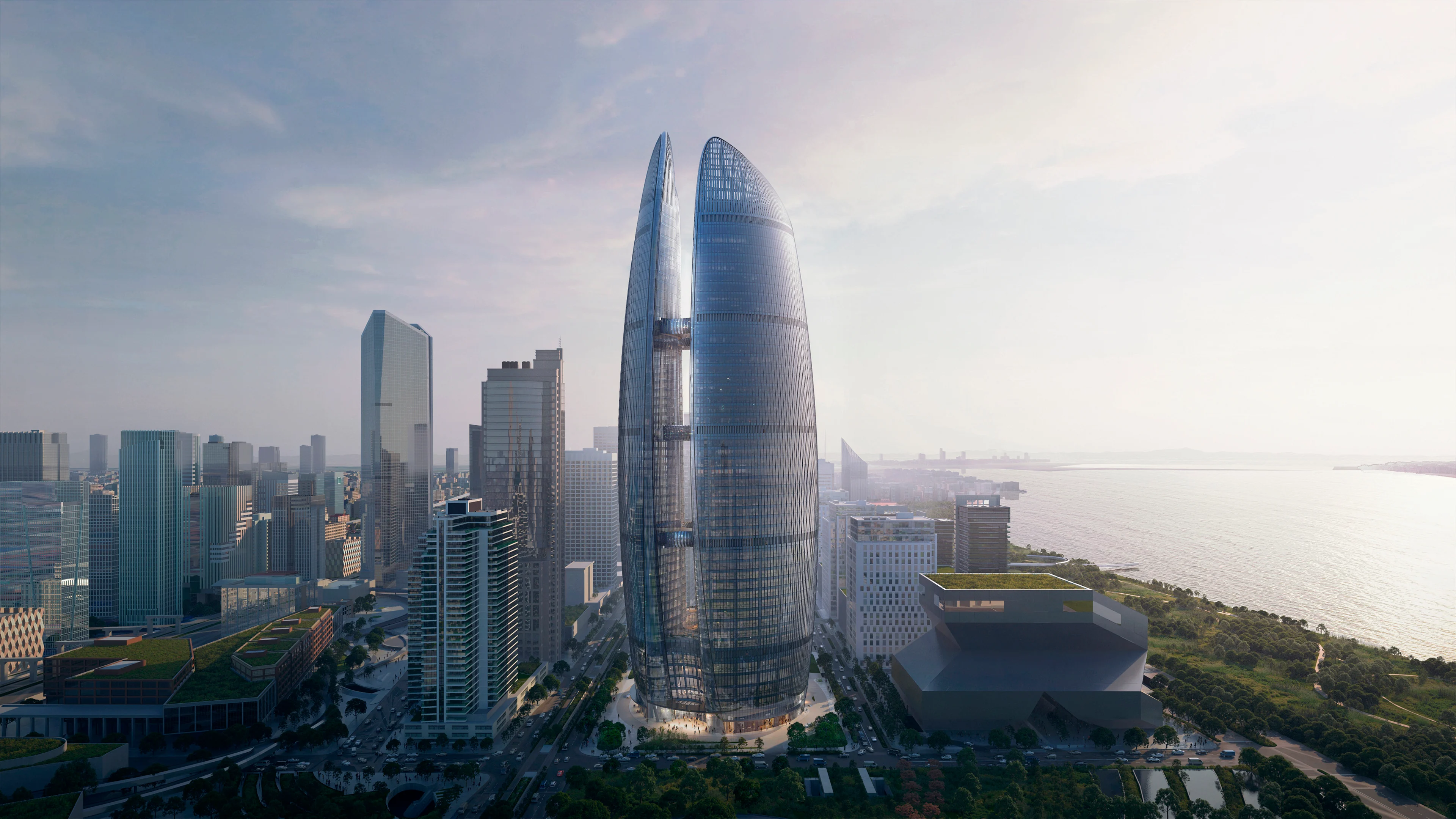
Render by Negativ
Taikang Financial Centre
The new Taikang Financial Centre will be a centre of excellence, developing effective systems and networks that will provide a new ecosystem of support for people of all ages across China. Using the new technologies developed within the Taikang Financial Centre, the group will continue its commitment to supporting community development, healthcare, education and well-being throughout the country.
Vilnius Business Stadium
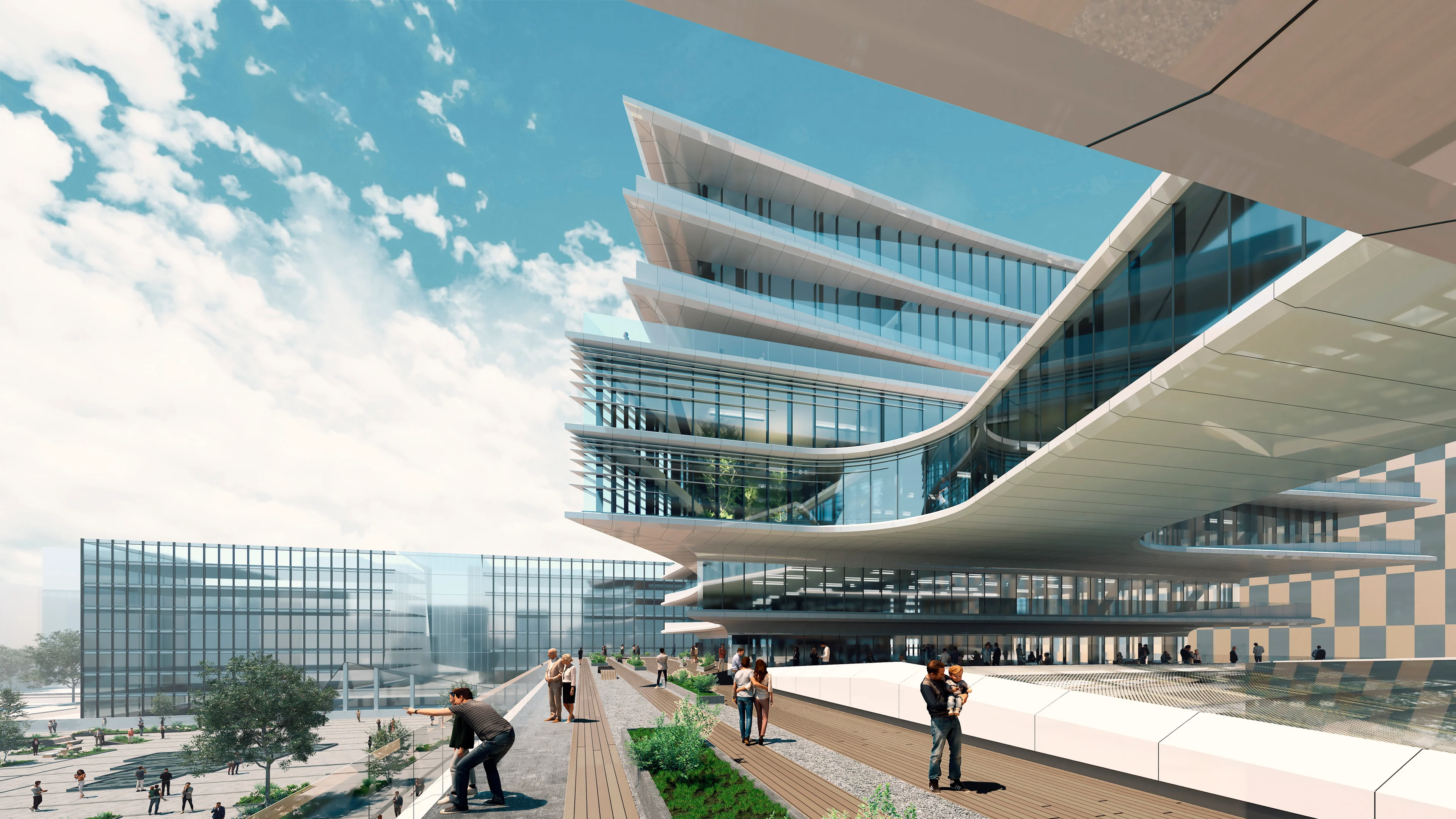
Integrated within the Vilnius City Plan and the popular public square adjacent to the site, Business Stadium Central will be a new gathering place for the city.
Courtesy of Brick Visual
Tower C in Shenzhen Bay Super Headquarters Base
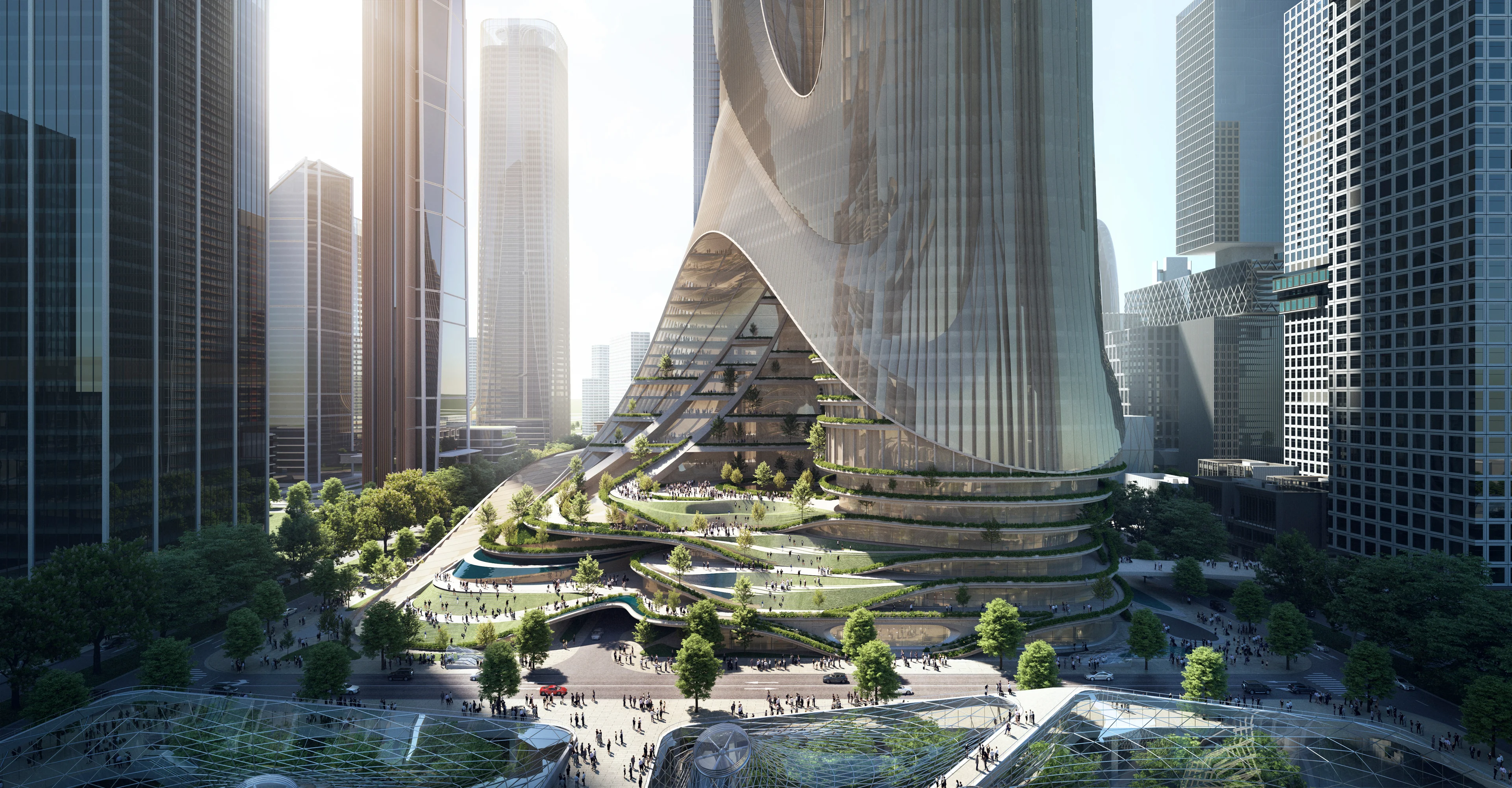
The design of Tower C integrates the city and nature within its central green axis with the transit orientated development (TOD) of Shenzhen’s new spine, creating a ‘superscape’ that will become a tower of the future within the Super Headquarters Base.
Photograph by Virgile Simon Bertrand
The Henderson
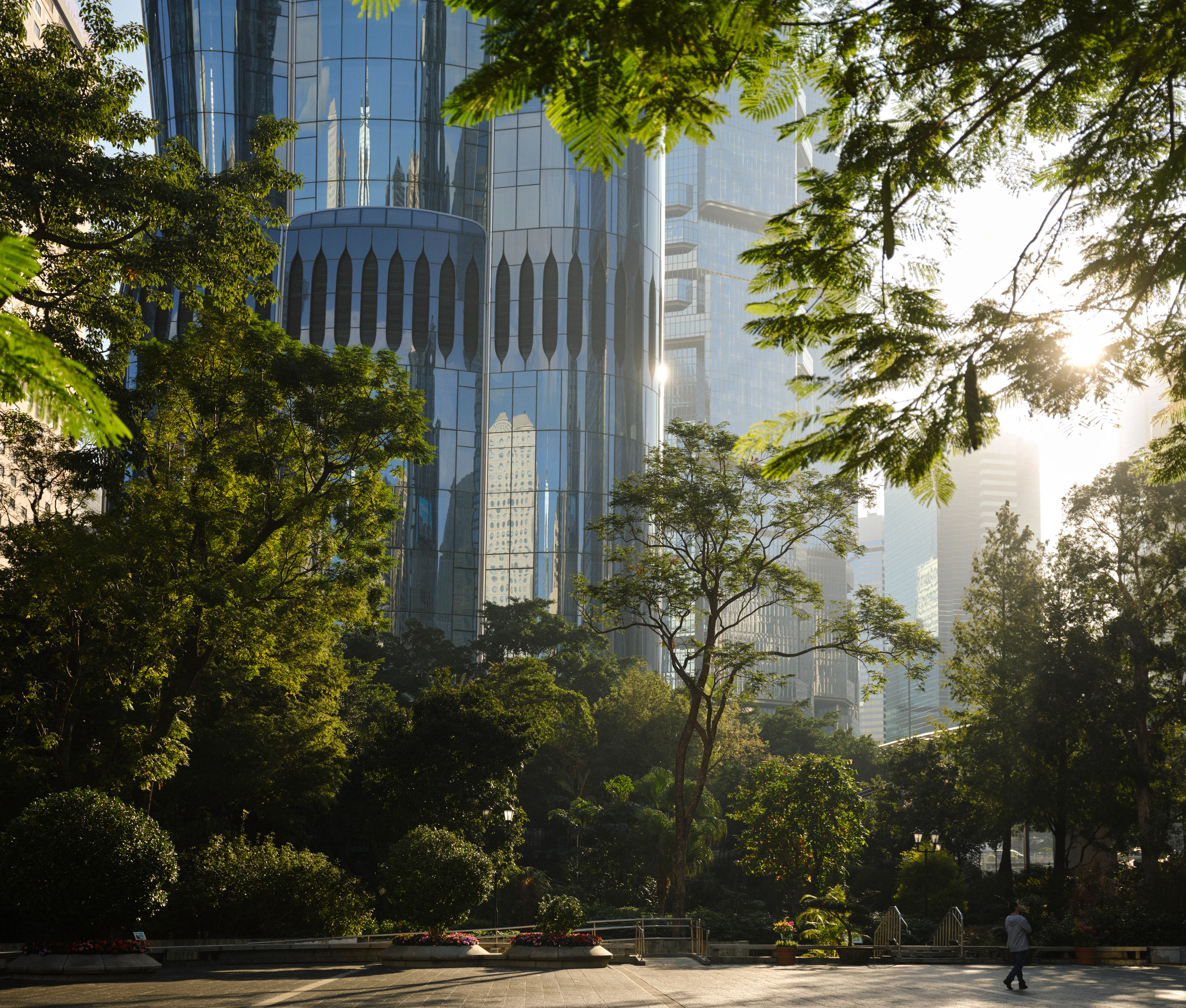
Developed on the world’s most valuable site purchased by Henderson Land, the 36-storey tower's design shelters new civic plazas enveloped by nature, creating an urban oasis in the centre of the city. Accommodating enhanced workplace flexibility, the building’s smart management system creates a contactless pathway for all occupants, eliminating all contact with communal surfaces.
CECEP Shanghai Campus
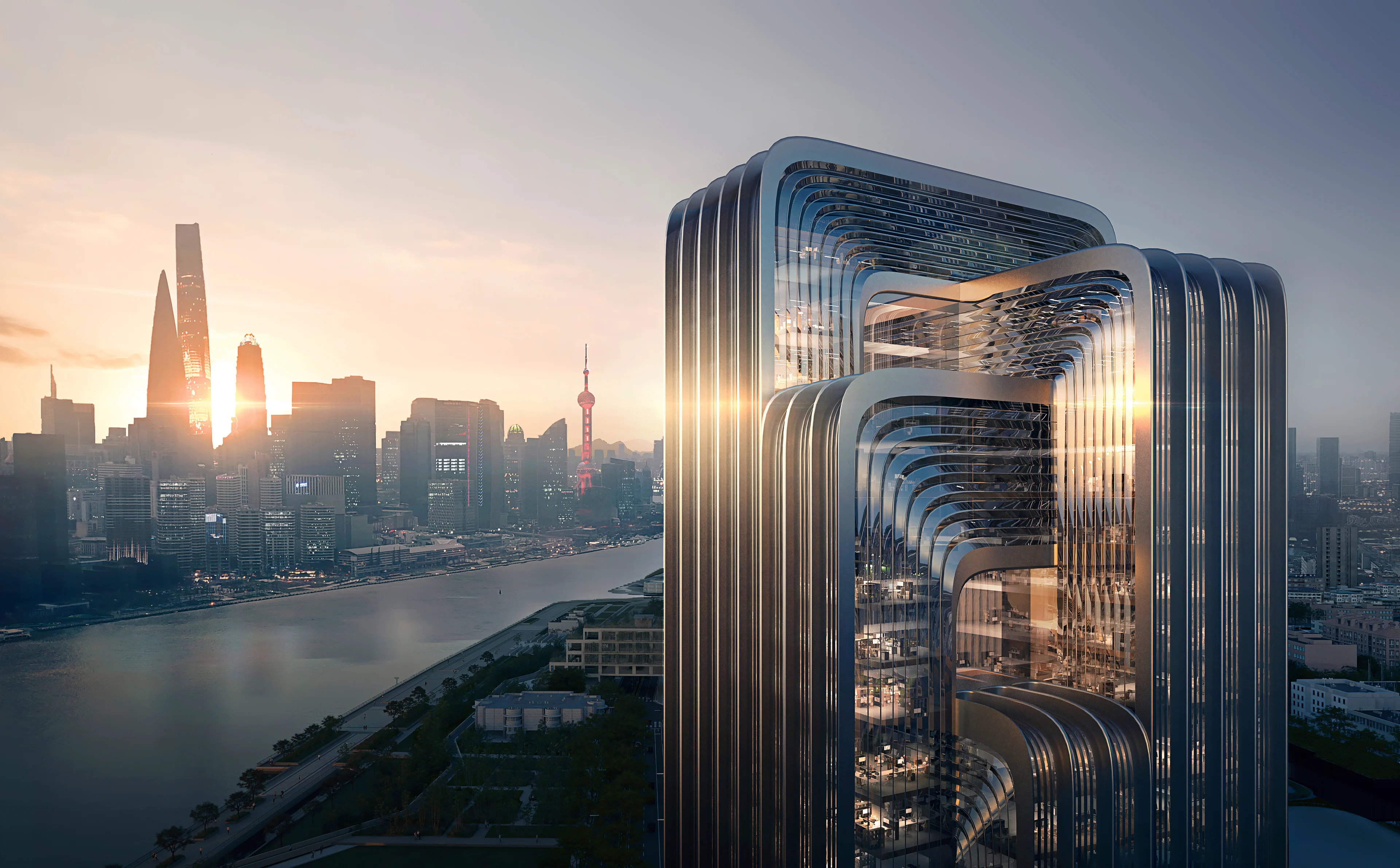
The 218,000m² campus sets new benchmarks for the city in energy conservation, energy efficiency and sustainability.
Courtesy of ZHA
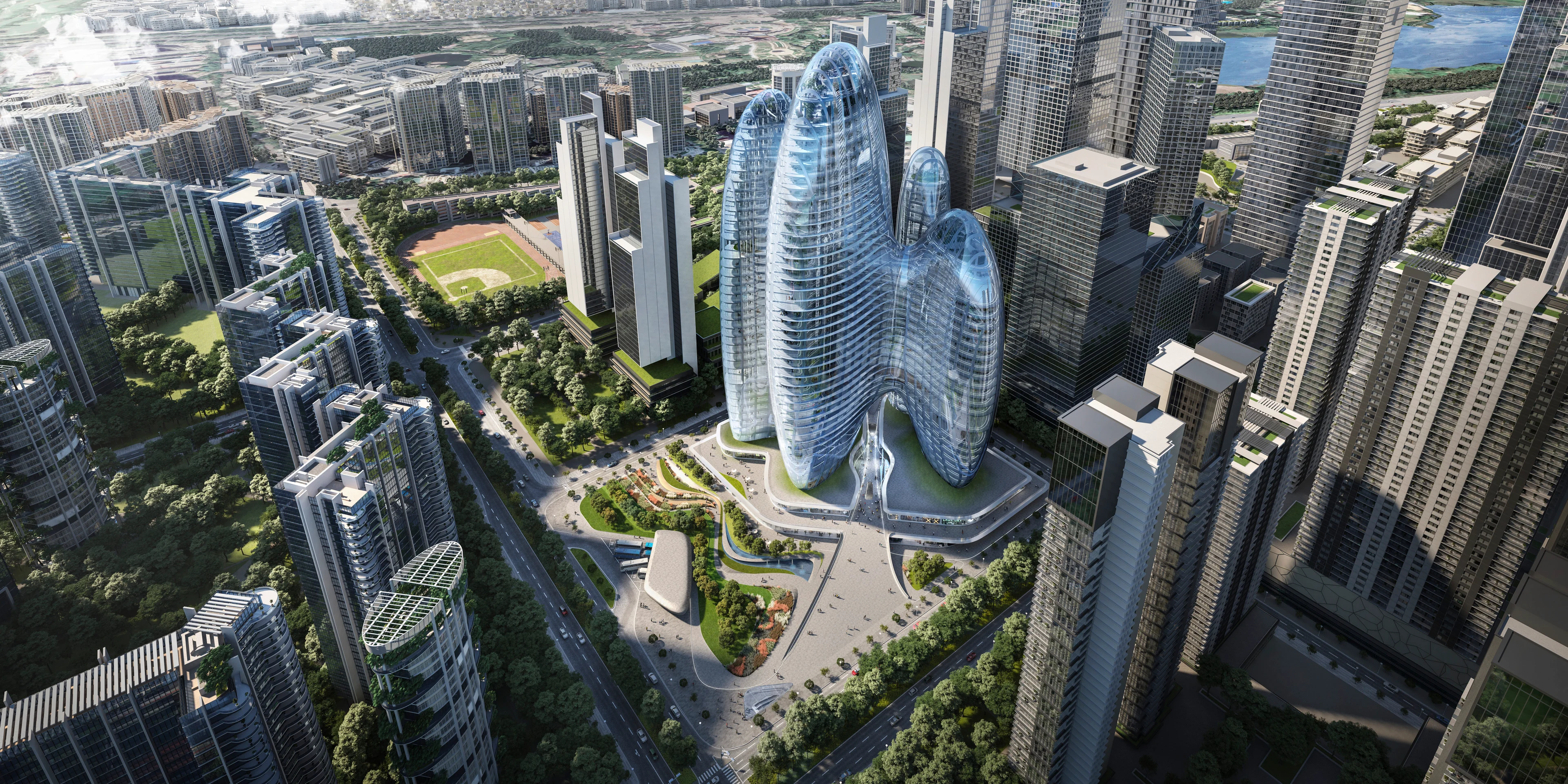
OPPO Headquarters
Conceived as four interconnected towers reaching a height of 200m (42 floors), the 185,000 sq.m design incorporates two towers of flexible, open-plan spaces linked by a 20-storey vertical lobby, and two external service towers providing vertical circulation.
Photograph by Hélène Binet
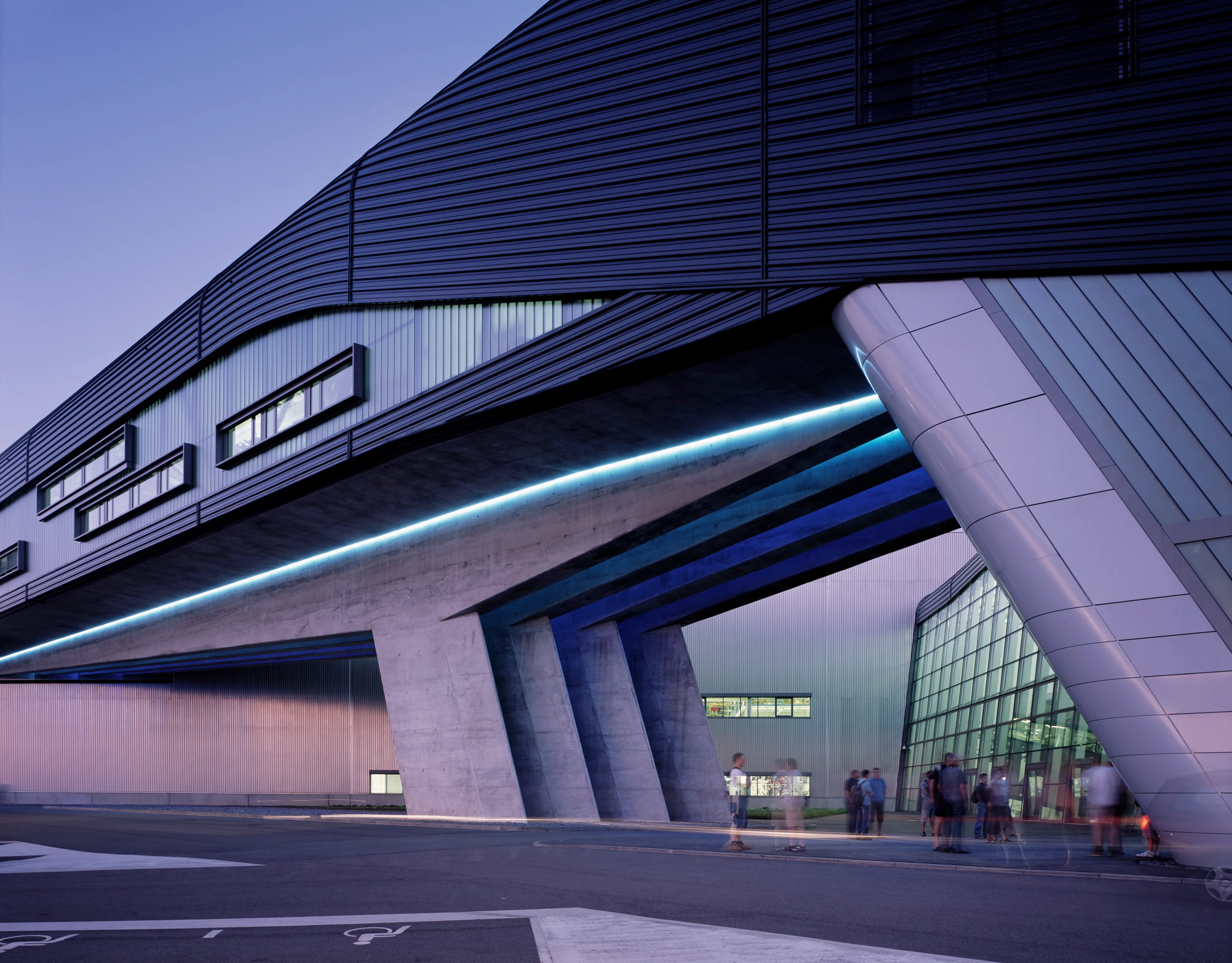
BMW Central Building
Our Central Building for BMW constituted a radical reinterpretation of the traditional office – transforming the building and the functions it contains into a more dynamic, engaging ‘nerve-centre’ or ‘communication knot’ – funneling all movement around the manufacturing complex through a space that transcends conventional white collar/blue collar spatial divisions.
Photograph by Hufton + Crow
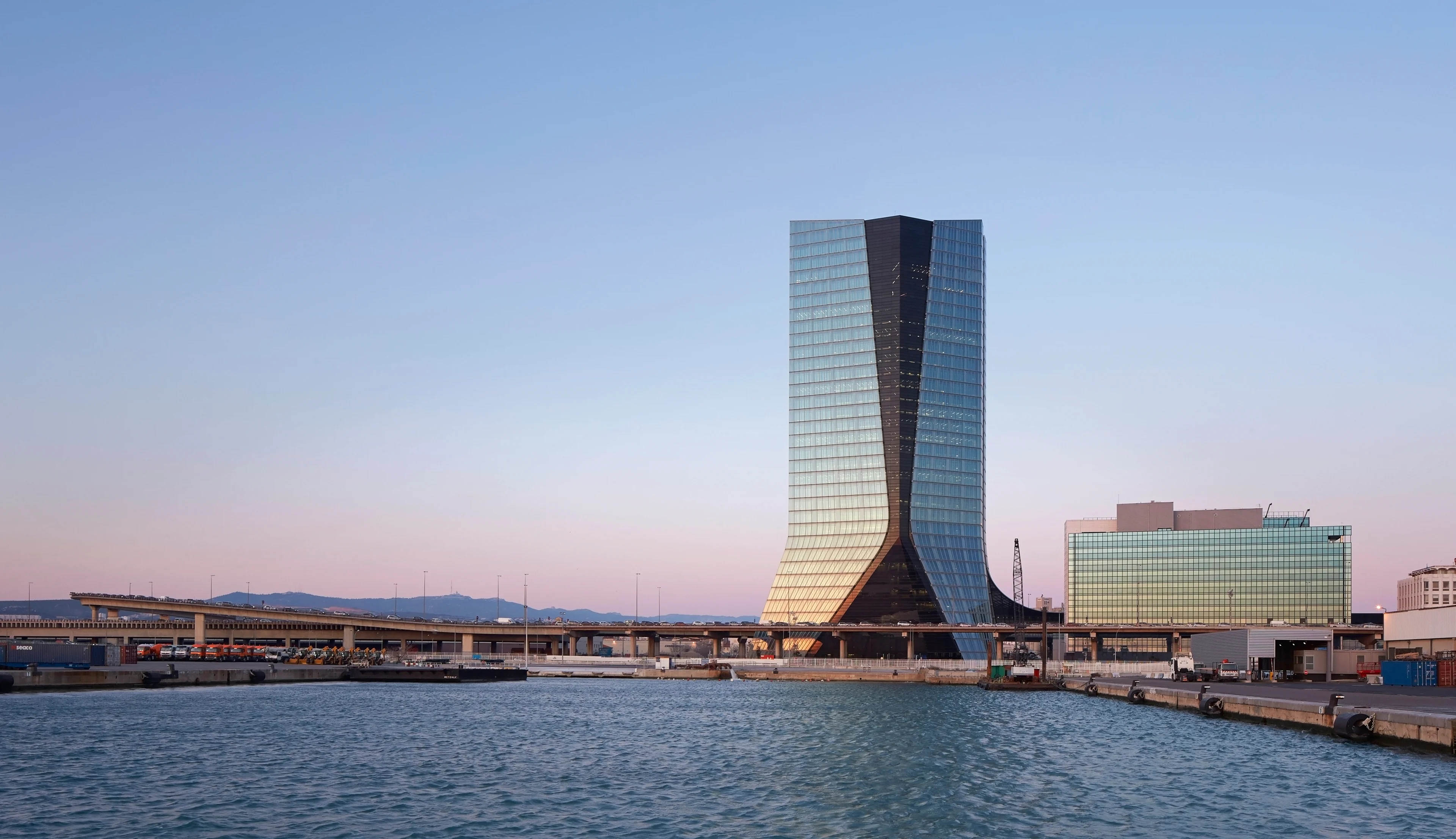
CMA CGM Headquarters
Rising in a metallic curving arc that slowly lifts and accelerates skywards into the dramatic vertical geometry of its revolutionary forms. With its ultimate coordinate 142.8 metres above the ground, a gateway to the city from both land and sea, an iconic vertical element that interacts with Marseille’s other significant landmarks.
Photograph by Hufton + Crow
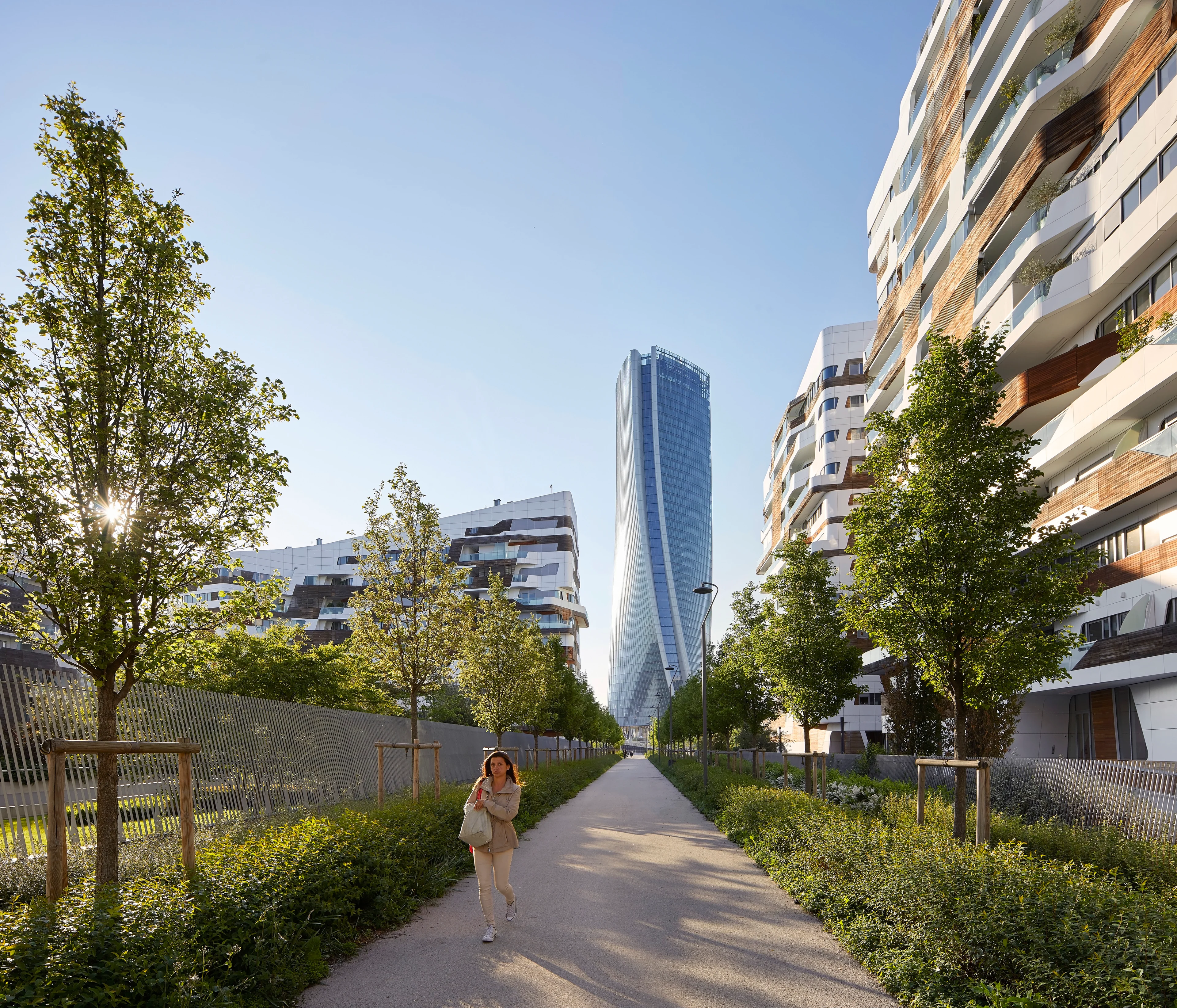
Generali Tower
Generali Tower
Generali Tower is within the CityLife masterplan that has redeveloped Milan’s abandoned trade fair grounds following the fair’s relocation to Rho Pero in 2005.
01
02
03
04
05
06
07
08
09
10
11
12
13
14
15