
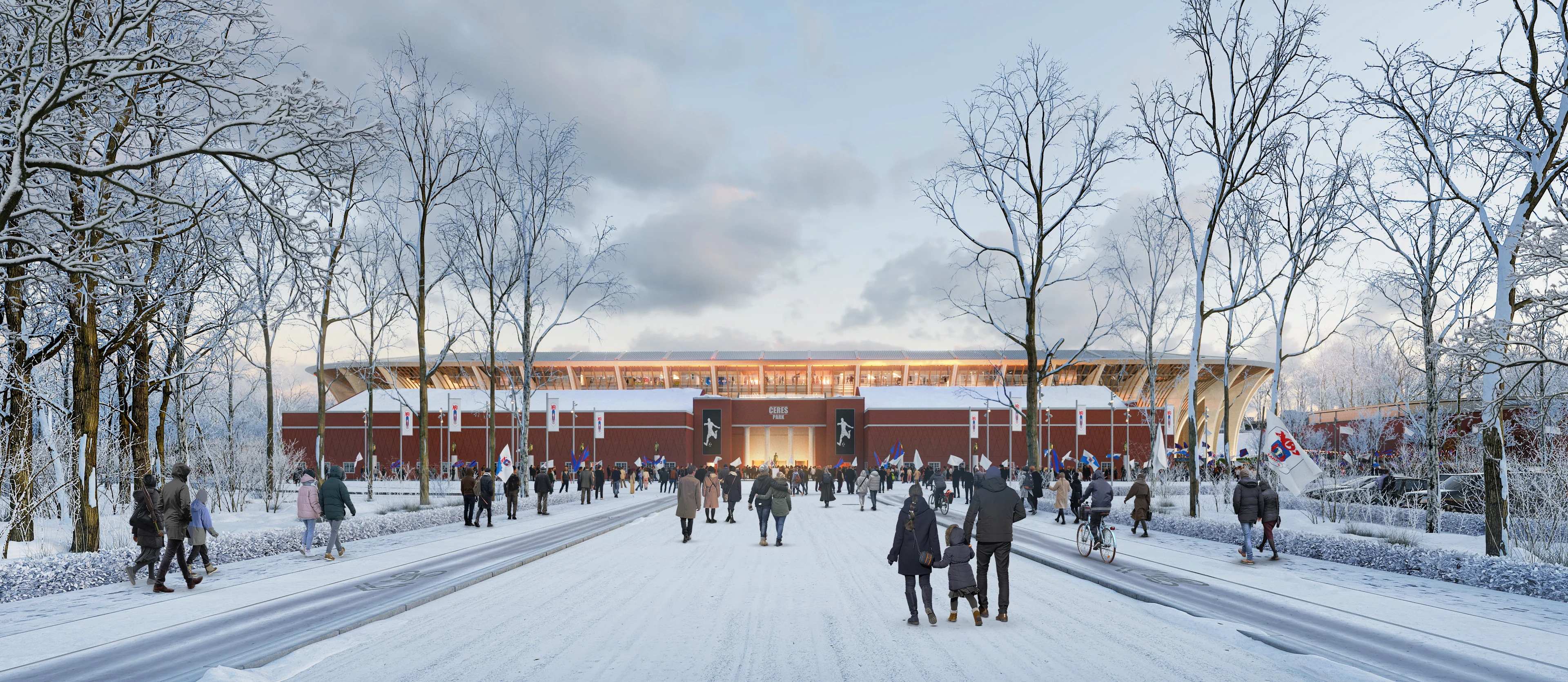
Render by Negativ
Aarhus, Denmark
2022 - 2026
The Municipality of Aarhus
Aarhus Stadium
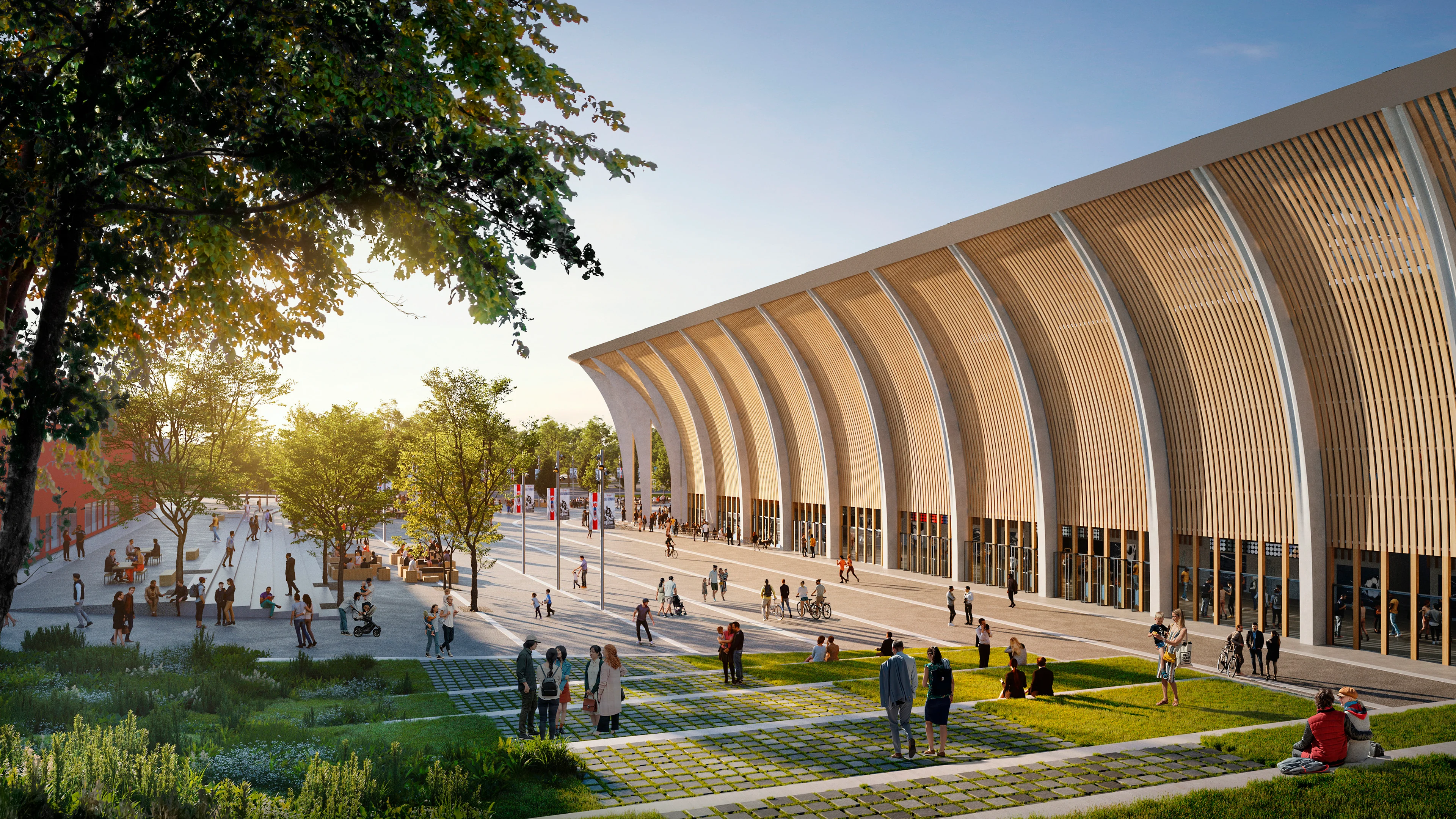
Render by Negativ
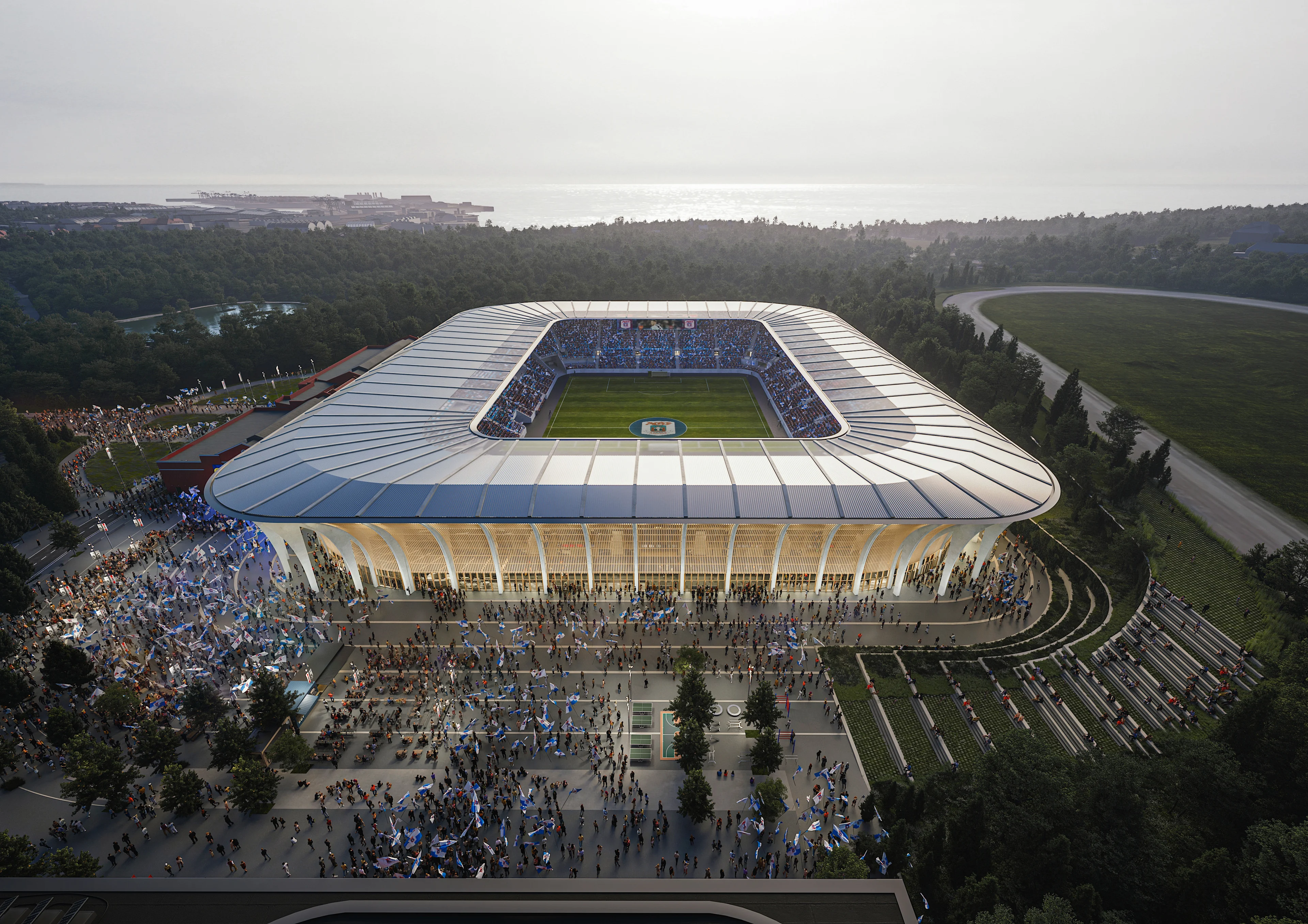
Render by Negativ
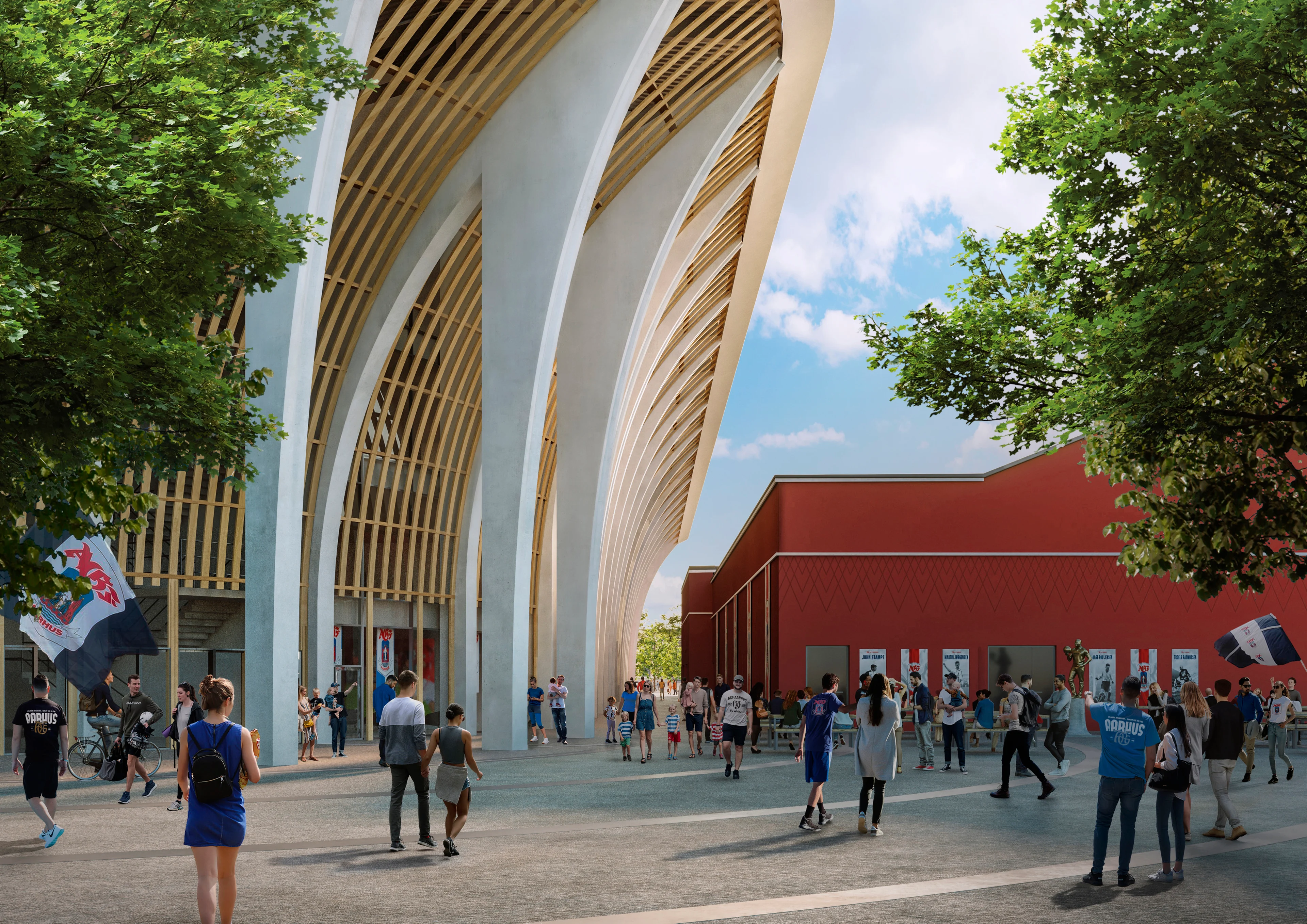
Render by Negativ
Render by Negativ
01
02
03
04
Arena of the Forest
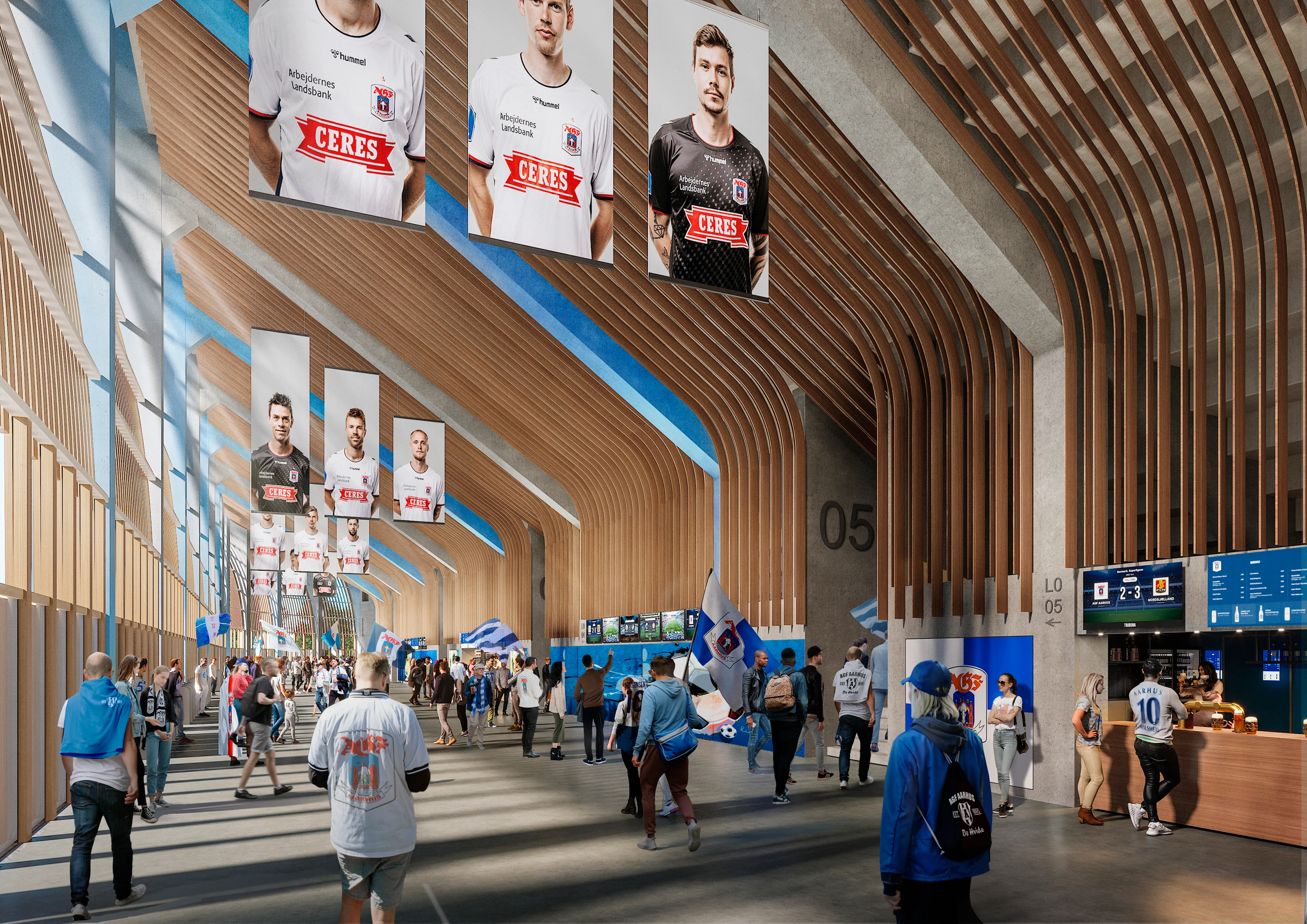
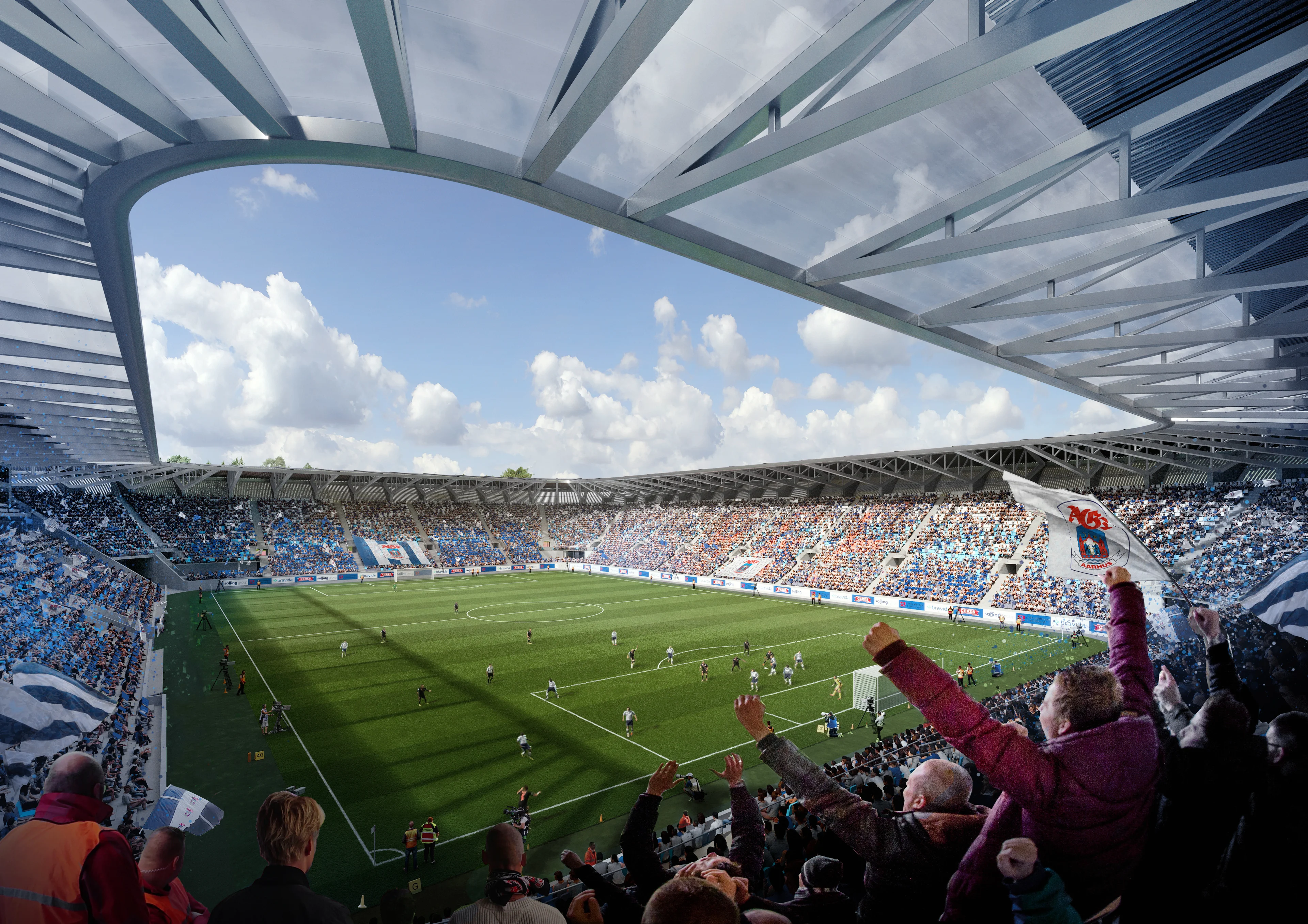
Bringing supporters as close as possible to the field of play in a single-tiered seating bowl creating an intense match-day experience, the new Aarhus Stadium is embedded within the city’s Marselisborg forest.
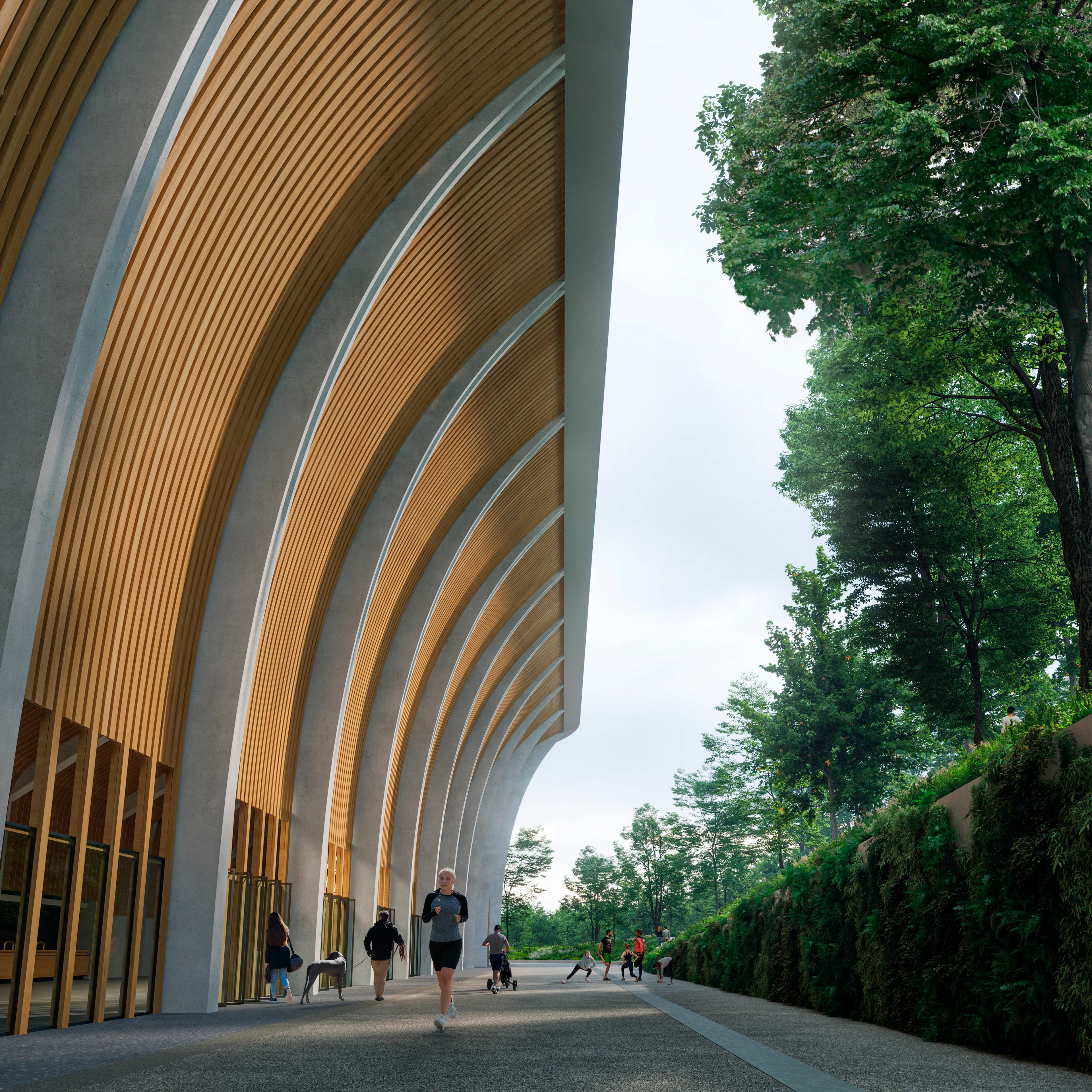
Titled the “Arena of the Forest”, the design concept is informed by the vertical rhythm of the surrounding trees that reach up to 47m in height. The design envisions the new stadium as an extension of the forest with its verticality continued in the stadium’s public colonnades and the timber ribs of its façade. These vertical gestures flow from the forest towards the landscaped plaza and into the colonnades of the stadium’s external and internal concourses. Together with an intricate hierarchy of timber ribs within the façade and roof, the stadium’s large horizontal volume is subdivided into a human scale whilst at the same time offering a sense of arrival for the fans congregating in the adjacent public plazas.
Render by Negativ
Revealing glimpses of the surrounding forest
The new stadium’s roof is designed to maximise weather protection and increase comfort levels in the adjacent external plazas as well as the internal concourses, defining a sheltered 360-degree public circulation route that is independent from the events within the stadium; creating welcoming new public spaces for a wide variety of civic, recreational and cultural uses by the local community and visitors to the park.
The stadium’s transparent roof and the gaps within the timber ribs of its façade reveal glimpses of the surrounding forest, while its permeable colonnades blur the boundaries between different programmes. The east and west sides incorporate open colonnades that act not only as intuitive wayfinding to demark the main entrances, but also as an interface between public events and ticketed programmes; allowing the two to expand into one another and maximise the potential to host many different type of events 365 days a year.
01
02
03
04

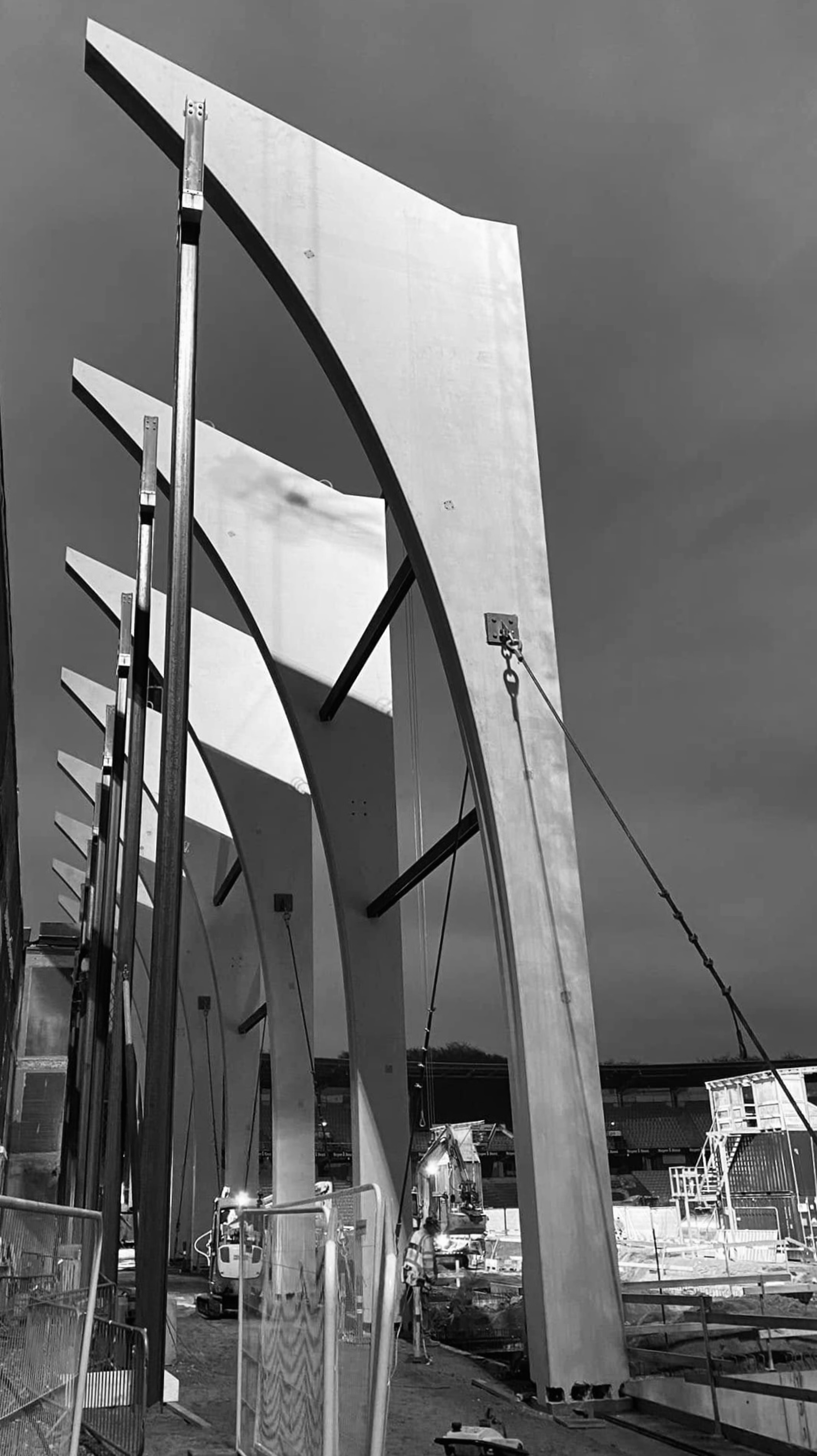
Video | Construction Process
An immersive experience for everyone at the match
To be built on the site of the existing stadium, the new project’s design, structure, and materials are optimized with regards to environmental impact, functionality and experienced value. In using the right materials for the right function, and reducing quantities to the absolute minimum where strength and robustness add the greatest possible value, the new Aarhus Stadium is characterized by three primary materials: concrete incorporating recycled aggregates for the columns; locally procured, upcycled and recycled steel for the trusses; and timber from local certified sustainable sources for the façade cladding.
The adjacent ‘Stadionhallerne’ building completed in 1918 by architect Axel Høgh-Hansen will be refurbished. Its intense red facades and white ornamentation will be retained to keep its historic soul that everyone at the club holds dear.
In addition to the positive effect on the new stadium’s environmental impact, the reutilization of the old stadium’s components will contribute to the local anchoring of the project.
Home ground to Aarhus Gymnastikforening (AGF) football club whose first team play in the Danish Superliga, the current Aarhus Stadium opened in 1920. While a series of refurbishments were undertaken between 1948 and 2004, the existing stadium no longer meets the standards required to host regular top-flight professional and international football matches as well as large-scale cultural events. Perhaps most notably for AGF supporters, the long distances between spectators and the football pitch within the existing stadium are an obstacle to generating the most exciting atmosphere for AGF players and fans at home games. The new stadium will bring fans very close to the field of play, creating an immersive experience for everyone at the match.
Sports
Discover more of our sports projects
From the world’s first timber-built football stadium to an international sports centre providing multi-sport facilitites to athletes of all ages, discover our latest sports projects.
Photograph by Virgile Simon Bertrand
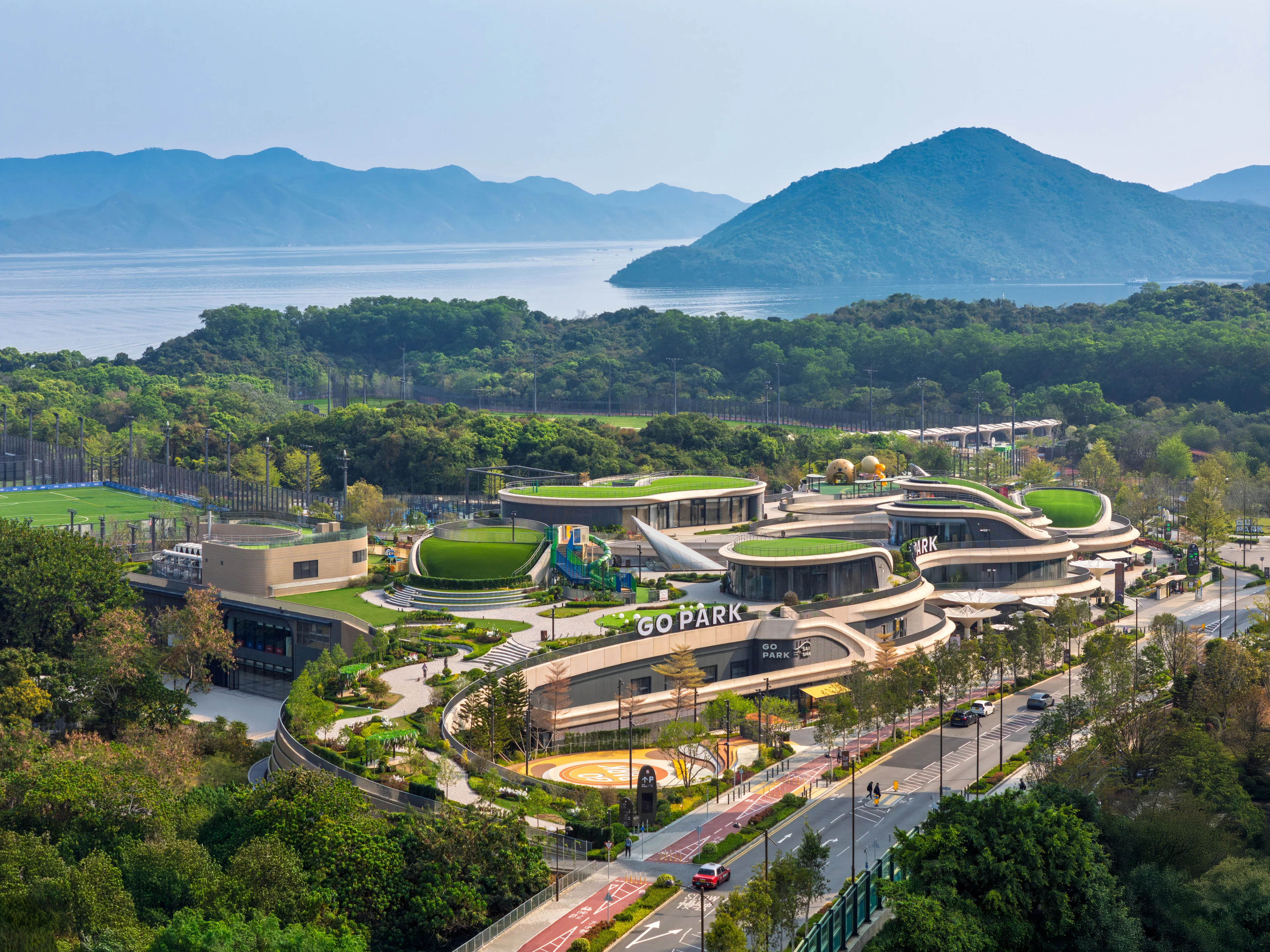
GO PARK Sai Sha
ZHA’s first sports and commercial project in Asia, GO PARK Sai Sha is nestled between the mountains of Hong Kong’s Ma On Shan Country Park and the sheltered waters of Three Fathoms Cove which leads out to the South China Sea.
Photograph by SeilaoJiong 张灏
Sports Centre
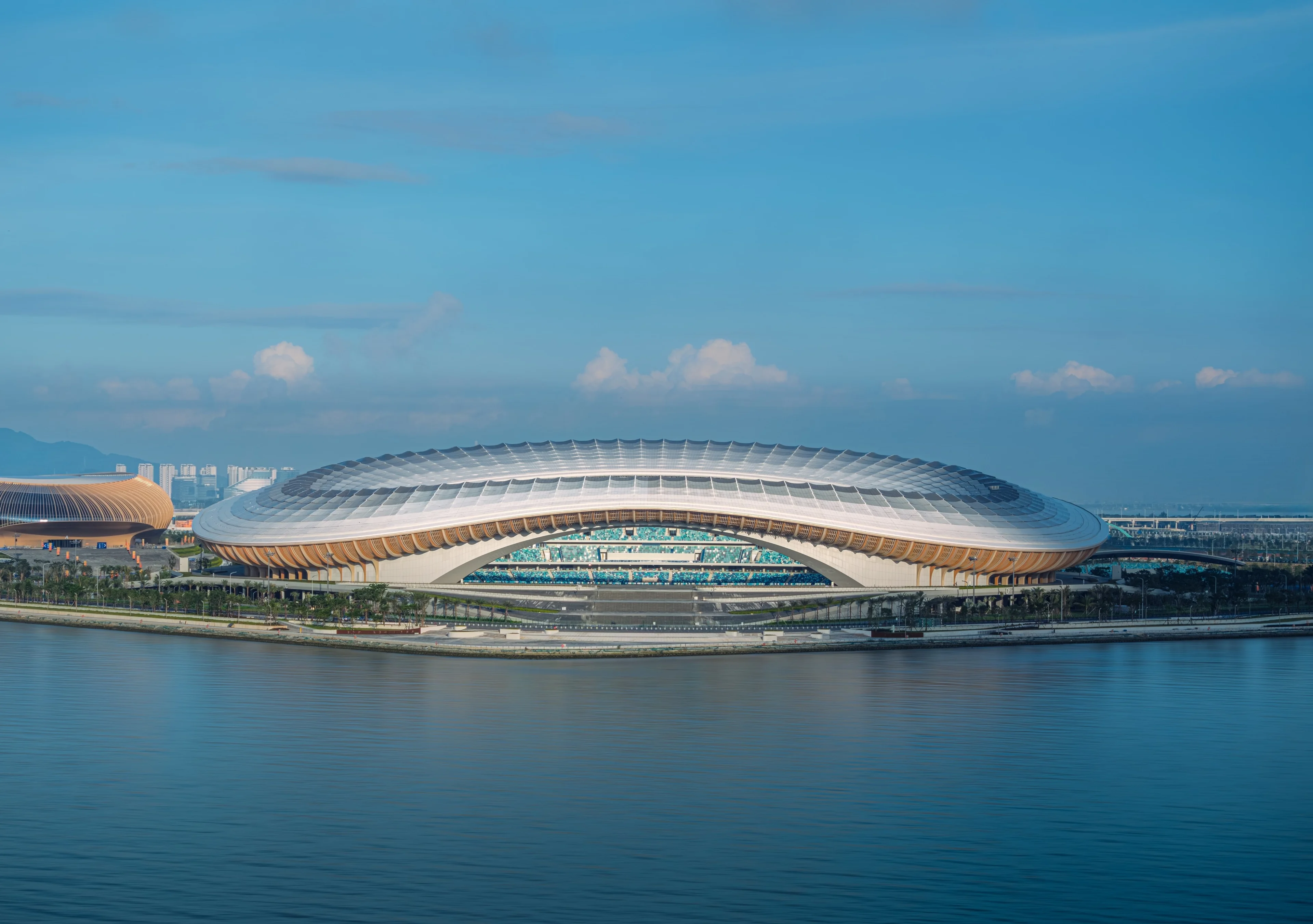
Greater Bay Area Sports Centre
Situated at the southern end of Guangzhou’s Nansha District on the western bank of the historic Pearl River, the Greater Bay Area Sports Centre will serve as an anchor to the new civic, business and residential district at the heart of the Greater Bay Area.
Photograph by Hufton + Crow
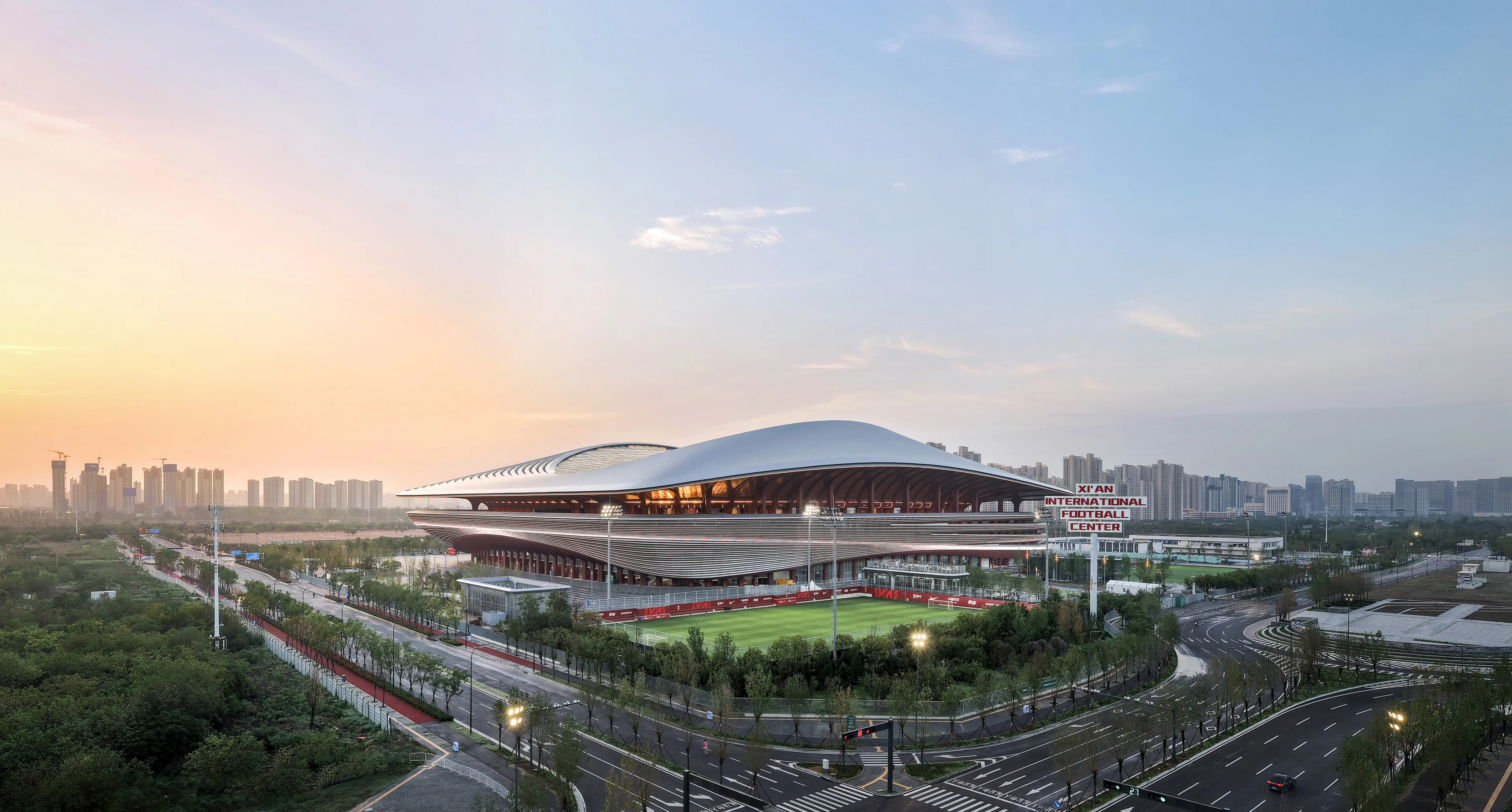
Xi'an International Football Centre
Xi’an International Football Centre’s 60,000-seat stadium and training grounds are integral to the ongoing development of football in China. Initiated by the Chinese Football Association and China’s national sports development organisations, the new football centre provides facilities of the highest standards to nurture the sport across all levels.
Render by Proloog
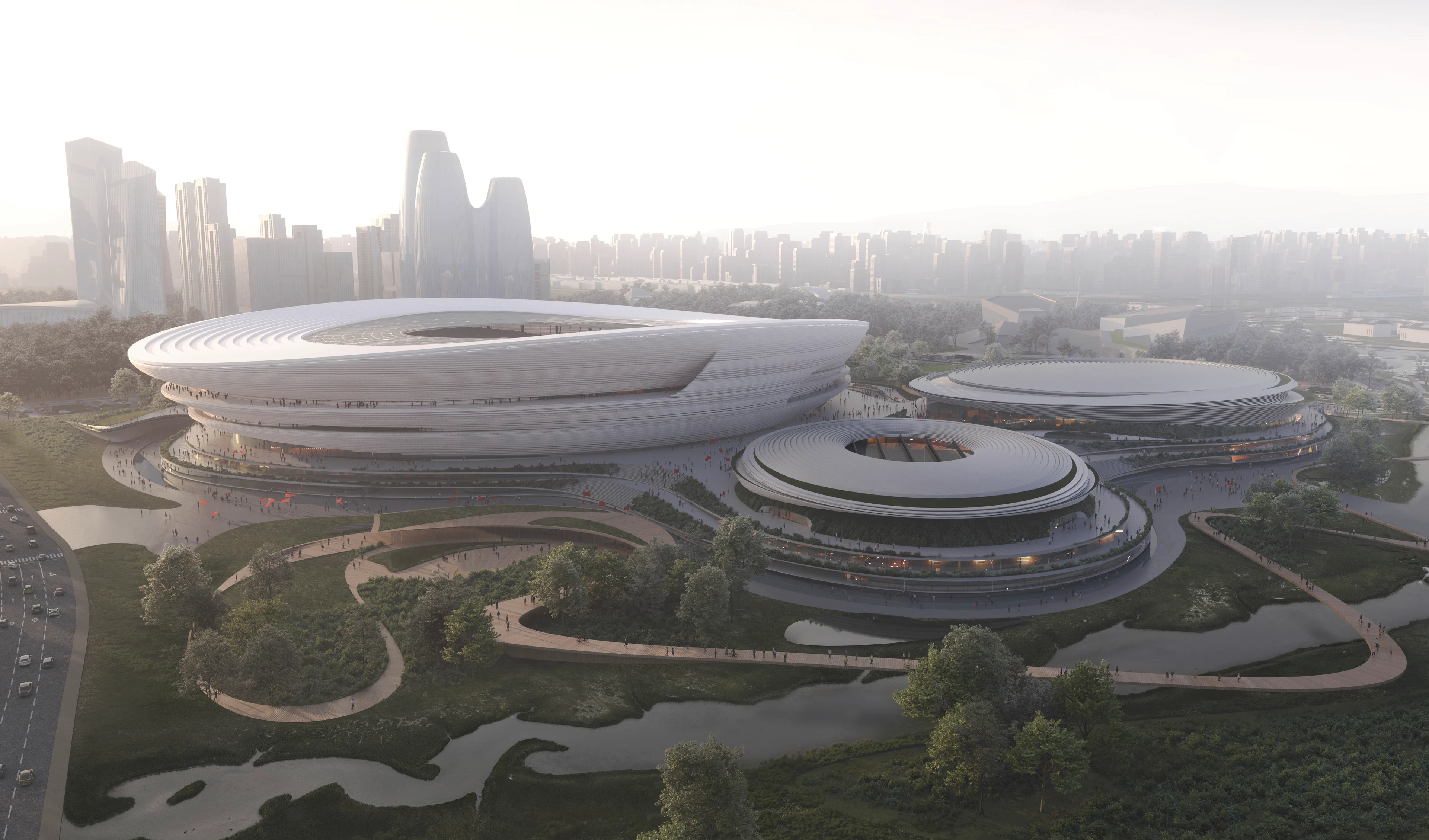
Hangzhou International Sports Centre
Located within Hangzhou’s Future Science and Technology Cultural District, the sports centre establishes a new riverfront park and public plazas with direct access to Lines 3 and 5 of the city’s expanding metro network.
Photograph by Hufton + Crow
Legacy Mode : December 2013
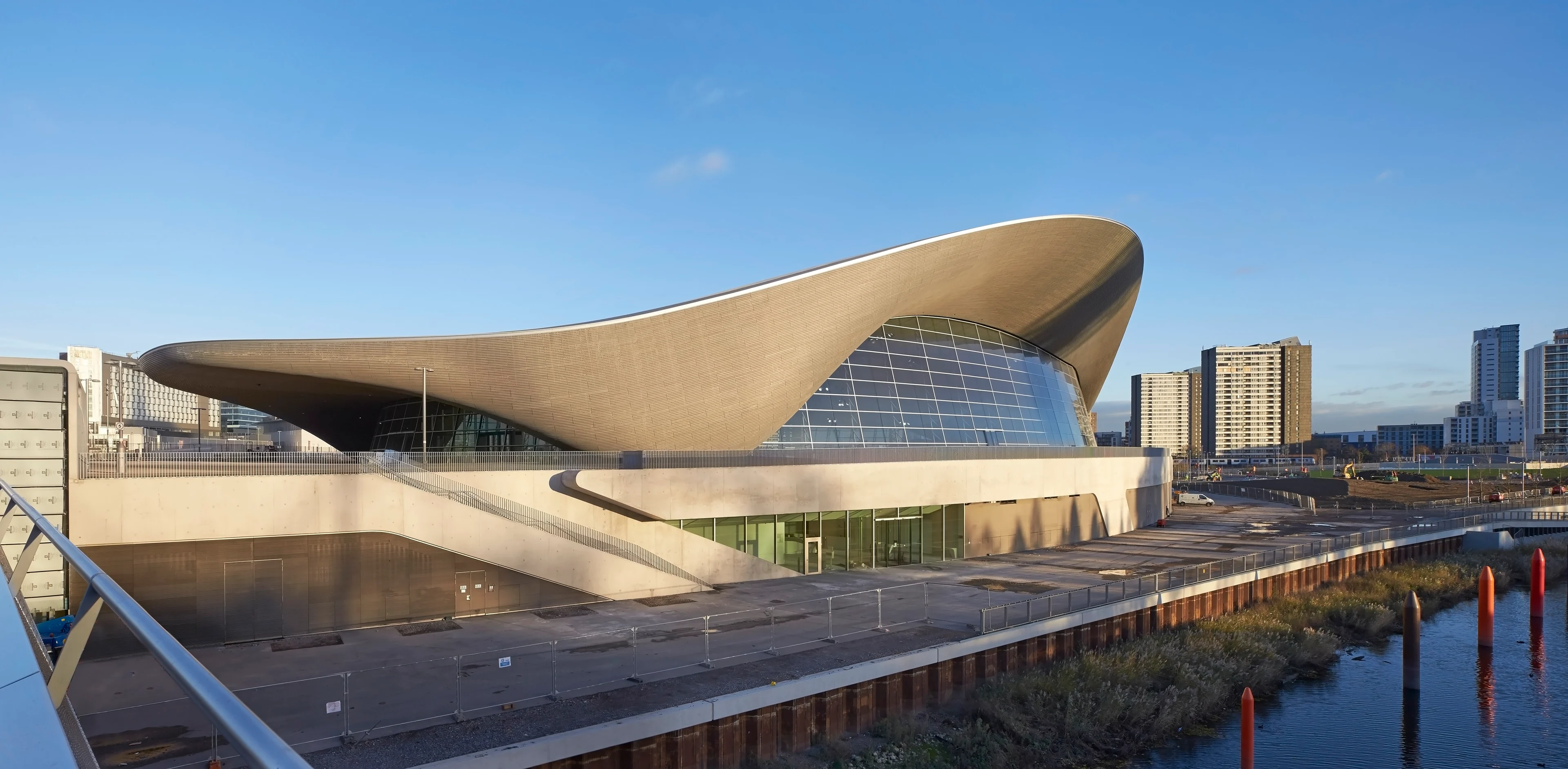
London Aquatics Centre
A concept inspired by the fluid geometry of water in motion, creating spaces and a surrounding environment in sympathy with the river landscape of the Olympic Park. An undulating roof sweeps up from the ground as a wave, enclosing the pools of the Centre with its unifying gesture.
Photograph by Roland Halbe
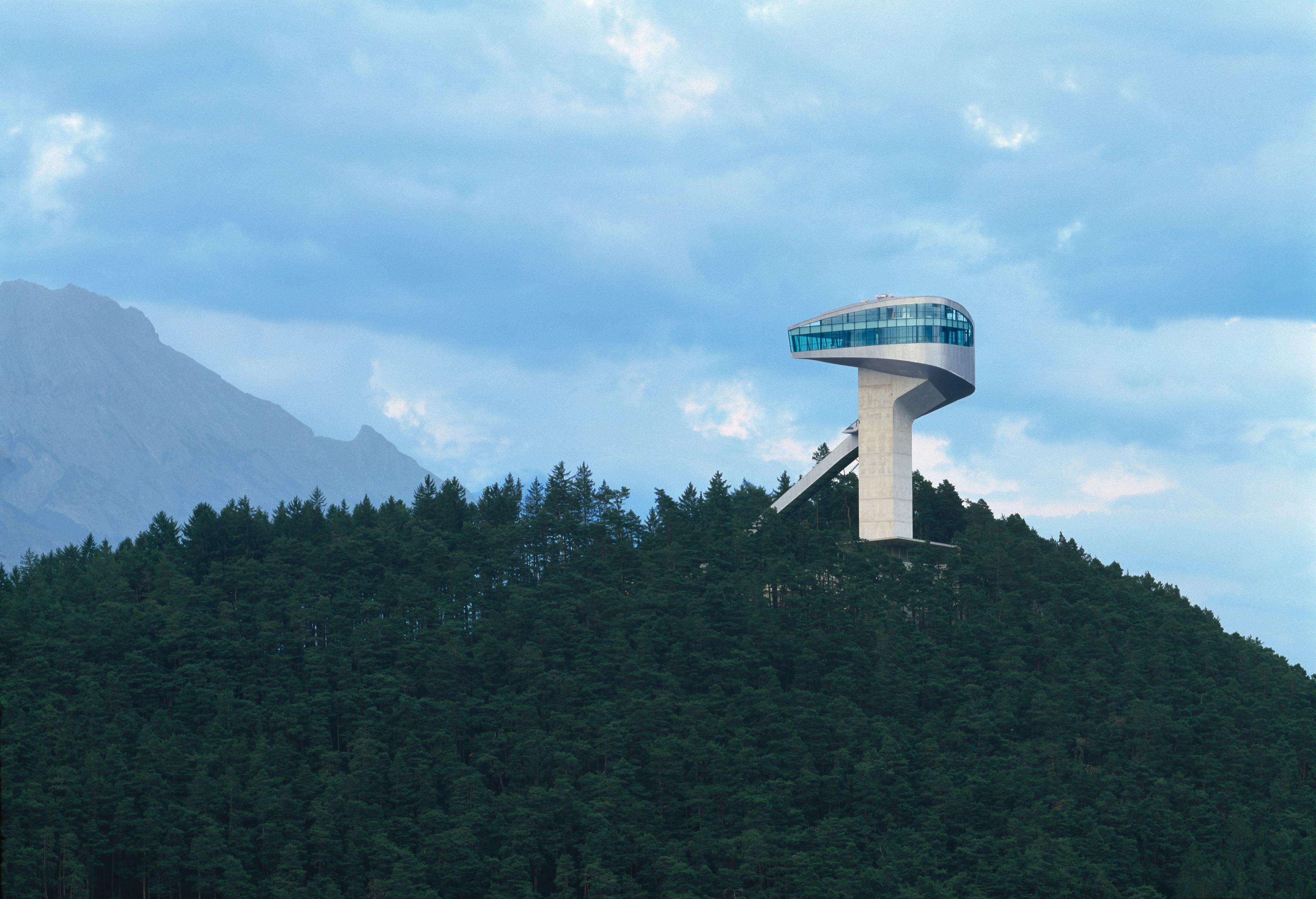
Bergisel Ski Jump
ZHA's ski jump on Bergisel mountains contains a ski ramp and sports facilities, as well as public spaces, including a tower-top café and viewing terrace. Rising to a height of almost 50m the structure’s distinctive form and silhouette extends the topography of the ski slopes below into the alpine sky above.
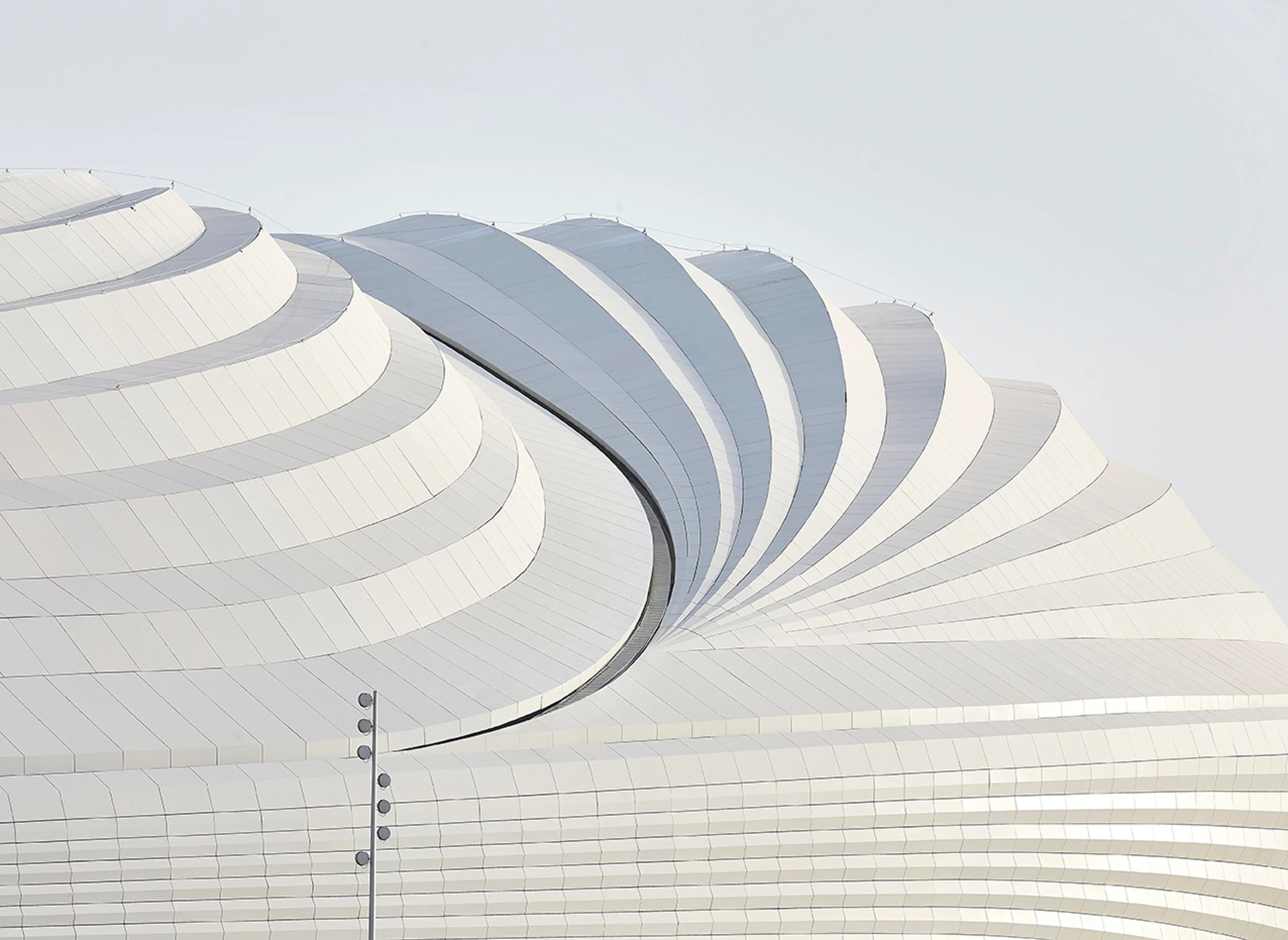
Al Janoub Stadium
Inaugurated on 16 May 2019 by hosting the Amir Cup Final of the Qatar Stars national football league, Al Janoub Stadium was the first new stadium commissioned for the 2022 FIFA World Cup Qatar.
Courtesy of ZHA, render by MIR
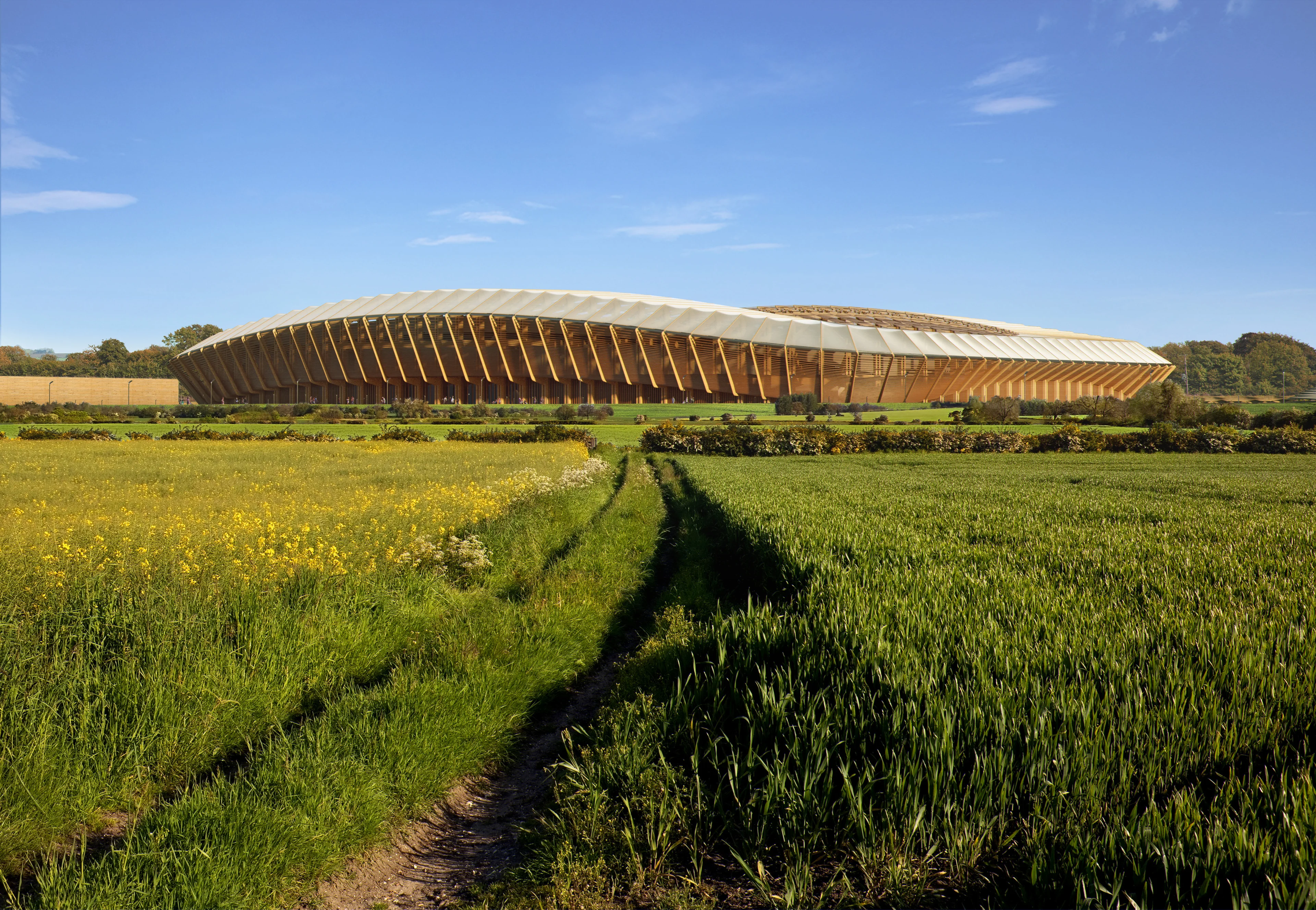
Forest Green Rovers Eco Park Stadium
The Eco Park stadium for Forest Green Rovers will be an important addition for the community. The club’s heritage, ambition and vision reflect ZHA’s own, combining the latest material research and construction techniques with new design approaches to build a more ecologically sustainable and inclusive architecture.
01
02
03
04
05
06
07
08