
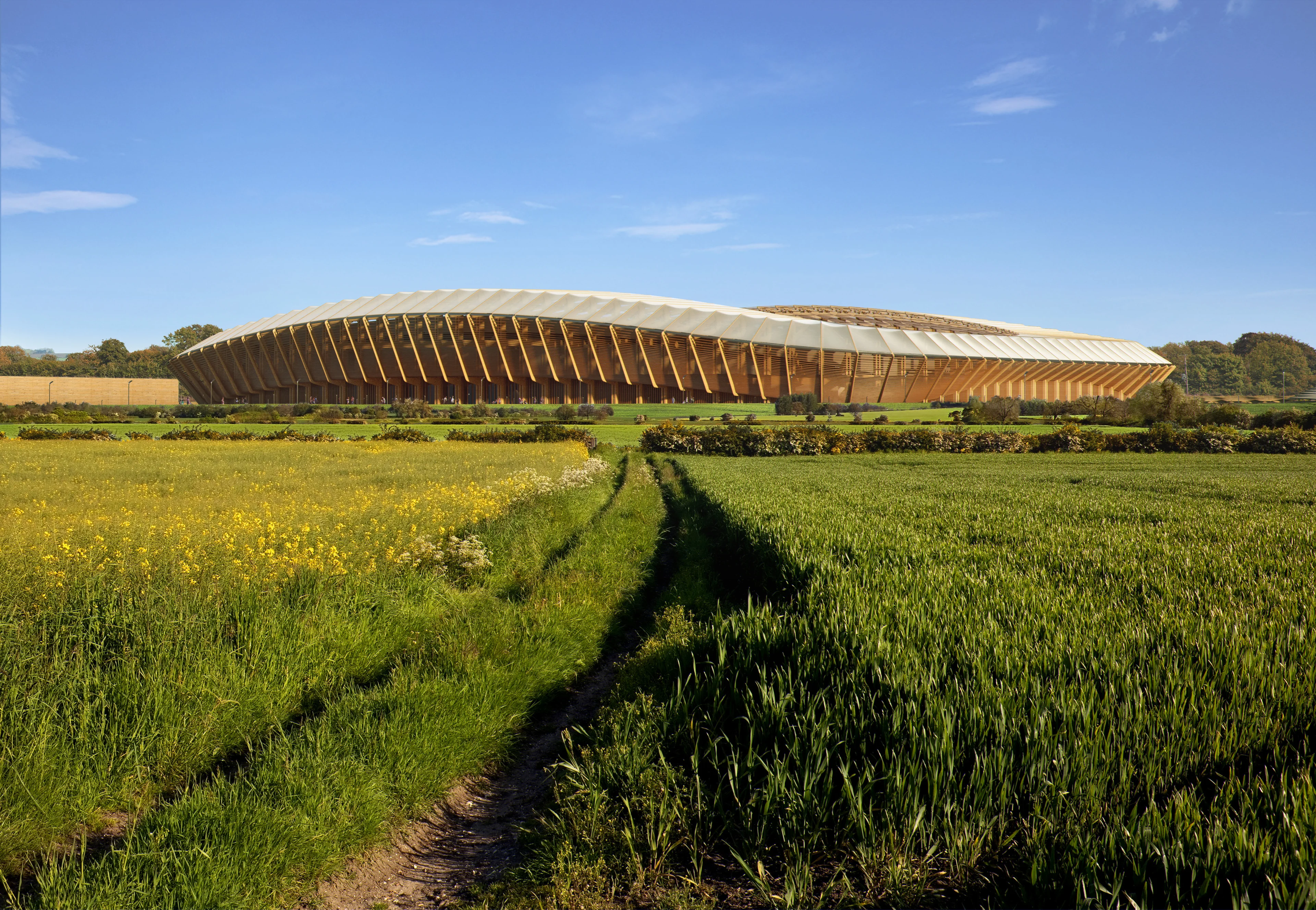
Courtesy of ZHA, render by MIR
Stroud, United Kingdom
2016 - TBC
Forest Green Rovers/Ecotricity
Forest Green Rovers Eco Park Stadium
Enhancing the existing meadow landscape of the site
The Eco Park stadium for Forest Green Rovers will be an important addition for the community. The club’s heritage, ambition and vision reflect ZHA’s own, combining the latest material research and construction techniques with new design approaches to build a more ecologically sustainable and inclusive architecture.
Forest Green Rovers have established a holistic vision for the site to retain its pastoral qualities whilst adding new facilities for the town. While the stadium will be the centrepiece, the project creates a new public realm with both recreational and occupational uses, enabling the entire site to contribute to the town - not only on match days, but every day of the year.
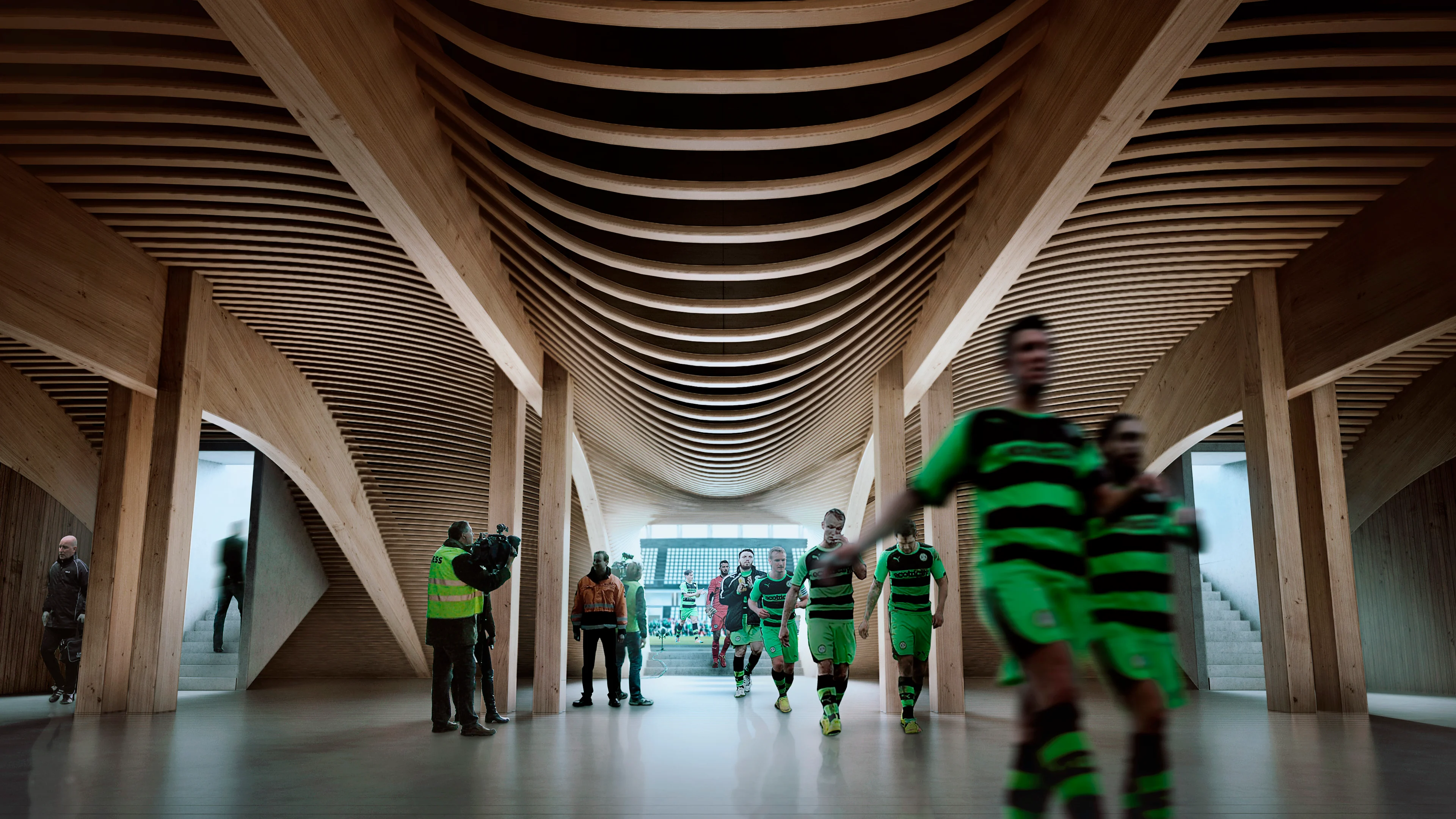
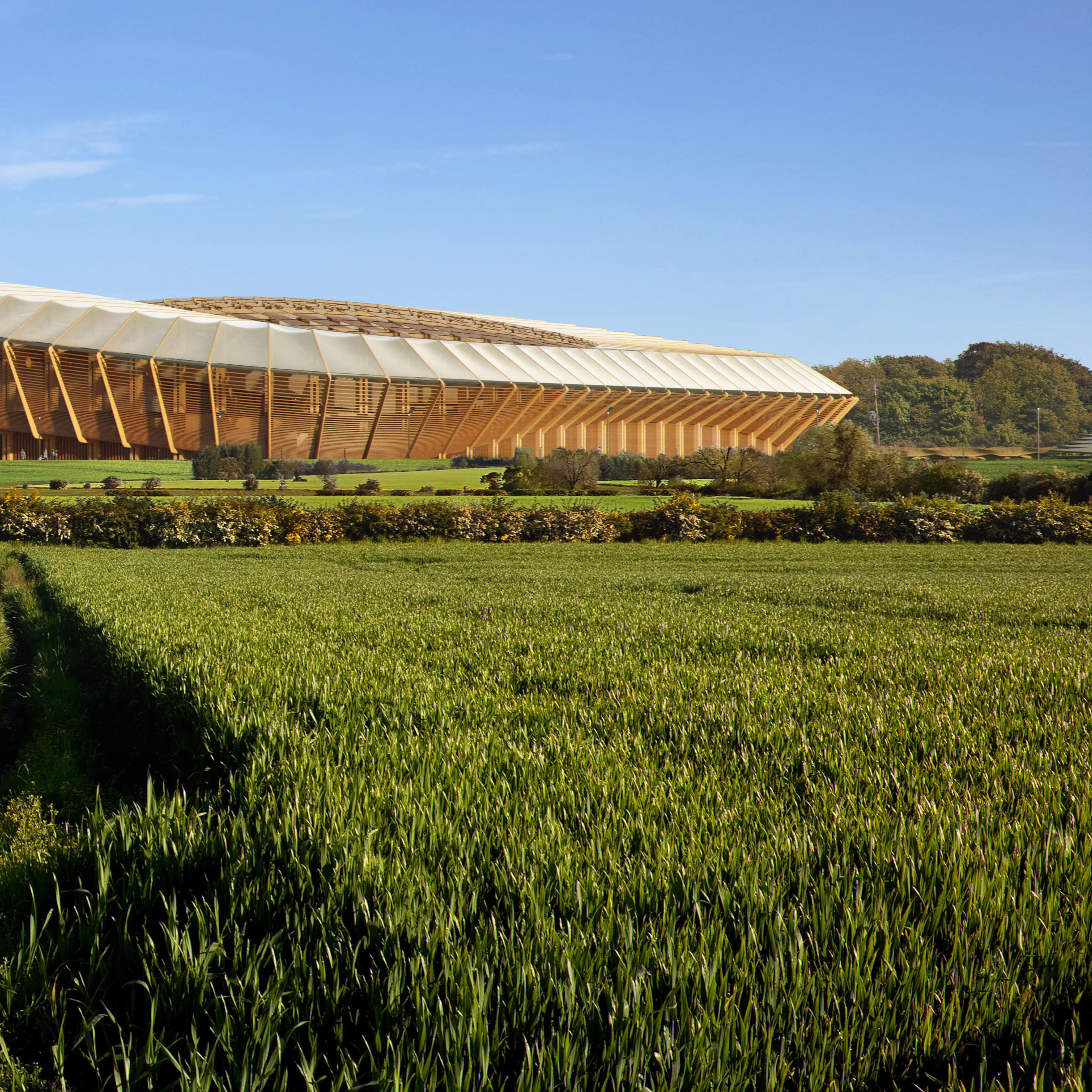
The design retains and enhances the existing meadow landscape of the site whilst adding the stadium and other functions for the town. Embodying low carbon construction methods and operational processes, it will be the first all timber football stadium with almost every element made of sustainably sourced timber including its structure, roof cantilevers and louvered cladding.
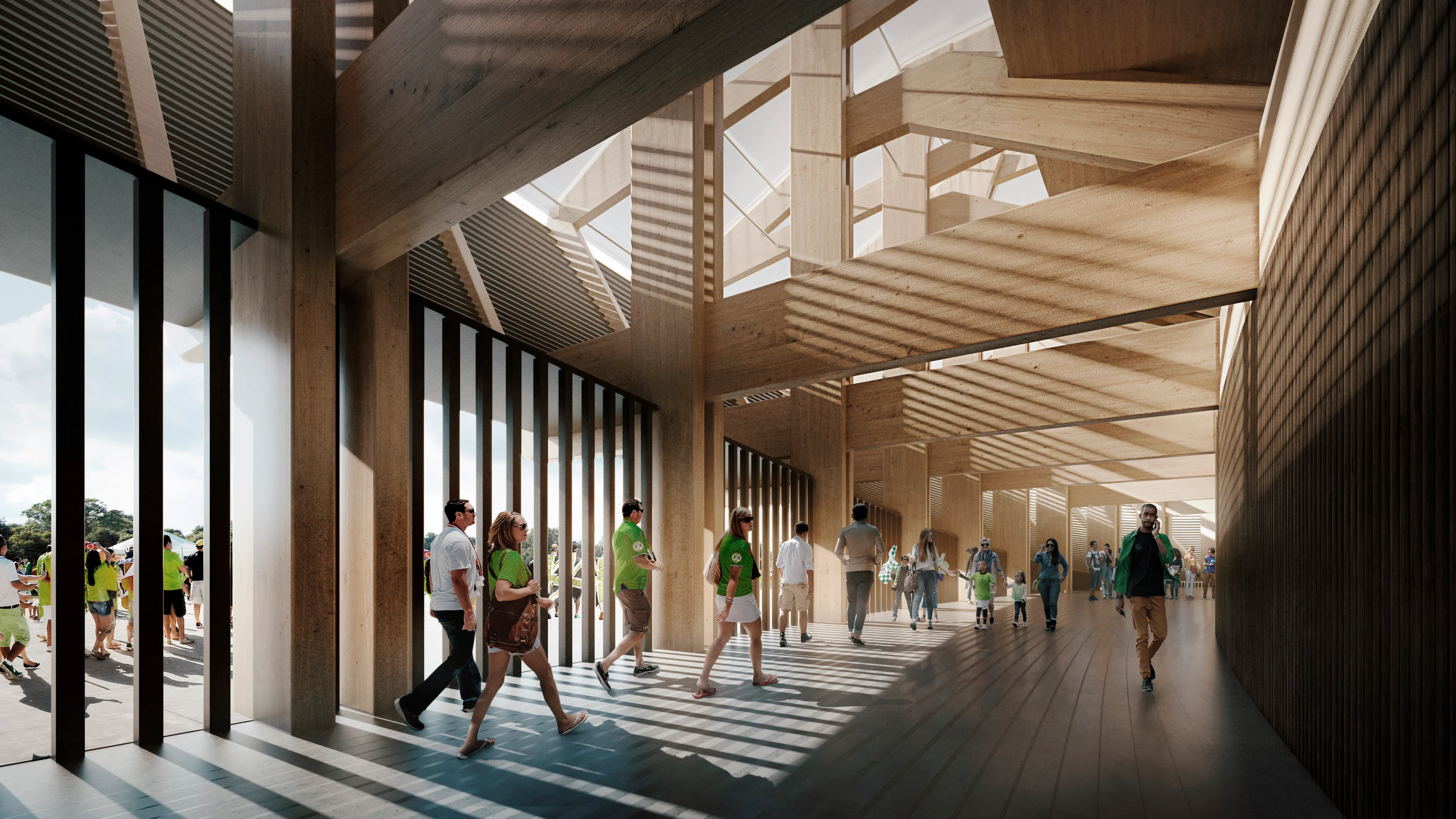
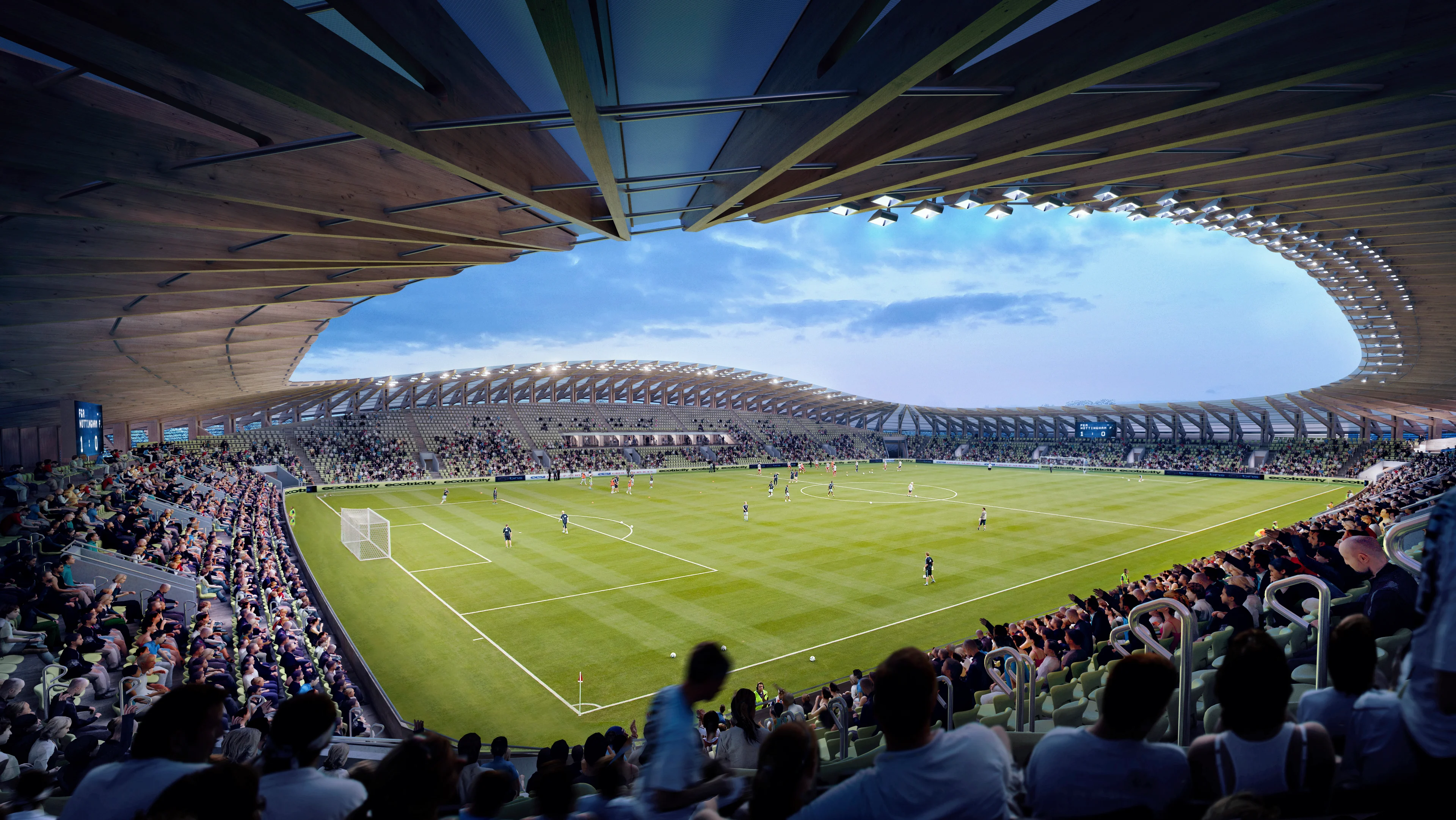
Highly durable, recyclable and beautiful
As a building material, timber is highly durable, recyclable and beautiful. The proximity of the stadium’s structural elements to each other has also been determined to enable the seating terraces and floor slab to be made from timber. In most other stadiums, these elements are concrete or steel.
The stadium’s roof is covered with a transparent membrane, which contributes to turf growth, minimizes stark shadows for players and fans and reduces the volumetric impact of the stadium from distant views in the surrounding landscape.
Community and supporters at its core
With the team’s community and supporters at its core, fans will be as close as five meters from the pitch and the position of every seat has been calculated to provide excellent, unrestricted views of the entire field of play. The stadium’s continuous spectator bowl surrounding the pitch will maximise matchday atmosphere.
The stadium’s design incorporates the club’s future growth. Initially for 5,000 spectators, increasing to 10,000 with the club’s success, expansion from phase 1 to phase 2 can be achieved without the costs of major construction works.
Forest Green Rovers’ new stadium and Eco Park aims to be carbon neutral or carbon negative, including measures such as the provision of on-site renewable energy generation. The buildings on the site, and their embodied energy, play a substantial role in achieving this ambitious target and demonstrate sustainable architecture can be dynamic and beautiful.
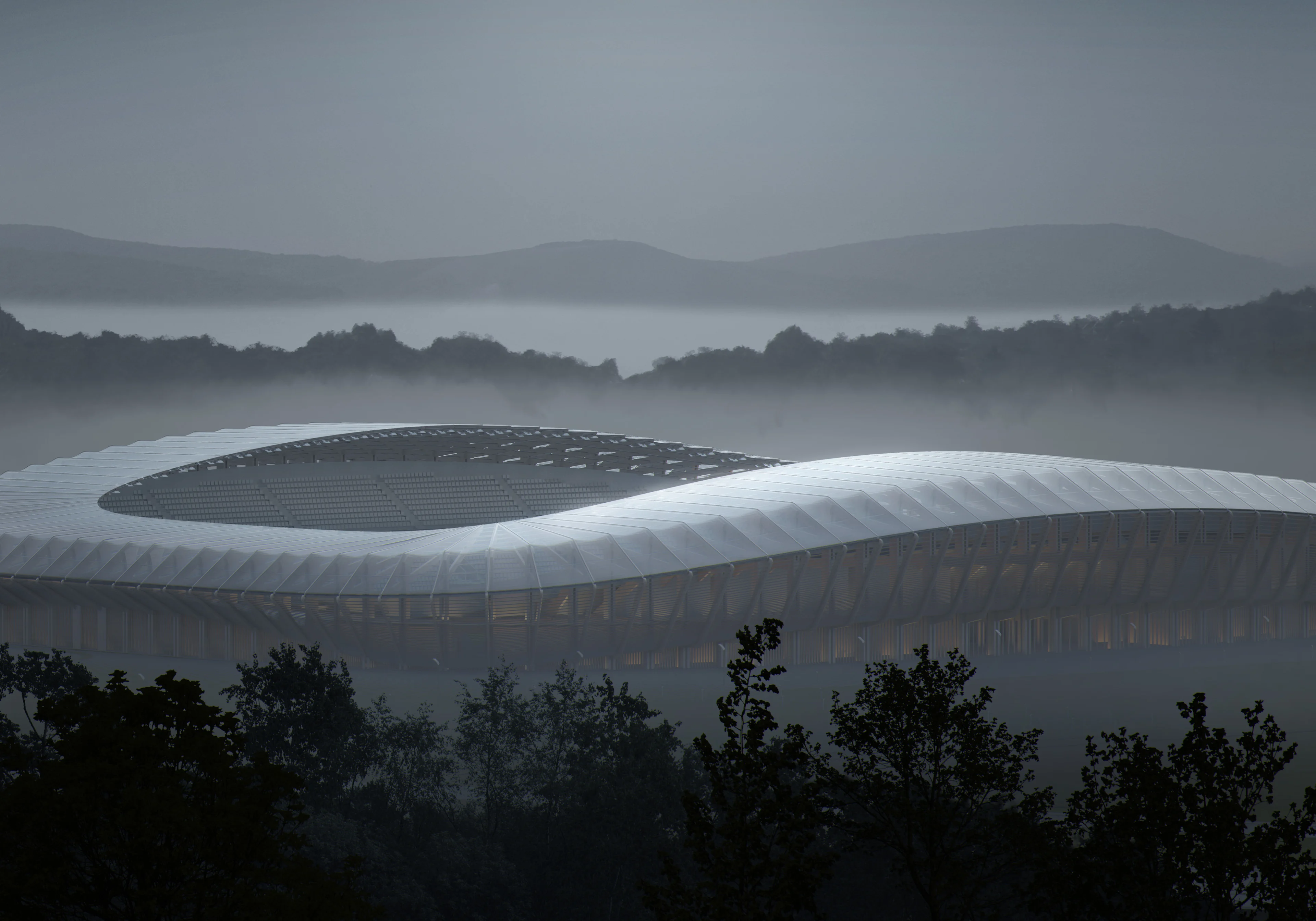
The lowest embodied carbon of any stadium in the world
Dale Vince, Ecotricity founder and Forest Green Rovers chairman, said: “The really standout thing about this stadium is that it’s going to be almost entirely made of wood – the first time that will have been done anywhere in the world.
“The importance of wood is not only that it’s naturally occurring, it has very low embodied carbon – about as low as it gets for a building material.
“And when you bear in mind that around three quarters of the lifetime carbon impact of any stadium comes from its building materials, you can see why that’s so important – and it’s why our new stadium will have the lowest embodied carbon of any stadium in the world.
“We’re thrilled with the concept and the amount of thought ZHA put into their design – their experience of stadia design and their ability to put environmental issues at the heart of what they do really stood out. They took a really challenging brief, ran with it, and have given us an innovative and original new stadium. We will be going further than anyone has done before – this really will be the greenest football stadium in the world.”
State-of-the-art sporting facilities and a green technology business park
The ZHA designed stadium will be the centrepiece of the £100million Eco Park development – Ecotricity’s 100 acre sports and green technology business park proposal, beside junction 13 of the M5 in Gloucestershire.
Half of Eco Park will consist of state-of-the-art sporting facilities, including the new stadium, grass and all-weather training pitches, publicly accessible multi-disciplinary facilities, and a sports science hub.
The other half will comprise a green technology business park with sustainably built commercial offices and light industrial units, giving Eco Park the potential to create up to 4,000 jobs, including room for the continued expansion of green energy company Ecotricity, who have submitted the overall proposal and who are already the biggest employer in Stroud with 700 people located across four sites.
The proposal will also see the development of a nature reserve on the site, a potential public transport hub, including a Stroud Park and Ride, as well as help with the restoration of the Stroudwater canal.
Sustainability
Sustainably sourced timber
Embodying low carbon construction methods and operational processes, Forest Green Rover Eco Park Stadium will be the first all timber football stadium with almost every element made of sustainably sourced timber. Read more about ZHA's sustanability approach.
Sports
Discover more of our sports projects
From the world’s first timber-built football stadium to an international sports centre providing multi-sport facilitites to athletes of all ages, discover our latest sports projects.
Photograph by Virgile Simon Bertrand
GO PARK Sai Sha
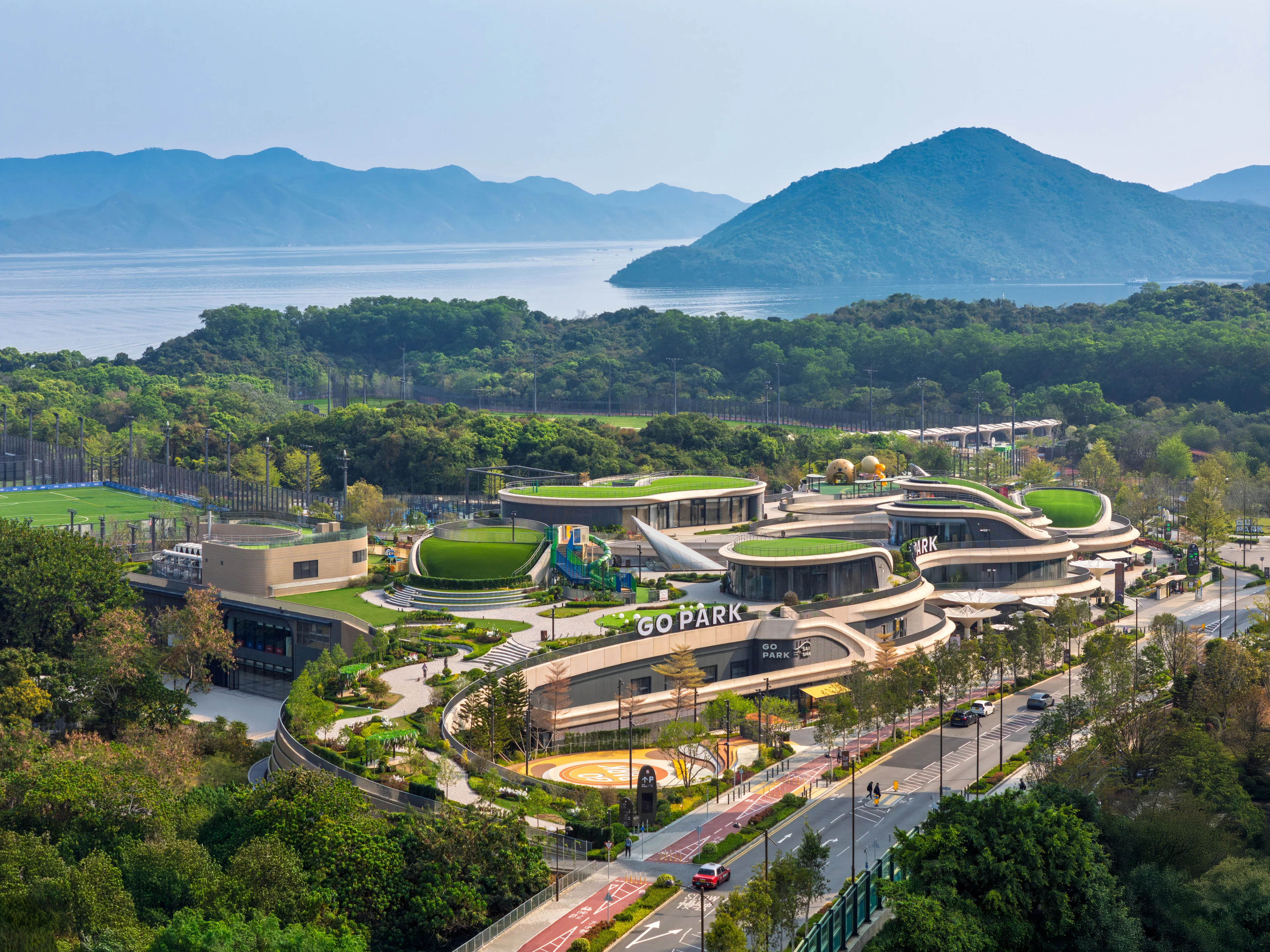
ZHA’s first sports and commercial project in Asia, GO PARK Sai Sha is nestled between the mountains of Hong Kong’s Ma On Shan Country Park and the sheltered waters of Three Fathoms Cove which leads out to the South China Sea.
Photograph by SeilaoJiong 张灏
Sports Centre
Greater Bay Area Sports Centre
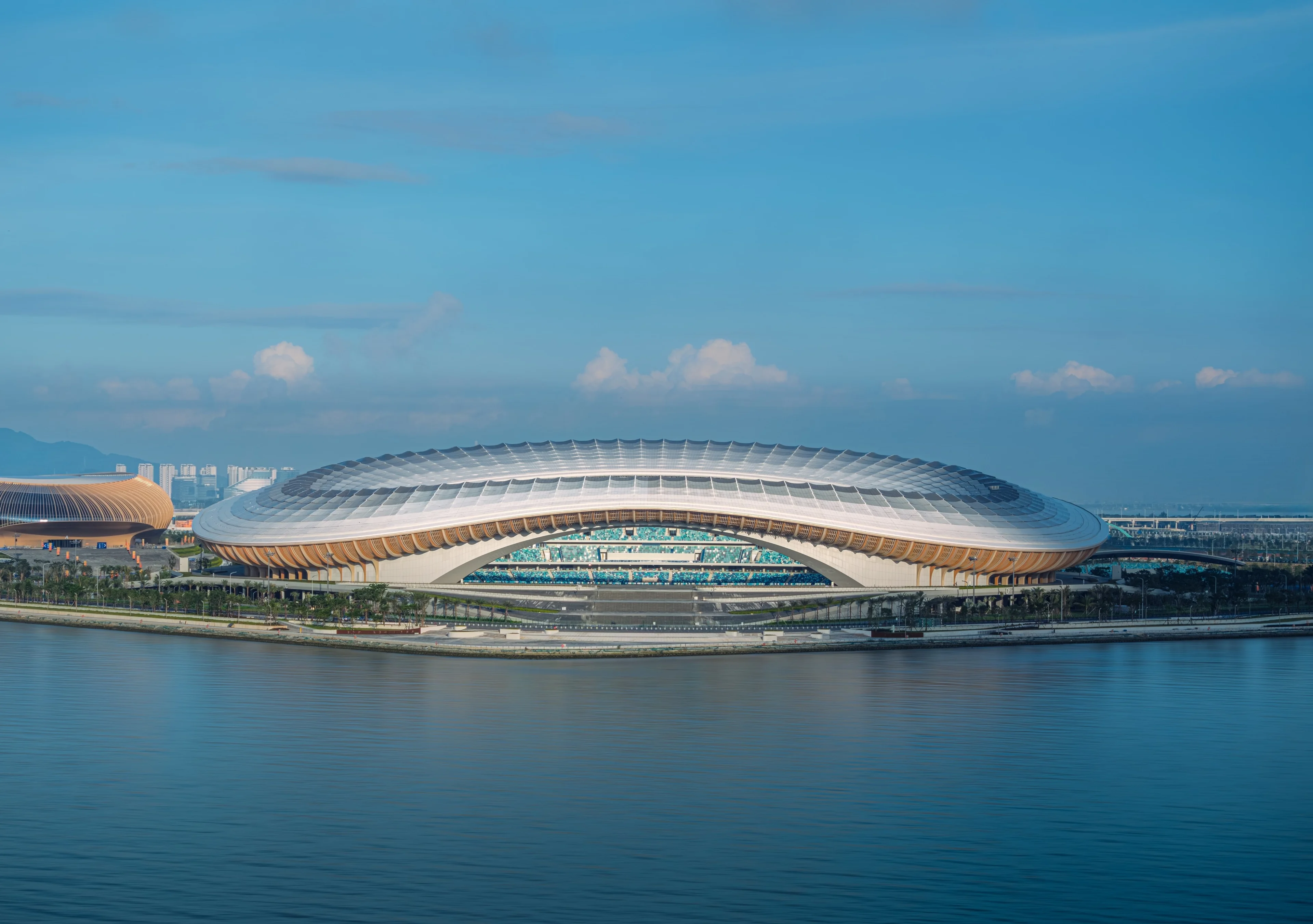
Situated at the southern end of Guangzhou’s Nansha District on the western bank of the historic Pearl River, the Greater Bay Area Sports Centre will serve as an anchor to the new civic, business and residential district at the heart of the Greater Bay Area.
Photograph by Hufton + Crow
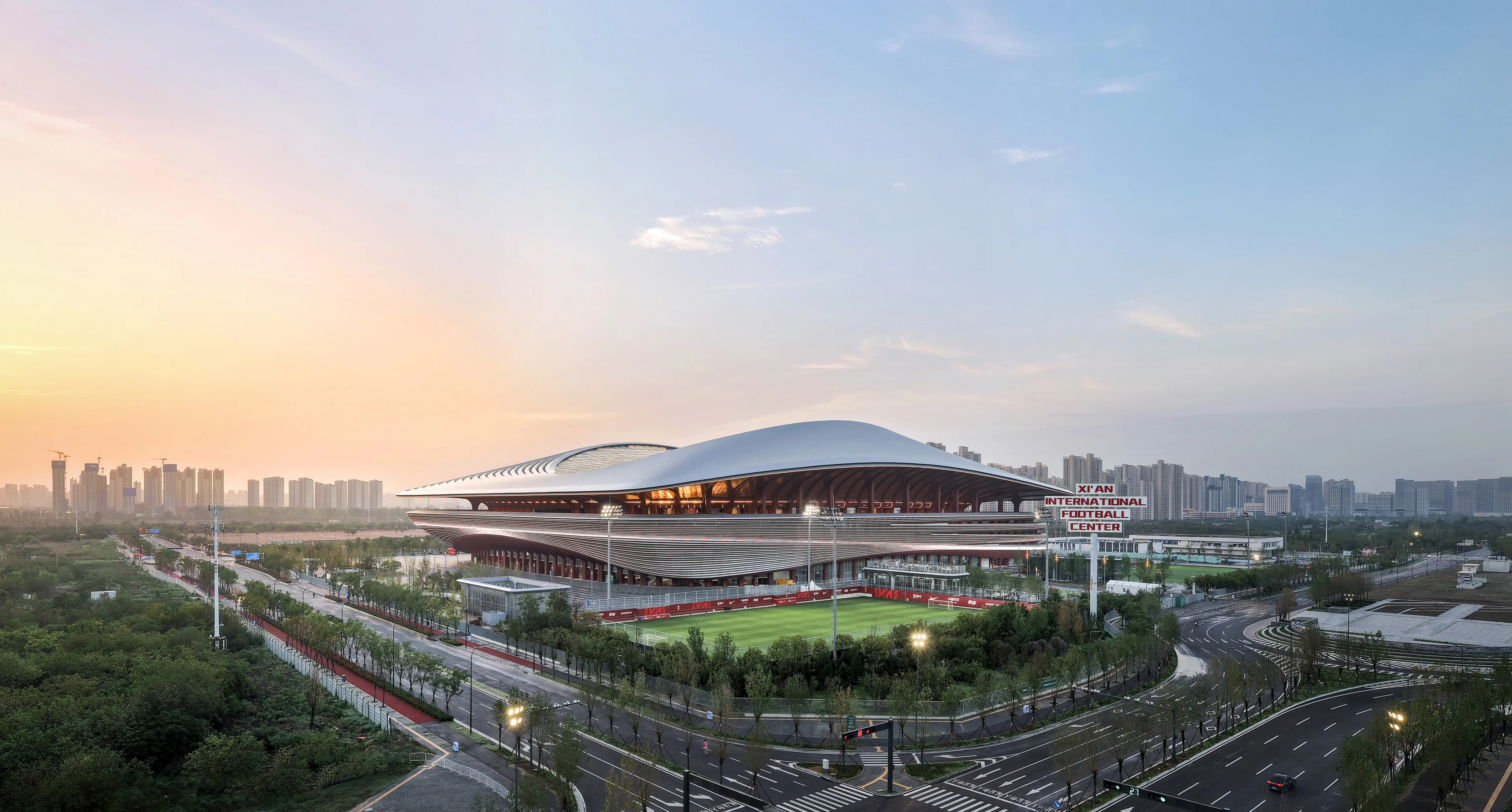
Xi'an International Football Centre
Xi’an International Football Centre’s 60,000-seat stadium and training grounds are integral to the ongoing development of football in China. Initiated by the Chinese Football Association and China’s national sports development organisations, the new football centre provides facilities of the highest standards to nurture the sport across all levels.
Render by Negativ
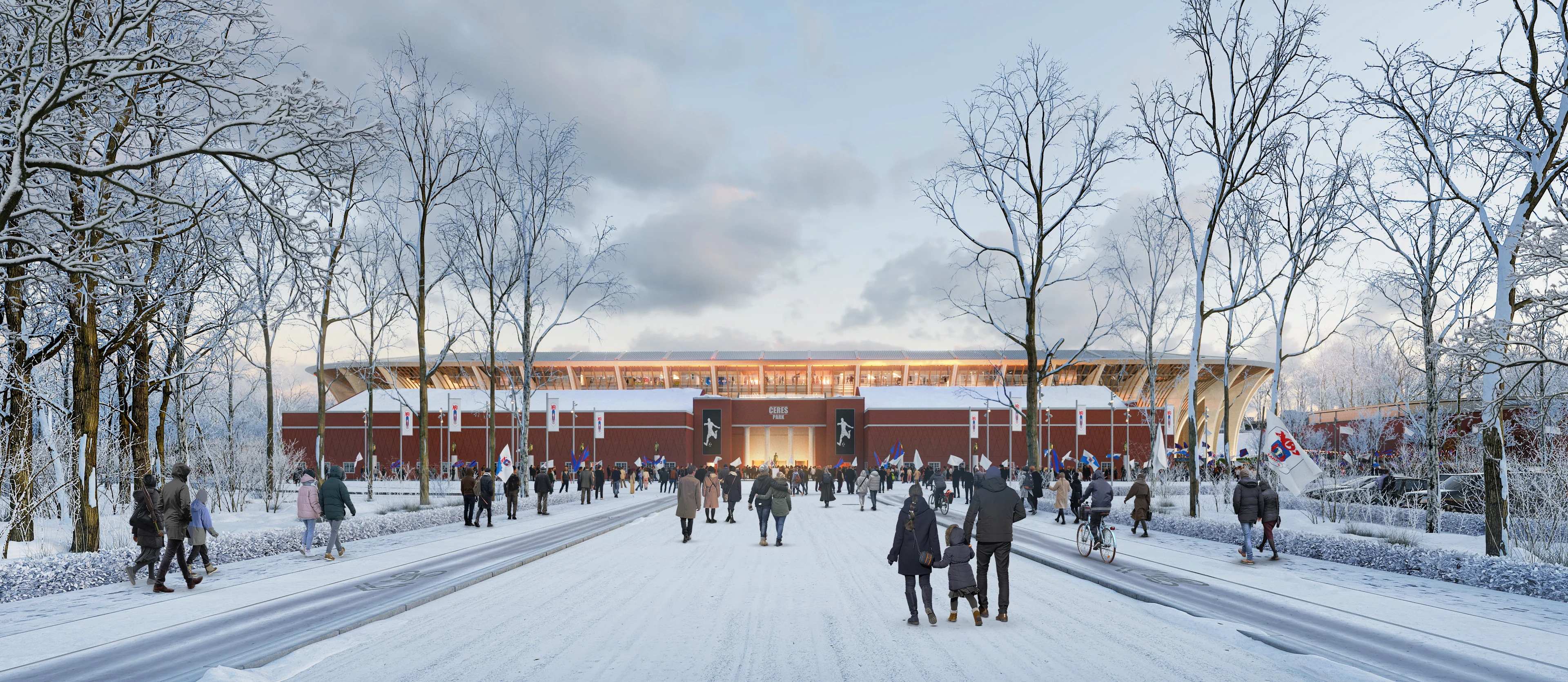
Aarhus Stadium
The team comprising ZHA working with architecture, engineering consultancy Sweco and landscape architects Tredje Natur has won the competition to build the new Aarhus football stadium in Denmark.
Render by Proloog
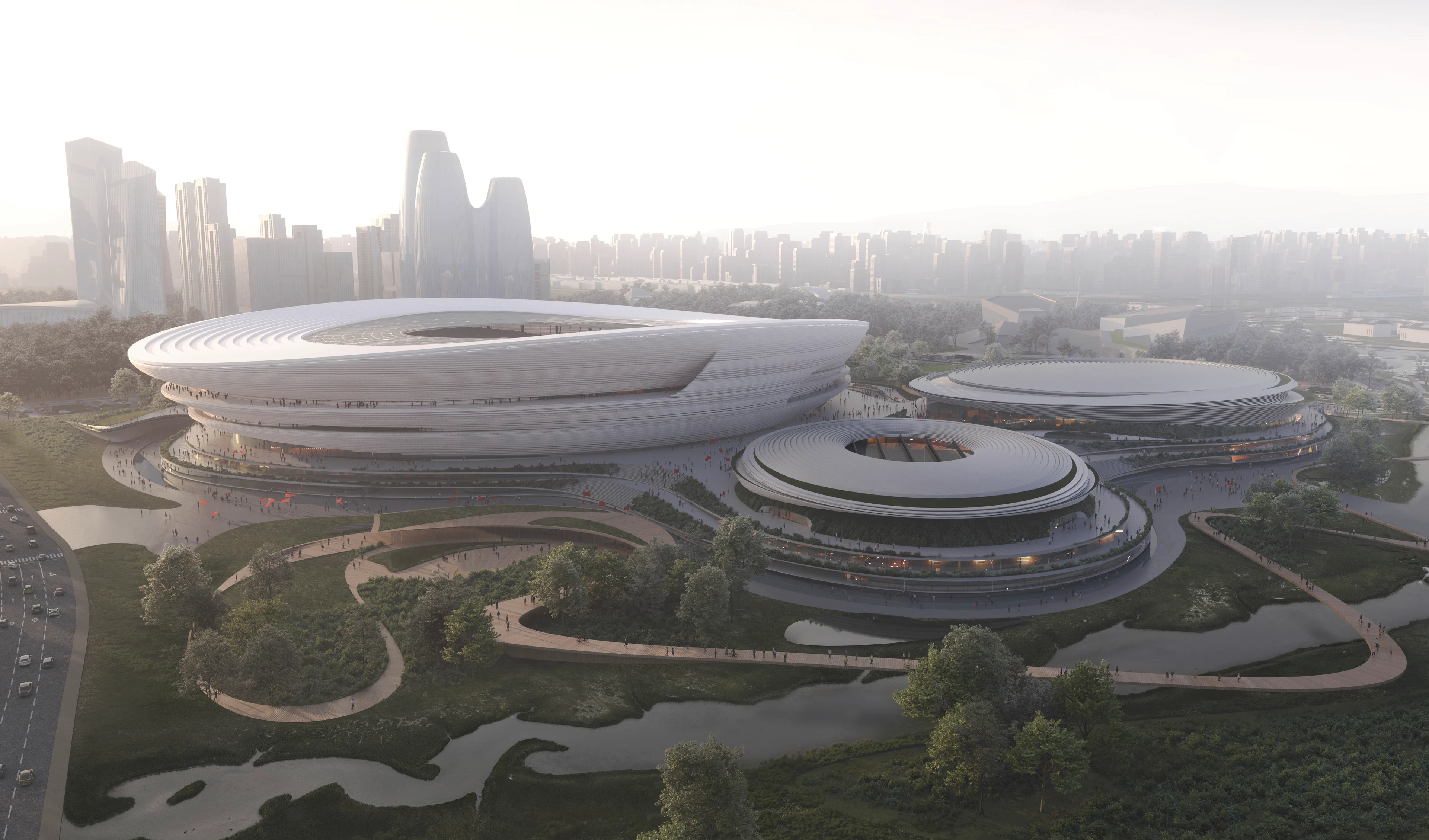
Hangzhou International Sports Centre
Located within Hangzhou’s Future Science and Technology Cultural District, the sports centre establishes a new riverfront park and public plazas with direct access to Lines 3 and 5 of the city’s expanding metro network.
Photograph by Hufton + Crow
Legacy Mode : December 2013
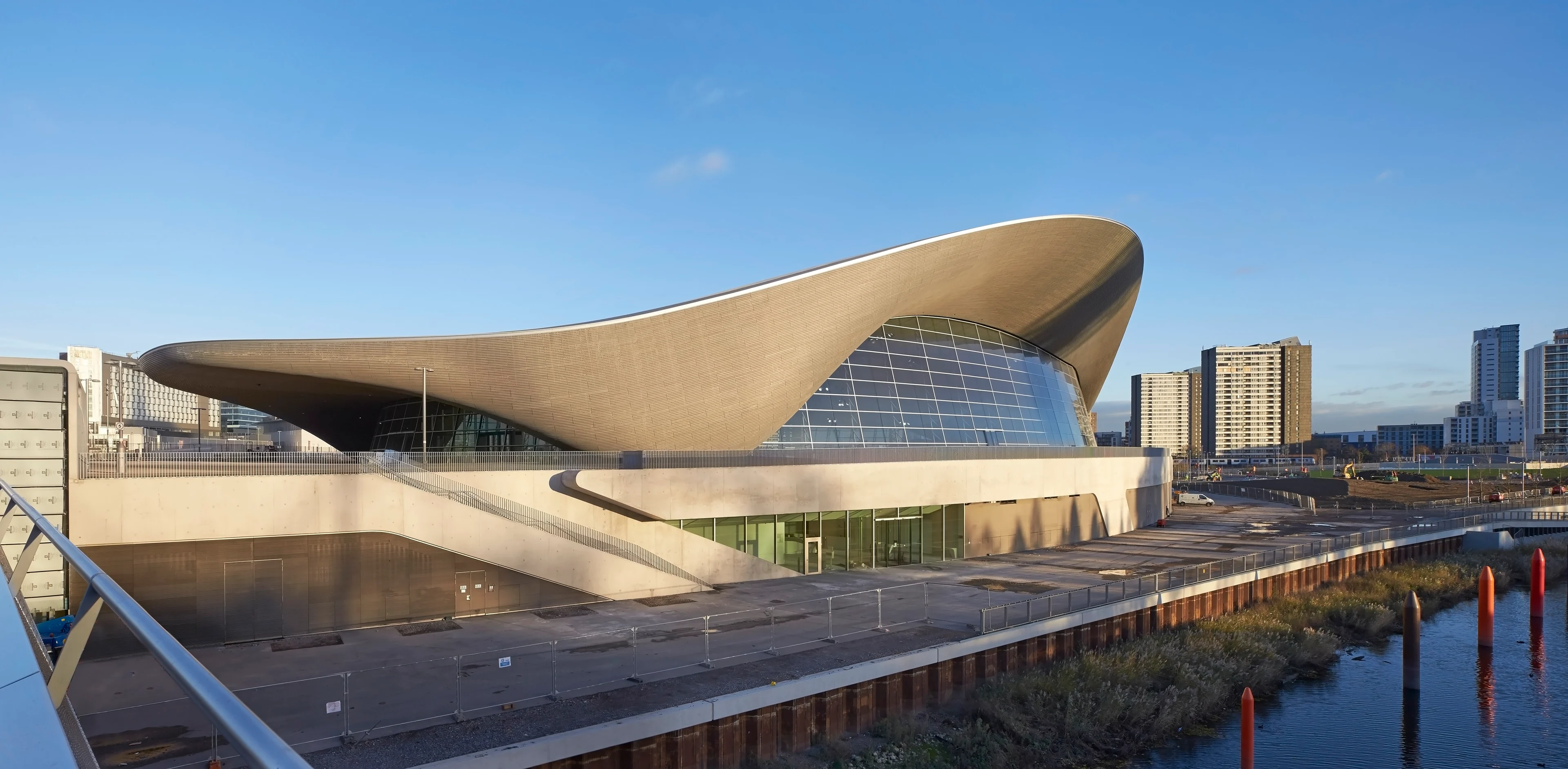
London Aquatics Centre
A concept inspired by the fluid geometry of water in motion, creating spaces and a surrounding environment in sympathy with the river landscape of the Olympic Park. An undulating roof sweeps up from the ground as a wave, enclosing the pools of the Centre with its unifying gesture.
Photograph by Roland Halbe
Bergisel Ski Jump
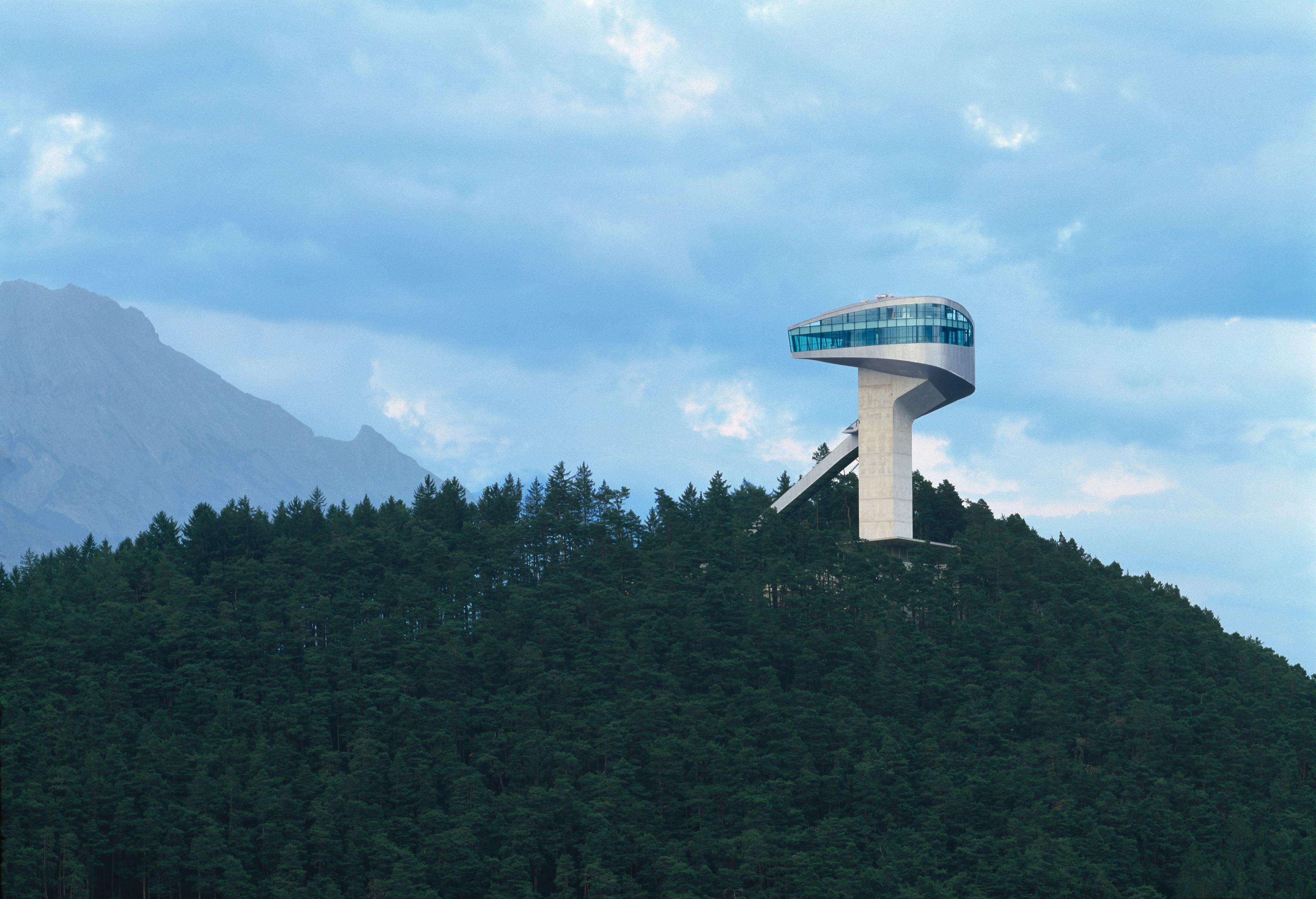
ZHA's ski jump on Bergisel mountains contains a ski ramp and sports facilities, as well as public spaces, including a tower-top café and viewing terrace. Rising to a height of almost 50m the structure’s distinctive form and silhouette extends the topography of the ski slopes below into the alpine sky above.
Al Janoub Stadium
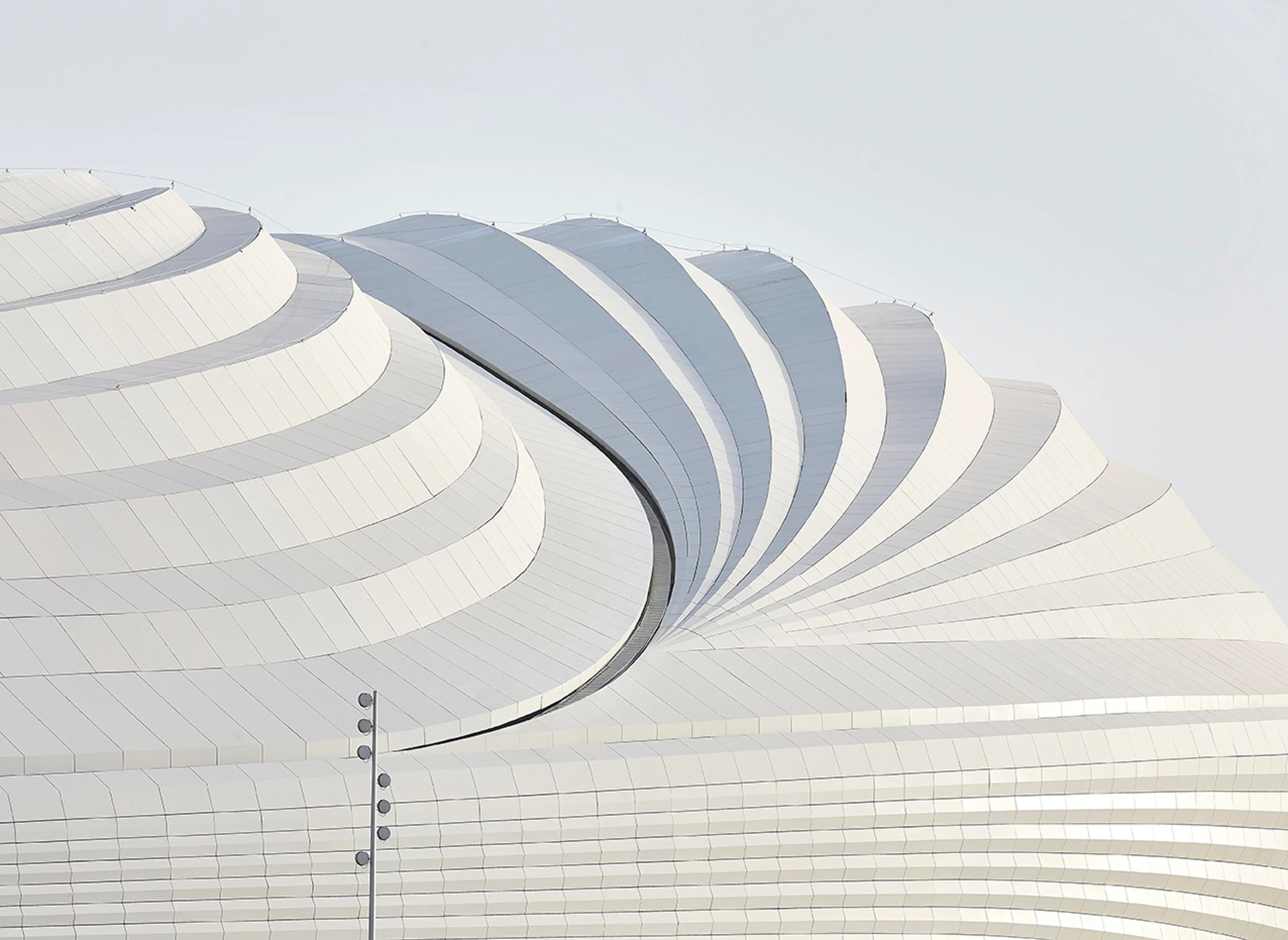
Inaugurated on 16 May 2019 by hosting the Amir Cup Final of the Qatar Stars national football league, Al Janoub Stadium was the first new stadium commissioned for the 2022 FIFA World Cup Qatar.
01
02
03
04
05
06
07
08