
Al Wakrah, Qatar
2014 - 2019
2022 FIFA World Cup Qatar™
Al Janoub Stadium
Photograph by Hufton + Crow
Photograph by Hufton + Crow
Photograph by Hufton + Crow
Photograph by Hufton + Crow
01
02
03
04
Flexible space
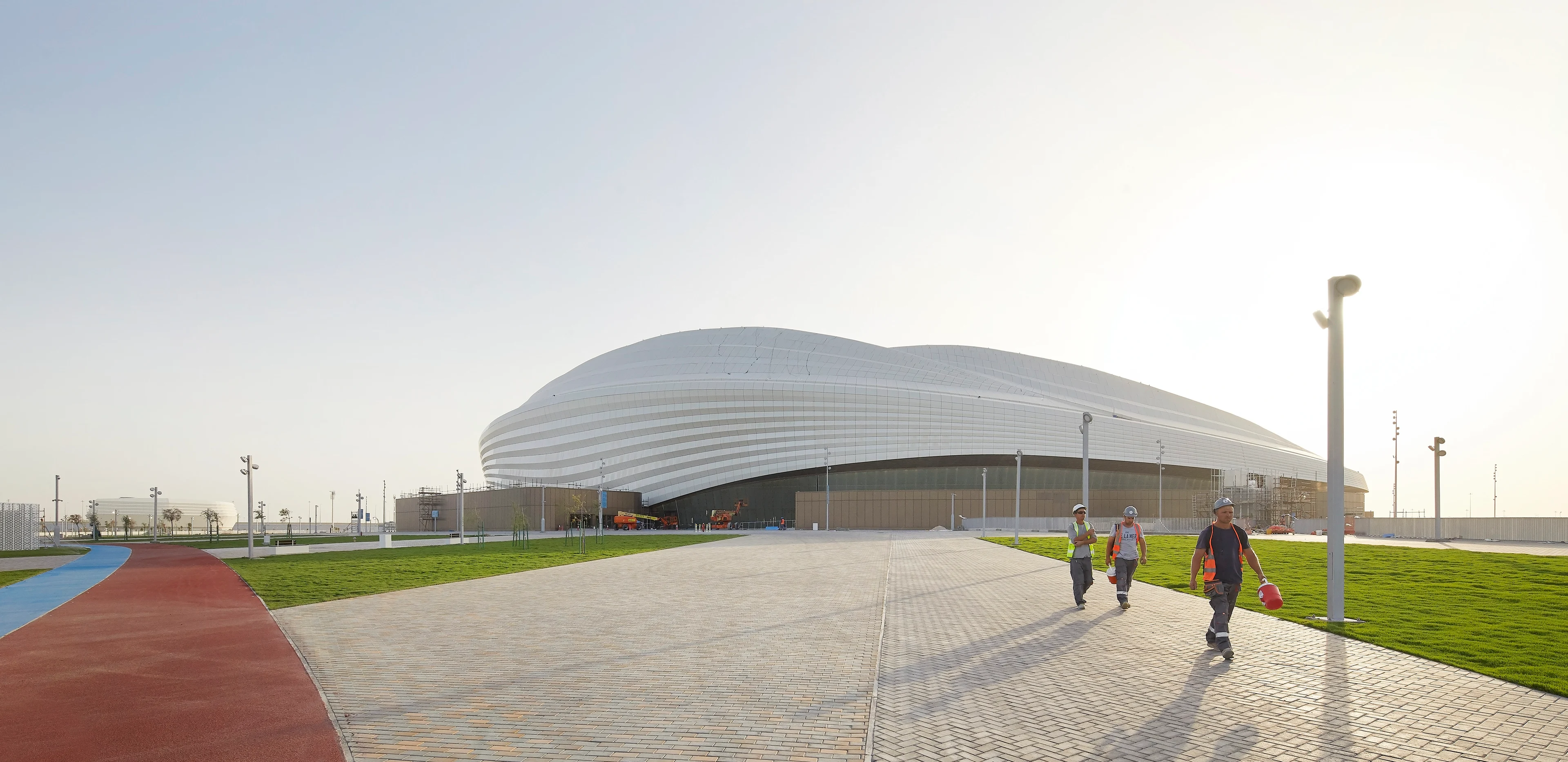
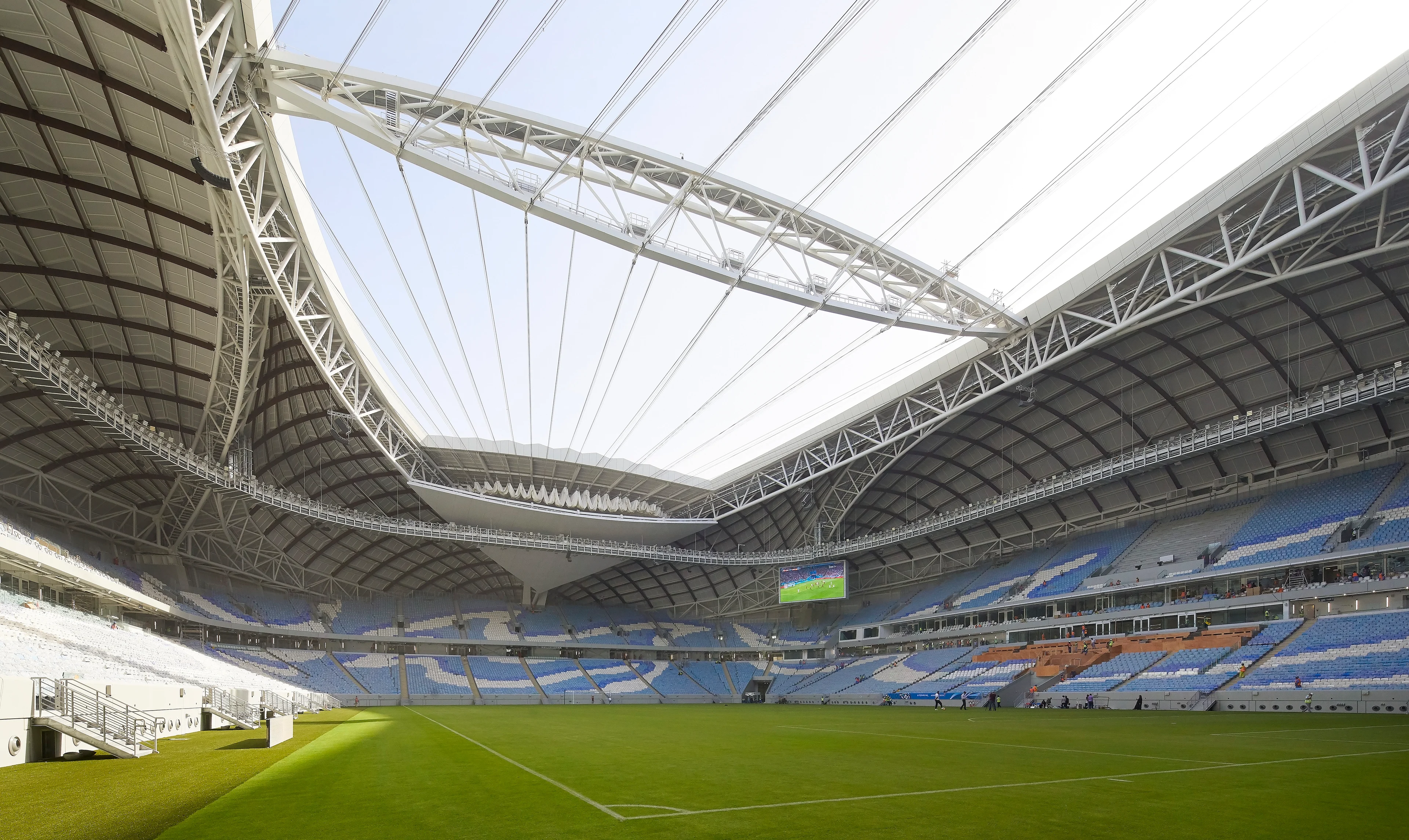
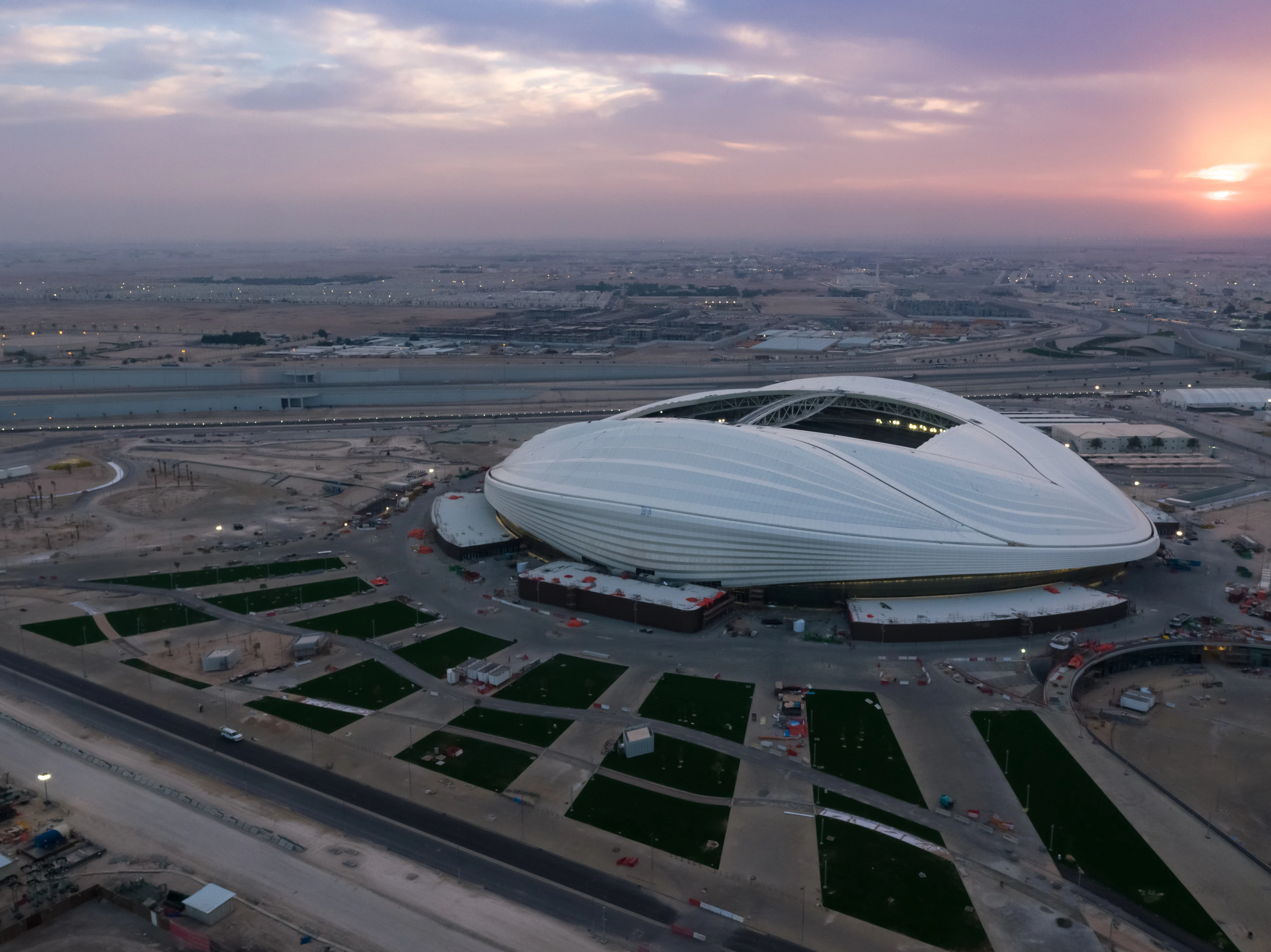
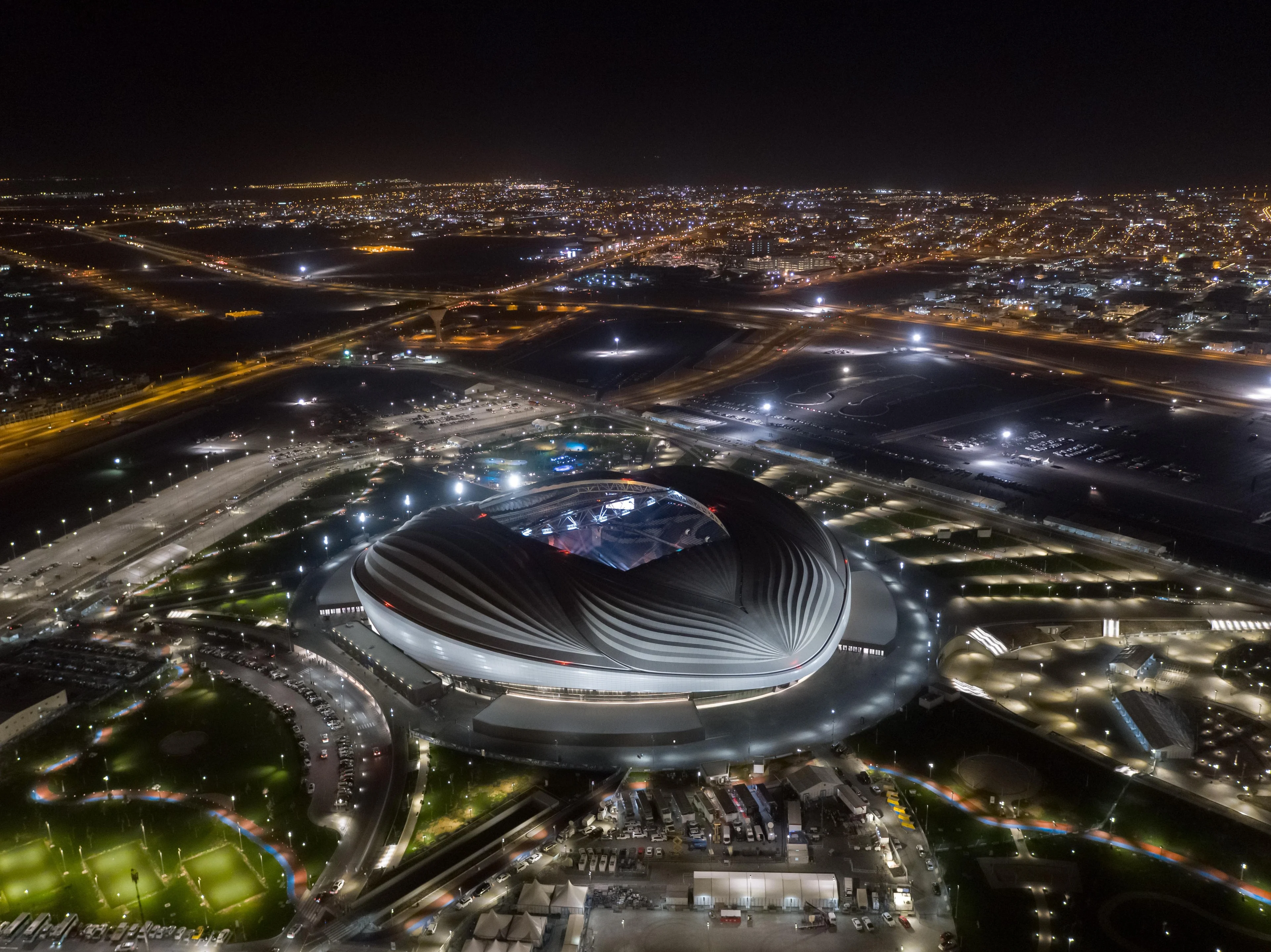
As one of the eight venues for the Qatar World Cup, Al Janoub Stadium hosted group and quarter-final matches of the 2022 FIFA World Cup Qatar. The stadium is located in Al Wakrah, a coastal city 23km south of Doha connected to the capital via the Red Line of the new Doha Metro system.
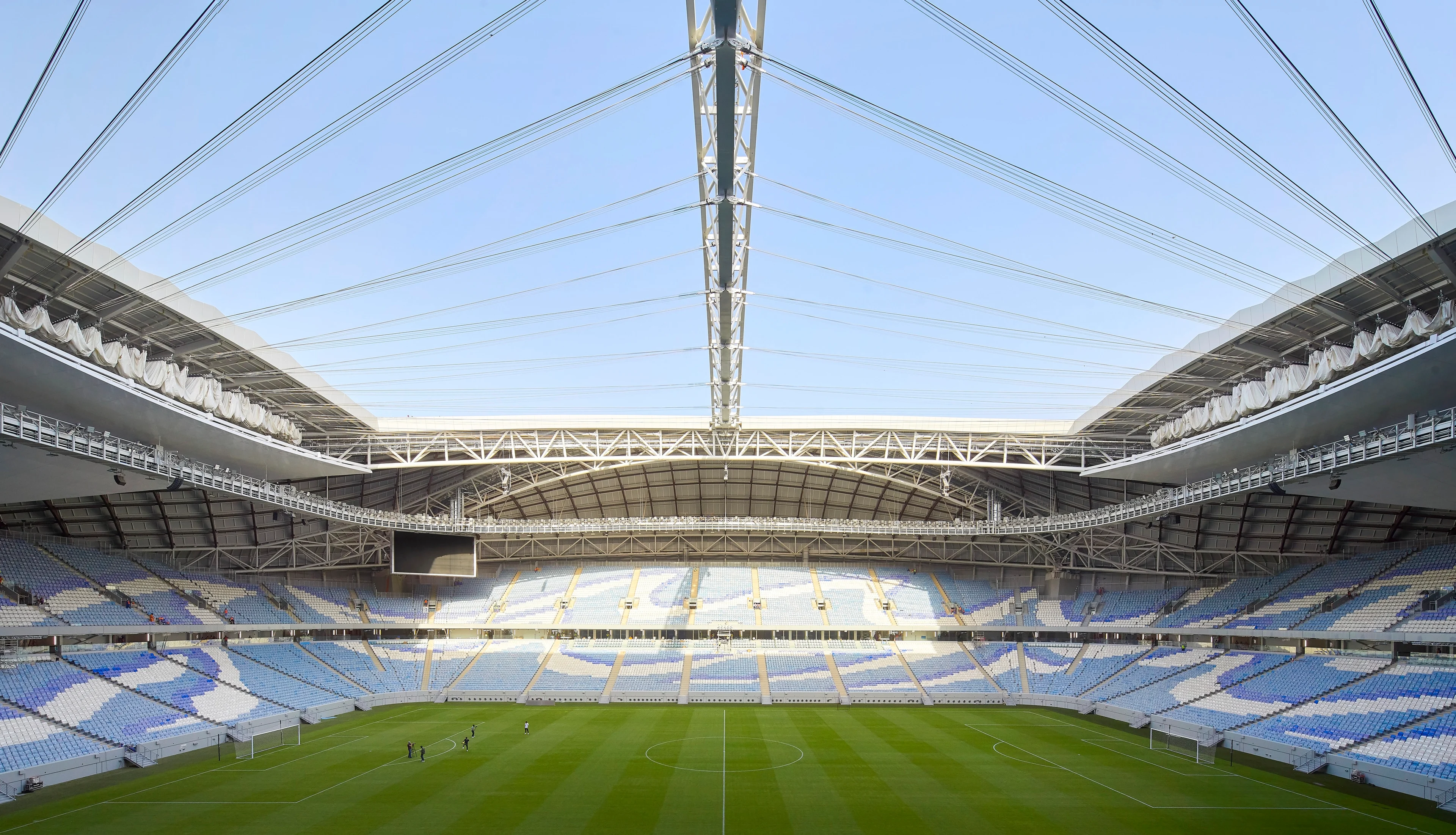
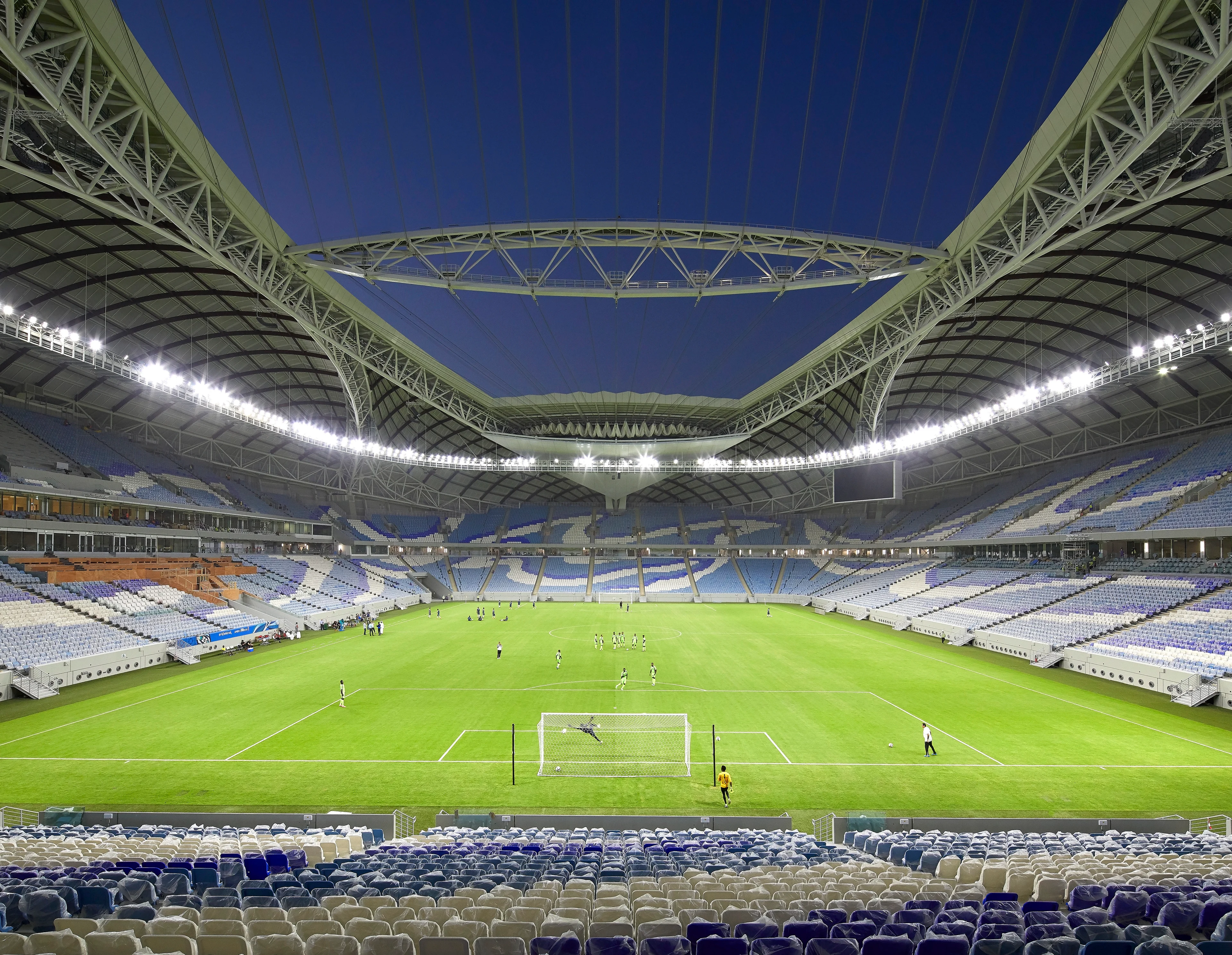
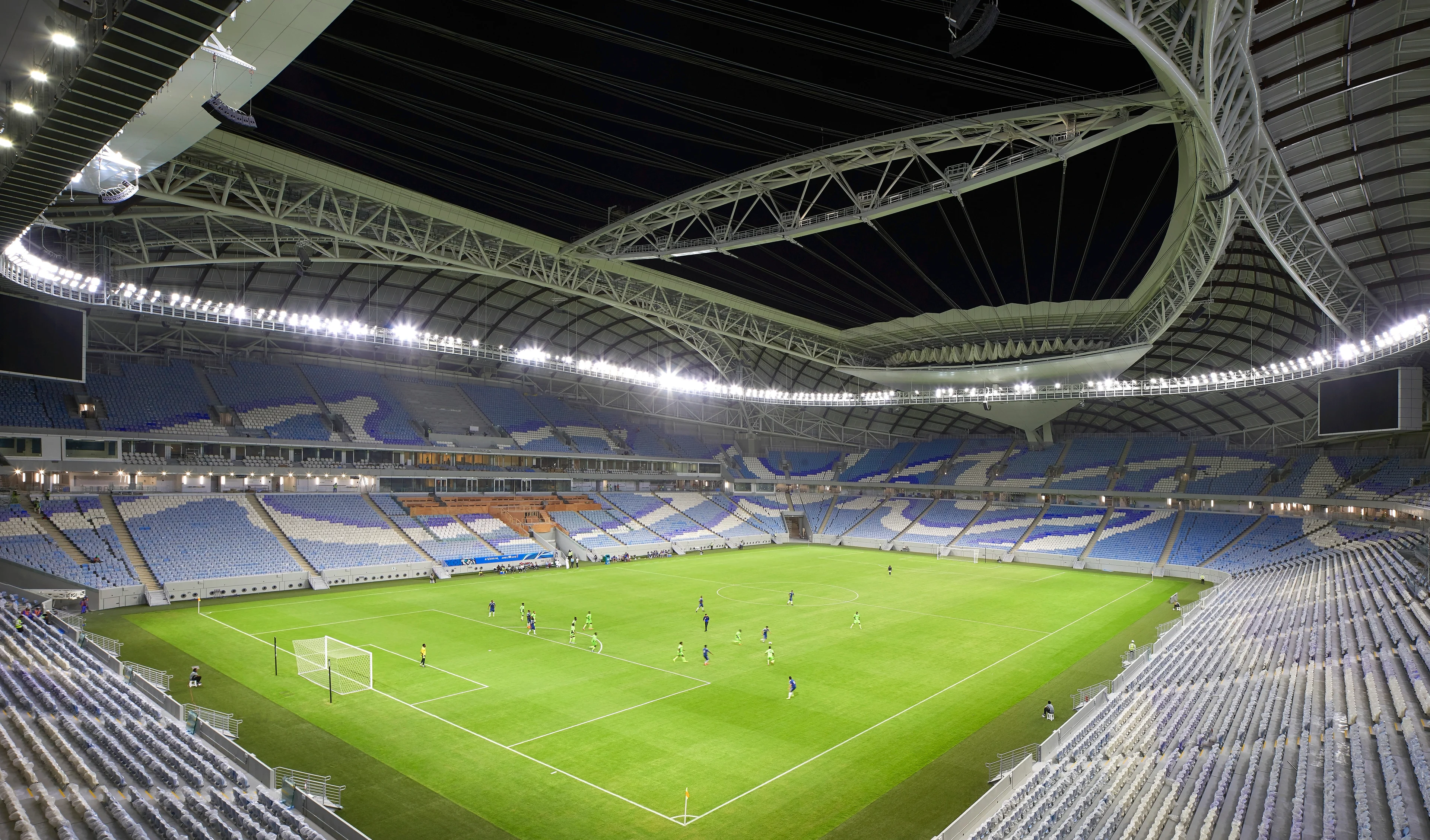
The client’s brief called for a 40,000-seat football stadium for the 2022 World Cup which could be reduced to a 20,000-seat capacity in its legacy mode following the tournament. 20,000 seats is the optimum capacity for legacy use as the home ground to Al Wakrah Sport Club professional football team of the Qatar Stars national league. These temporary seats have been designed to be demountable and transported to a country in need of sporting infrastructure for post-tournament usage. Further temporary accommodation such as concessions are required for the additional capacity of FIFA World Cup tournament mode. This has been built as a temporary overlay outside the permanent footprint and enclosure of the stadium in its legacy mode.
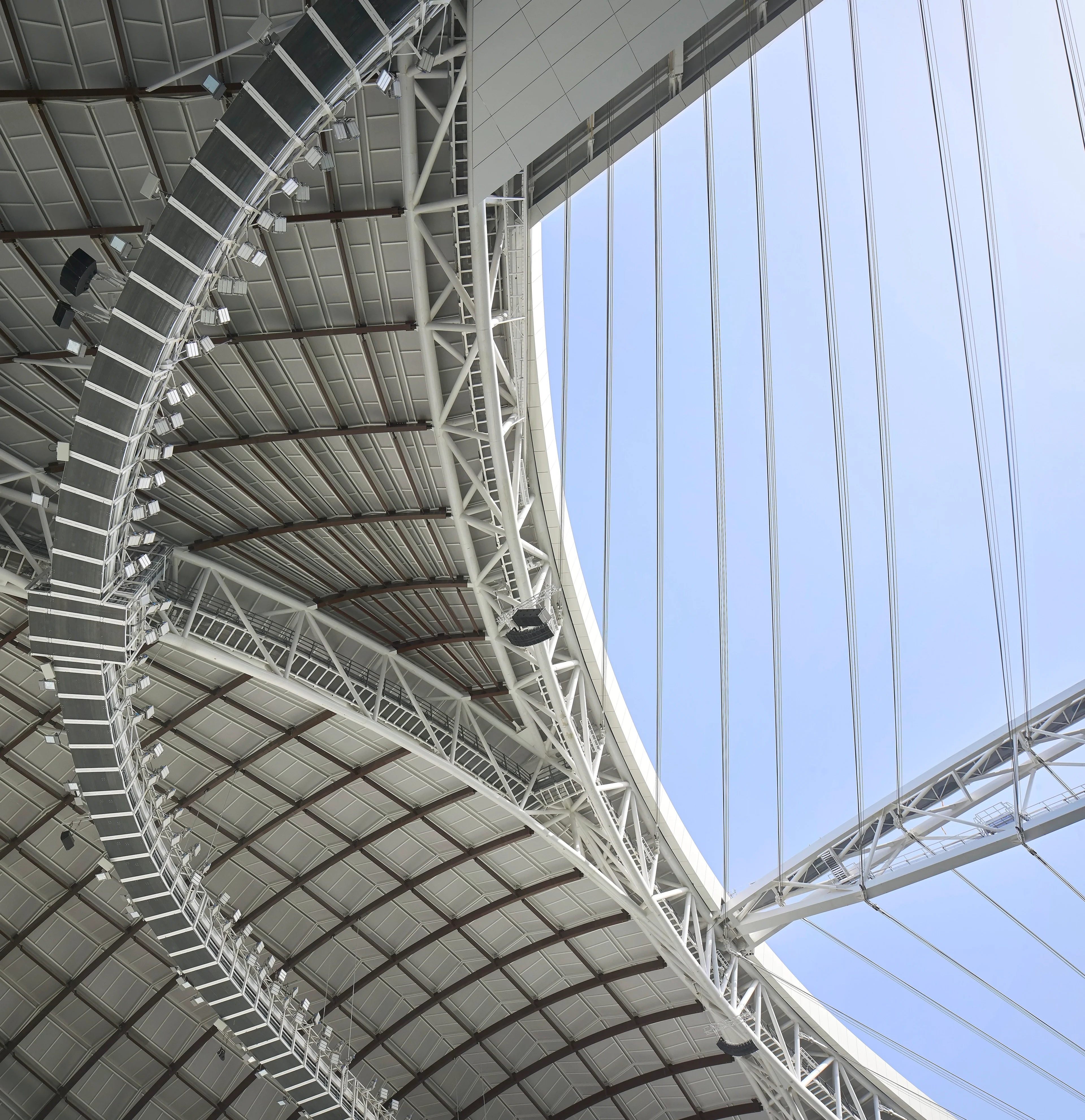
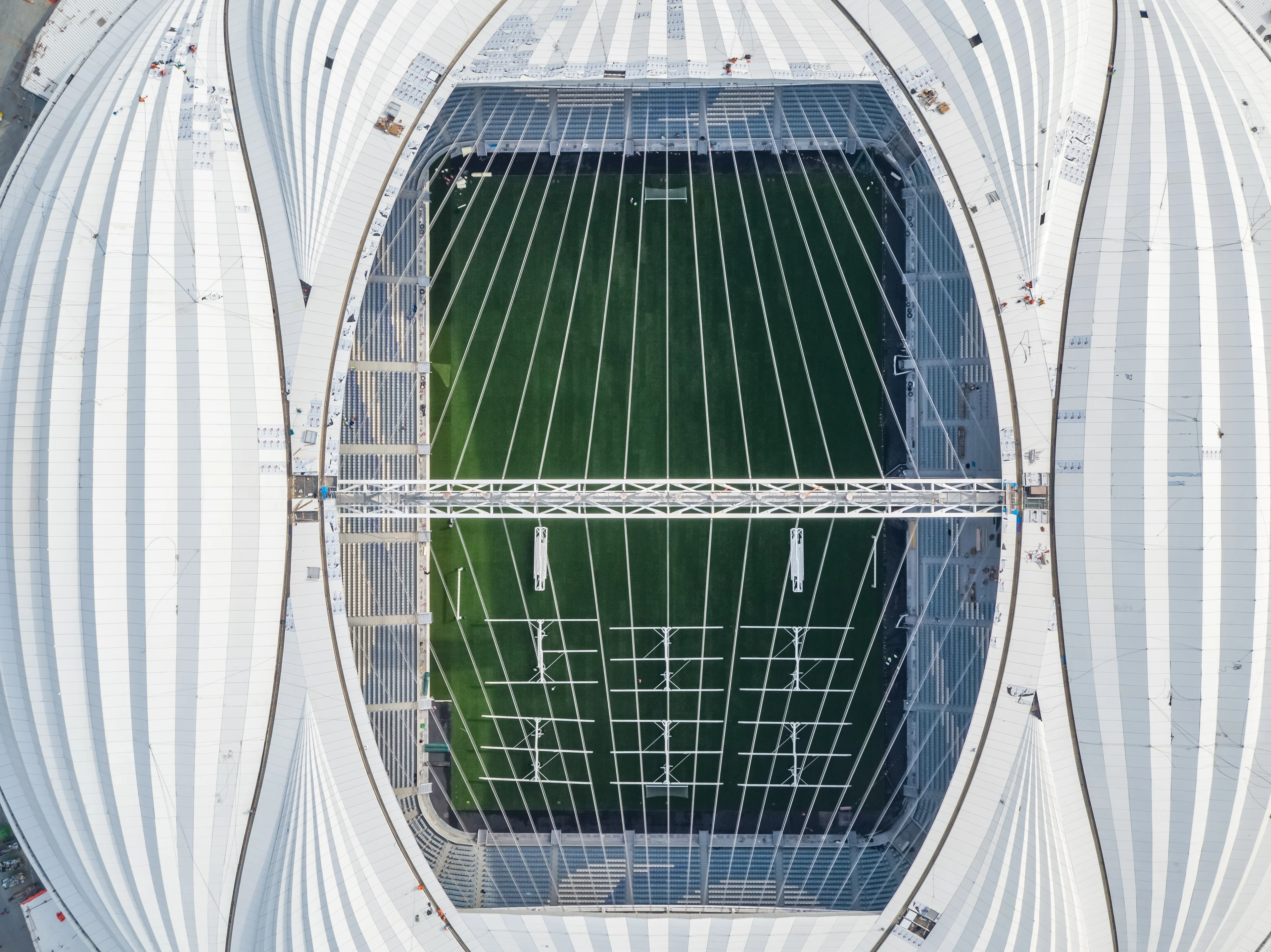
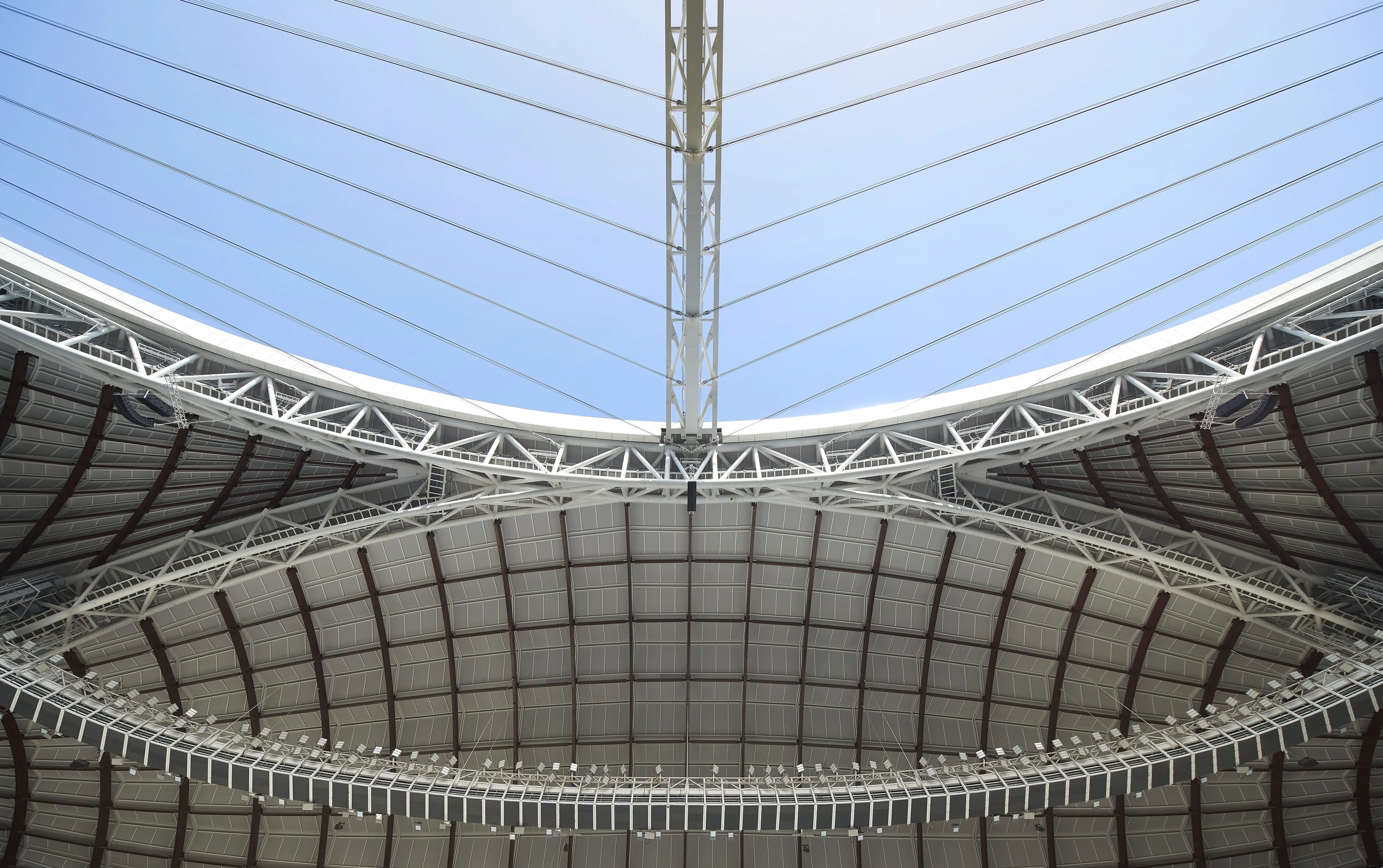
The stadium has an operable roof designed by Schlaich Bergermann Partner and a cooling system powered by solar harvesting that ensures the stadium can be used during Qatar’s summer months. The operable roof has been designed in sympathy with the cladding using pleated fabric and cables. When its deployed, the roof operates like a sail to cover the oculus above the field of play and create a sheltered environment for football during the summer. Passive design principles along with computer modelling and wind tunnel tests were used to maximise the effectiveness of the stadium enclosure to ensure player and spectator comfort.
Photograph by Hufton + Crow
Abstraction of cultural references
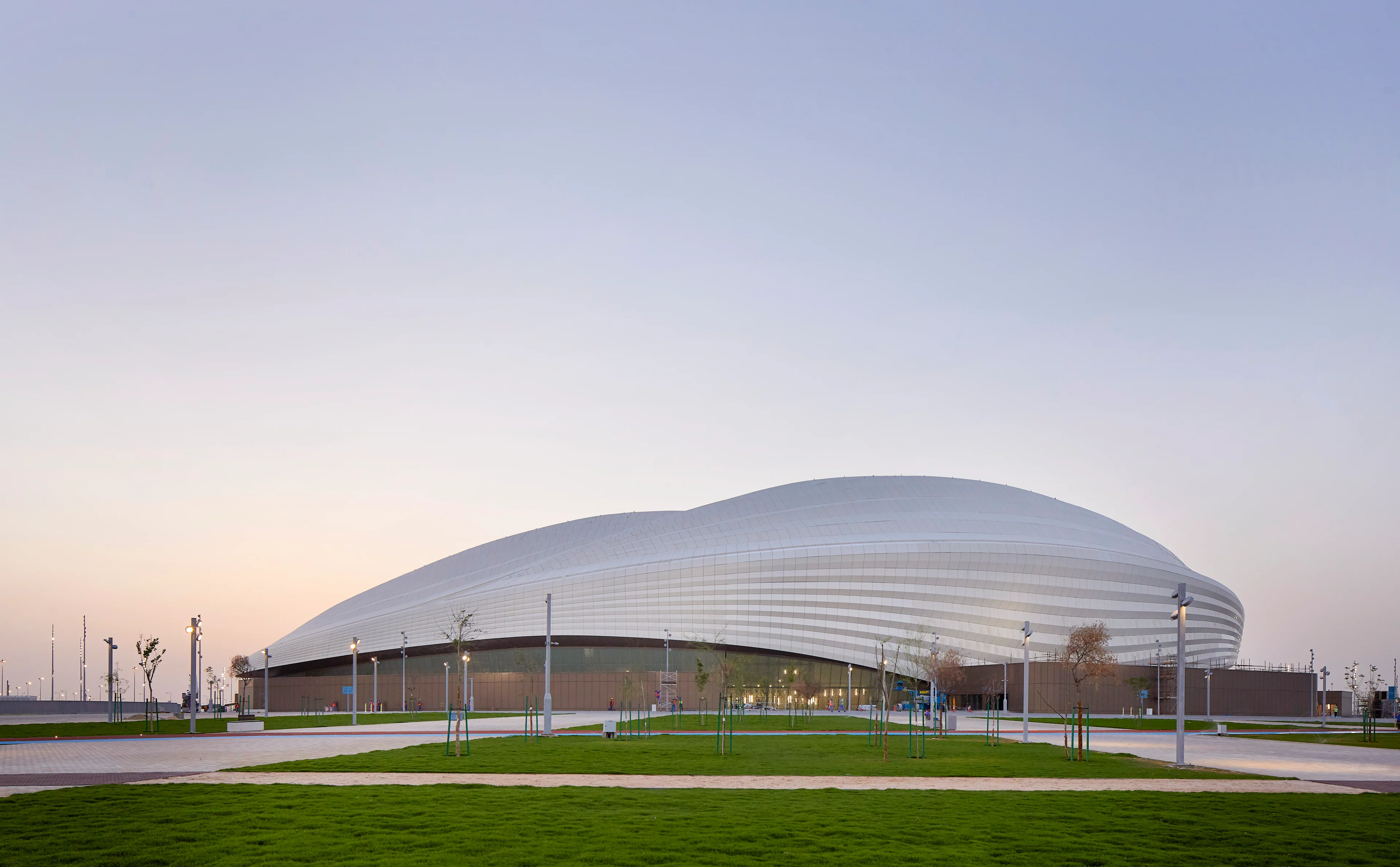
Given the stadium’s context within the coastal city of Al Wakrah, the client asked that its design reflect the maritime heritage of its location; in particular, the traditional boat of the region, the dhow. ZHA responded with a design that incorporates these cultural references in an abstracted manner and combines them with practical responses to the climate, context and the functional requirements of a football stadium. The abstraction transforms the literal into something new and appropriate for a football stadium; allowing multiple interpretations of these cultural references both in terms of how they are applied and how they are read.
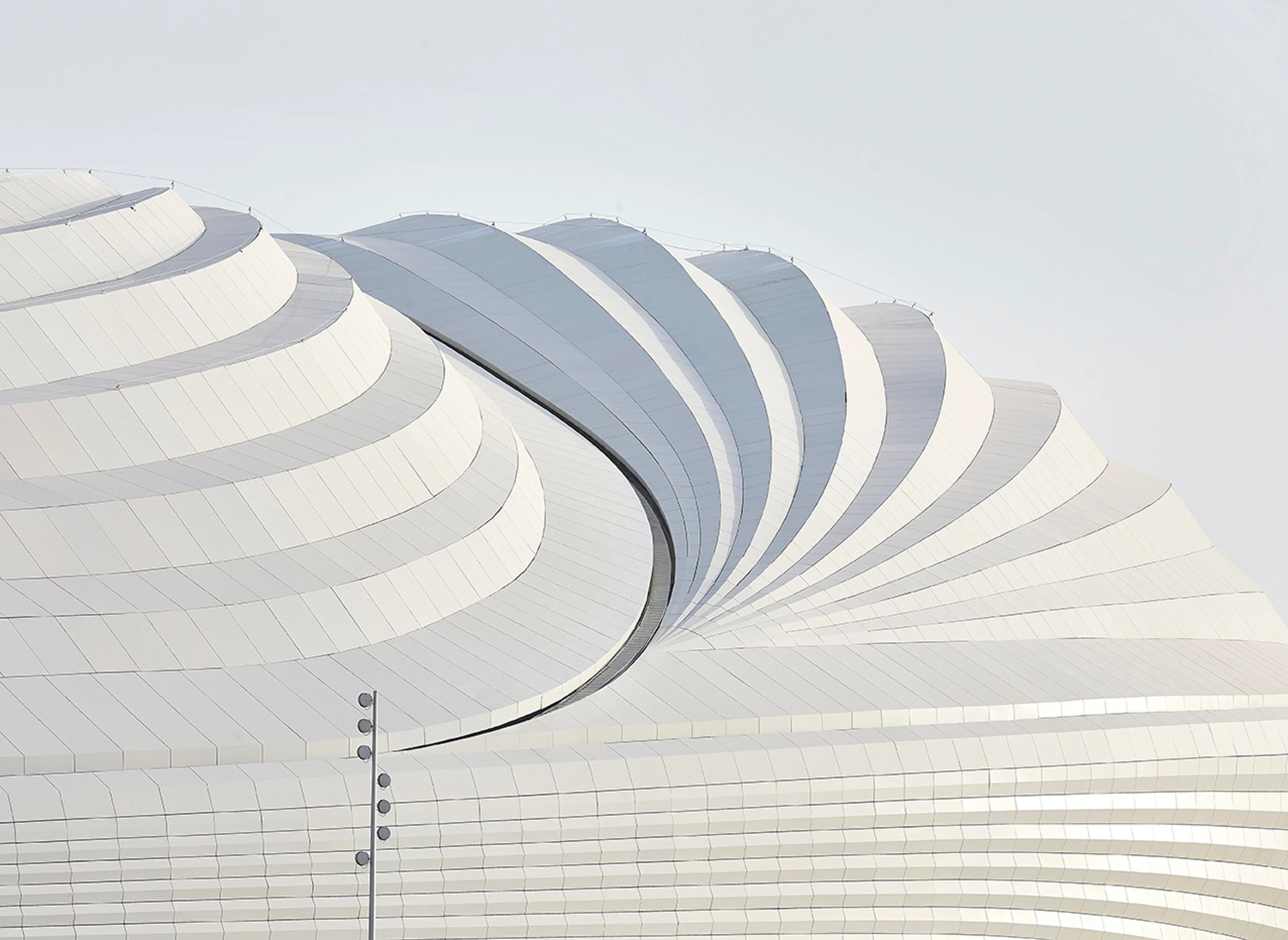
The stadium’s roof design is an abstraction of the hulls of dhows turned upside-down and huddled together to provide shade and shelter. This is expressed in the stadium’s envelope geometry, details and selected materiality, including the roof’s beam structure that echoes the interior structure of a dhow’s hull.
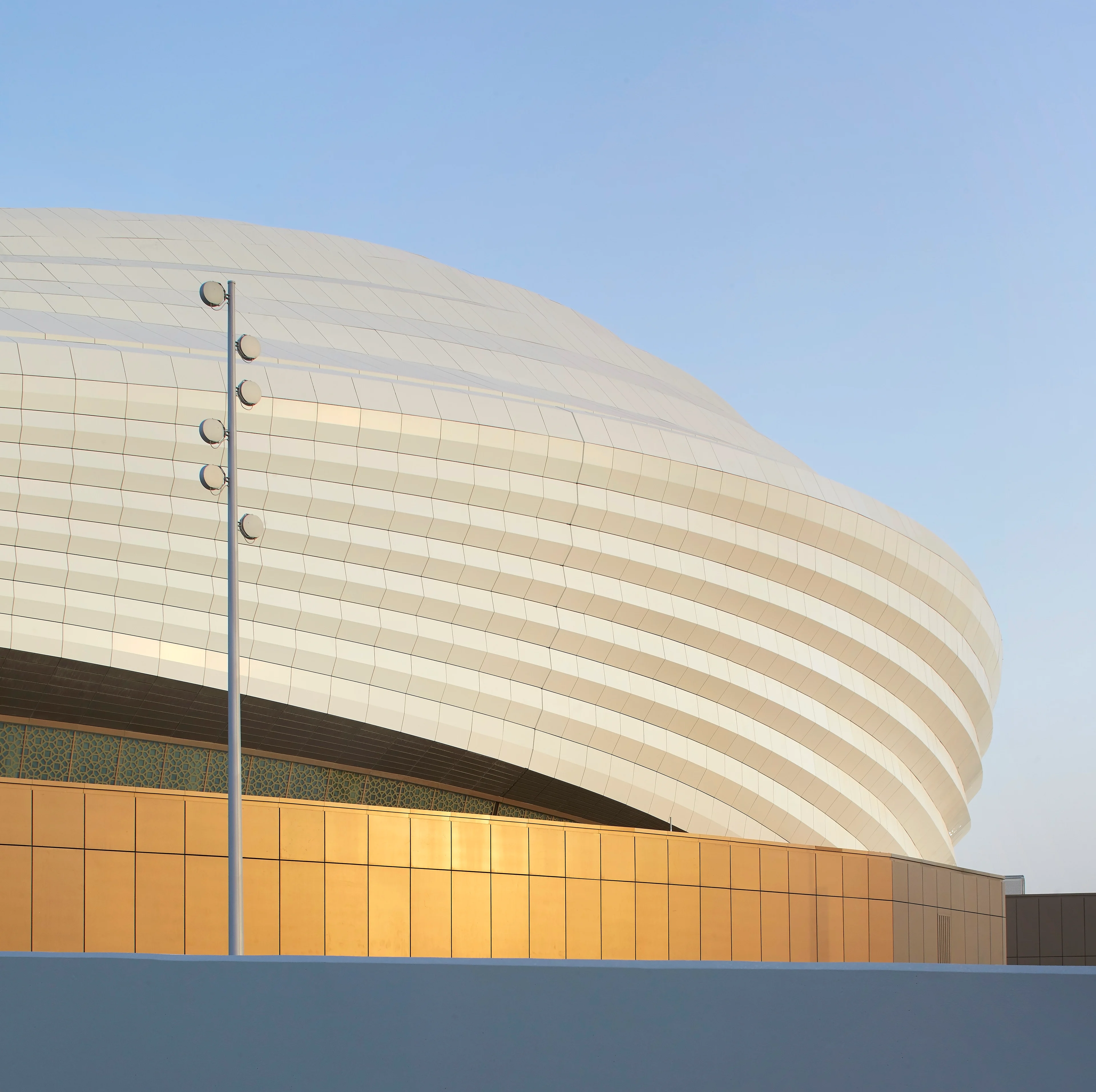
The facades of the stadium are slanted outwards, tapered in elevation and reminiscent of dhow’s sail. The image of the dhow is further emphasized through the large overhang of the stadium’s eaves that incorporates strips of metal cladding echoing the timber structures used in a dhow.
Photograph by Hufton + Crow
Courtesy of Supreme Committee for Delivery and Legacy of the 2022 FIFA World Cup Qatar™
Photograph by Hufton + Crow
Photograph by Hufton + Crow
01
02
03
04
An homage to the traditions and artistry of Islamic craftsmanship
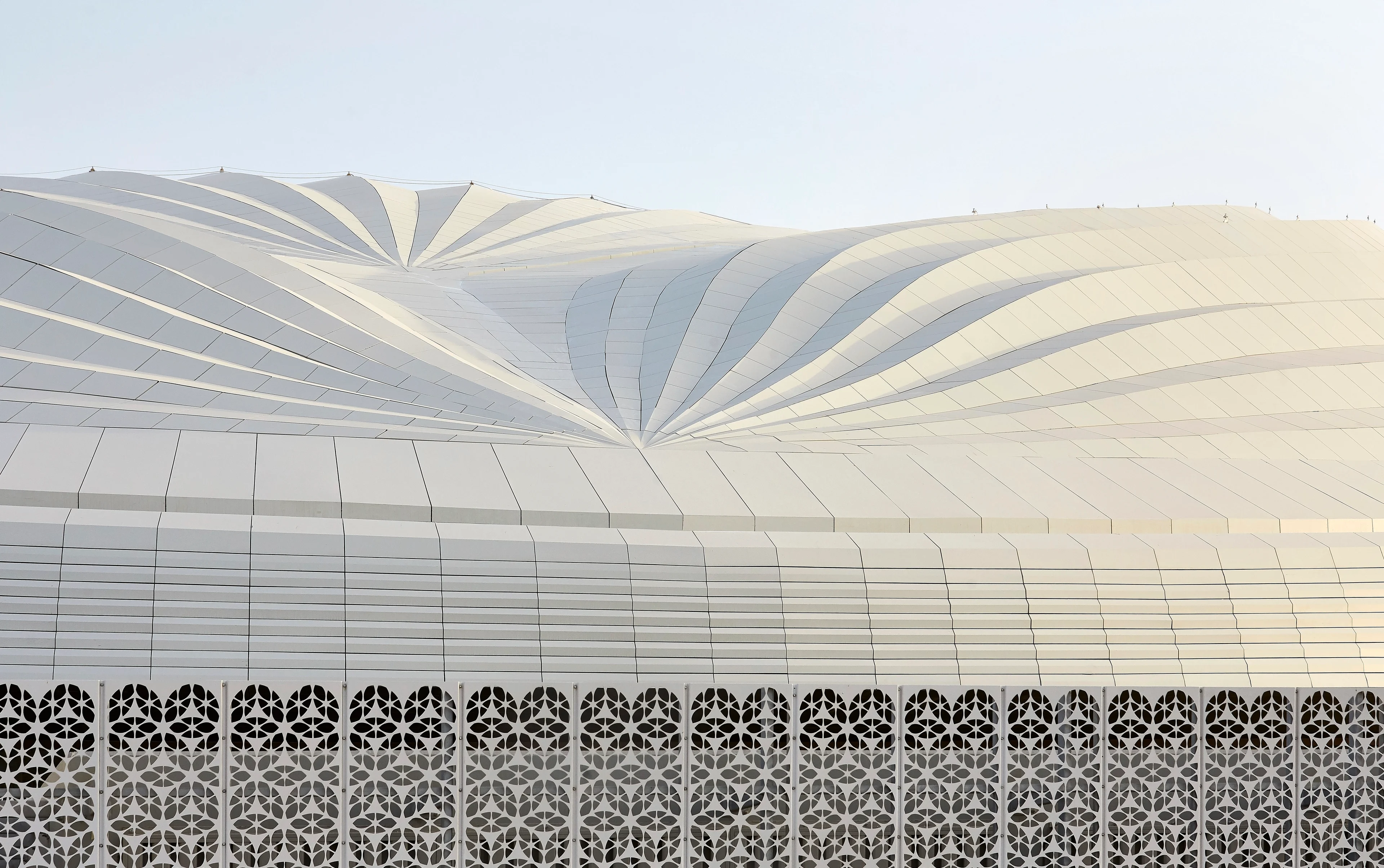
The stadium’s opaque roof and wall areas are expressed as pleated cross sections. This feature, which has its origins in Arabic motifs and calligraphy, adds texture to the outer shell and also emphasizes the stadium’s unique geometry. The external cladding materials are deliberately selected from a limited palette of materials and choice of colours; namely white for the roof and wall cladding, and darker colours for the areas below the eaves, including the lower level glazed walls with its ornamental lattice screen print that provides shading.
The colour scheme for the external building envelope dovetails with its geometric forms and reinforces the articulation of the outer skin. The roof cladding and opaque surface areas above the eaves are white or off-white in colour with a gloss surface finish that is reminiscent of sea shells and emphasizes the pleats which add texture to the building envelope. The embossed eaves and the lattice screen print of the glazed lower-level facades are metallic bronze in colour, adding a sense of richness and depth to the design. The choice of a bronze metallic finish of these worked surfaces pays homage to the traditions and artistry of Islamic craftsmanship.
Photograph by Hufton + Crow
Photograph by Hufton + Crow
Courtesy of Supreme Committee for Delivery and Legacy of the 2022 FIFA World Cup Qatar™
Courtesy of Supreme Committee for Delivery and Legacy of the 2022 FIFA World Cup Qatar™
01
02
03
04
An outstanding legacy of the World Cup in the heart of the city
The stadium sits on a large landscaped podium that takes visitors from grade to the entry level main entry concourse located at the middle of the seating bowl’s tiers. This podium connects the stadium into the adjacent landscape and reduces its scale. Large parabolic voids within the podium signify different activity zones. On the eastern side, voids allow for the majority of spectators to arrive and depart from the stadium. The north eastern void will include a community market whilst the south eastern void hosts an activity park. To the west, the parabolic void within the podium allows for vehicle access and drop off at grade for the players, officials and dignitaries.
Designed in conjunction with a new precinct so that its sits at the heart of an urban extension of the city, creating community based activities in and around the stadium on non-event days, Al Janoub Stadium leaves an outstanding legacy of the 2022 FIFA World Cup Qatar with superb sports and recreational facilities for use by everyone in the city of Al Wakrah.
Sports
Explore more of our sports projects
From the world’s first timber-built football stadium to an international sports centre providing multi-sport facilitites to athletes of all ages, discover our latest sports projects.
Photograph by Virgile Simon Bertrand
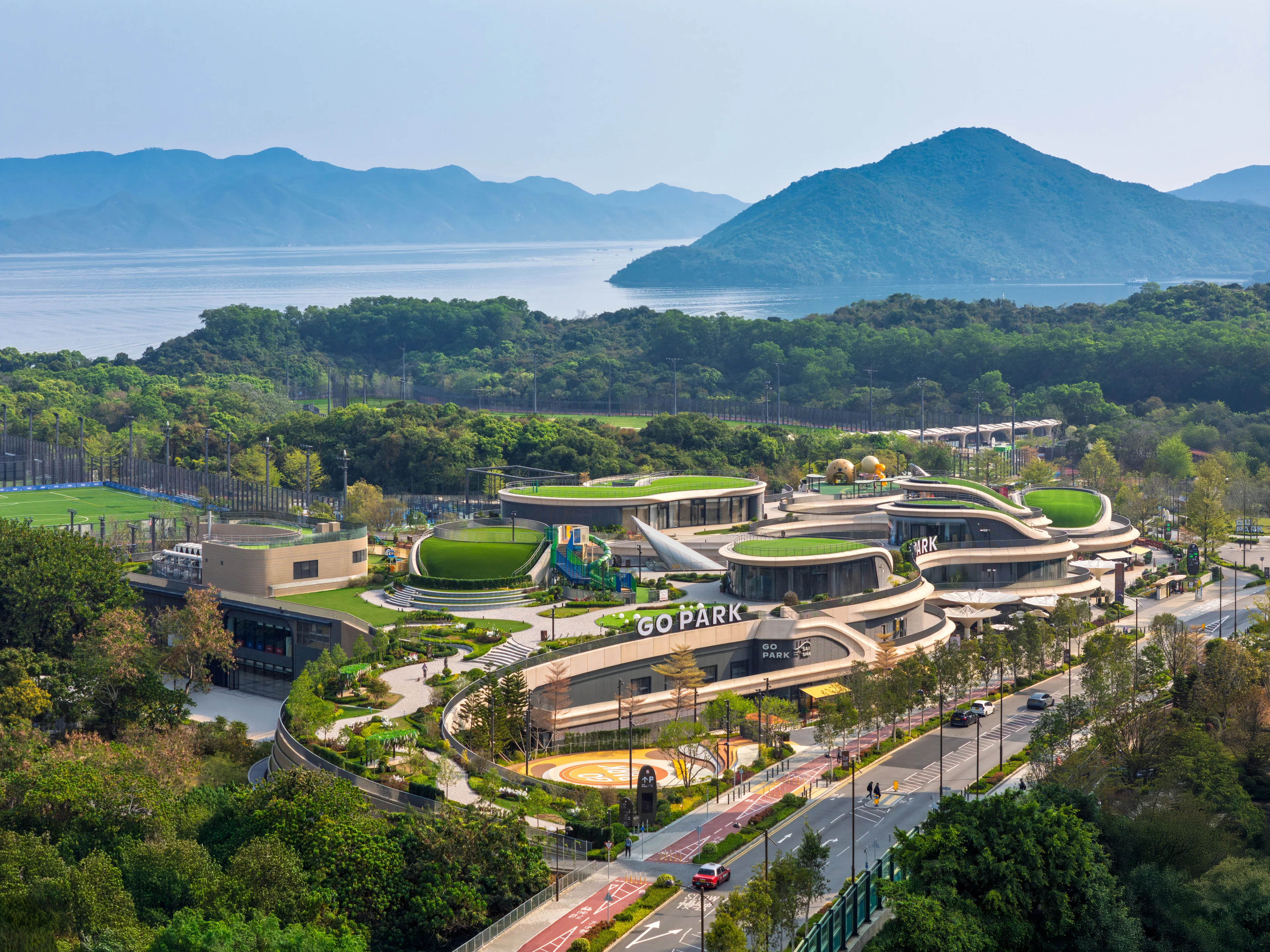
GO PARK Sai Sha
ZHA’s first sports and commercial project in Asia, GO PARK Sai Sha is nestled between the mountains of Hong Kong’s Ma On Shan Country Park and the sheltered waters of Three Fathoms Cove which leads out to the South China Sea.
Photograph by SeilaoJiong 张灏
Sports Centre
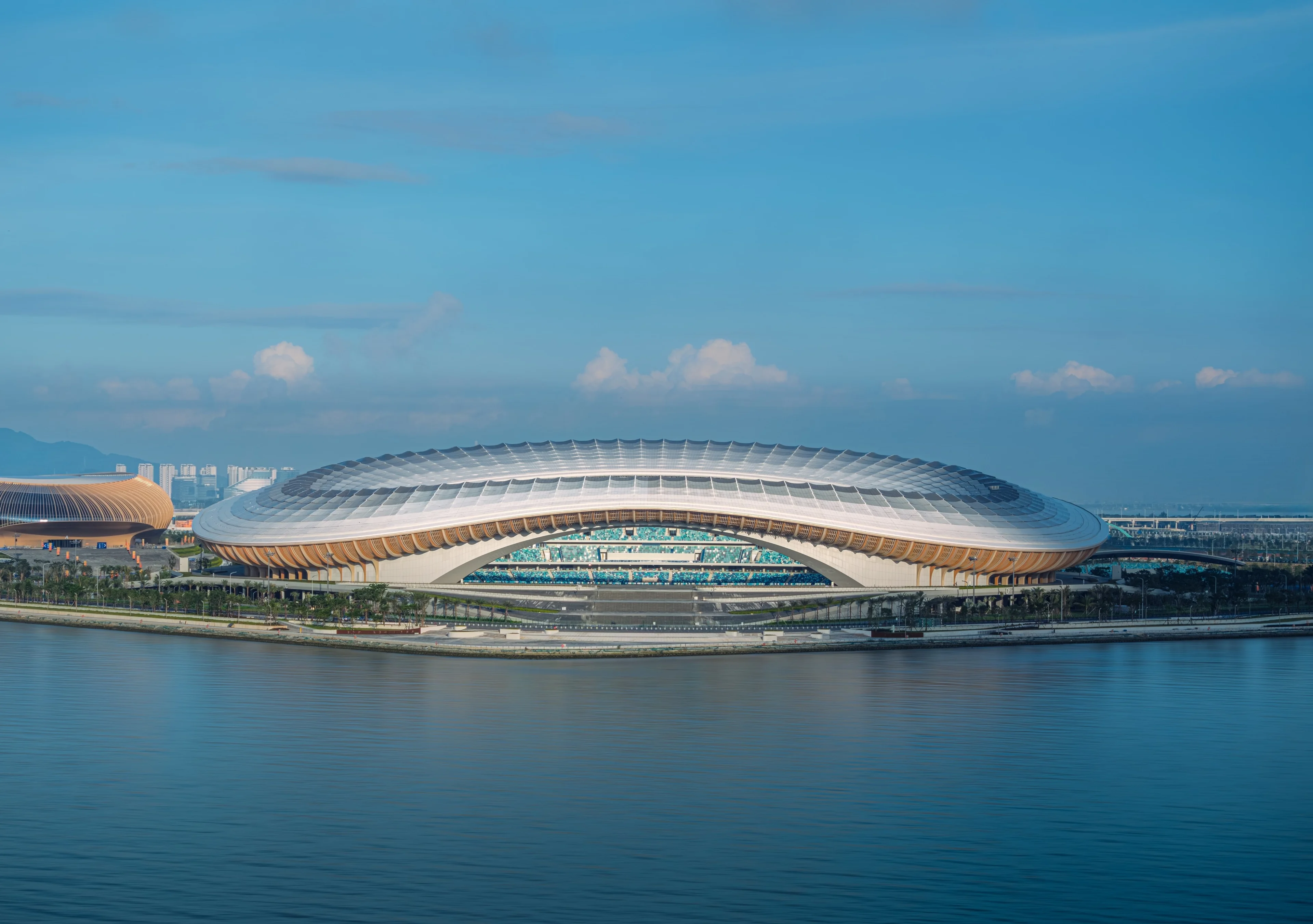
Greater Bay Area Sports Centre
Situated at the southern end of Guangzhou’s Nansha District on the western bank of the historic Pearl River, the Greater Bay Area Sports Centre will serve as an anchor to the new civic, business and residential district at the heart of the Greater Bay Area.
Photograph by Hufton + Crow
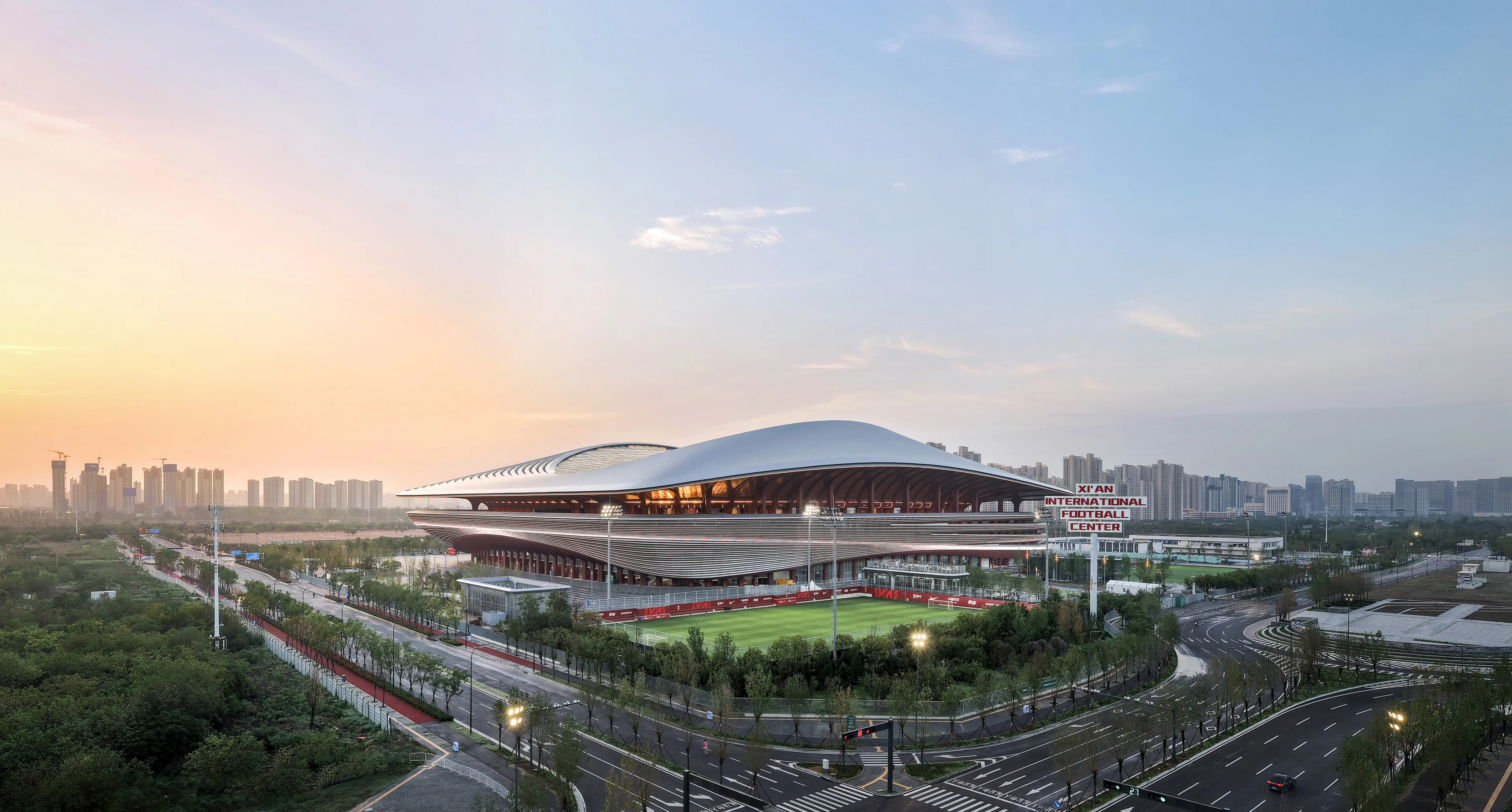
Xi'an International Football Centre
Xi’an International Football Centre’s 60,000-seat stadium and training grounds are integral to the ongoing development of football in China. Initiated by the Chinese Football Association and China’s national sports development organisations, the new football centre provides facilities of the highest standards to nurture the sport across all levels.
Render by Negativ
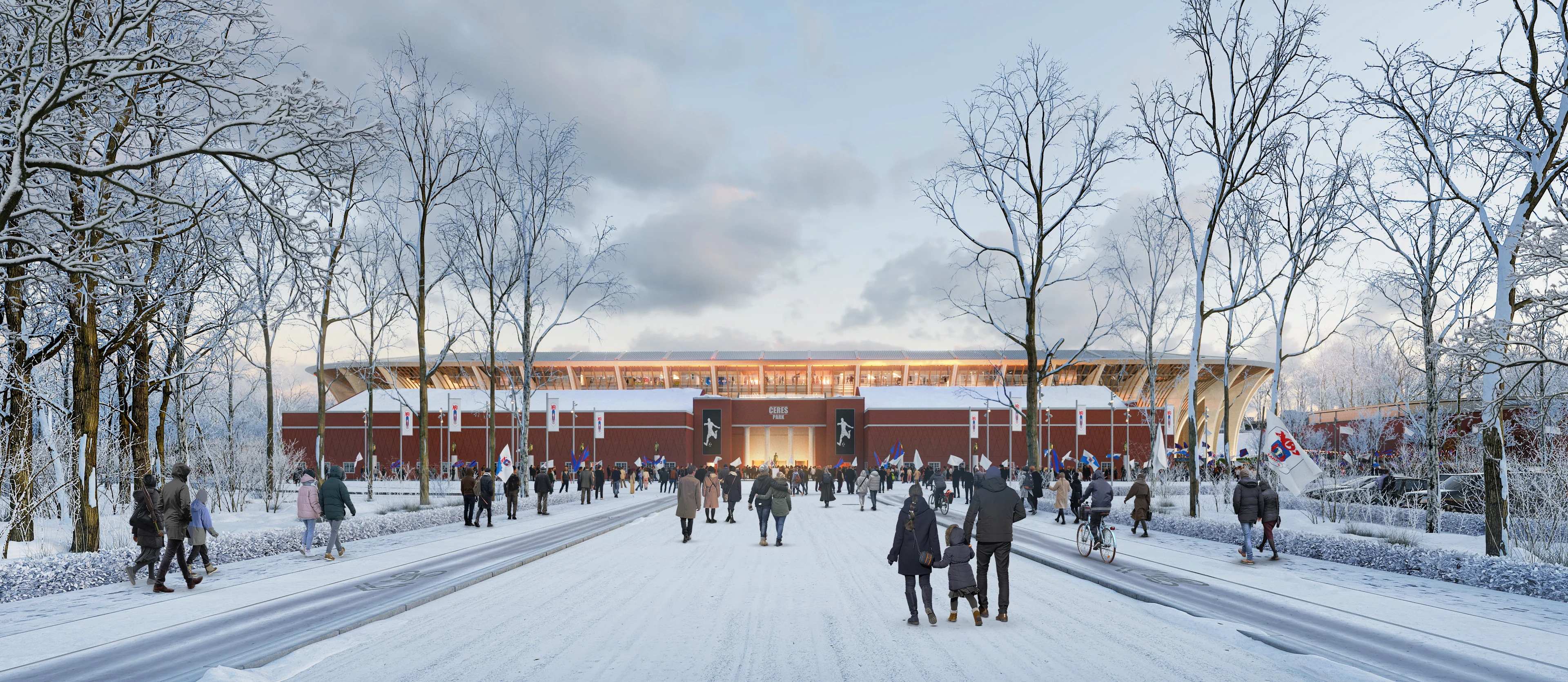
Aarhus Stadium
The team comprising ZHA working with architecture, engineering consultancy Sweco and landscape architects Tredje Natur has won the competition to build the new Aarhus football stadium in Denmark.
Render by Proloog
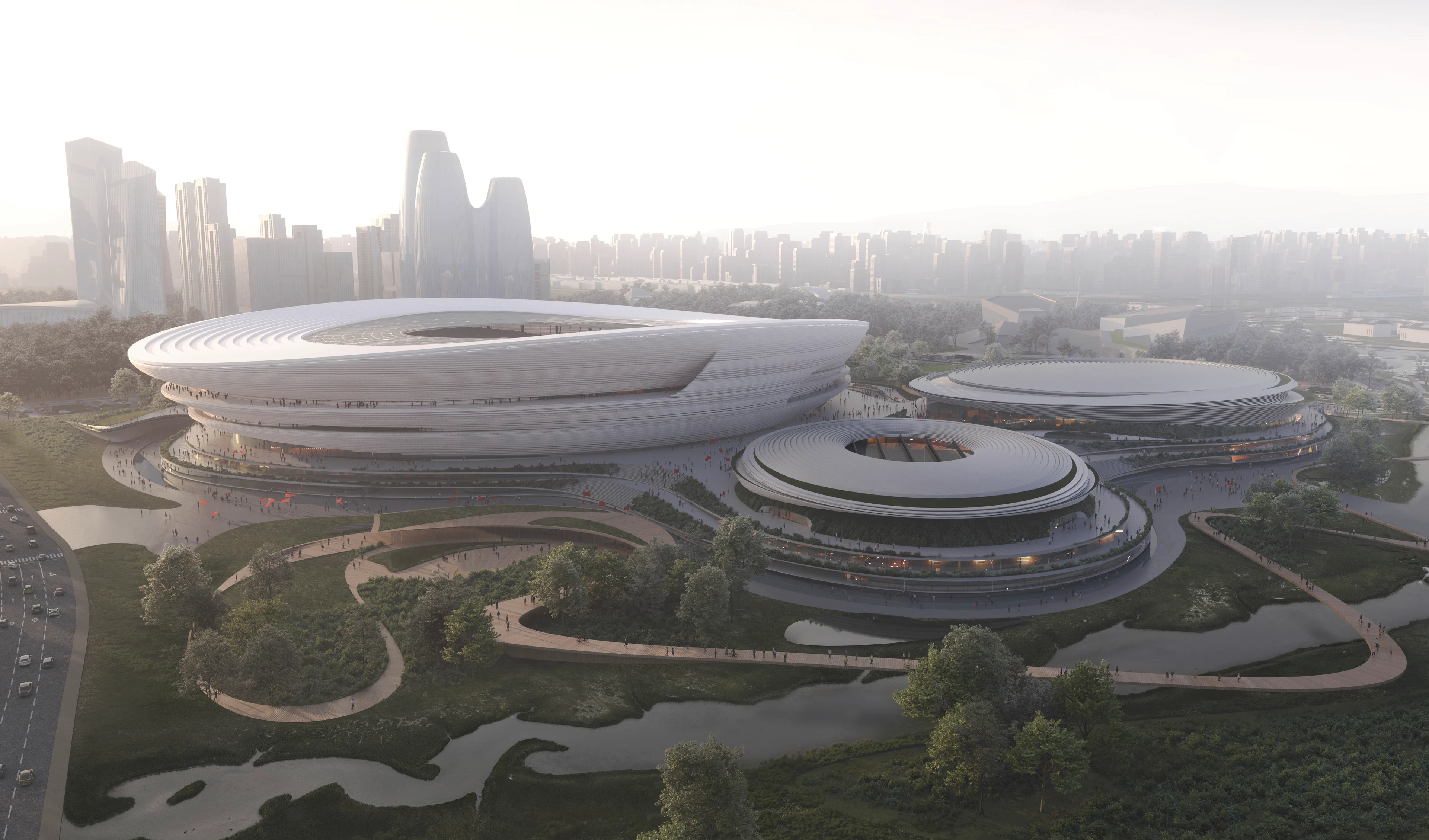
Hangzhou International Sports Centre
Located within Hangzhou’s Future Science and Technology Cultural District, the sports centre establishes a new riverfront park and public plazas with direct access to Lines 3 and 5 of the city’s expanding metro network.
Photograph by Hufton + Crow
Legacy Mode : December 2013
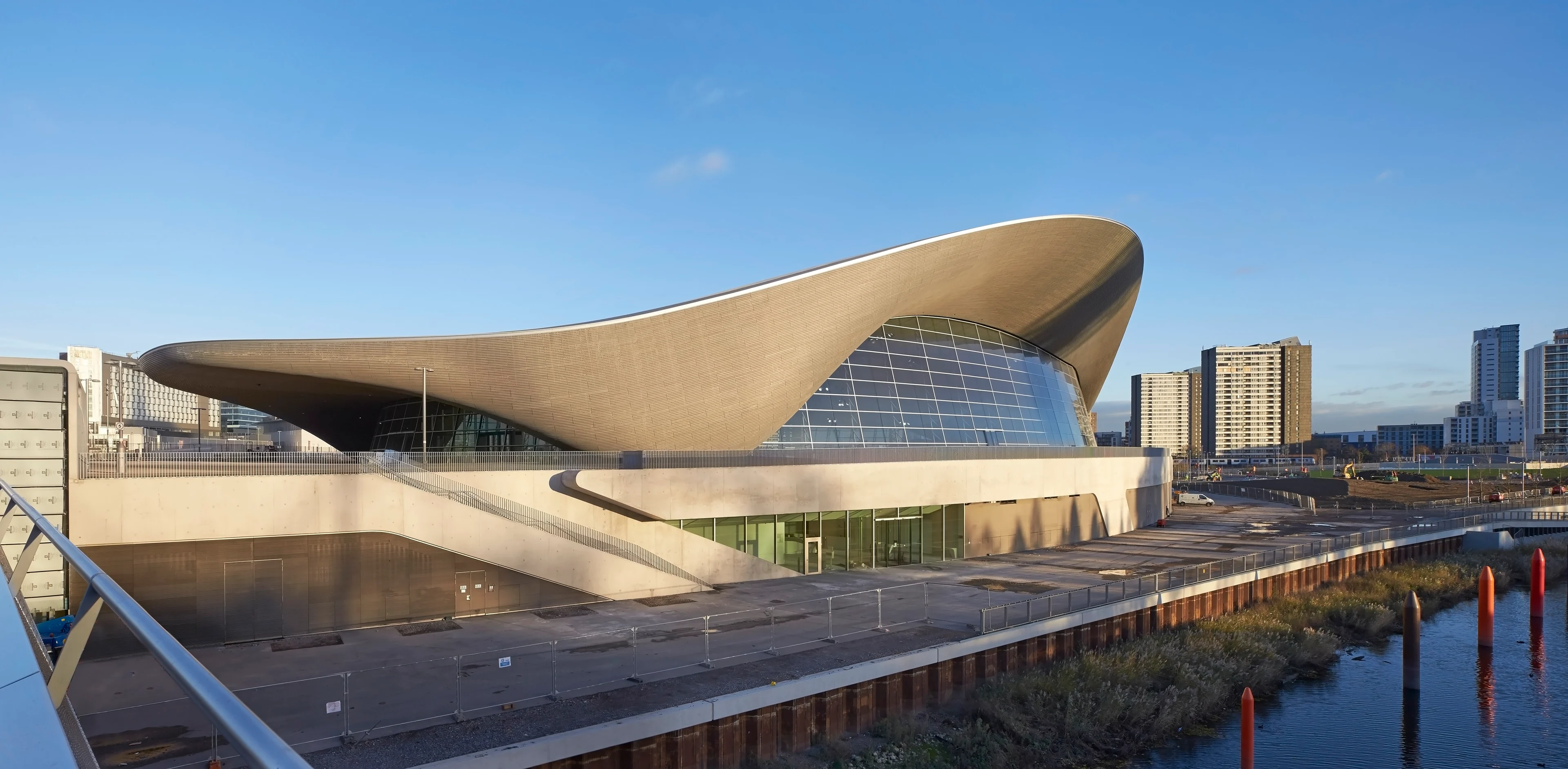
London Aquatics Centre
A concept inspired by the fluid geometry of water in motion, creating spaces and a surrounding environment in sympathy with the river landscape of the Olympic Park. An undulating roof sweeps up from the ground as a wave, enclosing the pools of the Centre with its unifying gesture.
Photograph by Roland Halbe
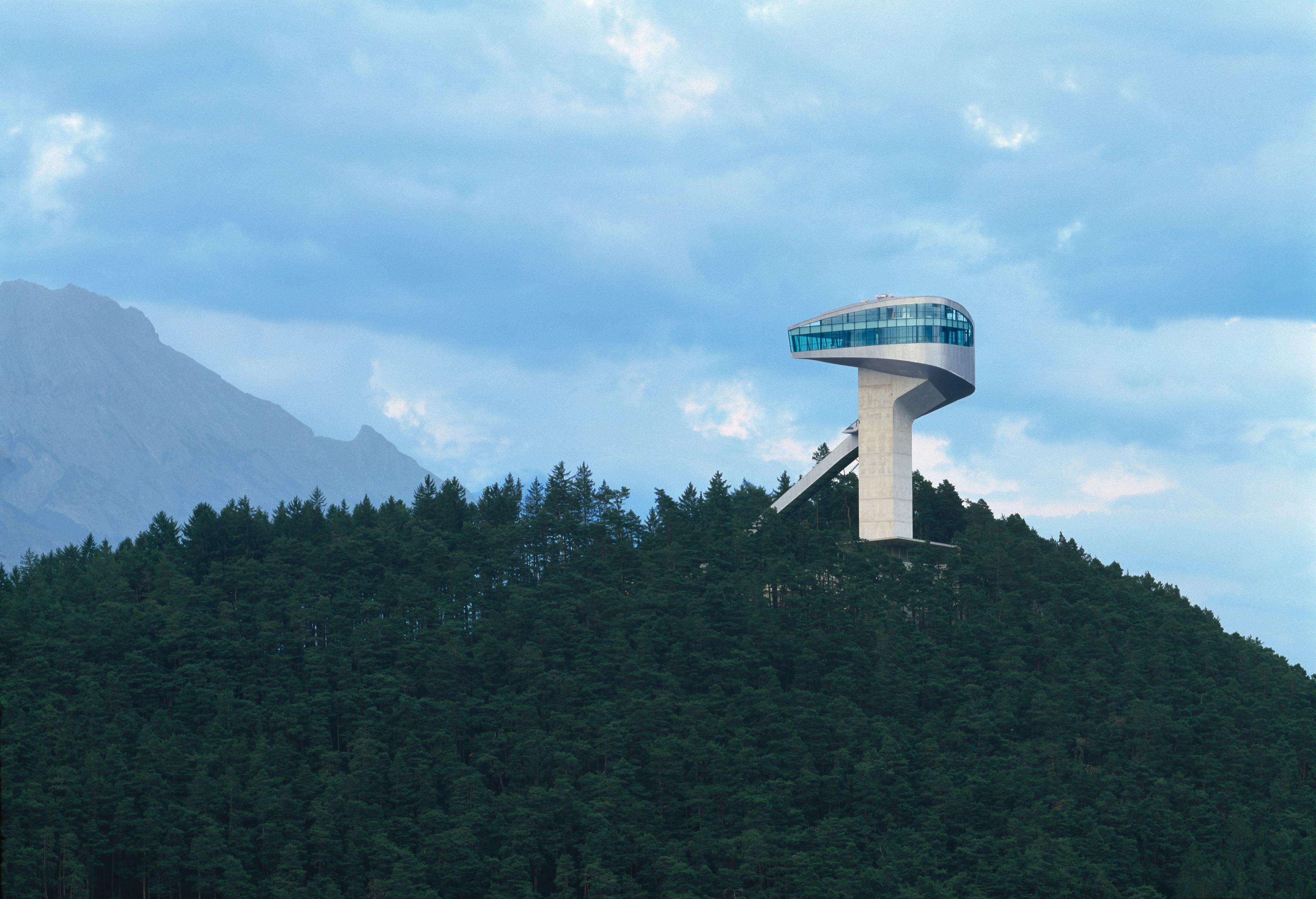
Bergisel Ski Jump
ZHA's ski jump on Bergisel mountains contains a ski ramp and sports facilities, as well as public spaces, including a tower-top café and viewing terrace. Rising to a height of almost 50m the structure’s distinctive form and silhouette extends the topography of the ski slopes below into the alpine sky above.
Courtesy of ZHA, render by MIR
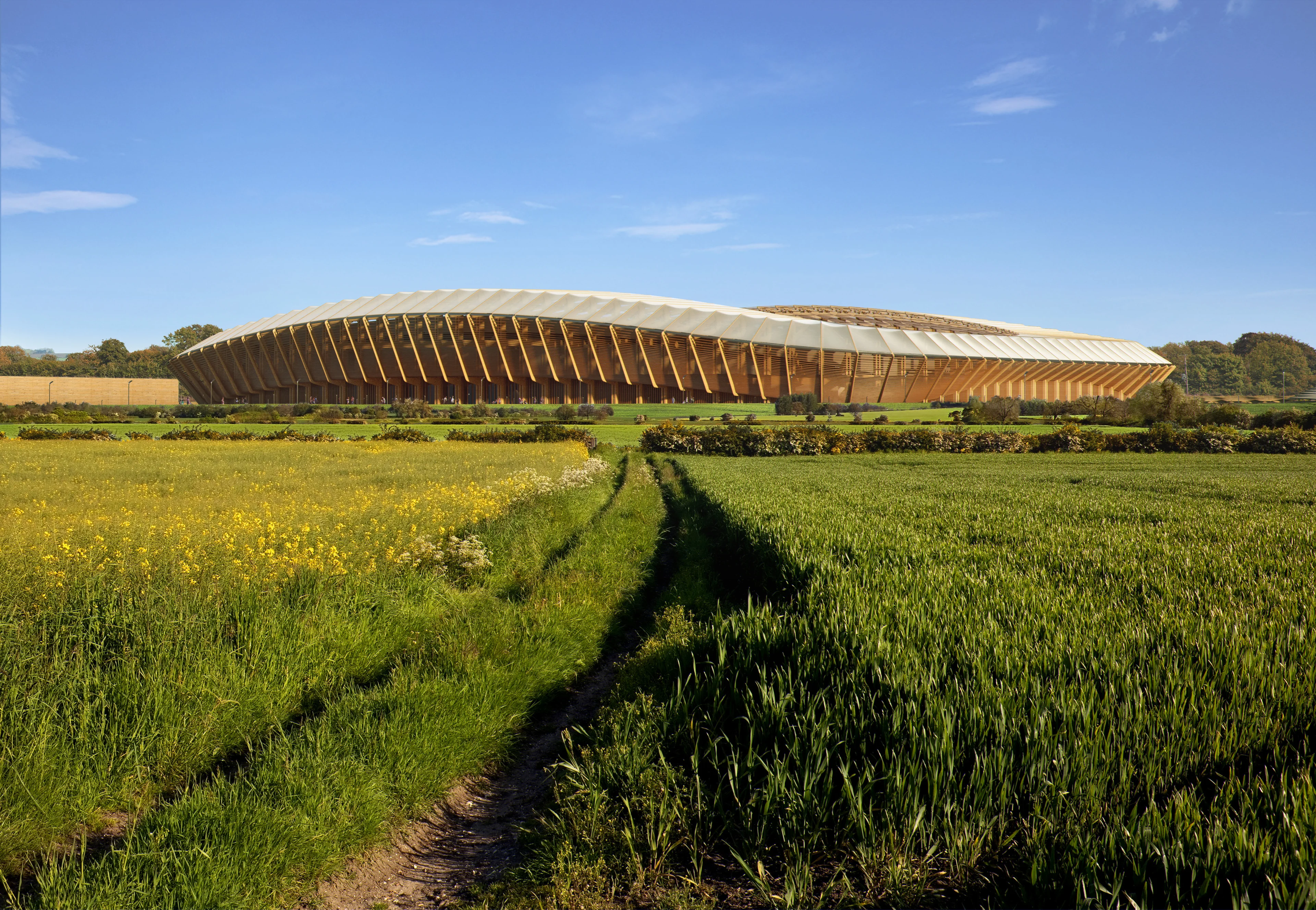
Forest Green Rovers Eco Park Stadium
The Eco Park stadium for Forest Green Rovers will be an important addition for the community. The club’s heritage, ambition and vision reflect ZHA’s own, combining the latest material research and construction techniques with new design approaches to build a more ecologically sustainable and inclusive architecture.
01
02
03
04
05
06
07
08