
Moscow, Russia
2012 - 2015
Peresvet Group/Dominion-M Ltd
Dominion Office Building
Photograph by Hufton + Crow
Photograph by Hufton + Crow
01
02
03
04
05
Vertically off-set stacked plates
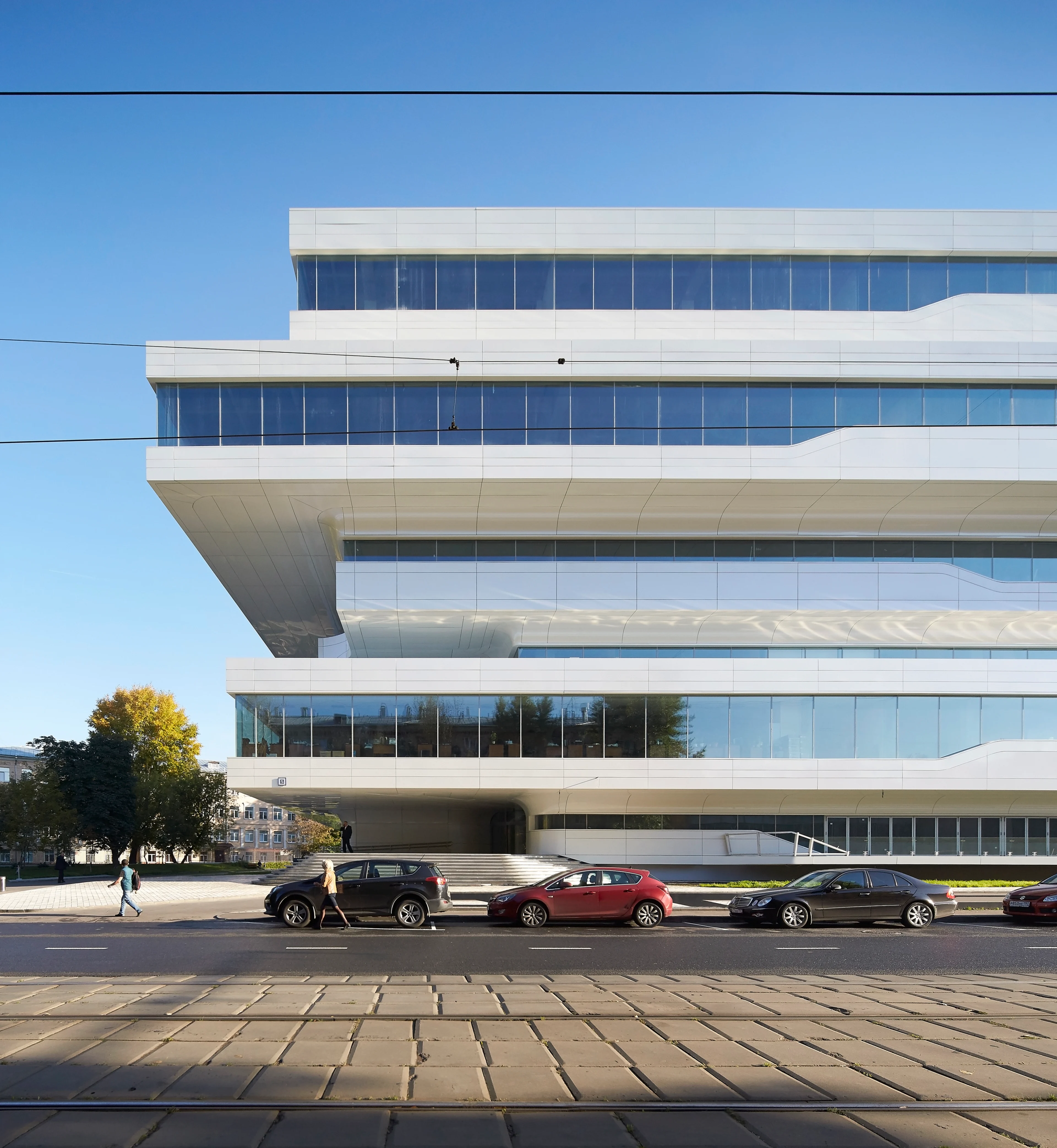
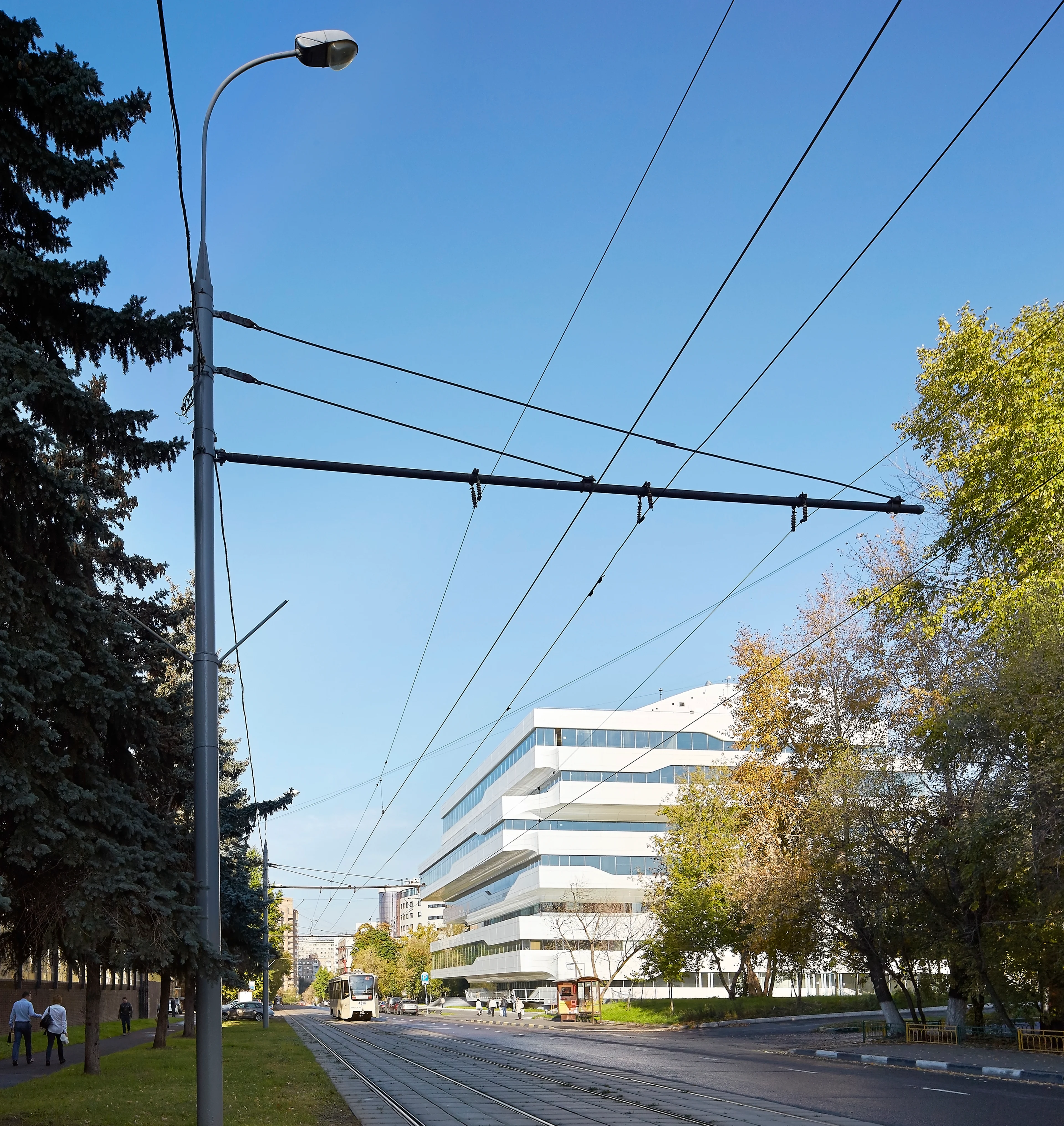
Located in Moscow’s Sharikopodshipnikovskaya Street, next to tram and trolleybus stops and near Dubrovka Station on the Lyublinskaya Line of the Moscow Metro, the Dominion Office Building is among the first of the new projects to be built for the growing creative and IT sectors in this primarily industrial and residential district in the southeast of the city.
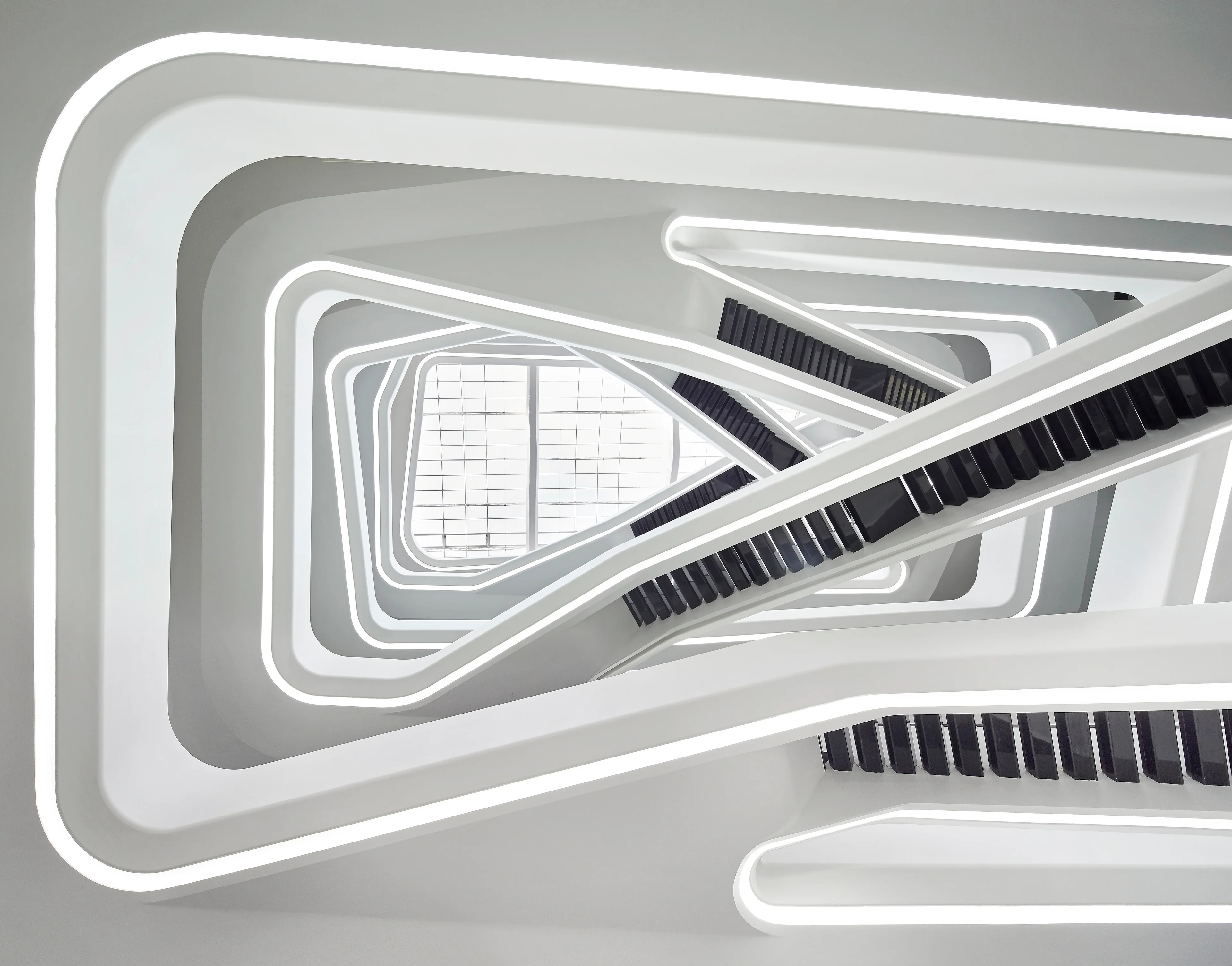
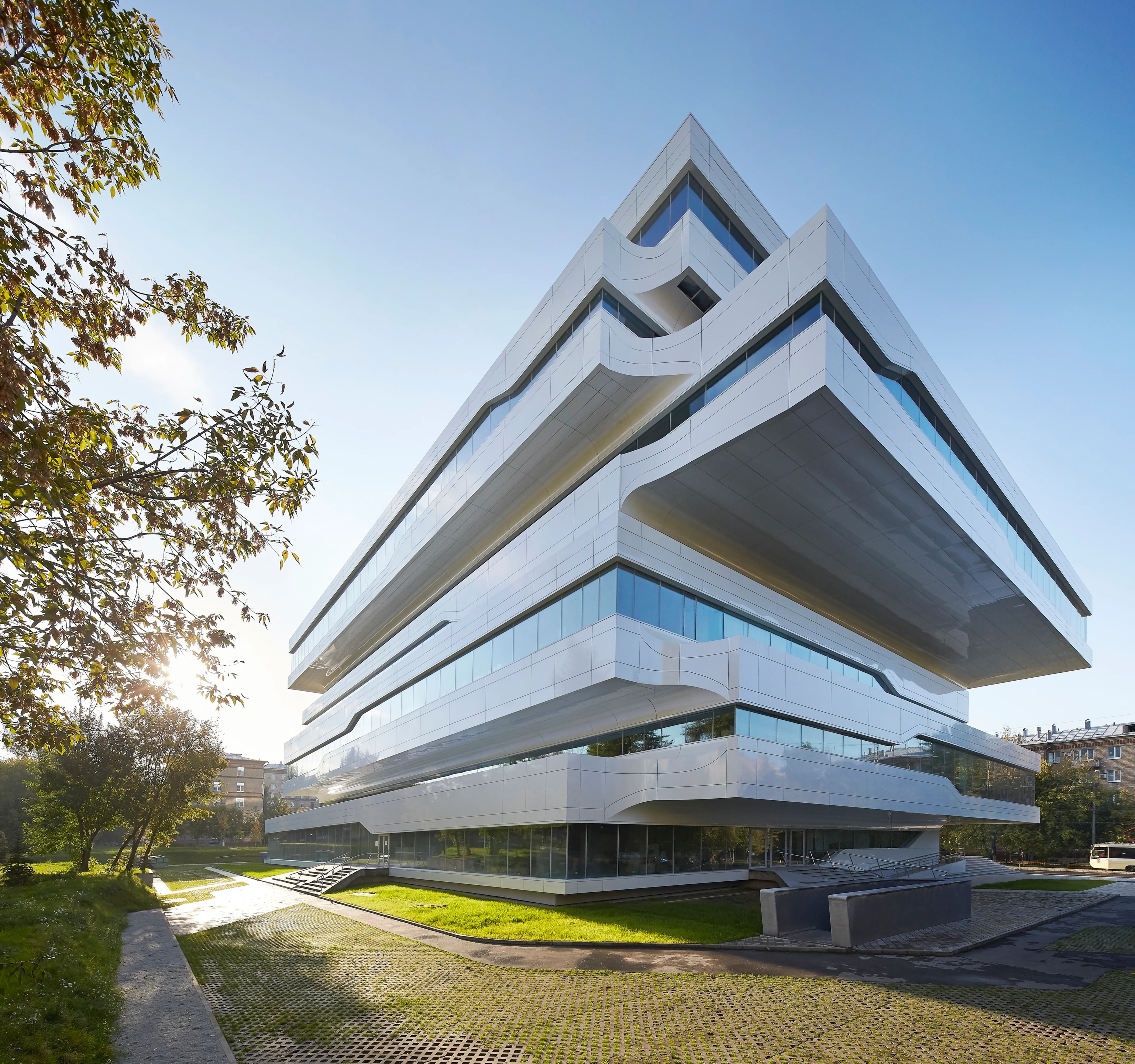
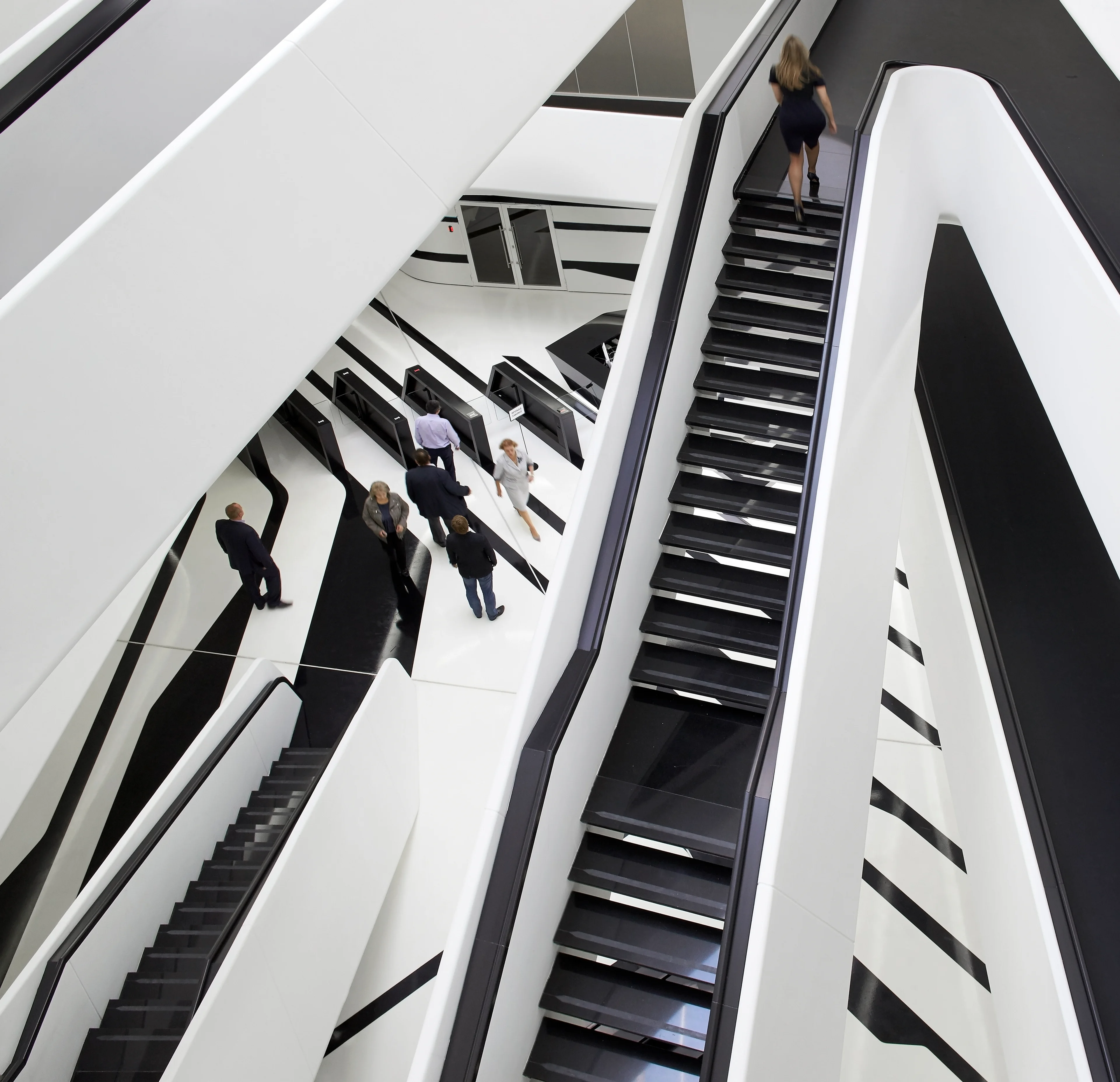
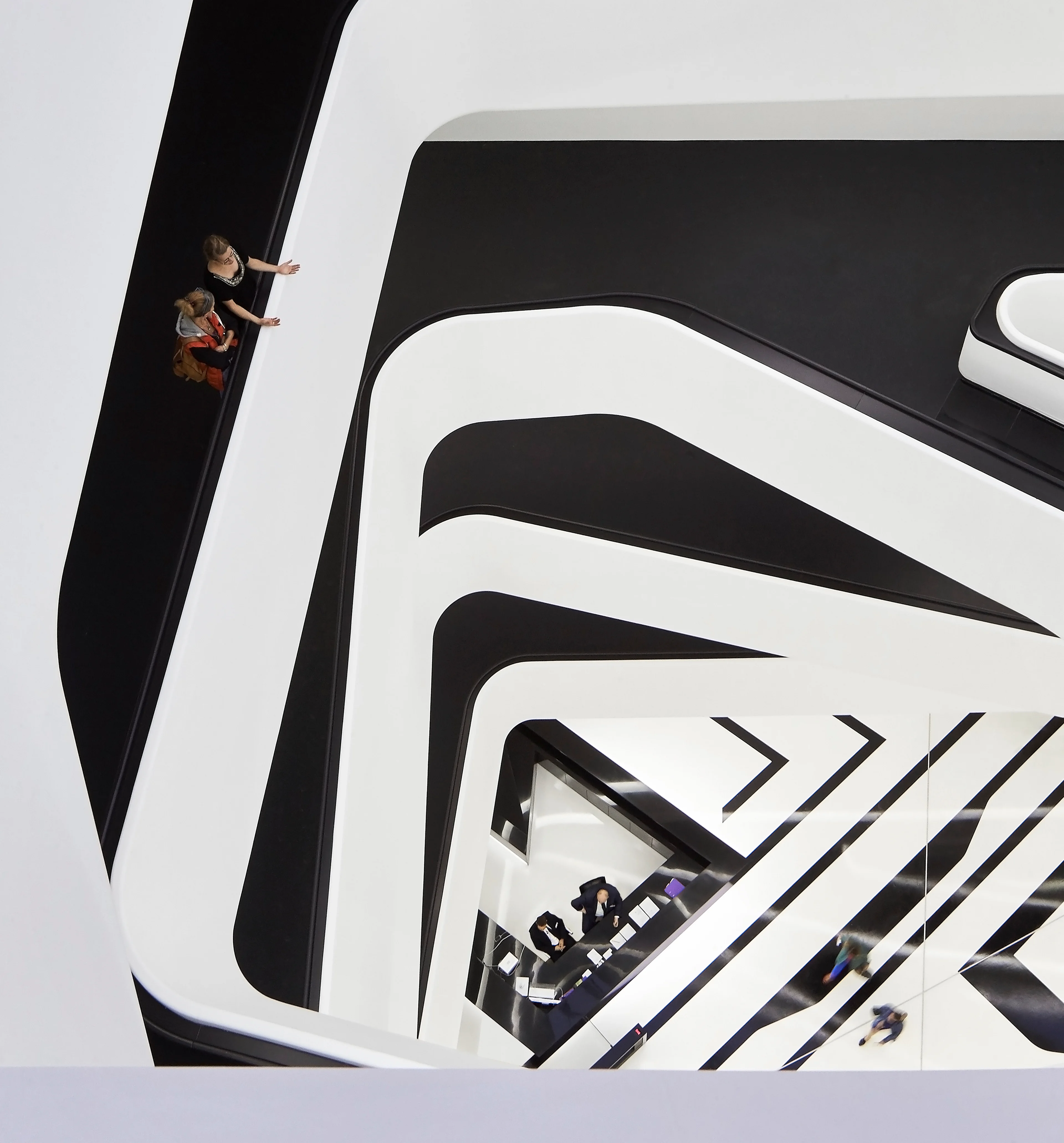
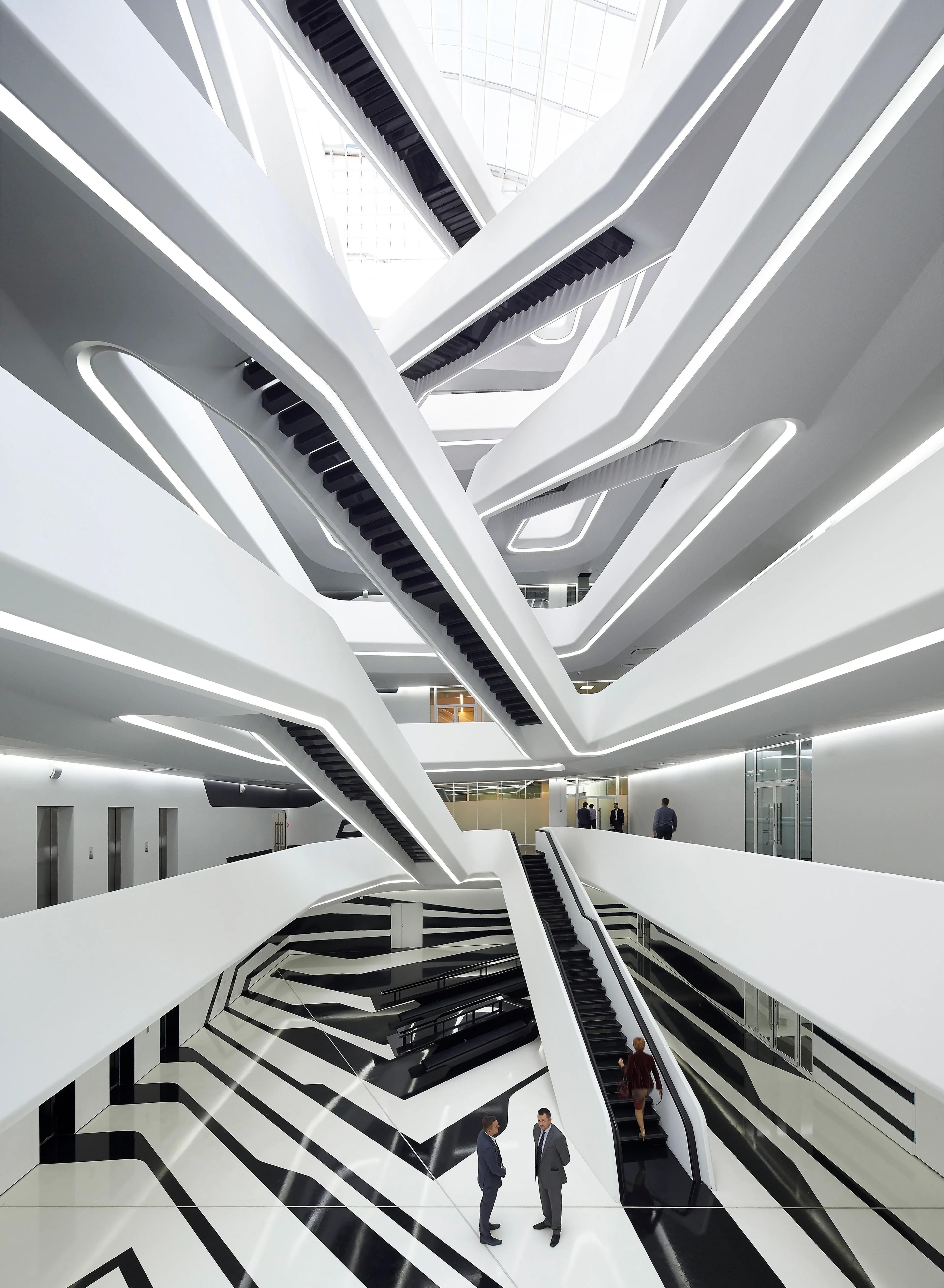
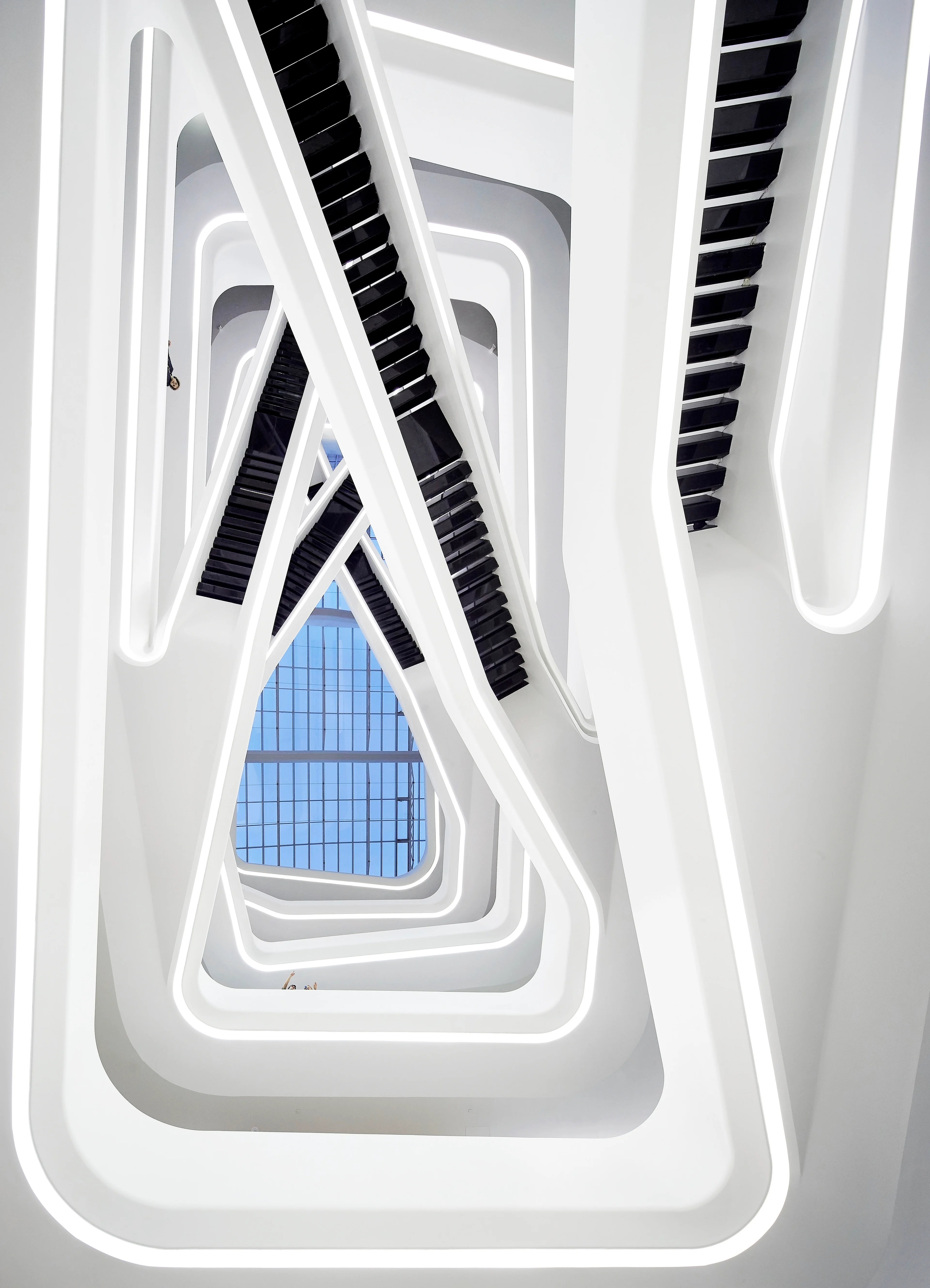
Conceived as a series of vertically stacked plates off-set at each level with connecting curved elements, a central atrium rises through all levels to bring natural light into the centre of the building. Balconies at each level project into the atrium and correspond to the displacement of the outer envelope and a series of staircases interconnect through this central space.
Many levels that encourages interaction
With the ground floor restaurant linking the atrium to the outdoor terrace and Sharikopodshipnikovskaya Street beyond, and coffee/snack areas and relaxation zones on the balconies, the atrium becomes a shared space over many levels that encourages interaction between the employees of the companies within the building. This integration also encourages collaboration between companies of different services and disciplines. Many IT and creative industry start-up companies regard this collective research culture as vital for progress and development, and the design of the Dominion Office Building reinforces this concept with open connectivity throughout the building.
The office spaces are arranged within a system of standard rectilinear bays to offer many different possibilities for small, expanding or large companies. Located on the periphery of the atrium and housing the lifts, fire-escapes, washrooms and service shafts, the service cores provide a degree of privacy to the separate office spaces, with gaps in-between these cores giving some transparency and allowing light to penetrate the into the office areas from the central shared atrium space. This service core ring around the atrium, together with an additional bay of columns close to the outer envelope of the building, provides the structure. The off-set floor-plates are balanced between the opposite sides of the building. In some zones, columns are removed and replaced with transfer beams to increase the uninterrupted floor space for larger tenants or public programmes.
Offices
Discover more of our office buildings
From a Sharjah company headquarters designed to achieve net-zero energy consumption to a tower that anchors the masterplan for a newly revitalised district of Milan, discover our latest office buildings.
Render by Devisual
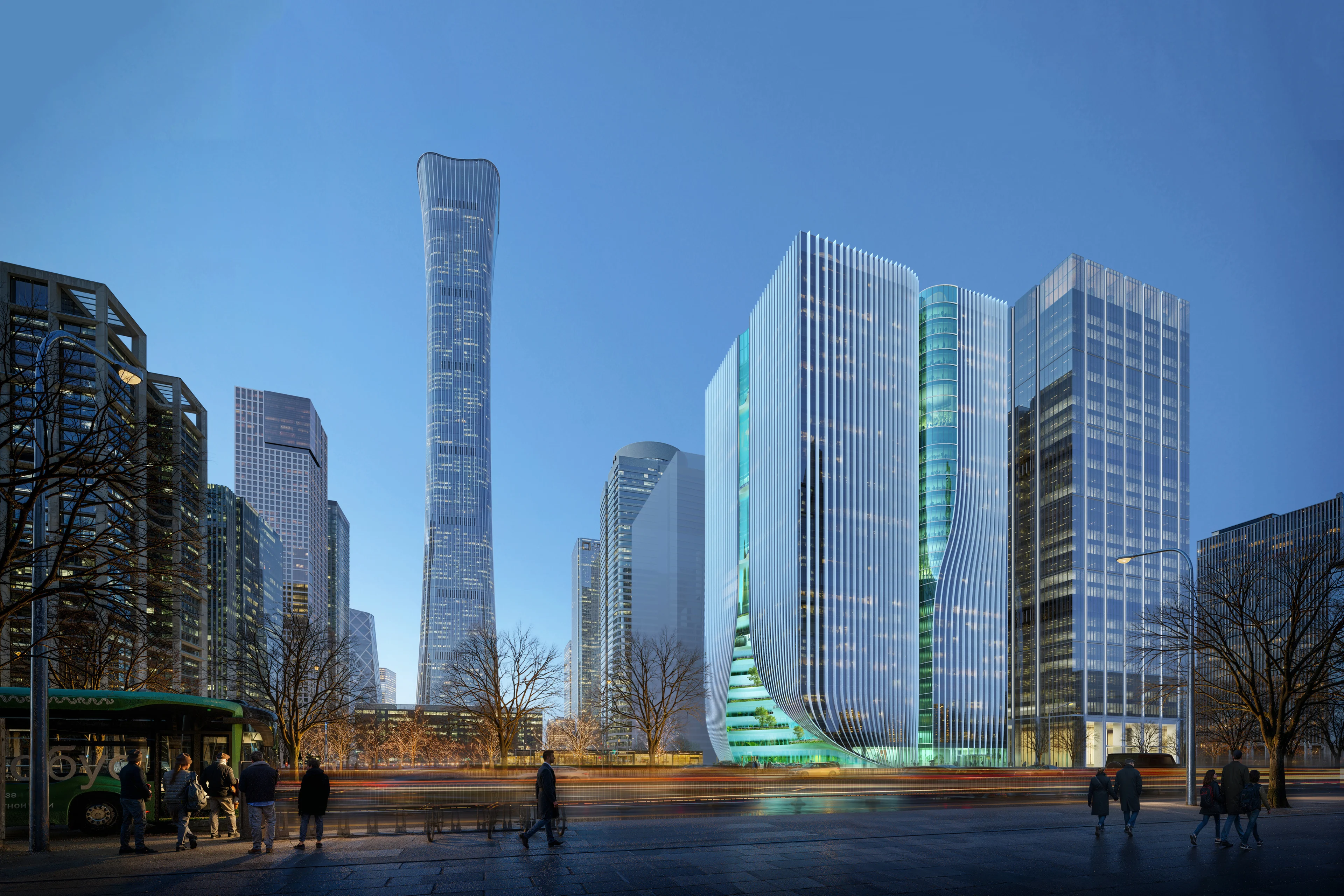
Z8 Tower
Located in the core of Beijing’s Central Business District (CBD) at the intersection of Jianguo Road and Jinhe East Road, the new Z8 Tower faces the CBD’s central park and is defined by the historic alignment and urbanism of the city’s Chang’an Avenue.
Photograph by Hufton + Crow
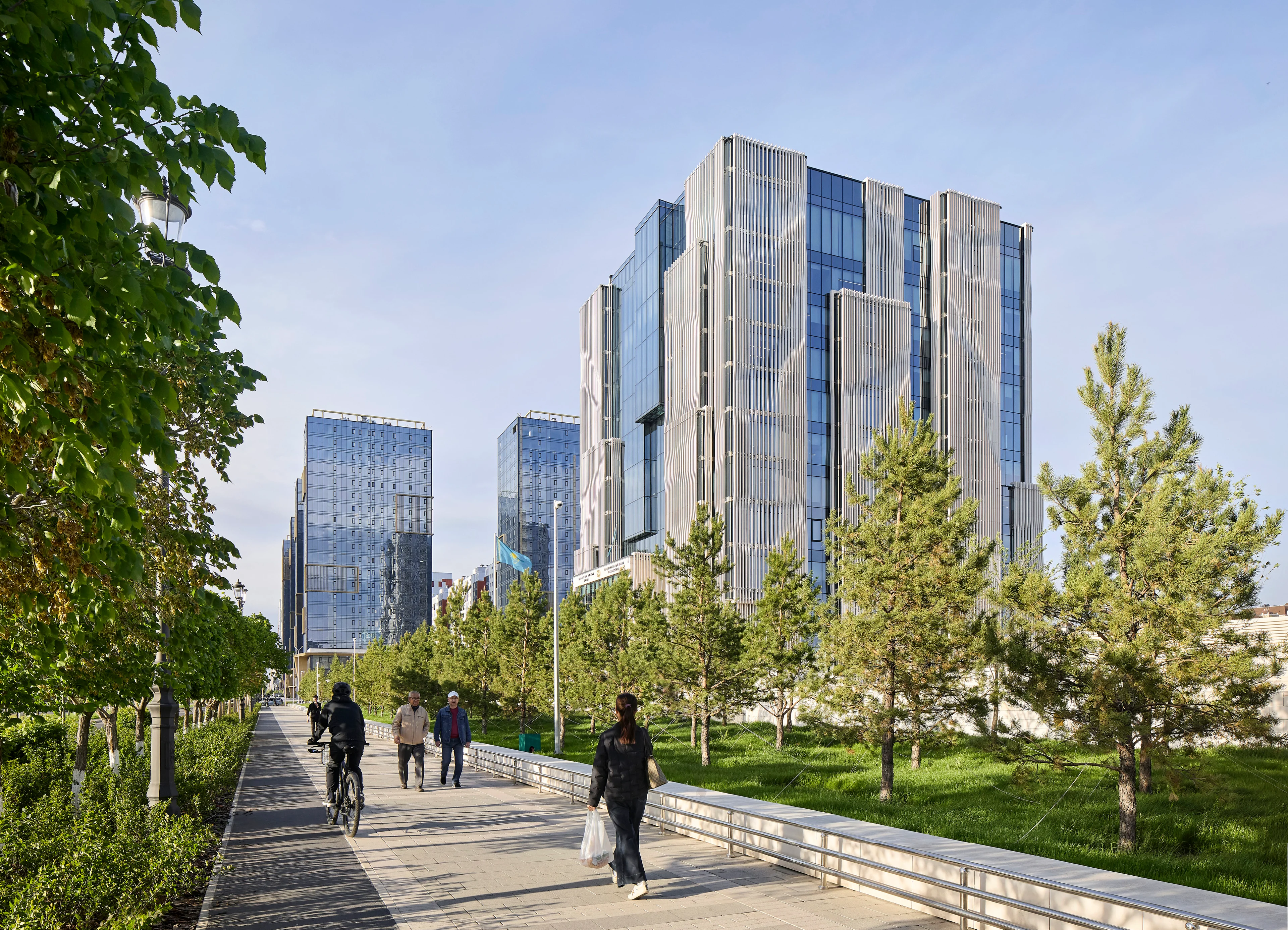
National Bank of the Republic of Kazakhstan
The new headquarters of the National Bank of the Republic of Kazakhstan (NBRK) in Astana houses the bank’s departments within a single, integrated campus accommodating up to 800 employees and conveys the institution’s longstanding commitment to fiscal stability.
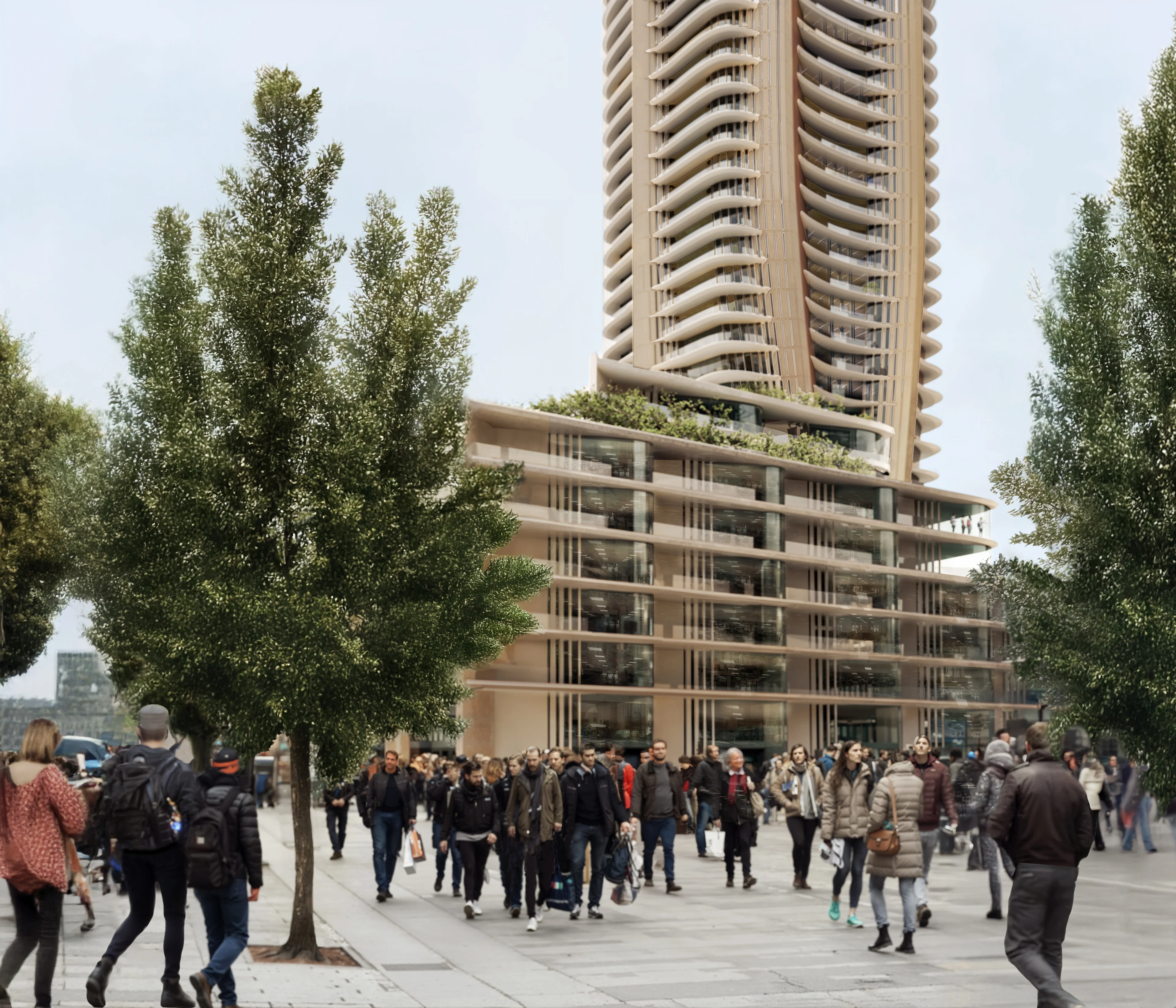
Alta Tower
ZHA collaborating with Bureau Cube Partners (BCP) has been selected as winners of the international competition to design the new Alta Tower in New Belgrade, Serbia.
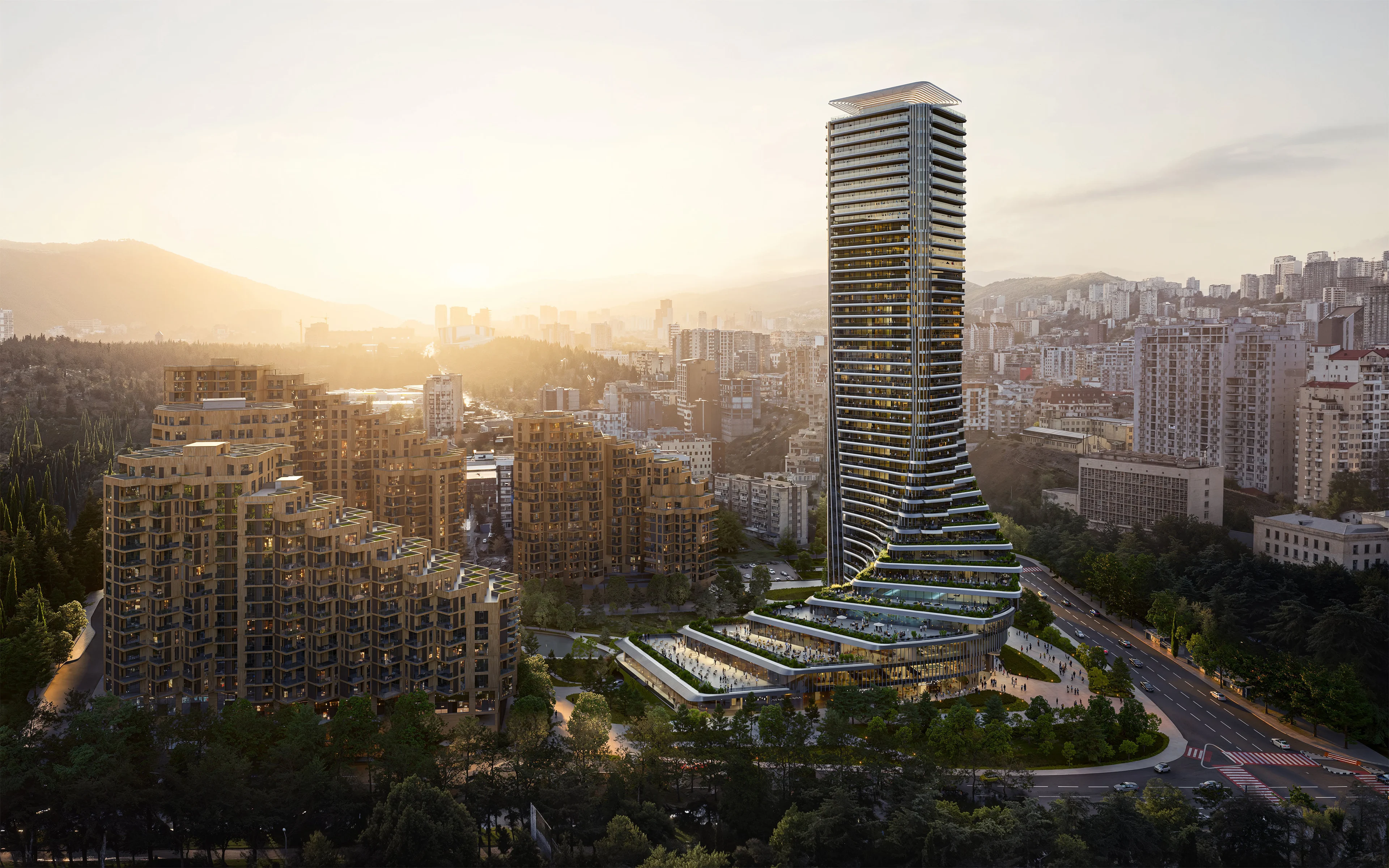
Cityzen Mixed-Use Development
Serving as the gateway to the Cityzen community, a new civic hub in the west of Tbilisi, Cityzen Tower is ZHA's first project in Georgia.
Render by Hayes Davidson
International Gateway Centre
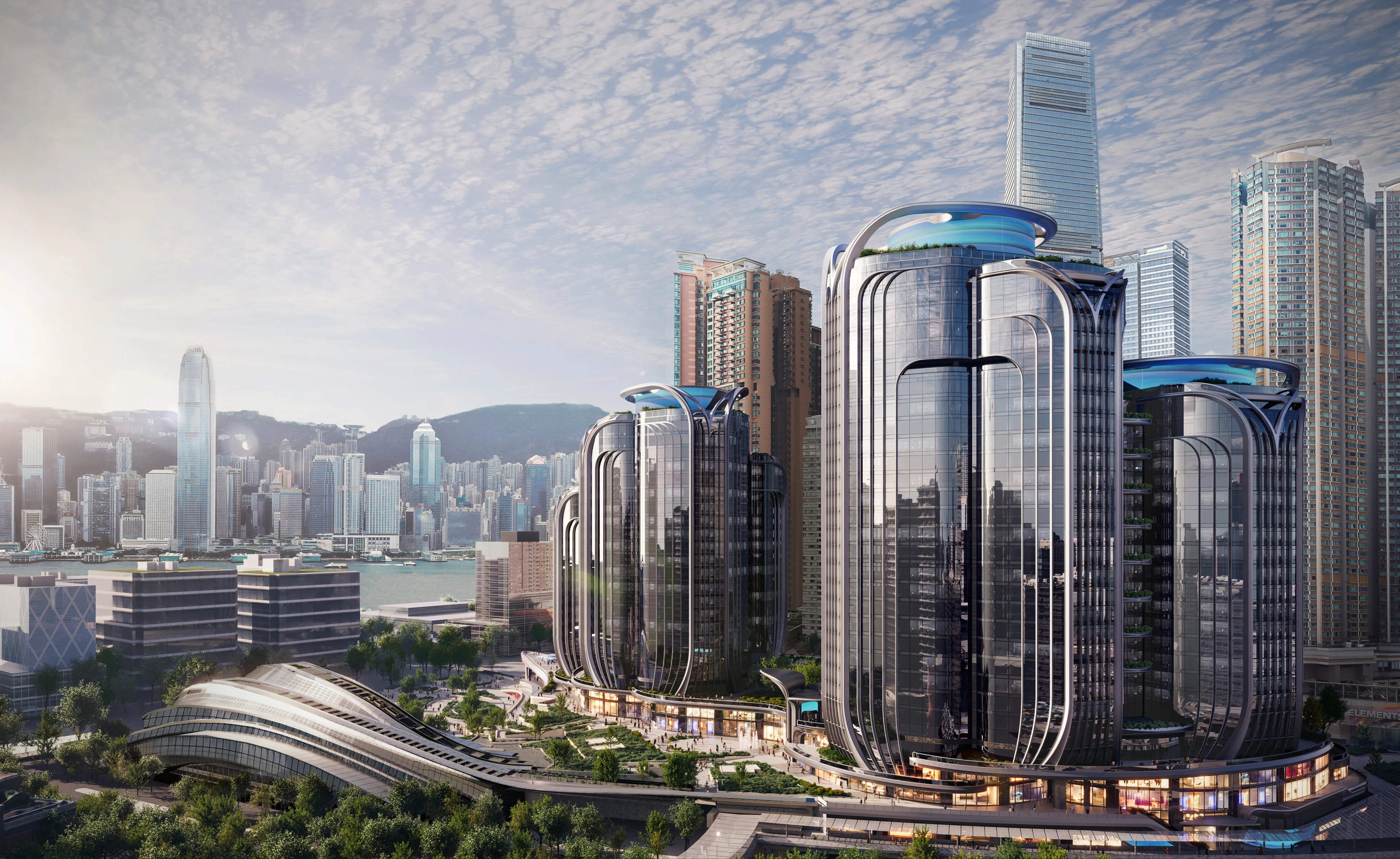
Adjacent to the West Kowloon Cultural District, the 3.2 million sq. ft. development above Hong Kong’s High Speed Rail West Kowloon Terminus connects established and emerging neighbourhoods with a network of public gardens and landscaped plazas.
Daxia Tower
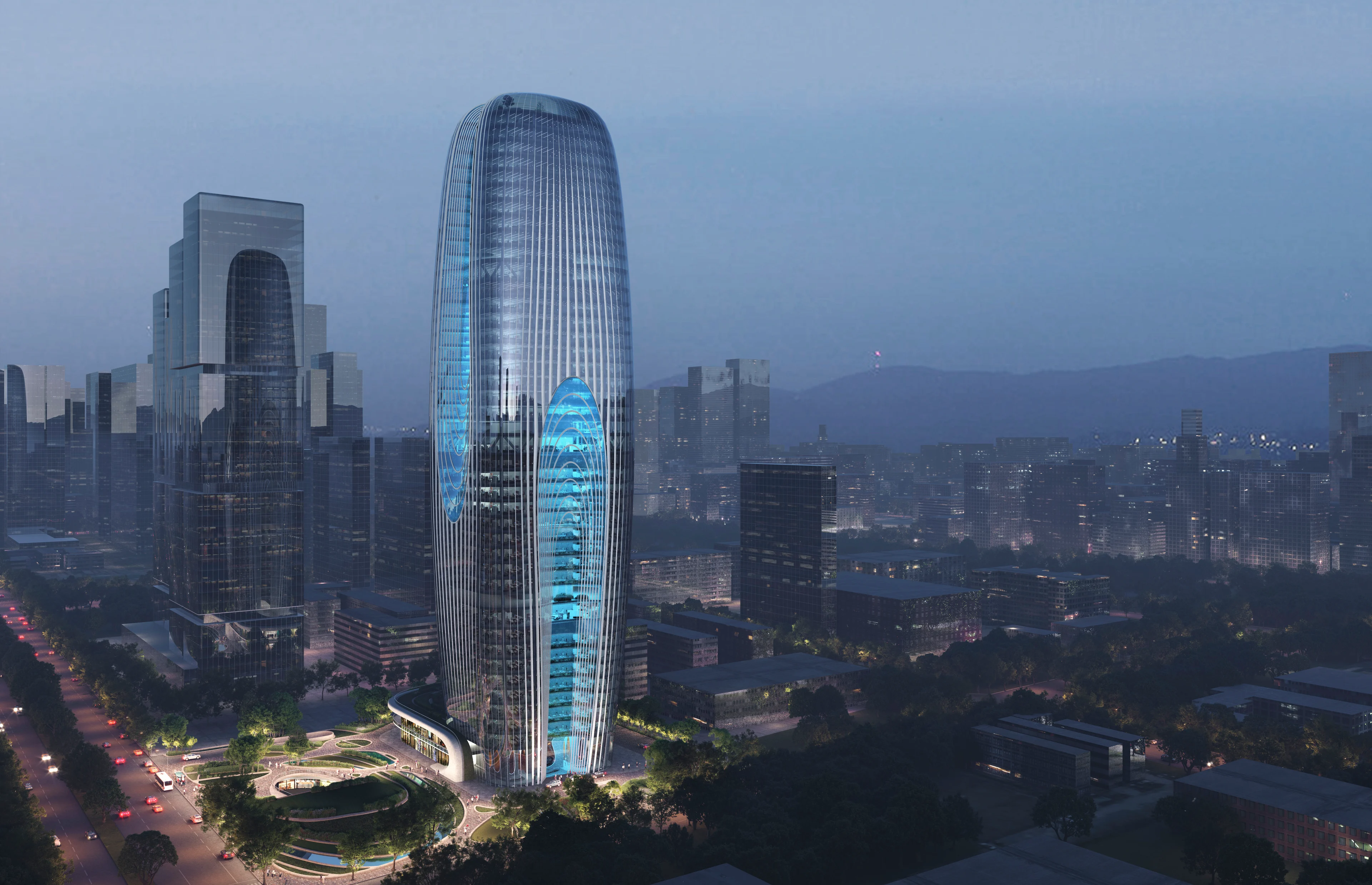
Demarcating the centre of Xi’an’s business district, Daxia Tower’s gently curving silhouette is accentuated by layers of patterned glazing and dramatic atriums that bring natural light deep into its floorplates. Creating a cascade of planted interior terraces that echo mountainside waterfalls, each atrium gives panoramic views over the historic city and the growing high-tech zone.
Render by Negativ
Taikang Financial Centre
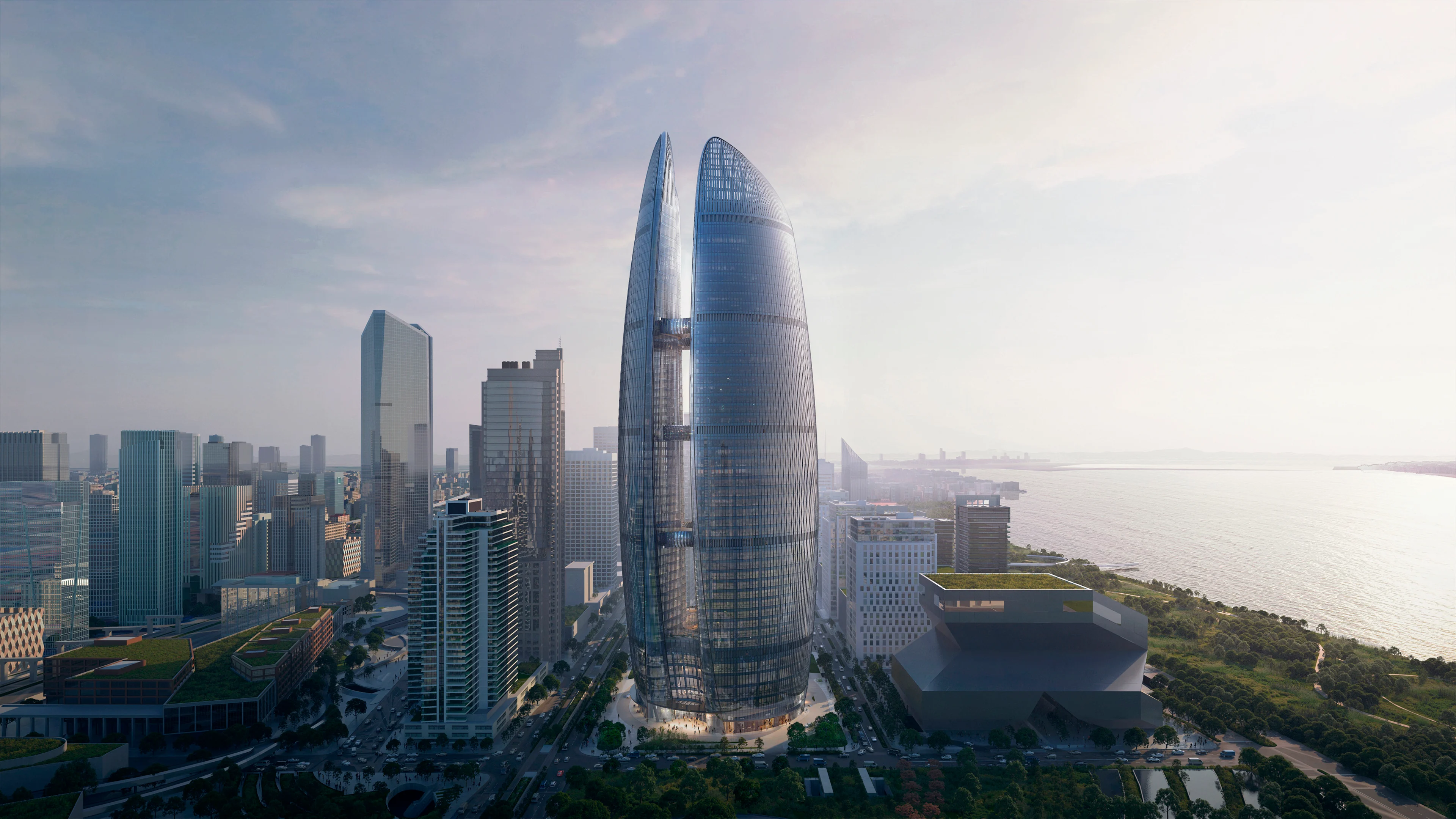
The new Taikang Financial Centre will be a centre of excellence, developing effective systems and networks that will provide a new ecosystem of support for people of all ages across China. Using the new technologies developed within the Taikang Financial Centre, the group will continue its commitment to supporting community development, healthcare, education and well-being throughout the country.
Vilnius Business Stadium
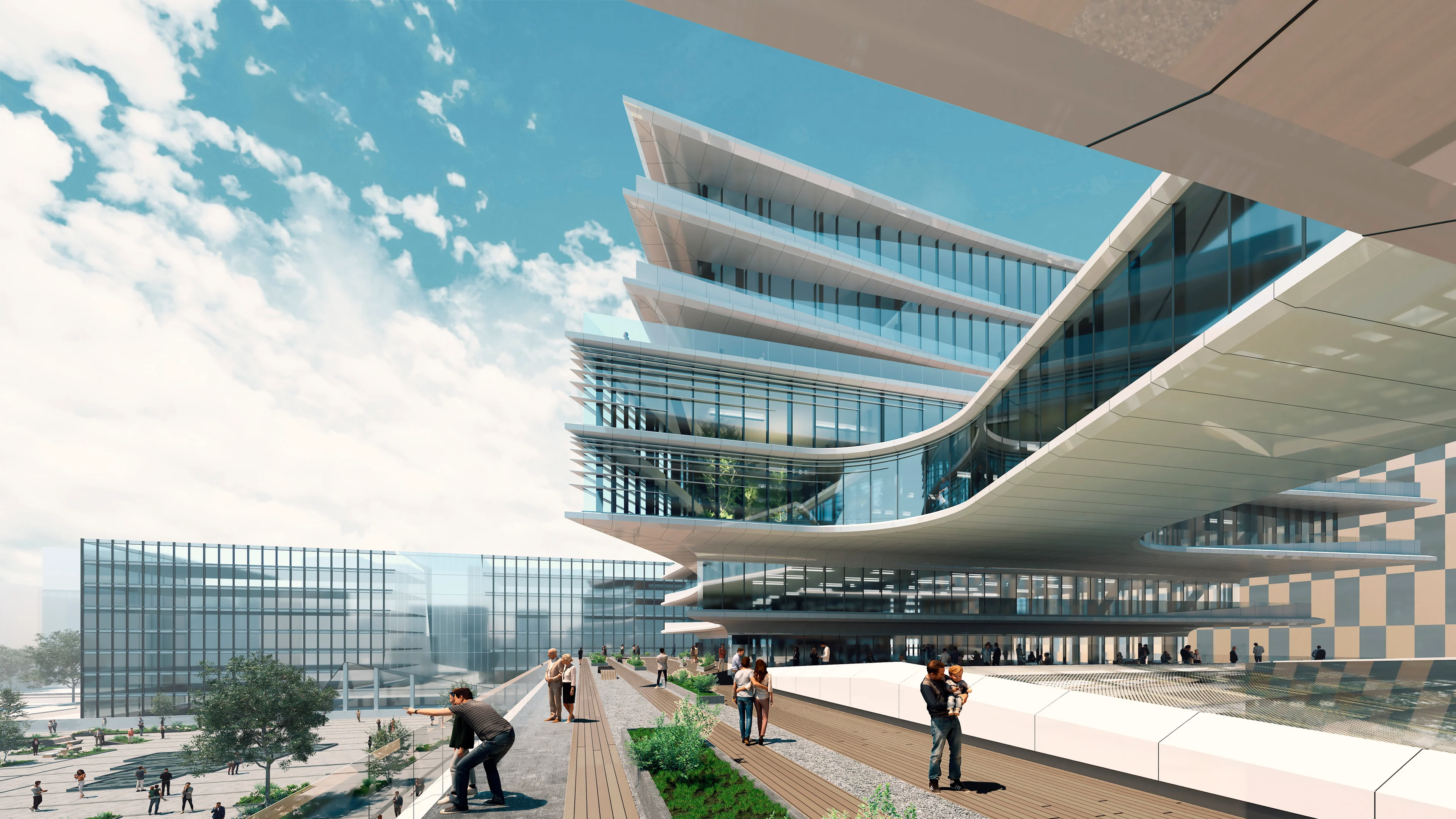
Integrated within the Vilnius City Plan and the popular public square adjacent to the site, Business Stadium Central will be a new gathering place for the city.
Courtesy of Brick Visual
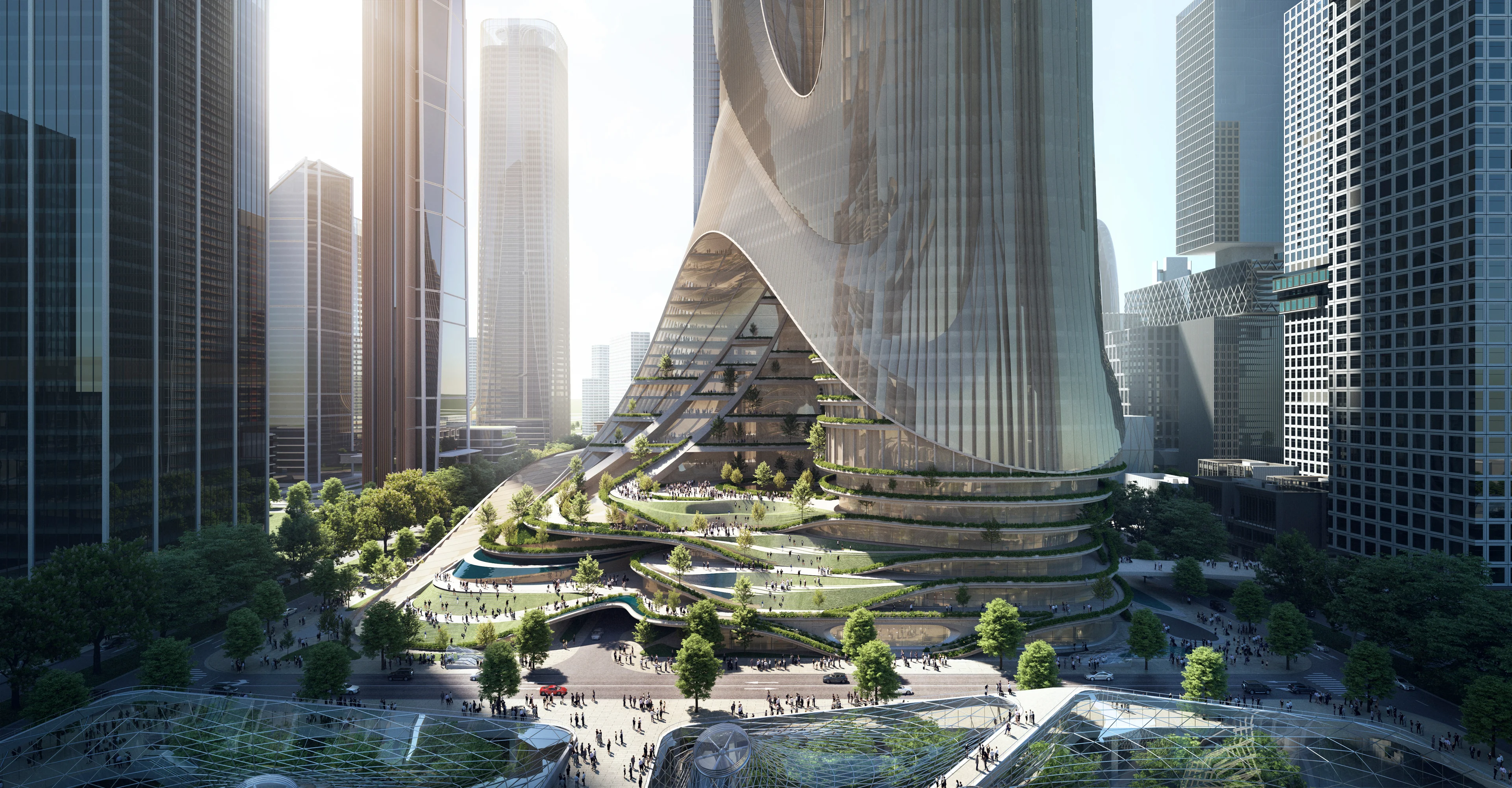
Tower C in Shenzhen Bay Super Headquarters Base
The design of Tower C integrates the city and nature within its central green axis with the transit orientated development (TOD) of Shenzhen’s new spine, creating a ‘superscape’ that will become a tower of the future within the Super Headquarters Base.
Photograph by Virgile Simon Bertrand
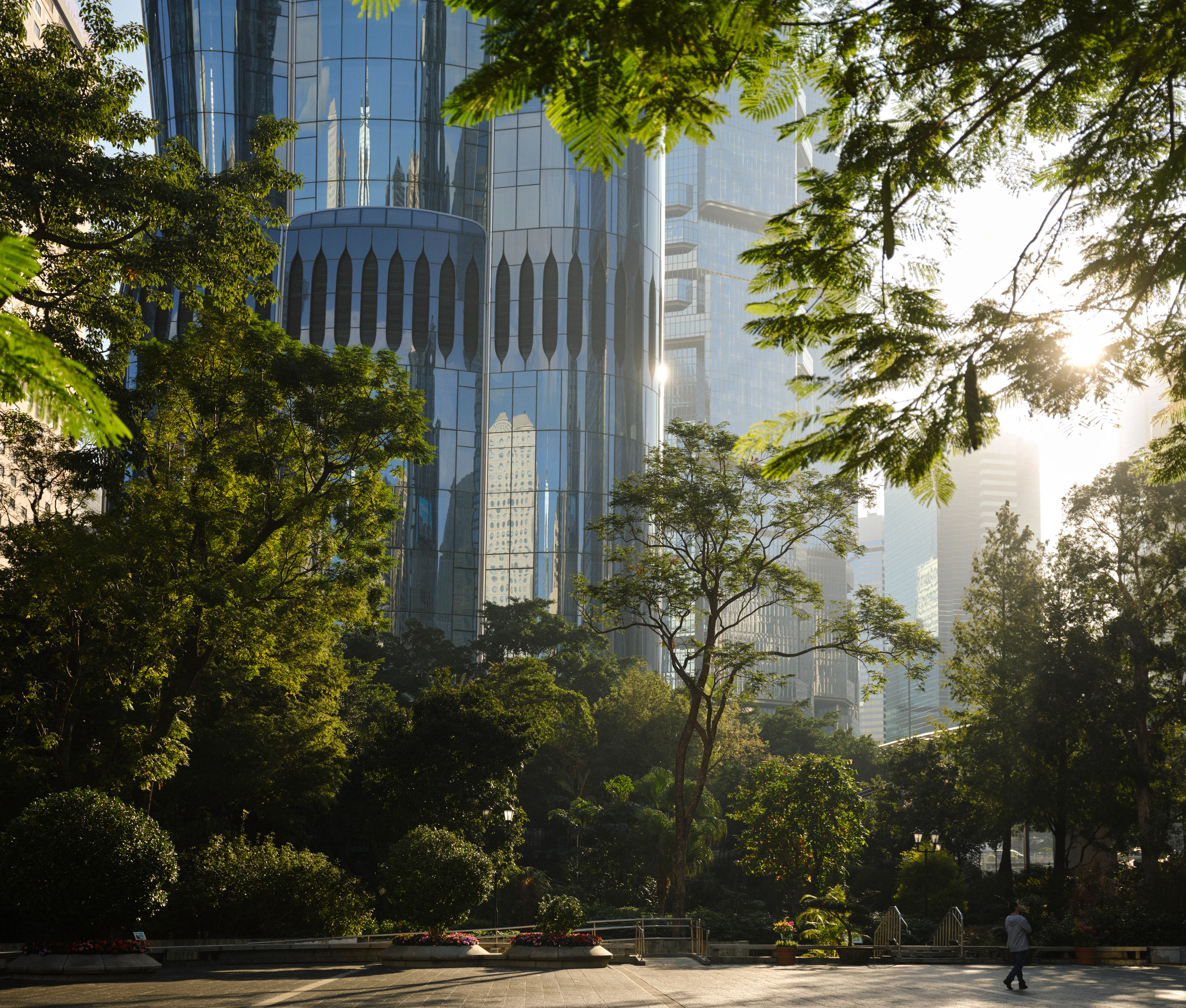
The Henderson
Developed on the world’s most valuable site purchased by Henderson Land, the 36-storey tower's design shelters new civic plazas enveloped by nature, creating an urban oasis in the centre of the city. Accommodating enhanced workplace flexibility, the building’s smart management system creates a contactless pathway for all occupants, eliminating all contact with communal surfaces.
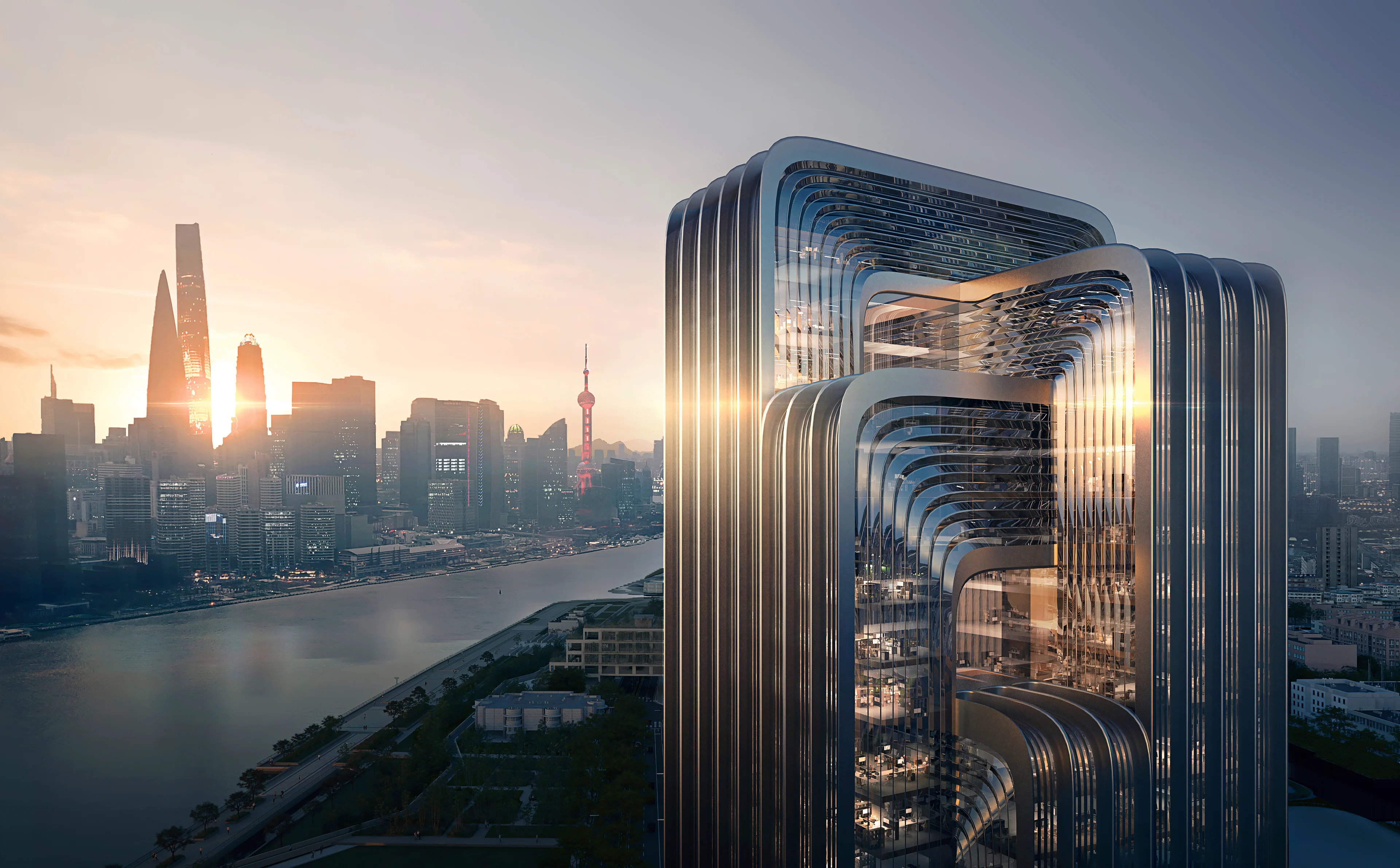
CECEP Shanghai Campus
The 218,000m² campus sets new benchmarks for the city in energy conservation, energy efficiency and sustainability.
Courtesy of ZHA
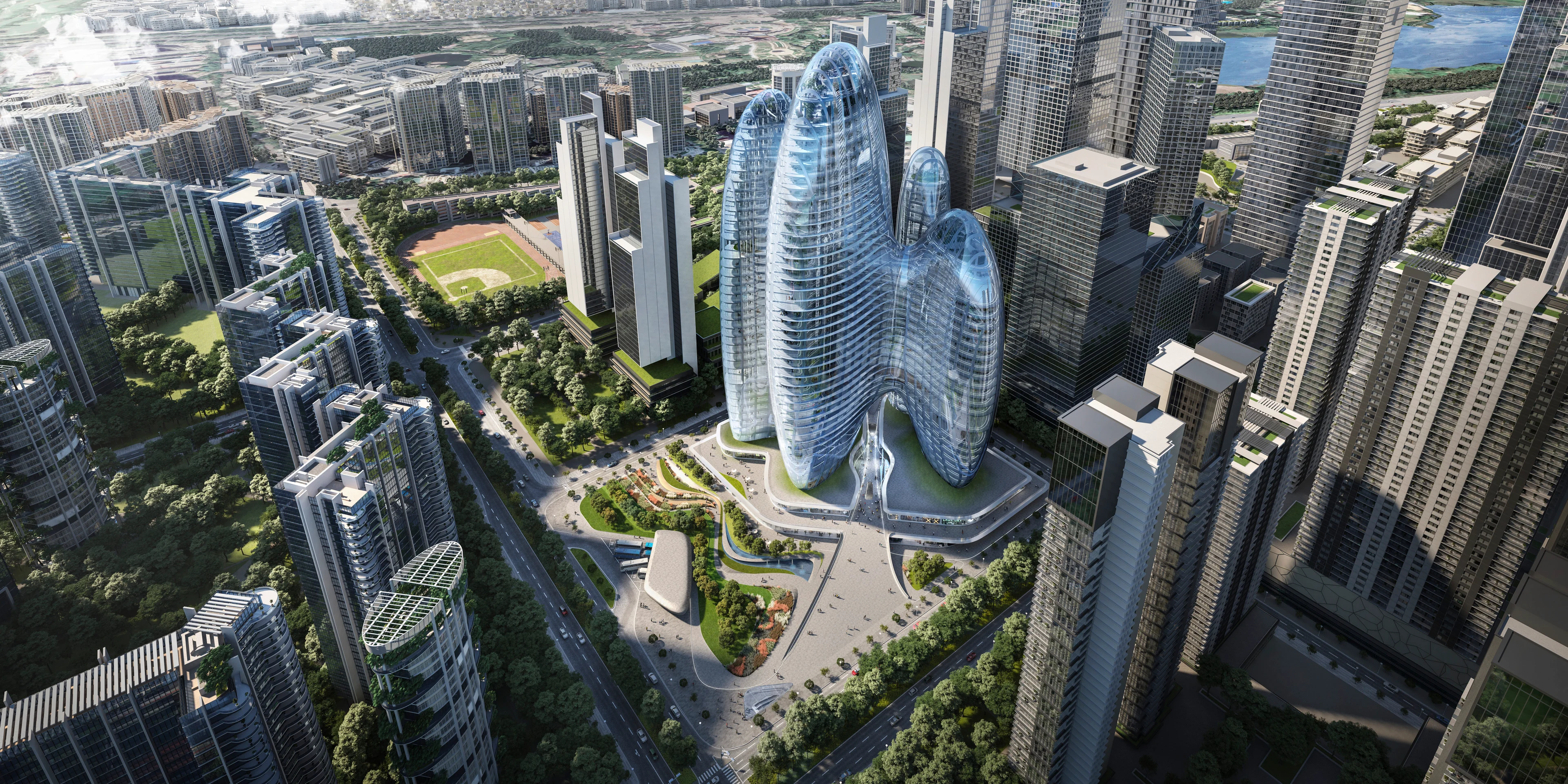
OPPO Headquarters
Conceived as four interconnected towers reaching a height of 200m (42 floors), the 185,000 sq.m design incorporates two towers of flexible, open-plan spaces linked by a 20-storey vertical lobby, and two external service towers providing vertical circulation.
Photograph by Hélène Binet
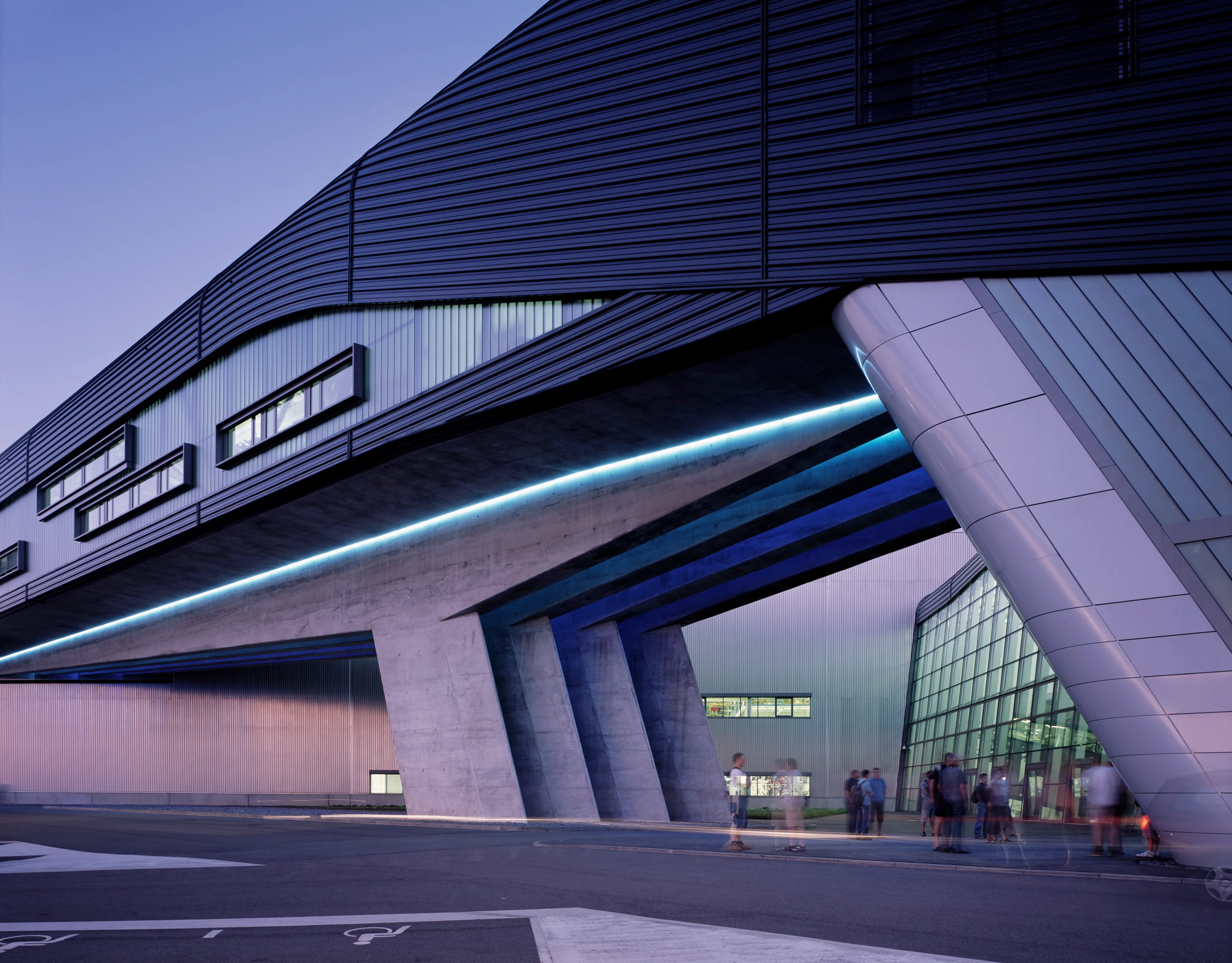
BMW Central Building
Our Central Building for BMW constituted a radical reinterpretation of the traditional office – transforming the building and the functions it contains into a more dynamic, engaging ‘nerve-centre’ or ‘communication knot’ – funneling all movement around the manufacturing complex through a space that transcends conventional white collar/blue collar spatial divisions.
Photograph by Hufton + Crow
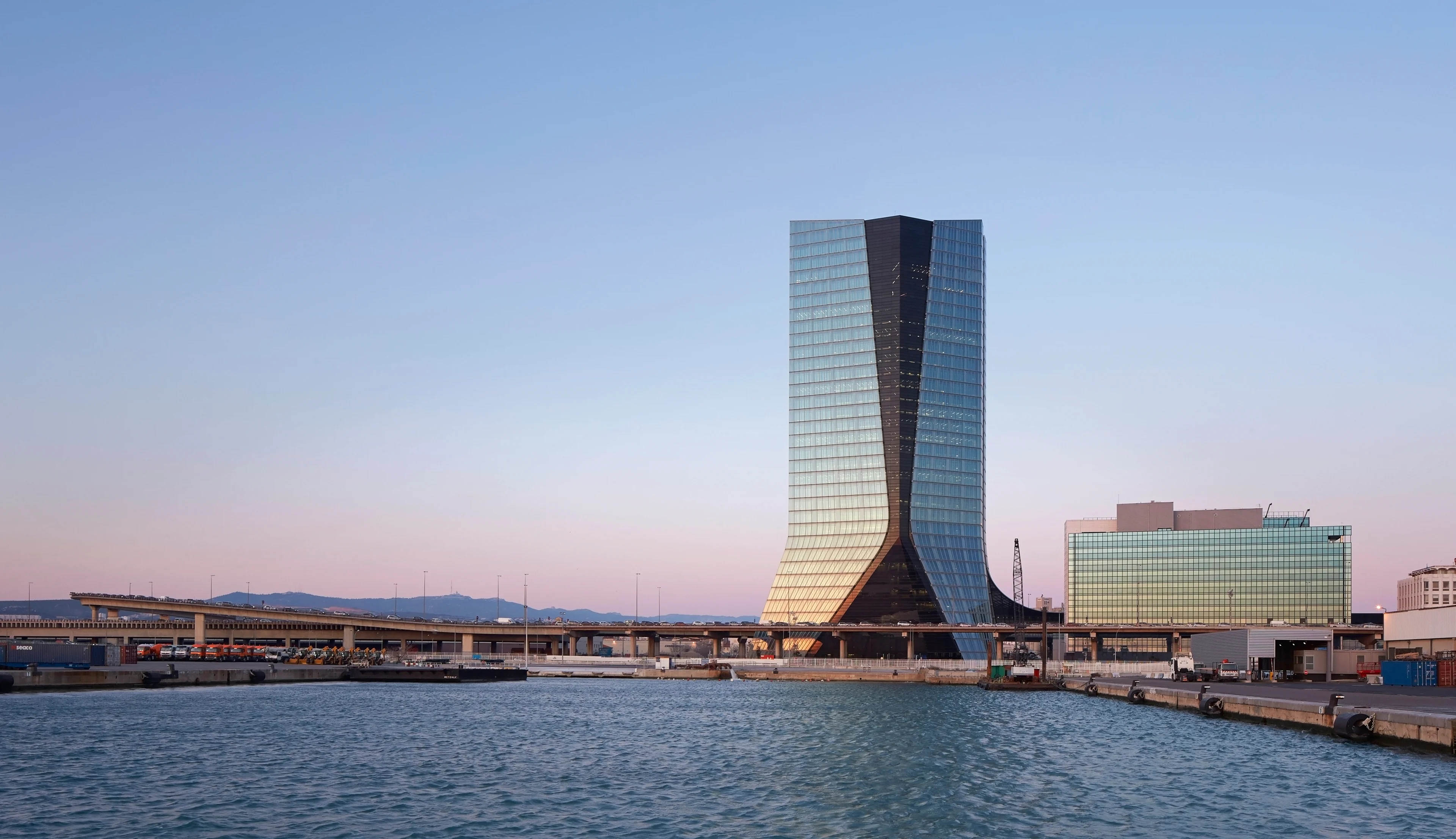
CMA CGM Headquarters
Rising in a metallic curving arc that slowly lifts and accelerates skywards into the dramatic vertical geometry of its revolutionary forms. With its ultimate coordinate 142.8 metres above the ground, a gateway to the city from both land and sea, an iconic vertical element that interacts with Marseille’s other significant landmarks.
Photograph by Hufton + Crow
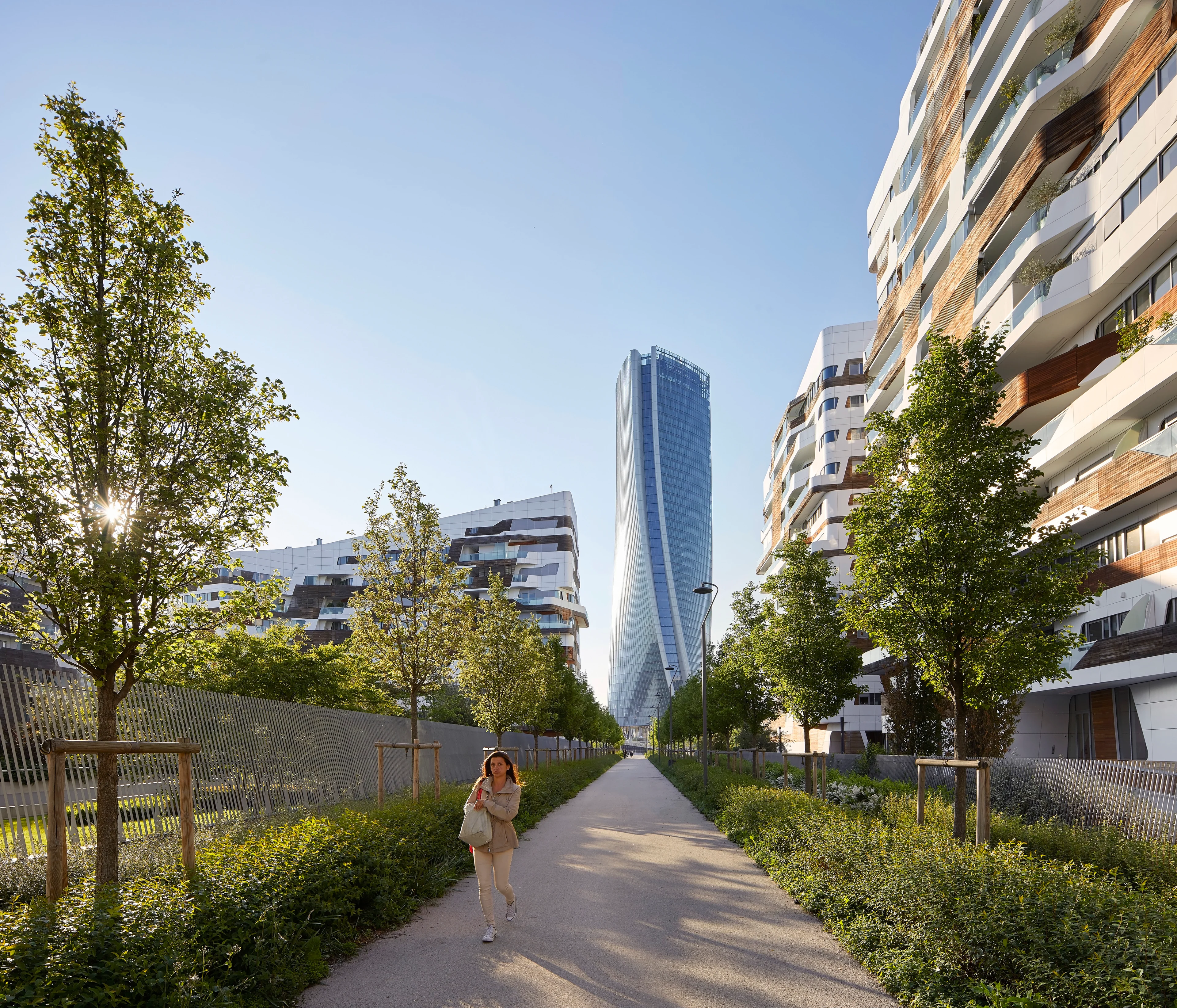
Generali Tower
Generali Tower
Generali Tower is within the CityLife masterplan that has redeveloped Milan’s abandoned trade fair grounds following the fair’s relocation to Rho Pero in 2005.
01
02
03
04
05
06
07
08
09
10
11
12
13
14
15