
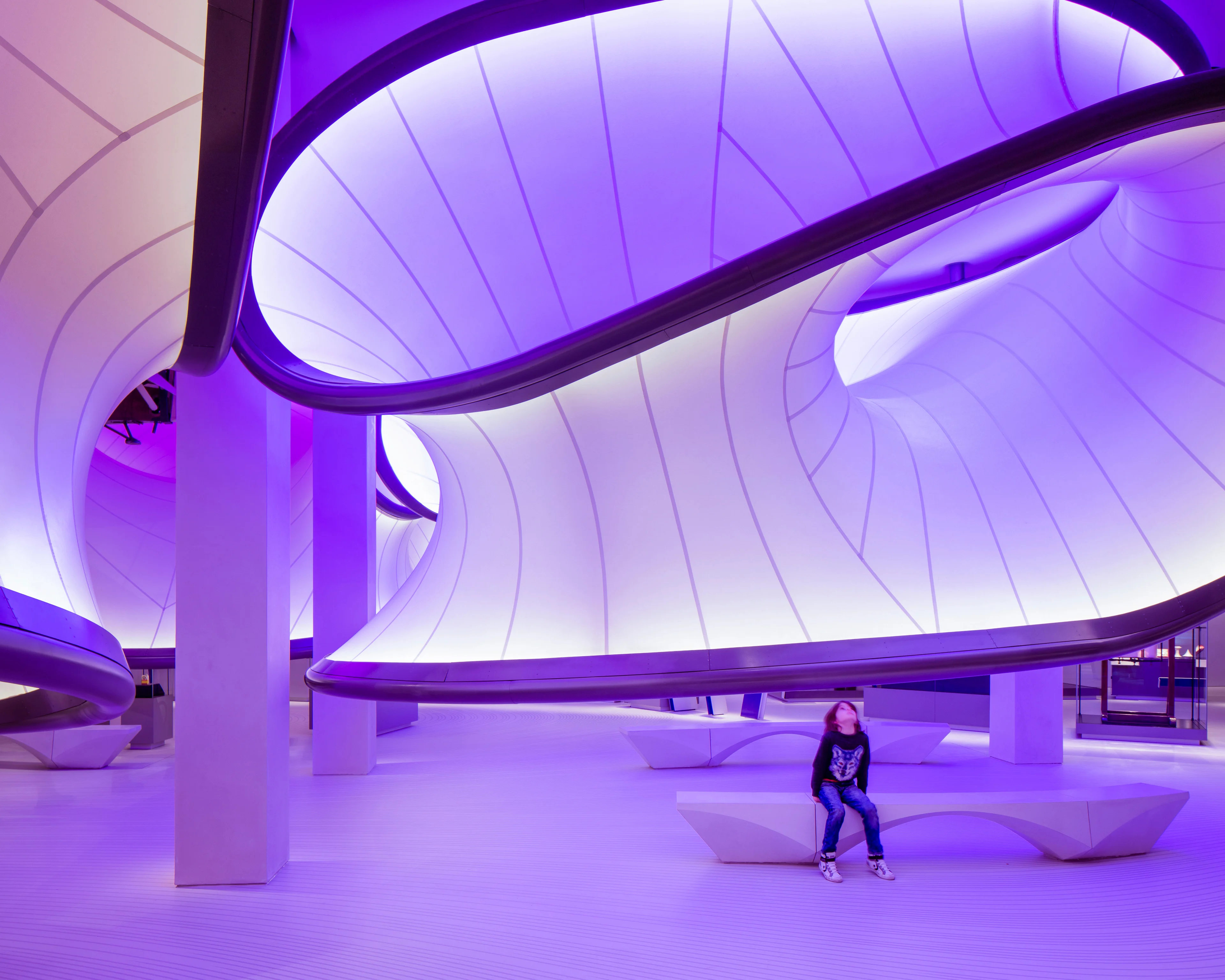
Photograph by Luke Hayes
London, United Kingdom
2014 - 2016
The Science Museum
Mathematics: The Winton Gallery, Science Museum
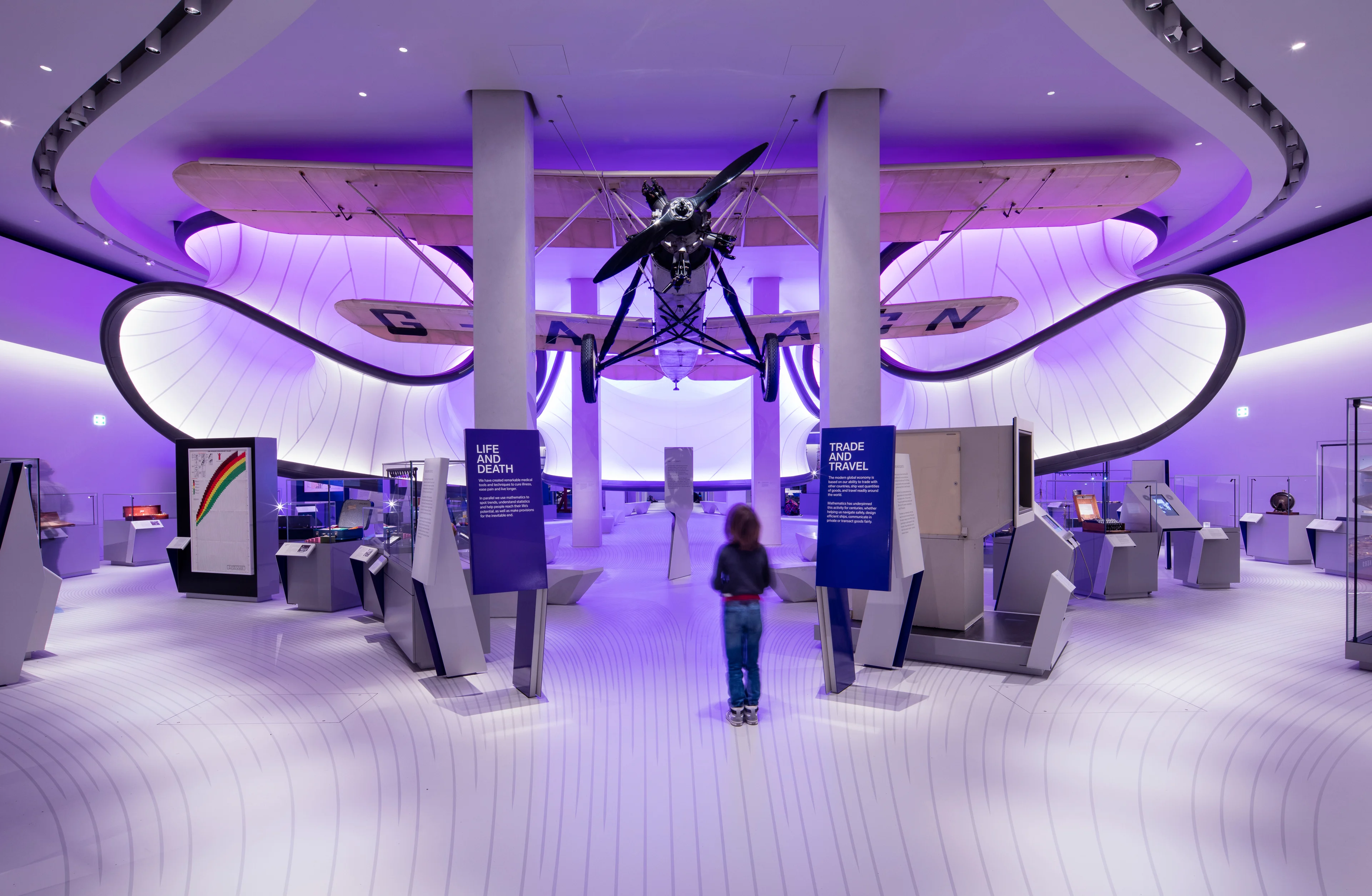
Bringing together remarkable stories, historical artefacts and design
Mathematics: The Winton Gallery brings together remarkable stories, historical artefacts and design to highlight the central role of mathematical practice in all our lives, and explores how mathematicians, their tools and ideas have helped build the modern world over the past four centuries.
More than 100 treasures from the Science Museum’s world-class science, technology, engineering and mathematics collections have been selected to tell powerful stories about how mathematics has shaped, and been shaped by, some of our most fundamental human concerns – from trade and travel to war, peace, life, death, form and beauty.
Curator Dr David Rooney said, “At its heart this gallery reveals a rich cultural story of human endeavour that has helped transform the world over the last four hundred years. Mathematical practice underpins so many aspects of our lives and work, and we hope that bringing together these remarkable stories, people and exhibits will inspire visitors to think about the role of mathematics in a new light.”
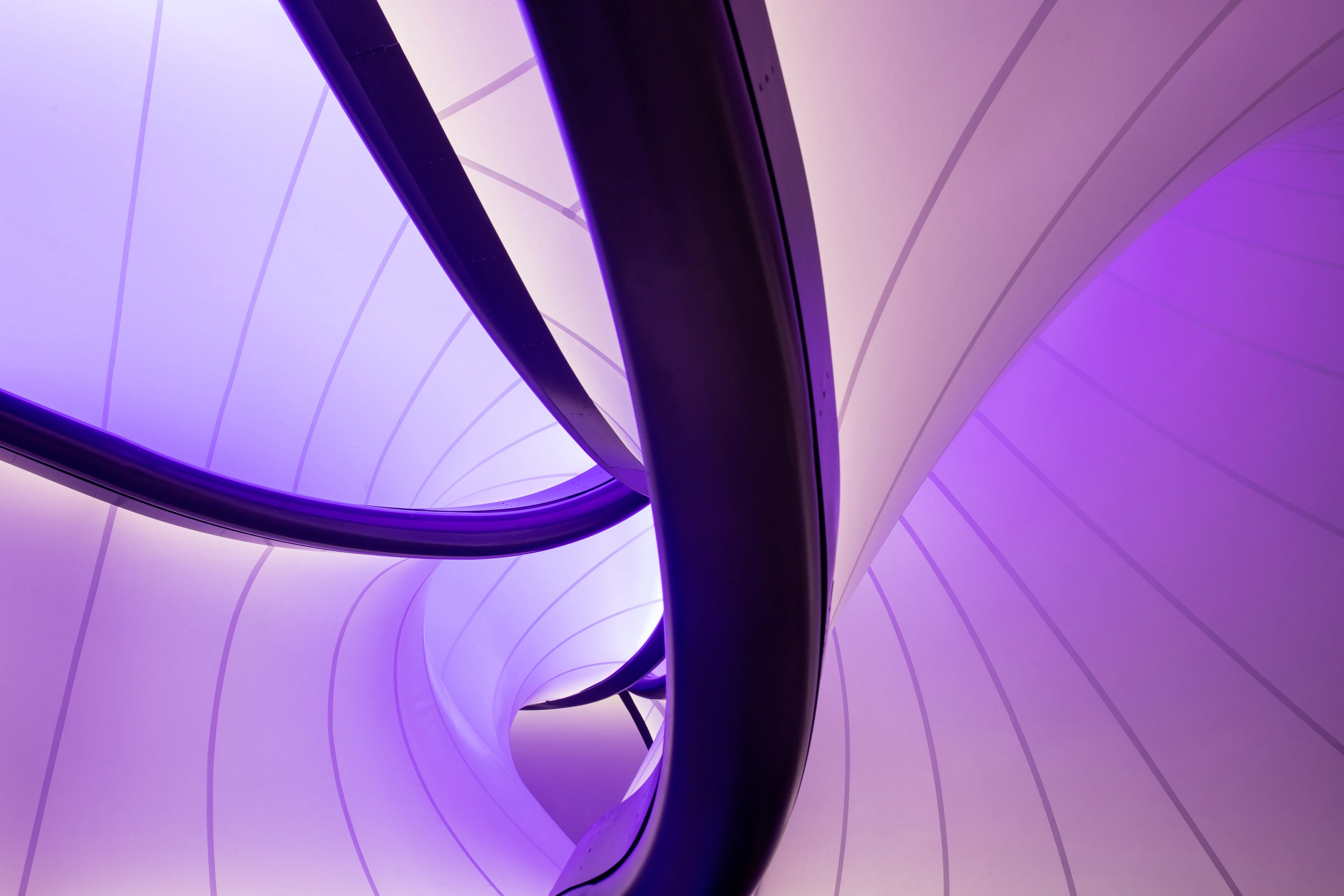
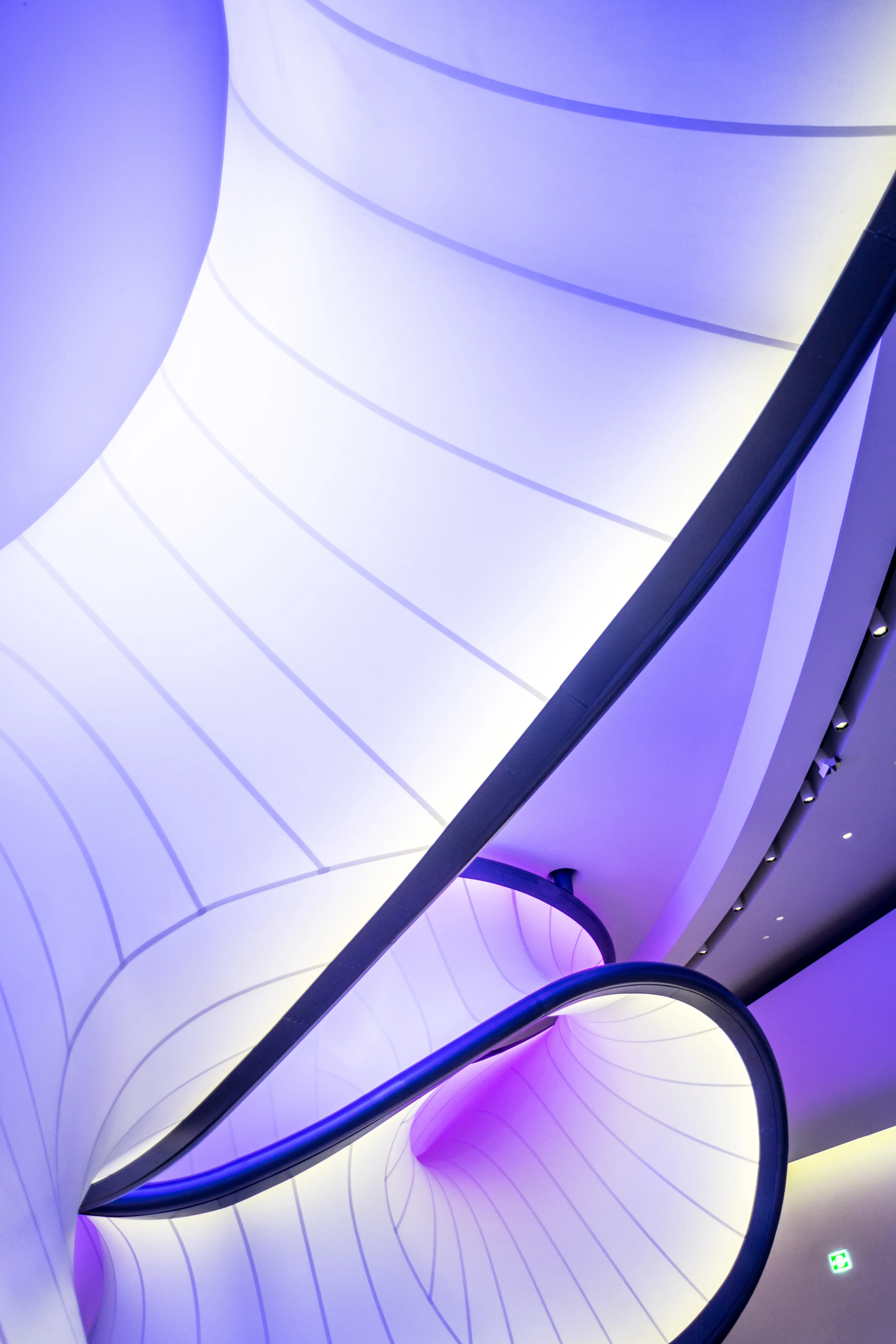
Courtesy of Matt Danby, archifocussed
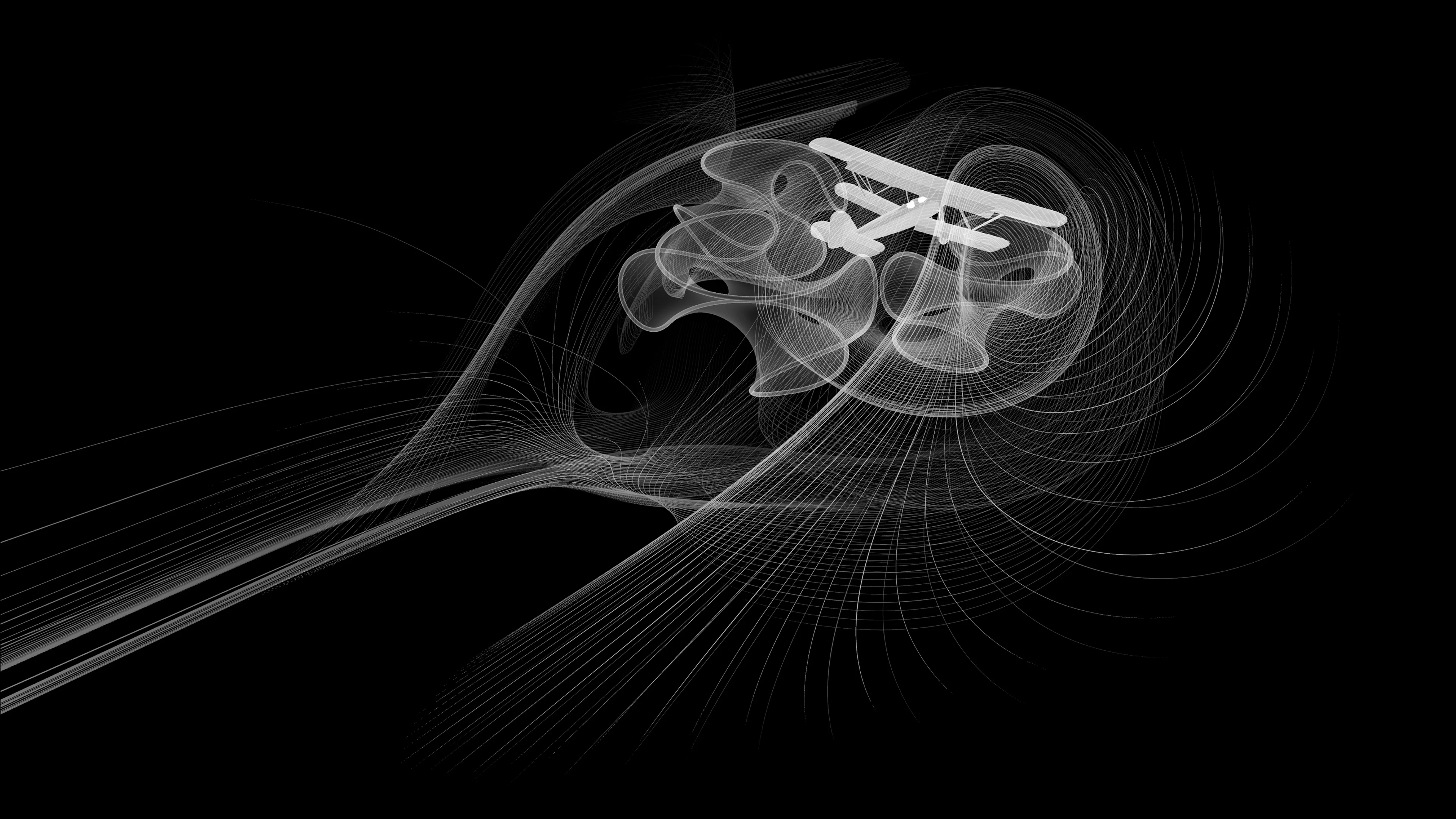
Design concept
Driven by equations of airflow
Positioned at the centre of the gallery is the Handley Page ‘Gugnunc’ aeroplane, built in 1929 for a competition to construct safe aircraft. Ground-breaking aerodynamic research influenced the wing design of this experimental aeroplane, helping to shift public opinion about the safety of flying and to secure the future of the aviation industry. This aeroplane encapsulates the gallery’s overarching theme, illustrating how mathematical practice has helped solve real-world problems and in this instance paved the way for the safe passenger flights that we rely on today.
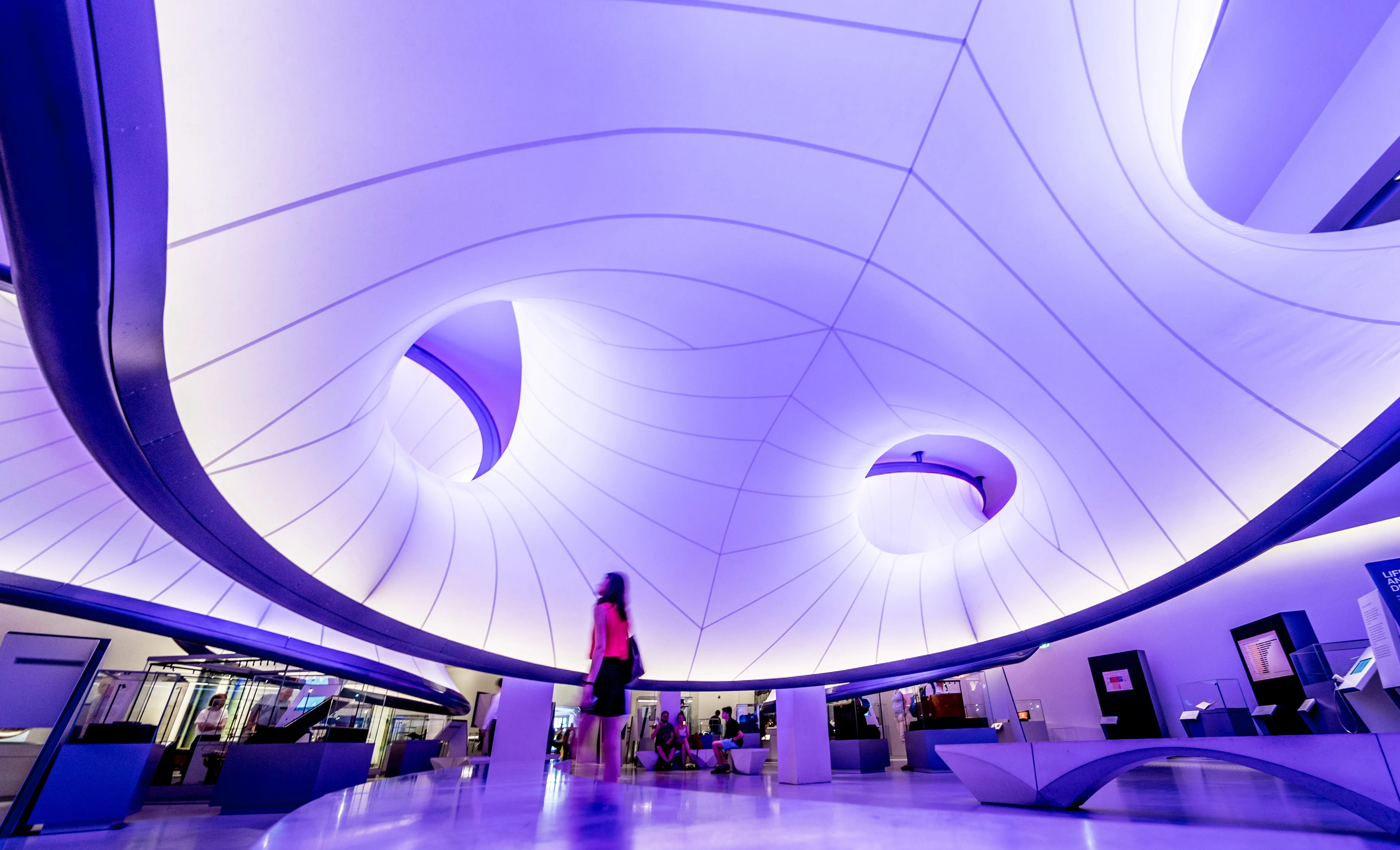
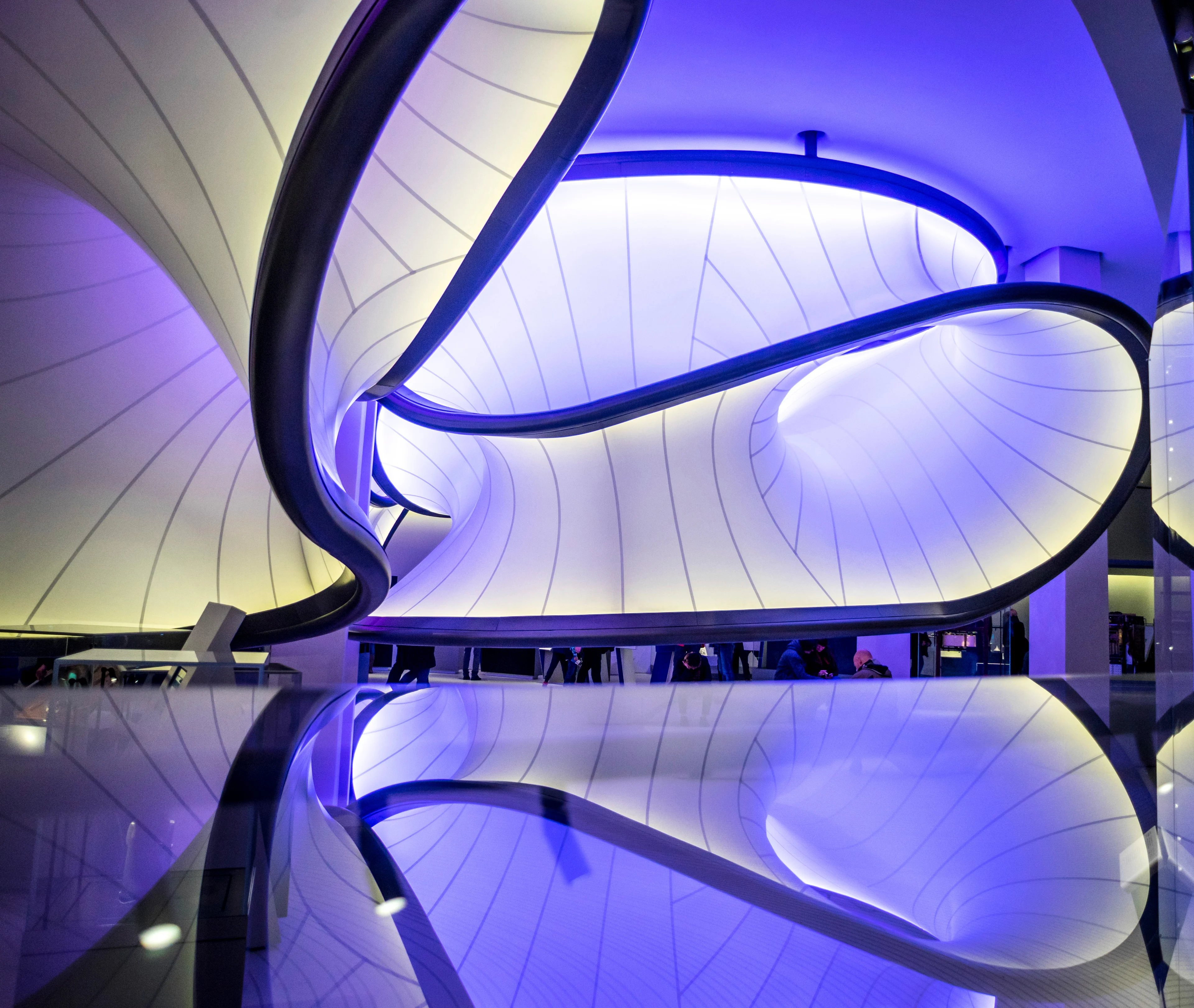
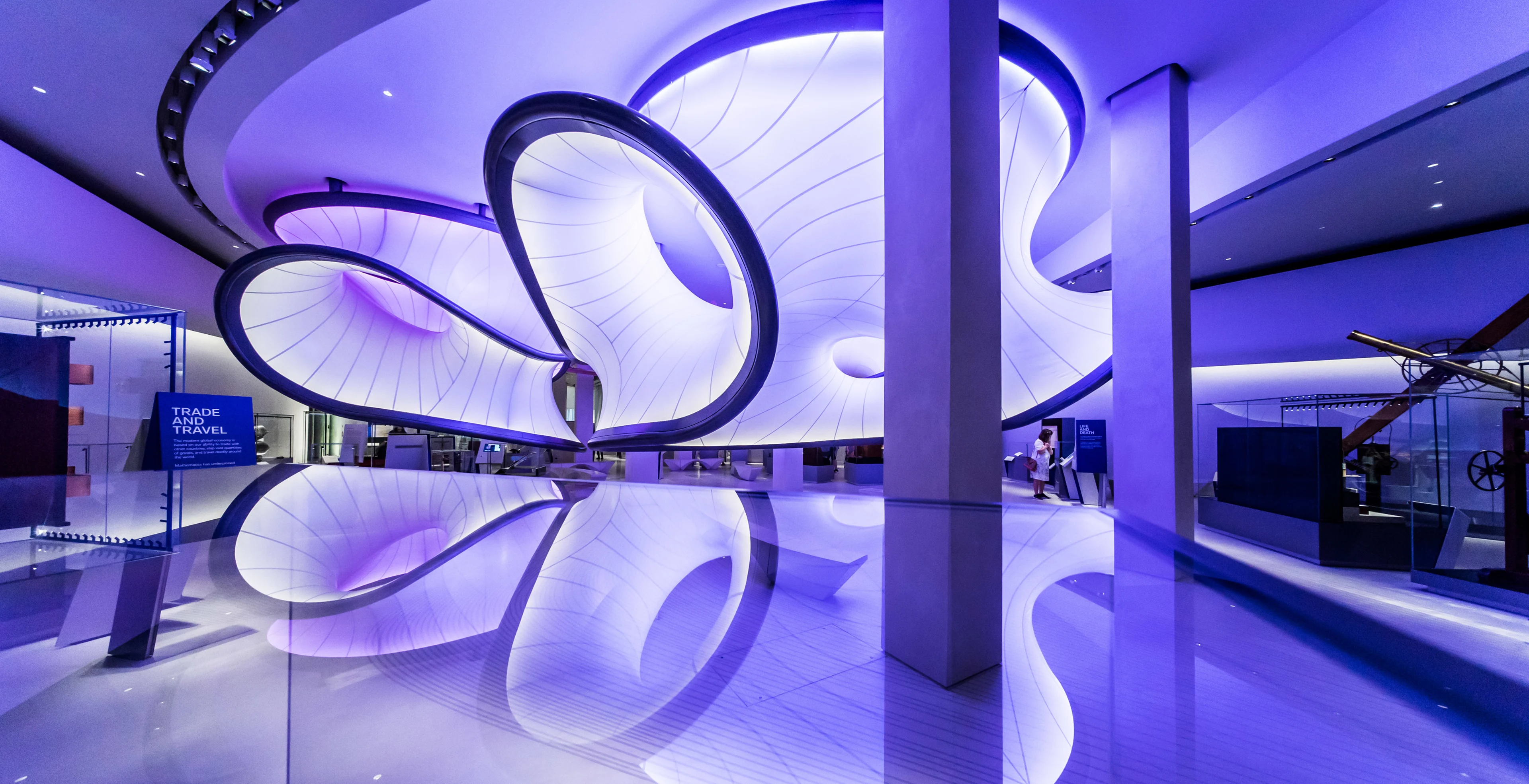
Mathematics also defines ZHA’s enlightening design for the gallery. Inspired by the Handley Page aircraft, the design is driven by equations of airflow used in the aviation industry. The layout and lines of the gallery represent the air that would have flowed around this historic aircraft in flight, from the positioning of the showcases and benches to the three-dimensional curved surfaces of the central pod structure.
The late Dame Zaha Hadid first became interested in geometry while studying mathematics at university. Mathematics and geometry have a strong connection with architecture and she continued to examine these relationships throughout each of her projects; with mathematics always central to her work. As Dame Zaha said, “When I was growing up in Iraq, math was an everyday part of life. We would play with math problems just as we would play with pens and paper to draw – math was like sketching.”
Courtesy of Matt Danby, archifocussed
Courtesy of Matt Danby, archifocussed
Courtesy of Matt Danby, archifocussed
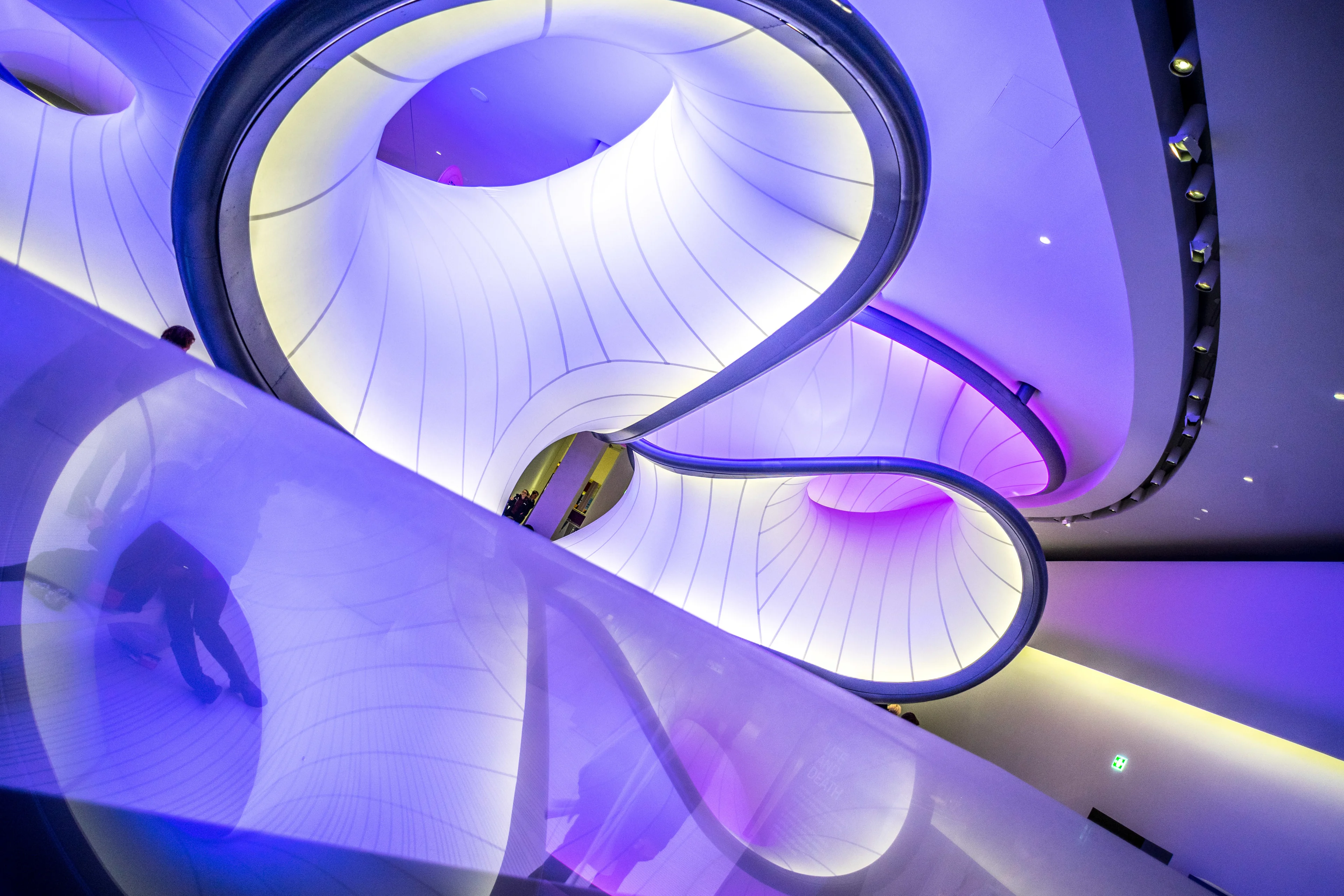
Courtesy of Matt Danby, archifocussed
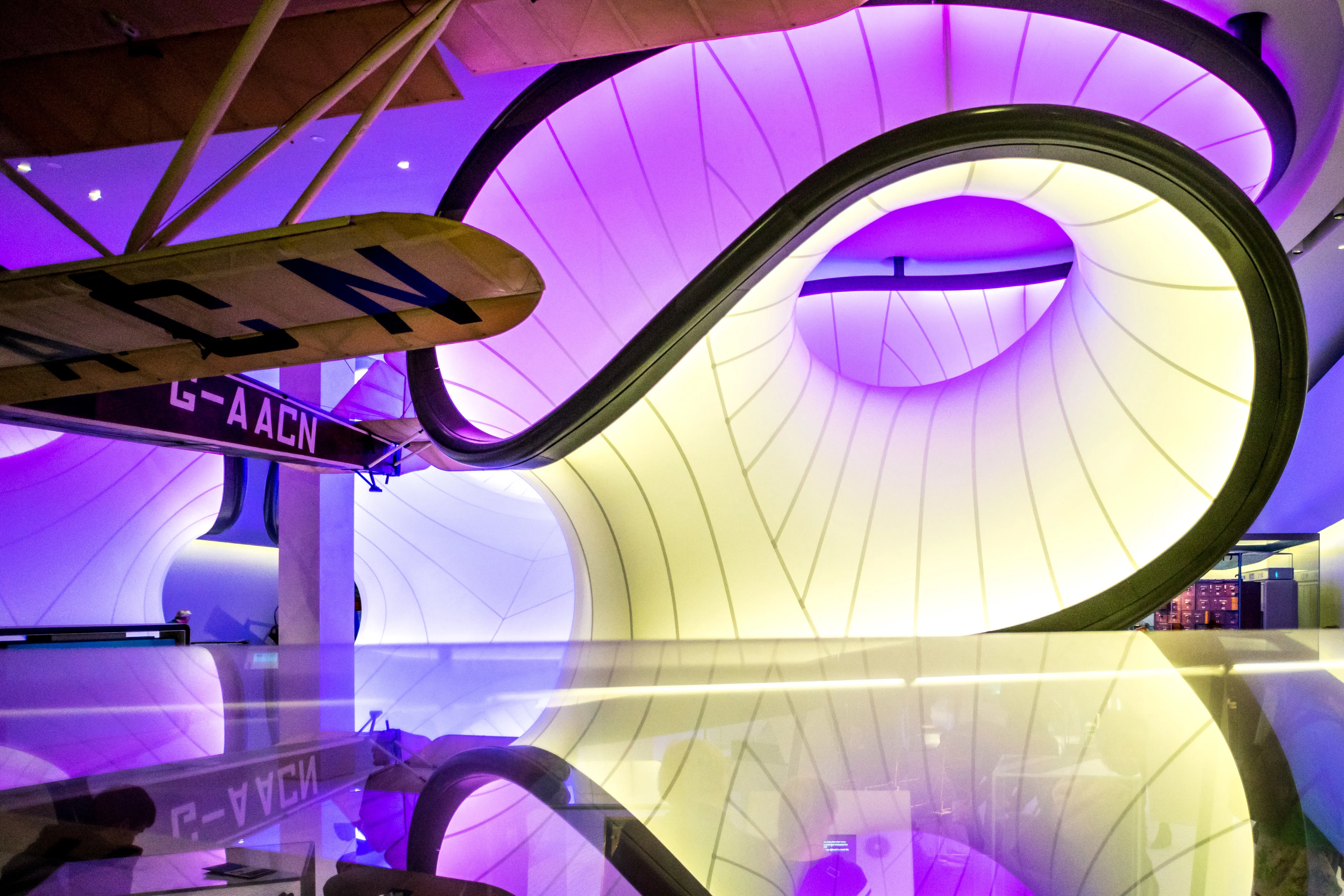
Courtesy of Matt Danby, archifocussed
01
02
03
04
05
A lasting tribute to this world-changing architect
Ian Blatchford, Director of the Science Museum Group, said, “We were hugely impressed by the ideas and vision of the late Dame Zaha Hadid and Patrik Schumacher when they first presented their design for the new mathematics gallery over two years ago. It was a terrible shock for us all when Dame Zaha died suddenly in March of 2016, but I am sure that this gallery will be a lasting tribute to this world-changing architect and provide inspiration for our millions of visitors for many years to come.”
From a beautiful 17th century Islamic astrolabe that uses ancient mathematical techniques to map the night sky, to an early example of the famous Enigma machine, designed to resist even the most advanced mathematical techniques for code breaking during the Second World War, each historic object within the gallery has an important story to tell. Archive photography and film helps to capture these stories, and introduces the wide range of people who made, used or were impacted by each mathematical device or idea.
Some instruments and objects within the gallery clearly reference their mathematical origin. Others may surprise visitors and appear rooted in other disciplines, from classical architecture to furniture design.
Interior Architecture
Explore more of our interior architecture
From flagship retail stores to private homes, historic palazzos to museum galleries, offices to hotels, explore the depth and breadth of our interior architecture projects
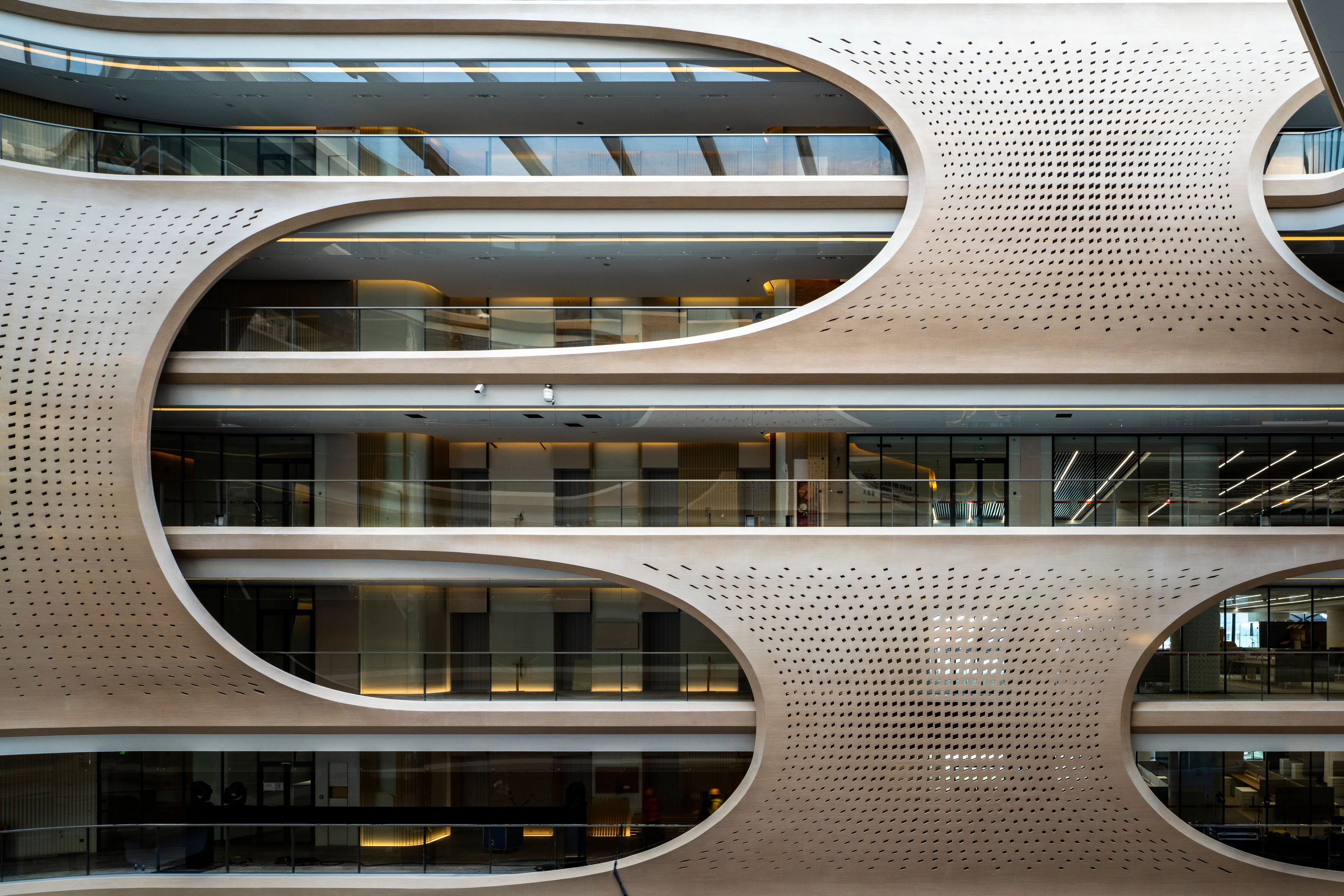
Courtesy of ZHA
Infinitus Plaza Interior
The interior design of Infinitus Plaza continues the architectural narrative established by the building’s exterior form. Echoing the symbol for infinity (∞), the design creates a series of shared indoor and outdoor spaces that reflect Infinitus’ core values: connection, adaptability, and collective well-being.
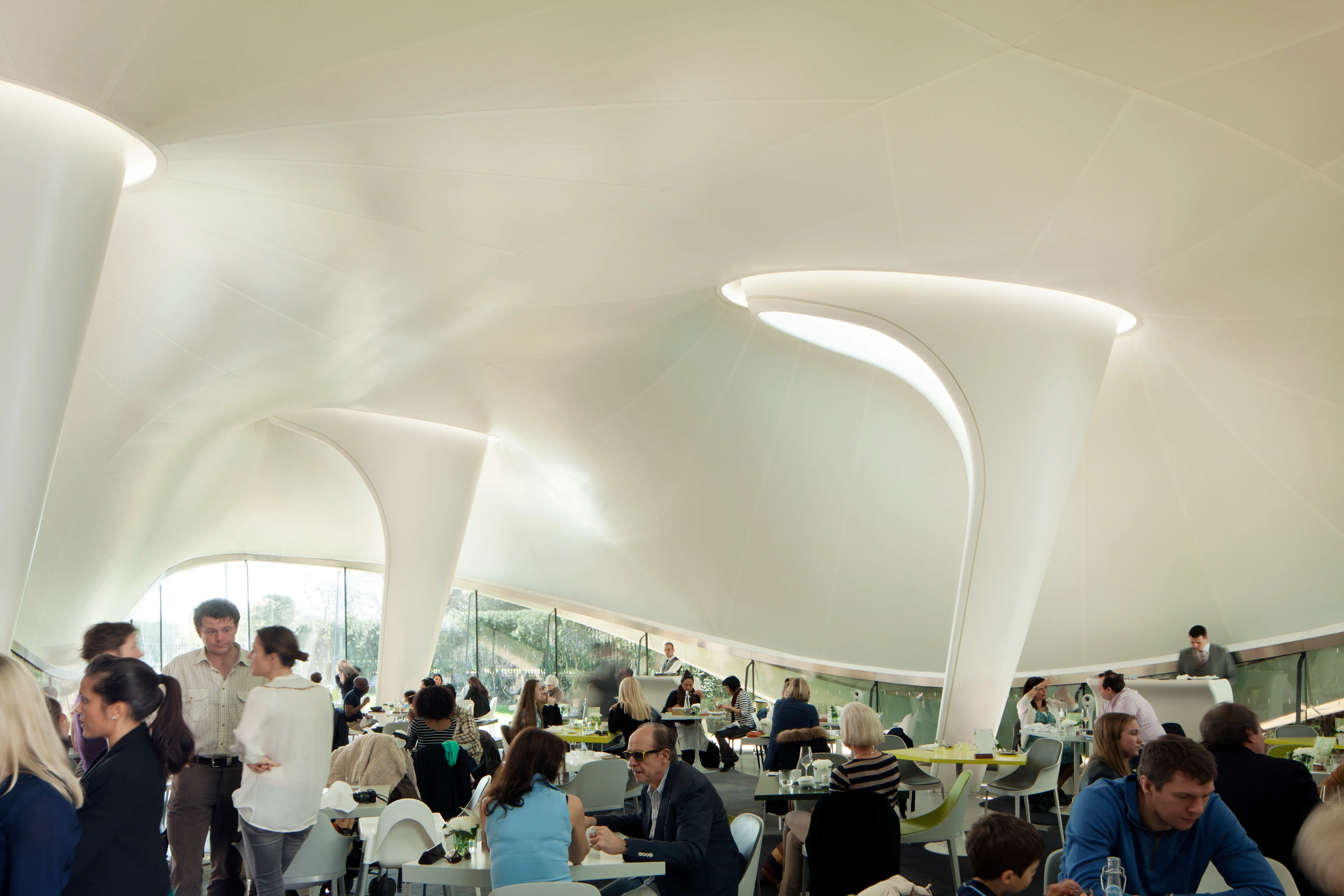
The Magazine Restaurant
The Serpentine North Gallery consists of two distinct parts, namely the conversion of a classical 19th century brick structure – The Magazine – and a 21st century tensile structure. The Serpentine North Gallery is thus – after MAXXI in Rome – the second art space where ZHA have created a synthesis of old and new.
Courtesy of Marisfrolg
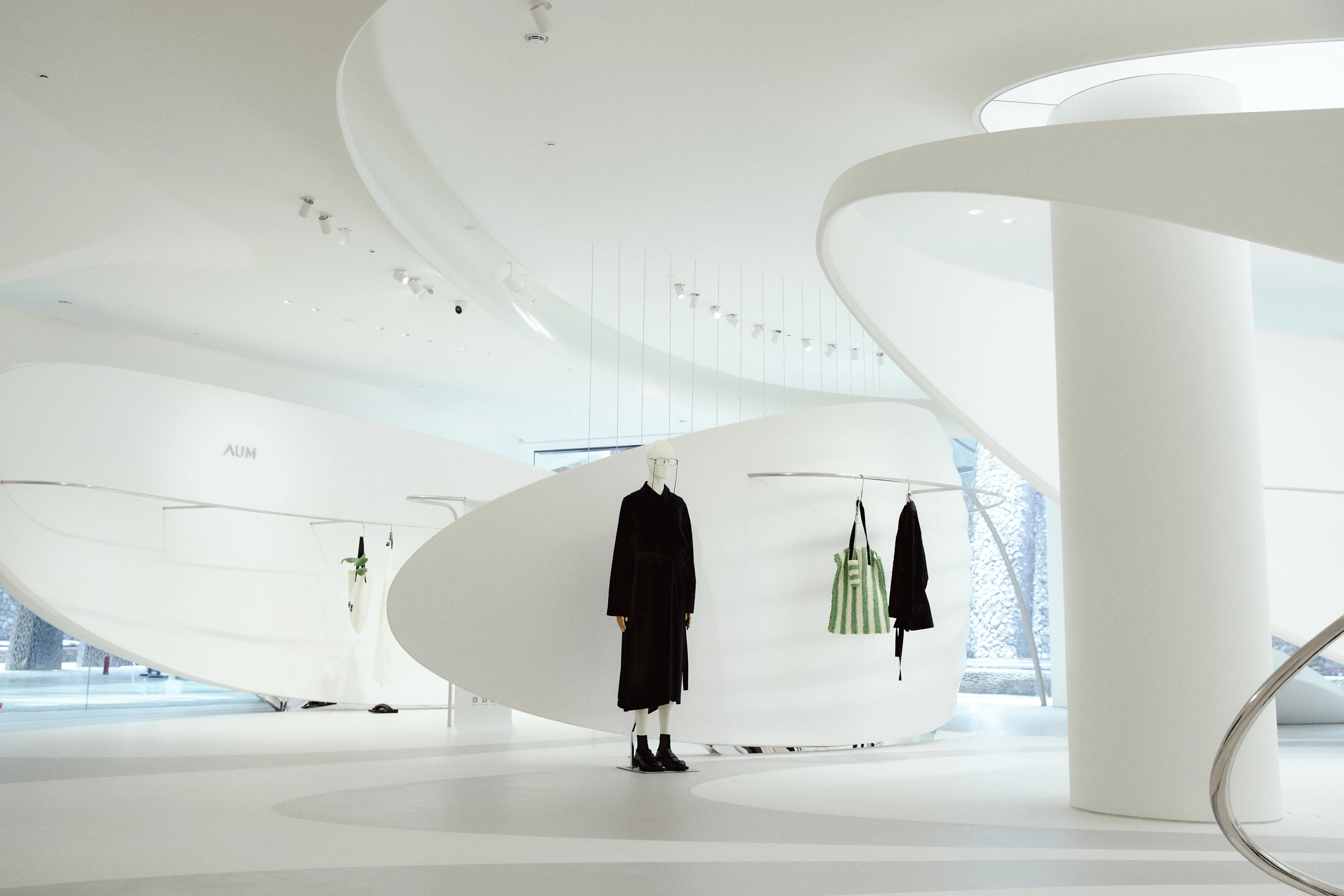
The Marisfrolg Showroom
Located at the heart of Marisfrolg Fashion Group’s Shenzhen campus, the 2,900m² Marisfrolg Showroom interiors by ZHA are informed by the rich textiles, timeless design and precision tailoring embodied within the group’s nine unique labels.
Photograph by Chris Dalton, Courtesy of Romeo Collection
Bistro
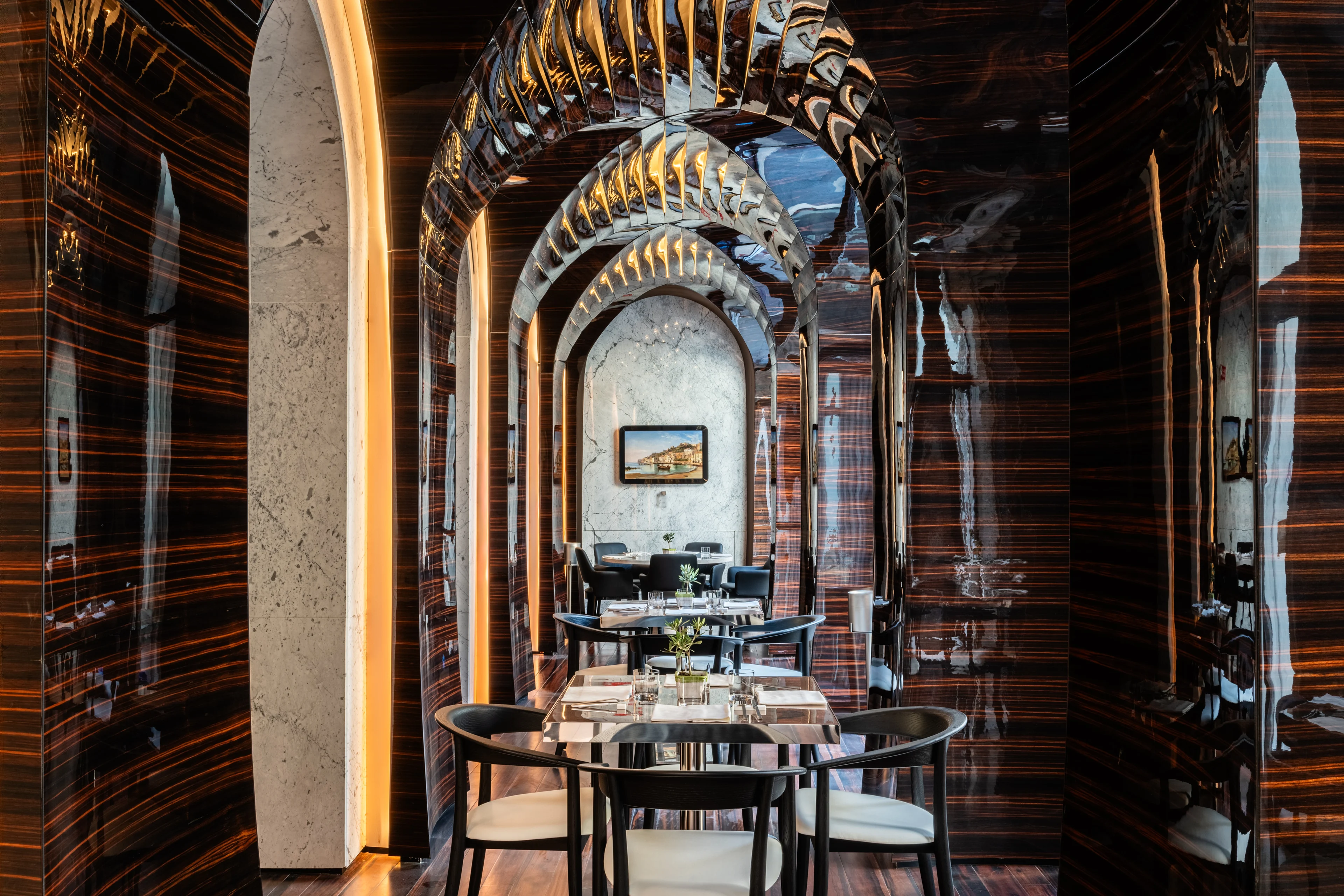
Romeo Roma Hotel
From the beginning of her career, architect Zaha Hadid sited her buildings in the air, floating buildings on shadow, light, and seams of space that lifted volumes above the ground, relating her work to another tradition—Rome’s. In designing the hotel conversion of the Palazzo Capponi, Hadid and her team at ZHA started where Baroque architects ended their palimpsest - at the vaulted ceilings.
Photograph by Luke Hayes
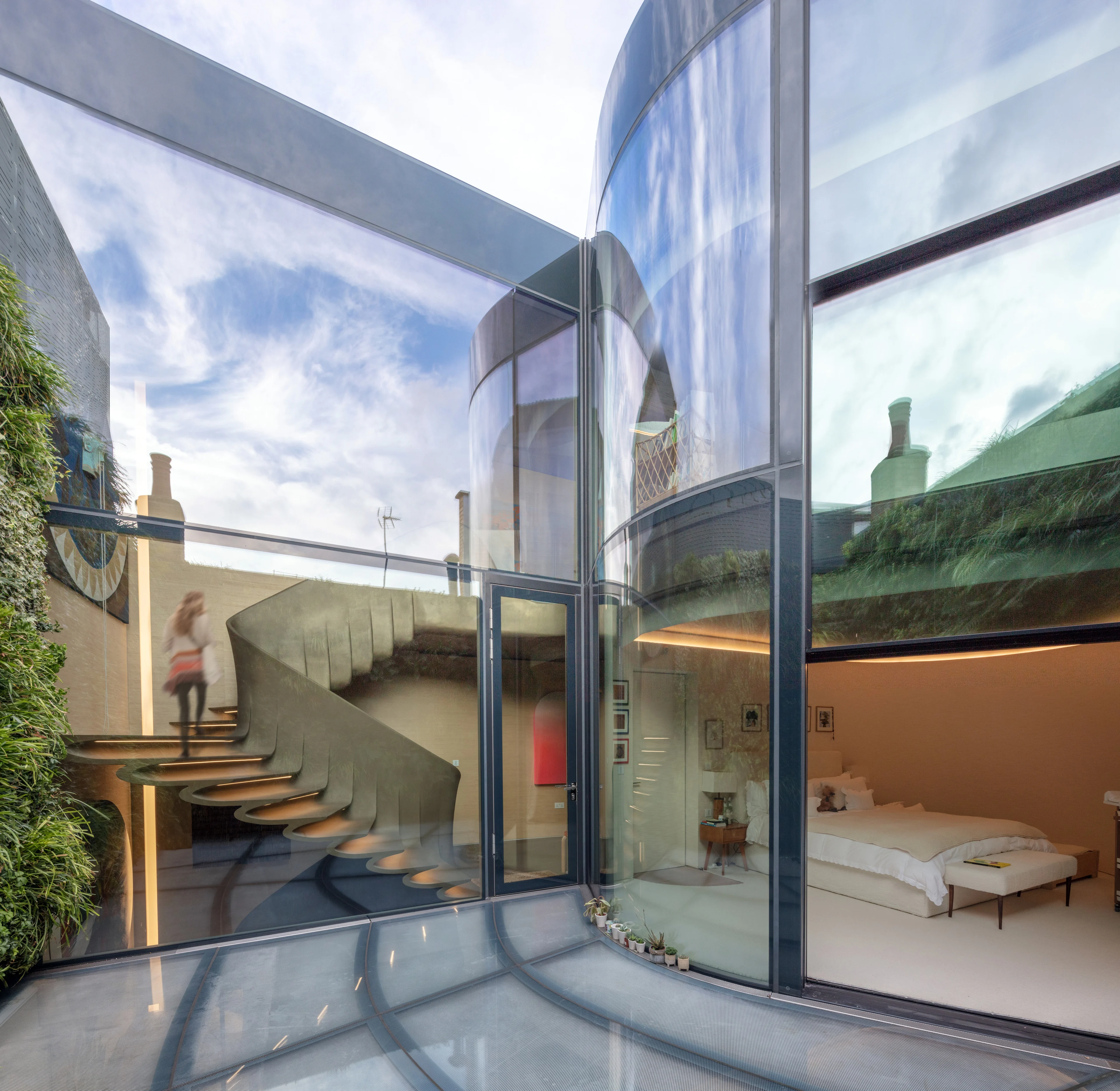
Mews House
Mews House is an innovative architectural solution built on a restricted urban site within one of London’s historic conservation areas
Photograph by Virgile Simon Bertrand
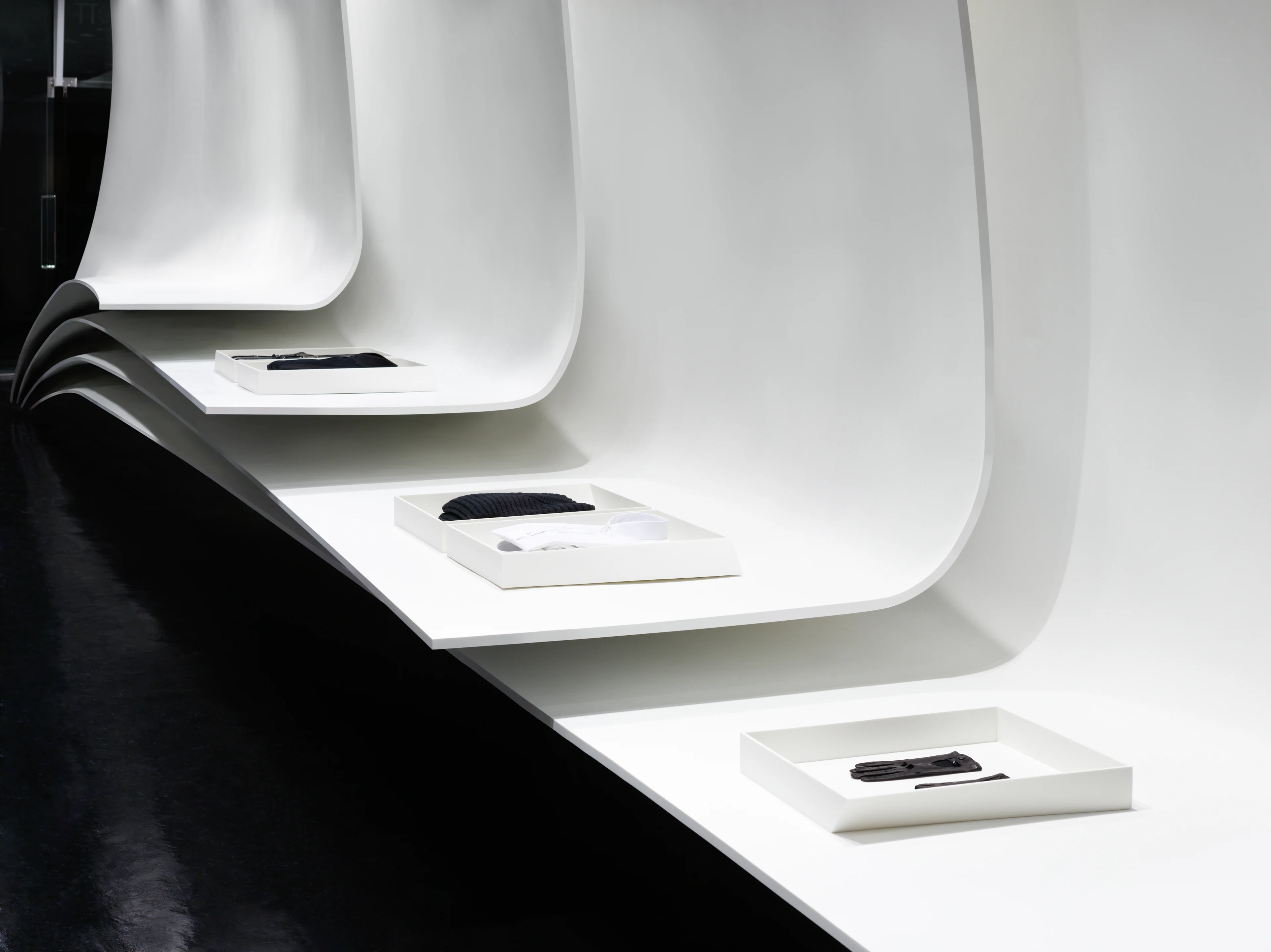
Neil Barrett Flagship Store
Our concept echoes the brand’s minimalism and use of fixed points, folds, pleats and cut outs. Space in the store is defined not in terms of rooms but as a passage through which customers circulate. Furniture, sculpture, textures and colours on both store floors explore the interplay between male and female.
Photograph by Jacopo Spilimbergo
Milan Store, September 2013
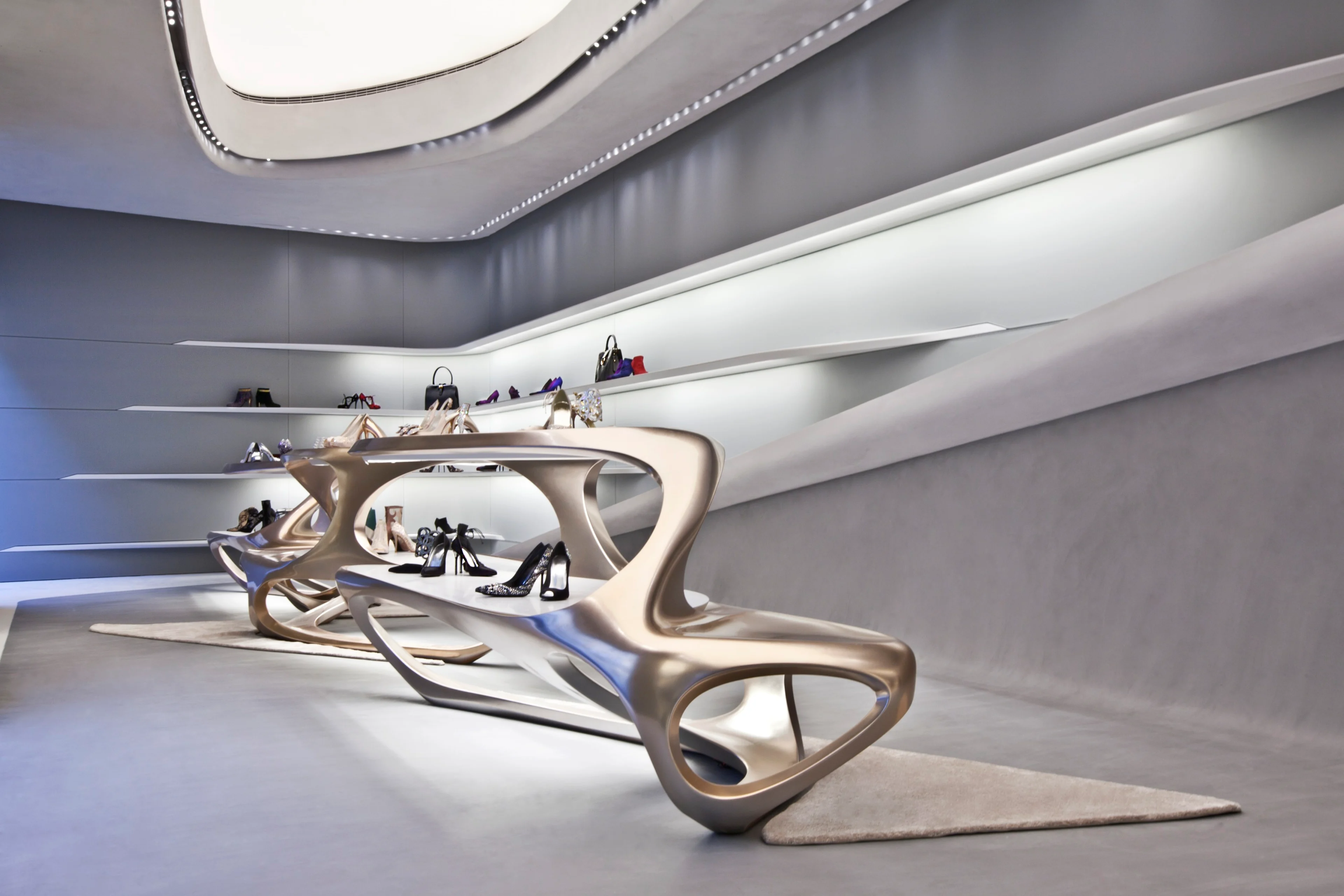
Stuart Weitzman Flagship Store
The 3,000-square-foot Milan flagship store is a playful dialogue of geometries; creating a rhythm of folds and recesses that have been shaped further by functional and ergonomic considerations. The store’s central display units have been designed to showcase the Stuart Weitman collection and also provide seating.
Photograph by Paul Warchol
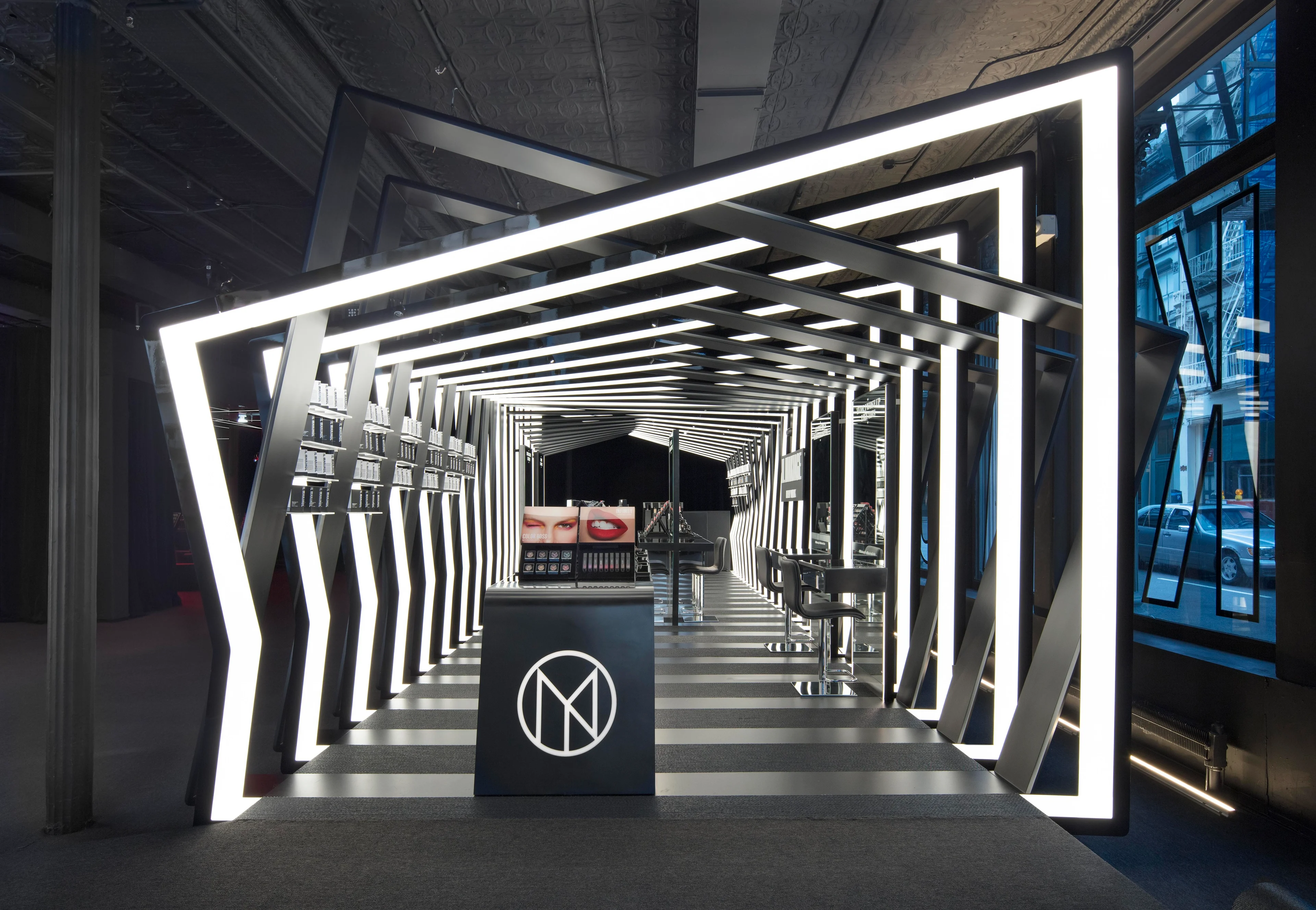
Il Makiage Pavilion
Il Makiage has launched a collection with a pavilion at 490 Broadway by ZHA that is informed by the label’s characteristically bold graphic identity.
Courtesy of Hoteles Silken
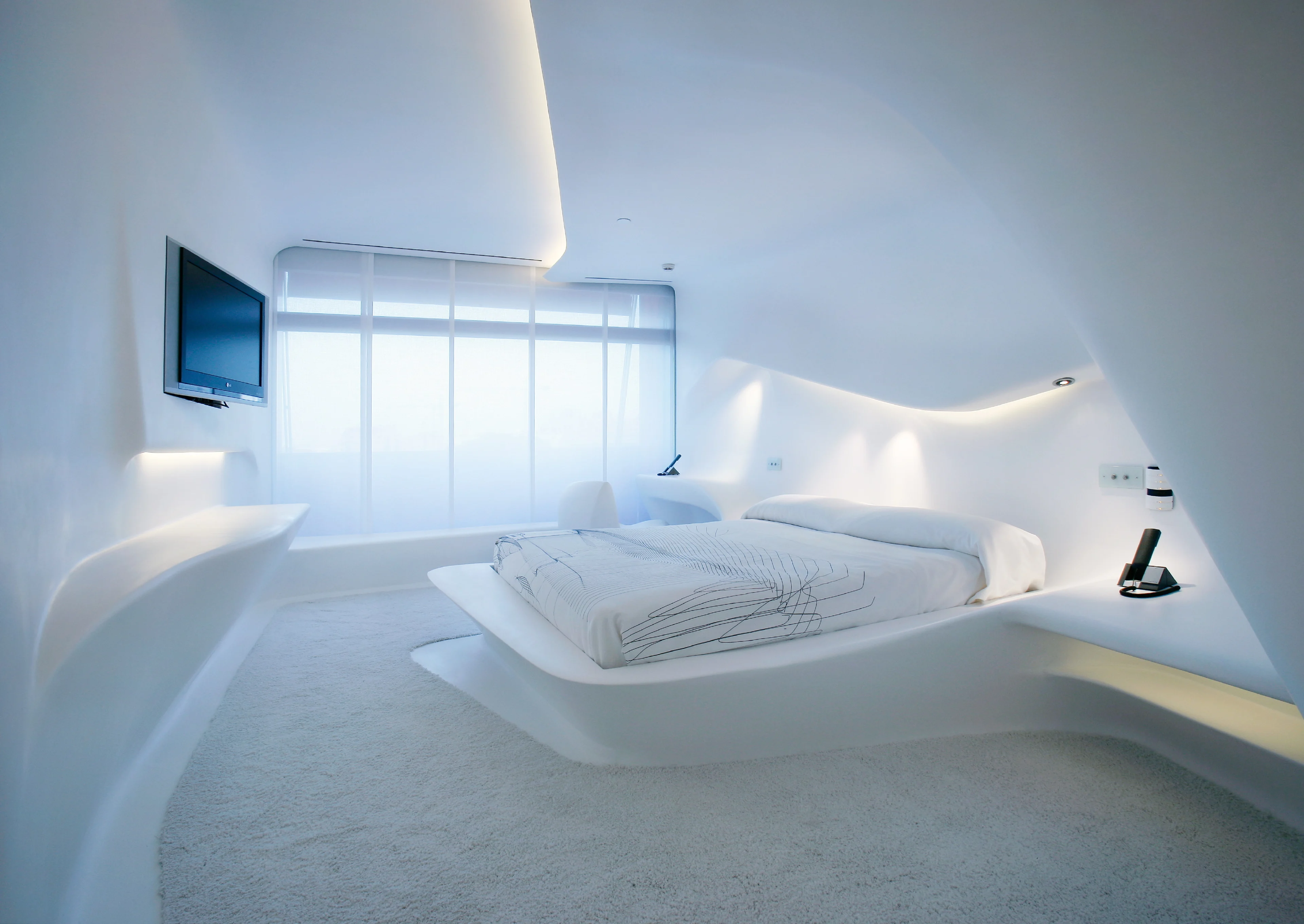
Hotel Puerta America
A new language of domestic architecture; a new dialogue between the complex, continuous nature of merging forms and textures. A dynamic project to design the 30-room floor of a hotel, driven by new developments in digital design and enhanced manufacturing capabilities. A fluid space, a seamless experience; pushing the boundaries of spatial concepts.
Photograph by Paul Warchol
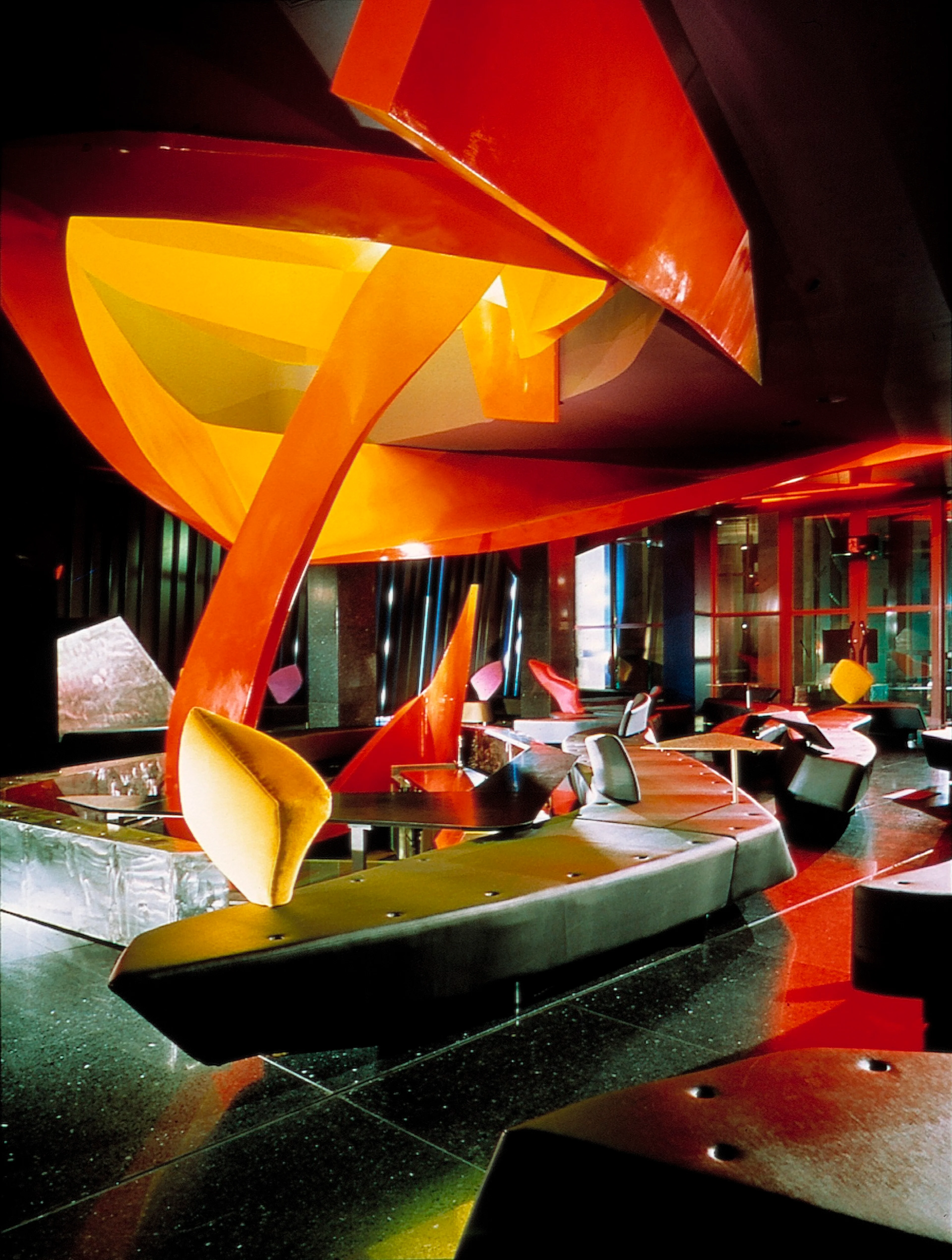
Fire part of the project, Lounge Area
Moonsoon Restaurant
Fire meets ice to create two strange, synthetic worlds in Moonsoon. A formal eating area features cool greys, tables reinvented as ice shards, and a raised ‘iceberg’ floor area. Above, a furnace of fire contrasts the relaxation lounge – all searing reds, brilliant yellows and exuberant oranges.
01
02
03
04
05
06
07
08
09
10