
Courtesy of ZHA
2017 - 2021
LKK Health Products Group (LKKHPG)
Complete
Infinitus Plaza Interior
Photograph by Xue Liang 薛亮
Photograph by Xue Liang 薛亮
Photograph by Xue Liang 薛亮
Photograph by Xue Liang 薛亮
01
02
03
04
A headquarters for innovation and community
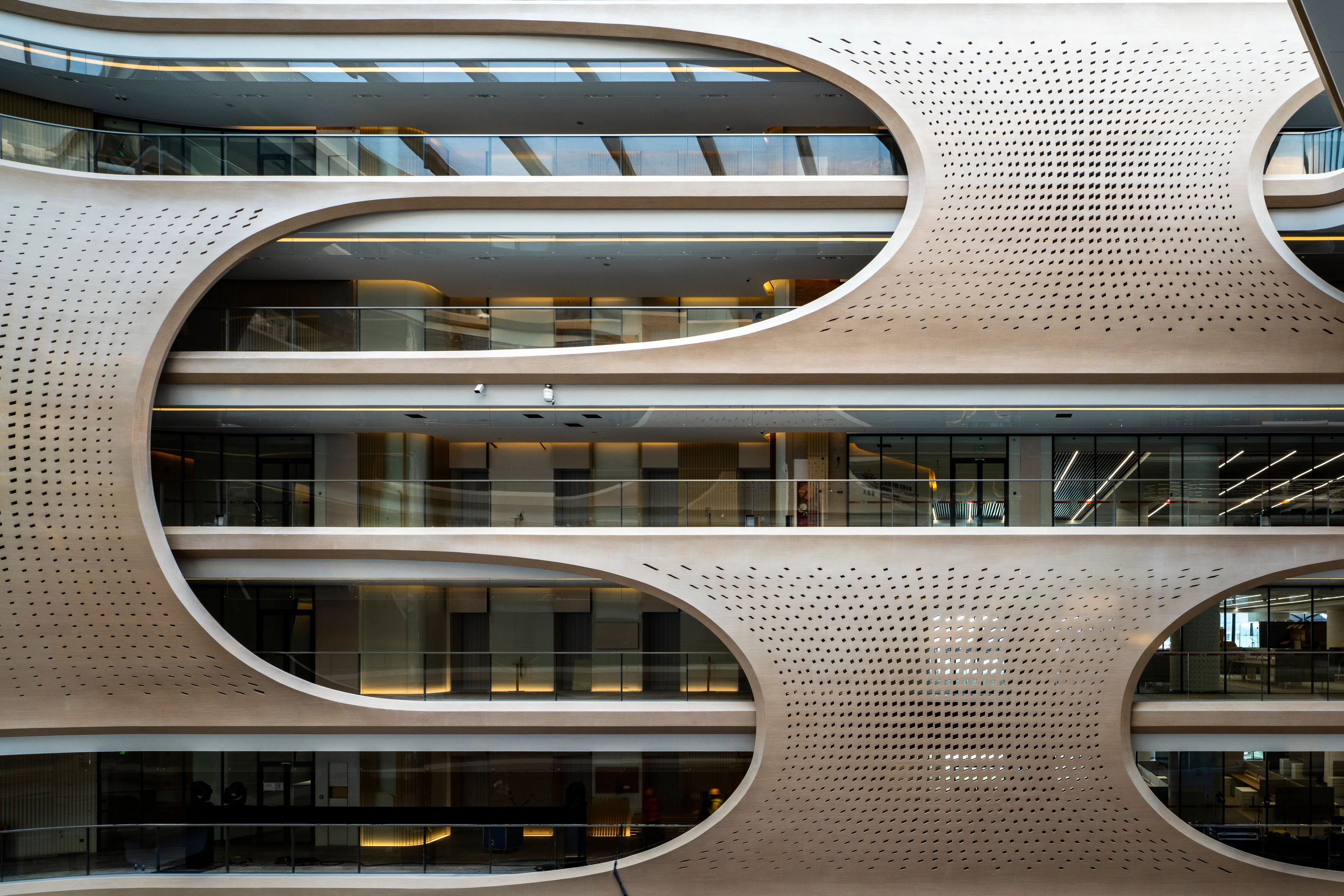
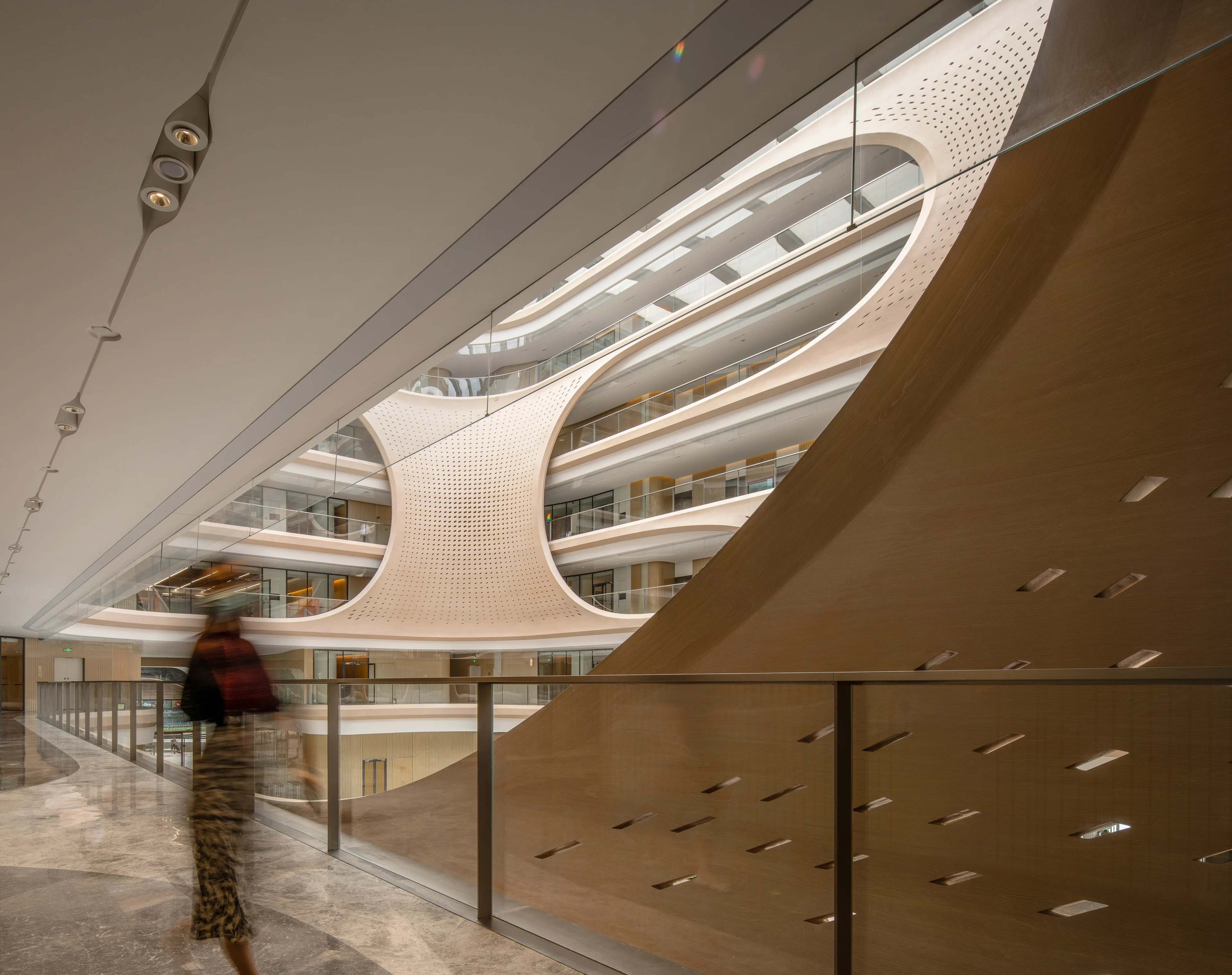
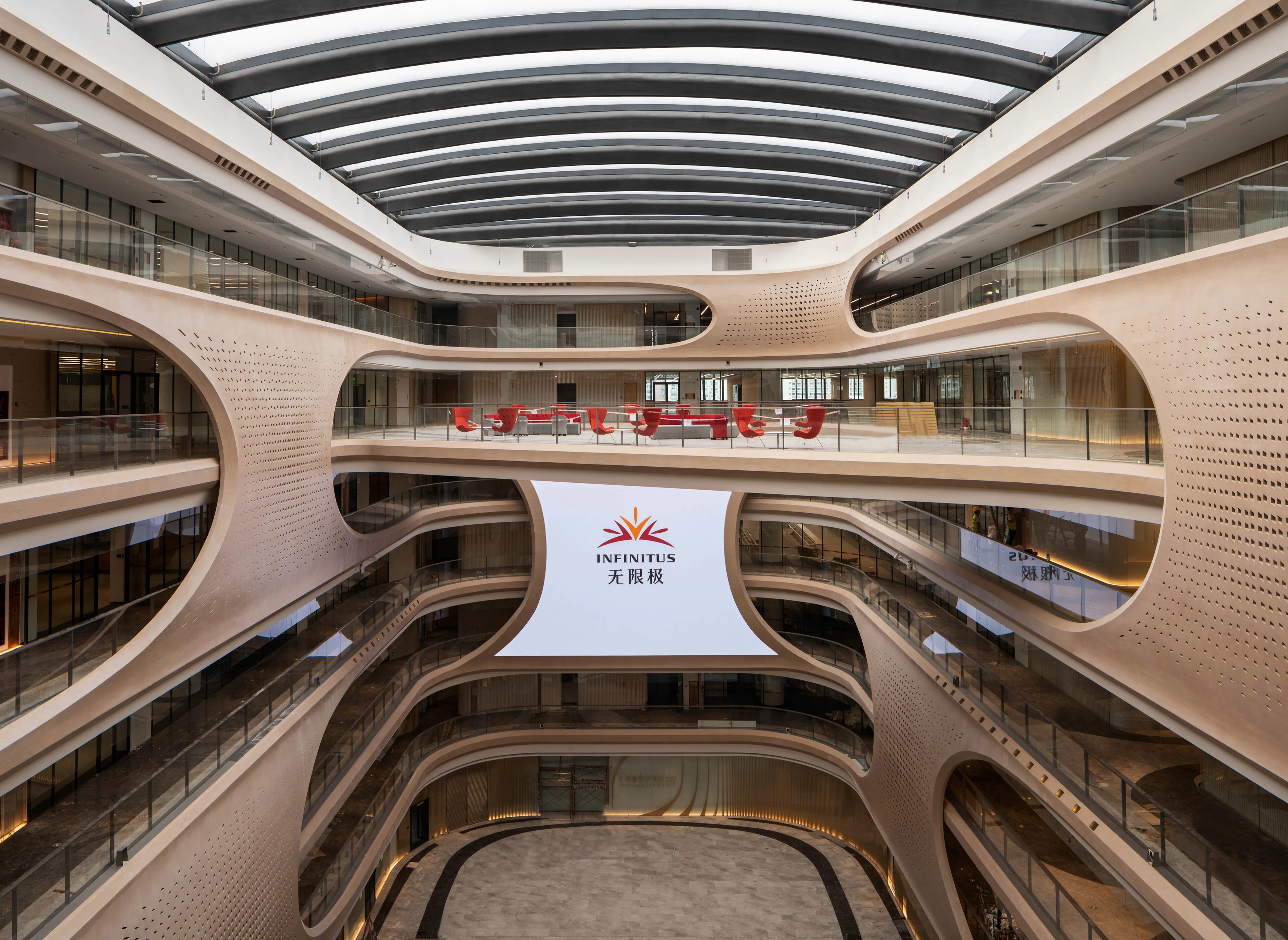
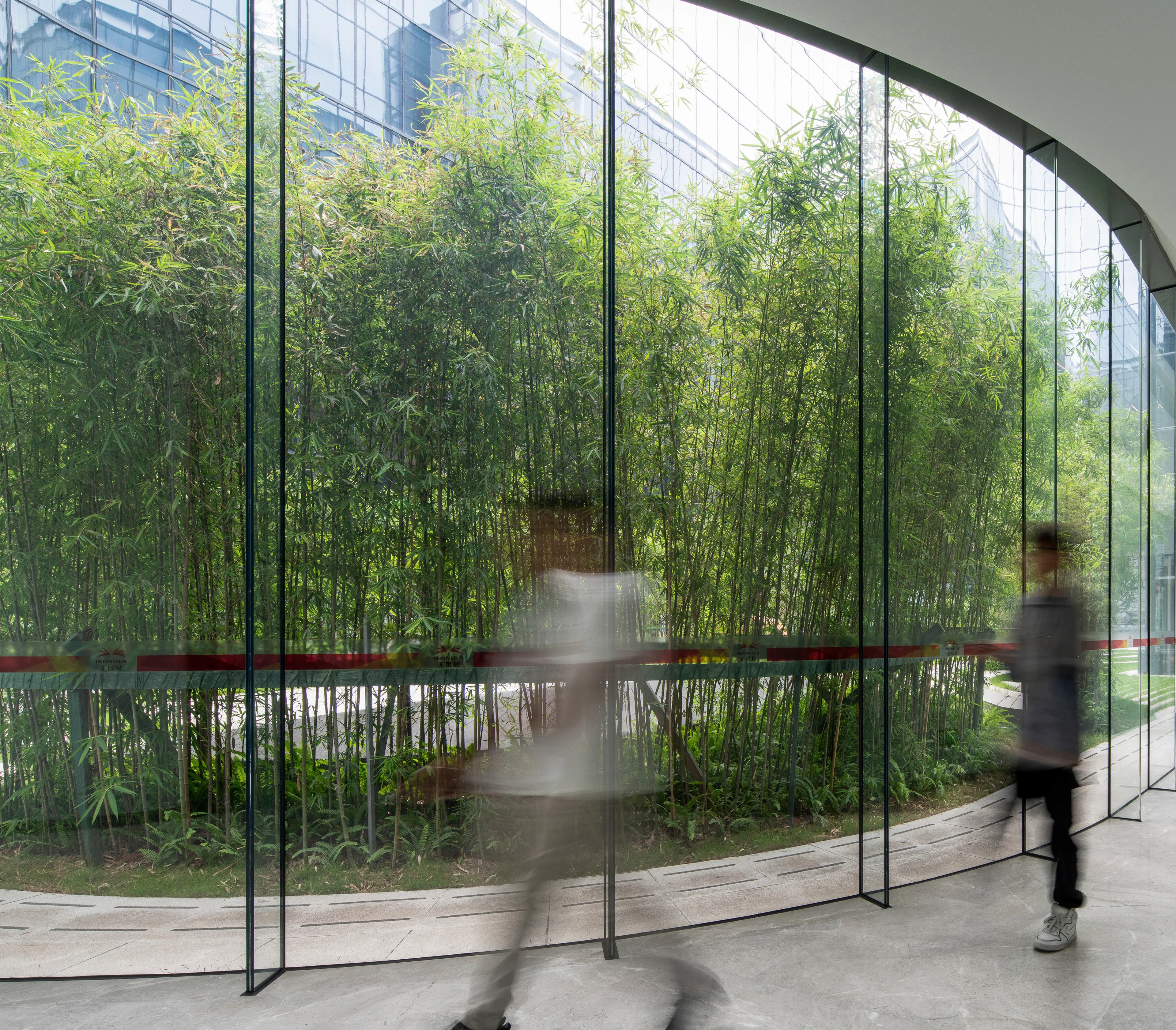
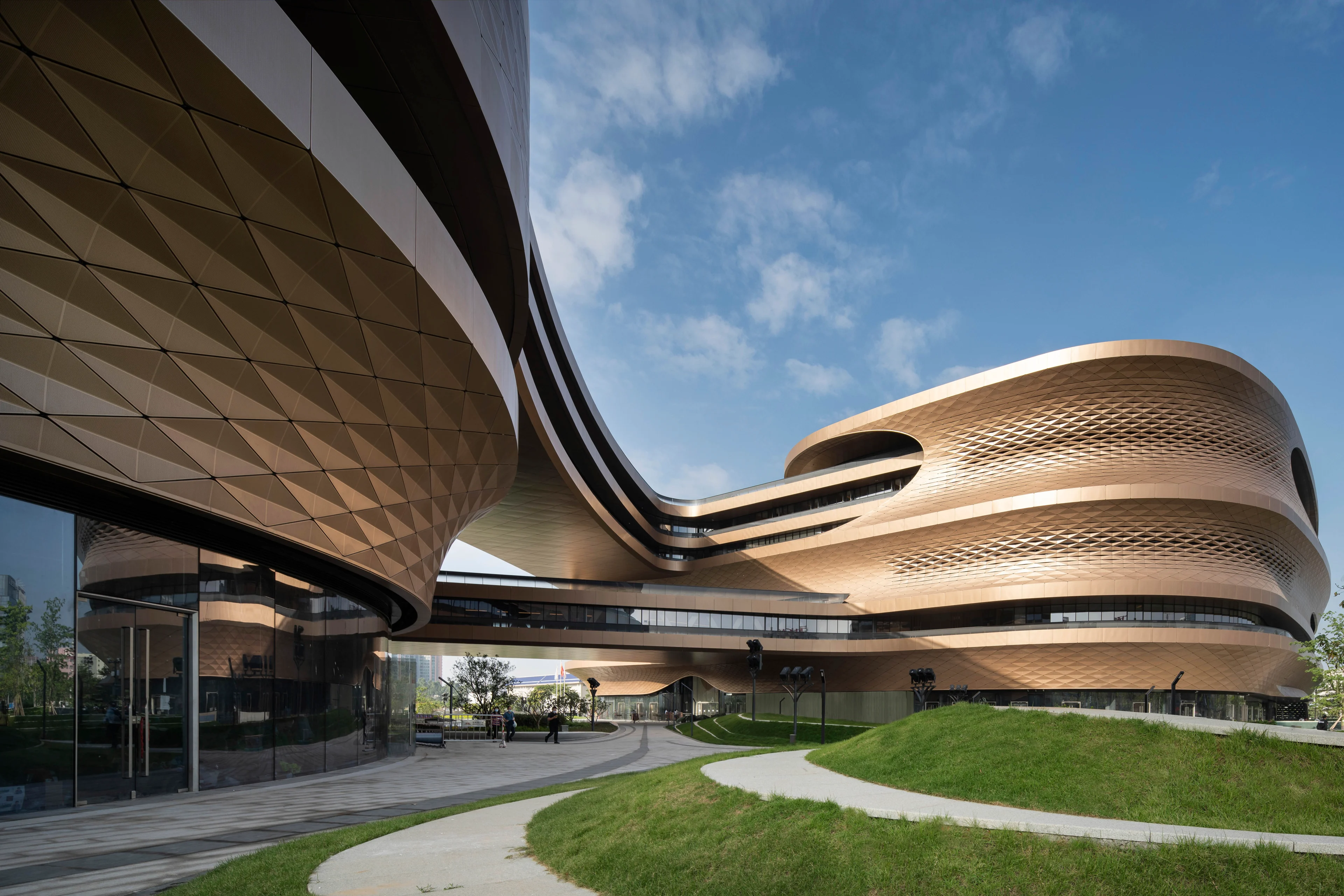
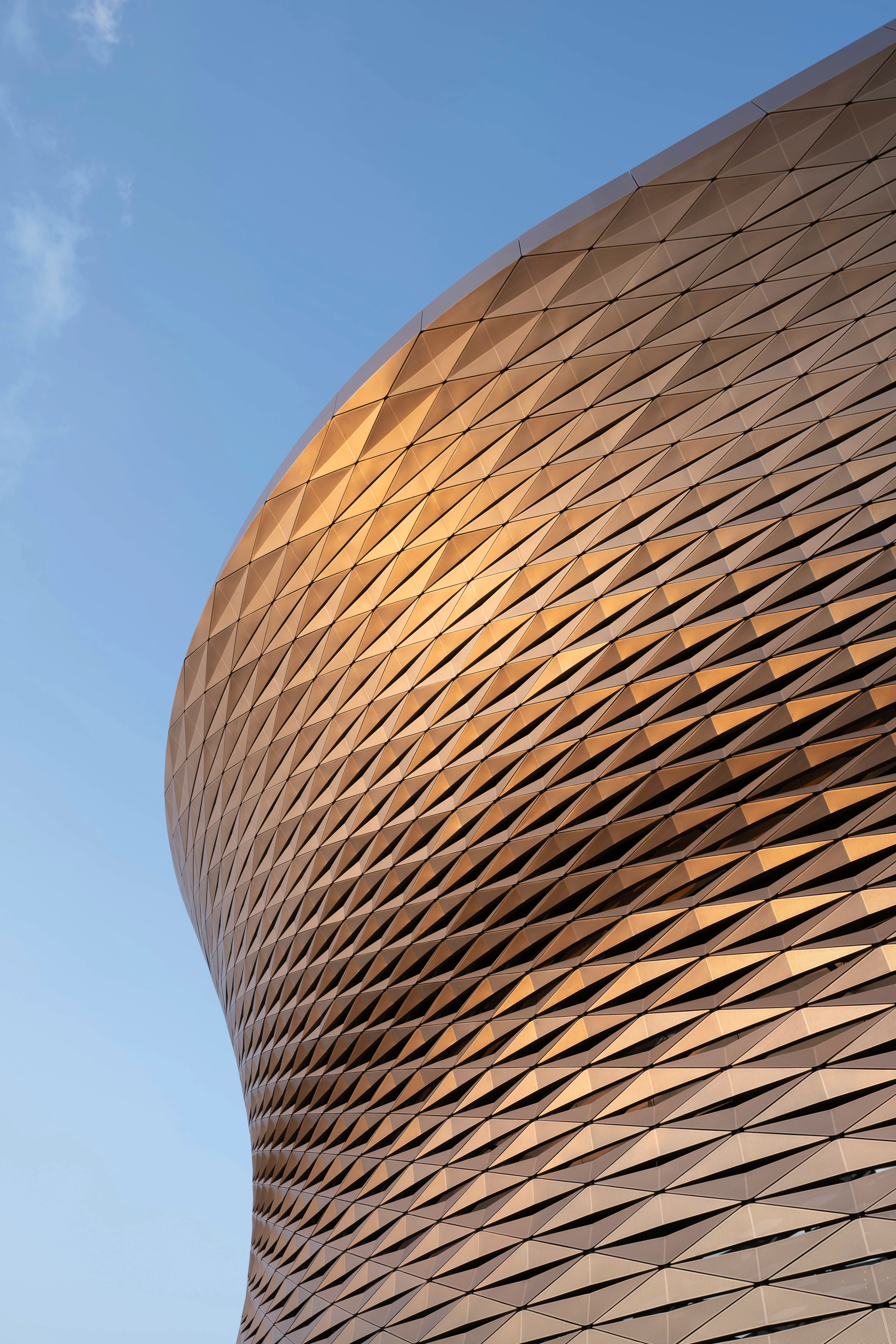
The interior design of Infinitus Plaza continues the architectural narrative established by the building’s exterior form. Echoing the symbol for infinity (∞), the design creates a series of shared indoor and outdoor spaces that reflect Infinitus’ core values: connection, adaptability, and collective well-being.
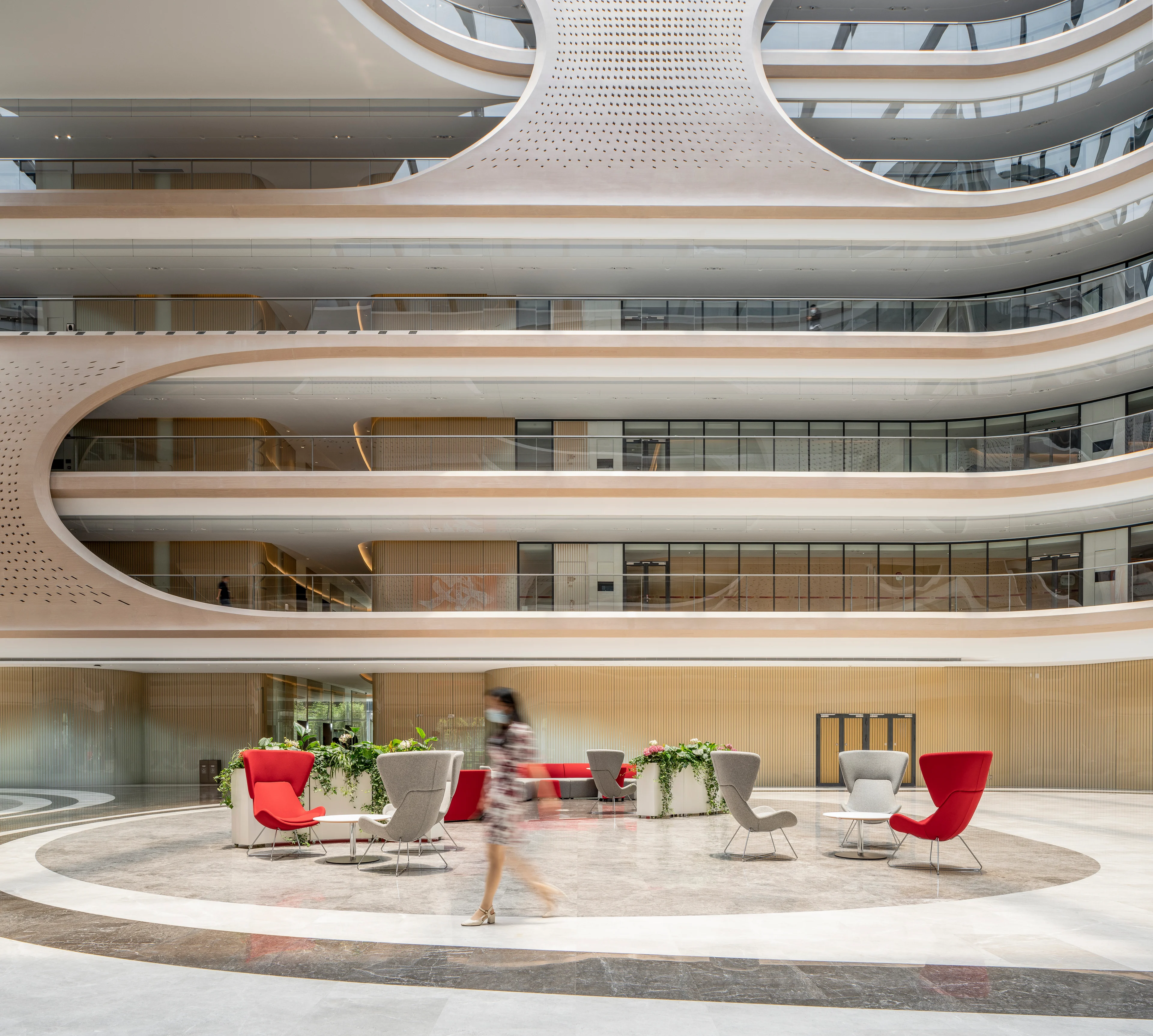
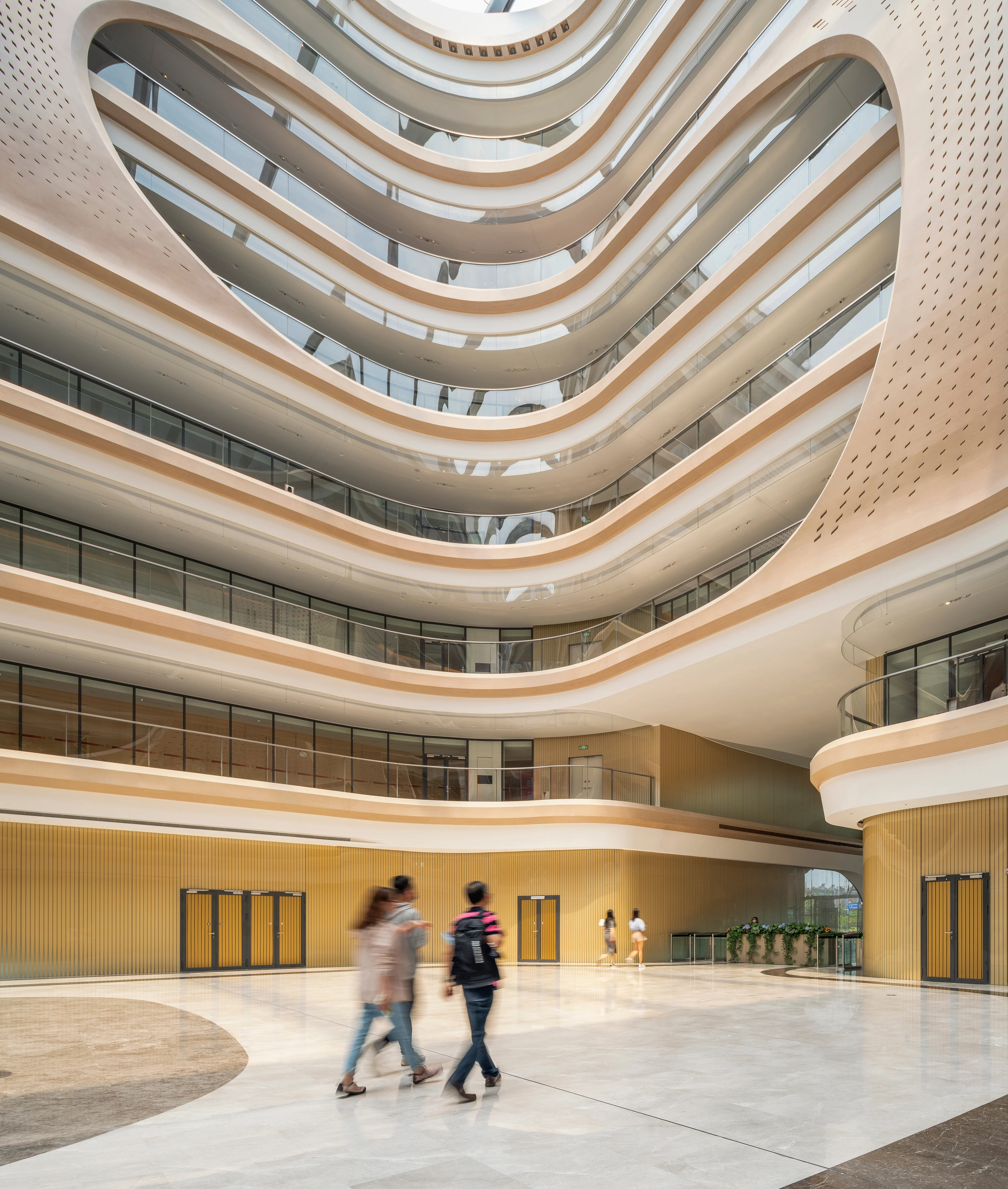
Organised as a sequence of ‘infinity rings’ across eight storeys, the interior fosters interaction and collaboration across departments. This spatial arrangement embodies the company’s guiding principle of Si Li Ji Ren — the idea of actions that benefit the collective.
As the new global headquarters of Infinitus China, the interior is designed to accommodate a wide range of programmes, including collaborative office environments, herbal medicine research facilities, safety assessment labs, and a learning centre for conferences and exhibitions. Using modular systems such as raised floors and partition panels, these diverse functions are integrated within a dynamic, open layout. This adaptable interior infrastructure allows for space to evolve in response to changing needs, supporting both mobility and cross-pollination of ideas while maintaining zones for informal gatherings and focused work.
Photograph by Xue Liang 薛亮
Infinitus Plaza
Infinitus Plaza is the new global headquarters of Infinitus China. Incorporating work environments designed to nurture connectivity, creativity and entrepreneurship, the new headquarters also includes the group’s herbal medicine research facilities and safety assessment labs as well as a learning centre for conferences and exhibitions.
LEED certifications and recycled material use
Adapting to Guangzhou’s humid, subtropical climate of Lingnan, Infinitus Plaza has been designed and constructed to LEED Gold certification and the equivalent 3-Stars of China’s Green Building Program.
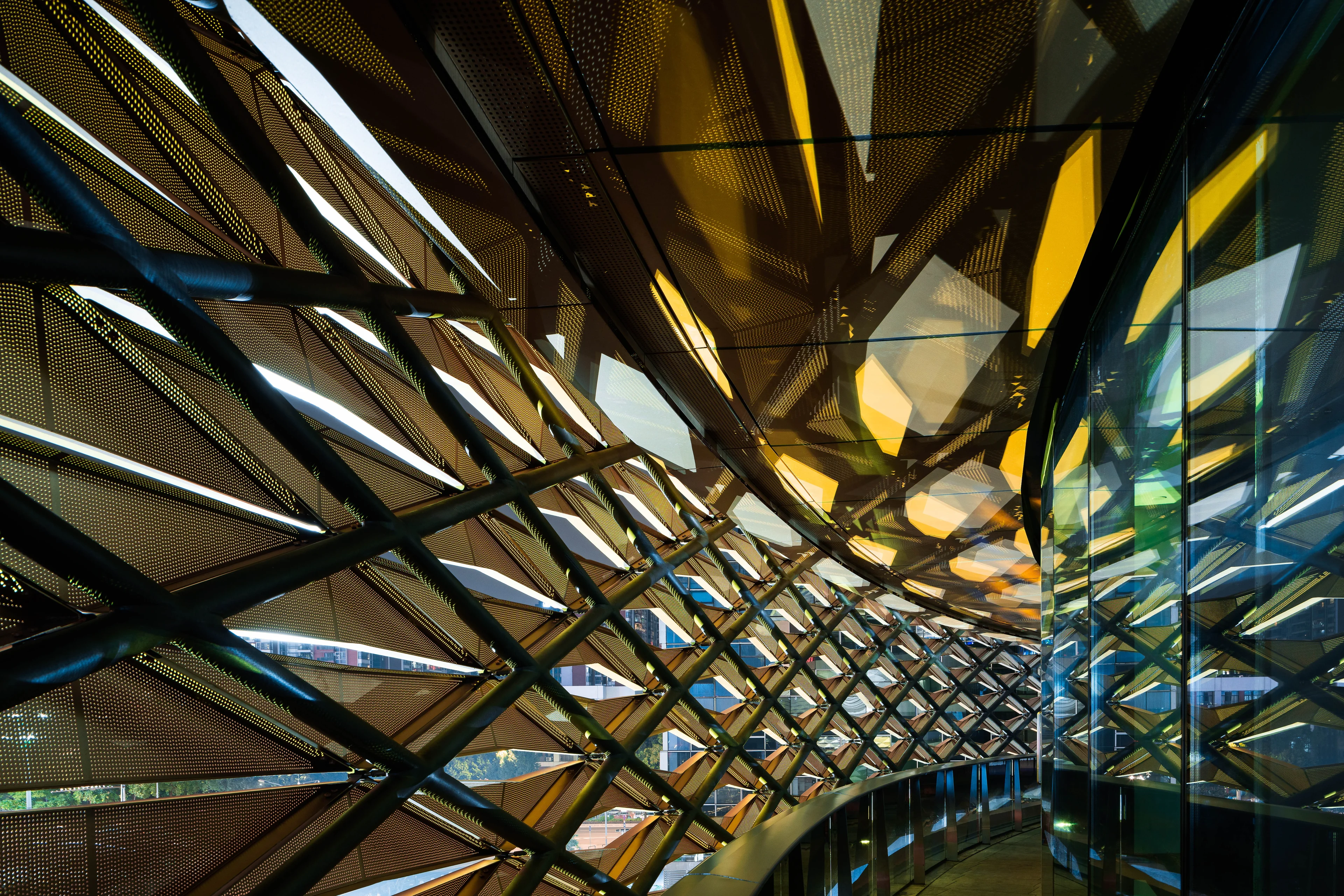
The selection of interior materials was guided by their environmental performance and recyclability. Recycled and recyclable materials feature prominently throughout: aluminium ceiling louvers, modular partitions, metal framing systems, reprocessed glass panels, engineered wood veneers, and carpet tiles made from post-consumer recycled fibres. Approximately 20% of all interior materials consist of recycled or recyclable content, reducing the building’s environmental footprint and supporting compliance with international green building standards such as LEED and WELL.
Photograph by Xue Liang 薛亮
Comfort through smart systems
Infinitus Plaza incorporates smart systems tailored to the humid subtropical climate of Guangzhou. Comfort within the building is achieved through an integrated approach that adapts in aspects of light, ventilation, temperature, and air quality.
The building envelope features perforated aluminium sunshades that reduce solar gain, while a lightweight ETFE roof membrane is paired with an evaporative cooling and insulation system. A roof spraying system further reduces radiant heat, enhancing comfort in the light-filled atrium below.
A hybrid lighting strategy optimises natural daylight with artificial lighting, managed by smart systems that adapt to occupancy levels and daylight availability. Zoning and grouping controls increase energy efficiency, while stairwell lightings are fitted with motion sensors and time-delay switches.
Indoor and outdoor ventilation is optimised through continuous monitoring. Indoor air quality is ensured by CO₂ and PM2.5 sensors with a fresh air linkage system on office floors, and CO monitoring systems in underground garages, ensuring a healthy, humid, and fresh environment for all users.
Interior Architecture
Explore more of our interior architecture
From flagship retail stores to private homes, historic palazzos to museum galleries, offices to hotels, explore the depth and breadth of our interior architecture projects.
The Magazine Restaurant
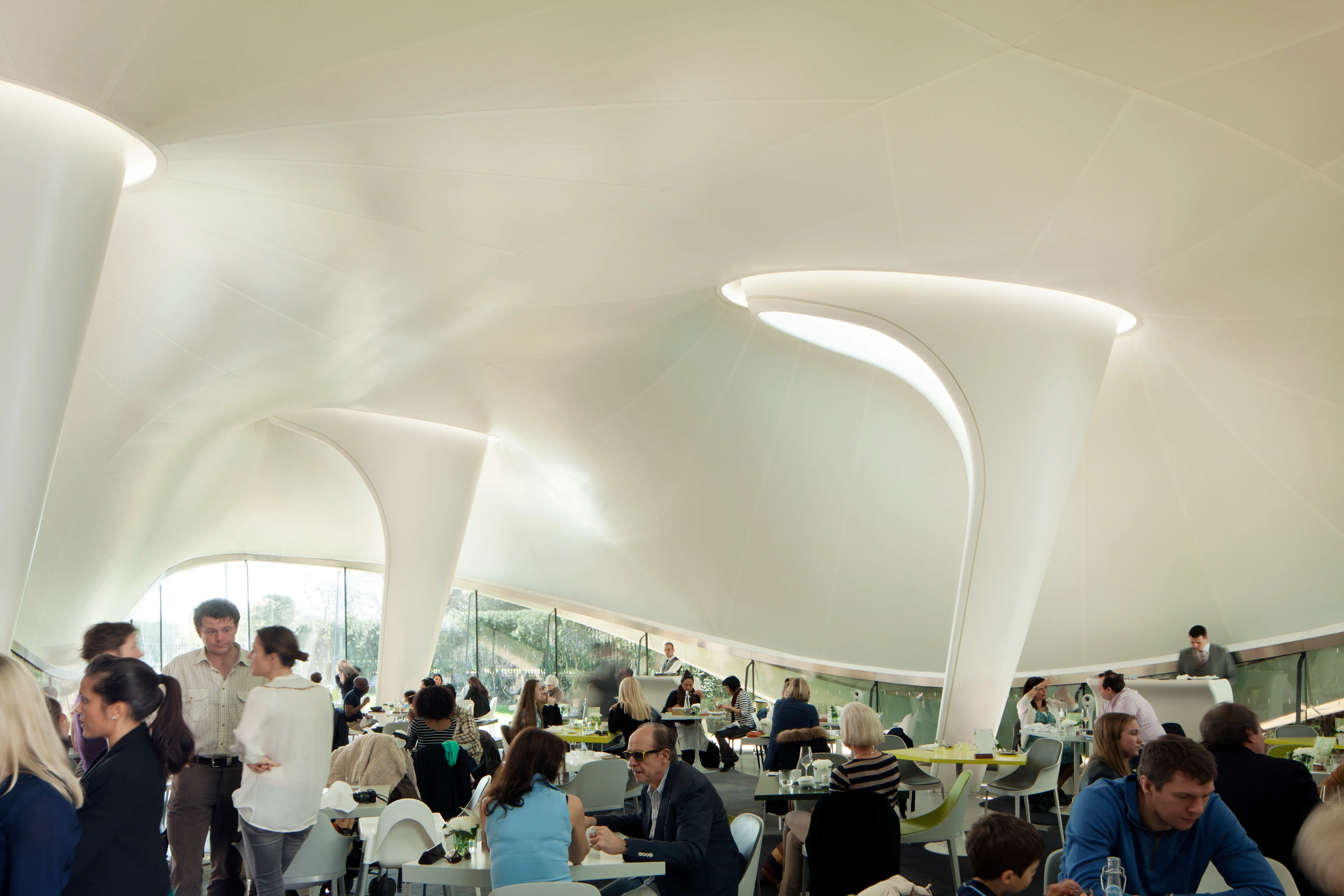
The Serpentine North Gallery consists of two distinct parts, namely the conversion of a classical 19th century brick structure – The Magazine – and a 21st century tensile structure. The Serpentine North Gallery is thus – after MAXXI in Rome – the second art space where ZHA have created a synthesis of old and new.
Courtesy of Marisfrolg
The Marisfrolg Showroom
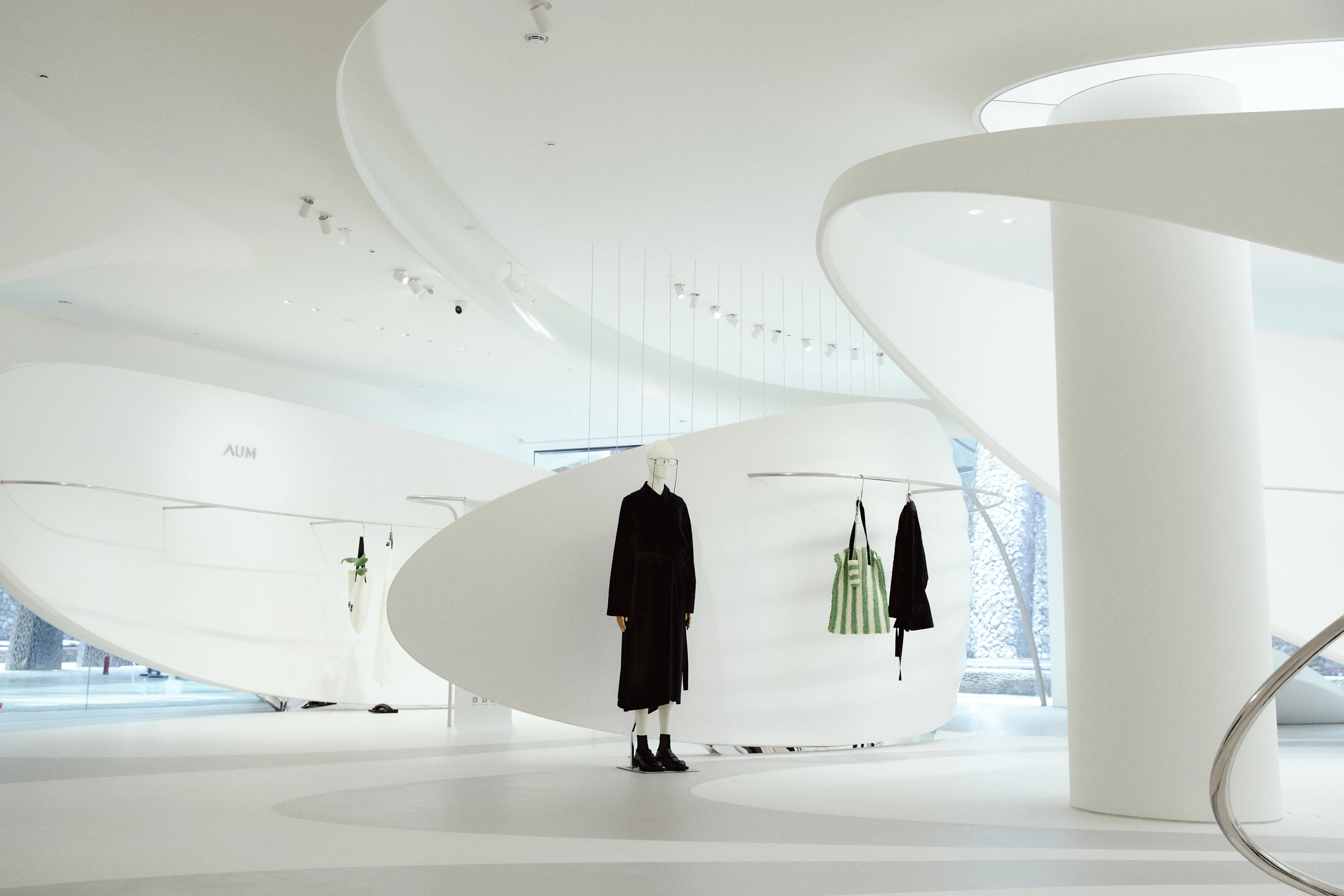
Located at the heart of Marisfrolg Fashion Group’s Shenzhen campus, the 2,900m² Marisfrolg Showroom interiors by ZHA are informed by the rich textiles, timeless design and precision tailoring embodied within the group’s nine unique labels.
Photograph by Chris Dalton, Courtesy of Romeo Collection
Bistro
Romeo Roma Hotel
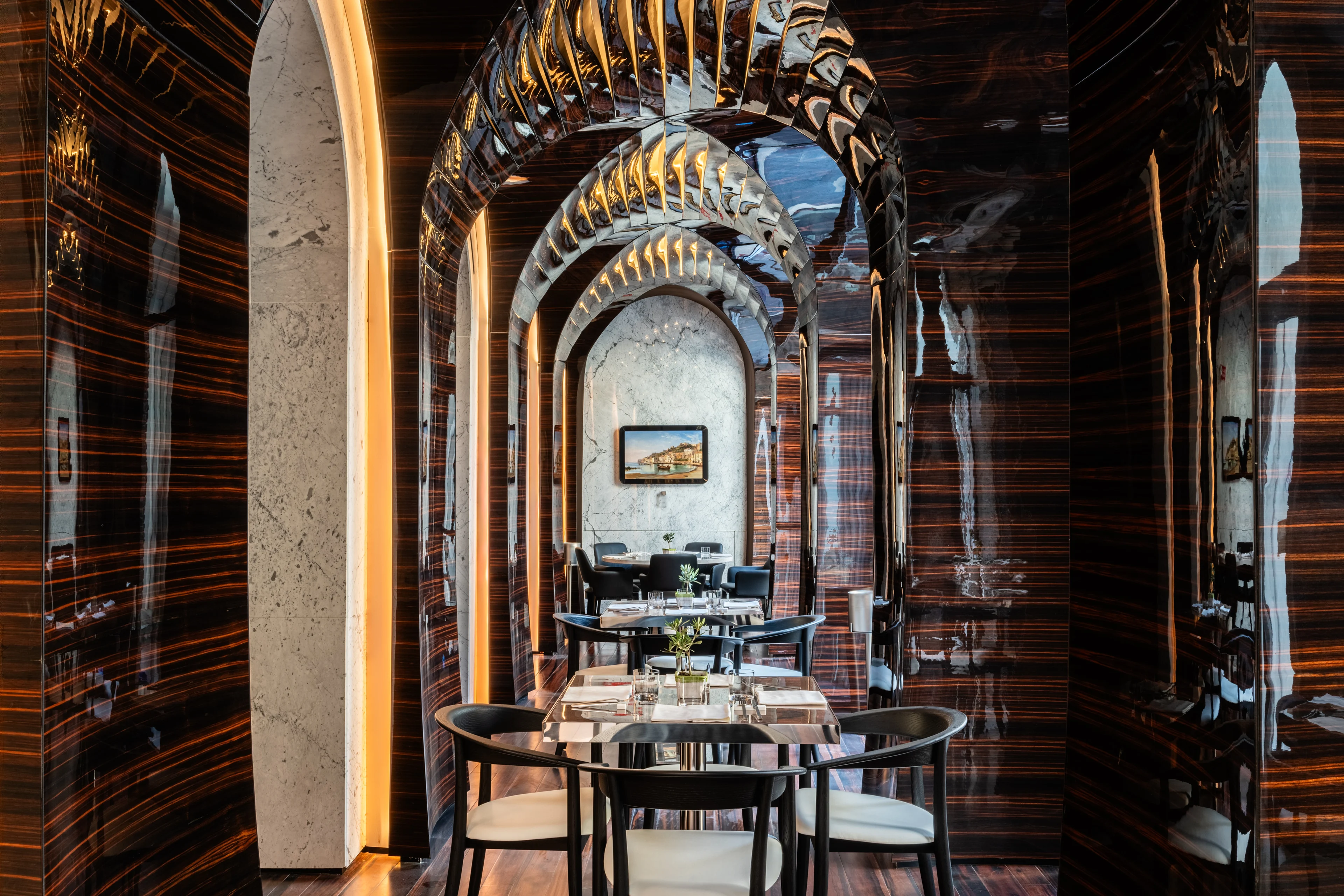
From the beginning of her career, architect Zaha Hadid sited her buildings in the air, floating buildings on shadow, light, and seams of space that lifted volumes above the ground, relating her work to another tradition—Rome’s. In designing the hotel conversion of the Palazzo Capponi, Hadid and her team at ZHA started where Baroque architects ended their palimpsest - at the vaulted ceilings.
Photograph by Luke Hayes
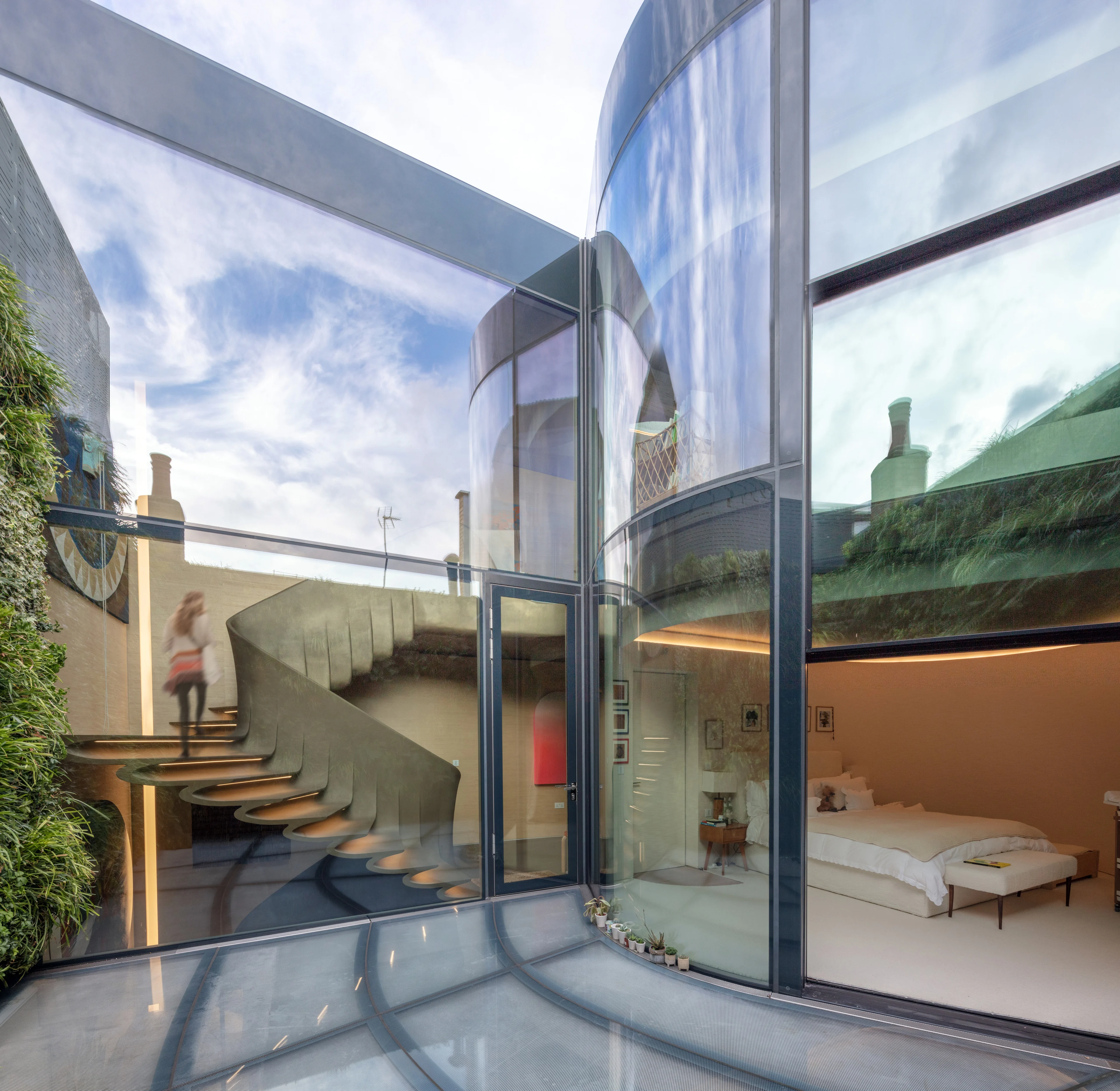
Mews House
Mews House is an innovative architectural solution built on a restricted urban site within one of London’s historic conservation areas
Photograph by Virgile Simon Bertrand
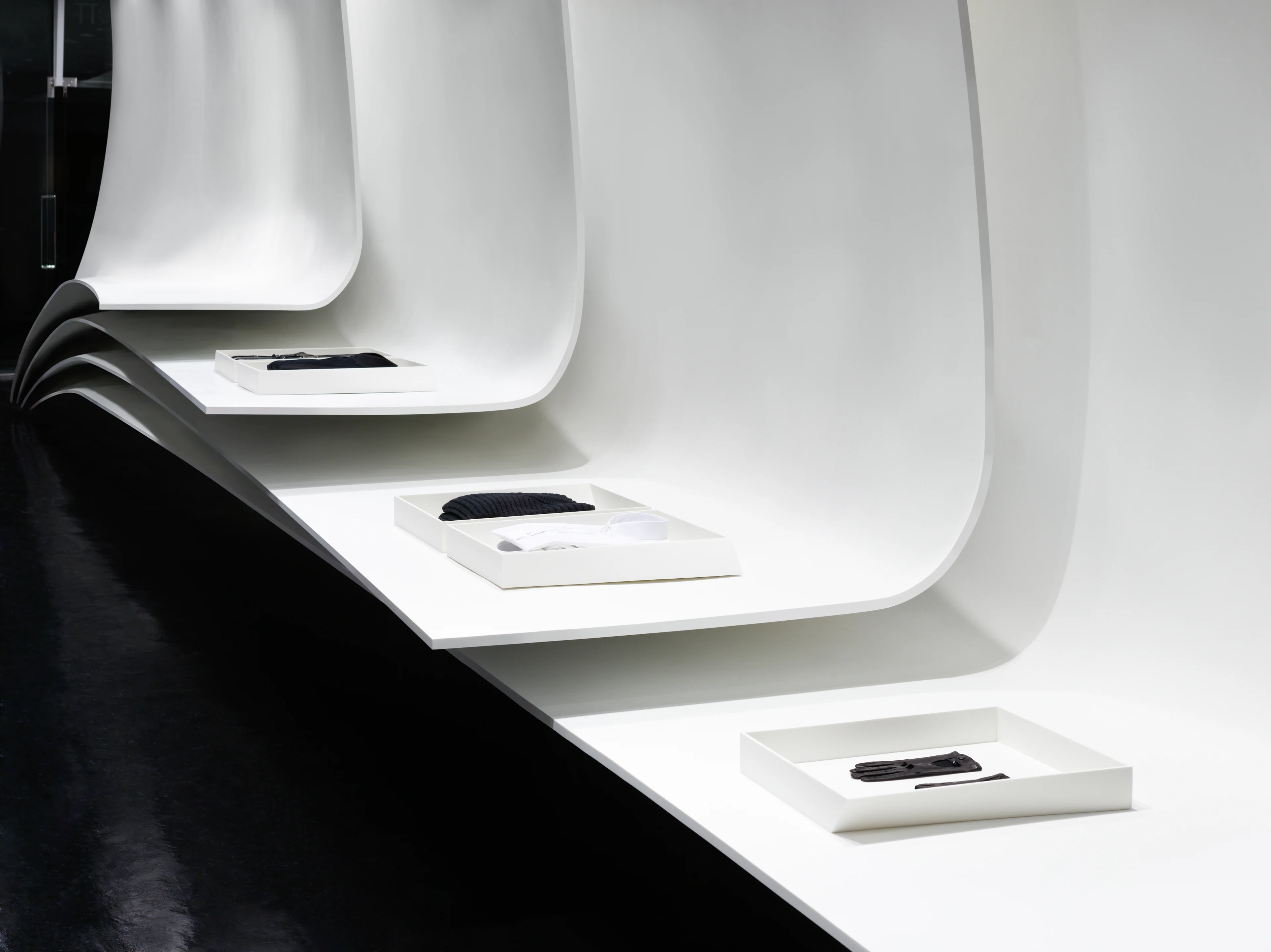
Neil Barrett Flagship Store
Our concept echoes the brand’s minimalism and use of fixed points, folds, pleats and cut outs. Space in the store is defined not in terms of rooms but as a passage through which customers circulate. Furniture, sculpture, textures and colours on both store floors explore the interplay between male and female.
Photograph by Jacopo Spilimbergo
Milan Store, September 2013
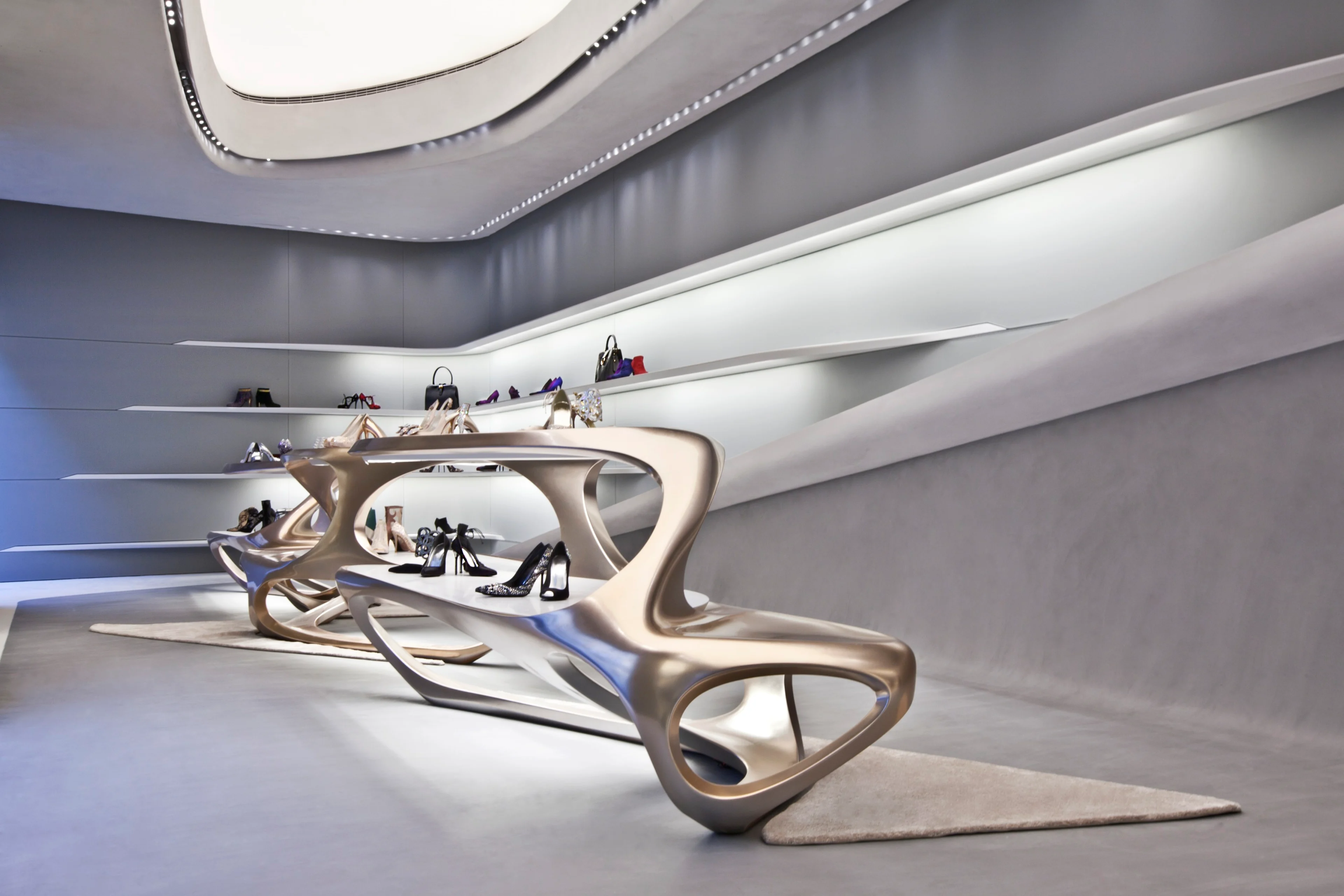
Stuart Weitzman Flagship Store
The 3,000-square-foot Milan flagship store is a playful dialogue of geometries; creating a rhythm of folds and recesses that have been shaped further by functional and ergonomic considerations. The store’s central display units have been designed to showcase the Stuart Weitman collection and also provide seating.
Photograph by Paul Warchol
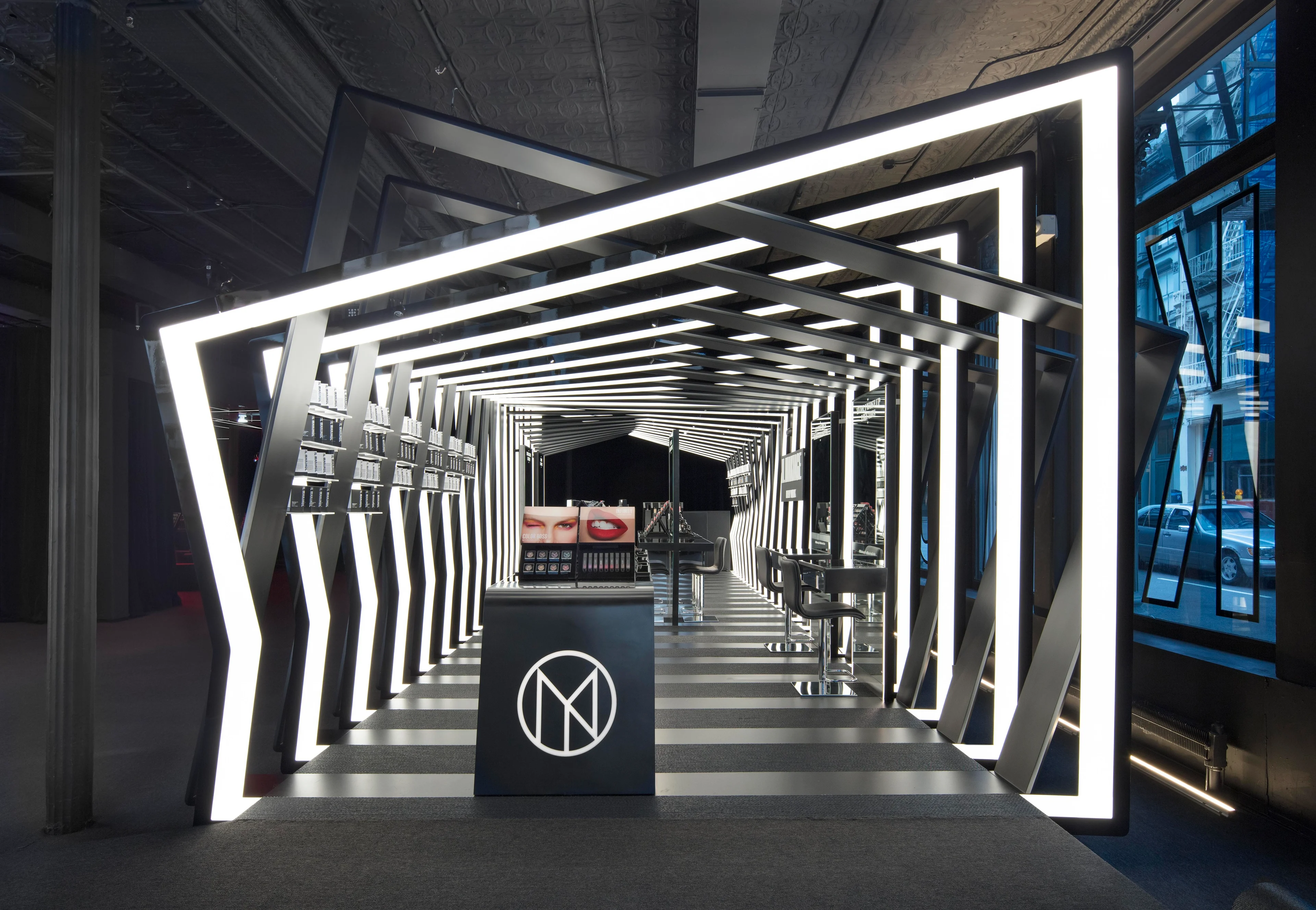
Il Makiage Pavilion
Il Makiage has launched a collection with a pavilion at 490 Broadway by ZHA that is informed by the label’s characteristically bold graphic identity.
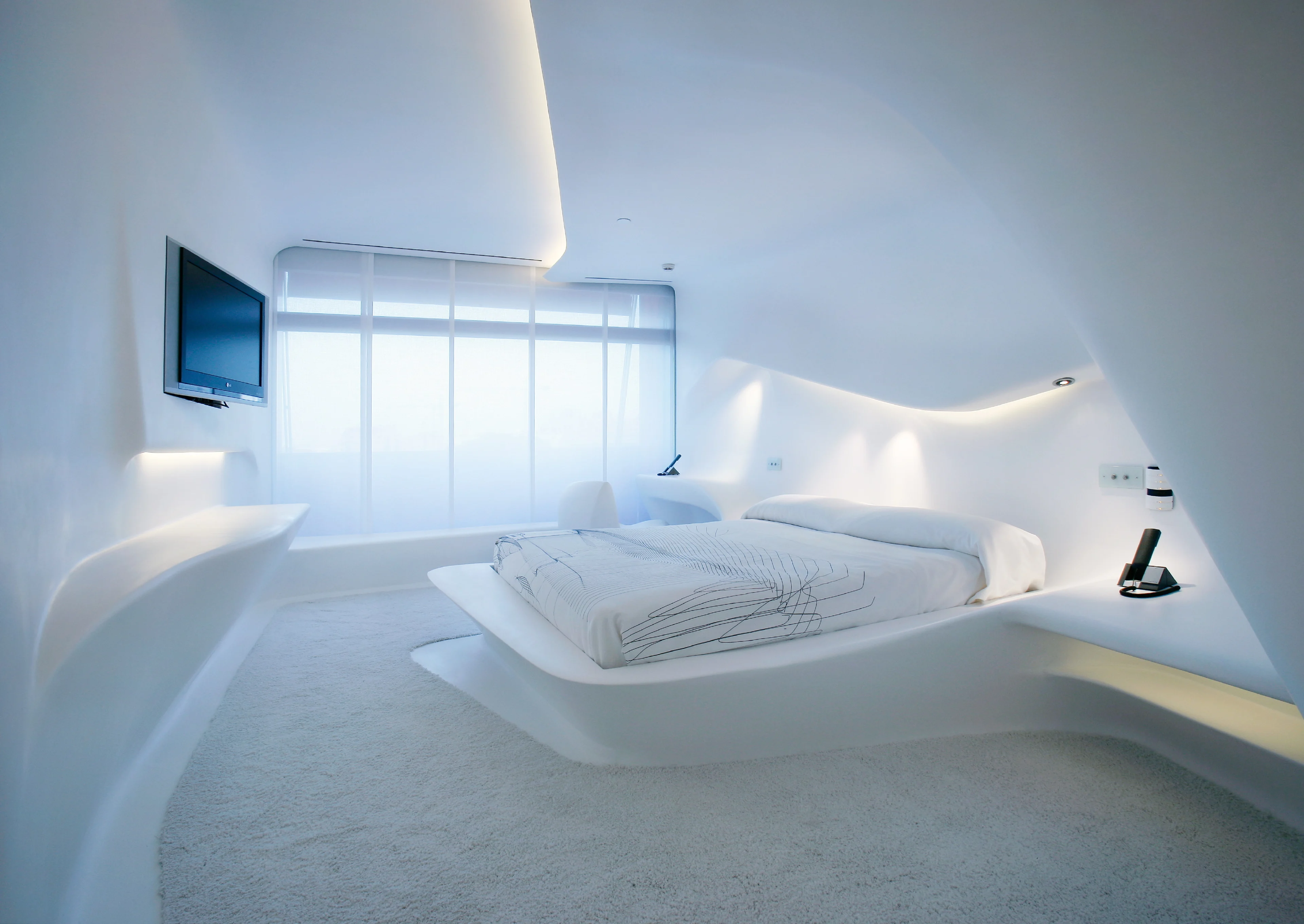
Courtesy of Hoteles Silken
Hotel Puerta America
A new language of domestic architecture; a new dialogue between the complex, continuous nature of merging forms and textures. A dynamic project to design the 30-room floor of a hotel, driven by new developments in digital design and enhanced manufacturing capabilities. A fluid space, a seamless experience; pushing the boundaries of spatial concepts.
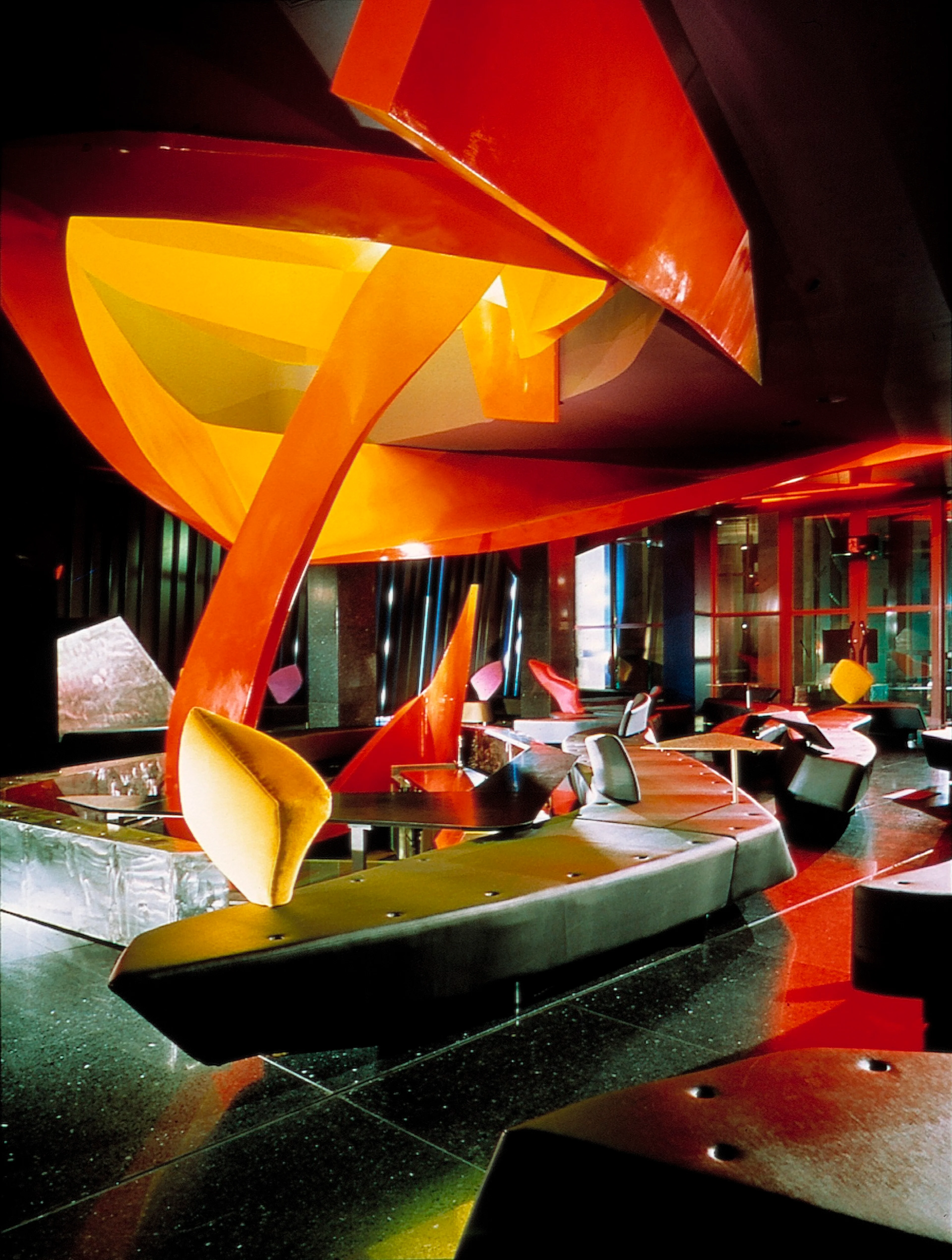
Photograph by Paul Warchol
Fire part of the project, Lounge Area
Moonsoon Restaurant
Fire meets ice to create two strange, synthetic worlds in Moonsoon. A formal eating area features cool greys, tables reinvented as ice shards, and a raised ‘iceberg’ floor area. Above, a furnace of fire contrasts the relaxation lounge – all searing reds, brilliant yellows and exuberant oranges.
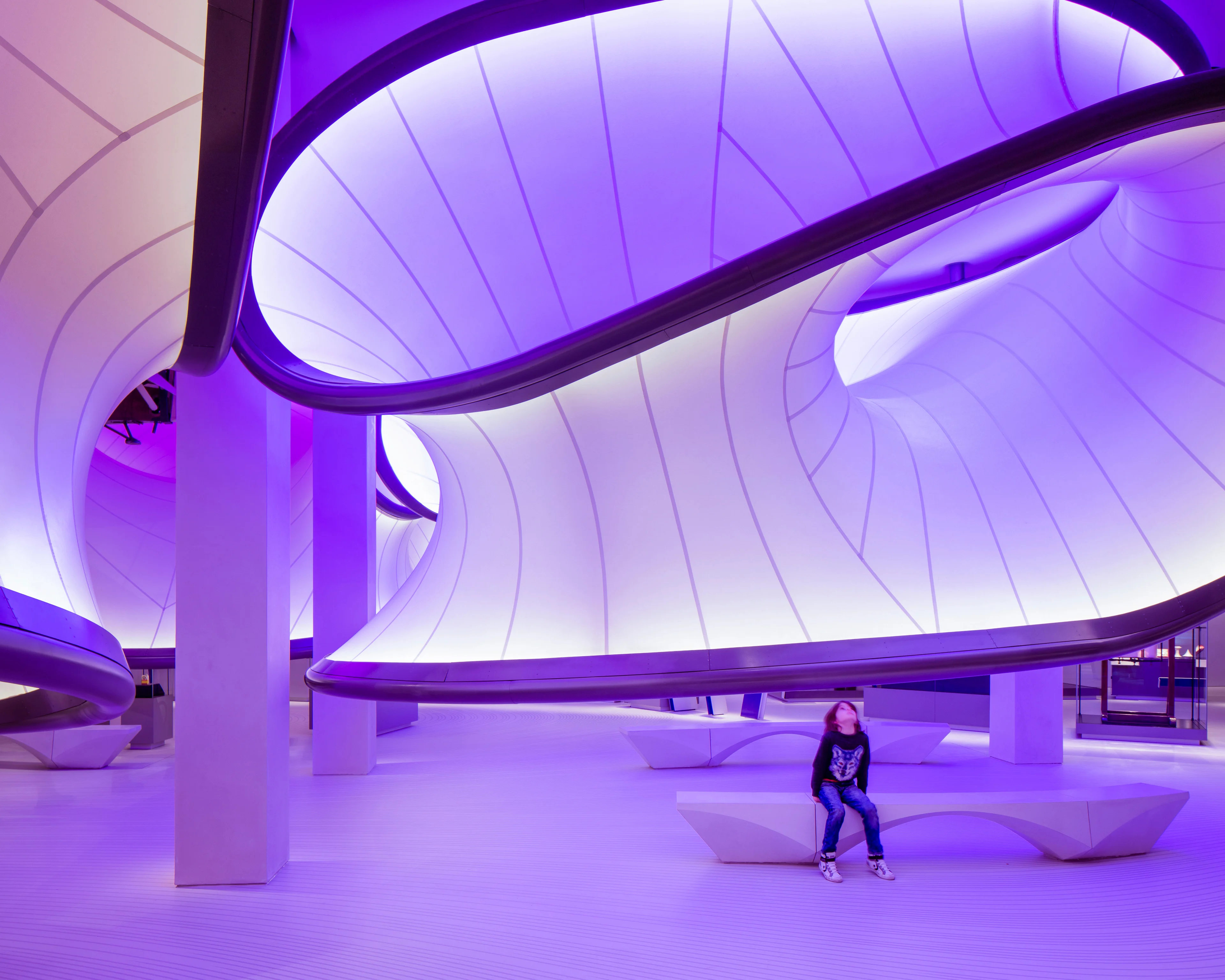
Photograph by Luke Hayes
Mathematics: The Winton Gallery, Science Museum
Mathematics: The Winton Gallery brings together remarkable stories, historical artefacts and design to highlight the central role of mathematical practice in all our lives, and explores how mathematicians, their tools and ideas have helped build the modern world over the past four centuries.
01
02
03
04
05
06
07
08
09
10