
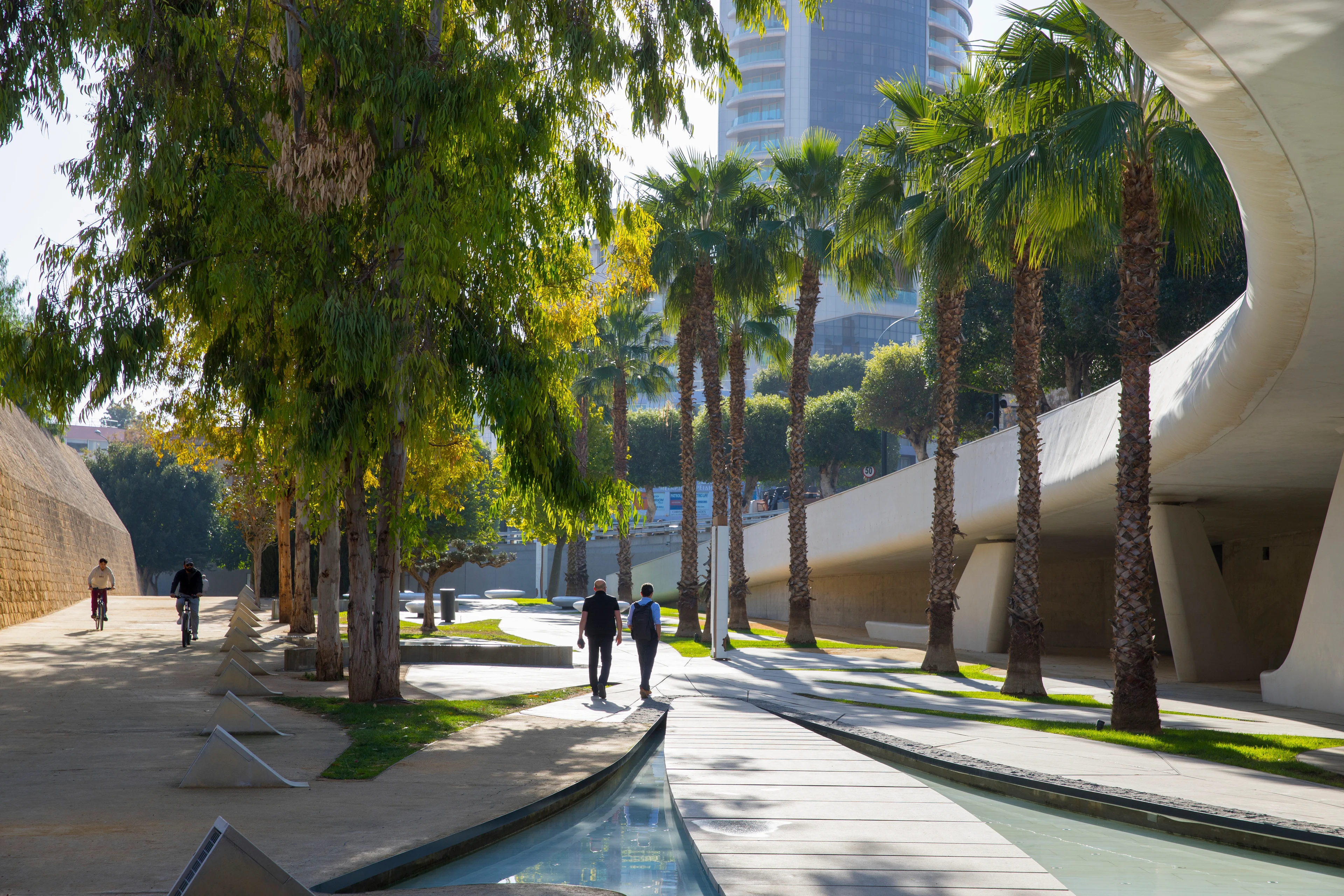
Photograph by ©K.Arkatites
Nicosia, Cyprus
2005 - 2021
Nicosia Municipality
Eleftheria Square
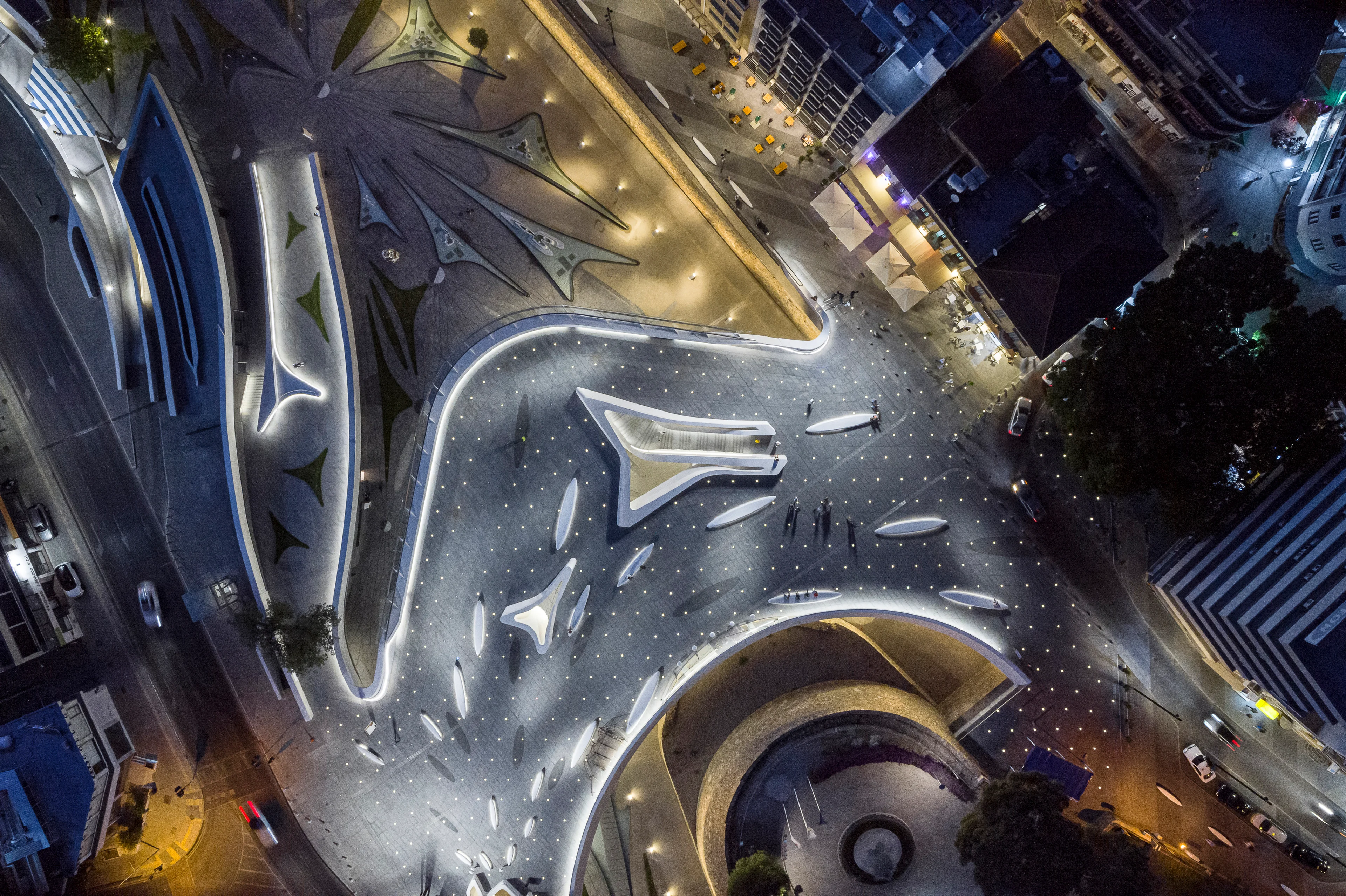
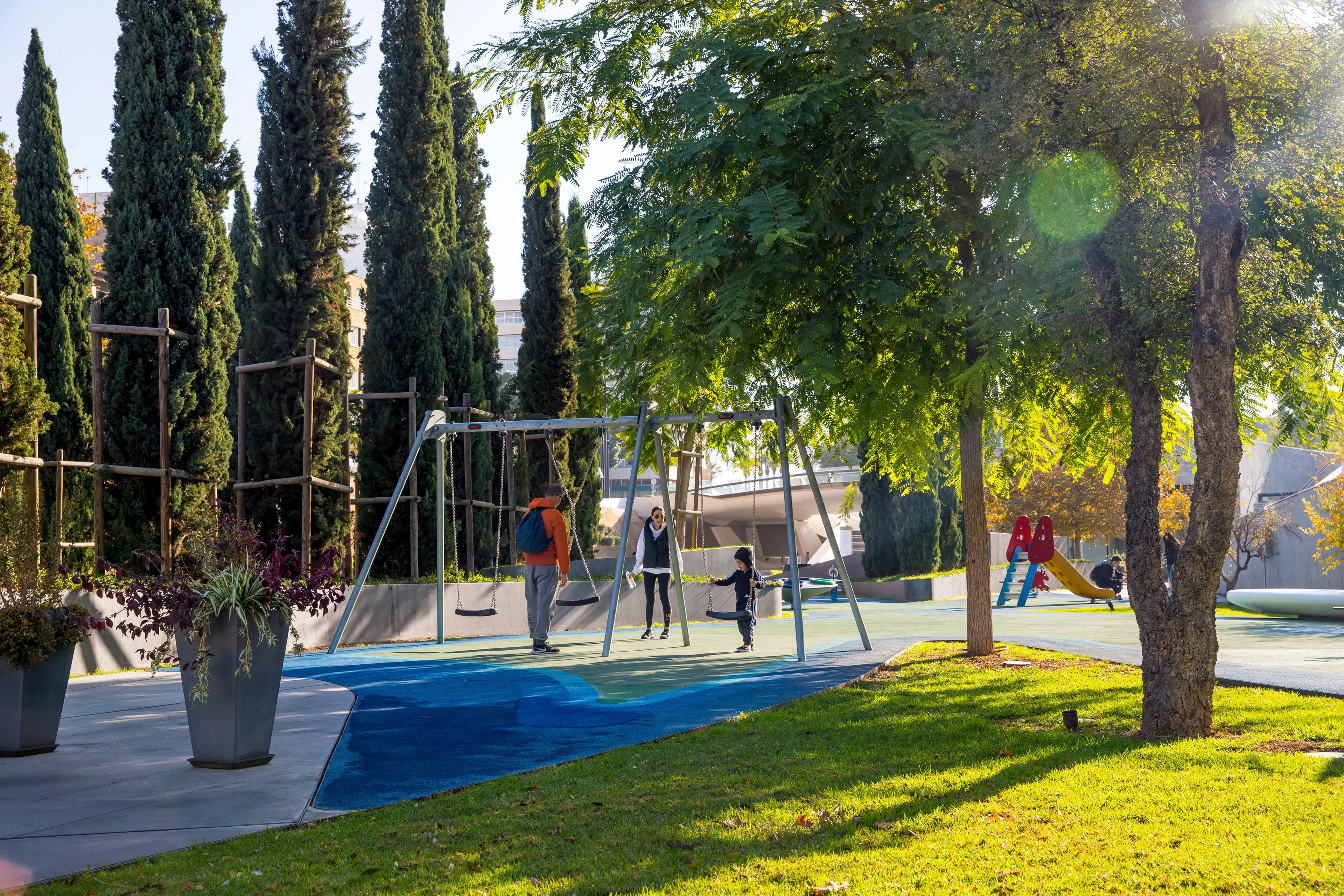
Establishing Eleftheria Square as the city’s primary gathering space, ZHA design creates new connections intended to unite a divided capital. Nicosia’s massive Venetian fortifications separate the old city from its modern districts, while the city’s ‘Green Line’ divides the capital into two disparate communities.
Photograph by Laurian Ghinitoiu
Photograph by Laurian Ghinitoiu
Photograph by Laurian Ghinitoiu
Photograph by Laurian Ghinitoiu
Photograph by ©K.Arkatites
Photograph by ©K.Arkatites
Photograph by ©K.Arkatites
Photograph by ©K.Arkatites
01
02
03
04
05
06
07
08
A new primary gathering space for the city
Establishing Eleftheria Square as the city’s primary gathering space, ZHA’s design creates new connections intended to unite a divided capital. Nicosia’s massive Venetian fortifications separate the old city from its modern districts, while the city’s ‘Green Line’ divides the capital into two disparate communities.
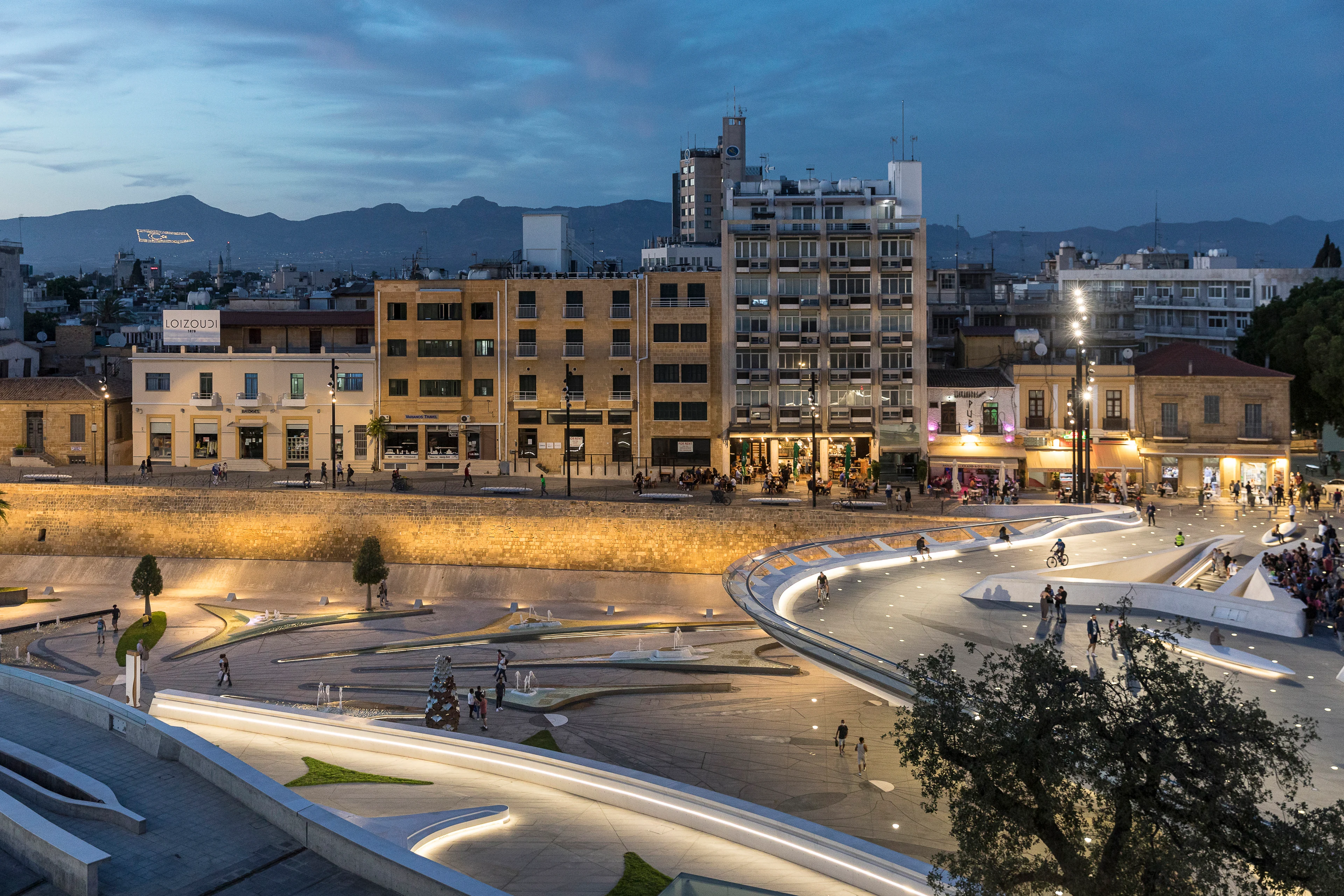
Located near the centre of Nicosia, Eleftheria Square is adjacent to the Venetian Walls and the dry moat that encircles the city. Constructed in the Middle Ages and extensively rebuilt by the Venetians in the 16th century, these substantial defensive walls define the boundary of the oldest part of the capital, dividing the ancient city from the new districts outside the walls.
ZHA envisioned Eleftheria Square as the initial phase of a much larger urban plan that could be a catalyst for the reunification of the capital. The design ensures unobstructed views of the Venetian Walls, establishing these fortifications as an integral part of Nicosia’s identity, while also opening the dry moat for public use to create an orbital park that surrounds the city.
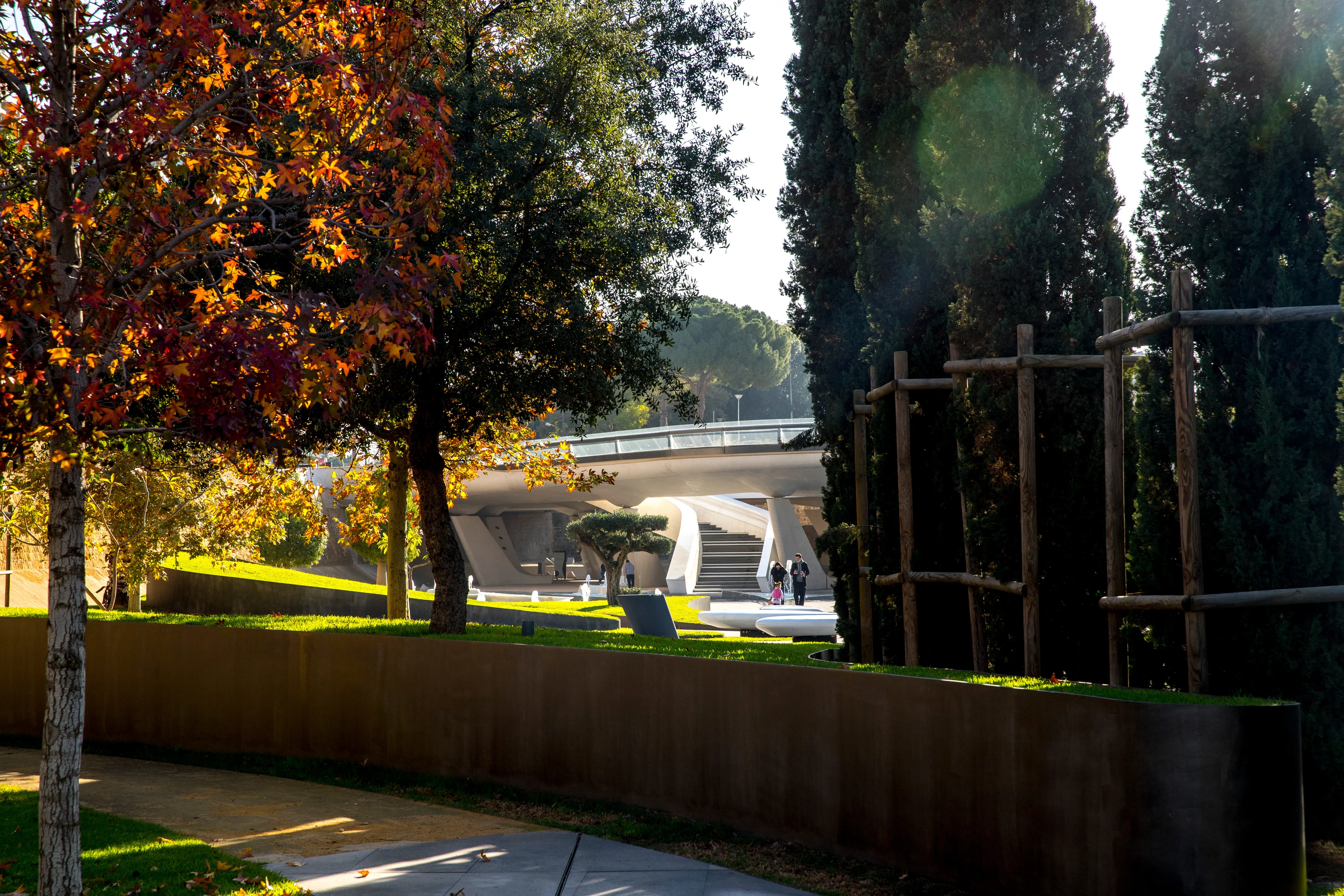
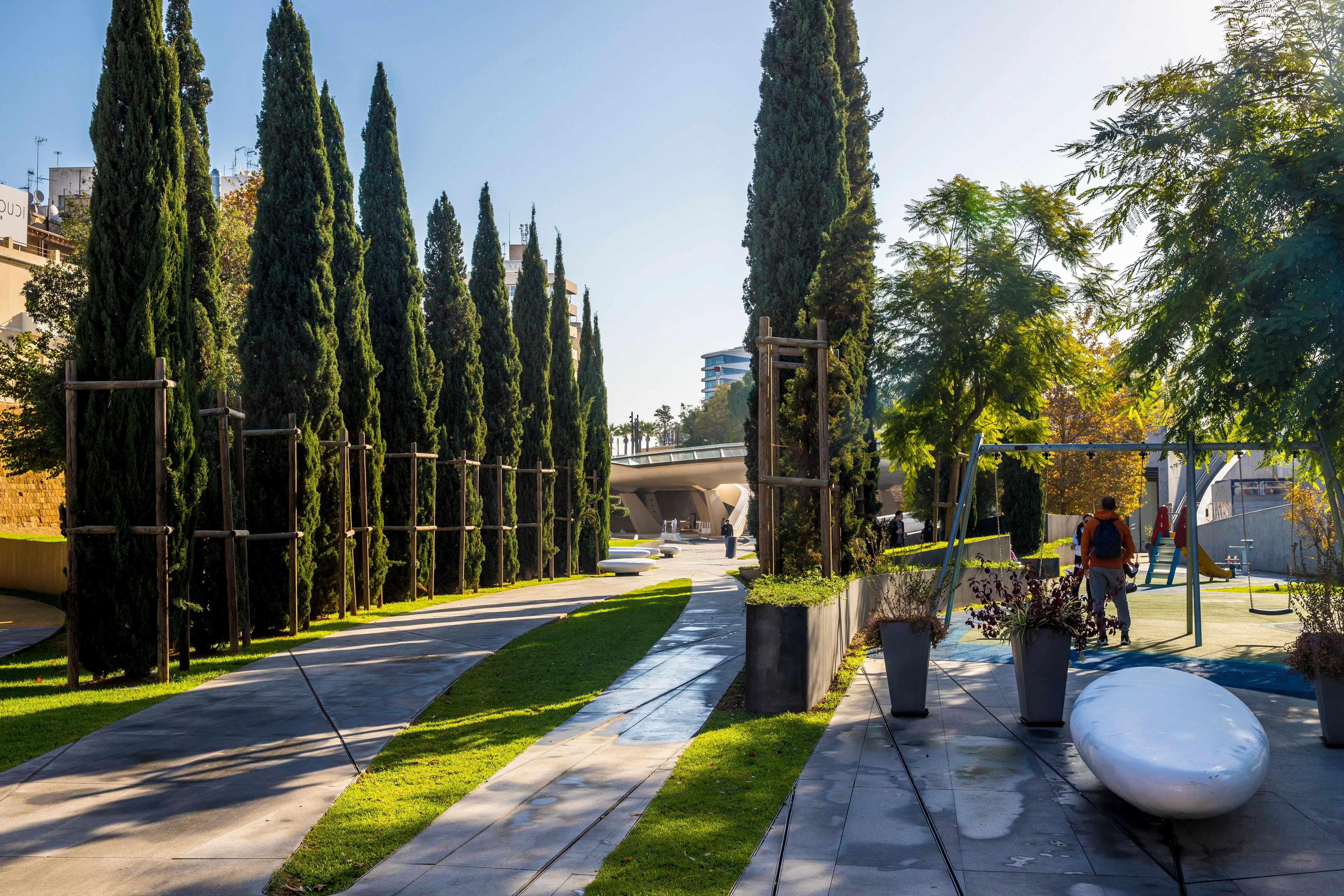
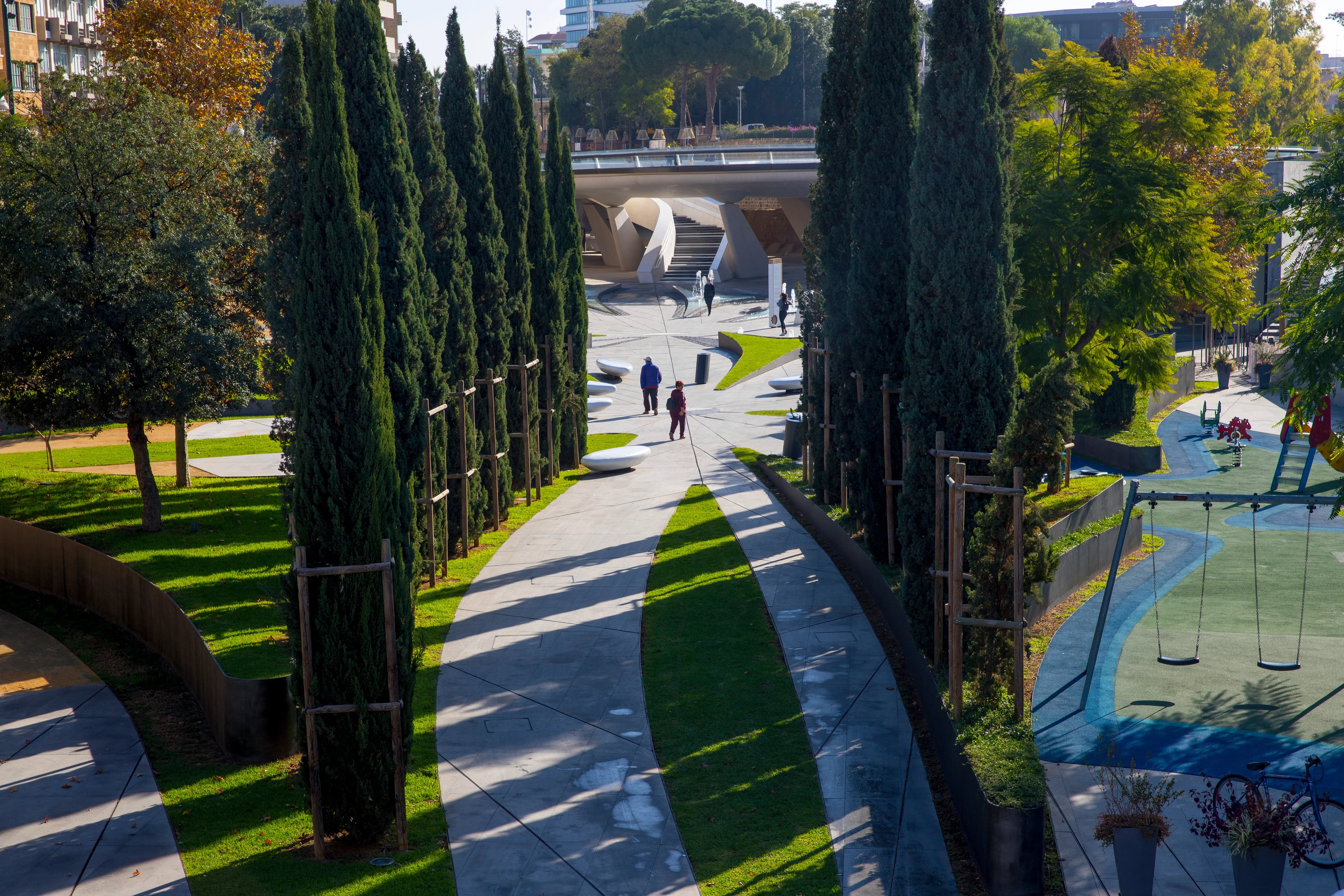
Transforming previously inaccessible areas of the moat with new civic plazas, gardens and palm-lined promenades, the moat can become a ‘green belt’ around the city. ZHA’s design proposes these new public spaces within the moat are extended to follow the ancient city walls and encircle Nicosia, reconnecting communities of this divided capital.
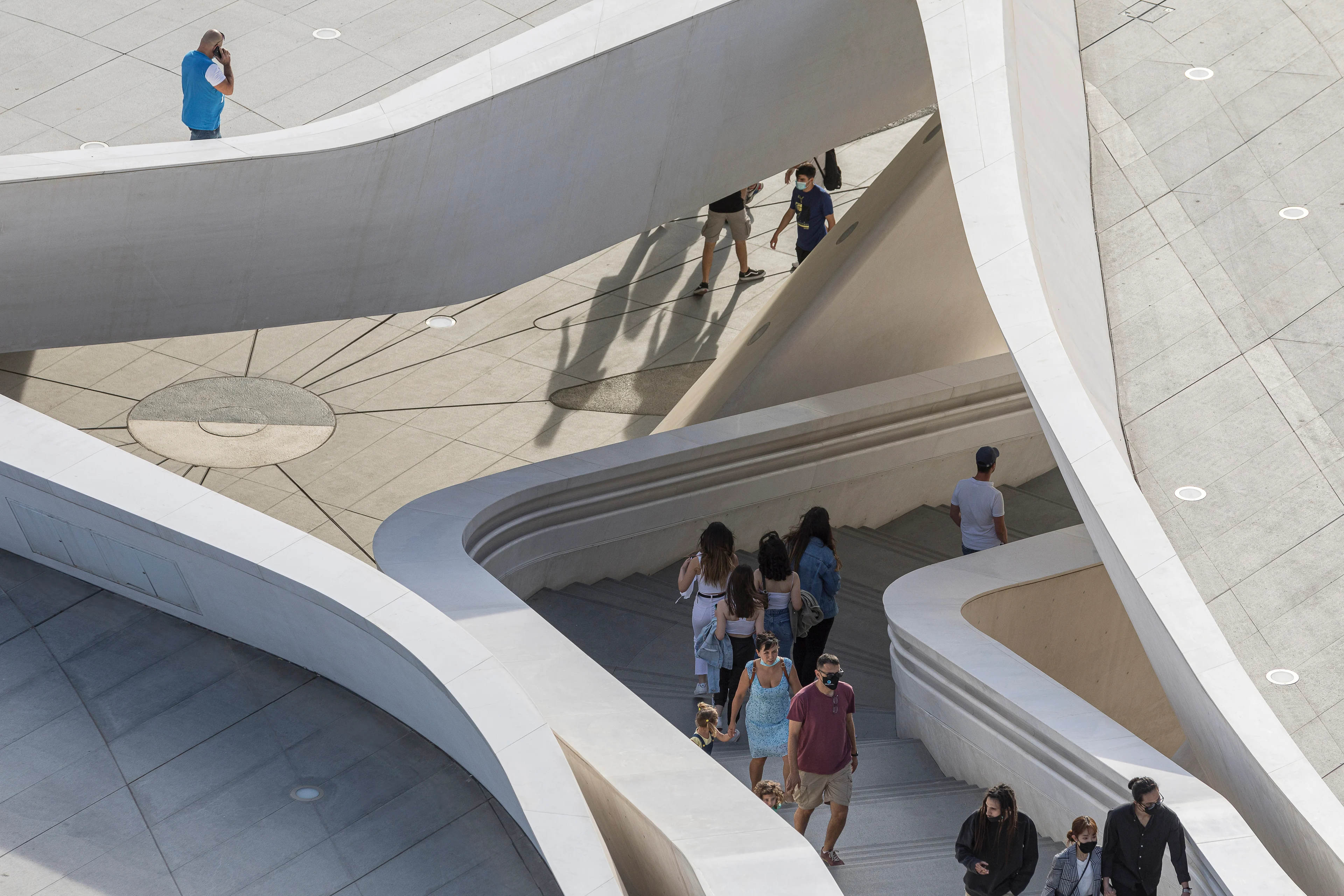
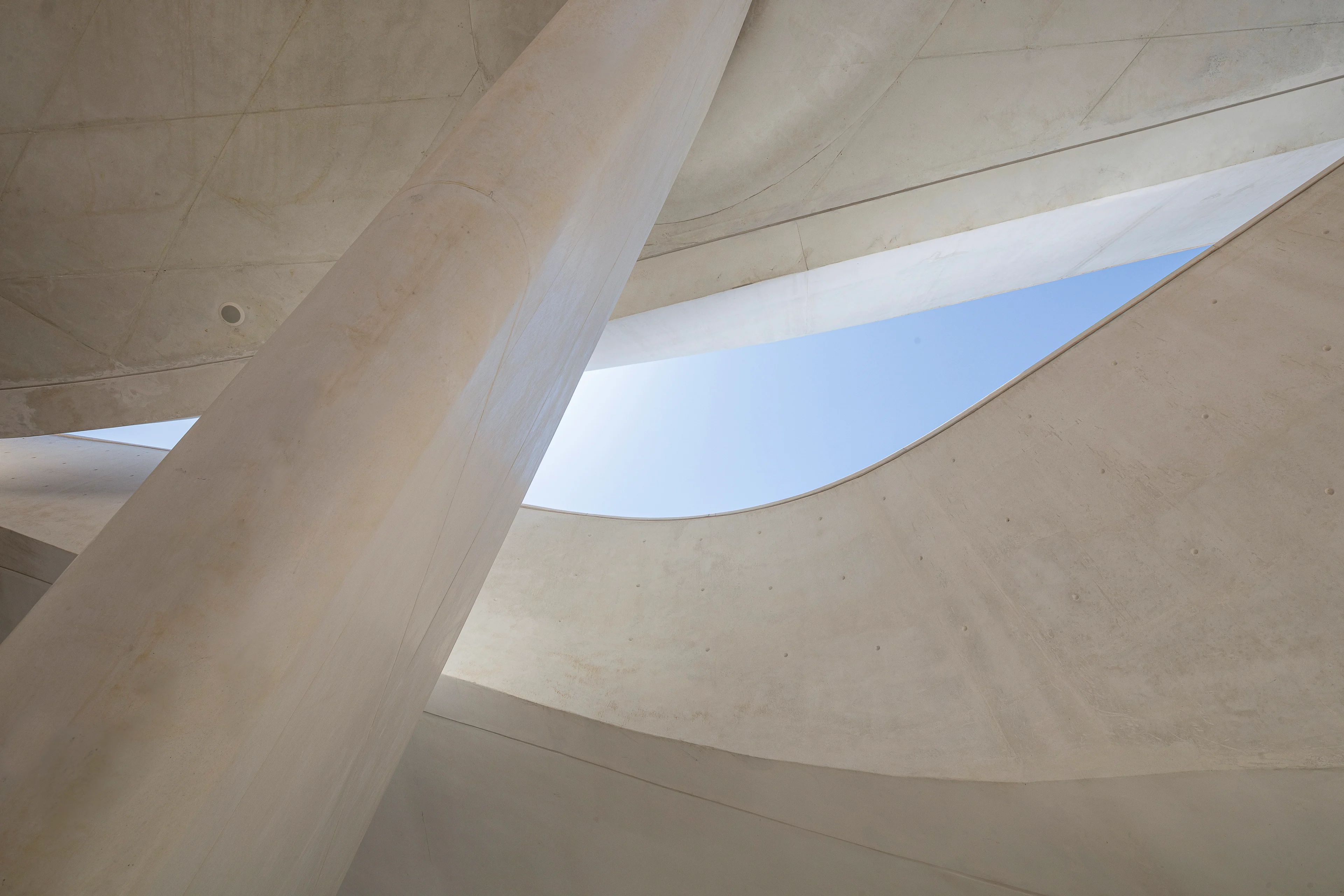
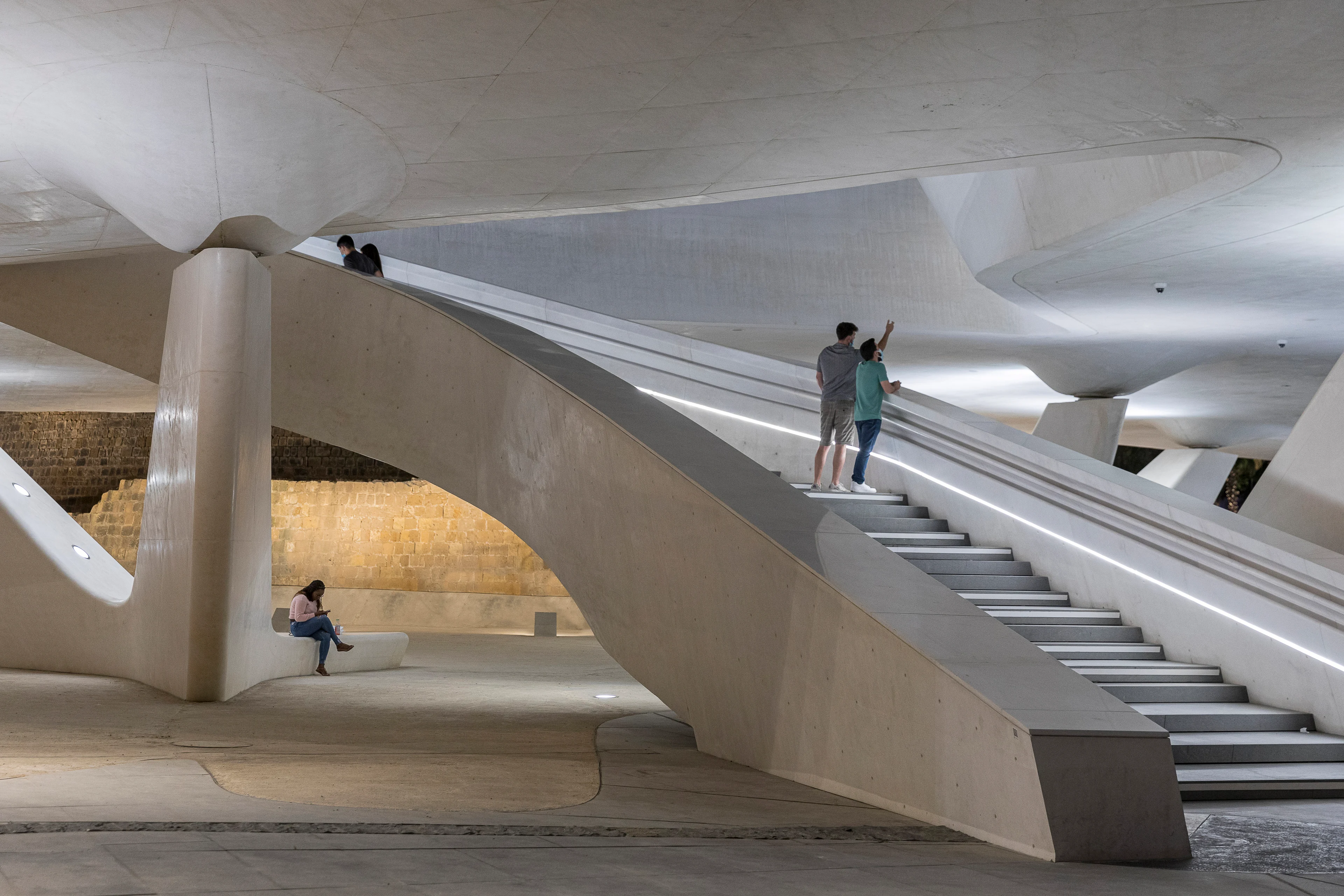
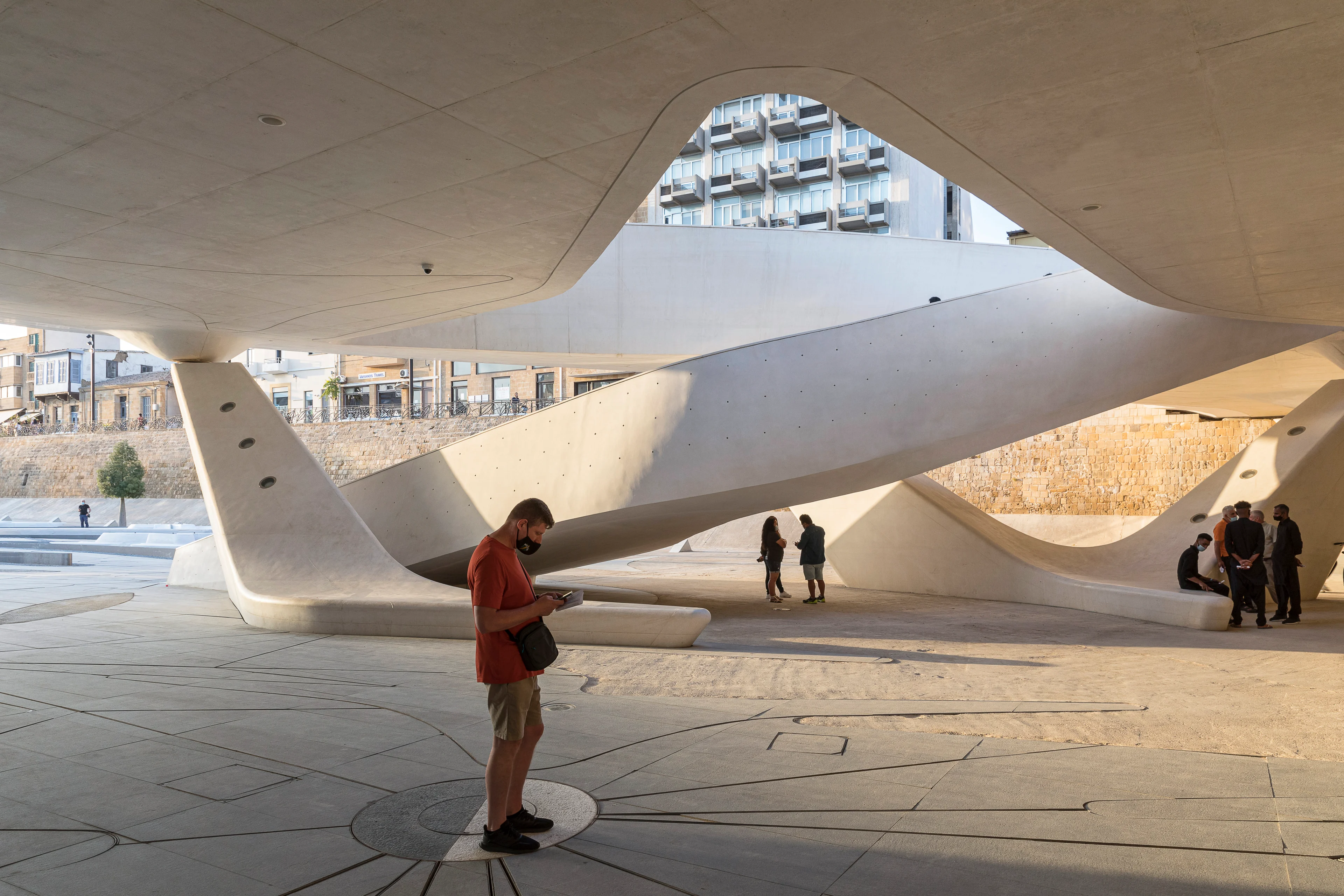
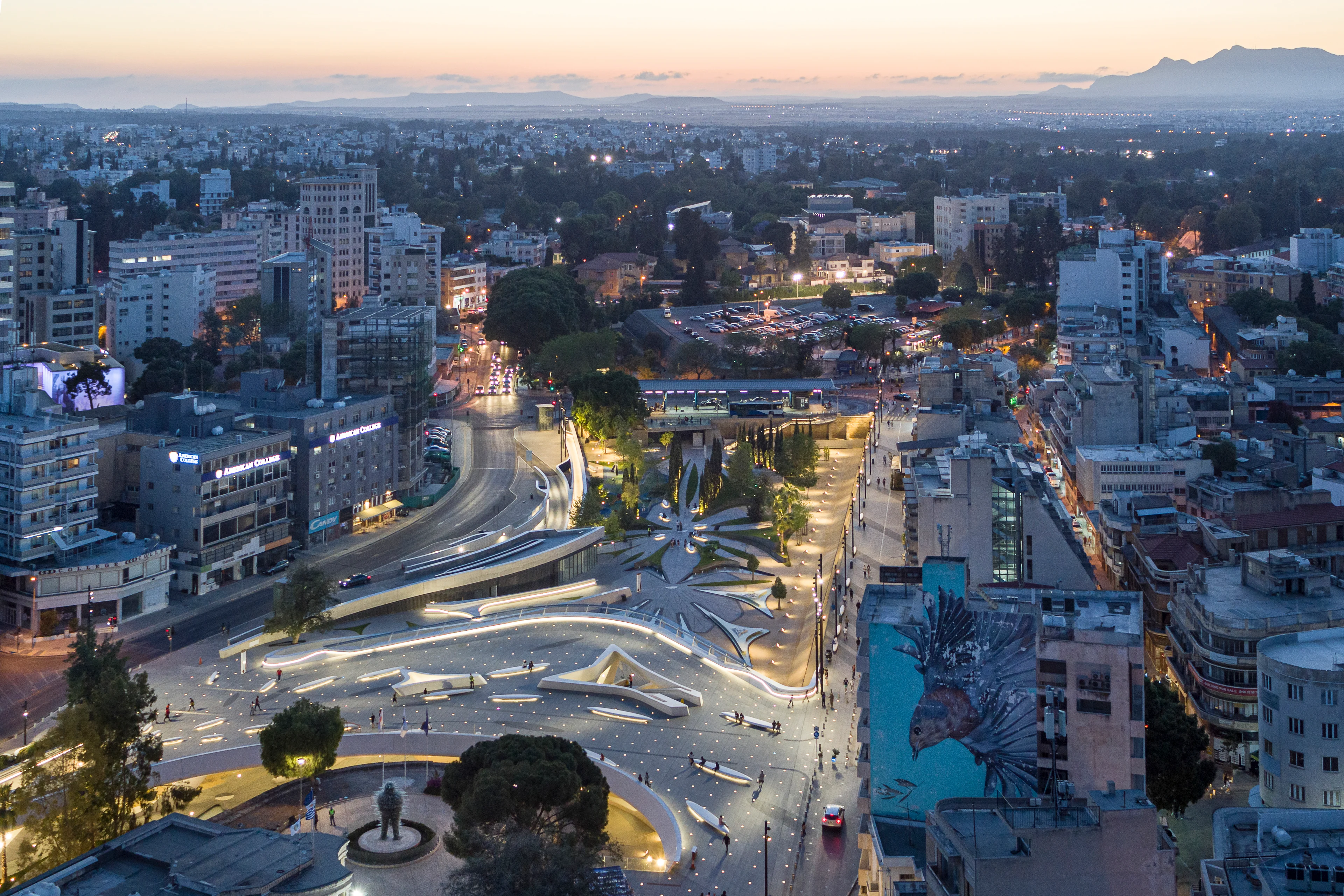
The Eleftheria Square design elevates the topography of the moat to create an upper level bridge that meets the surrounding streetscape, establishing direct connections with the city’s urban fabric and defining a new public square in the heart of the capital.
Photograph by Laurian Ghinitoiu
Photograph by Laurian Ghinitoiu
Photograph by Laurian Ghinitoiu
Photograph by Laurian Ghinitoiu
Photograph by Laurian Ghinitoiu
DCIM\100MEDIA\DJI_0413.JPG
01
02
03
04
05
Sculptural forms
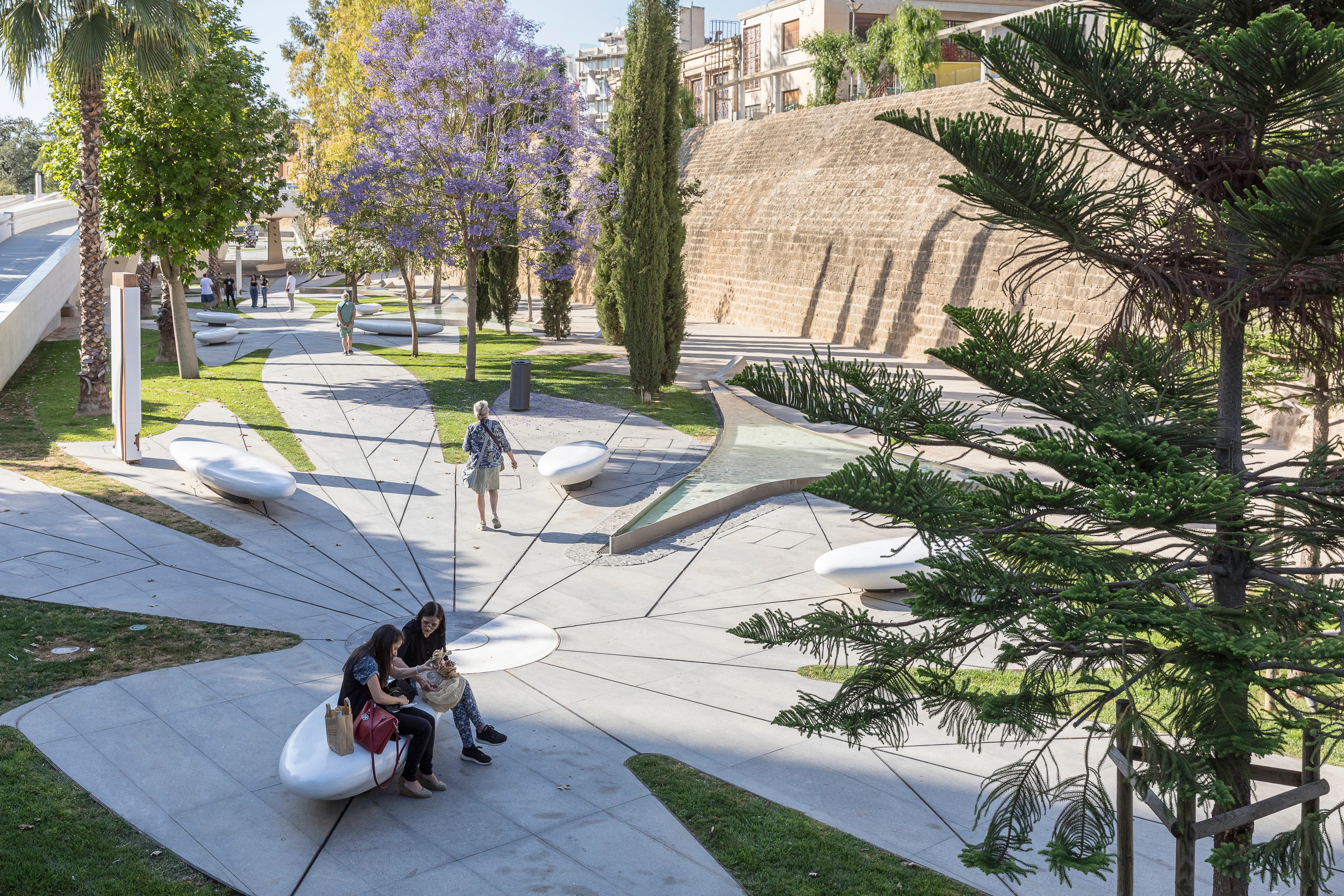
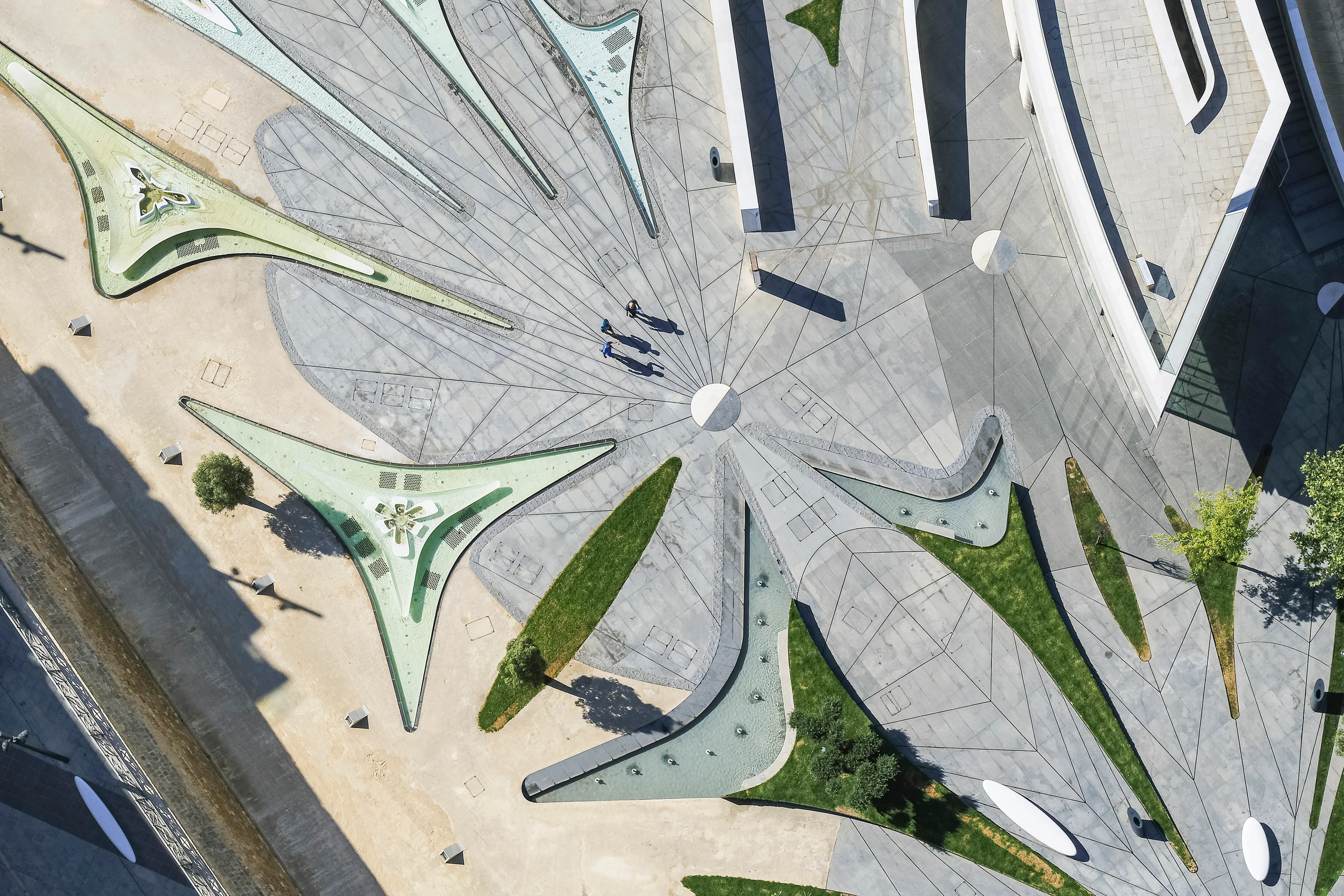
Transformed into an urban park, the moat’s fluid geometries have been created through the process of triangulating the irregular forms of the ancient fortifications to establish points of ‘intensity’ that define seating, flowerbeds or water features within the new park.
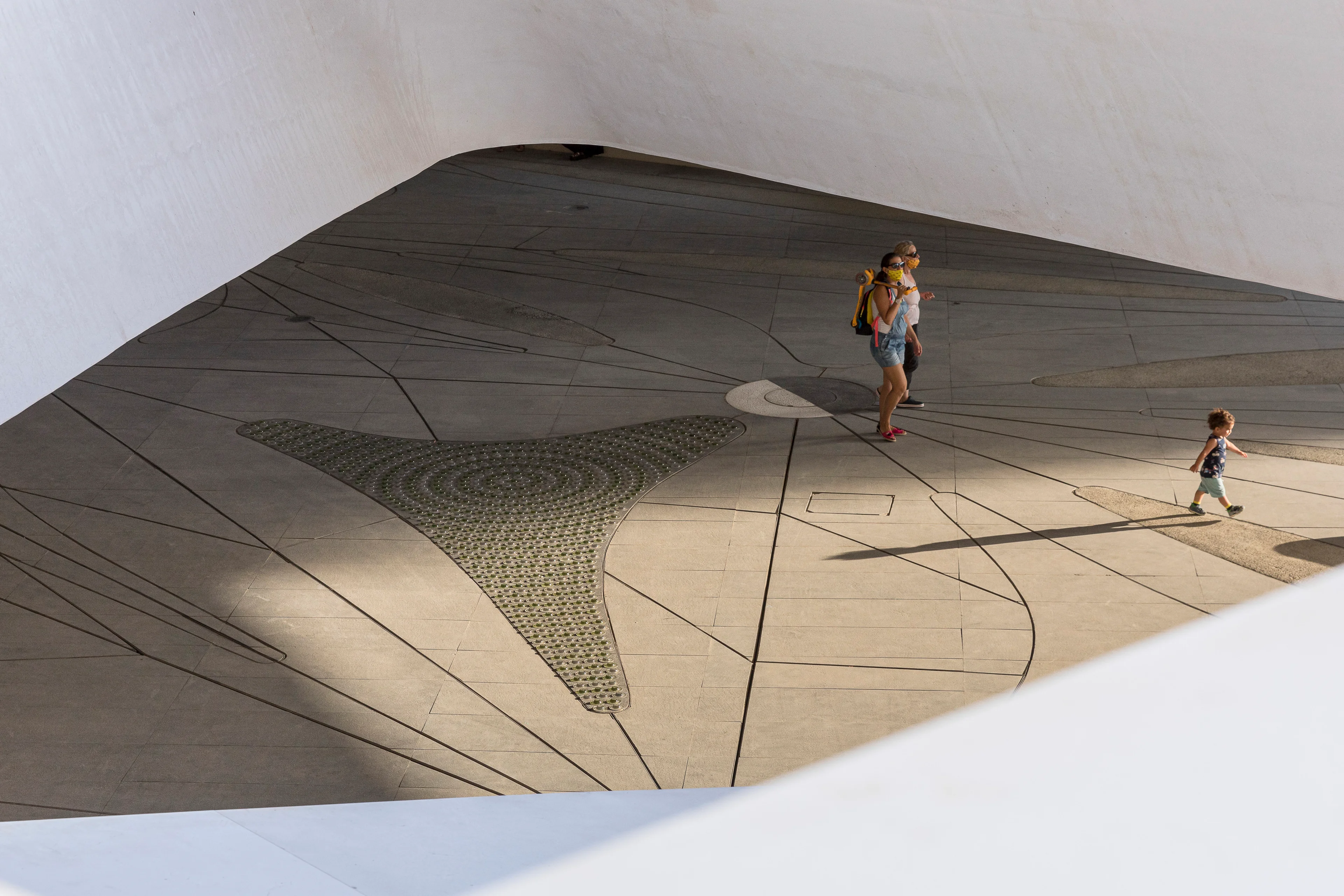
The moat’s granite paving conveys a timeless solidity, while open joints between the granite slabs create a passive rainwater drainage system that allows the new trees planted within the moat to naturally balance groundwater levels and reduce erosion of the medieval walls’ foundations.
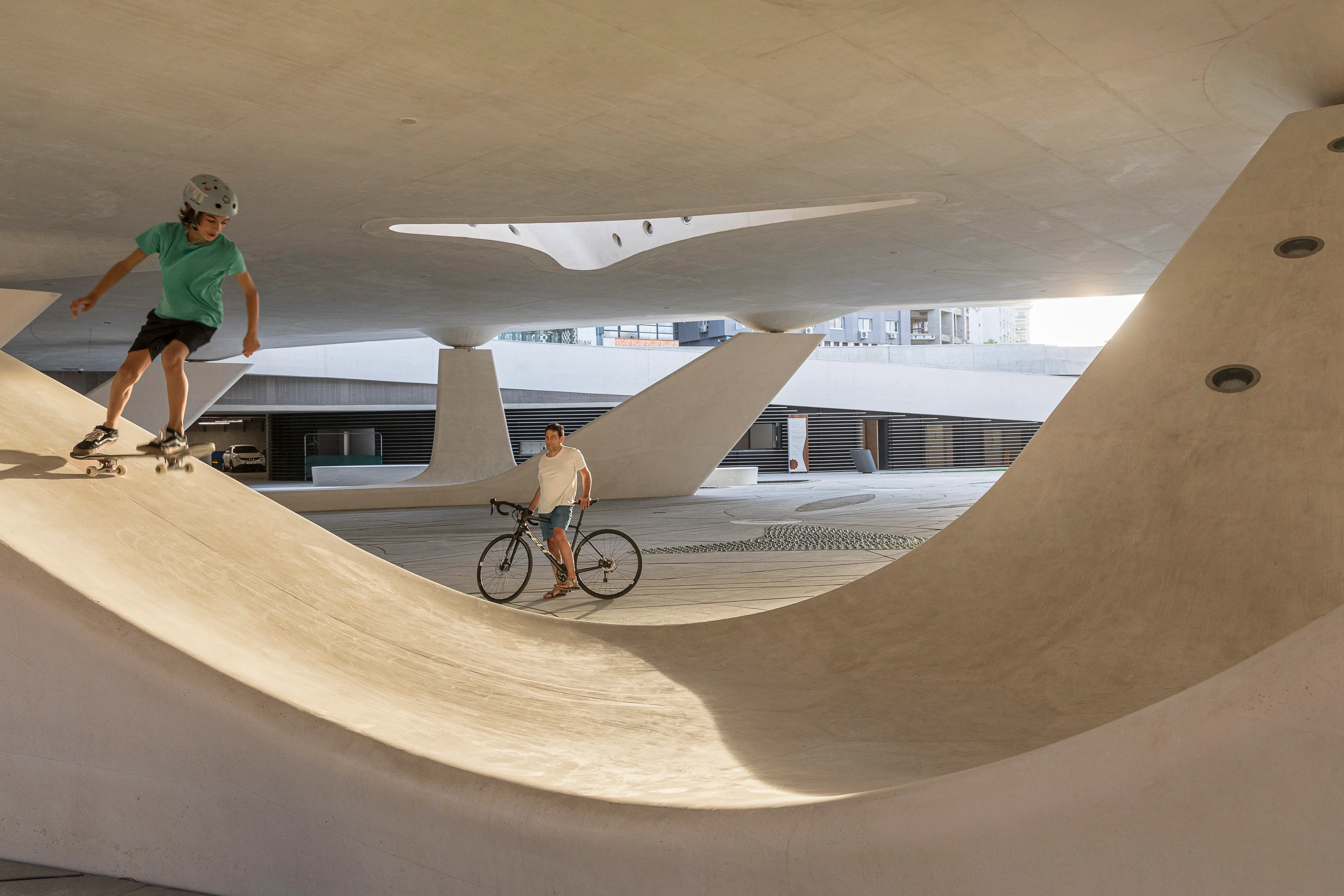
As the largest civic plaza in Nicosia, Eleftheria Square has been designed to host festivals and public events; its upper level bridge and supporting columns are crafted in concrete, their sculptural forms ensure structural integrity in this seismic region and the base of each column morphs into seating.
The renovation of the square involved extensive archaeological excavations together with works to repair and protect the historic Venetian Walls. The redevelopment also includes two cafes within the square and the new underground parking lot with access ramp on Omirou Avenue. Stairs and elevators directly connect with the bus terminal in Solomos Square.
Photograph by Laurian Ghinitoiu
Photograph by Laurian Ghinitoiu
Photograph by Laurian Ghinitoiu
Photograph by ©K.Arkatites
01
02
03
04
Optimism for the future
ZHA’s transformation of Eleftheria Square weaves together Nicosia’s rich history with an unwavering optimism for the future. Bridging the Venetian Wall and moat, the square becomes an important gateway to the old city, its underground parking removing cars from the ancient city’s streets to enable further pedestrianisation that enhances the urban realm of this historic district while also creating new public gardens and plazas to be enjoyed by residents and visitors to the city.
Civic
Discover more of our civic spaces
From Beijing’s largest and most advanced convention and exhibition centre to a public plaza that unites the historically divided city of Nicosia, discover our latest civic projects.
Photograph by Hufton + Crow
National Bank of the Republic of Kazakhstan
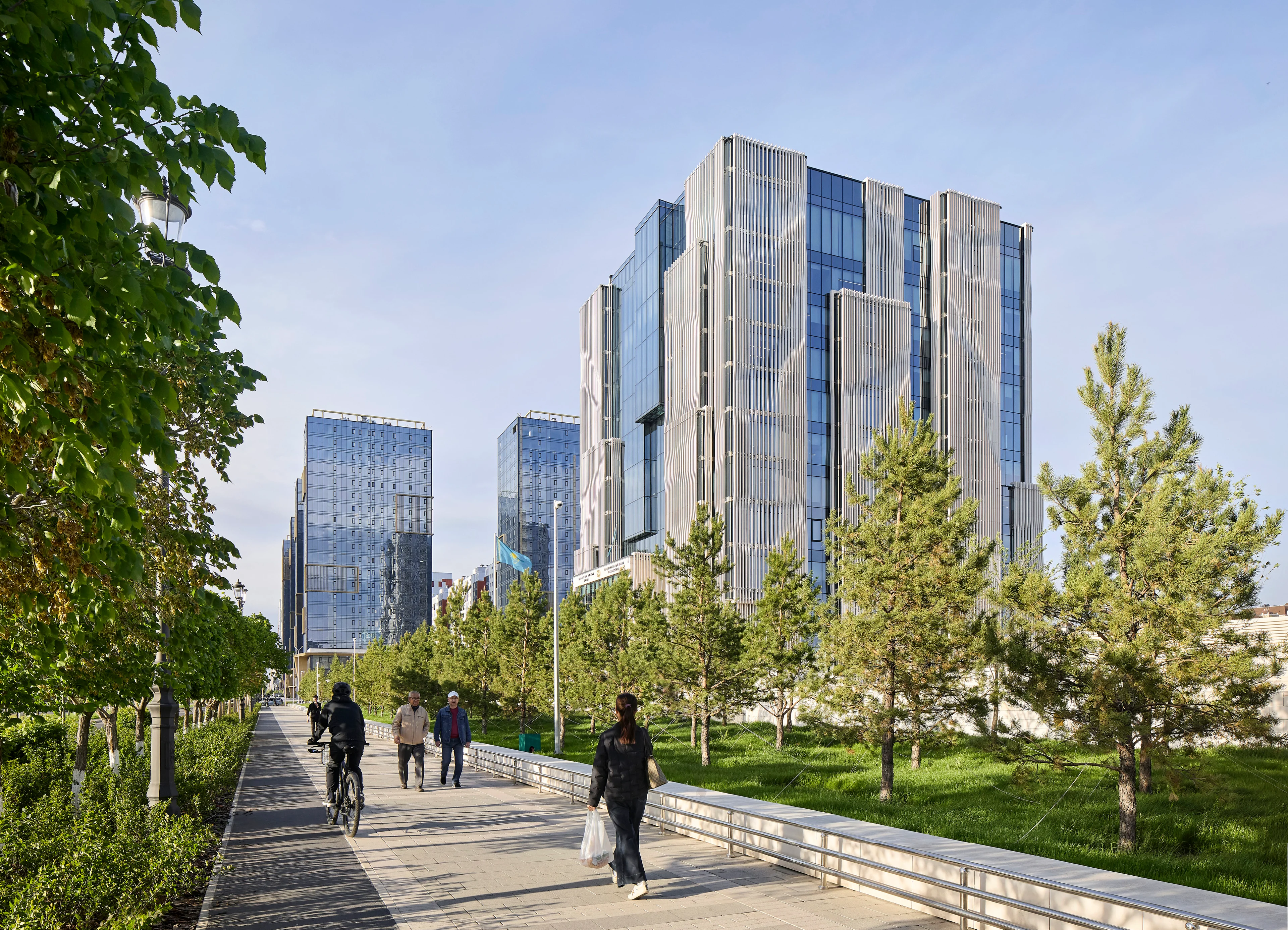
The new headquarters of the National Bank of the Republic of Kazakhstan (NBRK) in Astana houses the bank’s departments within a single, integrated campus accommodating up to 800 employees and conveys the institution’s longstanding commitment to fiscal stability.
Songshan Lake Performance and Exhibition Centre
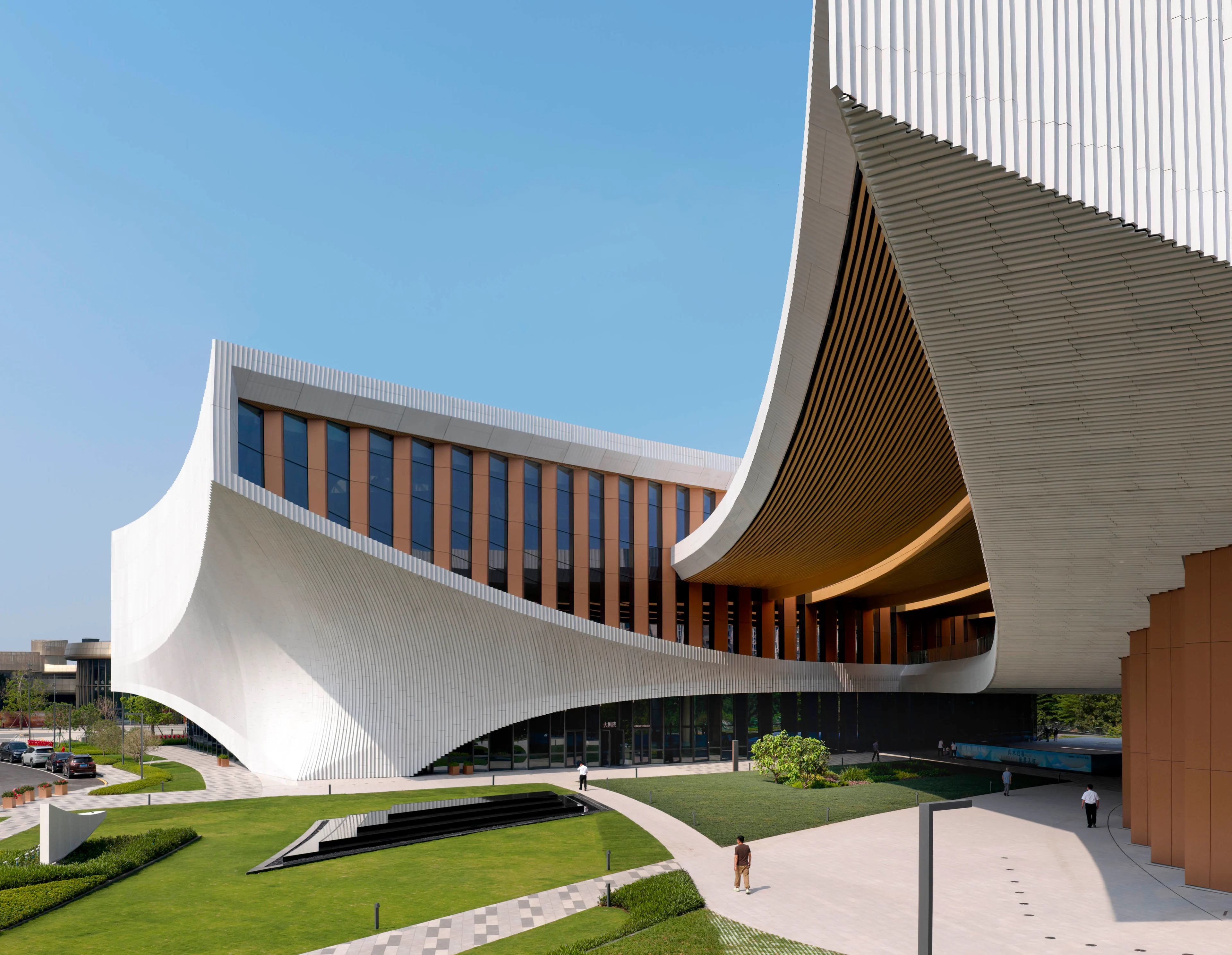
Located in Dongguan within the Greater Bay Area of southern China’s Pearl River estuary, the new Songshan Lake Exhibition and Performance Centre is at the heart of a mixed-use masterplan to revitalize the Yuehe Lake waterfront.
Render by X-Universe
National Innovation, Creativity and Finance Center
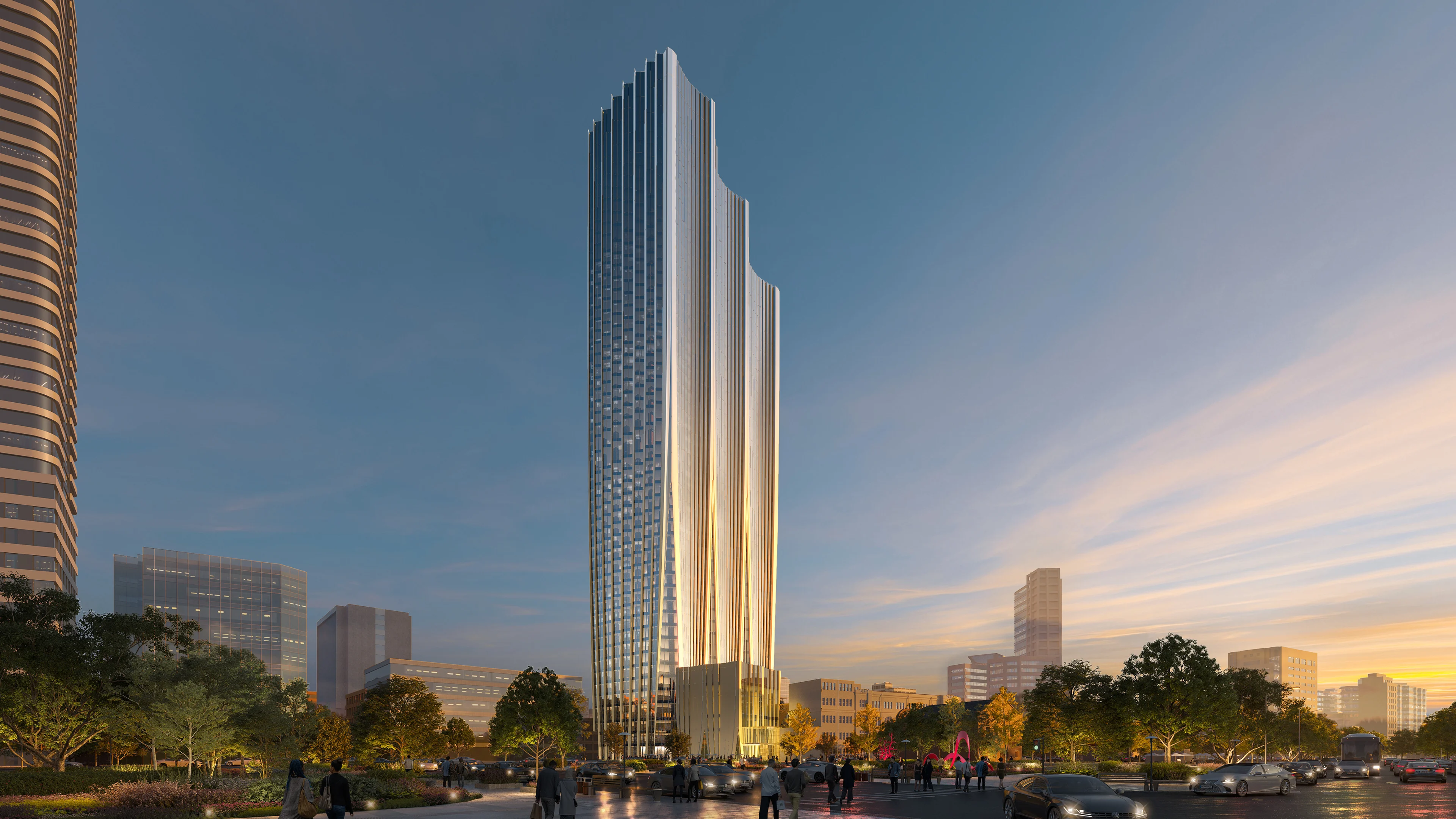
Located in the heart of Taipei’s Beimen district—the city’s financial hub—NICFC will house four institutions of the Financial Supervisory Commission that include the stock exchange, futures exchange, depository & clearing corporation.
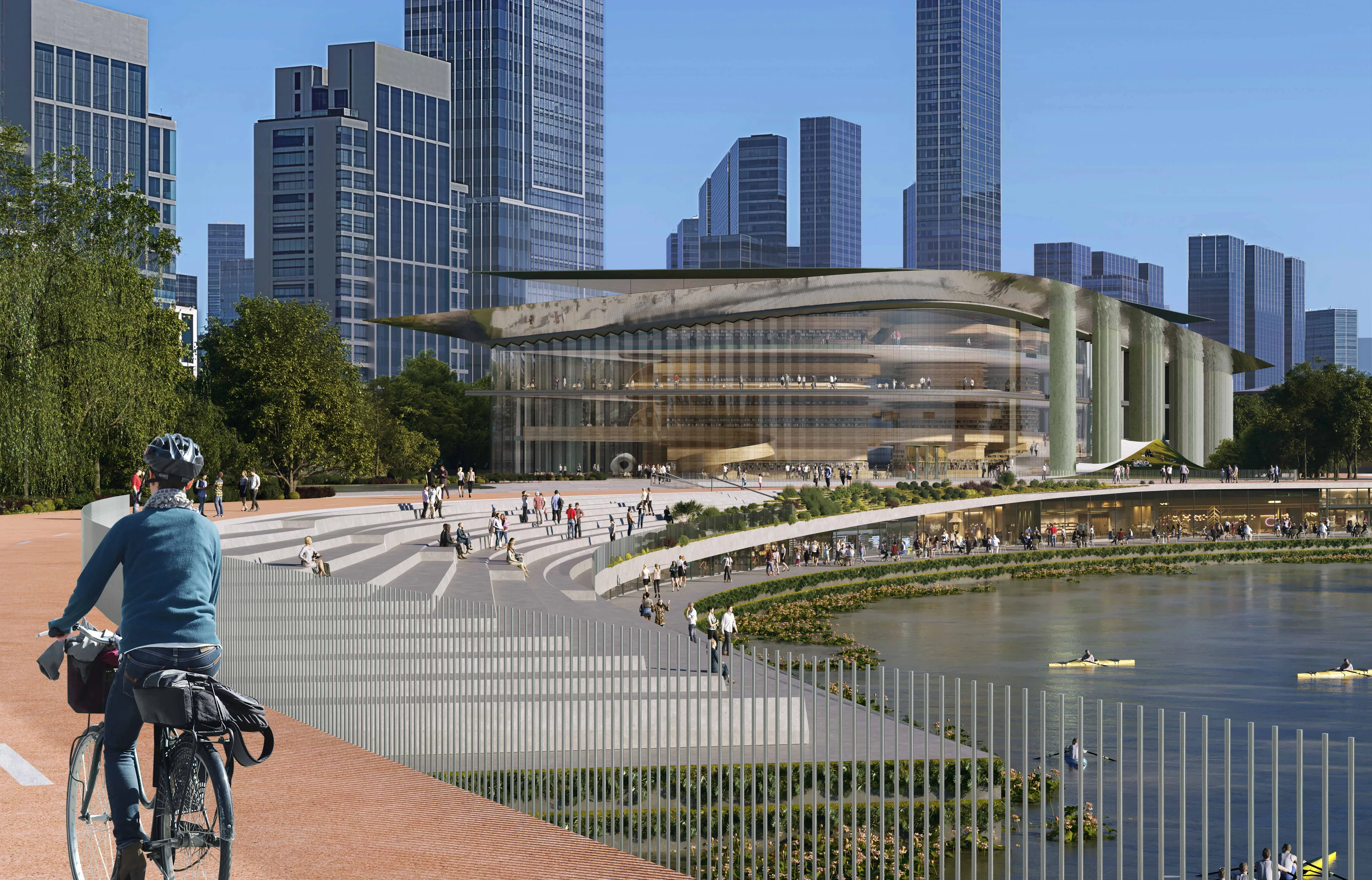
Qiantang Bay Cultural District
A series of new landscaped parklands, terraces and gardens along the Zhedong Canal within the Xiaoshan district of Hangzhou
Render by X Universe
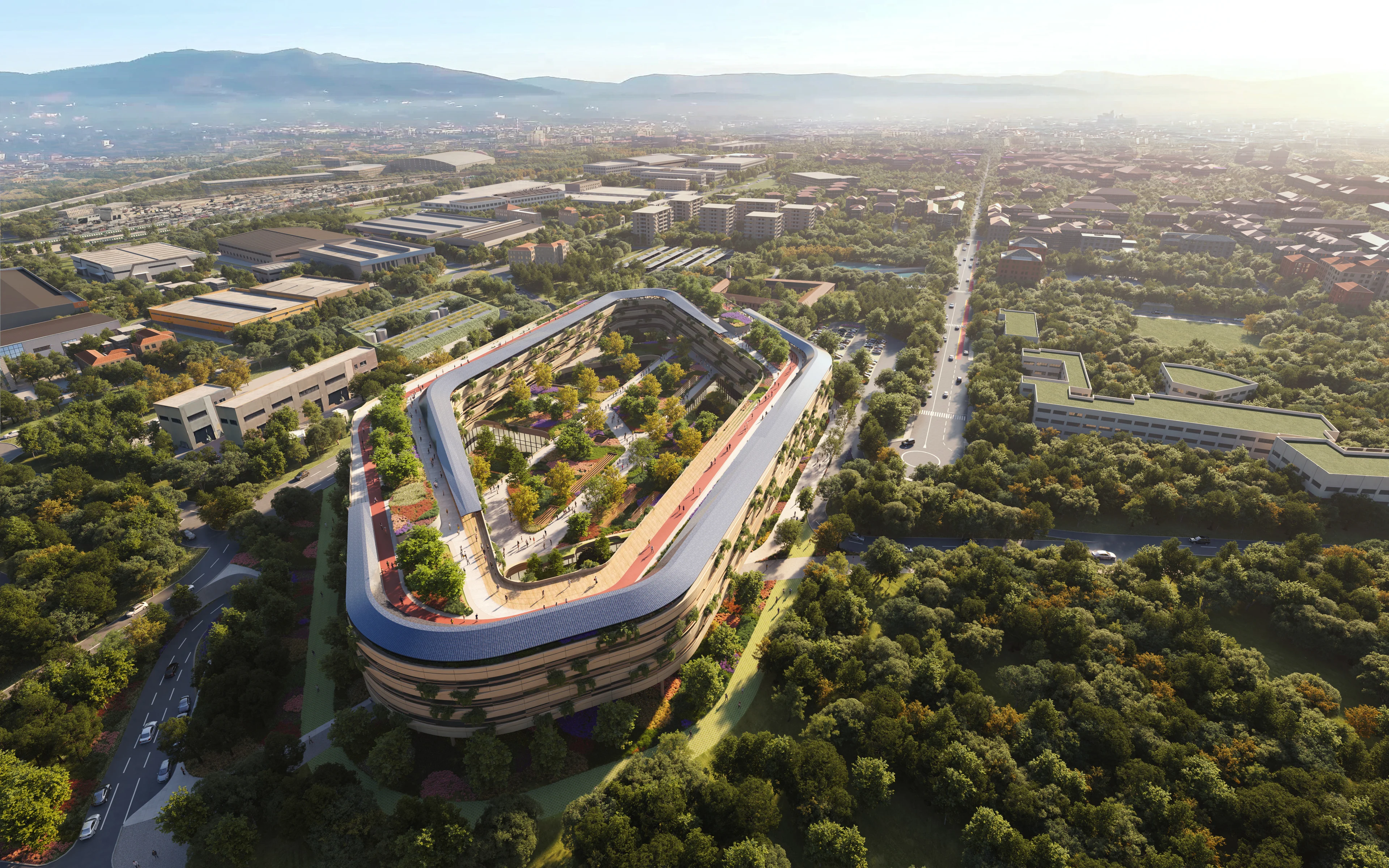
Malpensa Hospital
The international competition to design Malpensa Hospital (Grande Ospedale della Malpensa) has been awarded to ZHA in partnership with RINA (team leader), Studio Plicchi, WSP, STI Engineering and BC Building Consulting.
Photograph by Virgile Simon Bertrand
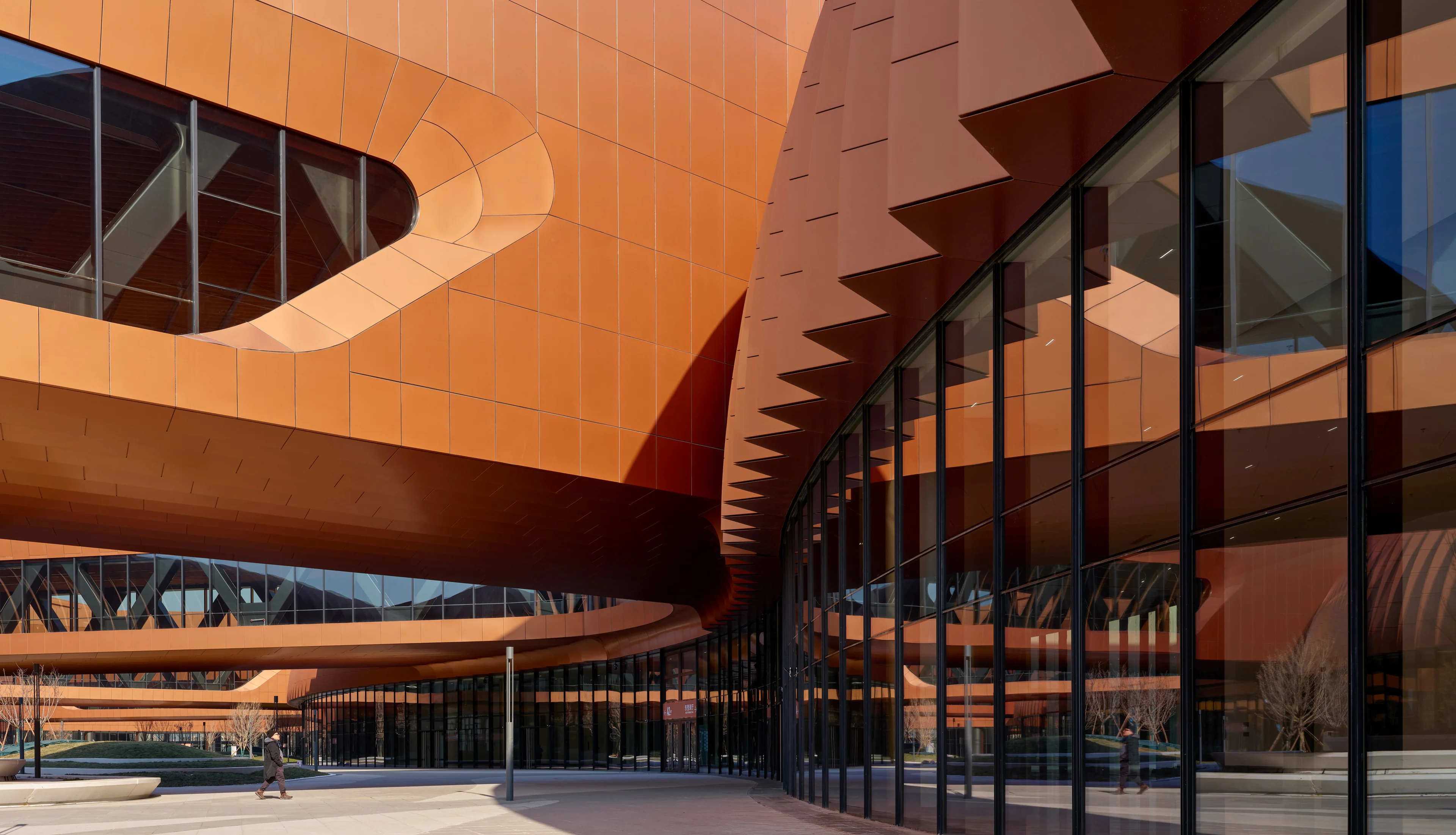
Capital International Exhibition & Convention Centre
As the cultural, academic and civic centre of China, Beijing has also developed into one of the world’s centres of communication and scientific research.
Photograph by Werner Huthmacher
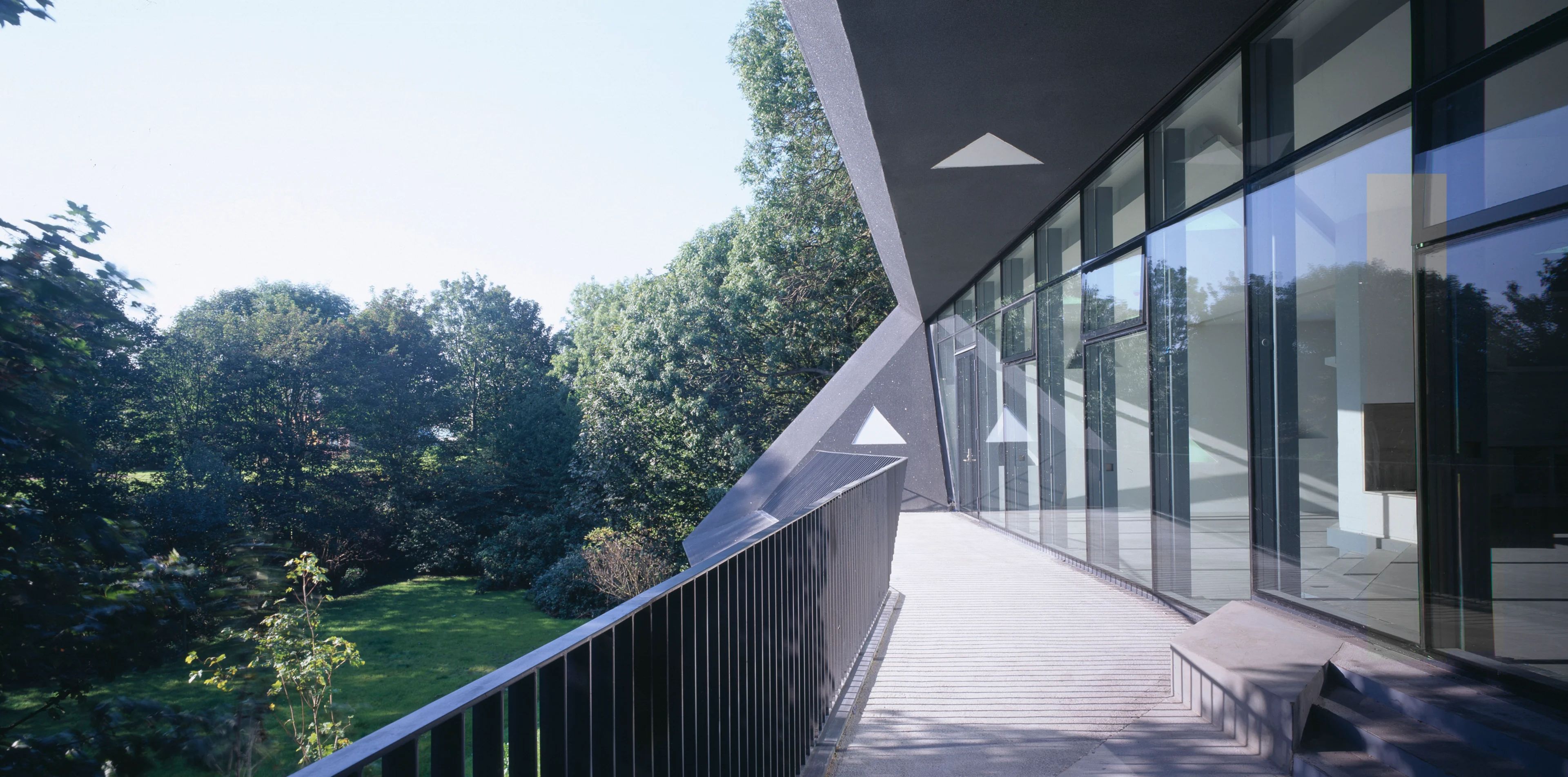
Maggie's Fife Cancer Centre
Domestic in scale but unique in execution, Maggie’s Fife Cancer Centre is set on the edge of a hollow adjacent to Victoria Hospital: a distinctive protected environment providing a haven for cancer patients. Designed to create a transition between the natural and the man-made, it forms a gateway to the surrounding landscape.
Photograph by ©Christian Richters/VIEW
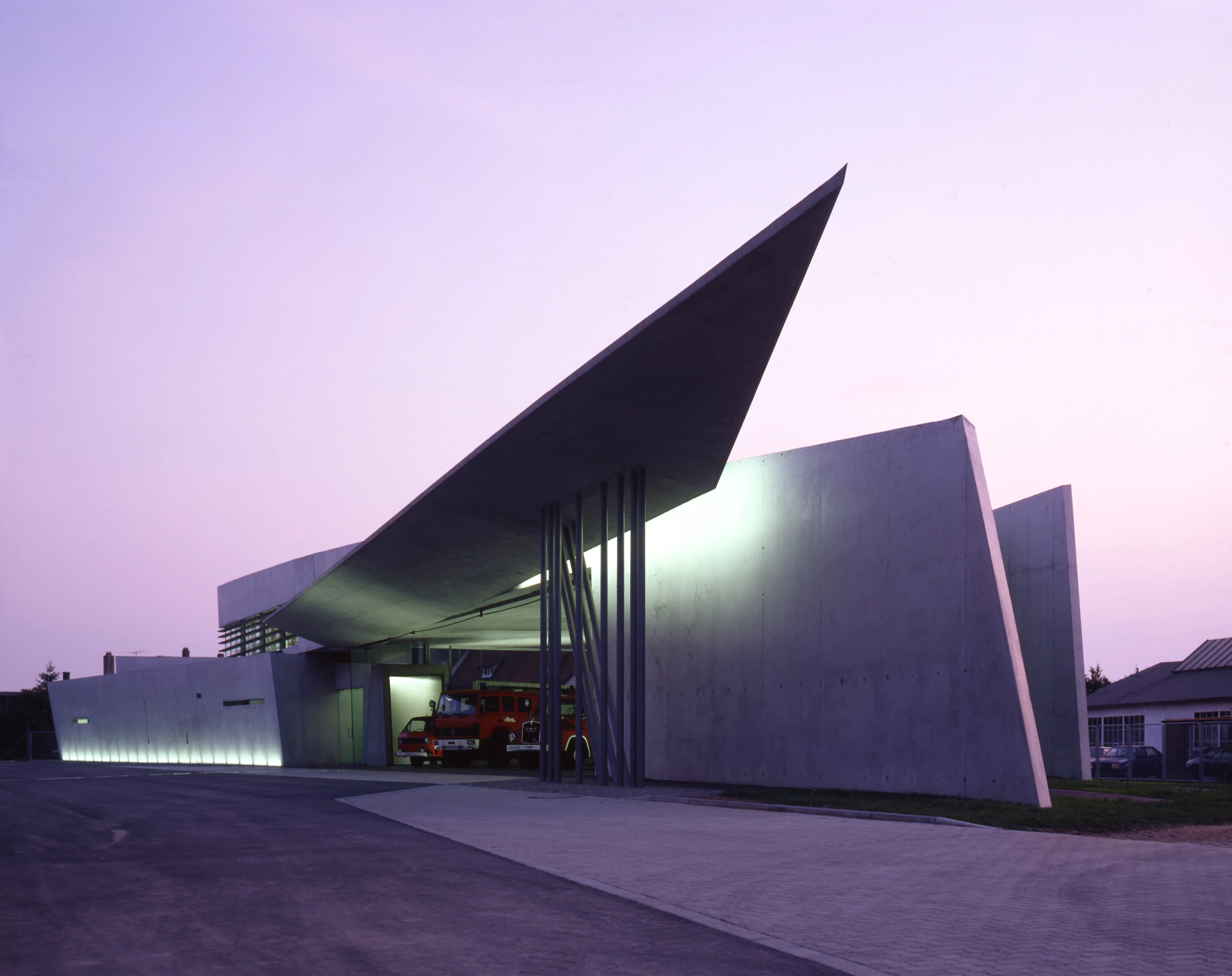
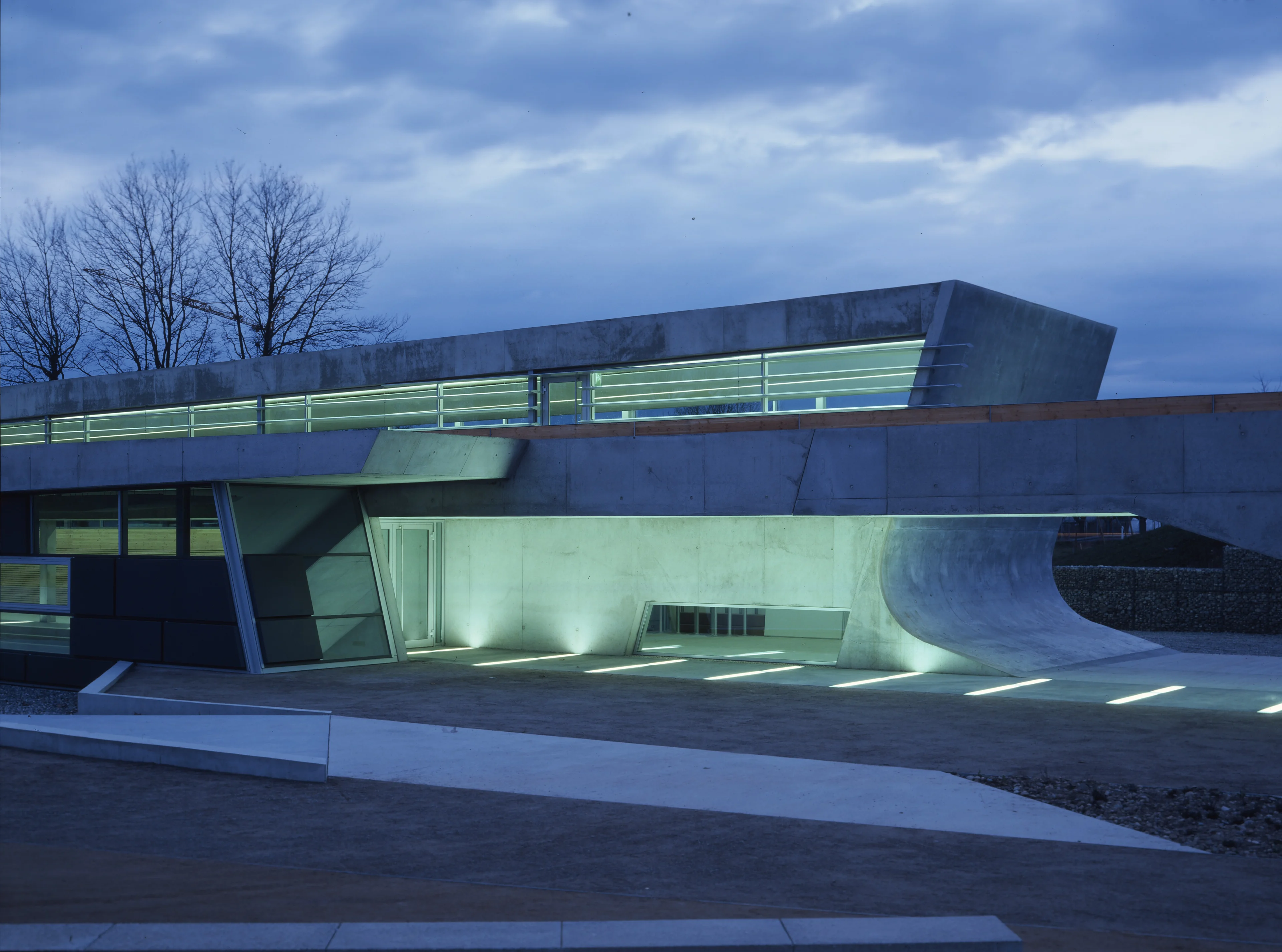
Vitra Fire Station
Conceived as the end-note to existing factory buildings, the Vitra Fire Station defines rather than occupies space – emerging as a linear, layered series of walls, between which program elements are contained – a representation of ‘movement frozen’ – an ‘alert’ structure, ready to explode into action at any moment.
Photograph by Hélène Binet
Landesgartenschau / Landscape Formation One
The project is designed to serve as an event and exhibition space for the garden festival in Weil am Rhein 1999. The suggested structure does not sit in the landscape as an isolated object, but emerges from the fluid geometry of the surrounding network of paths.
Photograph by Hufton + Crow
Legacy Mode : December 2013
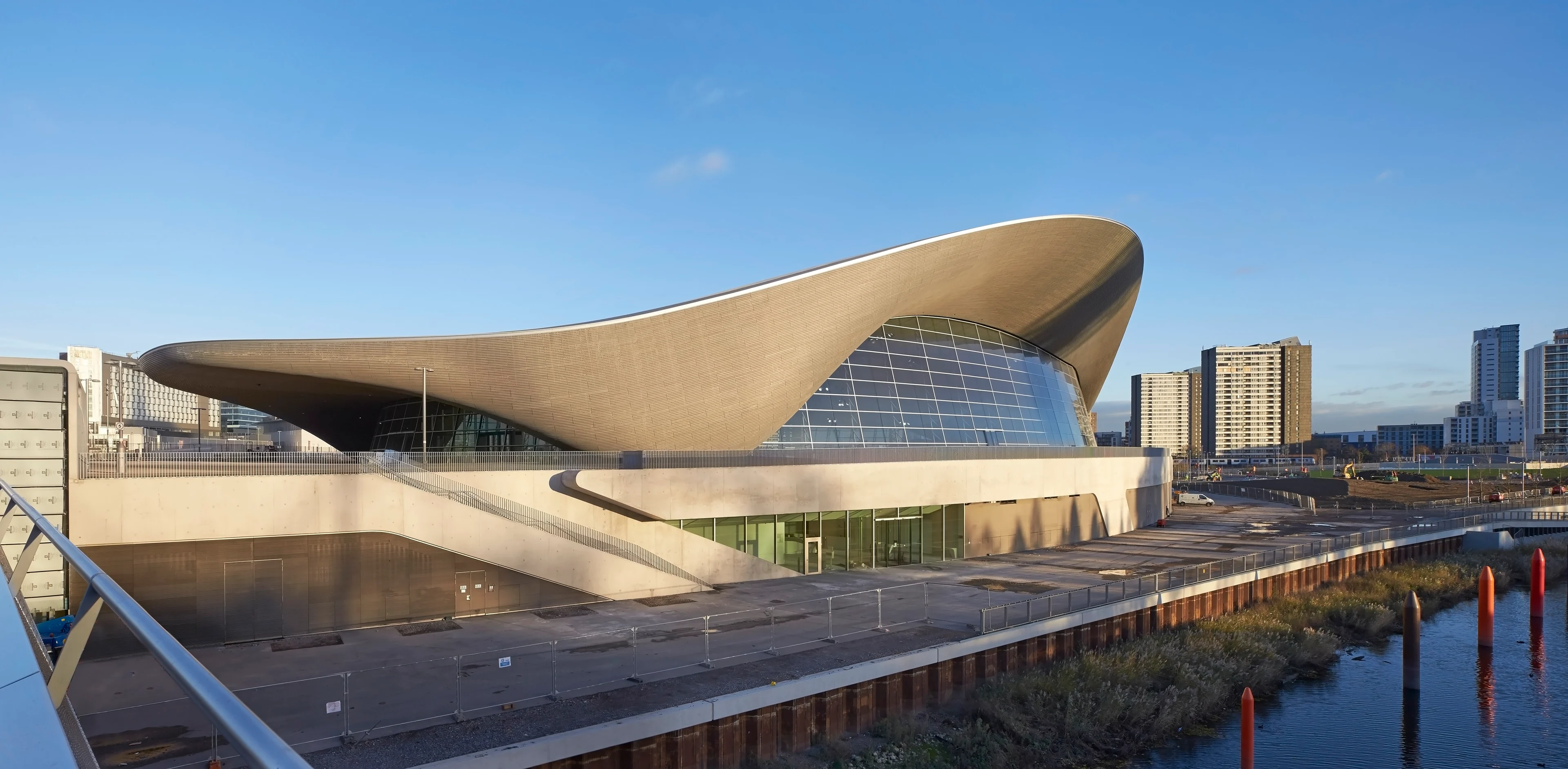
London Aquatics Centre
A concept inspired by the fluid geometry of water in motion, creating spaces and a surrounding environment in sympathy with the river landscape of the Olympic Park. An undulating roof sweeps up from the ground as a wave, enclosing the pools of the Centre with its unifying gesture.
Photograph by Virgile Simon Bertrand
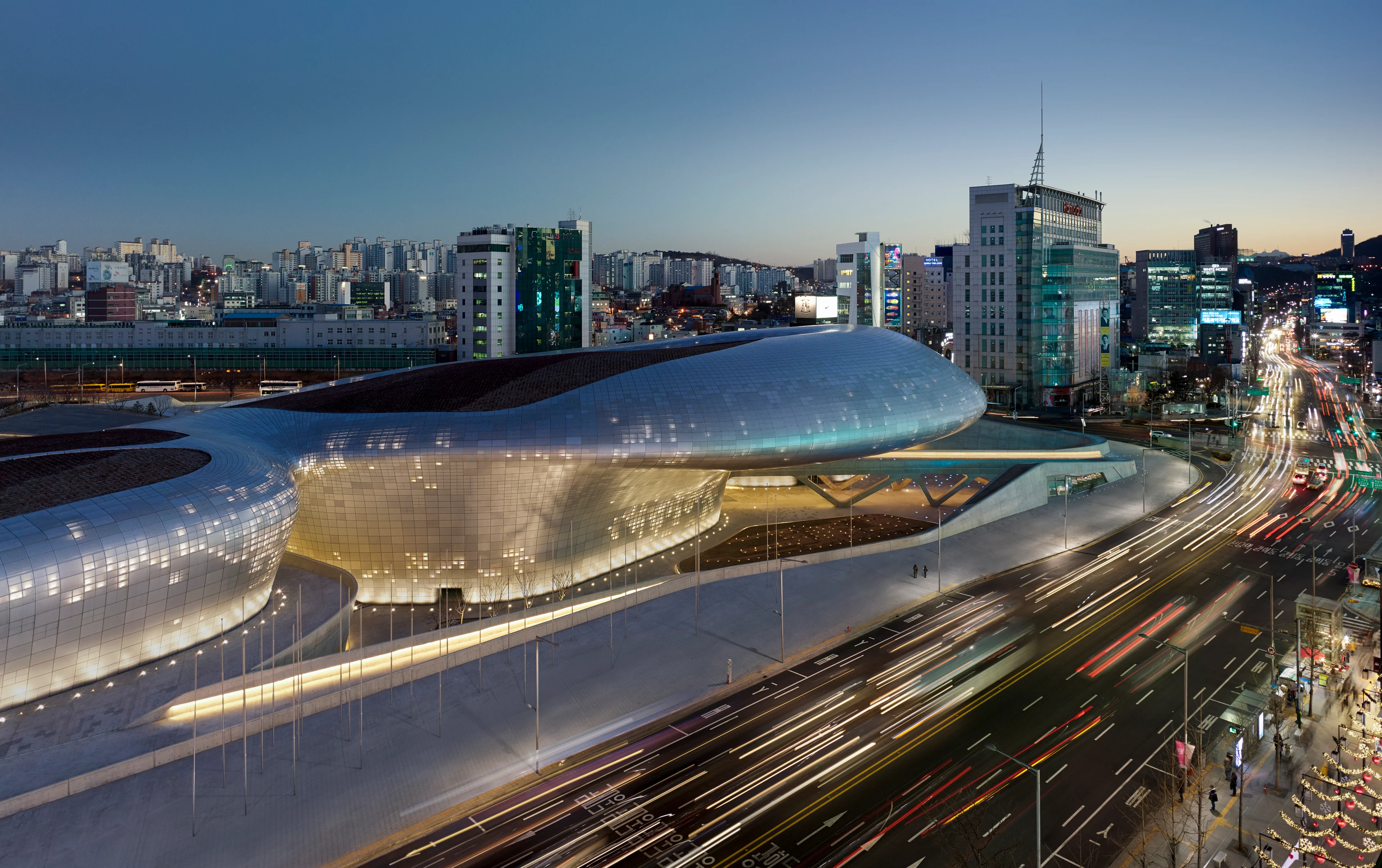
Dongdaemun Design Plaza
The DDP has been designed as a cultural hub at the centre of one of the busiest and most historic districts of the city. It is a place for people of all ages; a catalyst for the instigation and exchange of ideas and a place for new technologies and media to be explored - presenting an ever-changing menu of exhibitions and events that feeds the cultural vitality of the city.
Photograph by Piet Niemann
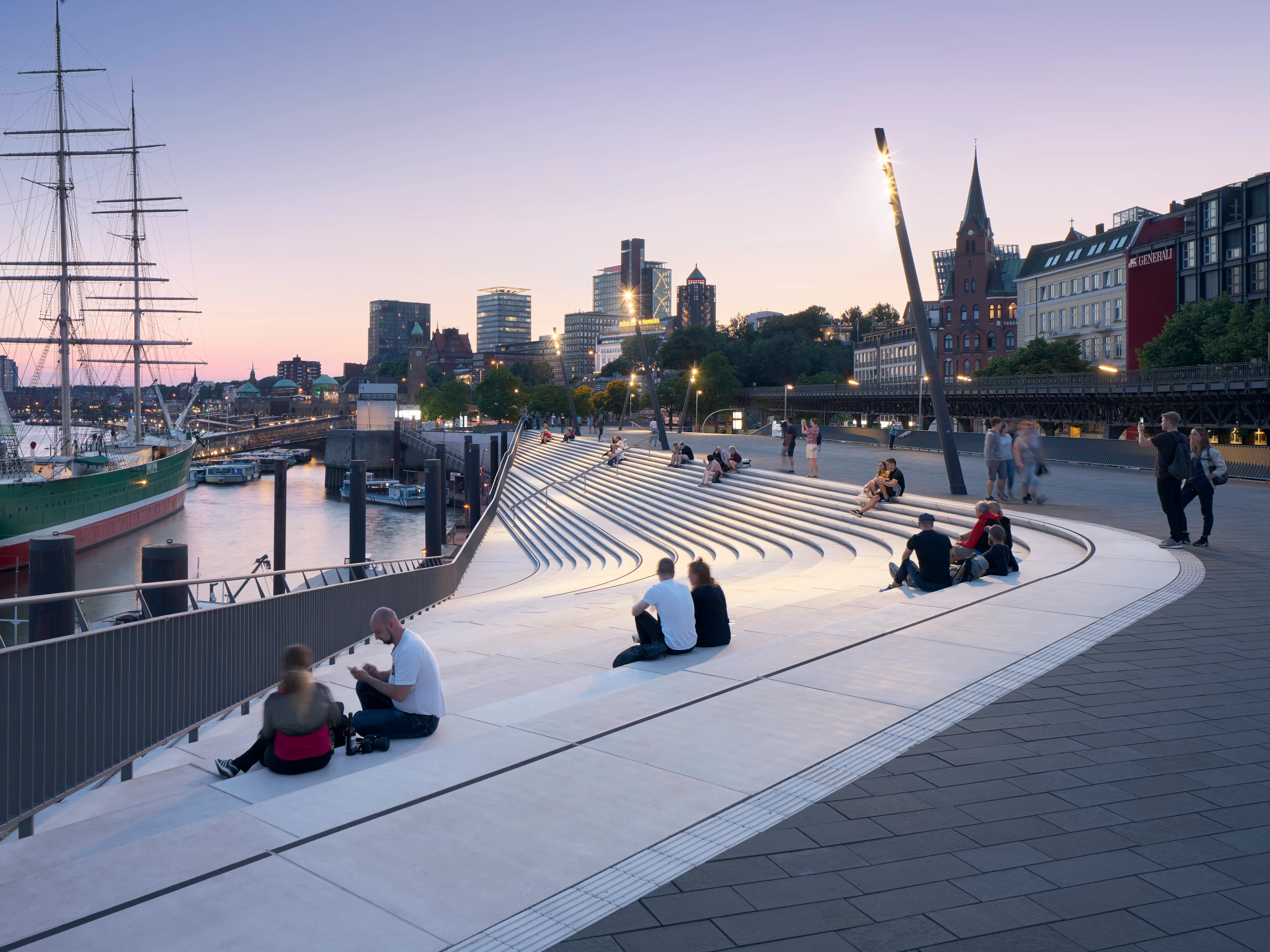
Niederhafen River Promenade
Located at Niederhafen on the Elbe River between St. Pauli Landungsbrücken and Baumwall in Hamburg, the upgraded 625m river promenade is integral to the modernisation and reinforcement of the city’s flood protection system.
Photograph by Hélène Binet
Set Two
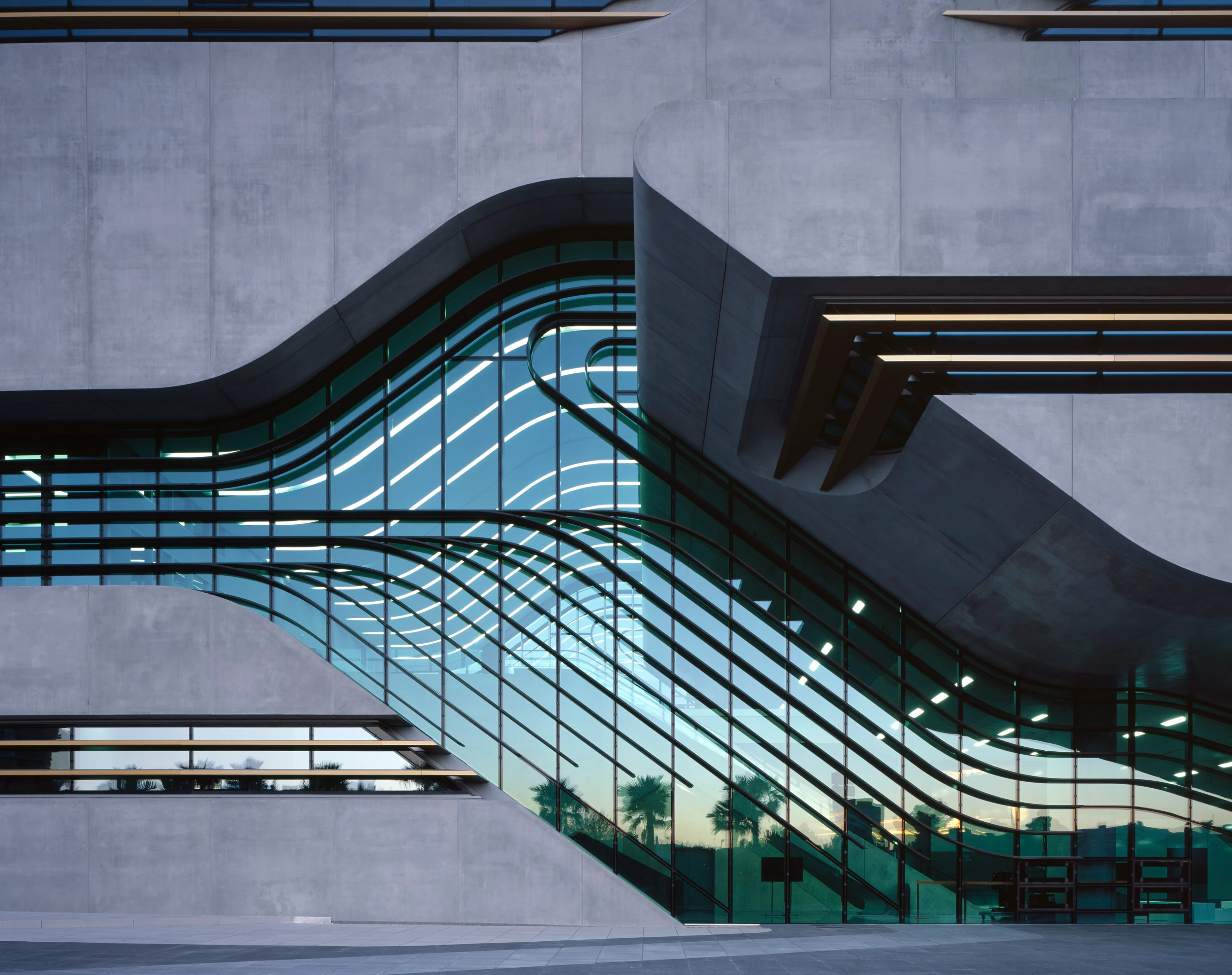
Pierresvives Archive & Library
The Pierresvives building for the department de l’Herault is the unification of three institutions – the archive, the library and the sports department – within a single envelope. These various parts combine to create a building with a strong single identity when viewed at a distance, but as one moves closer, the division into three parts becomes apparent.
Photograph by Hufton + Crow
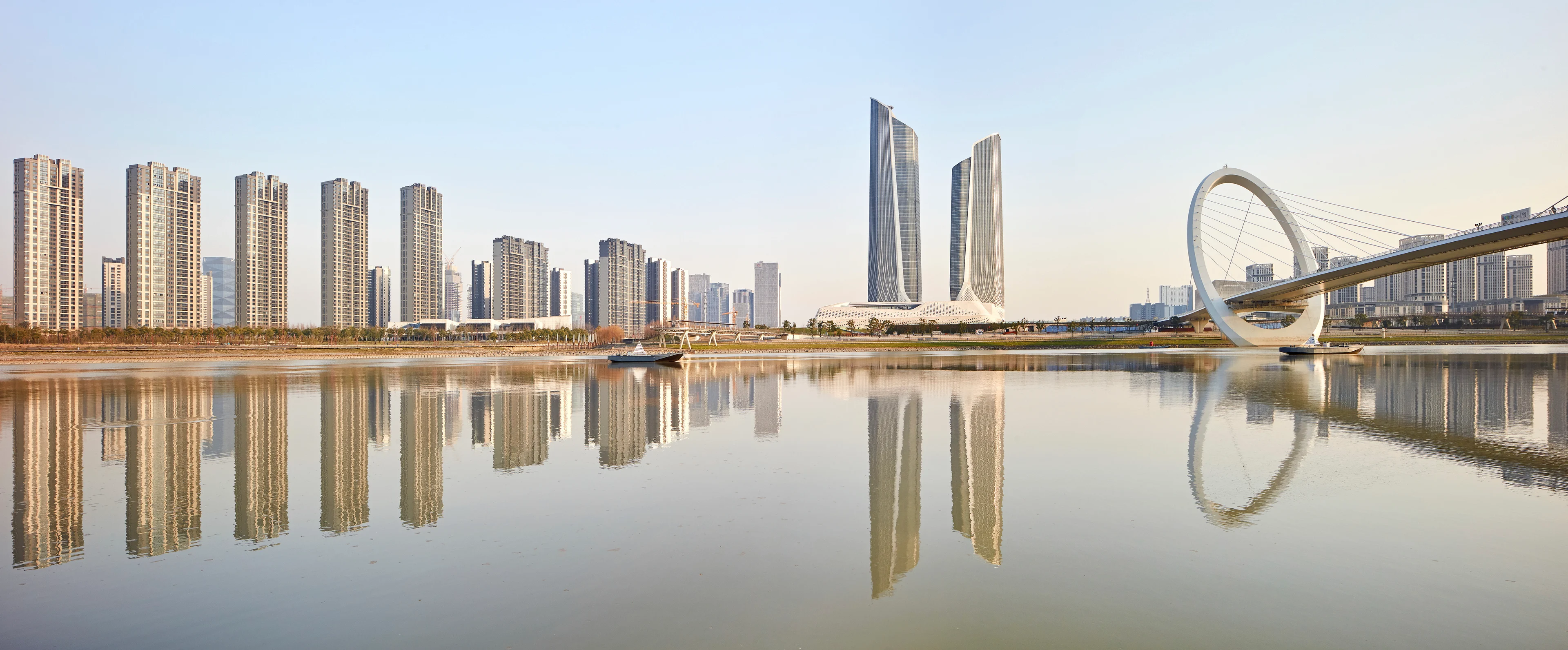
Jumeirah Nanjing Hotel & International Youth Cultural Centre
The Nanjing International Youth Cultural Centre harnessed the energy of the 2014 Youth Olympic Games to create a project with a lasting legacy that has enhanced and also regenerated its setting; acting as both an anchor and a catalyst for future investment in Nanjing’s Hexi New Town.
Courtesy of ZHA
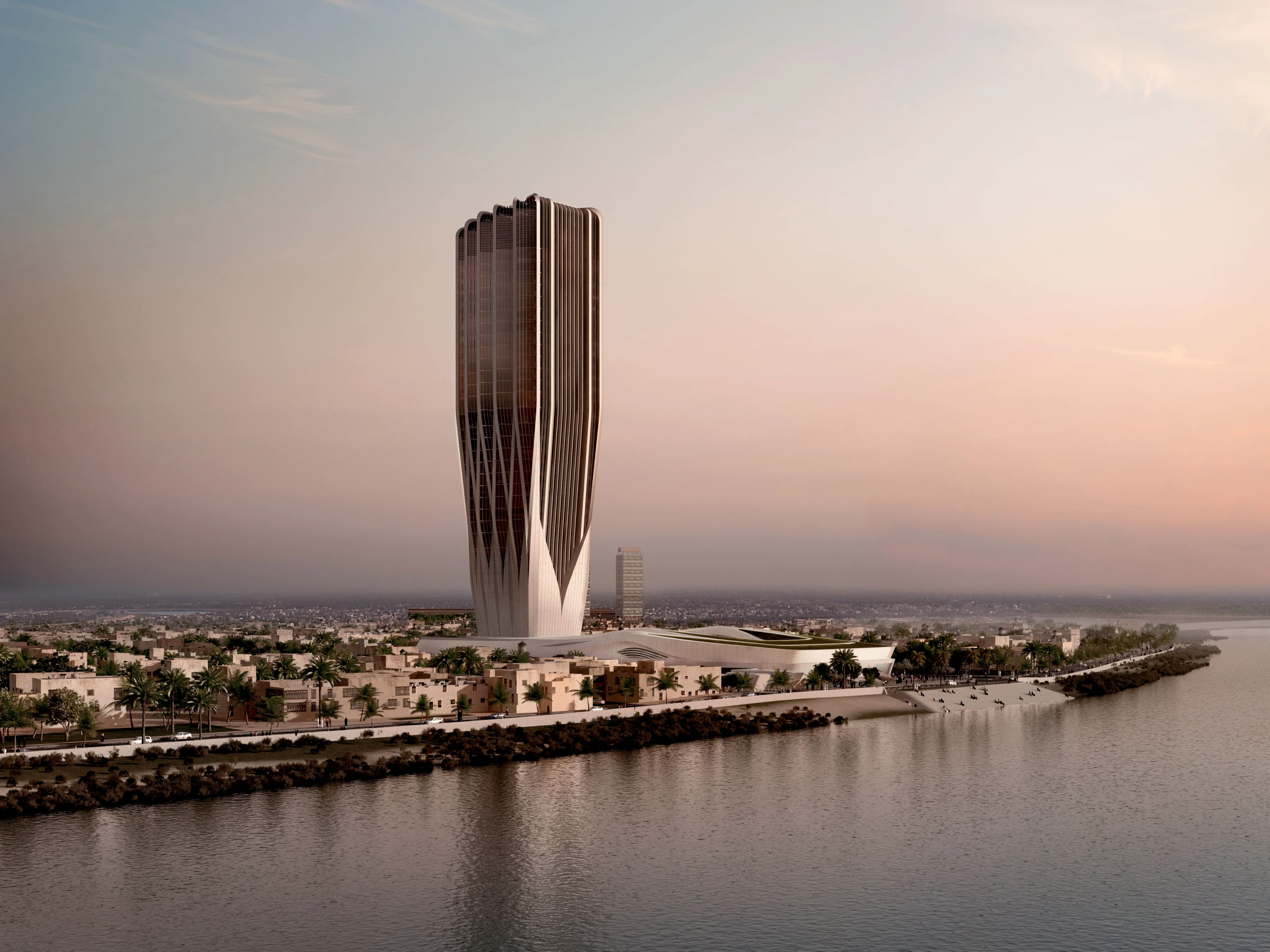
Central Bank of Iraq
Rising from the sloping banks of the Tigris River in Baghdad, the design for the new headquarters of the Central Bank of Iraq (CBI) conveys the core values at the heart of the institution: Solidity, Stability and Sustainability.
01
02
03
04
05
06
07
08
09
10
11
12
13
14
15