
Photograph by Virgile Simon Bertrand
Seoul, South Korea
2007 - 2014
Seoul Metropolitan Government
Dongdaemun Design Plaza
Photograph by Virgile Simon Bertrand
Photograph by Virgile Simon Bertrand
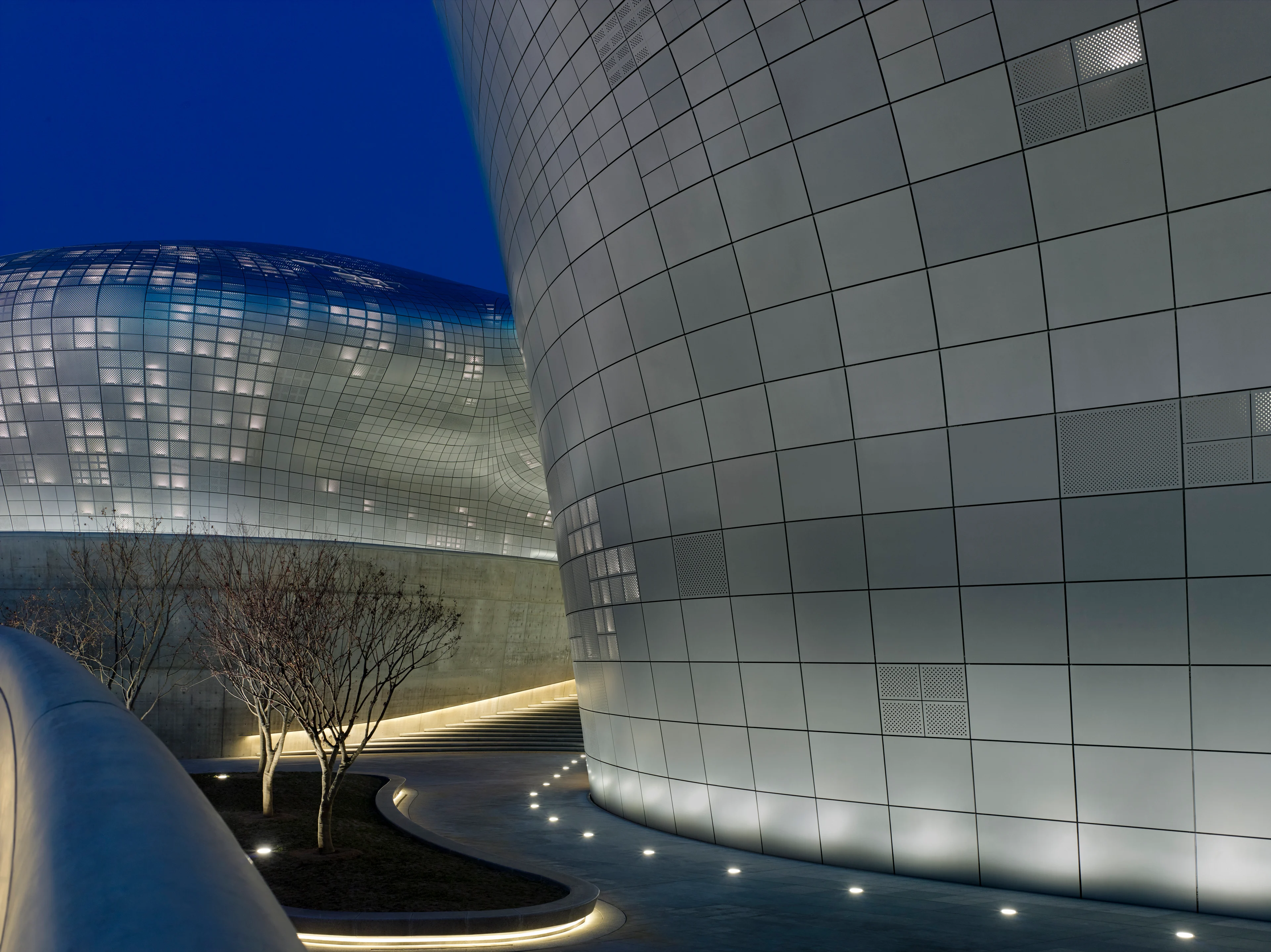
Photograph by Virgile Simon Bertrand
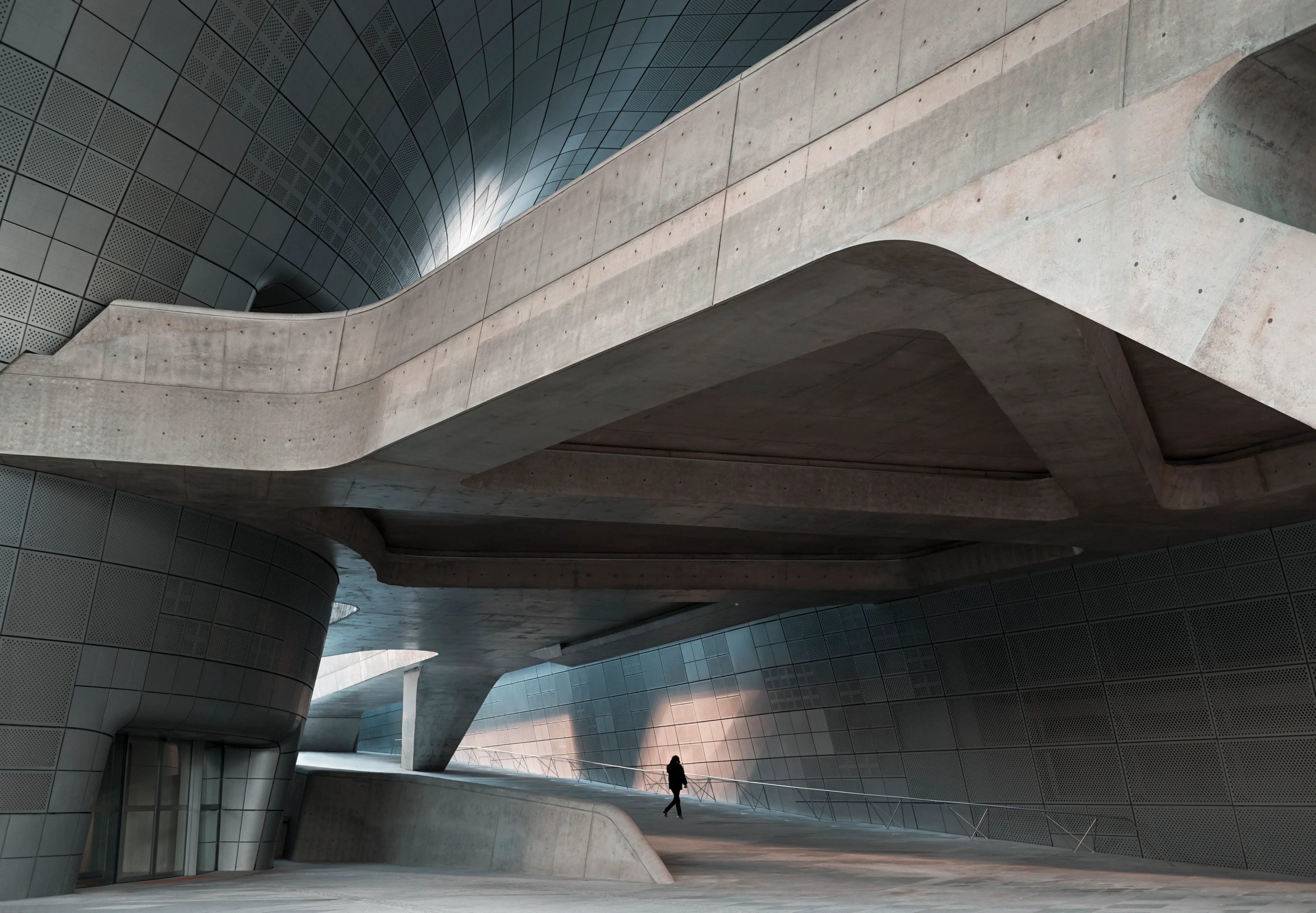
Photograph by Virgile Simon Bertrand
01
02
03
04
05
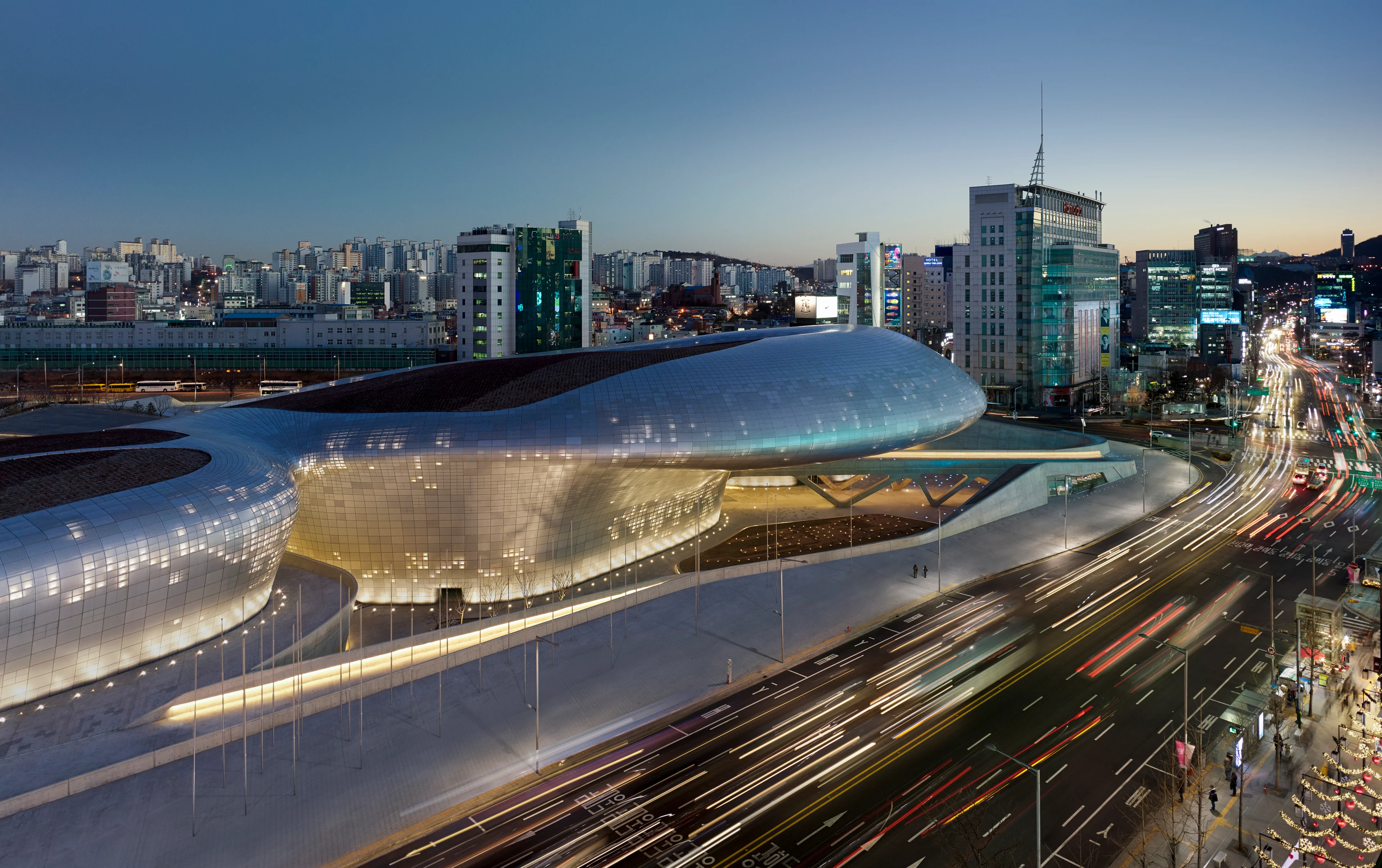
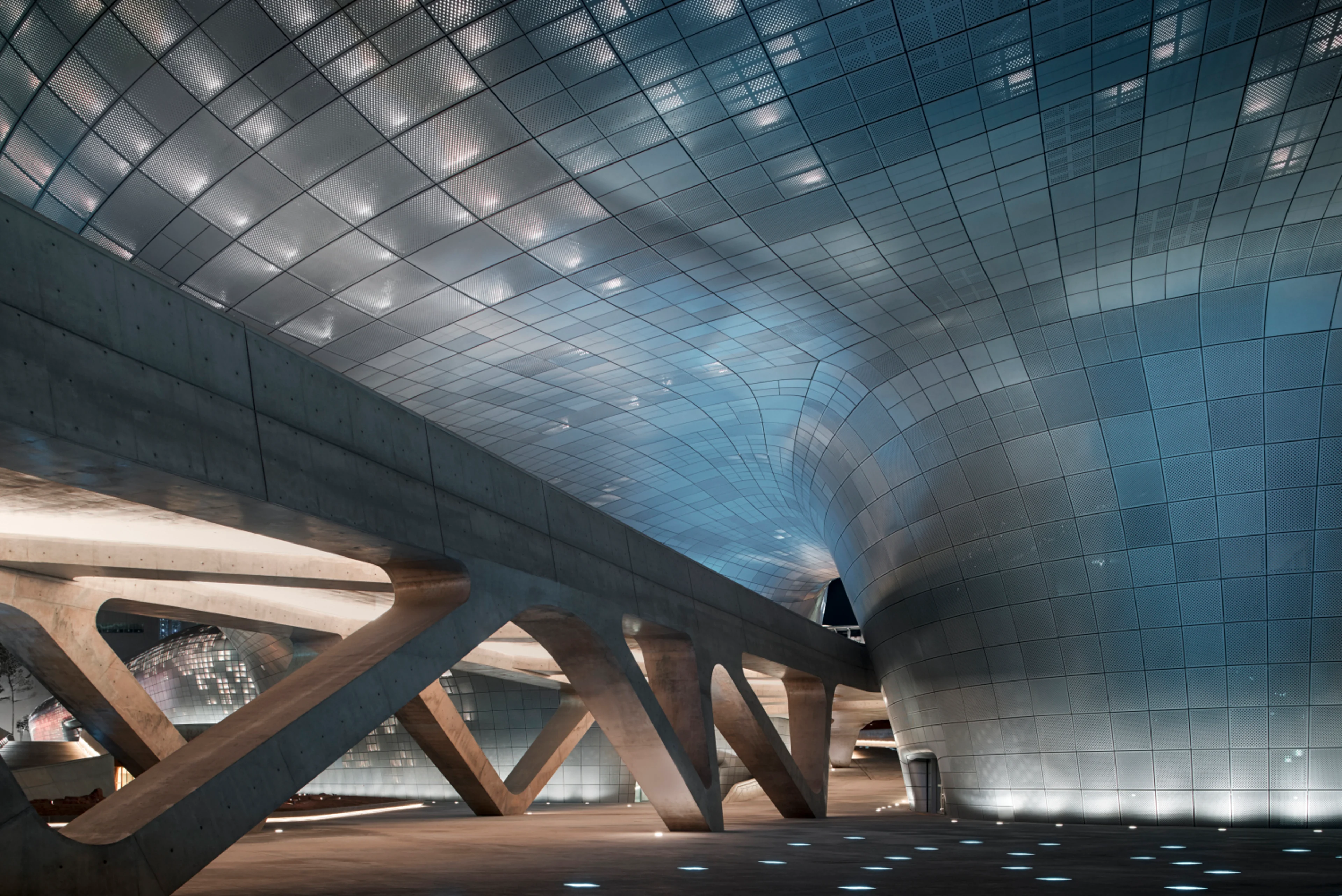
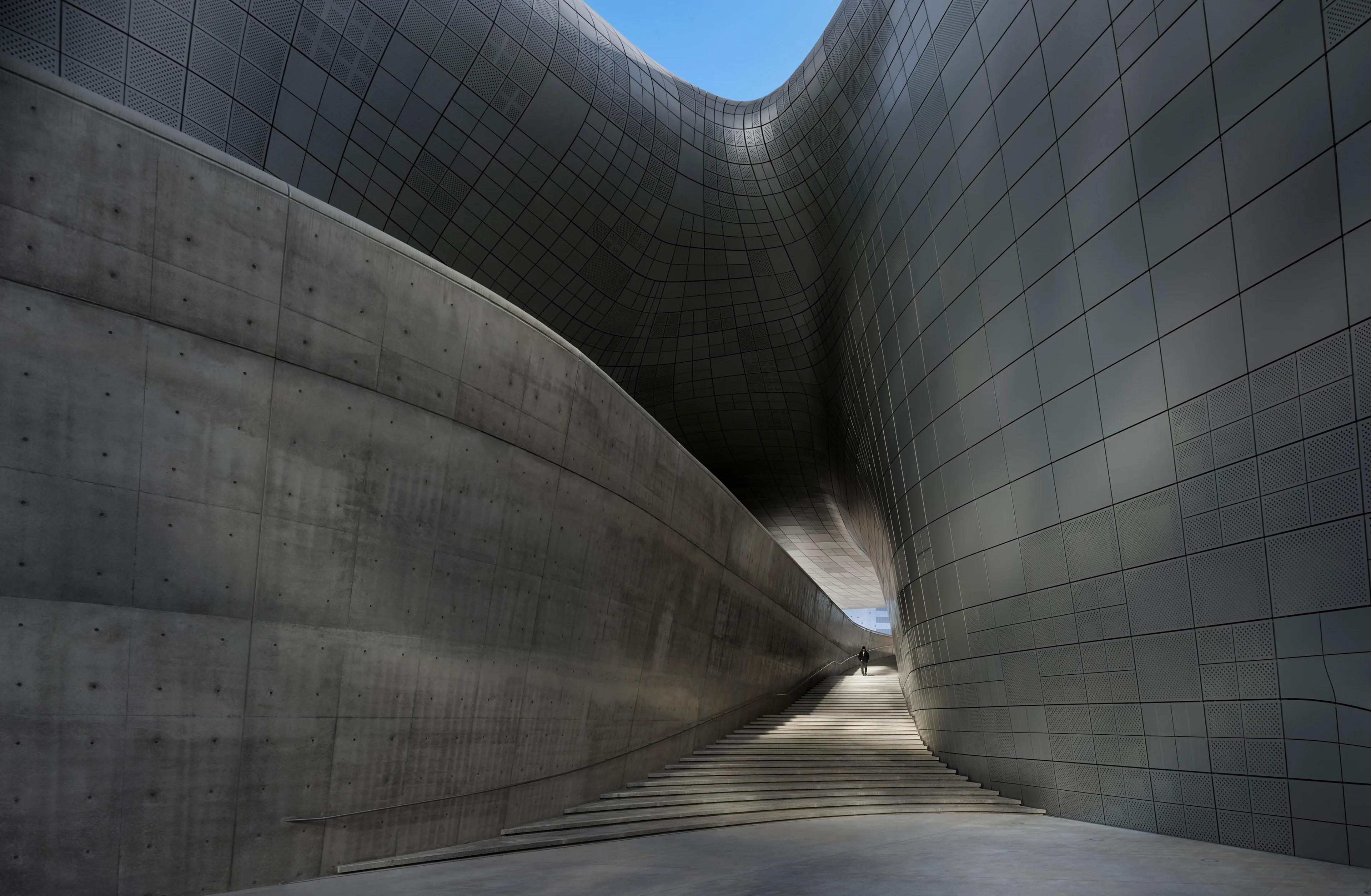
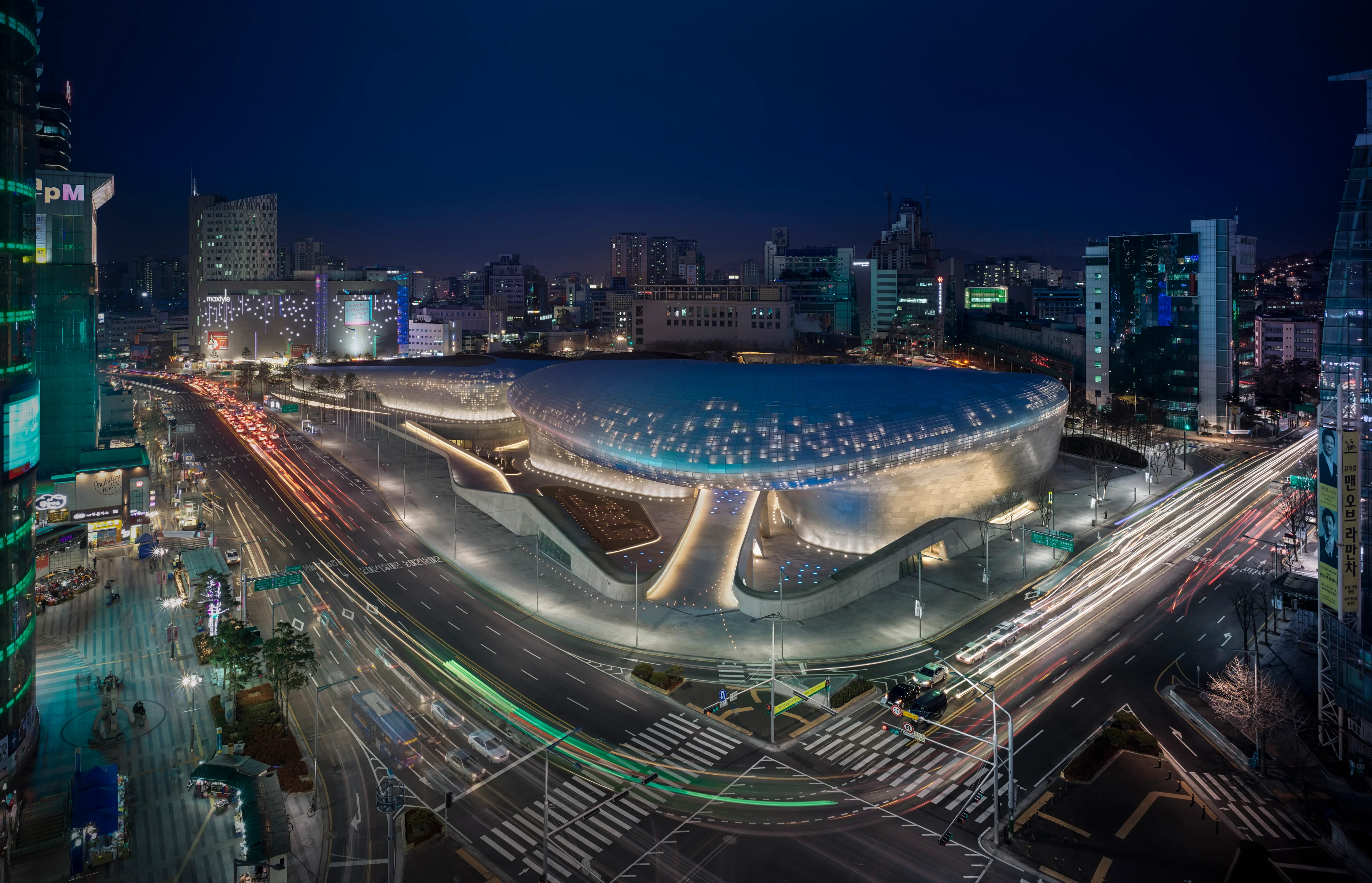
The DDP has been designed as a cultural hub at the centre of Dongdaemun, an historic district of Seoul that is now renowned for its 24-hour shopping and cafes. DDP is a place for people of all ages; a catalyst for the instigation and exchange of ideas and for new technologies and media to be explored. The variety of public spaces within DDP include Art/Exhibition Halls, Conference Hall, Design Museum/Exhibition Hall/Pathway, Design Labs & Academy Hall, Media Centre, Seminar Rooms and Designers Lounge, Design Market open 24 hours a day; enabling DDP to present the widest diversity of exhibitions and events that feed the cultural vitality of the city.
The DDP is an architectural landscape that revolves around the ancient city wall and cultural artefacts discovered during archaeological excavations preceding DDP’s construction. These historic features form the central element of DDP’s composition; linking the park, plaza and city together.
The design is the very specific result of how the context, local culture, programmatic requirements and innovative engineering come together - allowing the architecture, city and landscape to combine in both form and spatial experience – creating a whole new civic space for the city.
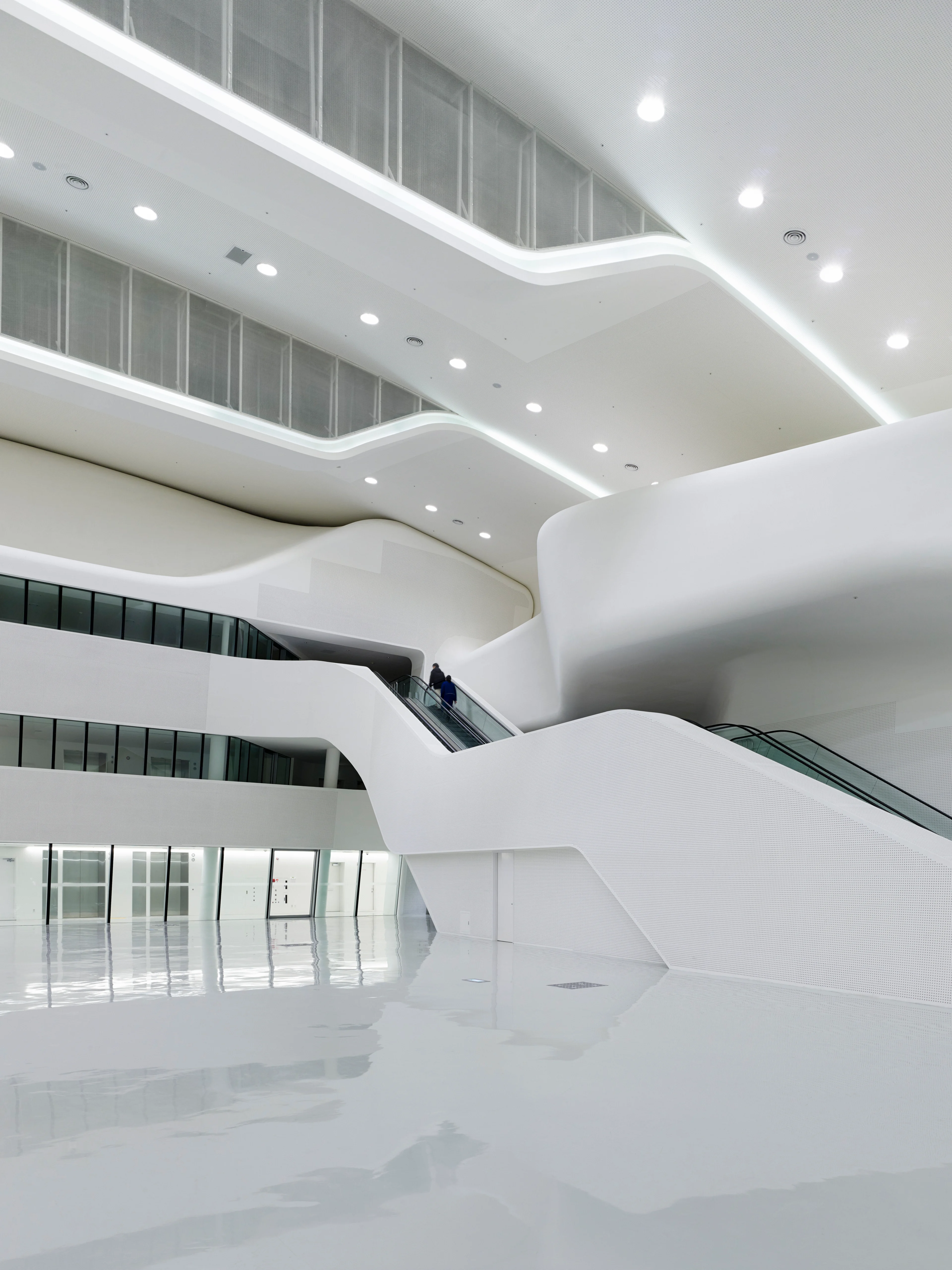
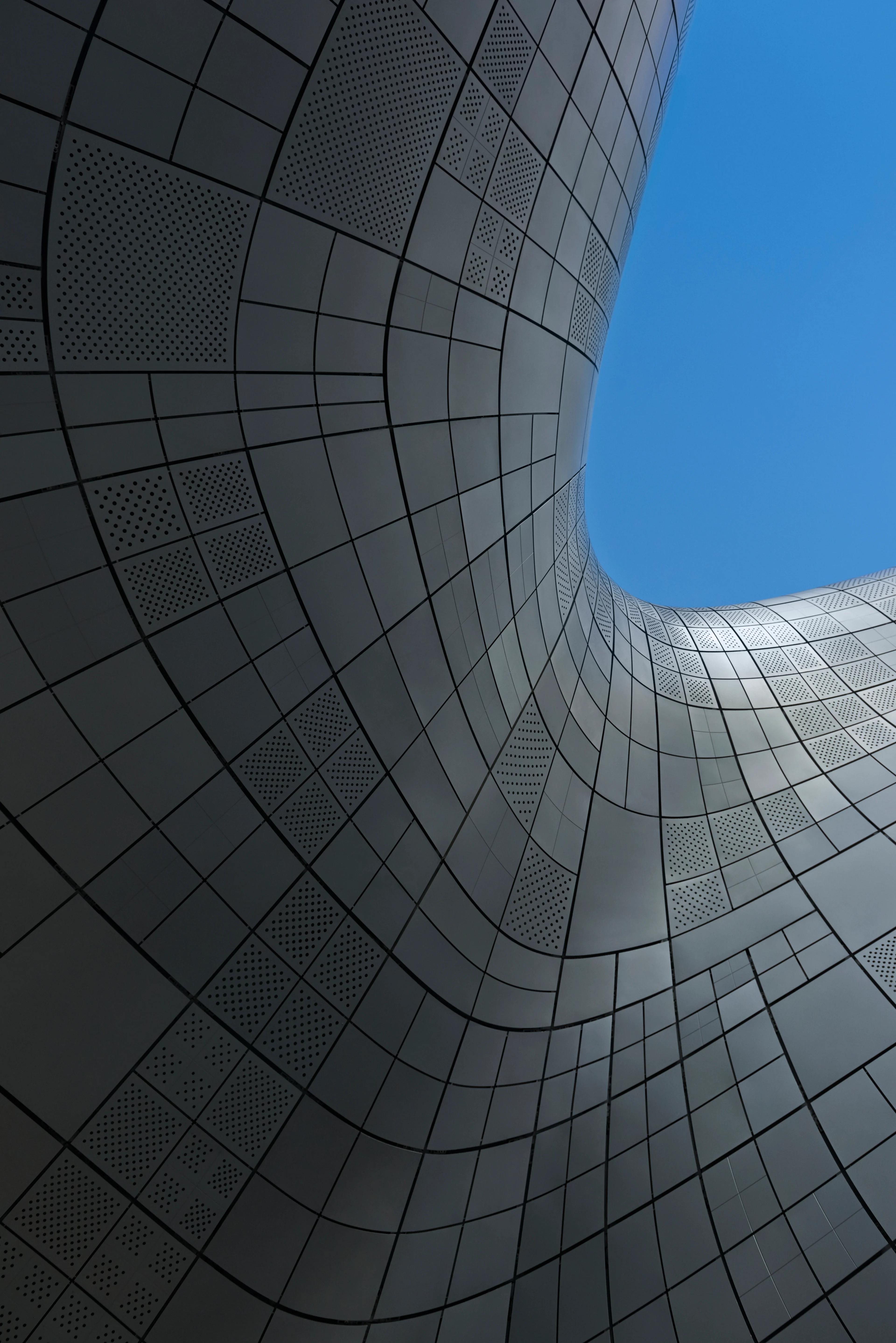
Photograph by Virgile Simon Bertrand
The DDP Park is a place for leisure, relaxation and refuge - a new green oasis within the busy urban surroundings of Dongdaemun. The design integrates the park and plaza seamlessly as one, blurring the boundary between architecture and nature in a continuous, fluid landscape. Voids in the park’s surface give visitors glimpses into the innovative world of design below, making the DDP an important link between the city’s contemporary culture, emerging nature and history.
The 30,000m2 park reinterprets the spatial concepts of traditional Korean garden design: layering, horizontality, blurring the relationship between the interior and the exterior – with no single feature dominating the perspective. This approach is further informed by historic local painting traditions that depict grand visions of the ever-changing aspects of nature.
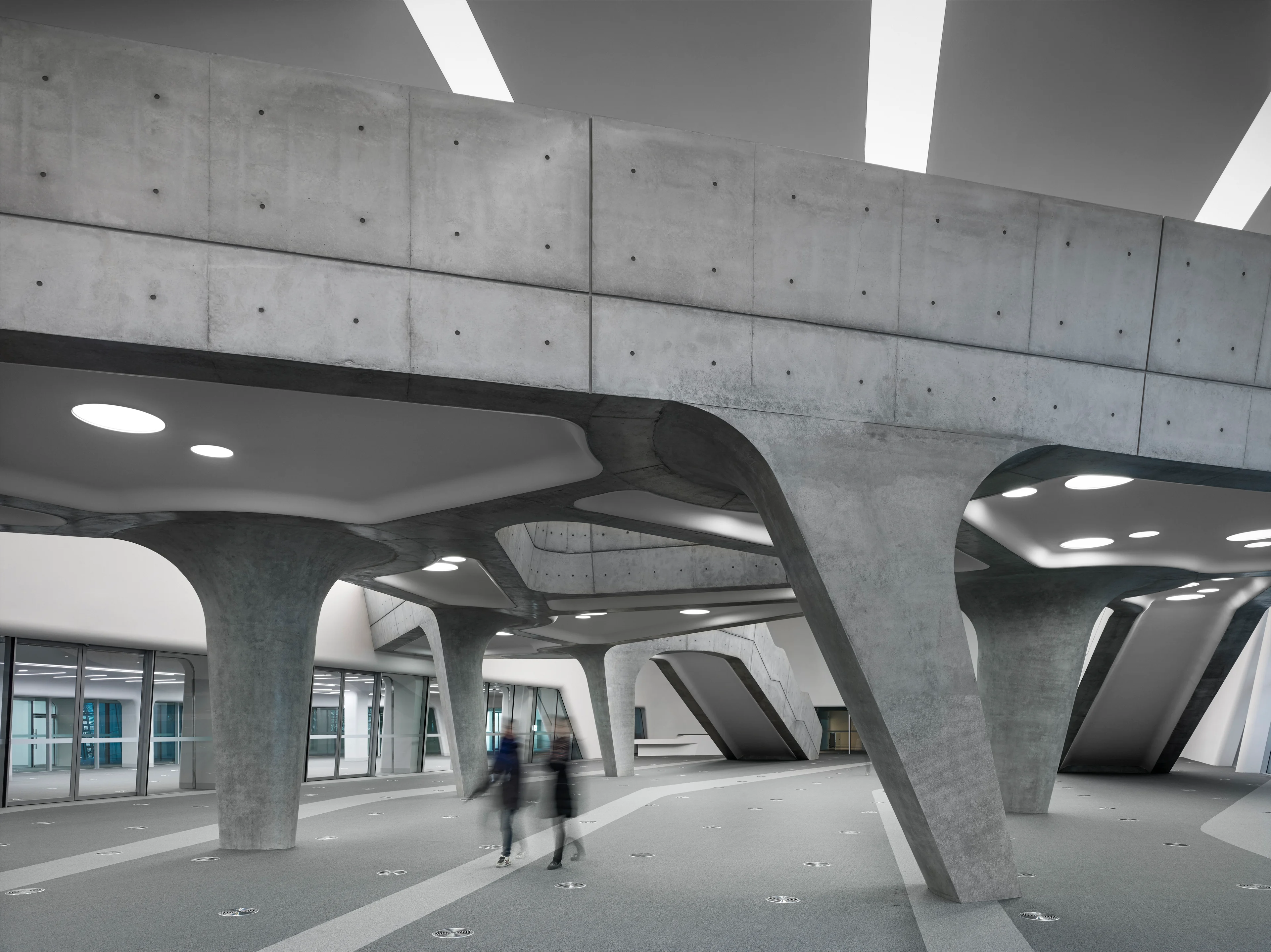
DDP encourages many contributions and innovations to feed into each other; engaging the community and allowing talents and ideas to flourish. In combination with the city’s exciting public cultural programs, DDP is an investment in the education and inspiration of future generations.
DDP’s design and construction sets many new standards of innovation. DDP is the first public project in Korea to implement advanced 3-dimensional digital construction services that ensure the highest quality and cost controls. These include 3-dimensional Building Information Modelling (BIM) for construction management and engineering coordination, enabling the design process to adapt with the evolving client brief and integrate all engineering requirements. These innovations have enabled the team building DDP to control the construction with much greater precision than conventional processes and improve efficiencies. Implementing such construction technologies make DDP one of Korea’s most innovative and technological advanced constructions to date.
Culture
From a civic art centre that unites three distinct cultural institutions to a science fiction museum whose landscaping contributes to the city’s drainage and flood defence systems, discover our latest cultural projects.
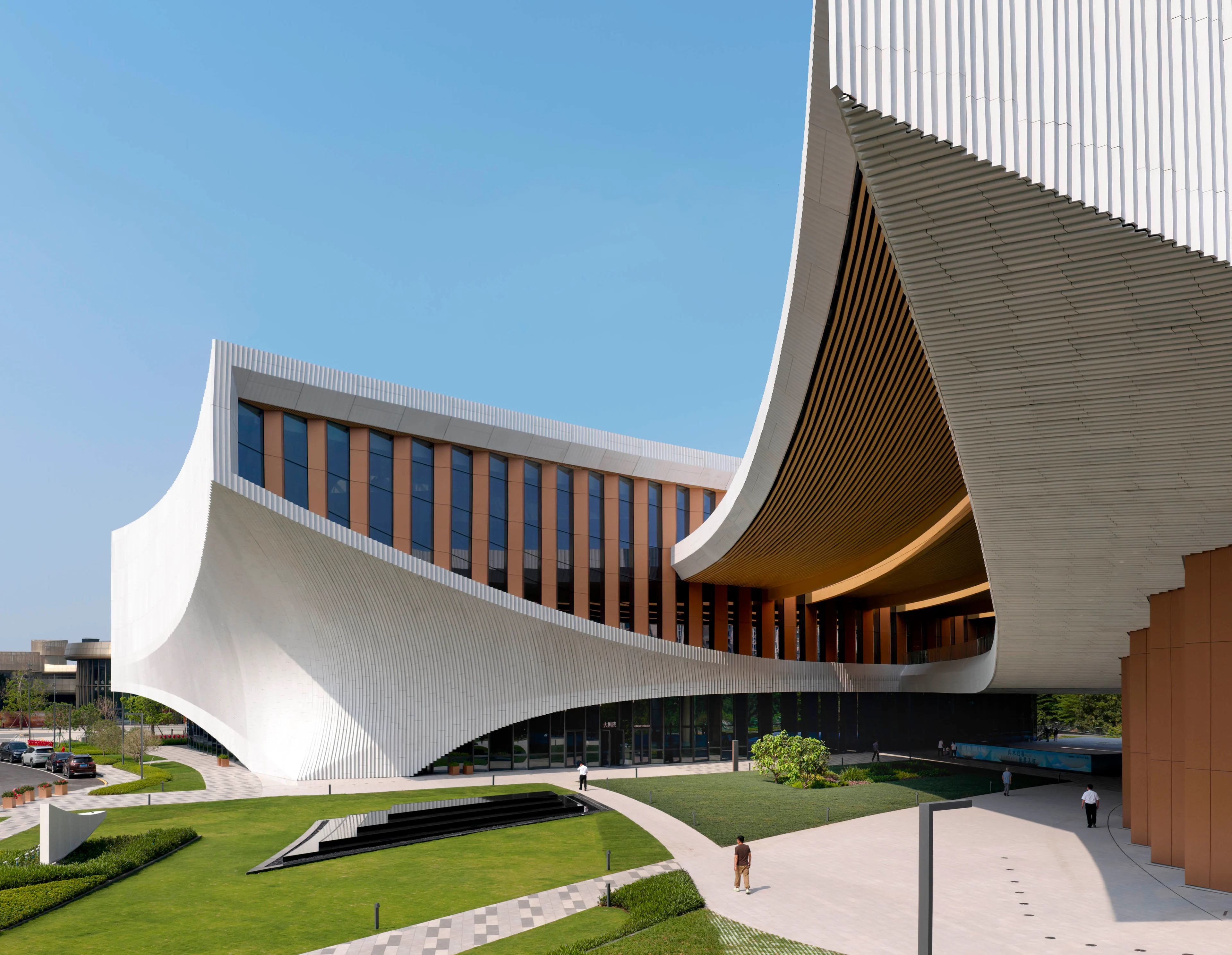
Located in Dongguan within the Greater Bay Area of southern China’s Pearl River estuary, the new Songshan Lake Exhibition and Performance Centre is at the heart of a mixed-use masterplan to revitalize the Yuehe Lake waterfront.
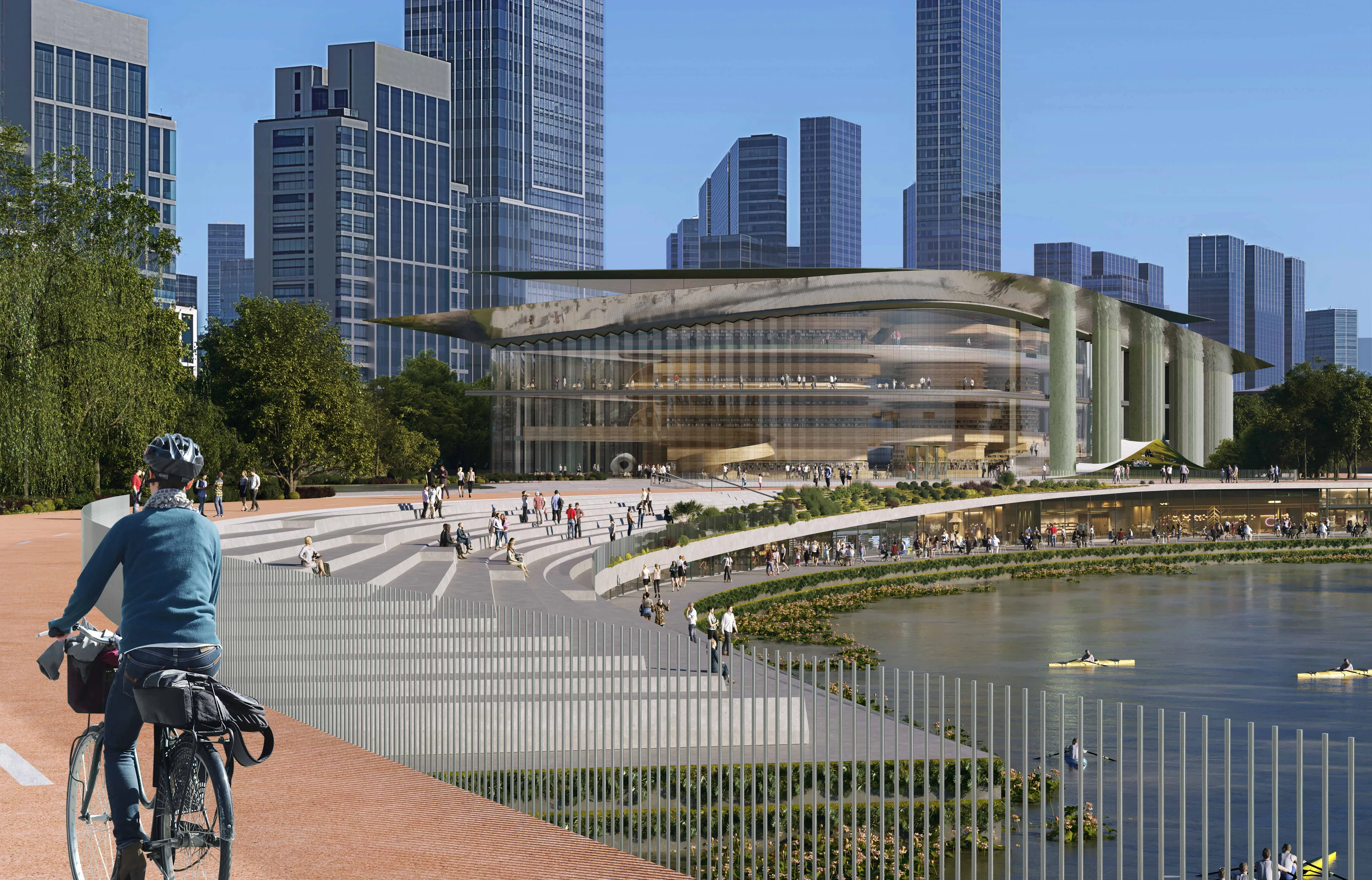
A series of new landscaped parklands, terraces and gardens along the Zhedong Canal within the Xiaoshan district of Hangzhou
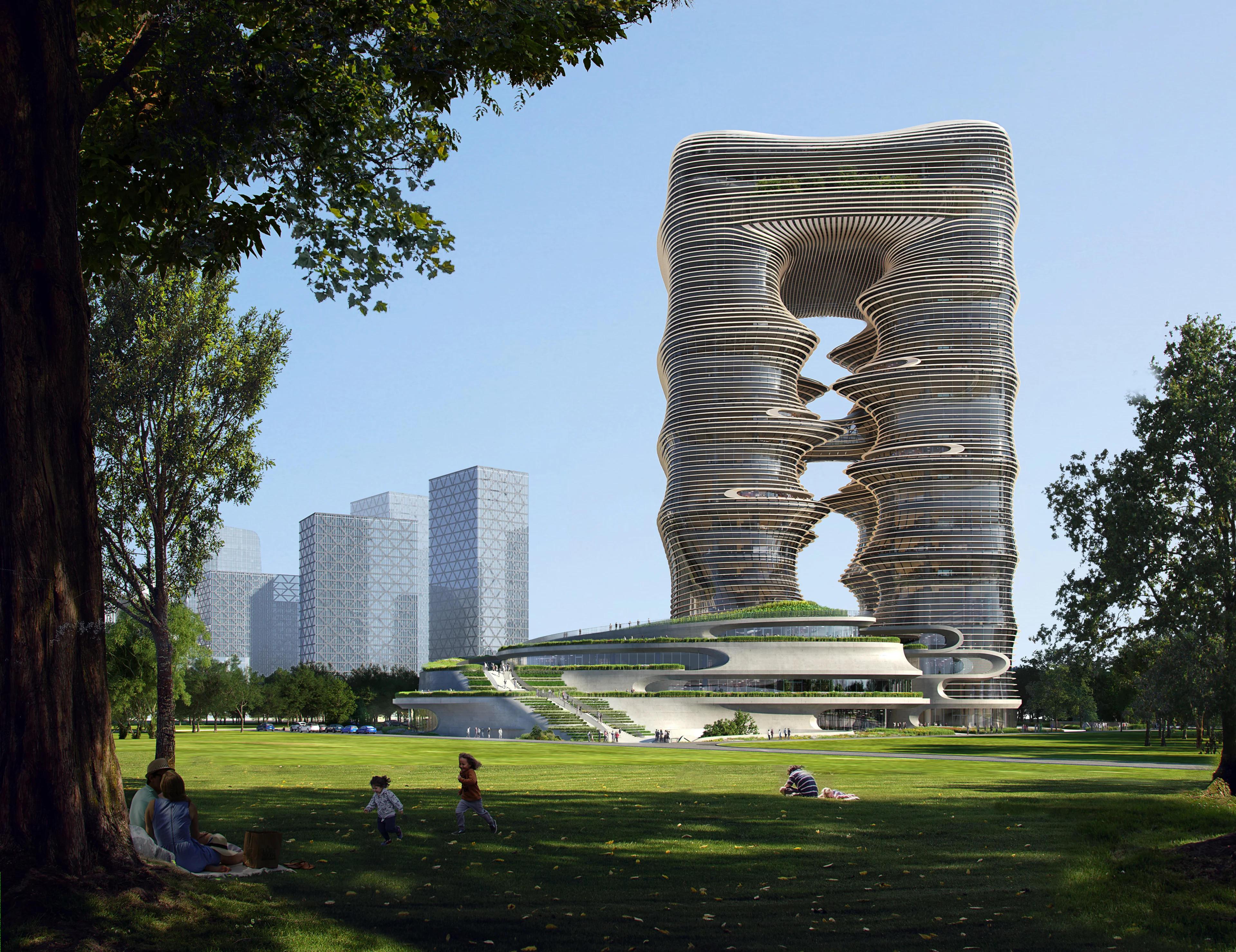
Render by Atchain
A place of convergence and collaboration, the Yidan Center will be home to the Chen Yidan Foundation in its work to promote lifelong learning and innovation in education.
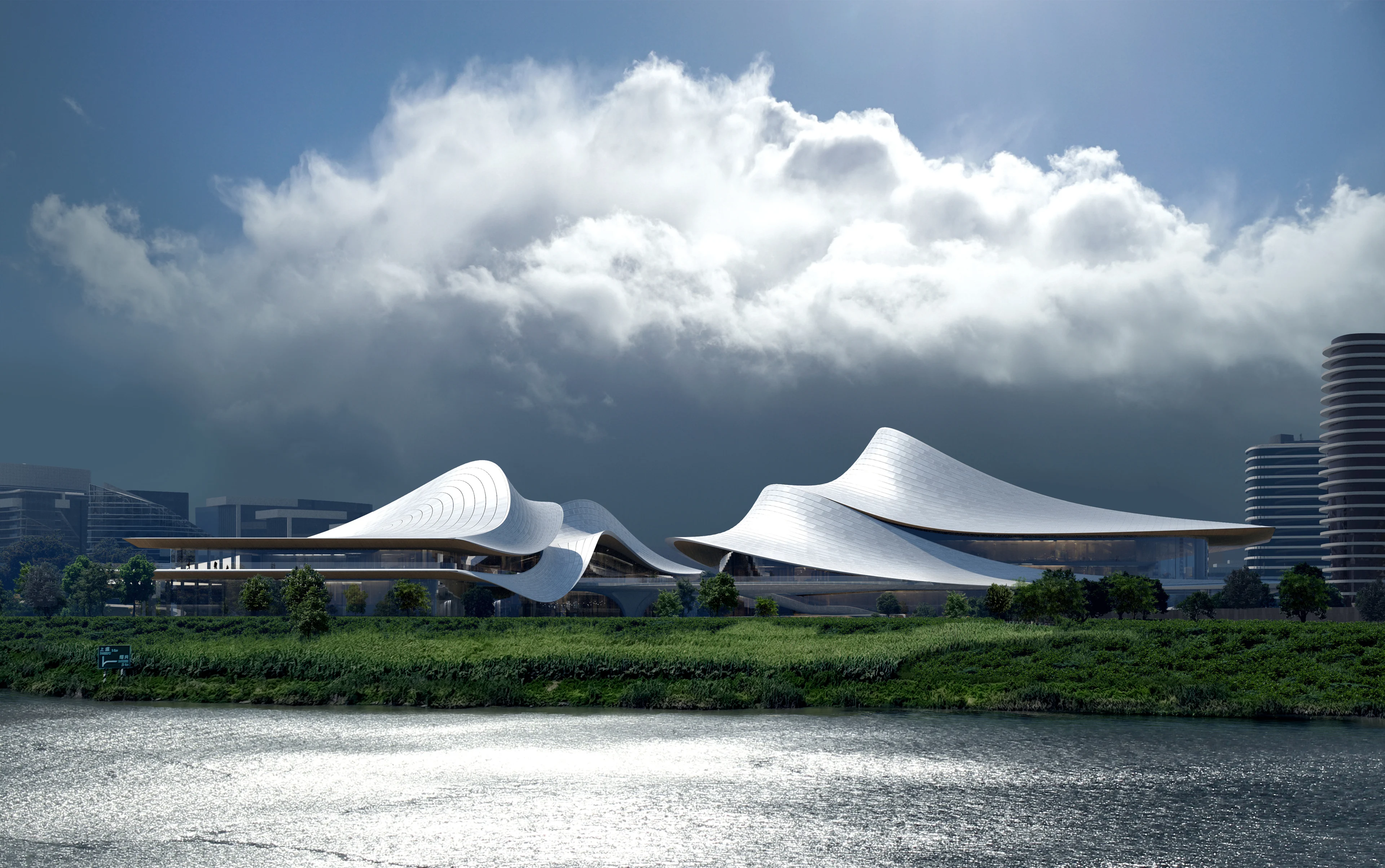
Render by Proloog
Elevation River
Designed to host local and international productions of opera, dance and drama together with large-scale symphonies and musical theatre, the Art and Culture Centre includes a 1,400-seat Grand Theatre, 500-seat Black-Box Multifunctional Hall, 2,900 sq. m Arts and Education Centre, 3,000m² Conference Centre, 7,500m² Heritage Museum and a 10,000m² Digital Art Gallery.
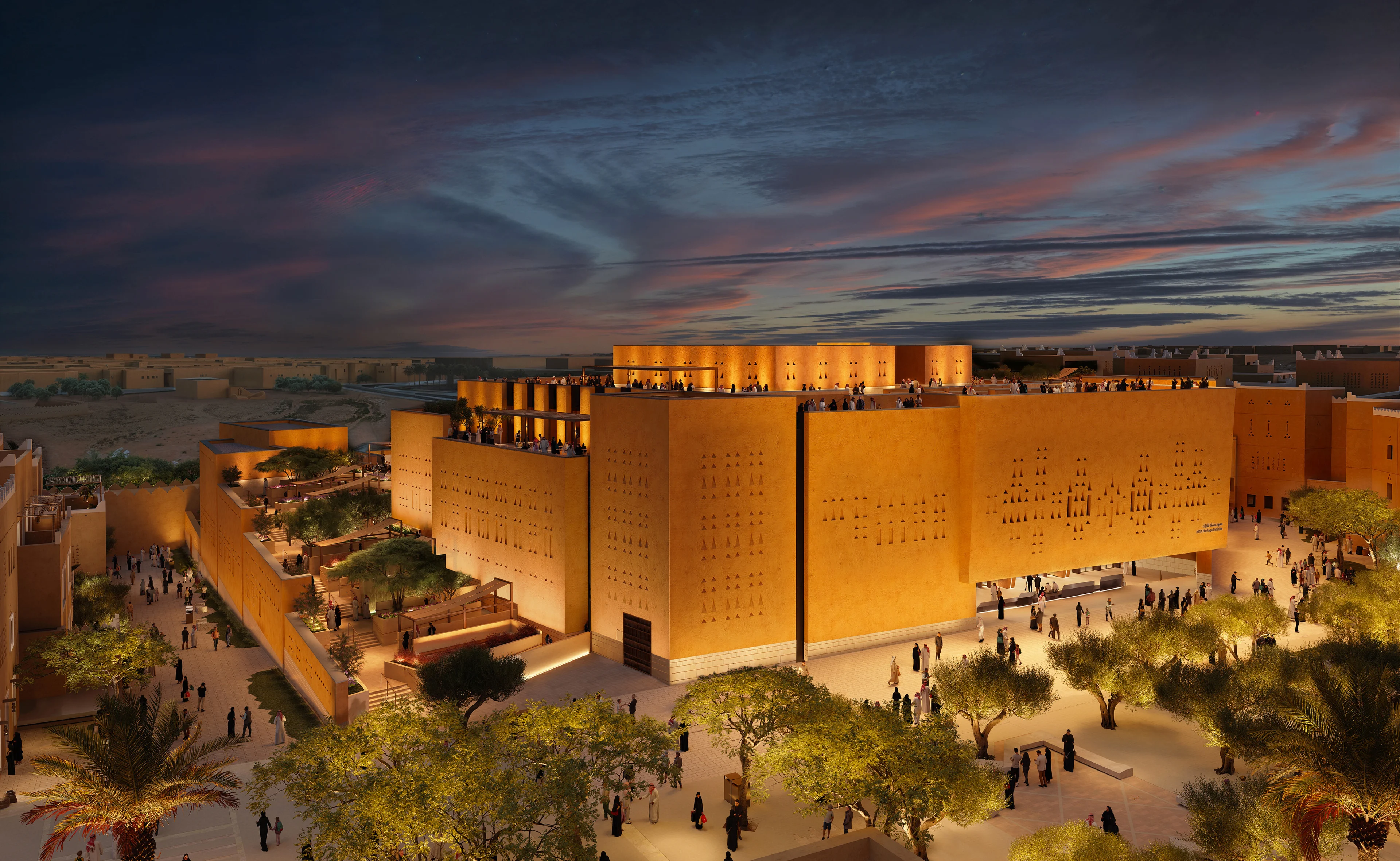
Render by Specto-Digital
Meaning ‘inheritance passed down through generations’, Asaan will be an institution dedicated to preserving and celebrating this rich heritage, in addition to promoting creativity and knowledge sharing.
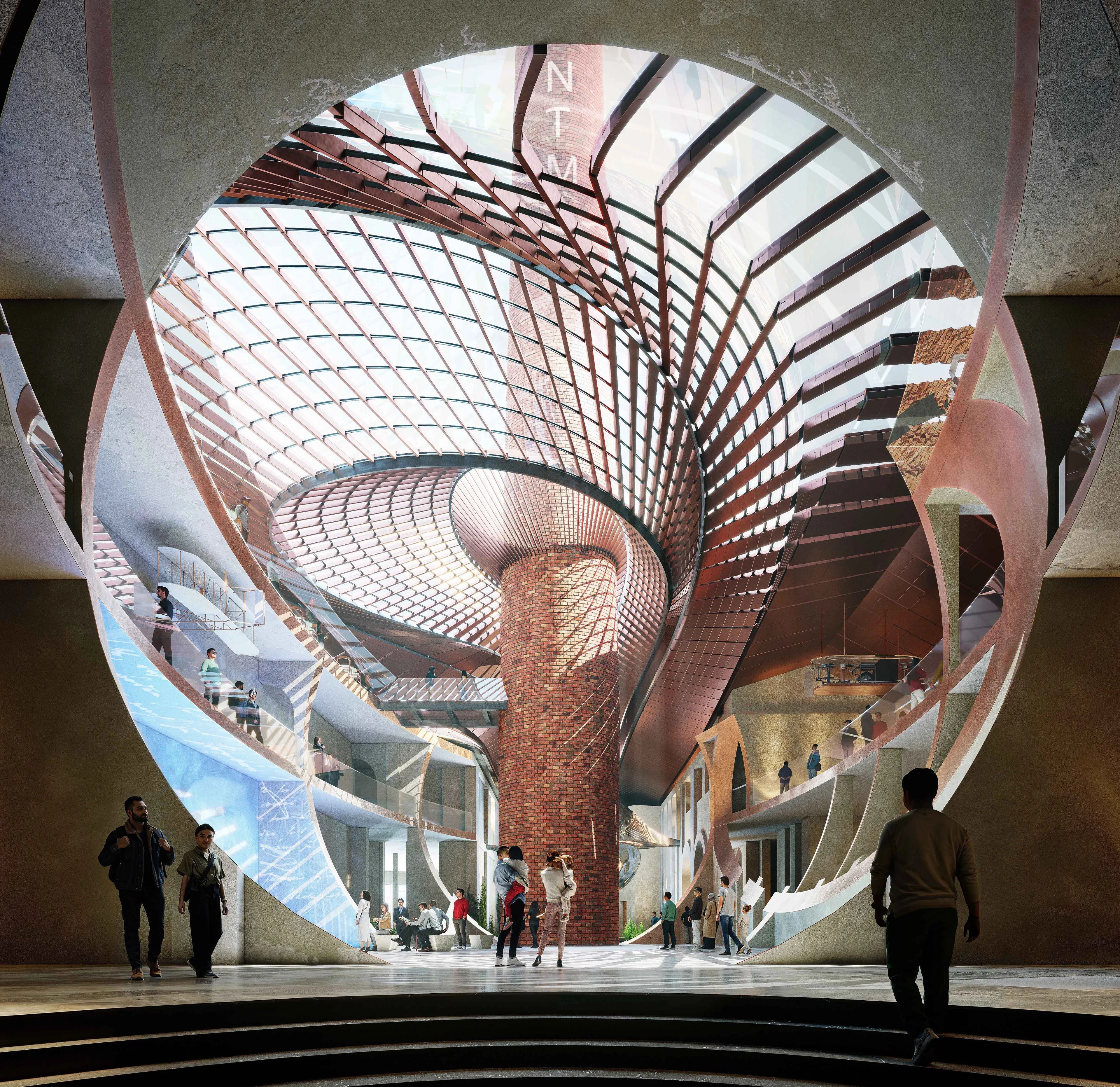
The new Nikola Tesla Museum renovates Belgrade’s historic Milan Vapa Paper Mill into a cultural destination celebrating Tesla’s legacy while preserving the city’s architectural heritage and creating a variety of new public spaces for local residents and visitors.
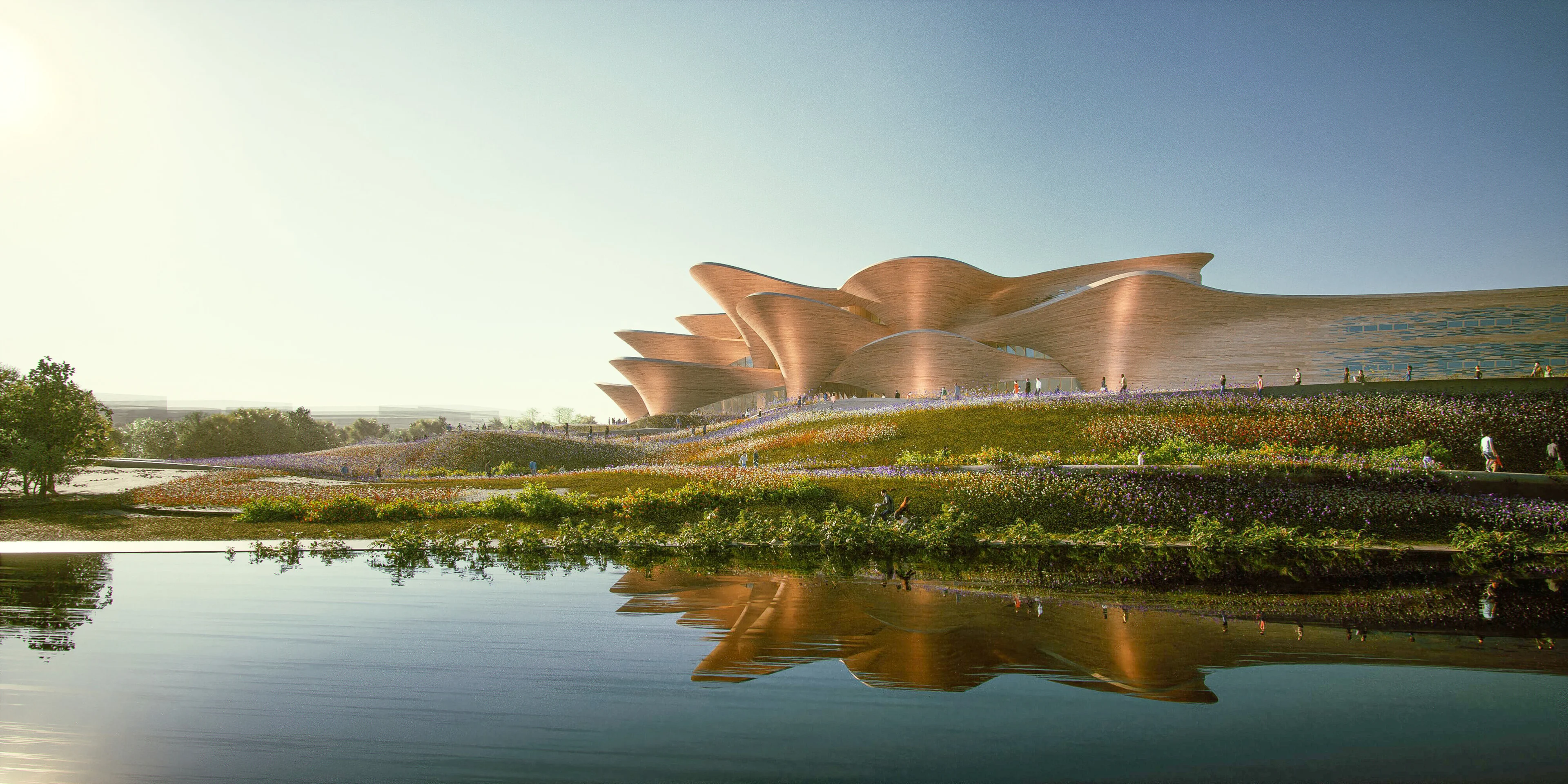
Courtesy of ZHA
River View
The Alisher Navoi International Scientific Research Centre will incorporate the Navoi State Museum of Literature, Auditorium, International Research Centre and School.
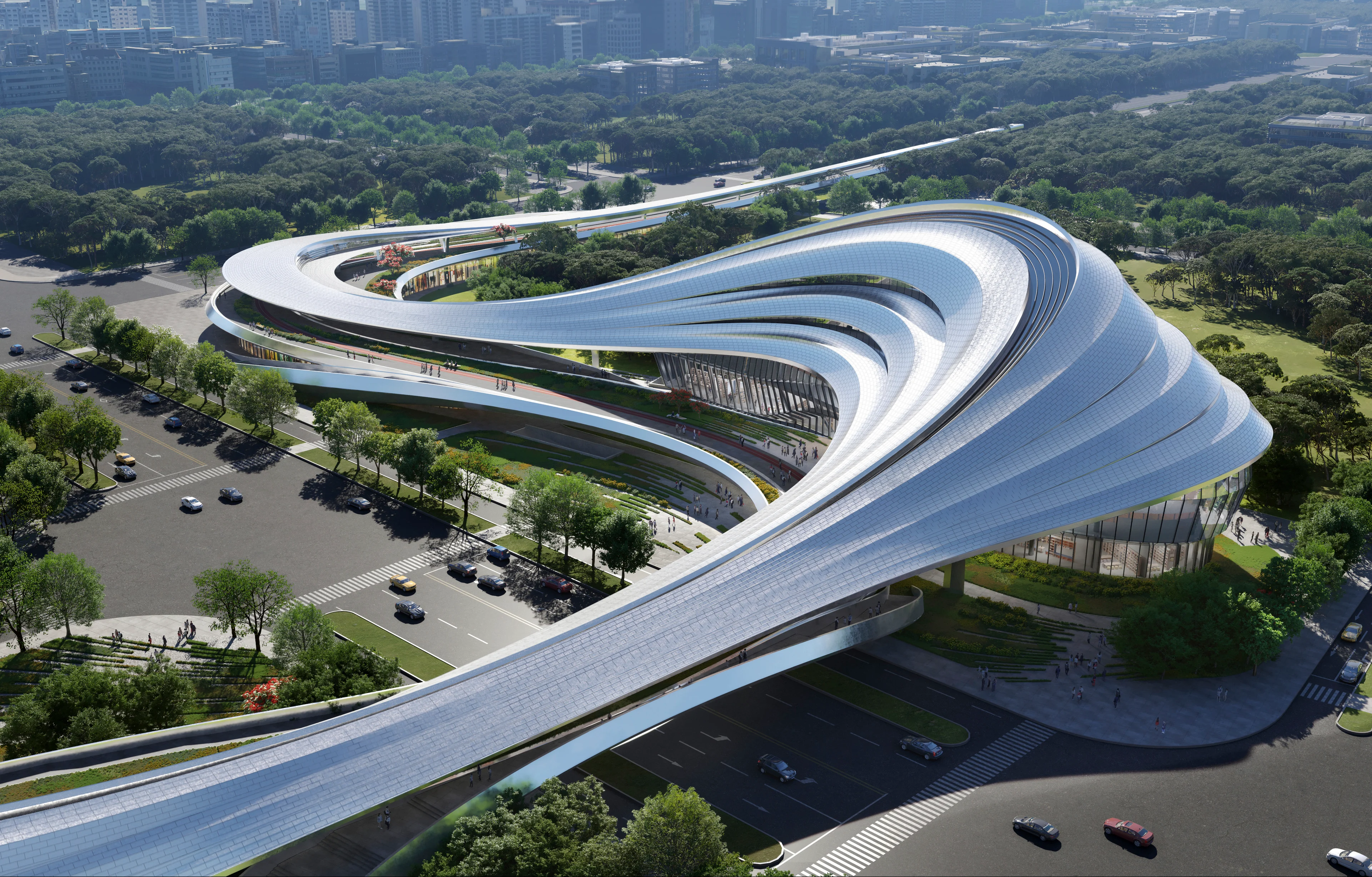
Render by Atchain
Jinghe New City is growing as a science and technology hub north of Xi’an in China’s Shaanxi province. Supported by new scientific research institutes and driven by environmental considerations, the city is becoming a centre for developing industries focusing on new energy and materials, artificial intelligence and aerospace.
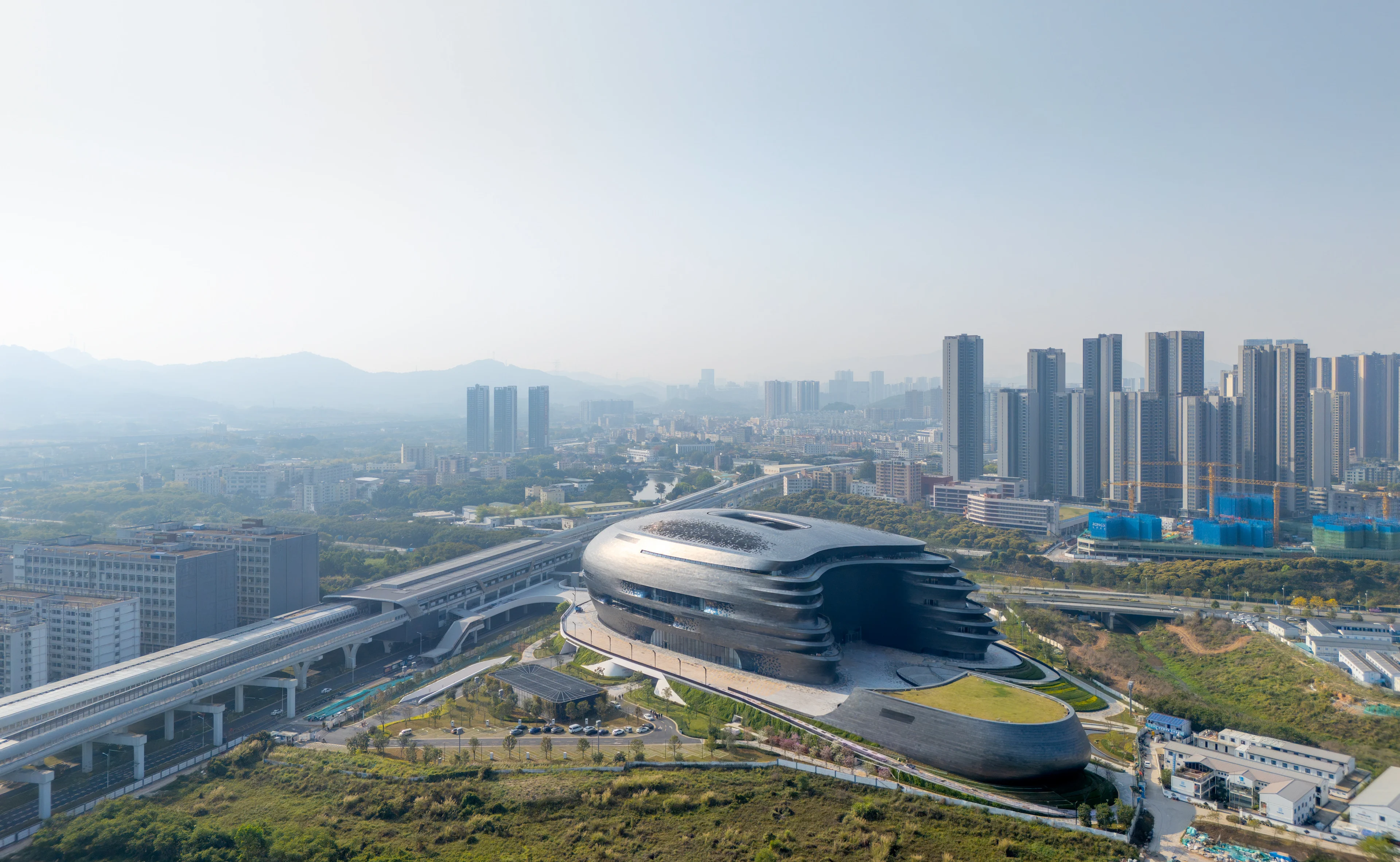
Photograph by Virgile Simon Bertrand
Showcasing the scientific endeavour, ground-breaking research and future possibilities of technology, this new institution will explore the power of science and the technological advancements defining our future.
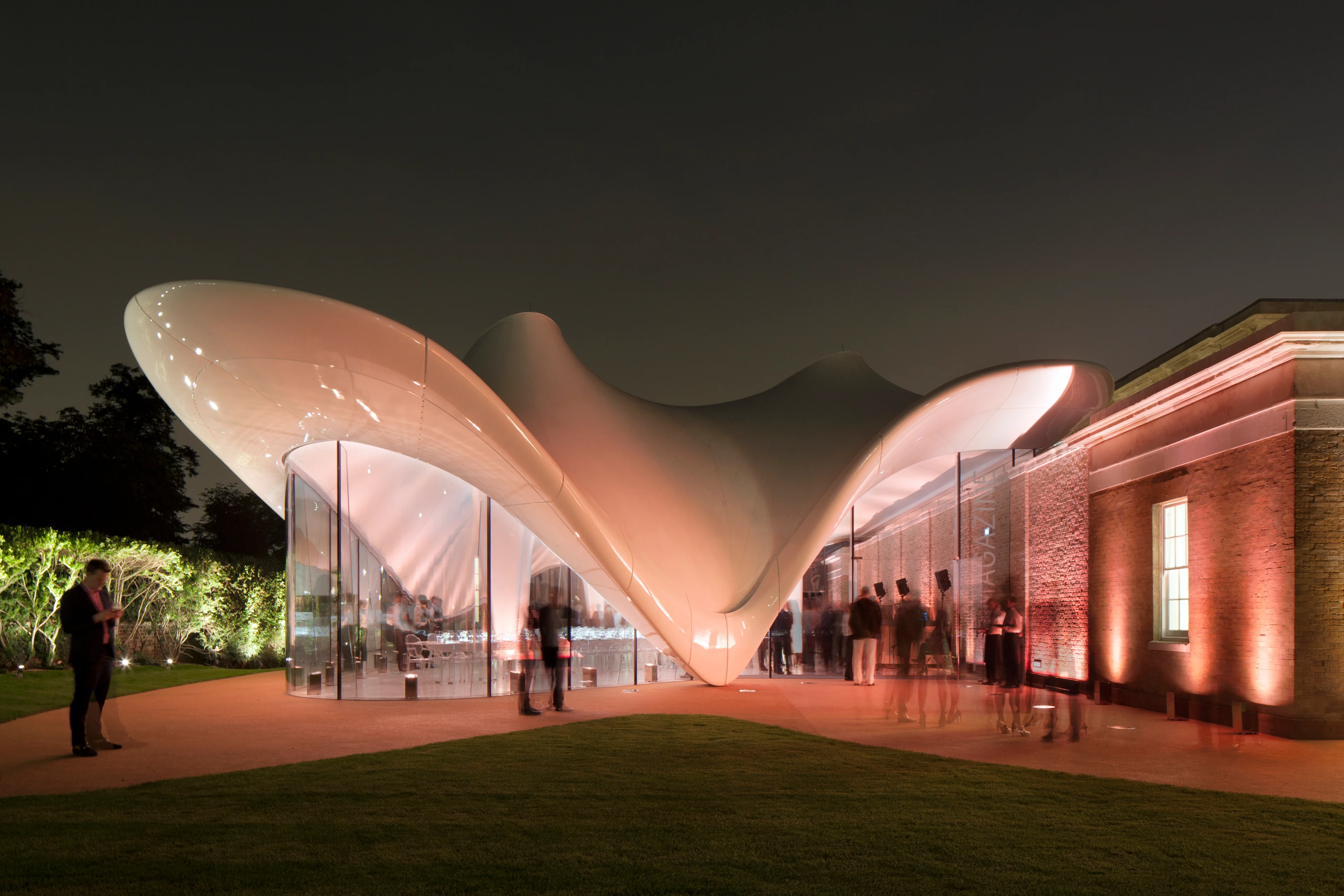
Photograph by Luke Hayes
The Serpentine North Gallery consists of two distinct parts, namely the conversion of a classical 19th century brick structure – The Magazine – and a 21st century tensile structure. The Serpentine North Gallery is thus – after MAXXI in Rome – the second art space where ZHA has created a synthesis of old and new.
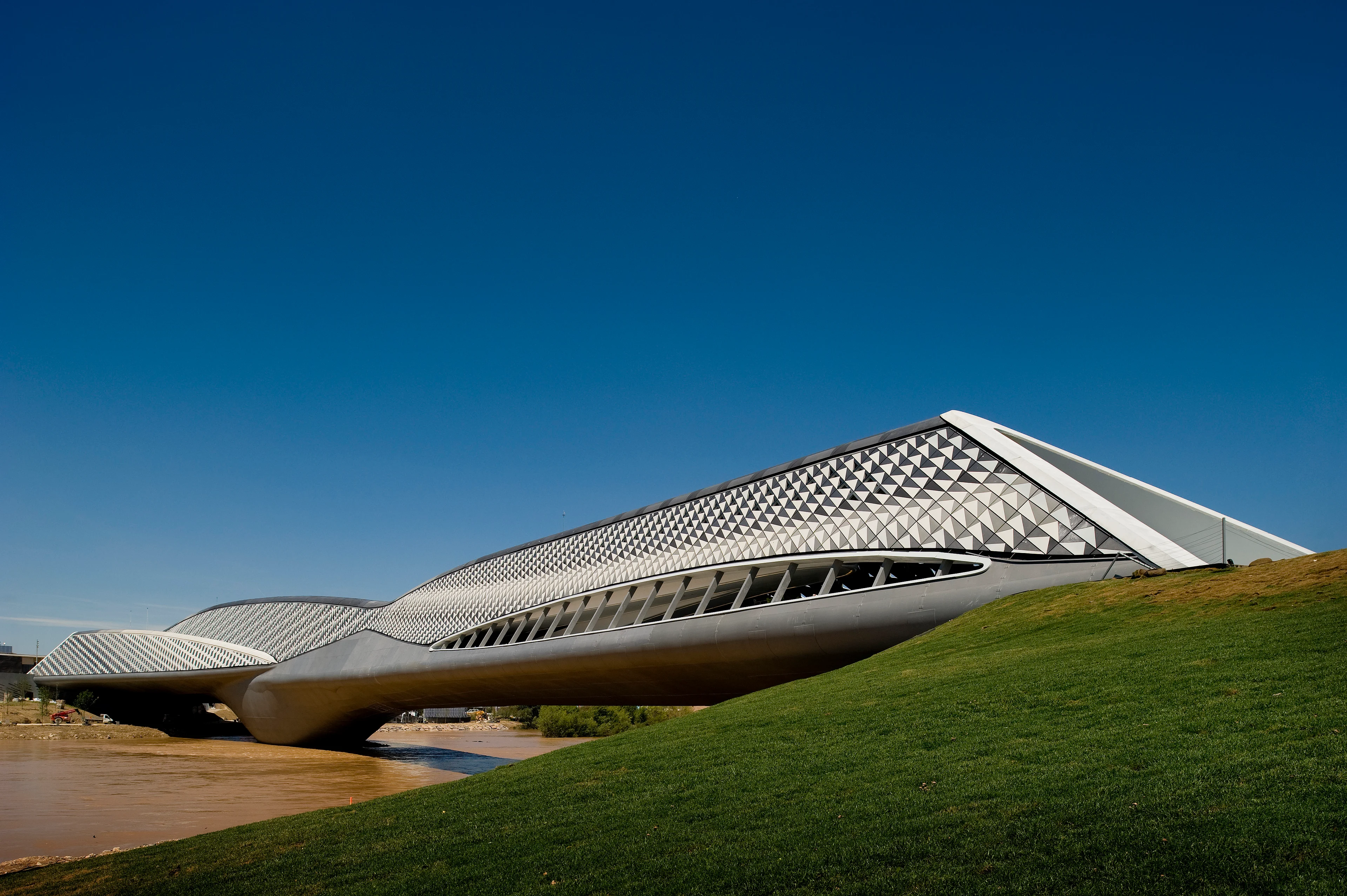
Photograph by Fernando Guerra
An enclosed interactive space spanning the River Ebro to form a gateway to the Zaragoza Expo 2008, a hybrid of pedestrian footbridge and exhibition pavilion. Four structural elements correspond to specific spatial enclosures, which intersect and brace each other. This fluid, dynamic design interprets the Expo’s theme: ‘Water and Sustainable Development.’
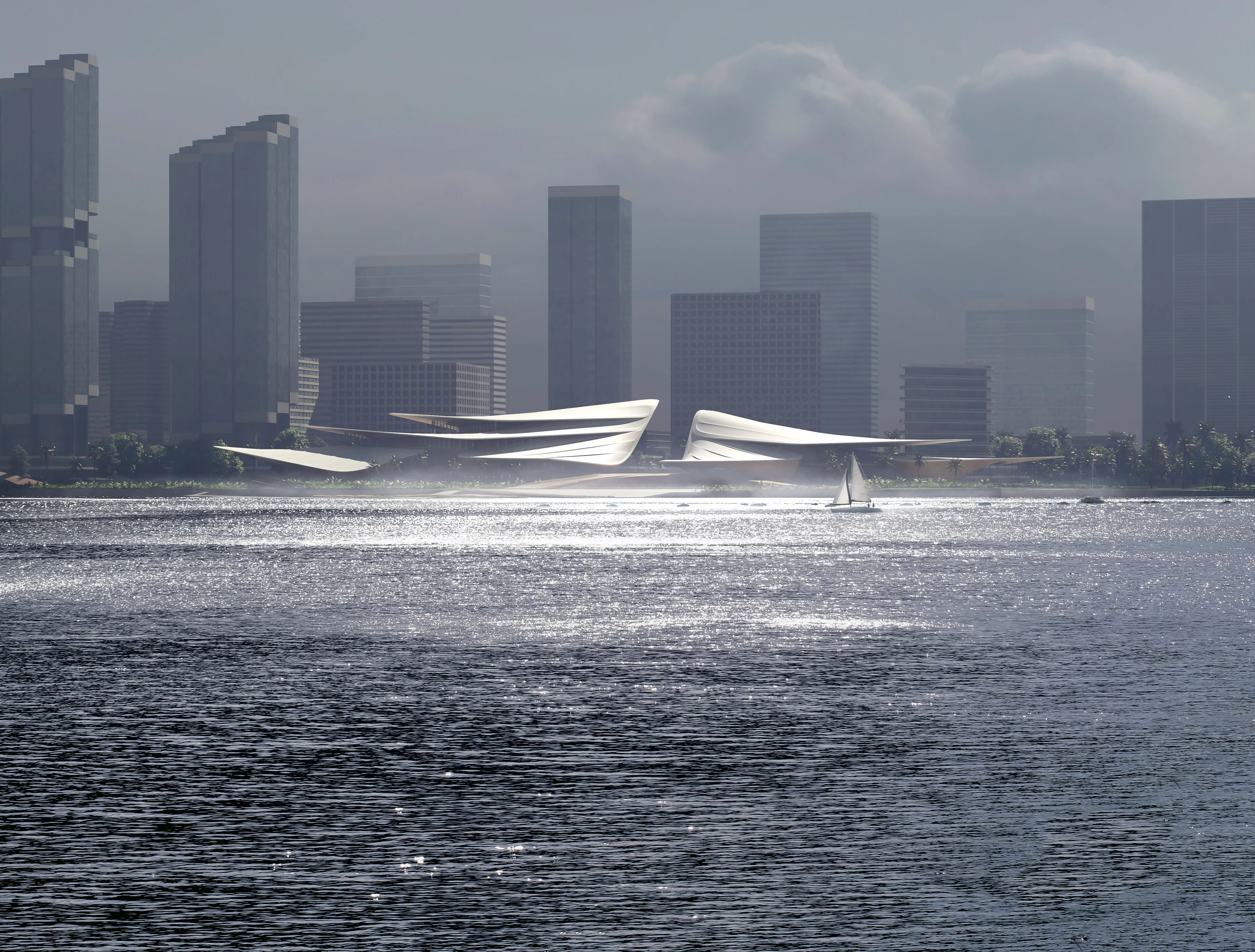
Located at the entrance to Sanya’s harbour, the new cultural district by ZHA is adjacent to the Jiangang Road terminus of Sanya’s tram network that connects many of the residential and hotel districts on Sanya Bay with the city’s high-speed rail station.
Courtesy of Arch-Exist
default
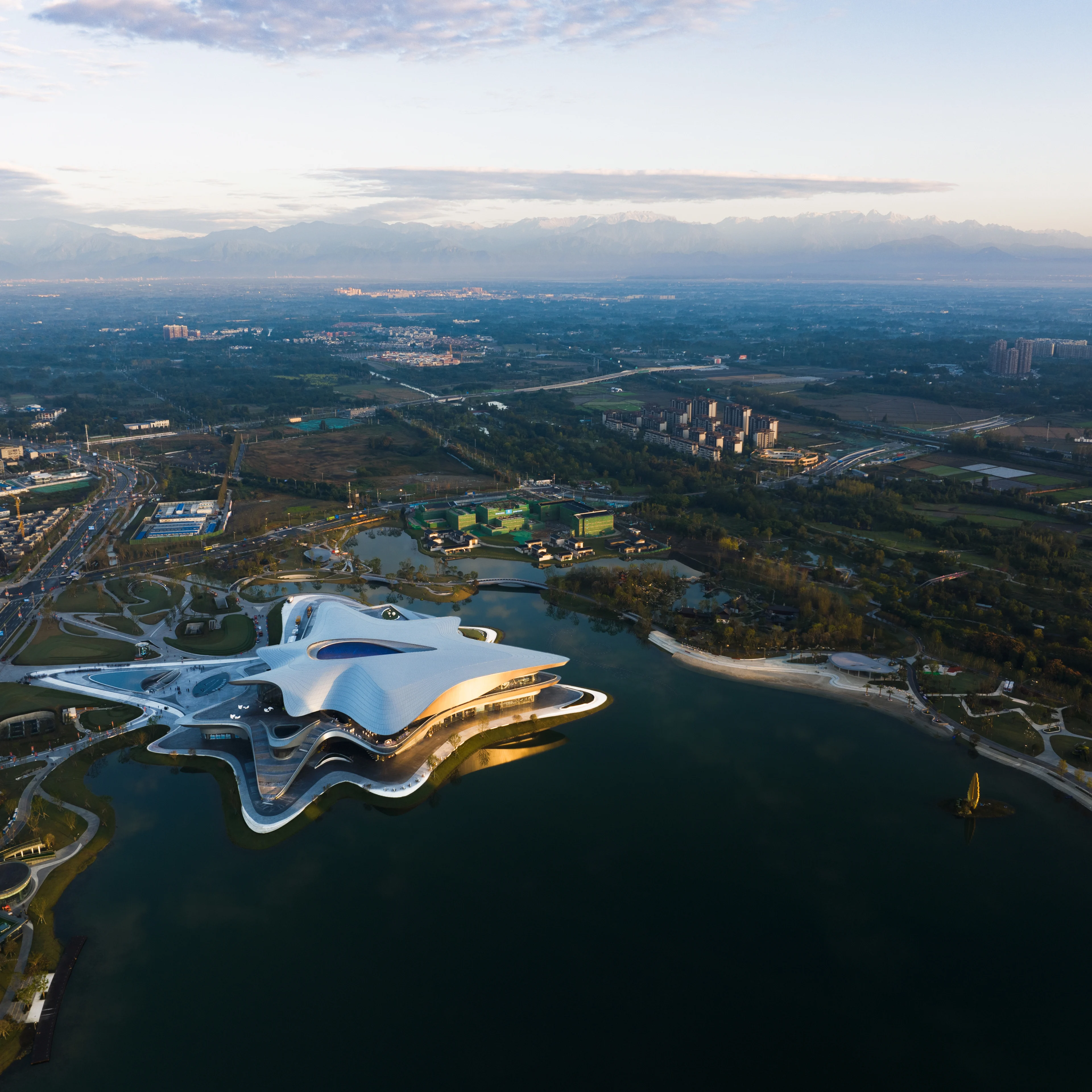
The new Chengdu Science Fiction Museum is situated on Jingrong Lake within the Science & Innovation New City of Chengdu’s Pidu District.
Render by Negativ
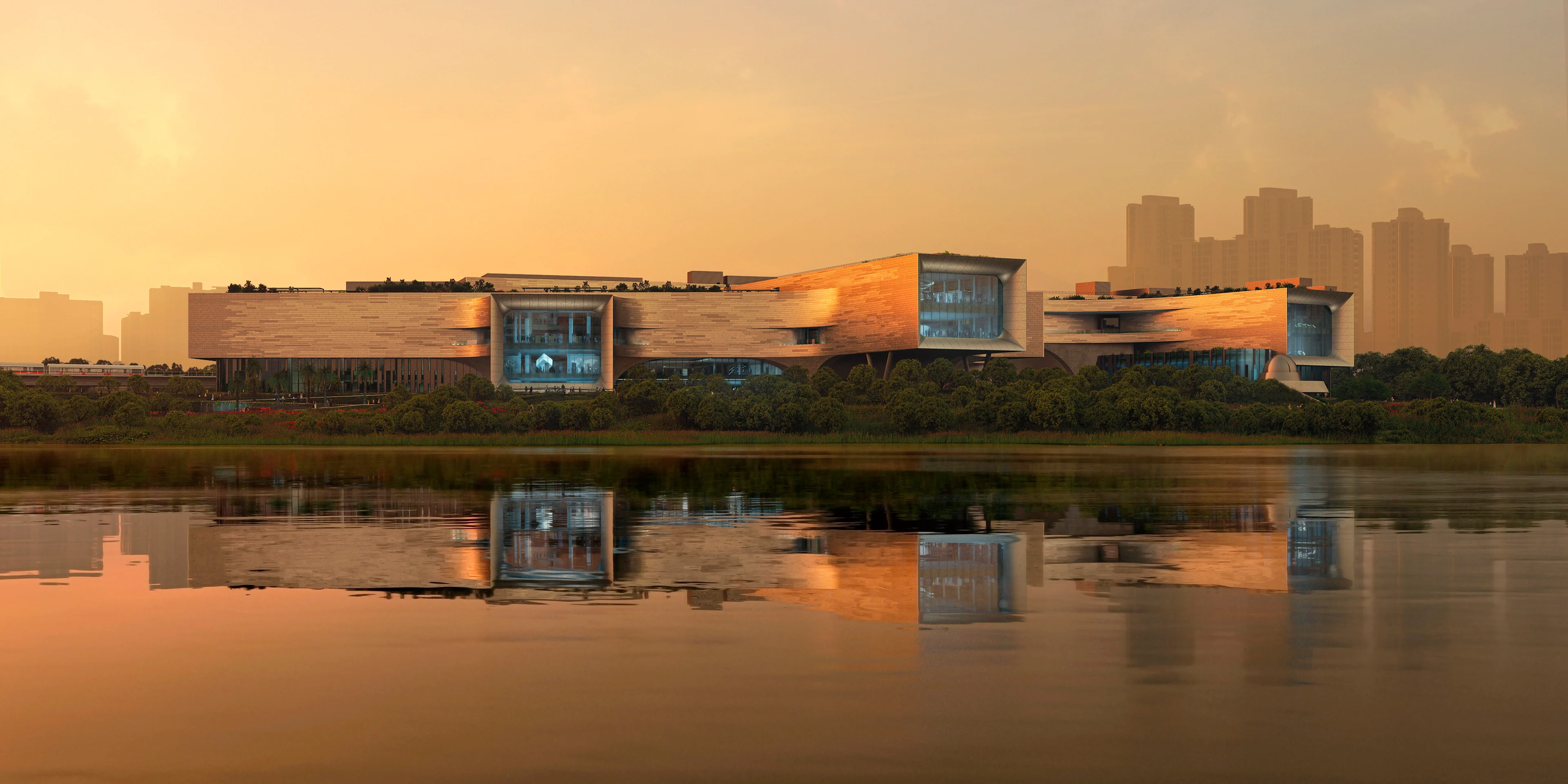
Waterfront view of new Science Centre. render by Negativ. The image is an artist’s impression, and final design may be subject to changes.
Singapore’s New Science Centre will provide unique facilities and programmes as a destination for all Singaporeans to access science, technology, engineering and mathematics (STEM) education and experiences.
Courtesy of CAT-OPTOGRAM 猫瞳
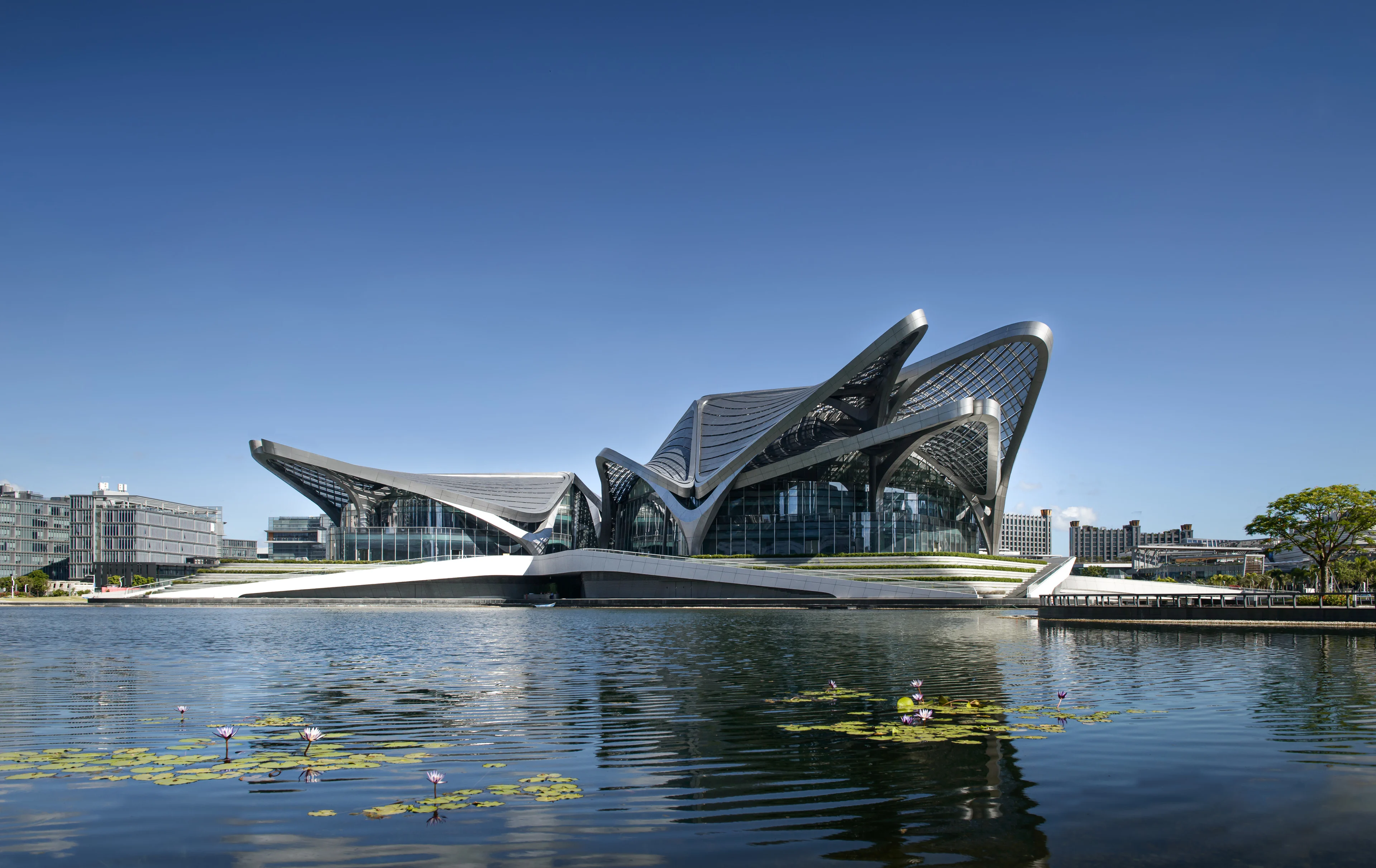
Integrating three distinct cultural institutions for the city, each venue within the Zhuhai Jinwan Civic Arts Centre incorporates unique characteristics that create differing visitor experiences, yet all are united by a coherent formal and structural logic that spans 170 meters wide from east to west and 270 meters long from north to south.
01
02
03
04
05
06
07
08
09
10
11
12
13
14
15
keyFacts
awards
people
credits