
Photograph by Virgile Simon Bertrand
Shenzhen, China
2019 - 2025
The Bureau of Public Works of the Shenzhen Municipality
Shenzhen Science & Technology Museum
Photograph by Virgile Simon Bertrand
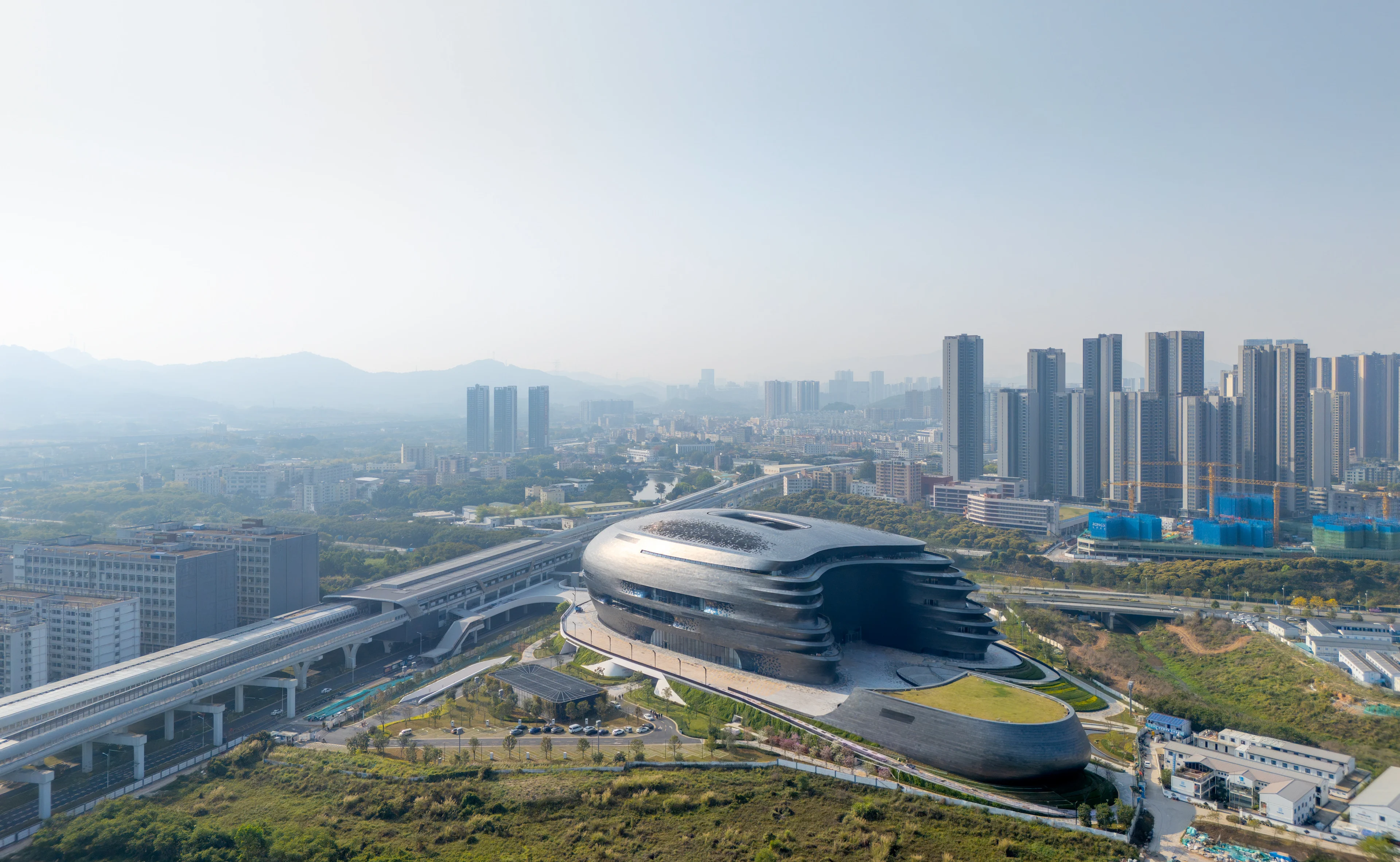
Designed as a leading visitor destination of the Greater Bay Area — the world’s largest metropolitan region with its population approaching 100 million residents — the museum will collaborate with the region’s renowned tech industries, universities, schools and research centres to cultivate innovation, as well as present the ongoing inventiveness that places Shenzhen as a global leader in the development of new technologies.
Adjacent to Guangming Station of Shenzhen’s metro network, the design responds to its location as a solid, spherical volume facing the city and defining the southeast corner of the new Science Park.
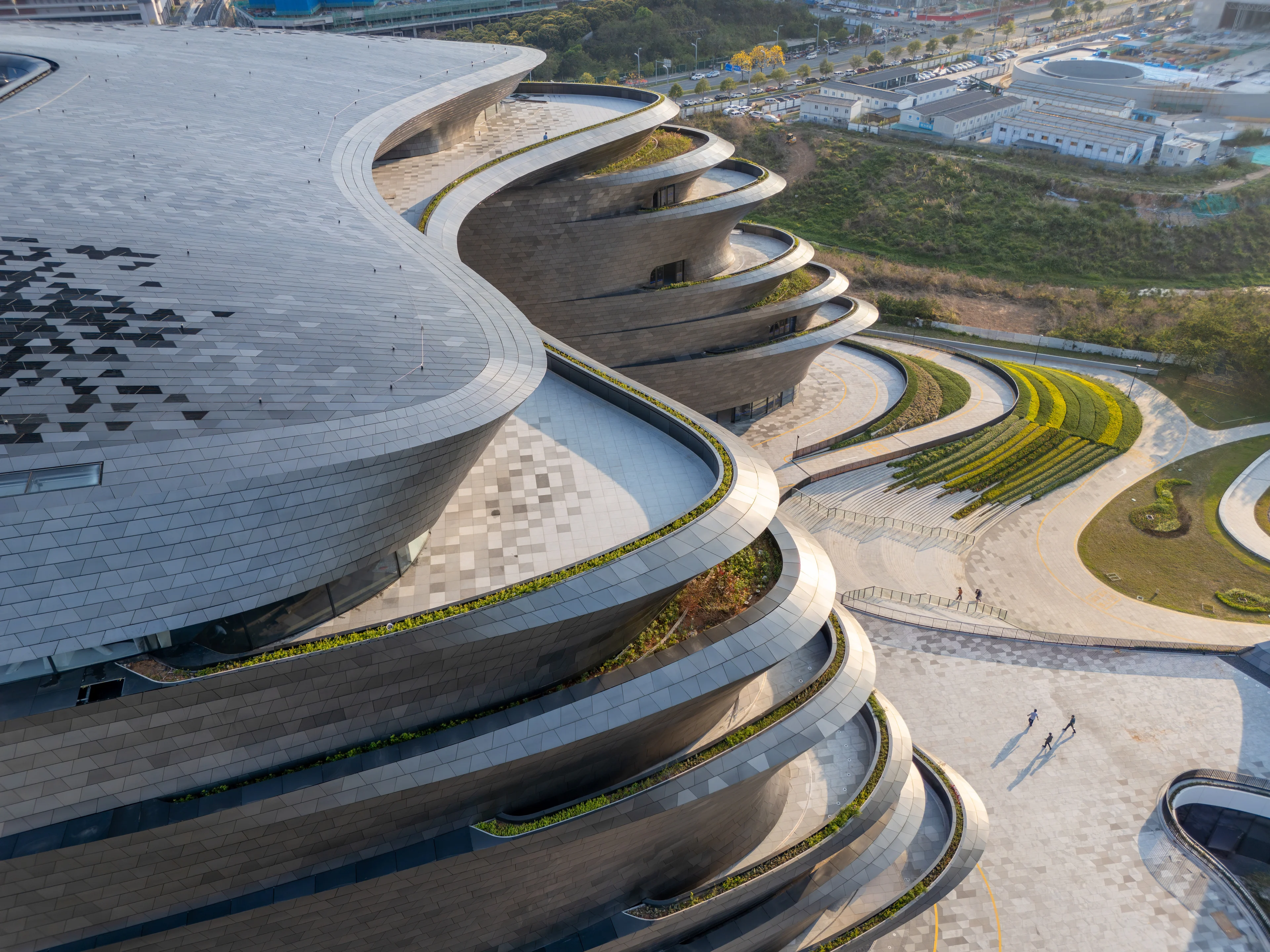
Extending westwards into the park, the building’s volume stretches and transforms into a dynamic sequence of outdoor terraces overlooking the park. These terraces are functioning extensions of the interior galleries that surround the grand central atrium, creating a significant new civic space for the city.
The Shenzhen Science & Technology Museum incorporates 35,000m2 of permanent and temporary exhibition halls and galleries, together with 6,000m2 of immersive theatres and cinemas, as well as 5,400m2 of research laboratories, educational facilities and an innovation centre. Additionally, 34,000m2 of visitor amenities and storage join production and maintenance workshops.
Photograph by Virgile Simon Bertrand
Photograph by Virgile Simon Bertrand
Photograph by Virgile Simon Bertrand
01
02
03
04
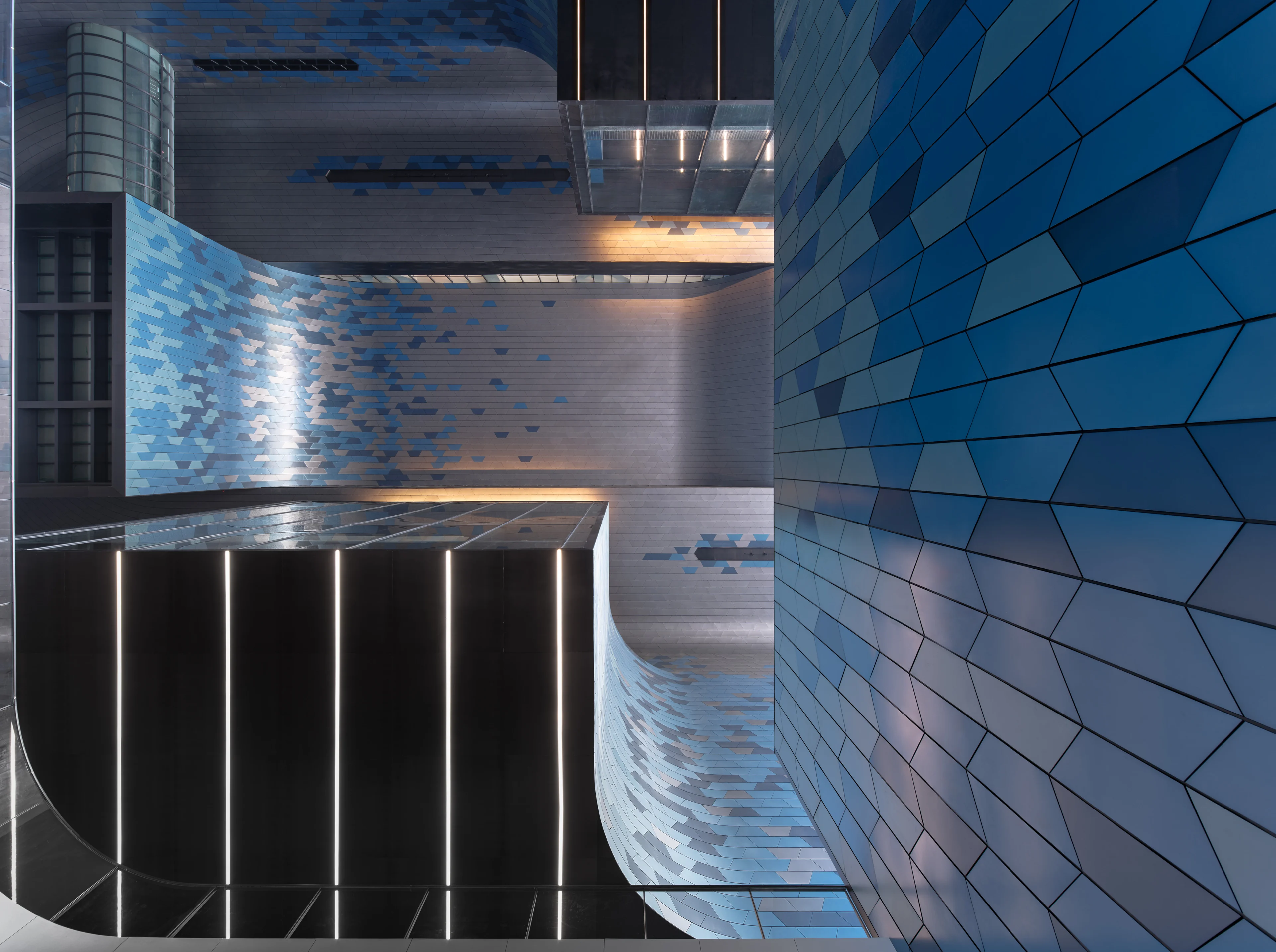
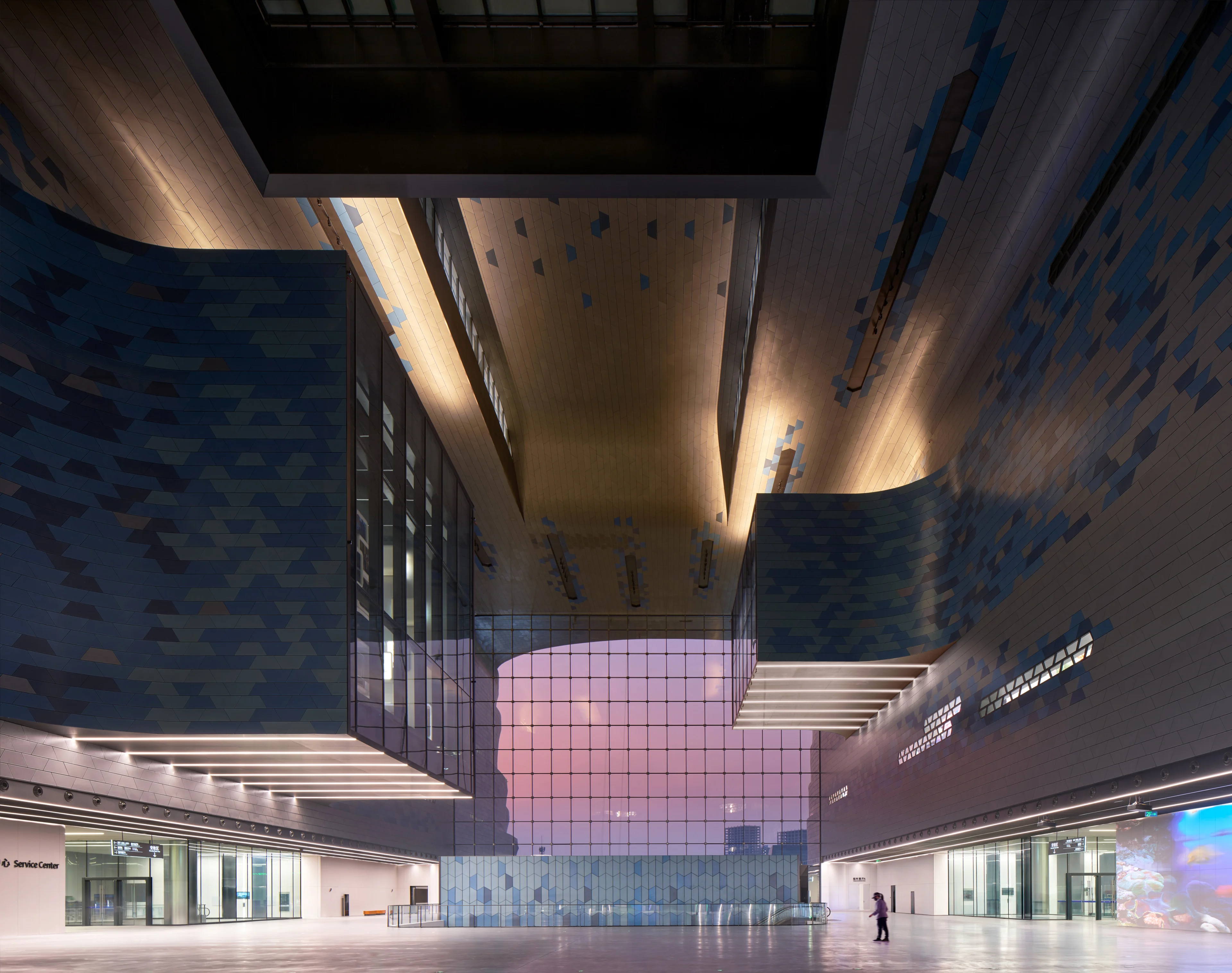
The many galleries within Shenzhen’s new scientific institution emerge from the floor and walls of its central atrium, while other galleries float above the awesome scale and composition of the atrium’s grand public space, each giving visual clues that intuitively direct visitors through the museum’s series of interconnected spaces.
The atrium's multiple perspectives and materiality also provide a thrilling launching point for every visitor’s journey of discovery. With its large, glazed wall facing the park, the atrium blurs the boundary between inside and out; inviting natural light and landscapes — as well as our boundless curiosity — into the heart of the building.
Guided by passive environmental strategies, the design process employed advanced computer simulations to test and refine the building’s form, spaces and envelope for optimal performance within the annual solar radiation, temperatures, humidity, prevailing winds, air quality and other variable conditions of Shenzhen’s subtropical climate and location. The building’s orientation has been determined to minimise solar heat gain within its central atrium while maintaining panoramic views of the park.
Designed to shield the atrium’s glazed façade from direct sunlight to enhance visitor comfort, the terraces on each floor improve environmental performance and create a series of sheltered outdoor spaces overlooking the park; giving visitors places for rest and contemplation while exploring the exhibitions.
Mitigating direct exposure to the elements and solar radiation, a system of stainless-steel panels creates a ventilated cavity between the façade and the external walls. This system extends to the roof, which also incorporates photovoltaics for on-site energy generation.
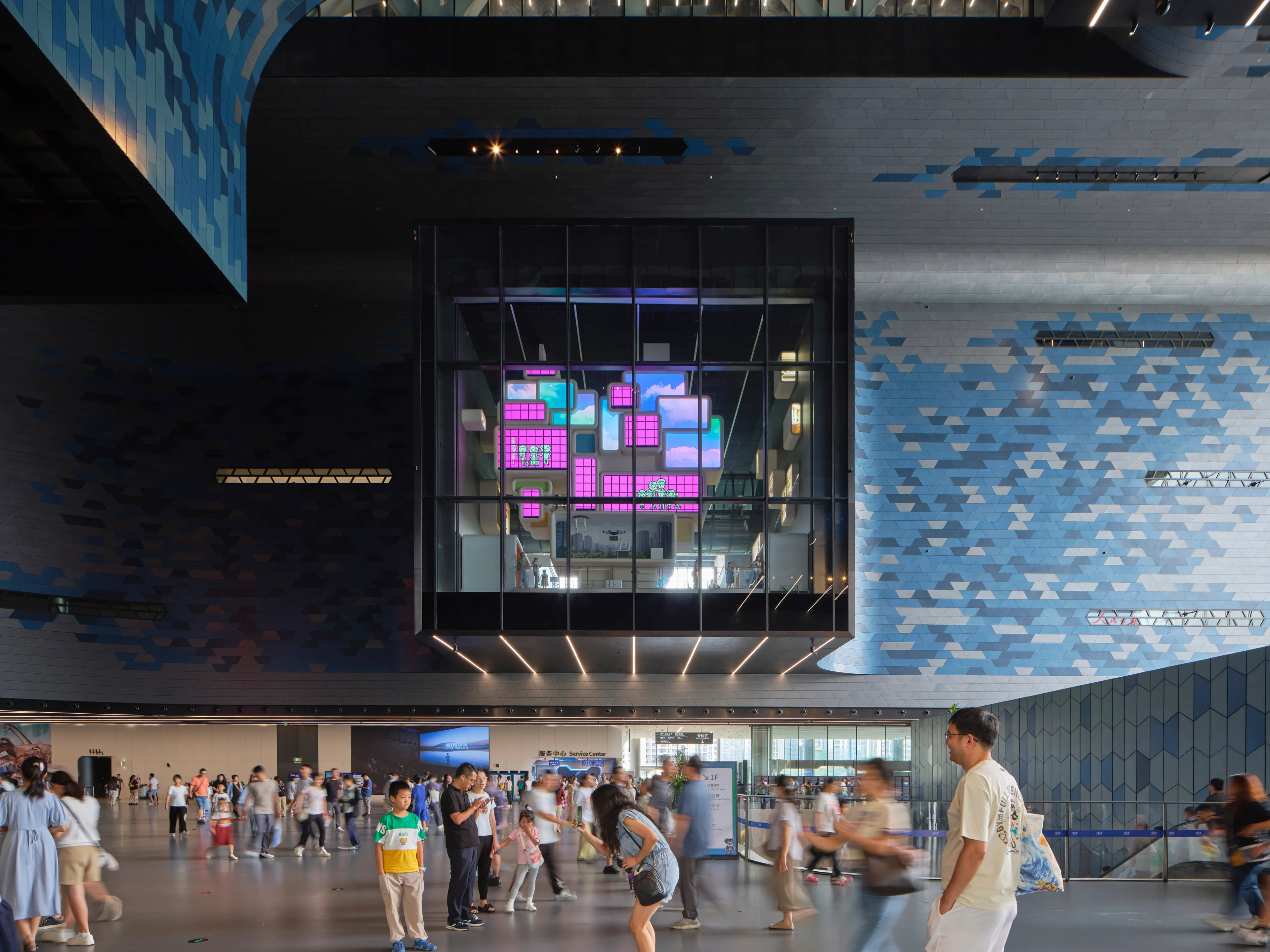
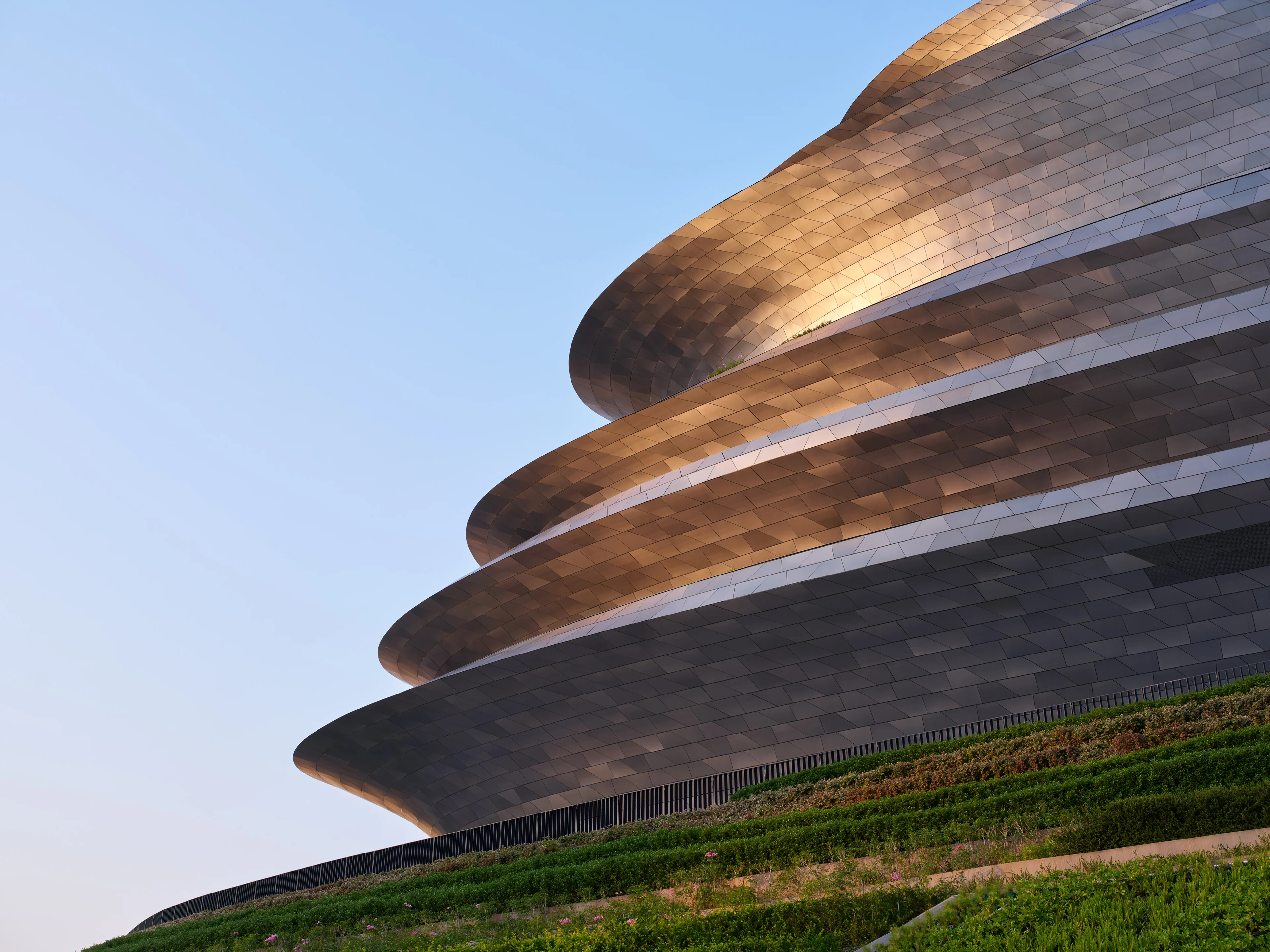
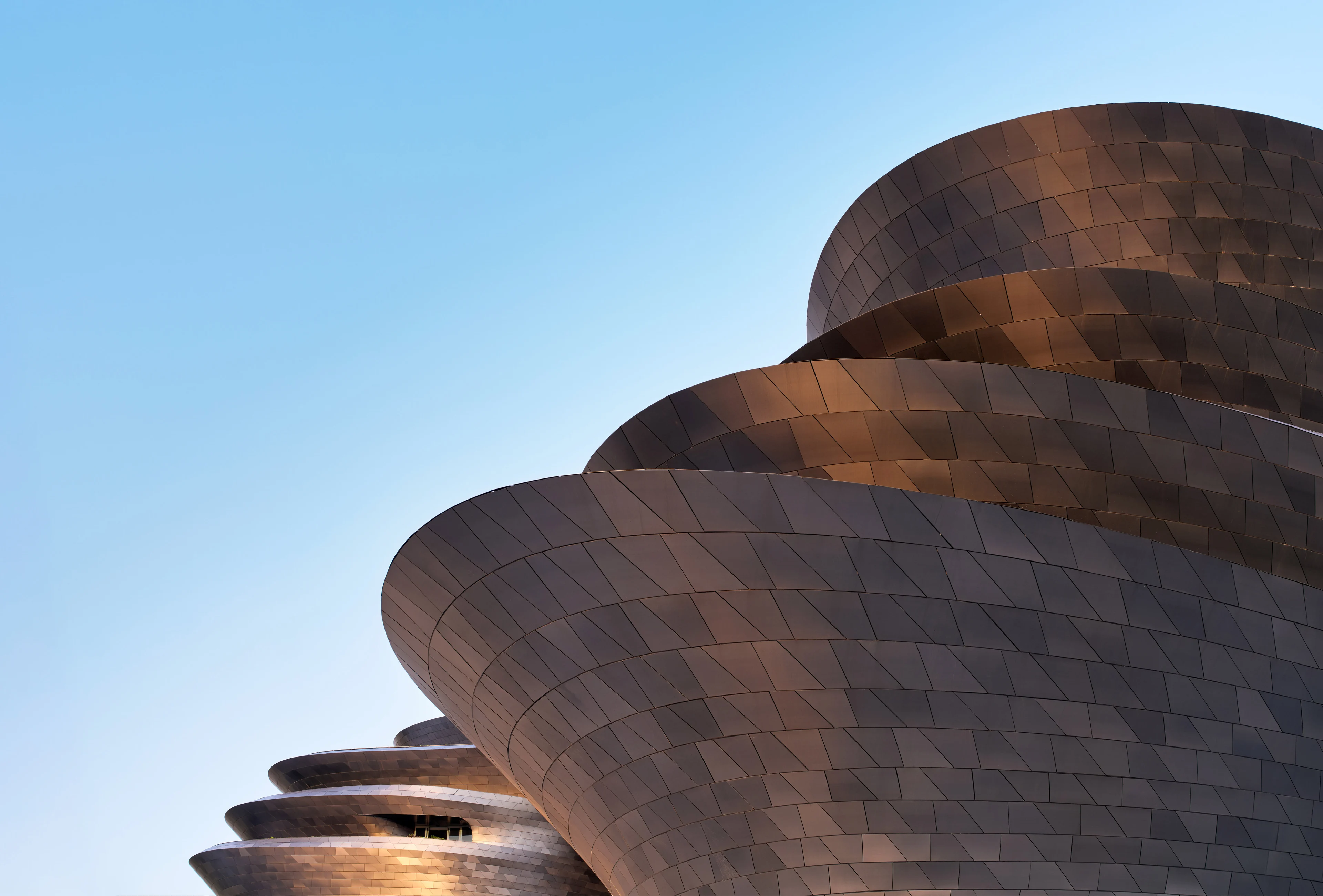
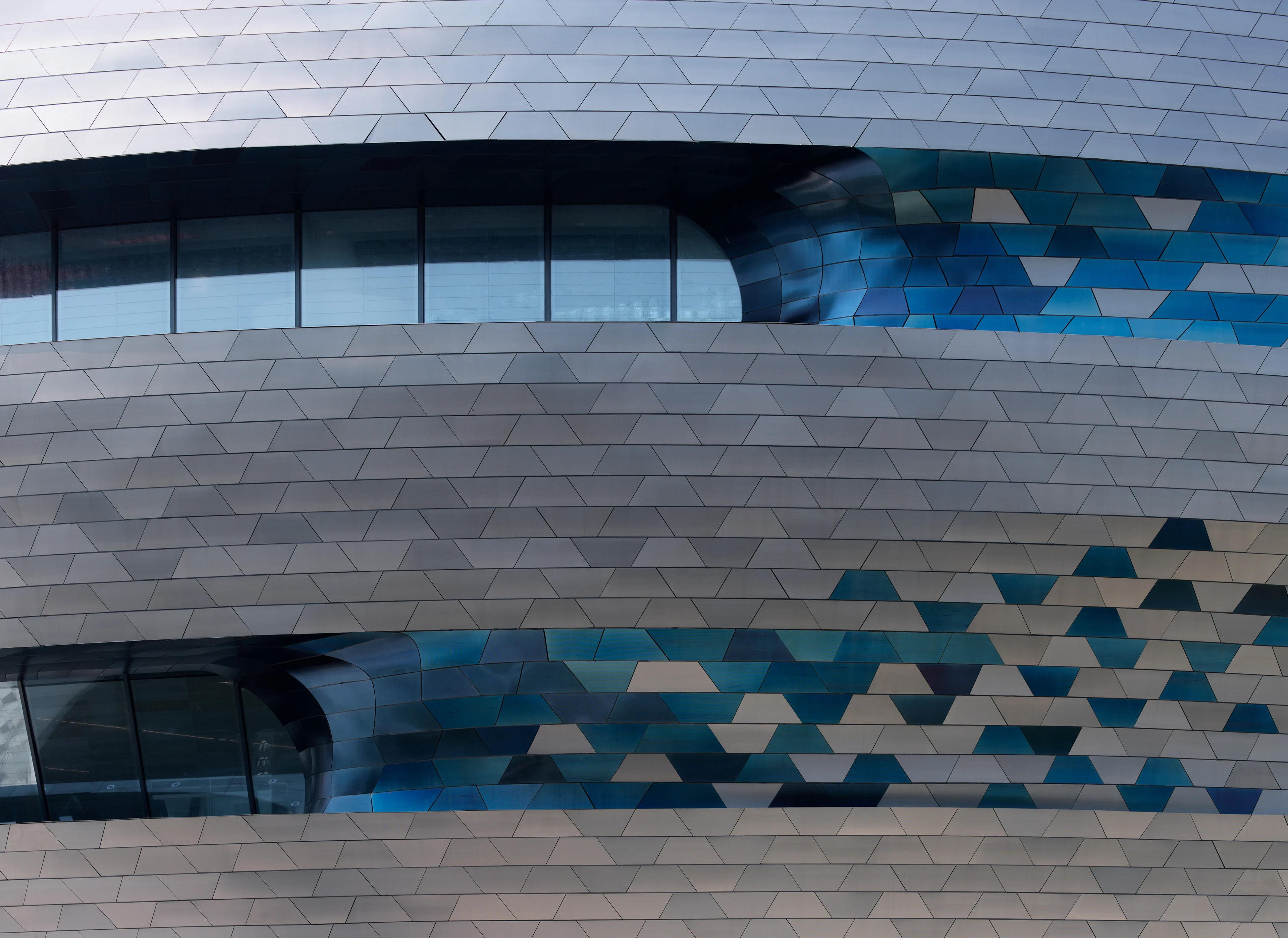
The museum’s façade incorporates the first large-scale application of dual colour INCO technology in China. Precisely controlling an electrolyte formula and oxidation time, a nano-scale oxide film is generated on the surface of the steel, giving the façade a self-protecting, self-cleaning micro-layer that extends its life cycle by increasing resilience to weather and corrosion, while also enriching the stainless-steel with a fine texture and colour without any painting.
The façade’s colour gradient transitions from deep blue to various shades of grey, evoking a dynamism of celestial bodies orbiting in space, while adding depth and texture.
Aiming to achieve the highest three-star rating of China’s Green Building Evaluation Standard, the 128,276m2 museum’s passive design features combined with smart management networks operating high-efficiency systems are projected to reduce the building’s energy consumption to 15.47 kgce/m2 per year, subsequently lowering emissions from electricity demand to an estimated 125.89 kWh/m2 a year.
The museum’s procurement targeted the use of 389,238.92 tonnes of recyclable materials in construction, while its water management system implements grey-water recycling in addition to the collection and storage of rainwater to reduce overall water consumption to an estimated 14,906 cubic metres per year.
The project’s digital twin construction process employed BIM+3D scanning technology to maintain and control tolerances of complex surfaces within millimetres. A comprehensive network of key nodes throughout the building enabled the synchronous verification of all construction from the digital simulation in real-time, while robotic multi-point forming technology precisely shaped the complex surfaces to the exact requirements of the design.
Culture
From a civic art centre that unites three distinct cultural institutions to a science fiction museum whose landscaping contributes to the city’s drainage and flood defence systems, discover our latest cultural projects.
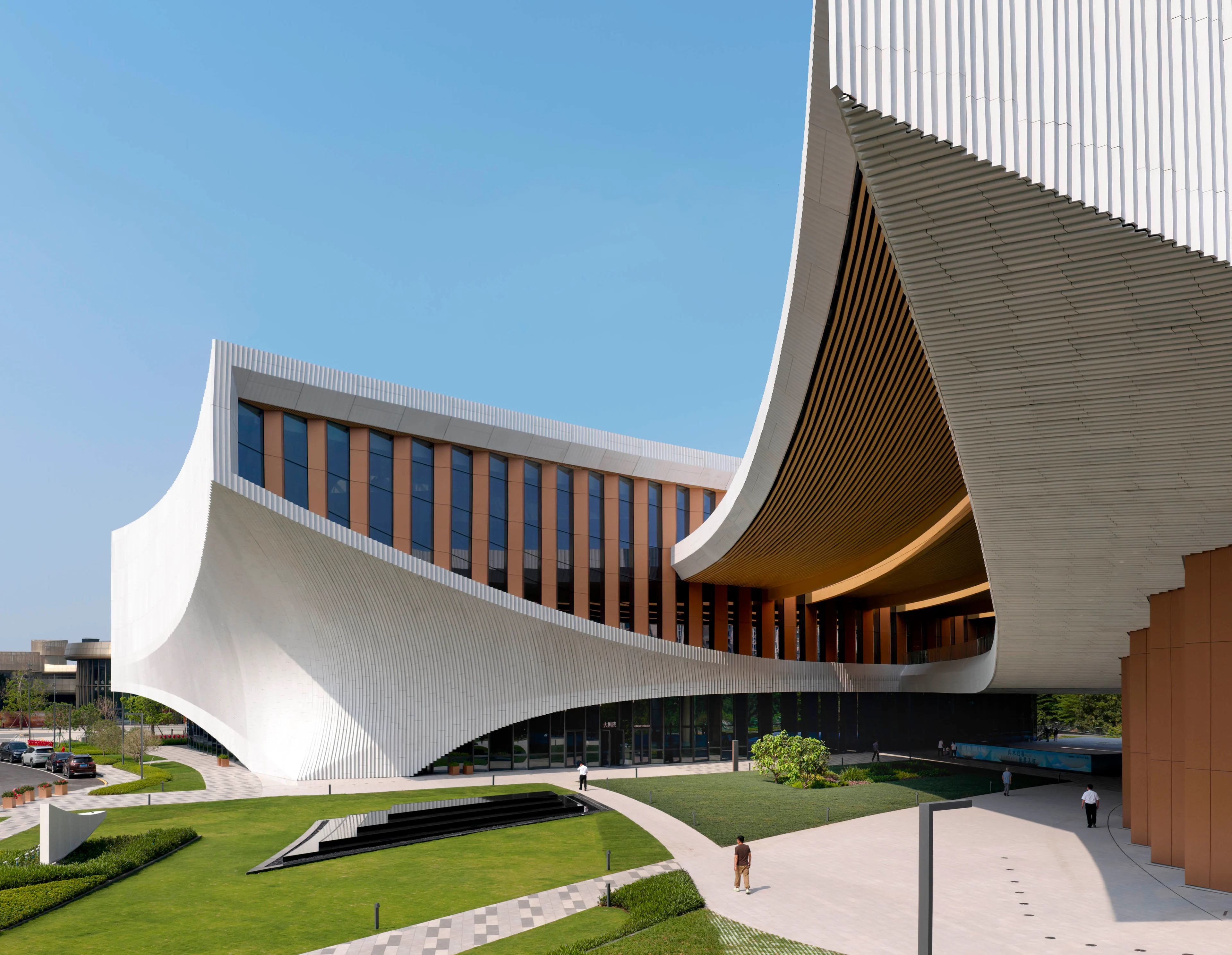
Located in Dongguan within the Greater Bay Area of southern China’s Pearl River estuary, the new Songshan Lake Exhibition and Performance Centre is at the heart of a mixed-use masterplan to revitalize the Yuehe Lake waterfront.
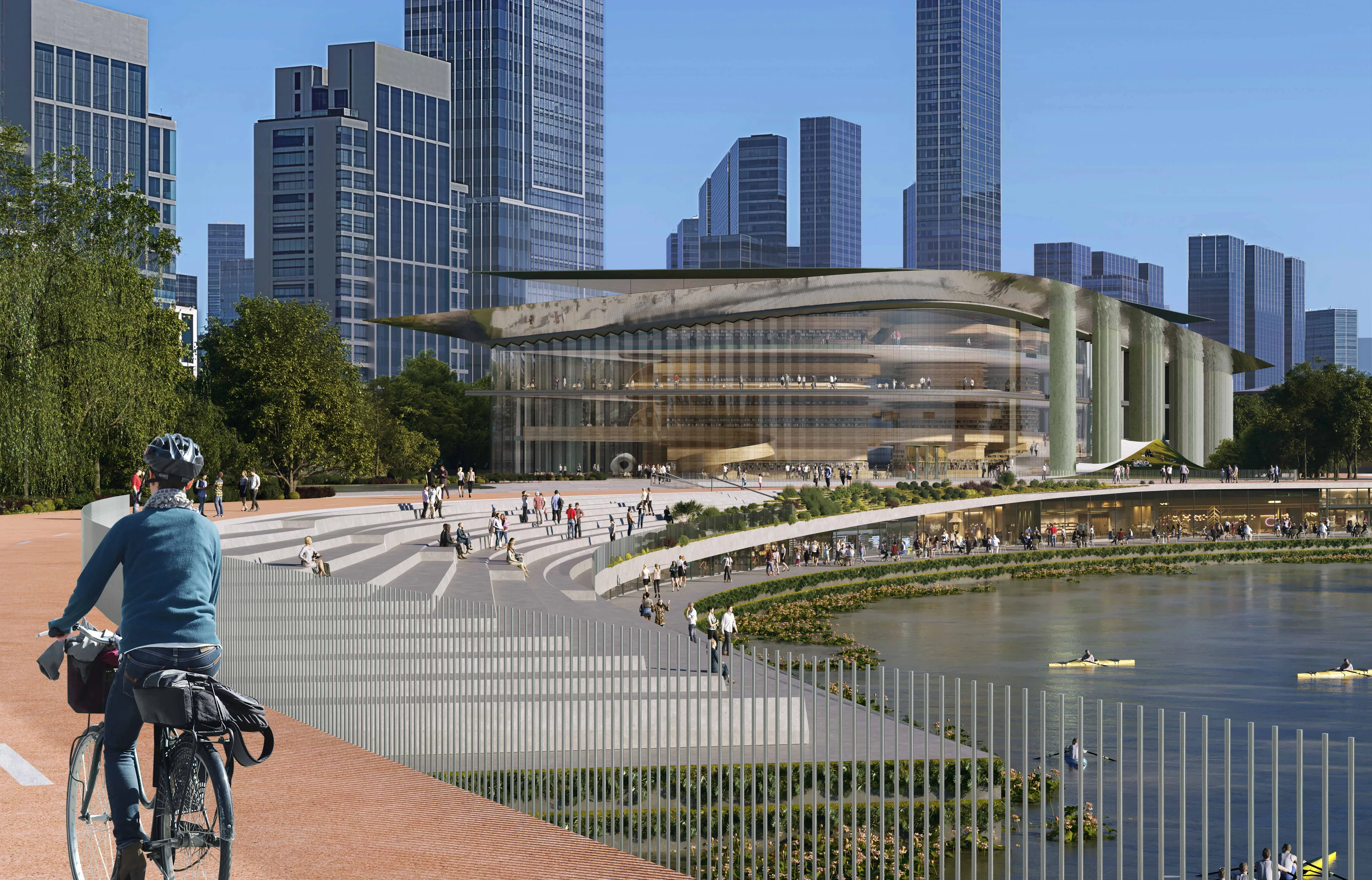
A series of new landscaped parklands, terraces and gardens along the Zhedong Canal within the Xiaoshan district of Hangzhou
Render by Atchain
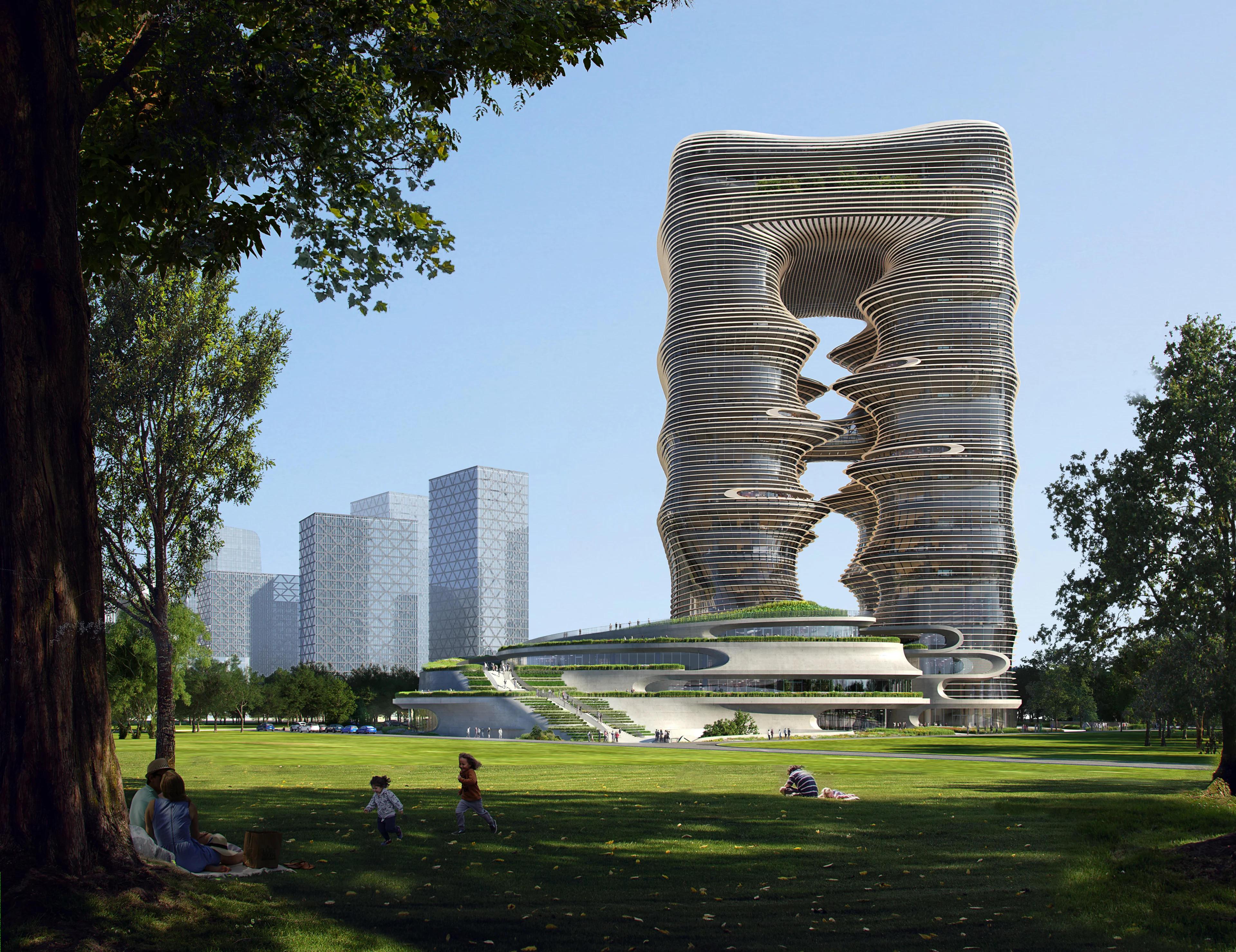
A place of convergence and collaboration, the Yidan Center will be home to the Chen Yidan Foundation in its work to promote lifelong learning and innovation in education.
Render by Proloog
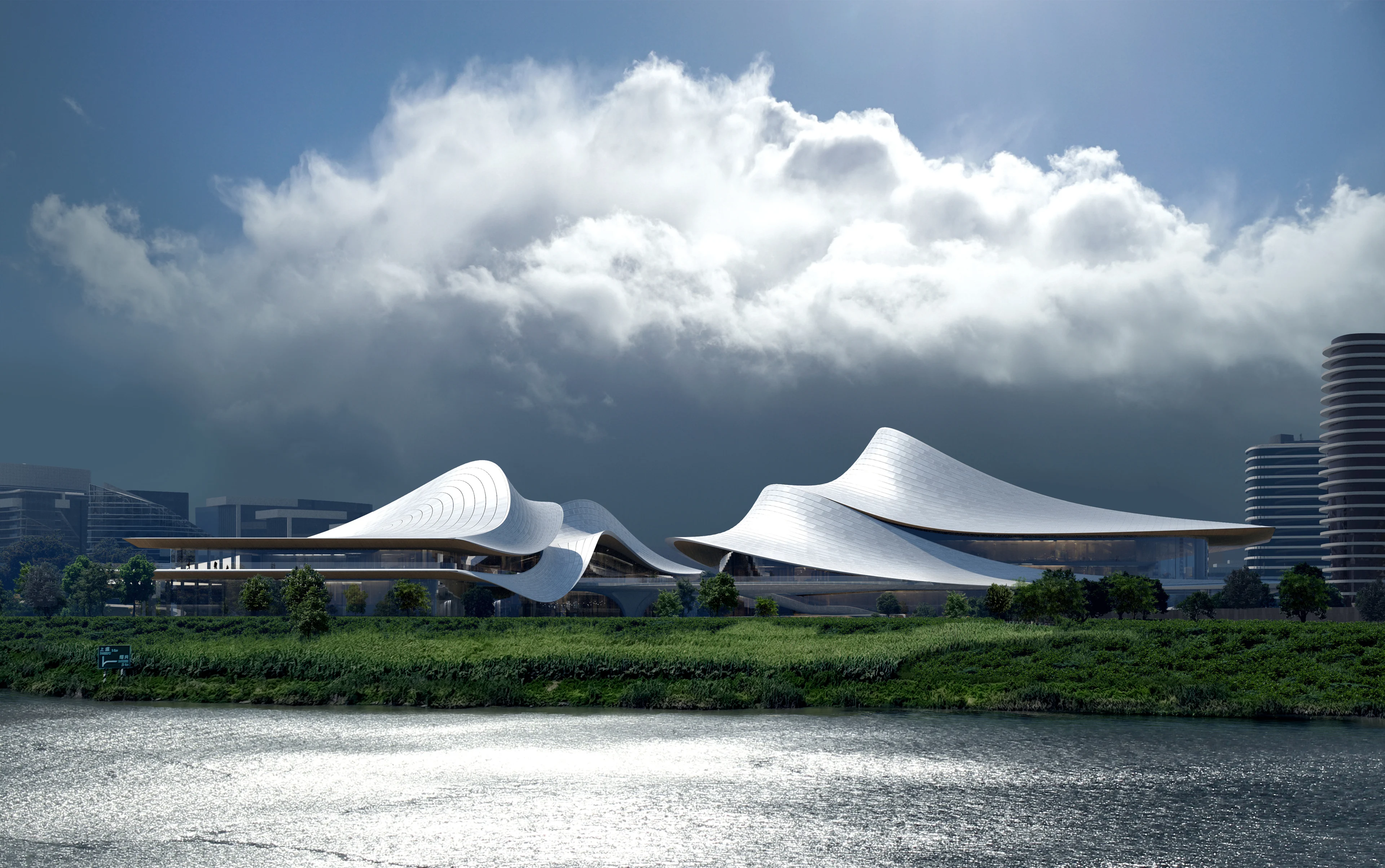
Elevation River
Designed to host local and international productions of opera, dance and drama together with large-scale symphonies and musical theatre, the Art and Culture Centre includes a 1,400-seat Grand Theatre, 500-seat Black-Box Multifunctional Hall, 2,900 sq. m Arts and Education Centre, 3,000m² Conference Centre, 7,500m² Heritage Museum and a 10,000m² Digital Art Gallery.
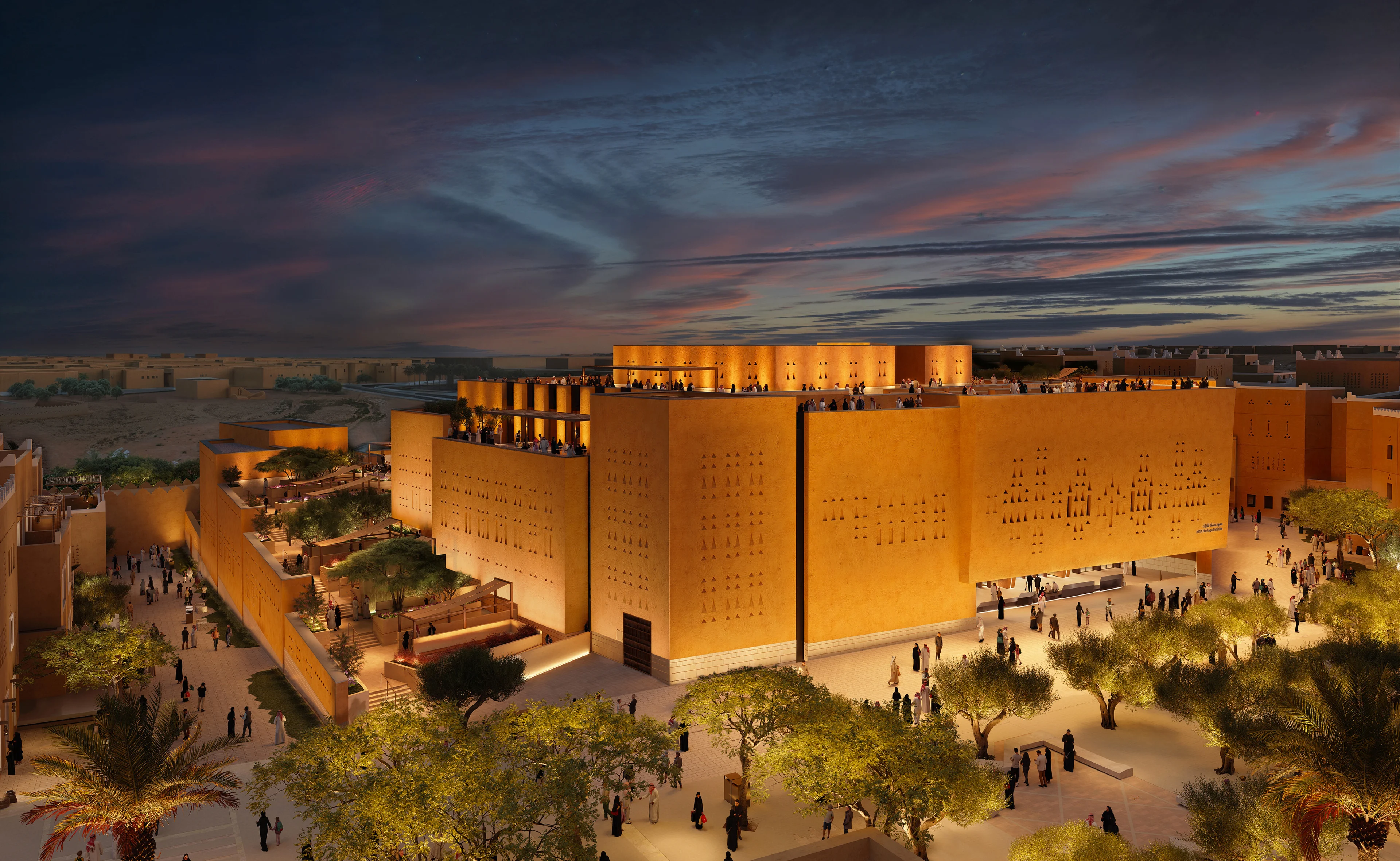
Render by Specto-Digital
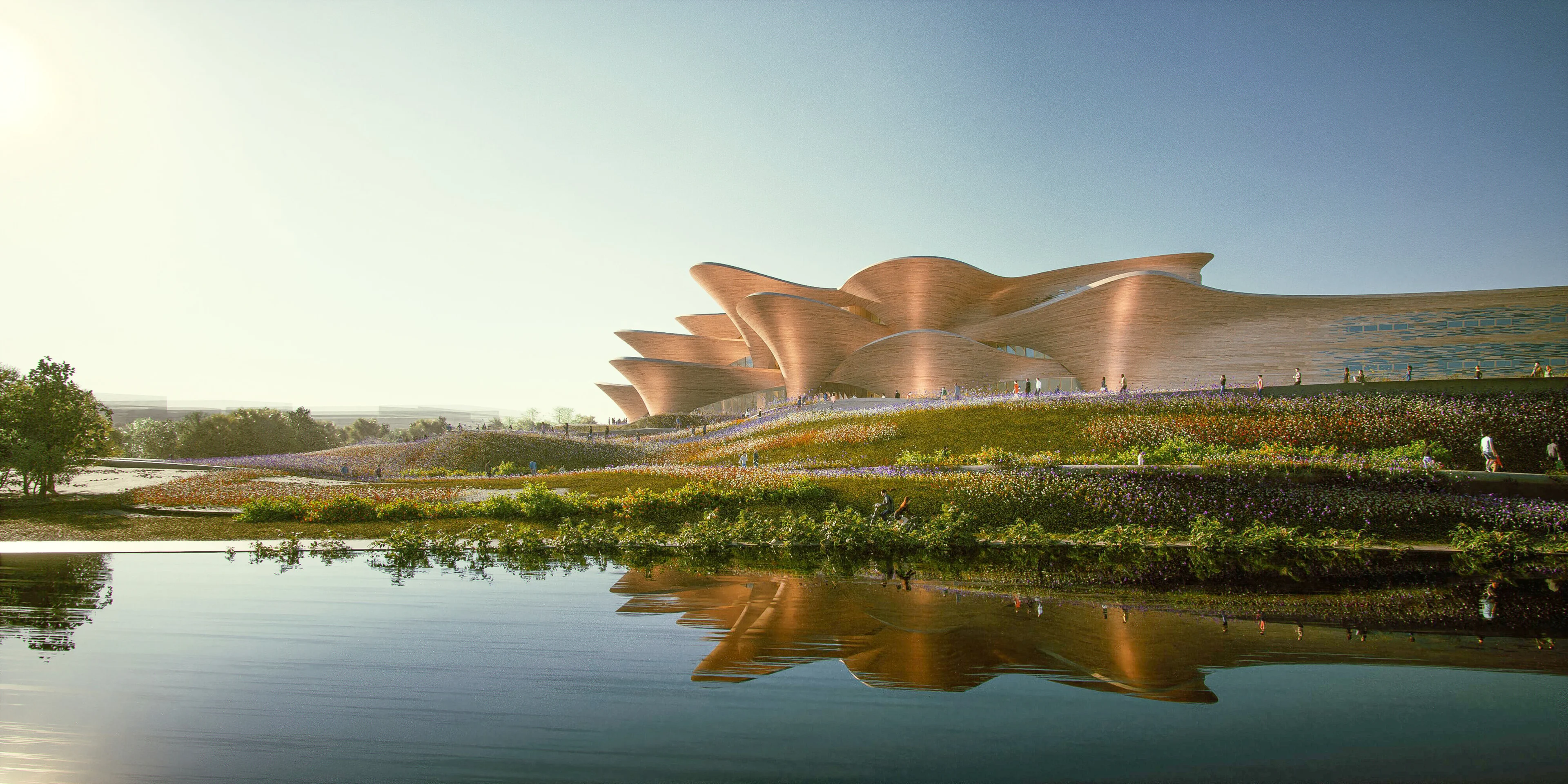
Meaning ‘inheritance passed down through generations’, Asaan will be an institution dedicated to preserving and celebrating this rich heritage, in addition to promoting creativity and knowledge sharing.
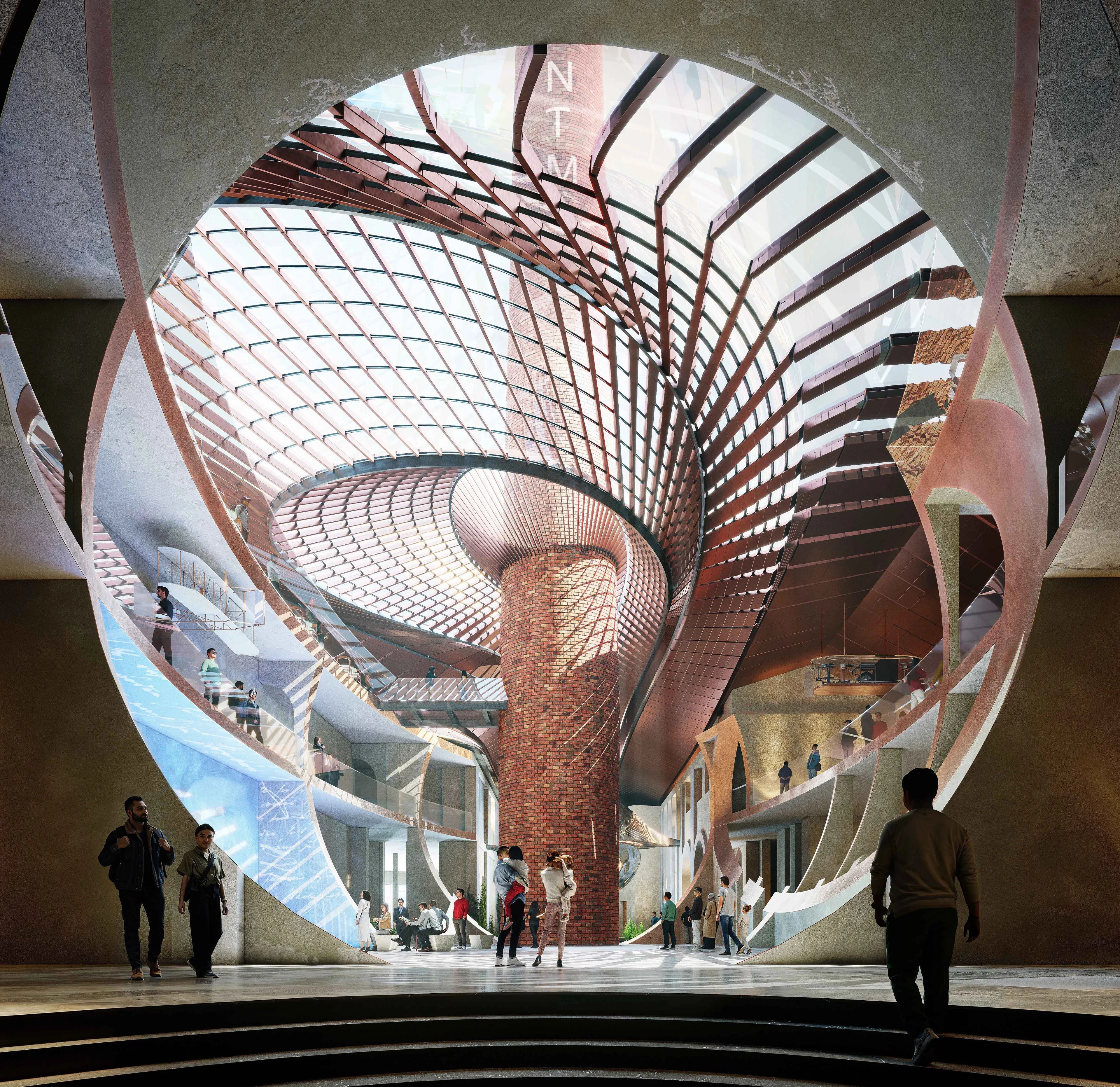
The new Nikola Tesla Museum renovates Belgrade’s historic Milan Vapa Paper Mill into a cultural destination celebrating Tesla’s legacy while preserving the city’s architectural heritage and creating a variety of new public spaces for local residents and visitors.
Courtesy of ZHA
River View
The Alisher Navoi International Scientific Research Centre will incorporate the Navoi State Museum of Literature, Auditorium, International Research Centre and School.
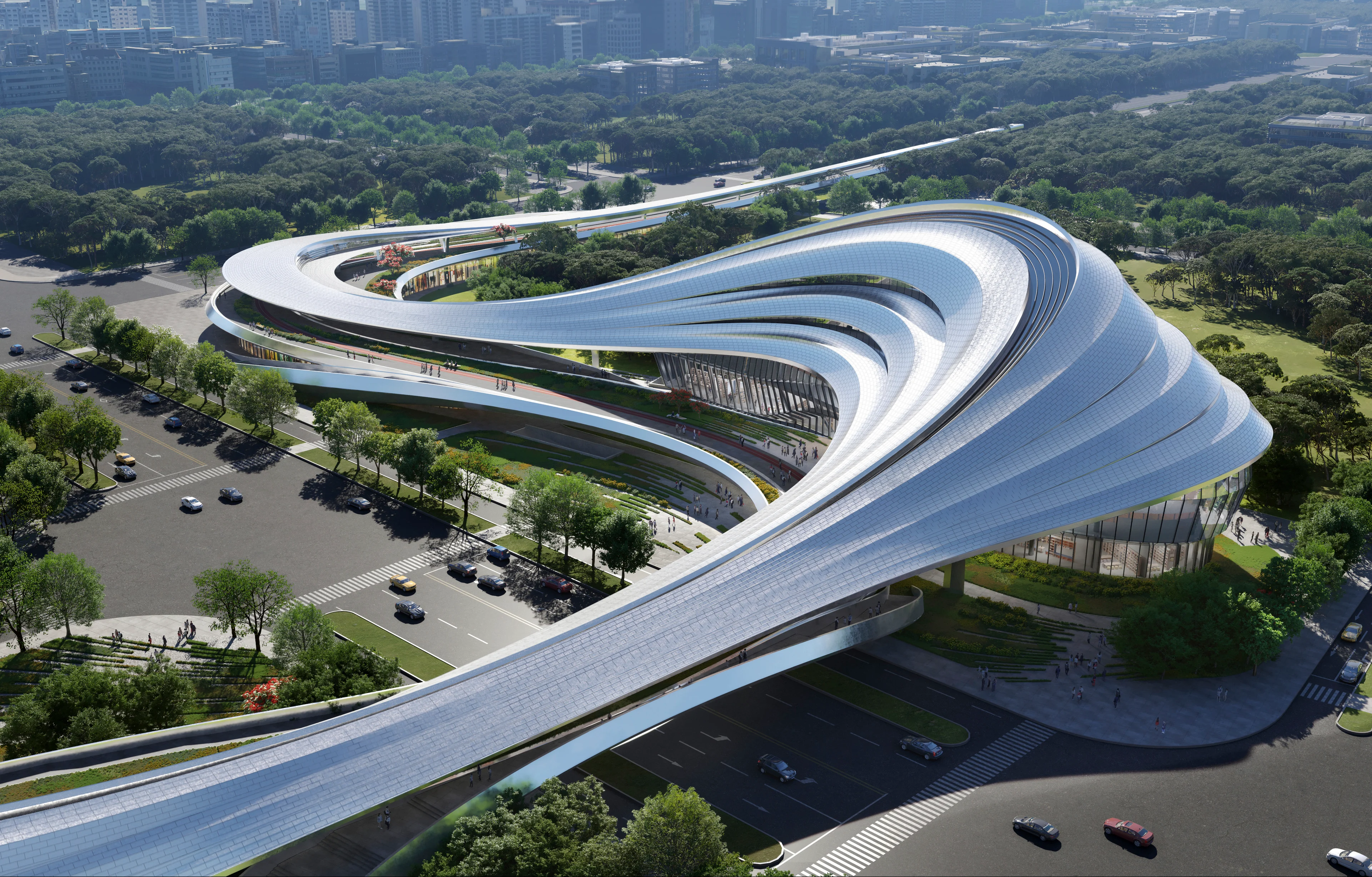
Render by Atchain
Jinghe New City is growing as a science and technology hub north of Xi’an in China’s Shaanxi province. Supported by new scientific research institutes and driven by environmental considerations, the city is becoming a centre for developing industries focusing on new energy and materials, artificial intelligence and aerospace.
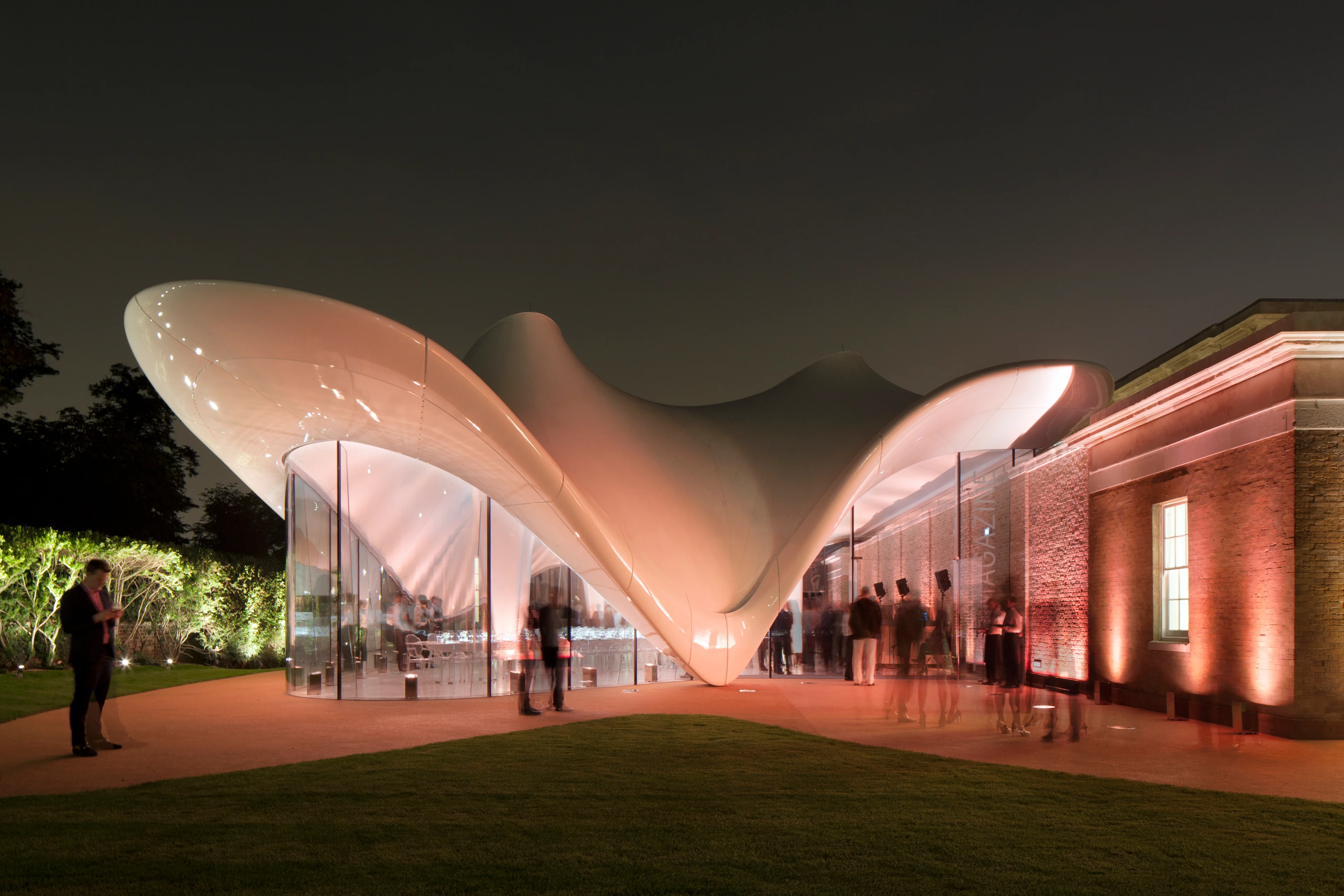
Photograph by Luke Hayes
The Serpentine North Gallery consists of two distinct parts, namely the conversion of a classical 19th century brick structure – The Magazine – and a 21st century tensile structure. The Serpentine North Gallery is thus – after MAXXI in Rome – the second art space where ZHA has created a synthesis of old and new.
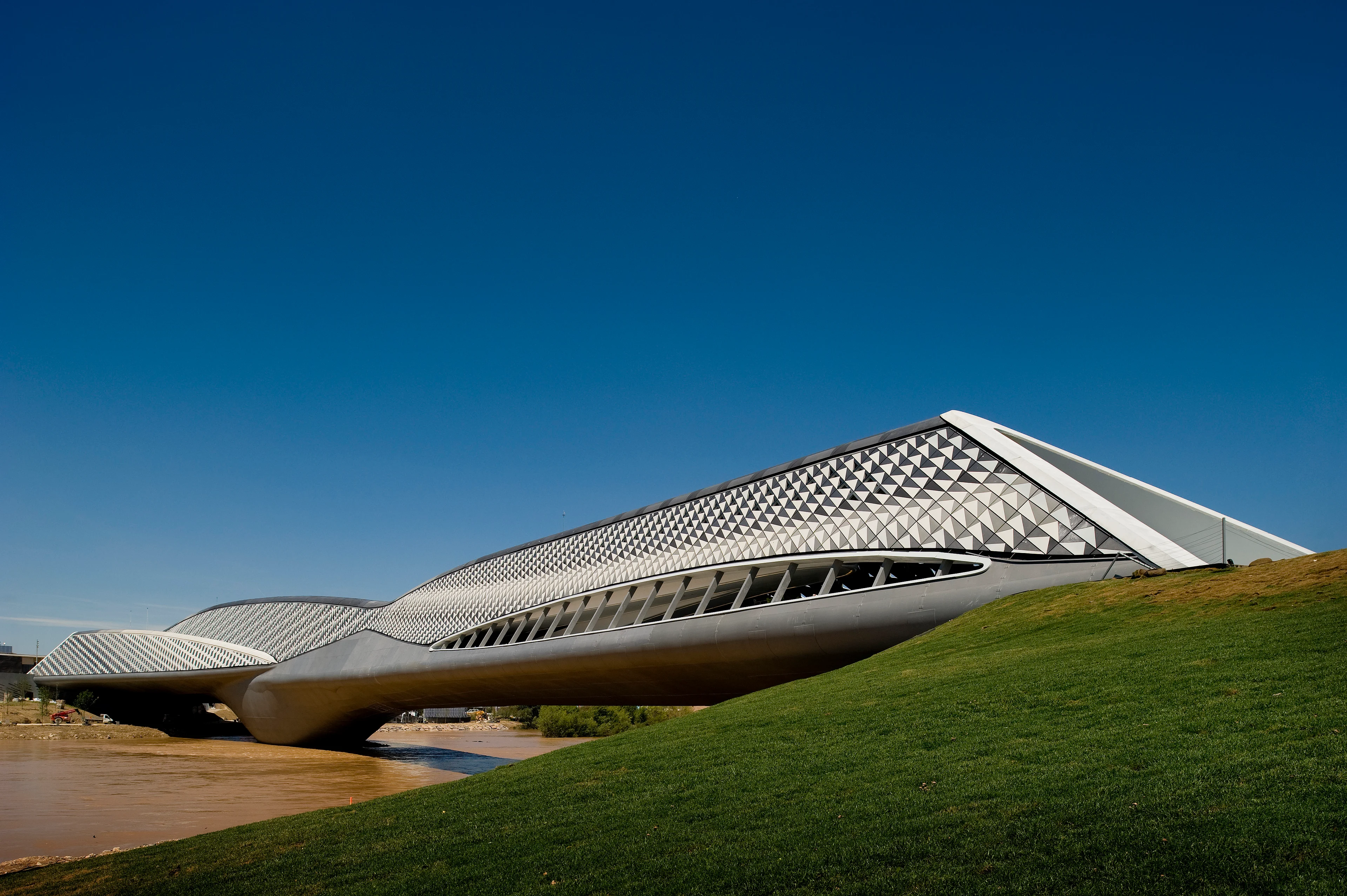
Photograph by Fernando Guerra
An enclosed interactive space spanning the River Ebro to form a gateway to the Zaragoza Expo 2008, a hybrid of pedestrian footbridge and exhibition pavilion. Four structural elements correspond to specific spatial enclosures, which intersect and brace each other. This fluid, dynamic design interprets the Expo’s theme: ‘Water and Sustainable Development.’
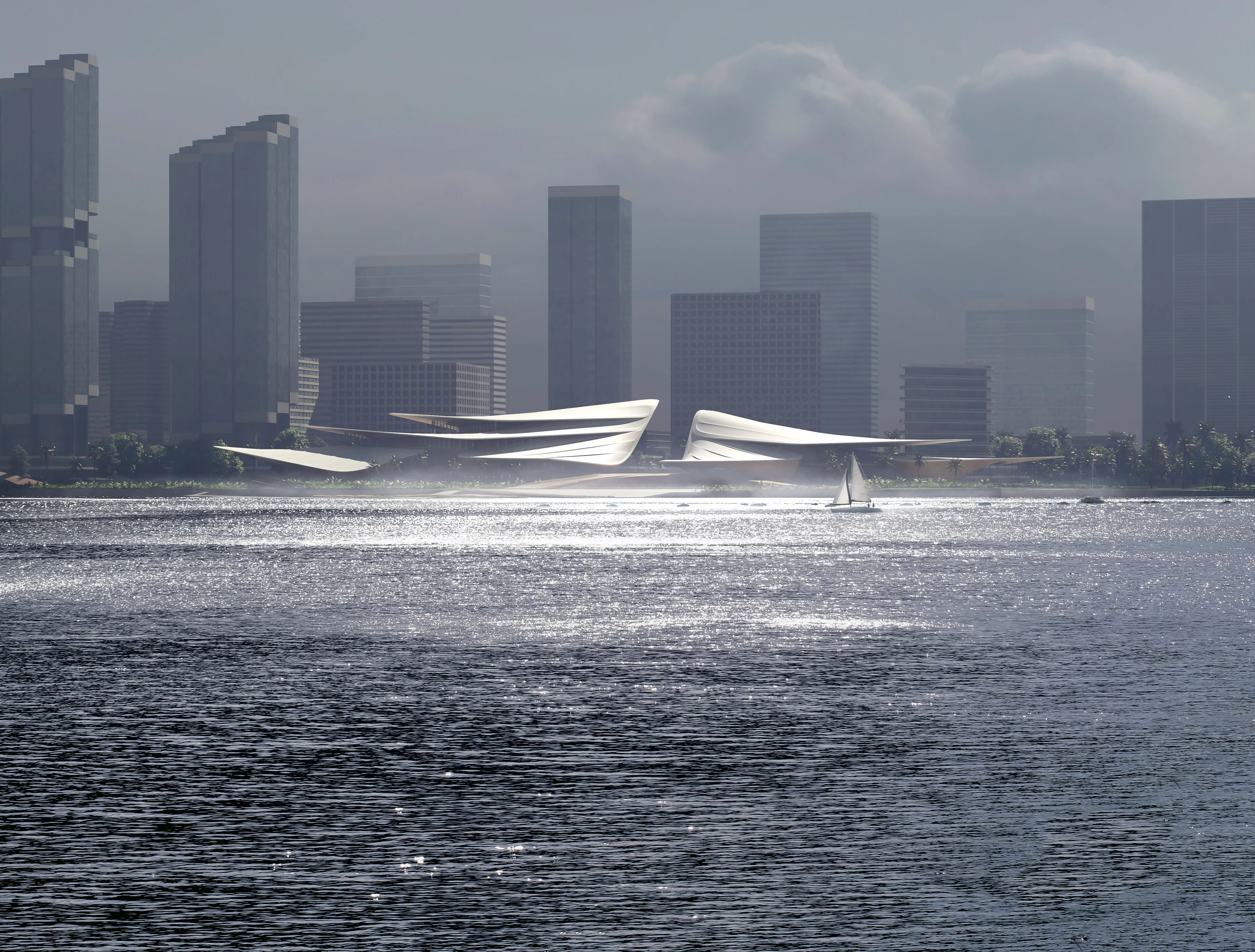
Located at the entrance to Sanya’s harbour, the new cultural district by ZHA is adjacent to the Jiangang Road terminus of Sanya’s tram network that connects many of the residential and hotel districts on Sanya Bay with the city’s high-speed rail station.
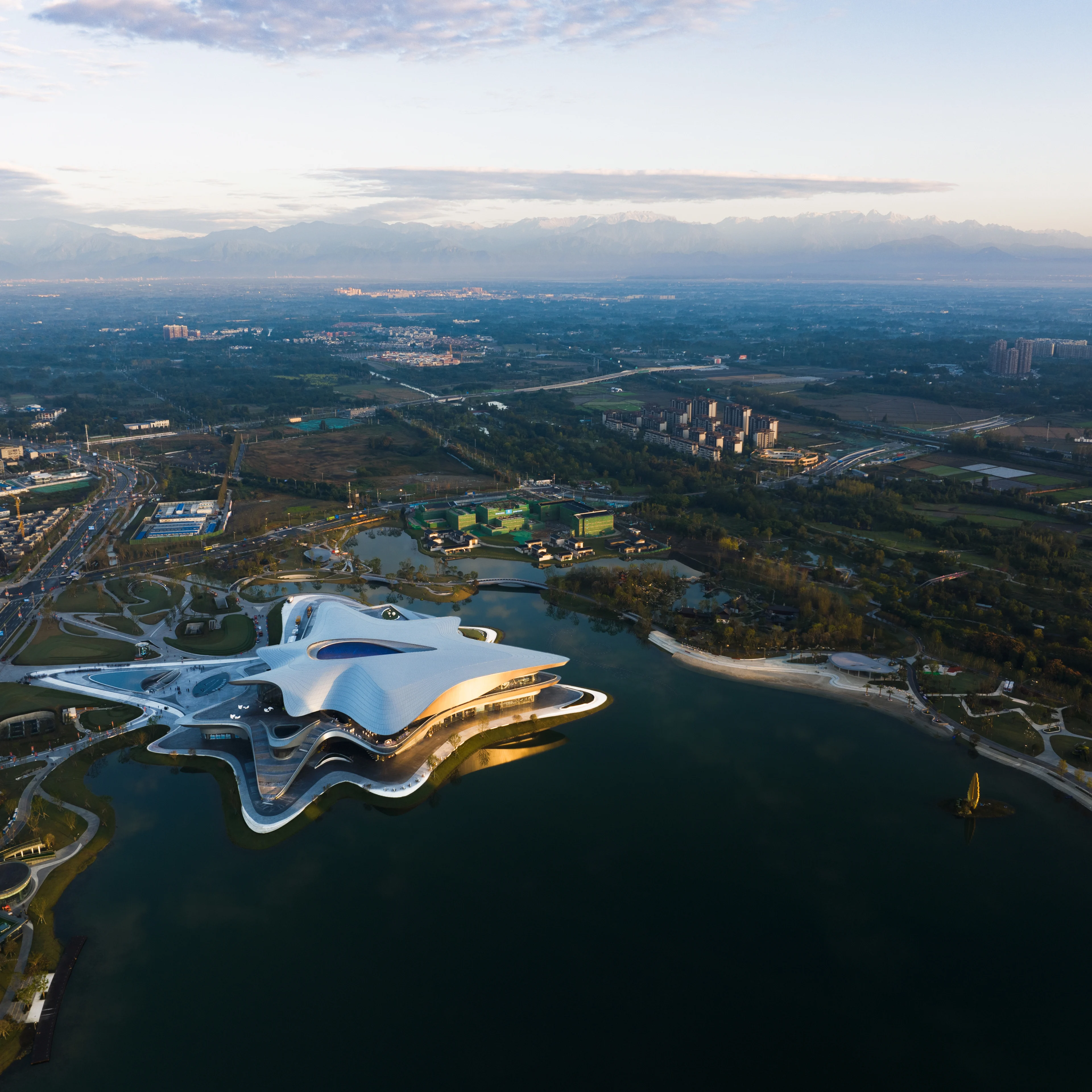
Courtesy of Arch-Exist
default
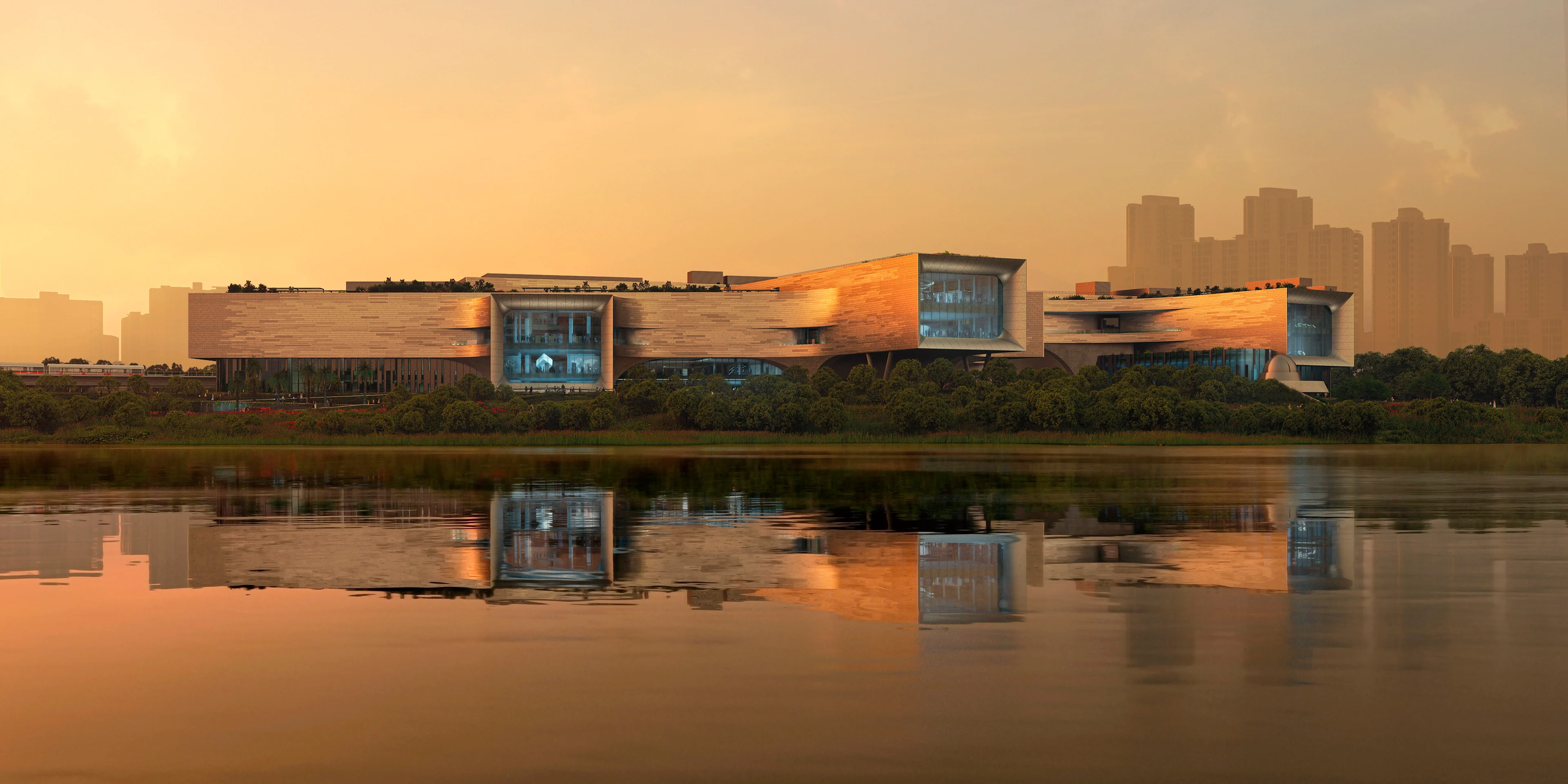
The new Chengdu Science Fiction Museum is situated on Jingrong Lake within the Science & Innovation New City of Chengdu’s Pidu District.
Render by Negativ
Waterfront view of new Science Centre. render by Negativ. The image is an artist’s impression, and final design may be subject to changes.
Singapore’s New Science Centre will provide unique facilities and programmes as a destination for all Singaporeans to access science, technology, engineering and mathematics (STEM) education and experiences.
Courtesy of CAT-OPTOGRAM 猫瞳
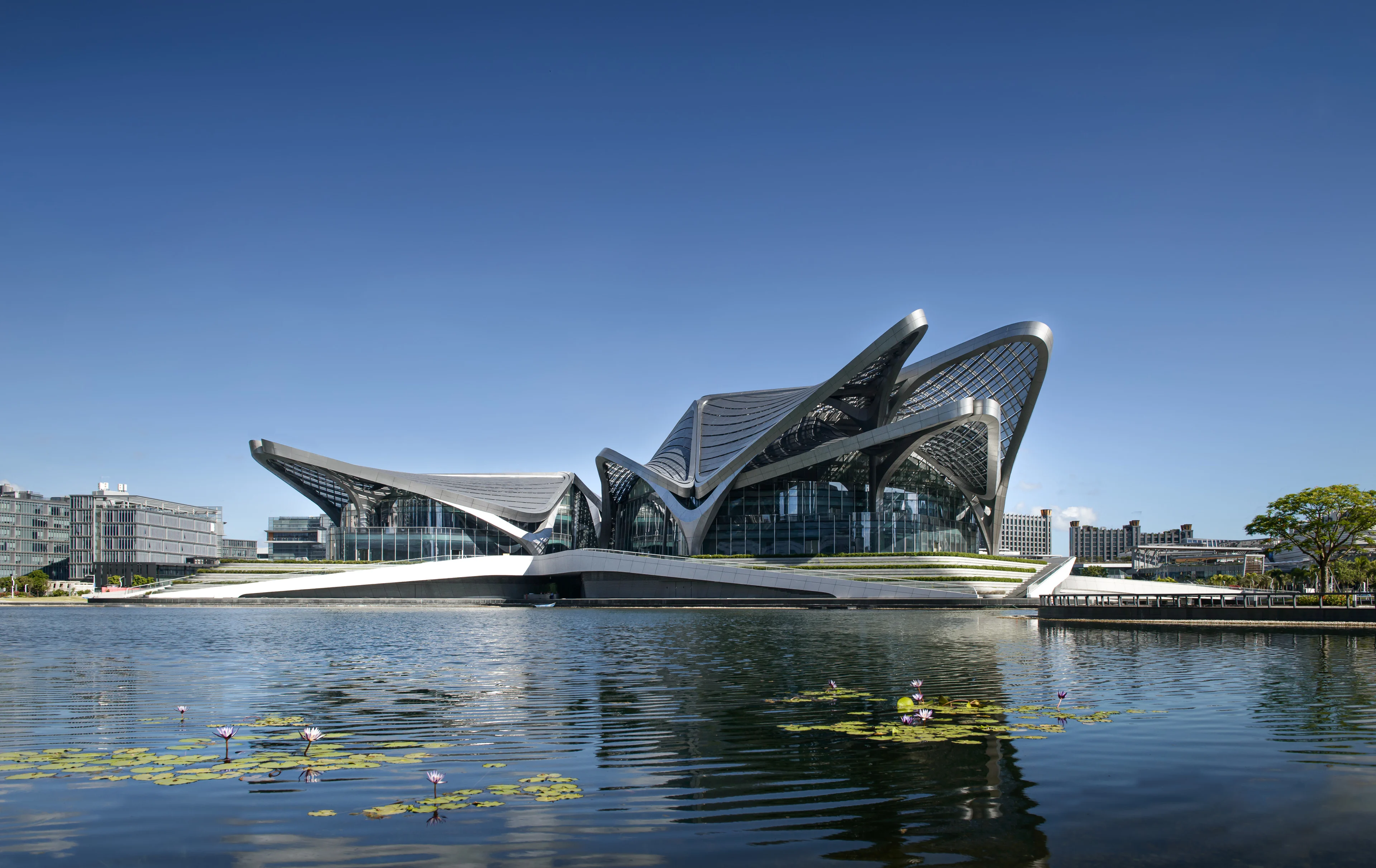
Integrating three distinct cultural institutions for the city, each venue within the Zhuhai Jinwan Civic Arts Centre incorporates unique characteristics that create differing visitor experiences, yet all are united by a coherent formal and structural logic that spans 170 meters wide from east to west and 270 meters long from north to south.
Photograph by Hélène Binet
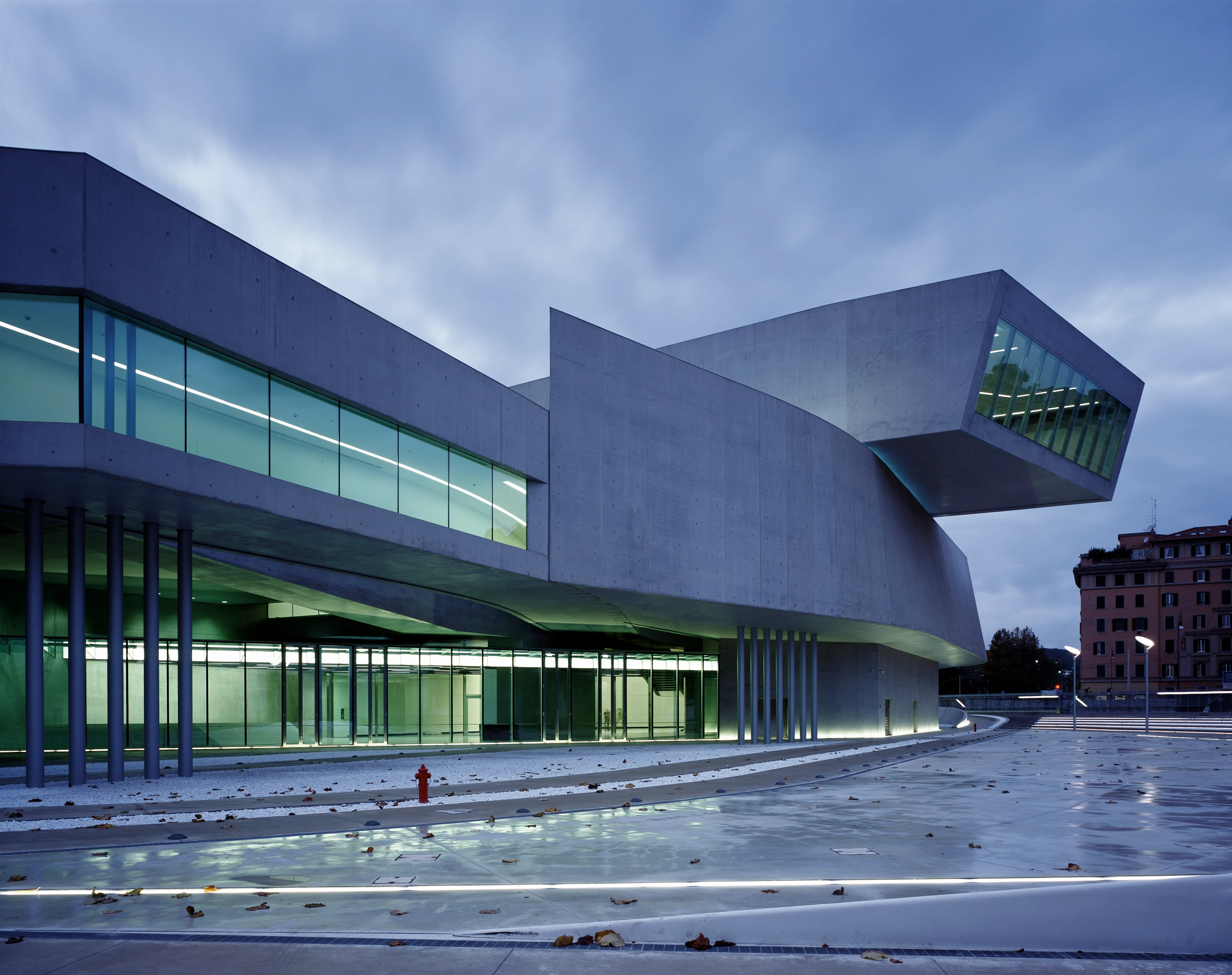
Exterior View, Dusk
MAXXI supercedes the notion of the museum as ‘object’ or – presenting a field of buildings accessible to all, with no firm boundary between what is ‘within’ and what is ‘without’. Central to this new reality are confluent lines – walls intersecting and separating to create interior and exterior spaces.
01
02
03
04
05
06
07
08
09
10
11
12
13
14
15
keyFacts
awards
people
credits