
Courtesy of CAT-OPTOGRAM 猫瞳
Zhuhai, China
2017 - 2023
Zhuhai Huajin Development
Zhuhai Jinwan Civic Art Centre
Photograph by Virgile Simon Bertrand
Photograph by Virgile Simon Bertrand
Courtesy of CAT-OPTOGRAM 猫瞳
01
02
03
04
05
Three distinct cultural institutions for the city
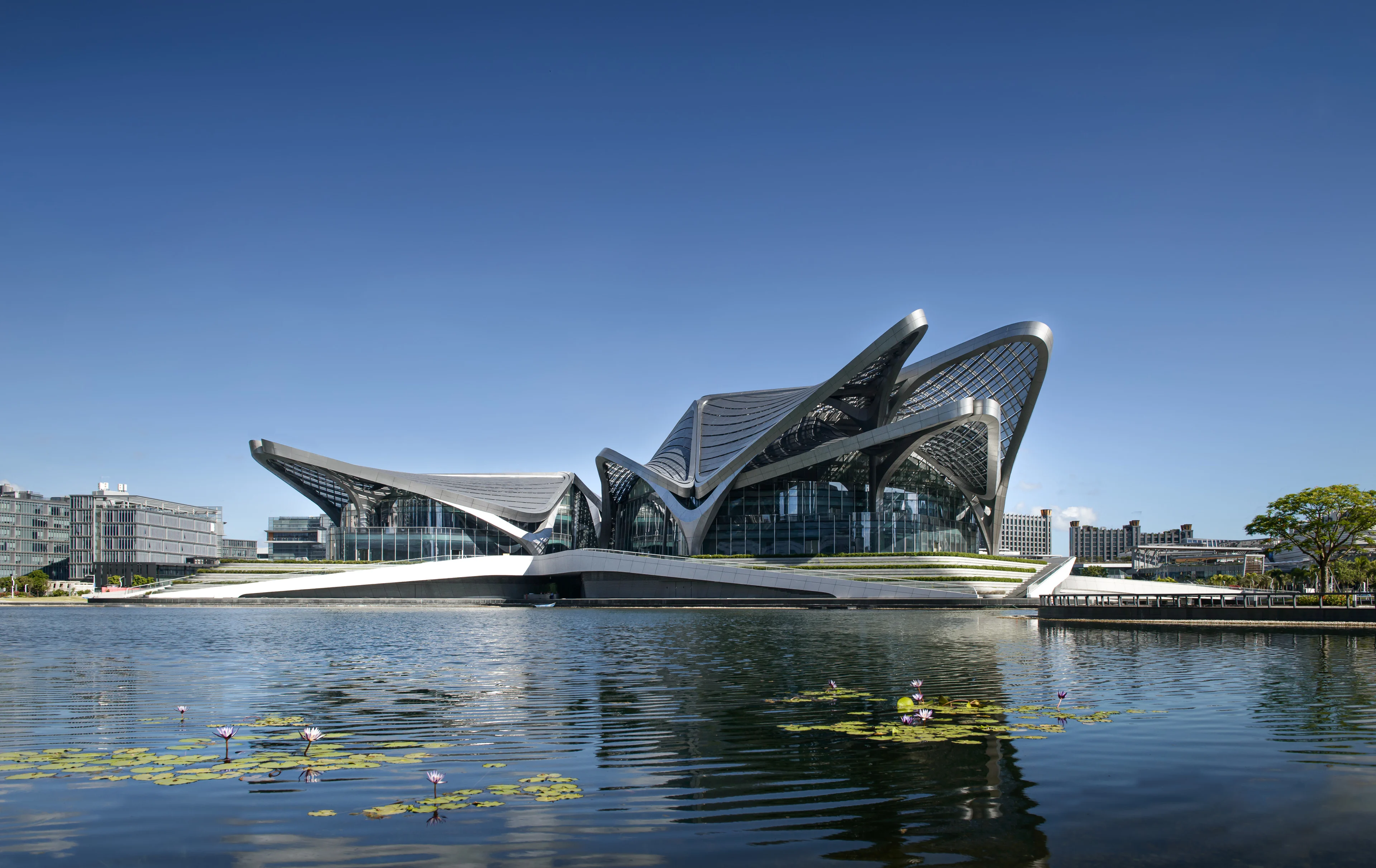
The Zhuhai Jinwan Civic Art Centre is located at the heart of Jinwan district’s Western Ecological New Town where the new Zhuhai Airport Intercity railway provides direct connections with Zhuhai’s city centre, its airport and Hengqin district, as well as Guangzhou, Shenzhen, Macau and Hong Kong via interchanges.
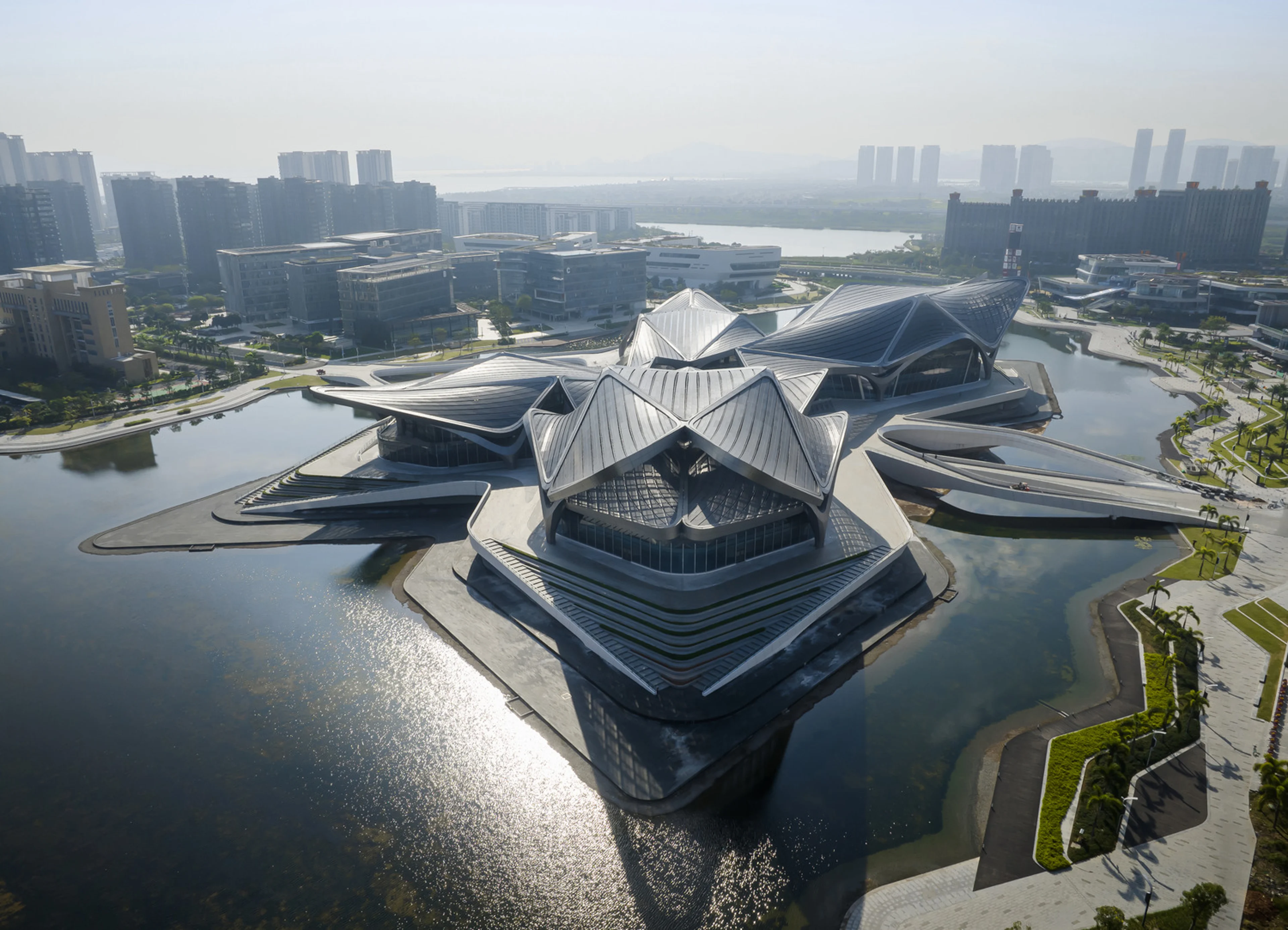
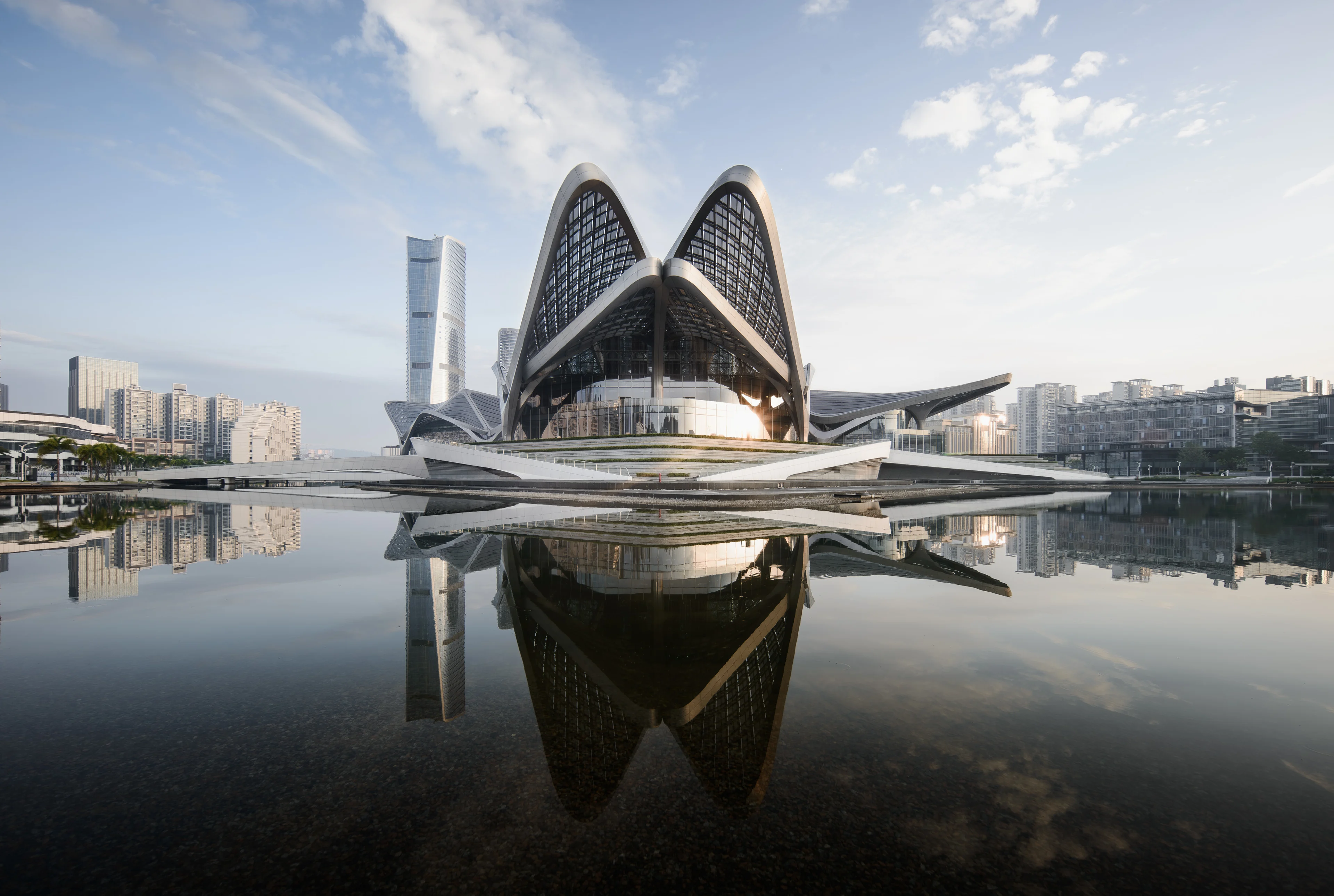
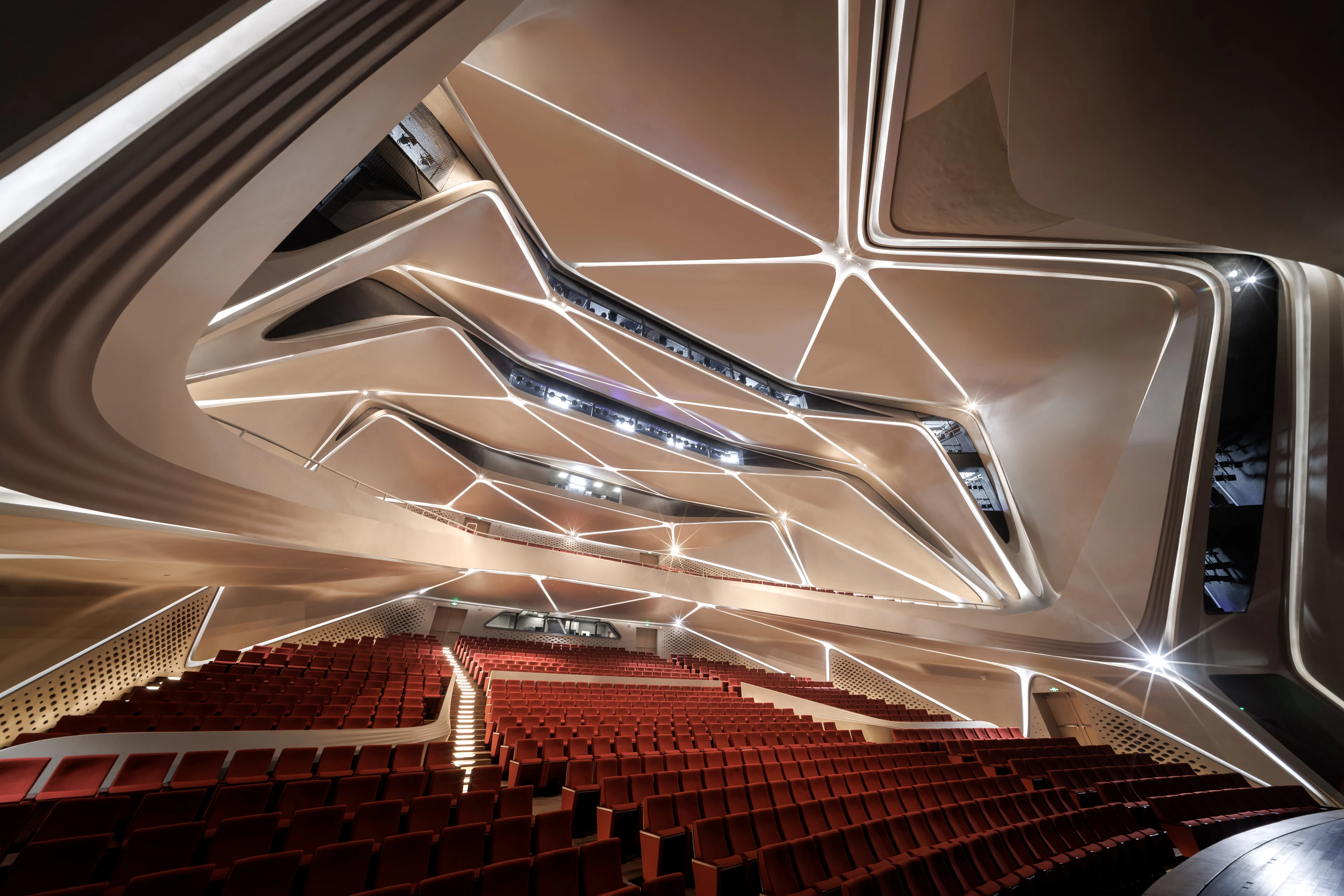
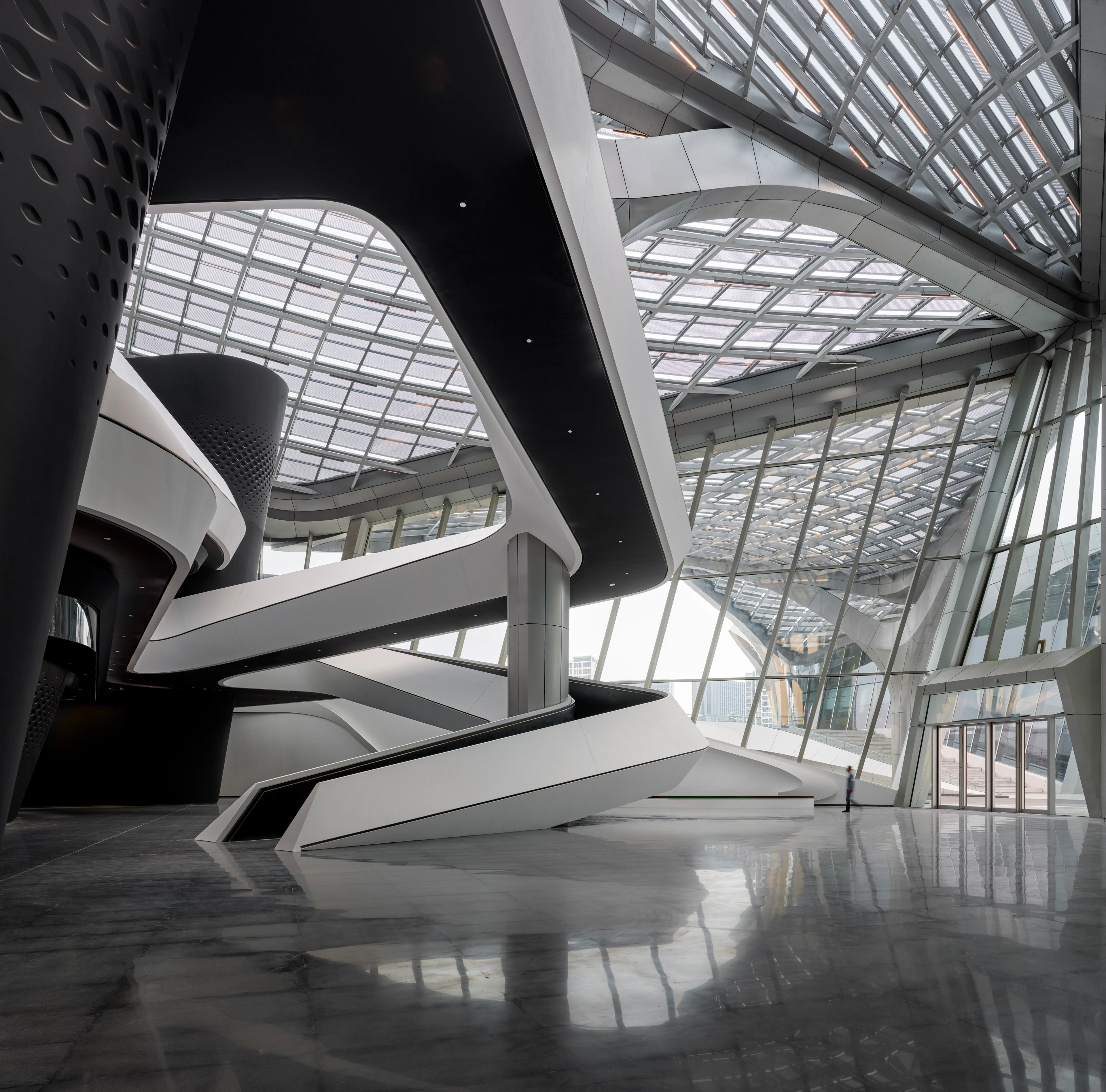
Integrating three distinct cultural institutions for the city (a Performing Arts Centre with a 1200-seat Grand Theatre and a 500-retractable-seat multifunctional Black Box theatre; an interactive Science Centre; and an Art Museum) each venue within the Zhuhai Jinwan Civic Arts Centre incorporates unique characteristics that create differing visitor experiences, yet all are united by a coherent formal and structural logic that spans 170 meters wide from east to west and 270 meters long from north to south.
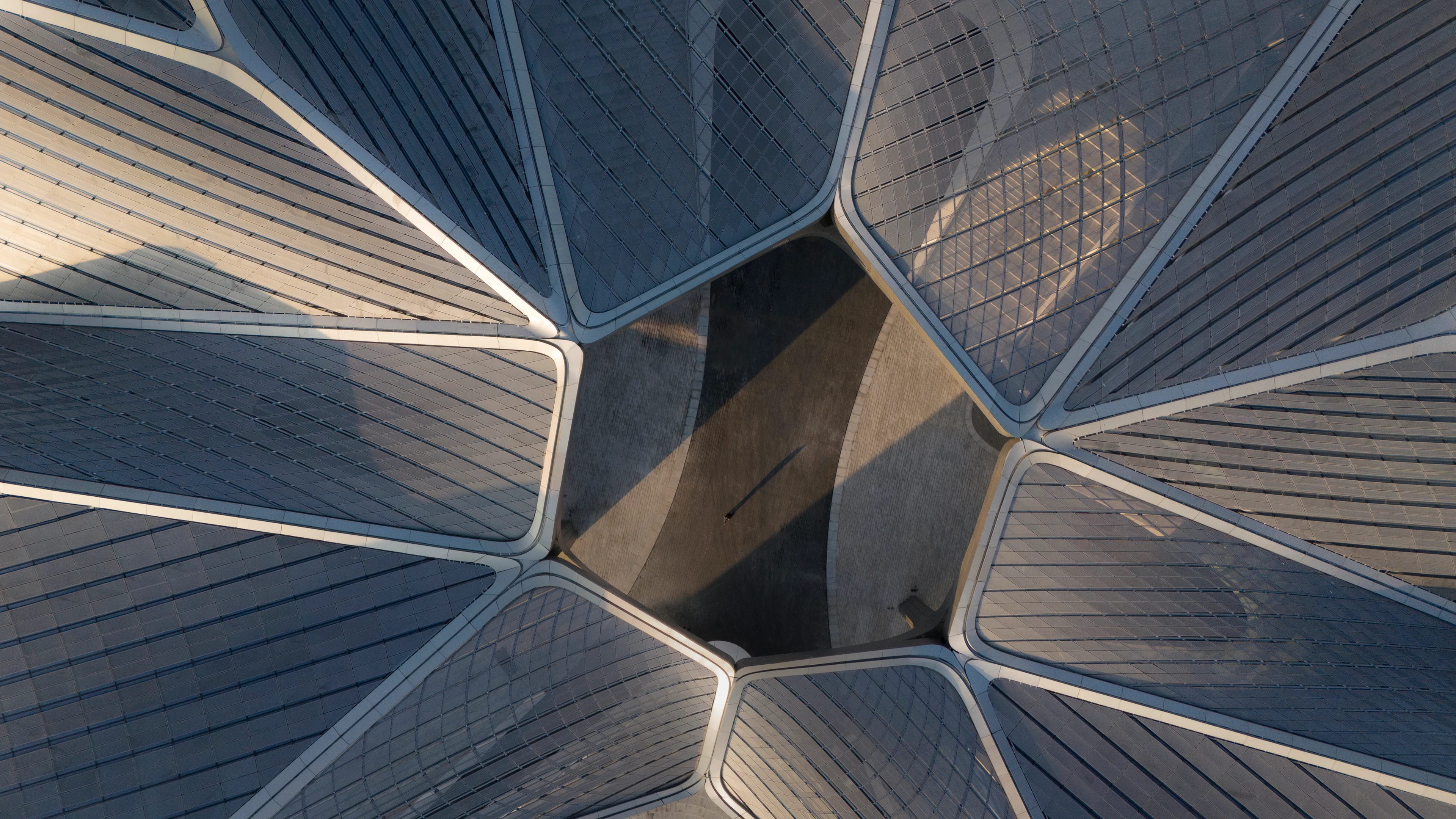
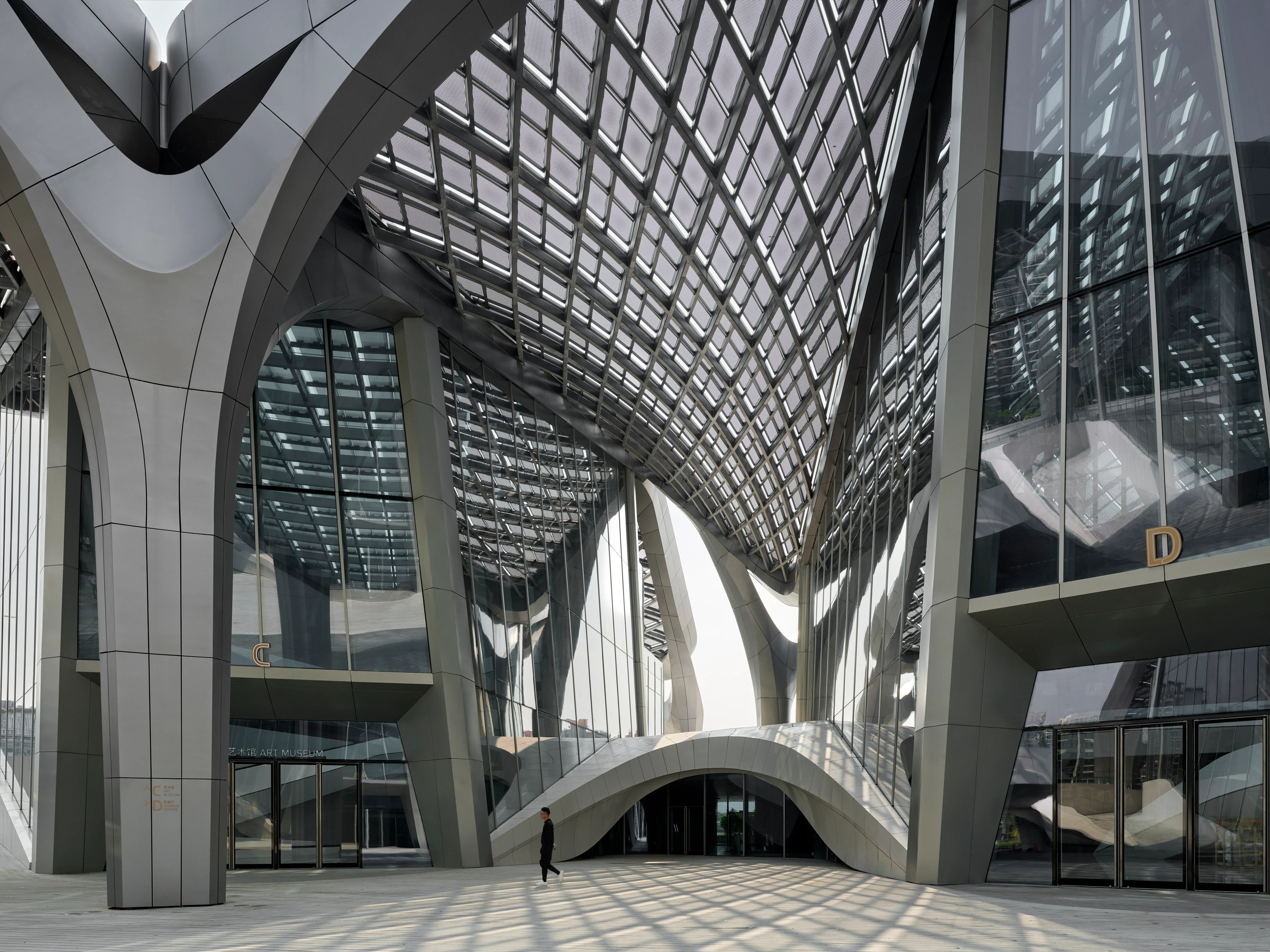
Arranged symmetrically on central axis, the two larger and two smaller venues are connected by a central plaza that serves as a shared external foyer to all of the cultural institutions. Glazed walls facing this courtyard enable visitors to determine the individuality and character of each venue. The Grand Theatre and Art Museum are finished in a light palate of materials, while the multifunctional Black Box Theatre and Science Centre are composed in darker materials.
Echoing the chevron patterns of migratory birds
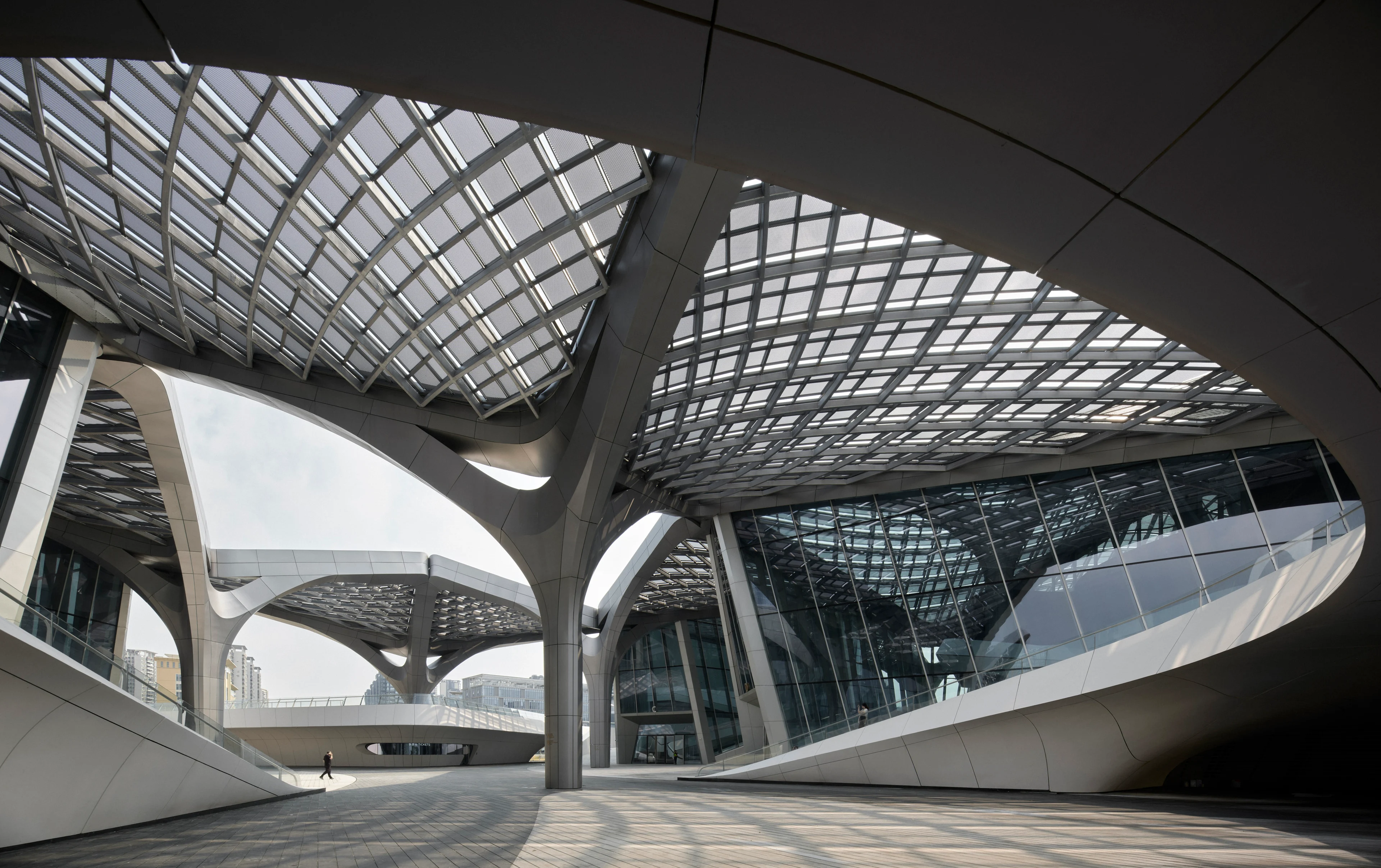
Echoing the chevron patterns of migratory birds flying in formation over southern China, the latticed steel canopies sheltering each venue are configured through repetition, symmetry and scale variation; resulting in a composition of related elements that respond to the different functional requirements of each building. This repetition of the self-supporting and self-stabilising roof modules optimised pre-fabrication, pre-assembly and the use of modular construction.
The distinctive roof structure unites the different venues under a network of reticulated shells that envelop the four wings of the centre.
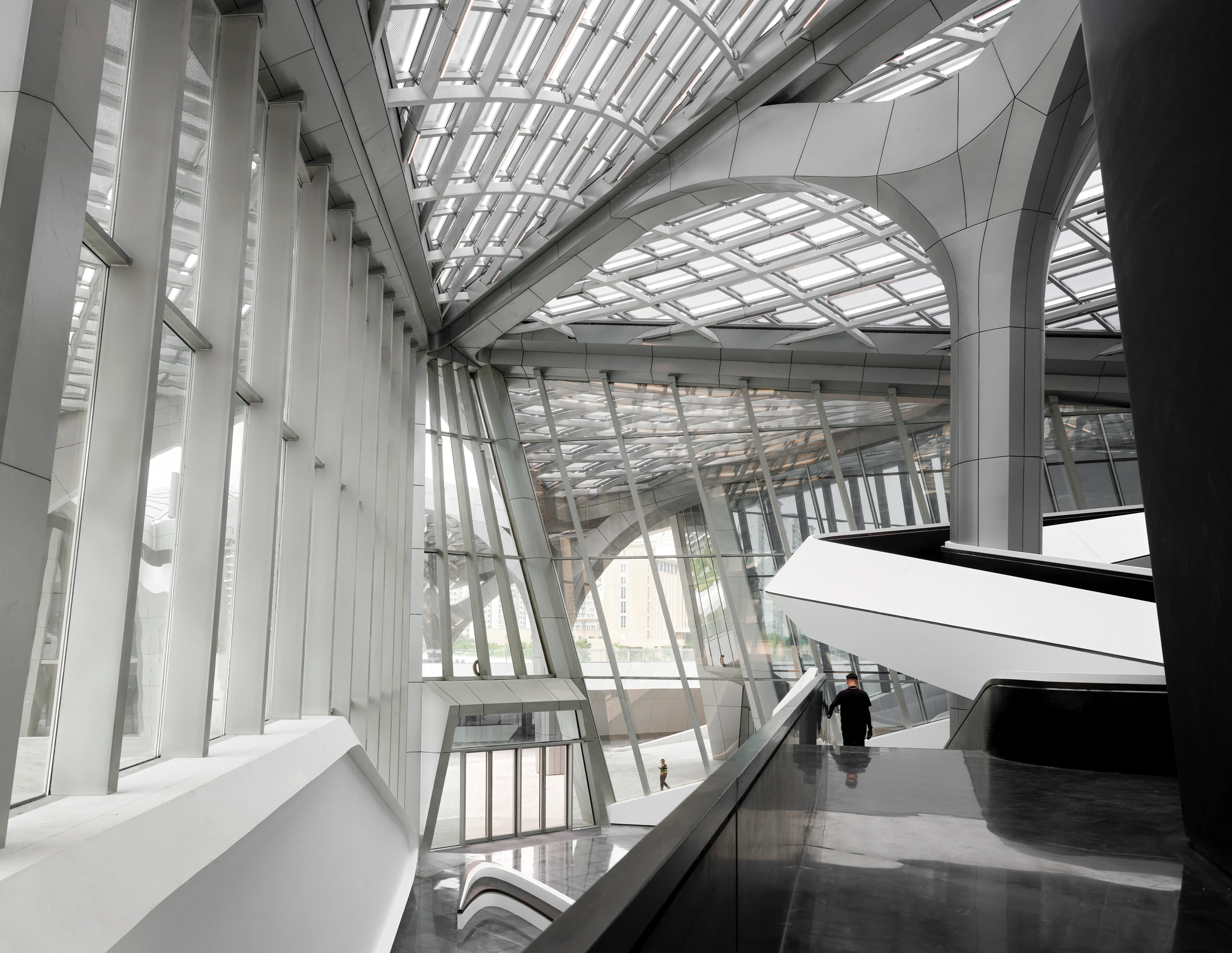
Interconnecting bridges and voids create a multi-layered public plaza at the heart of the centre with views to the interiors as well as to the surrounding promenades with their cafés, restaurants and educational facilities.
The design optimizes intuitive navigation with natural light in all public areas to enhance connectivity; creating engaging civic spaces for local residents to enjoy throughout the day and evening. The Grand Theatre’s interior continues the composition of the centre’s external roof canopy with the location and angle of ceiling.
Photograph by SeilaoJiong 张灏
Photograph by Virgile Simon Bertrand
Photograph by Virgile Simon Bertrand
Photograph by Virgile Simon Bertrand
01
02
03
04
Designed to high environmental standards
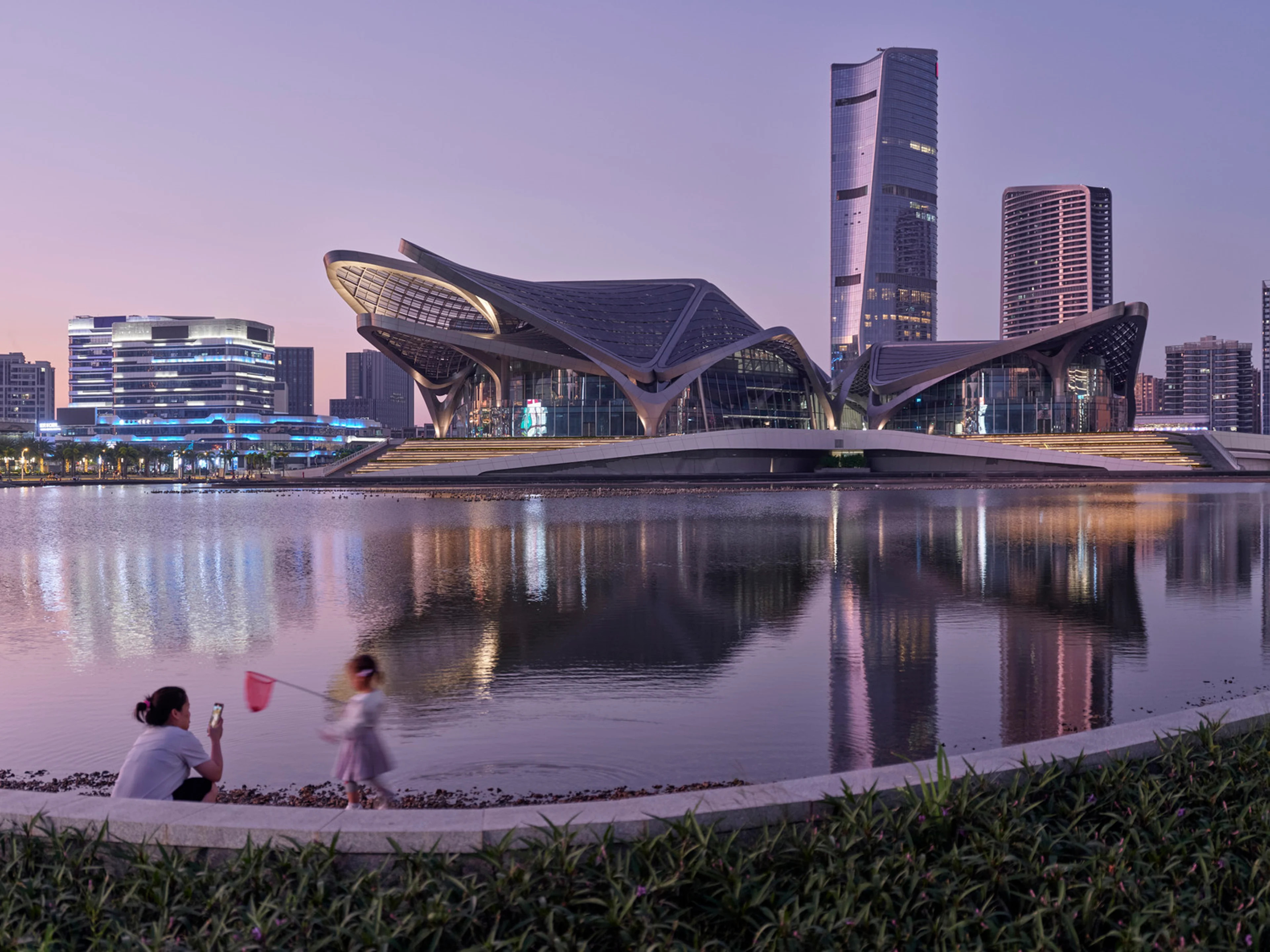
Zhuhai Jinwan Civic Art Centre’s podium defines an island within ZhongXin Lake. Pedestrian ramps and tunnels invite visitors to cross the lake’s surface to the podium’s central public plaza where footbridges connect through voids to each venue.
Glazed façades sheltered by the modular roof canopy provide transparency and welcome the local community onto lakeside boardwalks and plazas beneath the sweeping roof structure. An external Amphitheatre on the west side of the centre allows for outdoor performances and activities.
Located within the subtropical climate of coastal southern China, the double insulated glazing of the building’s envelope is optimized for thermal performance and protected by the latticed roof canopy which incorporates perforated aluminium panels for external solar shading.
The perforations within the panels vary in size to allow differing degrees of sunlight within the centre’s interior spaces in accordance to their programming requirements, orientation and solar gain. At night, this roof canopy bathes the centre in soft reflected light. Energy consumption and indoor air quality monitoring systems with intelligent control will automatically adjust the centre’s interior environments for optimal comfort and energy reduction. Waste heat recovery will be used to meet the centre’s hot water demand with water-saving appliances connected to the centre’s water recycling system.
Designed to meet the highest tiers of China’s Green Building Evaluation Standards, the selection and procurement of the centre’s structural components has prioritized recycled steel, aggregates and other component materials.
Culture
View more of our culture projects
From a civic art centre that unites three distinct cultural institutions to a science fiction museum whose landscaping contributes to the city’s drainage and flood defence systems, discover our latest cultural projects.
Render by Devisual
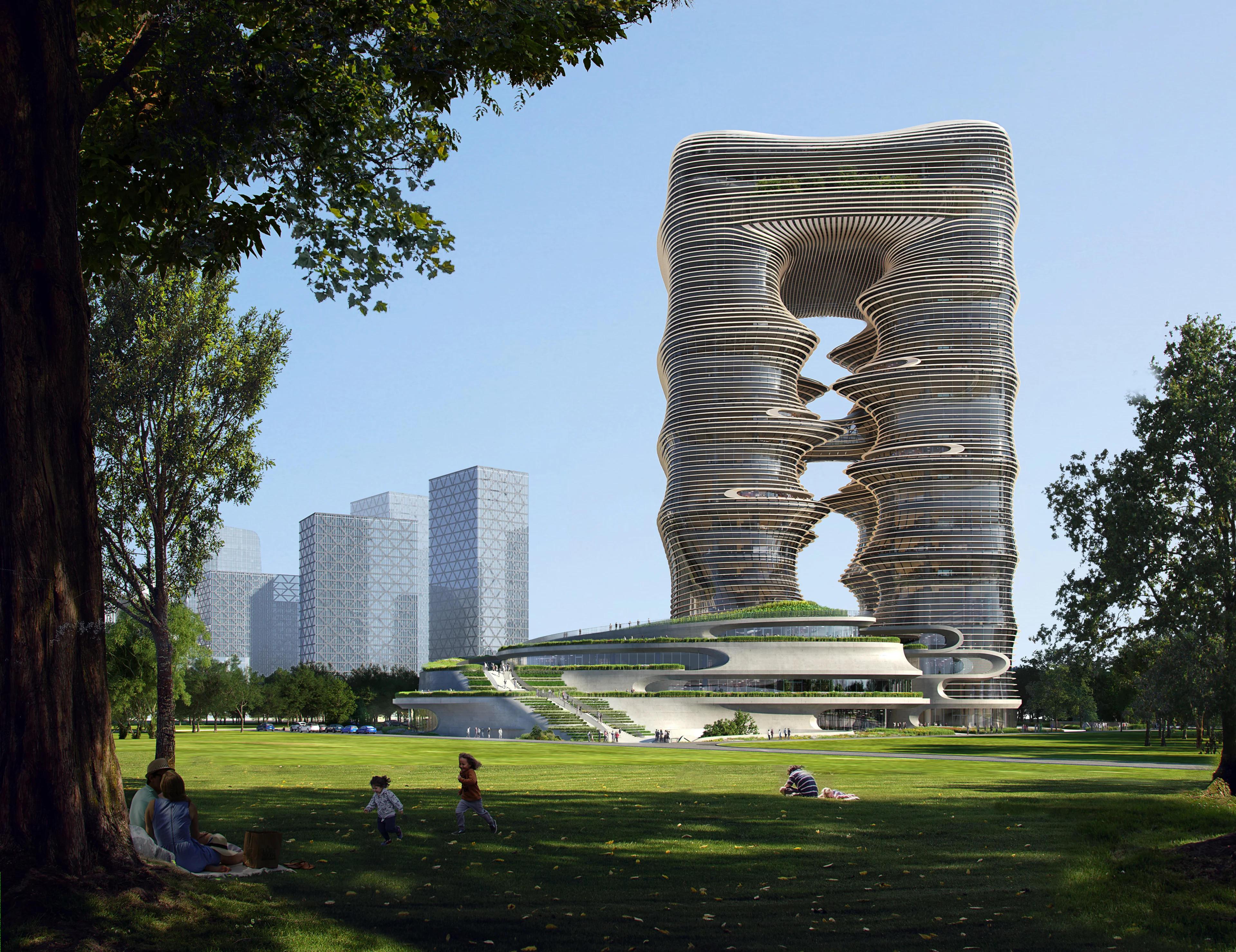
Z8 Tower
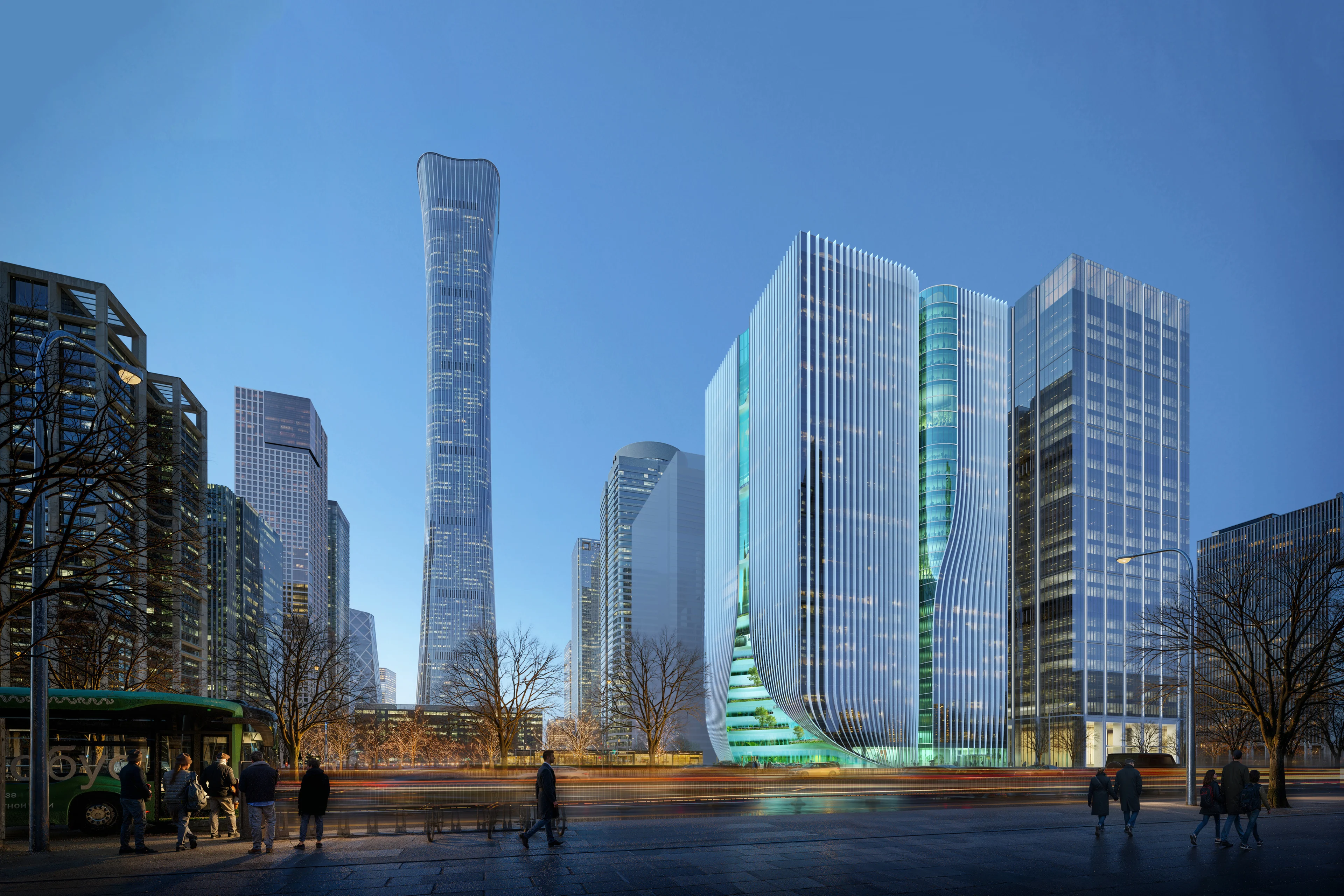
Located in the core of Beijing’s Central Business District (CBD) at the intersection of Jianguo Road and Jinhe East Road, the new Z8 Tower faces the CBD’s central park and is defined by the historic alignment and urbanism of the city’s Chang’an Avenue.
Songshan Lake Performance and Exhibition Centre
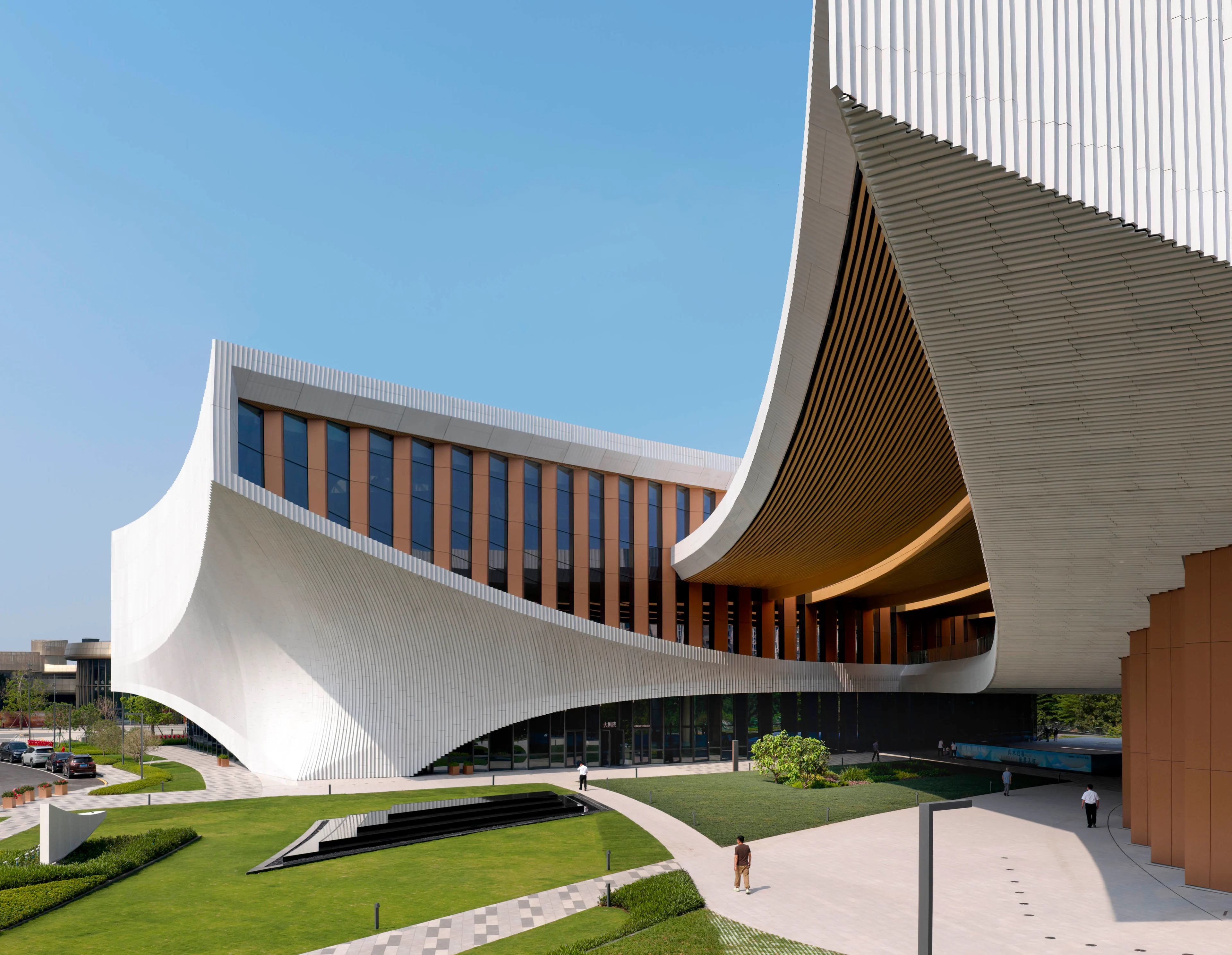
Located in Dongguan within the Greater Bay Area of southern China’s Pearl River estuary, the new Songshan Lake Exhibition and Performance Centre is at the heart of a mixed-use masterplan to revitalize the Yuehe Lake waterfront.
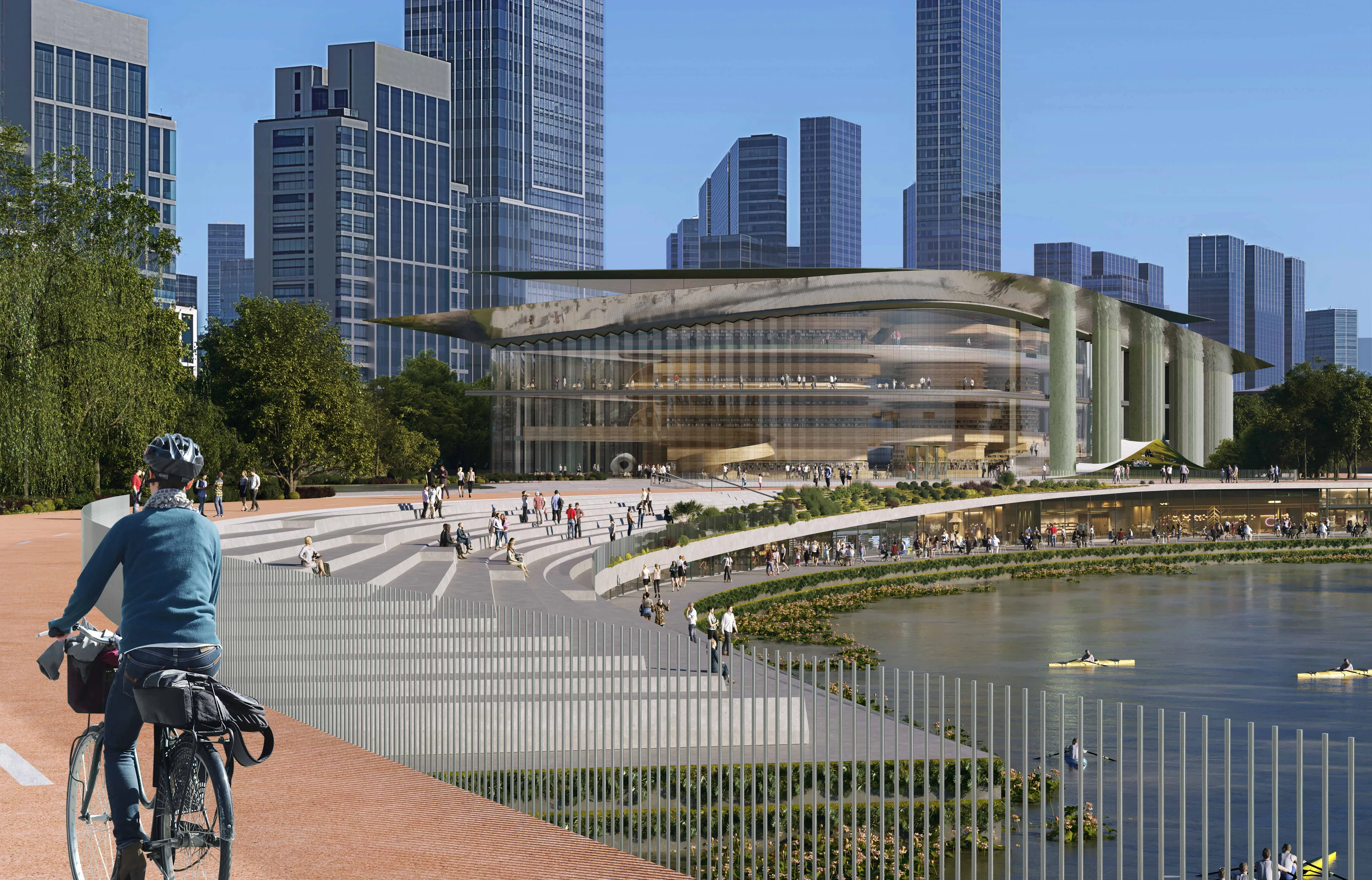
Qiantang Bay Cultural District
A series of new landscaped parklands, terraces and gardens along the Zhedong Canal within the Xiaoshan district of Hangzhou
Render by Atchain
Yidan Center
A place of convergence and collaboration, the Yidan Center will be home to the Chen Yidan Foundation in its work to promote lifelong learning and innovation in education.
Render by Proloog
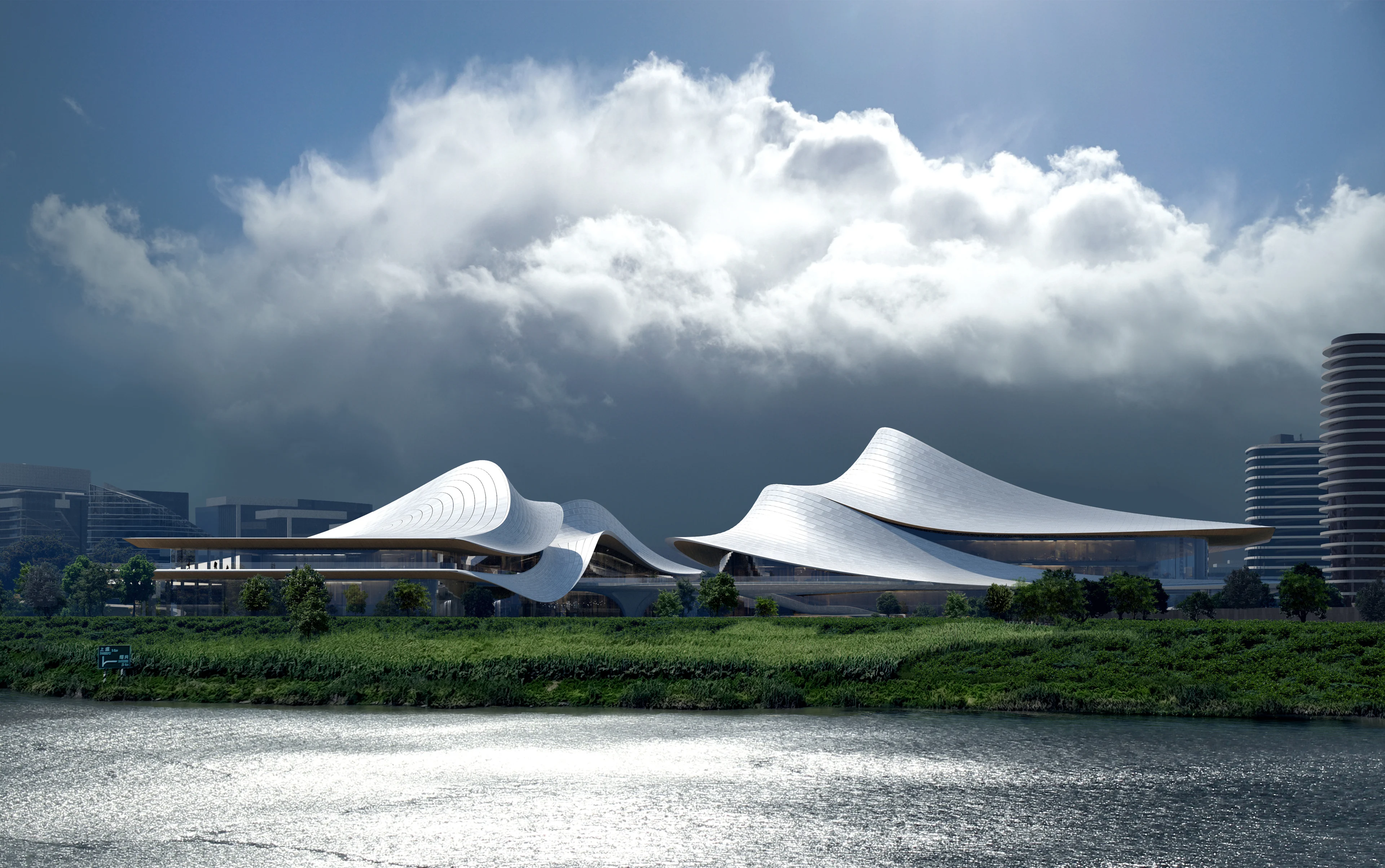
Elevation River
Zhejiang Shaoxing Shangyu District Cao’e River Culture and Art Centre
Designed to host local and international productions of opera, dance and drama together with large-scale symphonies and musical theatre, the Art and Culture Centre includes a 1,400-seat Grand Theatre, 500-seat Black-Box Multifunctional Hall, 2,900 sq. m Arts and Education Centre, 3,000m² Conference Centre, 7,500m² Heritage Museum and a 10,000m² Digital Art Gallery.
Render by Specto-Digital
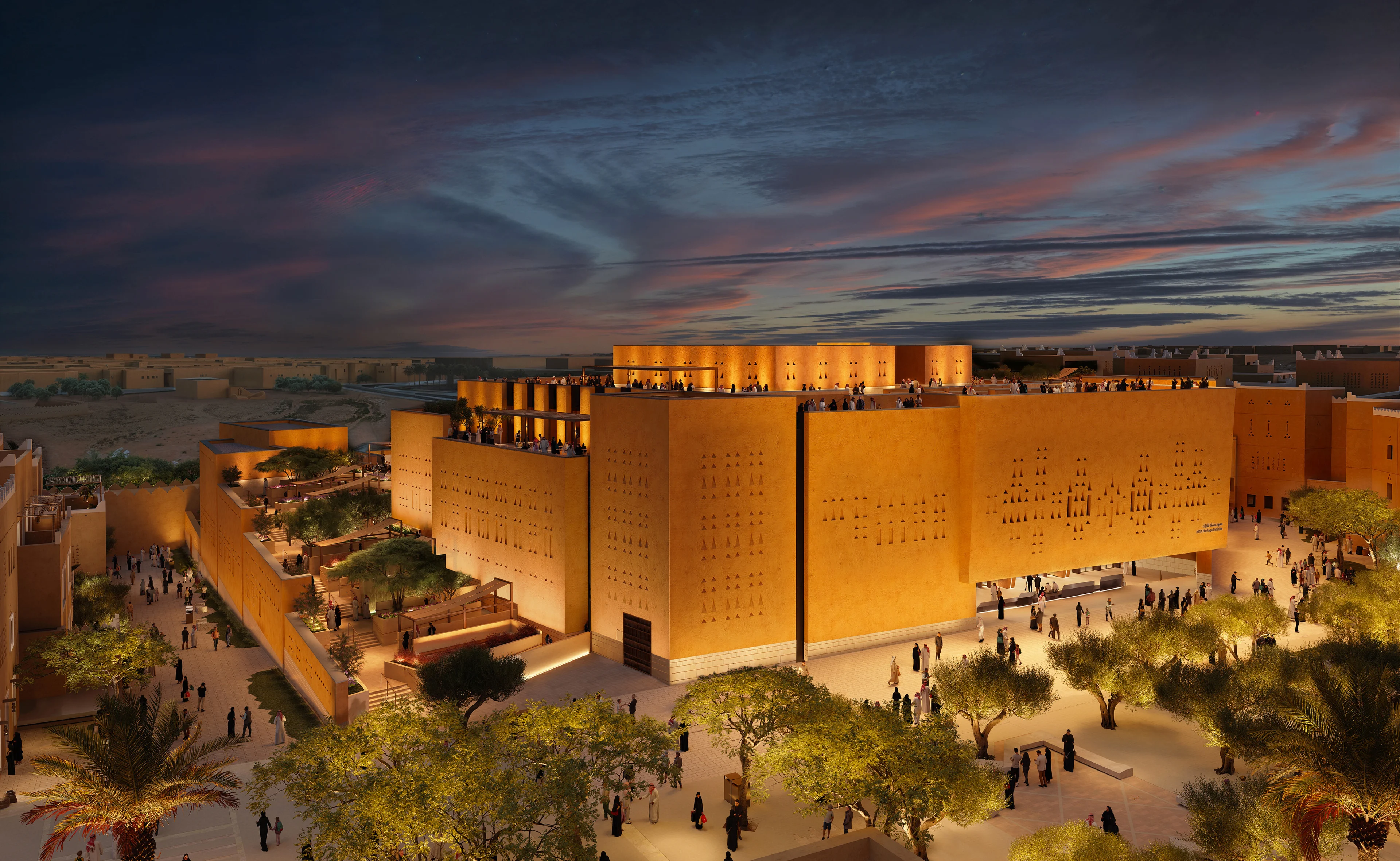
Asaan Museum
Meaning ‘inheritance passed down through generations’, Asaan will be an institution dedicated to preserving and celebrating this rich heritage, in addition to promoting creativity and knowledge sharing.
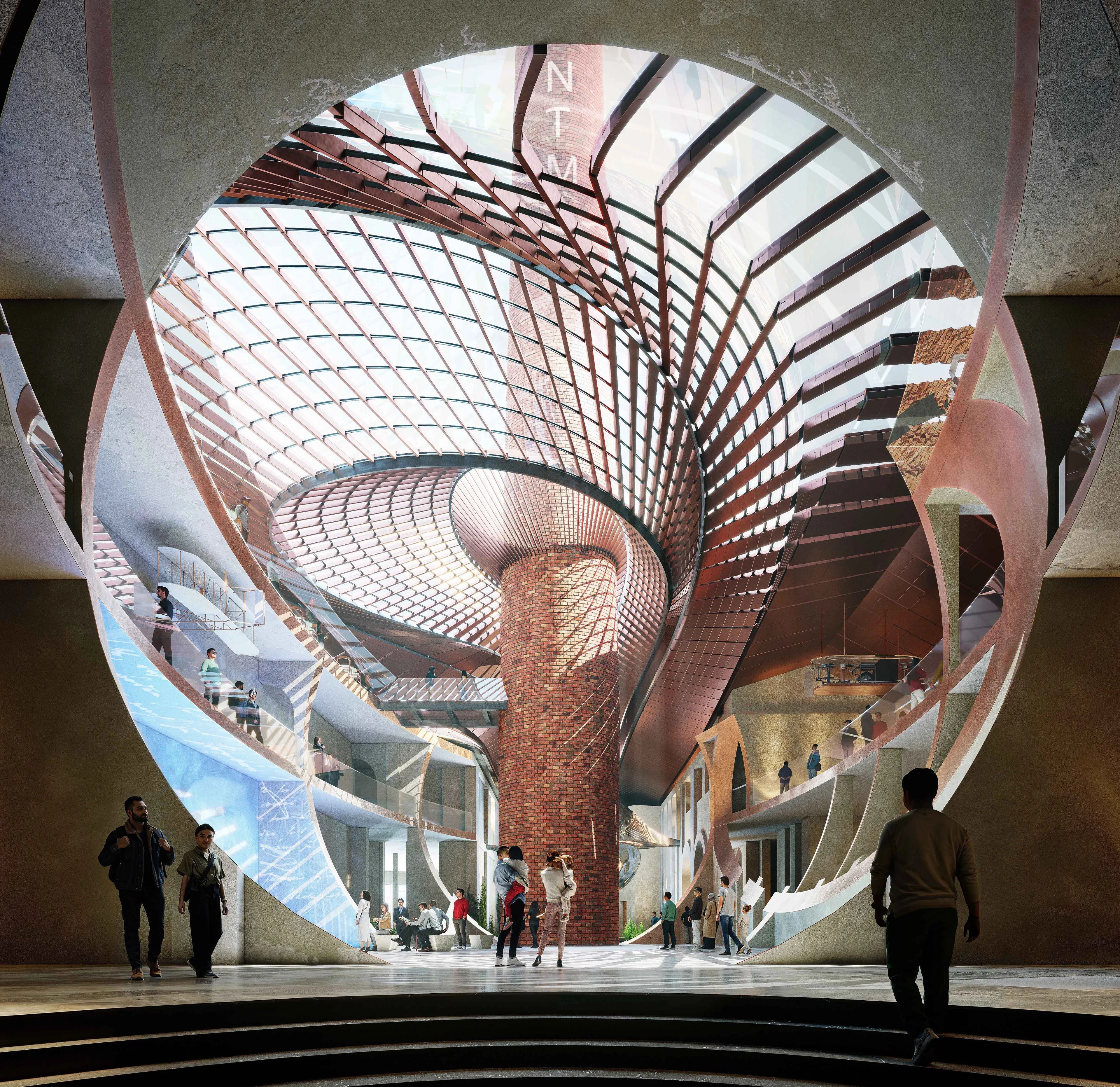
Nikola Tesla Museum
The new Nikola Tesla Museum renovates Belgrade’s historic Milan Vapa Paper Mill into a cultural destination celebrating Tesla’s legacy while preserving the city’s architectural heritage and creating a variety of new public spaces for local residents and visitors.
Courtesy of ZHA
River View
Alisher Navoi Institute
The Alisher Navoi International Scientific Research Centre will incorporate the Navoi State Museum of Literature, Auditorium, International Research Centre and School.
Render by Atchain
Jinghe New City Culture and Art Centre
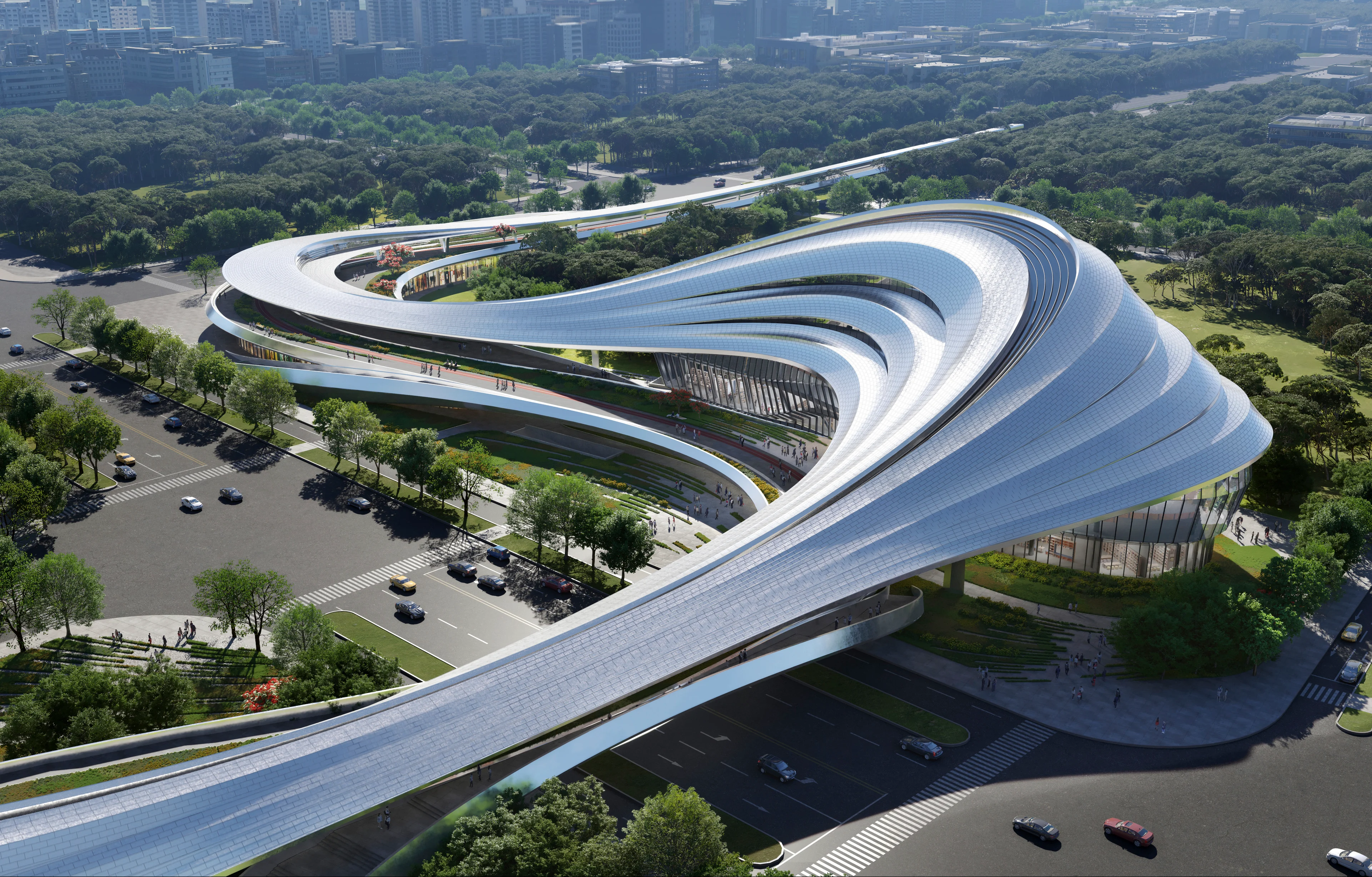
Jinghe New City is growing as a science and technology hub north of Xi’an in China’s Shaanxi province. Supported by new scientific research institutes and driven by environmental considerations, the city is becoming a centre for developing industries focusing on new energy and materials, artificial intelligence and aerospace.
Photograph by Virgile Simon Bertrand
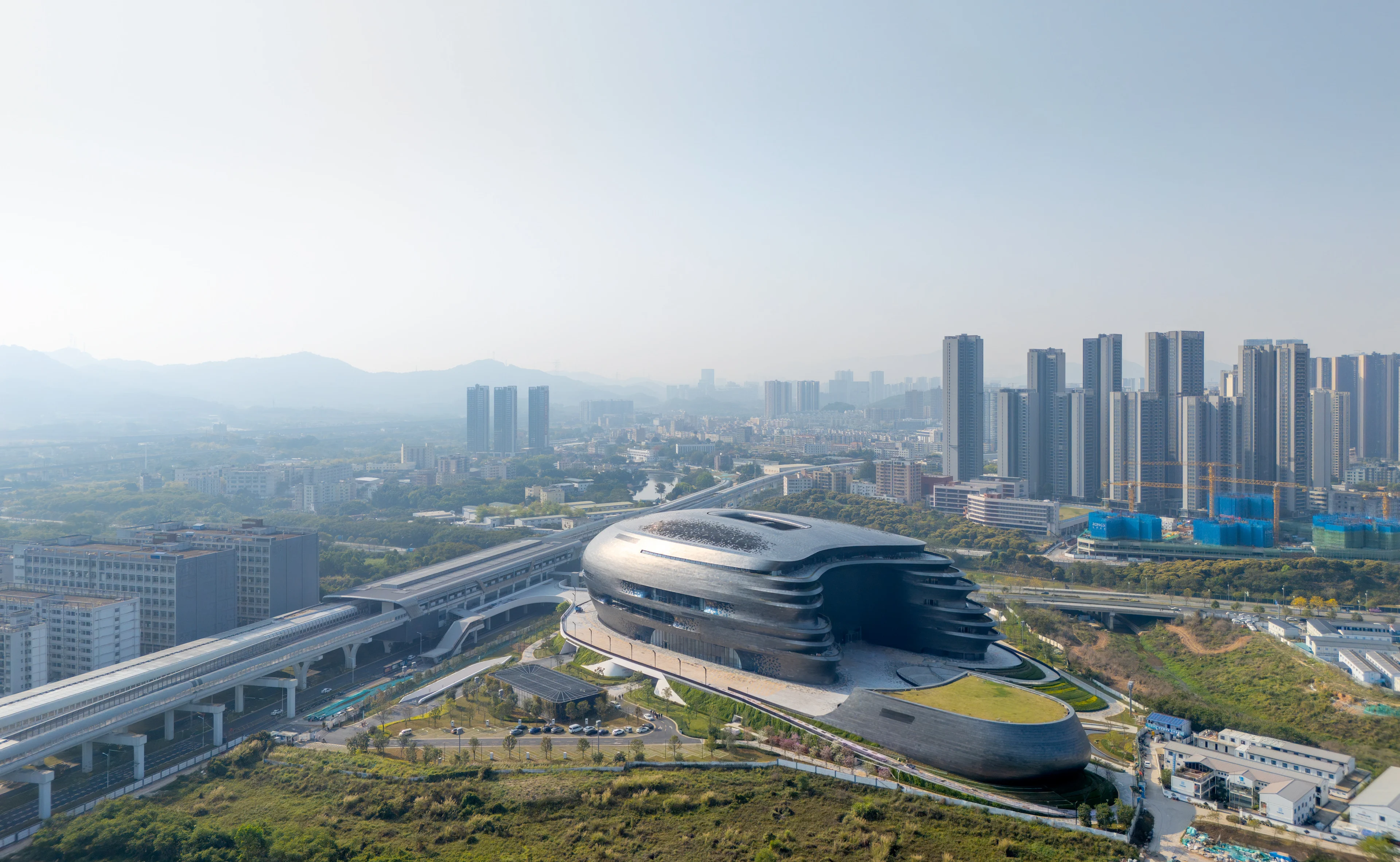
Shenzhen Science & Technology Museum
Showcasing the scientific endeavour, ground-breaking research and future possibilities of technology, this new institution will explore the power of science and the technological advancements defining our future.
Photograph by Luke Hayes
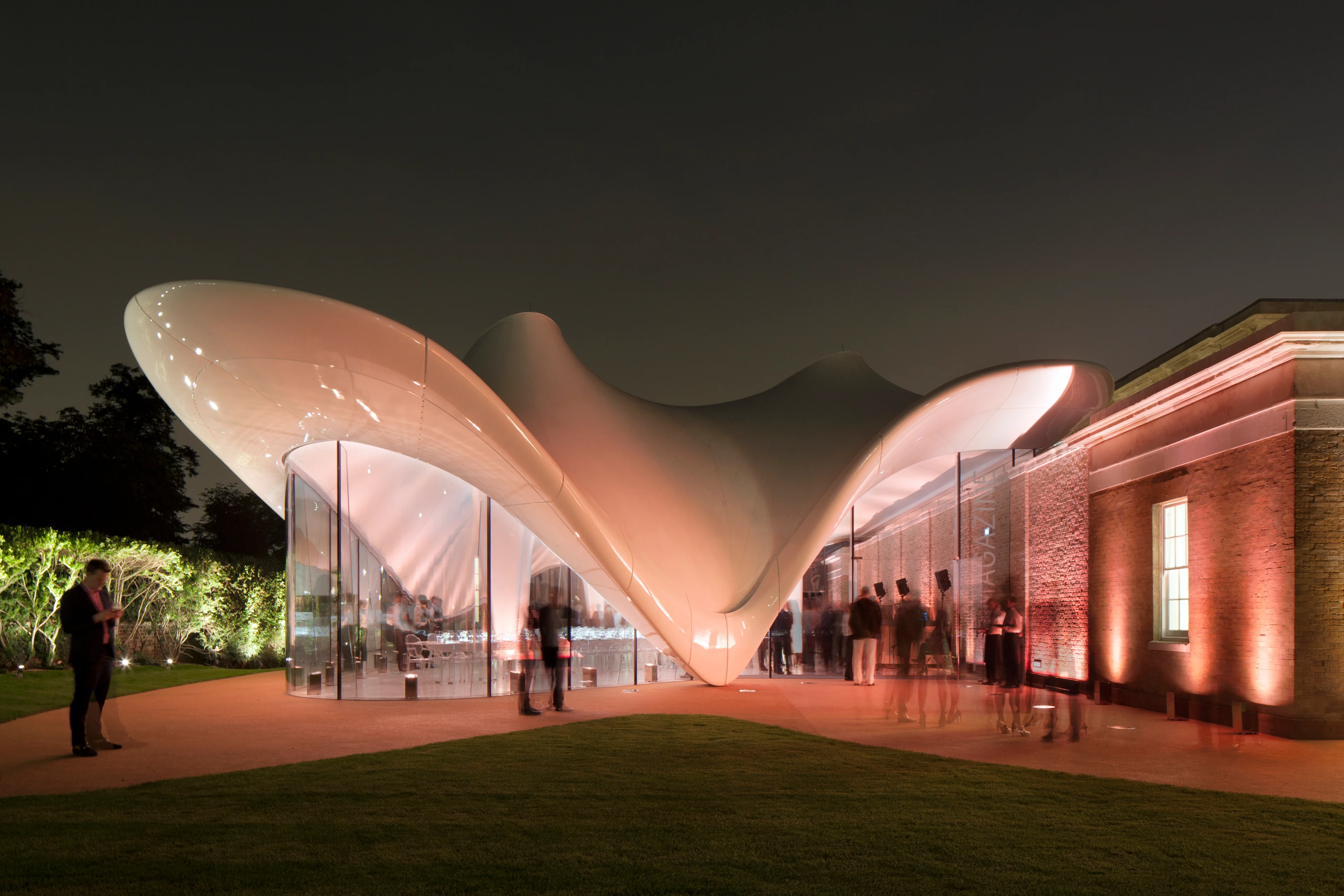
Serpentine North Gallery
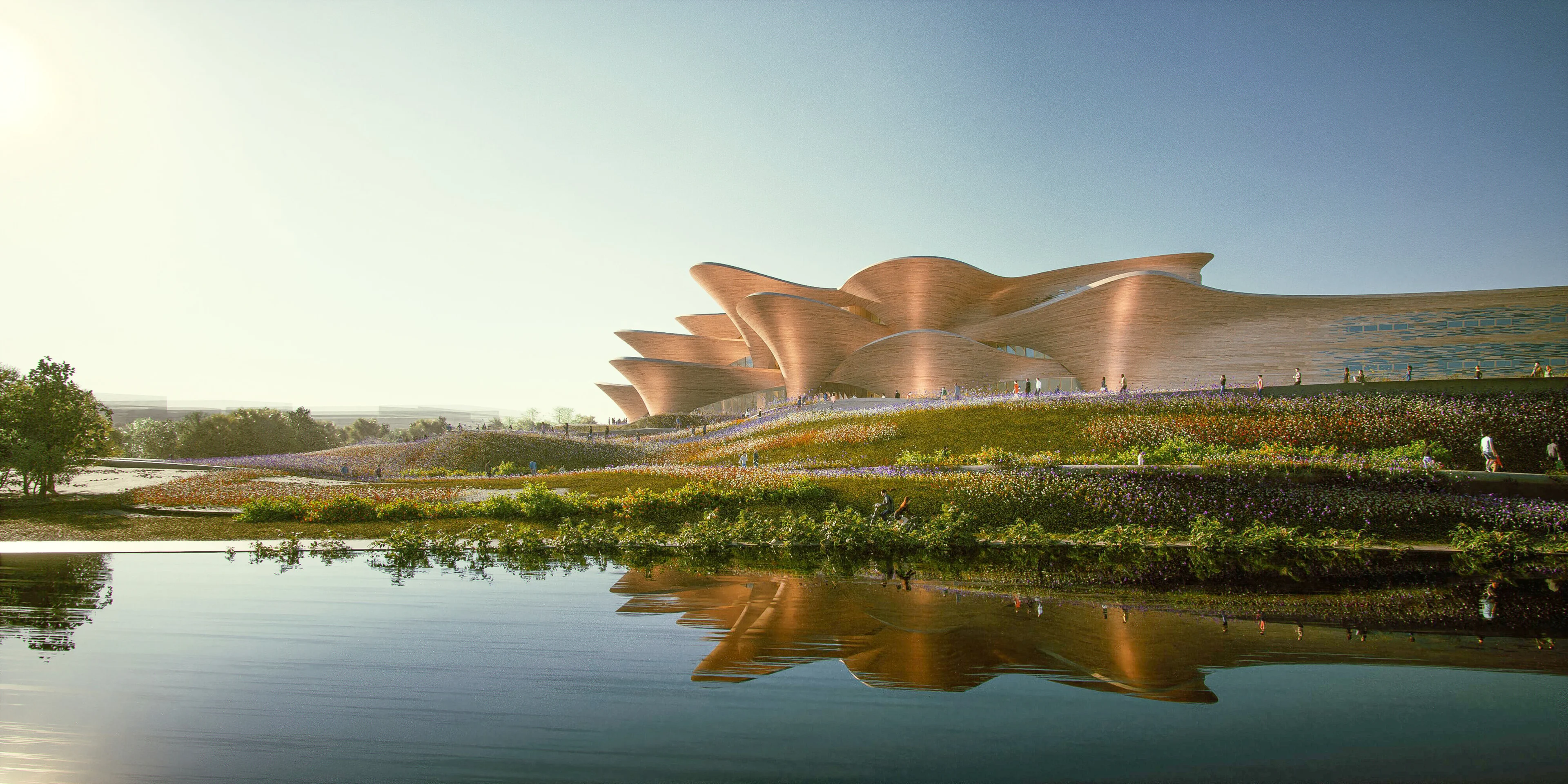
The Serpentine North Gallery consists of two distinct parts, namely the conversion of a classical 19th century brick structure – The Magazine – and a 21st century tensile structure. The Serpentine North Gallery is thus – after MAXXI in Rome – the second art space where ZHA has created a synthesis of old and new.
Photograph by Fernando Guerra
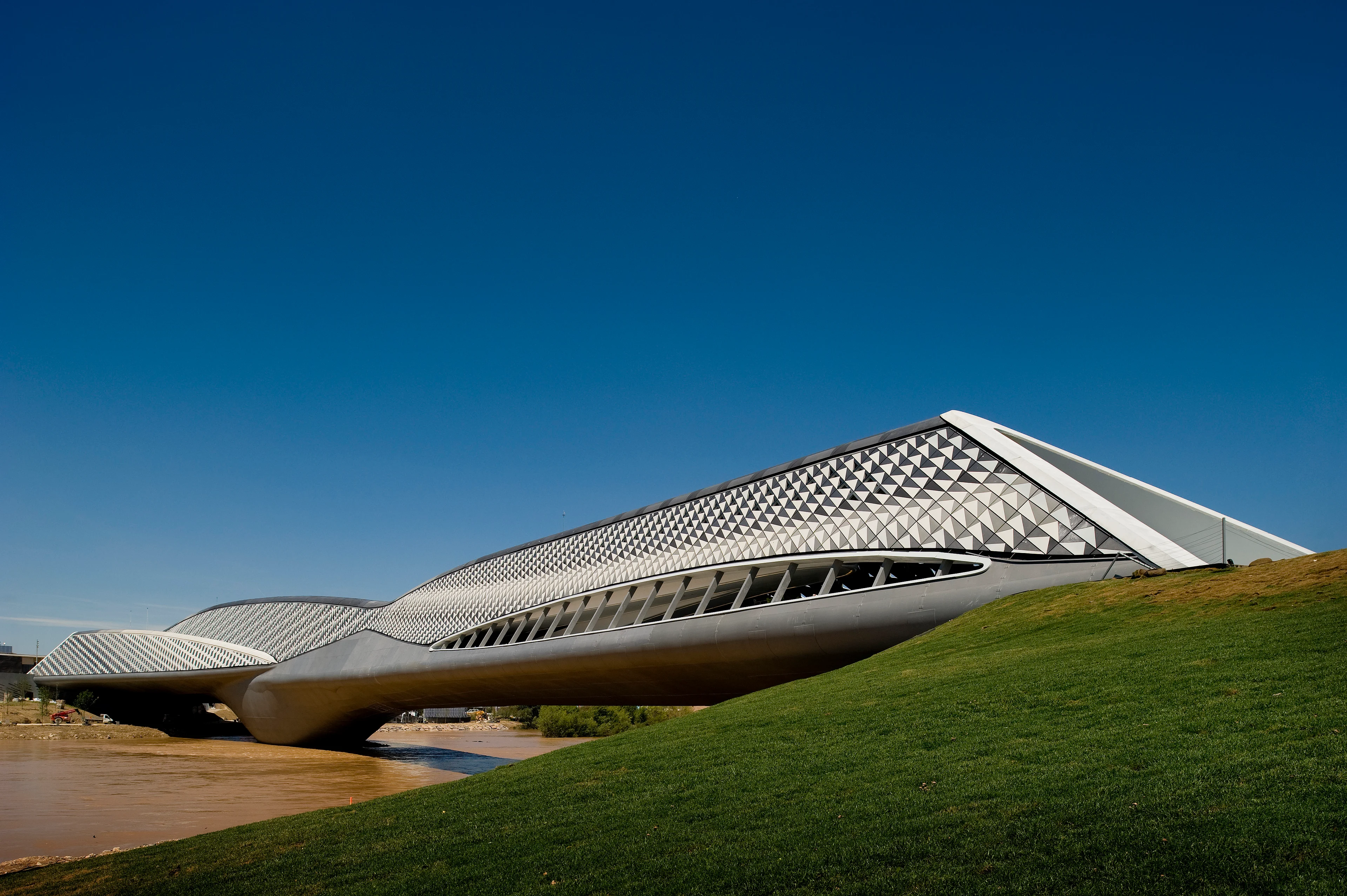
Zaragoza Bridge Pavilion
An enclosed interactive space spanning the River Ebro to form a gateway to the Zaragoza Expo 2008, a hybrid of pedestrian footbridge and exhibition pavilion. Four structural elements correspond to specific spatial enclosures, which intersect and brace each other. This fluid, dynamic design interprets the Expo’s theme: ‘Water and Sustainable Development.’
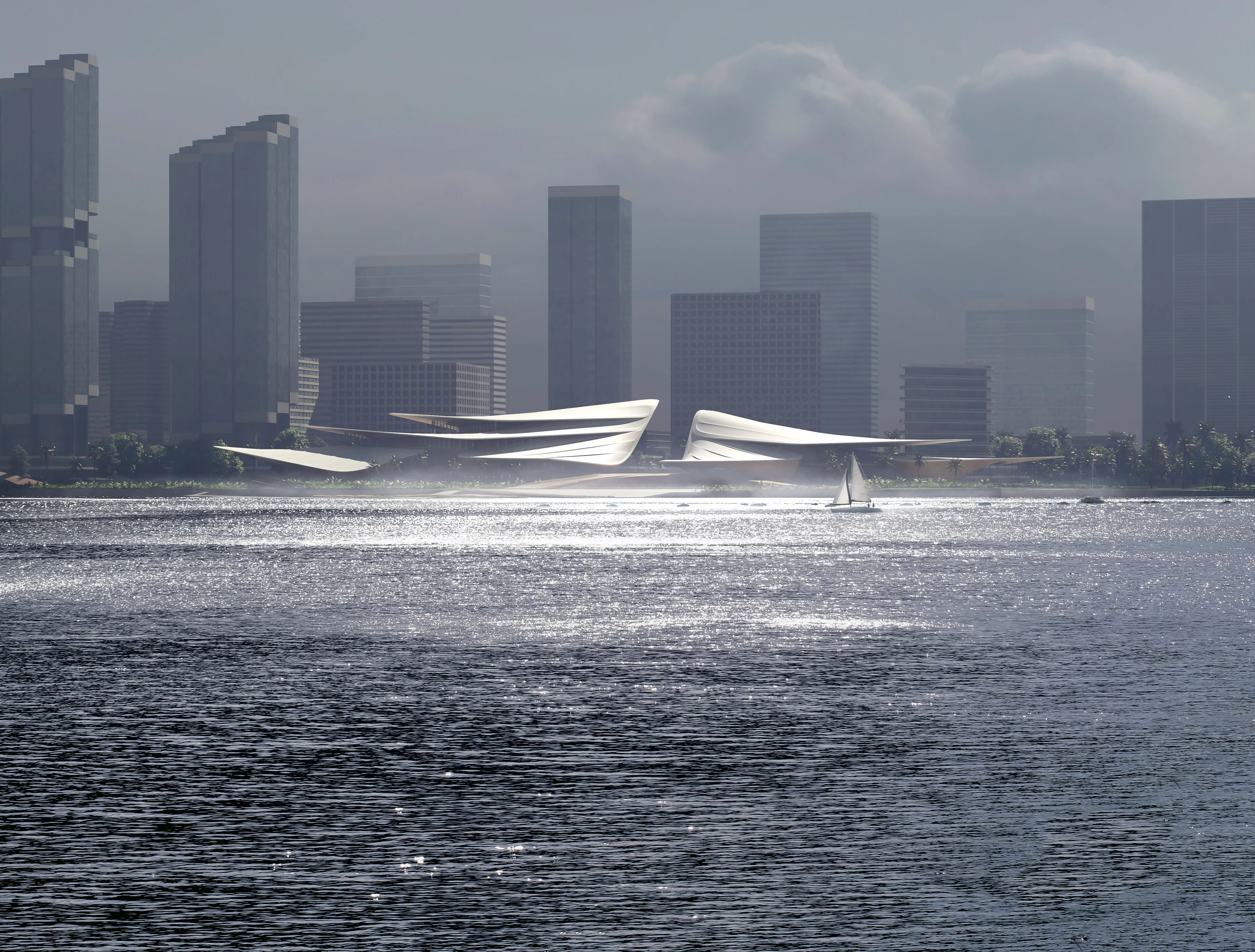
Sanya Cultural District
Located at the entrance to Sanya’s harbour, the new cultural district by ZHA is adjacent to the Jiangang Road terminus of Sanya’s tram network that connects many of the residential and hotel districts on Sanya Bay with the city’s high-speed rail station.
Courtesy of Arch-Exist
default
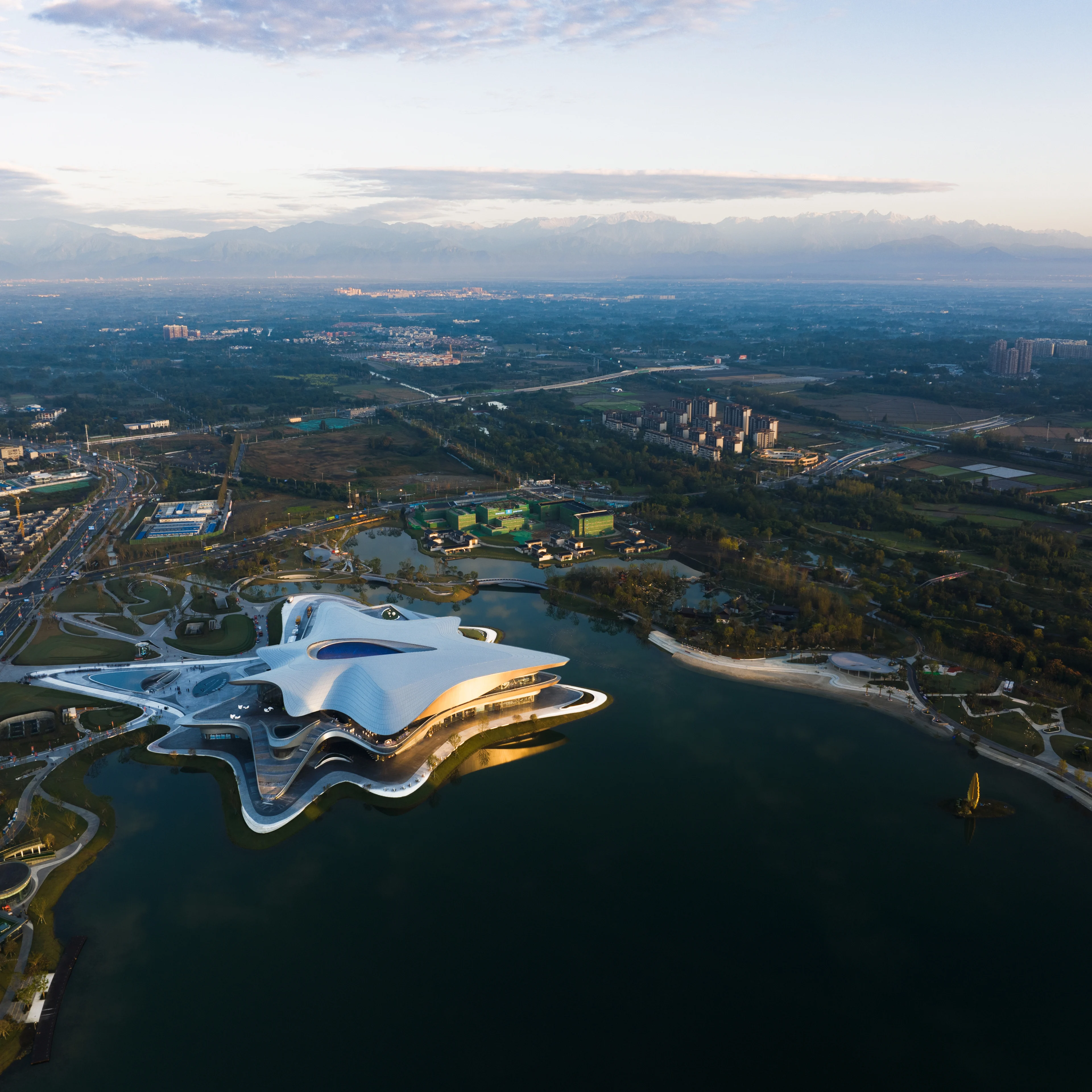
Chengdu Science Fiction Museum
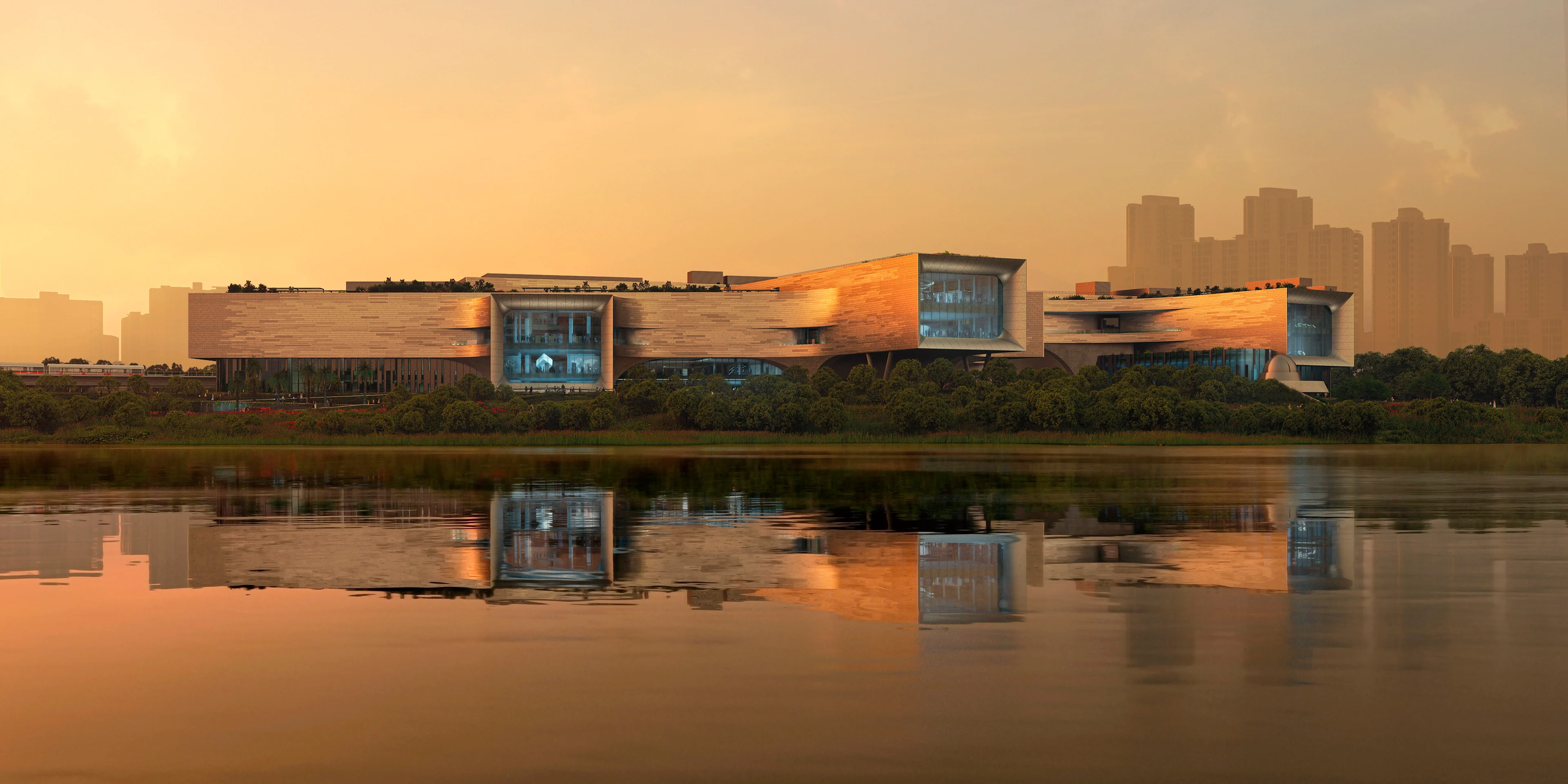
The new Chengdu Science Fiction Museum is situated on Jingrong Lake within the Science & Innovation New City of Chengdu’s Pidu District.
Render by Negativ
Waterfront view of new Science Centre. render by Negativ. The image is an artist’s impression, and final design may be subject to changes.
Singapore New Science Center
Singapore’s New Science Centre will provide unique facilities and programmes as a destination for all Singaporeans to access science, technology, engineering and mathematics (STEM) education and experiences.
01
02
03
04
05
06
07
08
09
10
11
12
13
14
15