
Sanya City, China
2022
The People's Government of Sanya City
Sanya Cultural District
Render by Plomp
01
02
03
04
Establishing the harbour as the heart of Sanya’s cultural life
Situated on the southern tip of Hainan Island, China’s most southerly province with its tropical forests, mountain parks and white sand beaches welcoming over 80 million tourists each year, Sanya has grown to a city of over a million residents.
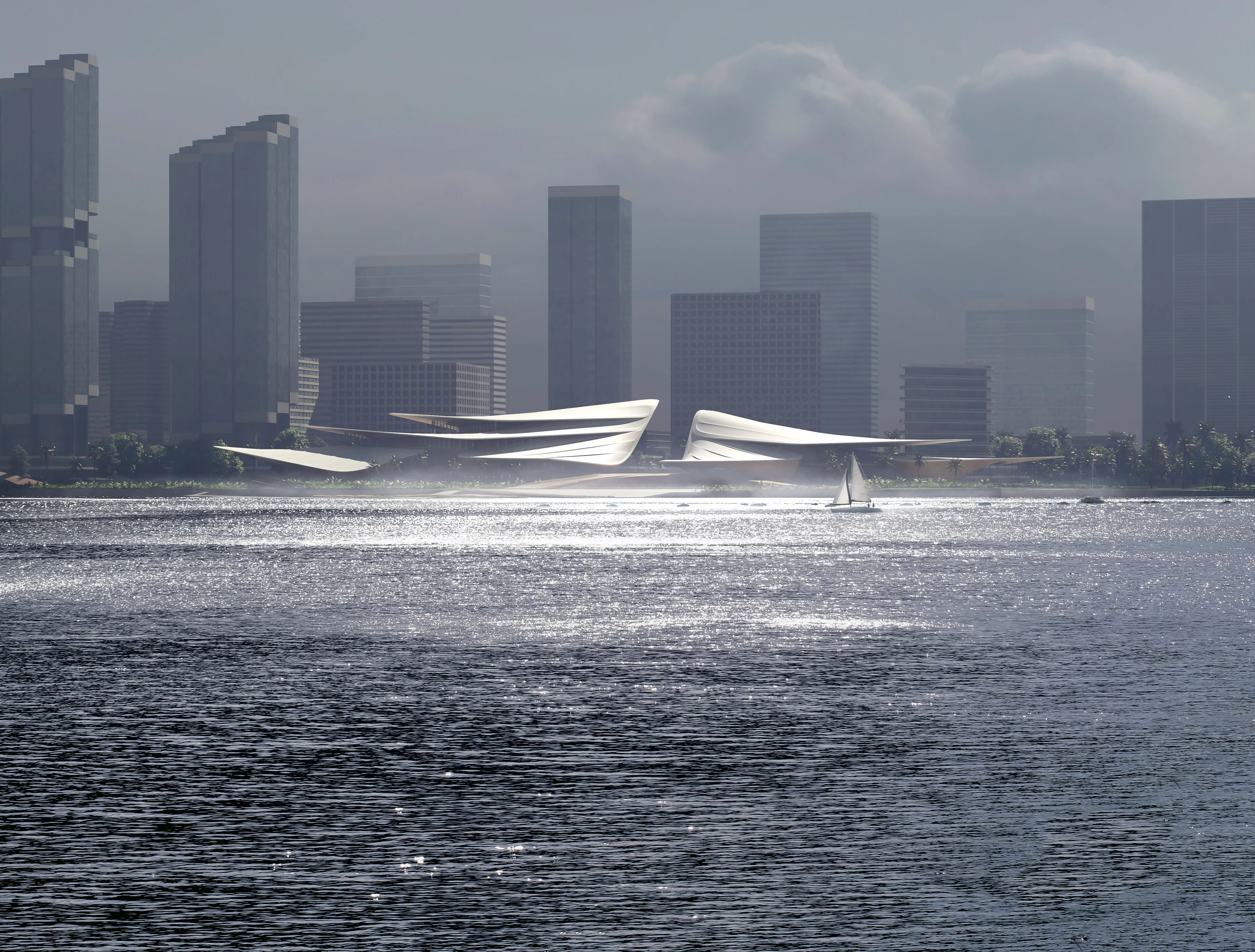
Facing Sanya Bay, the harbour is the centre of the city’s leisure, shopping and business districts. Incorporating yachting marinas and one of China’s busiest cruise ship terminals, the harbour also includes the city’s commercial and fishing port.
Located at the entrance to Sanya’s harbour, the new cultural district by ZHA is adjacent to the Jiangang Road terminus of Sanya’s tram network that connects many of the residential and hotel districts on Sanya Bay with the city’s high-speed rail station.
Establishing the harbour as the heart of Sanya’s cultural life, the new district defines the city as a gateway to the tropical waters of Sanya Bay and beyond to the South China Sea.
Layers of public terraces with panoramic views of the water
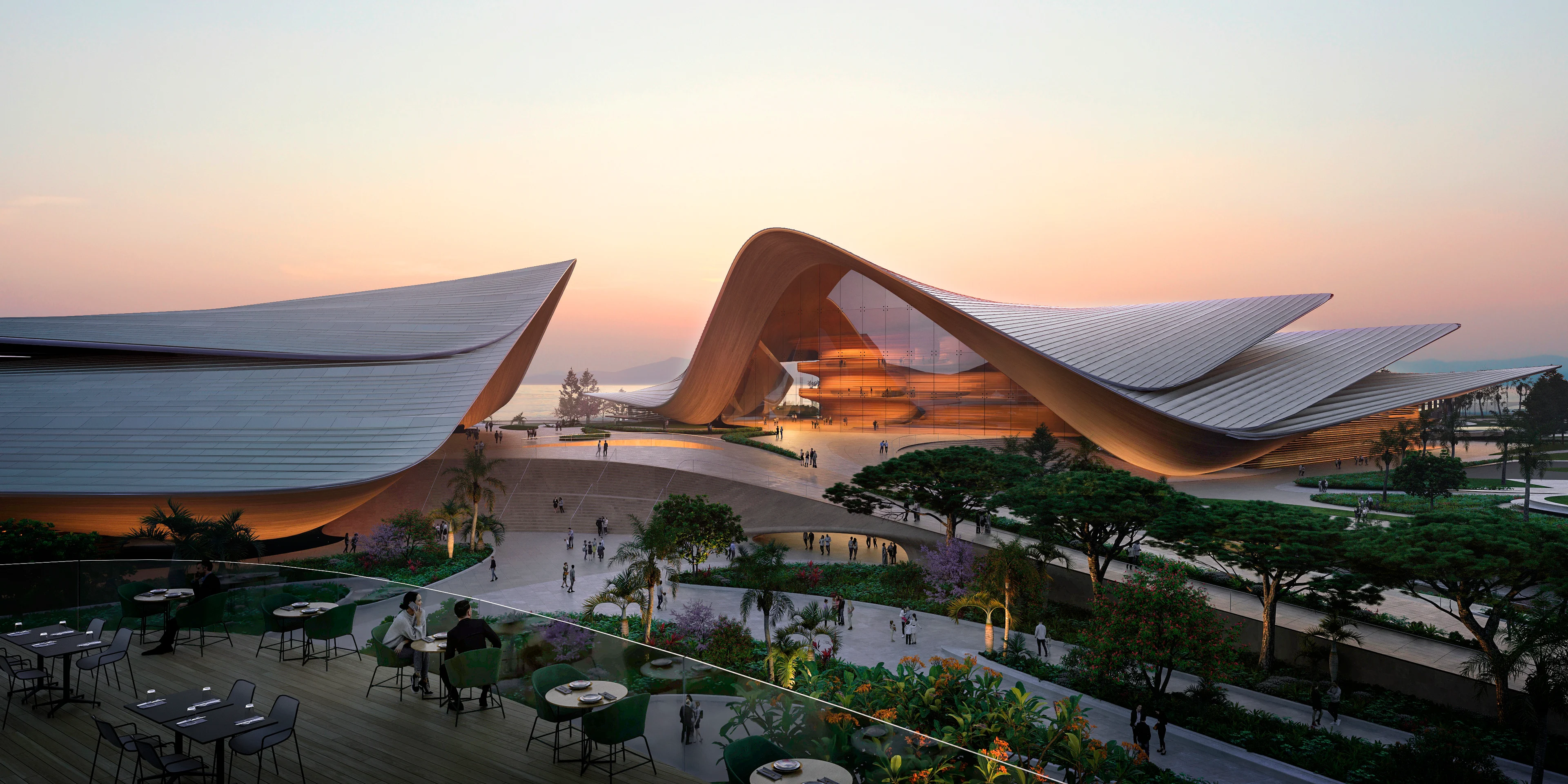
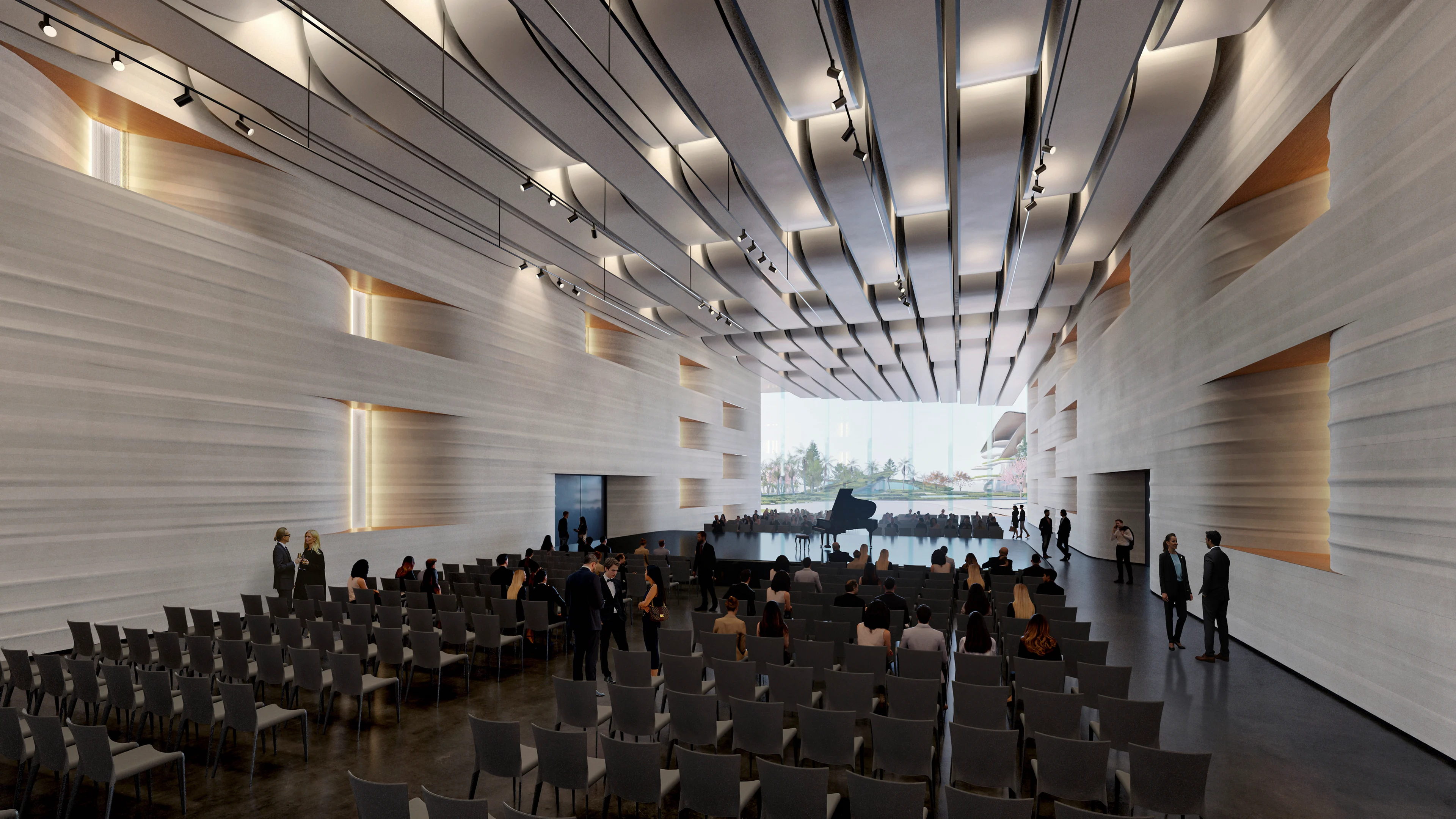
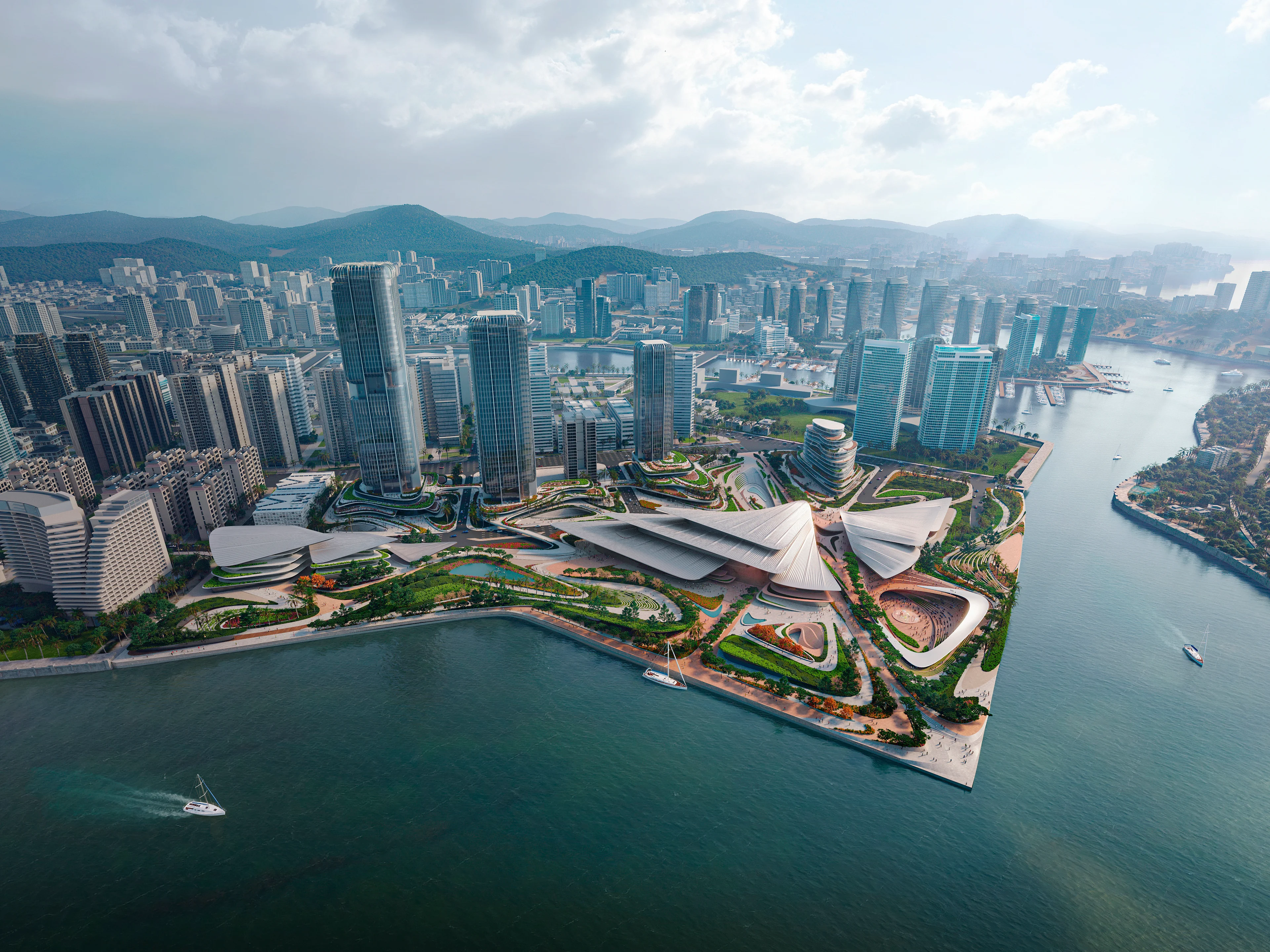
A central axis through the masterplan directly links the new harbourside district with the city’s existing urbanism and divides the cultural programming of its performing arts theatre and exhibition galleries from its commercial programming for conferences and trade fairs; both facilities share a new public square with sweeping views over the harbour that welcomes visitors, audiences and delegates to the events within.
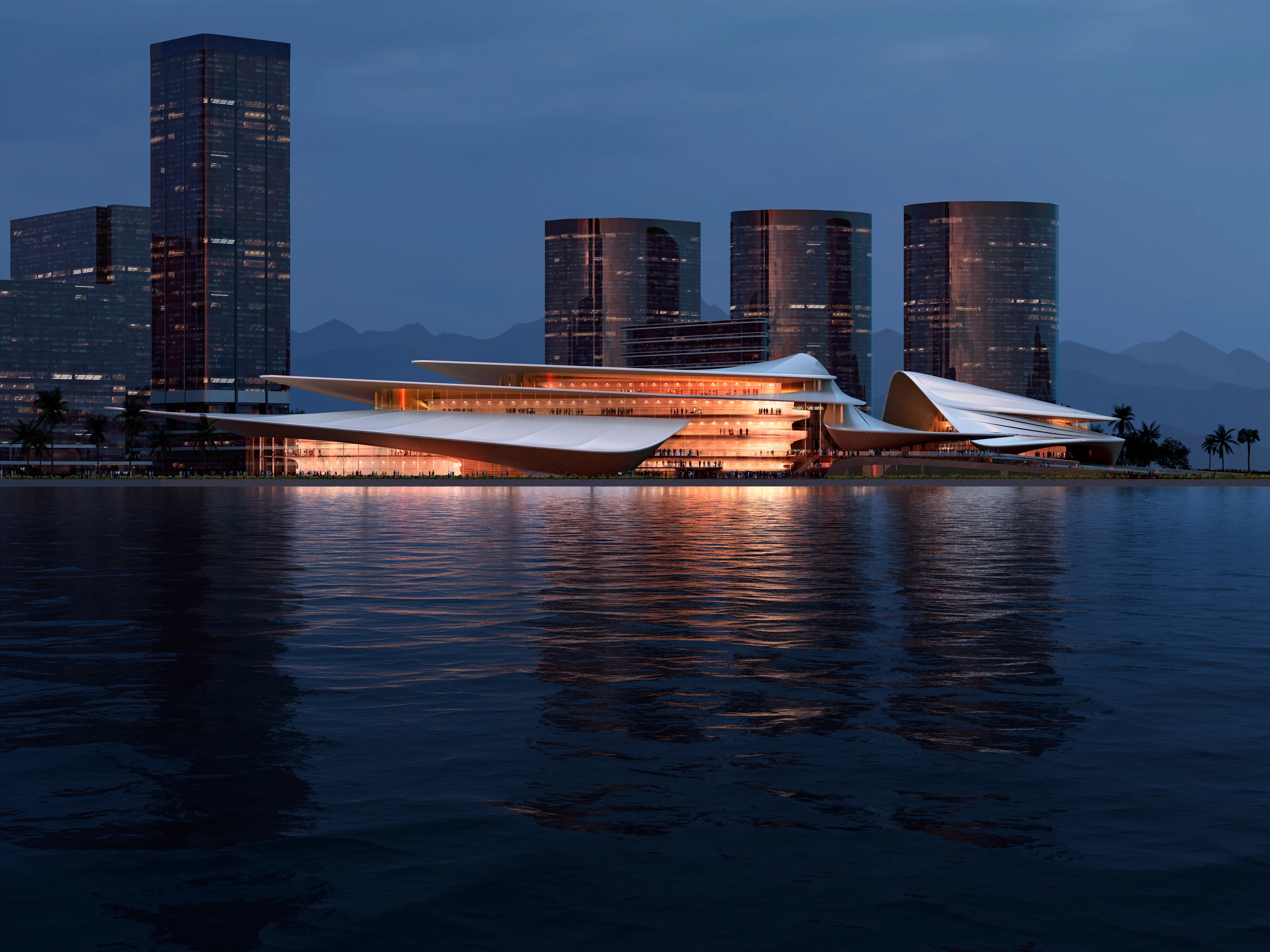
The centre’s layered roofs feather outwards and cascade from their highest points along this axis, framing the entrance lobbies of the performing arts theatre and the conference centre. Visible throughout the harbour and from Sanya Bay, these roofs softly reflect sunlight and appear to float above the water like sails in a sea breeze, defining an architectural landmark of ascending geometries that echo the mountainous landscapes of Hainan’s interior behind the city.
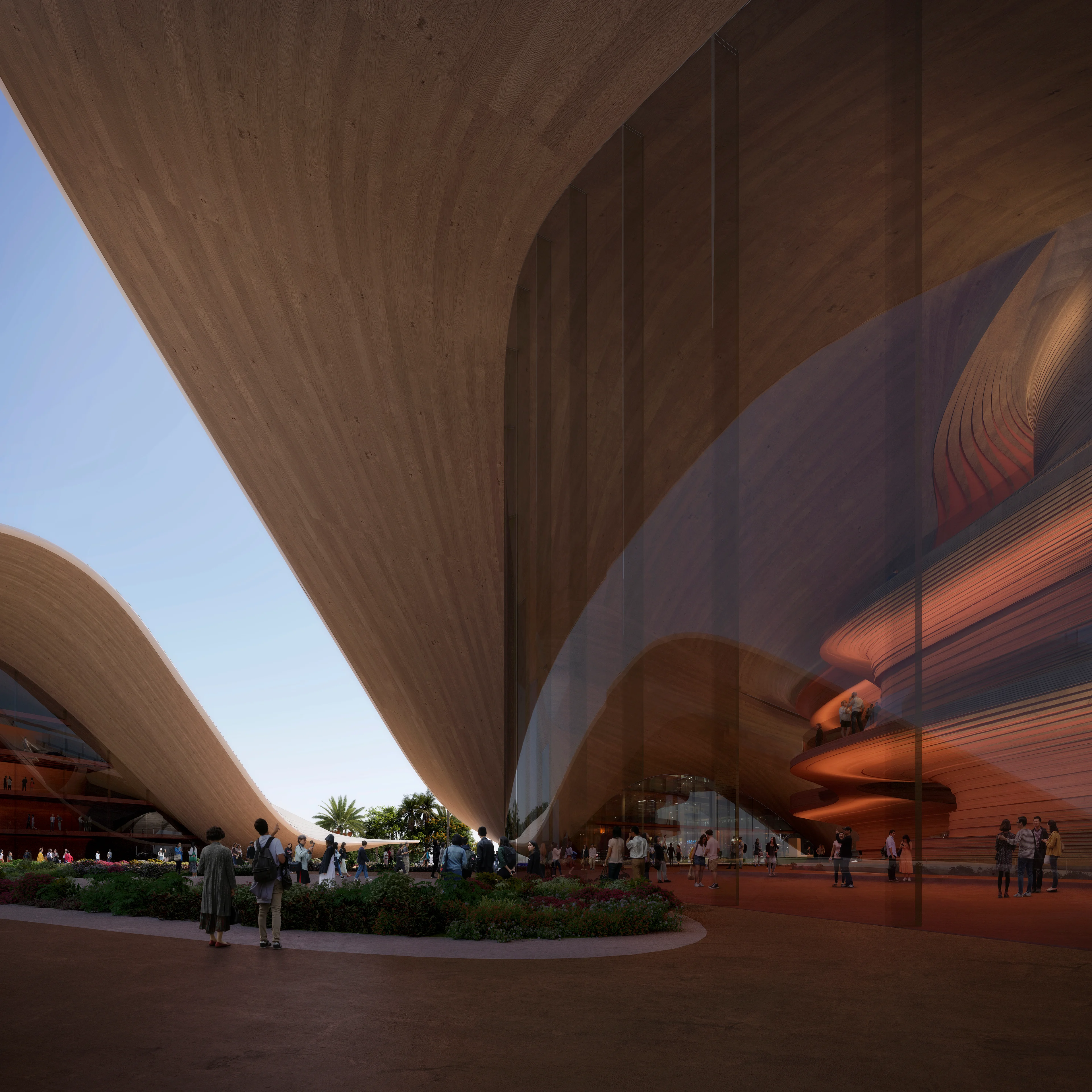
Gently rising from the ground surface of the district’s new public square to shelter the entrances of the cultural centre and conference centre, the roofs’ composition opens to face the harbour in layers of public terraces with panoramic views of the water.
Connecting with the existing urbanism of the city centre, the cultural district’s 26.7 hectares incorporates new public plazas, gardens, marinas and harbourside boardwalk together with the cultural, exhibition and conference facilities designed to host the widest variety of performances and events by local, national and international artists, institutions and companies.
Optimising natural indirect sunlight as well as natural ventilation
With a total of 409,000m2 of built area, the new harbourside district also includes city-centre residences and offices as well as hotels, shopping and dining amenities to serve the many millions of tourists who visit Sanya every year.
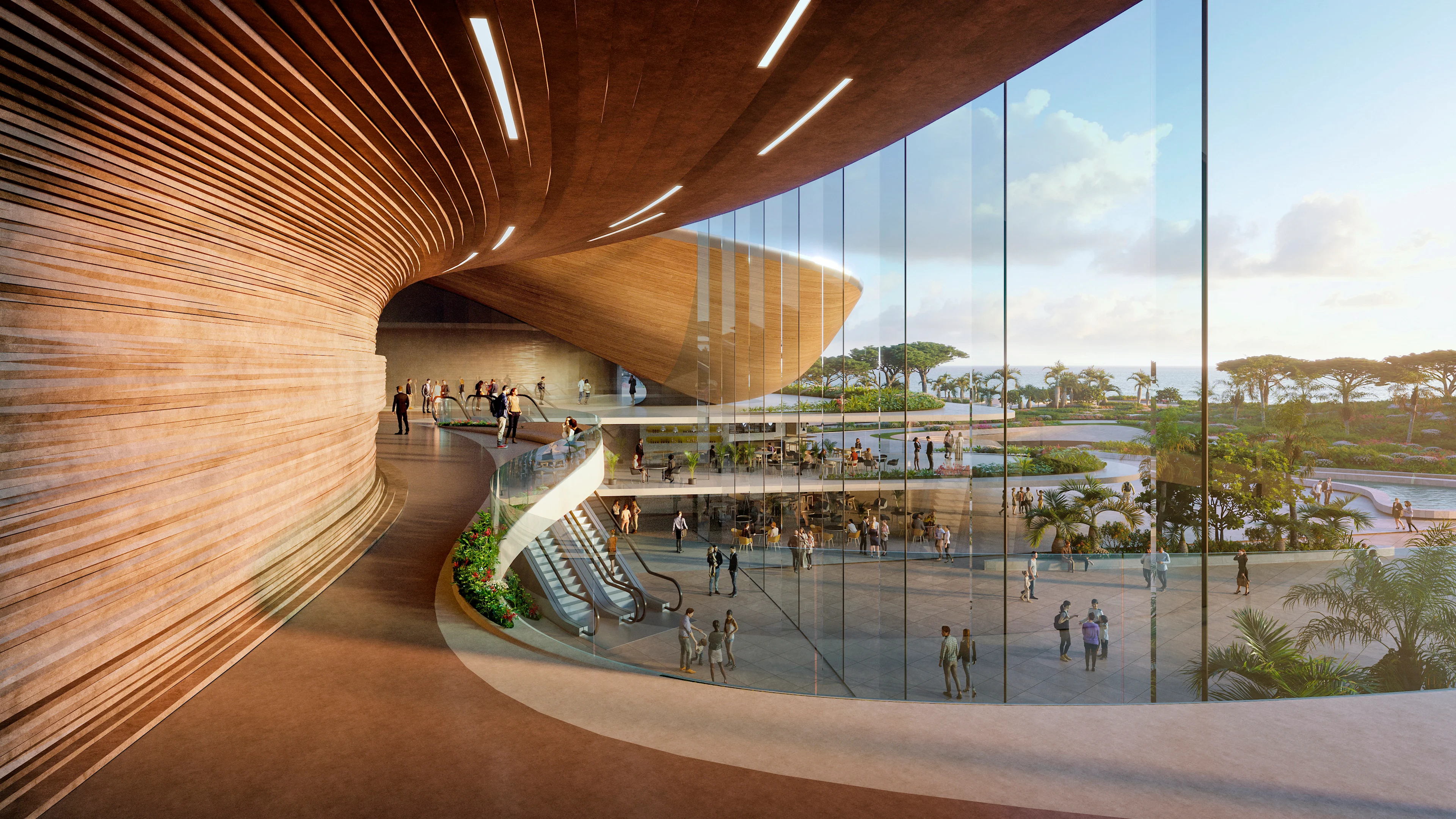
Located within Hainan’s tropical climate that is heavily influenced by monsoons, the cultural district’s architecture incorporates low-carbon design, procurement, construction and operational strategies with photovoltaics and rainwater collection embedded within the large roof areas that include deep overhanging eaves to shade the interiors and shelter the outdoor public terraces throughout the year.
The district’s orientation, composition and landscaping are designed to optimise natural indirect sunlight as well as natural ventilation from cooling on-shore winds. A central plant is designed to include high-efficiency equipment and sea water heat exchangers for cooling. A smart building management system will automatically adjust shading, lighting and ventilation for optimum comfort and efficiencies.
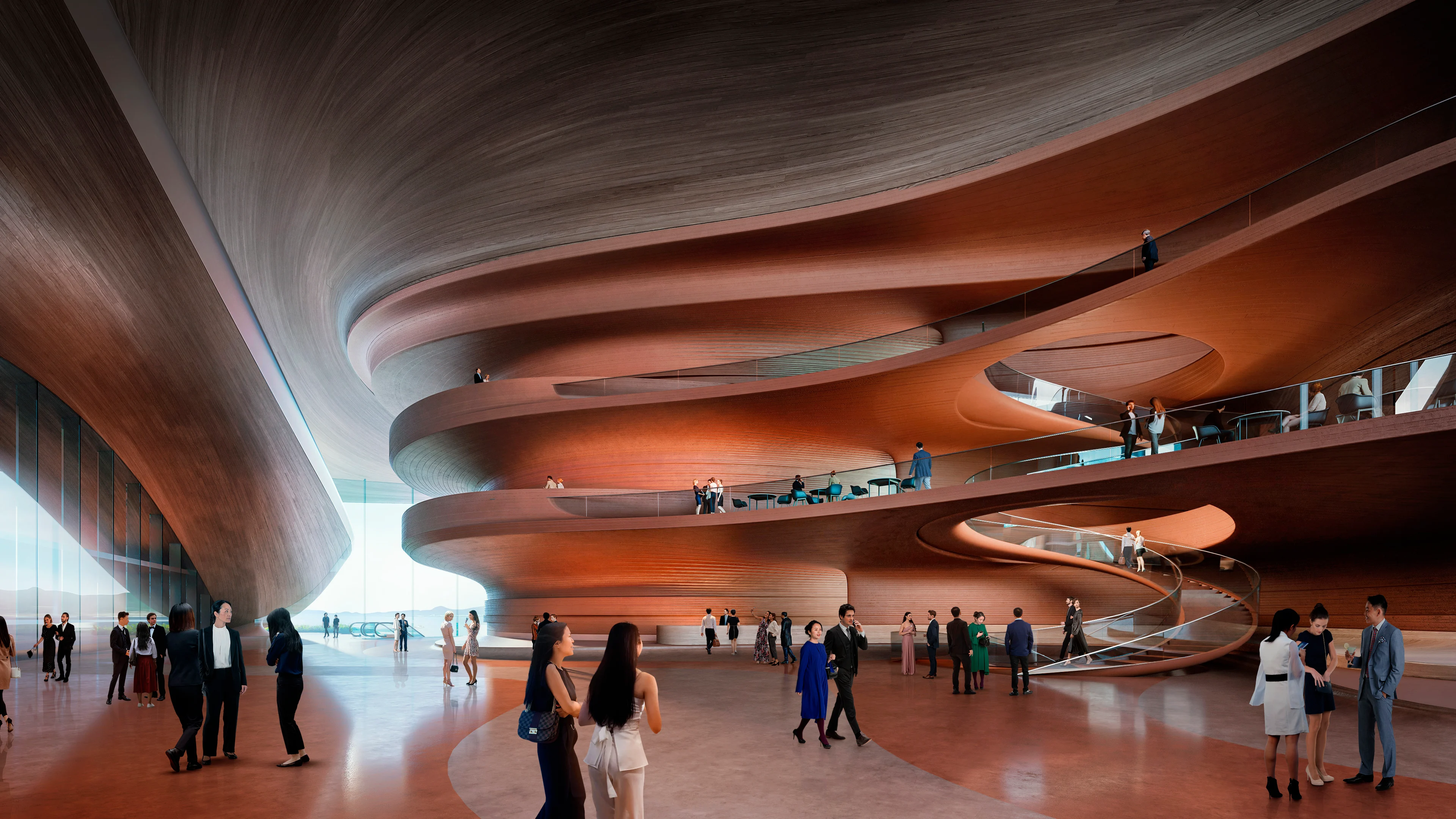
Timber cladding on the underside of the cultural and conference centre’s roofs will be sourced from certified sustainable forests and selected for its resilience to local coastal weather conditions without chemical treatments. Procurement for each building within the district will prioritise the use of local and recycled materials.
Culture
Explore more of our culture projects
From a civic art centre that unites three distinct cultural institutions to a science fiction museum whose landscaping contributes to the city’s drainage and flood defence systems, discover our latest cultural projects.
Render by Devisual
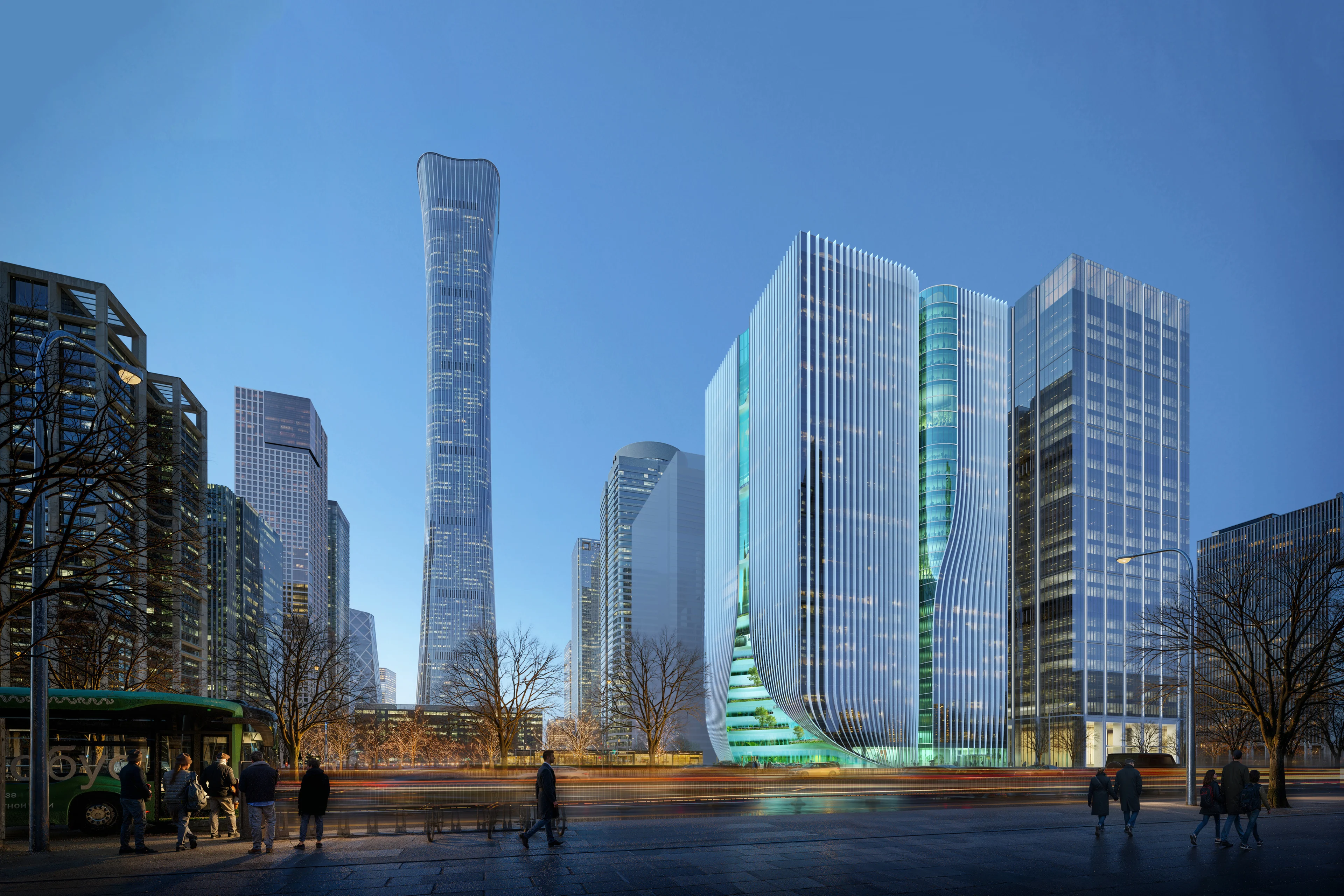
Z8 Tower
Located in the core of Beijing’s Central Business District (CBD) at the intersection of Jianguo Road and Jinhe East Road, the new Z8 Tower faces the CBD’s central park and is defined by the historic alignment and urbanism of the city’s Chang’an Avenue.
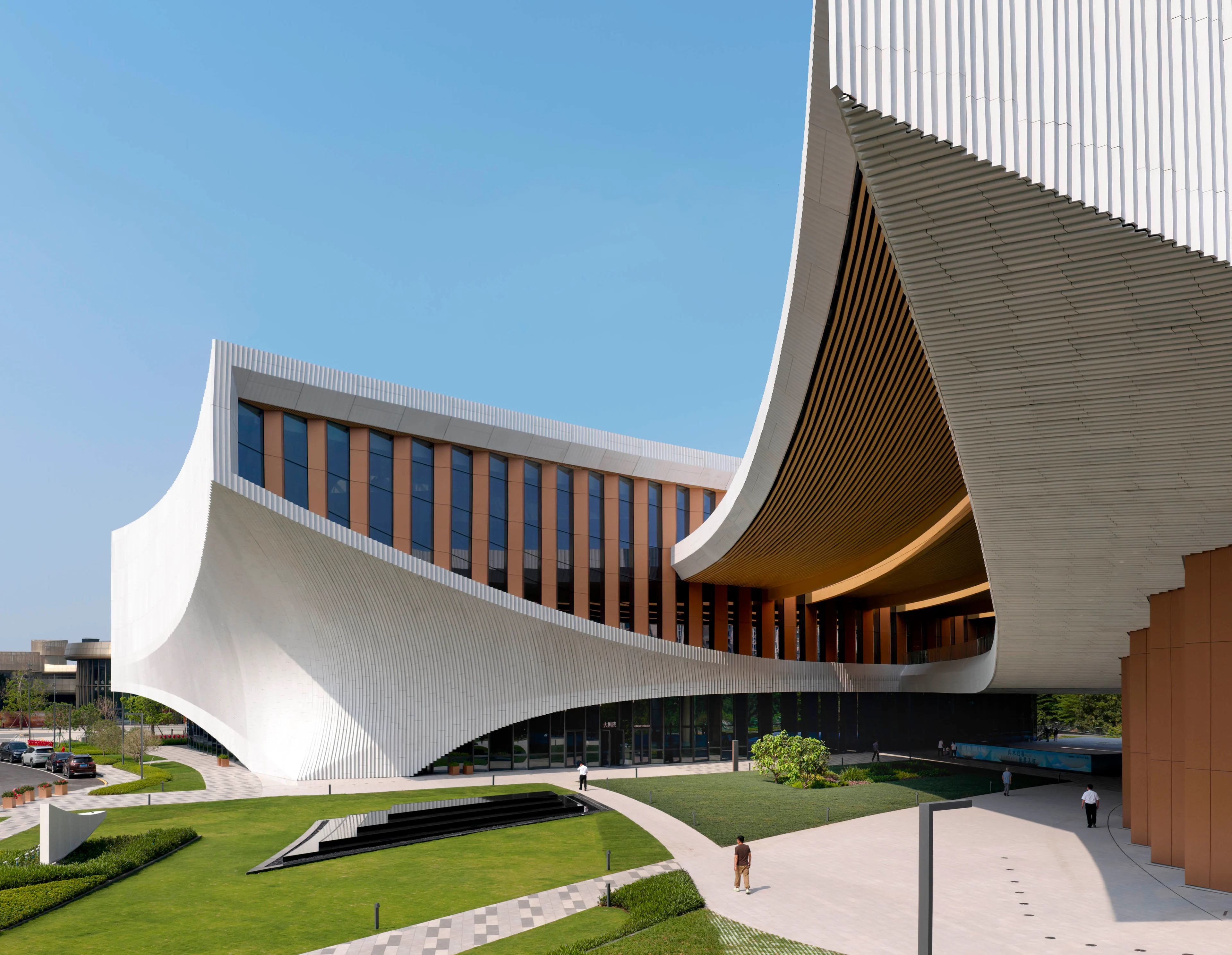
Songshan Lake Performance and Exhibition Centre
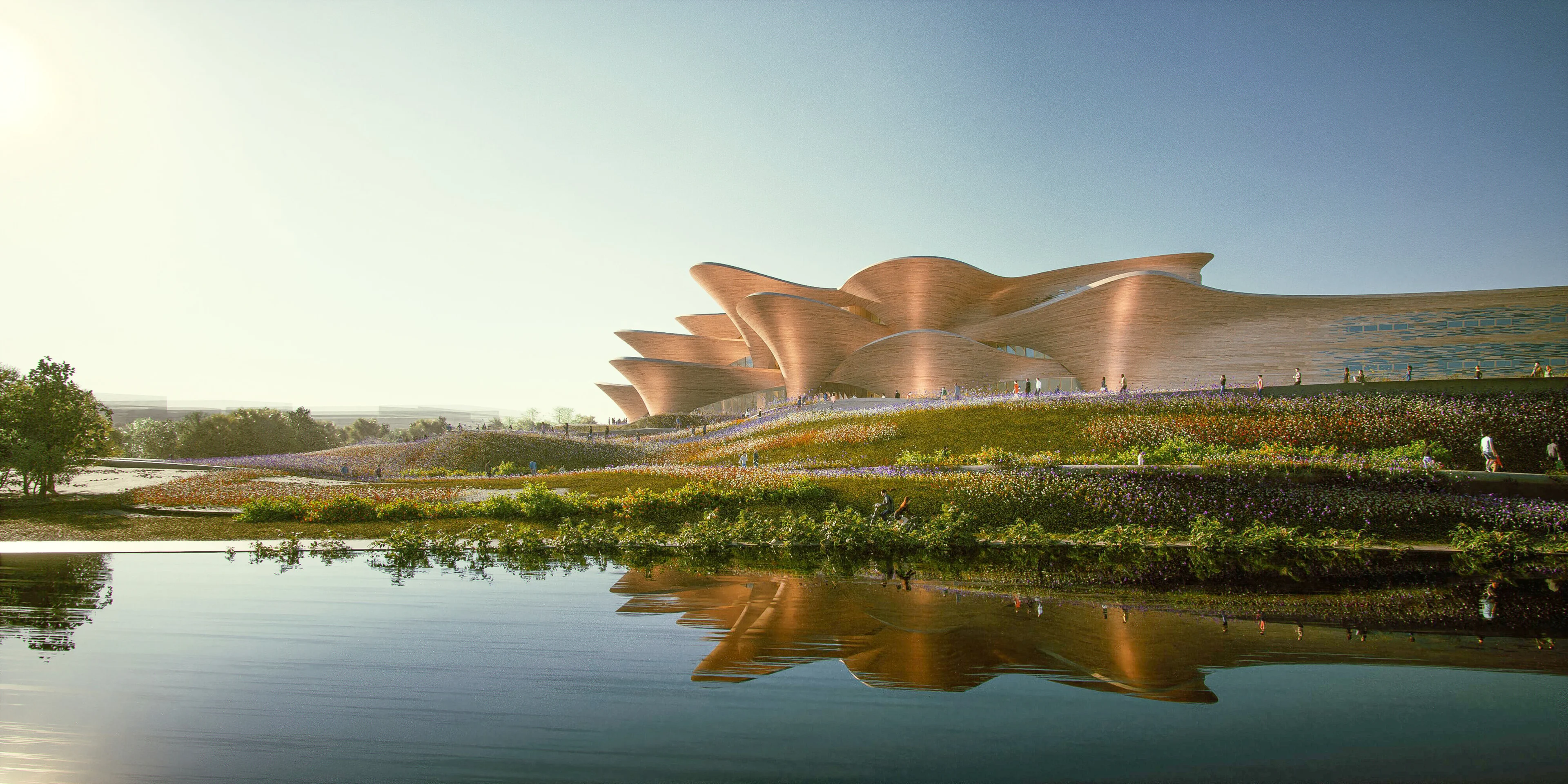
Located in Dongguan within the Greater Bay Area of southern China’s Pearl River estuary, the new Songshan Lake Exhibition and Performance Centre is at the heart of a mixed-use masterplan to revitalize the Yuehe Lake waterfront.
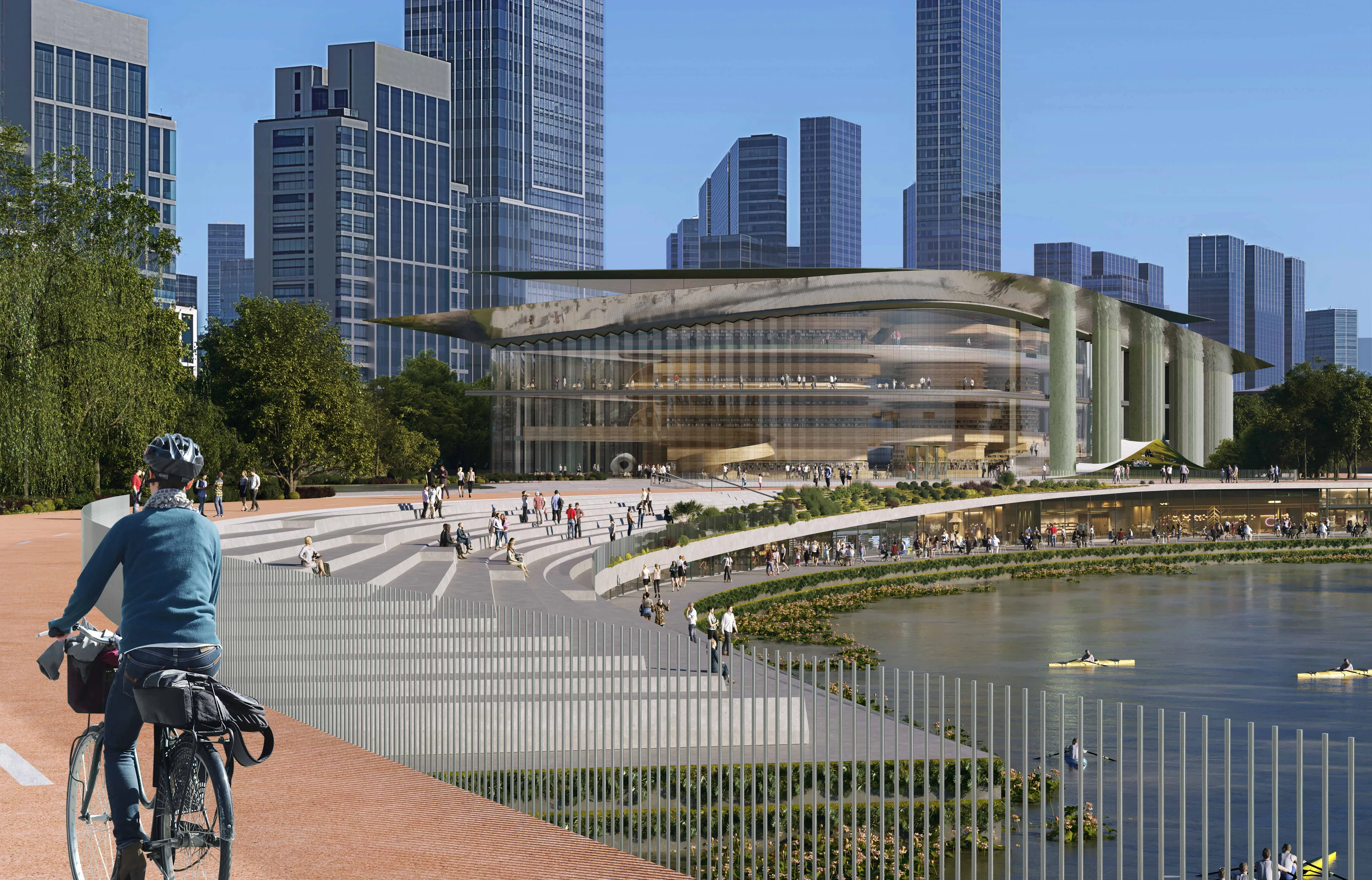
Qiantang Bay Cultural District
A series of new landscaped parklands, terraces and gardens along the Zhedong Canal within the Xiaoshan district of Hangzhou
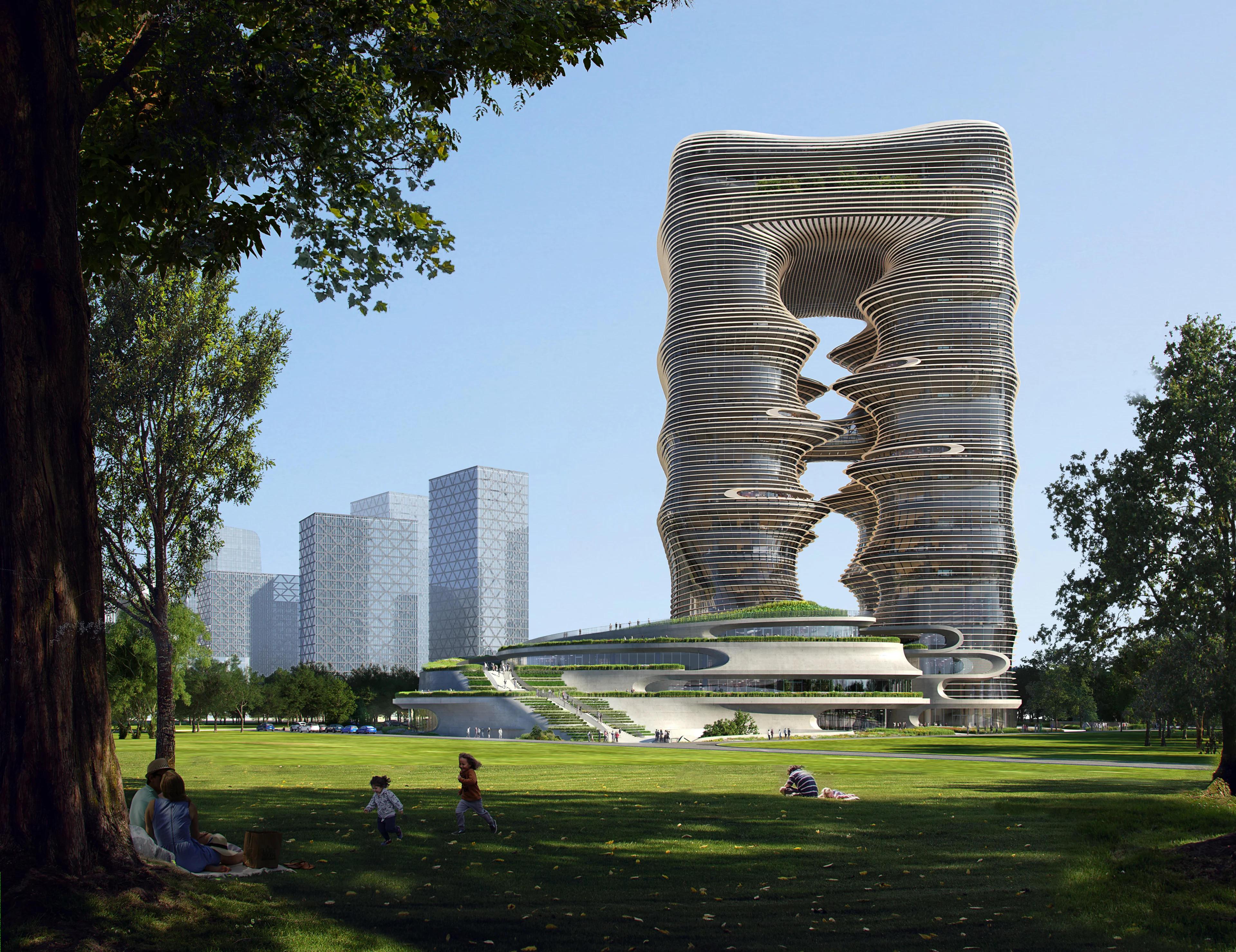
Render by Atchain
Yidan Center
A place of convergence and collaboration, the Yidan Center will be home to the Chen Yidan Foundation in its work to promote lifelong learning and innovation in education.
Render by Proloog
Elevation River
Zhejiang Shaoxing Shangyu District Cao’e River Culture and Art Centre
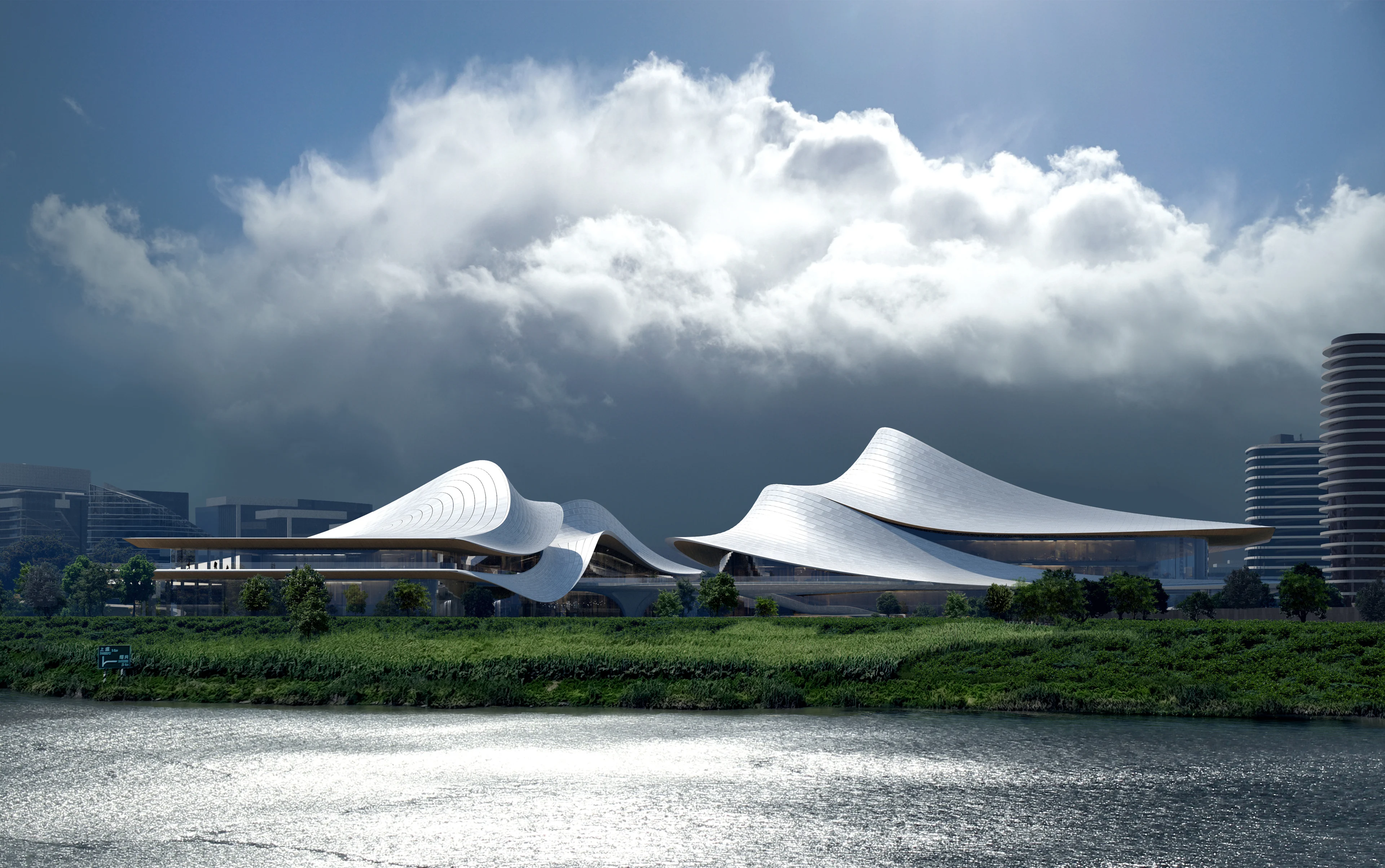
Designed to host local and international productions of opera, dance and drama together with large-scale symphonies and musical theatre, the Art and Culture Centre includes a 1,400-seat Grand Theatre, 500-seat Black-Box Multifunctional Hall, 2,900 sq. m Arts and Education Centre, 3,000m² Conference Centre, 7,500m² Heritage Museum and a 10,000m² Digital Art Gallery.
Render by Specto-Digital
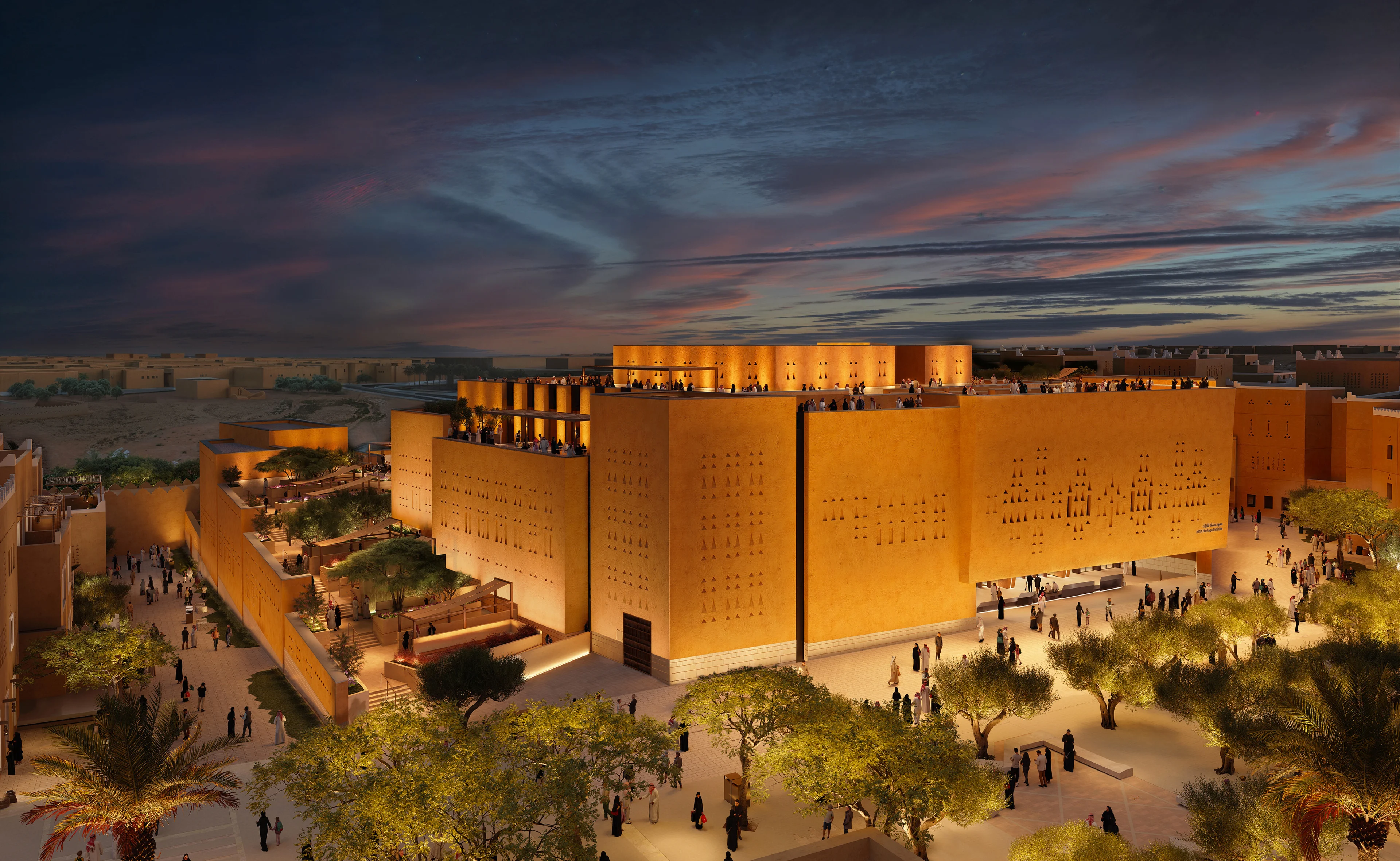
Asaan Museum
Meaning ‘inheritance passed down through generations’, Asaan will be an institution dedicated to preserving and celebrating this rich heritage, in addition to promoting creativity and knowledge sharing.
Nikola Tesla Museum
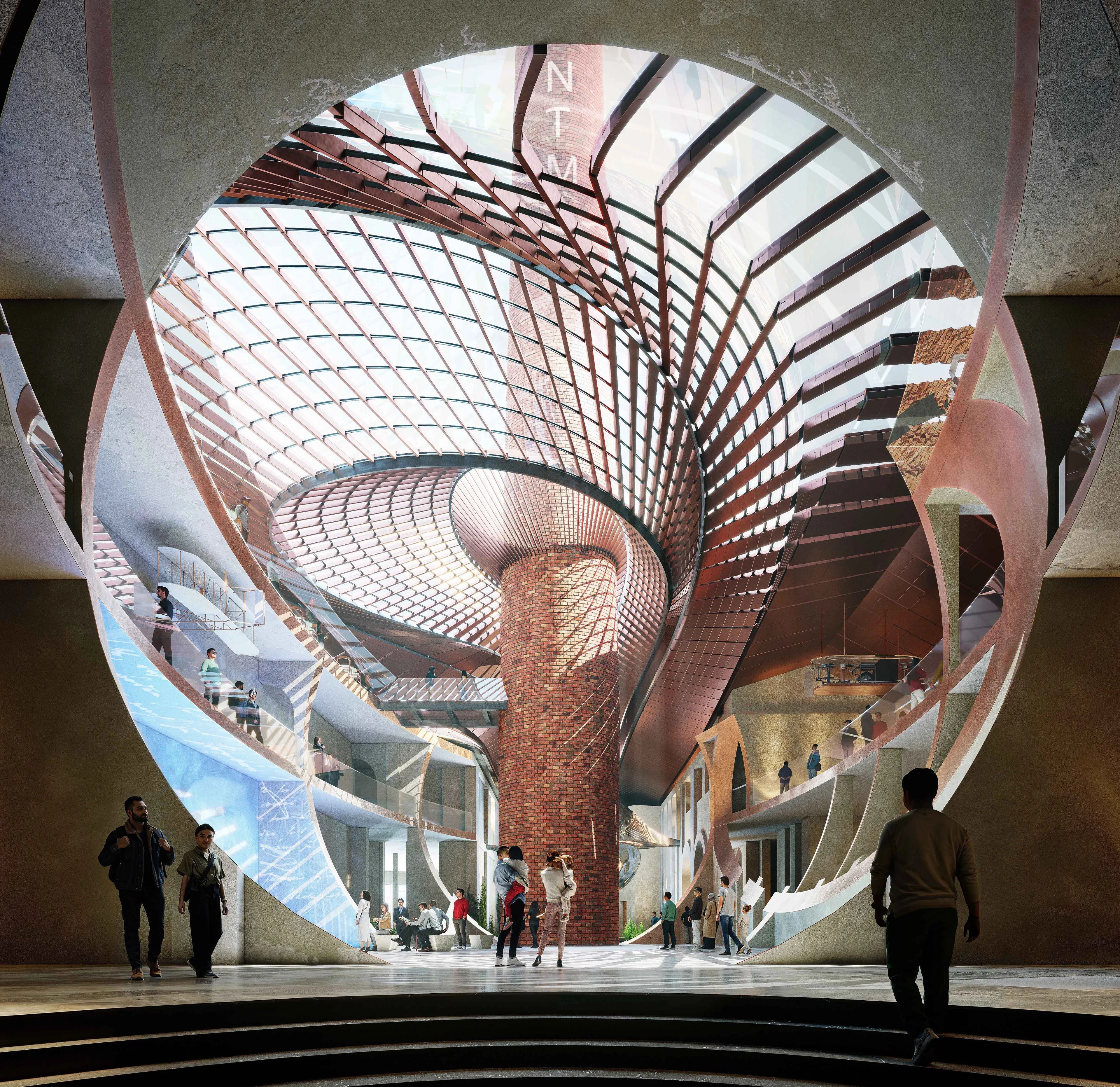
The new Nikola Tesla Museum renovates Belgrade’s historic Milan Vapa Paper Mill into a cultural destination celebrating Tesla’s legacy while preserving the city’s architectural heritage and creating a variety of new public spaces for local residents and visitors.
Courtesy of ZHA
River View
Alisher Navoi Institute
The Alisher Navoi International Scientific Research Centre will incorporate the Navoi State Museum of Literature, Auditorium, International Research Centre and School.
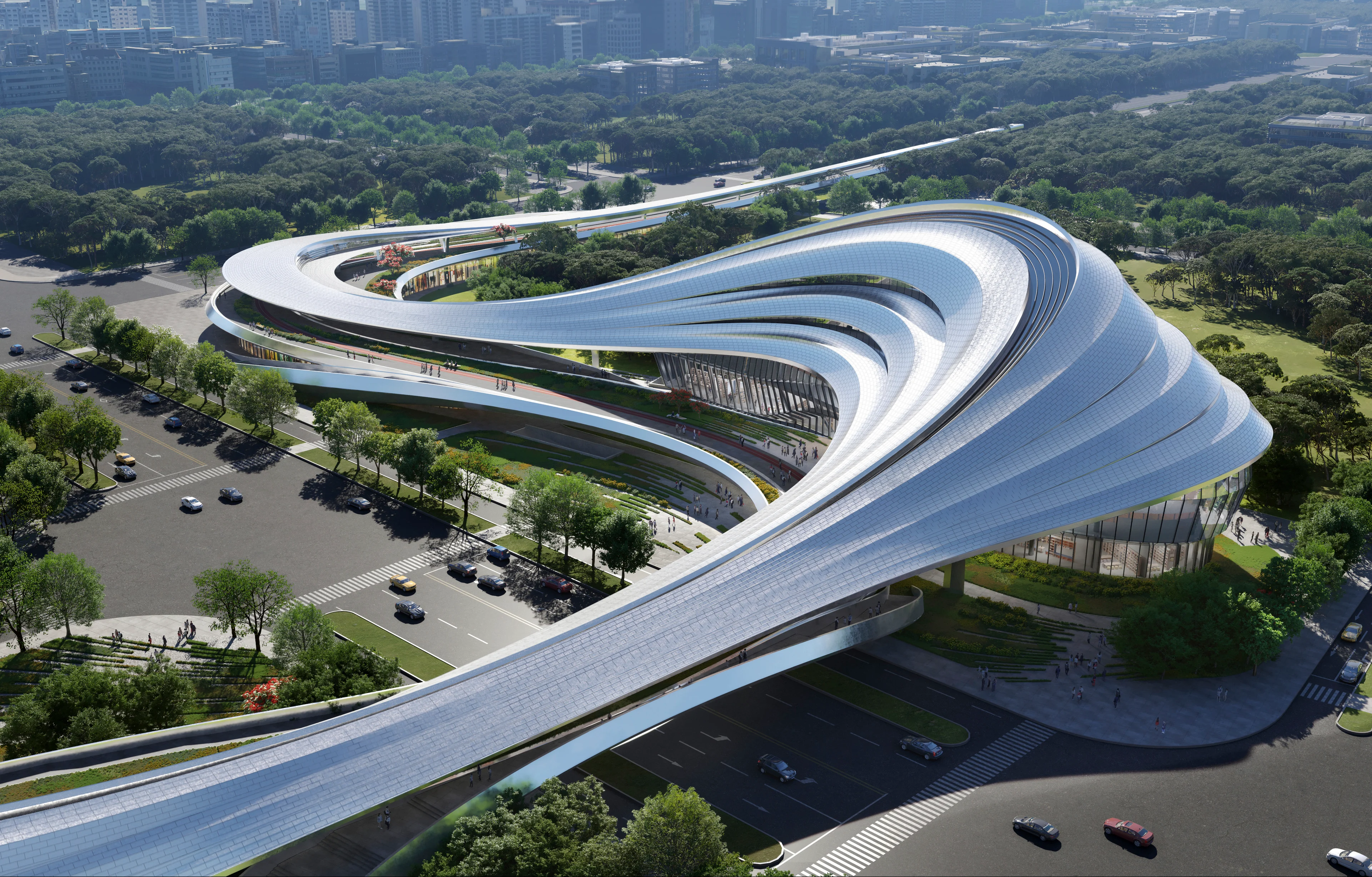
Render by Atchain
Jinghe New City Culture and Art Centre
Jinghe New City is growing as a science and technology hub north of Xi’an in China’s Shaanxi province. Supported by new scientific research institutes and driven by environmental considerations, the city is becoming a centre for developing industries focusing on new energy and materials, artificial intelligence and aerospace.
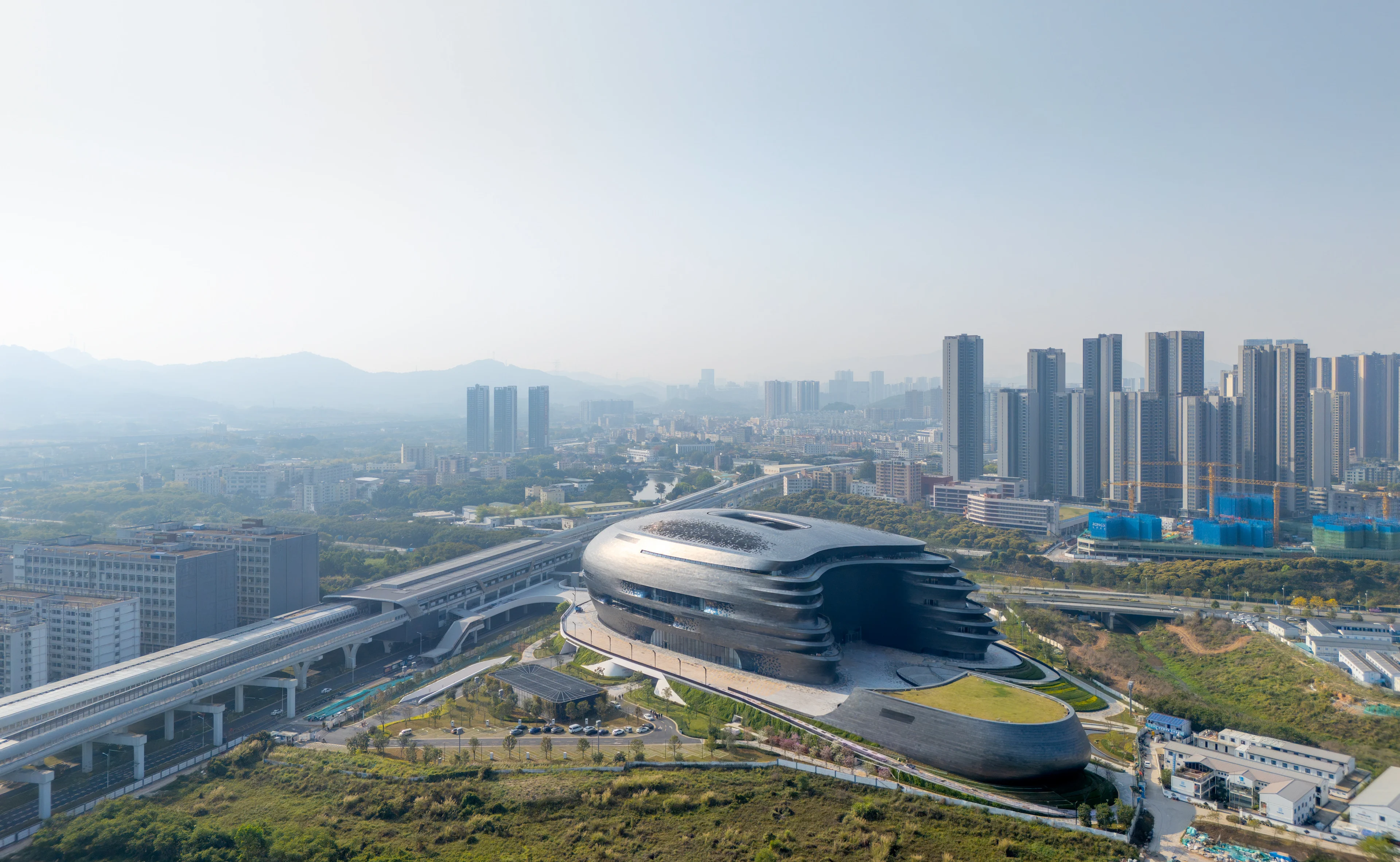
Photograph by Virgile Simon Bertrand
Shenzhen Science & Technology Museum
Showcasing the scientific endeavour, ground-breaking research and future possibilities of technology, this new institution will explore the power of science and the technological advancements defining our future.
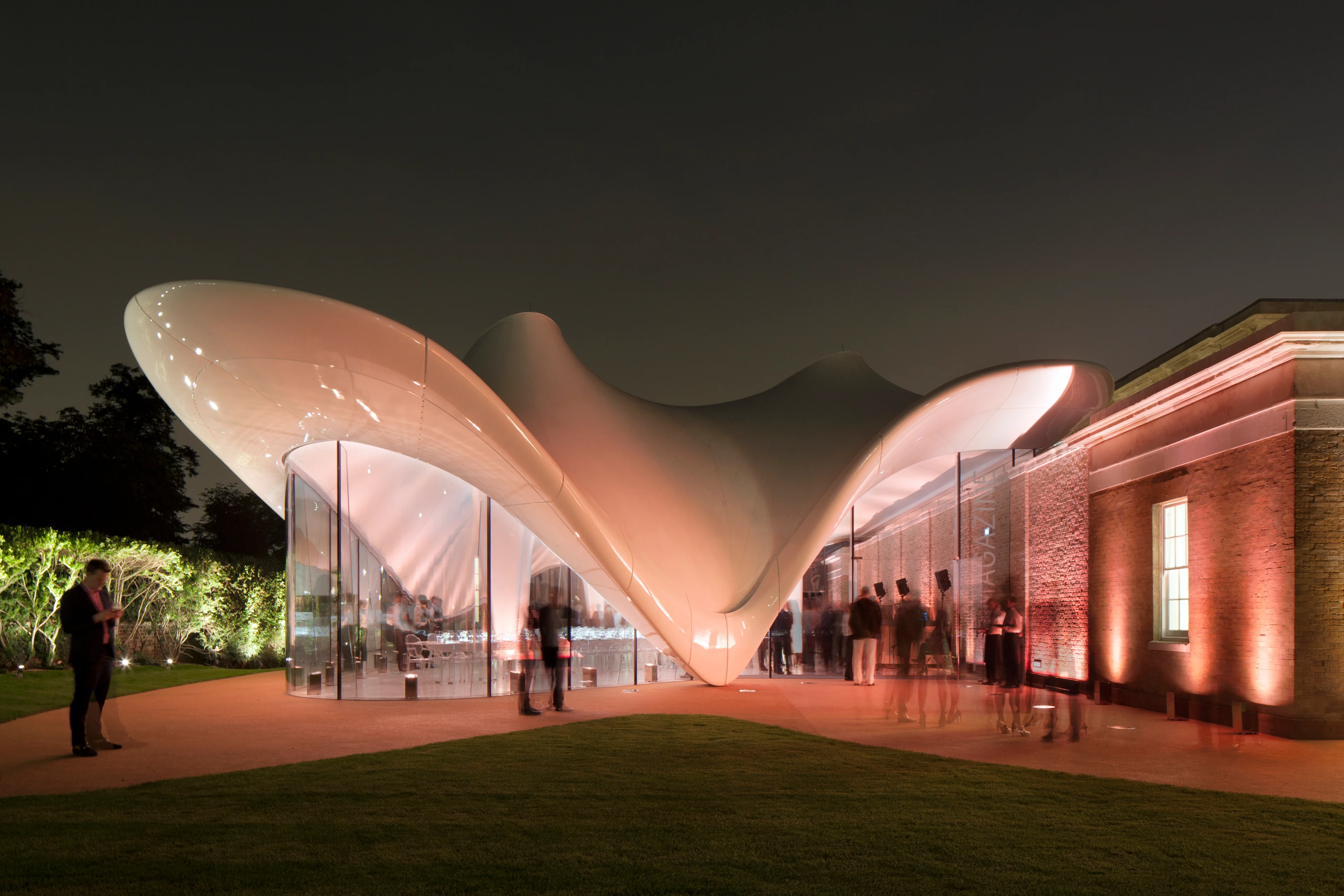
Photograph by Luke Hayes
Serpentine North Gallery
The Serpentine North Gallery consists of two distinct parts, namely the conversion of a classical 19th century brick structure – The Magazine – and a 21st century tensile structure. The Serpentine North Gallery is thus – after MAXXI in Rome – the second art space where ZHA has created a synthesis of old and new.
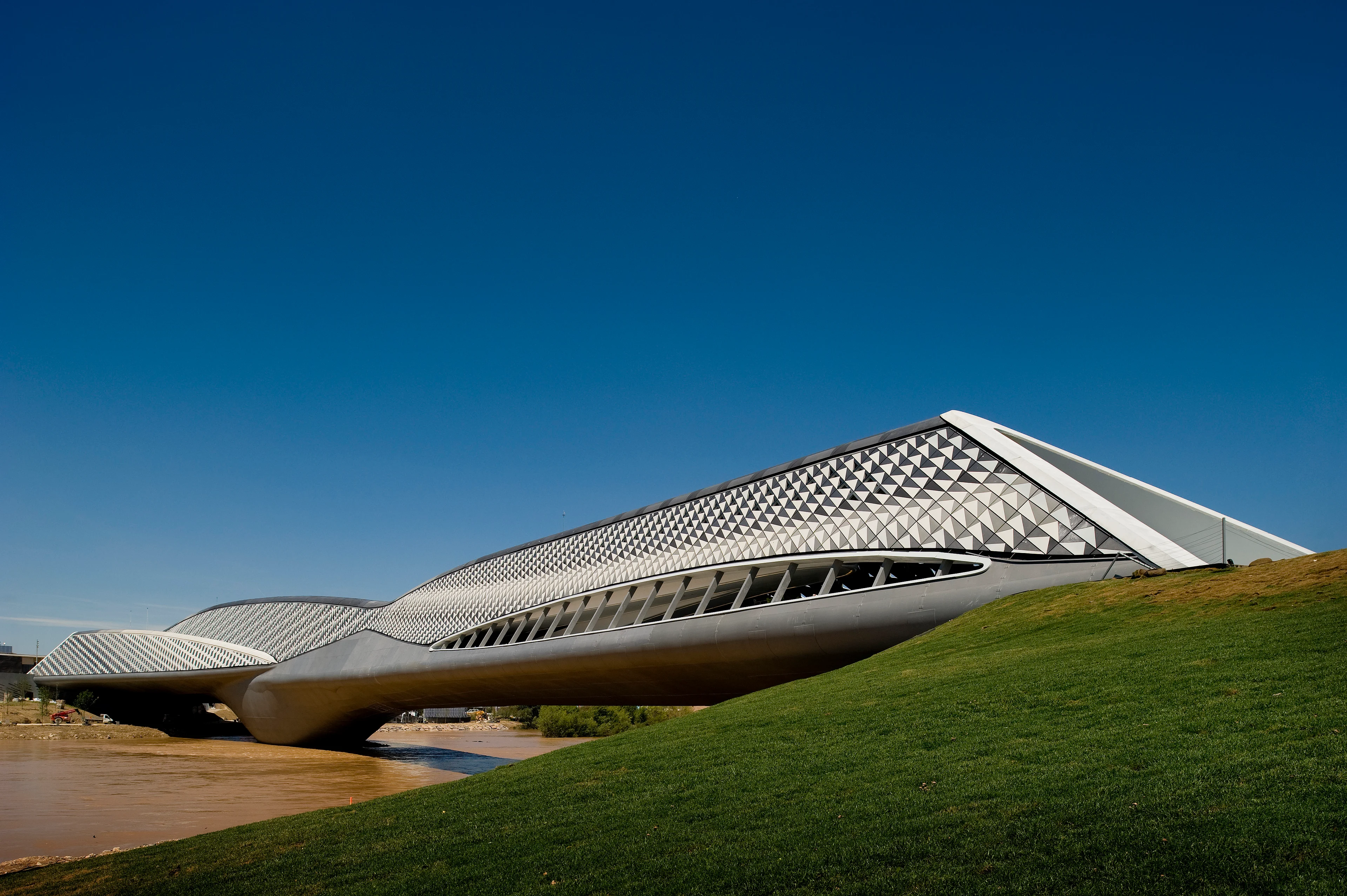
Photograph by Fernando Guerra
Zaragoza Bridge Pavilion
An enclosed interactive space spanning the River Ebro to form a gateway to the Zaragoza Expo 2008, a hybrid of pedestrian footbridge and exhibition pavilion. Four structural elements correspond to specific spatial enclosures, which intersect and brace each other. This fluid, dynamic design interprets the Expo’s theme: ‘Water and Sustainable Development.’
Courtesy of Arch-Exist
default
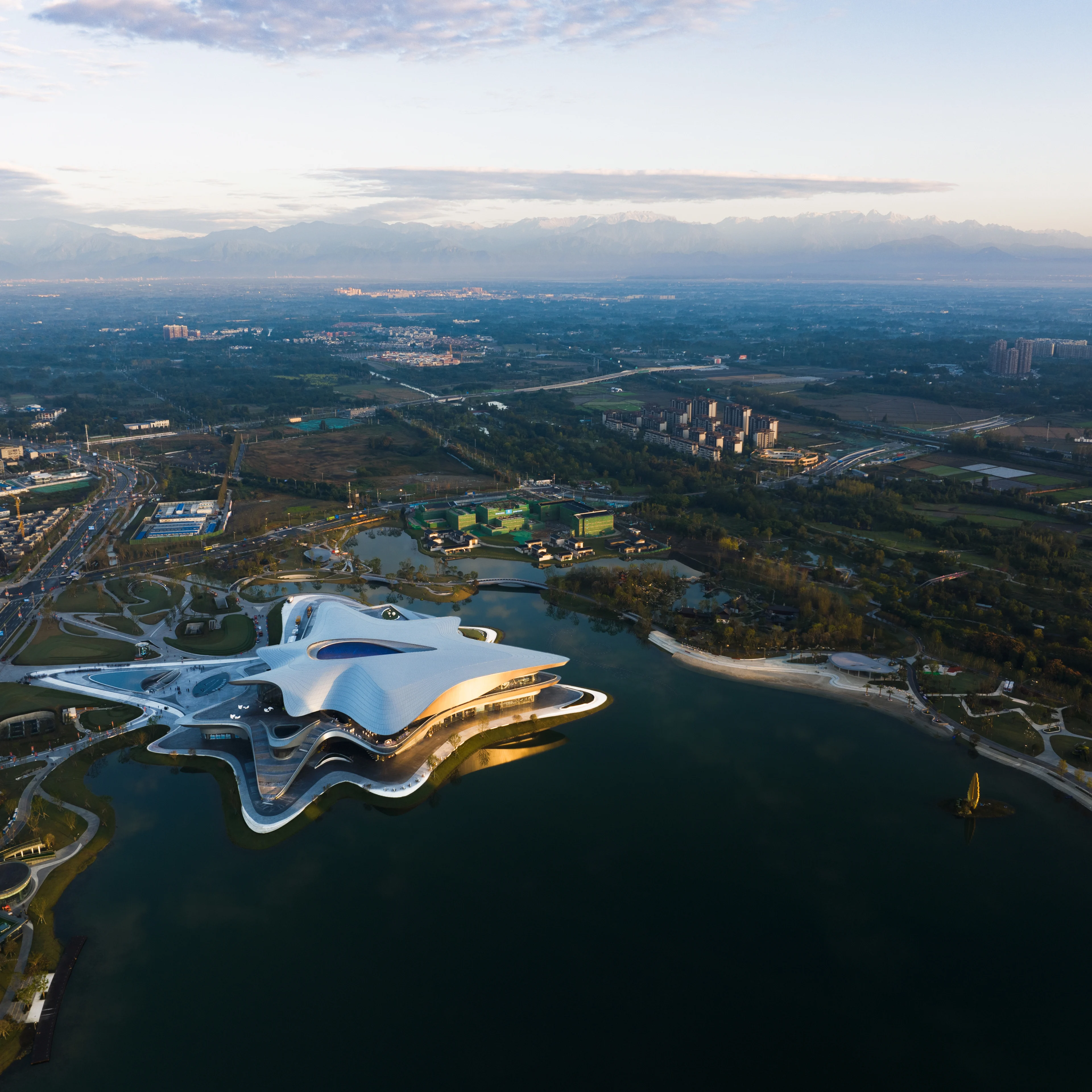
Chengdu Science Fiction Museum
The new Chengdu Science Fiction Museum is situated on Jingrong Lake within the Science & Innovation New City of Chengdu’s Pidu District.
Render by Negativ
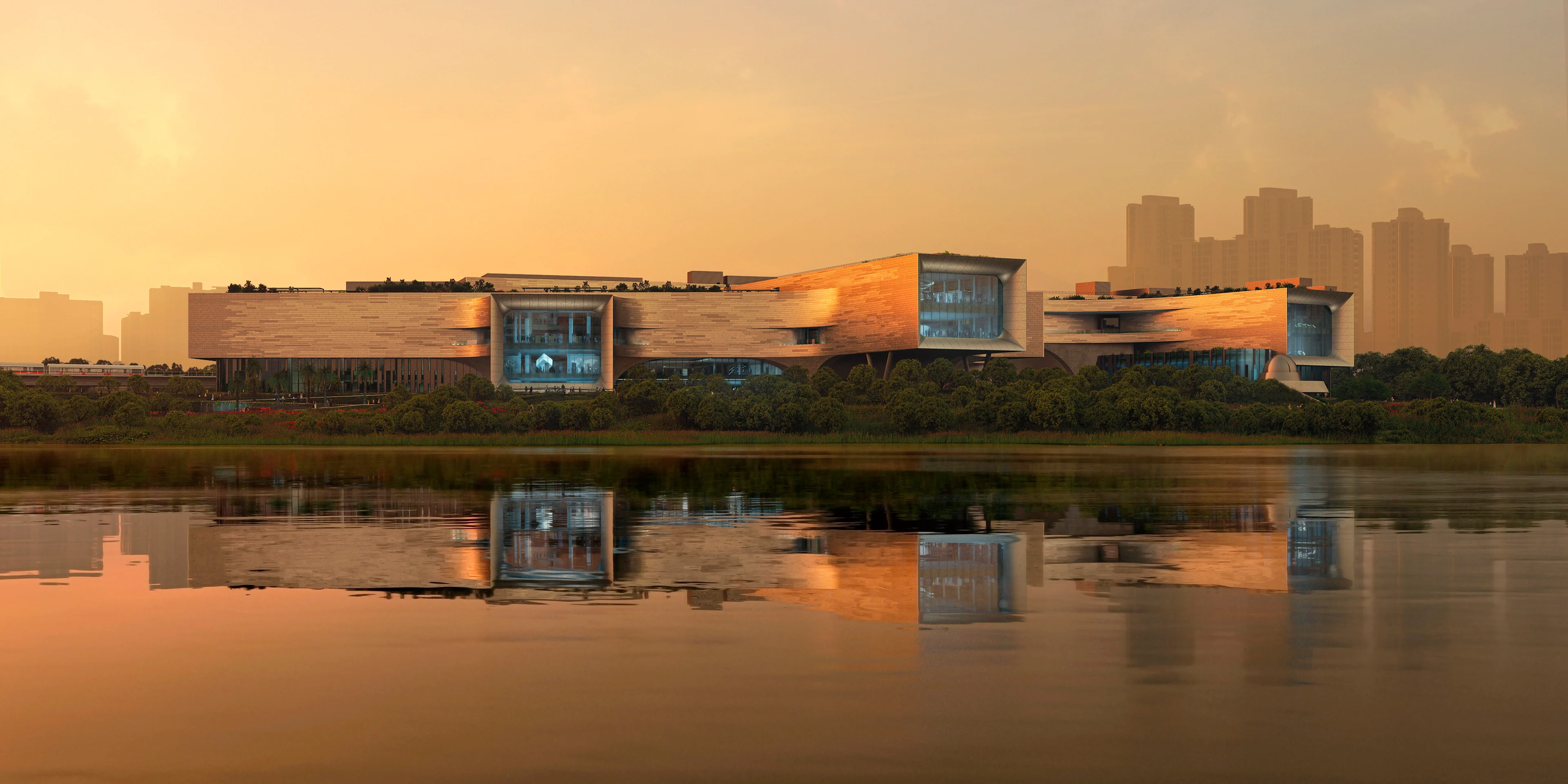
Waterfront view of new Science Centre. render by Negativ. The image is an artist’s impression, and final design may be subject to changes.
Singapore New Science Center
Singapore’s New Science Centre will provide unique facilities and programmes as a destination for all Singaporeans to access science, technology, engineering and mathematics (STEM) education and experiences.
Courtesy of CAT-OPTOGRAM 猫瞳
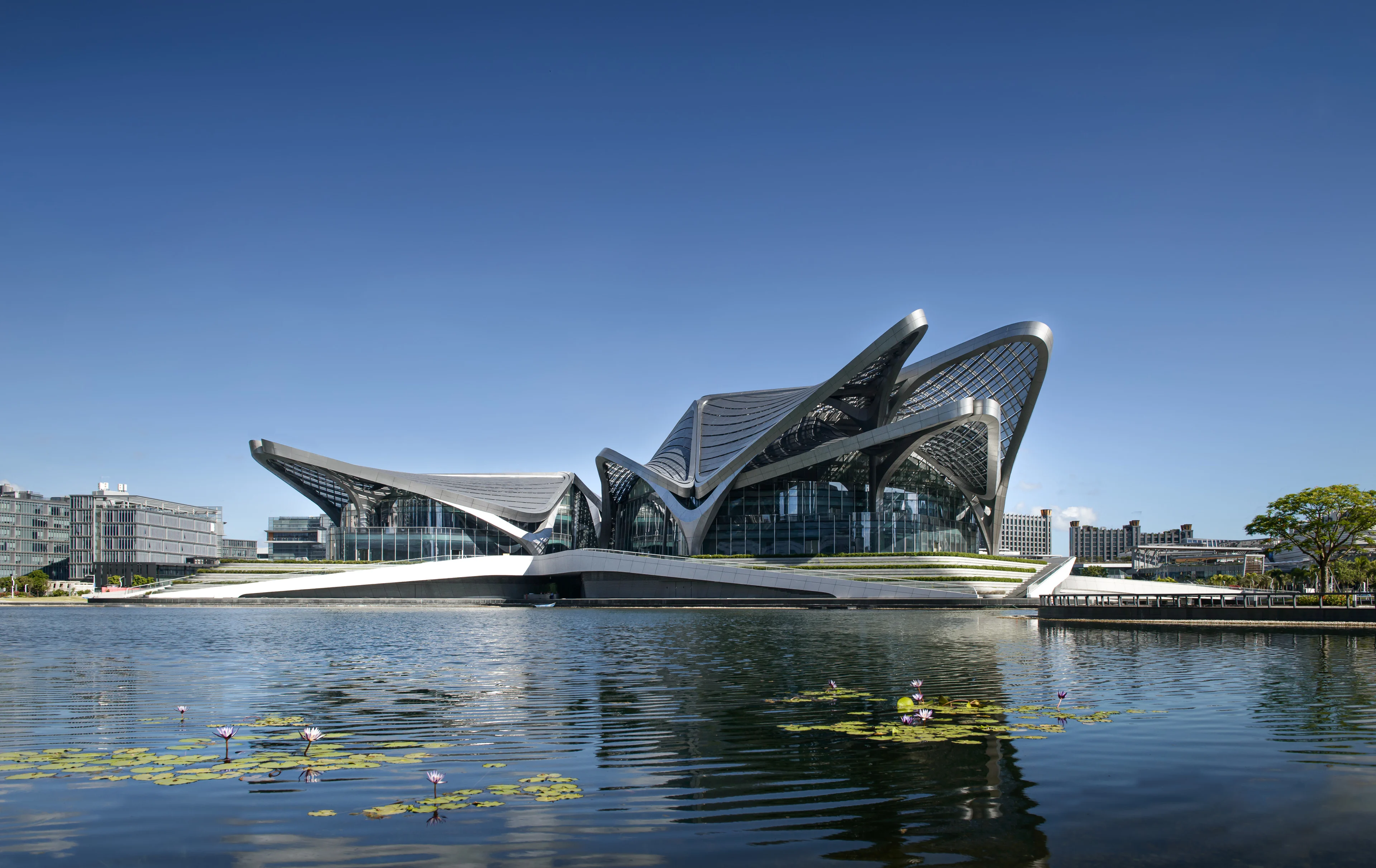
Zhuhai Jinwan Civic Art Centre
Integrating three distinct cultural institutions for the city, each venue within the Zhuhai Jinwan Civic Arts Centre incorporates unique characteristics that create differing visitor experiences, yet all are united by a coherent formal and structural logic that spans 170 meters wide from east to west and 270 meters long from north to south.
01
02
03
04
05
06
07
08
09
10
11
12
13
14
15