
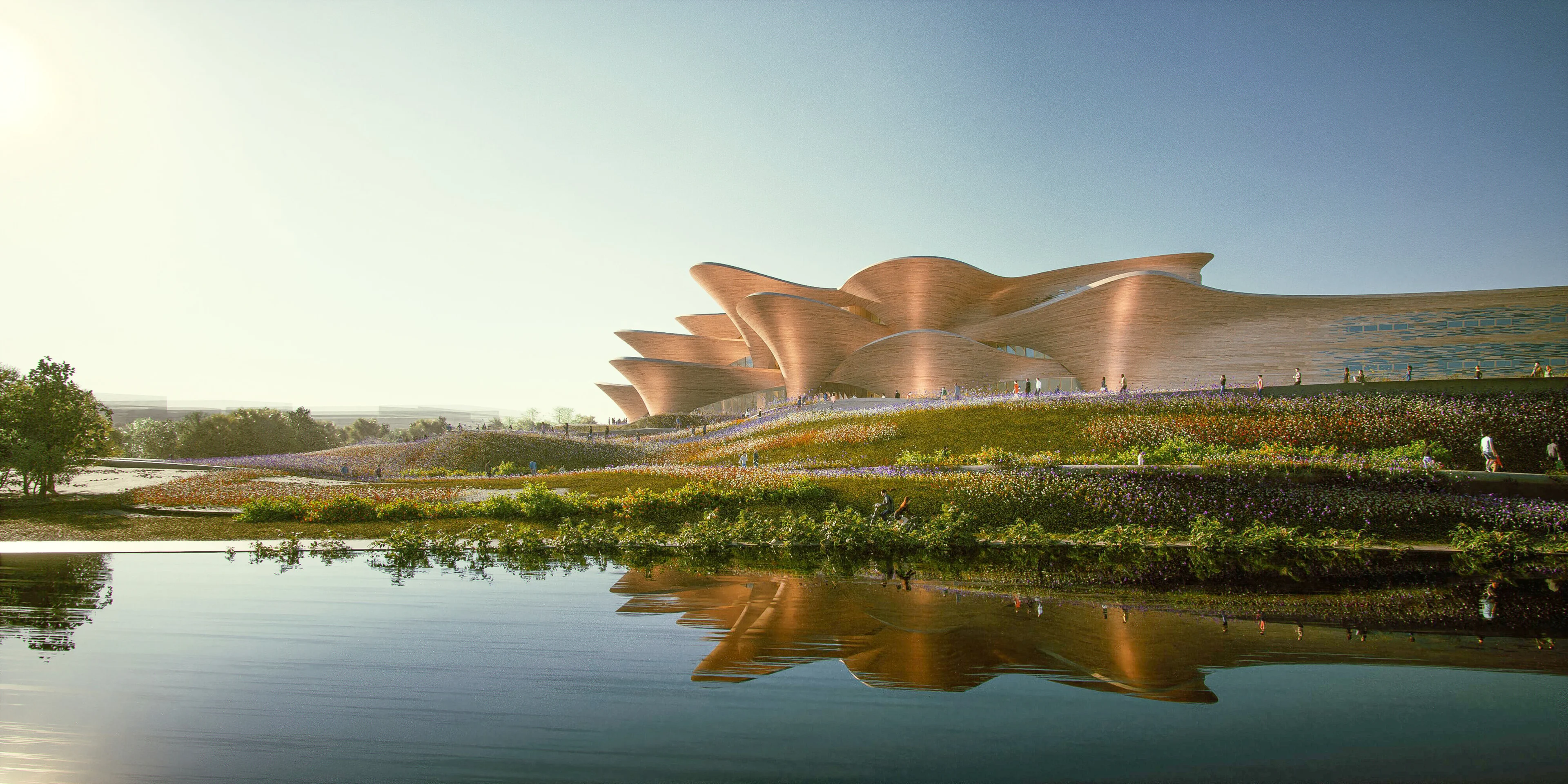
Courtesy of ZHA
River View
Tashkent, Uzbekistan
2024 - TBC
New Tashkent Construction Directorate
Alisher Navoi Institute
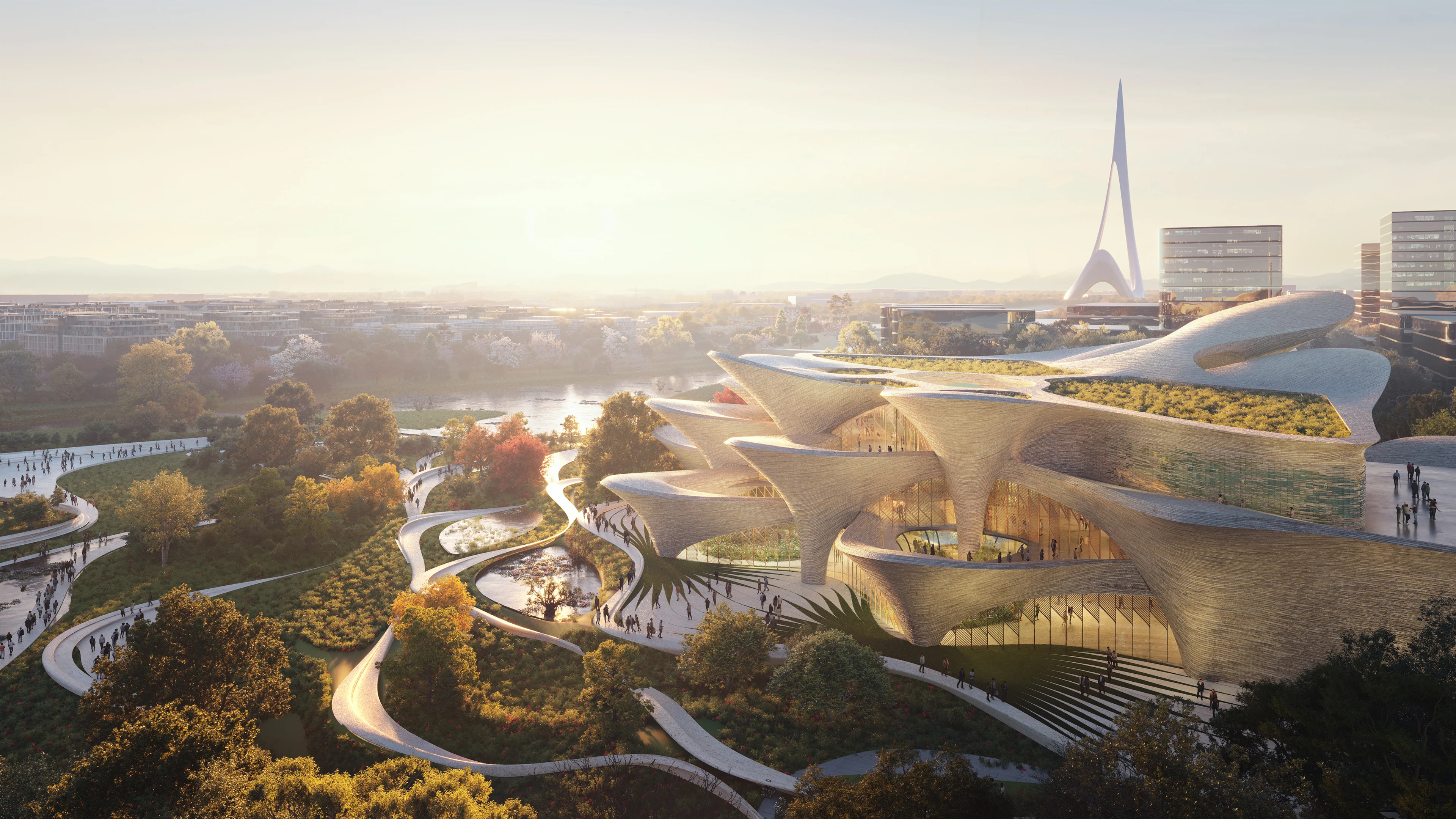
Render by NORVISKA
Facing the River view
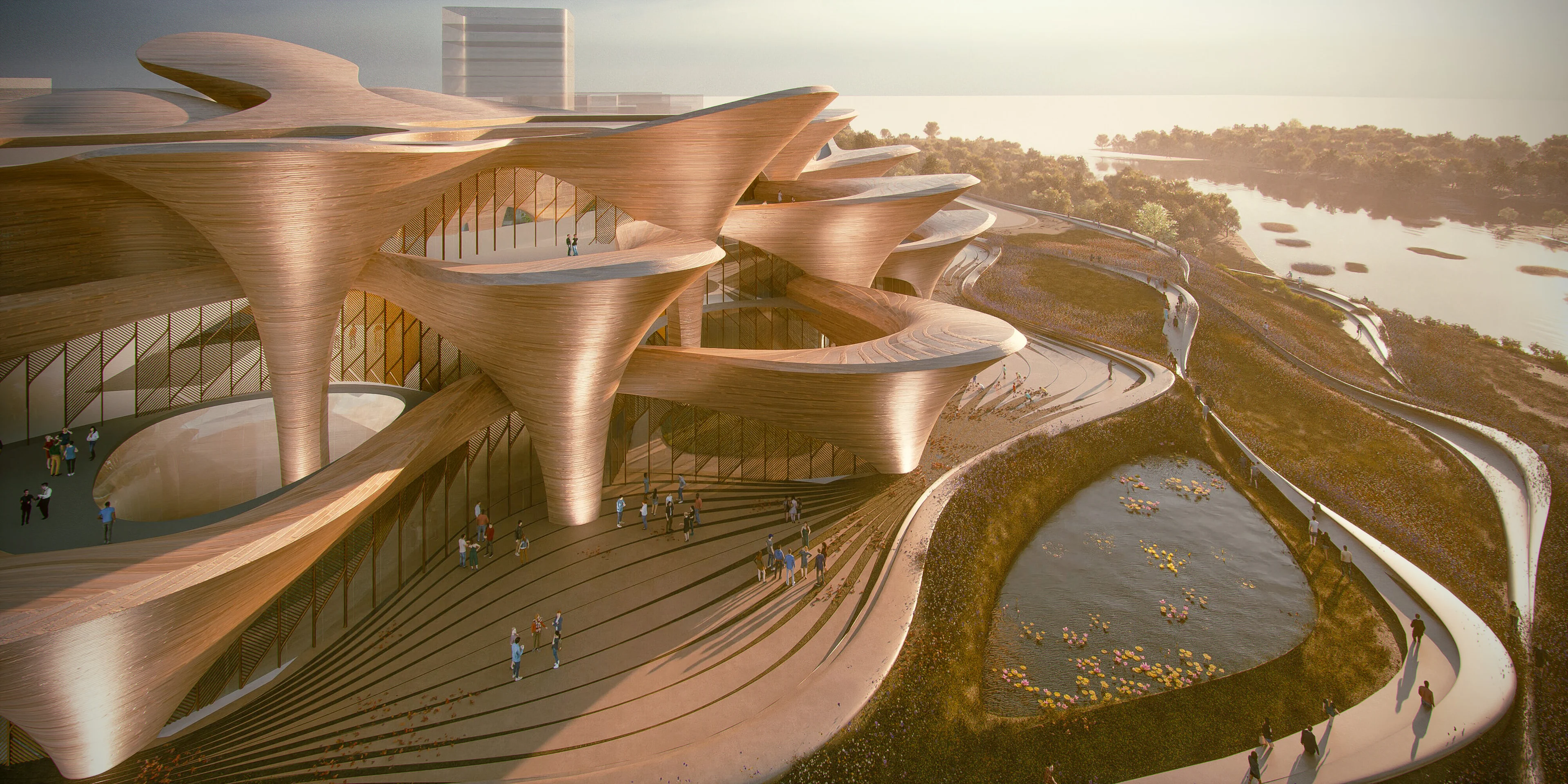
Courtesy of ZHA
Gacing River Confluence
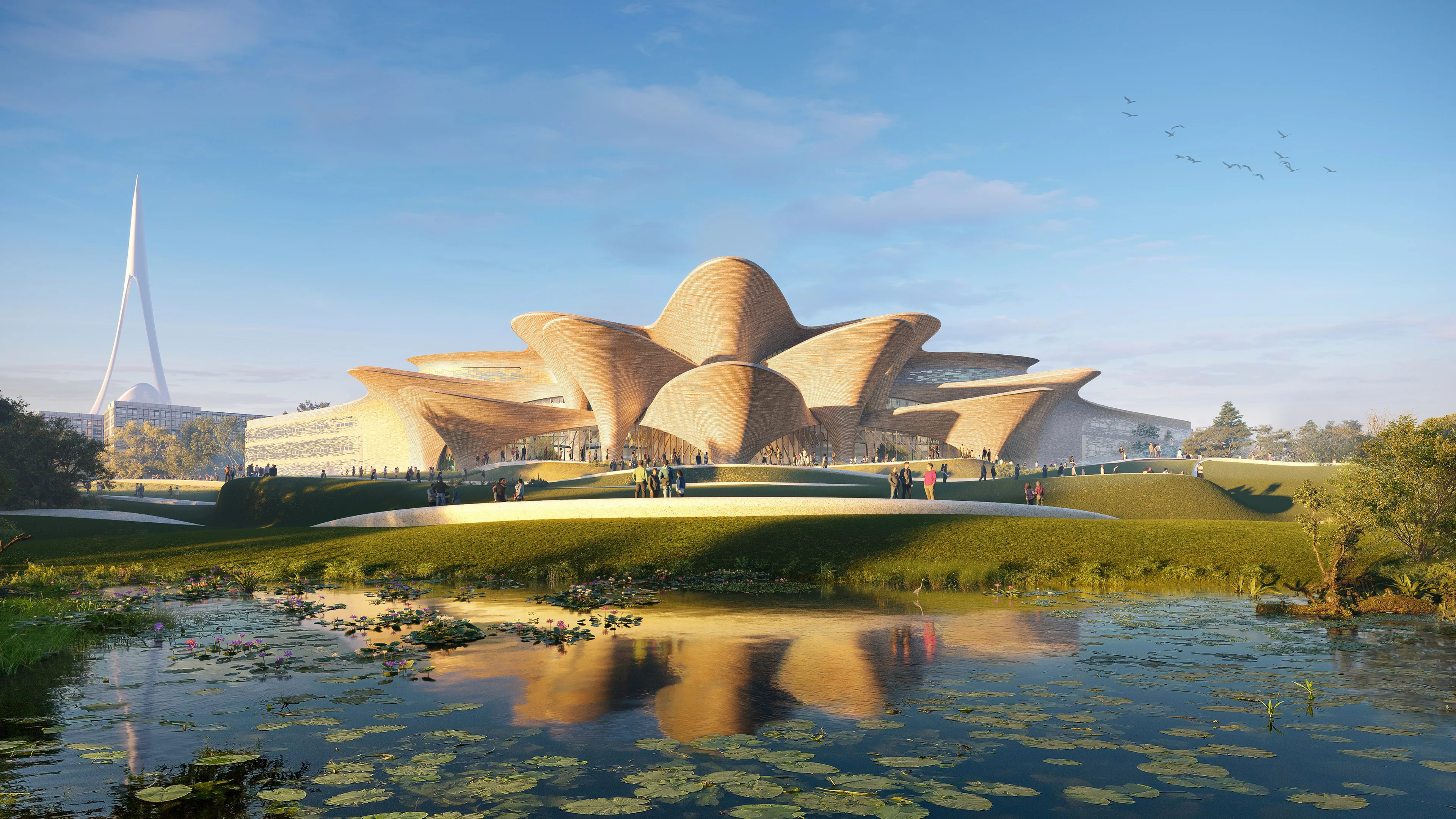
Render by NORVISKA
South elevation
Render by NORVISKA
Aerial View
01
02
03
04
Celebrating traditions
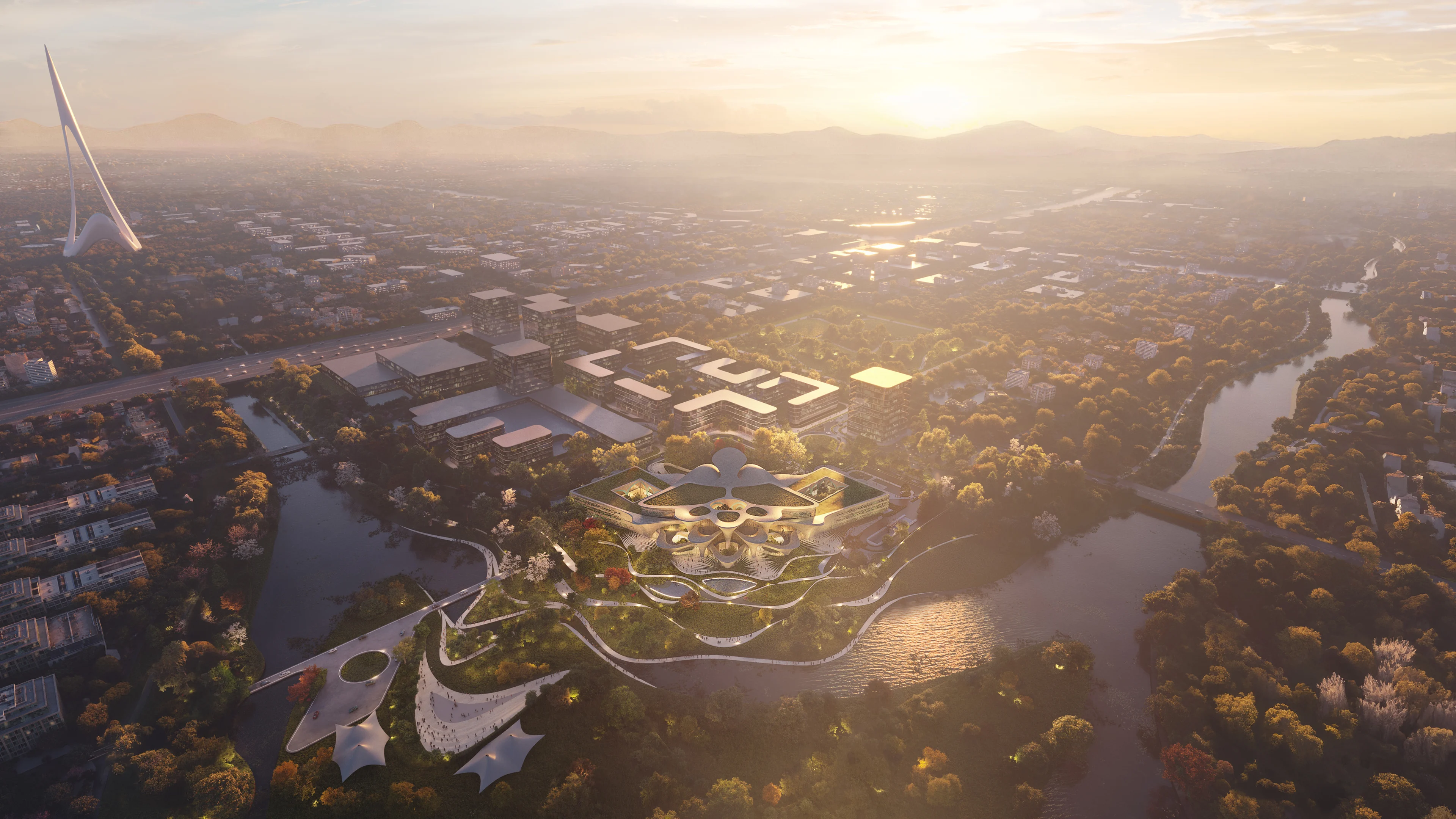
The Alisher Navoi International Scientific Research Centre in New Tashkent will incorporate the Navoi State Museum of Literature together with a 400-seat auditorium for performances, events and conferences. The design also comprises the International Research Centre and a residential school for 200 students specialising in Uzbek language, literature and music.
Anchoring the new cultural quarter within New Tashkent (a 25,000-hectare masterplan designed by Cross Works to accommodate the city’s growing population), the Alisher Navoi International Scientific Research Centre celebrates the traditions of Uzbek literature and Shashmaqom music. A fusion of vocal and instrumental music, melodic and rhythmic idioms and poetry, the classical music tradition of Shashmaqom is an integral part of Uzbek culture with Tashkent renowned as a centre of excellence.
Crafted from locally produced bricks
Named after Alisher Navoi, the 15th Century poet, author, linguist and stateman whose works had a profound influence in the cultural heritage of Uzbekistan, the 23,000m2 International Research Centre has been designed with a variety of interconnected spaces to encourage dialogue between literary education, research and the performing arts.
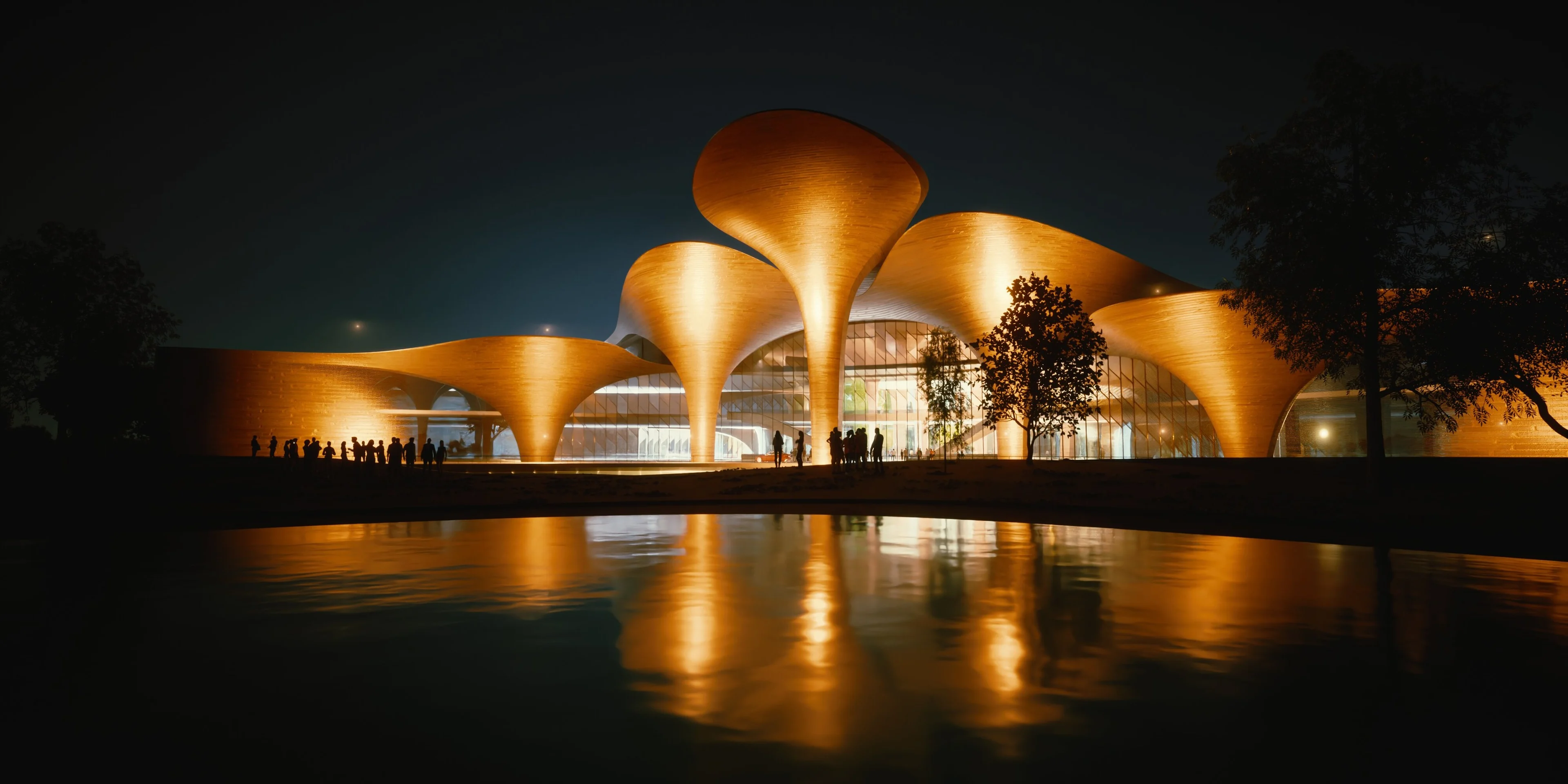
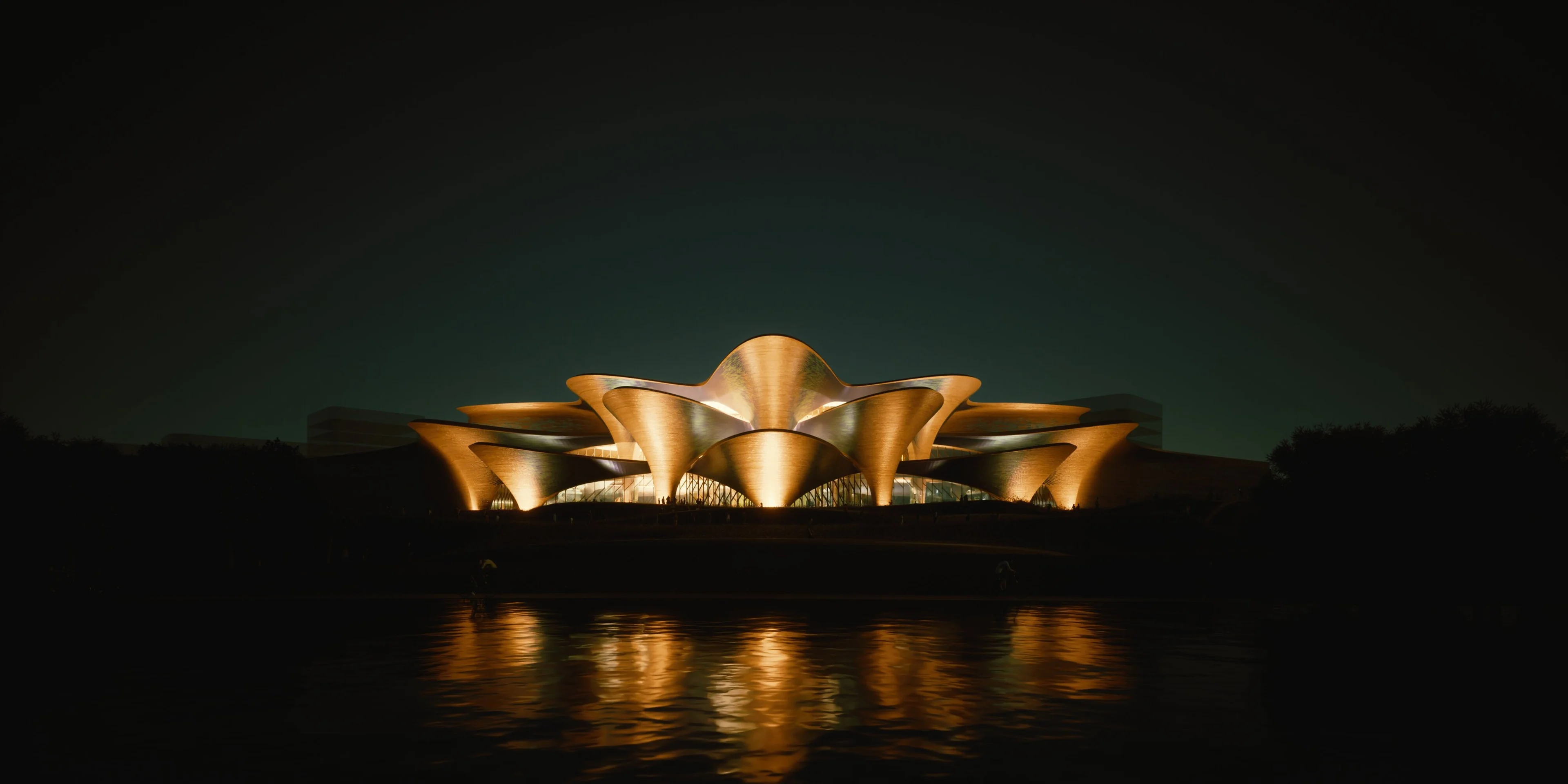
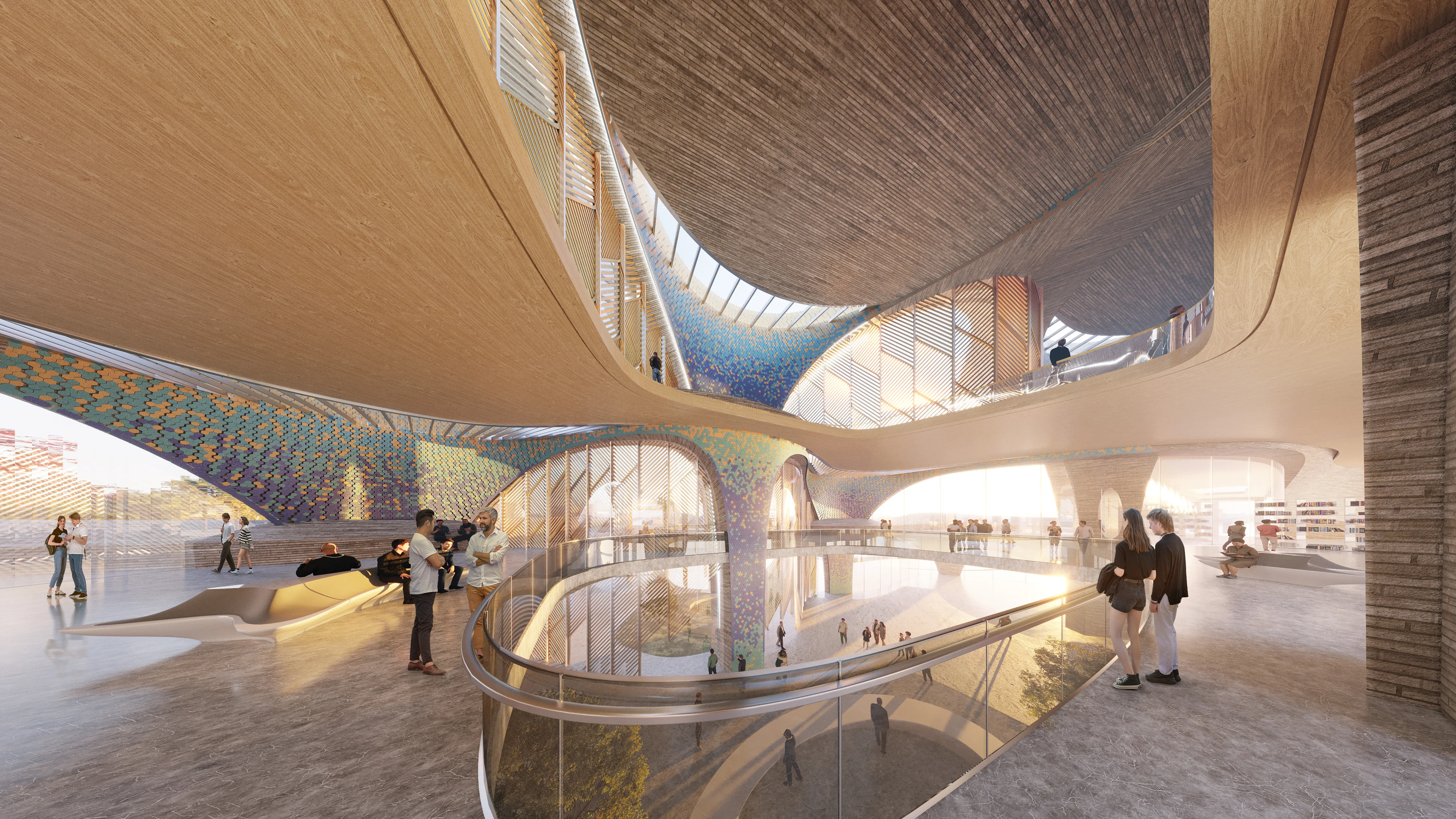
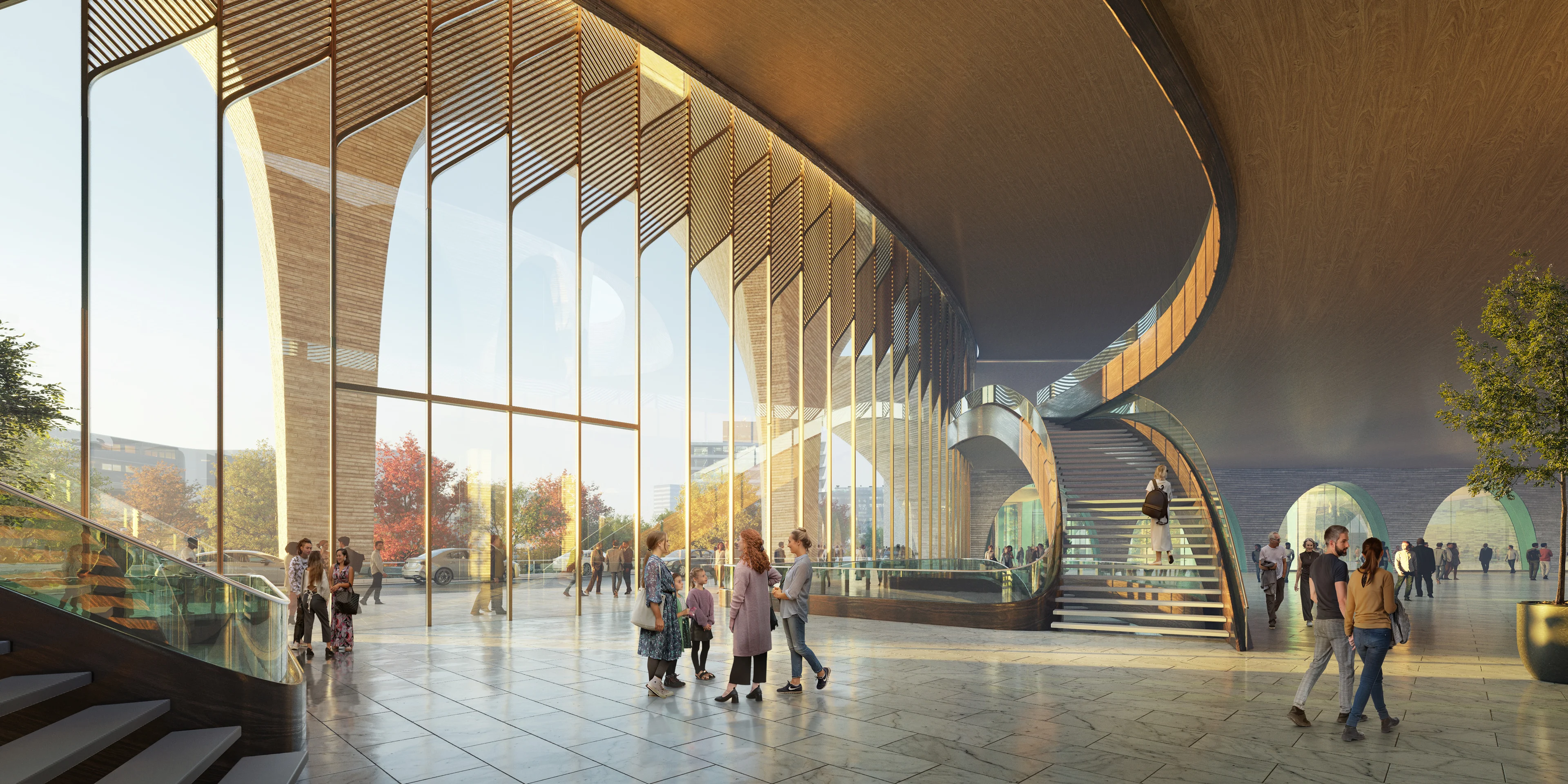
The centre’s arched facades and interiors will be crafted from bricks produced in Tashkent’s local kilns, echoing the curvilinear geometries of Uzbekistan’s acclaimed traditional architecture. Courtyards, another defining feature of the region’s vernacular tradition, are incorporated within to new centre to provide natural light and ventilation while creating a variety of outdoor gathering spaces and areas for private contemplation.
Courtesy of ZHA
Night view North Elevation
Courtesy of ZHA
Night View River Elevation
Render by NORVISKA
Atrium and Library
Render by NORVISKA
Main Lobby
01
02
03
04
Defined by passive design principles
Situated in Tashkent’s Mediterranean climate with the continental influence of its Central Asian location, the centre’s design is defined by passive architectural principles to provide optimal conditions for visitors, staff and students while minimising energy consumption.
Informed by the wind towers of Central Asian and Middle Eastern vernacular architecture that maintain cooler interior temperatures, the geometries and composition of the centre’s supporting arches have been designed as hollow structures with openings that capture the wind and channel cooling ventilation into the building. In the hottest months, this system will be supported by fans and misting to cool the air before it circulates within the structure.
In weather conditions without wind, these hollow arched structures create a pressure gradient which extracts hot air upwards, producing a thermal chimney allowing warmer air to escape through the openings at the top of each arch.
These cooling principles are enhanced by the day-night cycle, extracting warmer air while trapping cooler air below. Coupled with high thermal mass of the centre’s structure, optimum conditions of comfort can be maintained with minimal energy consumption. Courtyards and skylights bring natural light into the heart of the centre while deep roof overhangs provide its façades with effective solar shading in summer yet permit winter sun into the building to warm the interiors.
A hub of creativity
The Navoi State Museum of Literature at the heart of the institute will provide comprehensive programs of research, archives and exhibitions that include a restoration workshop and a repository housing a collection of 3,500 historical books and manuscripts. Incorporating 13 permanent exhibition halls around a central courtyard, the museum will present centuries of Uzbek literary history and contemporary works by the nation’s most renowned authors.
Taking inspiration from the dynamic performances of Shashmaqom music to create a setting where the city’s artists and wider community come together, the centre’s outdoor spaces define an sequence of landscaped terraces with open-air amphitheatres and gardens with shaded pavilions for impromptu performances.
Celebrating Uzbekistan’s rich cultural heritage, while also showcasing its diversity and depth, the Alisher Navoi International Scientific Research Centre aims to become a hub of creativity with an ensemble of traditional and contemporary venues for the arts as well as hosting educational and research programs.
Culture
Explore more of our cultural projects
From a civic art centre that unites three distinct cultural institutions to a science fiction museum whose landscaping contributes to the city’s drainage and flood defence systems, discover our latest cultural projects.
Render by Devisual
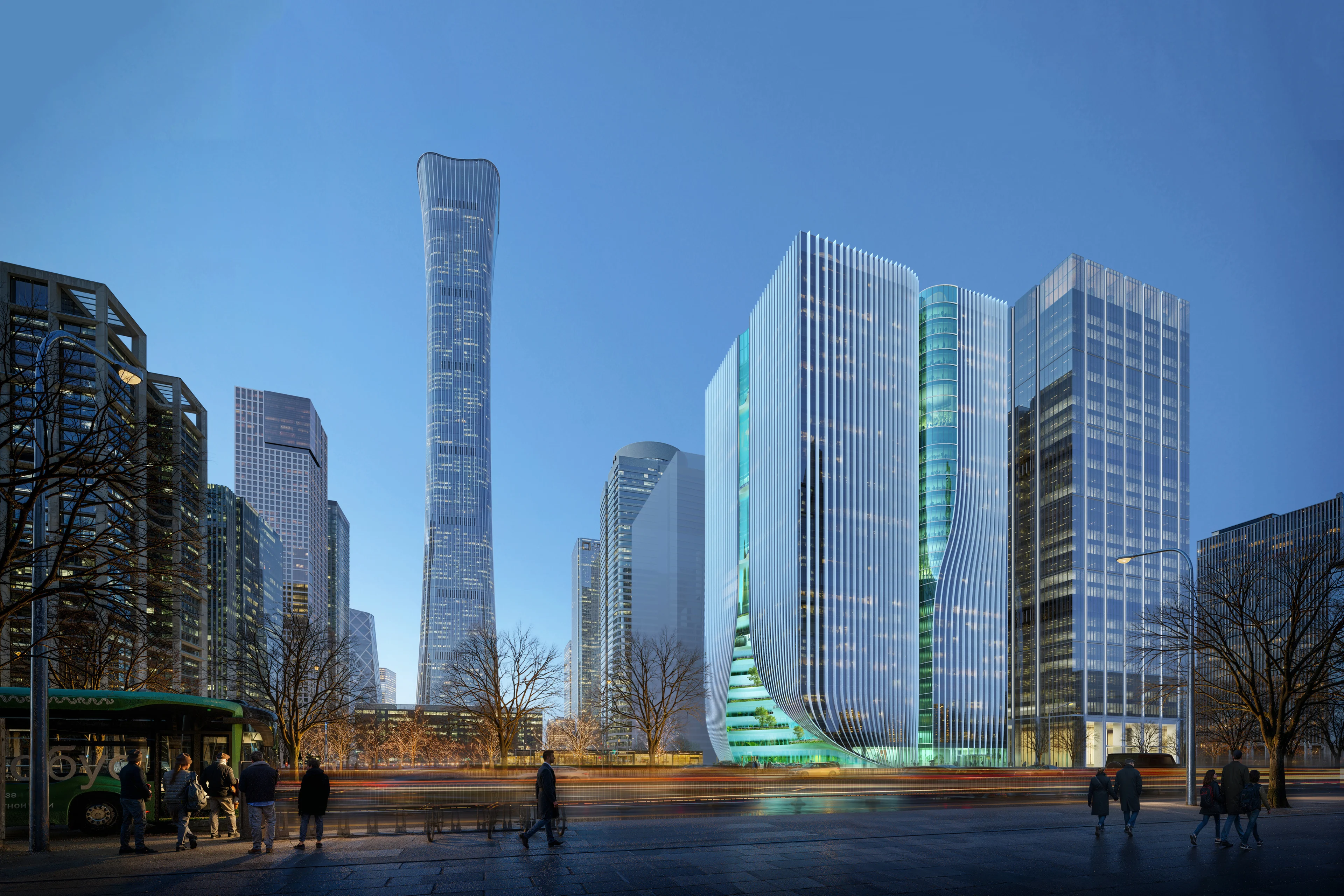
Z8 Tower
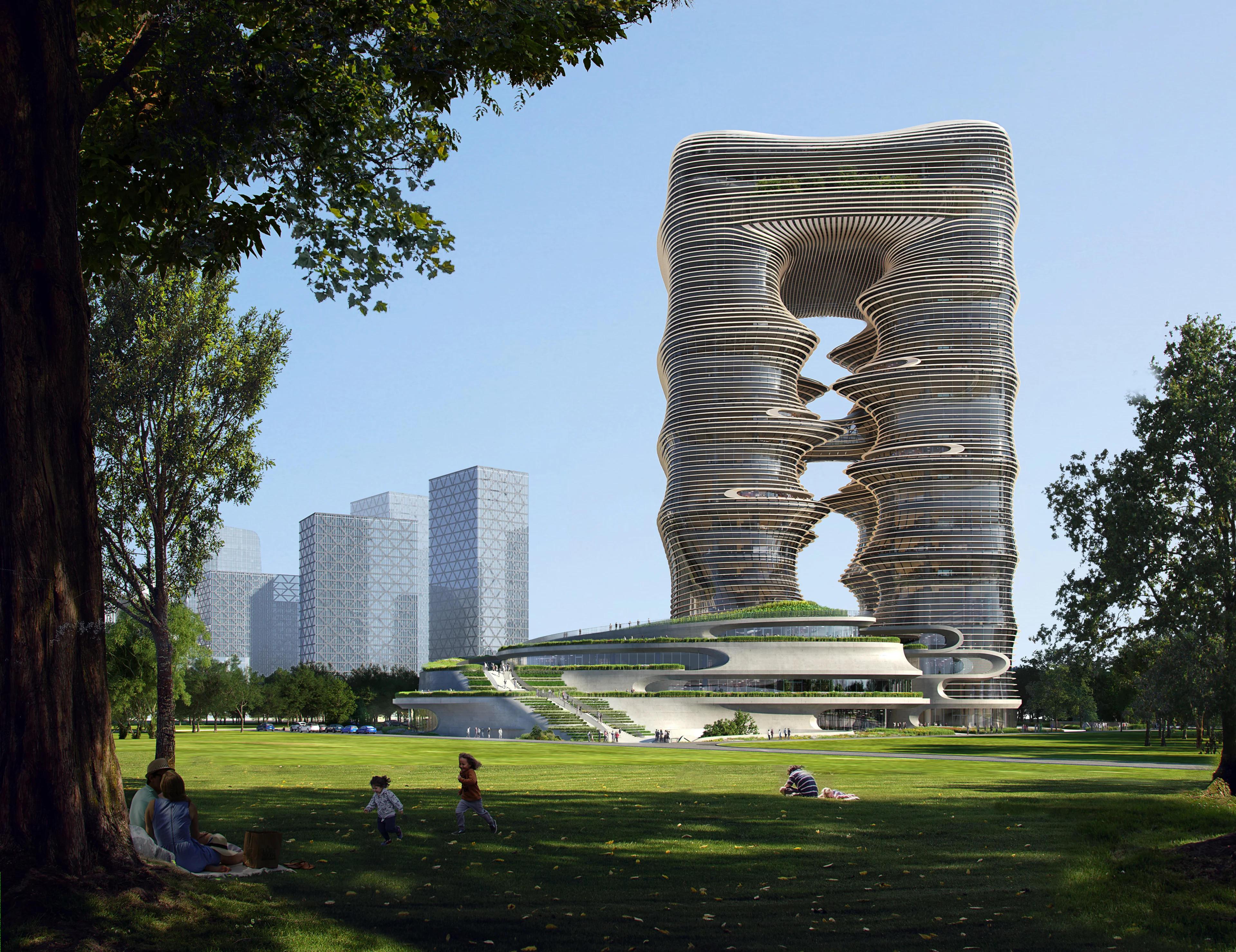
Located in the core of Beijing’s Central Business District (CBD) at the intersection of Jianguo Road and Jinhe East Road, the new Z8 Tower faces the CBD’s central park and is defined by the historic alignment and urbanism of the city’s Chang’an Avenue.
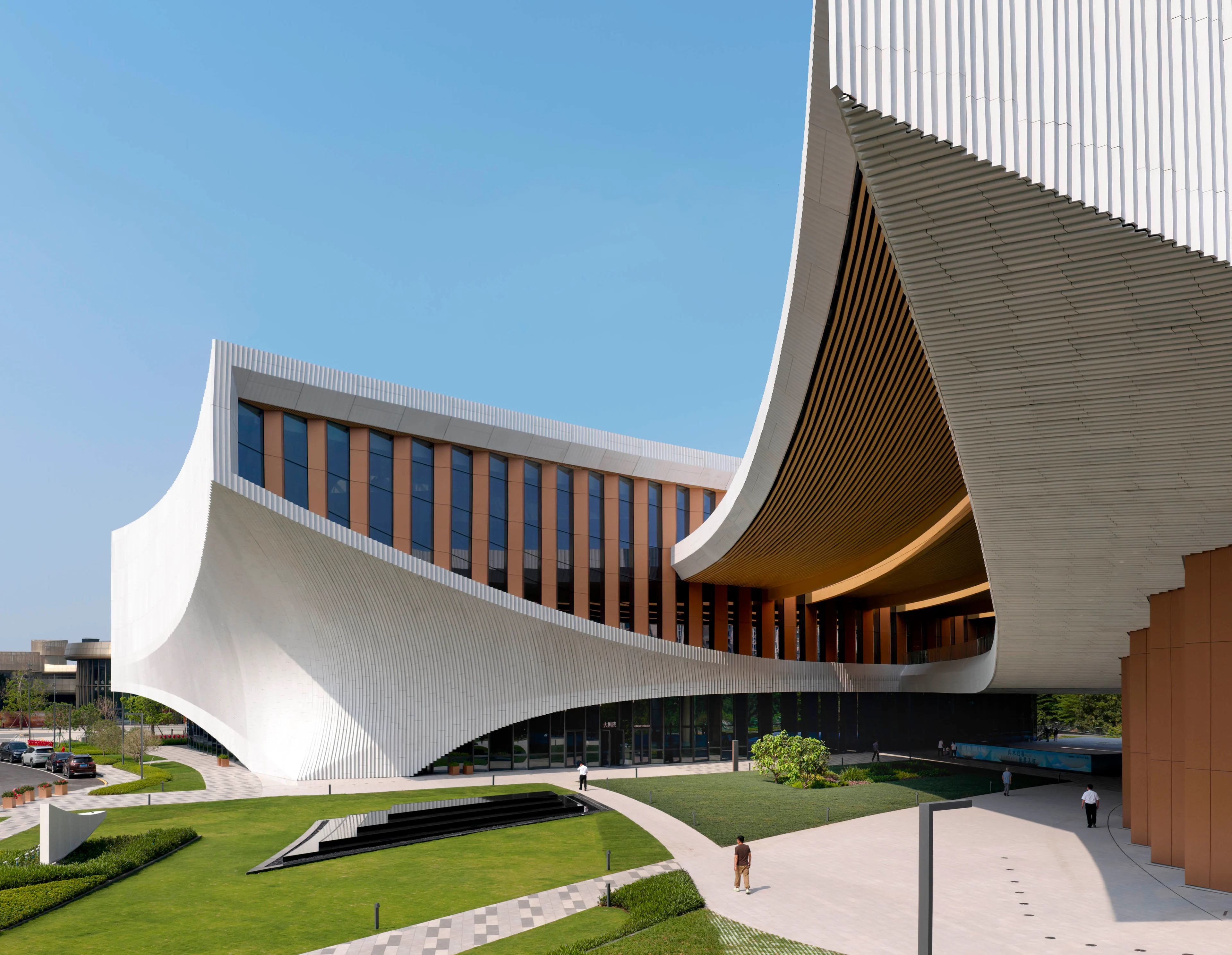
Songshan Lake Performance and Exhibition Centre
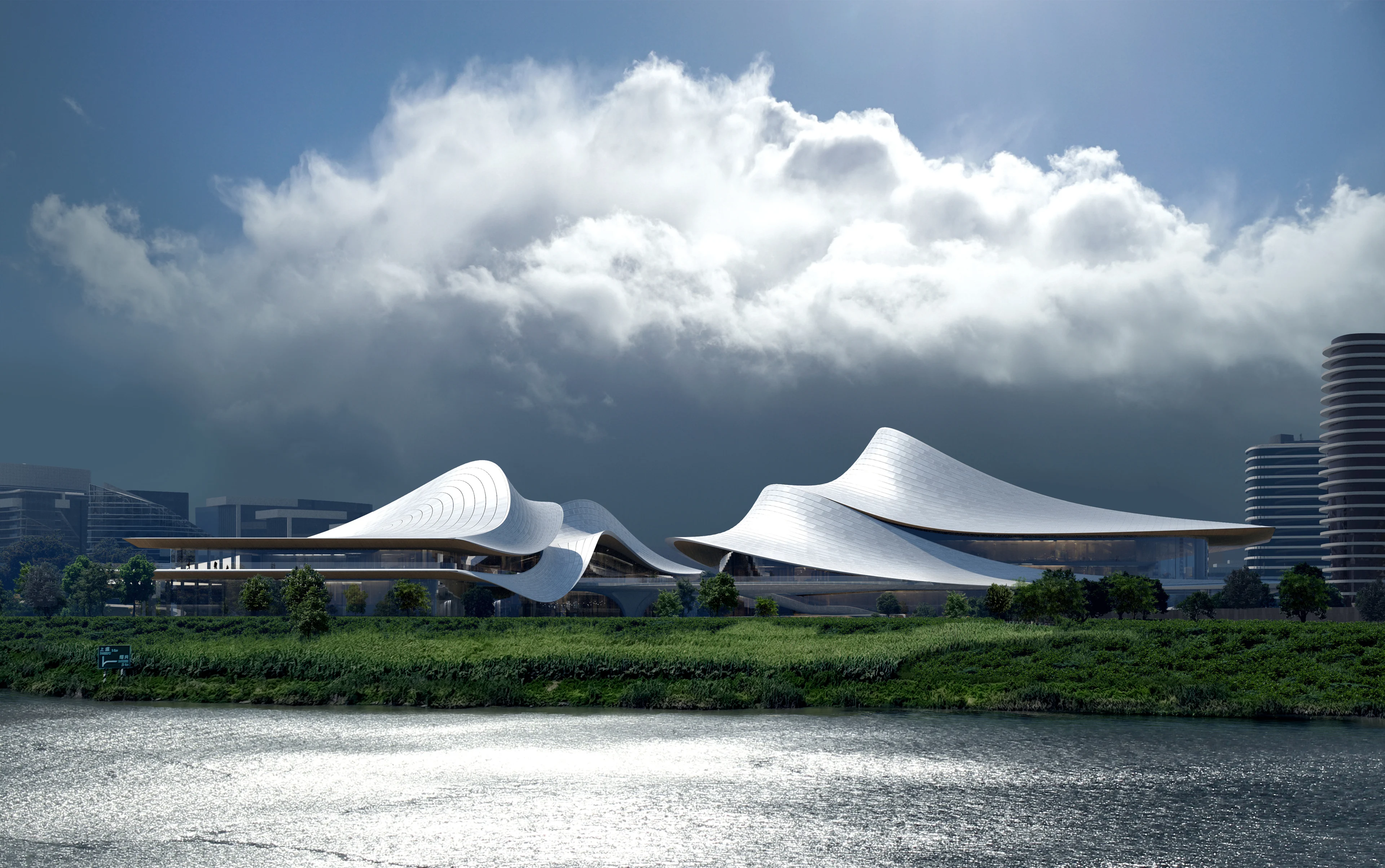
Located in Dongguan within the Greater Bay Area of southern China’s Pearl River estuary, the new Songshan Lake Exhibition and Performance Centre is at the heart of a mixed-use masterplan to revitalize the Yuehe Lake waterfront.
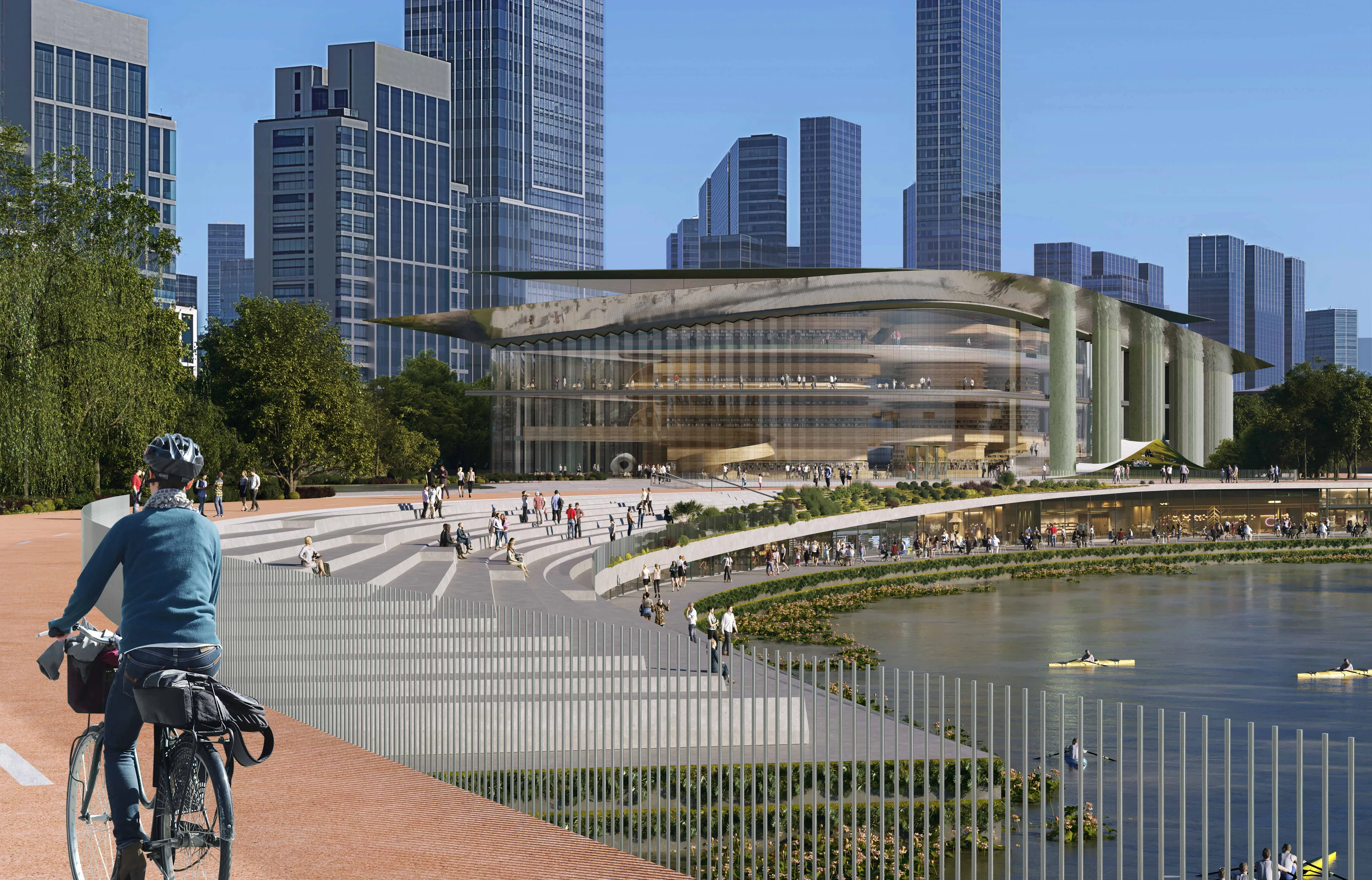
Qiantang Bay Cultural District
A series of new landscaped parklands, terraces and gardens along the Zhedong Canal within the Xiaoshan district of Hangzhou
Render by Atchain
Yidan Center
A place of convergence and collaboration, the Yidan Center will be home to the Chen Yidan Foundation in its work to promote lifelong learning and innovation in education.
Render by Proloog
Elevation River
Zhejiang Shaoxing Shangyu District Cao’e River Culture and Art Centre
Designed to host local and international productions of opera, dance and drama together with large-scale symphonies and musical theatre, the Art and Culture Centre includes a 1,400-seat Grand Theatre, 500-seat Black-Box Multifunctional Hall, 2,900 sq. m Arts and Education Centre, 3,000m² Conference Centre, 7,500m² Heritage Museum and a 10,000m² Digital Art Gallery.
Render by Specto-Digital
Asaan Museum
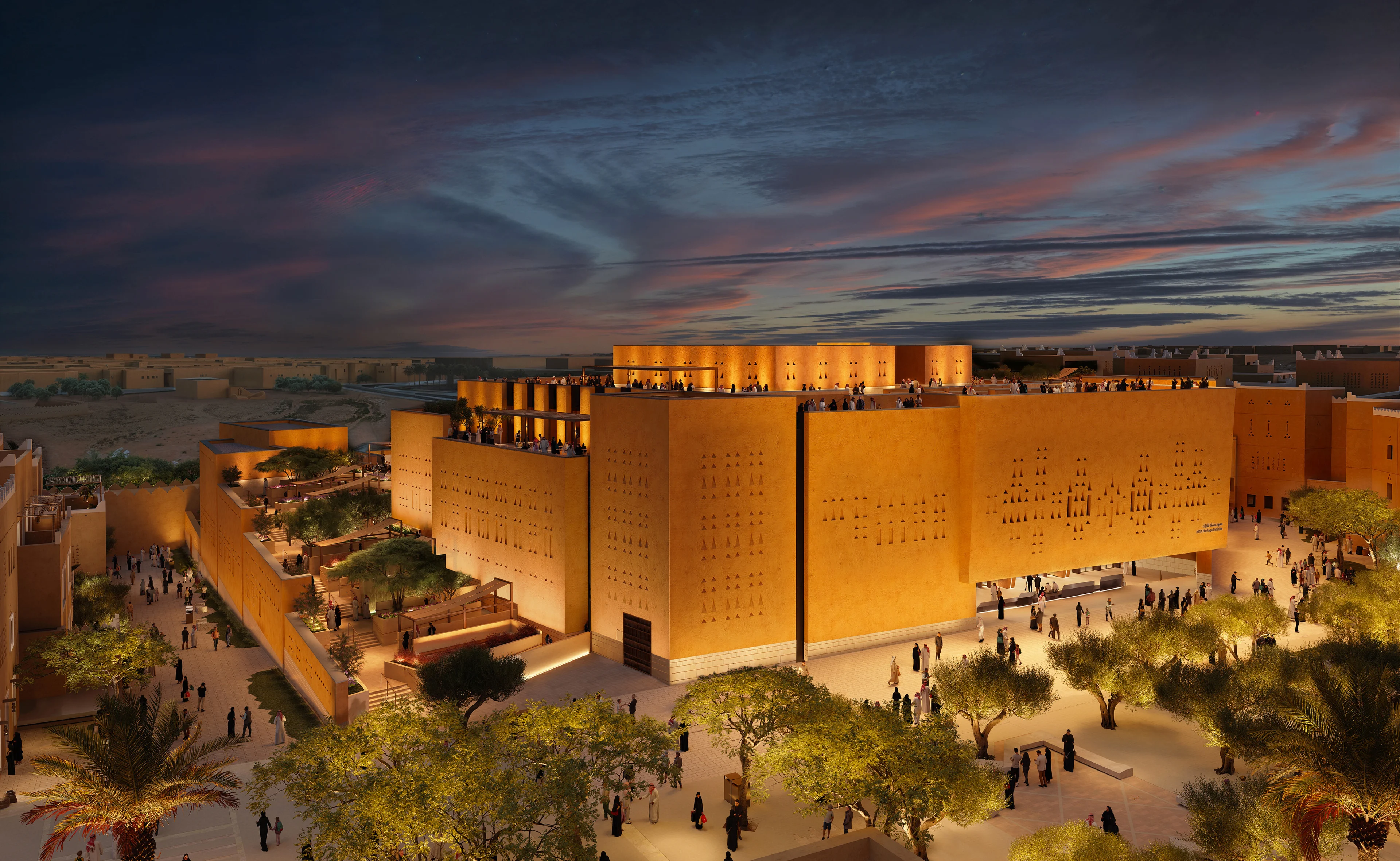
Meaning ‘inheritance passed down through generations’, Asaan will be an institution dedicated to preserving and celebrating this rich heritage, in addition to promoting creativity and knowledge sharing.
Nikola Tesla Museum
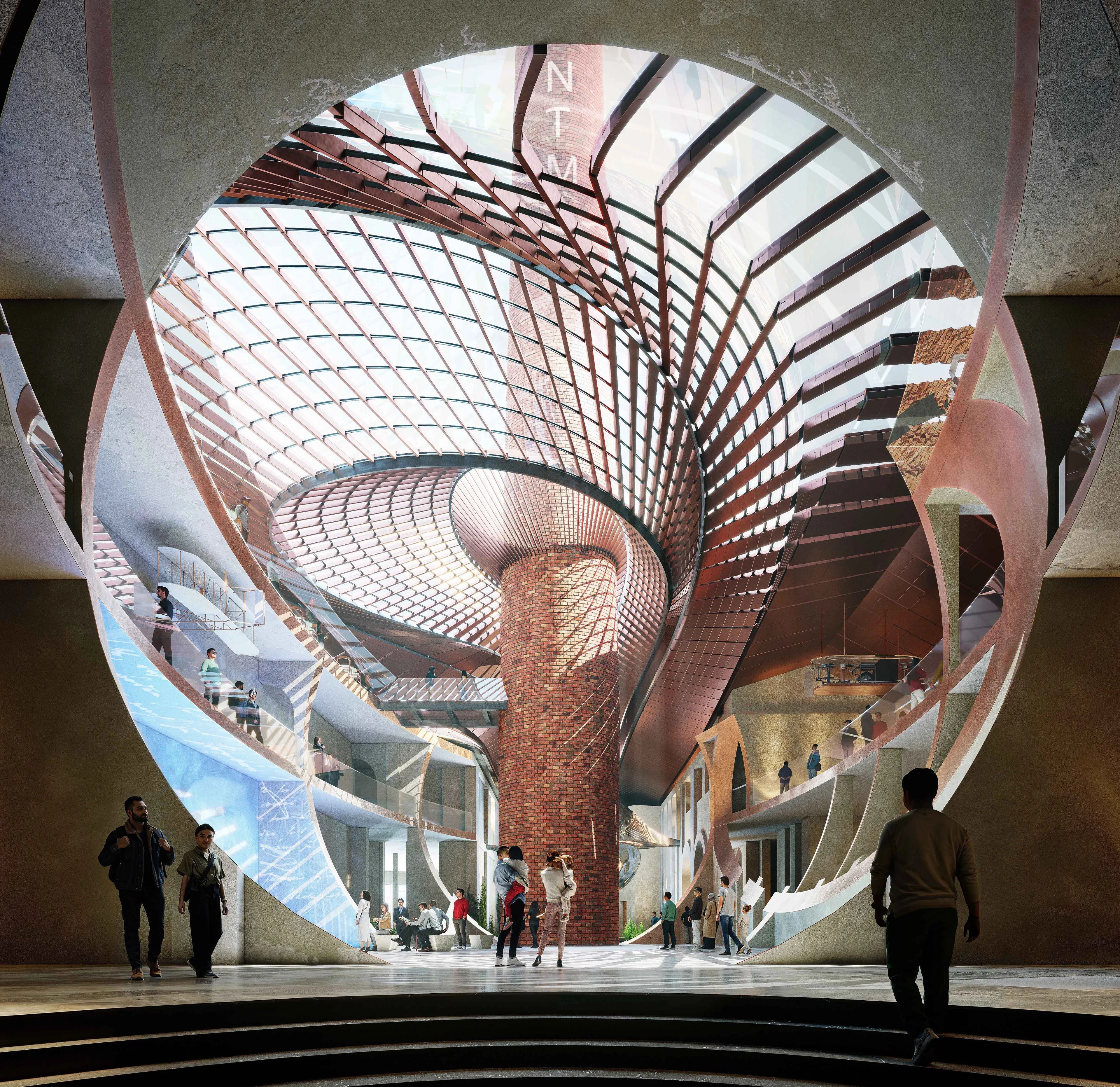
The new Nikola Tesla Museum renovates Belgrade’s historic Milan Vapa Paper Mill into a cultural destination celebrating Tesla’s legacy while preserving the city’s architectural heritage and creating a variety of new public spaces for local residents and visitors.
Render by Atchain
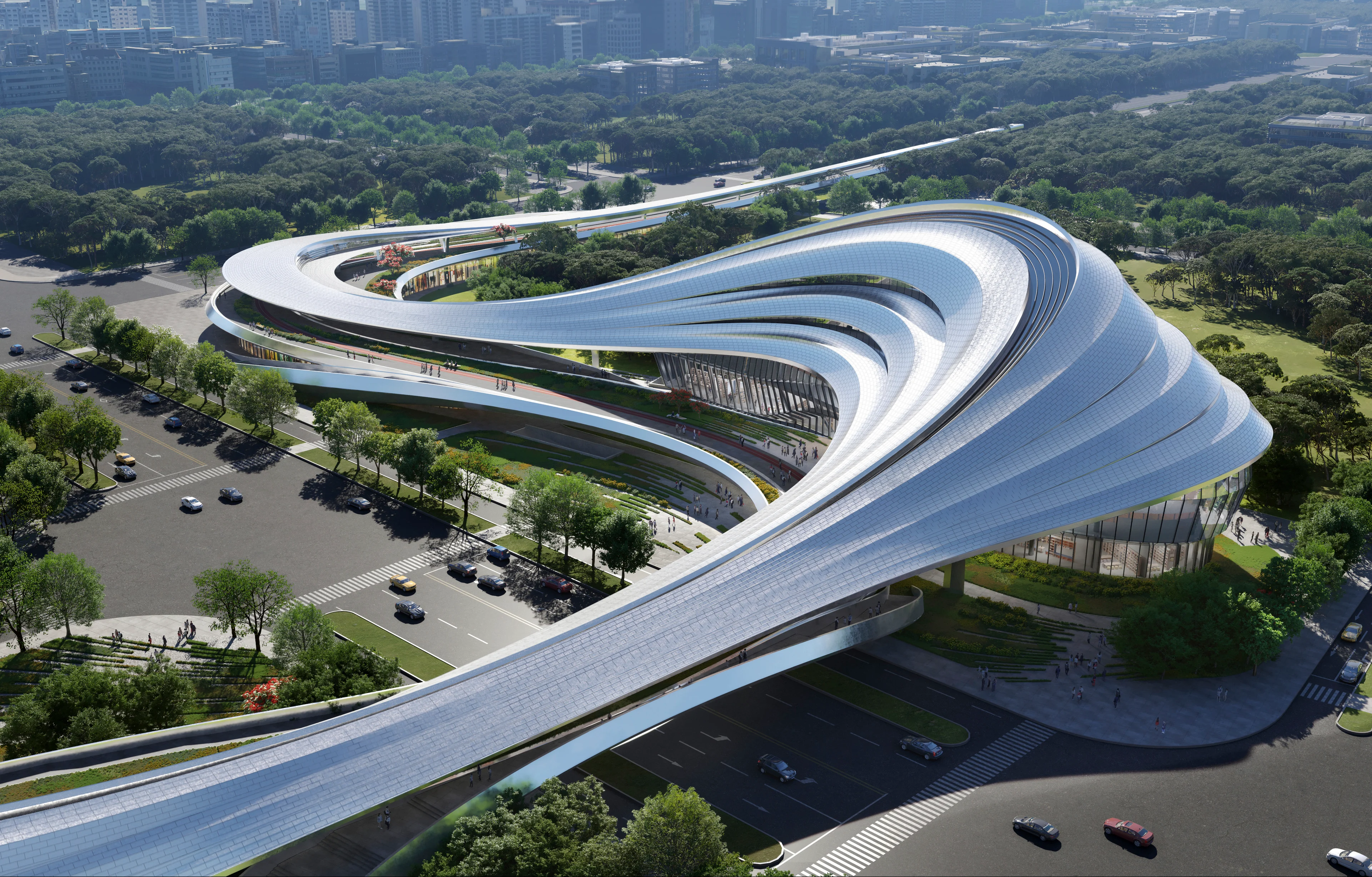
Jinghe New City Culture and Art Centre
Jinghe New City is growing as a science and technology hub north of Xi’an in China’s Shaanxi province. Supported by new scientific research institutes and driven by environmental considerations, the city is becoming a centre for developing industries focusing on new energy and materials, artificial intelligence and aerospace.
Photograph by Virgile Simon Bertrand
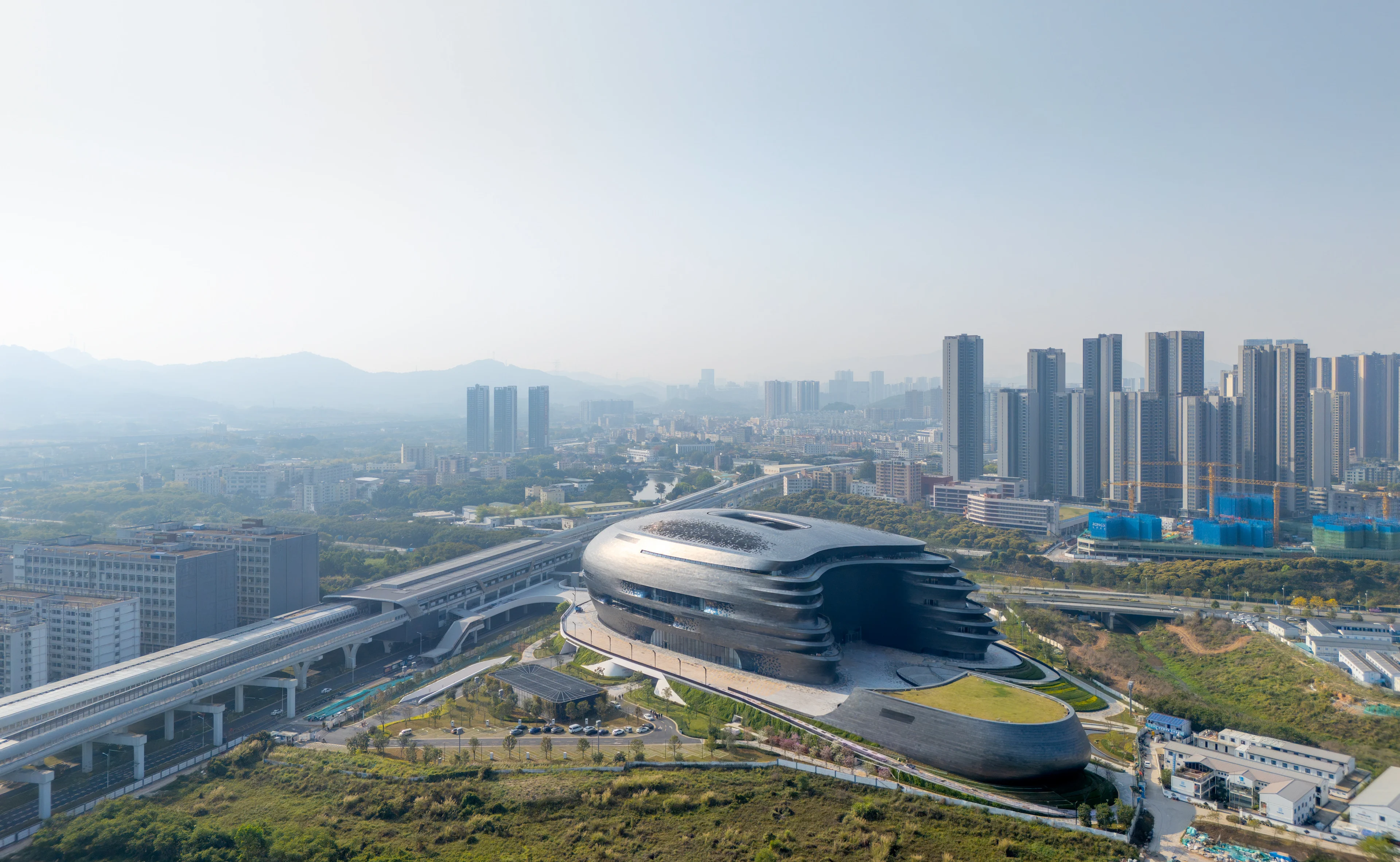
Shenzhen Science & Technology Museum
Showcasing the scientific endeavour, ground-breaking research and future possibilities of technology, this new institution will explore the power of science and the technological advancements defining our future.
Photograph by Luke Hayes
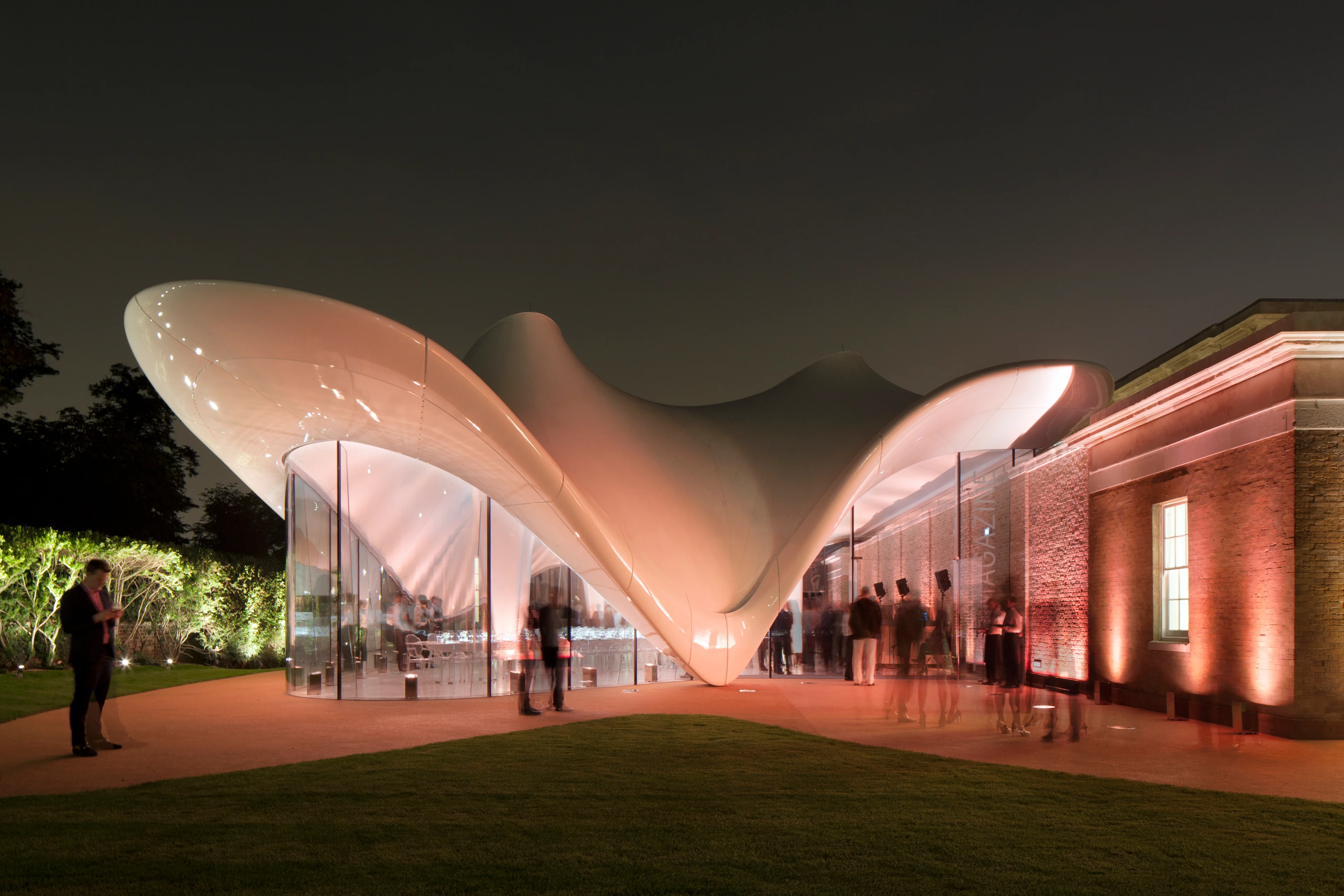
Serpentine North Gallery
The Serpentine North Gallery consists of two distinct parts, namely the conversion of a classical 19th century brick structure – The Magazine – and a 21st century tensile structure. The Serpentine North Gallery is thus – after MAXXI in Rome – the second art space where ZHA has created a synthesis of old and new.
Photograph by Fernando Guerra
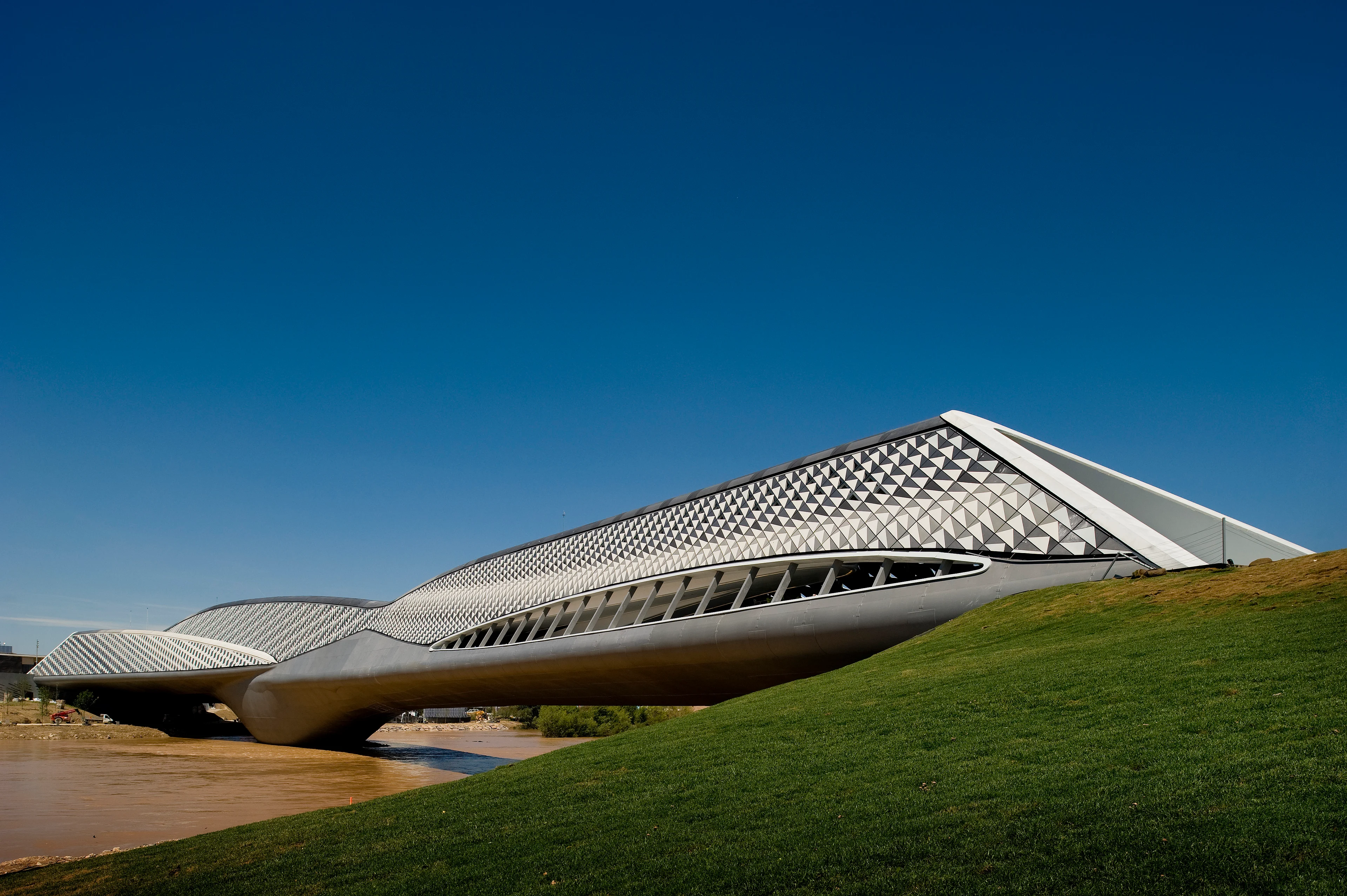
Zaragoza Bridge Pavilion
An enclosed interactive space spanning the River Ebro to form a gateway to the Zaragoza Expo 2008, a hybrid of pedestrian footbridge and exhibition pavilion. Four structural elements correspond to specific spatial enclosures, which intersect and brace each other. This fluid, dynamic design interprets the Expo’s theme: ‘Water and Sustainable Development.’
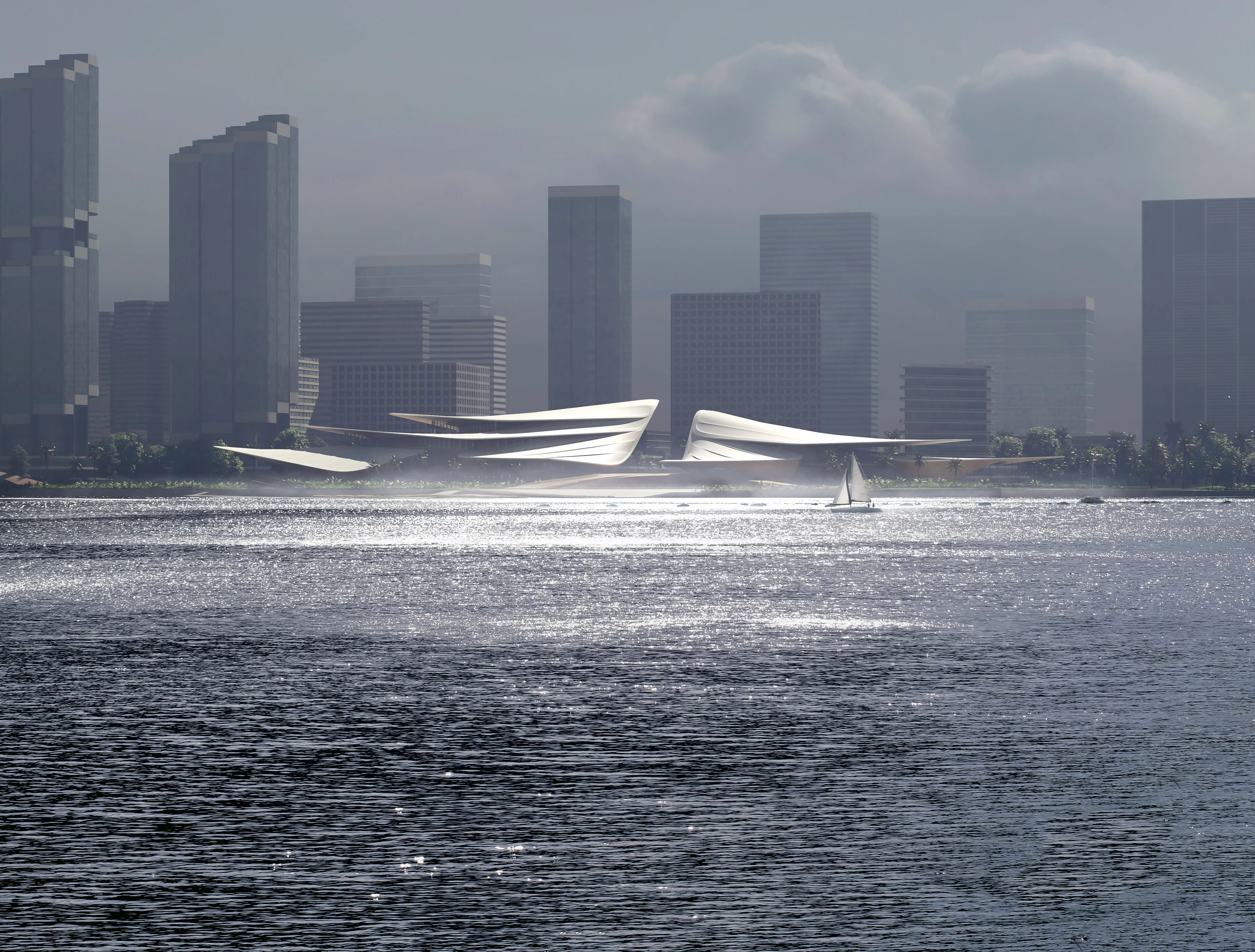
Sanya Cultural District
Located at the entrance to Sanya’s harbour, the new cultural district by ZHA is adjacent to the Jiangang Road terminus of Sanya’s tram network that connects many of the residential and hotel districts on Sanya Bay with the city’s high-speed rail station.
Courtesy of Arch-Exist
default
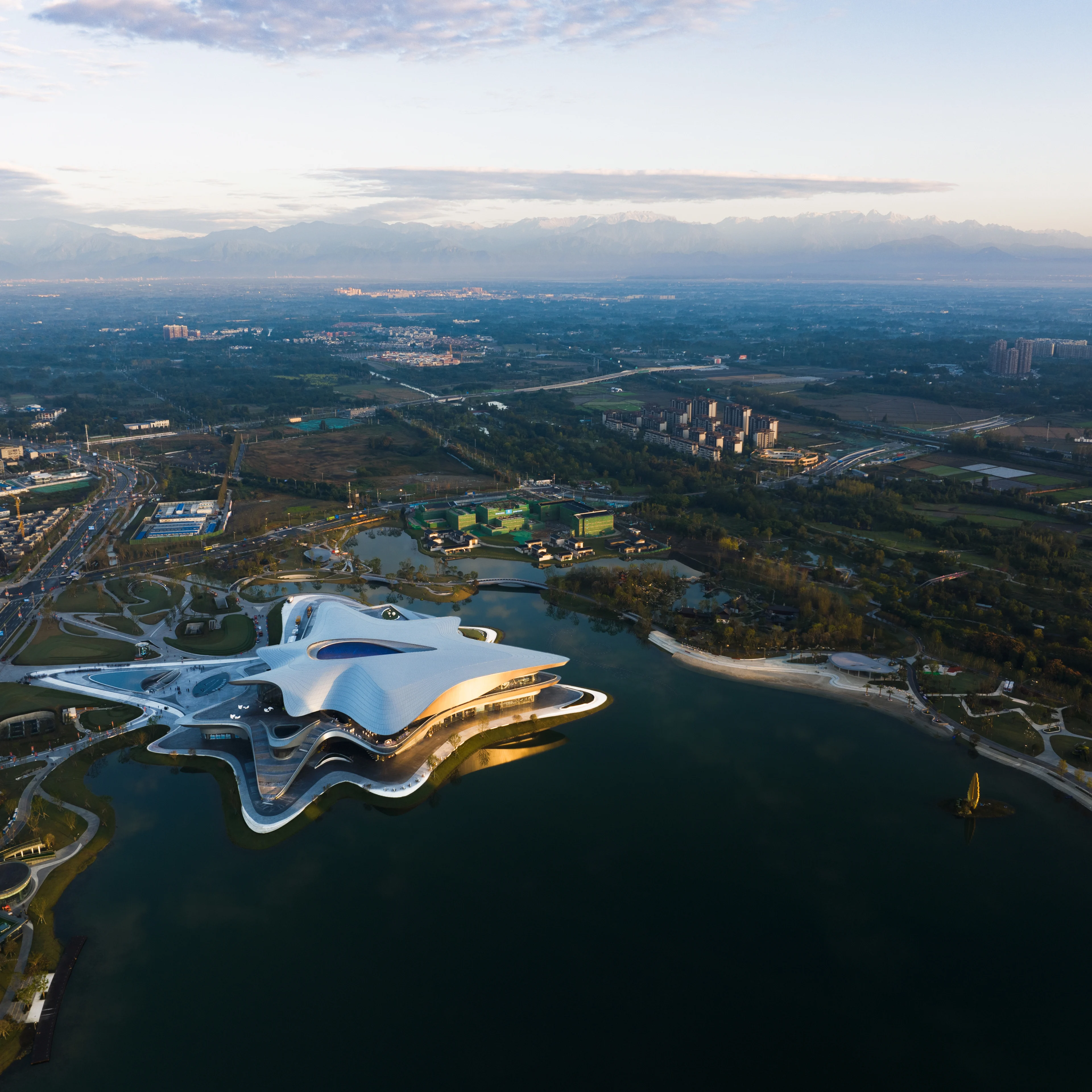
Chengdu Science Fiction Museum
The new Chengdu Science Fiction Museum is situated on Jingrong Lake within the Science & Innovation New City of Chengdu’s Pidu District.
Render by Negativ
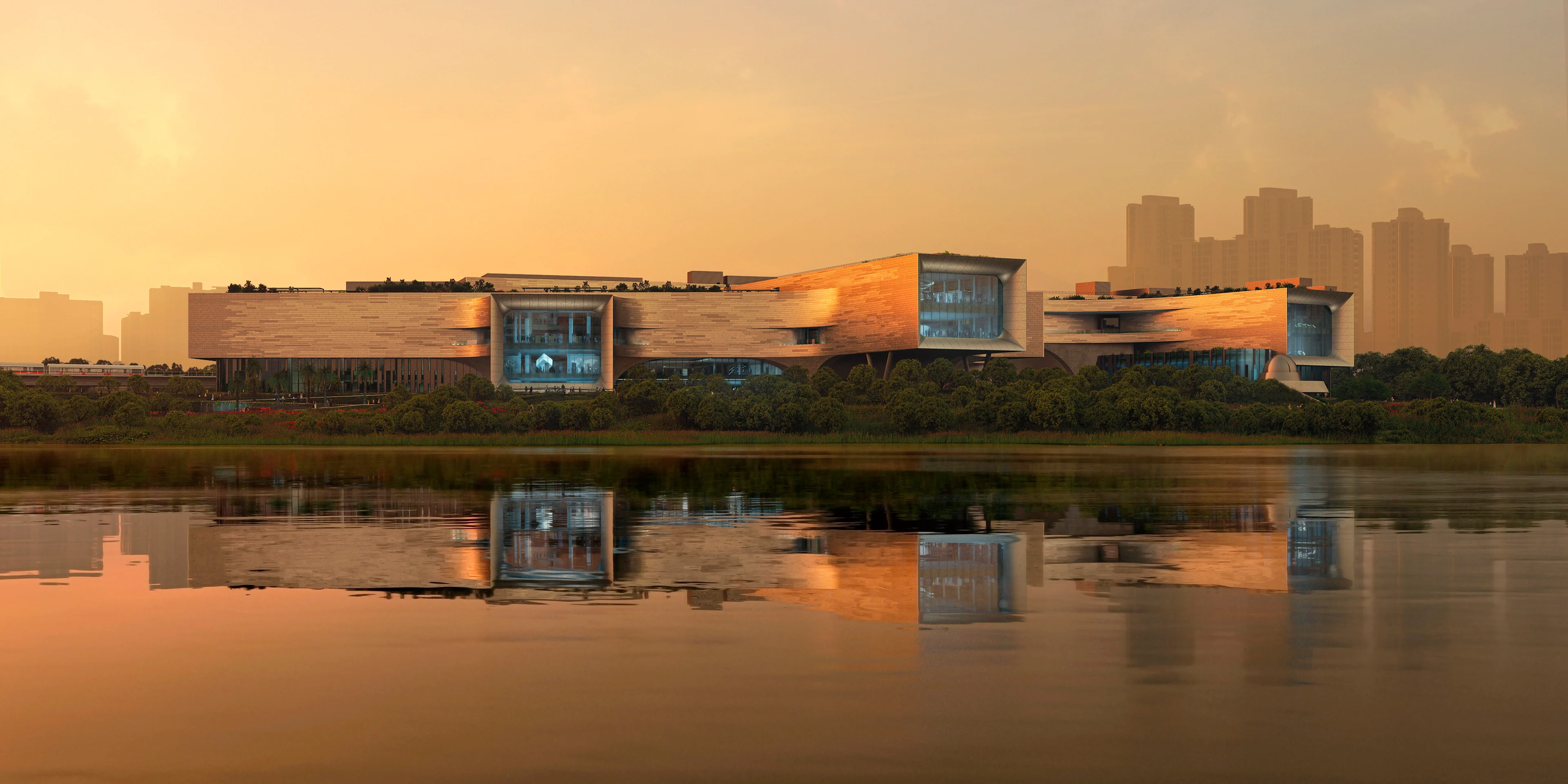
Waterfront view of new Science Centre. render by Negativ. The image is an artist’s impression, and final design may be subject to changes.
Singapore New Science Center
Singapore’s New Science Centre will provide unique facilities and programmes as a destination for all Singaporeans to access science, technology, engineering and mathematics (STEM) education and experiences.
Courtesy of CAT-OPTOGRAM 猫瞳
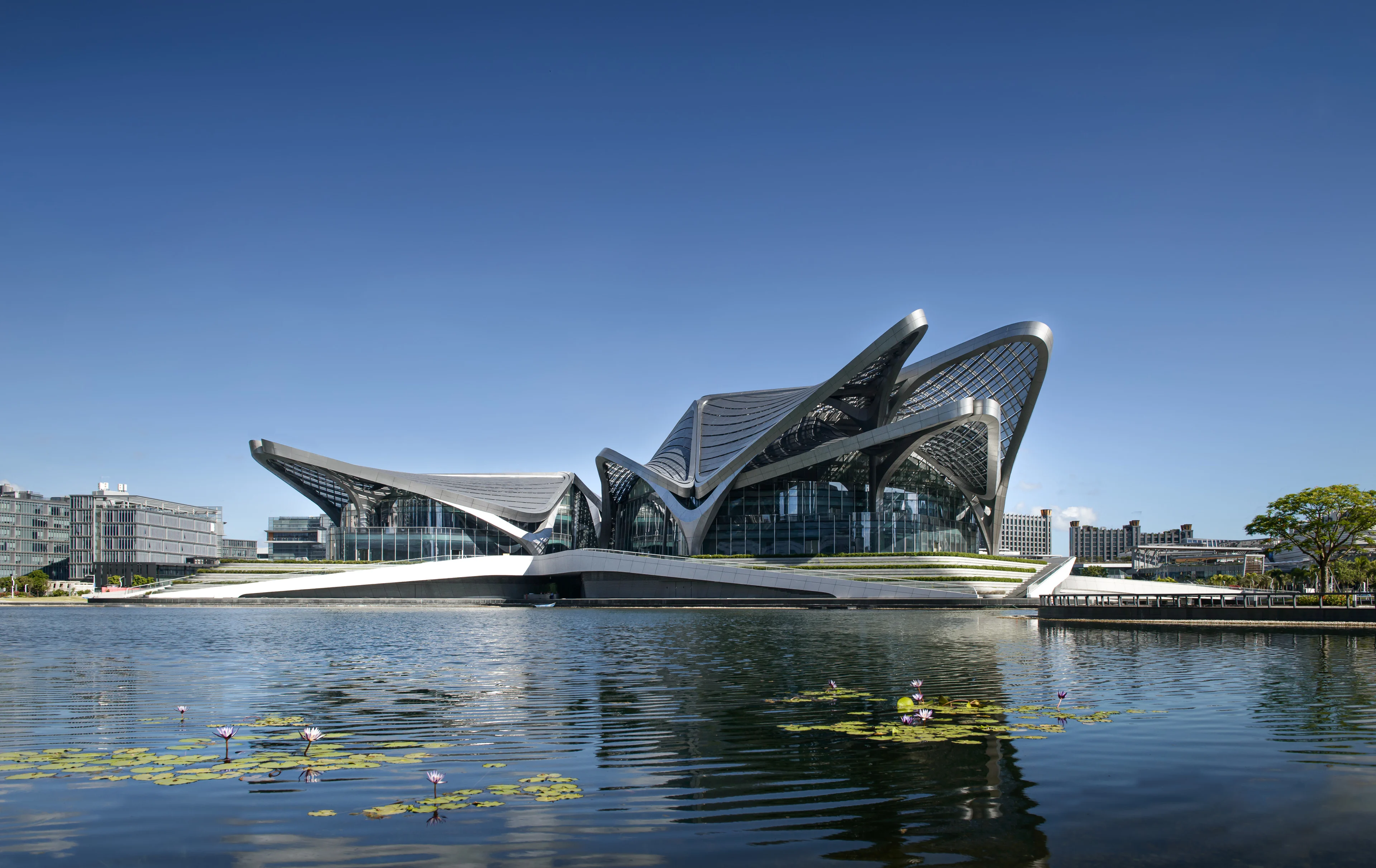
Zhuhai Jinwan Civic Art Centre
Integrating three distinct cultural institutions for the city, each venue within the Zhuhai Jinwan Civic Arts Centre incorporates unique characteristics that create differing visitor experiences, yet all are united by a coherent formal and structural logic that spans 170 meters wide from east to west and 270 meters long from north to south.
01
02
03
04
05
06
07
08
09
10
11
12
13
14
15