
Courtesy of ZHA
Chicago, United States of America
2009 - 2009
Burnham Plan Centennial
Burnham Pavillion
Photograph by Roland Halbe
Courtesy of ZHA
Photograph by Roland Halbe
Photograph by Thomas Gray at The Gray Circle
01
02
03
04
Photograph by Thomas Gray at The Gray Circle
Merging new formal concepts with the memory of bold historic urban planning
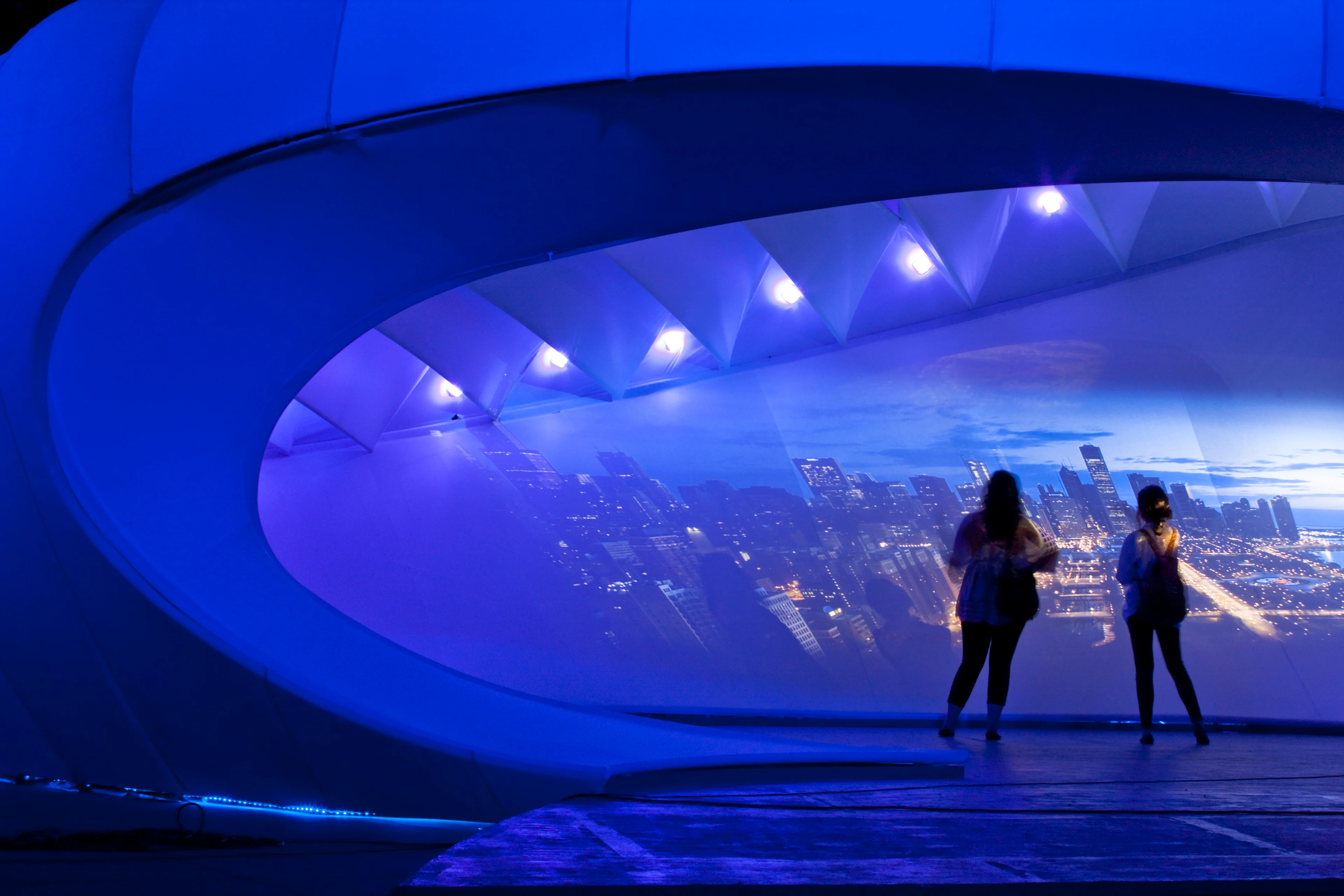
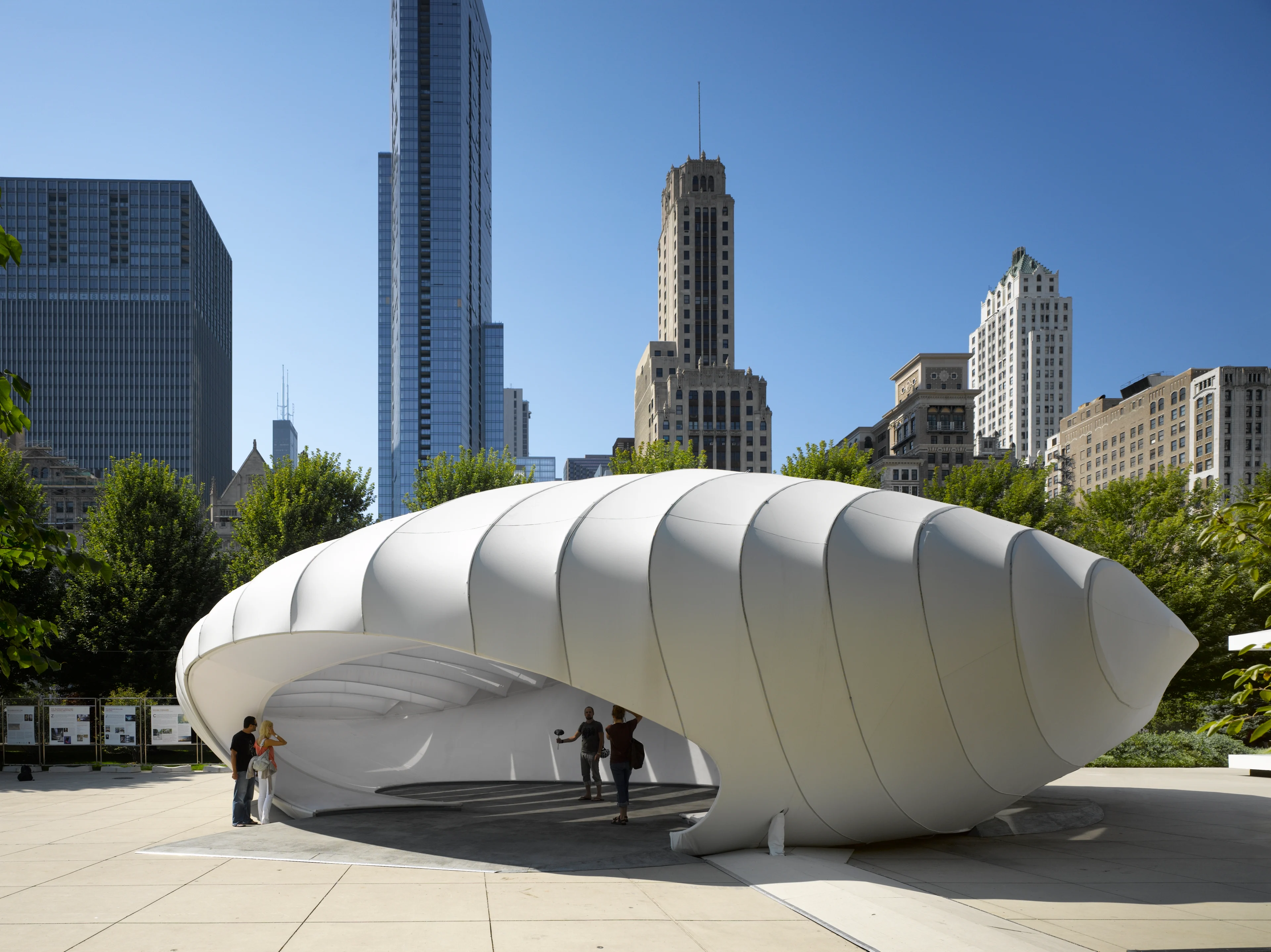
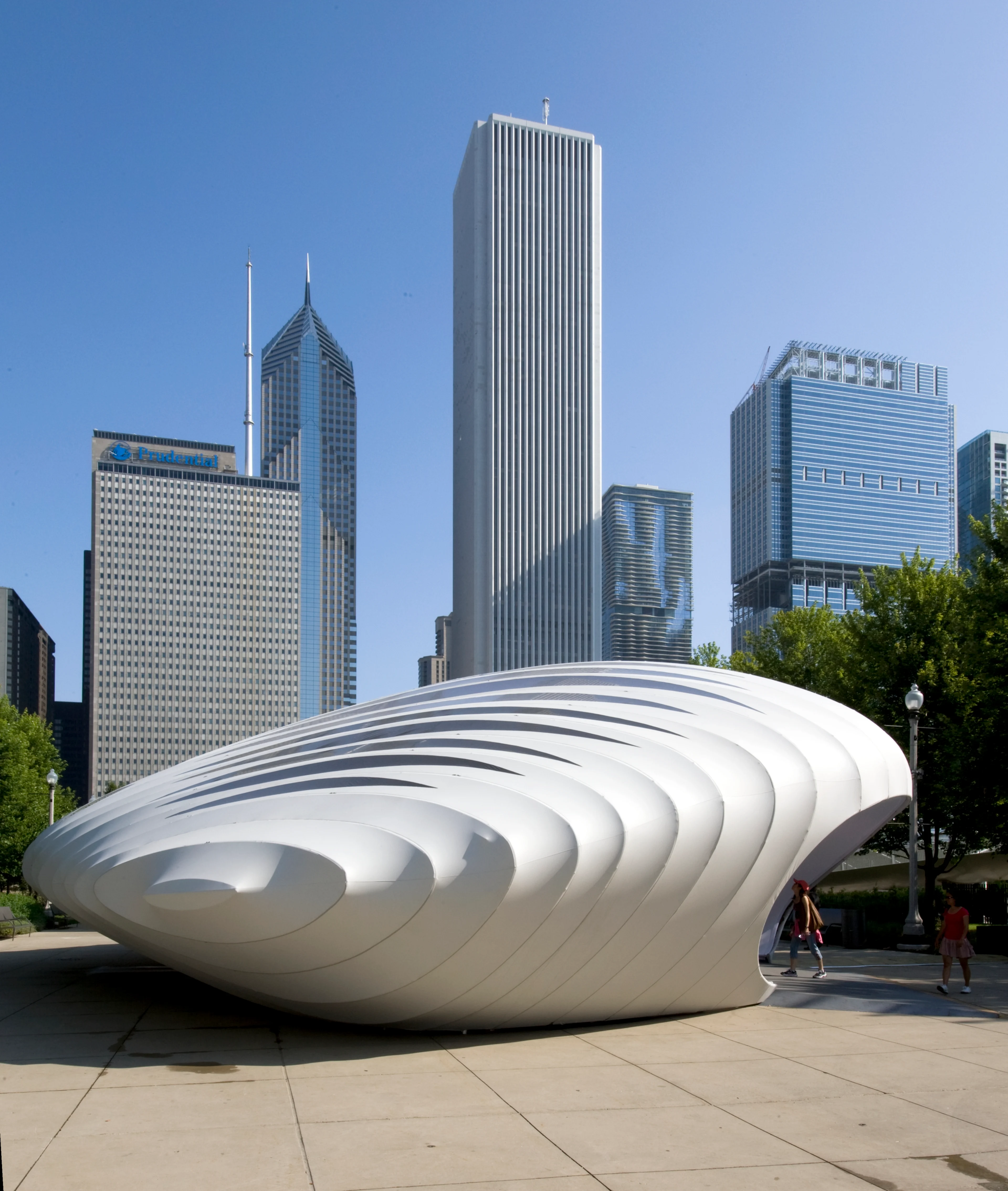
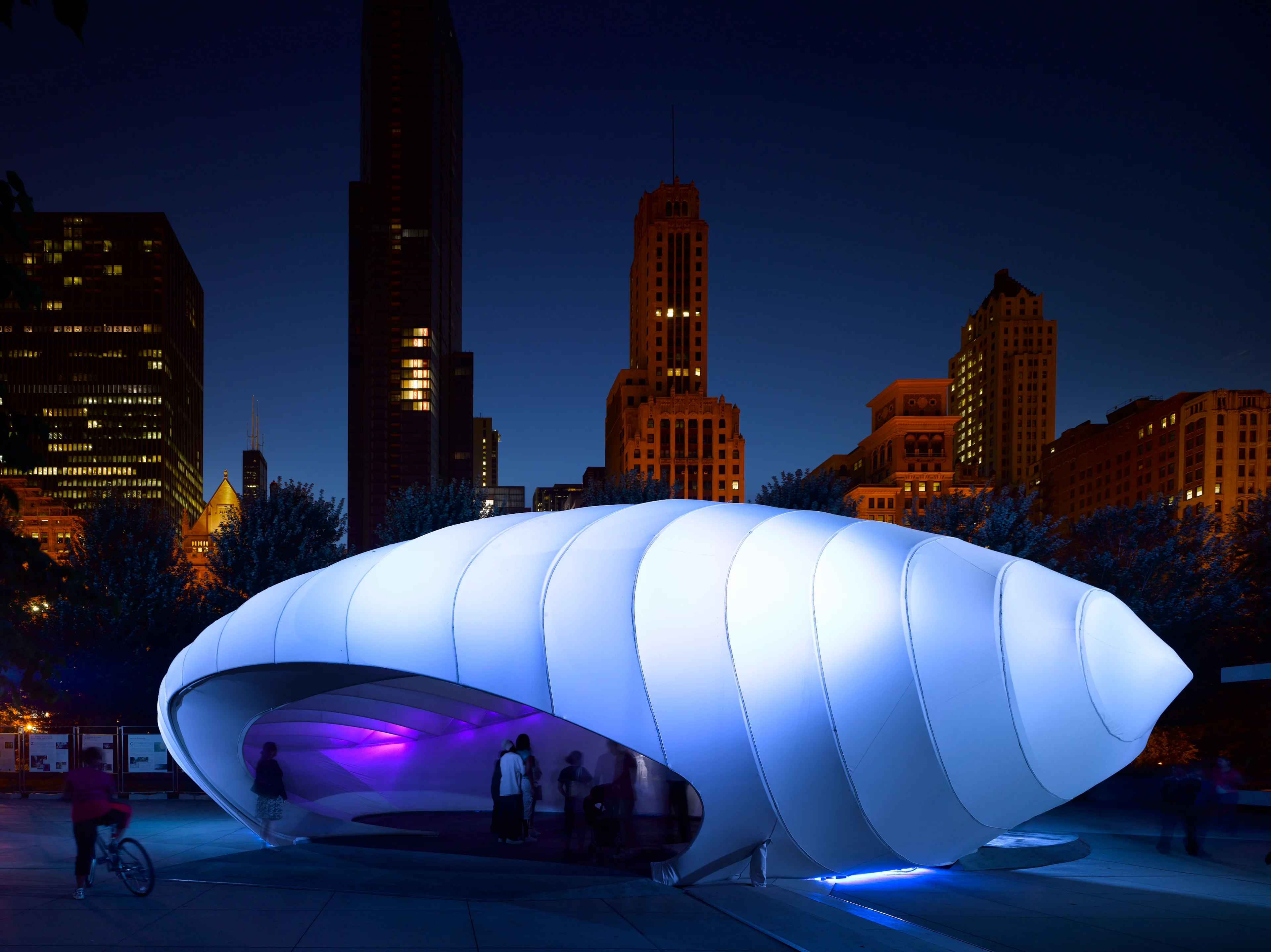
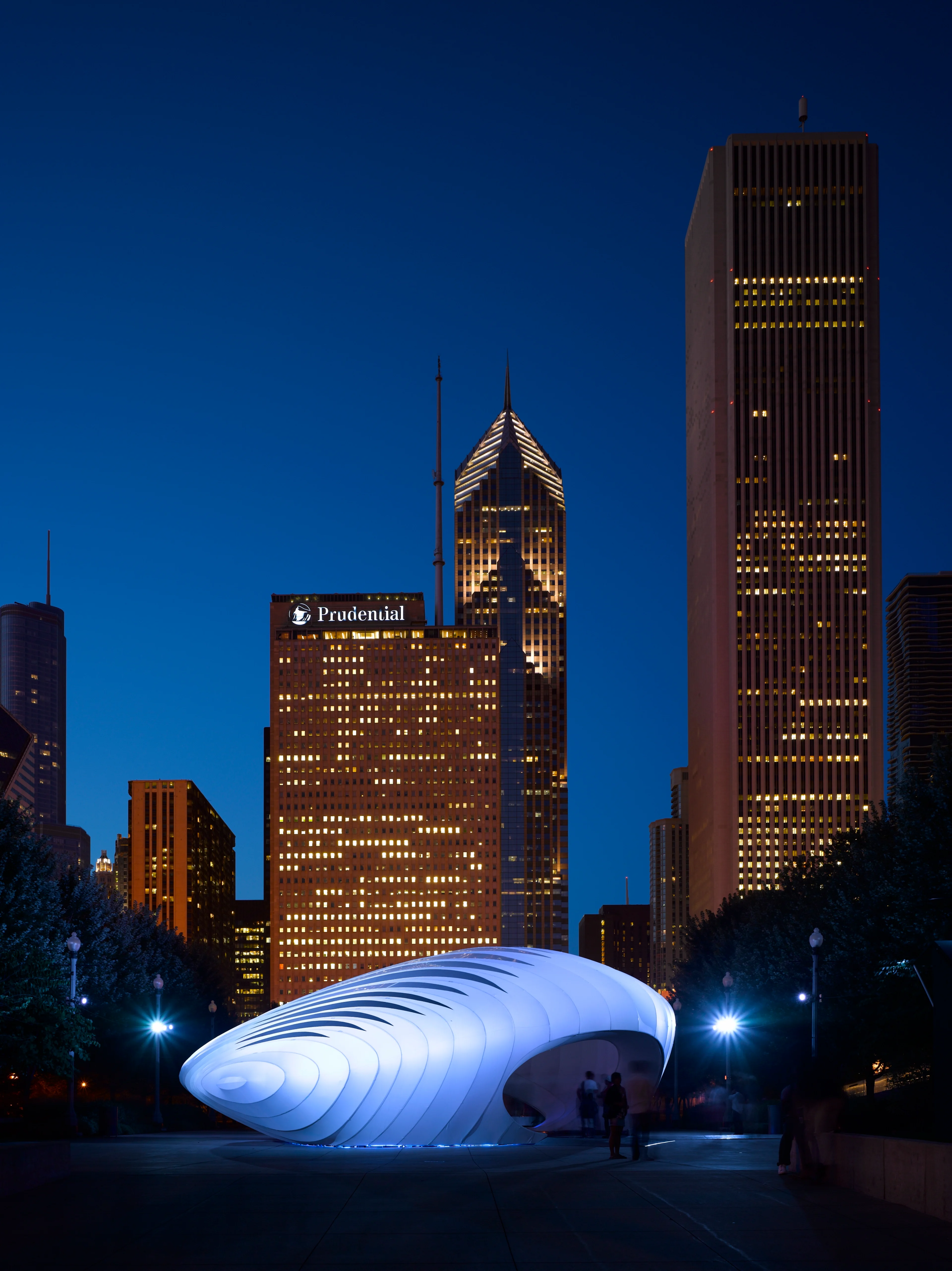
ZHA’ pavilion design for Chicago’s Burnham Plan Centennial celebrates the city’s ongoing tradition of bold plans and big dreams. The project encourages reinvention and improvement on an urban scale and welcomes the future with innovative ideas and technologies whilst referencing the original organizational systems of Burnham’s plan. Our design continues Chicago’s renowned tradition of cutting edge architecture and engineering, at the scale of a temporary pavilion.
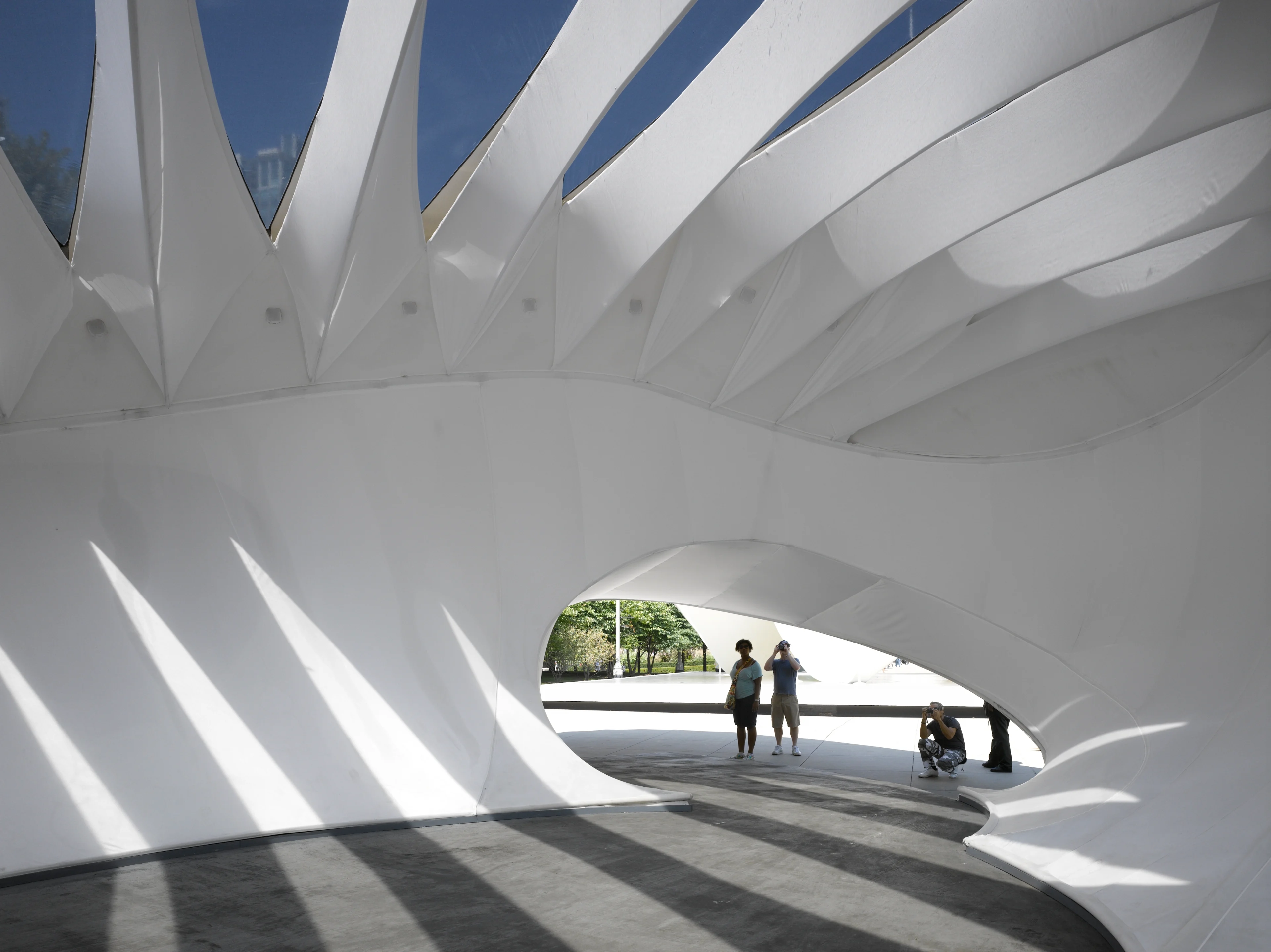
The design merges new formal concepts with the memory of bold historic urban planning. Superimpositions of spatial structures with hidden traces of Burnham’s organizational systems and architectural representations create unexpected results. By using methods of overlaying, complexity is built up and inscribed in the structure.
Photograph by Roland Halbe
Photograph by Thomas Gray at The Gray Circle
An intensification of public life around and within the pavilion
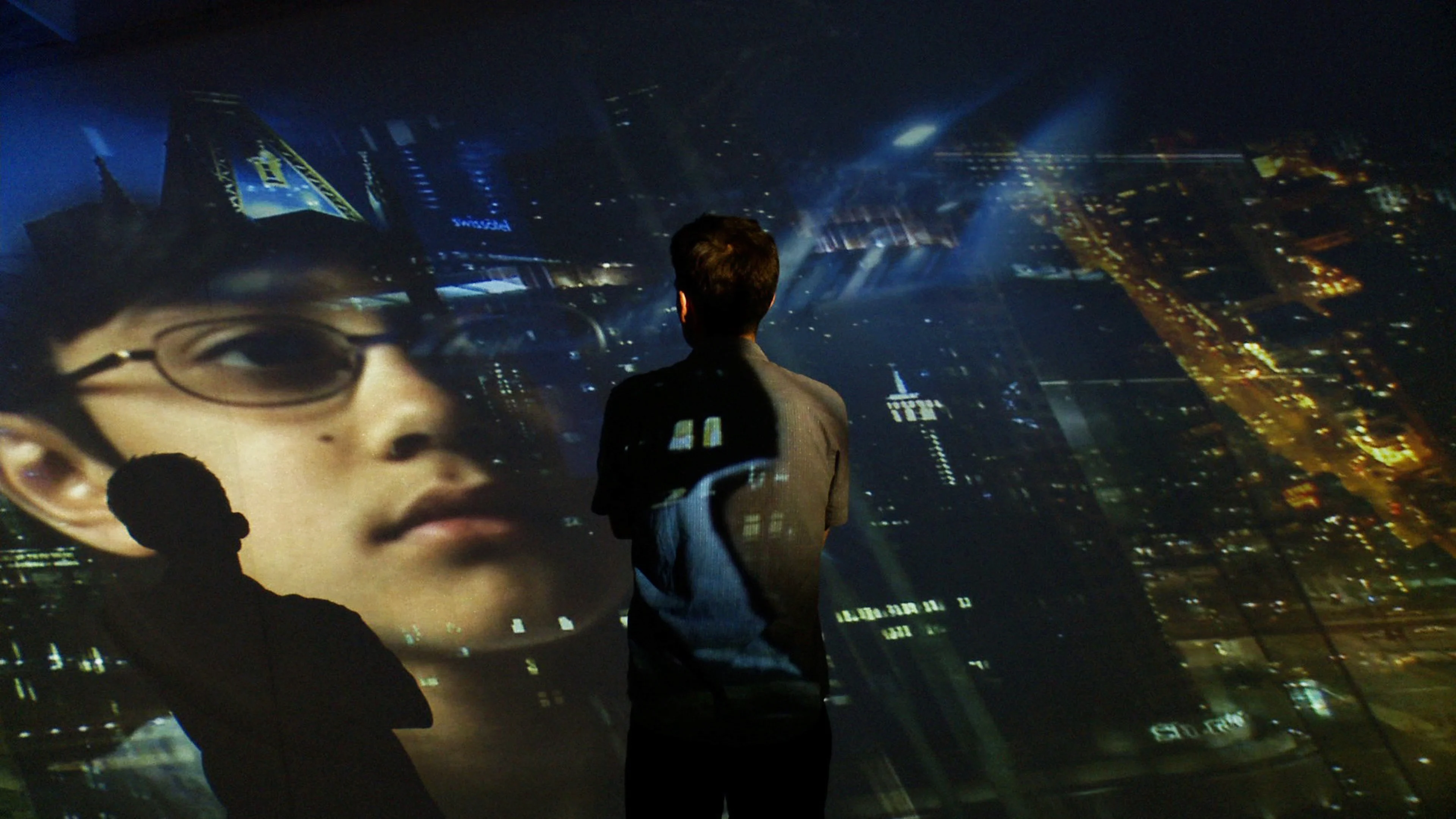
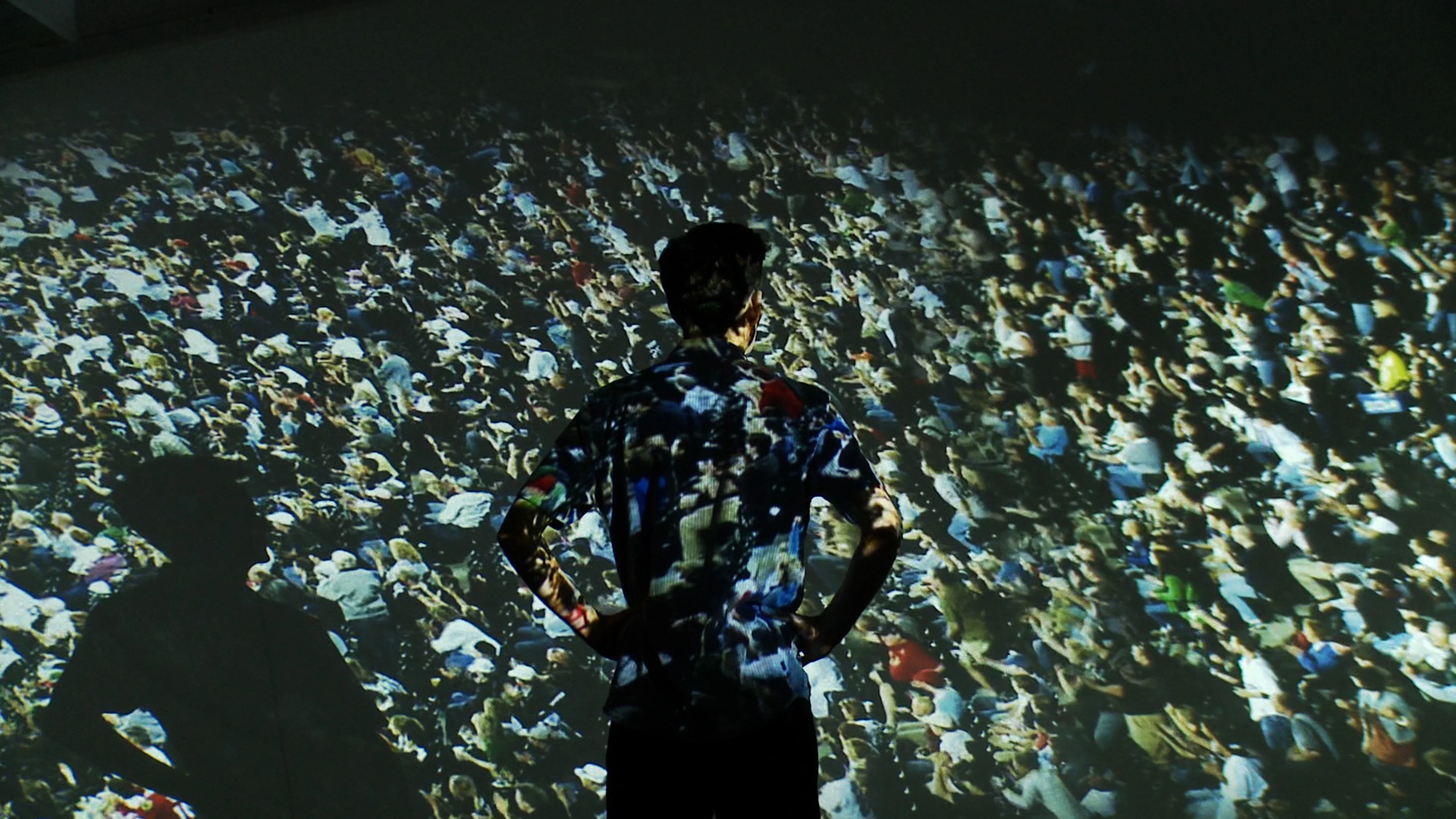
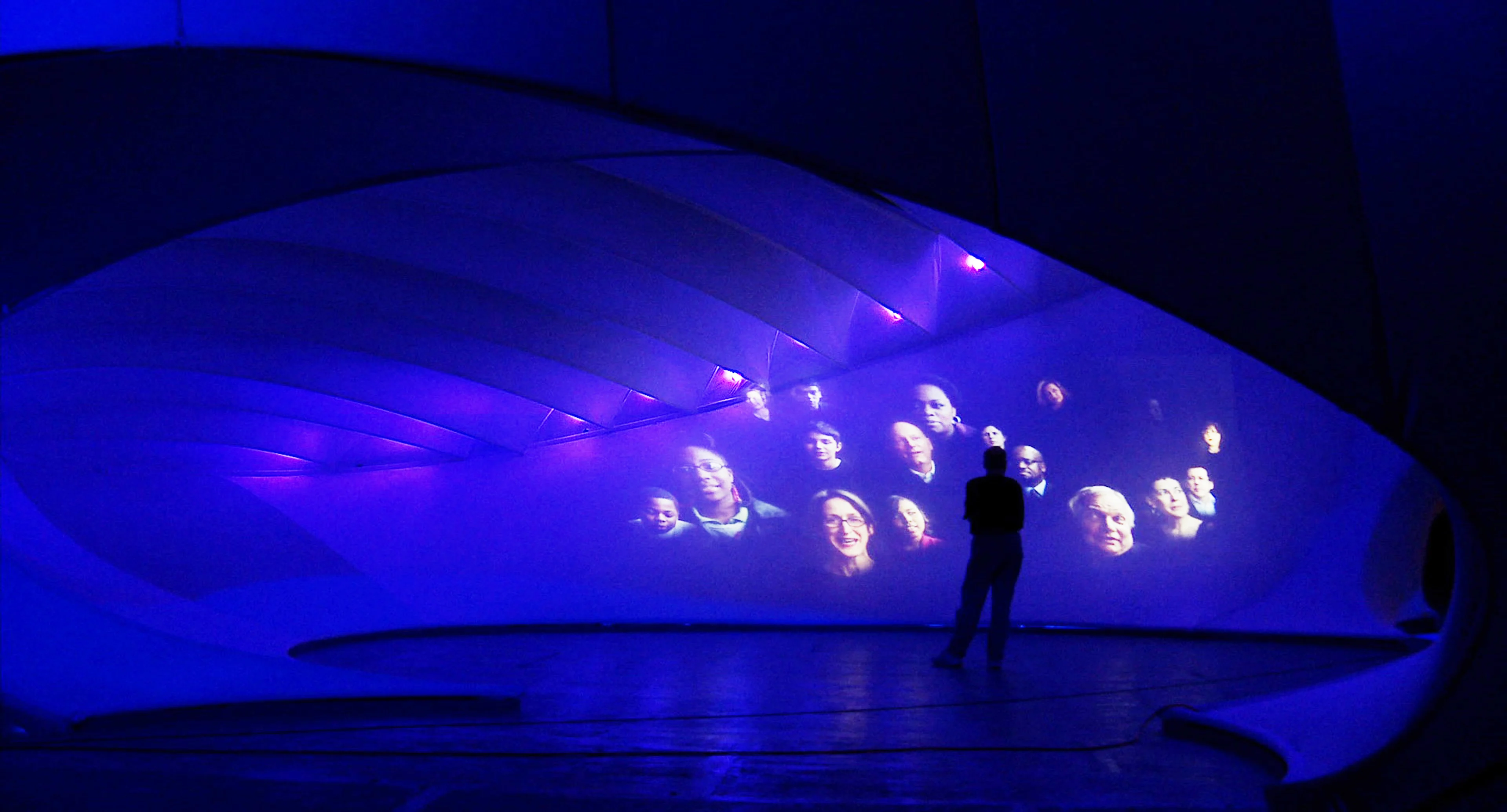
The pavilion is composed of an intricate bent-aluminium structure, with each element shaped and welded in order to create its unique curvilinear form. Outer and inner fabric skins are wrapped tightly around the metal frame to create the fluid shape. The skins also serve as the screen for video installations to take place within the pavilion. ZHA’s pavilion also works within the larger framework of the Centennial celebrations’ commitment to deliberate the future of cities. The presence of the new structure triggers the visitor’s intellectual curiosity whilst an intensification of public life around and within the pavilion supports the idea of public discourse.
The pavilion was designed and built to maximize the recycling and re-use of the materials after its role in Millennium Park. It can be re-installed for future use at another site.
Installations + Pavilions
View our other installations and pavilions
ZHA's installations and pavilions utilises our cutting-edge research to push material capability to its full potential. At the forefront of innovation, we explore the limits and possibilities of contemporary construction methods.
Photograph by Jacopo Spilimbergo
Installations + Pavilions
Origin
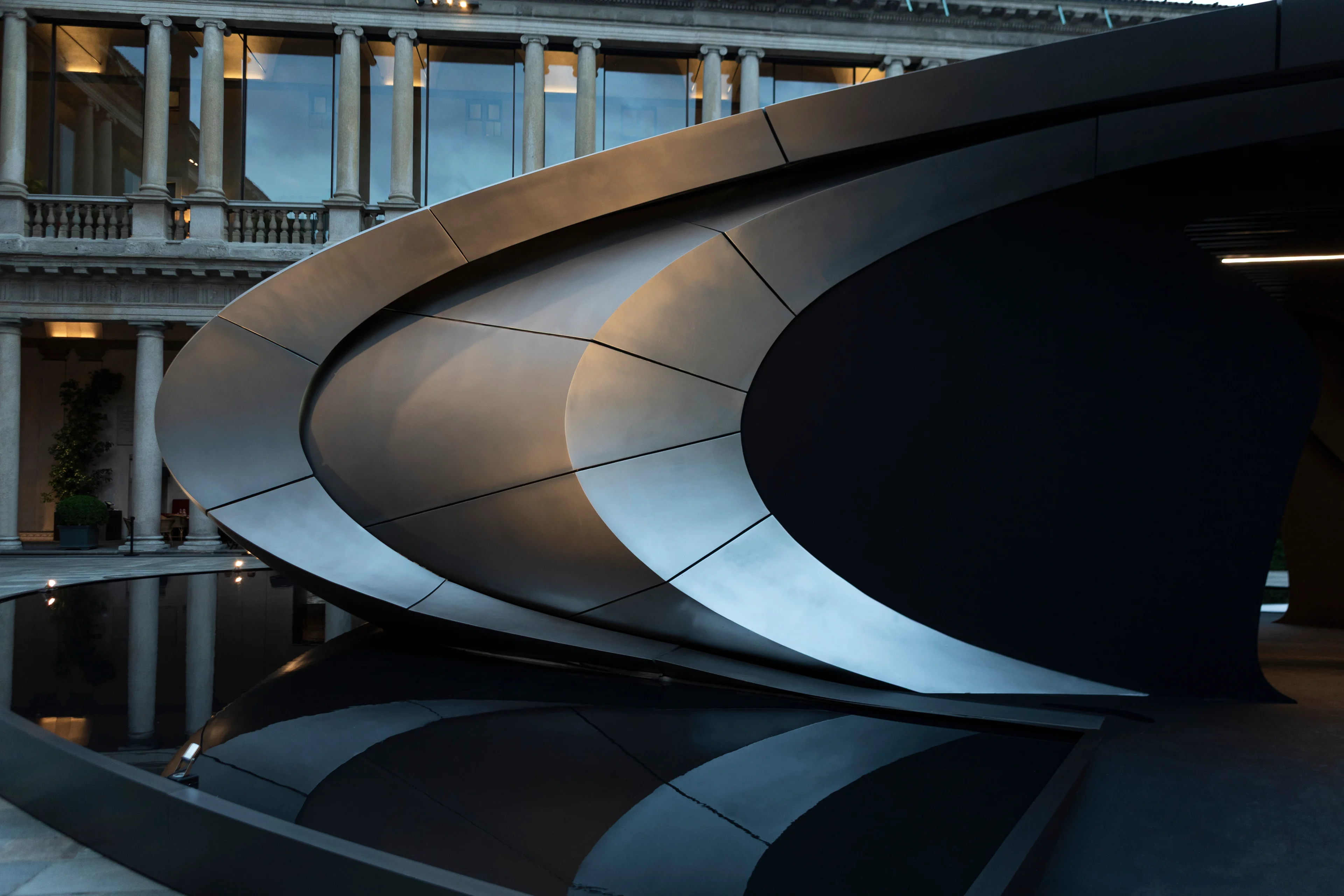
A collaboration between Audi and ZHA, Origin was conceived an immersive installation serving as a portal to an investigation of the principles defining Audi's new design philosophy: clarity, technicality, intelligence, and emotion.
Photograph by Alessandra Chemollo
Venice Biennale, May 2021
Installations + Pavilions
‘High-performing Urban Ecologies’ Installation Venice Biennale
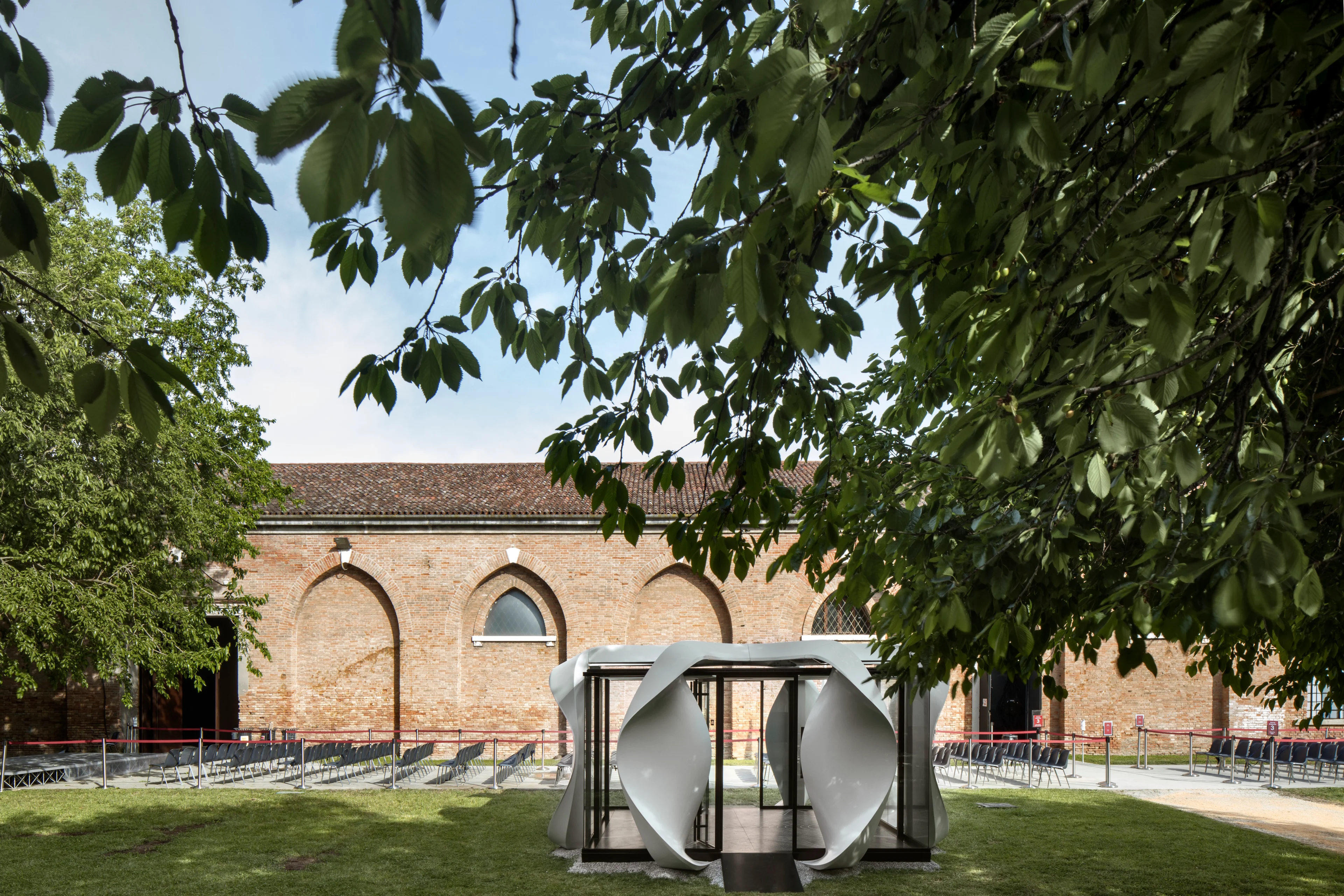
The ‘High-performing Urban Ecologies' installation by ZHA responds to the ‘Resilient Communities’ theme of this year’s Italian Pavilion curated by Alessandro Melis for the Venice Architecture Biennale 2021.
Installations + Pavilions
Unconfined
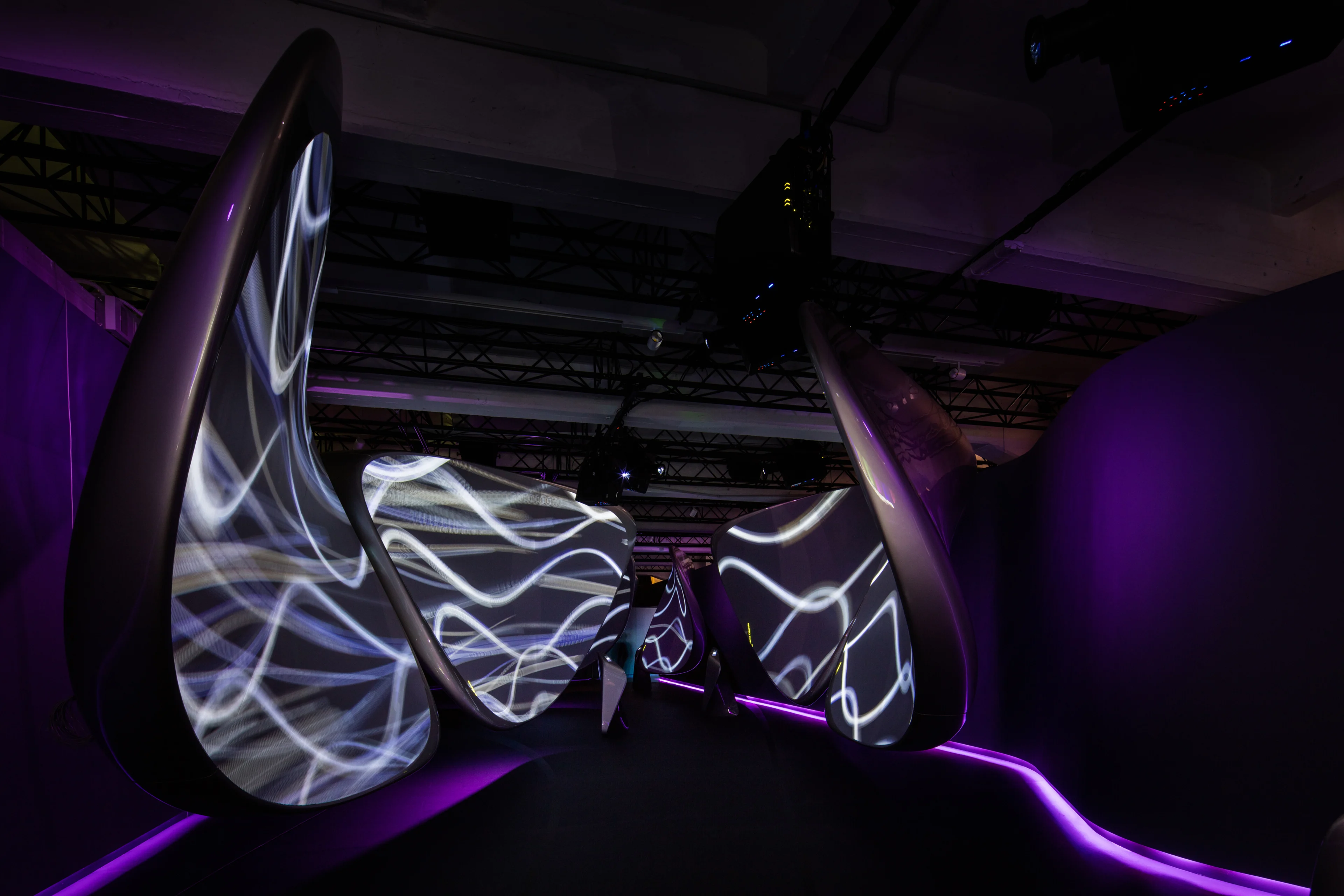
Samsung collaborated with ZHA and digital art and design collective Universal Everything, to present ‘Unconfined’, an installation showcasing the story of the Galaxy S8 that centres on the unity of design, technology and experience. Visitors journey through an immersive environment inspired by the new device, creating digital installations that bring to life the Galaxy design philosophy.
Photograph by Paul Warchol
Retail
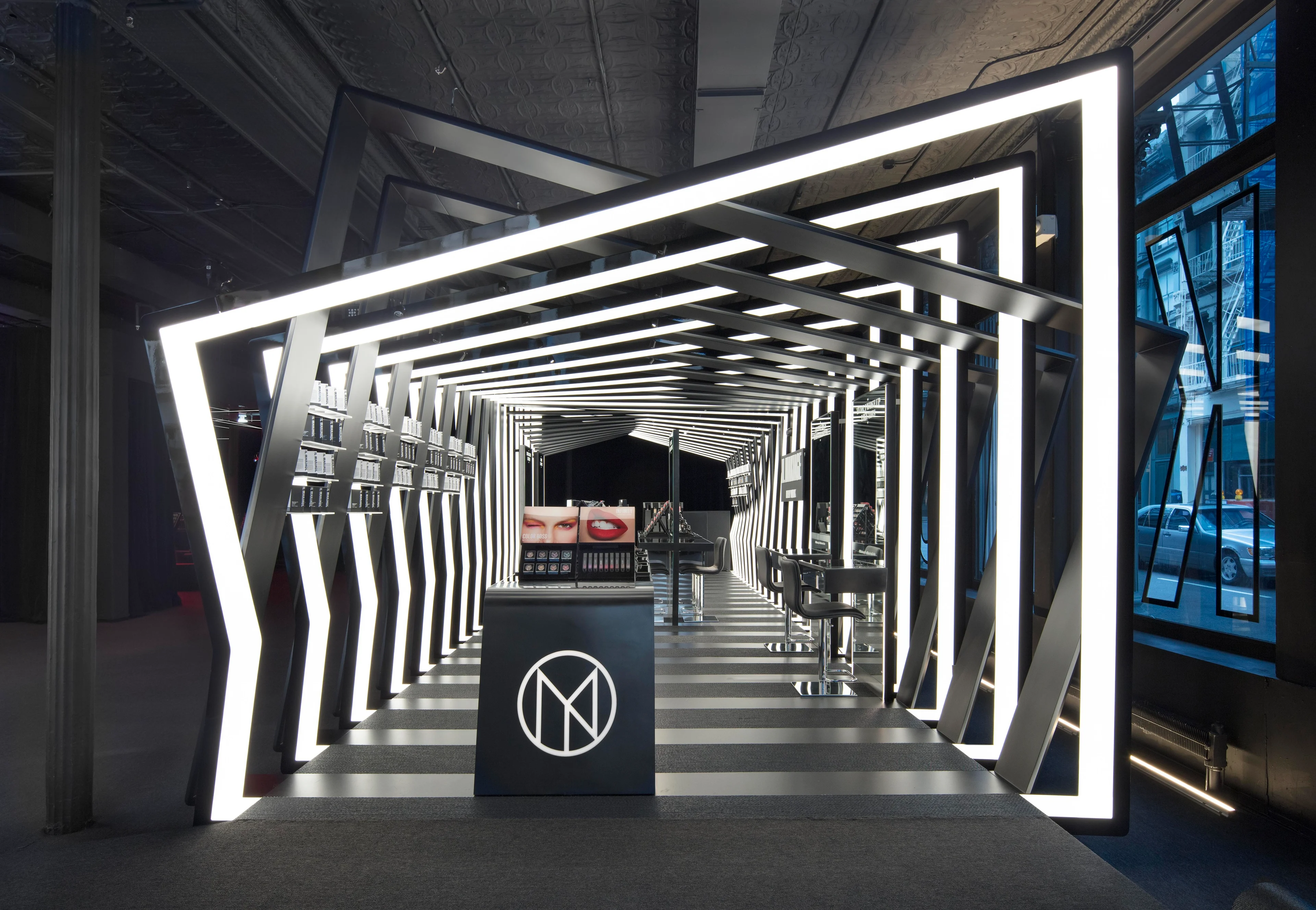
Il Makiage Pavilion
Il Makiage has launched a collection with a pavilion at 490 Broadway by ZHA that is informed by the label’s characteristically bold graphic identity.
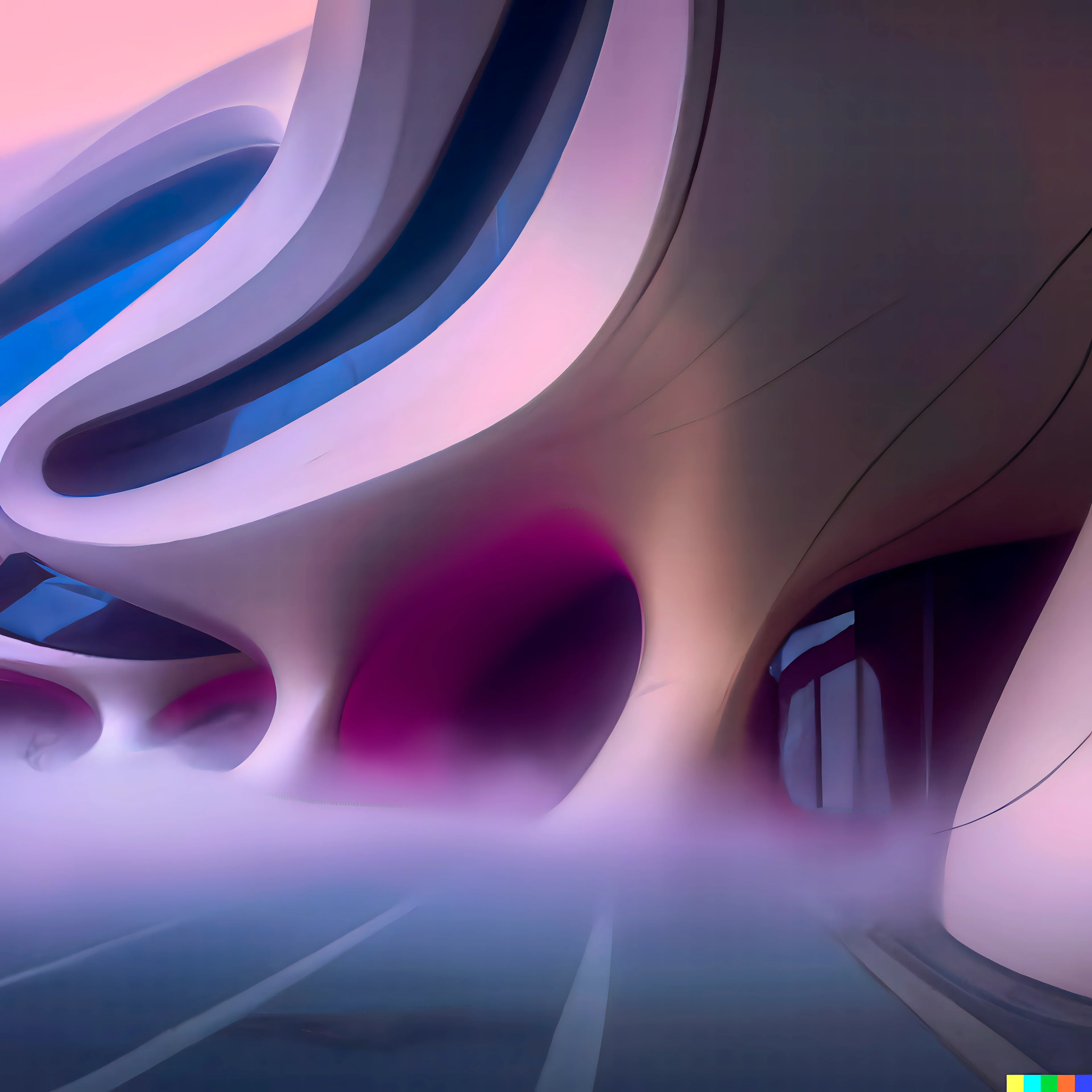
Image © ZHA, Refik Anadol Studio, with OpenAI DALL-E 2
Virtual Spaces
Installations + Pavilions
Exhibitions
'Architecting the Metaverse'
Architecting the Metaverse’ is an immersive art project at the intersection of architecture, art, technology, and artificial intelligence (AI). It is the result of a 6-month collaboration between Refik Anadol Studio (RAS) and ZHA.
Courtesy of Studio Naaro
Striatus 3D Printed Concrete Bridge
Installations + Pavilions
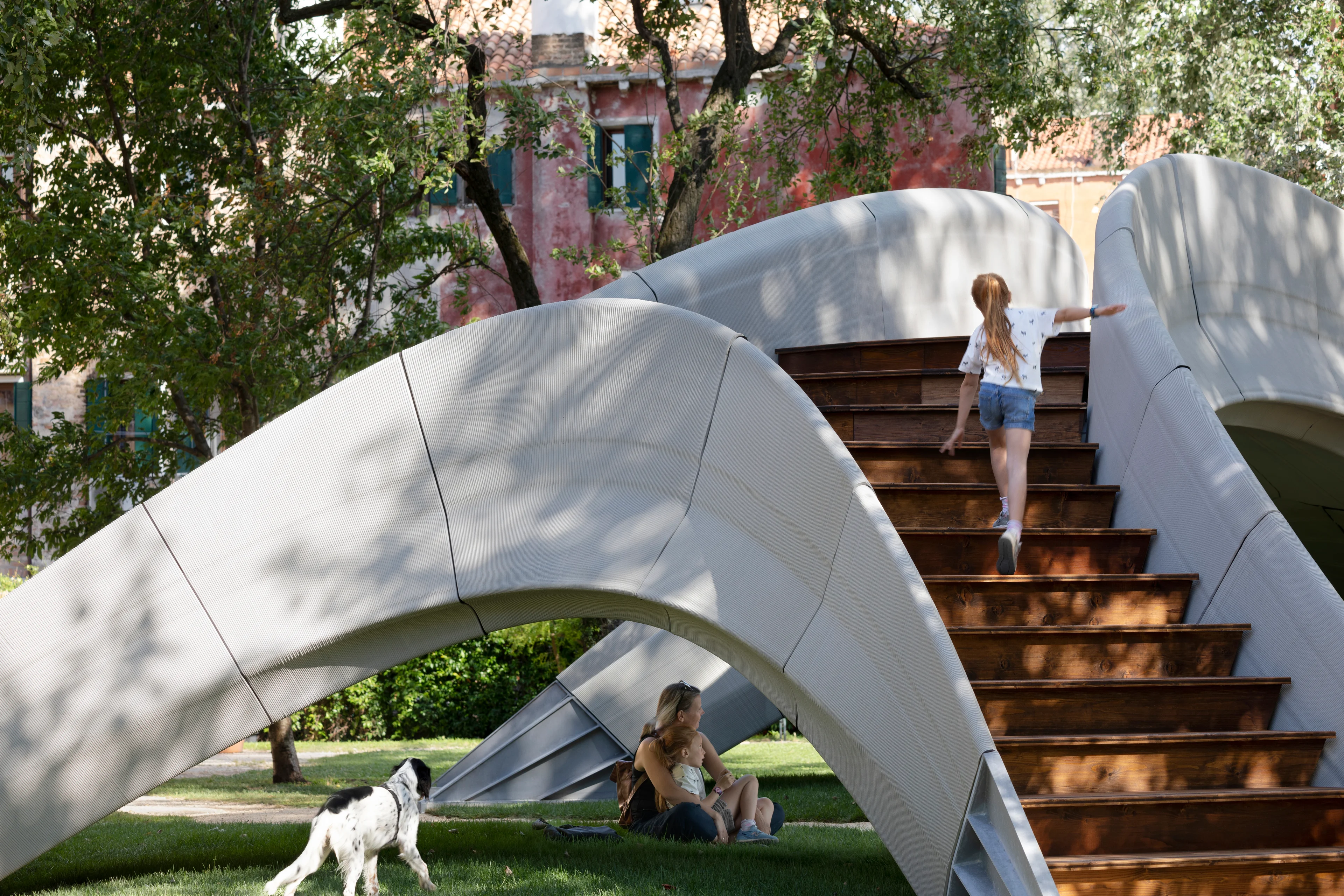
Striatus 3D Printed Concrete Bridge
Striatus is an arched masonry footbridge composed of 3D-printed concrete blocks assembled without mortar or reinforcement. The first of its kind, the project is a collaboration between the Block Research Group (BRG) at ETH Zurich and ZHA Computation and Design Group (ZHACODE), in collaboration with incremental3D (in3D), made possible by Holcim.
Photograph by Hélène Binet
Installations + Pavilions
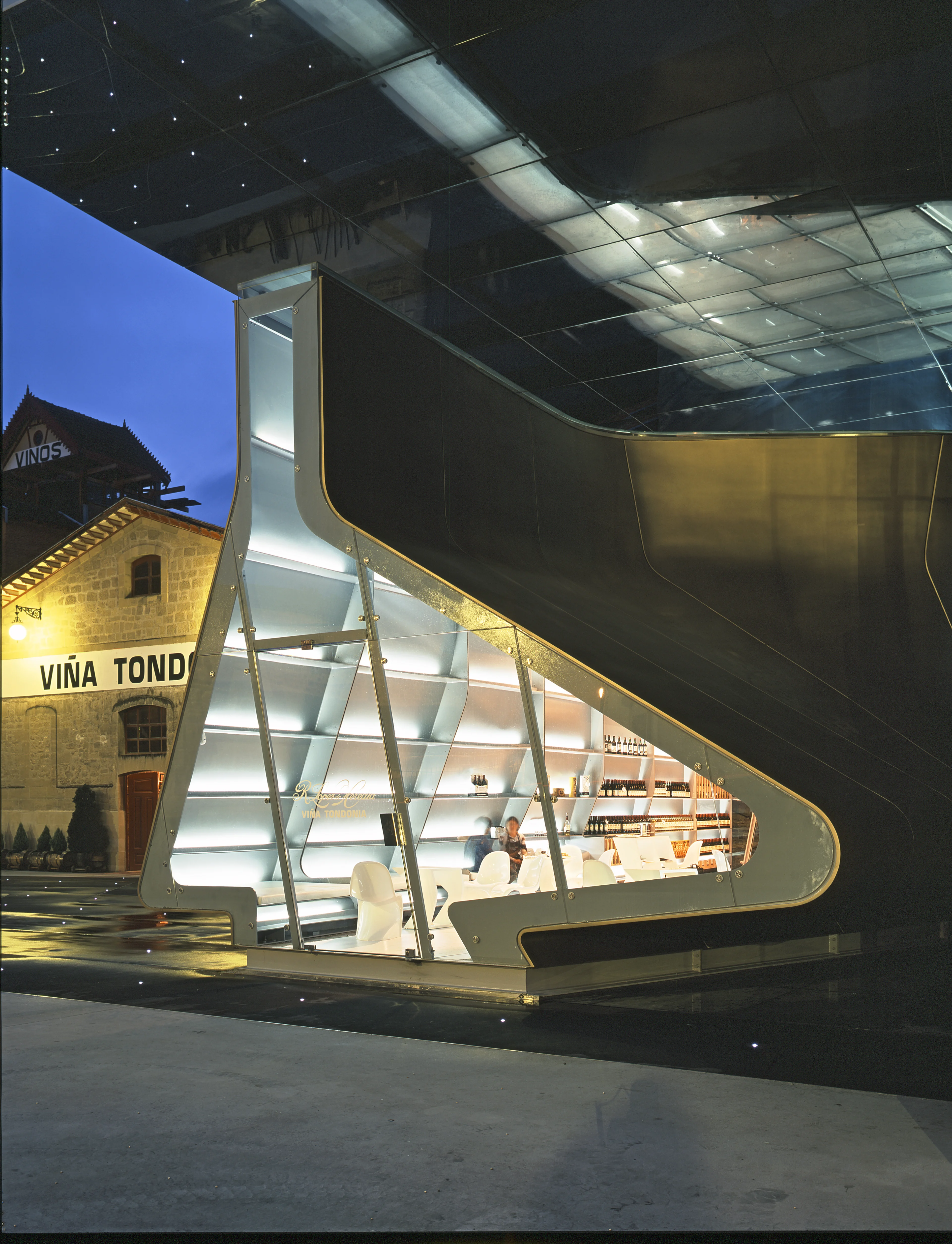
R. Lopez De Heredia Wine Pavilion
A new bottle for an old wine: a design to safeguard one of López De Heredia’s treasures. Originally commissioned as a new pavilion to contain an older pavilion restored from the early 20th century, this became a bridge between the past, present and future evolution of its world-famous bodegas.
Photograph by Luke Hayes
Thallus White in The City 4-9 April 2017
Installations + Pavilions
Thallus Installation
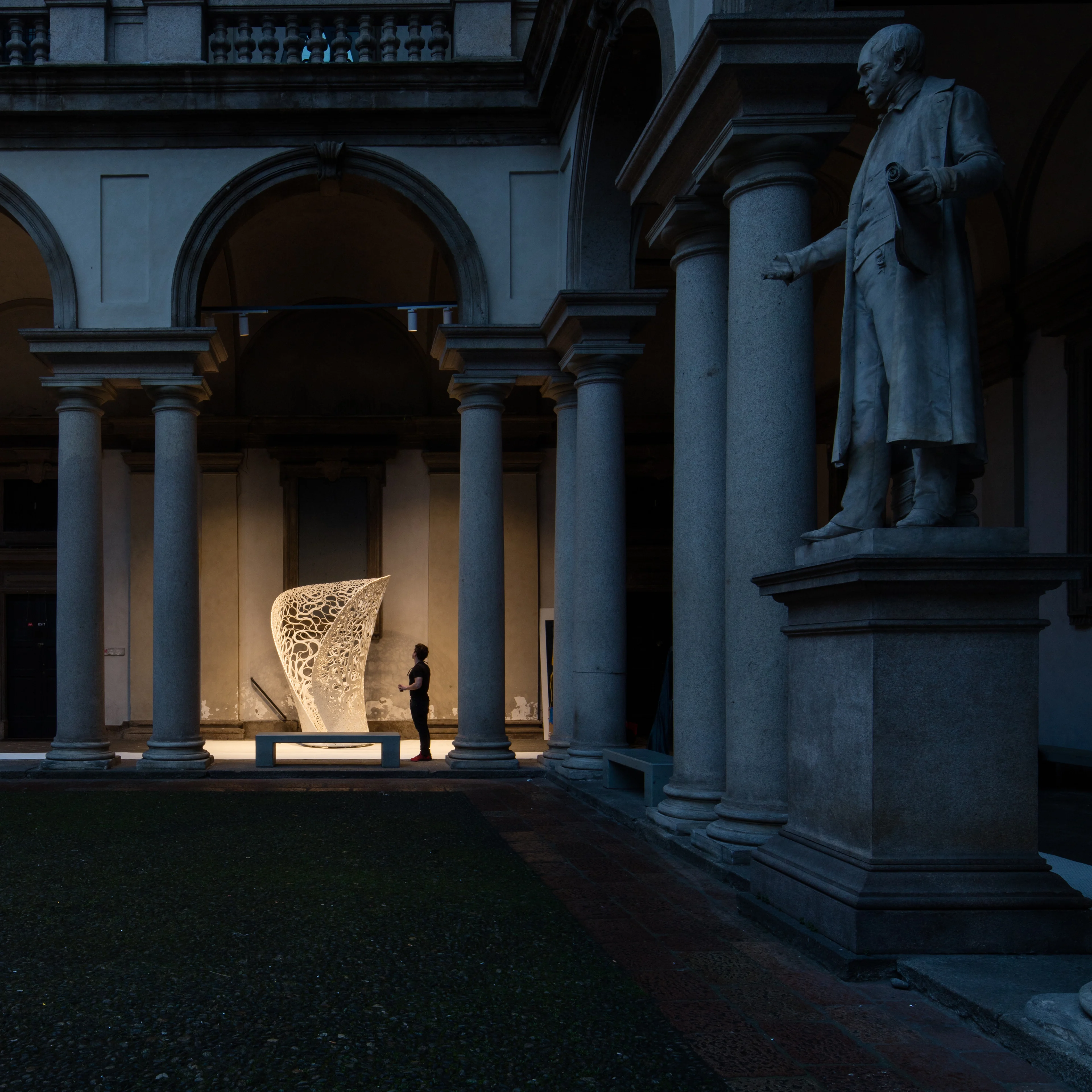
Named after the Greek word for flora that has no differentiation between stem and leaf, Thallus is an experimental structure investigating form and pattern generated by advanced manufacturing and computational methods.
Photograph by Juan Pablo Allegre
Installations + Pavilions
KnitCandela
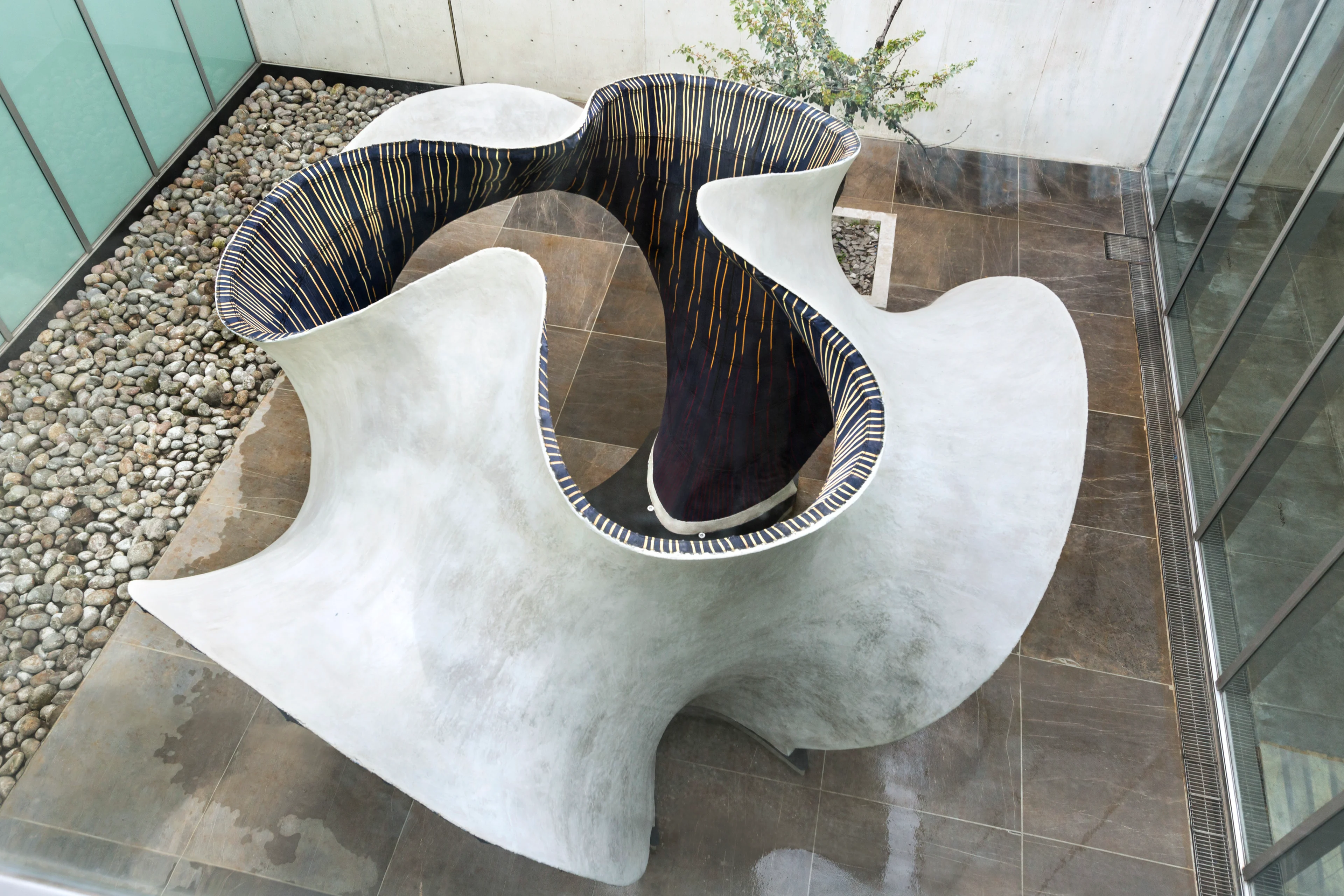
KnitCandela is a thin, sinuous concrete shell built on ultra-lightweight knitted formwork that was carried to Mexico from Switzerland in a suitcase.
Photograph by Joel Chester Fildes
Manchester International Festival July 2009
Installations + Pavilions
JS Bach Chamber Music Hall
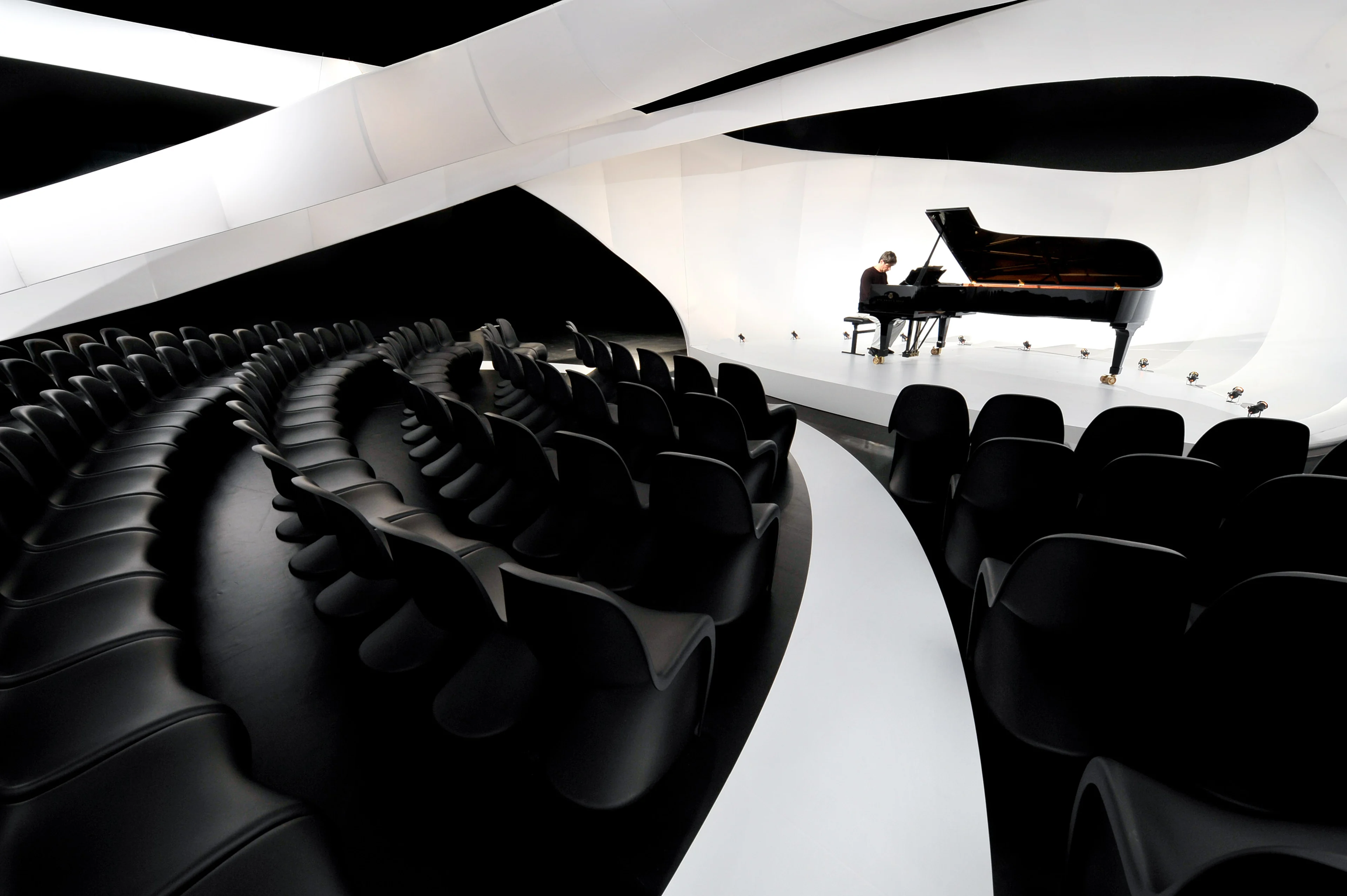
A unique chamber music hall specially designed to house solo performances of J S Bach works – enhancing the multiplicity of his music by using a single, continuous ribbon of fabric which continuously changes, stretches, compresses and moves around itself to cocoon both performers and audience within an intimate fluid space.
Photograph by Virgile Simon Bertrand
Hong Kong : 27 February - 5 April 2008
Installations + Pavilions
Mobile Art Chanel Contemporary Art Container
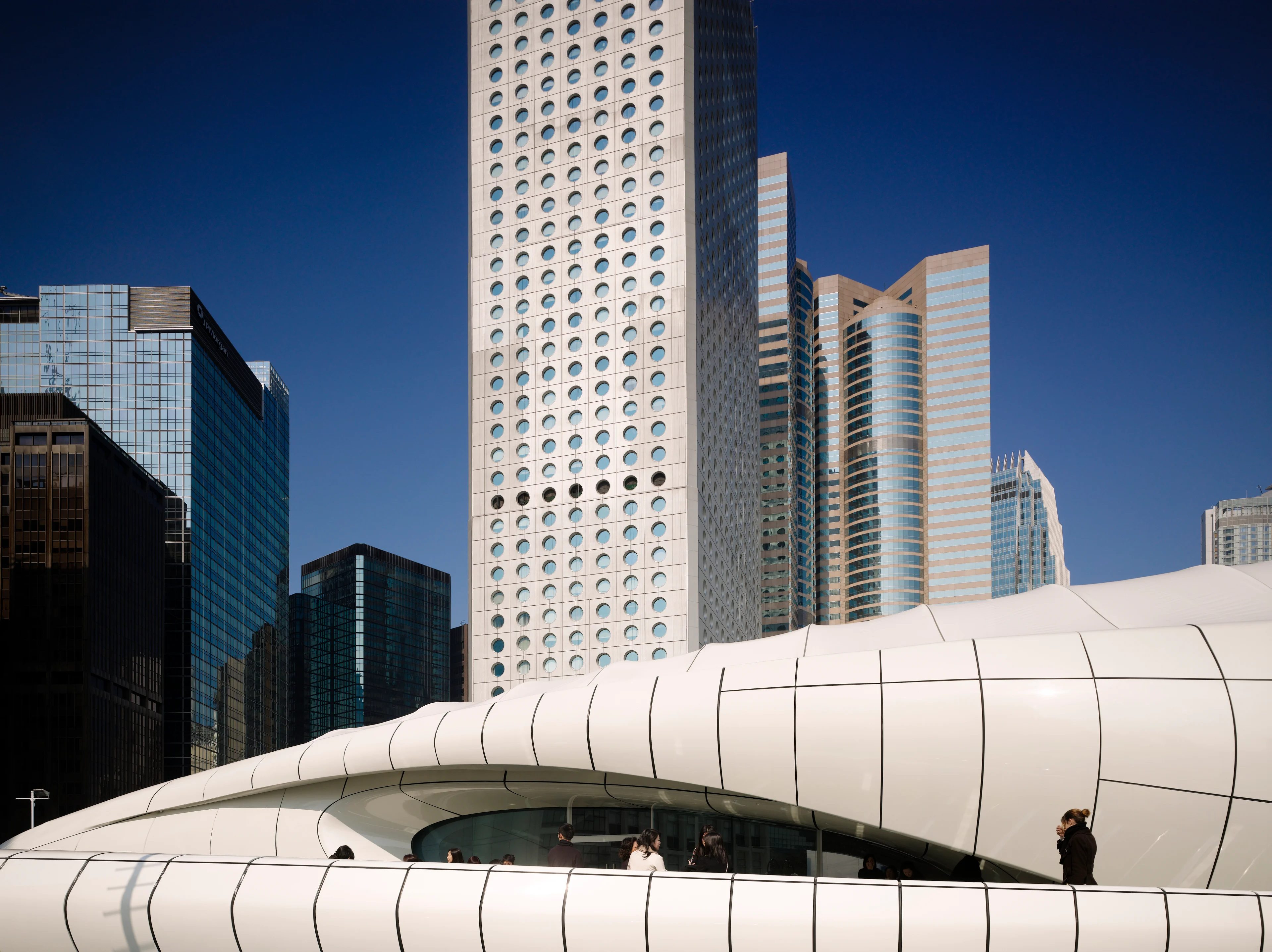
A unique sculptural pavilion created as an exhibition/event space for Chanel – inspired by the brand’s distinctive layering of exquisite details within an elegant, cohesive whole – created as a series of continuous arches, sequencing towards a central courtyard – the entire structure ‘flooded’ by through translucent walls and ceilings.
01
02
03
04
05
06
07
08
09
10
11