
Photograph by Juan Pablo Allegre
Mexico City, Mexico
20th October 2018 - 3rd March 2019
Complete
KnitCandela
Photograph by Juan Pablo Allegre
Formworks reducing construction waste
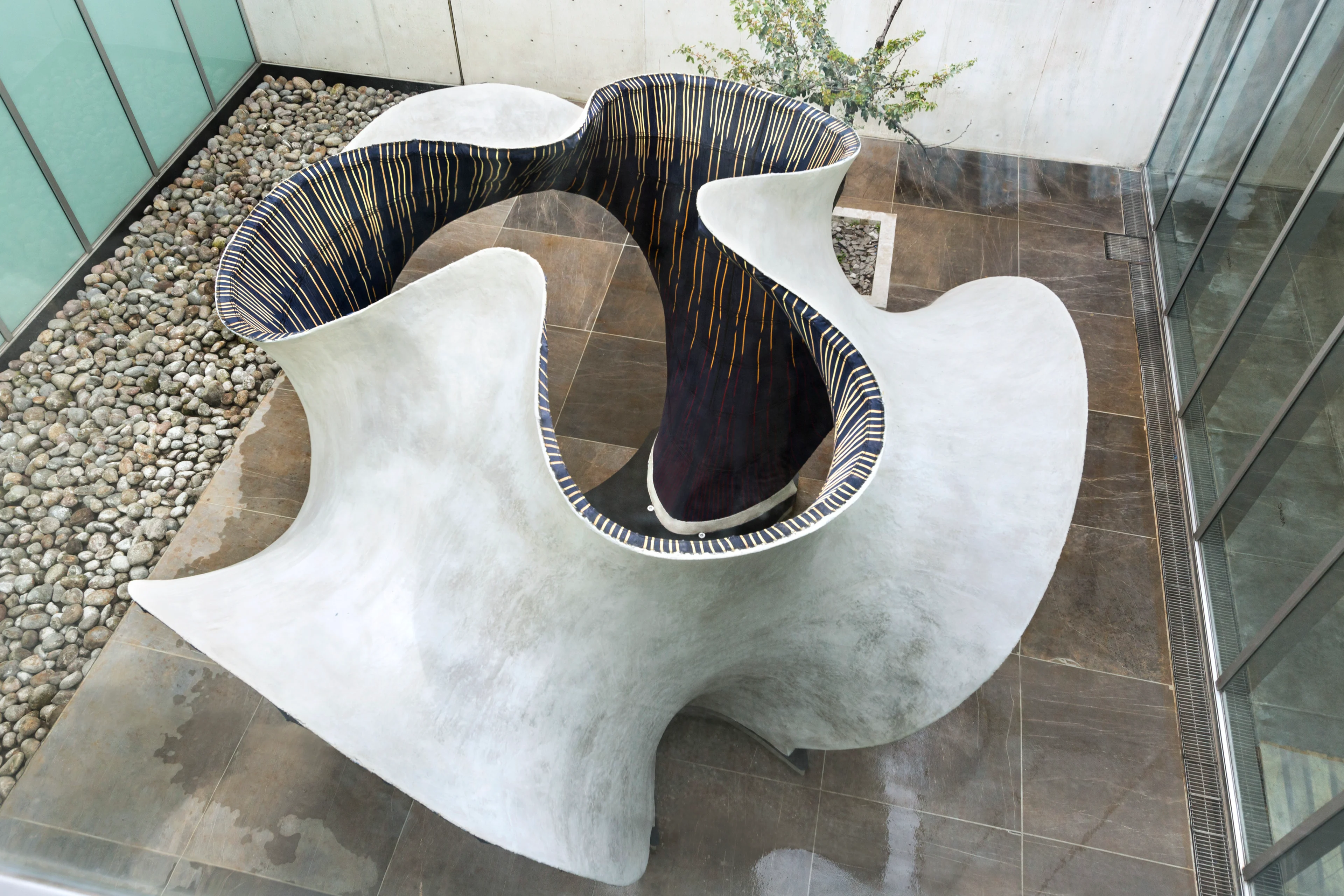
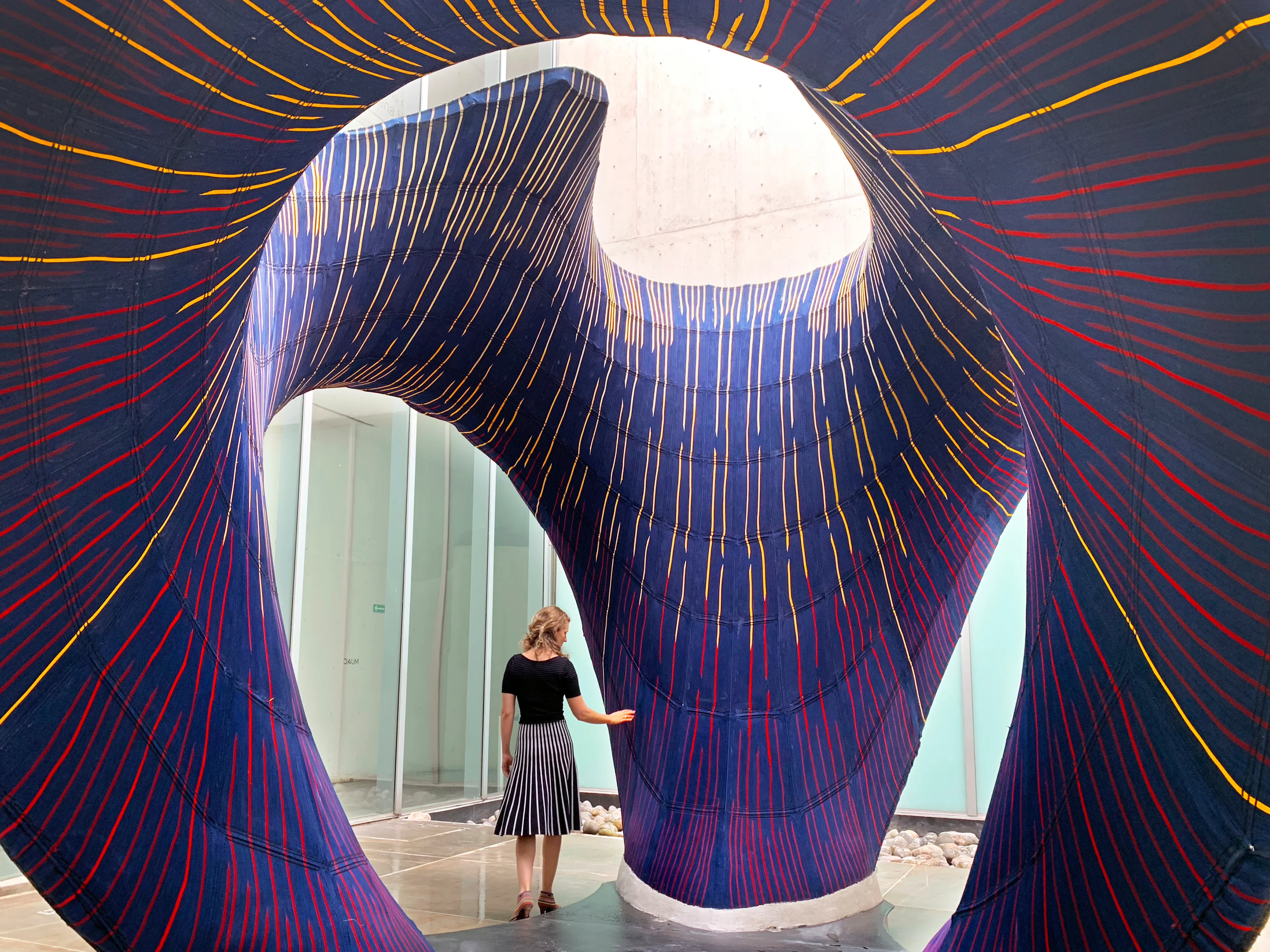
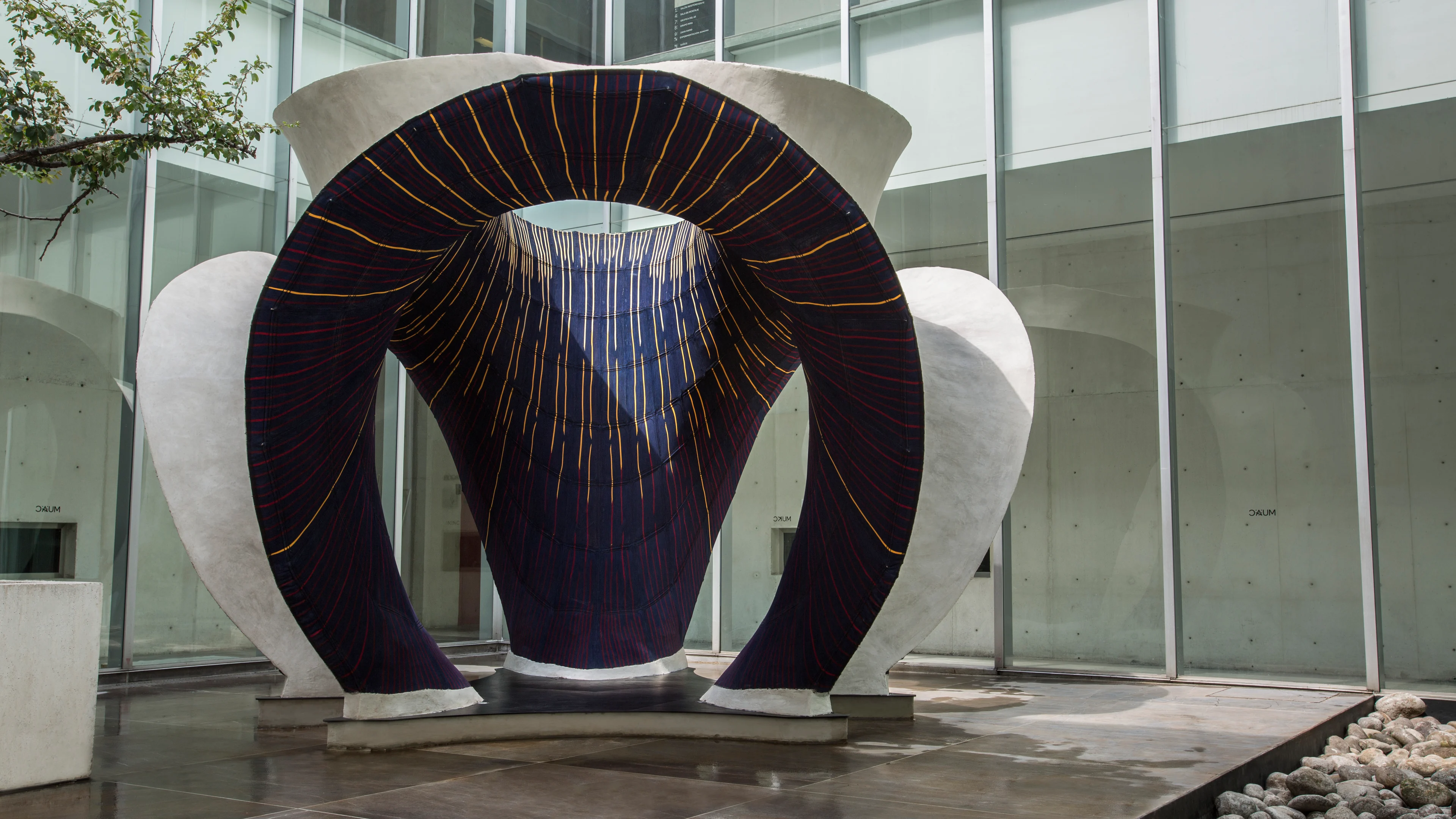
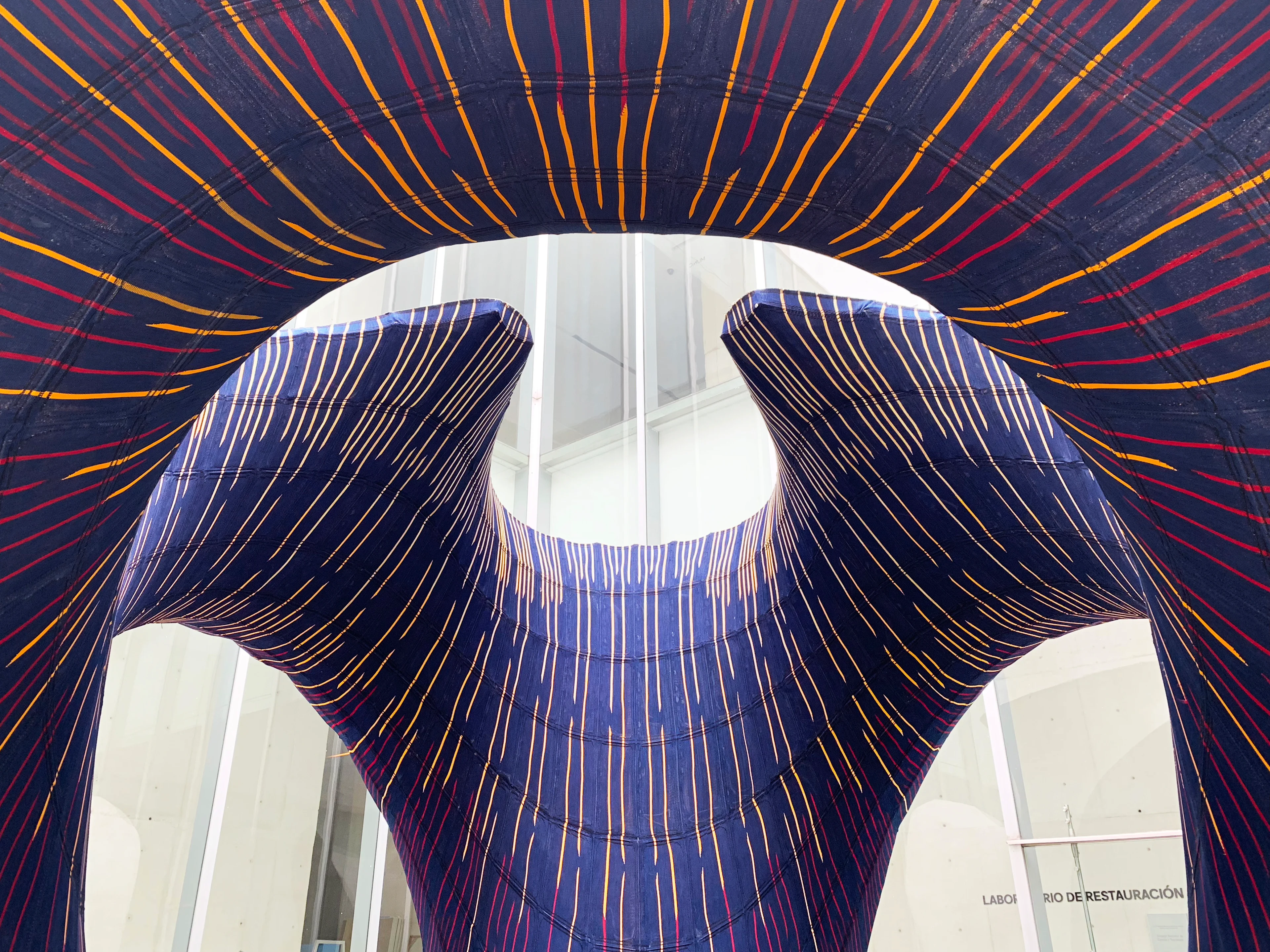
Constructed at the Museo Universitario Arte Contemporáneo (MUAC) in Mexico City as part of ZHA’s first exhibition in Latin America, KnitCandela is an experimental structure that pays homage to the Spanish-Mexican architect and engineer Félix Candela. KnitCandela reimagines his inventive concrete shell structures through the introduction of new computational design methods and innovative KnitCrete formwork technology.
The dynamic geometry of KnitCandela’s shell is inspired by the fluid forms of the colourful traditional dress of Jalisco, Mexico. While the structure’s local builders nicknamed the project ‘sarape’ (a striped scarf that originated in Mexico), KnitCandela’s form references his acclaimed restaurant at Xochimilco; a concept he further developed in several of his subsequent projects.
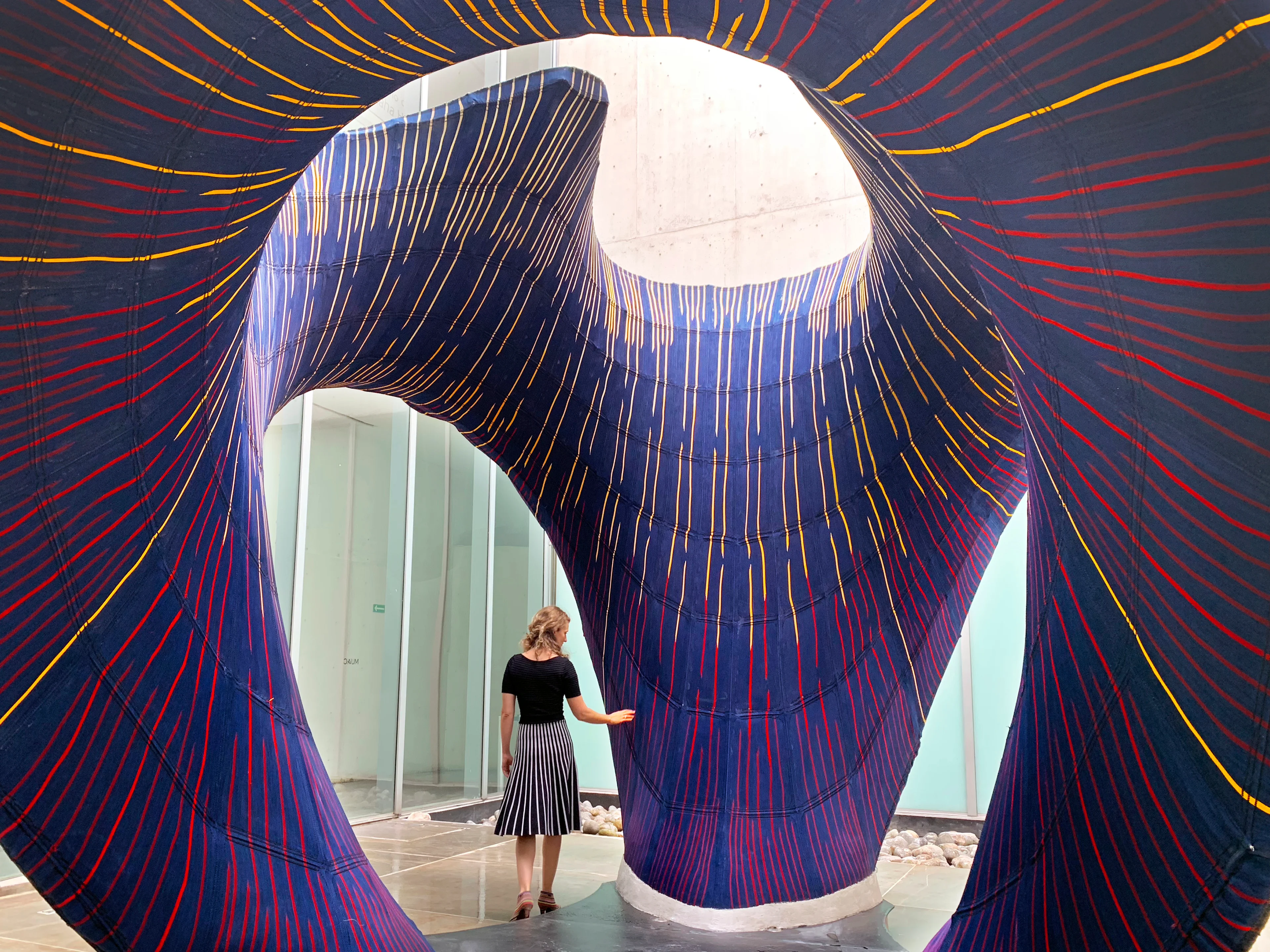
While Candela relied on combining hyperbolic paraboloid surfaces (“hypars”) to produce reusable formworks leading to a reduction of construction waste, KnitCrete allows for the realisation of a much wider range of anticlastic geometries. With this cable-net and fabric formwork system, expressive, freeform concrete surfaces can now be constructed efficiently, without the need for complex moulds. KnitCandela’s thin, double-curved concrete shell with a surface area of almost 50m2 and weighing more than 5 tonnes, was applied on a KnitCrete formwork of only 55 kg.
The knitted fabric of the formwork system was carried to Mexico from Switzerland in a suitcase.
Photograph by Philippe Block
Video
Construction Process
KnitCandela is a thin, sinuous concrete shell built on ultra-lightweight knitted formwork that was carried to Mexico from Switzerland in a suitcase.
Collaborative effort
Designed and constructed by multiple teams in Europe and Mexico, the realisation of KnitCandela is the result of a collaborative effort that harnessed collective expertise in computational design, engineering and fabrication. The architectural design is the latest expression of the ZHA’s computation and design research group (ZHCODE) for designs that utilise structural and constructional features to enhance the spatial experience of the user. For the realisation of this expression, Block Research Group (BRG) of ETH Zurich introduced the KnitCrete formwork technology and developed the structural design and construction system. Architecture Extrapolated (R-Ex) managed the execution of the project on site in Mexico City as part of its continued engagement in the digitisation of building trades in Mexico.
Designed to be constructed within a tight schedule, restricted space and minimal budget, KnitCandela demonstrates the rapid evolution and adaptation of digital design and fabrication to the challenges faced by the construction industry. This experimental structure also explores the possibilities of integrating digital fabrication with the skills of traditional craftsmanship and construction methods.
The KnitCrete technology
KnitCrete is an innovative material-saving, labour-reducing and cost-effective formwork system for the casting of doubly curved geometries in concrete. The KnitCrete technology is being developed at ETH Zurich by the Block Research Group in collaboration with the Chair for Physical Chemistry of Building Materials, as part of the Swiss National Centre of Competence in Research (NCCR) in Digital Fabrication.
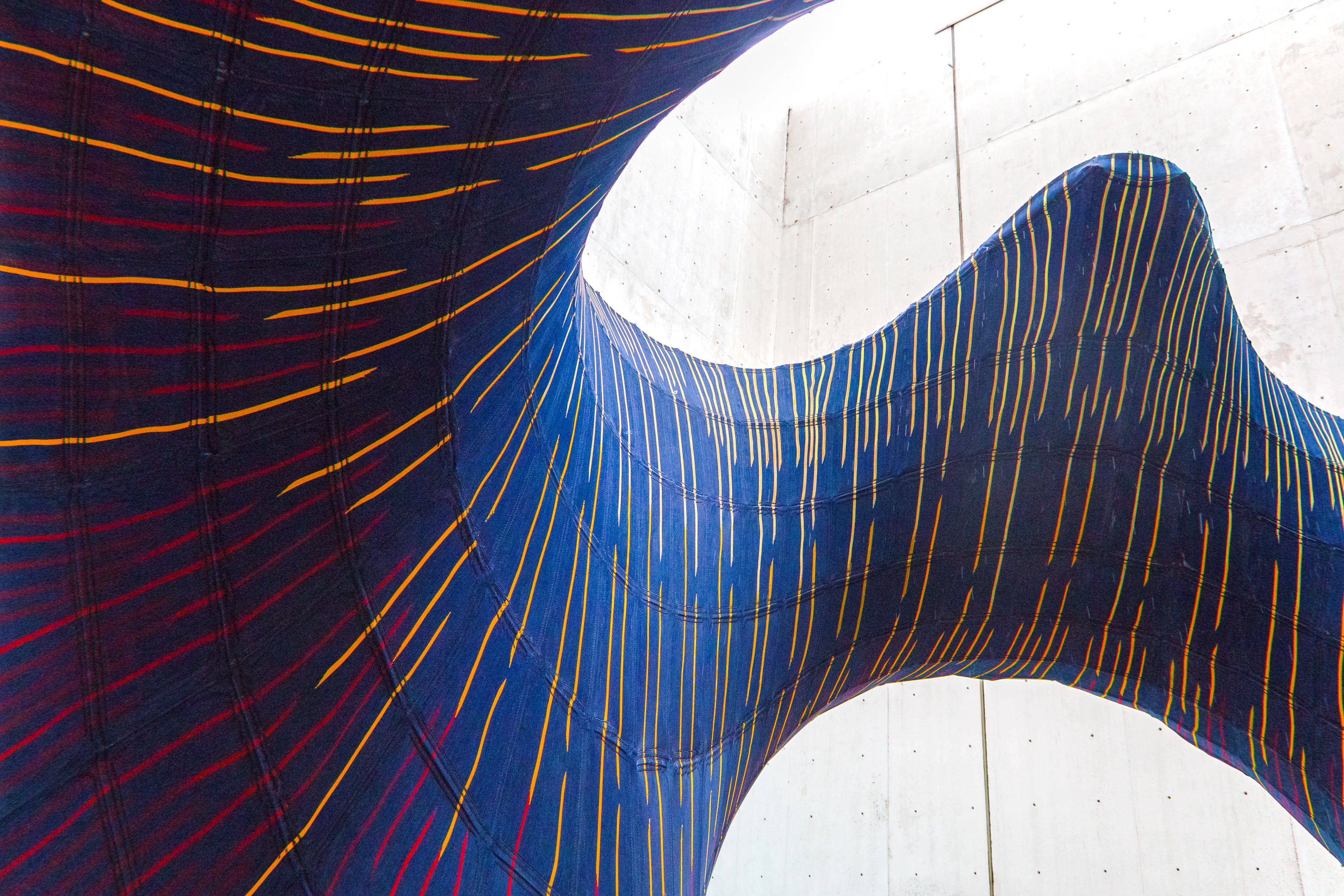
KnitCrete formworks use a custom, 3D-knitted, technical textile as a lightweight, stay-in-place shuttering, coated with a special cement paste to create a rigid mould, and supported by additional falsework elements such as a tensioned cable-net or bending-active splines. Compared to conventional weaving, knitting minimises the need for cutting patterns to create spatial surfaces, allows for the directional variation of material properties, and simplifies the integration of channels and openings, for example, for the insertion of additional formwork elements, insulation, reinforcements, electrical components and technical systems for heating and cooling.
The hybrid and ultra-lightweight KnitCrete formworks are easily transportable, reduce the need for additional supporting structure and scaffolding, and simplify the logistics on the construction site.
Photograph by Philippe Block
Video
Design Development
Designed to be constructed within a tight schedule, restricted space and minimal budget, KnitCandela demonstrates the rapid evolution and adaptation of digital design and fabrication to the challenges faced by the construction industry.
Radial symmetry
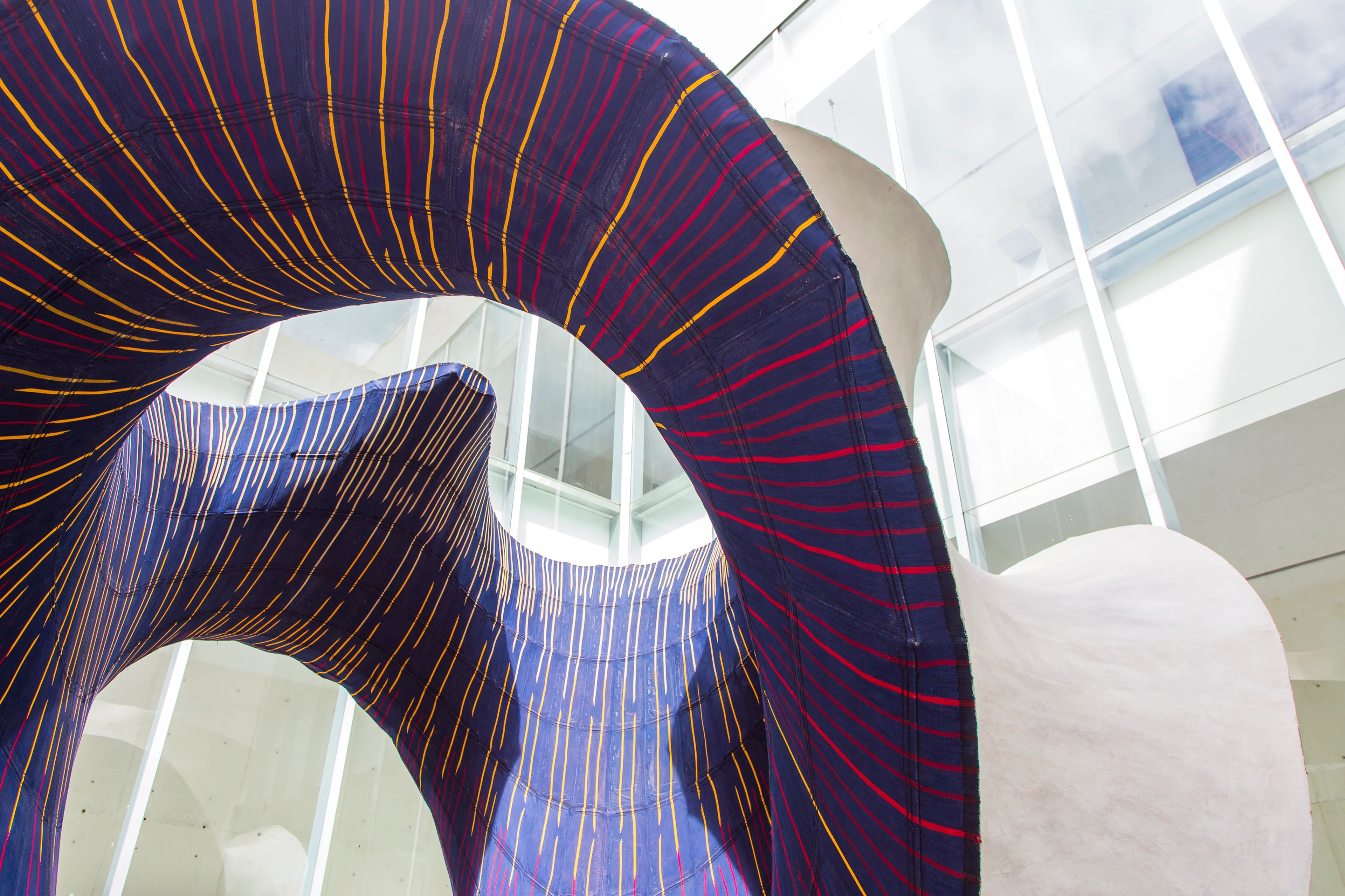
The 50m2 of textile shuttering of KnitCandela’s formwork is comprised of four long strips ranging from 15 m to 26 m in length. Each of the four strips is a seamless, double-layered textile produced as a single piece. Two layers of textile fulfil different tasks. The visible inside is an aesthetic surface that displays a colourful pattern and reveals traces of the supporting cable-net falsework system. The exterior surface fulfils technical requirements by including features for inserting, guiding and controlling the position of additional formwork elements.
The pockets created between the two layers as part of the spatial knitting process are inflated using standard modeling balloons. These inflated pockets become cavities in the cast concrete, forming a structurally efficient waffle shell without the need for a complex, wasteful formwork. Pockets located on this exterior side of the textile have different knit densities to control the inflated shape and openings for the insertion of the balloons, enabling cavities of different dimensions to be created with one standard balloon size.
The soft, colourful textile interior of KnitCandela’s shell and its hard, concrete exterior is visible from all viewing angles. The textile’s striped pattern expresses the knitting fabrication process and the radial symmetry of the shape. This patterning, along with the simultaneous visibility of the soft interior and the hard exterior of the shell enhances the visitor’s spatial experience and the curvatures of the KnitCandela’s form.
Installations & pavilions
Explore our other installations & pavilions
ZHA's installations and pavilions utilises our cutting-edge research to push material capability to its full potential. At the forefront of innovation, we explore the limits and possibilities of contemporary construction methods.
Photograph by Jacopo Spilimbergo
Installations + Pavilions
Origin
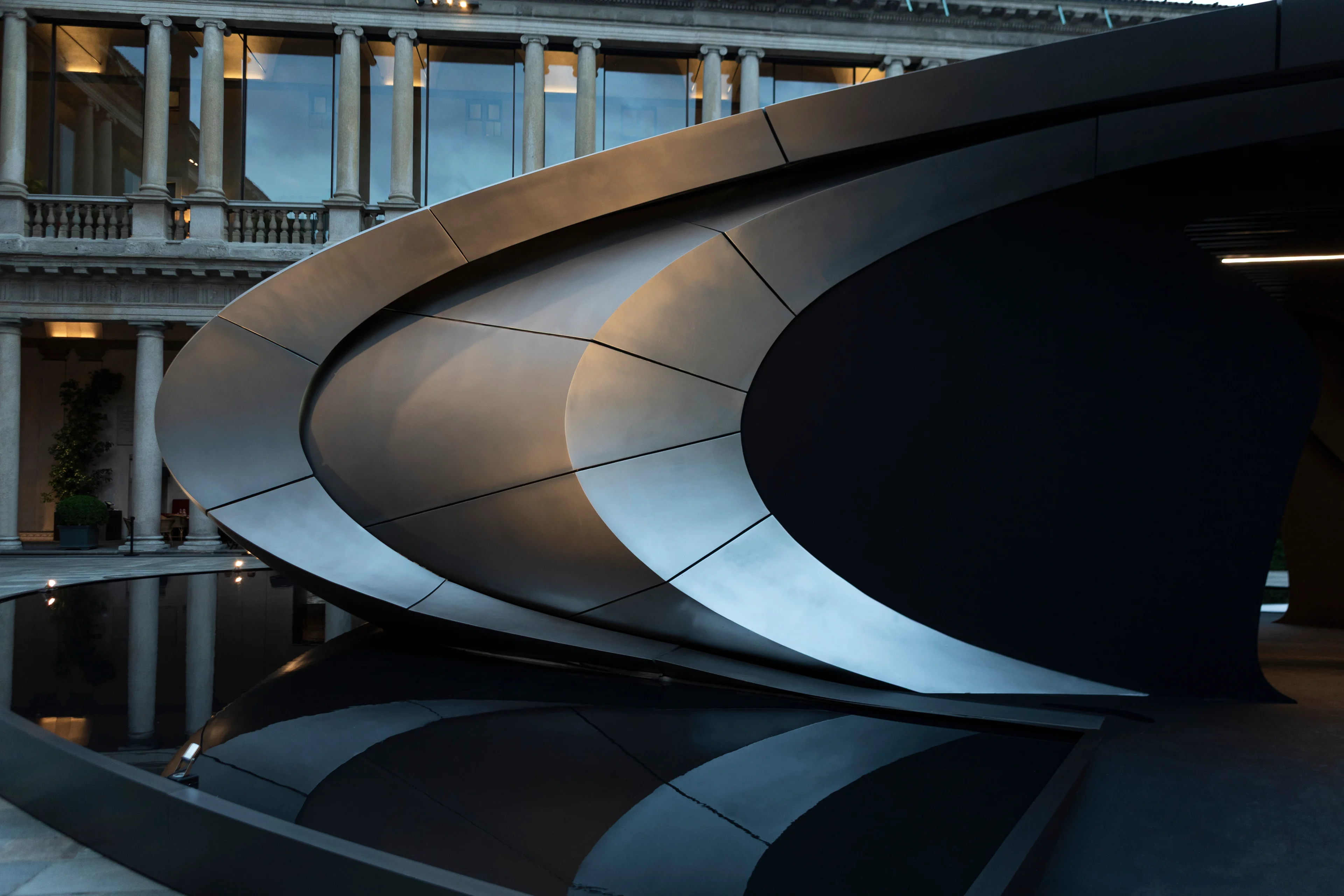
A collaboration between Audi and ZHA, Origin was conceived an immersive installation serving as a portal to an investigation of the principles defining Audi's new design philosophy: clarity, technicality, intelligence, and emotion.
Photograph by Alessandra Chemollo
Venice Biennale, May 2021
Installations + Pavilions
‘High-performing Urban Ecologies’ Installation Venice Biennale
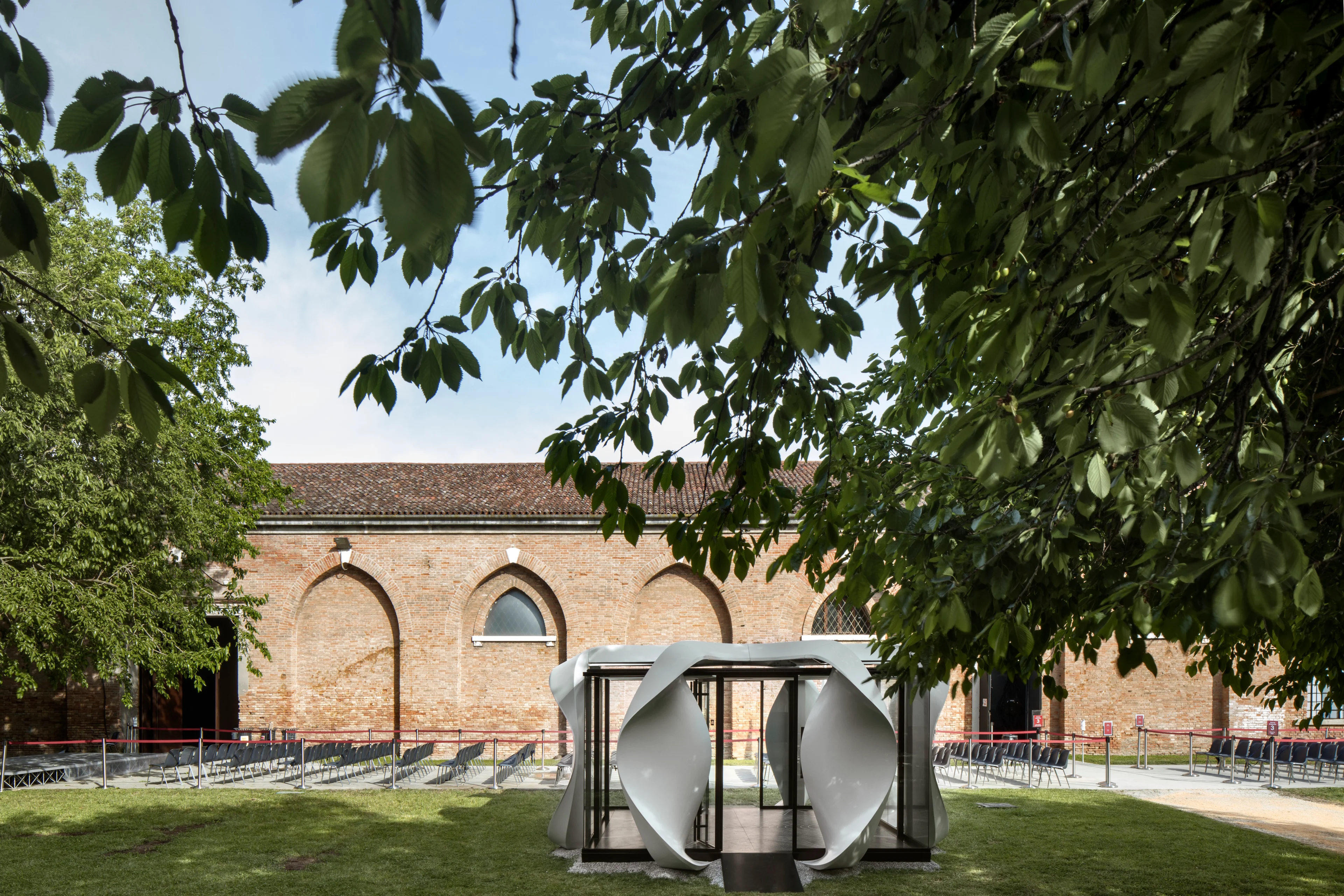
The ‘High-performing Urban Ecologies' installation by ZHA responds to the ‘Resilient Communities’ theme of this year’s Italian Pavilion curated by Alessandro Melis for the Venice Architecture Biennale 2021.
Installations + Pavilions
Unconfined
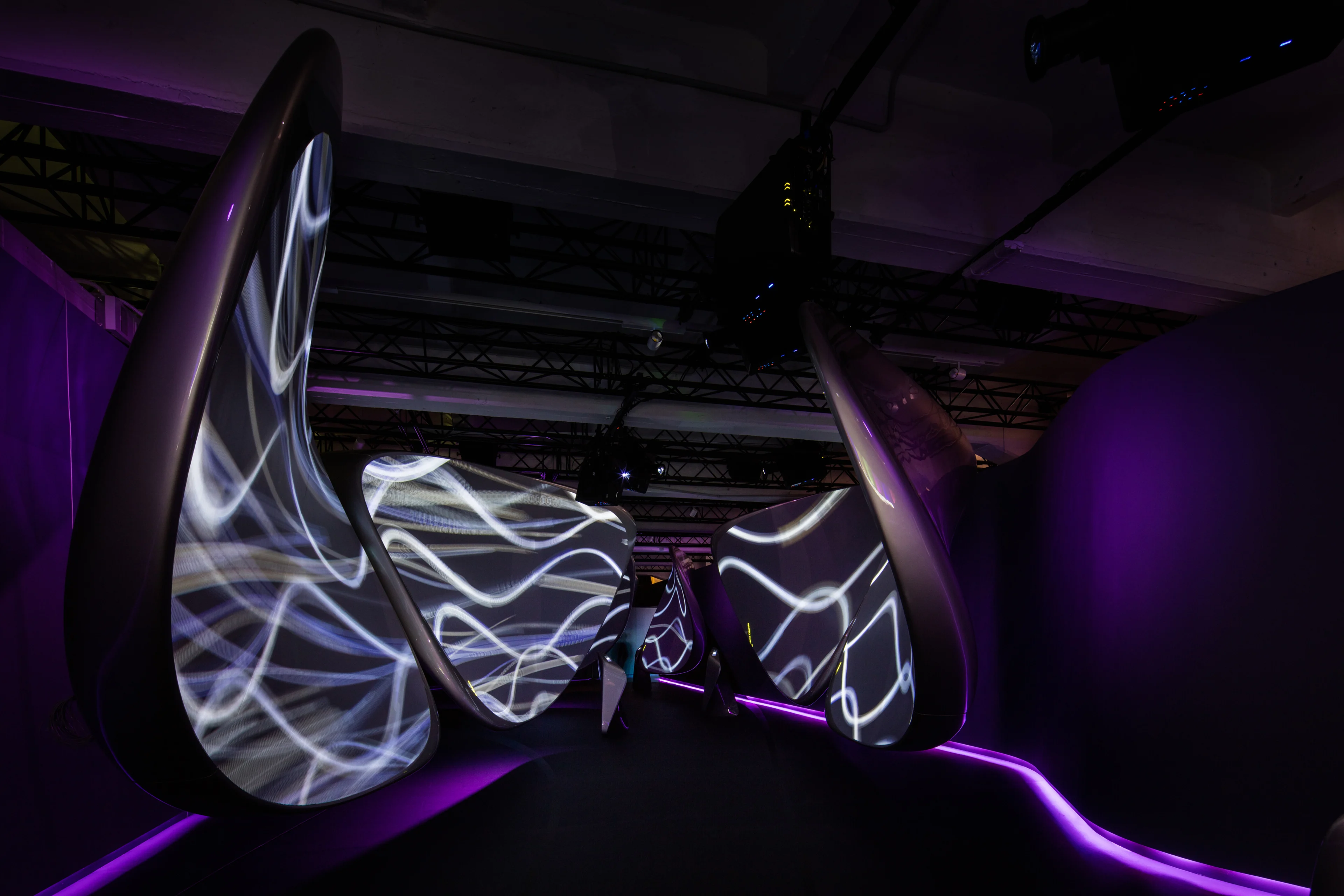
Samsung collaborated with ZHA and digital art and design collective Universal Everything, to present ‘Unconfined’, an installation showcasing the story of the Galaxy S8 that centres on the unity of design, technology and experience. Visitors journey through an immersive environment inspired by the new device, creating digital installations that bring to life the Galaxy design philosophy.
Photograph by Paul Warchol
Retail
Il Makiage Pavilion
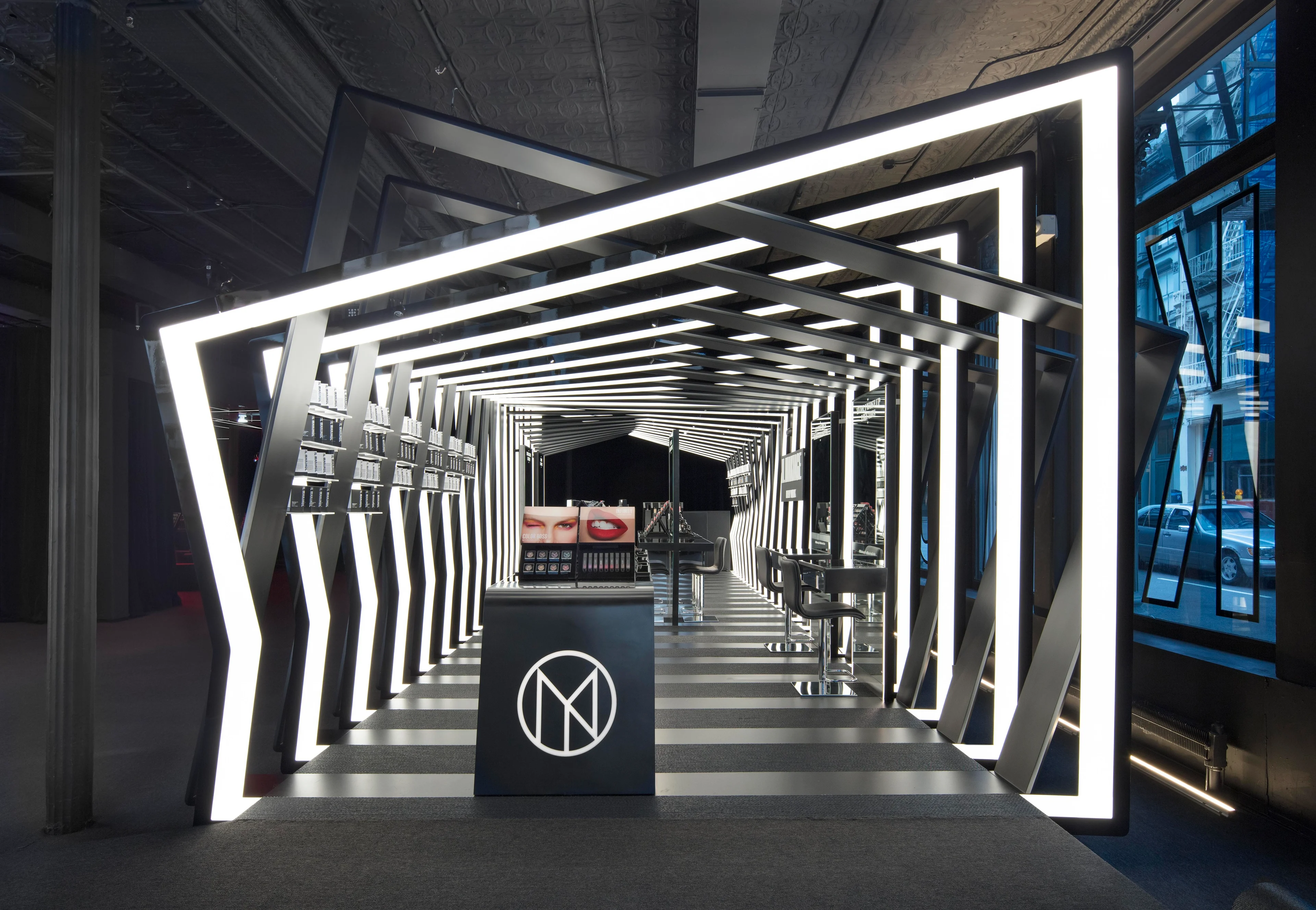
Il Makiage has launched a collection with a pavilion at 490 Broadway by ZHA that is informed by the label’s characteristically bold graphic identity.
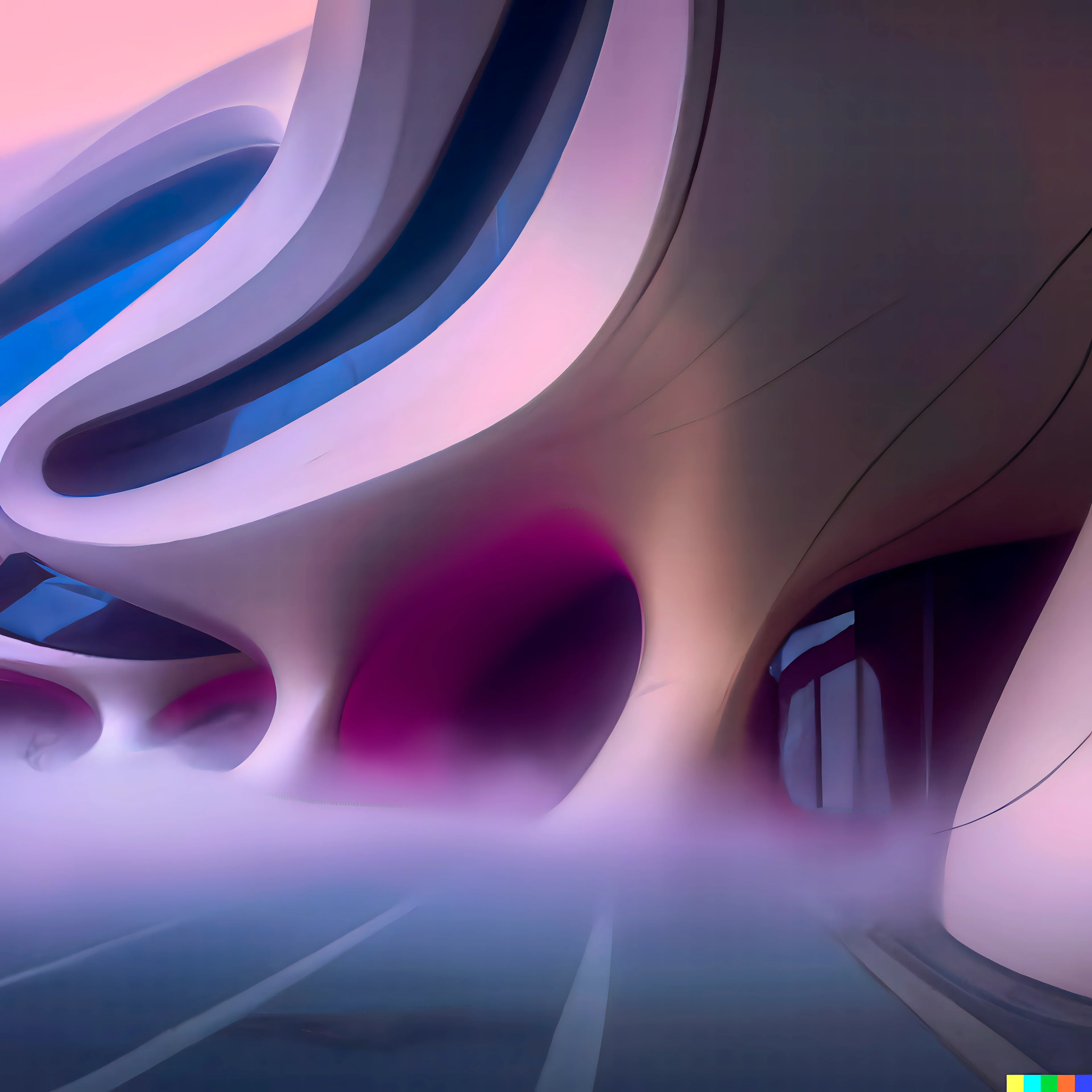
Image © ZHA, Refik Anadol Studio, with OpenAI DALL-E 2
Virtual Spaces
Installations + Pavilions
Exhibitions
'Architecting the Metaverse'
Architecting the Metaverse’ is an immersive art project at the intersection of architecture, art, technology, and artificial intelligence (AI). It is the result of a 6-month collaboration between Refik Anadol Studio (RAS) and ZHA.
Courtesy of Studio Naaro
Striatus 3D Printed Concrete Bridge
Installations + Pavilions
Striatus 3D Printed Concrete Bridge
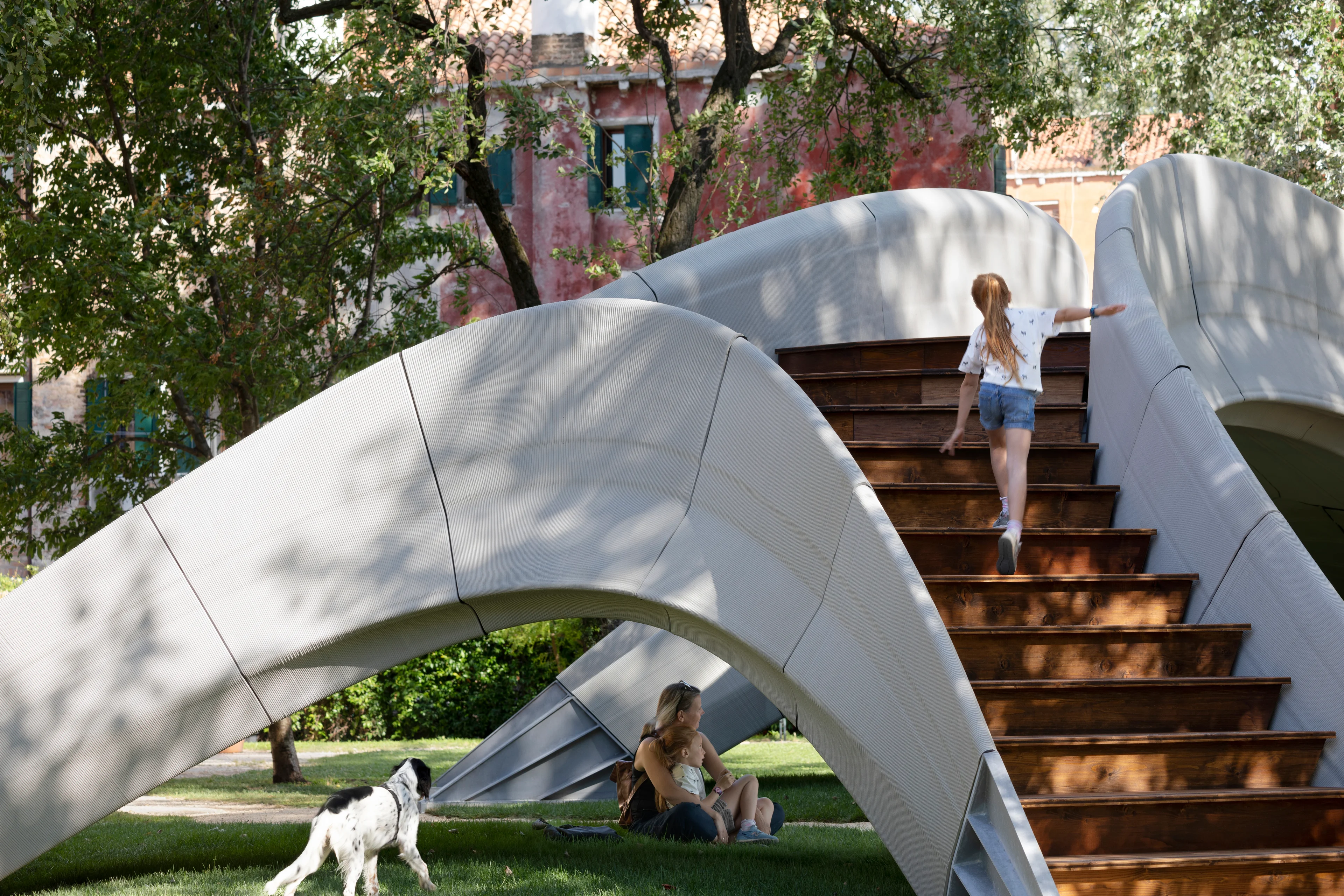
Striatus is an arched masonry footbridge composed of 3D-printed concrete blocks assembled without mortar or reinforcement. The first of its kind, the project is a collaboration between the Block Research Group (BRG) at ETH Zurich and ZHA Computation and Design Group (ZHACODE), in collaboration with incremental3D (in3D), made possible by Holcim.
Photograph by Hélène Binet
Installations + Pavilions
R. Lopez De Heredia Wine Pavilion
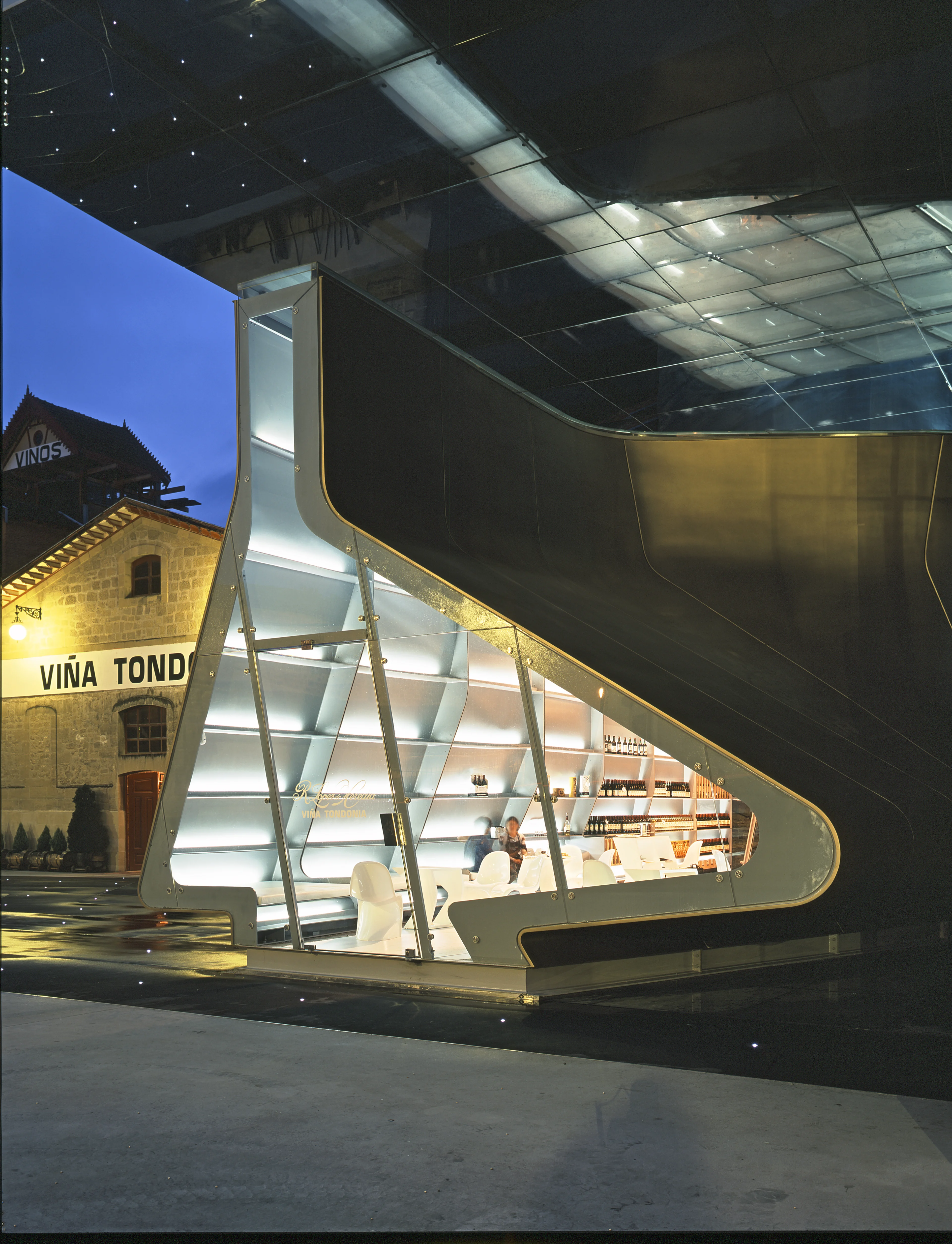
A new bottle for an old wine: a design to safeguard one of López De Heredia’s treasures. Originally commissioned as a new pavilion to contain an older pavilion restored from the early 20th century, this became a bridge between the past, present and future evolution of its world-famous bodegas.
Photograph by Luke Hayes
Thallus White in The City 4-9 April 2017
Installations + Pavilions
Thallus Installation
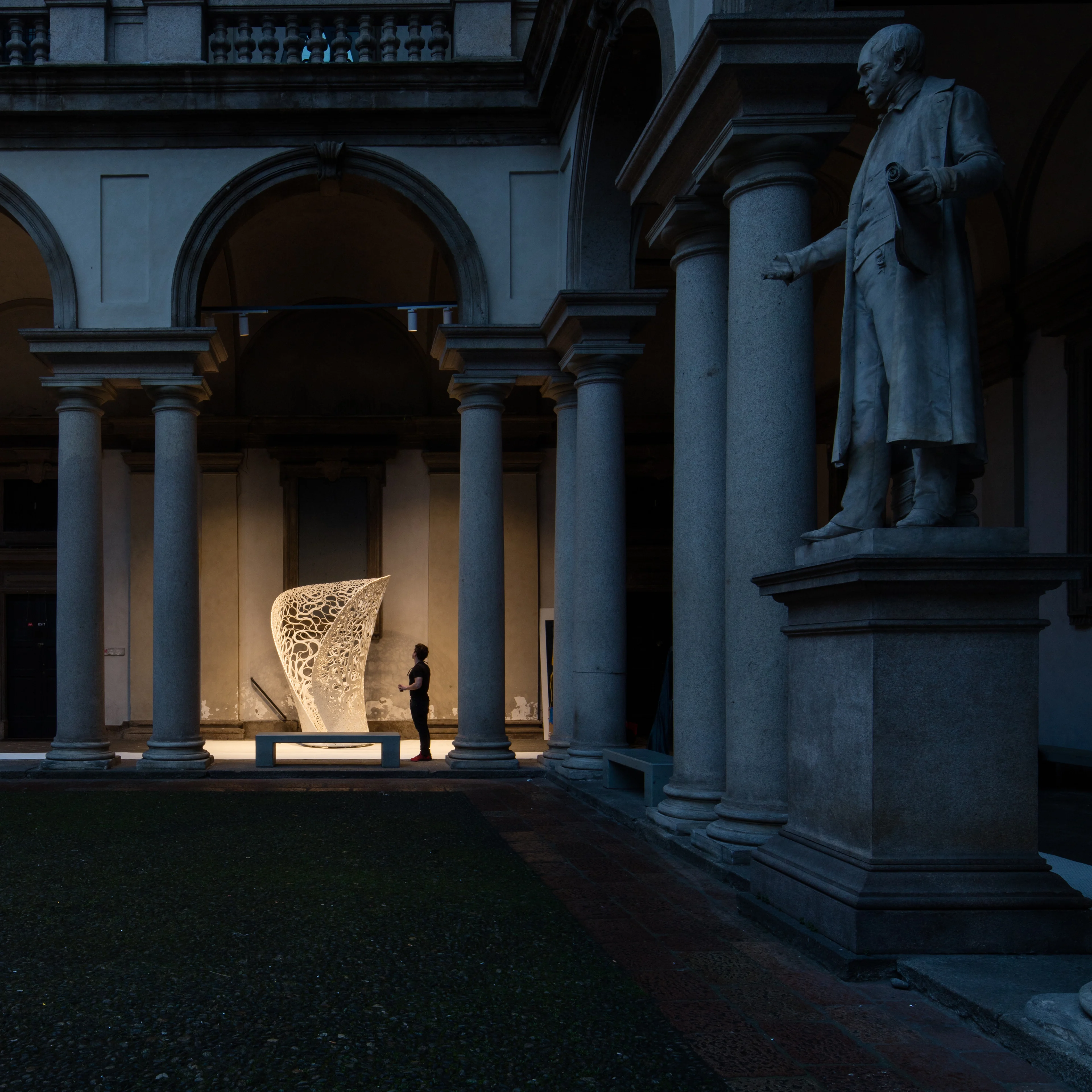
Named after the Greek word for flora that has no differentiation between stem and leaf, Thallus is an experimental structure investigating form and pattern generated by advanced manufacturing and computational methods.
Courtesy of ZHA
Installations + Pavilions
Burnham Pavillion
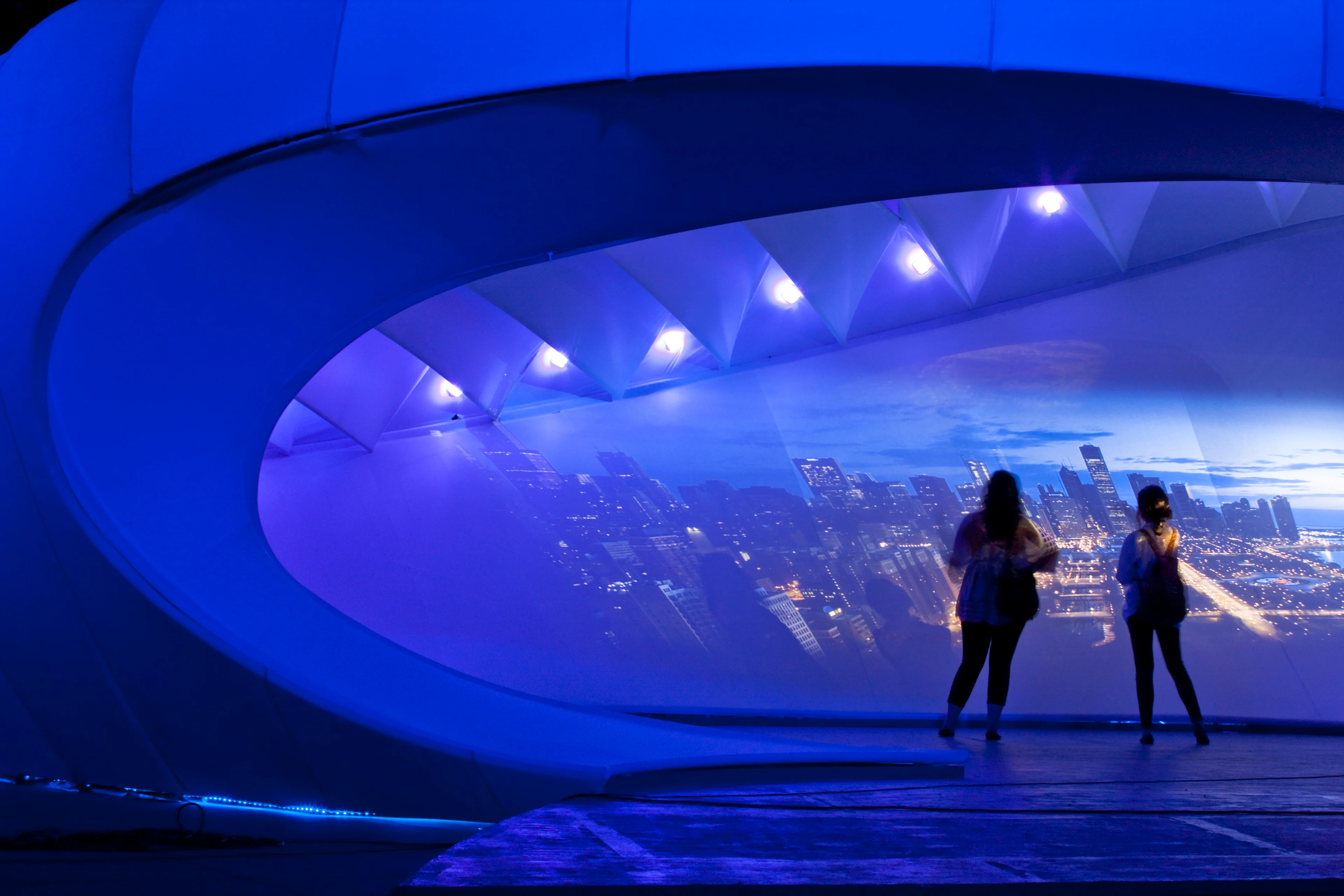
A temporary pavilion designed and erected in Chicago’s Millennium Park as part of the Burnham Plan celebrations – reflecting the Chicago’s long tradition for embracing cutting edge architecture in an in intricate but fluid structure that incorporates hidden traces of Burnham and Bennett’s original 1909 plans to redevelop the city.
Photograph by Joel Chester Fildes
Manchester International Festival July 2009
Installations + Pavilions
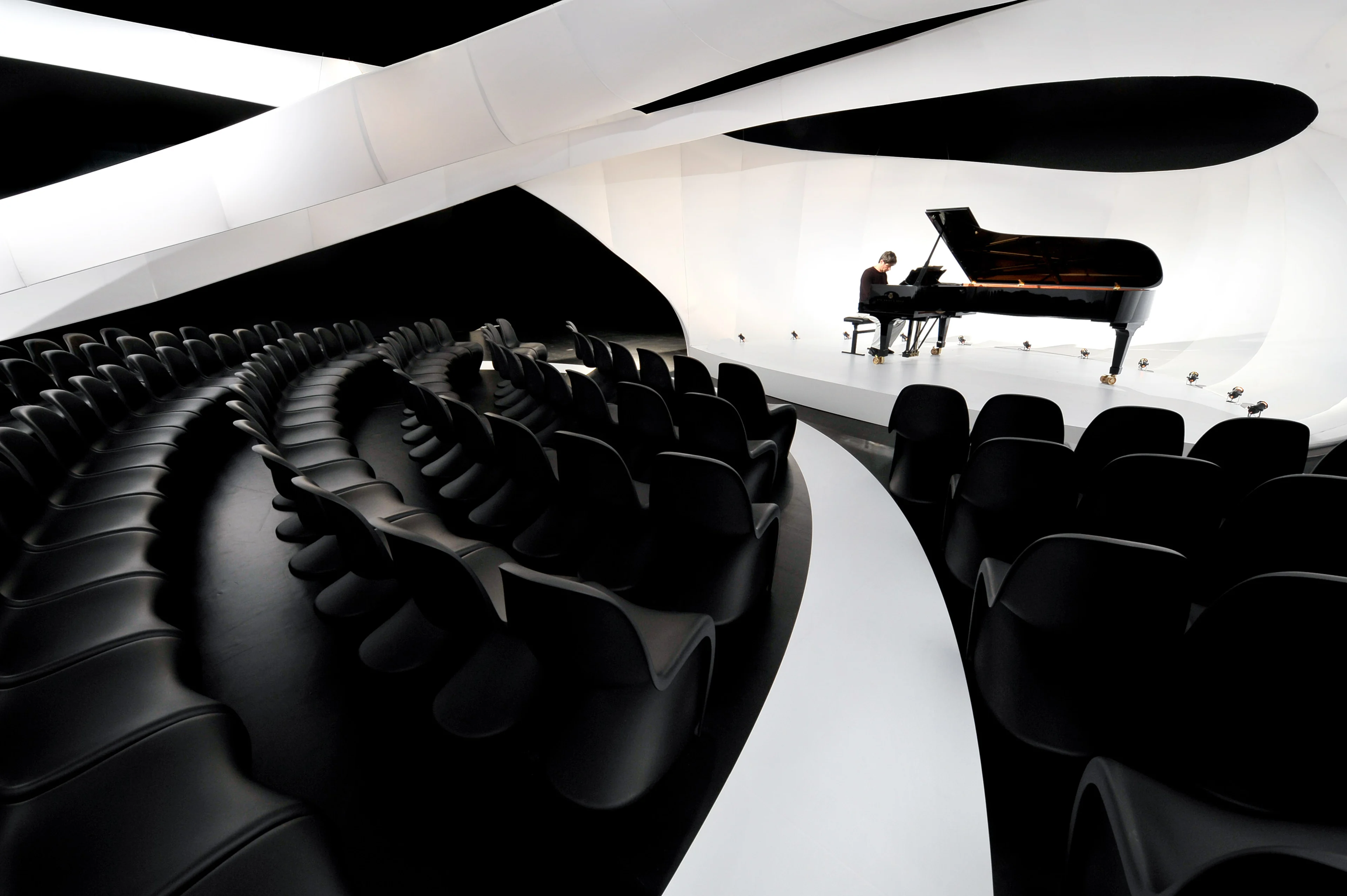
JS Bach Chamber Music Hall
A unique chamber music hall specially designed to house solo performances of J S Bach works – enhancing the multiplicity of his music by using a single, continuous ribbon of fabric which continuously changes, stretches, compresses and moves around itself to cocoon both performers and audience within an intimate fluid space.
Photograph by Virgile Simon Bertrand
Hong Kong : 27 February - 5 April 2008
Installations + Pavilions
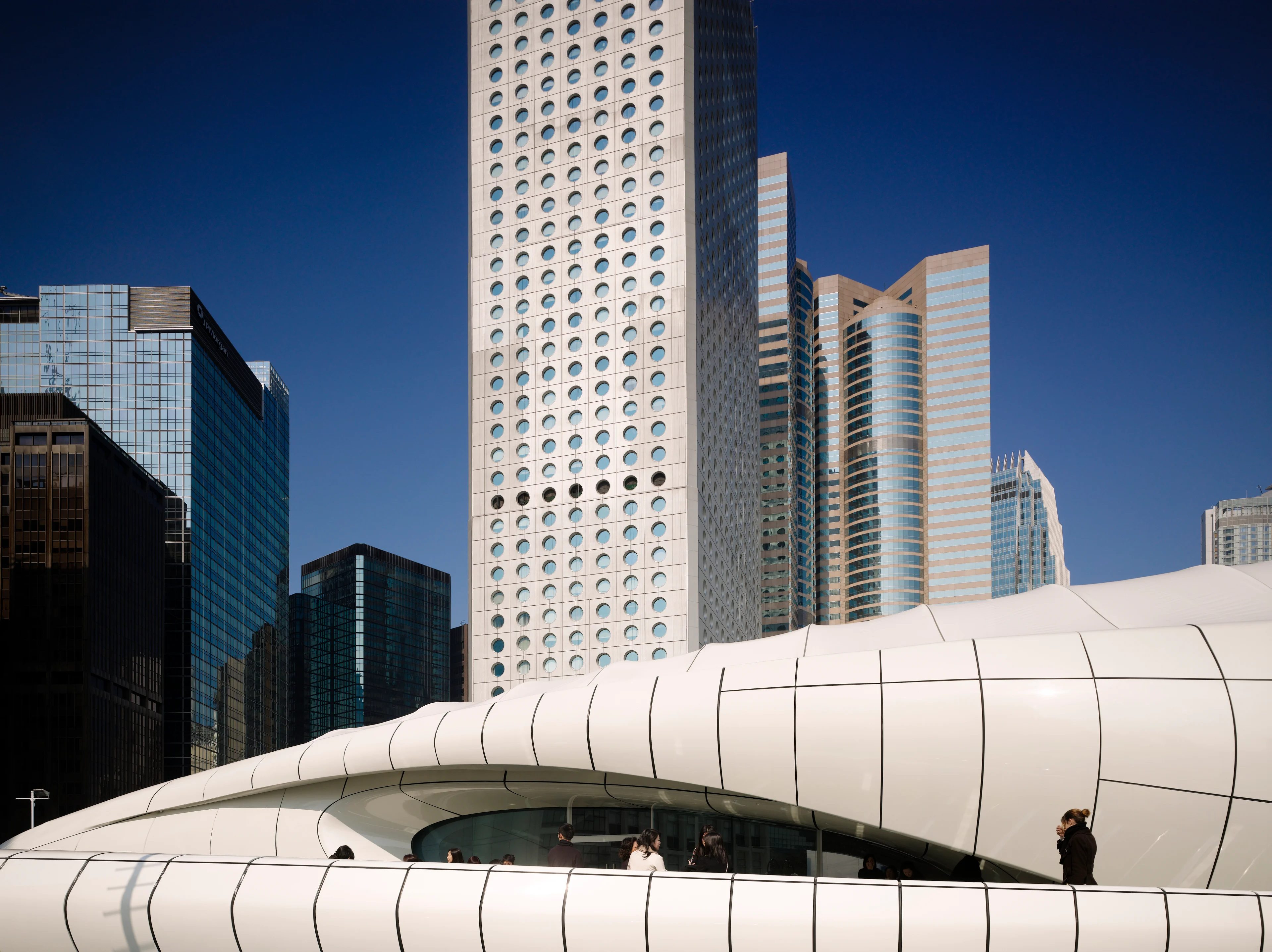
Mobile Art Chanel Contemporary Art Container
A unique sculptural pavilion created as an exhibition/event space for Chanel – inspired by the brand’s distinctive layering of exquisite details within an elegant, cohesive whole – created as a series of continuous arches, sequencing towards a central courtyard – the entire structure ‘flooded’ by through translucent walls and ceilings.
01
02
03
04
05
06
07
08
09
10
11