
Render by X-Universe
Addis Ababa, Ethiopia
2026
Ethiopian Airlines (Federal Government of Ethiopia)
Bishoftu International Airport
Render by X-Universe
Render by X-Universe
Render by X-Universe
Render by X-Universe
01
02
03
04
Construction has begun on the new Bishoftu International Airport (BIA)
Construction has begun on the new Bishoftu International Airport (BIA) approximately 40 km south of the Ethiopian capital Addis Ababa. Ethiopia’s Prime Minister Abiy Ahmed Ali laid the cornerstone at the airport’s groundbreaking ceremony on Saturday 10th January 2026.
"Bishoftu International Airport will be the largest aviation infrastructure project in Africa's history, more than four times the capacity of Ethiopia's current main airport which will reach its limits on existing traffic in the next two to three years,” said the Prime Minister.
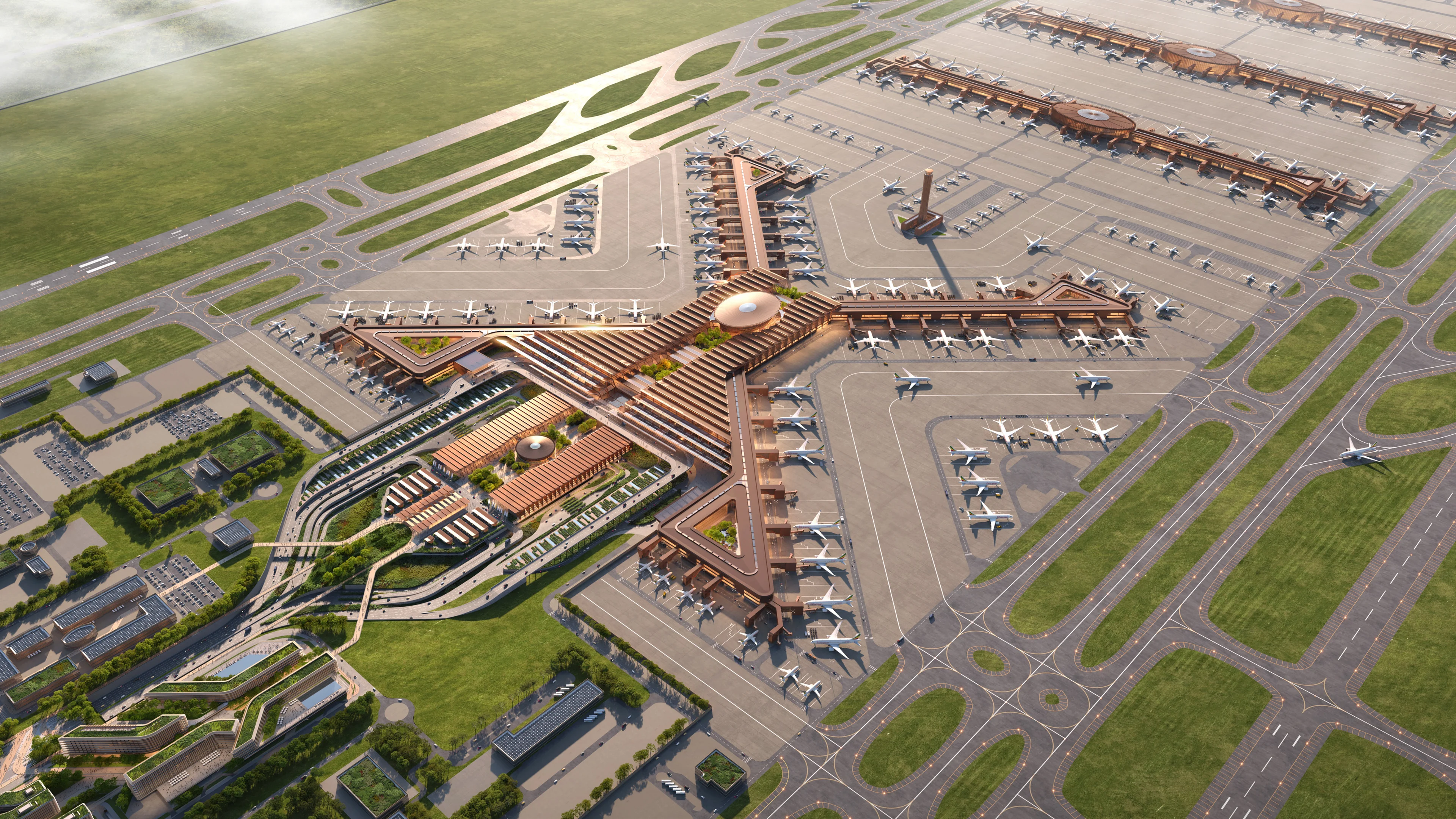
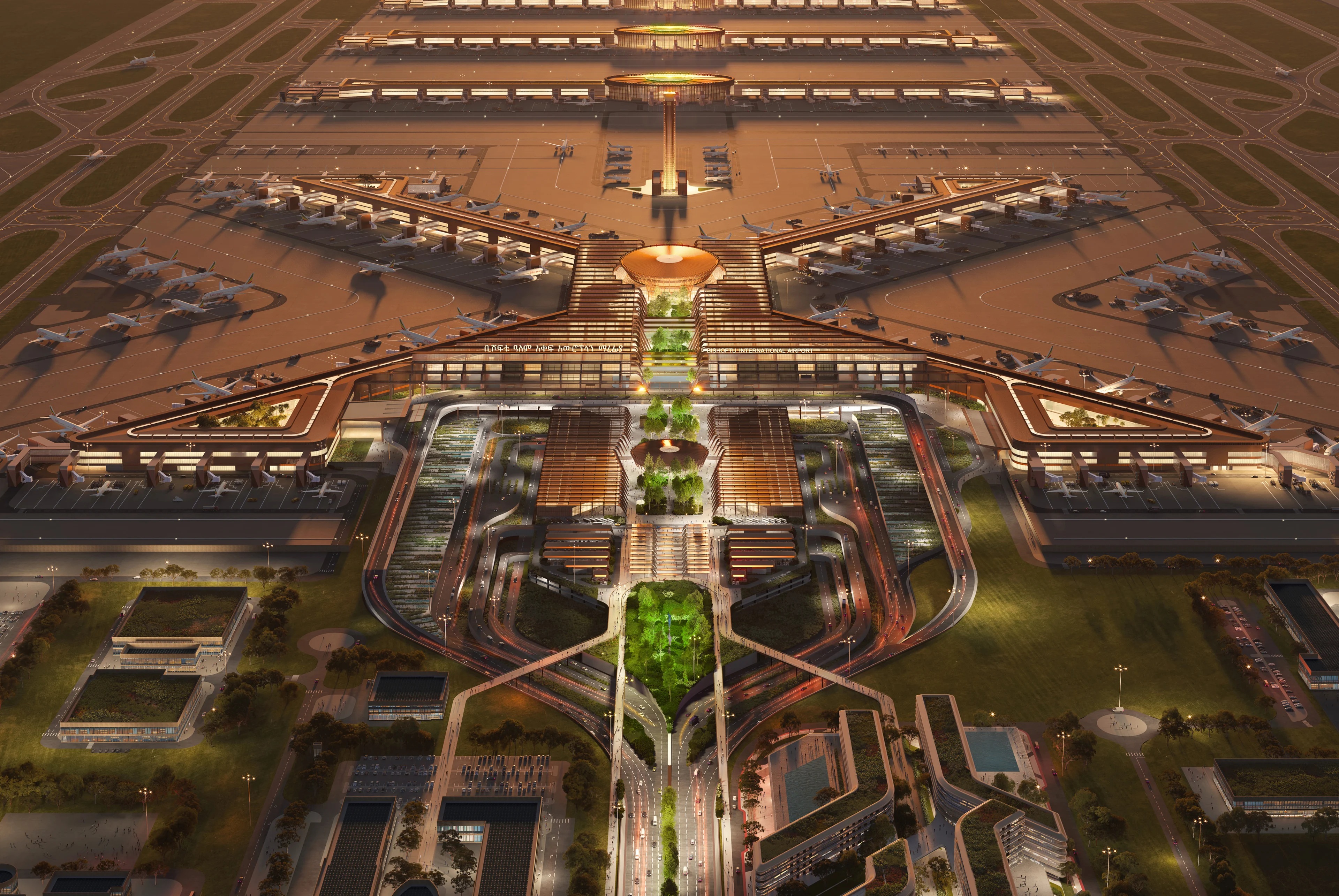
BIA will serve Ethiopian Airlines, Africa’s largest carrier. Designed by ZHA to meet the airline’s future passenger demand and operational needs, BIA will become Africa’s global aviation hub, providing facilities of the highest standard with a strong focus on transferring passengers.
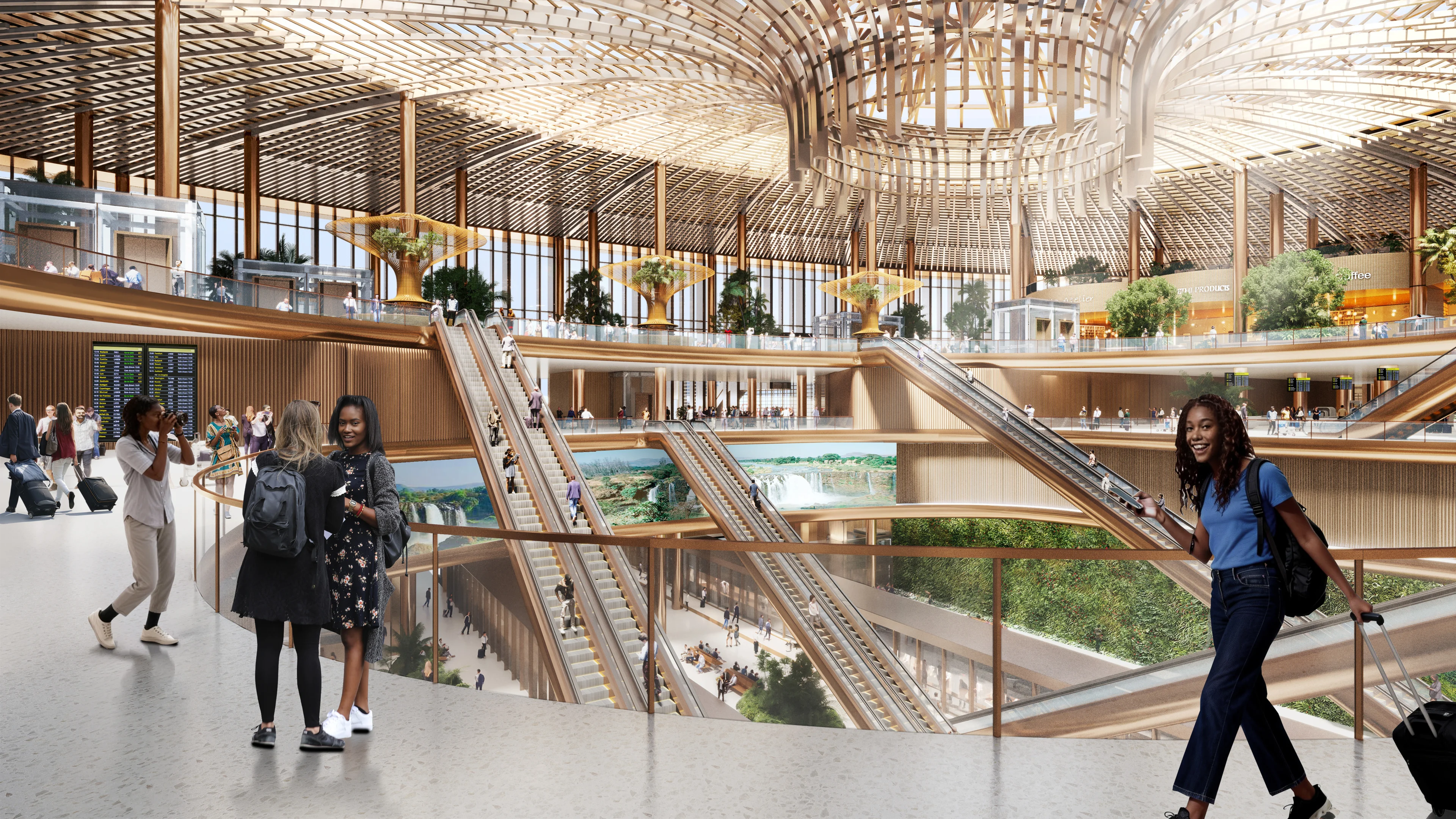
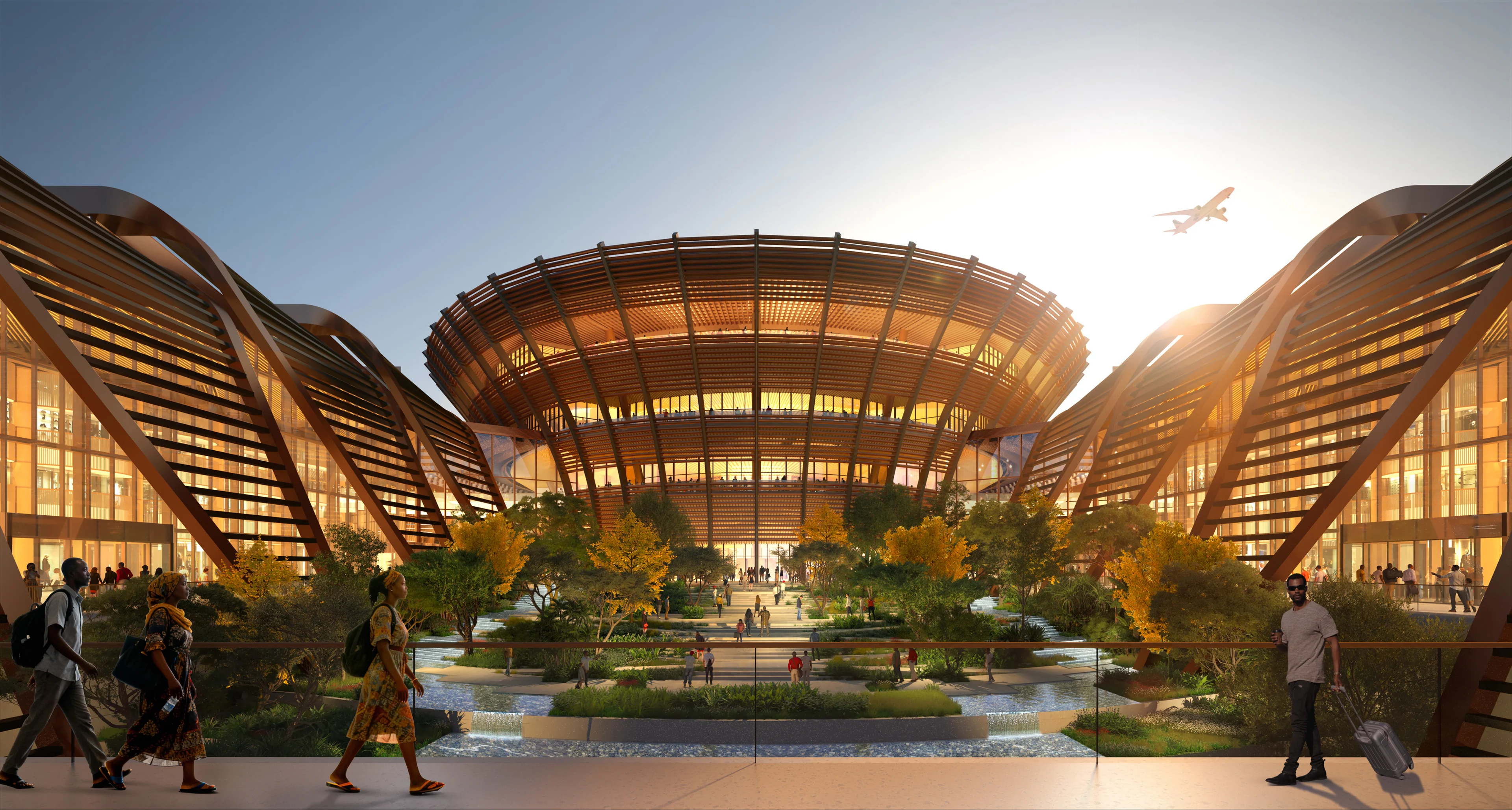
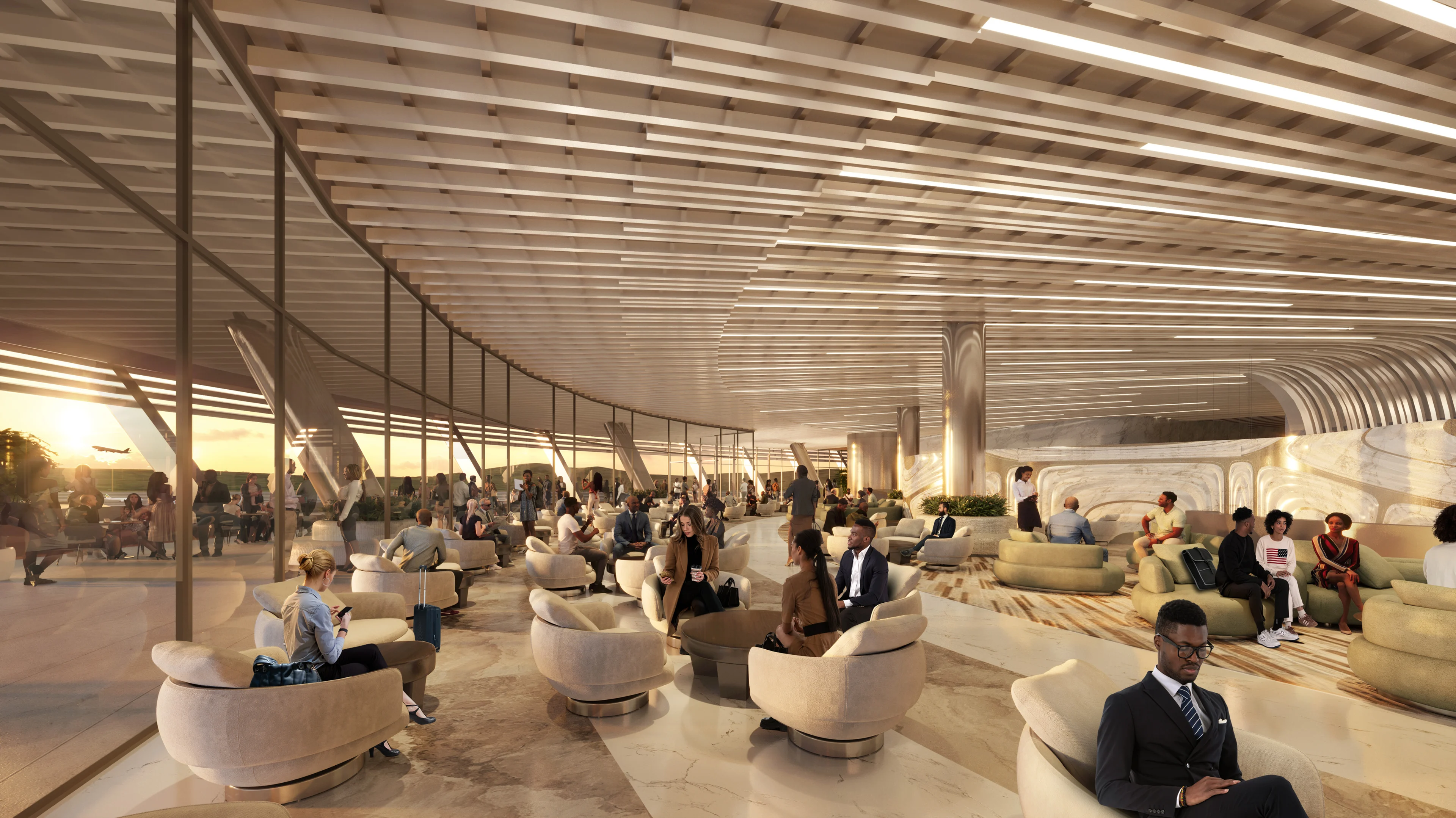
With up to 80% of passengers transiting between destinations without leaving the airport, BIA has been designed to accommodate these requirements—incorporating extensive amenities for transiting passengers including airside hotel with 350 guestrooms, a wide variety of dining and entertainment facilities, as well as outdoor gardens and courtyards for relaxation.
Render by X-Universe
Targeting an initial opening in 2030
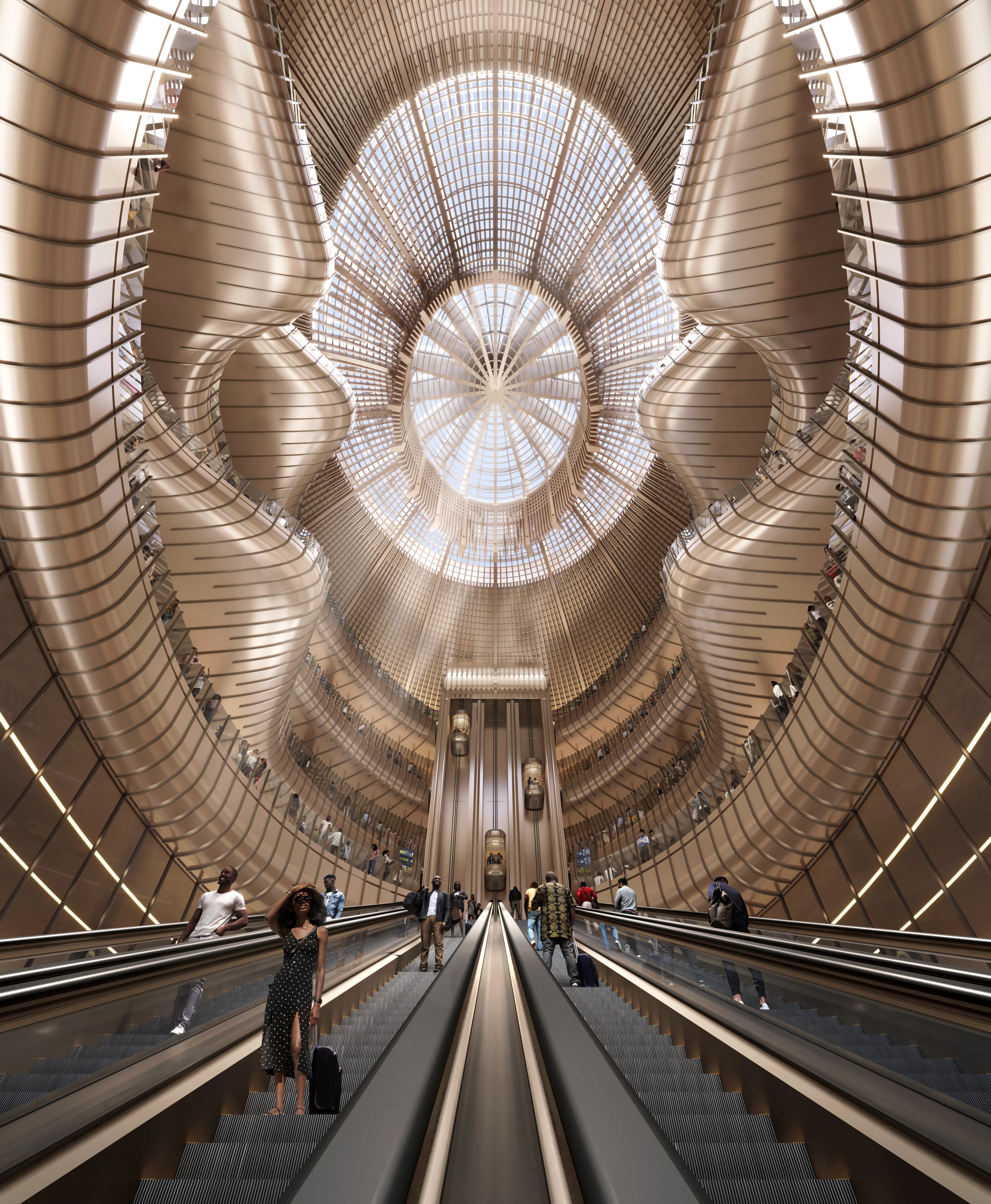
Each of the terminal’s piers incorporates a unique interior materiality and colour palette to reflect the diverse regions of Ethiopia. Inspired by the Great Rift Valley that passes near Bishoftu as it crosses through the country, a single central spine connects the terminal’s facilities and aircraft piers—minimising transfer distances and ensuring connecting passengers can easily navigate to their next departure gate.
BIA’s elevation at almost 400m lower than Addis Ababa’s existing Bole Airport—in addition to BIA’s longer runways—will enhance aircraft performance, enabling Ethiopian Airlines to optimise the maximum take-off weight (MTOW) of their modern fleet of aircraft—using less fuel to carry more passengers and cargo on longer-range, non-stop flights to further global destinations.
Targeting an initial opening in 2030, BIA will be constructed in multiple stages. The first phase will include two Code 4E independent-operating parallel runways and 660,000m² terminal serving 60 million passengers annually (60MAP). Further phases will enable BIA to accommodate up to 110 million passengers every year with four runways and parking for 270 aircraft.
Cristiano Ceccato de Sabata, ZHA's Director of Aviation, said: "Bishoftu International Airport is a visionary project for Ethiopia and Africa as a whole. Airports bring people together and bridge national divides. ZHA is honoured to be part its development—connecting every region of the continent as Africa’s global gateway”
Designed to achieve LEED Gold certification
Situated within the temperate subtropical highland climate of Ethiopia’s Oromia region, BIA’s passenger terminal is designed to achieve LEED Gold certification. The terminal will be naturally ventilated with effective solar shading and will include semi-enclosed spaces and outdoor areas for transferring passengers to enjoy the region’s warm summers and mild winters.
Constructed using modular fabrication and assembly to ensure flexibility and cost-effective efficiency, BIA’s procurement will incorporate concrete, aggregates and steel that have been produced or recycled locally in Bishoftu.
Stormwater from the airport’s runways, taxiways and aprons—as well as the roofs of the passenger terminal and cargo buildings—will be channelled into new wetlands and bioswales for storage and reuse while also enhancing the airport’s local biodiversity. Photovoltaic arrays installed throughout BIA will enable on-site energy production.
Landscaped with native drought-resistant planting including resettled trees, BIA’s design integrates landside public parks for local residents and airside gardens for passengers.
BIA will be connected to the centre of Addis Ababa and the existing Bole Airport via a high-speed rail link, serving as the cornerstone of a new regional transport network. Specifically located for 24-hour operations without the need for a curfew, BIA and its integrated Airport City of mixed-use buildings will create new jobs supporting a local population of 80,000 and enable Ethiopian Airlines to continue its rapid growth and meet future passenger demand. These new developments support the airline’s ‘Vision 2035’ strategy, becoming a leading global aviation group offering passenger, cargo, and MRO (Maintenance, Repair, and Overhaul) services with a focus on technology and efficiency.

Ethiopian Airlines Group
The continent’s leading carrier connecting Africa with the world, Ethiopian Airlines Group was founded in 1945 and is the oldest airline in Africa. The group includes the airline’s Aviation University which will be joined by Boeing's new African centre of excellence.
Achieving more than threefold growth in the past ten years and targeting similar expansion over coming decades, Ethiopian has become Africa’s largest airline—and one of the fastest-growing airlines worldwide, operating to more than 150 domestic and international destinations across five continents. A key member of the Star Alliance—the world’s largest association of airlines—Ethiopian is implementing its 15-year strategic plan to become one of the leading and most competitive aviation groups in the world.
Meeting International Air Transport Association (IATA) forecasts for East Africa of more than 200% growth over the next decade, the US$12.5 billion investment in BIA will optimise Ethiopia’s position at the crossroads of Africa, Asia and the Middle East (the world’s fastest growing markets for air travel) with a global transportation hub for the 21st century.
In 2024, Ethiopian Airlines Group launched the tender for a strategic design team that would include airfield design, airport masterplan, terminal design and airport city planning. The project was awarded to the team comprising lead consultant, DAR (Dar Al-Handasah) with ZHA as design architects responsible for the new terminal’s technical and functional planning, architecture and interior design.
Transport & Infrastructure
Explore more transport and infrastructure
From bridges to airports, ZHA have delivered 9 transport and infrastructure projects in 9 cities on 2 continents to date. See how we move.
Photograph by Hufton + Crow
Terminal 3B at Chongqing Jiangbei International Airport
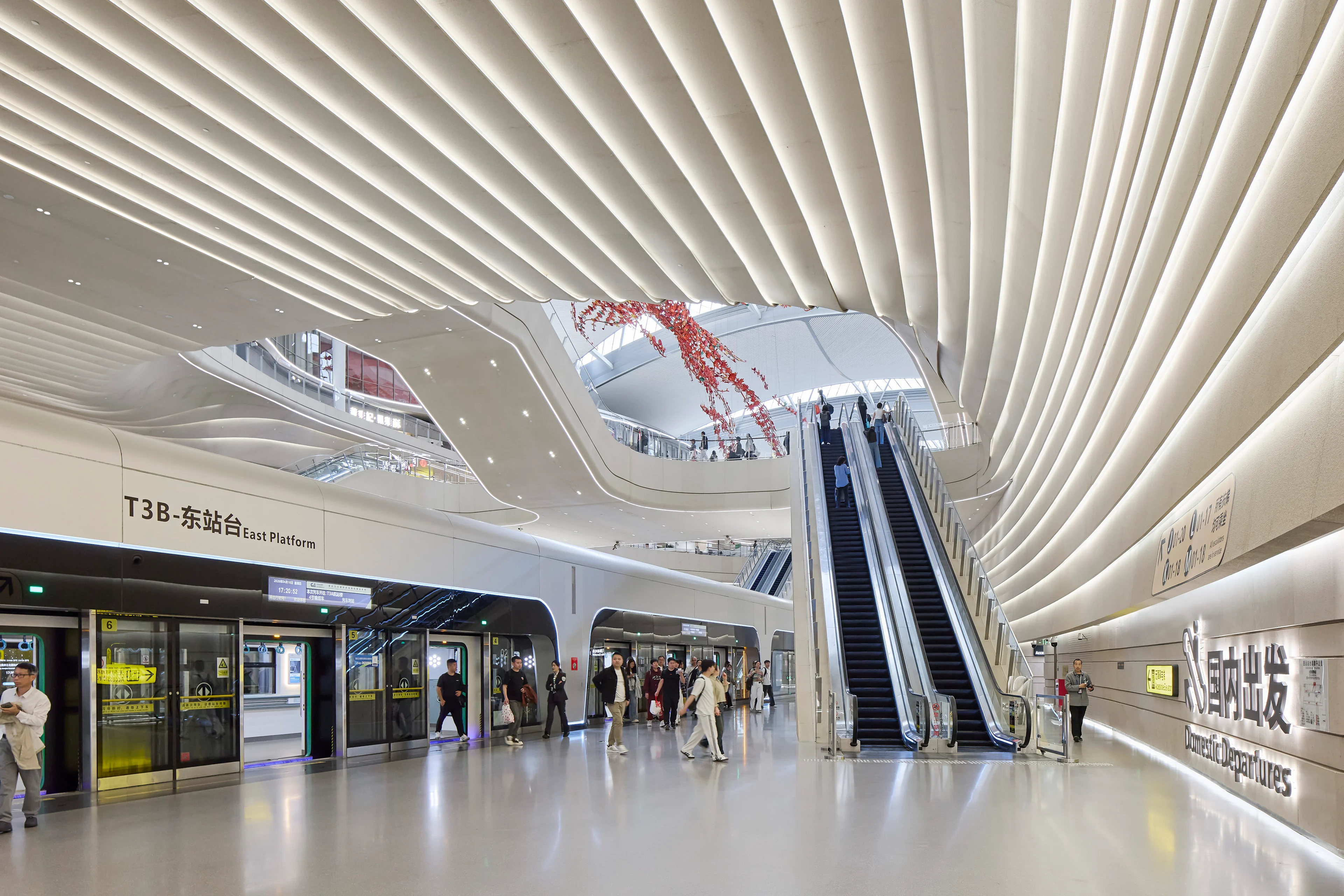
The new Terminal 3B (T3B) at Chongqing Jiangbei International Airport is a ZHA design collaboration with the terminal’s executive architects CSWADI (China Southwest Architectural Design & Research Institute). Constructed by CSCEC (China State Construction Engineering Corporation), T3B marks the final large-scale expansion of the airport’s transformation into one of the country’s leading aviation hubs.
Photograph by Xue Liang 薛亮
Grand Canal Gateway Bridge
Grand Canal Gateway Bridge
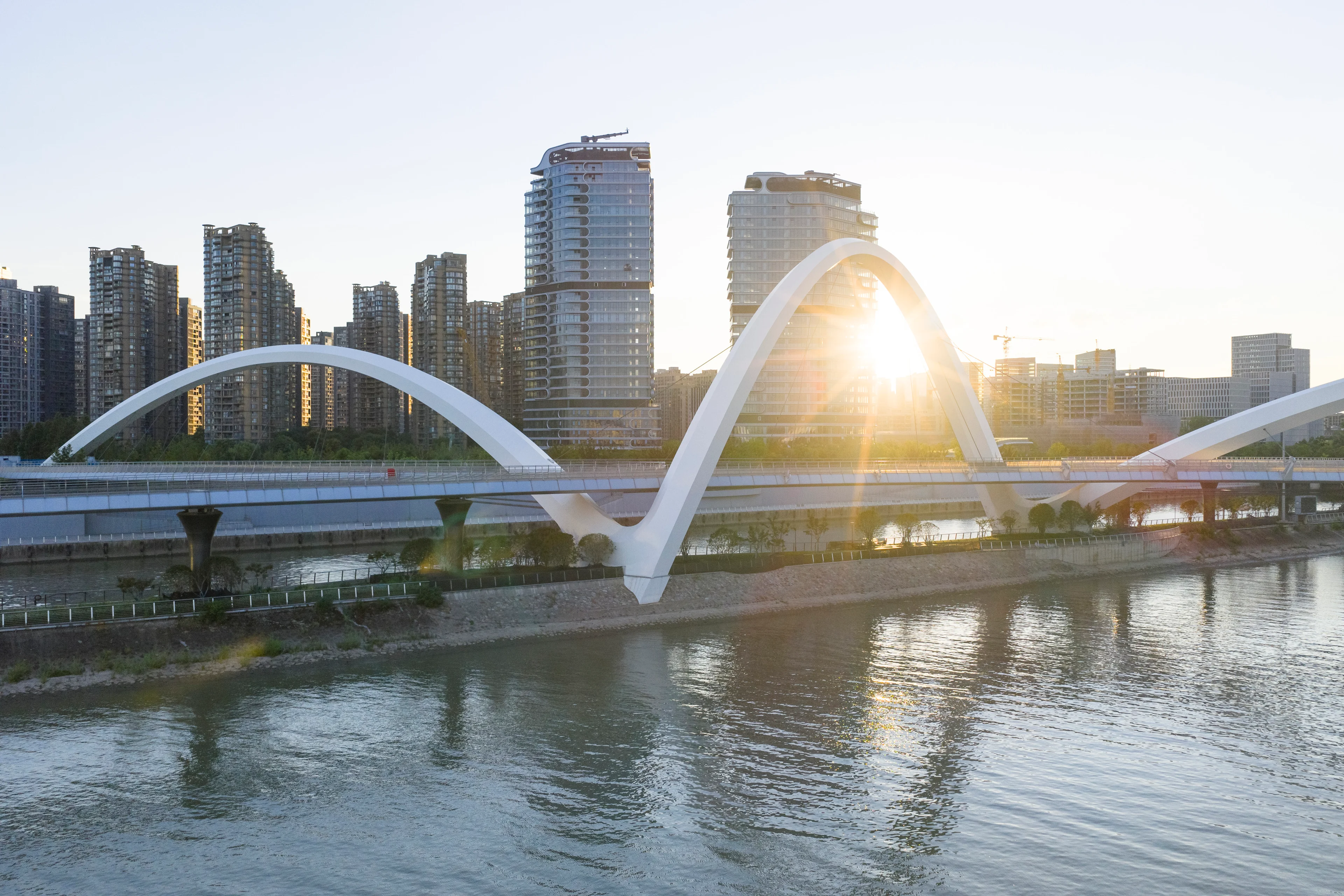
Uniting cultural heritage with 21st century engineering and recyclable materials, the Grand Canal Gateway Bridge is both sculptural and sustainable, designed for longevity with minimal environmental impact.
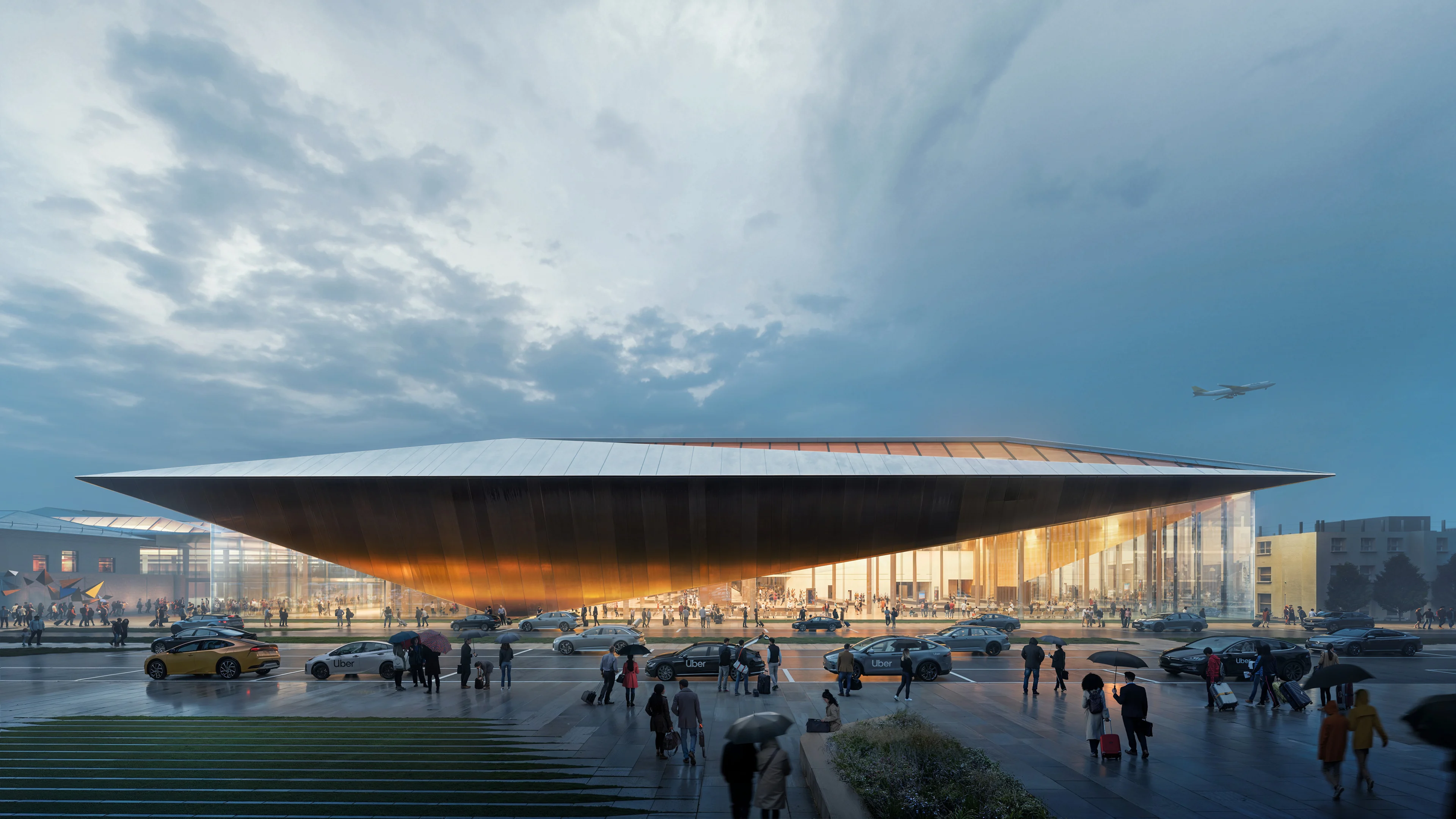
Vilnius Airport Terminal
ZHA's design draws from Lithuanian cultural heritage, incorporating traditional motifs and art forms within a contemporary architectural language. The terminal's modular geometry originates from the rhombus, a triangular shape that holds significant meaning in Baltic folklore.
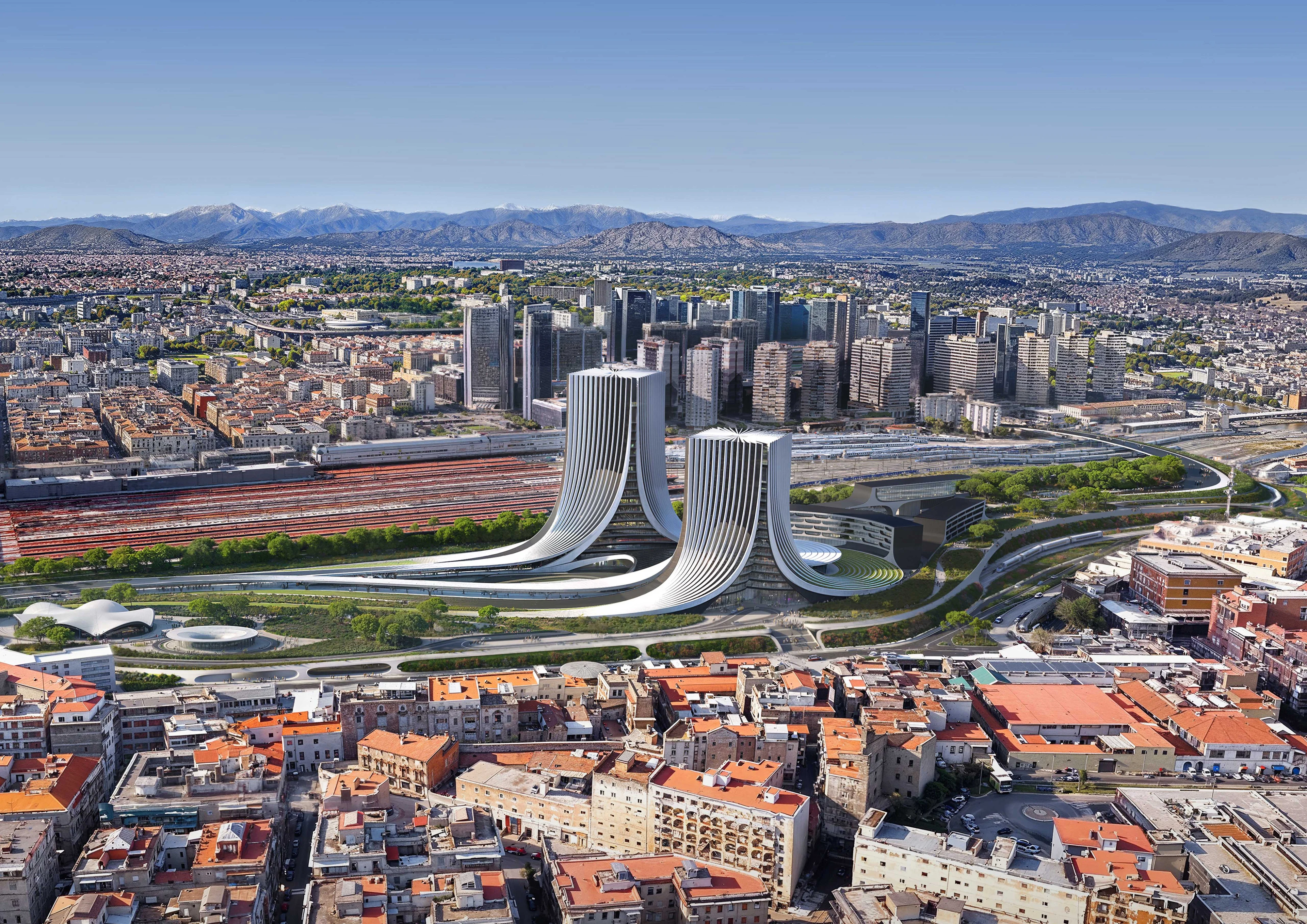
Napoli Porta Est
A large-scale urban regeneration project in Naples that reconnects the city’s fragmented urban fabric and incorporates the new Campania Region headquarters.
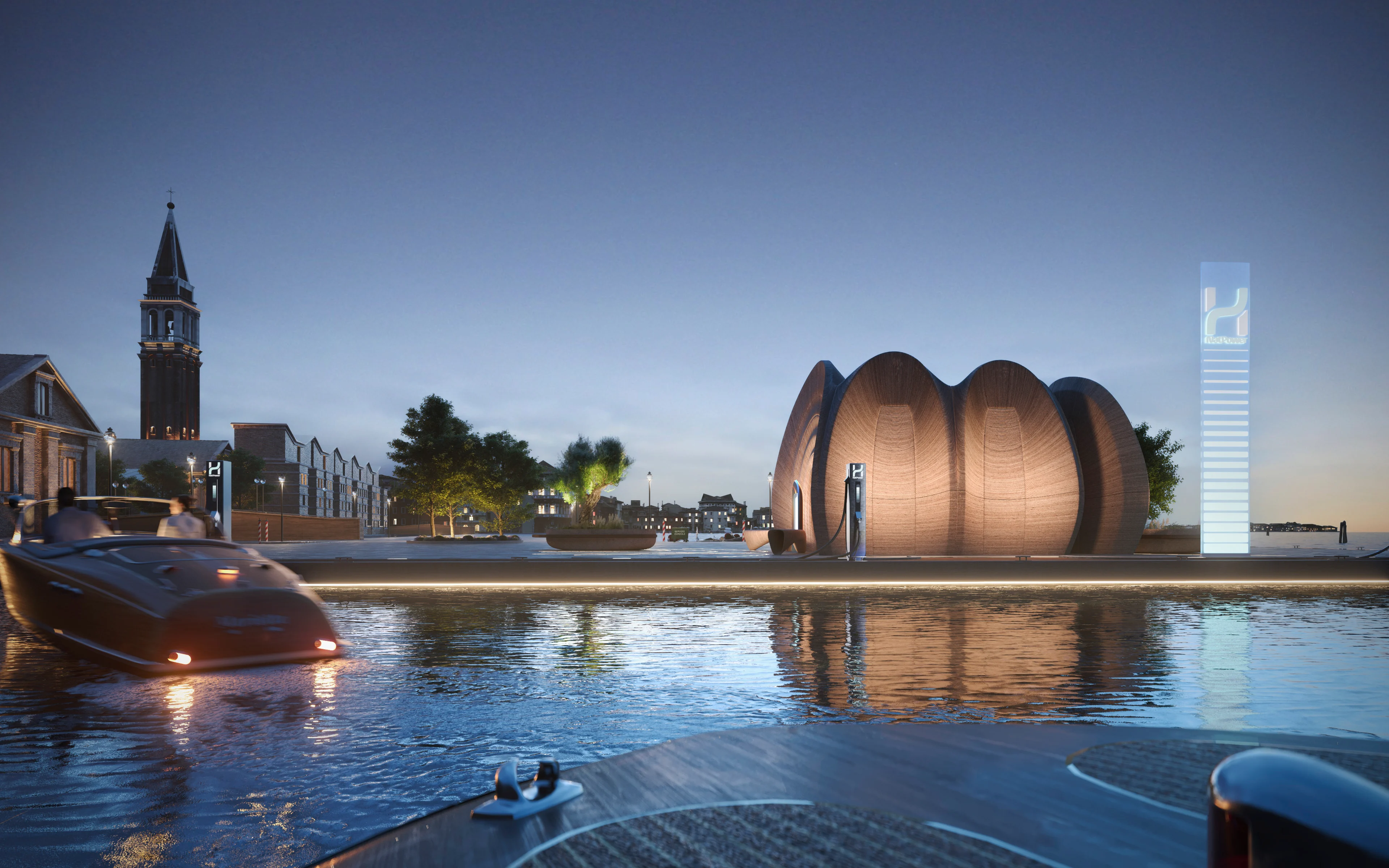
Render by Tecma Solutions
NatPowerH Hydrogen Refuelling Stations
The world’s first green hydrogen refuelling infrastructure for the recreational boating industry will be initiated in 25 Italian marinas and ports with stations designed by ZHA.
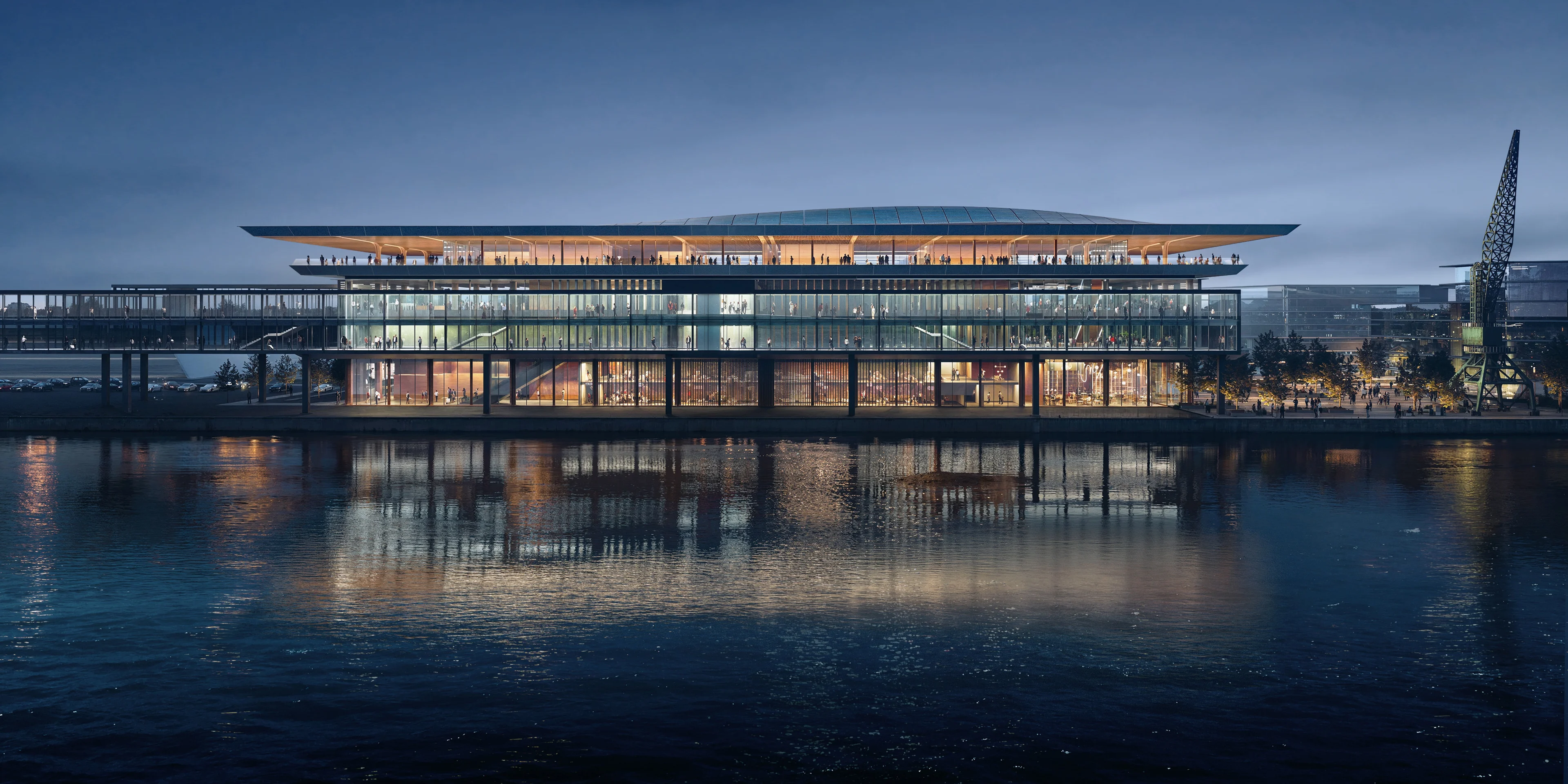
Render by Negativ
Ropax Ferry Terminal
Repurposing an existing shipping warehouse built in 1960 into a new 20,000 sq. m ferry and cruise ship terminal, ZHA’s design adds a fourth level to the structure to incorporate public terraces with panoramic views of the Daugava River and the skyline of Riga’s city centre, a designated UNESCO World Heritage Site.
Photograph by Fernando Guerra
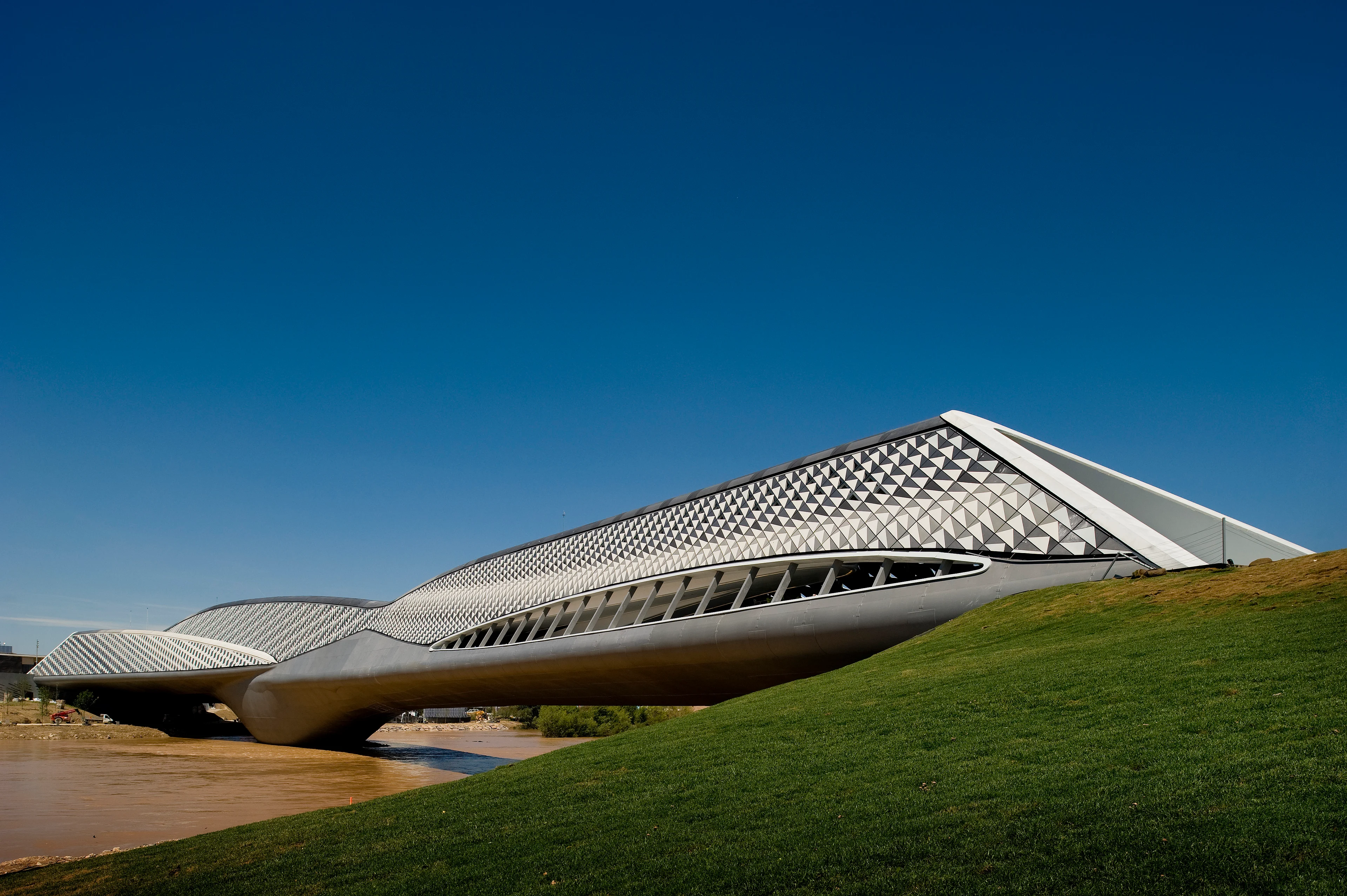
Zaragoza Bridge Pavilion
An enclosed interactive space spanning the River Ebro to form a gateway to the Zaragoza Expo 2008, a hybrid of pedestrian footbridge and exhibition pavilion. Four structural elements correspond to specific spatial enclosures, which intersect and brace each other. This fluid, dynamic design interprets the Expo’s theme: ‘Water and Sustainable Development.’
Photograph by Xue Liang 薛亮
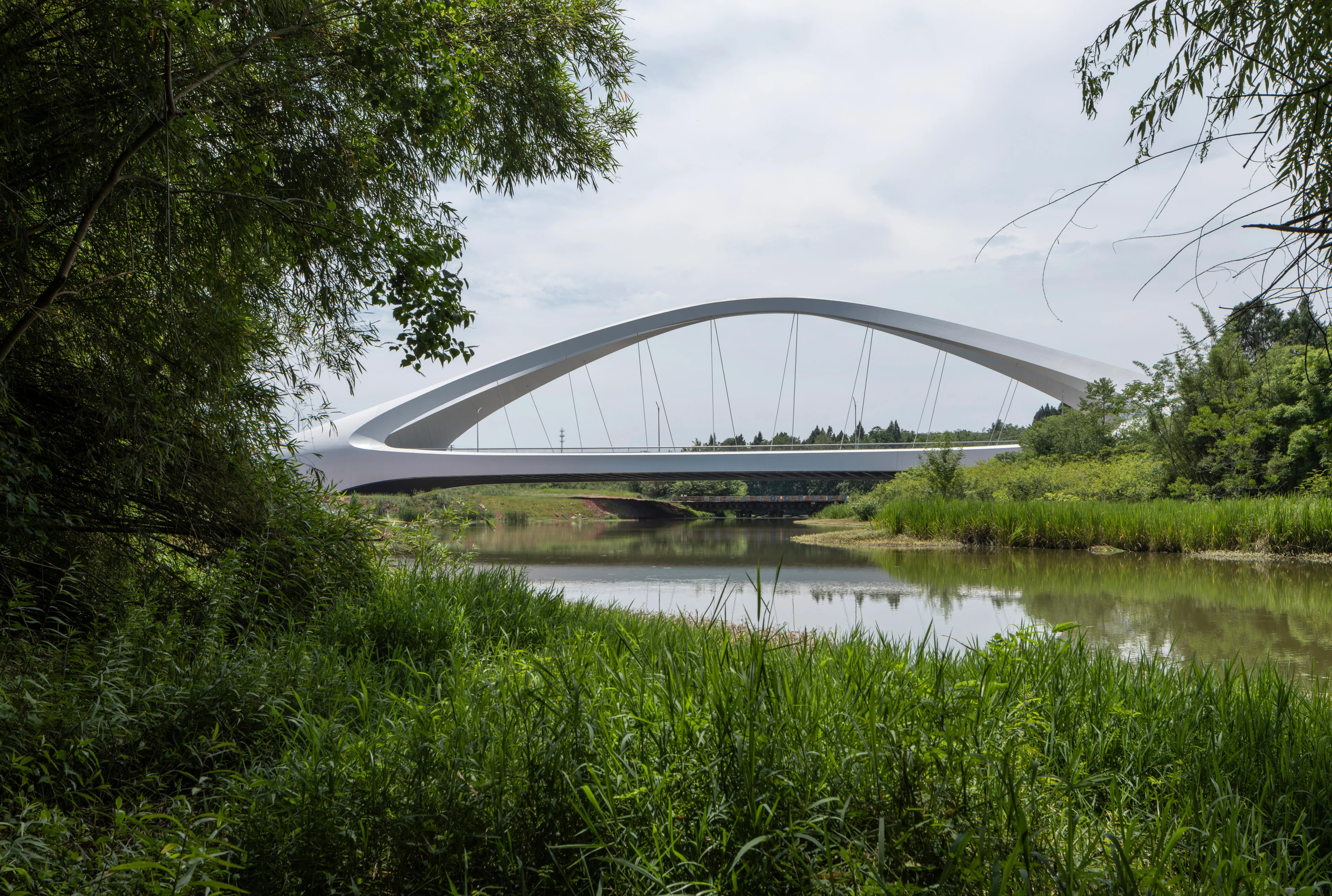
Jiangxi River Bridge
Jiangxi River Bridge
The first in a series of bridges on Chengdu’s West Line Road, the new 295-metre Chengdu West First Bridge crosses the Jiangxi River, a tributary of the Tuojiang River in China’s Sichuan province.
Render by Atchain, courtesy of ZHA
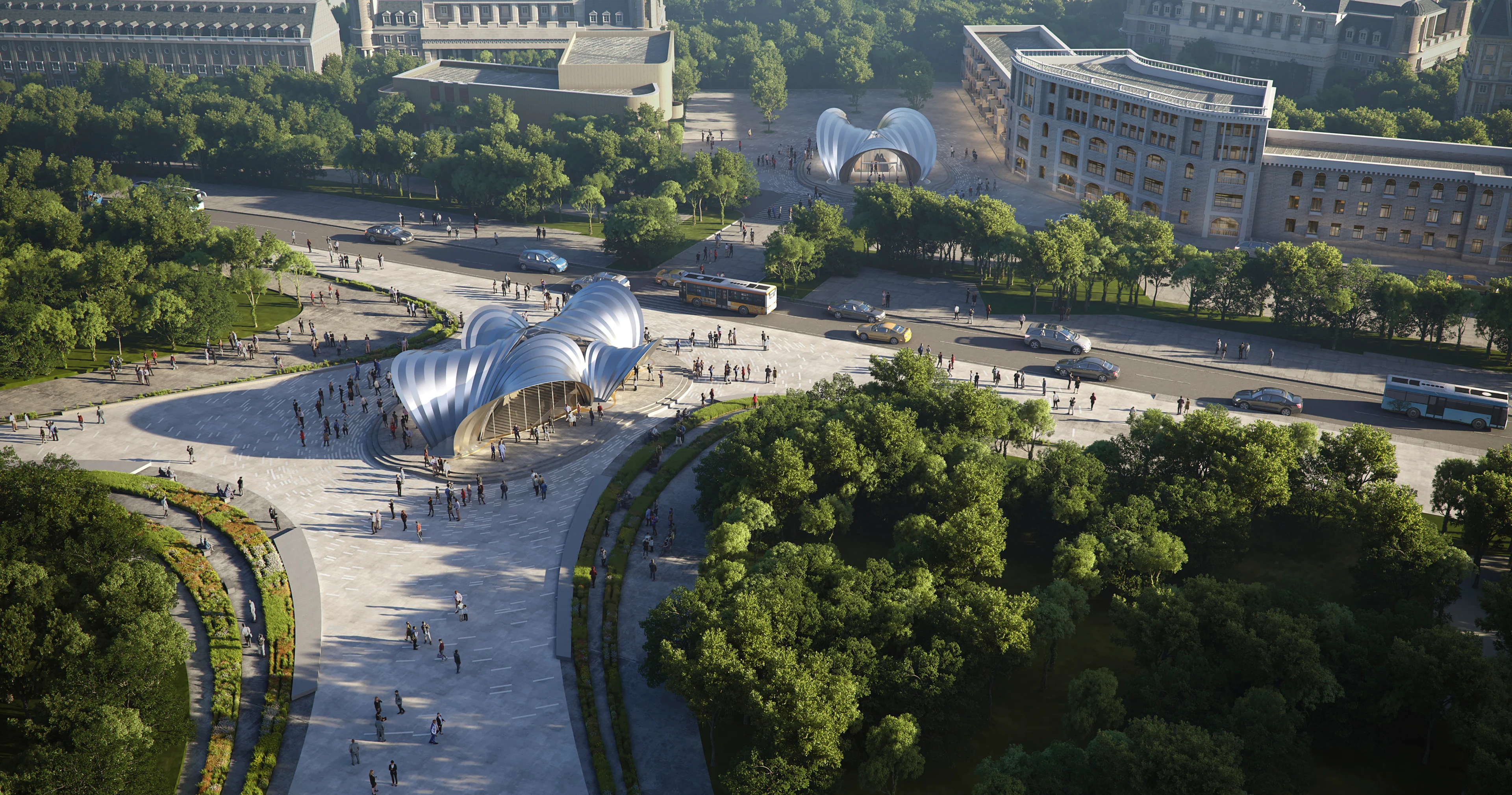
Dnipro Metro Stations
The three new stations (Teatralna, Tsentralna and Muzeina) designed by ZHA will connect the residents, businesses, cultural and academic institutions in Dnipro’s eastern districts with the city centre and the Dnipro-Holovnyi railway terminus.
Courtesy of ZHA, render by Negativ
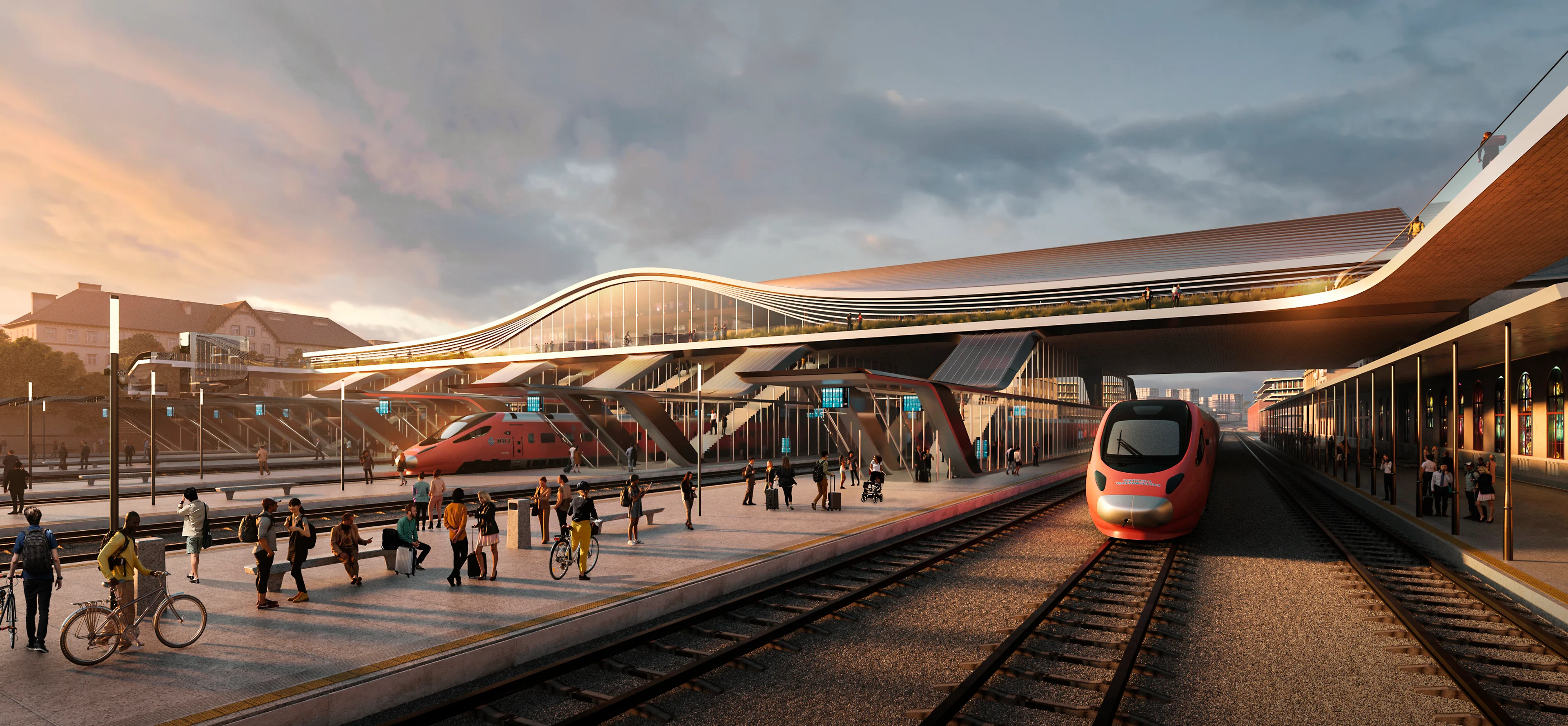
Vilnius Railway Station
ZHA’s ‘Green Connect’ proposal for Vilnius Railway Station creates an integrated transportation hub for the 21st century with new civic spaces enveloped by nature
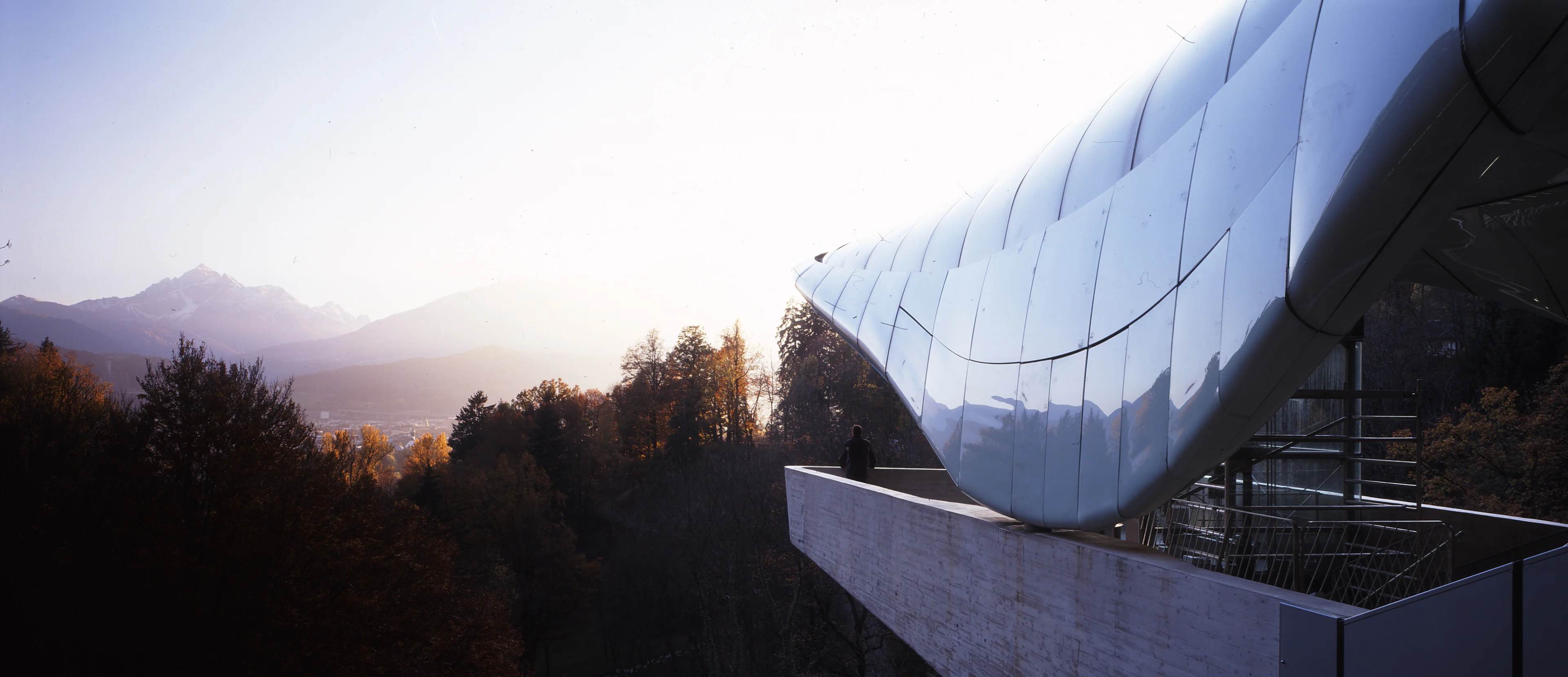
Photograph by Werner Huthmacher
Alpenzoo Station
Nordpark Cable Railway Stations
‘Shell & Shadow’: a unique architectural language of fluidity inspired by natural ice formations, for stations along Innsbruck’s northern chain of mountains. Lightweight organic roof structures float on concrete plinths, their soft shapes and contours creating an artificial landscape that describes the movement and circulation within.
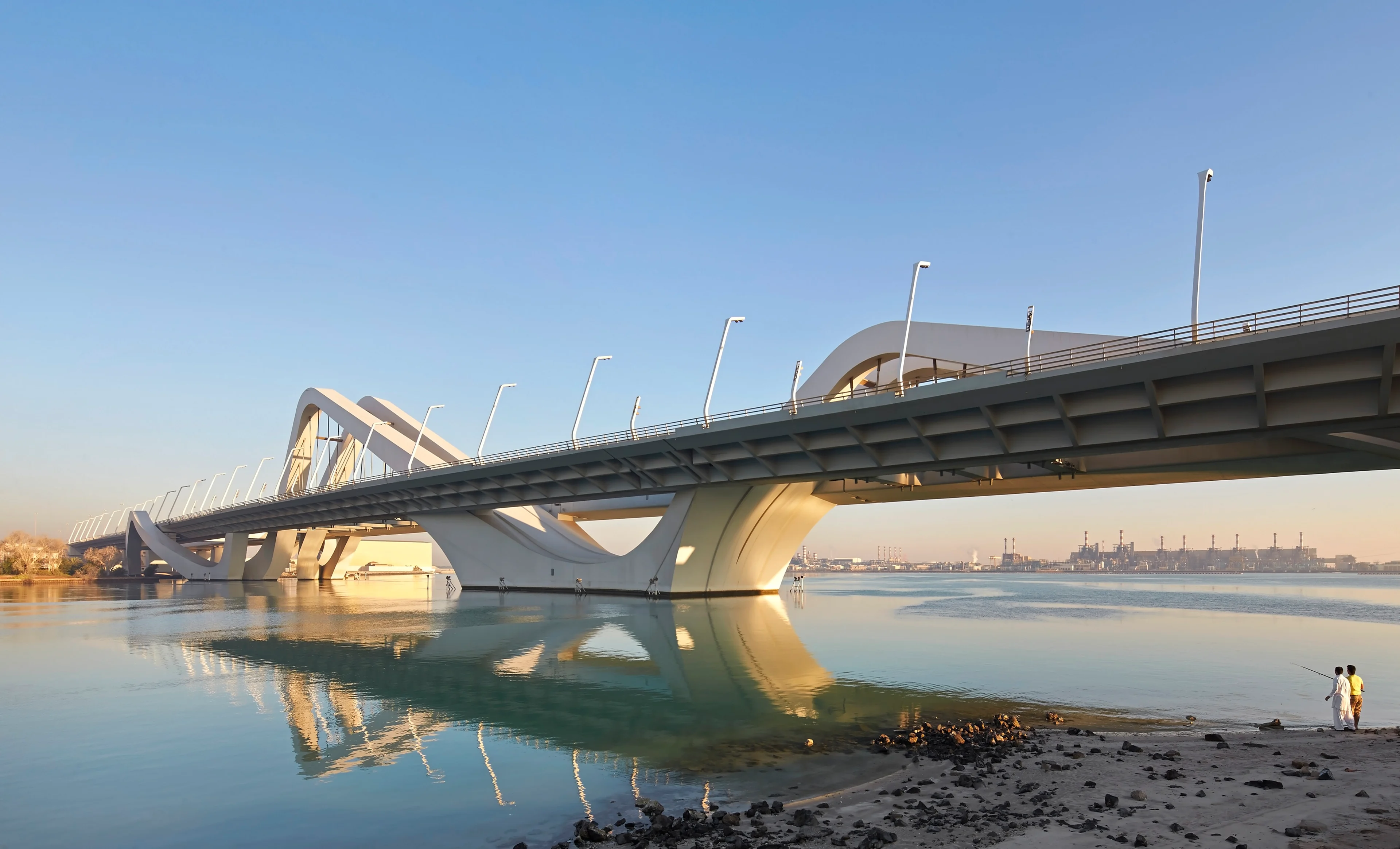
Photograph by Hufton + Crow
Sheikh Zayed Bridge
Design and construction of a third gateway crossing linking Abu Dhabi Island to the Gulf south shore. Our two-way four lane highway bridge features cantilevered road decks suspended from symmetrical steel arches, which form a sinusoidal waveform – giving this huge structure its fluid silhouette.
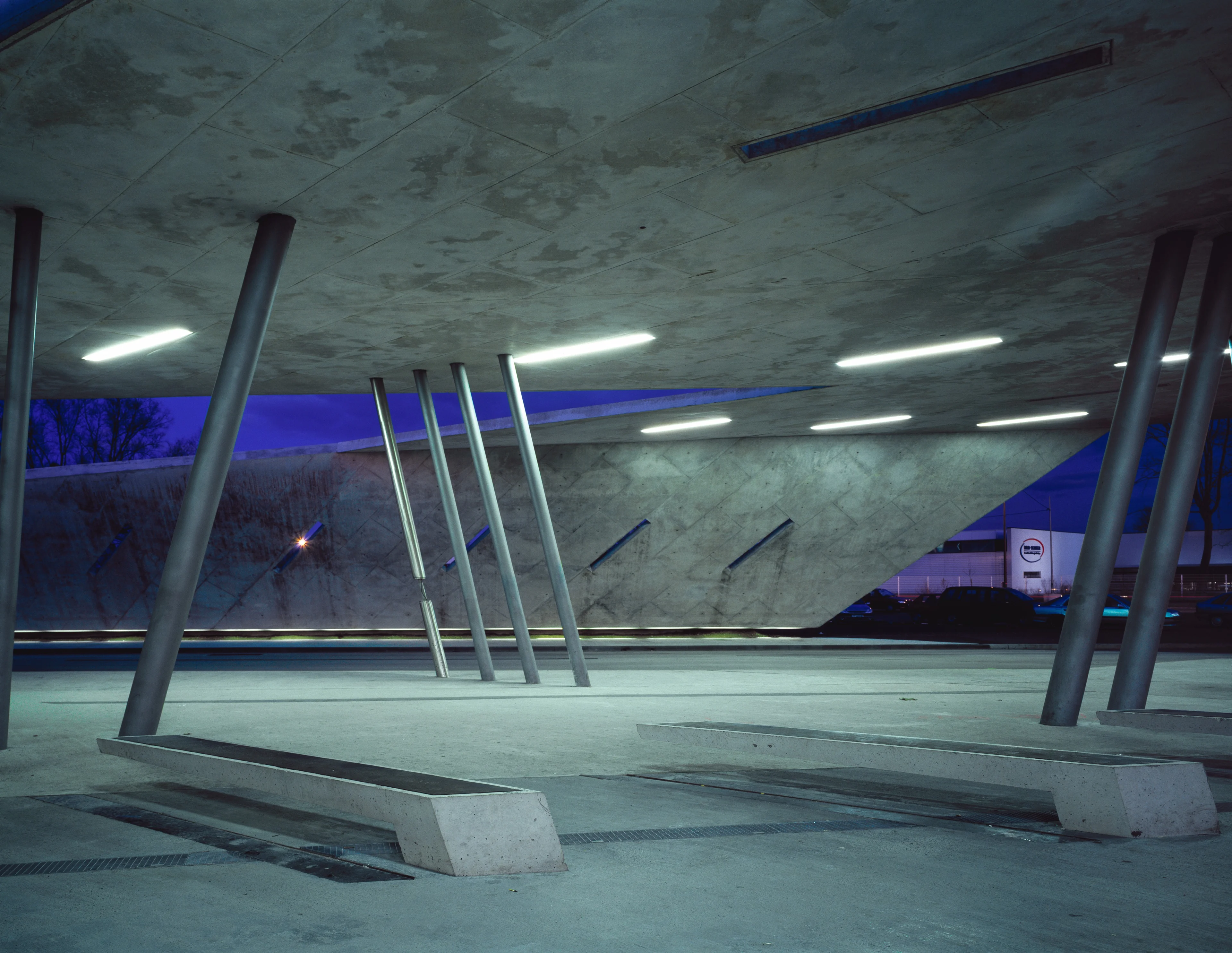
Photograph by Roland Halbe
Terminus Multimodal Hoenheim Nord
Completed for the northern terminal of the city’s B tramline, our concept utilises overlapping fields: echoing the energetic movement of cars, trams, bicycles and pedestrians; fusing together to form a constantly shifting but clearly delineated whole. In the car park, floor marks and light posts delineate a ‘magnetic field’.
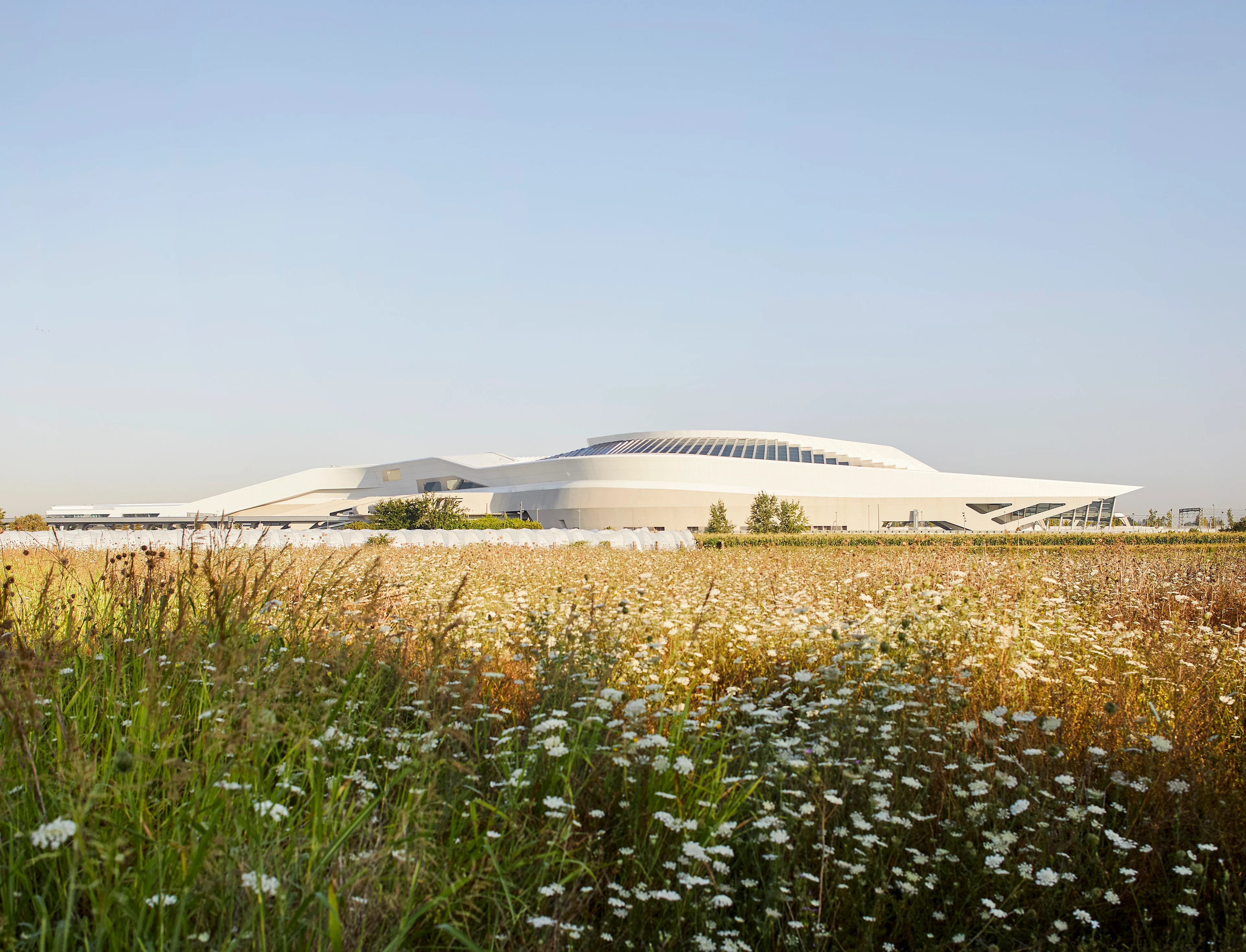
Photograph by Hufton + Crow
Napoli-Afragola High Speed Train Station
The new rail station at Napoli Afragola is designed as one of southern Italy’s key interchange stations serving four high speed inter-city lines, three inter-regional lines and a local commuter line.
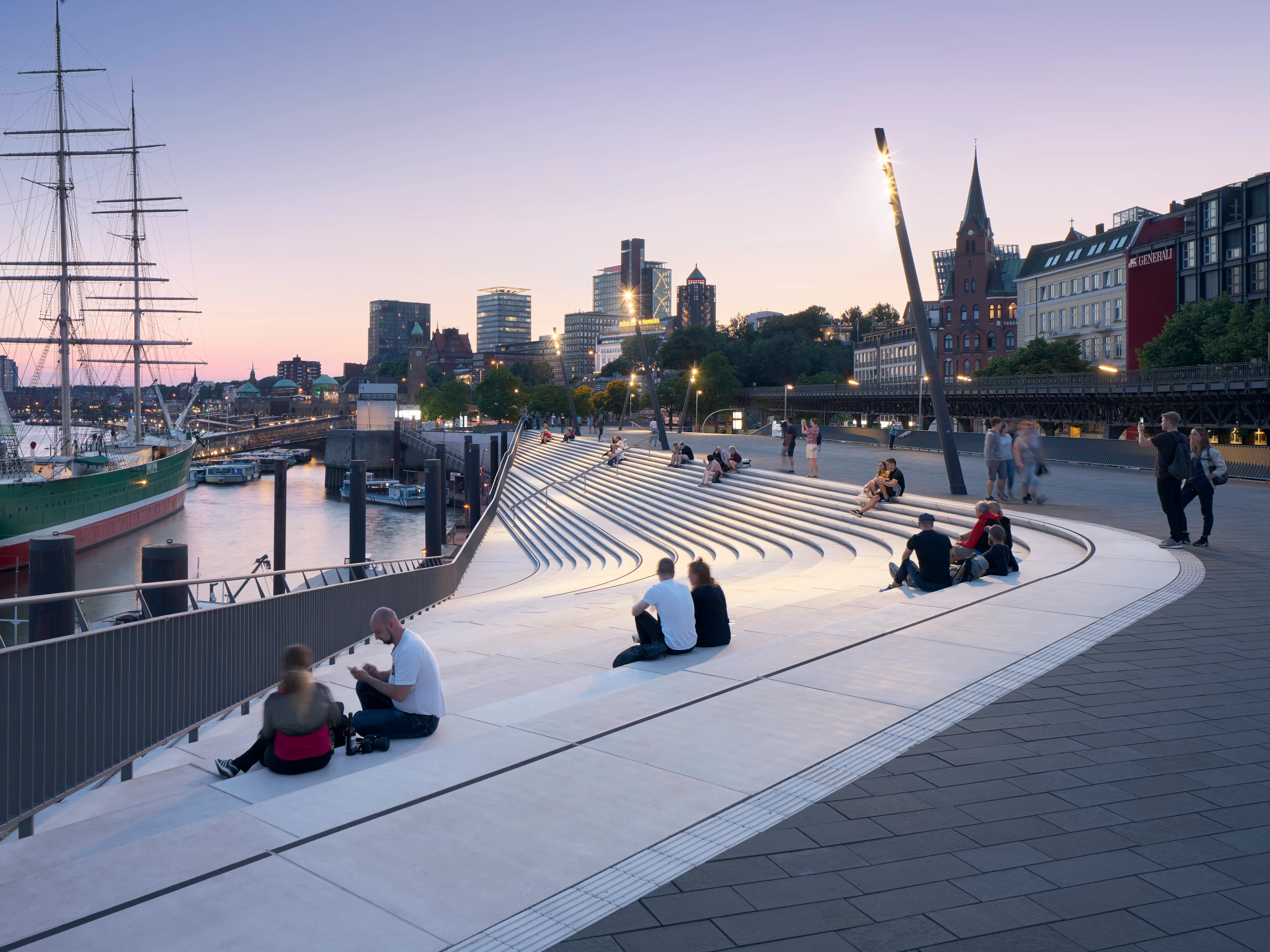
Photograph by Piet Niemann
Niederhafen River Promenade
Located at Niederhafen on the Elbe River between St. Pauli Landungsbrücken and Baumwall in Hamburg, the upgraded 625m river promenade is integral to the modernisation and reinforcement of the city’s flood protection system.
01
02
03
04
05
06
07
08
09
10
11
12
13
14
15