
Vilnius, Lithuania
2025 - TBC
Lithuanian Airports (LTOU)
Vilnius Airport Terminal
A significant milestone in the airport's long-term strategic plan
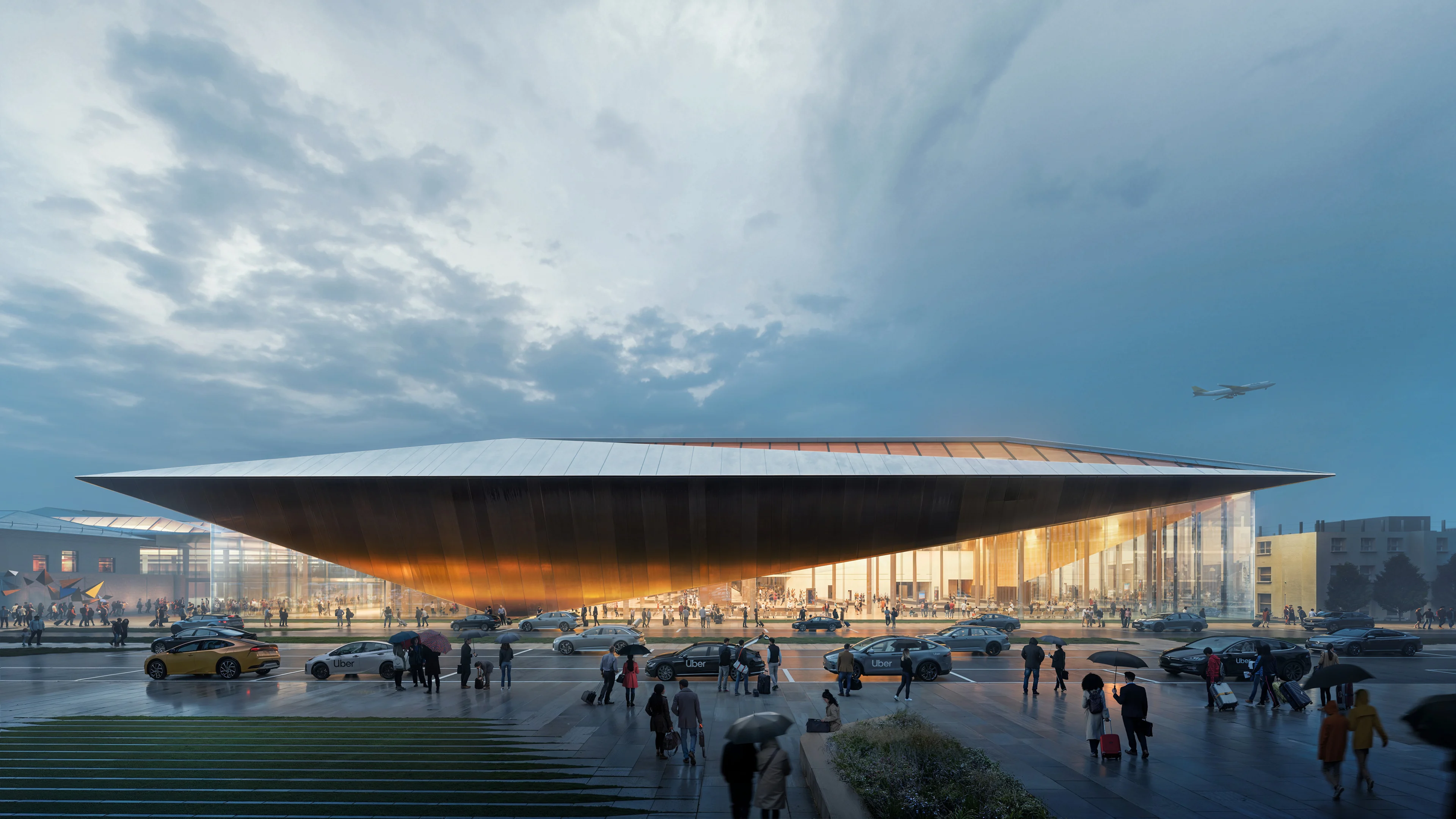
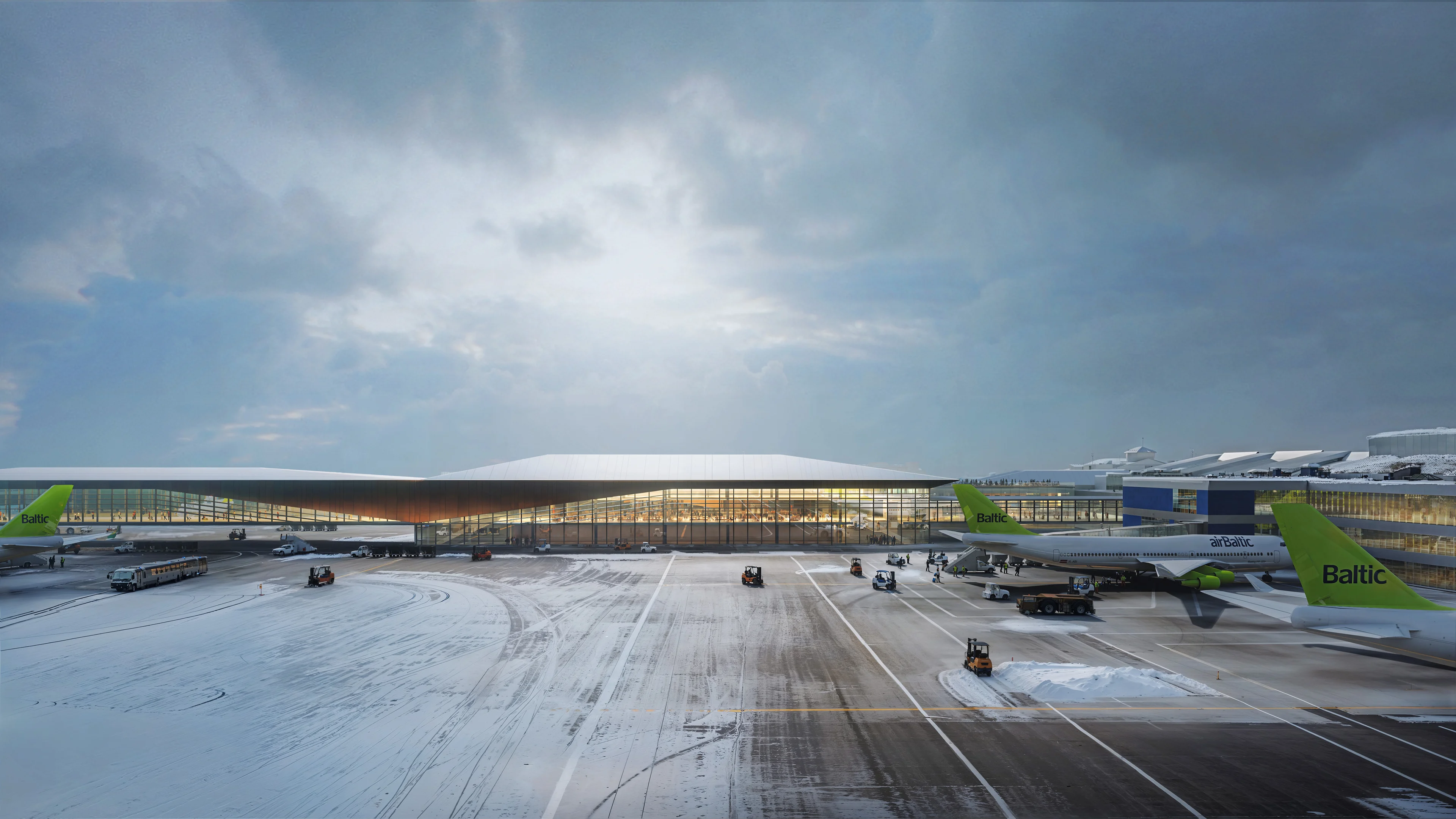
The project represents a significant milestone in the airport's long-term strategic plan to accommodate predicted growth in passenger demand and strengthen Lithuania's position as a leading gateway in the Baltic region.
"The arrivals terminal of Vilnius Airport requires updating – it has long since ceased to meet today's needs or the airport’s future capacity and vision. As the gateway to Lithuania, the terminal creates the first impression for everyone arriving into the country. The very high quality of ideas in the design competition proposed the most modern, convenient solutions that can adapt to the airport’s future requirements," said Eugenijus Sabutis, Lithuania's Minister of Transport and Communications.
Currently operating at capacity, Lithuanian Airports are developing the new arrivals terminal at Vilnius Airport as a strategically important project for the country's aviation and economic growth. Supporting the recent completion of the airport’s departure terminal, the new arrivals terminal will enable the airport to serve up to 10.6 million passengers annually, meeting continued growth in demand for air travel.
"For us, functionality and the highest level of passenger experience are most important. The winning proposal combines these key requirements with unique architectural solutions that connect the airport’s contemporary and future infrastructure with the cultural identity of Lithuania. We consider the terminal to be an excellent business card for all visitors," said Simonas Bartkus, CEO of Lithuanian Airports.
Incorporating traditional motifs and art forms within a contemporary architectural language
ZHA's design draws from Lithuanian cultural heritage, incorporating traditional motifs and art forms within a contemporary architectural language. The terminal's modular geometry originates from the rhombus, a triangular shape that holds significant meaning in Baltic folklore.
"The design presents a mature architectural solution for a public infrastructure project of this scale. It boldly steps into the future but maintains respect for its location and the environment. I believe the new terminal will not only ensure functionality and passenger comfort, but will also become an example of sustainable, high-quality architectural development in Vilnius," said architect Laura Kairienė, Vilnius City Chief Executive Officer.
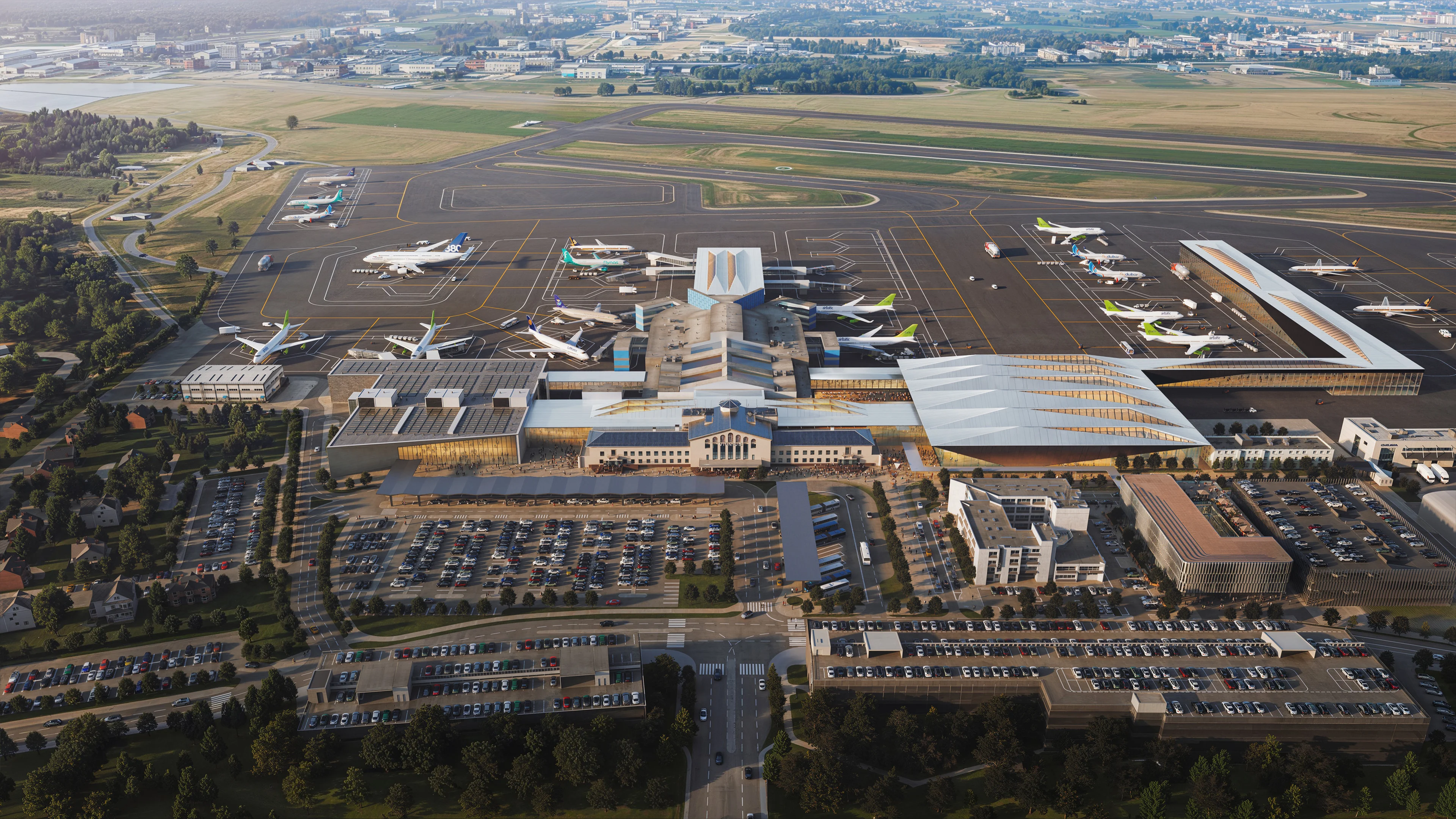
The composition and scale of the new arrivals terminal has been defined by the airport’s existing facilities; positioning the historic Terminal 1 at the centre of a unified ensemble flanked by the contemporary departure and arrivals terminals.
Evoking the experience of being immersed within traditional sodai
Aligning with the Vilnius Sustainable Urban Mobility Plan, the new arrivals terminal prioritises seamless passenger connectivity with the airport’s existing facilities. The terminal's design is integrated with the airport’s ongoing development of its masterplan that will create an important multi-modal transport hub for the city at its central Airport Plaza. With a planned Rail Baltica high-speed rail station as well as regional and local passenger rail services, Airport Plaza will also be served by local and intercity bus networks, taxi services, as well as cycling and pedestrian routes.
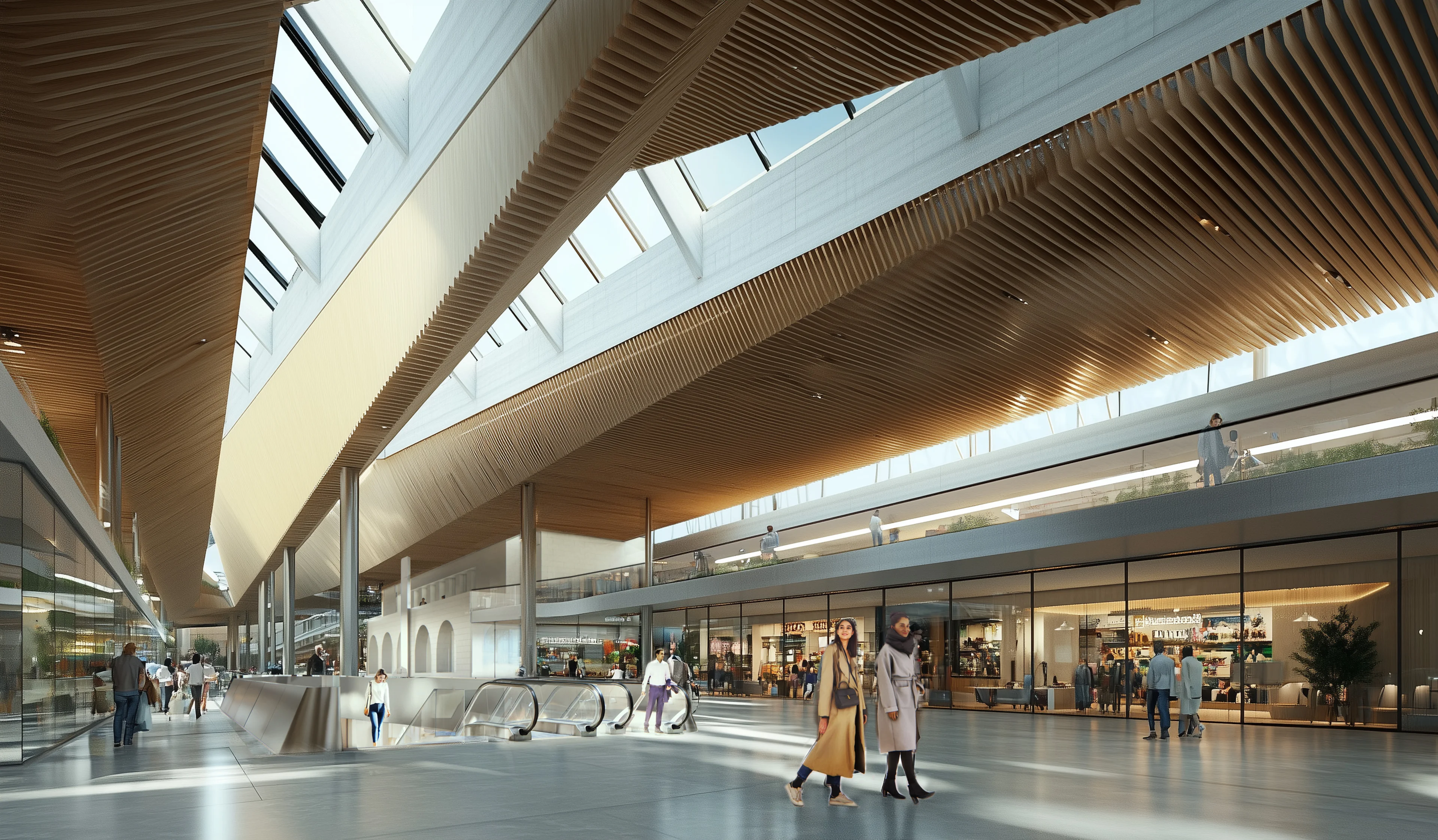
The terminal’s interiors reference Lithuanian sodai straw gardens, a traditional art form recognized by UNESCO as part of the nation's cultural heritage. Intricately crafted from stalks of grain, sodai are hanging ornaments with triangular geometric structures associated throughout the region with well-being and celebration.
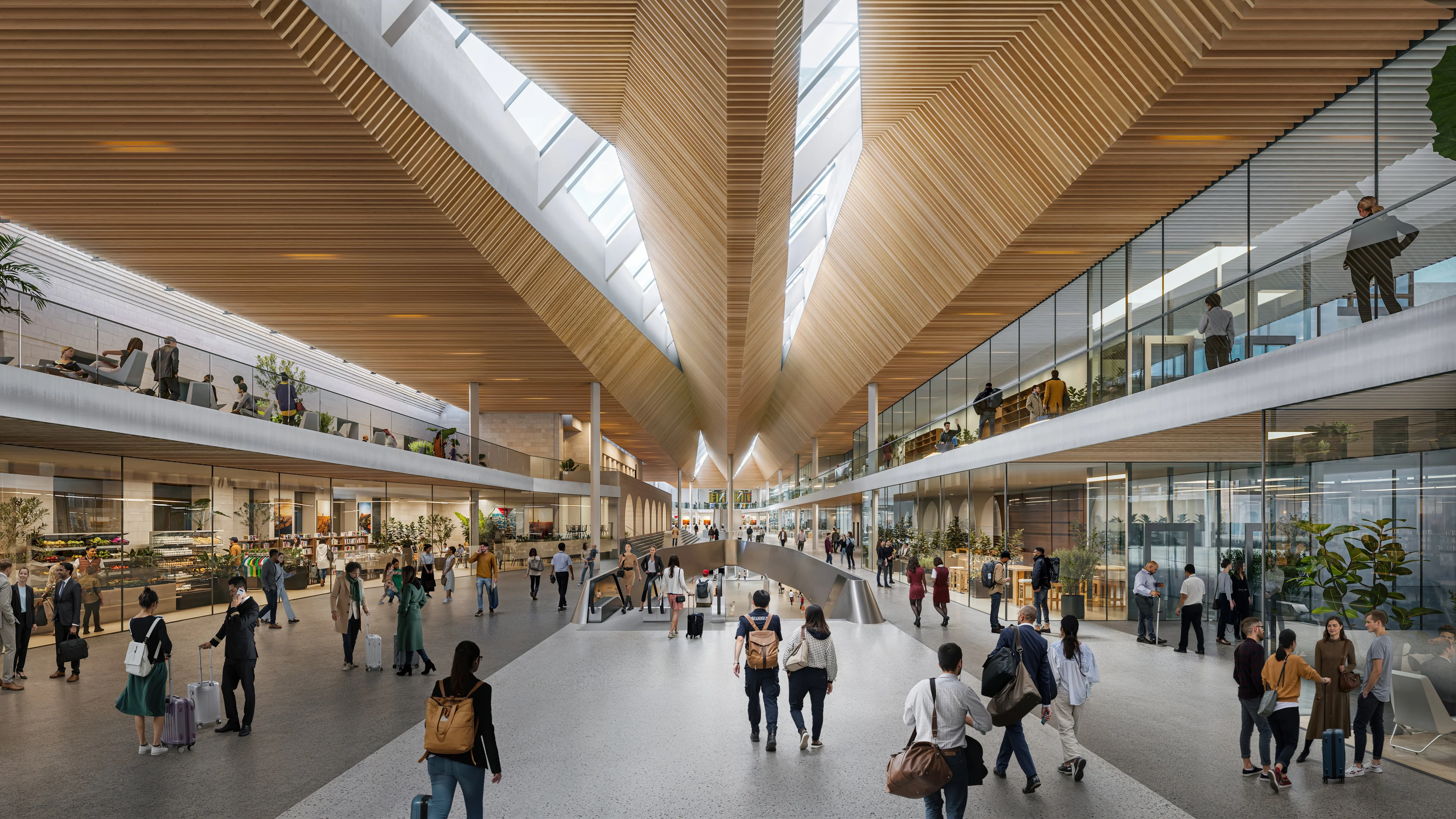
Evoking the experience of being immersed within traditional sodai, the terminal’s pleated roof finished in timber from local forests defines the interiors and reflects the art form’s delicate, interconnected geometries. Rhomboid and triangular shaped skylights incorporated within the roof flood natural light throughout the interiors while also expressing the terminal’s unique structure.
Prioritising intuitive orientation and navigation
This modular roof structure ensures the new arrivals terminal can support advancing aviation technologies and future passenger demand while maintaining the highest performance efficiency.
The design prioritises intuitive orientation and navigation. Natural light and views towards the city will guide passengers seamlessly through the terminal with all facilities and amenities accessible to all passengers and their luggage.
"The result is an architectural language that is both innovative and rooted in local heritage. Looking to the future, the terminal’s design offers a seamless passenger experience directly connects with the city’s transport network" said Ludovico Lombardi, ZHA director.
Targeting an 'Excellent’ BREEAM rating
Targeting an 'Excellent’ BREEAM rating, the arrivals terminal incorporates passive design features mitigating heat gain in summer while encouraging heat retention in winter. A high-performance double-insulated glazing system is combined with hybrid natural ventilation and smart building systems that learn to predict daily passenger flows, automatically adjusting to reduce energy consumption.
On-site energy generation will be provided from approximately 13,000 m² of new solar panels installed on the roof of the arrivals terminal and surrounding ancillary buildings. The design also incorporates rainwater harvesting, stormwater management, and greywater recycling via a system of natural water filtration and storage for reuse.
An international team from Tyréns Group contributed to the structural engineering and sustainable design of the terminal, in addition to its masterplanning and traffic solutions for public transportation, cars, cyclists and pedestrians.
Integral to the city’s long-term masterplan
"The design incorporates Tyrén’s interdisciplinary expertise as a leader in structural engineering and sustainable building technologies. The new arrivals terminal reflects Tyréns’ commitment to delivering sustainable engineering and design services that build lasting value for future generations,” said Agnė Peikštenienė, Tyréns project lead.
The new Vilnius Airport arrivals terminal is integral to the city’s long-term masterplan to enhance Lithuania’s regional and global connectivity over the coming 30 years.
Supporting Vilnius Airport's role as Lithuania's main gateway and a fully integrated air, rail and road transportation hub for the Baltic region, the airport’s enhanced capacity will enable direct flights that connect Vilnius with many new destinations, contributing to the local economy while improving the country's global accessibility.
Transport + Infrastructure
Explore more transport and infrastructure
From an airport that sets new standards for service to a state of the art flood defense system that doubles as a public promenade, discover our latest transport and infrastructure projects.
Photograph by Hufton + Crow
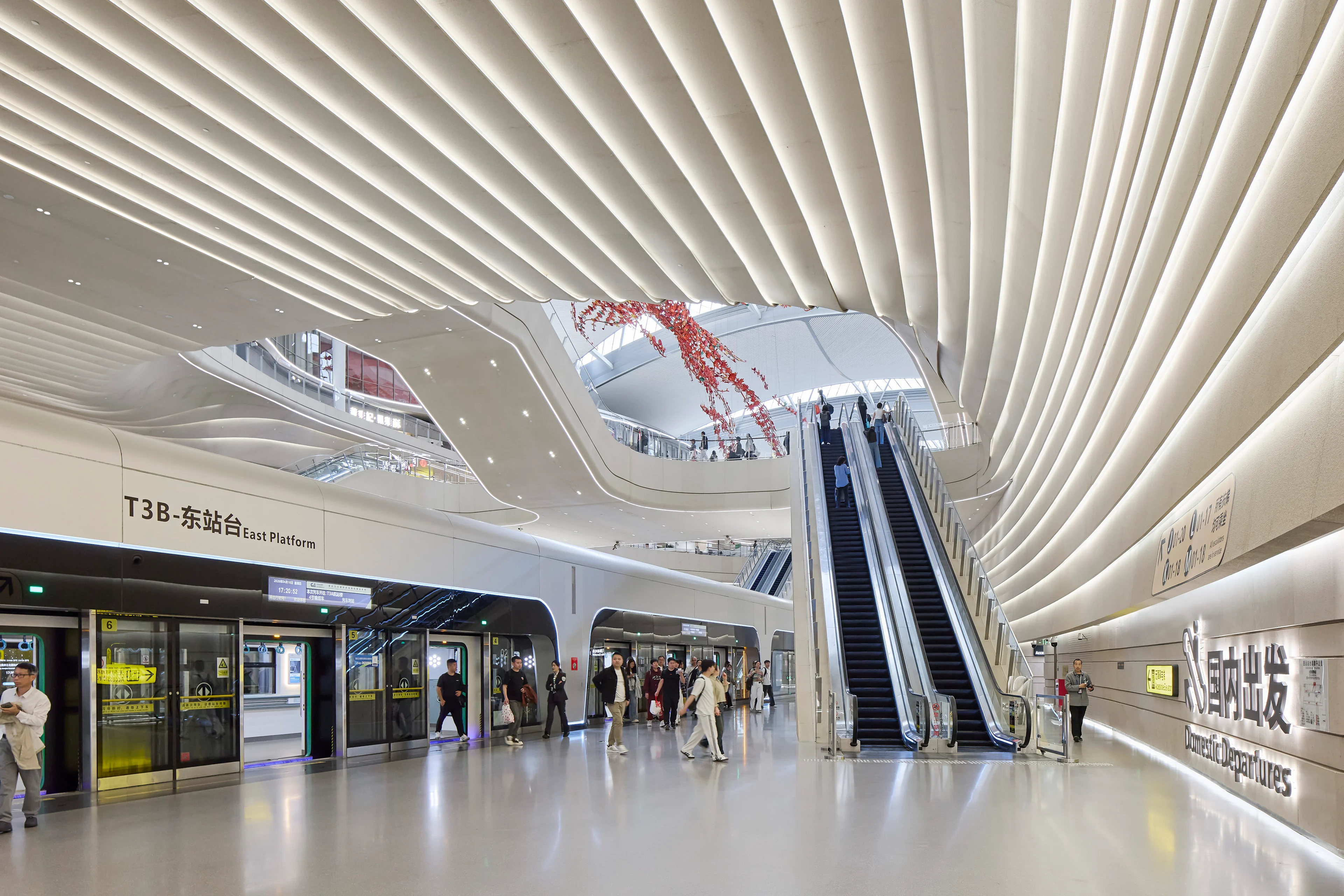
Terminal 3B at Chongqing Jiangbei International Airport
The new Terminal 3B (T3B) at Chongqing Jiangbei International Airport is a ZHA design collaboration with the terminal’s executive architects CSWADI (China Southwest Architectural Design & Research Institute). Constructed by CSCEC (China State Construction Engineering Corporation), T3B marks the final large-scale expansion of the airport’s transformation into one of the country’s leading aviation hubs.
Render by X-Universe
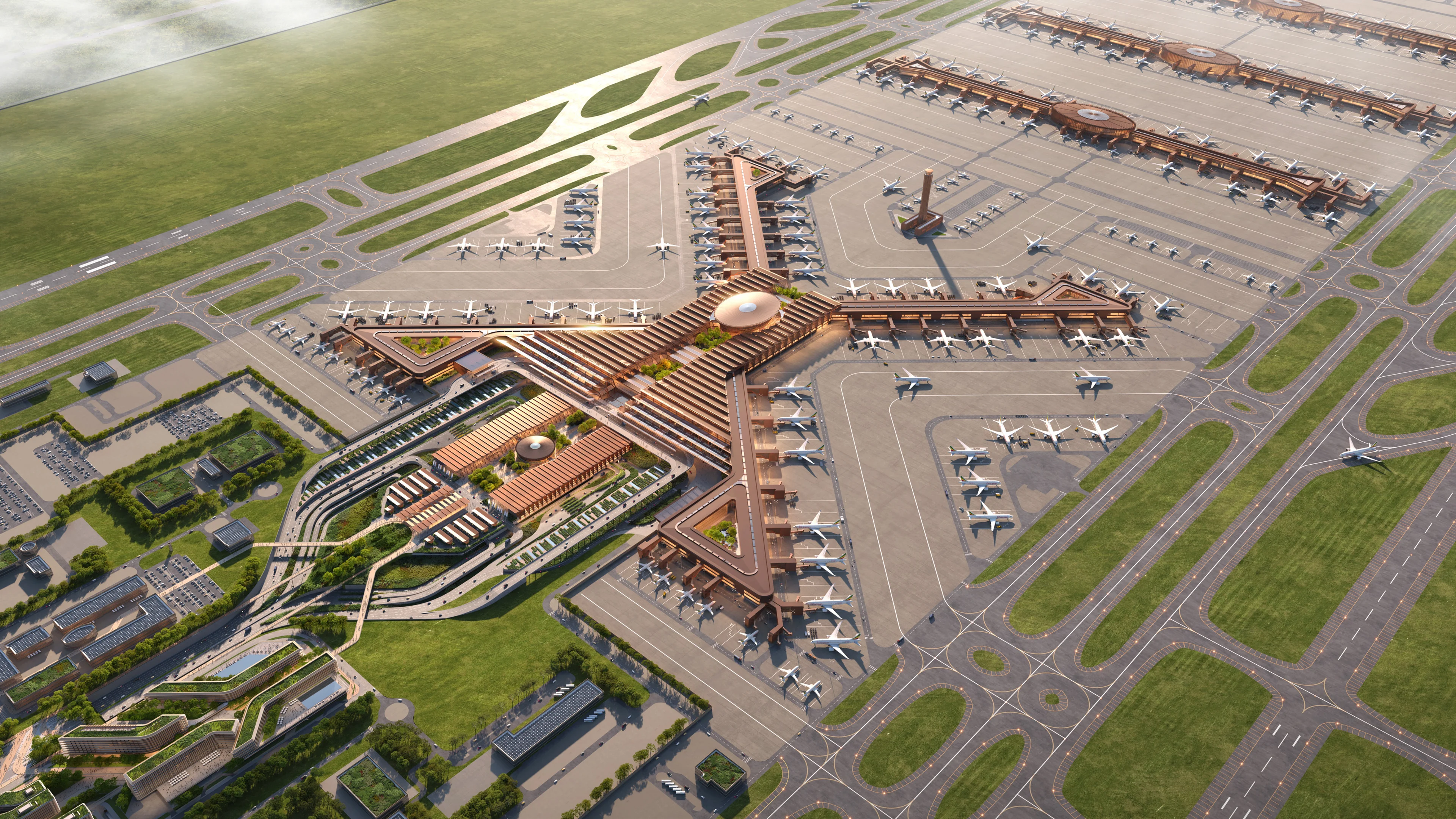
Bishoftu International Airport
Phase One of the new Bishoftu International Airport (BIA) will serve 60 million passengers a year. Further phases will serve up to 110 million passengers annually with four runways and parking for 270 aircraft.
Photograph by Xue Liang 薛亮
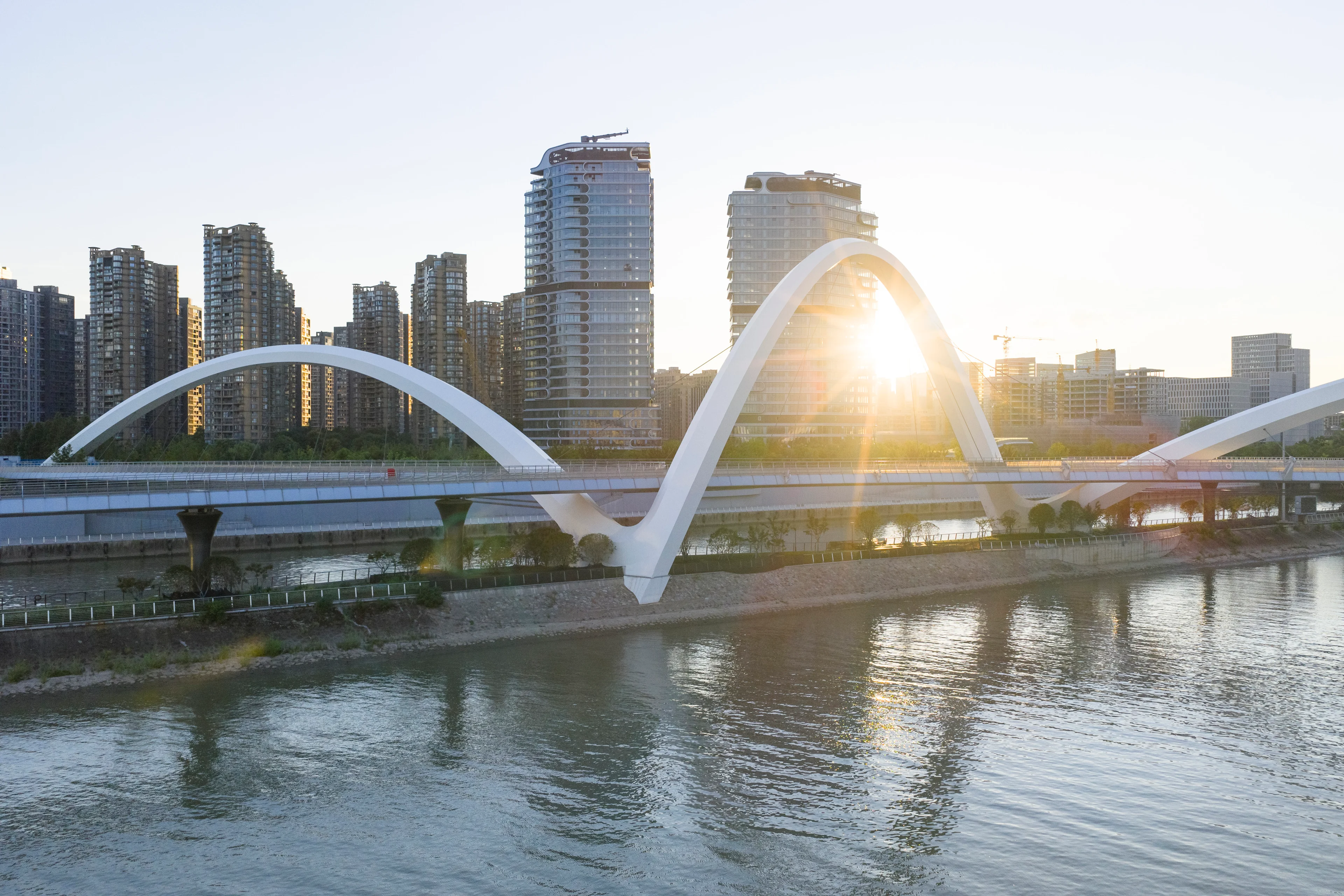
Grand Canal Gateway Bridge
Grand Canal Gateway Bridge
Uniting cultural heritage with 21st century engineering and recyclable materials, the Grand Canal Gateway Bridge is both sculptural and sustainable, designed for longevity with minimal environmental impact.
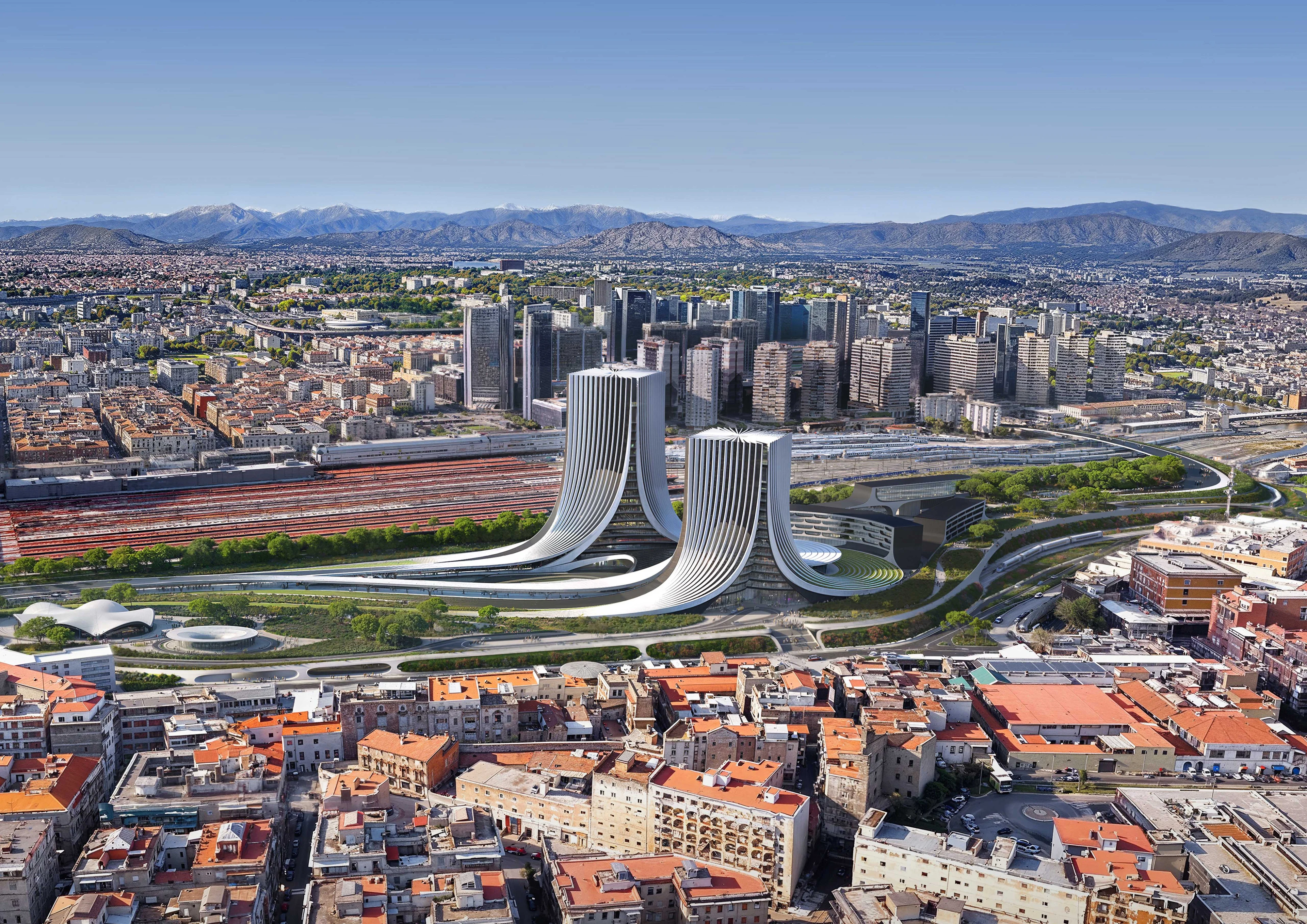
Napoli Porta Est
A large-scale urban regeneration project in Naples that reconnects the city’s fragmented urban fabric and incorporates the new Campania Region headquarters.
Render by Tecma Solutions
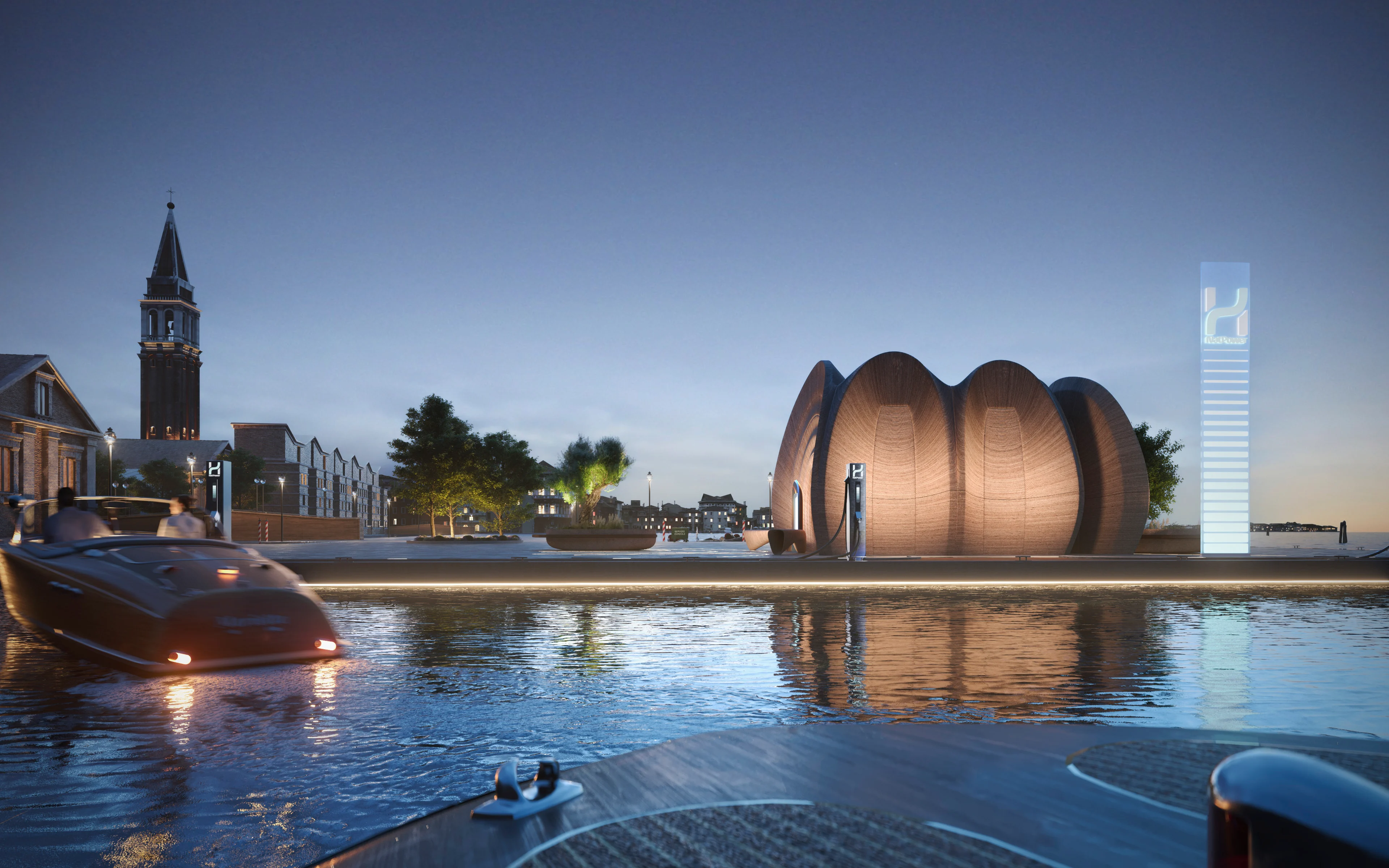
NatPowerH Hydrogen Refuelling Stations
The world’s first green hydrogen refuelling infrastructure for the recreational boating industry will be initiated in 25 Italian marinas and ports with stations designed by ZHA.
Render by Negativ
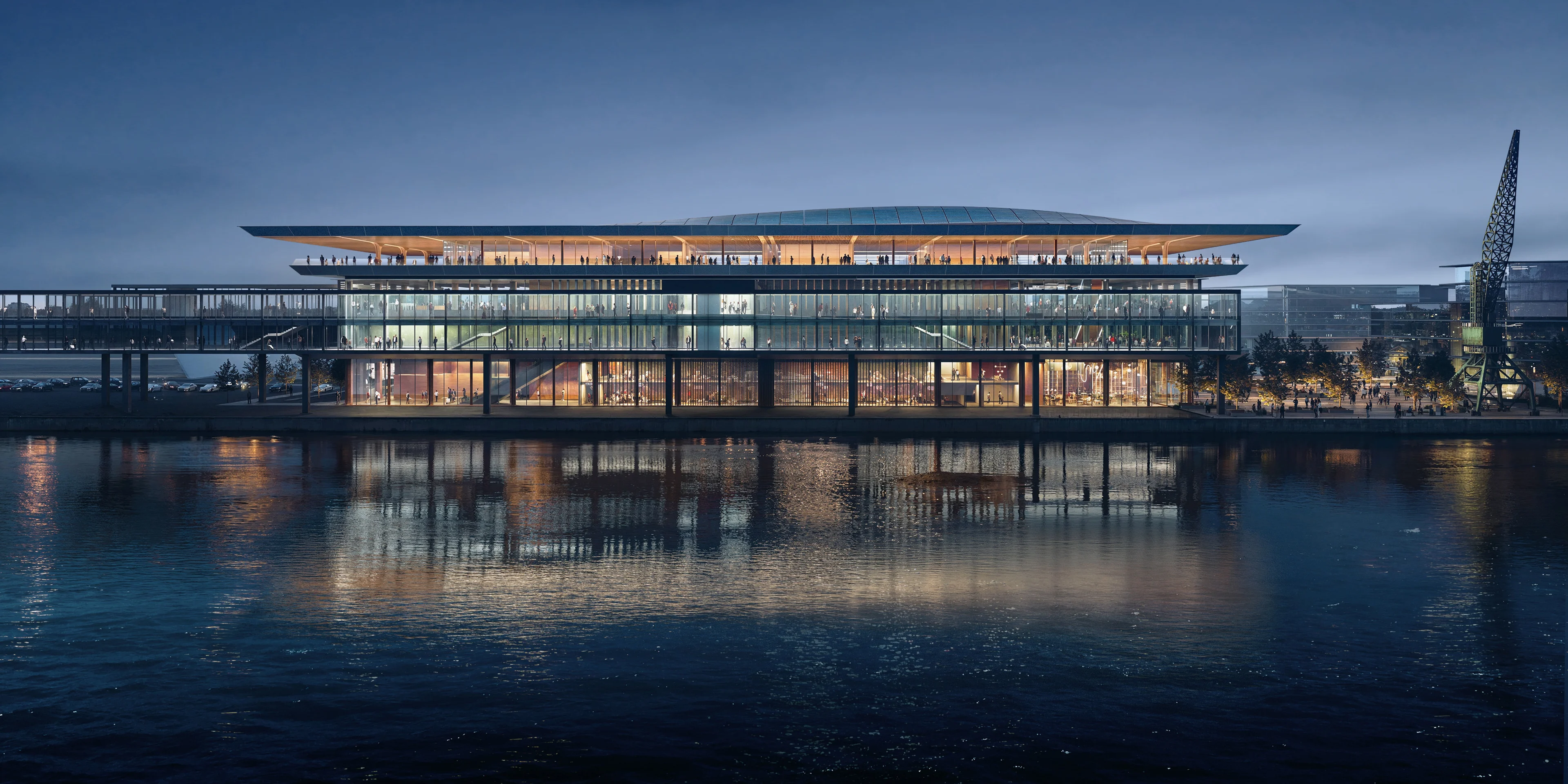
Ropax Ferry Terminal
Repurposing an existing shipping warehouse built in 1960 into a new 20,000 sq. m ferry and cruise ship terminal, ZHA’s design adds a fourth level to the structure to incorporate public terraces with panoramic views of the Daugava River and the skyline of Riga’s city centre, a designated UNESCO World Heritage Site.
Photograph by Fernando Guerra
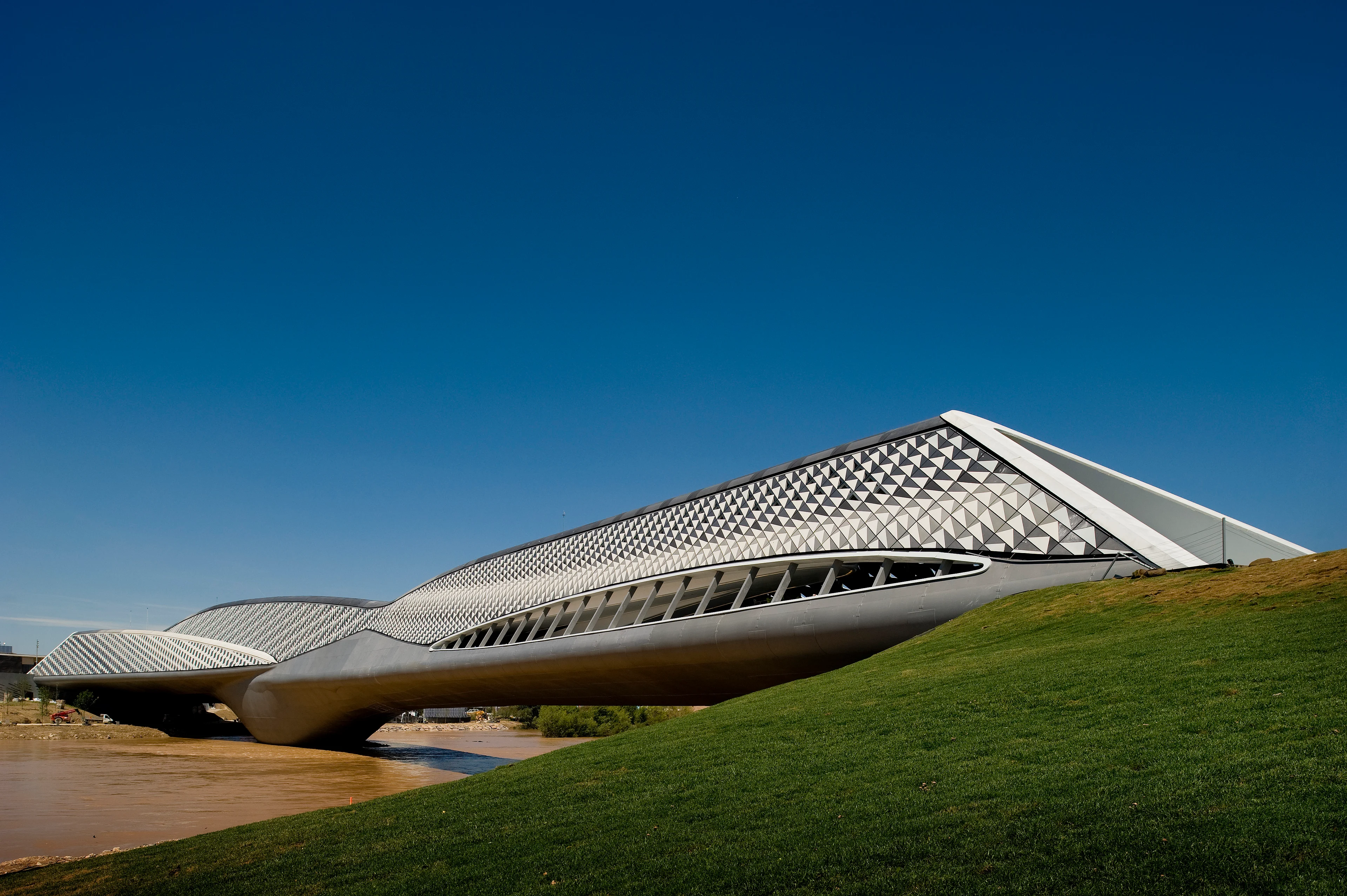
Zaragoza Bridge Pavilion
An enclosed interactive space spanning the River Ebro to form a gateway to the Zaragoza Expo 2008, a hybrid of pedestrian footbridge and exhibition pavilion. Four structural elements correspond to specific spatial enclosures, which intersect and brace each other. This fluid, dynamic design interprets the Expo’s theme: ‘Water and Sustainable Development.’
Photograph by Xue Liang 薛亮
Jiangxi River Bridge
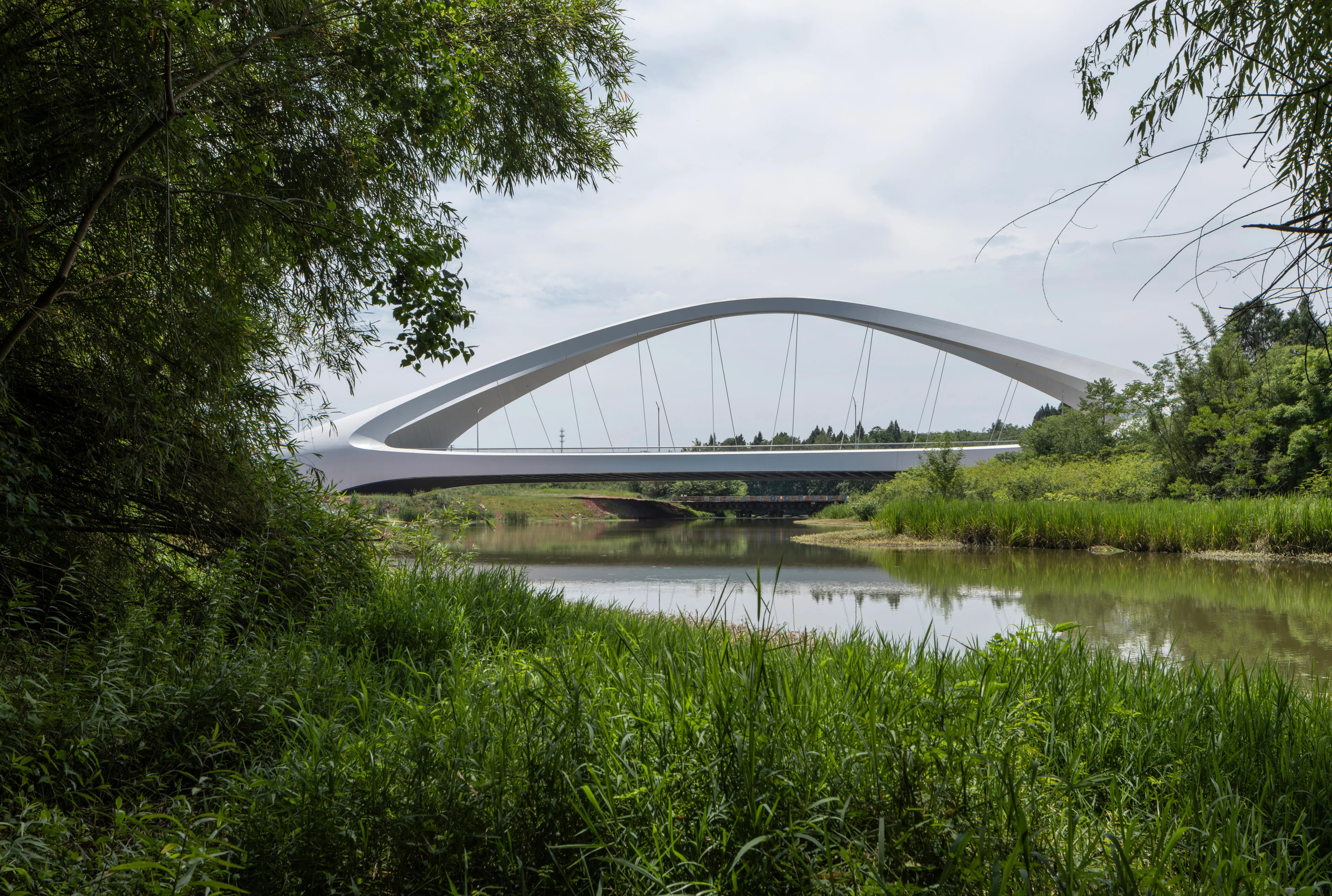
Jiangxi River Bridge
The first in a series of bridges on Chengdu’s West Line Road, the new 295-metre Chengdu West First Bridge crosses the Jiangxi River, a tributary of the Tuojiang River in China’s Sichuan province.
Render by Atchain, courtesy of ZHA
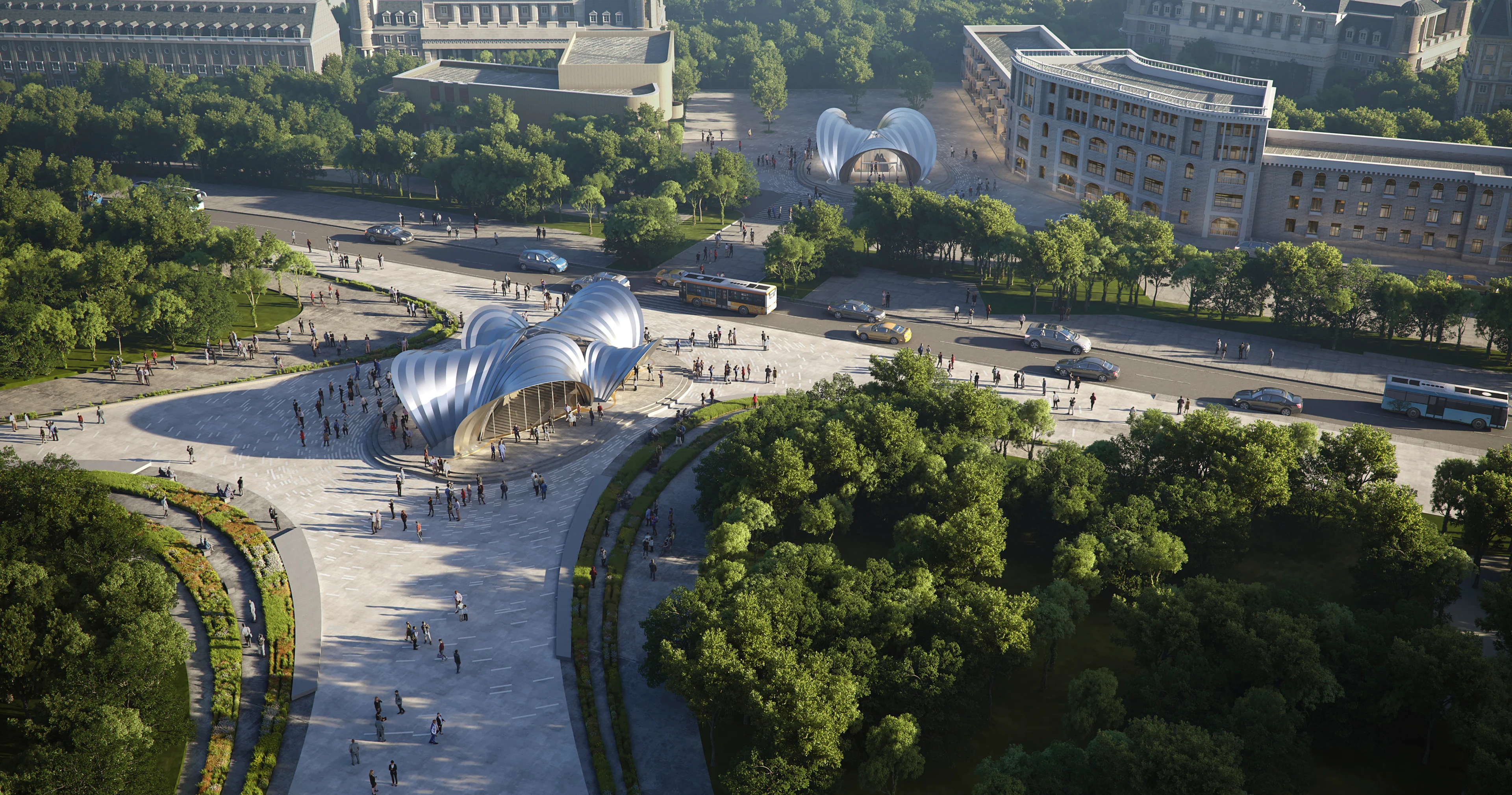
Dnipro Metro Stations
The three new stations (Teatralna, Tsentralna and Muzeina) designed by ZHA will connect the residents, businesses, cultural and academic institutions in Dnipro’s eastern districts with the city centre and the Dnipro-Holovnyi railway terminus.
Courtesy of ZHA, render by Negativ
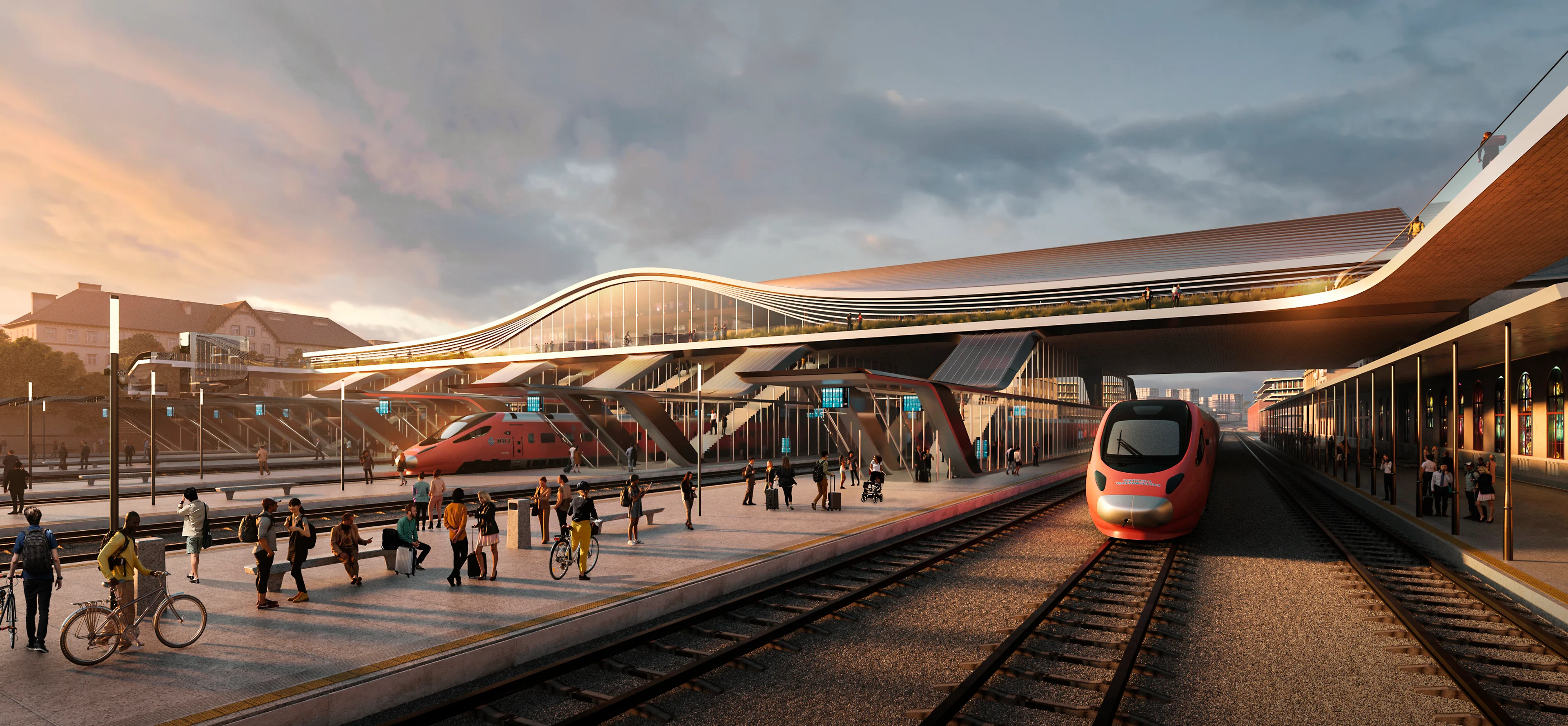
Vilnius Railway Station
ZHA’s ‘Green Connect’ proposal for Vilnius Railway Station creates an integrated transportation hub for the 21st century with new civic spaces enveloped by nature
Photograph by Werner Huthmacher
Alpenzoo Station
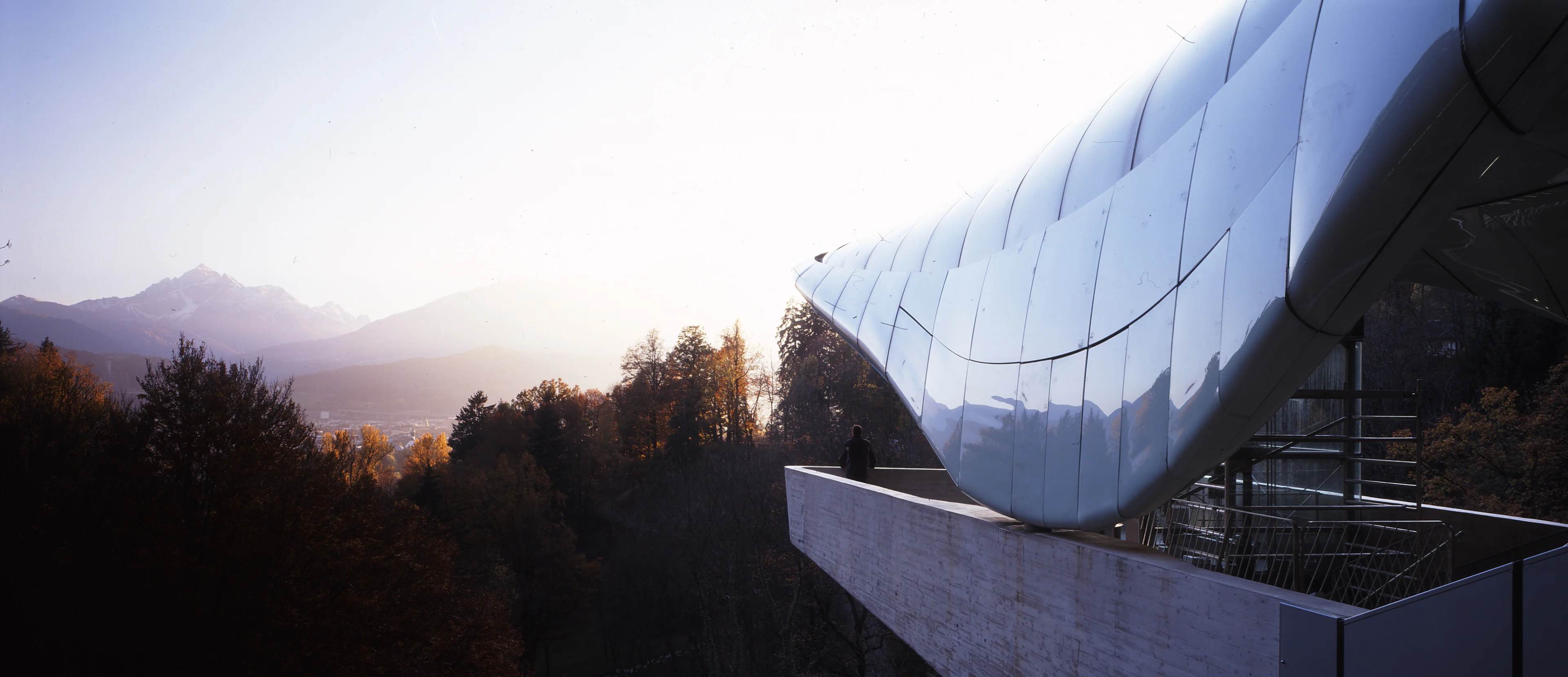
Nordpark Cable Railway Stations
‘Shell & Shadow’: a unique architectural language of fluidity inspired by natural ice formations, for stations along Innsbruck’s northern chain of mountains. Lightweight organic roof structures float on concrete plinths, their soft shapes and contours creating an artificial landscape that describes the movement and circulation within.
Photograph by Hufton + Crow
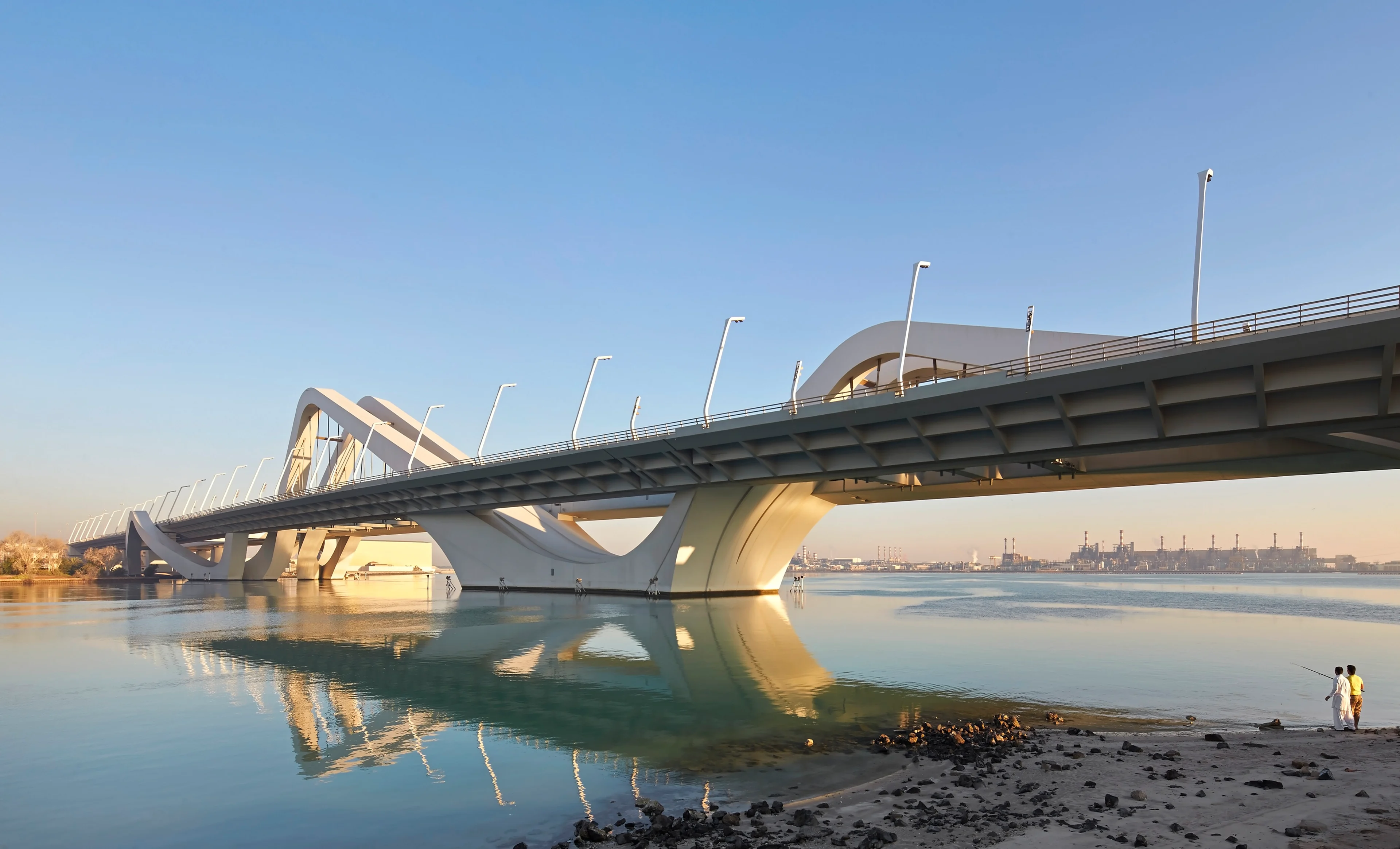
Sheikh Zayed Bridge
Design and construction of a third gateway crossing linking Abu Dhabi Island to the Gulf south shore. Our two-way four lane highway bridge features cantilevered road decks suspended from symmetrical steel arches, which form a sinusoidal waveform – giving this huge structure its fluid silhouette.
Photograph by Roland Halbe
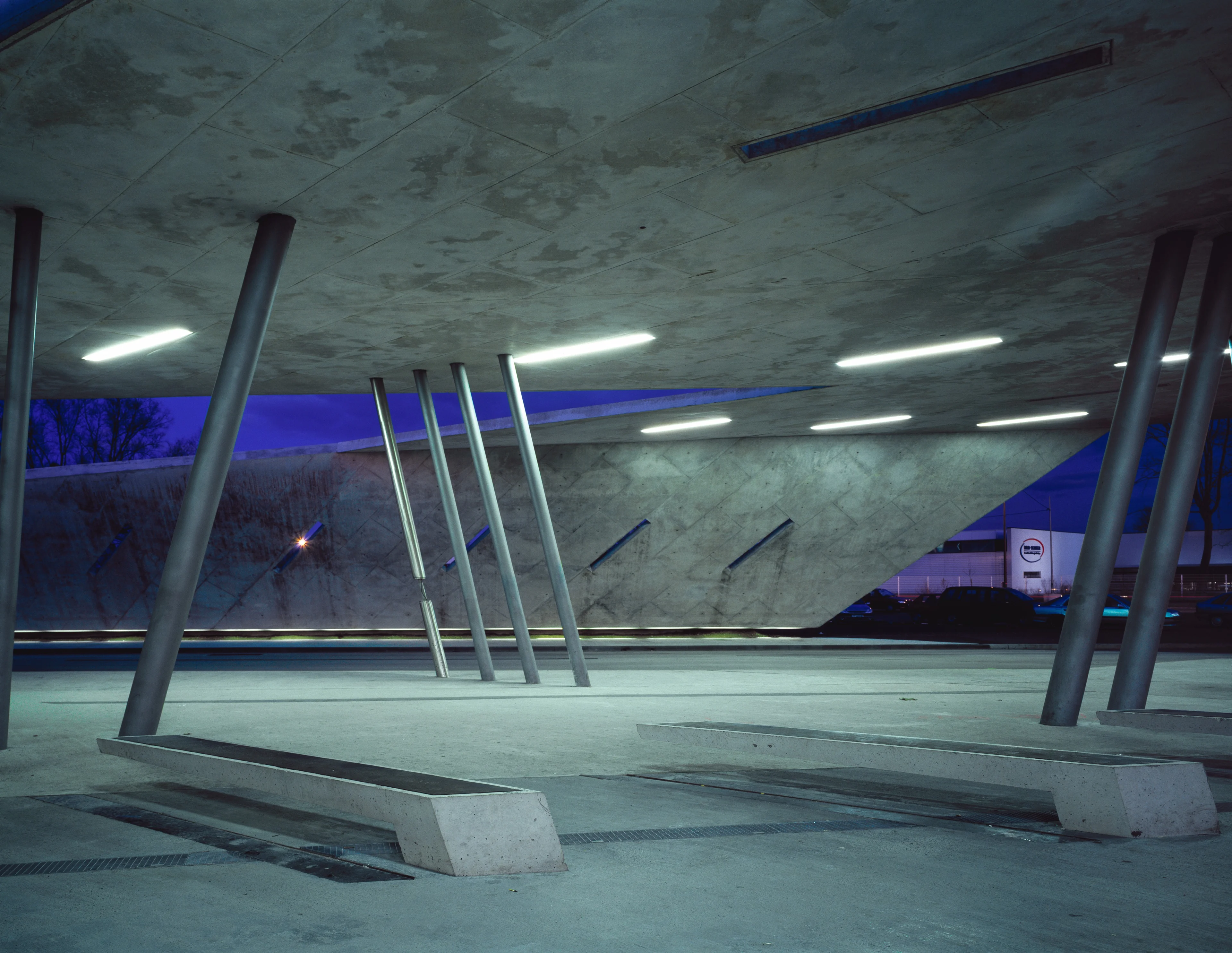
Terminus Multimodal Hoenheim Nord
Completed for the northern terminal of the city’s B tramline, our concept utilises overlapping fields: echoing the energetic movement of cars, trams, bicycles and pedestrians; fusing together to form a constantly shifting but clearly delineated whole. In the car park, floor marks and light posts delineate a ‘magnetic field’.
Photograph by Hufton + Crow
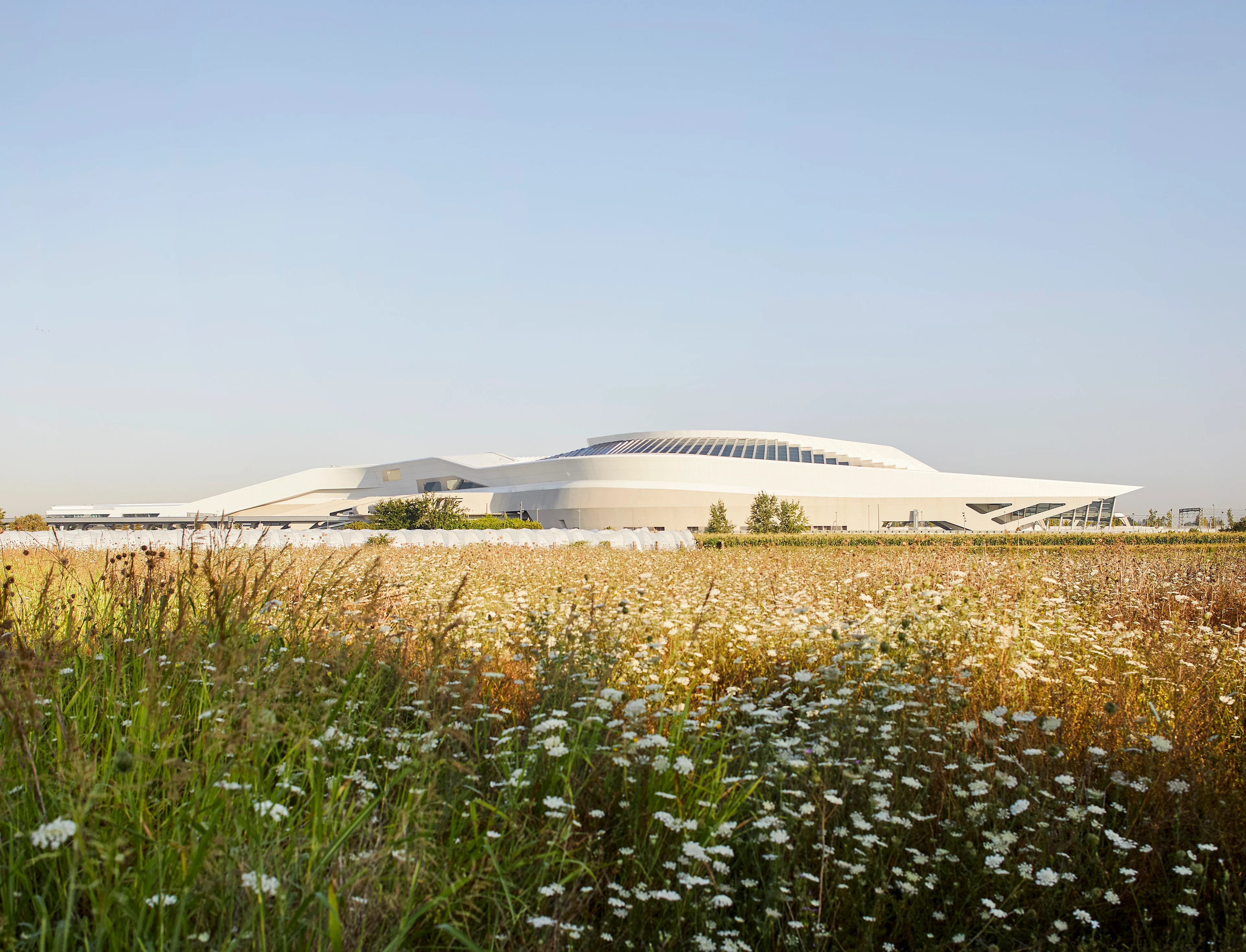
Napoli-Afragola High Speed Train Station
The new rail station at Napoli Afragola is designed as one of southern Italy’s key interchange stations serving four high speed inter-city lines, three inter-regional lines and a local commuter line.
Photograph by Piet Niemann
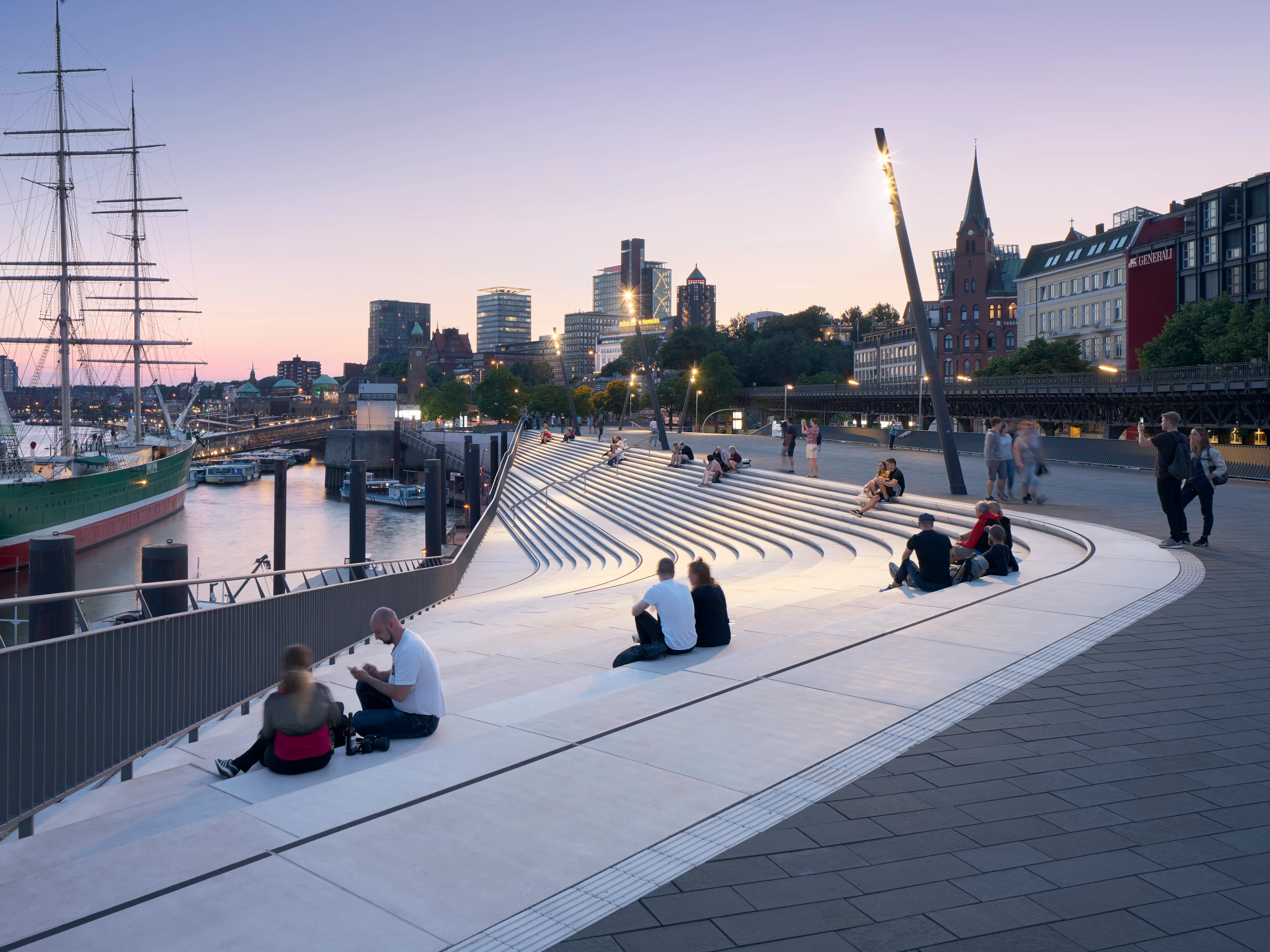
Niederhafen River Promenade
Located at Niederhafen on the Elbe River between St. Pauli Landungsbrücken and Baumwall in Hamburg, the upgraded 625m river promenade is integral to the modernisation and reinforcement of the city’s flood protection system.
01
02
03
04
05
06
07
08
09
10
11
12
13
14
15