
Naples, Italy
2025 - TBC
Design
Napoli Porta Est
From industrial zone to public space
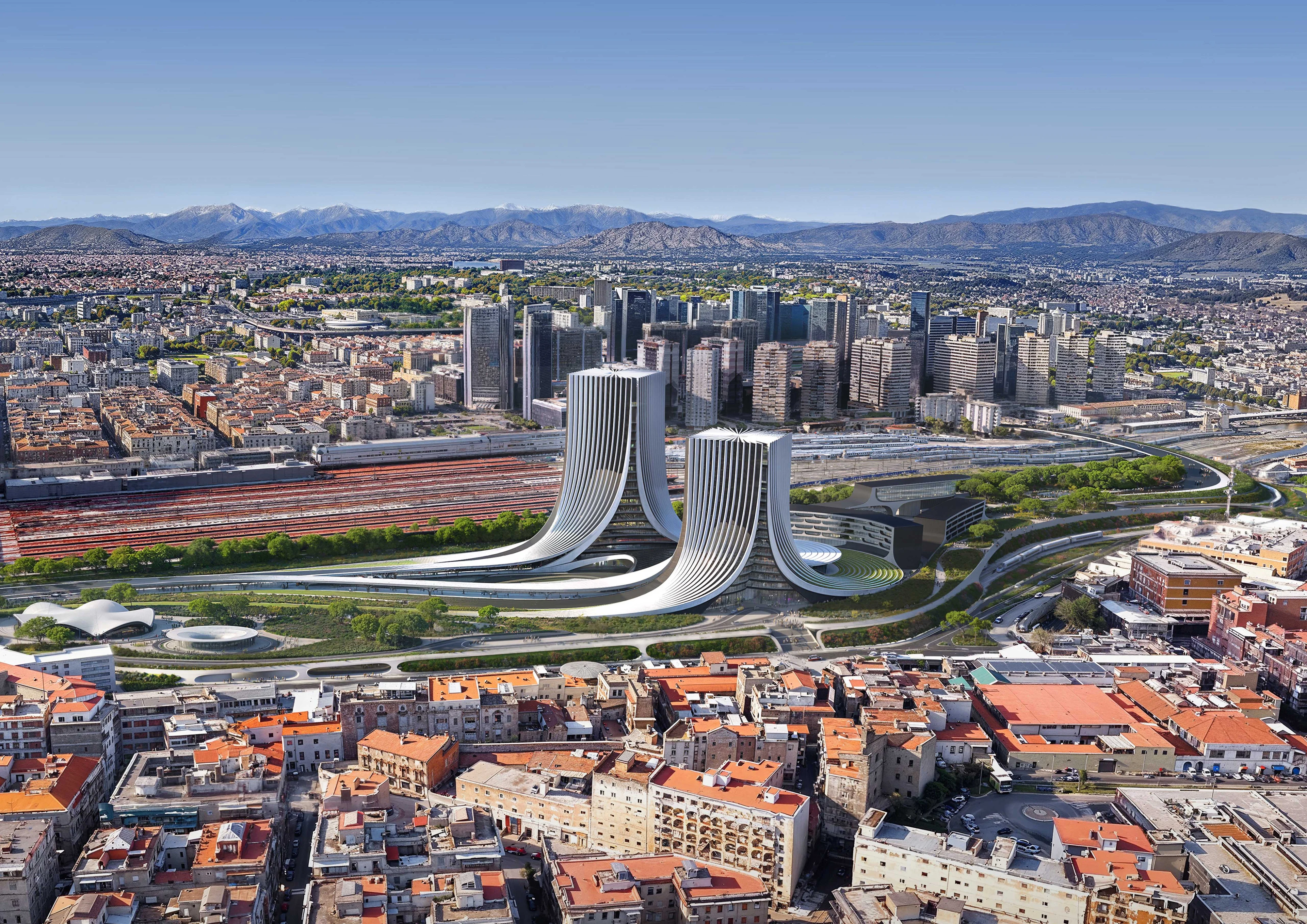
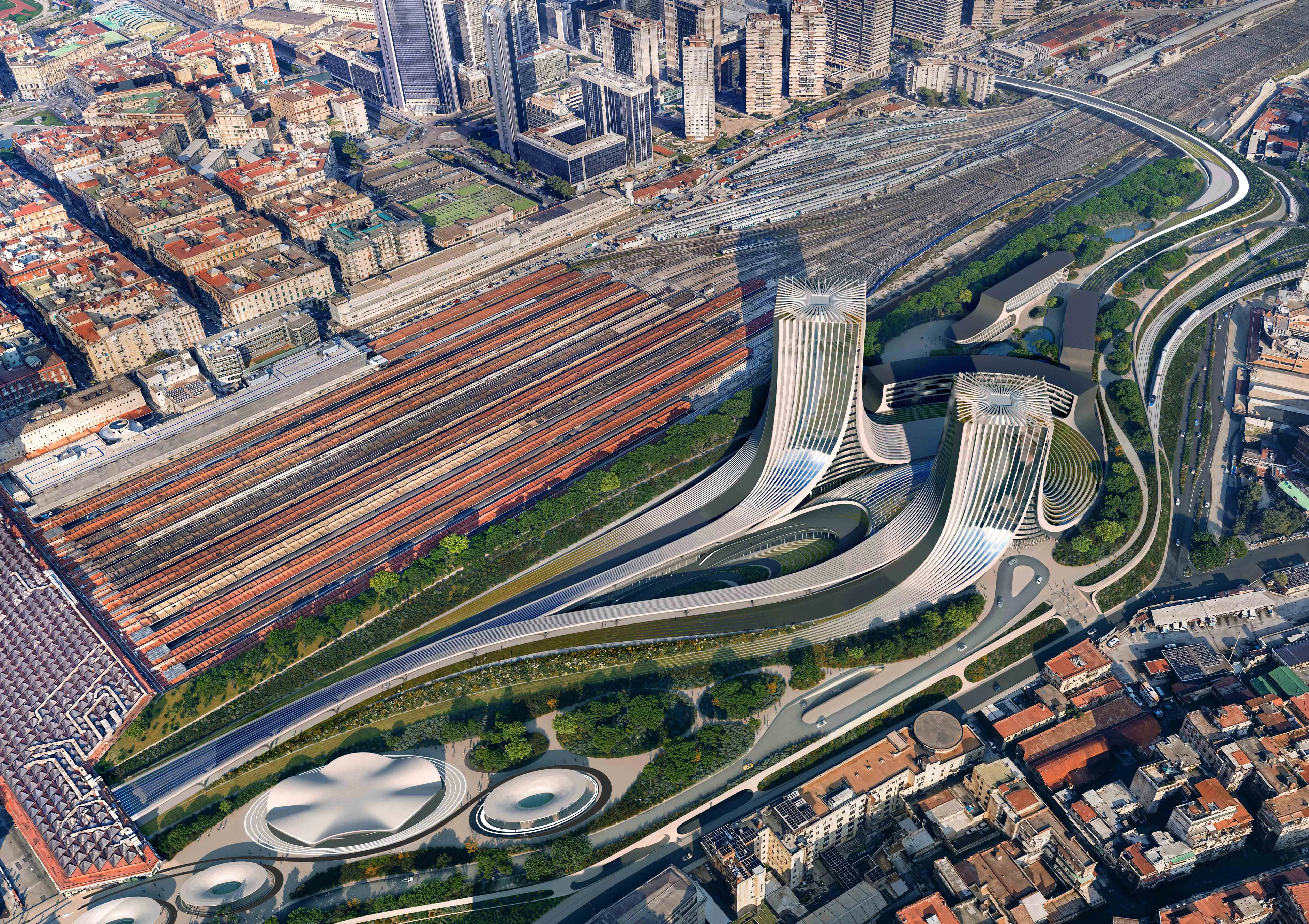
Reconnecting the city’s fragmented urban fabric is the primary objective of ZHA’ Napoli Porta Est masterplan proposal, winner of the international design competition. Isolated and considered unsafe, the district’s inadequate public spaces, as well as its physical and psychological barriers, hinder mobility and social interaction.
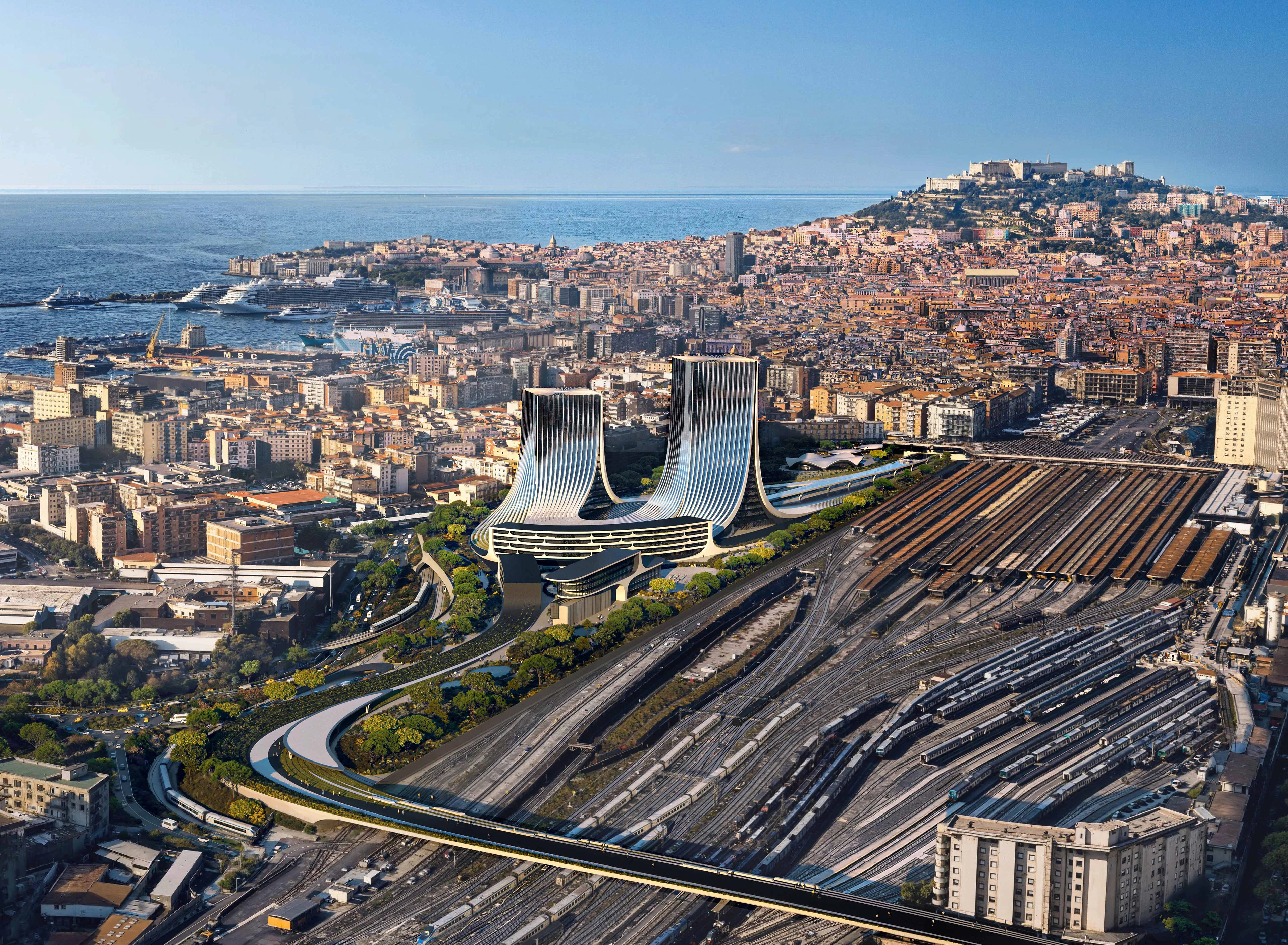
Encouraging the sustainable and resilient urban transformation of this former industrial zone, ZHA’s design unlocks the potential to reconnect the east of the city with the historic centre of Naples. The masterplan introduces infrastructure capable of adaptation, as well as the creation of a new urban park, and the reclamation of the disused railway yards for public use.
Removing the barrier created by the redundant railyards, the masterplan will restore 30 hectares of abandoned industrial buildings, including the former Manifattura Tabacchi factory and other neglected buildings in the Feltrinelli industrial zone. ZHA’s proposal also offers opportunities for the future conversion of an additional 100 hectares of the obsolete Q8 oil depot into a new quarter with civic spaces and amenities for its local community.
The Napoli Porta Est Masterplan international design competition was organised by Campania Region together with Naples City Council, FS Sistemi Urbani (the regeneration group of RFI Italian national railways), and the train operator EAV. Construction will be divided into phases to allow for the immediate use of the completed areas, ensuring efficiency throughout the process.
Site history and context
ZHA’s masterplan proposal is currently one of Europe’s largest urban regeneration projects — similar in scale and significance to the King’s Cross development in London.
The site of the masterplan is a former maintenance railyard at the eastern edge of Naples. Following the decommissioning of heavy industries, it has sat abandoned for decades. The overall masterplan will reconnect multiple areas of the city of Naples — the Centro Direzionale (CBD), the Mercato, and the Oriental Zone — which have been disparately developed over the past decades.
The plan prioritises pedestrians, reconnecting local communities and businesses with the historic centre. It also includes a new rail station, a multi-modal transport hub below ground, which will alleviate congestion at one of the city’s major transport interchanges and serve as a gateway to the Italian national transport network.
Featuring a residential development and a pedestrian bridge connecting to the CBD, the masterplan will improve mobility and access while respecting the existing urban plan’s overall massing and preferred tower height limit — promoting Naples as the civic, cultural, economic, and transport centre of southern Italy.
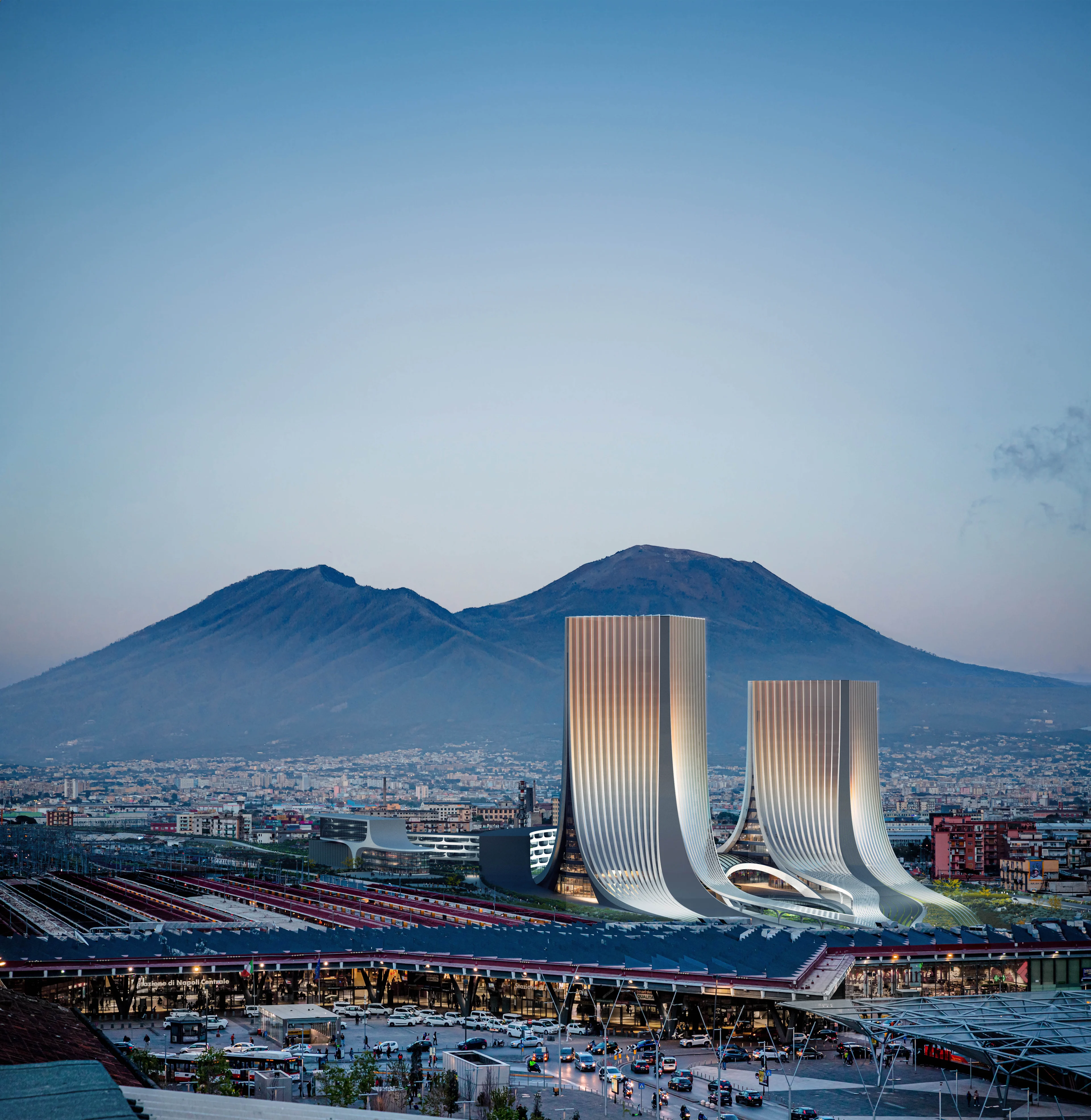
New Campania Region headquarters building
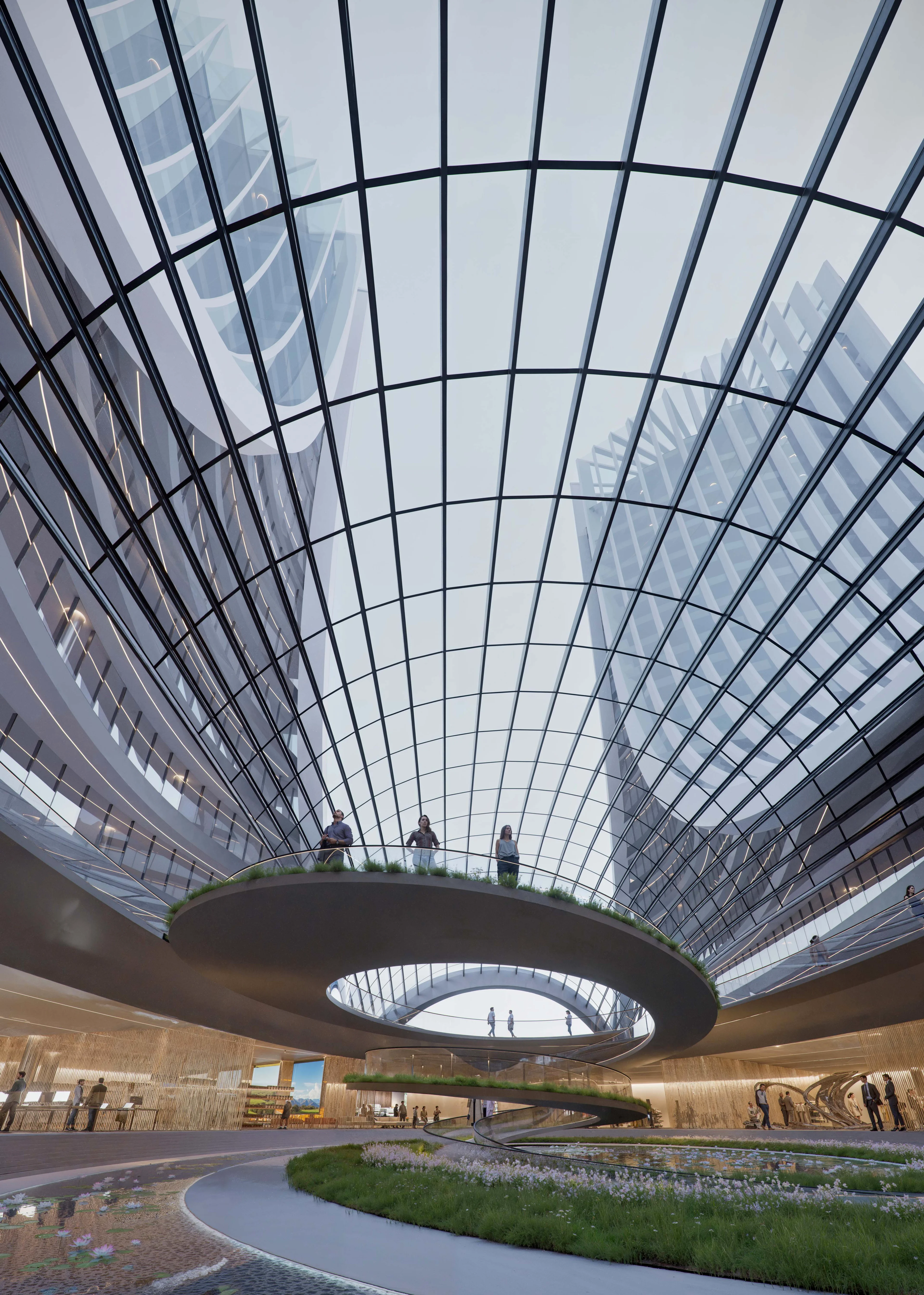
Campania Region’s new headquarters will serve as a dynamic and flexible civic hub, featuring public amenities such as a conference centre, cinema, commercial spaces on the lower level, with the regional government offices set in the towers.
The HQ is designed to be a highly functional workplace and an inclusive centre capable of adapting to future needs. The exterior will be framed by tree-lined squares leading to the new urban park. The architecture will emerge from these green areas without interruption, blurring the transition between landscape and built form to connect urbanism and nature.
The bioclimatic design of the towers optimises ventilation, natural light, and energy, with a LEED Platinum certification targeted for the buildings. The towers’ compact shape and lightweight structure reduce embodied carbon, improve energy efficiency, and allocate more land to public green spaces. The envelope optimises natural elements — light, wind, and panoramic views — ensuring excellent thermal insulation, reducing solar load and glare, without compromising the spectacular views of the Gulf of Naples, Vesuvius, and the surrounding hills.
The façade design takes into account the movement of the sun throughout the day: north-facing openings are maximised to allow natural light to enter the buildings and enhance the views, while direct sun exposure is minimised on other façades of the buildings to reduce energy requirements. A reduced ratio of glass surfaces enables self-shading.
Placing the core at the centre of the buildings limits deep floor plans to enhance the effectiveness of natural light, while spectrally selective glazing reduces solar heat gain and glare. Additionally, optimising natural light levels in interior spaces reduces the energy demand for artificial lighting, which is one of the largest energy consumers in contemporary office buildings.
The HQ construction system will be a hybrid of concrete and steel sourced from local suppliers, ensuring accurate control of construction costs and times, and guaranteeing the best building performance and flexibility.
Climate resilient urbanism
The project will see 15 hectares of land returned to the city, including 10 hectares that will be transformed into landscaped public gardens and plazas. Designed in collaboration with landscape architect Martha Schwartz, the urban park will be planted with trees native to the region.
Shaped by ‘sponge city’ principles, the landscaping is designed to absorb water, reducing flood risk while promoting walkability within a comfortable, verdant microclimate. Urban connections incorporating greenery and walkways guiding pedestrian traffic will flow from Porta Nolana to Central Station and the new park.
Furthermore, natural ventilation, green roofs, and passive systems ensure energy efficiency for buildings and mitigate the urban heat island effect. Recycled water will be used to maintain vegetation and reduce potable water consumption by 60%. Additionally, a photovoltaic system covering 7,000m2 is planned for rooftops and canopies, alongside a significant reliance on geothermal energy.
Transport + Infrastructure
Explore more transport and infrastructure
From an airport that sets new standards for service to a state of the art flood defense system that doubles as a public promenade, discover our latest transport and infrastructure projects.
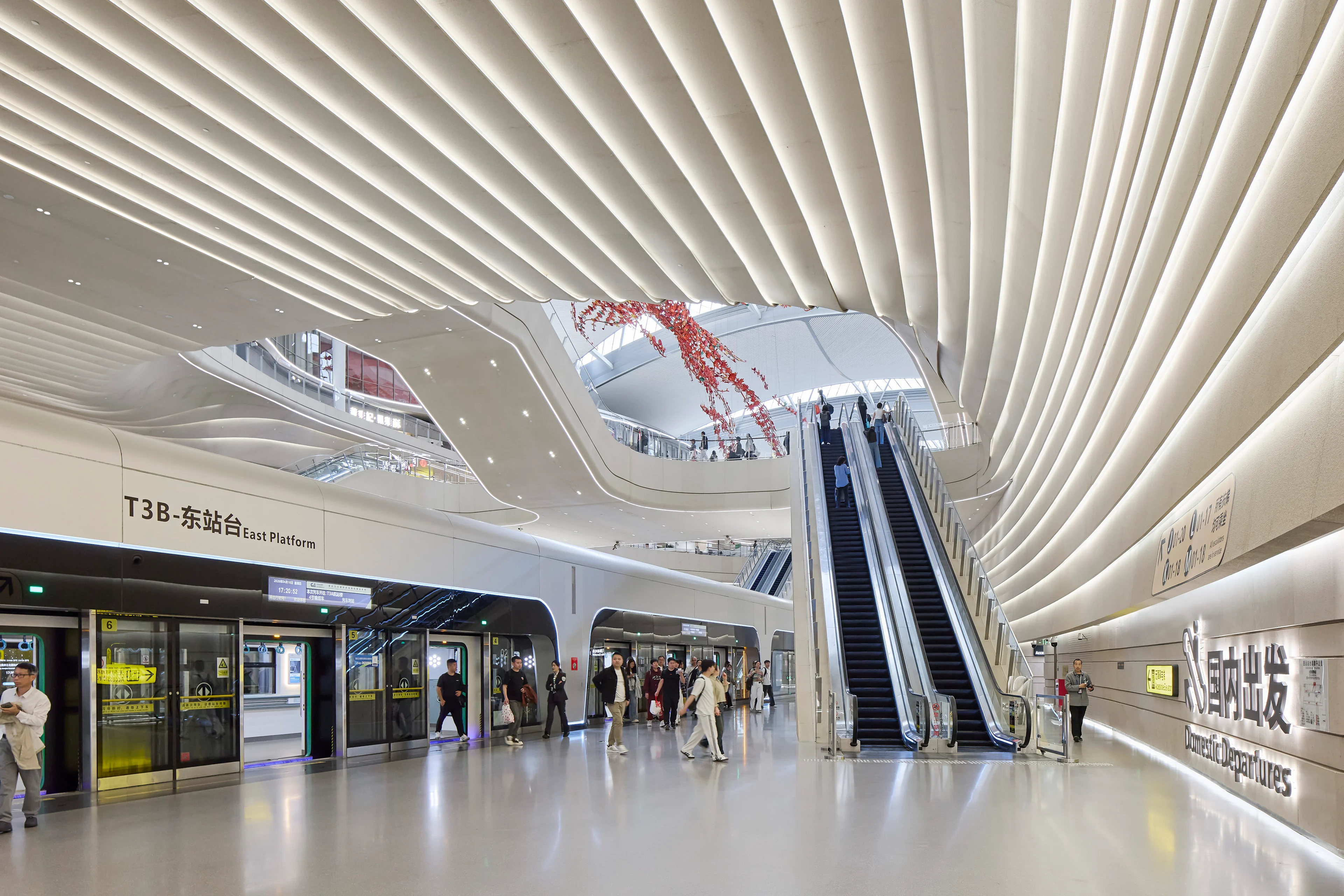
Photograph by Hufton + Crow
Terminal 3B at Chongqing Jiangbei International Airport
The new Terminal 3B (T3B) at Chongqing Jiangbei International Airport is a ZHA design collaboration with the terminal’s executive architects CSWADI (China Southwest Architectural Design & Research Institute). Constructed by CSCEC (China State Construction Engineering Corporation), T3B marks the final large-scale expansion of the airport’s transformation into one of the country’s leading aviation hubs.
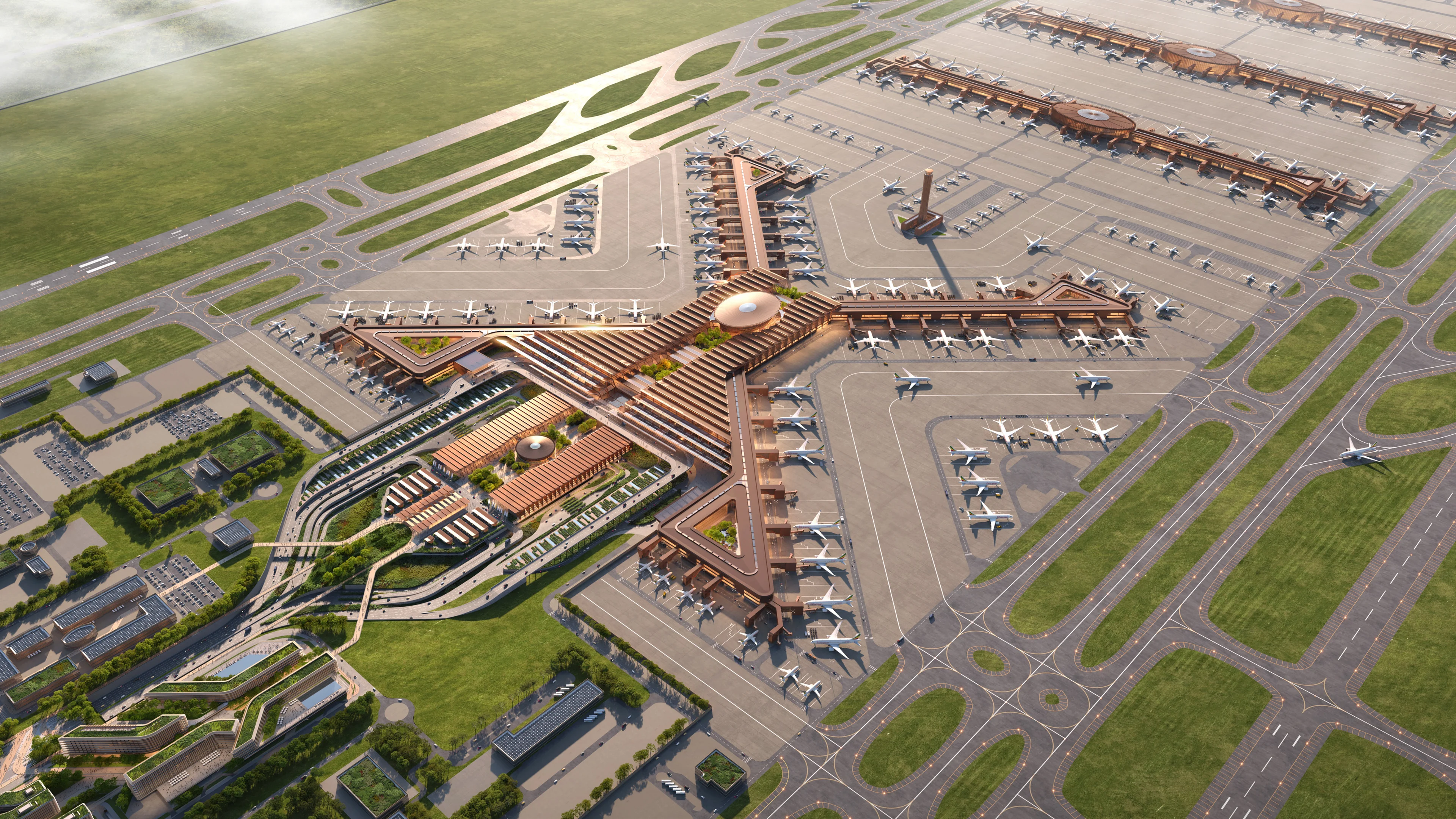
Render by X-Universe
Bishoftu International Airport
Phase One of the new Bishoftu International Airport (BIA) will serve 60 million passengers a year. Further phases will serve up to 110 million passengers annually with four runways and parking for 270 aircraft.
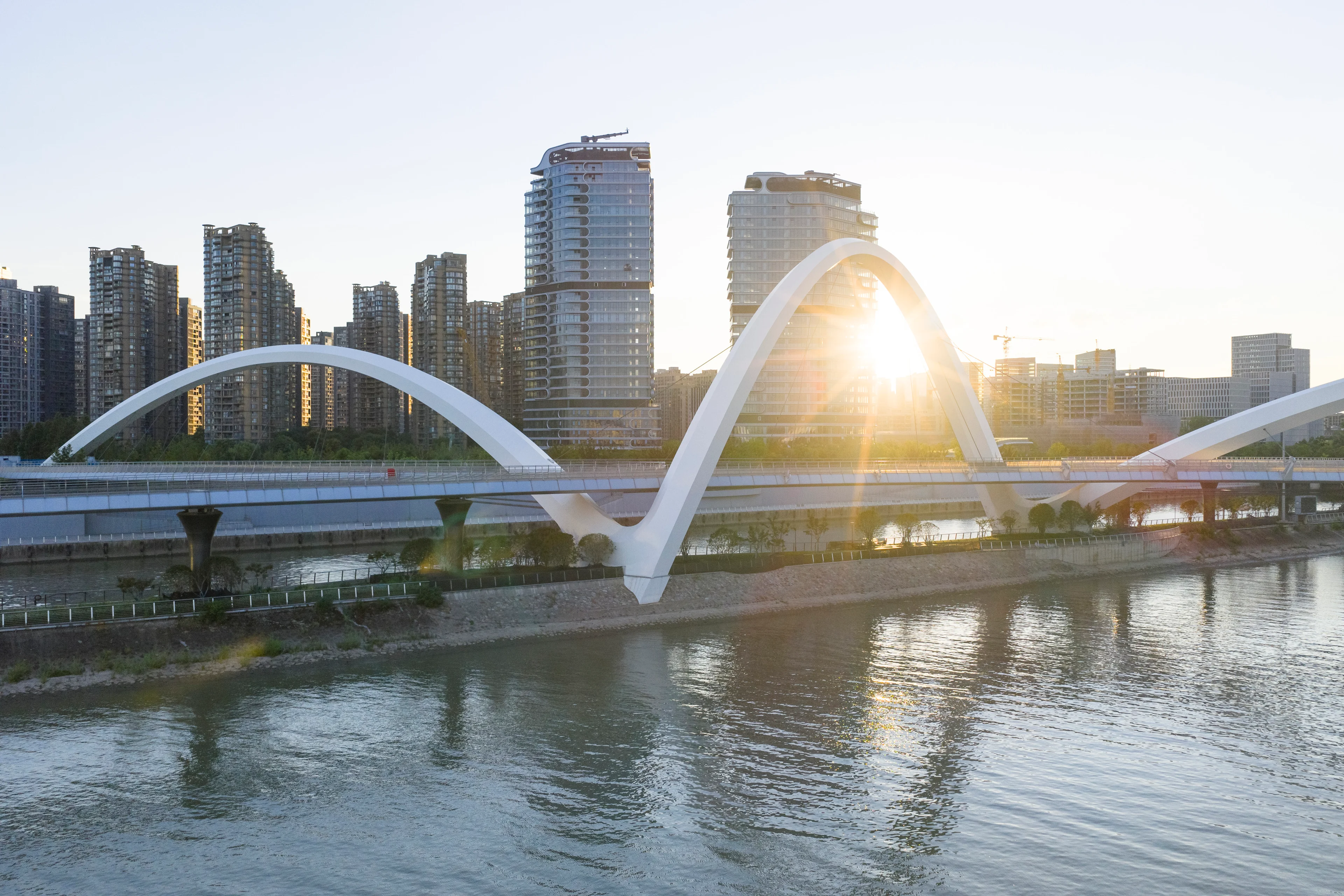
Photograph by Xue Liang 薛亮
Grand Canal Gateway Bridge
Grand Canal Gateway Bridge
Uniting cultural heritage with 21st century engineering and recyclable materials, the Grand Canal Gateway Bridge is both sculptural and sustainable, designed for longevity with minimal environmental impact.
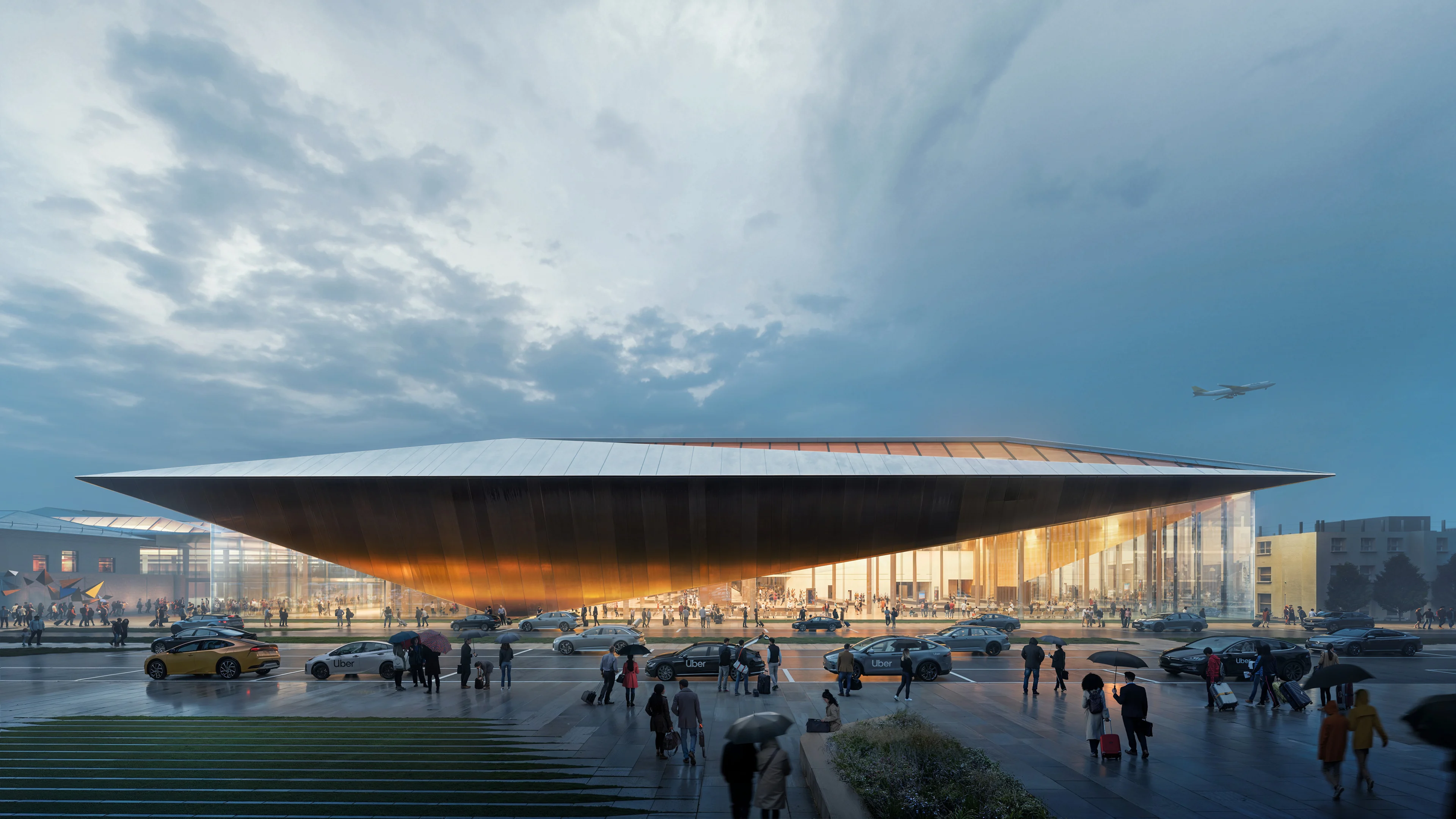
Vilnius Airport Terminal
ZHA's design draws from Lithuanian cultural heritage, incorporating traditional motifs and art forms within a contemporary architectural language. The terminal's modular geometry originates from the rhombus, a triangular shape that holds significant meaning in Baltic folklore.
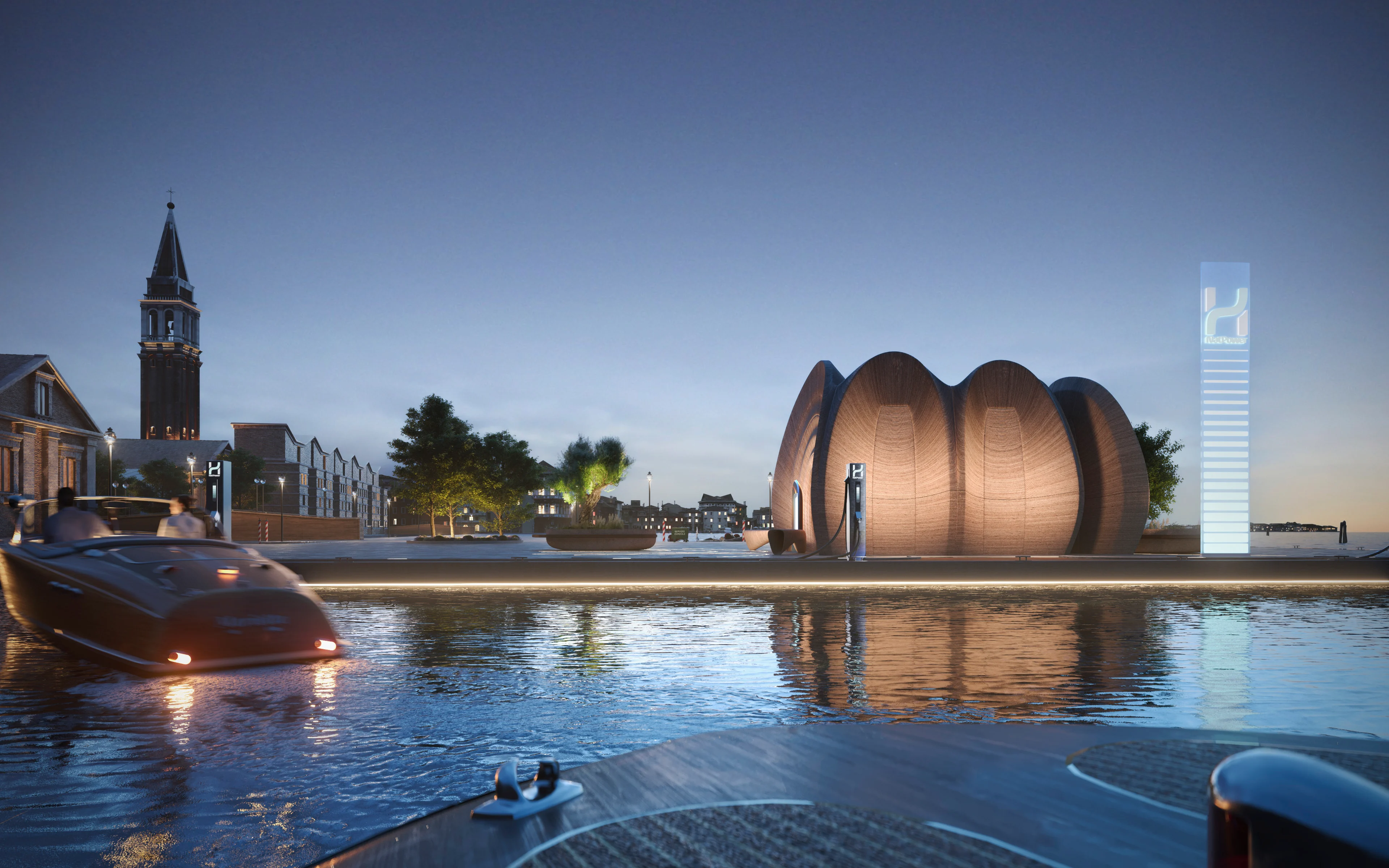
Render by Tecma Solutions
NatPowerH Hydrogen Refuelling Stations
The world’s first green hydrogen refuelling infrastructure for the recreational boating industry will be initiated in 25 Italian marinas and ports with stations designed by ZHA.
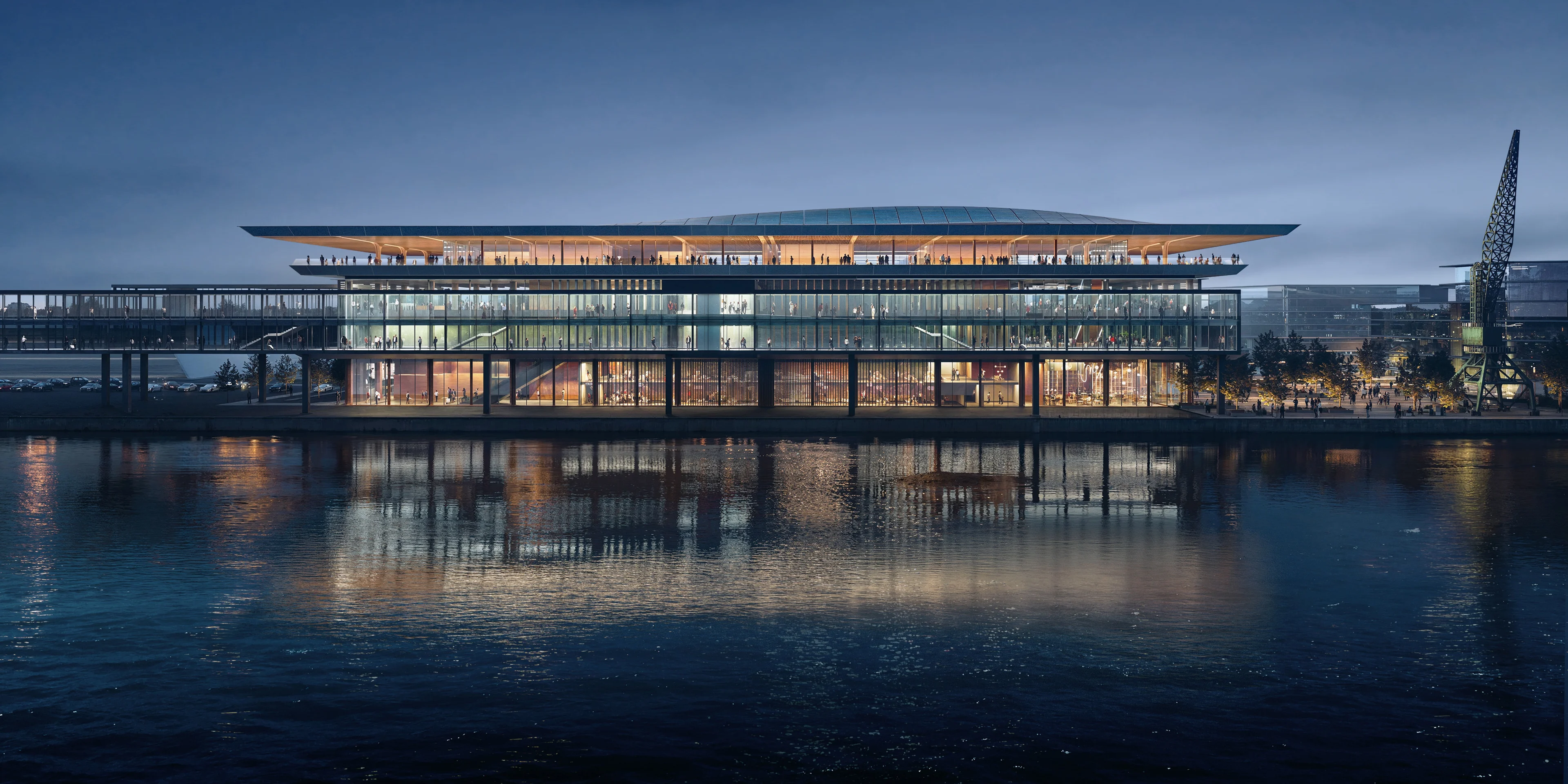
Render by Negativ
Ropax Ferry Terminal
Repurposing an existing shipping warehouse built in 1960 into a new 20,000 sq. m ferry and cruise ship terminal, ZHA’s design adds a fourth level to the structure to incorporate public terraces with panoramic views of the Daugava River and the skyline of Riga’s city centre, a designated UNESCO World Heritage Site.
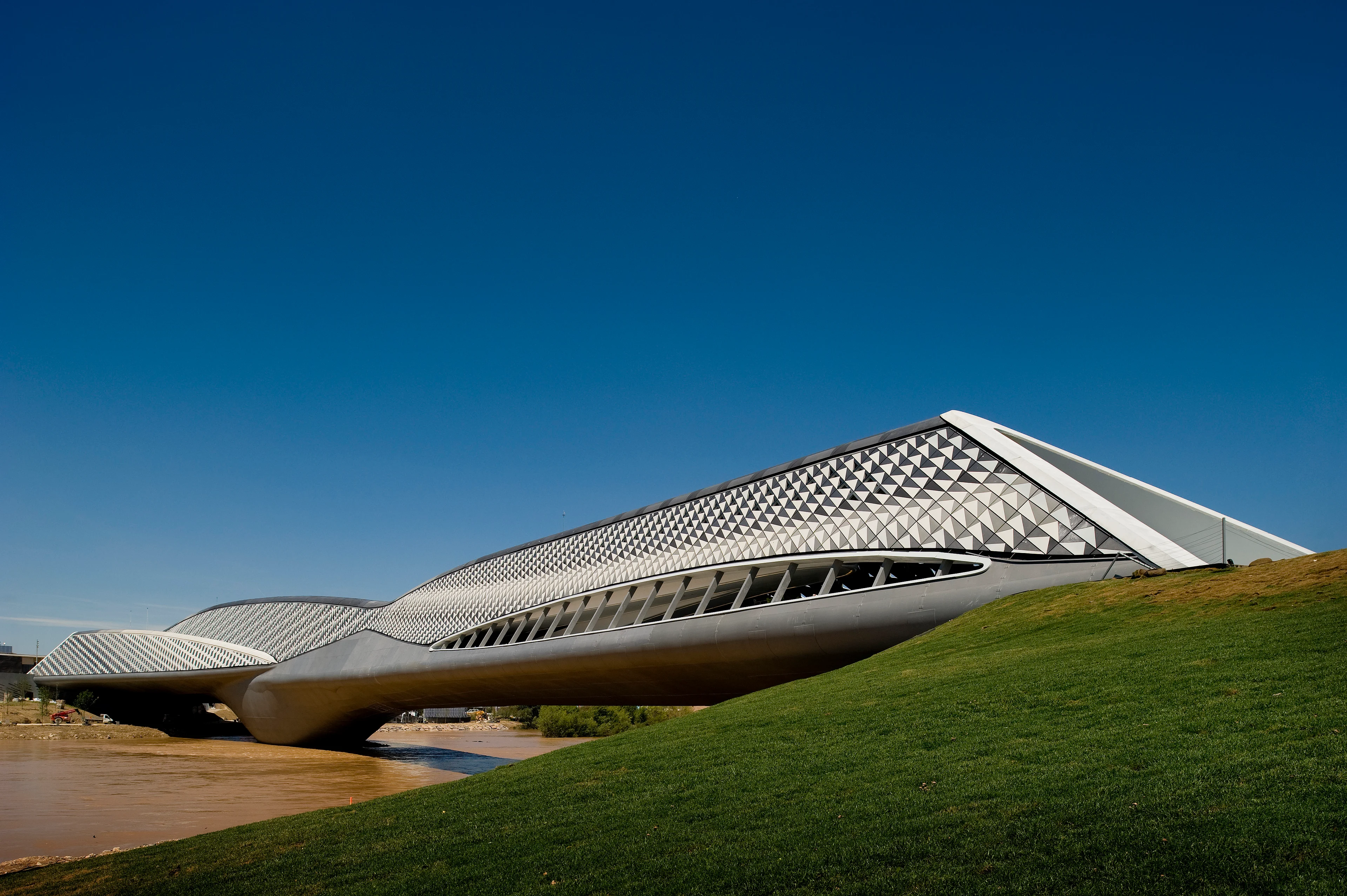
Photograph by Fernando Guerra
Zaragoza Bridge Pavilion
An enclosed interactive space spanning the River Ebro to form a gateway to the Zaragoza Expo 2008, a hybrid of pedestrian footbridge and exhibition pavilion. Four structural elements correspond to specific spatial enclosures, which intersect and brace each other. This fluid, dynamic design interprets the Expo’s theme: ‘Water and Sustainable Development.’
Photograph by Xue Liang 薛亮
Jiangxi River Bridge
Jiangxi River Bridge
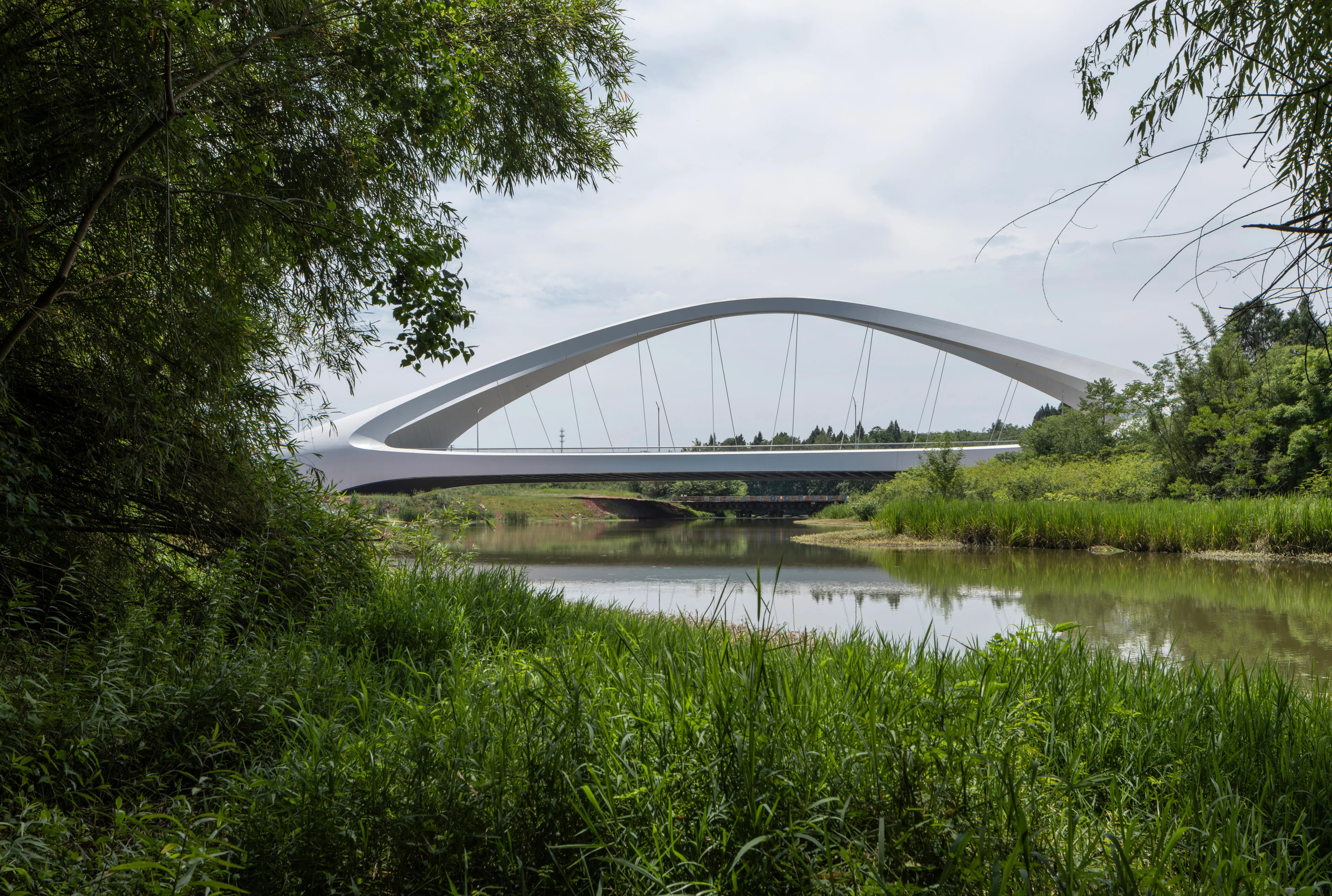
The first in a series of bridges on Chengdu’s West Line Road, the new 295-metre Chengdu West First Bridge crosses the Jiangxi River, a tributary of the Tuojiang River in China’s Sichuan province.
Render by Atchain, courtesy of ZHA
Dnipro Metro Stations
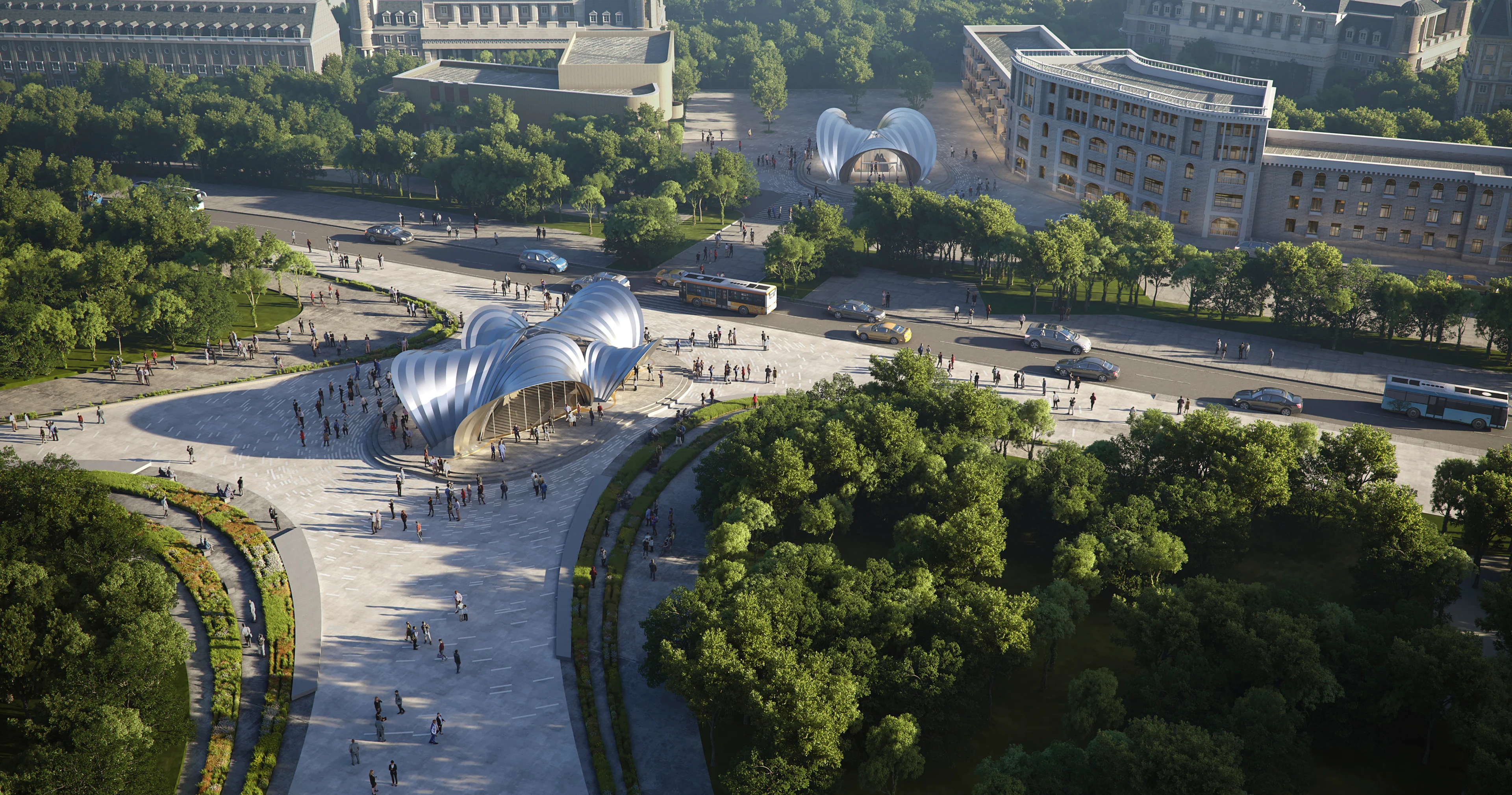
The three new stations (Teatralna, Tsentralna and Muzeina) designed by ZHA will connect the residents, businesses, cultural and academic institutions in Dnipro’s eastern districts with the city centre and the Dnipro-Holovnyi railway terminus.
Courtesy of ZHA, render by Negativ
Vilnius Railway Station
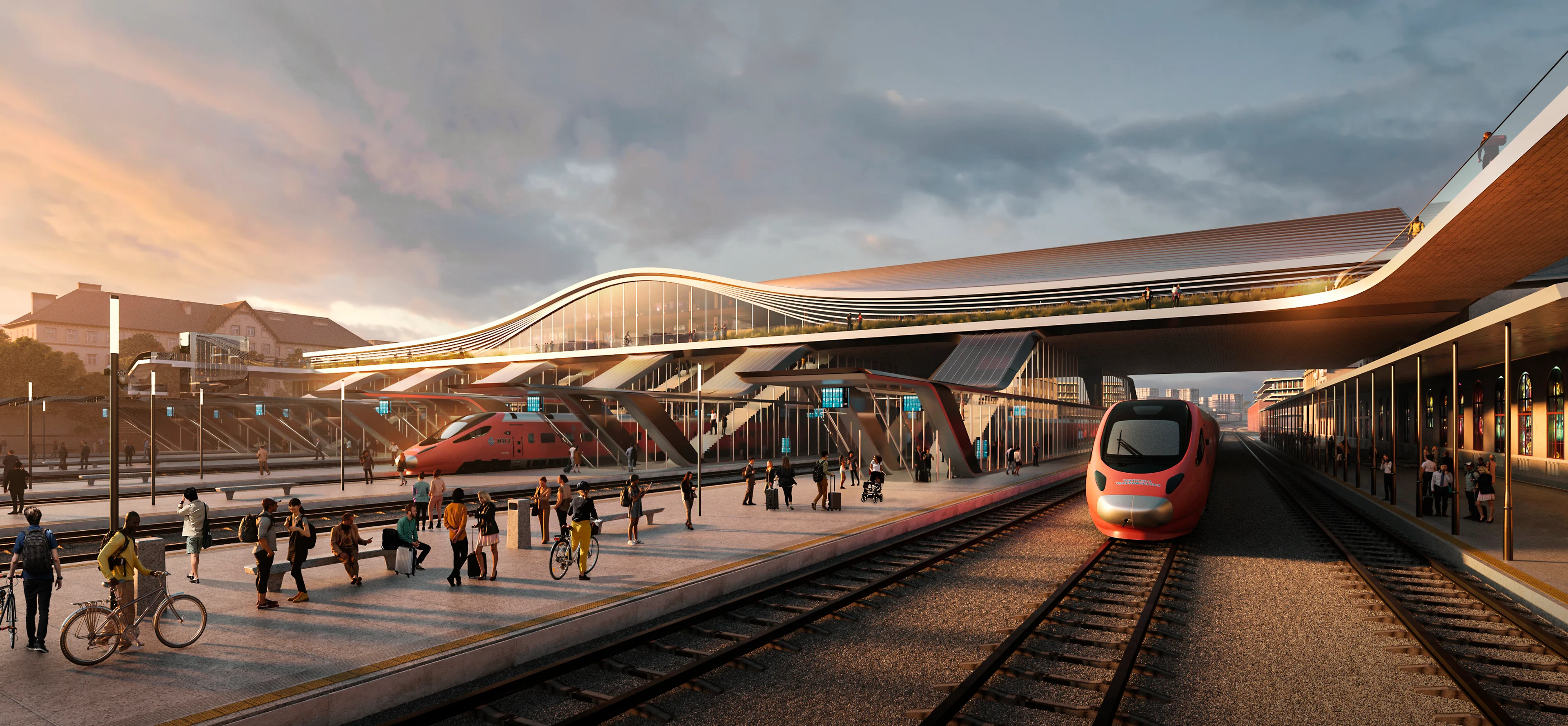
ZHA’s ‘Green Connect’ proposal for Vilnius Railway Station creates an integrated transportation hub for the 21st century with new civic spaces enveloped by nature
Photograph by Werner Huthmacher
Alpenzoo Station
Nordpark Cable Railway Stations
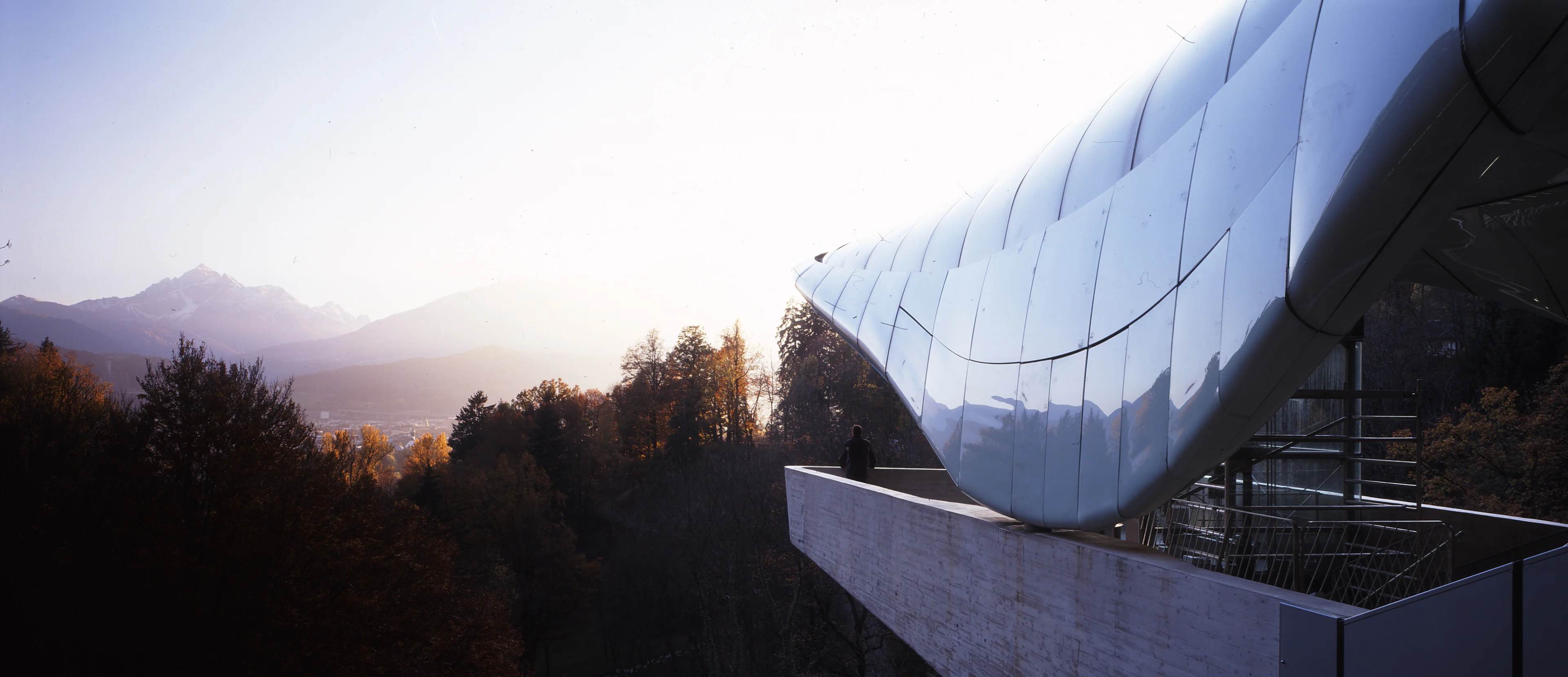
‘Shell & Shadow’: a unique architectural language of fluidity inspired by natural ice formations, for stations along Innsbruck’s northern chain of mountains. Lightweight organic roof structures float on concrete plinths, their soft shapes and contours creating an artificial landscape that describes the movement and circulation within.
Photograph by Hufton + Crow
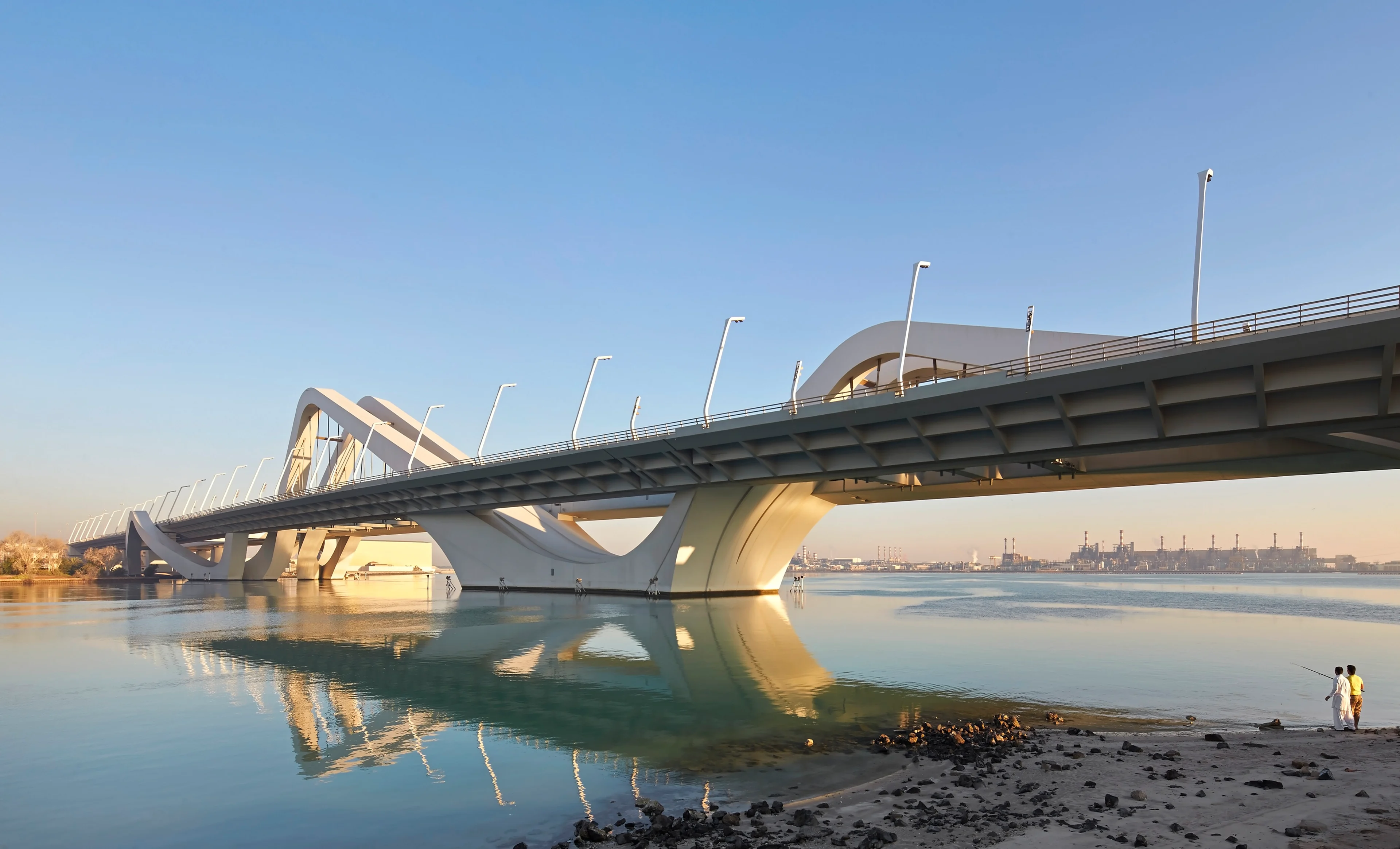
Sheikh Zayed Bridge
Design and construction of a third gateway crossing linking Abu Dhabi Island to the Gulf south shore. Our two-way four lane highway bridge features cantilevered road decks suspended from symmetrical steel arches, which form a sinusoidal waveform – giving this huge structure its fluid silhouette.
Photograph by Roland Halbe
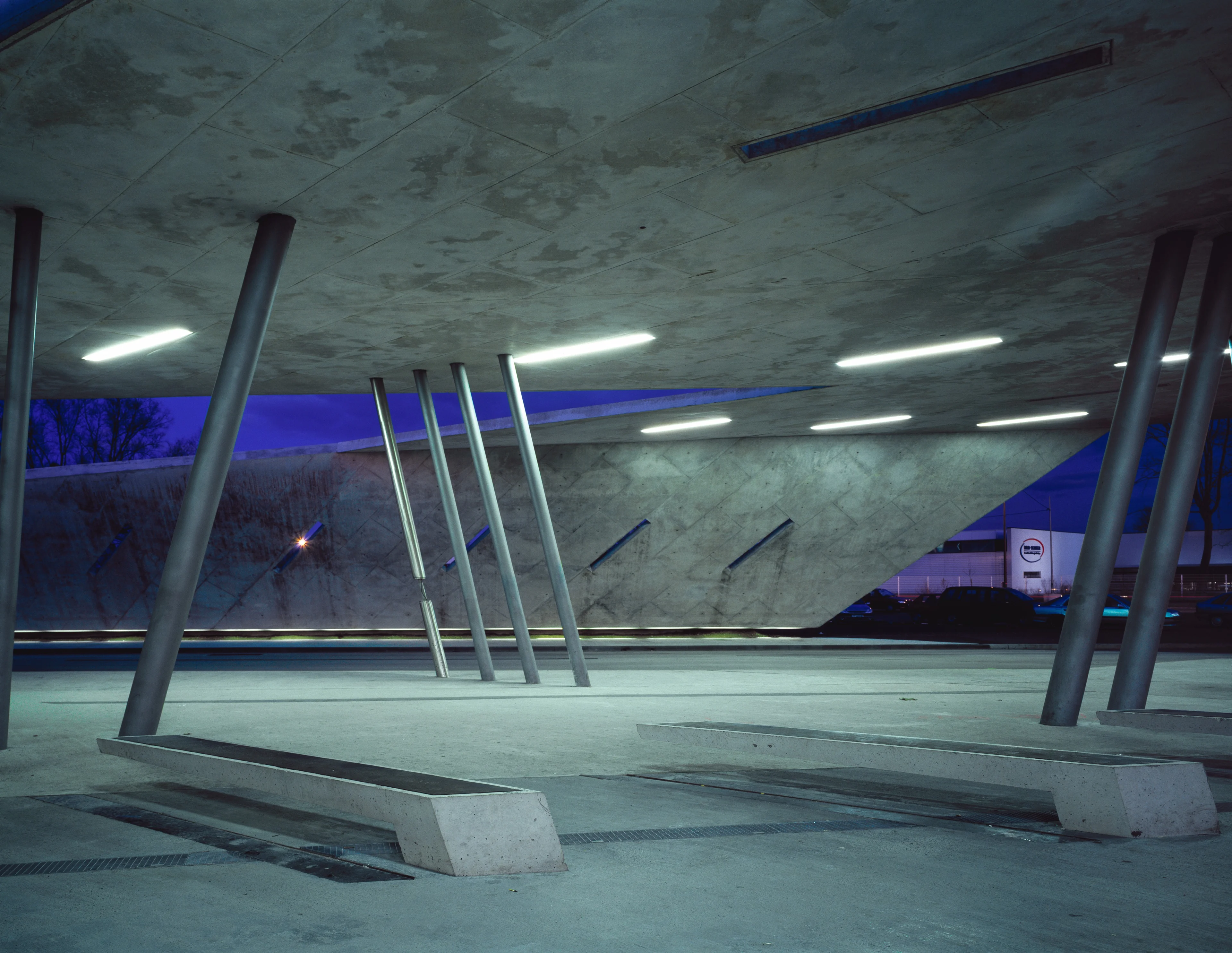
Terminus Multimodal Hoenheim Nord
Completed for the northern terminal of the city’s B tramline, our concept utilises overlapping fields: echoing the energetic movement of cars, trams, bicycles and pedestrians; fusing together to form a constantly shifting but clearly delineated whole. In the car park, floor marks and light posts delineate a ‘magnetic field’.
Photograph by Hufton + Crow
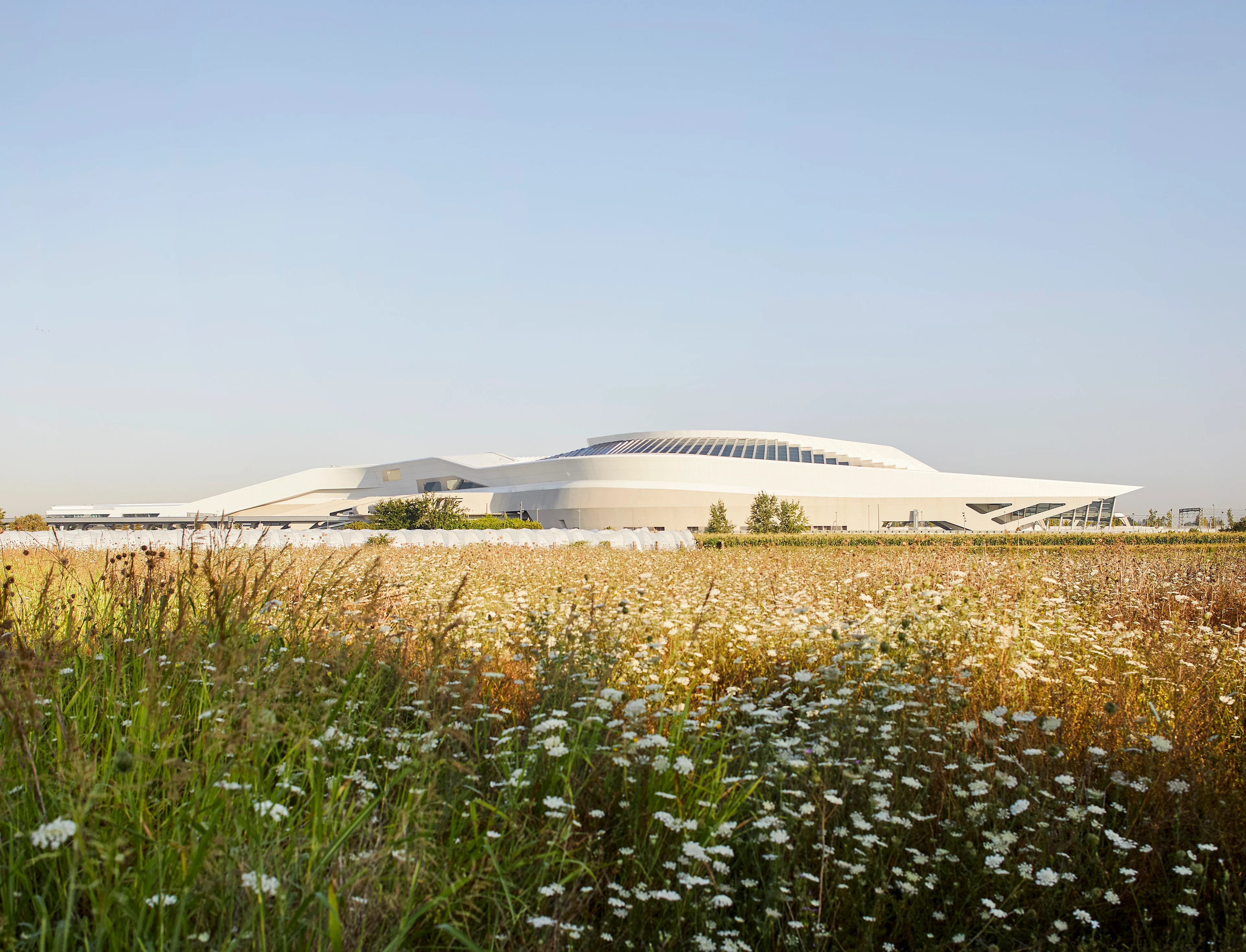
Napoli-Afragola High Speed Train Station
The new rail station at Napoli Afragola is designed as one of southern Italy’s key interchange stations serving four high speed inter-city lines, three inter-regional lines and a local commuter line.
Photograph by Piet Niemann
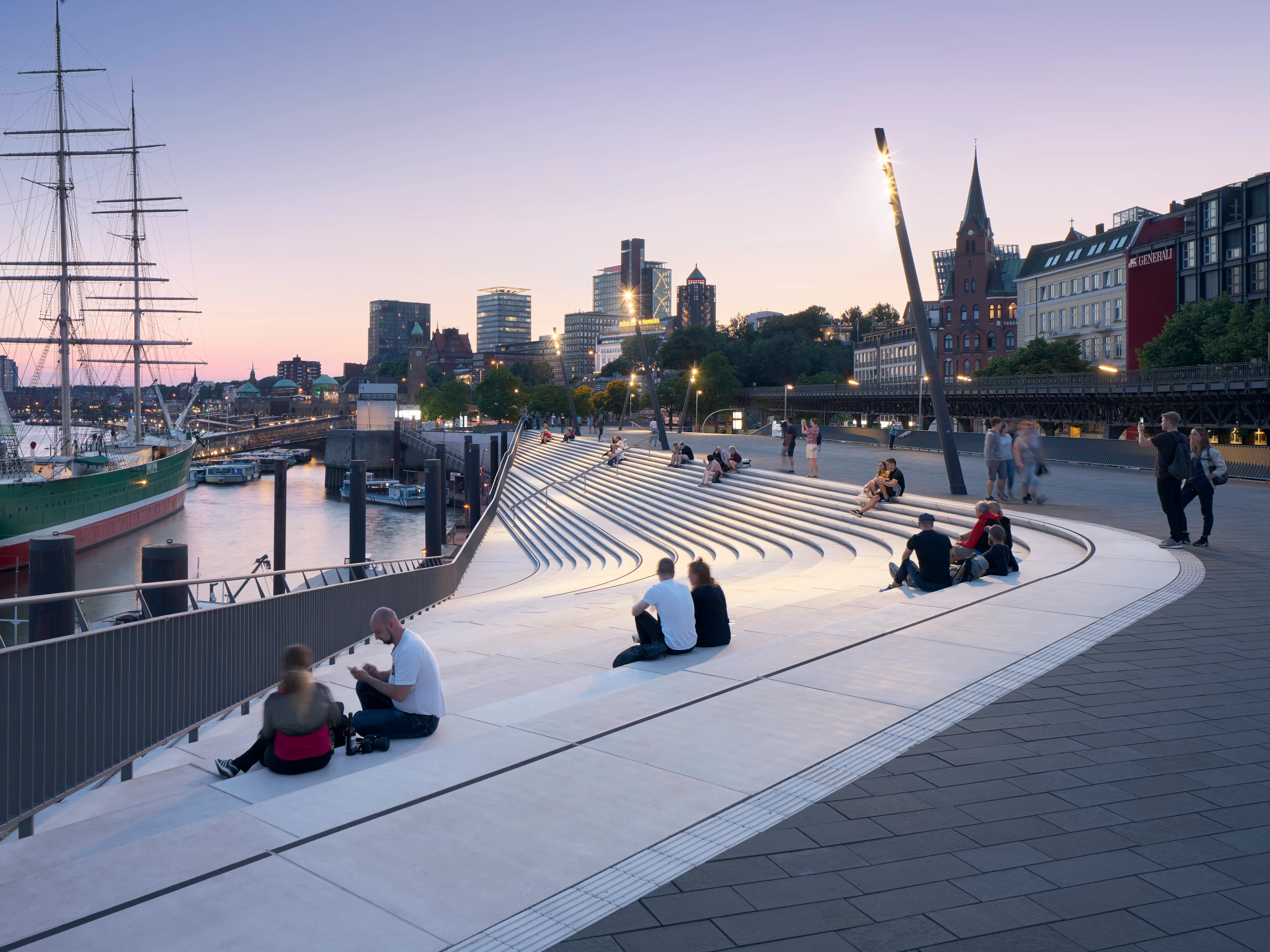
Niederhafen River Promenade
Located at Niederhafen on the Elbe River between St. Pauli Landungsbrücken and Baumwall in Hamburg, the upgraded 625m river promenade is integral to the modernisation and reinforcement of the city’s flood protection system.
01
02
03
04
05
06
07
08
09
10
11
12
13
14
15