
Photograph by Roland Halbe
Strasbourg, France
1998 - 2001
Communaute Urbaine de Strasbourg (C.U.S) Compagnie des Transports Strasbourgeois (C.T.S)
Terminus Multimodal Hoenheim Nord
Photograph by Hélène Binet
Photograph by Hélène Binet
Photograph by Hélène Binet
Photograph by Hélène Binet
01
02
03
04
Overlapping fields and lines
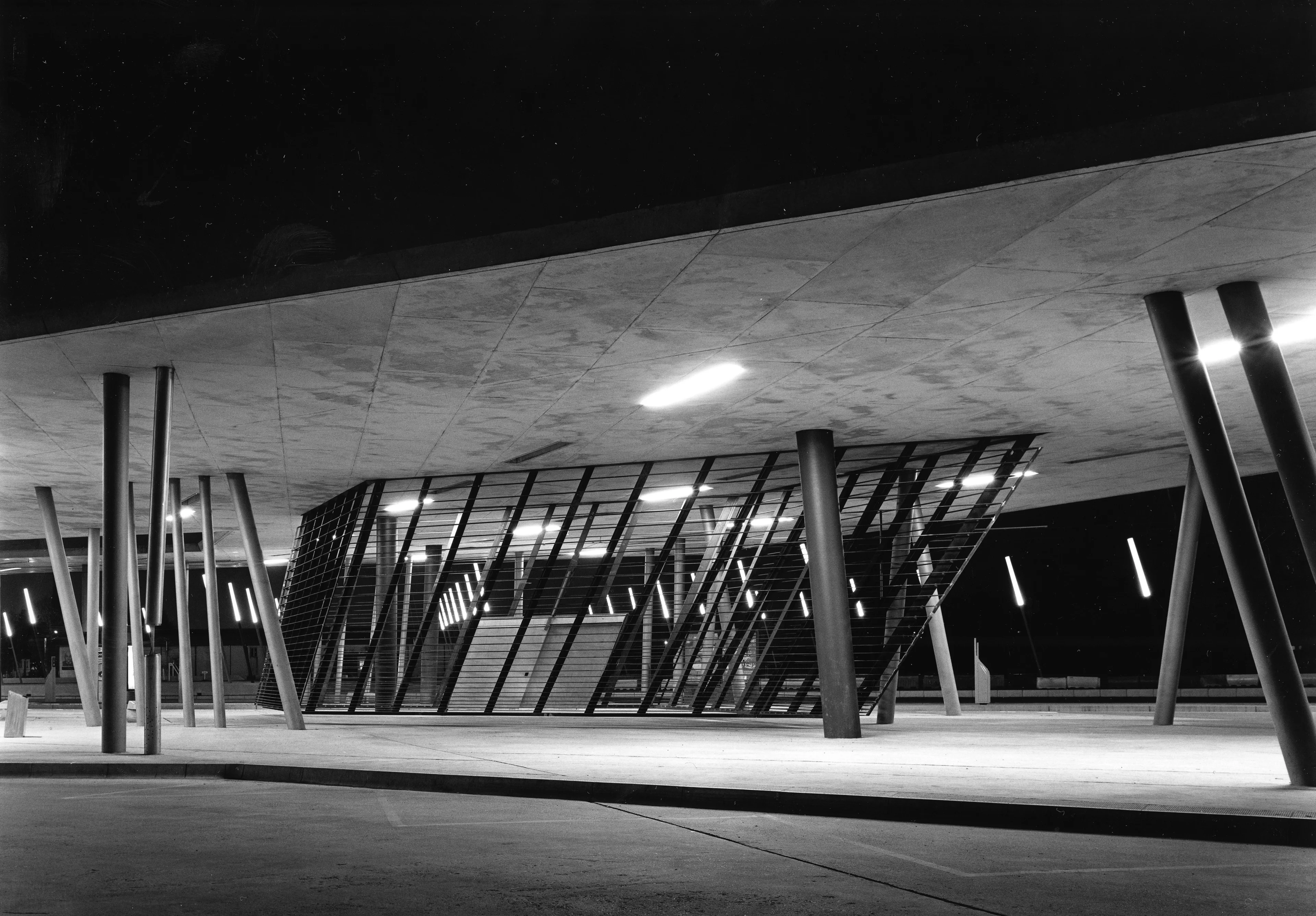
The city of Strasbourg has been developing a new tramline to encourage people to leave their cars outside the city in specially designed car parks, and then take a tram to the more inner parts of the city. Part of this initiative was the development Line, ‘B’, that will run north to south.
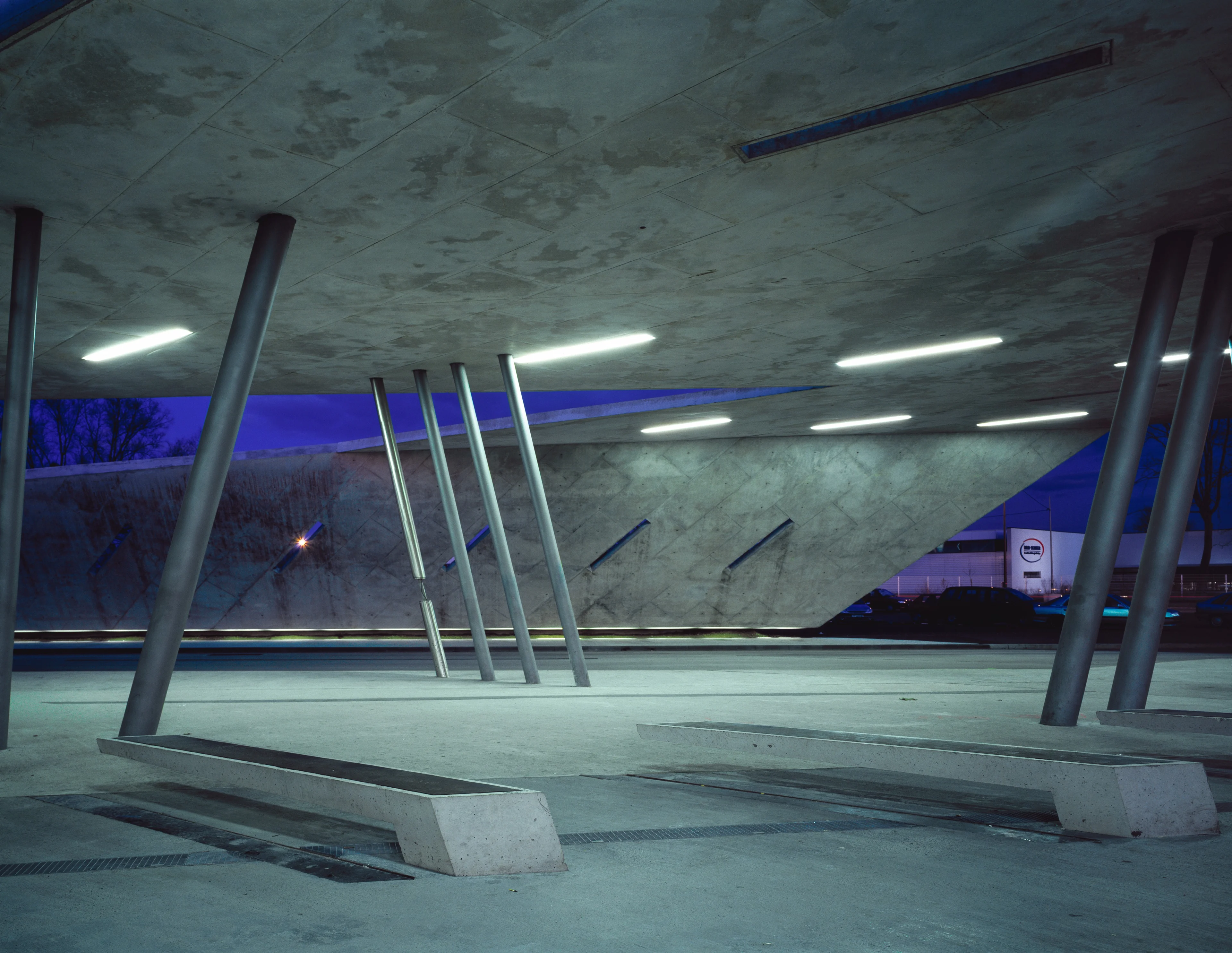
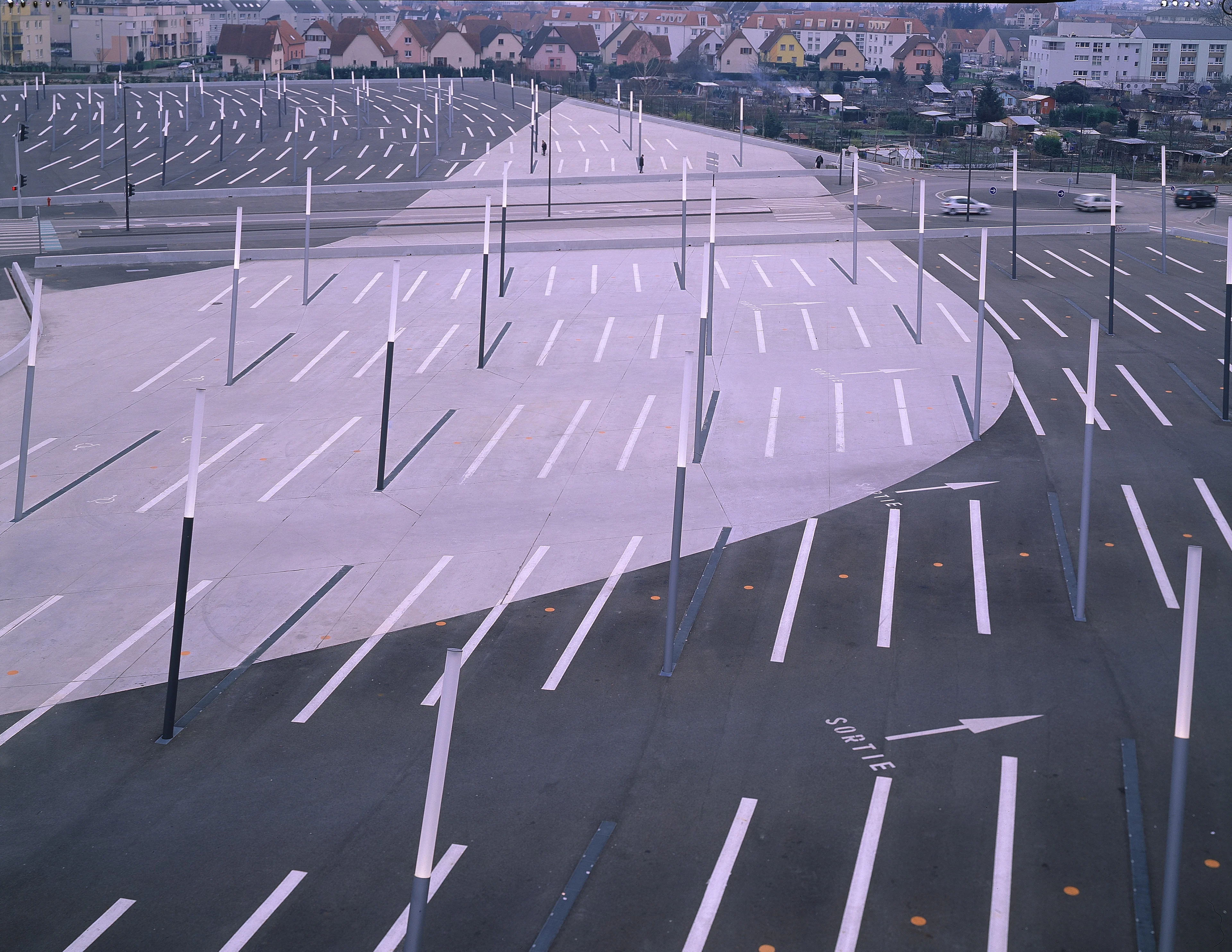
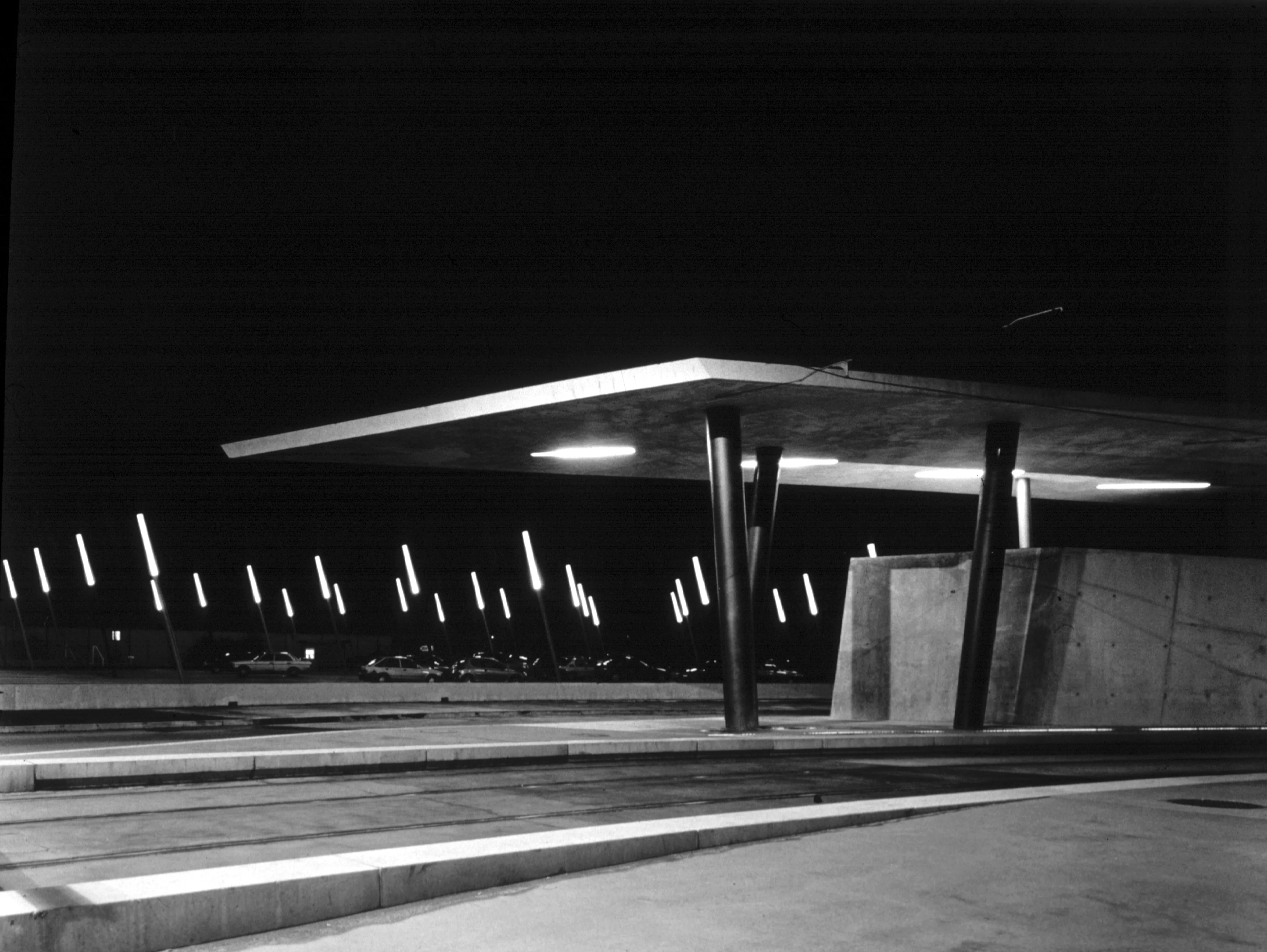
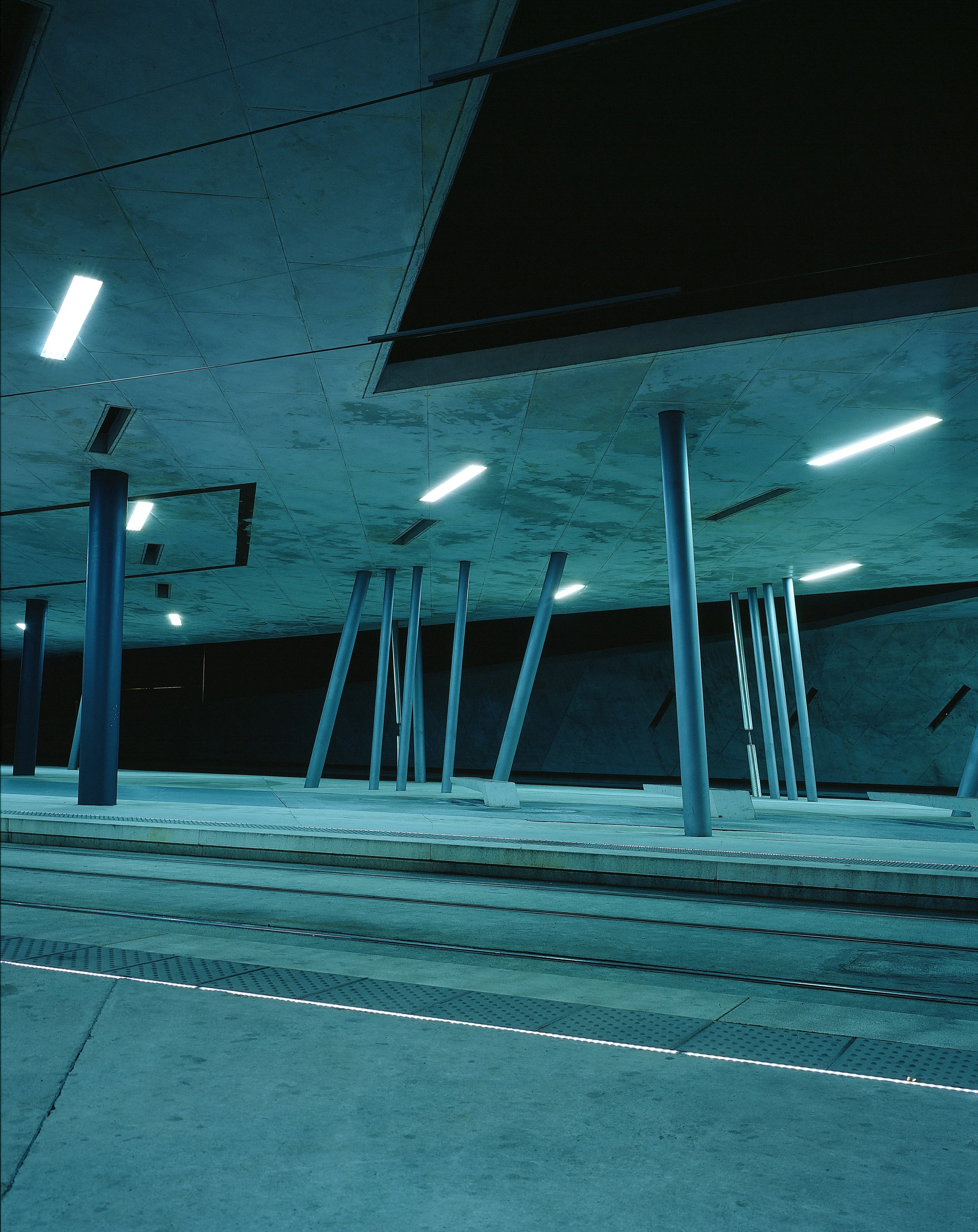
ZHA has been invited as part of the new artist’s interventions, to design the tram-station and a car park for 800 cars at the northern apex of the line. The overall concept is based on overlapping fields and lines that knit together to form a constantly shifting whole. Those ‘fields’ are the patterns of movement engendered by cars, trams, bicycles and pedestrians. Each has a trajectory and a trace, as well as a static fixture. It is as though the transition between transport types (car to tram, train to tram) is rendered as the material and spatial transitions of the station, the landscaping and the context.
Photograph by Hélène Binet
A ‘magnetic field’ of white lines
The Station contains a basic program of waiting space, bicycle storage, toilets and shop. This sense of three dimensional vectors is enhanced in the treatment of space: the play of lines continues as light lines in the floor, or furniture pieces or strip-lights in the ceiling. The idea is to create an energetic and attractive space that is clearly defined in terms of function and circulation. The car park is divided into two parts to cater for 800 cars.
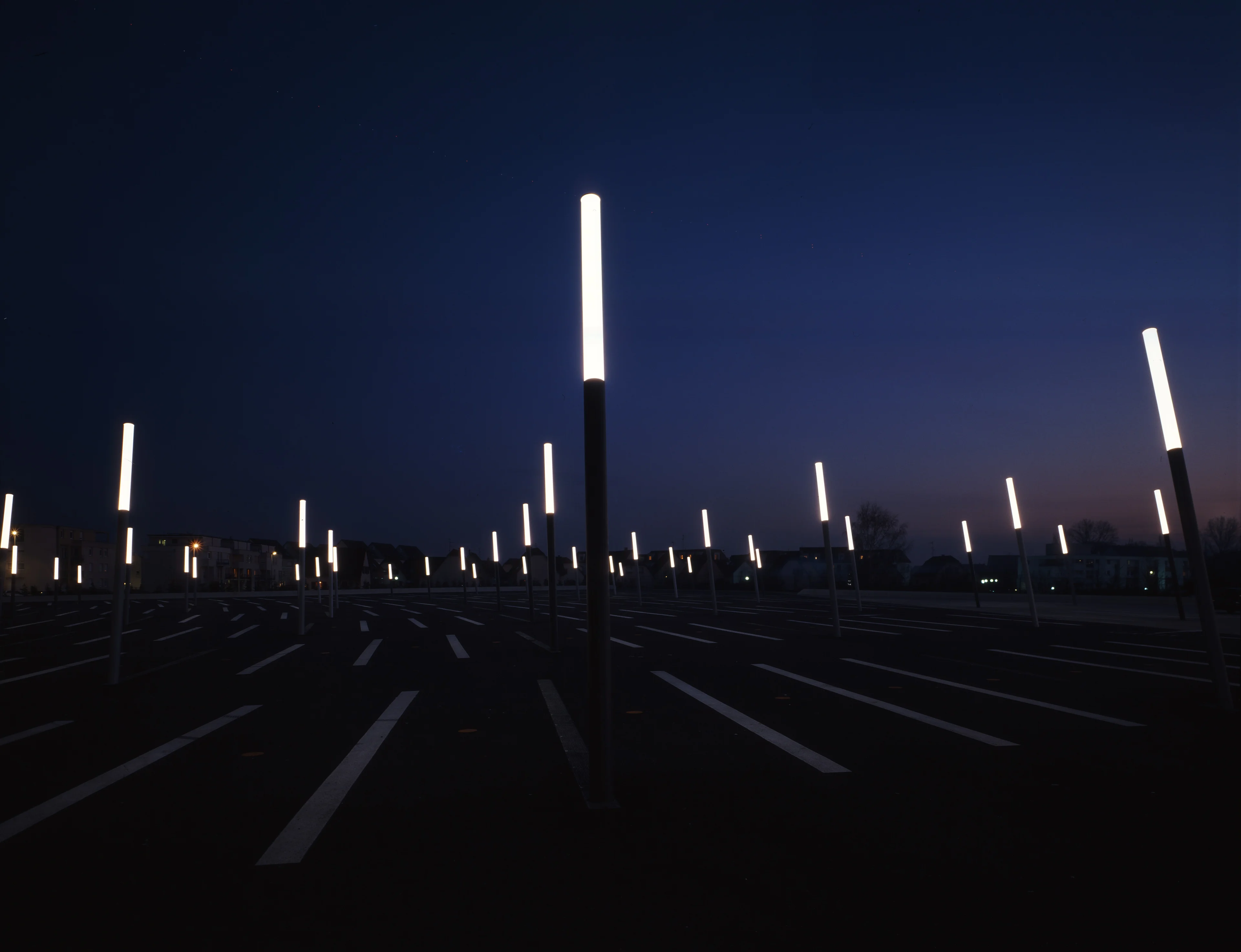
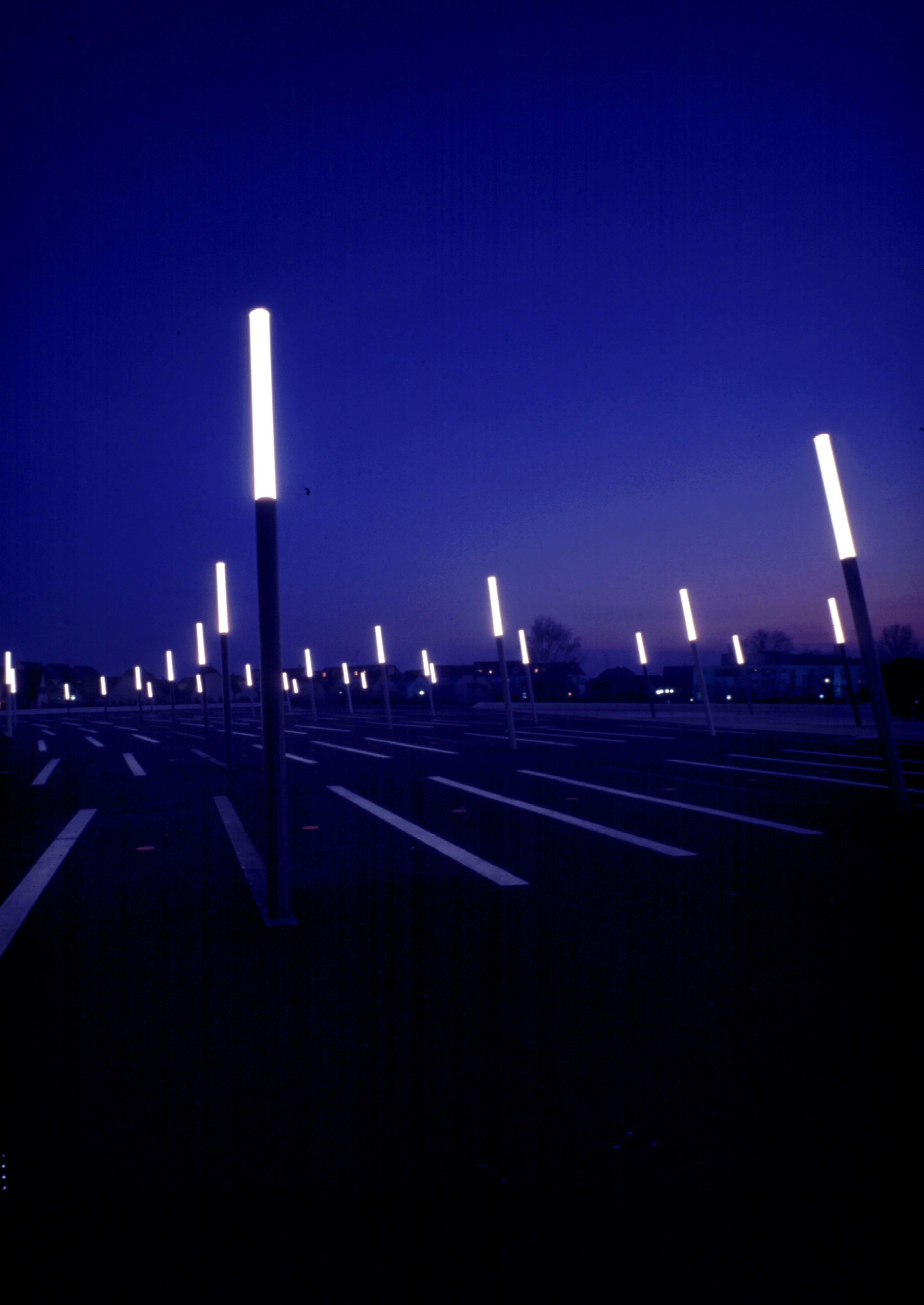
The notion of the cars as being ephemeral and constantly changing elements on the site is manifested as a ‘magnetic field’ of white lines on the black tarmac. These delineate each parking space and start off aligned north/south at the lowest part of the site, then gently rotate according to the curvature of the site boundaries. Overall, the ‘field’ of the light posts maintains a constant datum height that combines with the gradient of the floor slope. Again, the intention is to reciprocate between static and dynamic elements at all scales.
By articulating the moments of transition between open landscape space and public interior space, it is hoped that a new notion of an ‘artificial nature’ is offered, one that blurs the boundaries between natural and the artificial environments towards the improving of civic life for Strasbourg.
Transport + Infrastructure
Explore more transport and infrastructure
From an airport that sets new standards for service to a state of the art flood defense system that doubles as a public promenade, discover our latest transport and infrastructure projects.
Photograph by Hufton + Crow
Terminal 3B at Chongqing Jiangbei International Airport
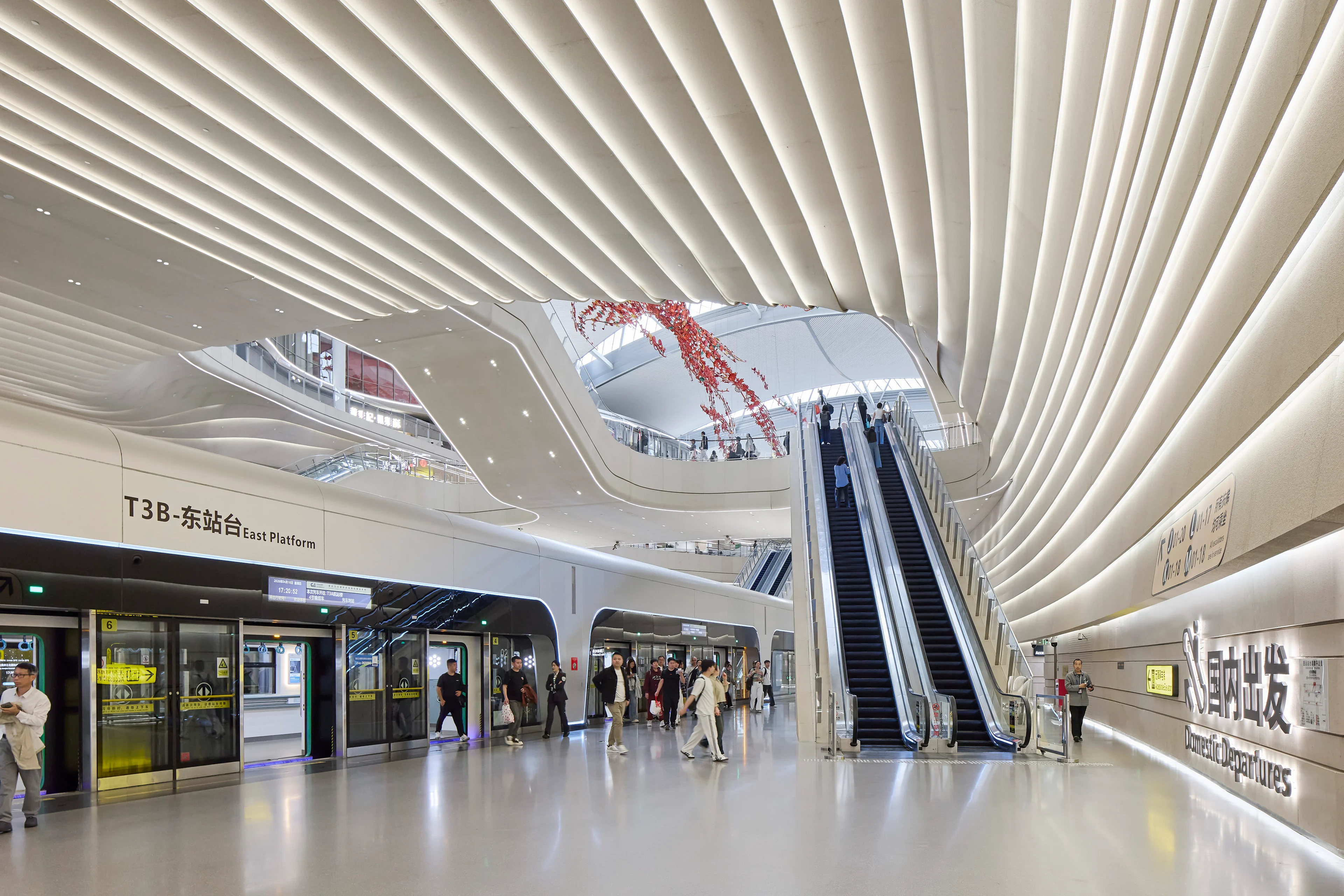
The new Terminal 3B (T3B) at Chongqing Jiangbei International Airport is a ZHA design collaboration with the terminal’s executive architects CSWADI (China Southwest Architectural Design & Research Institute). Constructed by CSCEC (China State Construction Engineering Corporation), T3B marks the final large-scale expansion of the airport’s transformation into one of the country’s leading aviation hubs.
Render by X-Universe
Bishoftu International Airport
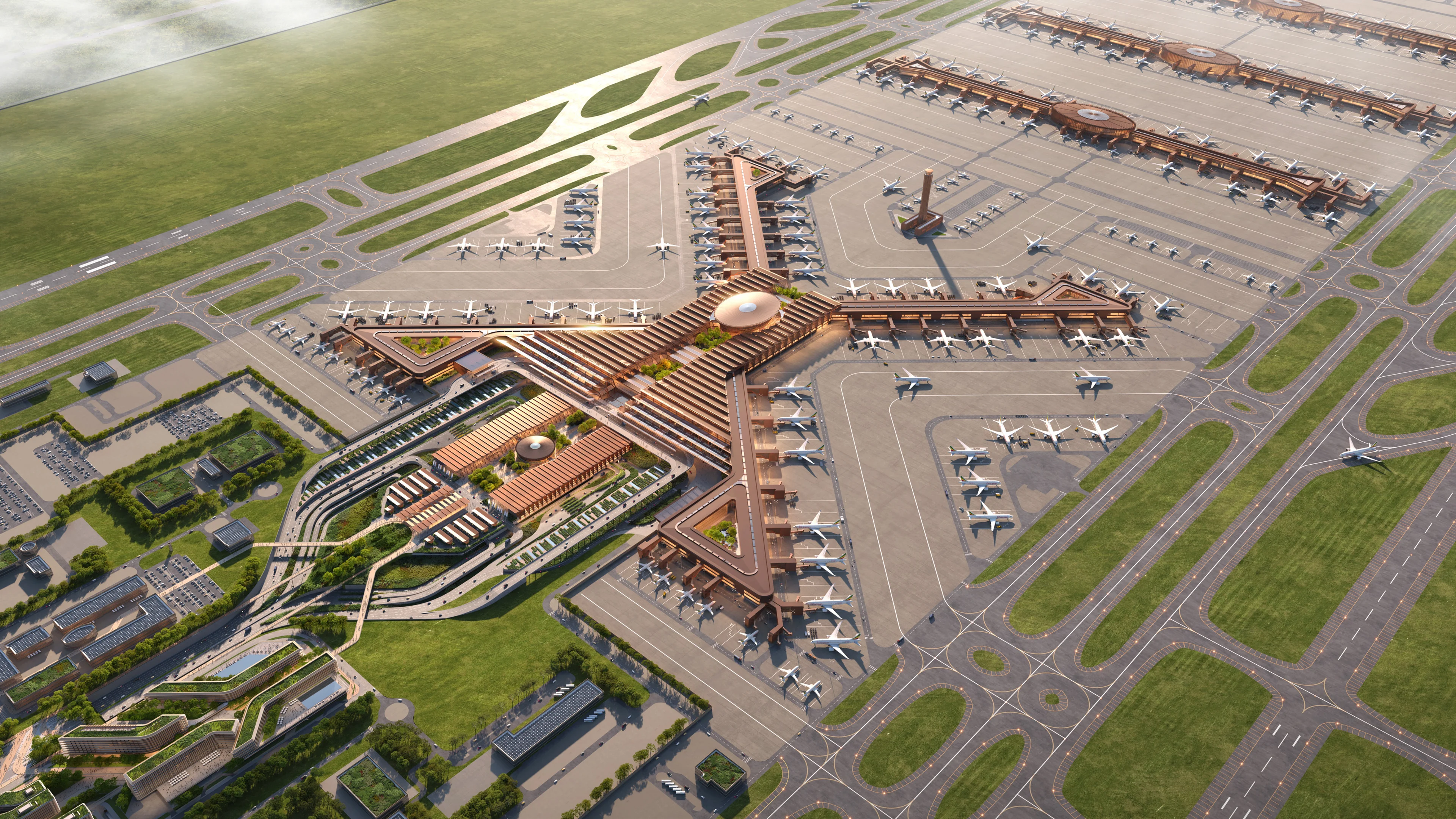
Phase One of the new Bishoftu International Airport (BIA) will serve 60 million passengers a year. Further phases will serve up to 110 million passengers annually with four runways and parking for 270 aircraft.
Photograph by Xue Liang 薛亮
Grand Canal Gateway Bridge
Grand Canal Gateway Bridge
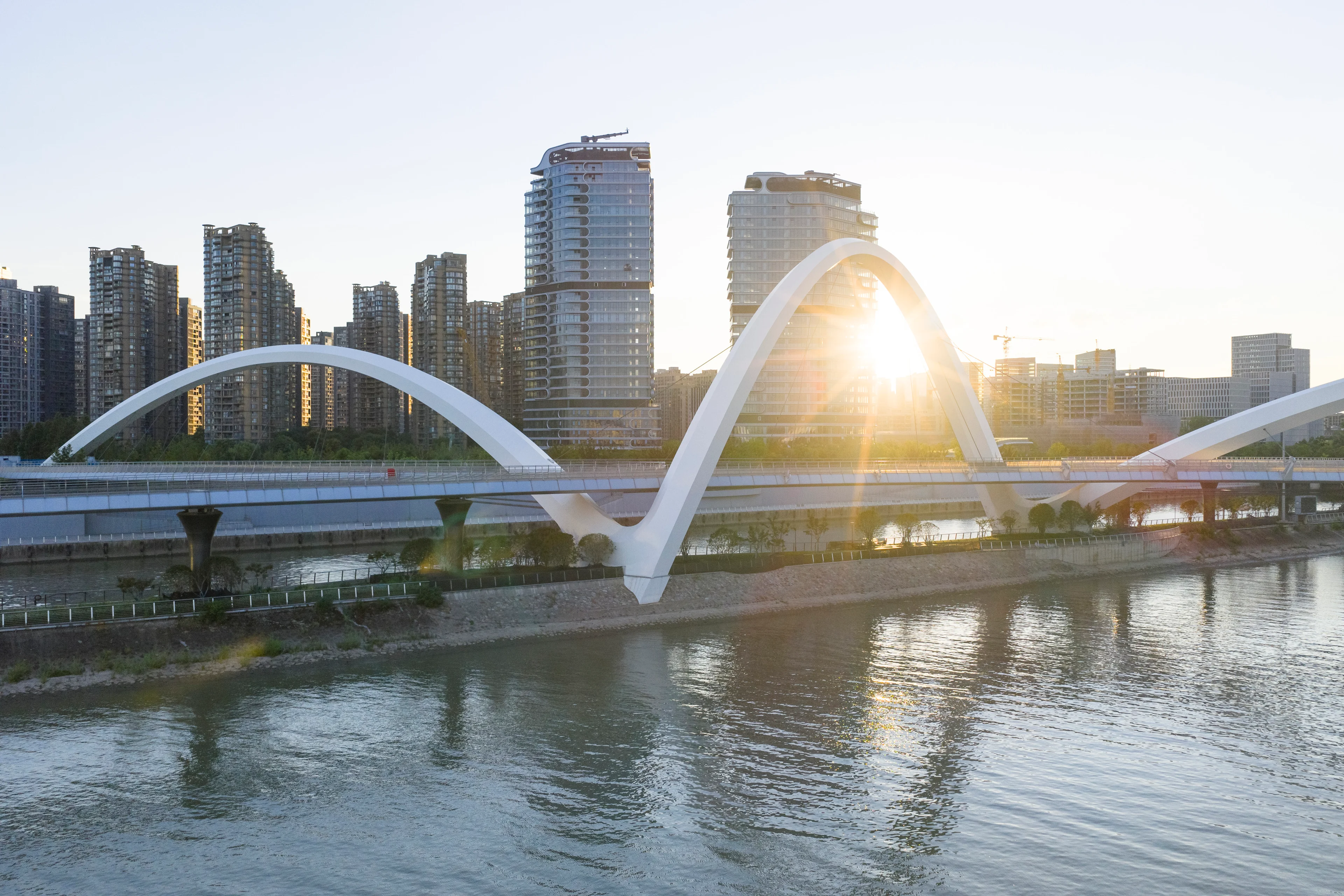
Uniting cultural heritage with 21st century engineering and recyclable materials, the Grand Canal Gateway Bridge is both sculptural and sustainable, designed for longevity with minimal environmental impact.
Vilnius Airport Terminal
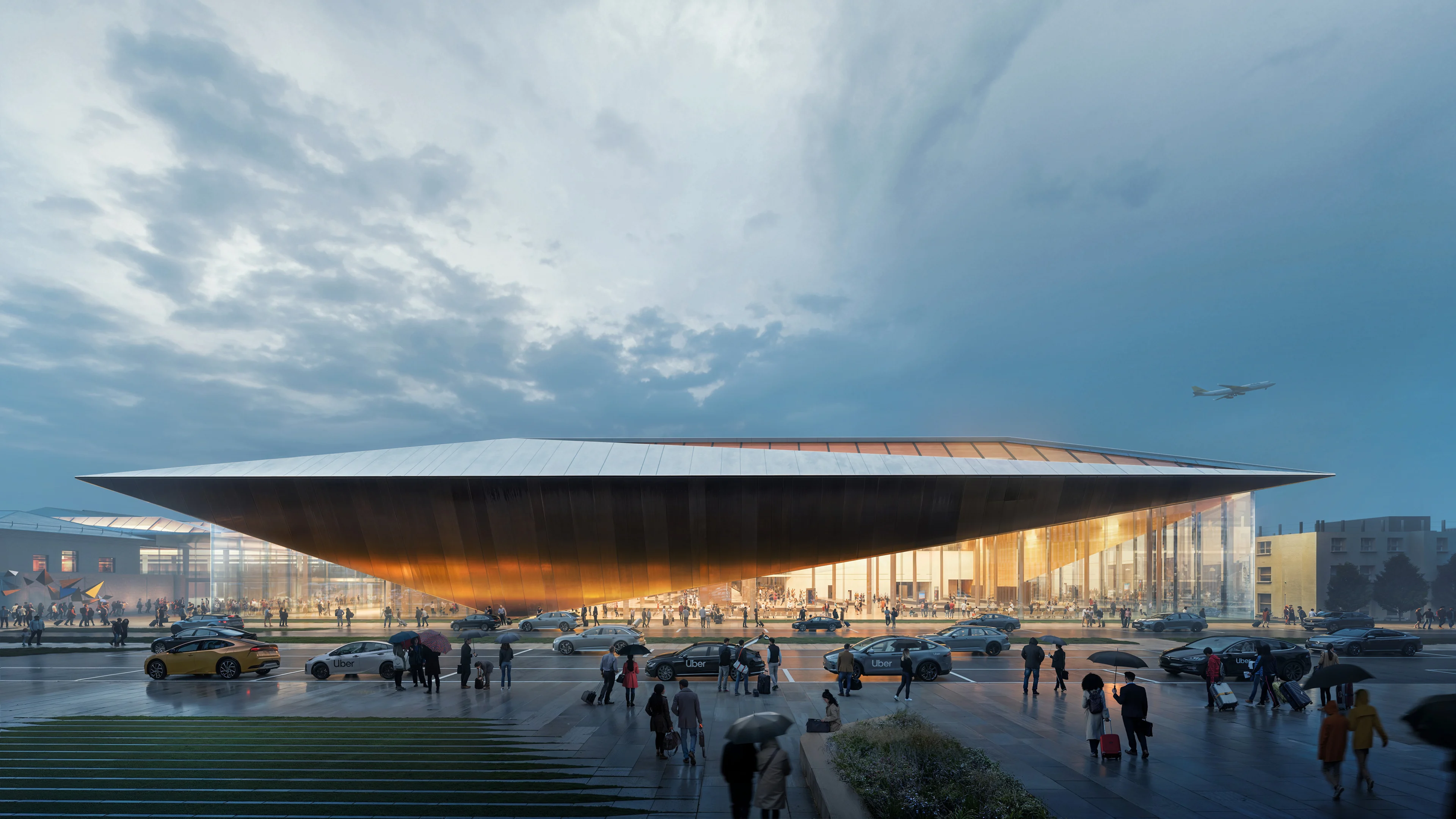
ZHA's design draws from Lithuanian cultural heritage, incorporating traditional motifs and art forms within a contemporary architectural language. The terminal's modular geometry originates from the rhombus, a triangular shape that holds significant meaning in Baltic folklore.
Napoli Porta Est
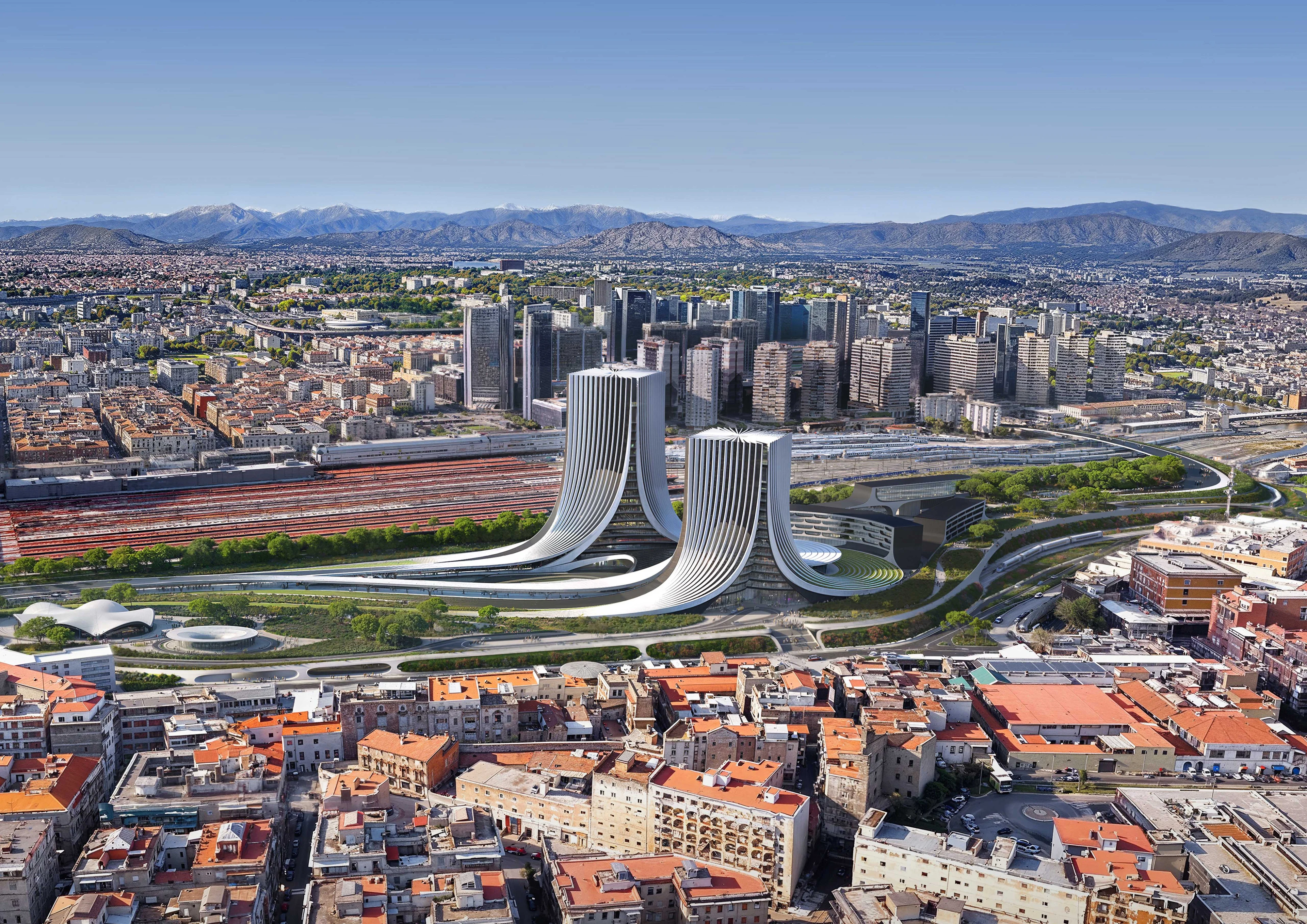
A large-scale urban regeneration project in Naples that reconnects the city’s fragmented urban fabric and incorporates the new Campania Region headquarters.
Render by Tecma Solutions
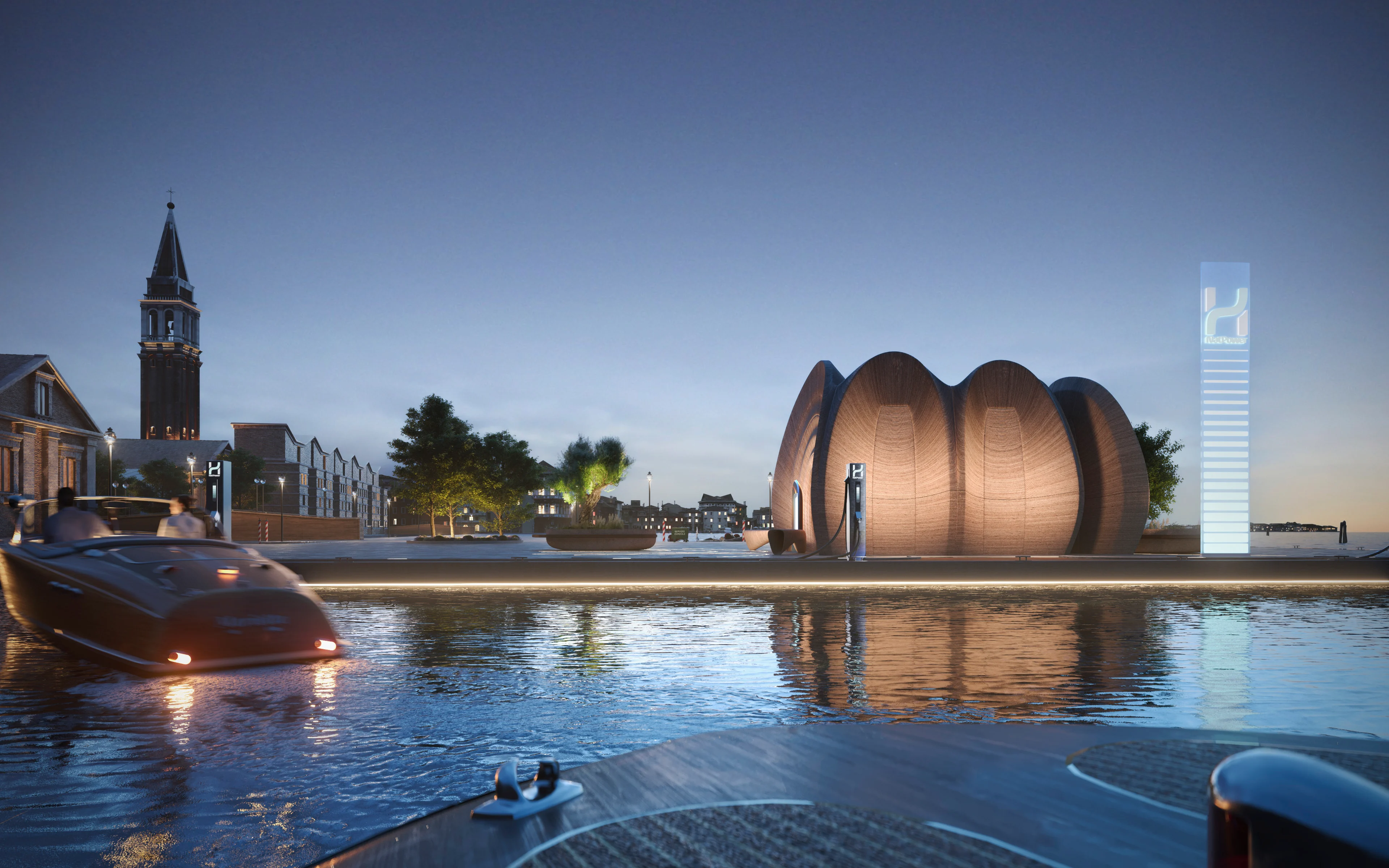
NatPowerH Hydrogen Refuelling Stations
The world’s first green hydrogen refuelling infrastructure for the recreational boating industry will be initiated in 25 Italian marinas and ports with stations designed by ZHA.
Render by Negativ
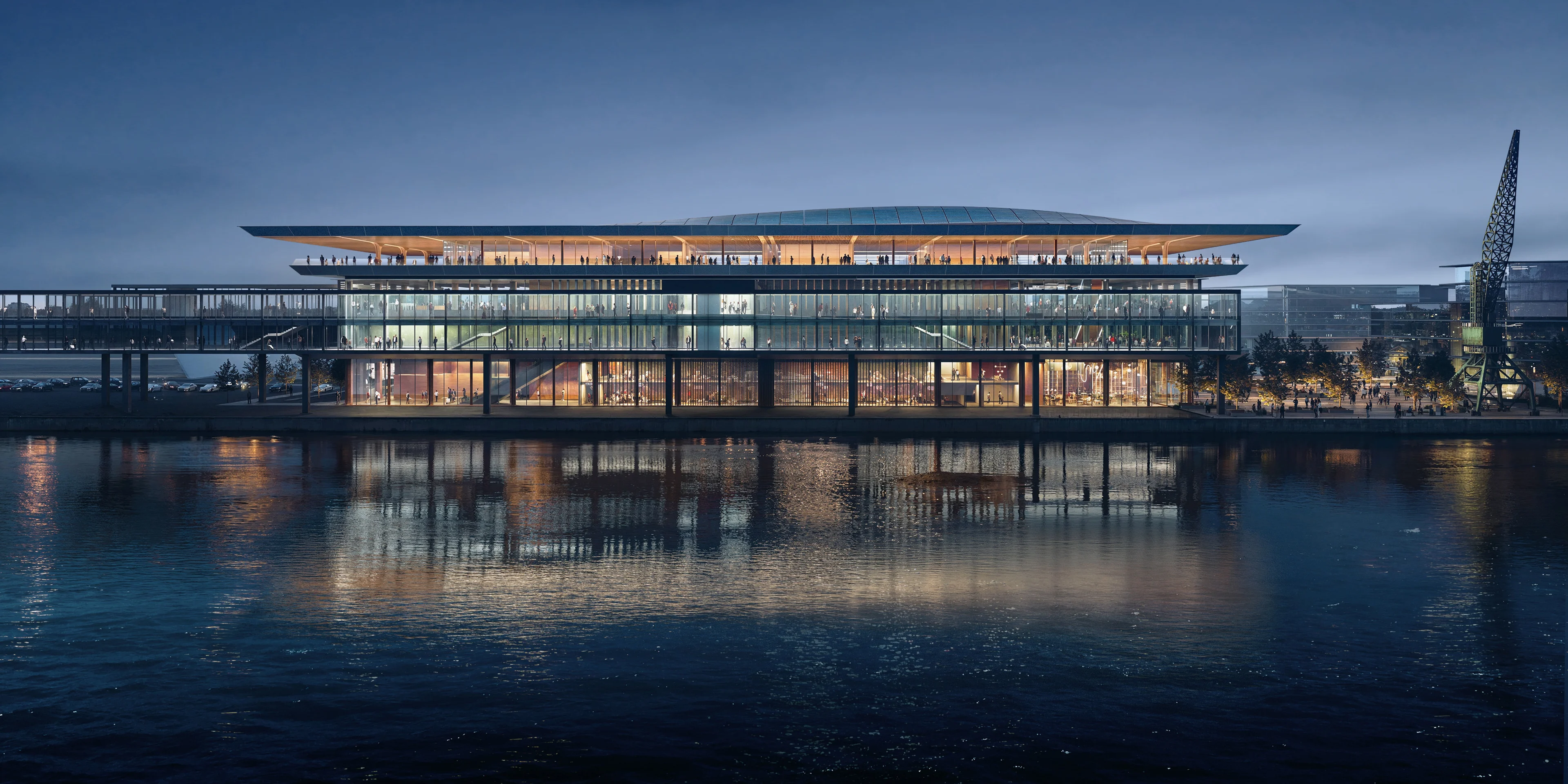
Ropax Ferry Terminal
Repurposing an existing shipping warehouse built in 1960 into a new 20,000 sq. m ferry and cruise ship terminal, ZHA’s design adds a fourth level to the structure to incorporate public terraces with panoramic views of the Daugava River and the skyline of Riga’s city centre, a designated UNESCO World Heritage Site.
Photograph by Fernando Guerra
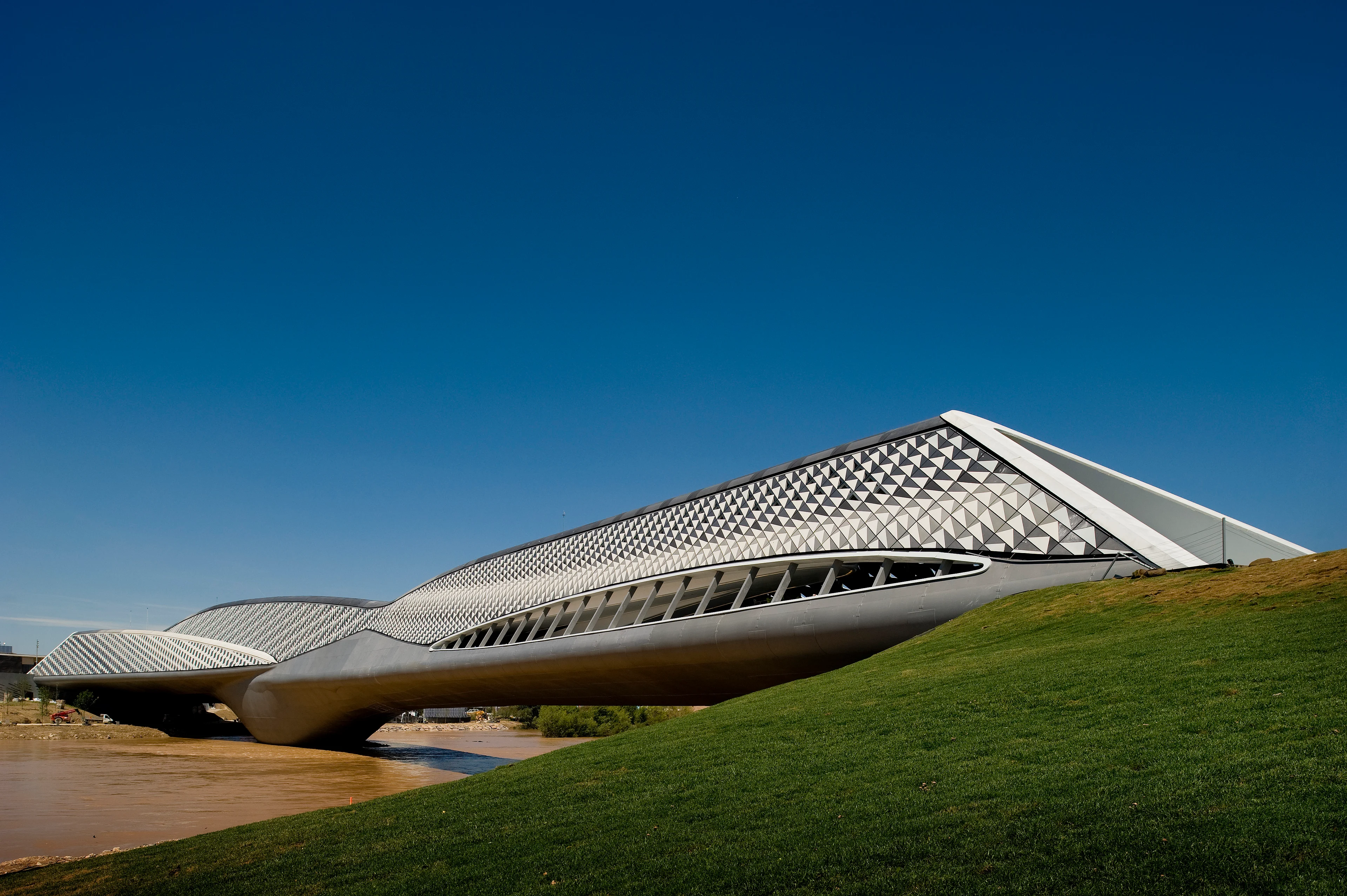
Zaragoza Bridge Pavilion
An enclosed interactive space spanning the River Ebro to form a gateway to the Zaragoza Expo 2008, a hybrid of pedestrian footbridge and exhibition pavilion. Four structural elements correspond to specific spatial enclosures, which intersect and brace each other. This fluid, dynamic design interprets the Expo’s theme: ‘Water and Sustainable Development.’
Photograph by Xue Liang 薛亮
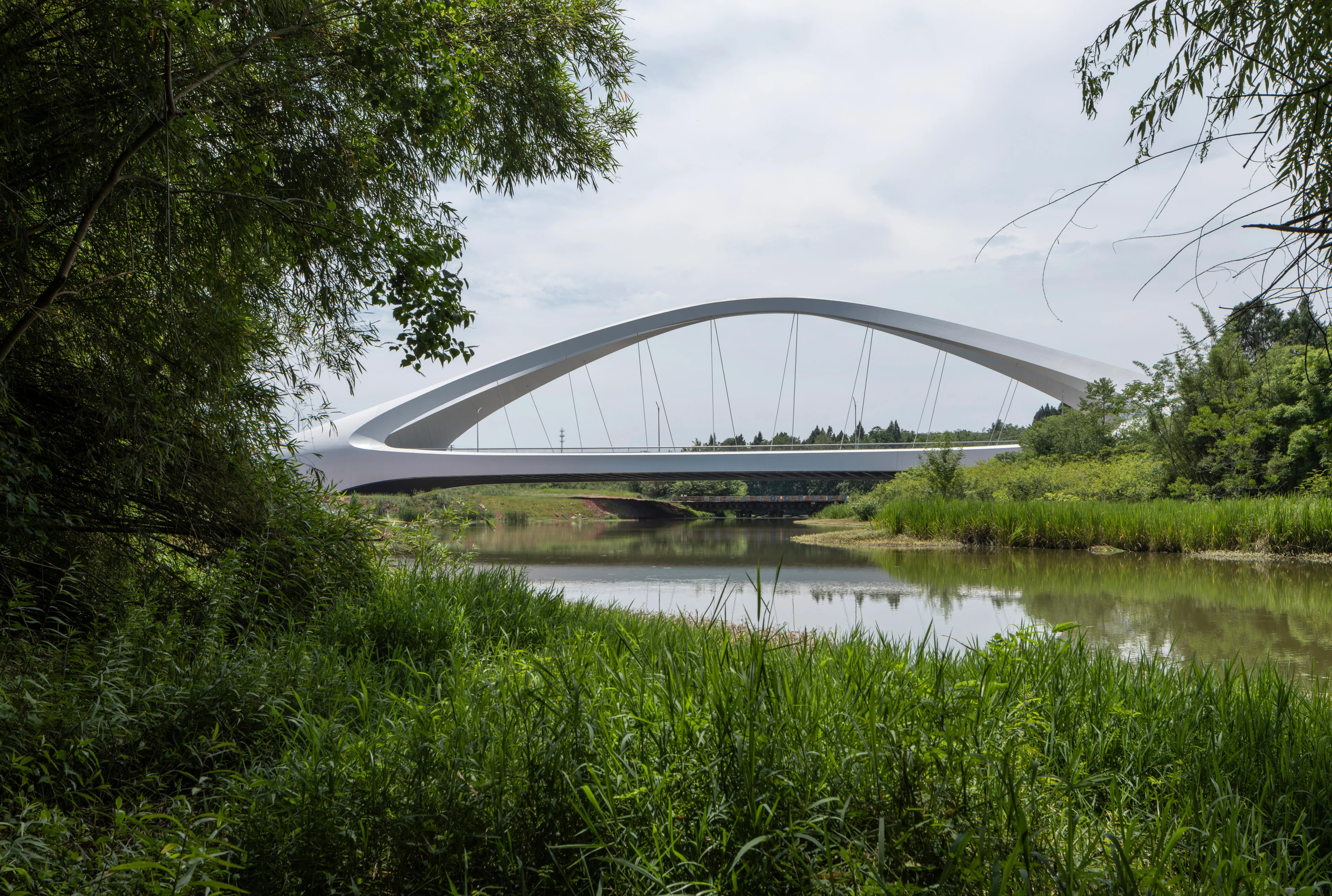
Jiangxi River Bridge
Jiangxi River Bridge
The first in a series of bridges on Chengdu’s West Line Road, the new 295-metre Chengdu West First Bridge crosses the Jiangxi River, a tributary of the Tuojiang River in China’s Sichuan province.
Render by Atchain, courtesy of ZHA
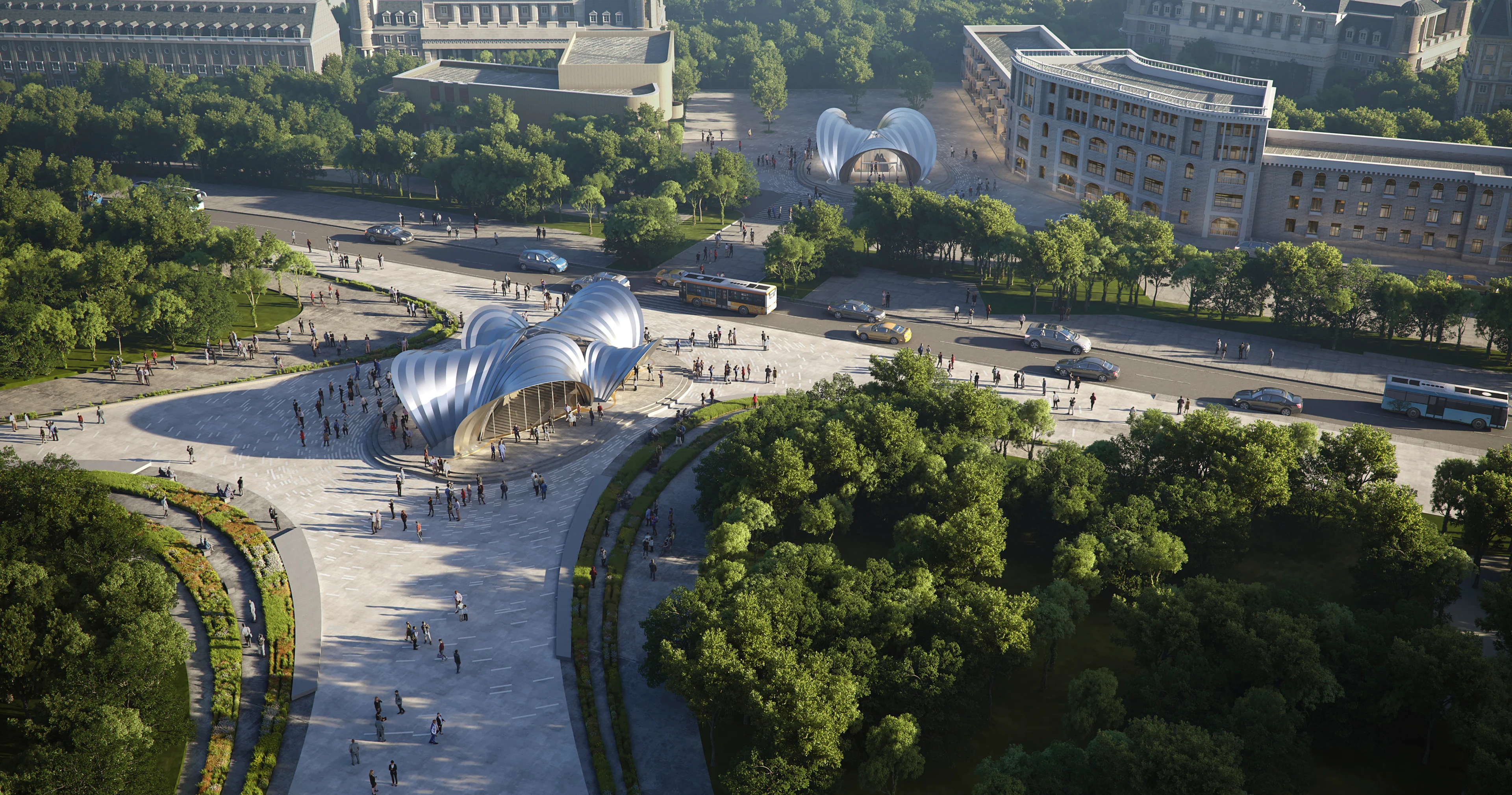
Dnipro Metro Stations
The three new stations (Teatralna, Tsentralna and Muzeina) designed by ZHA will connect the residents, businesses, cultural and academic institutions in Dnipro’s eastern districts with the city centre and the Dnipro-Holovnyi railway terminus.
Courtesy of ZHA, render by Negativ
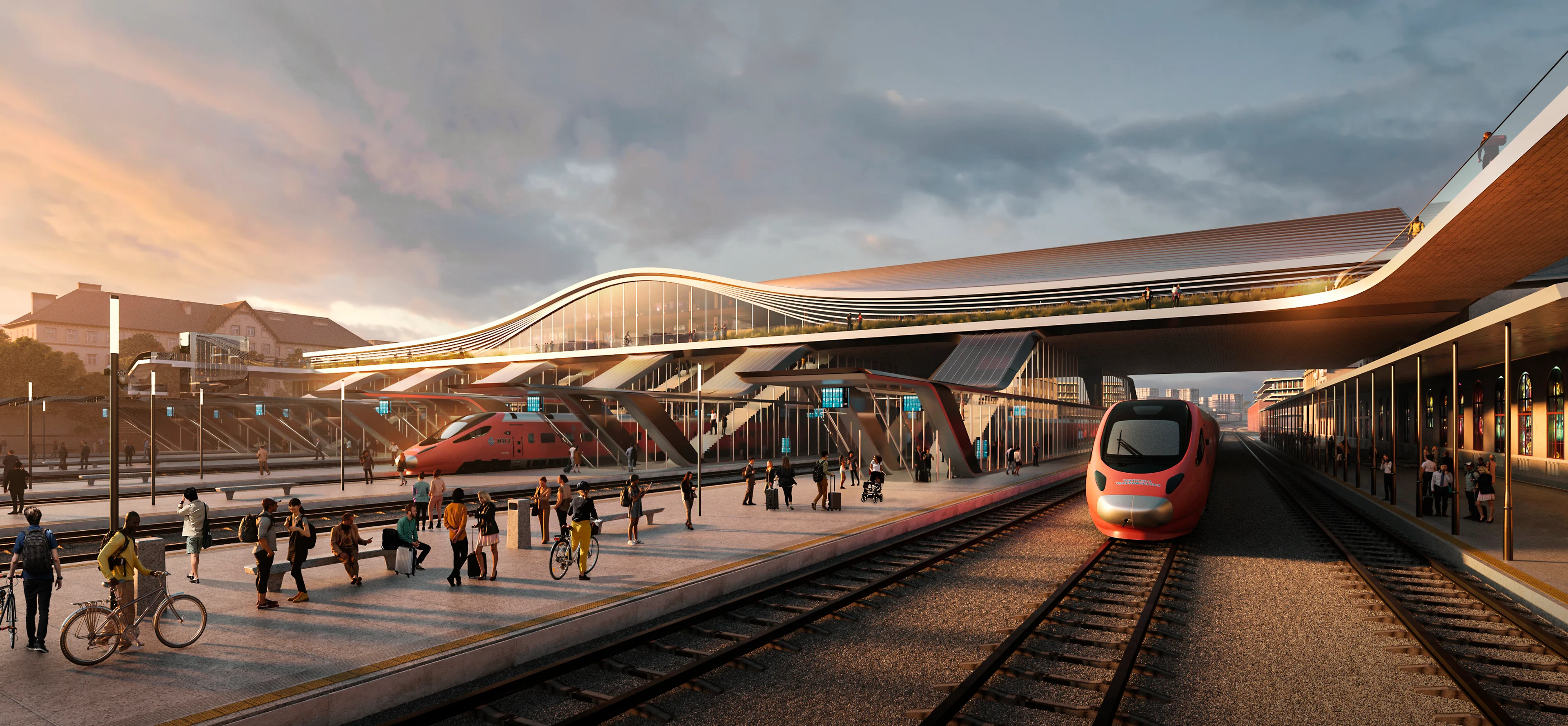
Vilnius Railway Station
ZHA’s ‘Green Connect’ proposal for Vilnius Railway Station creates an integrated transportation hub for the 21st century with new civic spaces enveloped by nature
Photograph by Werner Huthmacher
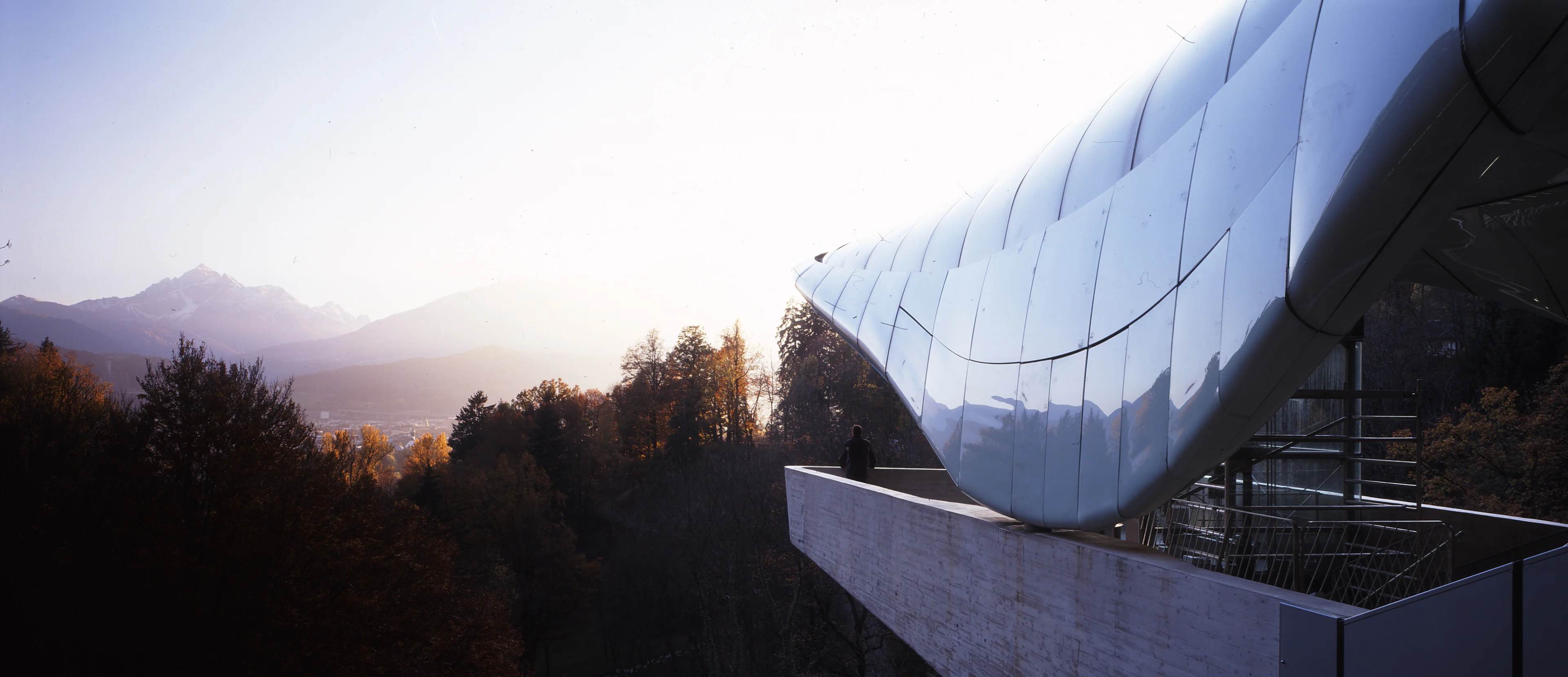
Alpenzoo Station
Nordpark Cable Railway Stations
‘Shell & Shadow’: a unique architectural language of fluidity inspired by natural ice formations, for stations along Innsbruck’s northern chain of mountains. Lightweight organic roof structures float on concrete plinths, their soft shapes and contours creating an artificial landscape that describes the movement and circulation within.
Photograph by Hufton + Crow
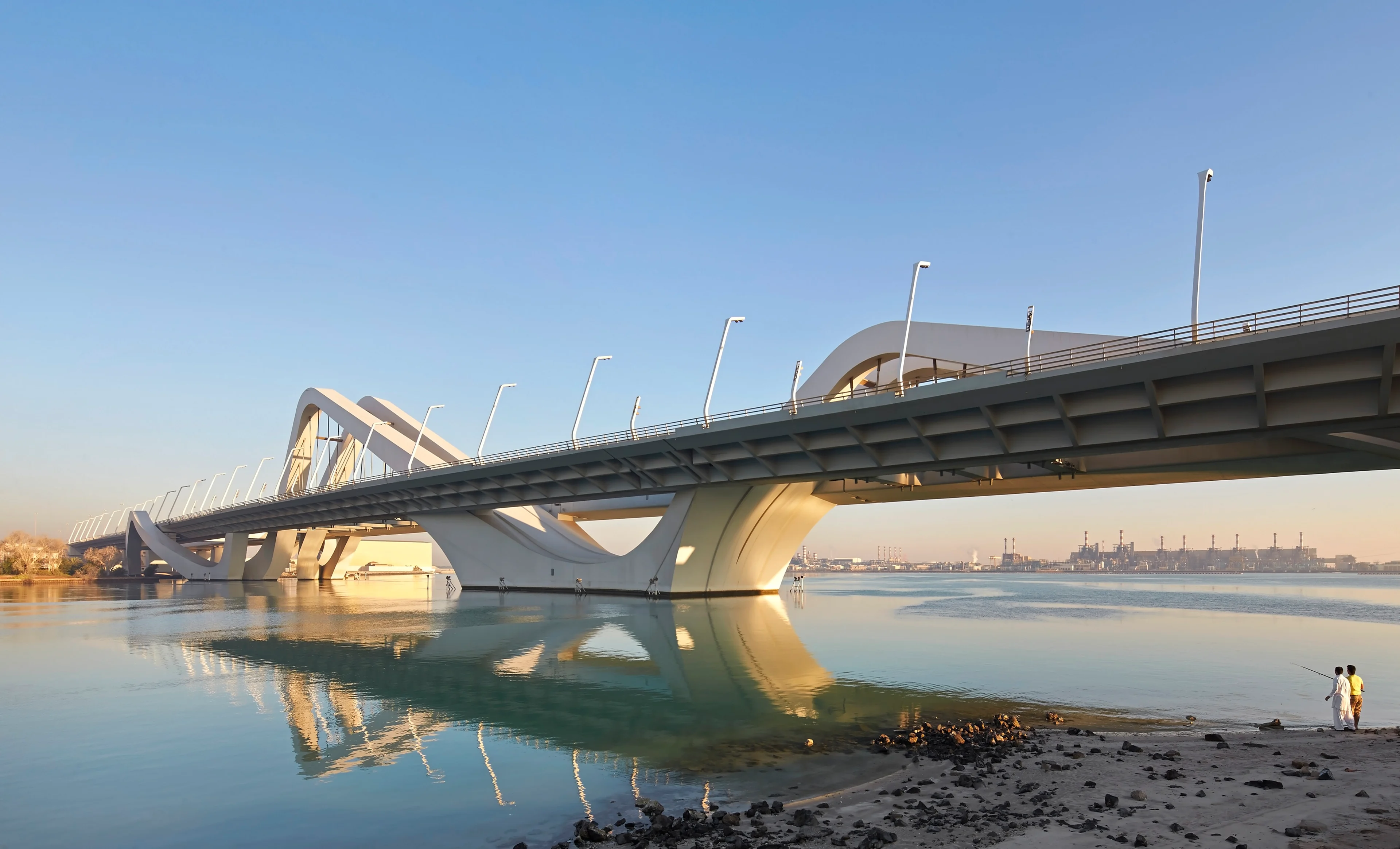
Sheikh Zayed Bridge
Design and construction of a third gateway crossing linking Abu Dhabi Island to the Gulf south shore. Our two-way four lane highway bridge features cantilevered road decks suspended from symmetrical steel arches, which form a sinusoidal waveform – giving this huge structure its fluid silhouette.
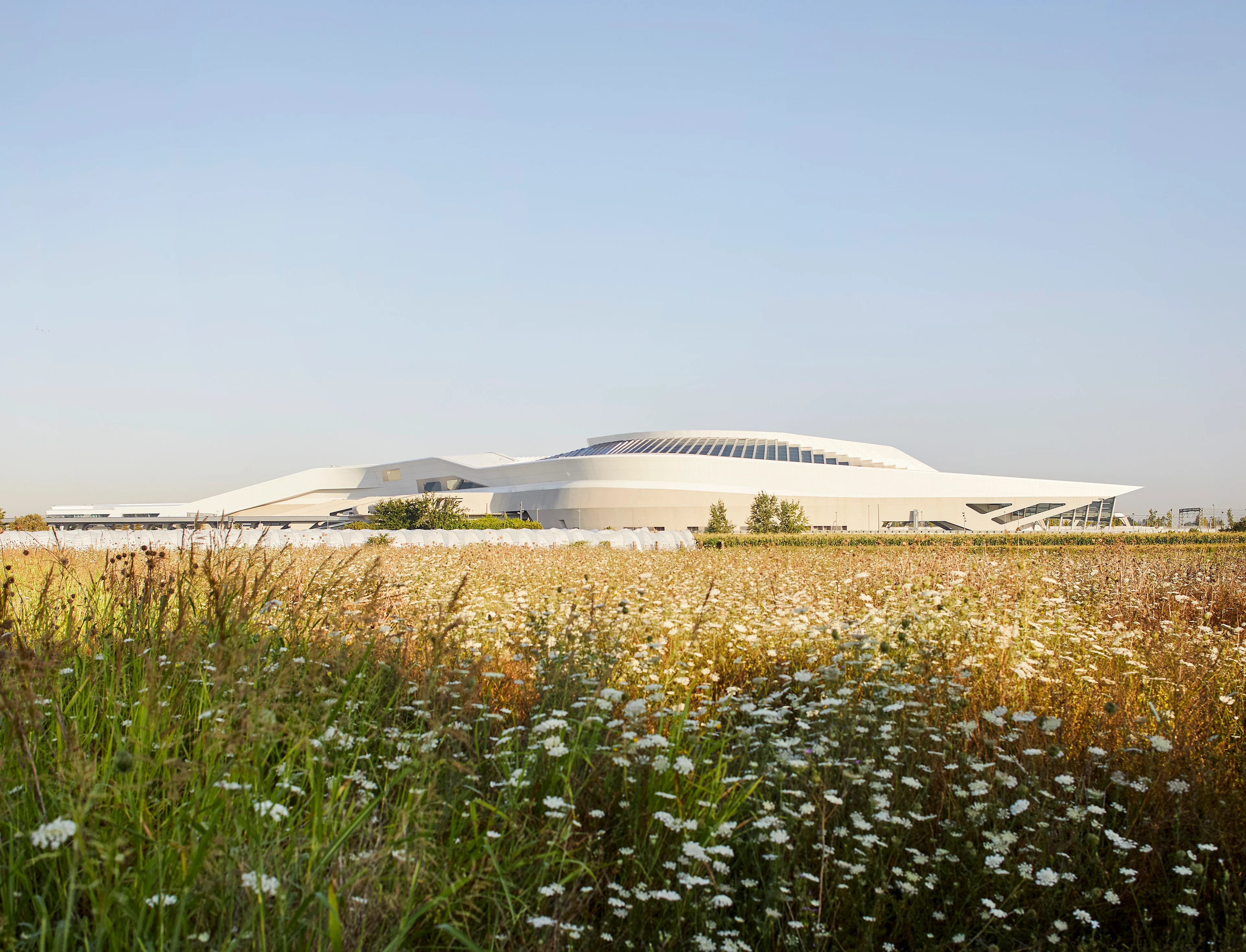
Photograph by Hufton + Crow
Napoli-Afragola High Speed Train Station
The new rail station at Napoli Afragola is designed as one of southern Italy’s key interchange stations serving four high speed inter-city lines, three inter-regional lines and a local commuter line.
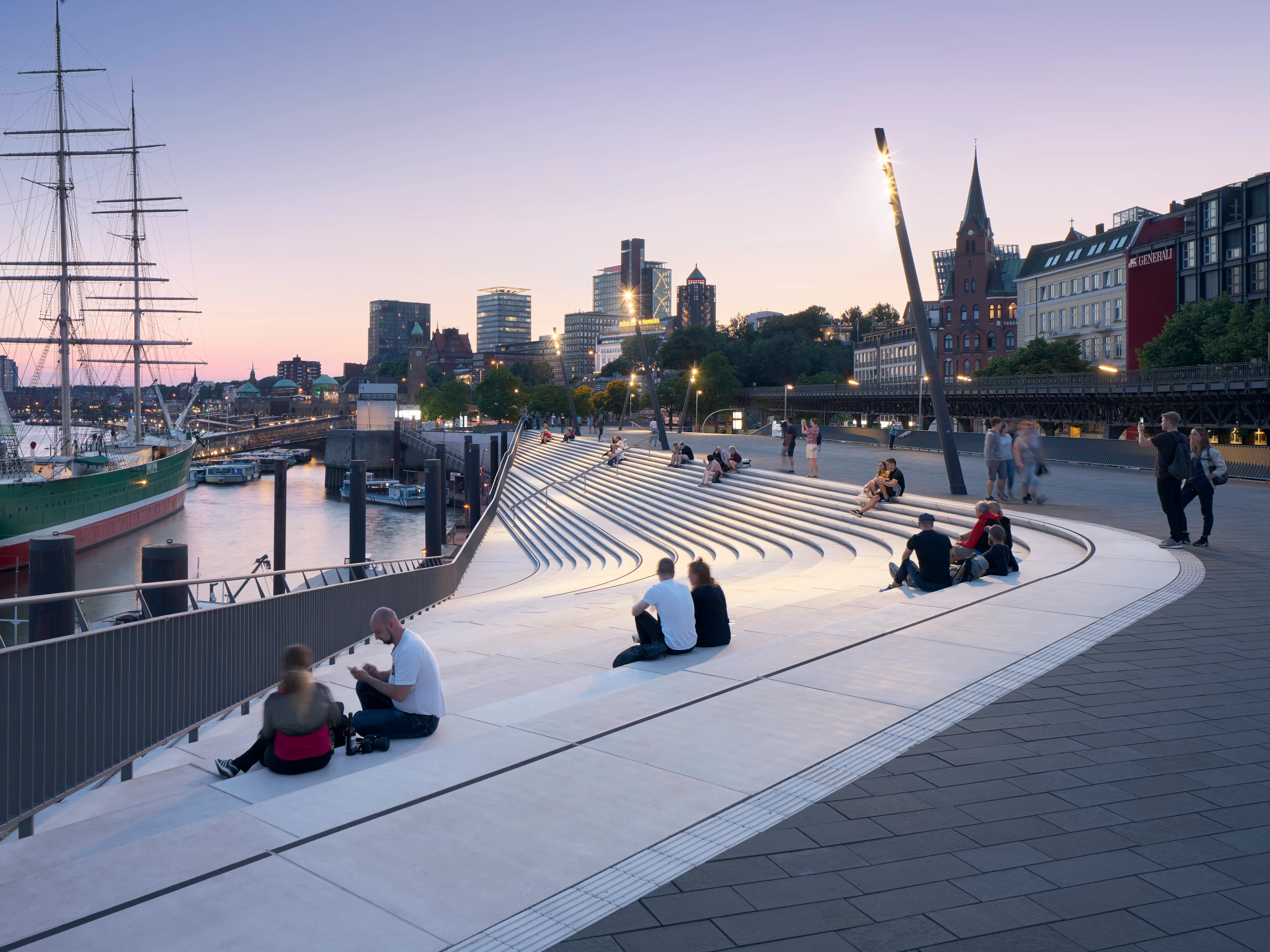
Photograph by Piet Niemann
Niederhafen River Promenade
Located at Niederhafen on the Elbe River between St. Pauli Landungsbrücken and Baumwall in Hamburg, the upgraded 625m river promenade is integral to the modernisation and reinforcement of the city’s flood protection system.
01
02
03
04
05
06
07
08
09
10
11
12
13
14
15