
Photograph by Iwan Baan
Hong Kong, China
2007 - 2014
The Hong Kong Polytechnic University (PolyU)
Jockey Club Innovation Tower
Photograph by Virgile Simon Bertrand
Photograph by Iwan Baan
Photograph by Iwan Baan
01
02
03
04
Enriching the diversity of university life
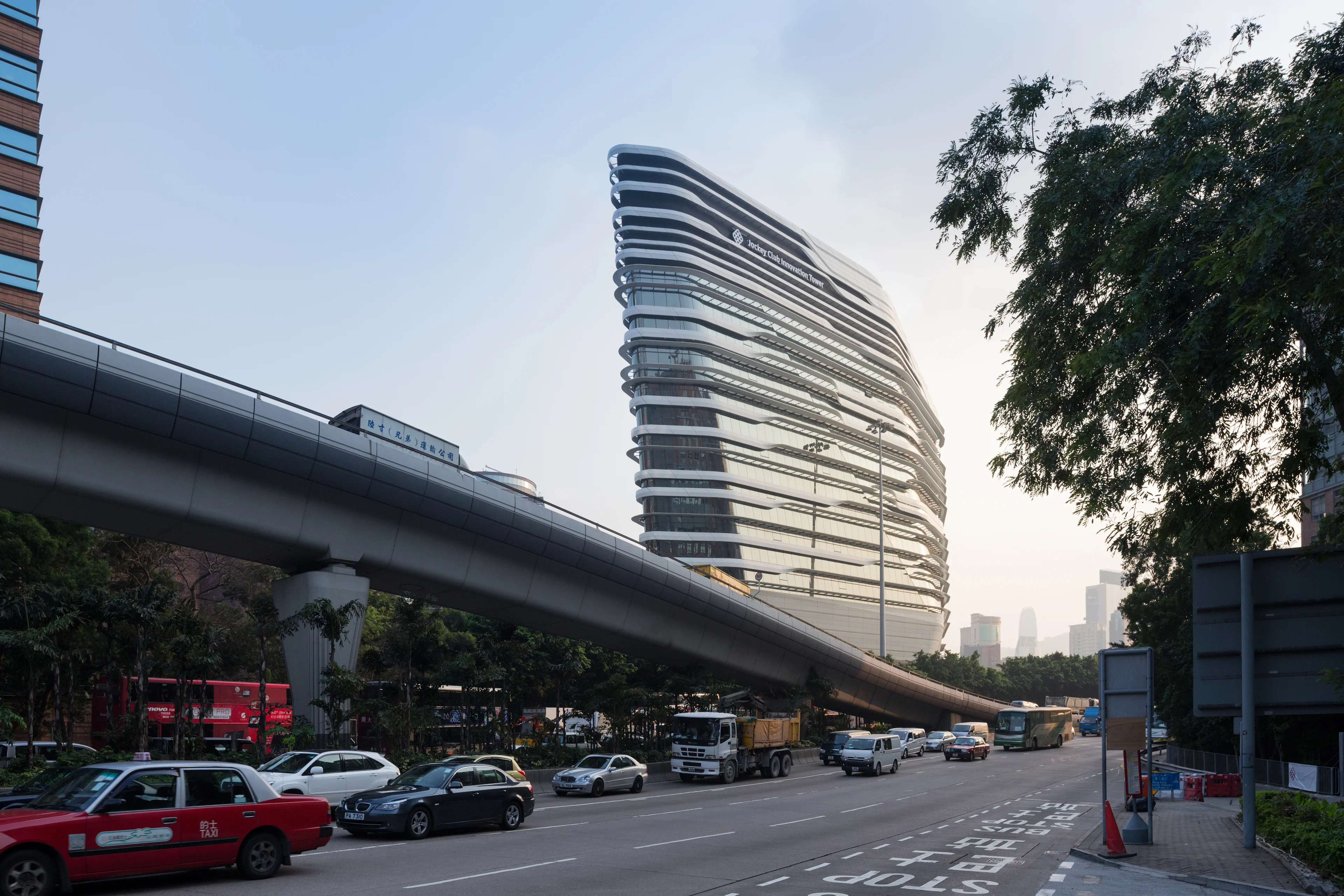
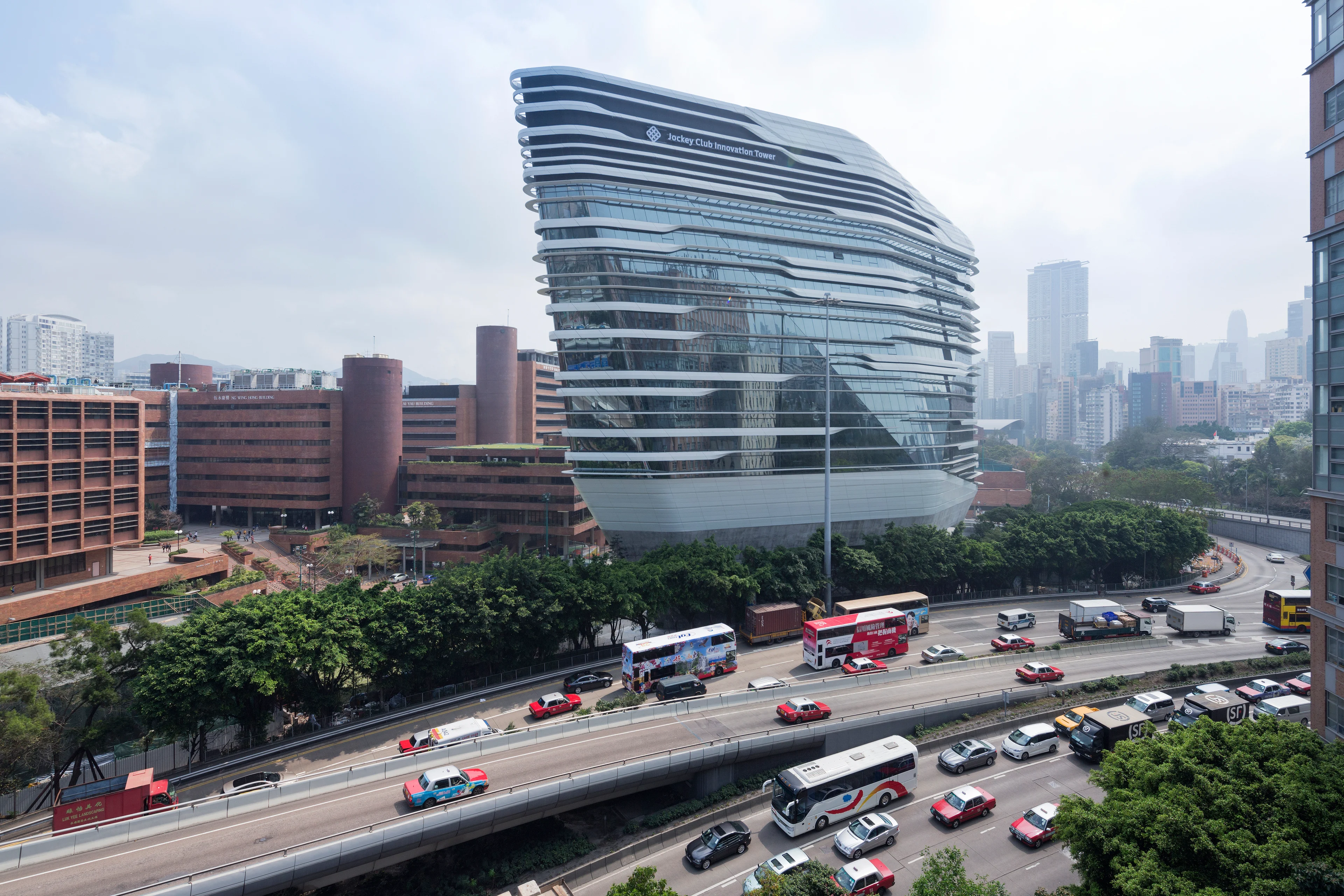
The Jockey Club Innovation Tower (JCIT) is home to the Hong Kong Polytechnic University (PolyU) School of Design, and the Jockey Club Design Institute for Social Innovation.
The 15-storey, 15,000m2 tower accommodates more than 1,800 students and staff, with facilities for design education and innovation that include: design studios, labs and workshops, exhibition areas, multi-functional classrooms, lecture theatre and communal lounge.
The Hong Kong Polytechnic University campus has developed its urban fabric over the last 50 years with the university’s many faculties housed in visually coherent, yet very different buildings. The JCIT creates a new urban space that enriches the diversity of university life and expresses the dynamism of an institution looking to the future.
Photograph by Virgile Simon Bertrand
Connected to the heart of the campus
Located on a narrow, irregular site at the northeastern tip of the university campus (bordered by the university’s football ground to the south, and the Chatham Road/Kowloon Corridor motorway interchange to the north), the JCIT is connected to the heart of the campus; encouraging the university’s various faculties and schools to develop multidisciplinary initiatives and engagement with the community, government, industry, NGO’s and academia.
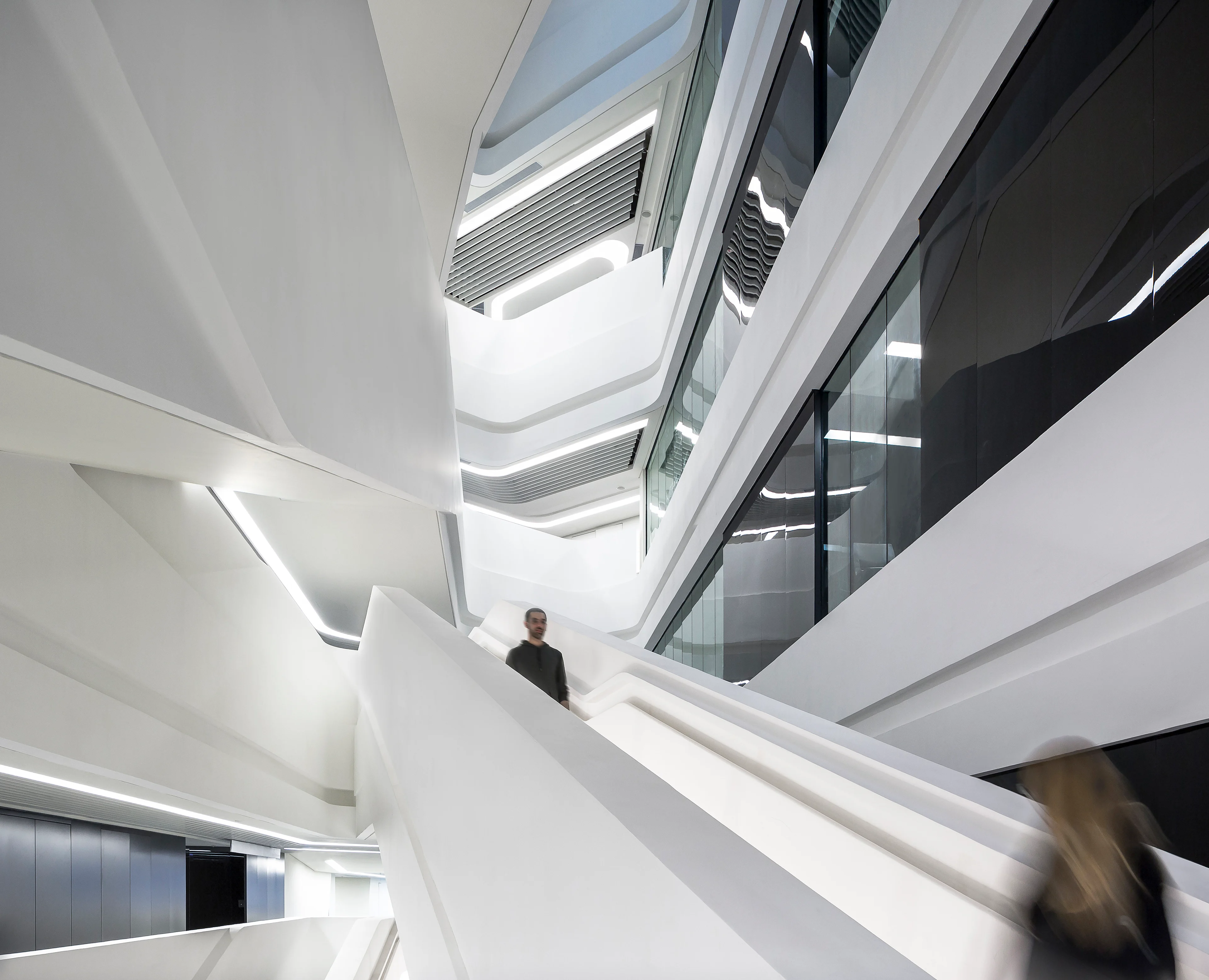
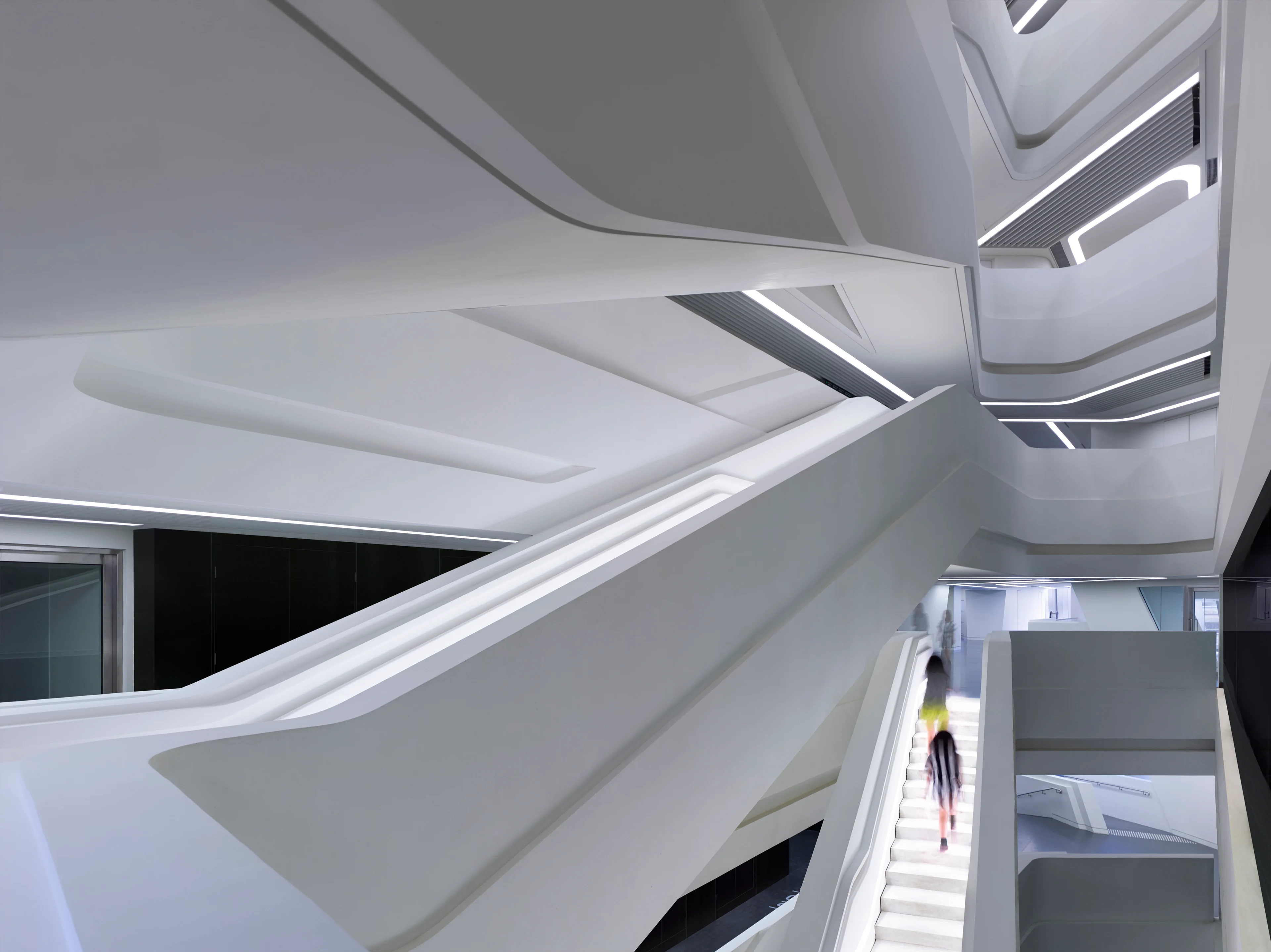
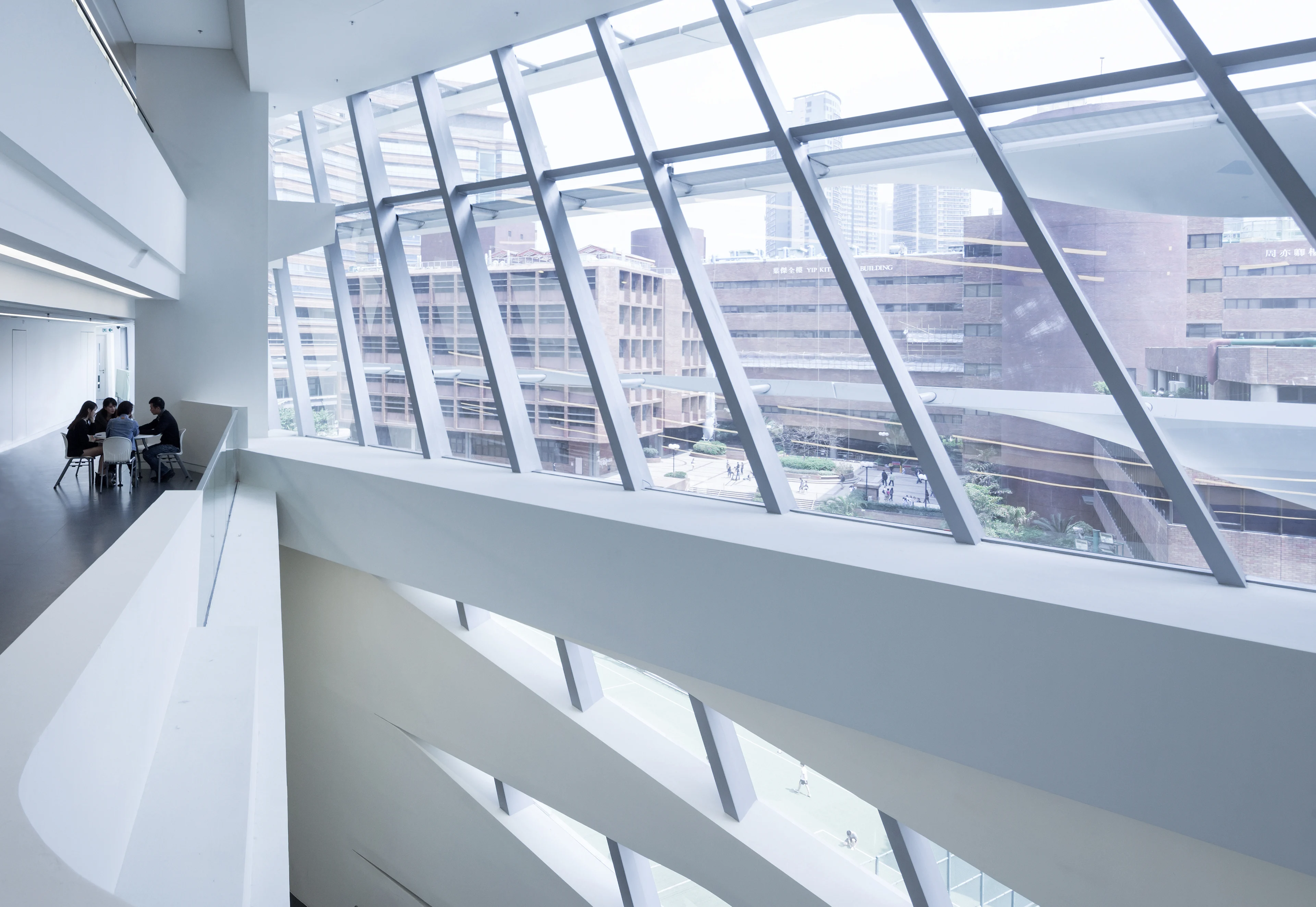
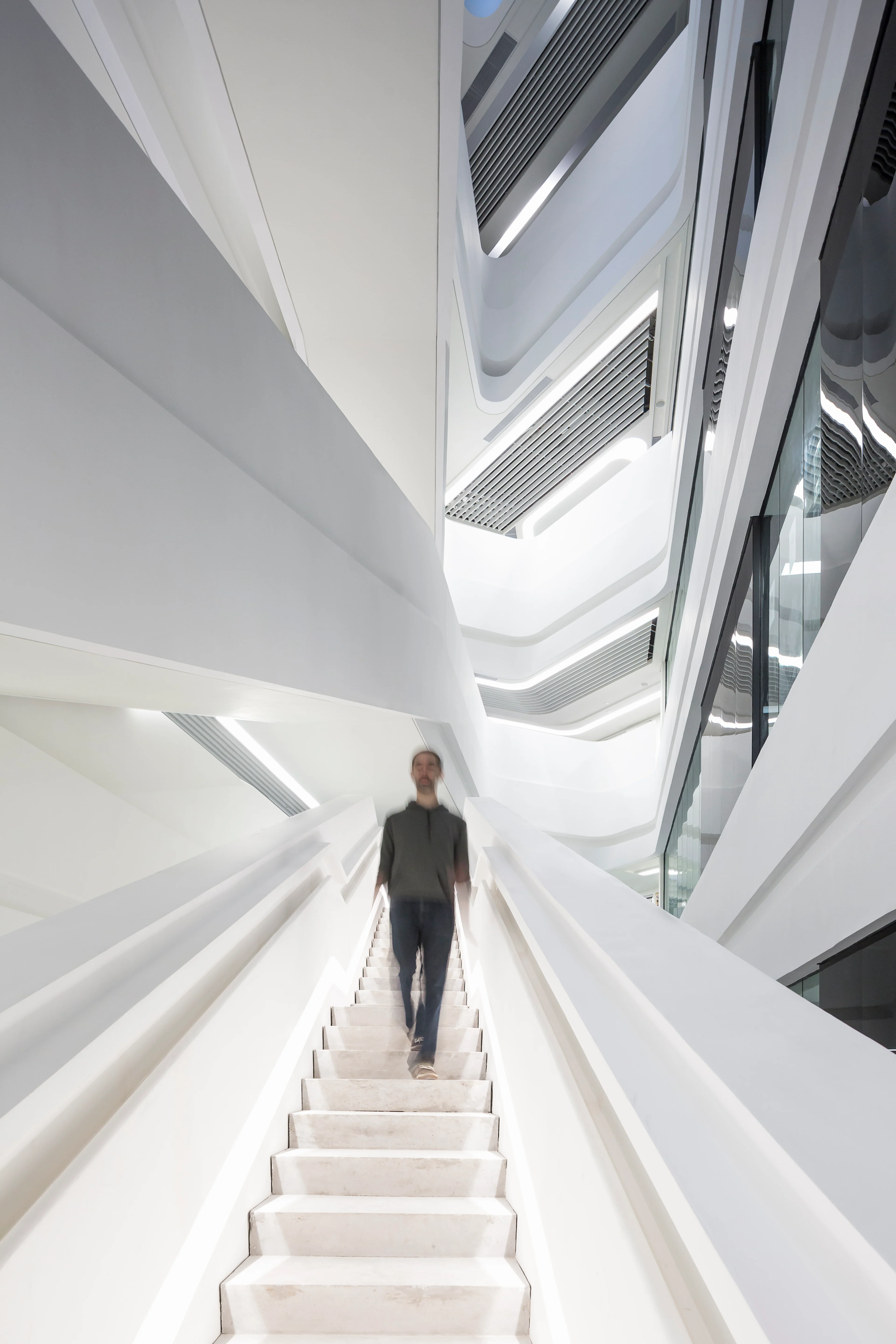
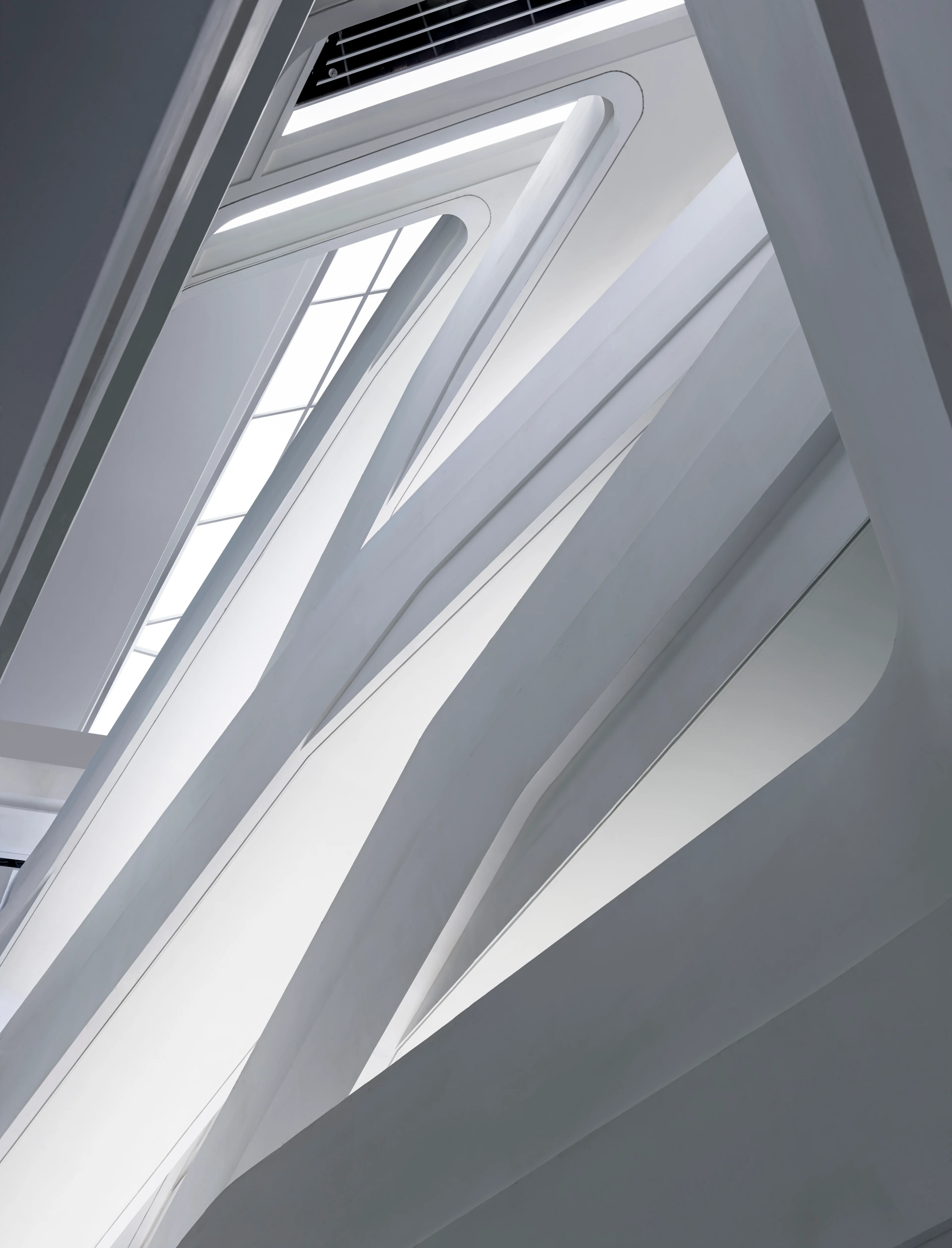
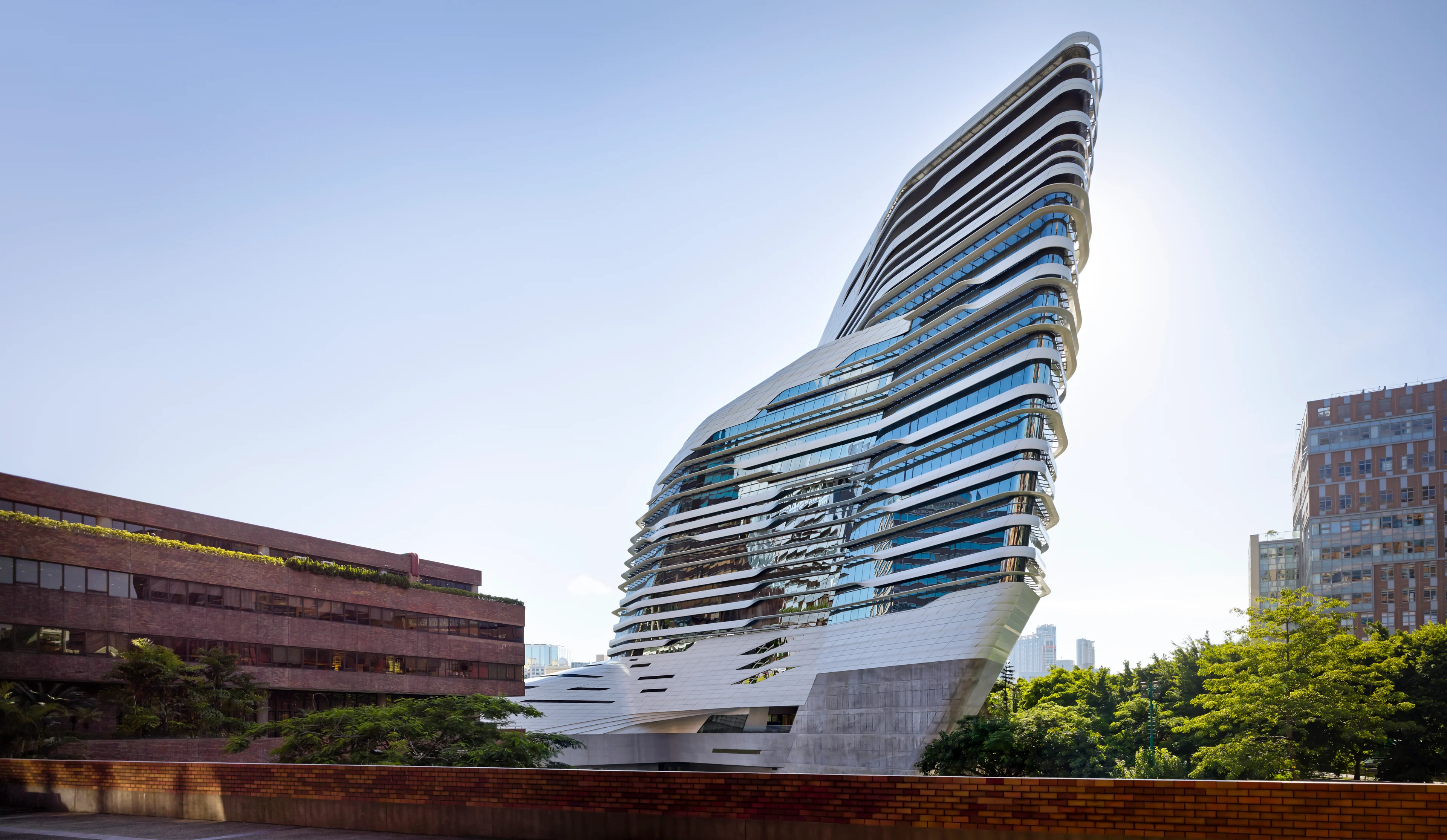
The JCIT design dissolves the typical typology of the tower/podium into a more fluid composition. Interior and exterior courtyards create informal spaces to meet and interact, complementing the large exhibition forums, studios, theatre and recreational facilities
Promoting a multidisciplinary environment
The tower’s design promotes a multidisciplinary environment by connecting the variety of programs within the School of Design; establishing a collective research culture where many contributions and innovations can feed off each other.
Students, staff and visitors move through 15 levels of studios, workshops, labs, exhibition and event areas within the school. Interior glazing and voids bring transparency and connectivity, while circulation routes and communal spaces have been arranged to encourage interaction between the many learning clusters and design disciplines.
With its contribution of HK$249 million towards the construction of JCIT, The Hong Kong Jockey Club Charities Trust also funds the Jockey Club Design Institute for Social Innovation.
Education
Explore more of our educational buildings
From an academy in London awarded the RIBA Stirling Prize to a 23,000 square metre international research centre in Uzbekistan, discover our education projects.
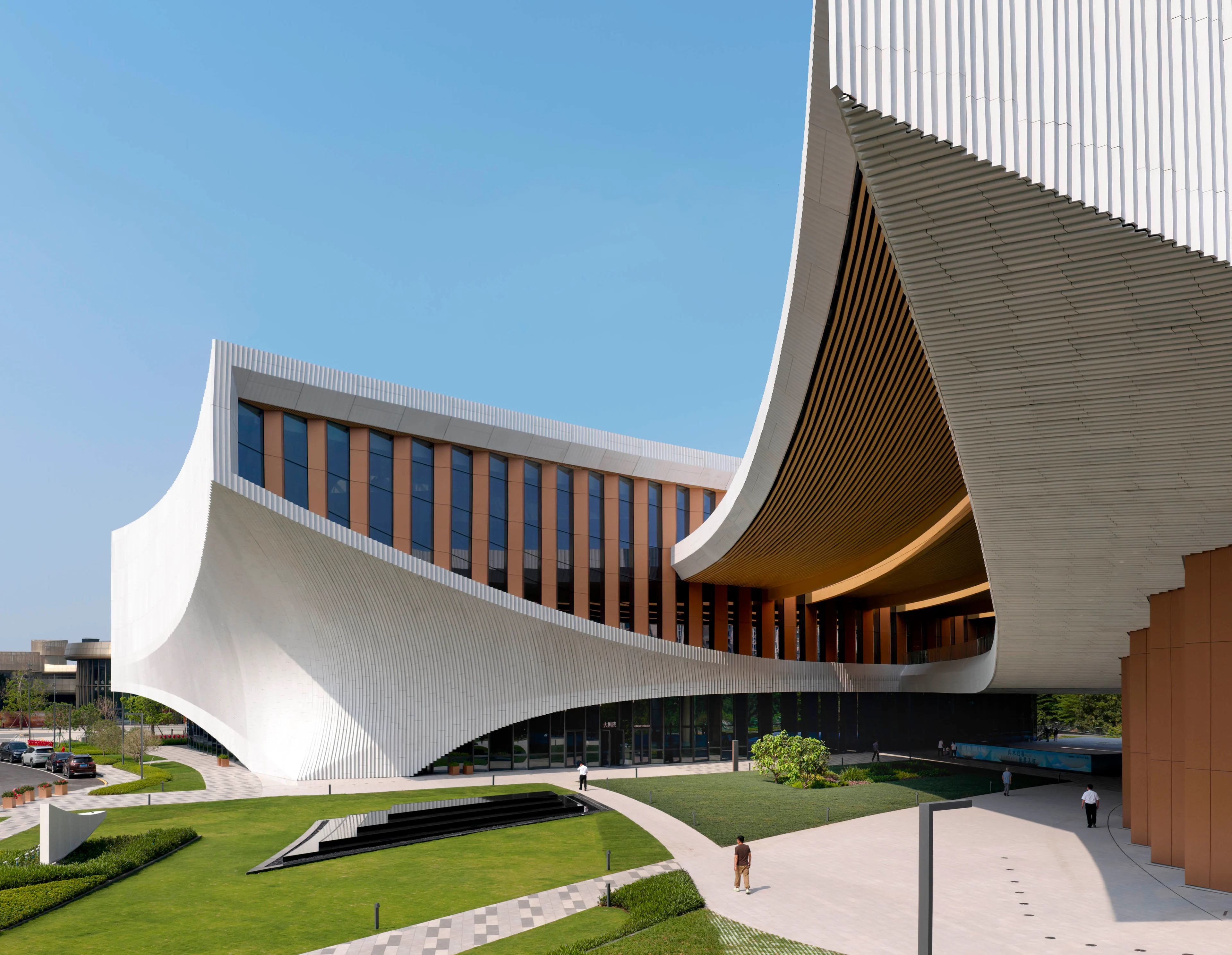
Songshan Lake Performance and Exhibition Centre
Located in Dongguan within the Greater Bay Area of southern China’s Pearl River estuary, the new Songshan Lake Exhibition and Performance Centre is at the heart of a mixed-use masterplan to revitalize the Yuehe Lake waterfront.
Courtesy of ZHA
River View
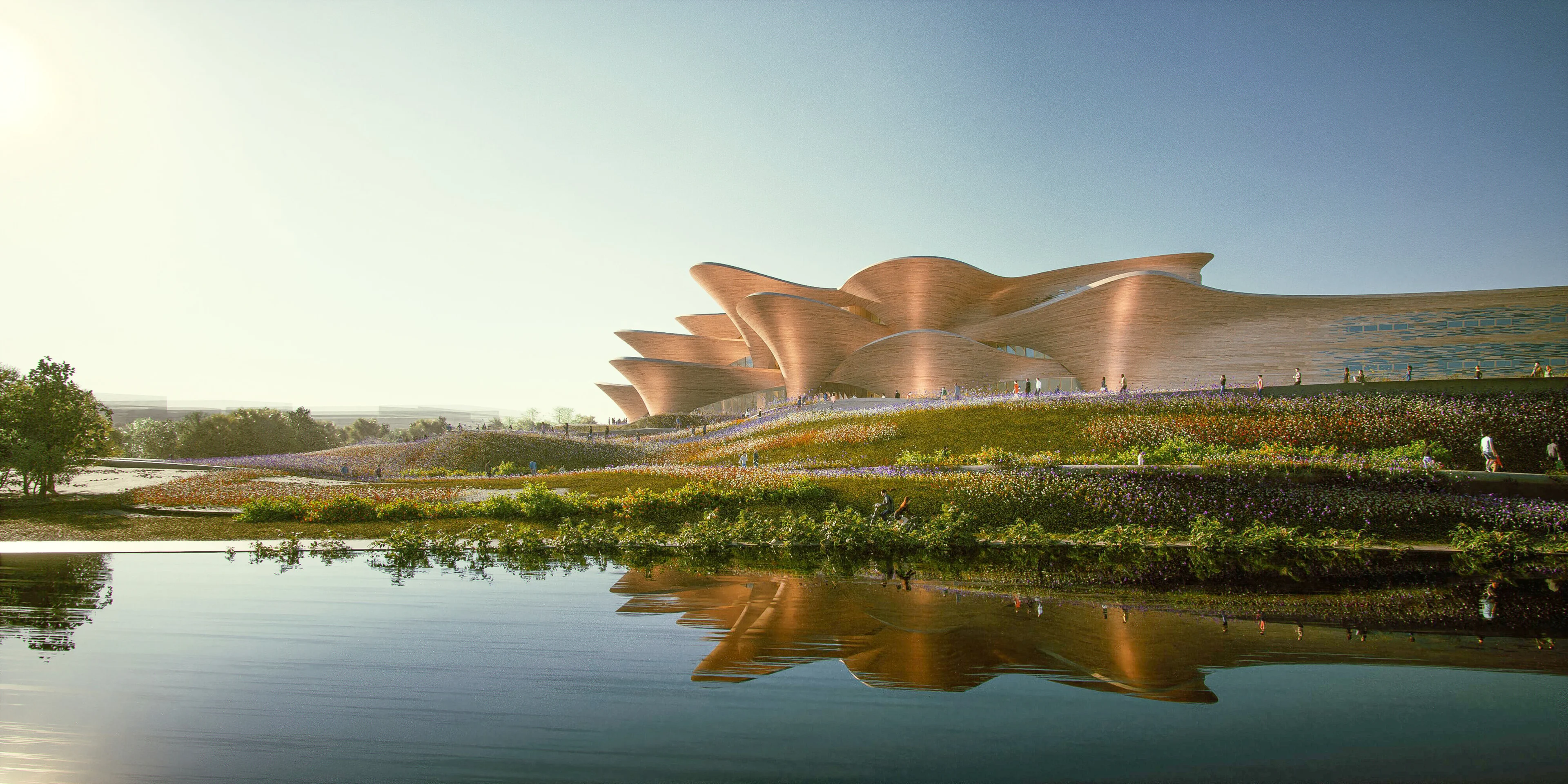
Alisher Navoi Institute
The Alisher Navoi International Scientific Research Centre will incorporate the Navoi State Museum of Literature, Auditorium, International Research Centre and School.
Render by Brick Visual
Roofline
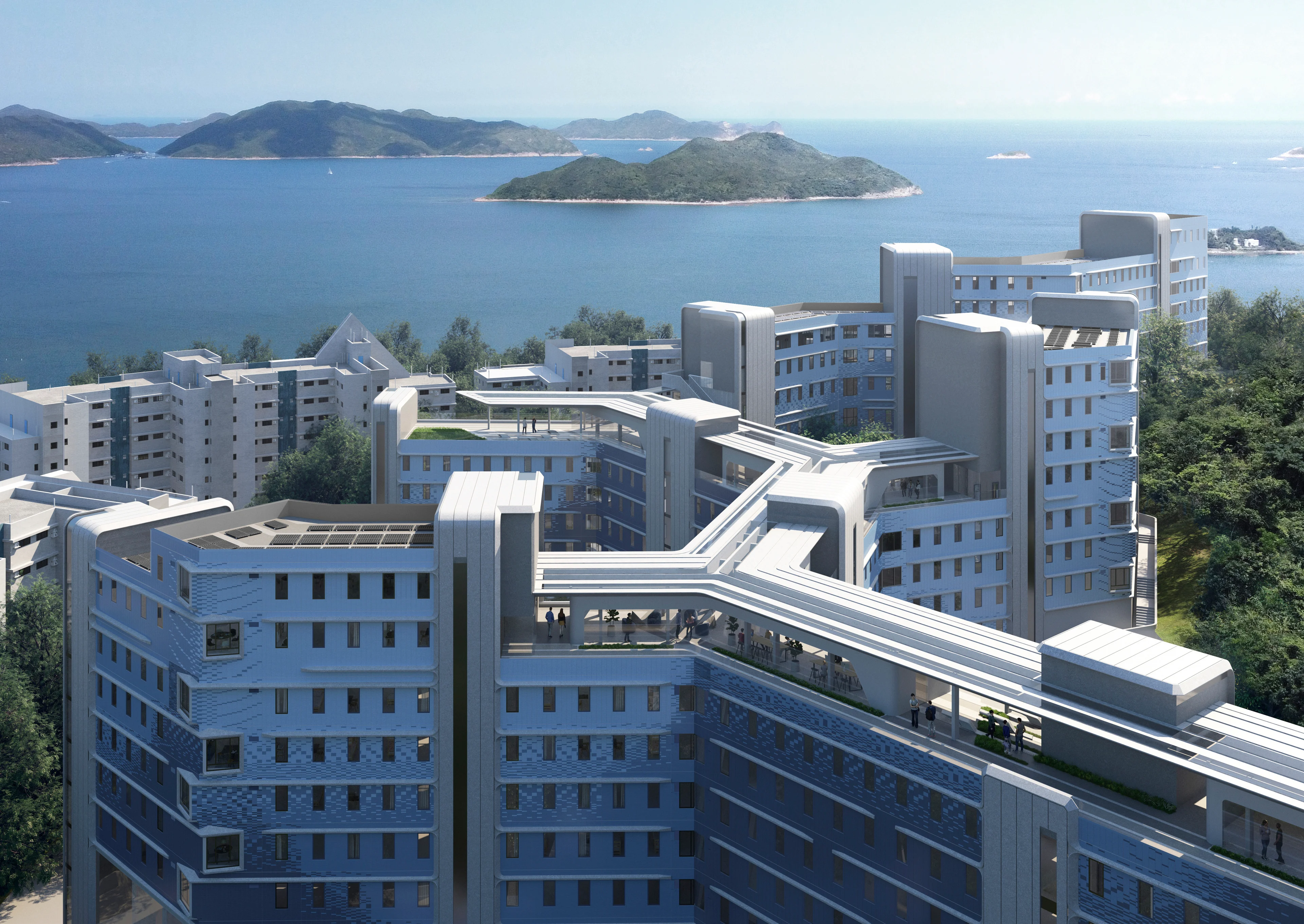
Jockey Club i-Village at HKUST
Established in 1991, Hong Kong University of Science & Technology (HKUST) has become a leading research institution consistently ranked amongst the best in Asia and around the globe. Over half of the university’s 16,000 students enrolled in the 2019-2020 academic year are from overseas, creating an urgent demand for new residential facilities within its Clear Water Bay campus.
Photograph by Luke Hayes
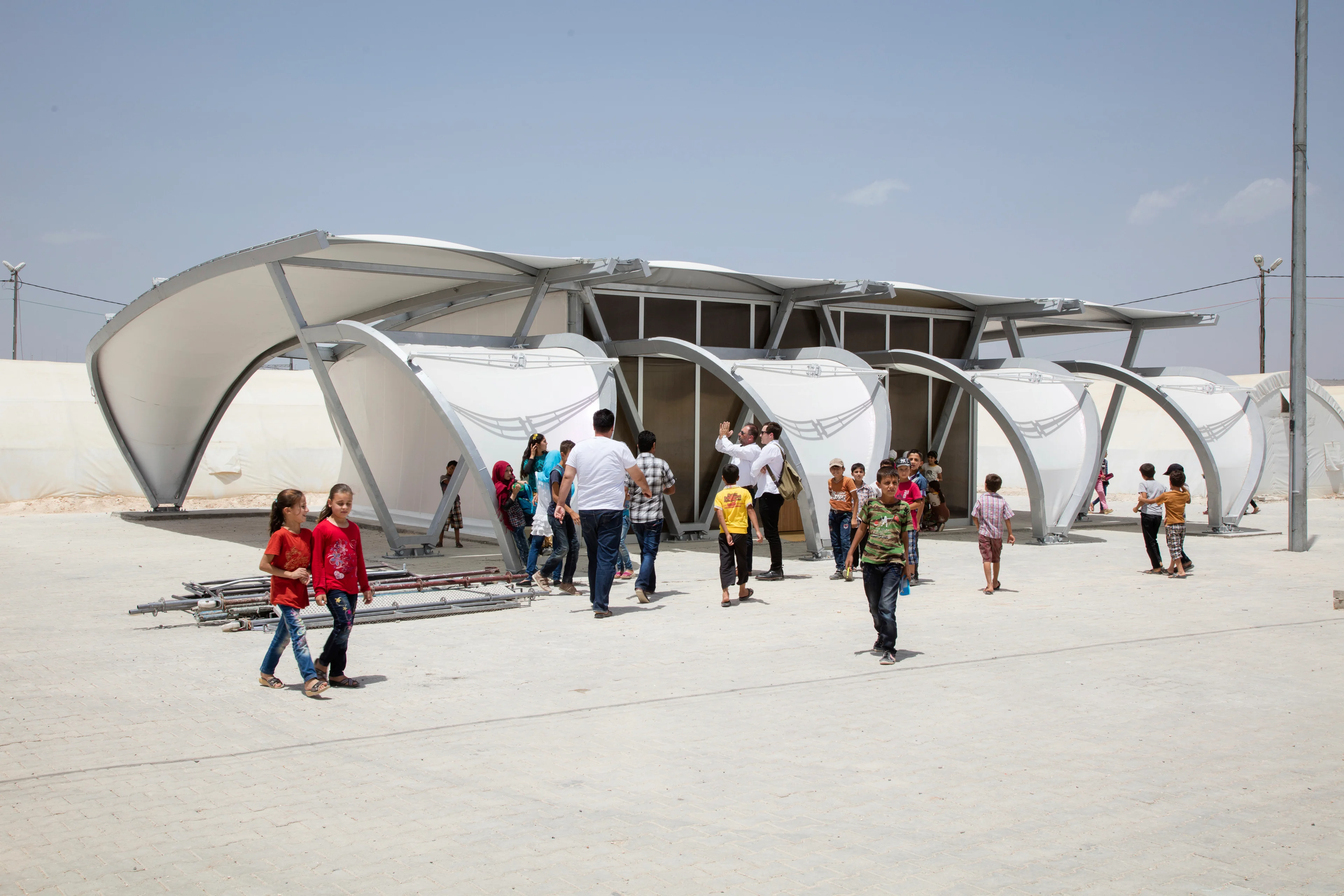
School for displaced children, Turkey 2016
EAA Foundation Tents
Designed for use as schools, clinics and emergency shelters in refugee and displaced communities, the tents are a joint venture between ZHA and the Education Above All Foundation (EAA).
Photograph by Luke Hayes
Grace Middle School Entrance Terrace
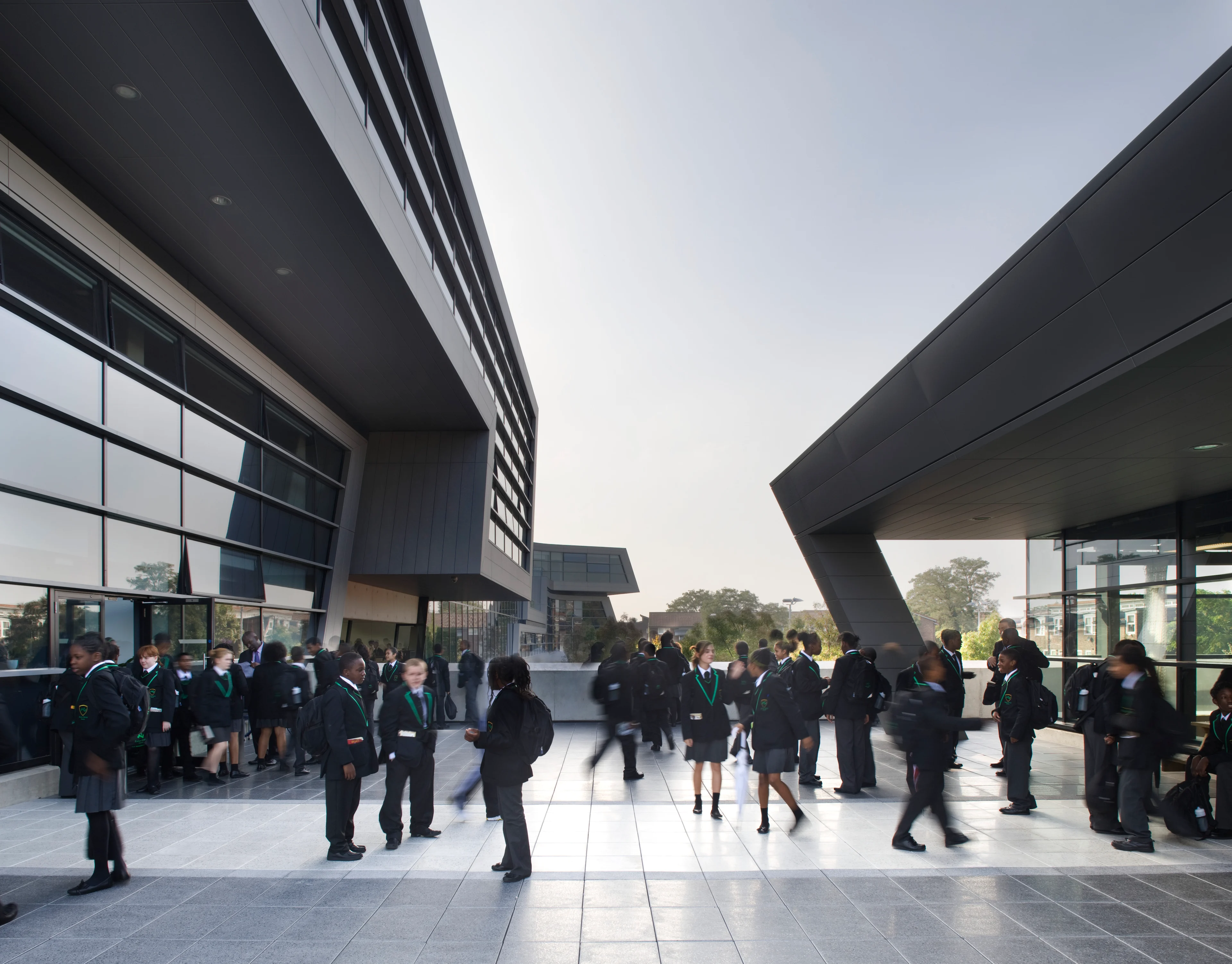
Evelyn Grace Academy
An opportunity to broaden the educational diversity of this active and historic London area. Following the principle of ‘schools within schools’, the design generates natural patterns of division within highly functional spaces which give each of the four smaller schools a distinct identity, both internally and externally.
Photograph by Luke Hayes
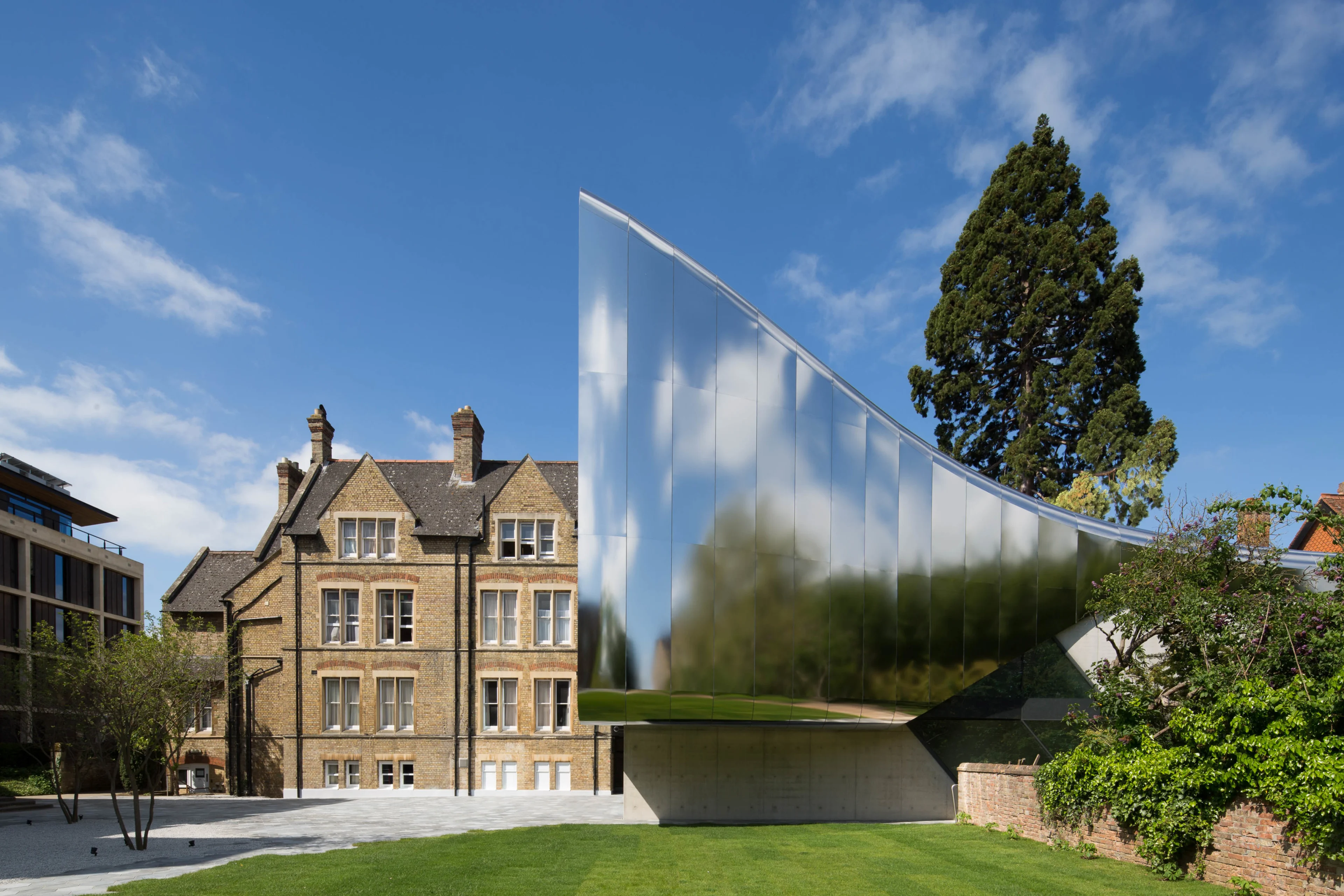
Investcorp Building for Oxford University St Antony’s College
The new Investcorp Building for the Middle East Centre provides 1,127m² of additional floor space and a new 117-seat lecture theatre; doubling the space available for the Middle East Centre’s expanding library & archive, and providing optimum conditions to conserve and manage the centre’s collections that were previously stored in the basement of 66 Woodstock Road.
Photograph by Julian Faulhaber
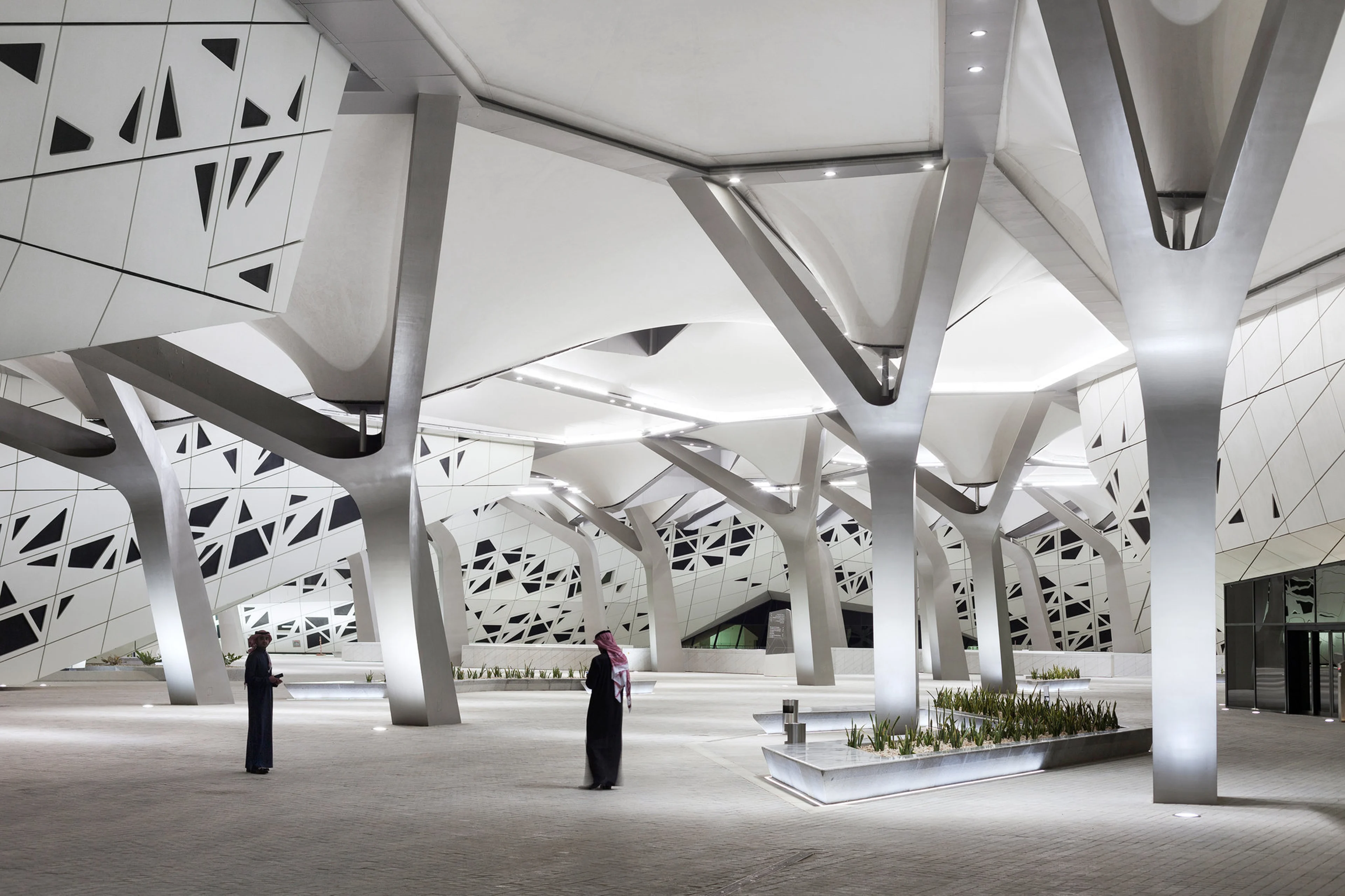
King Abdullah Petroleum Studies and Research Center (KAPSARC)
KAPSARC is a non-profit institution for independent research into policies that contribute to the most effective use of energy to provide social well-being across the globe. KAPSARC develops policies and economic frameworks that reduce the environmental impact and overall costs of energy supply and enable practical technology-based solutions to use energy more efficiently.
Photograph by Iwan Baan
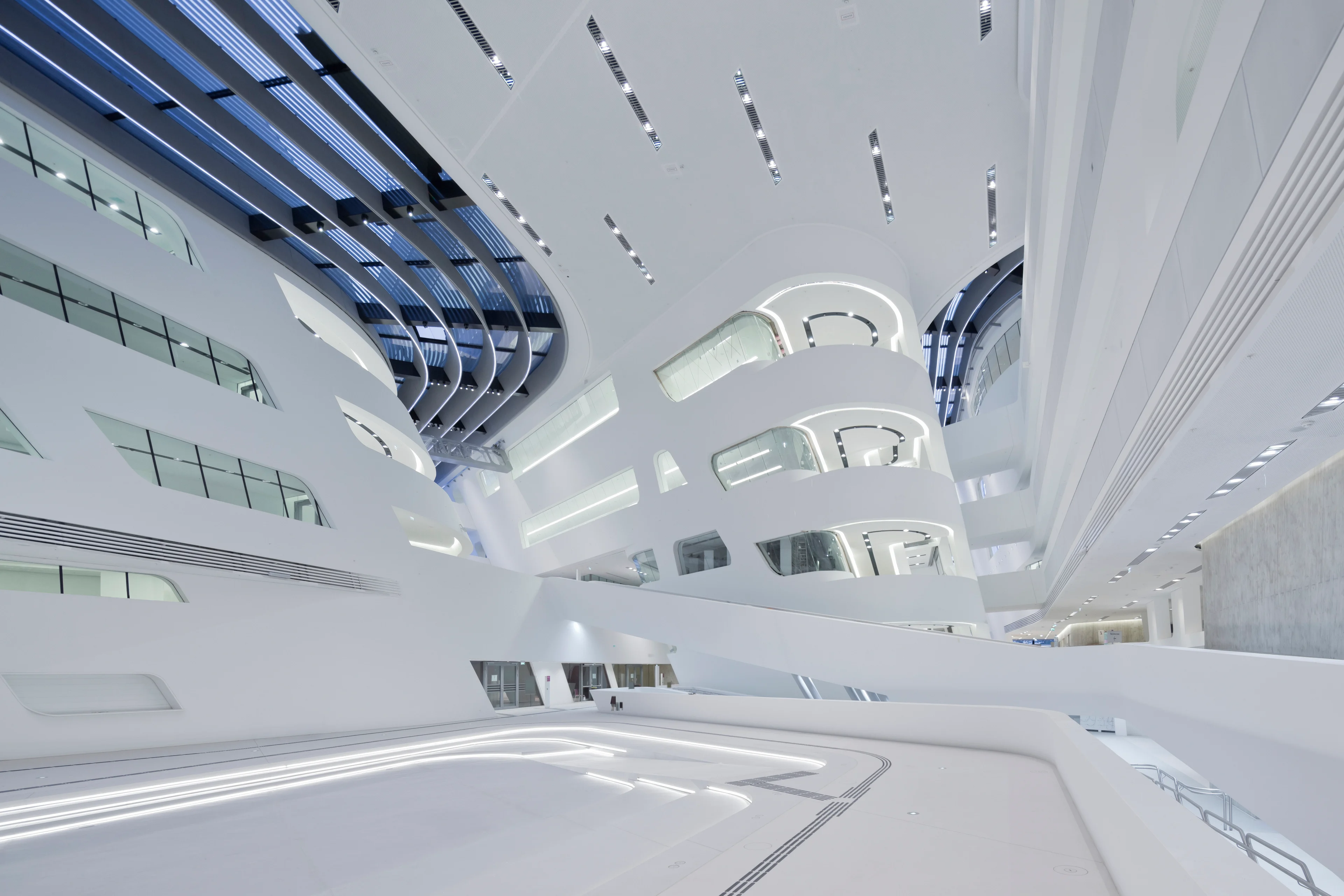
Library & Learning Centre University of Economics Vienna
The new Library and Learning Centre rises as a polygonal block from the heart of the new University campus. The interior of the LLC is informed by the external landscape of the masterplan which maps out the different levels.
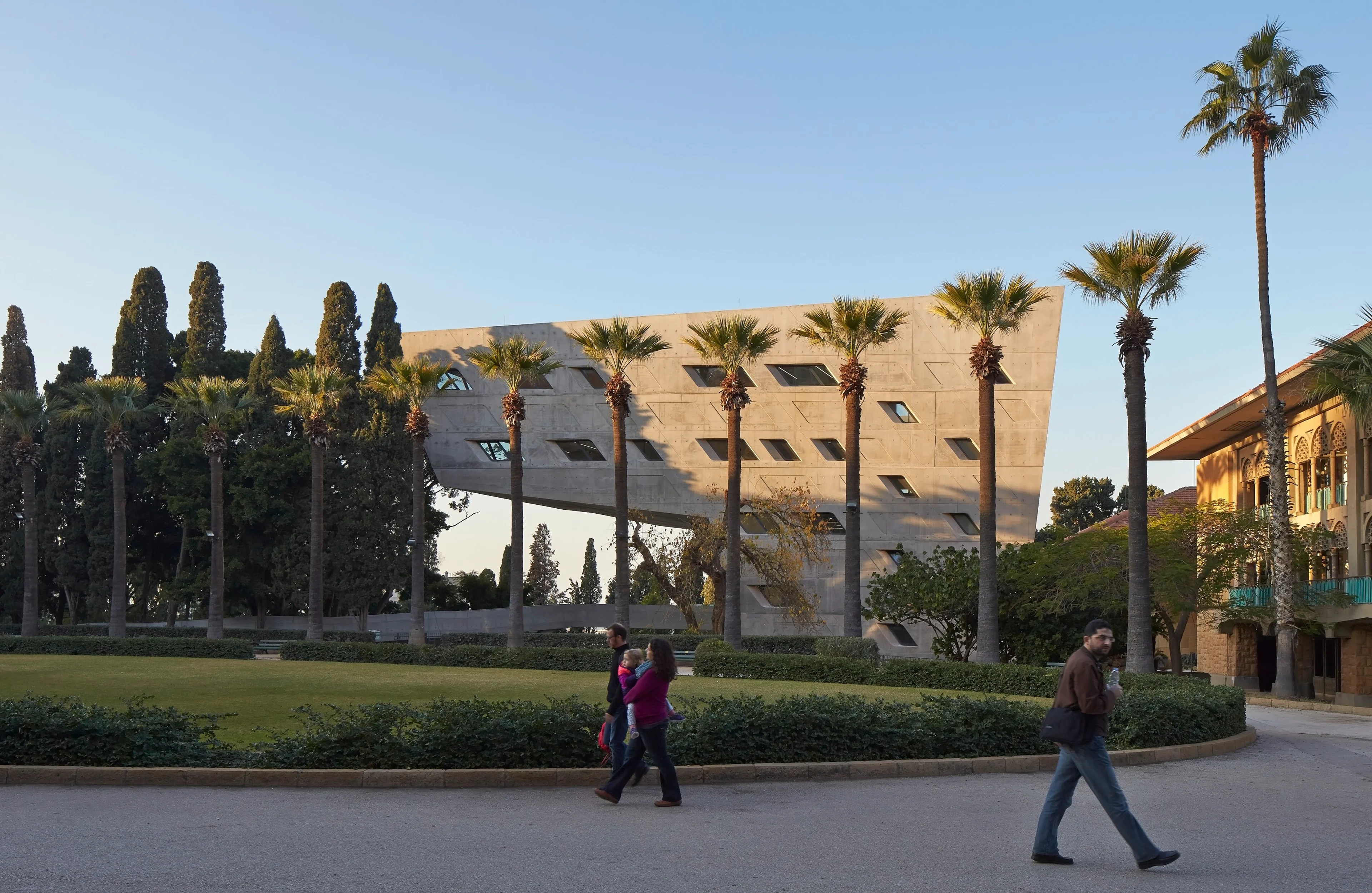
Photograph by Hufton + Crow
Issam Fares Institute, American University of Beirut
The Issam Fares Institute for Public Policy and International Affairs (IFI) building at the American University of Beirut (AUB) continues the on-going implementation of the 2002 AUB Campus Master Plan to advance the university’s academic mission in the 21st Century with facilities of the highest international standards.
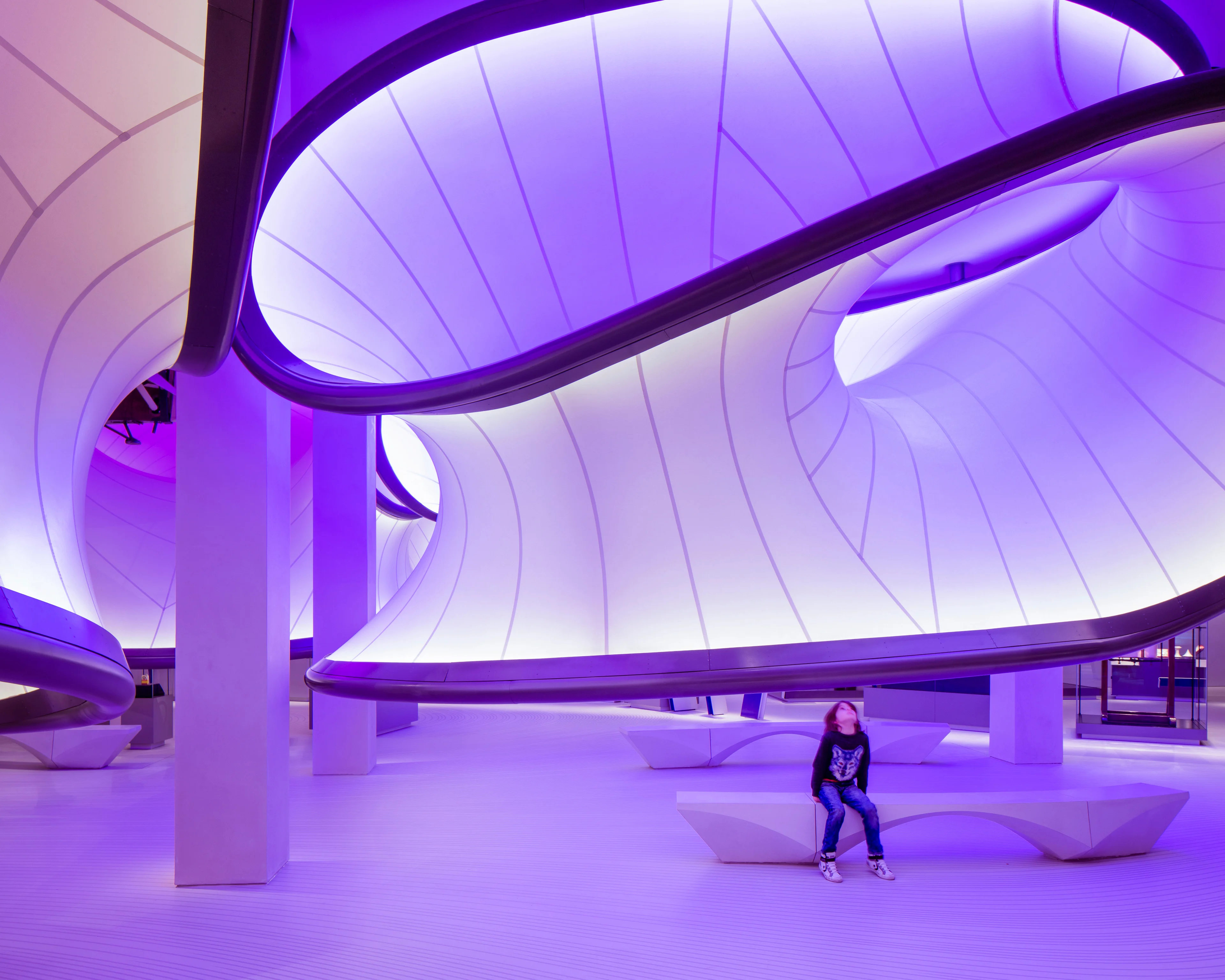
Photograph by Luke Hayes
Mathematics: The Winton Gallery, Science Museum
Mathematics: The Winton Gallery brings together remarkable stories, historical artefacts and design to highlight the central role of mathematical practice in all our lives, and explores how mathematicians, their tools and ideas have helped build the modern world over the past four centuries.
01
02
03
04
05
06
07
08
09
10