
Photograph by Iwan Baan
Vienna, Austria
2008 - 2013
University of Economics Vienna
Library & Learning Centre University of Economics Vienna
![www.rolandhalbe.de
[©(c)Roland Halbe; Veroeffentlichung nur gegen Honorar, Urhebervermerk und Beleg / Copyrightpermission required for reproduction, Photocredit: Roland Halbe]
2013, 21. Jahrhundert, Architekten, Beton, Bibliothek, Bildung, Europa, Glas, grau, Lichtdecke, Querformat, schwarz, Sichtbeton, Universität, weiß, Wien, Zaha Hadid, Österreich](https://media-prod.zha.com/zhweb-prod-media/media/4esbzhdj/01510_cp_rh_oct13_n93793.jpg?w=3840&g=0.5x0.5&fm=webp)
Photograph by Roland Halbe
Photograph by Luke Hayes
Photograph by Iwan Baan
Photograph by Iwan Baan
01
02
03
04
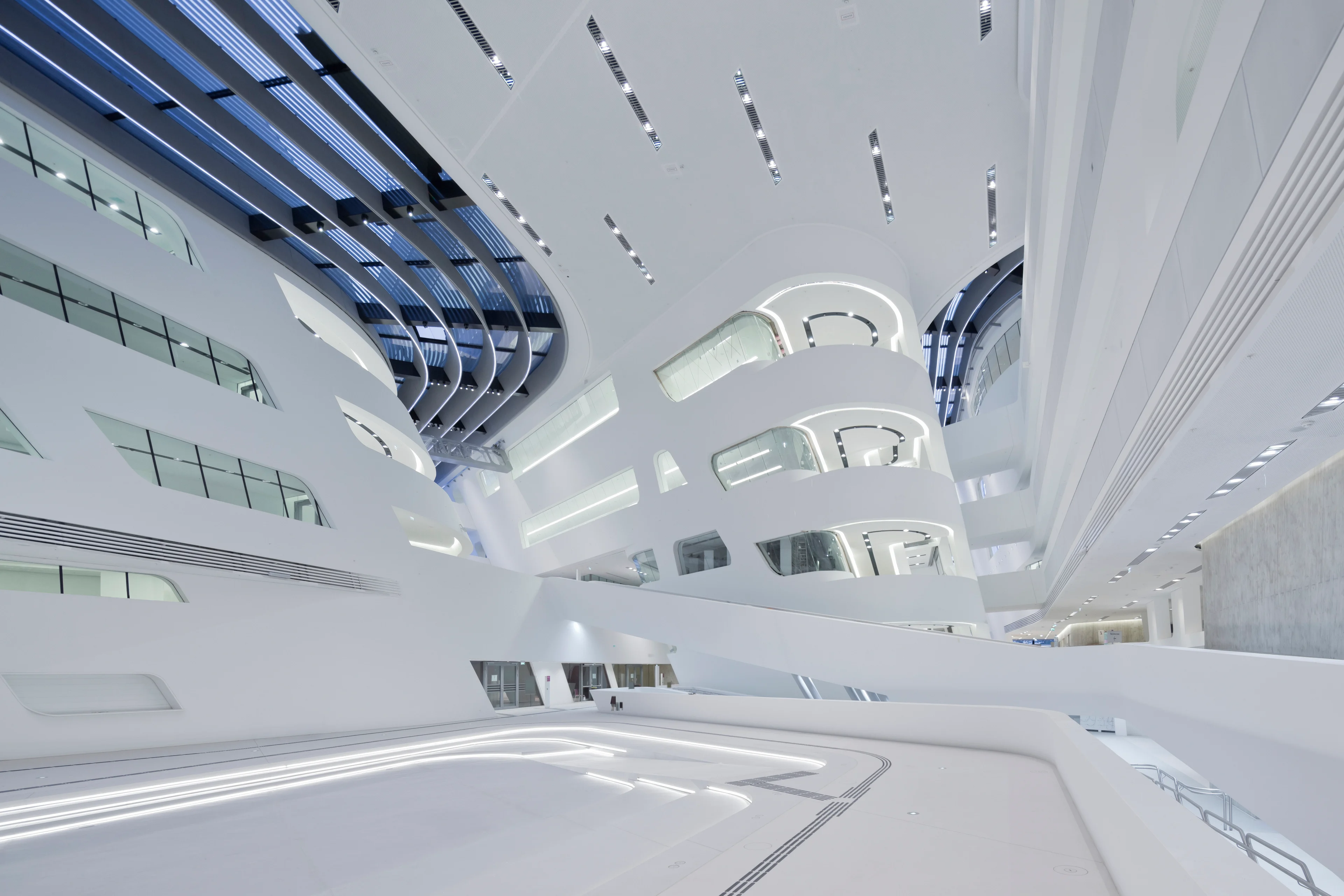
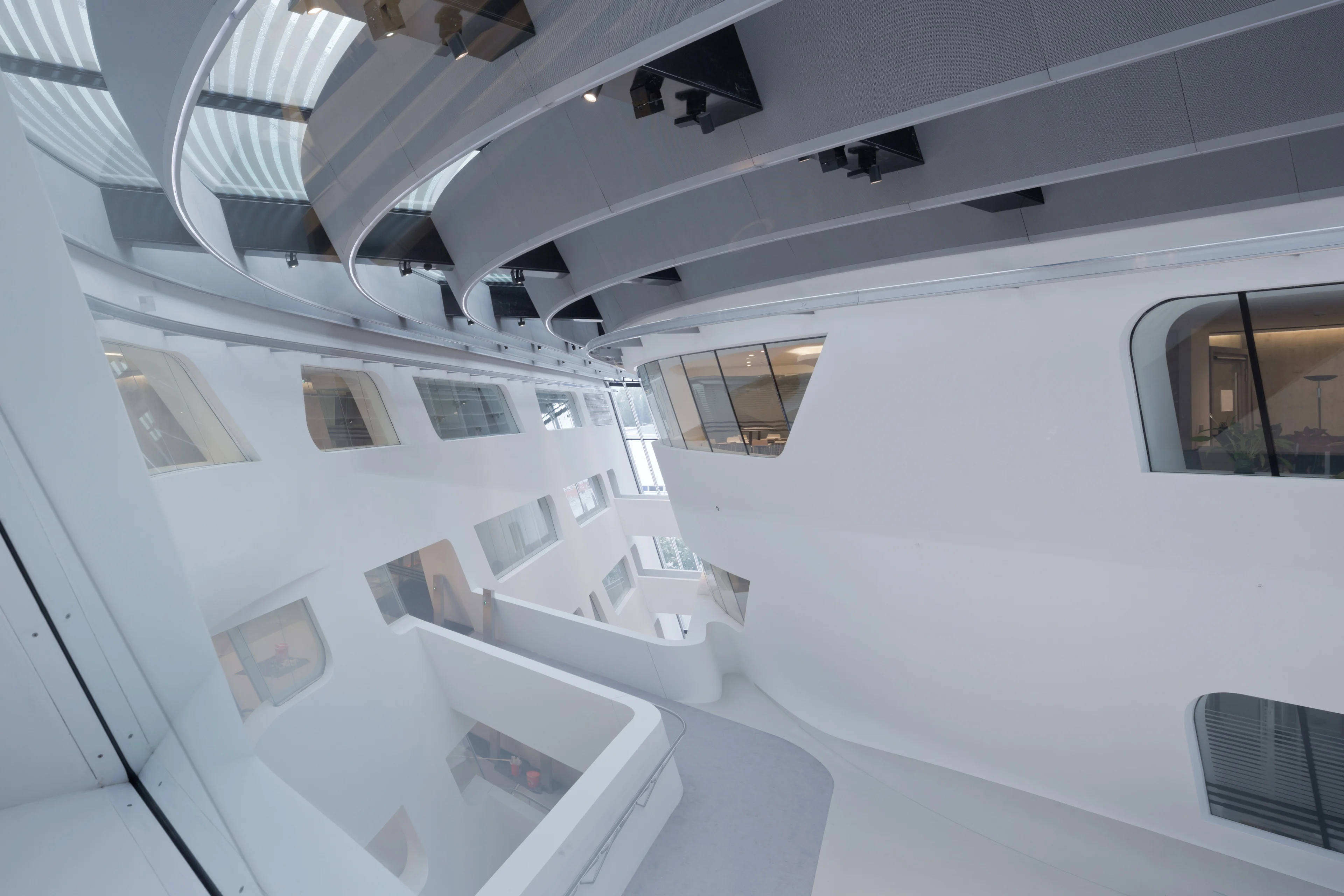
A free-formed interior canyon
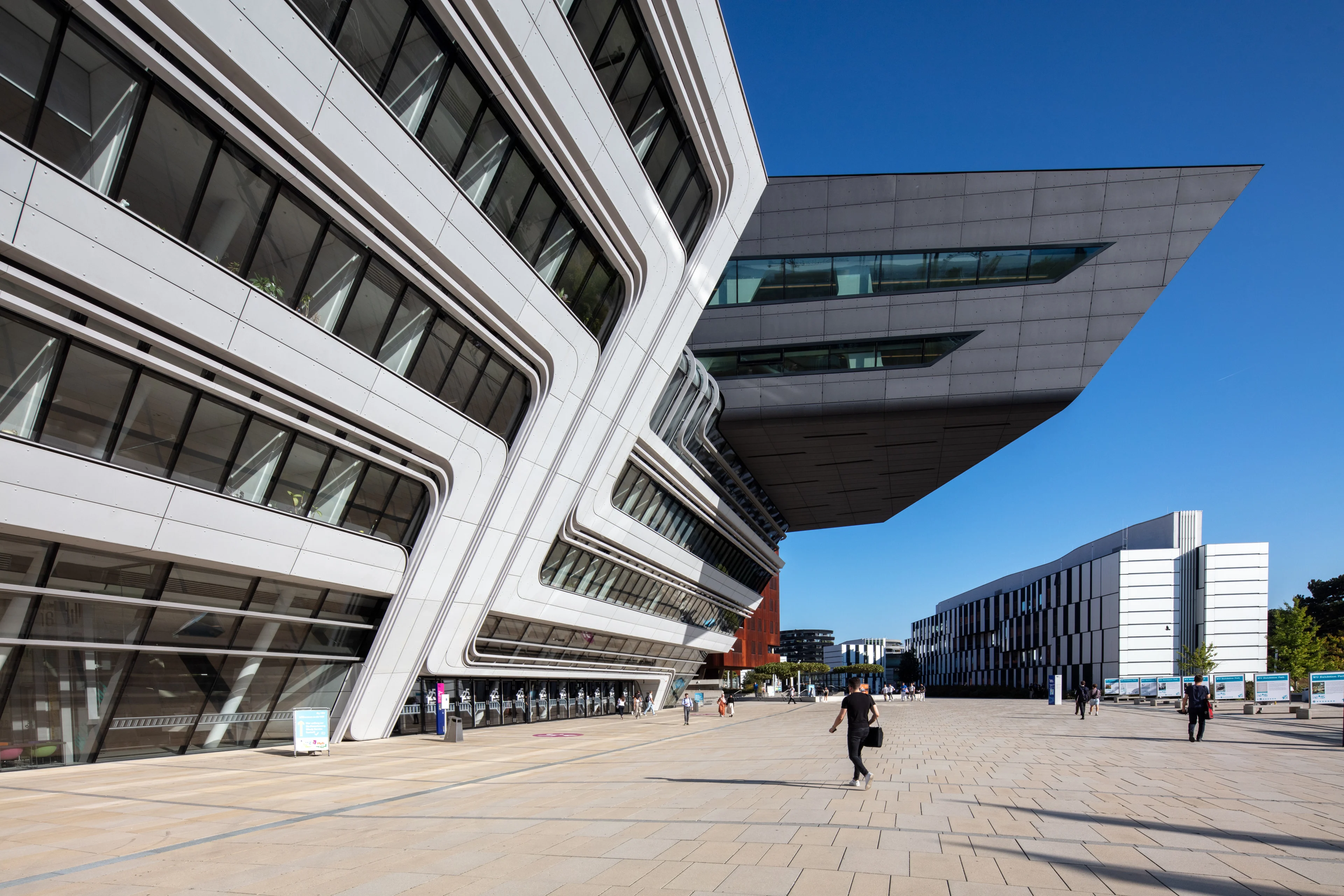
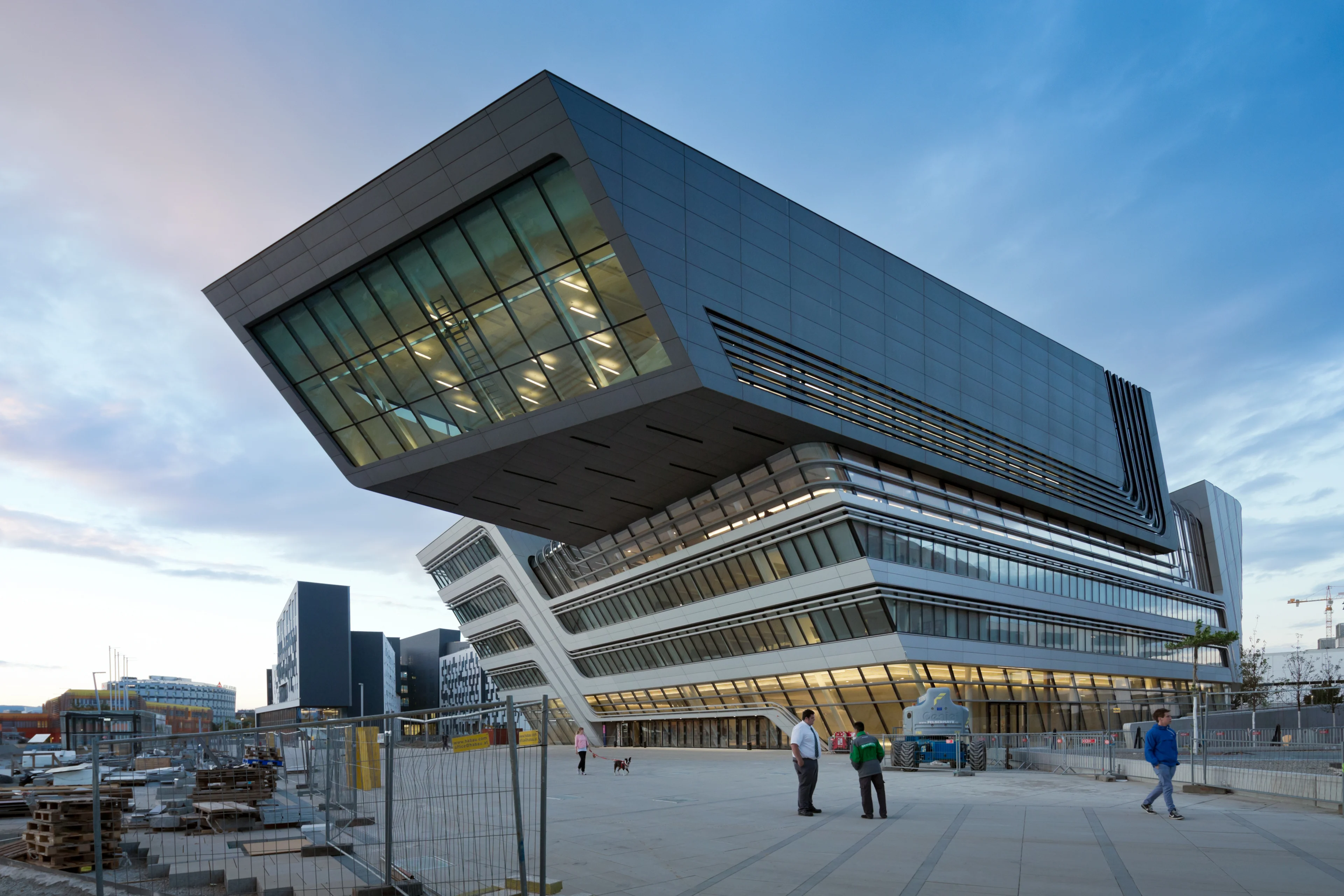
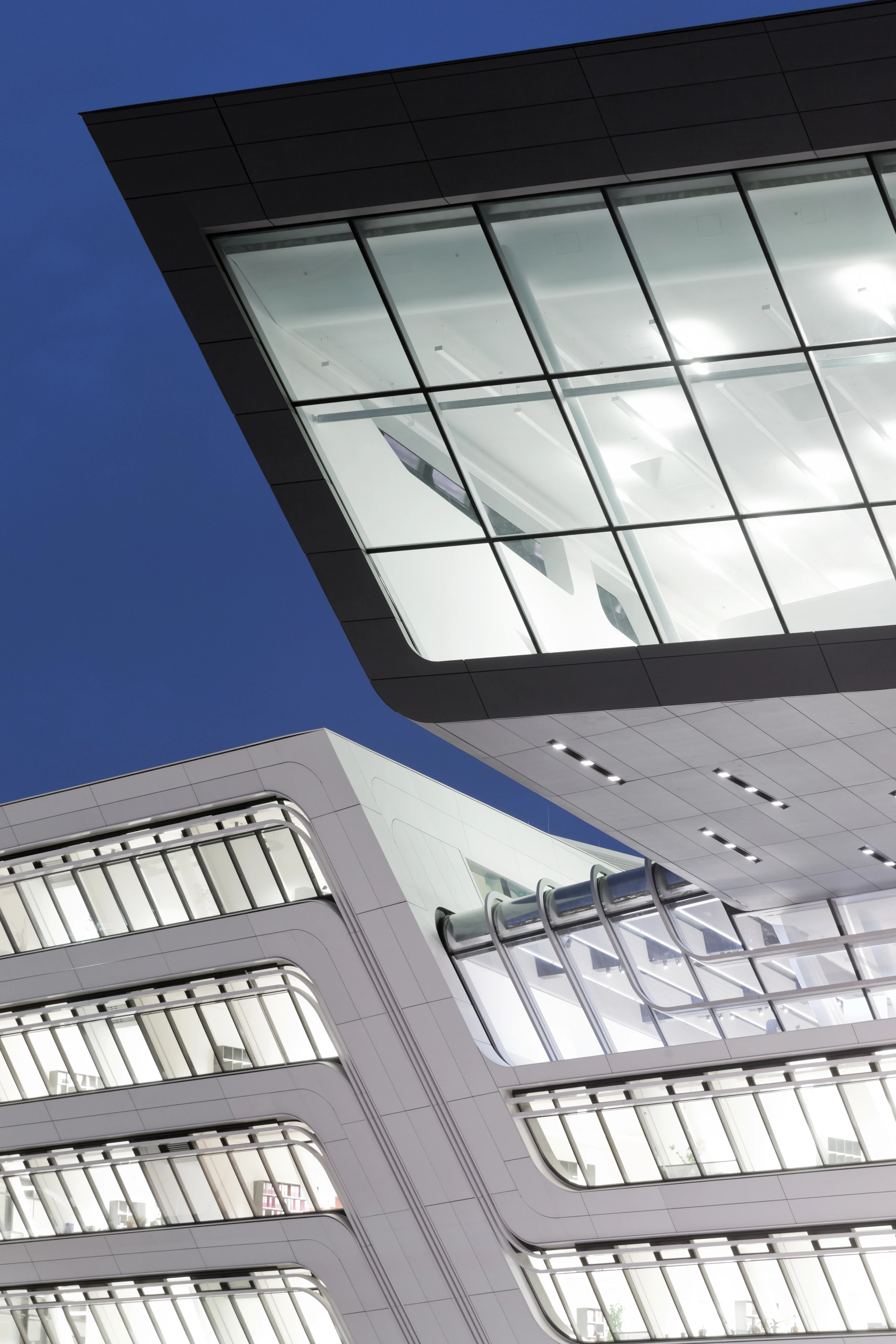
The new Library and Learning Centre rises as a polygonal block from the heart of the new University campus. The interior of the LLC is informed by the external landscape of the masterplan which maps out the different levels. The straight lines of the building’s exterior separate as they move inward, becoming curvilinear and fluid to generate a free-formed interior canyon that serves as the principal public plaza of the centre, as well as generating corridors and bridges ensuring smooth transitions between different levels.
The aim of the functional plan is to clearly define the different areas of the building. The plan is translated into a three dimensional object which outlines the space around the central atrium, the corridors and the canyons. The main block of the building houses the Service Area, the Learning Centre and the Economics Library, with Student Services and Library Management located in the smaller block.
While the interior edges of the site join together in a flowing free-form, the exterior edges of the building are cut sharply and their alignment contrasts with the site edges specified on the master plan and with the position of the adjacent buildings.
![www.rolandhalbe.de
[©(c)Roland Halbe; Veroeffentlichung nur gegen Honorar, Urhebervermerk und Beleg / Copyrightpermission required for reproduction, Photocredit: Roland Halbe]
2013, 21. Jahrhundert, Architekten, Beton, Bibliothek, Bildung, Europa, Glas, grau, Hochformat, Lichtdecke, schwarz, Universität, weiß, Wien, Zaha Hadid, Österreich
2013, 21. Jahrhundert, Architekten, Beton, Bibliothek, Bildung, Europa, Glas, grau, Hochformat, Lichtdecke, schwarz, Universität, weiß, Wien, Zaha Hadid, Österreich](https://media-prod.zha.com/zhweb-prod-media/media/bjkfb45w/01510_cp_rh_oct13_n90644.jpg?w=3840&g=0.5x0.5&fm=webp)
Photograph by Roland Halbe
Shell and shadow
From the main entrance of the LLC, visitors can walk directly to the central auditorium which also functions as a large atrium flooded by natural light. A system of ramps leads from the auditorium to the library entrance and the central services on the first floor. The security and locker areas are located on the mezzanine below.
Visitors can access the library and the student management offices via ramps and stairways spiralling upwards from the ground floor. The different areas on the upper levels are connected via platforms, bridges, terraces and galleries.
The external appearance of the LLC is characterized by two elements of contrasting colours separated by a glass joint: shell and shadow. These different colours facilitate the orientation and understanding of the two primary areas of the building from the exterior.
Education
Explore more of our educational buildings
From an academy in London awarded the RIBA Stirling Prize to a 23,000 square metre international research centre in Uzbekistan, discover our education projects.
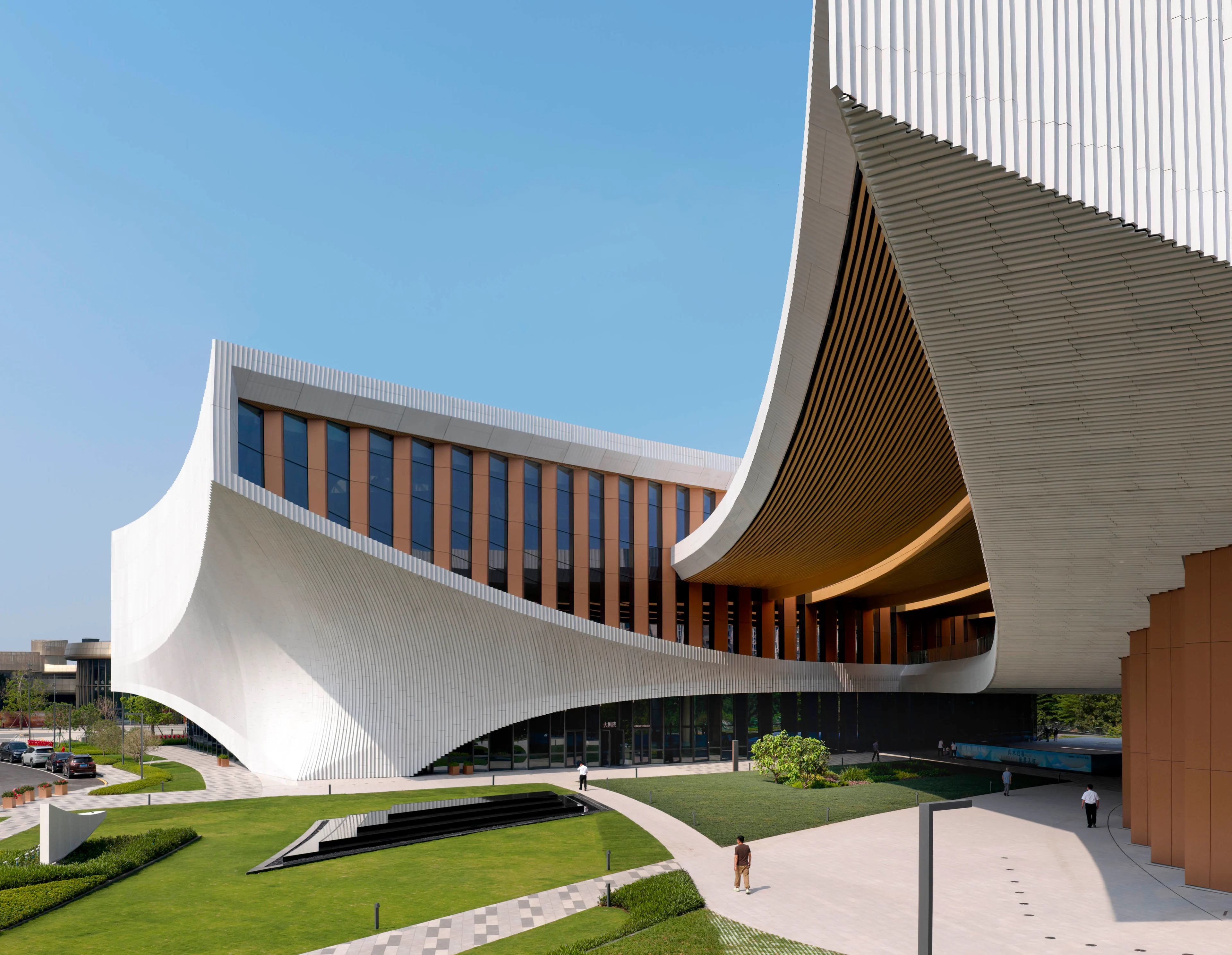
Songshan Lake Performance and Exhibition Centre
Located in Dongguan within the Greater Bay Area of southern China’s Pearl River estuary, the new Songshan Lake Exhibition and Performance Centre is at the heart of a mixed-use masterplan to revitalize the Yuehe Lake waterfront.
Courtesy of ZHA
River View
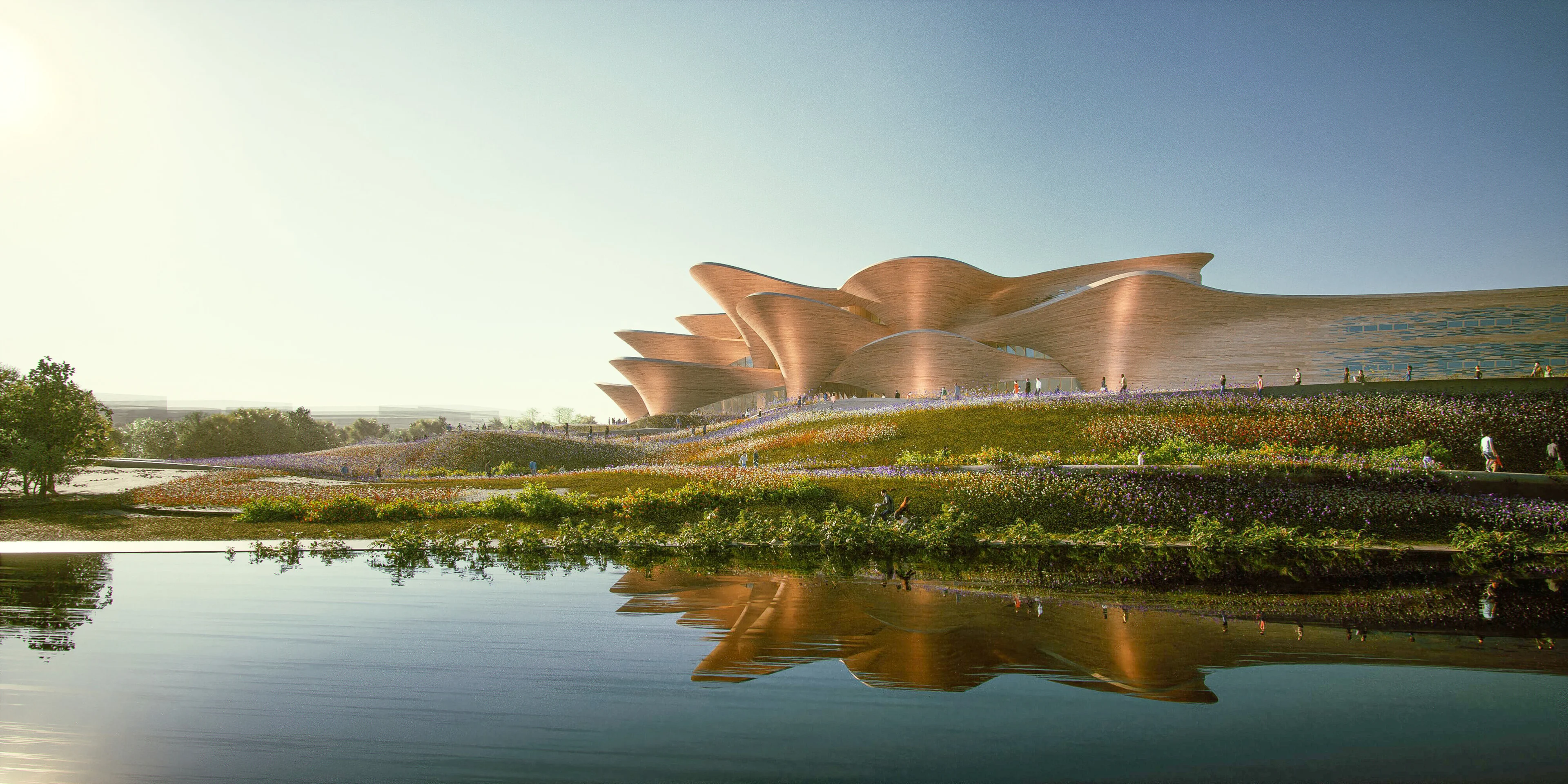
Alisher Navoi Institute
The Alisher Navoi International Scientific Research Centre will incorporate the Navoi State Museum of Literature, Auditorium, International Research Centre and School.
Render by Brick Visual
Roofline
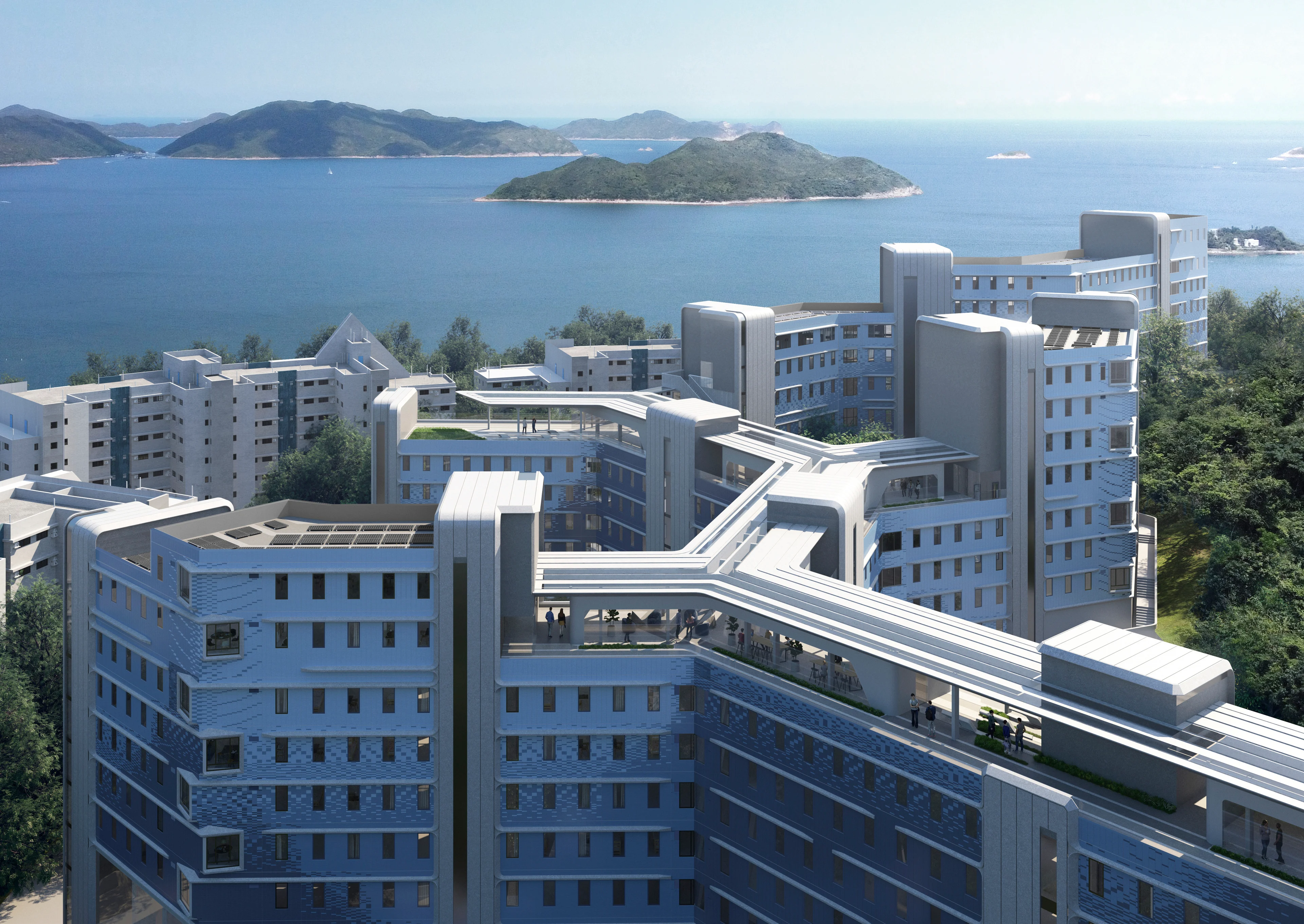
Jockey Club i-Village at HKUST
Established in 1991, Hong Kong University of Science & Technology (HKUST) has become a leading research institution consistently ranked amongst the best in Asia and around the globe. Over half of the university’s 16,000 students enrolled in the 2019-2020 academic year are from overseas, creating an urgent demand for new residential facilities within its Clear Water Bay campus.
Photograph by Luke Hayes
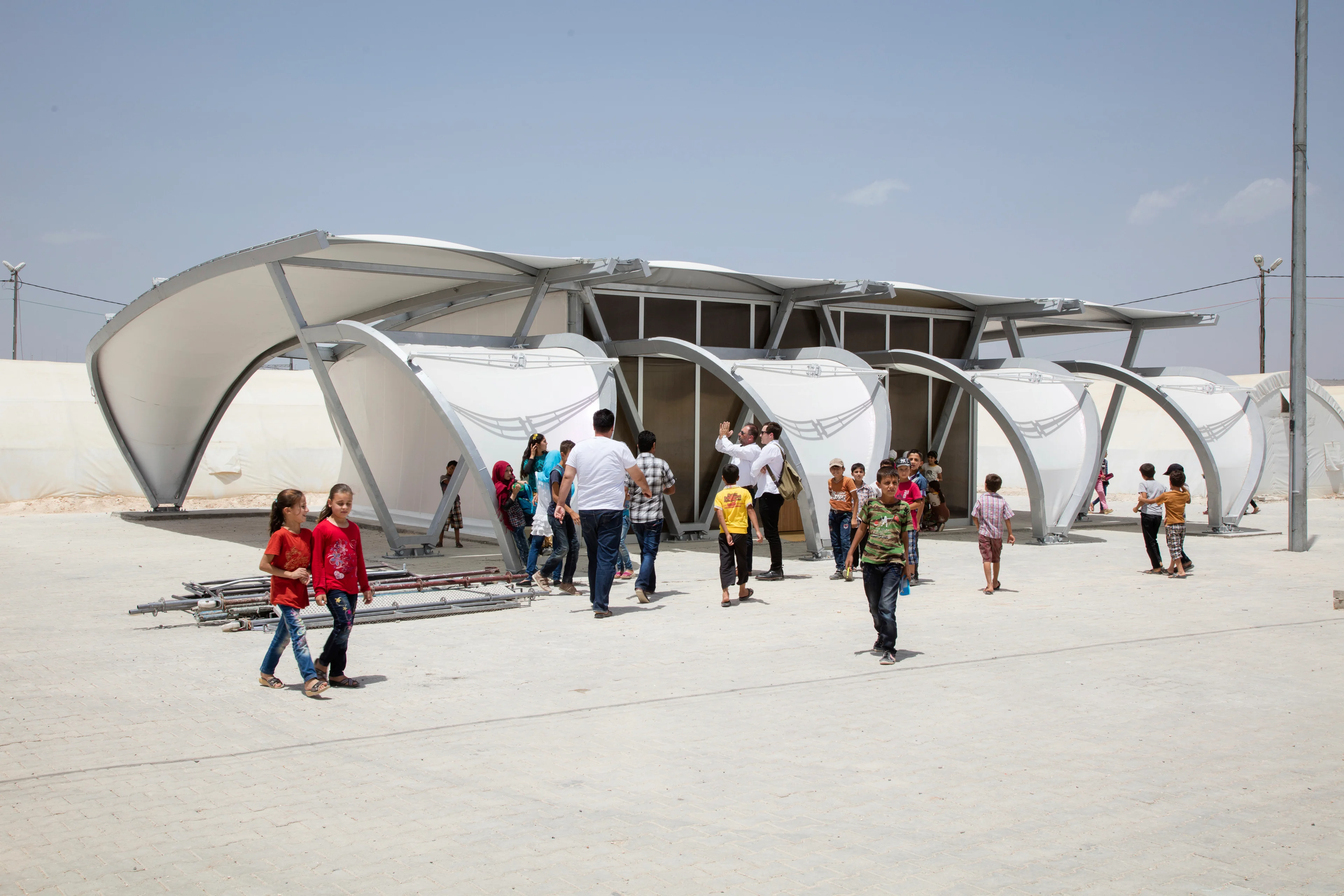
School for displaced children, Turkey 2016
EAA Foundation Tents
Designed for use as schools, clinics and emergency shelters in refugee and displaced communities, the tents are a joint venture between ZHA and the Education Above All Foundation (EAA).
Photograph by Luke Hayes
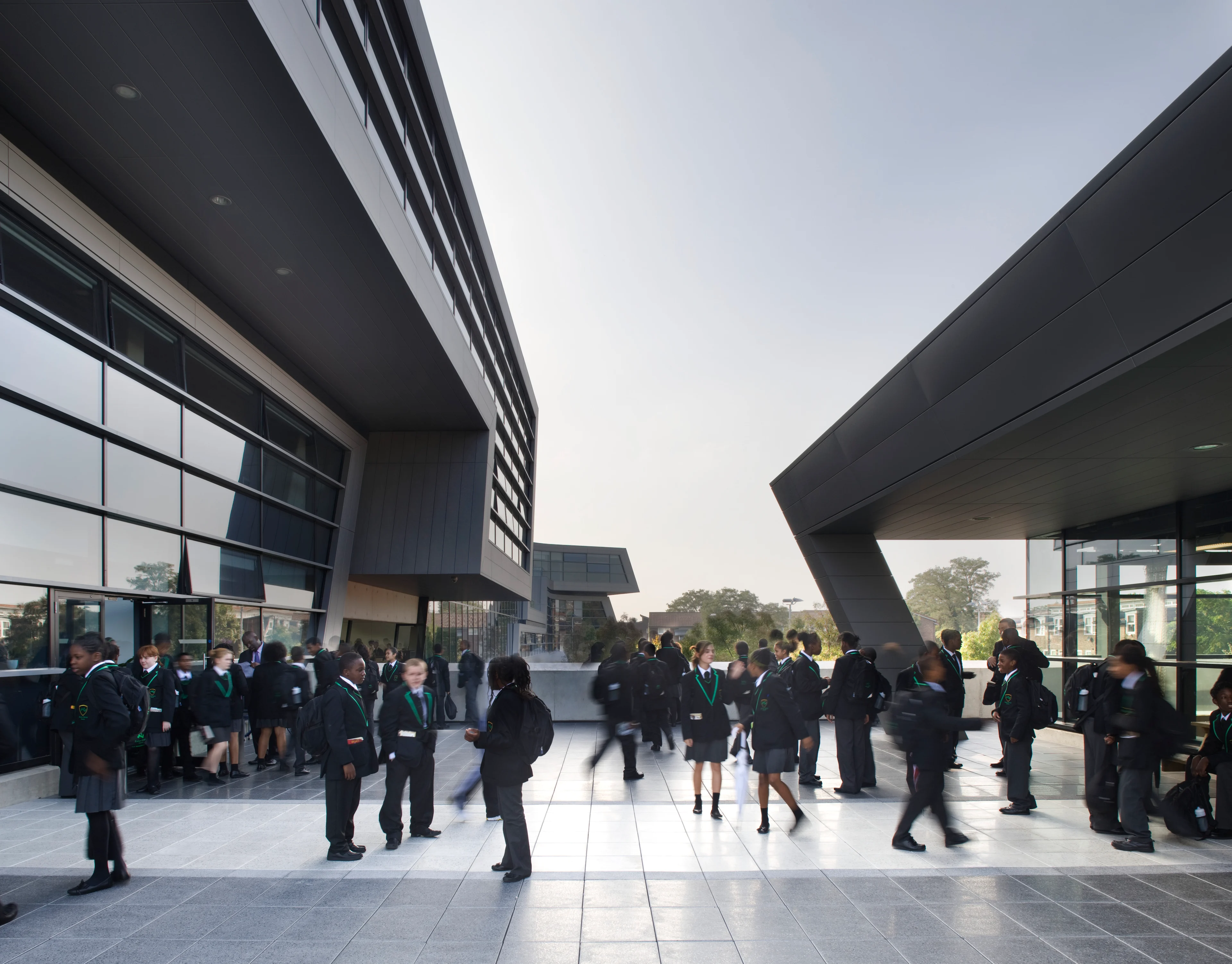
Grace Middle School Entrance Terrace
Evelyn Grace Academy
An opportunity to broaden the educational diversity of this active and historic London area. Following the principle of ‘schools within schools’, the design generates natural patterns of division within highly functional spaces which give each of the four smaller schools a distinct identity, both internally and externally.
Photograph by Luke Hayes
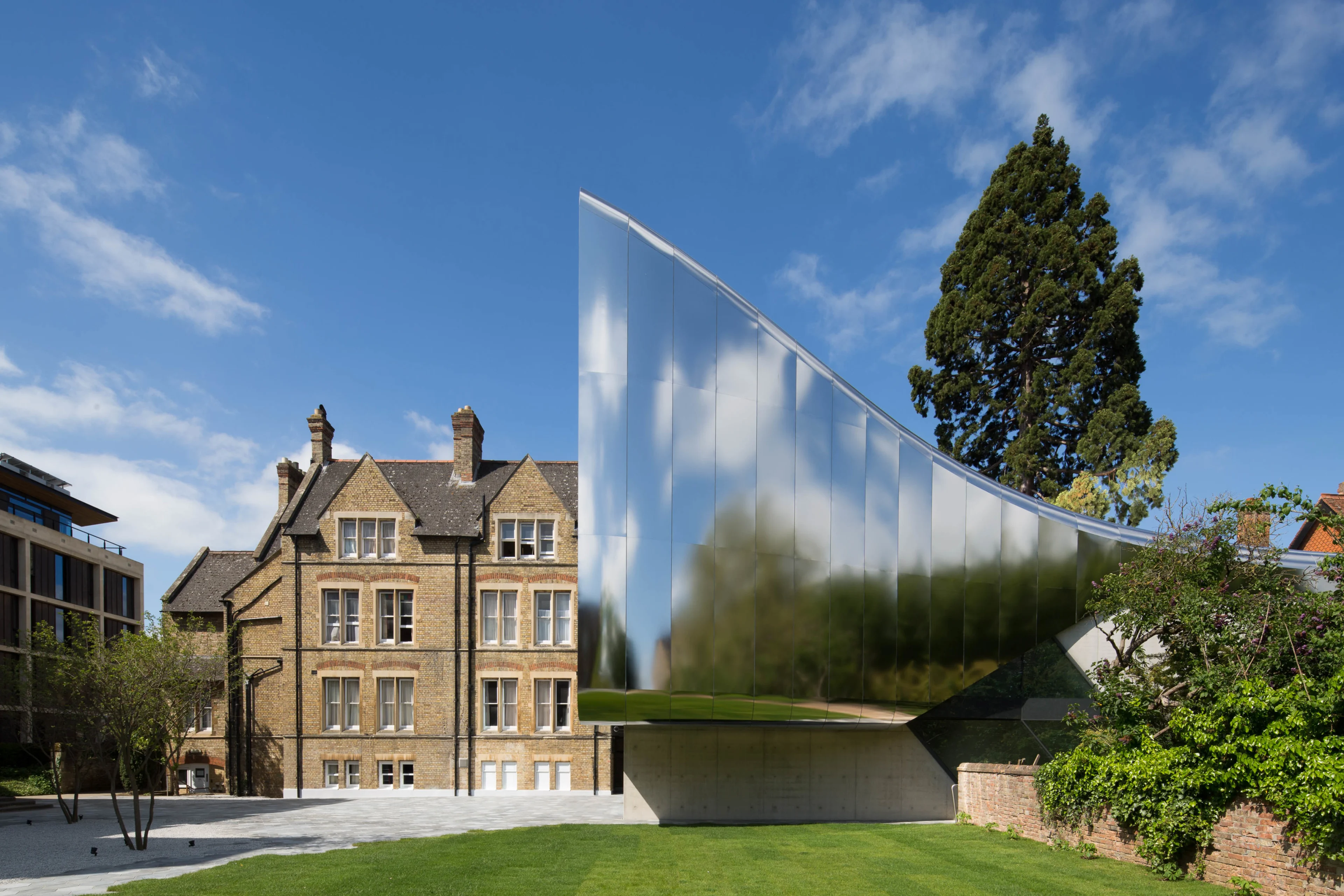
Investcorp Building for Oxford University St Antony’s College
The new Investcorp Building for the Middle East Centre provides 1,127m² of additional floor space and a new 117-seat lecture theatre; doubling the space available for the Middle East Centre’s expanding library & archive, and providing optimum conditions to conserve and manage the centre’s collections that were previously stored in the basement of 66 Woodstock Road.
Photograph by Julian Faulhaber
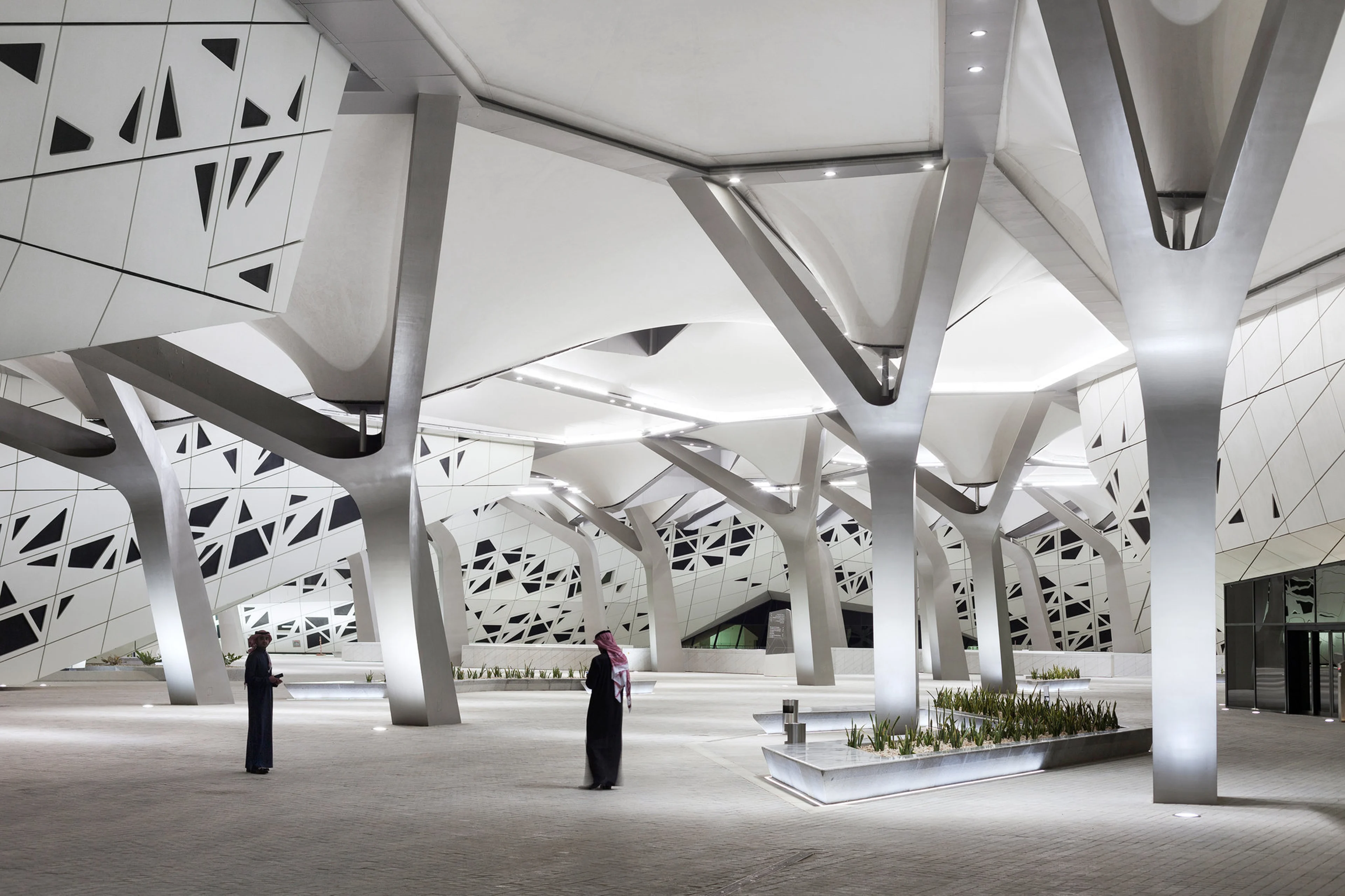
King Abdullah Petroleum Studies and Research Center (KAPSARC)
KAPSARC is a non-profit institution for independent research into policies that contribute to the most effective use of energy to provide social well-being across the globe. KAPSARC develops policies and economic frameworks that reduce the environmental impact and overall costs of energy supply and enable practical technology-based solutions to use energy more efficiently.
Photograph by Iwan Baan
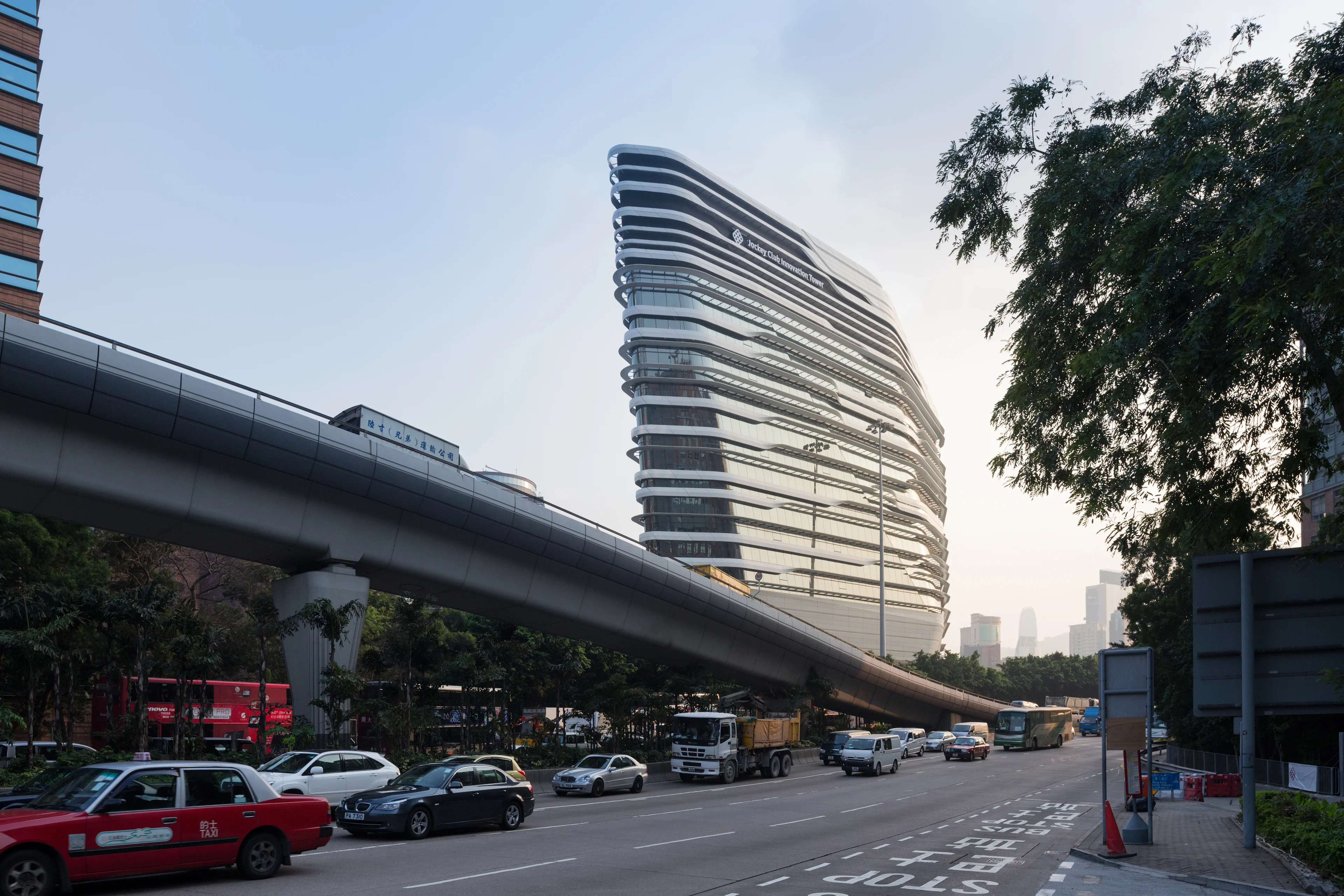
Jockey Club Innovation Tower
The Jockey Club Innovation Tower (JCIT) is home to the Hong Kong Polytechnic University (PolyU) School of Design, and the Jockey Club Design Institute for Social Innovation.
Photograph by Hufton + Crow
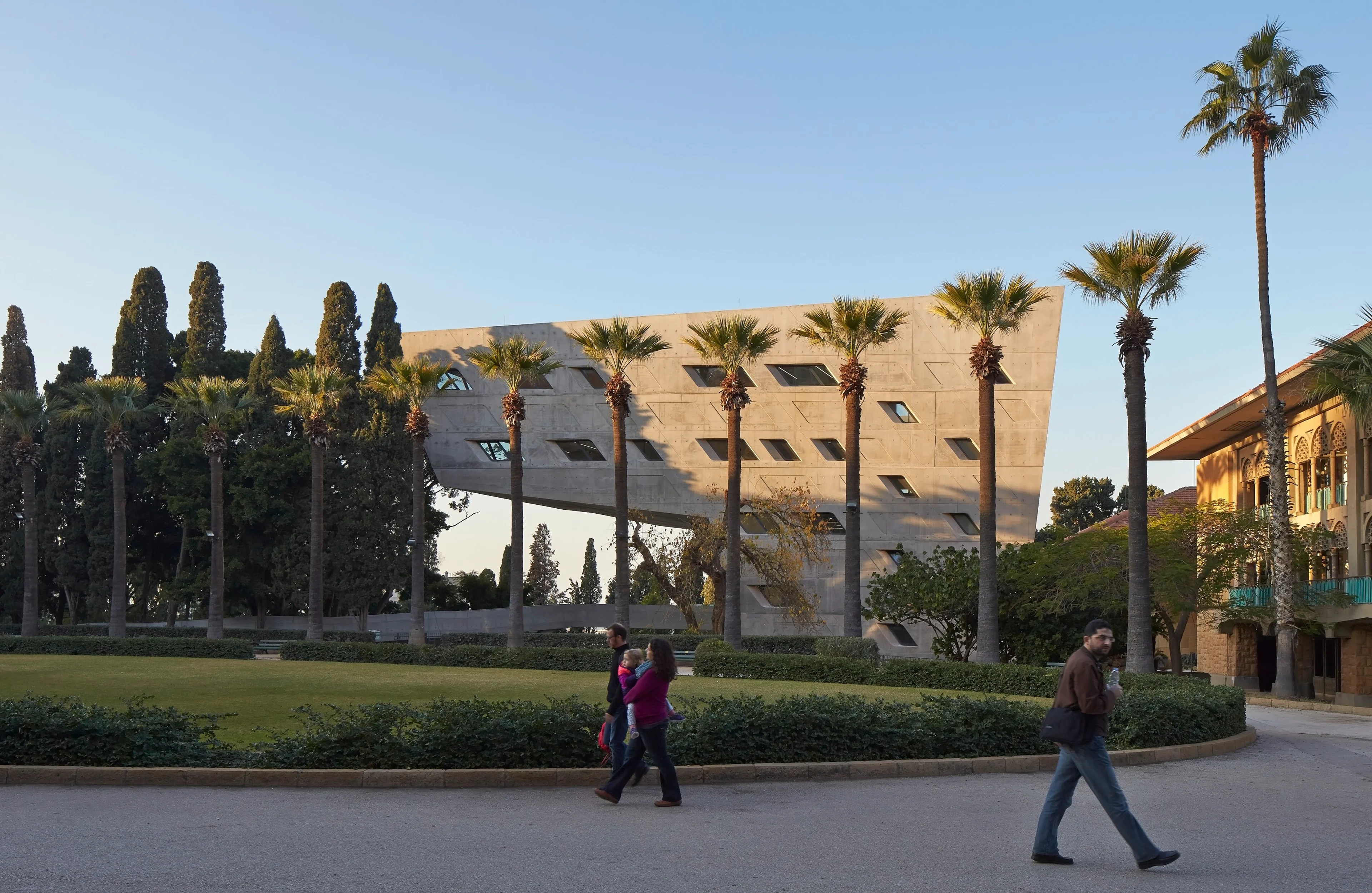
Issam Fares Institute, American University of Beirut
The Issam Fares Institute for Public Policy and International Affairs (IFI) building at the American University of Beirut (AUB) continues the on-going implementation of the 2002 AUB Campus Master Plan to advance the university’s academic mission in the 21st Century with facilities of the highest international standards.
Photograph by Luke Hayes
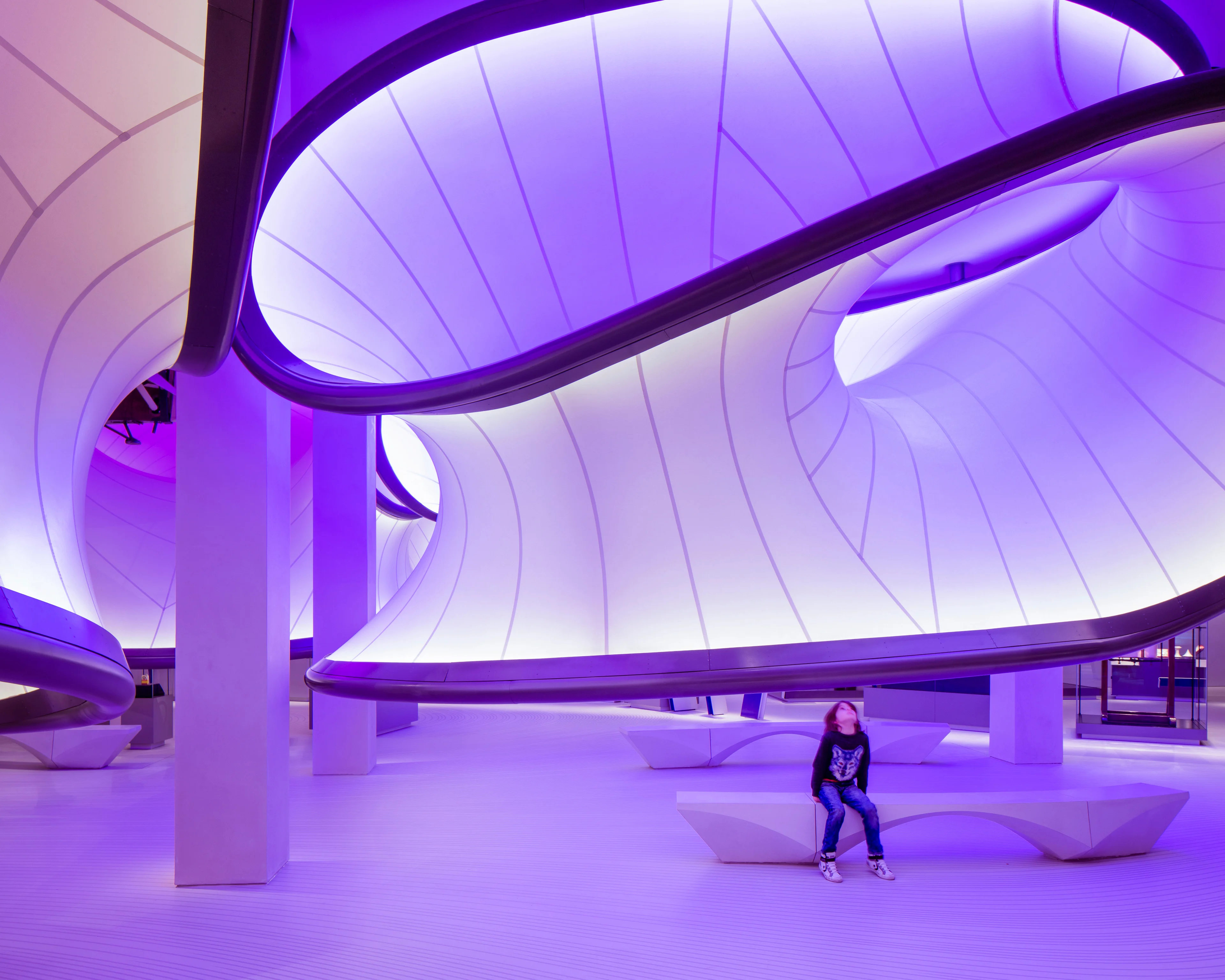
Mathematics: The Winton Gallery, Science Museum
Mathematics: The Winton Gallery brings together remarkable stories, historical artefacts and design to highlight the central role of mathematical practice in all our lives, and explores how mathematicians, their tools and ideas have helped build the modern world over the past four centuries.
01
02
03
04
05
06
07
08
09
10