
South Tyrol, Italy
2012 - 2015
Skirama Kronplatz/Plan de Corones
Messner Mountain Museum Corones
Courtesy of Inexhibit
Photograph by Werner Huthmacher
01
02
03
04
Surrounded by alpine peaks
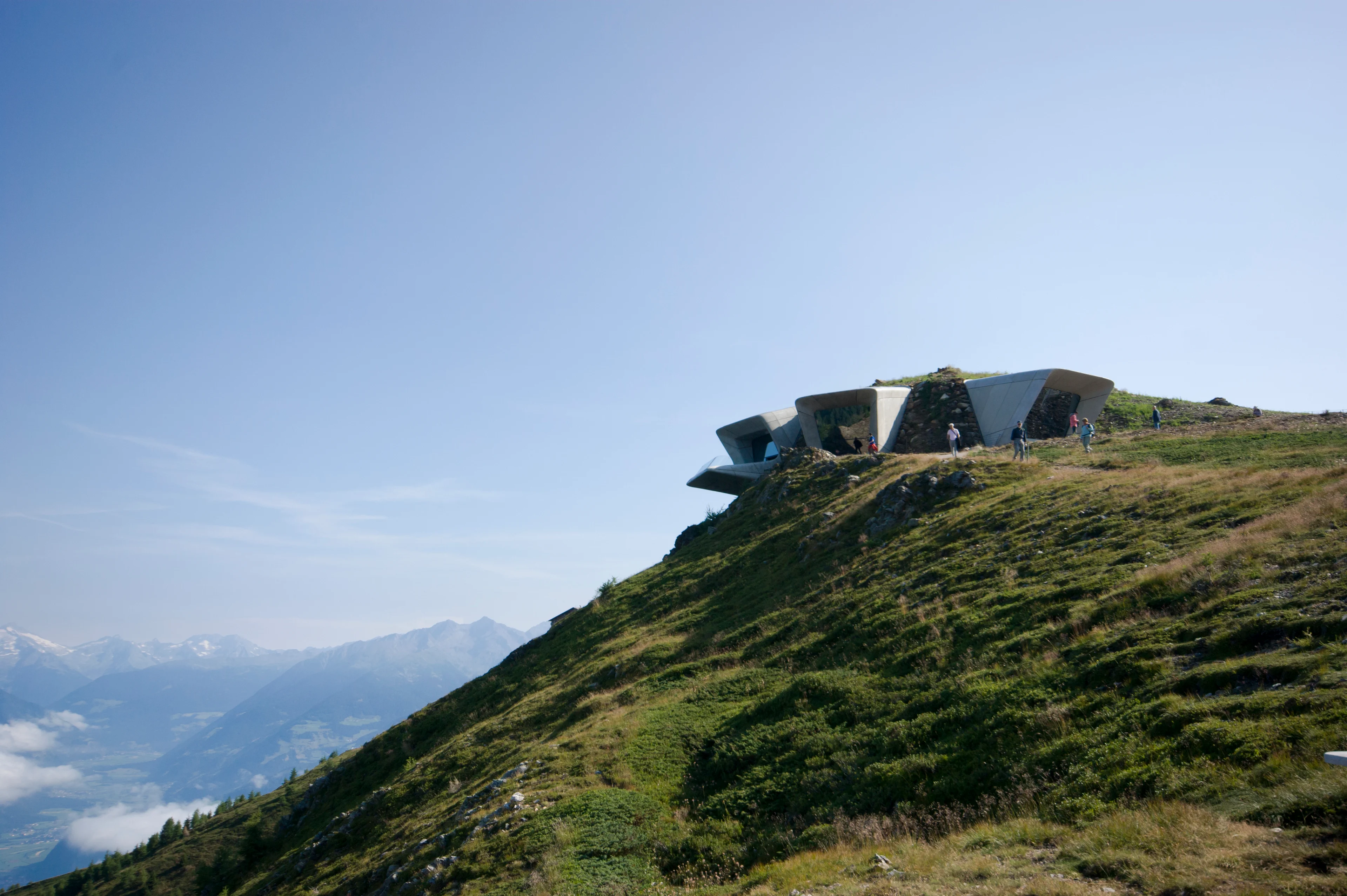
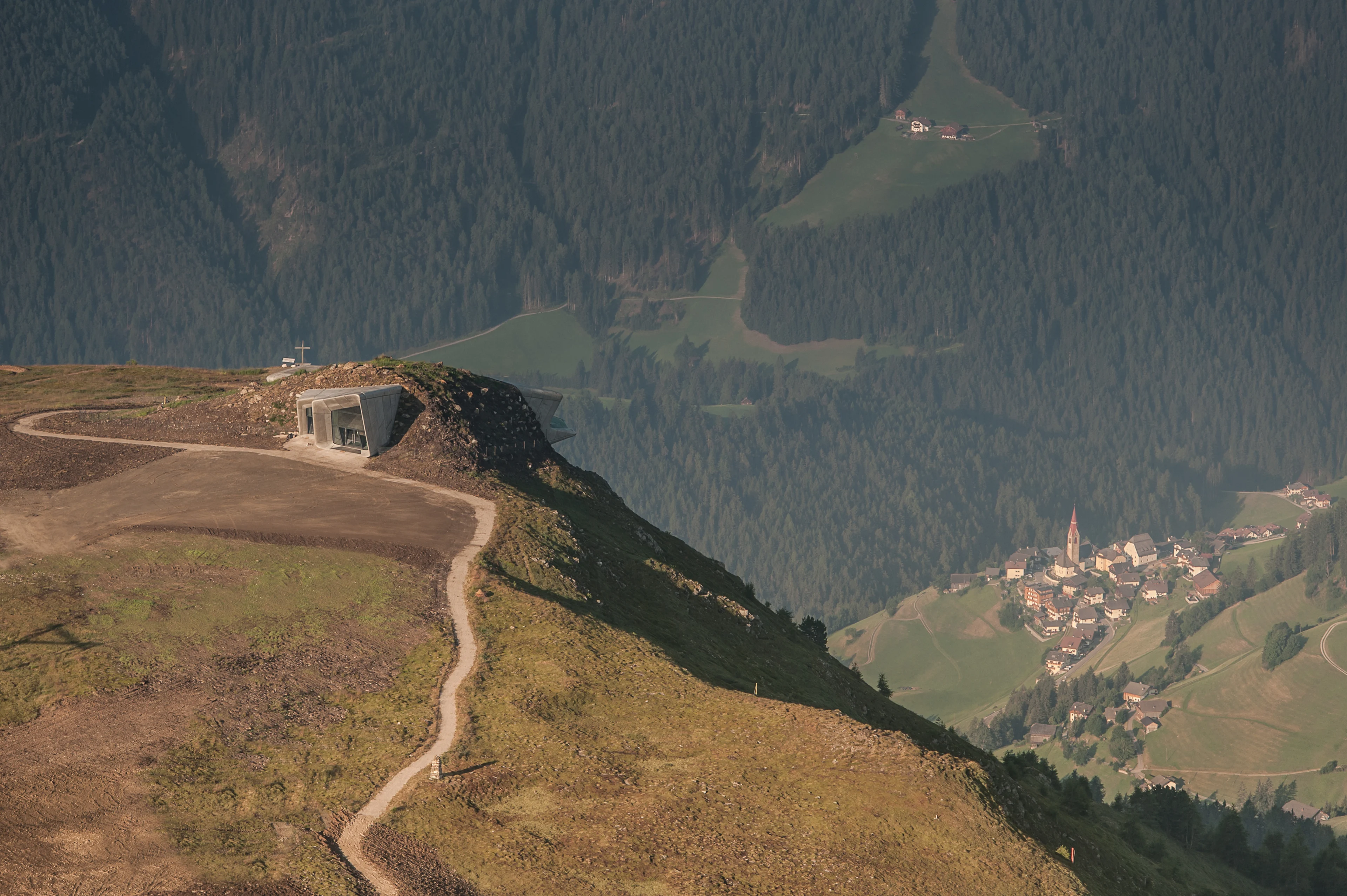
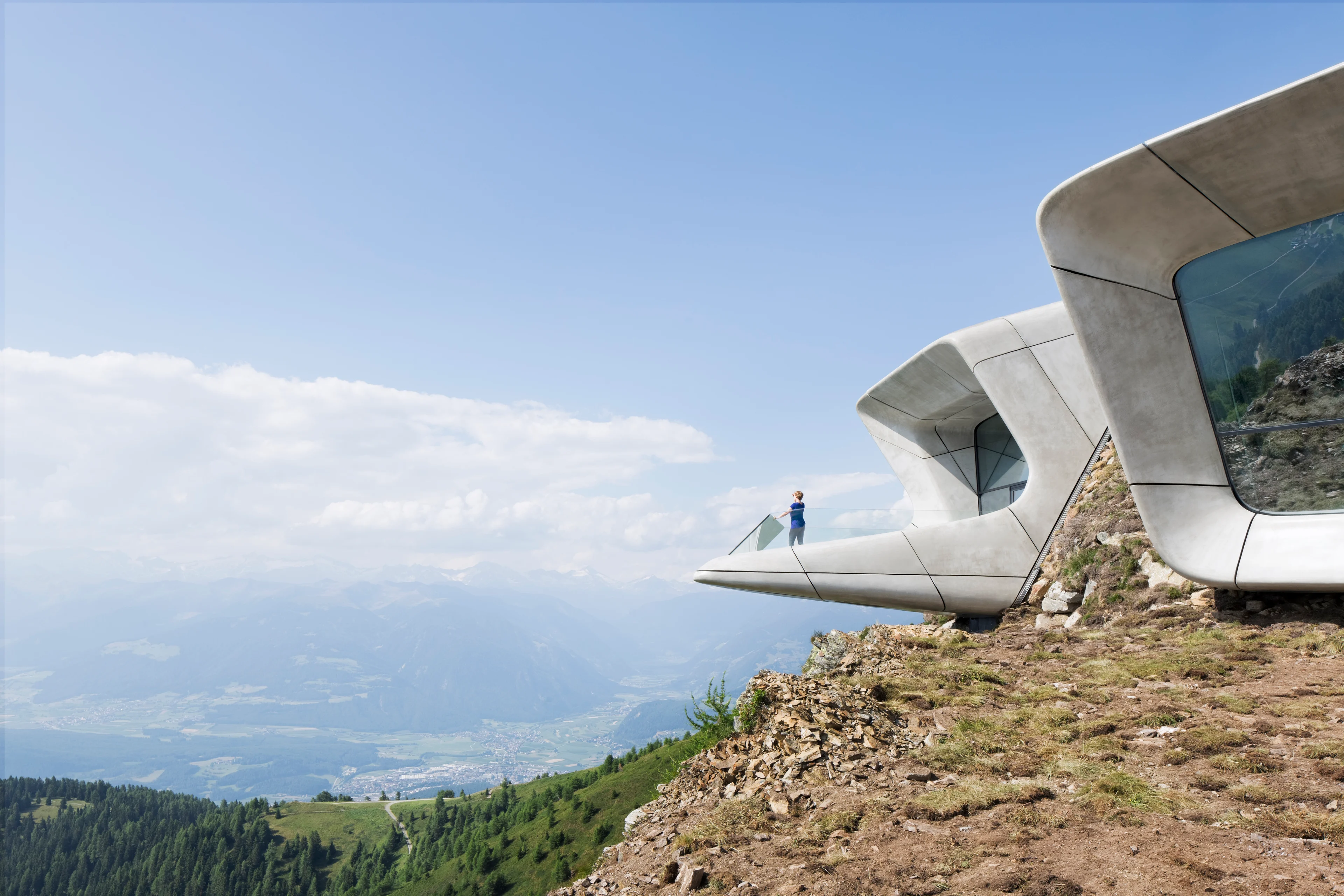
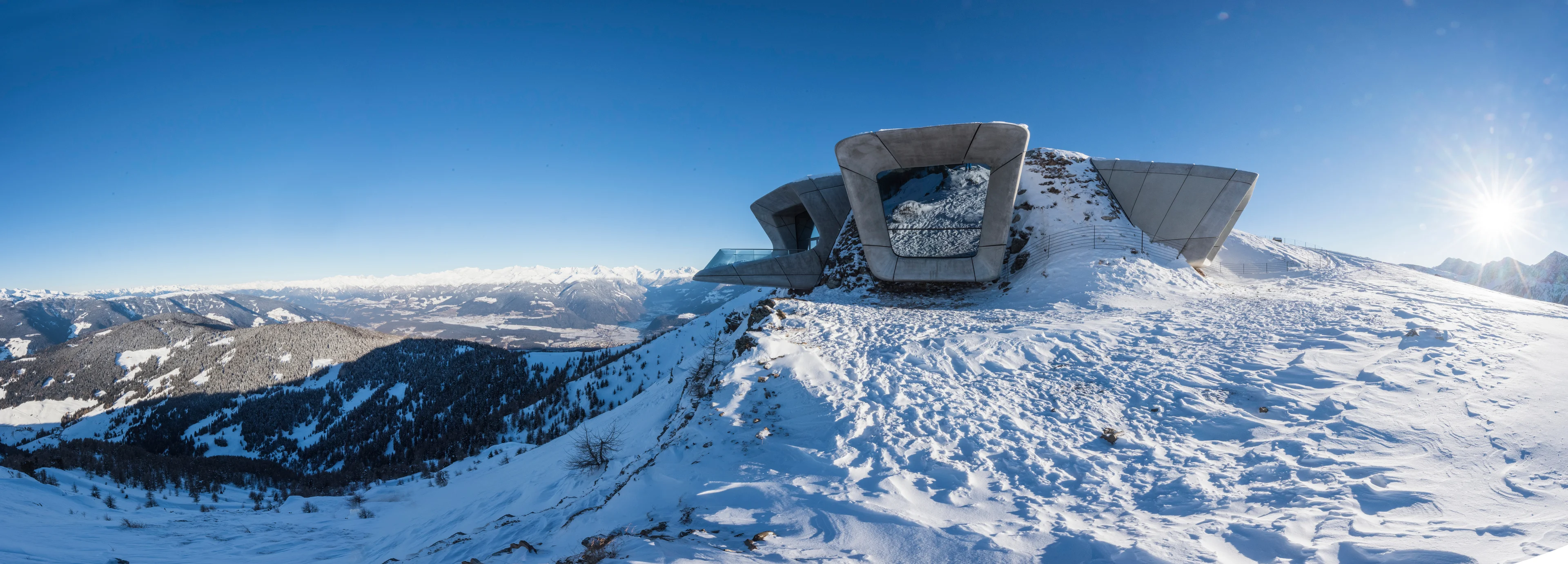
Embedded within the summit of Mount Kronplatz, 2,275m above sea level at the centre South Tyrol’s most popular ski resort, the Messner Mountain Museum Corones is surrounded by the alpine peaks of the Zillertal, Ortler and Dolomites. Established by renowned climber Reinhold Messner, the sixth and final Messner Mountain Museum explores the traditions, history and discipline of mountaineering.
Messner, the first person to climb all 14 mountains around the world over 8,000 meters, and the first to climb Mount Everest without the aid of tanked oxygen, conveys his vision for the MMM Corones: “Kronplatz offers views beyond the borders of South Tyrol to all points of the compass: from the Lienz Dolomites in the east to the Ortler in the west, from the Marmolada Glacier in the south to the Zillertal Alps in the north. The museum is a mirror of the world of my childhood - the Geislerspitzen, the central buttress of the Heiligkreuzkofel (the most difficult climb in my whole life) and the glaciated granite mountains of the Ahrn Valley. On Kronplatz I present the development of modern mountaineering and 250 years of progress with regard to the equipment. I speak of triumphs and tragedies on the world’s most famous peaks – the Matterhorn, Cerro Torre, K2, and shed light on alpinism with the help of relics, thoughts, works of art and by reflecting the outside mountain backcloth in the interior of MMM Corones.”
Informed by shards of rock and ice
In 2003, the Concordia 2000 Peace Bell was the first cultural installation to join the sports and recreational amenities at the summit of Mount Kronplatz, which include facilities for hang-gliding and paragliding, the Kron and Gipfel Restaurants, a replica of a Native American settlement, as well as the summit stations of the Kronplatz 2000 cable-car to Riscone/Reischach, the Olang cable-car to Valdaora, and the Ruis cable-car to San Vigilio. The Mountain Museum will welcome visitors throughout the year to explore Messner’s world where humanity is pushed to its limits, adding a further cultural and educational institution to Mount Kronplatz.
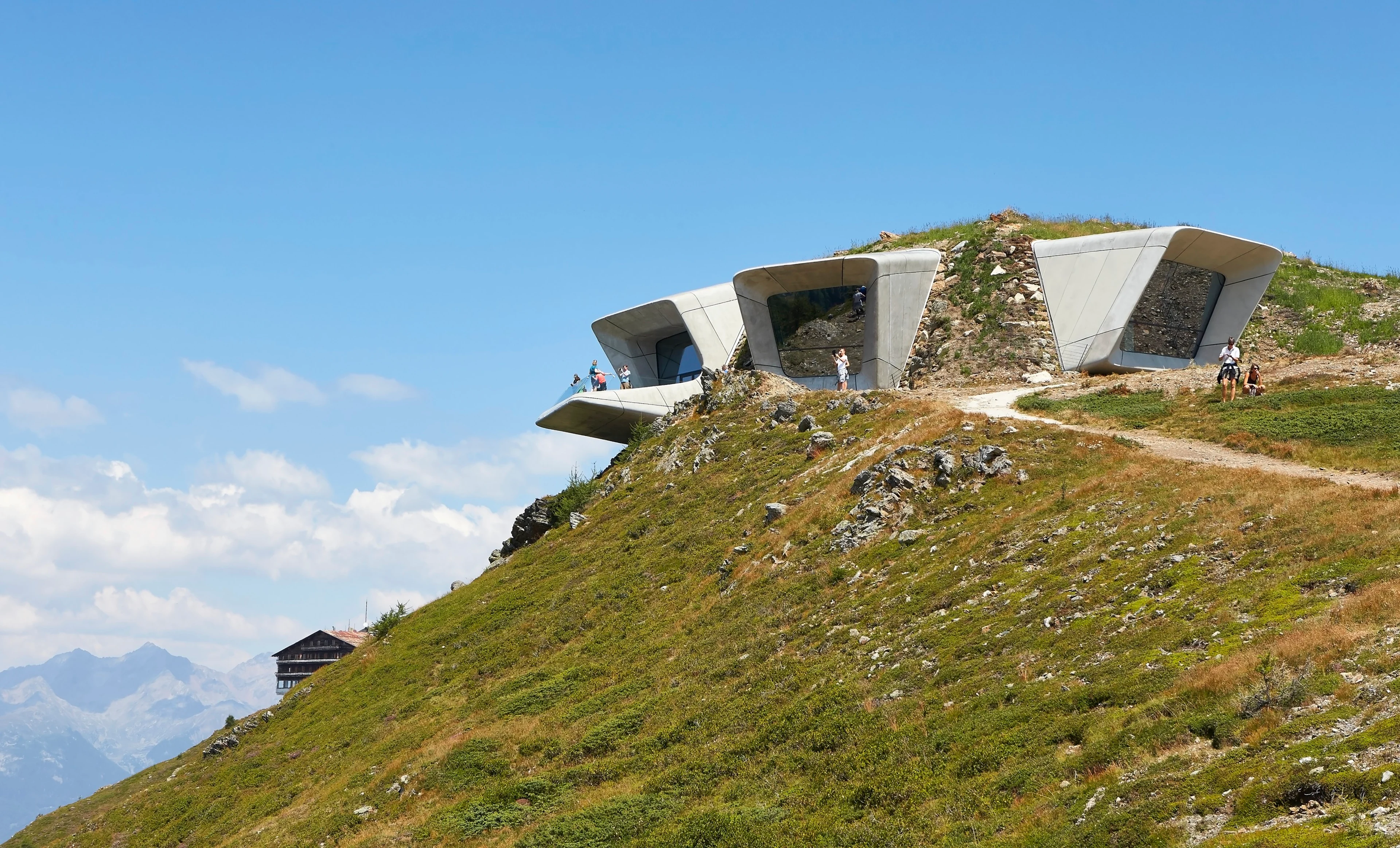
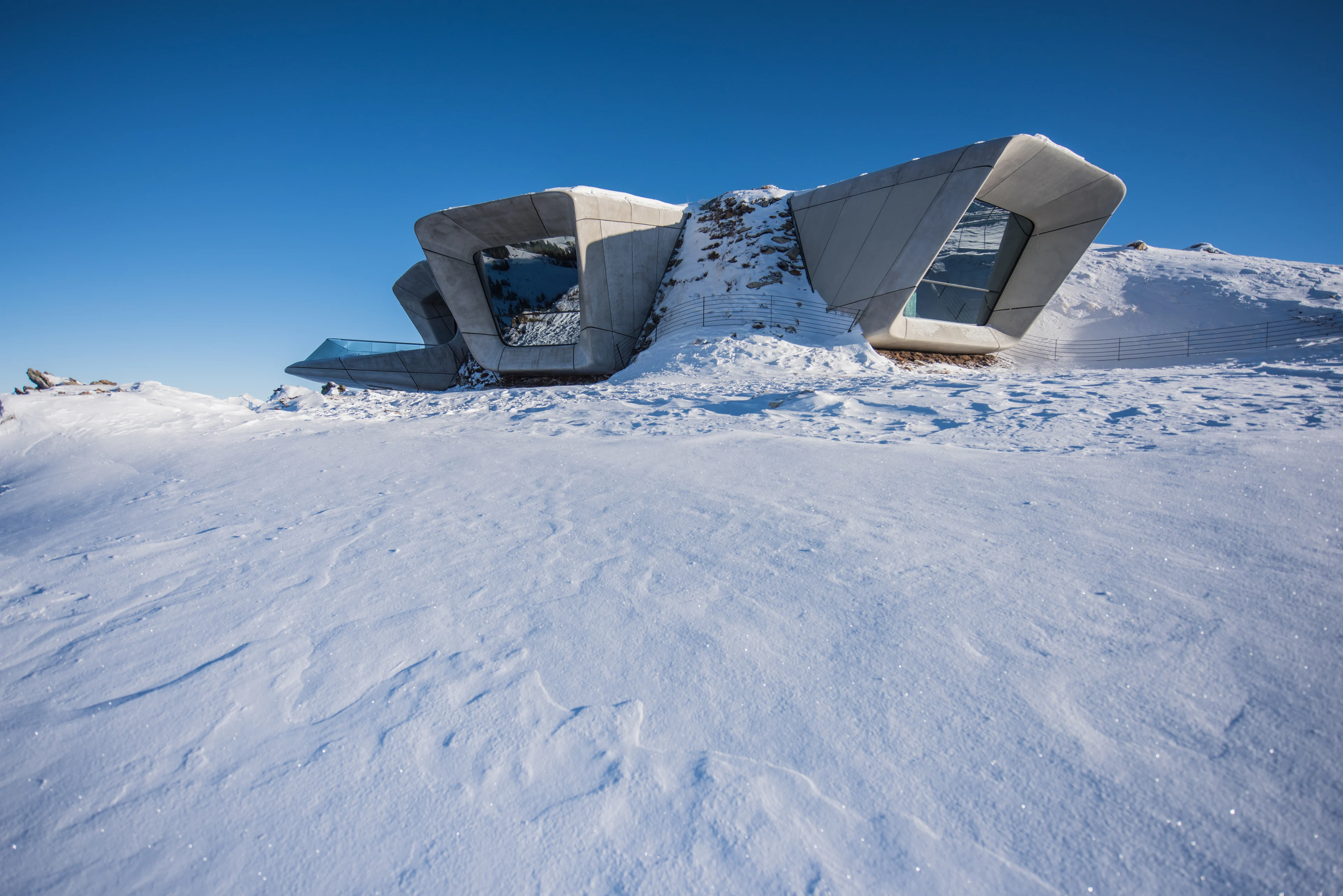
Reinhold Messner’s vision for a museum of submerged into the peak of Mount Kronplatz detailed three very specific locations of where the museum should emerge from ground: “In the first, a window looking out southwest to the peak of the Peitlerkofel mountain, in the second, another window should look south toward the Heiligkreuzkofel peak, in the third, a balcony should face west to the Ortler and South Tyrol.”
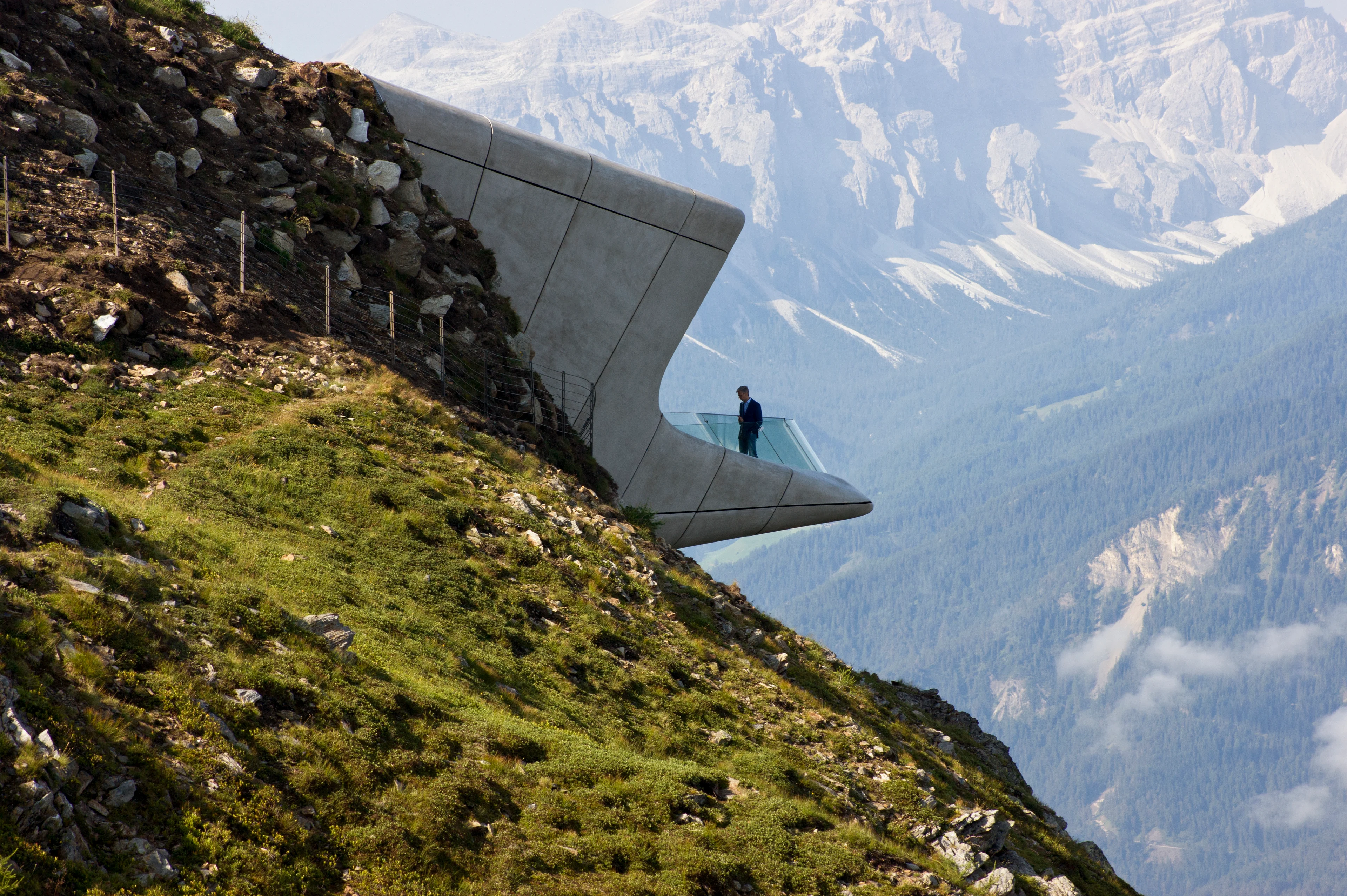
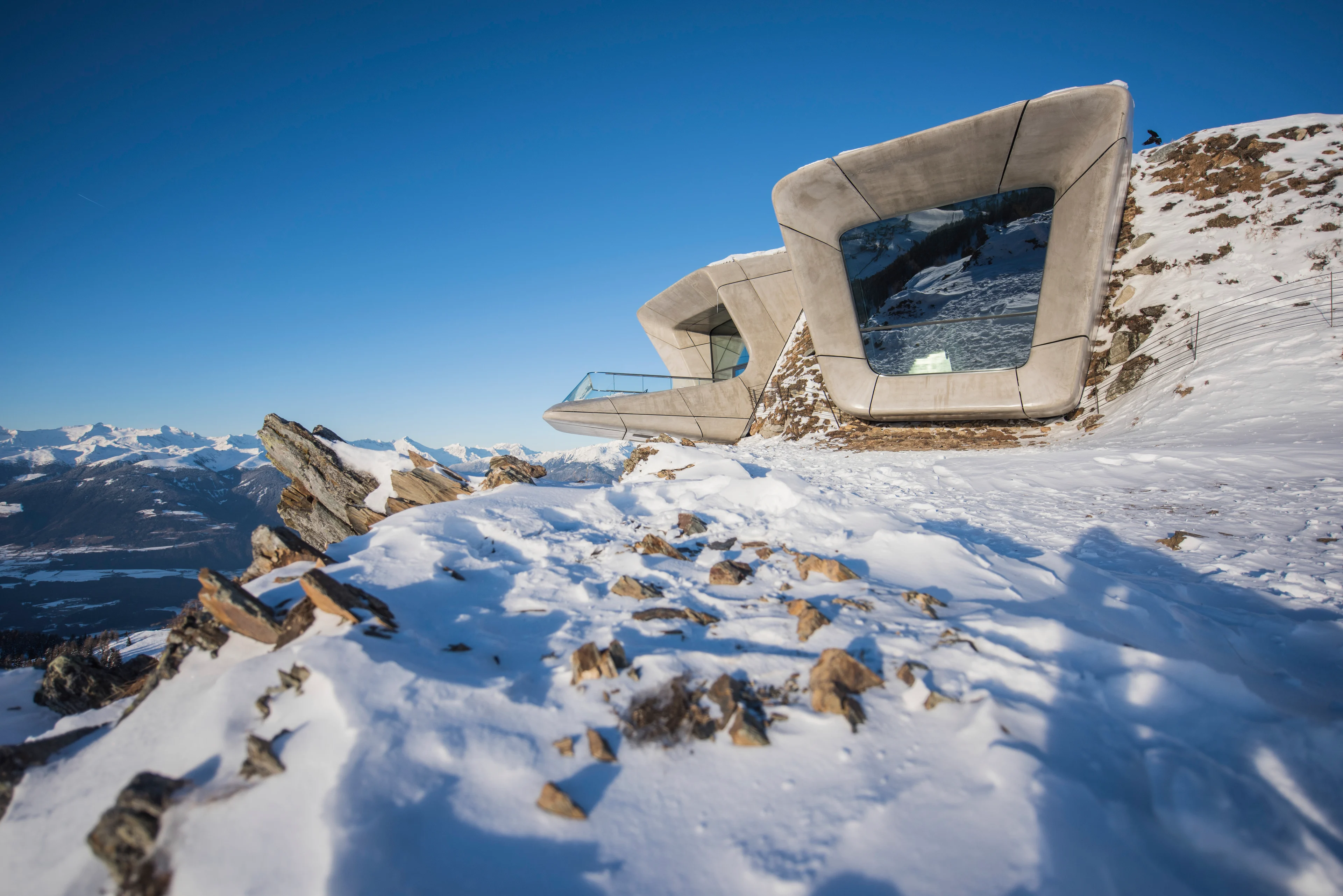
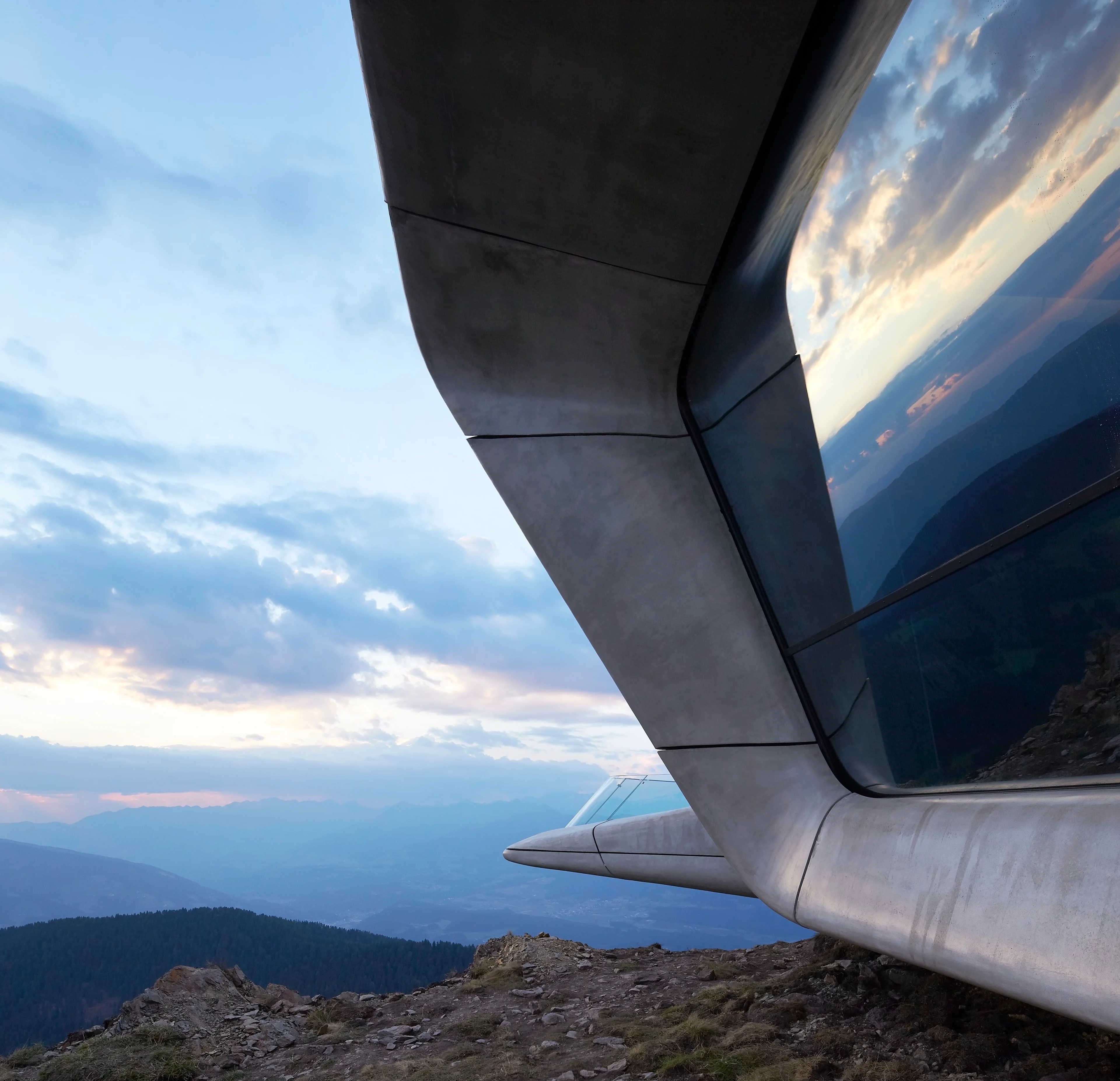
Informed by the shards of rock and ice of the surrounding landscape, concrete canopies have been cast in-situ and rise from the ground to protect the museum’s entrance, viewing windows and terrace.
Photograph by Harald Wisthaler
Photograph by Harald Wisthaler
Photograph by Harald Wisthaler
Photograph by Harald Wisthaler
01
02
03
04
A 240 degree panorama across the Alps
Reflecting the lighter colours and tones of the jagged limestone peaks of the surrounding Dolomites, the exterior panels are formed from a lighter shade of glass-reinforced fibre concrete and fold within the museum to meet the darker interior panels that have the luster and colouration of anthracite found deep below the surface.
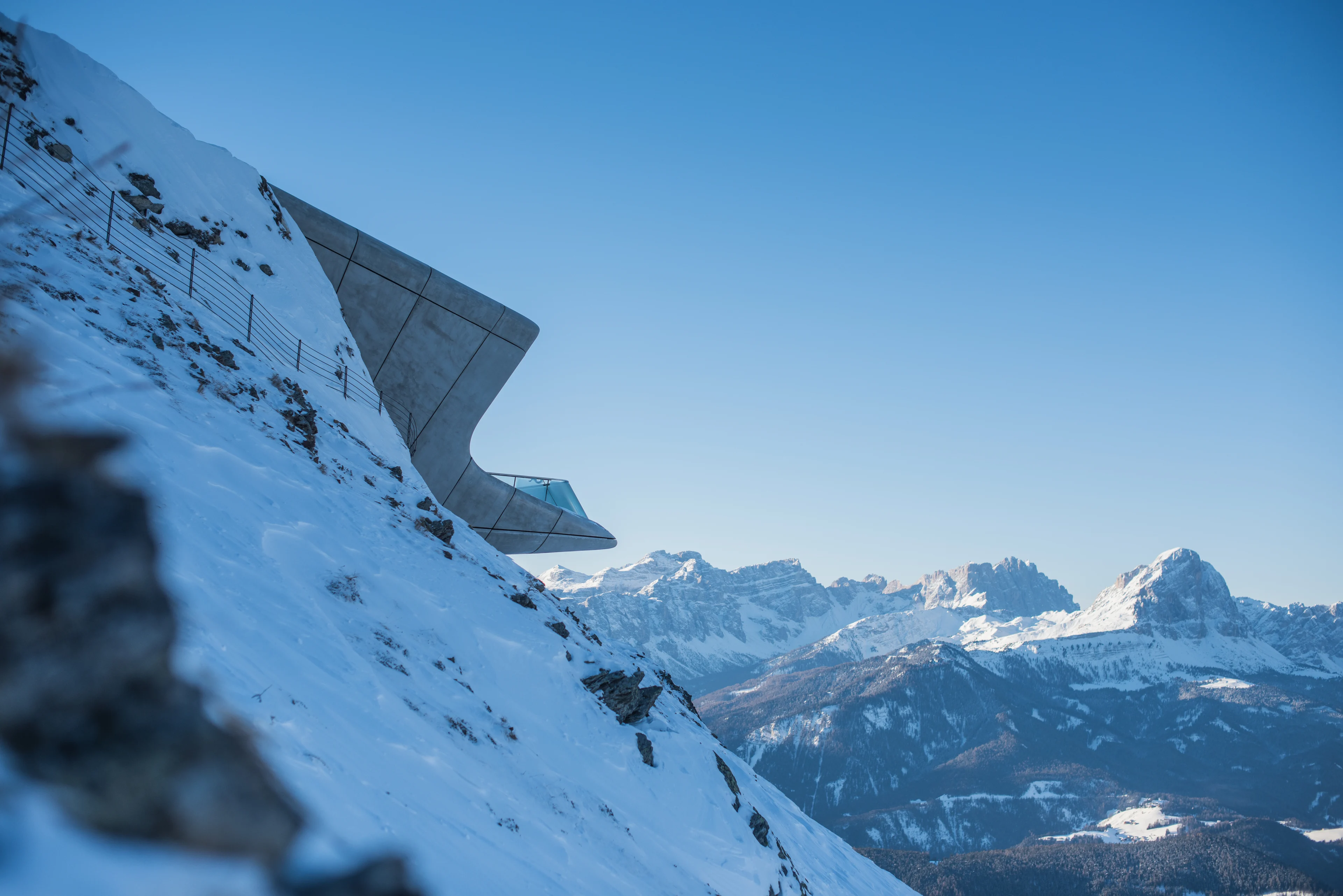
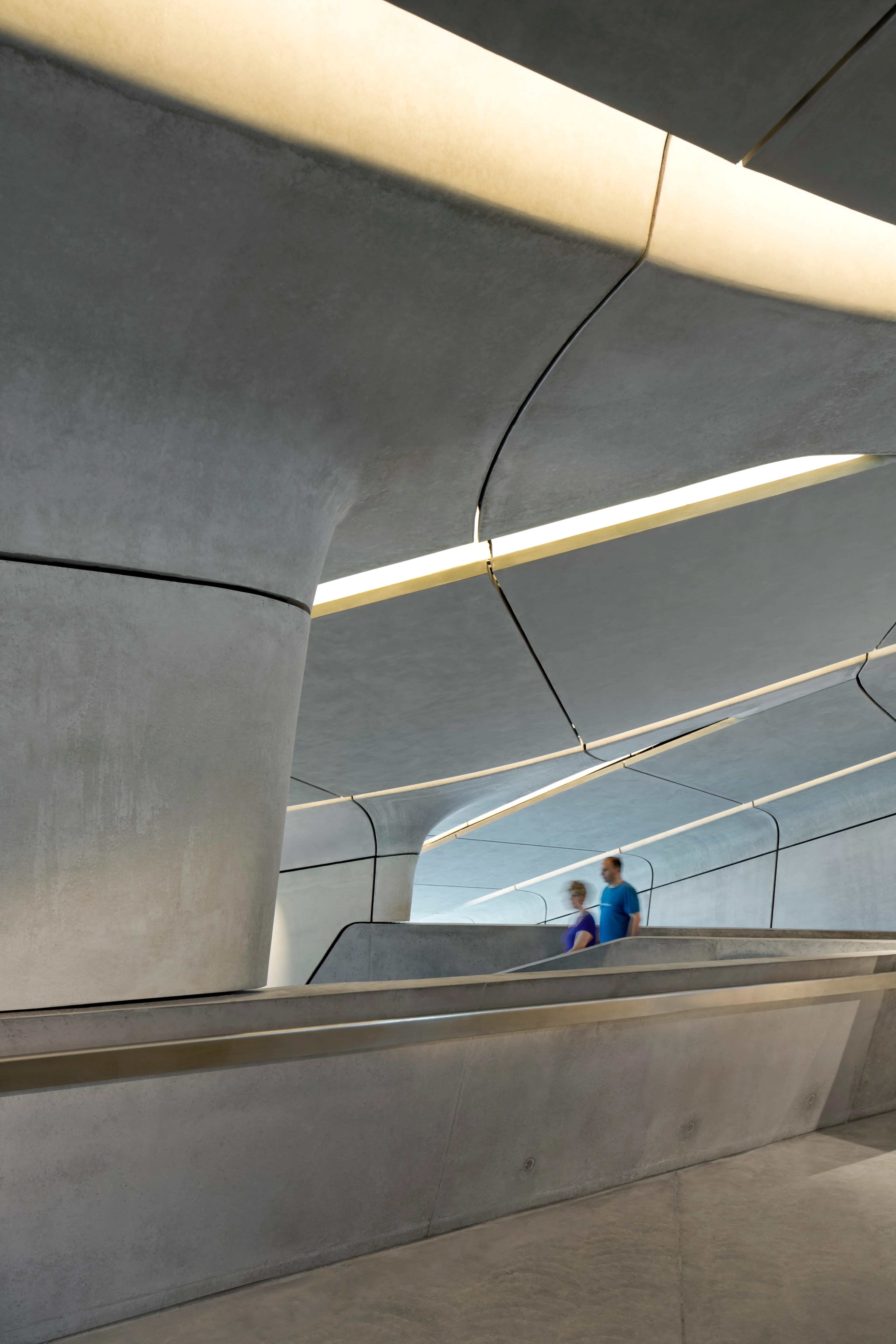
A series of staircases, like waterfalls in a mountain stream, cascade through the museum to connect the exhibition spaces and describe visitors’ circulation over three levels. At the lowest level, visitors pass the viewing windows as they traverse through the galleries to emerge out onto the terrace that projects 6m from the mountainside giving a 240 degree panorama across the Alps.
At 1,000 square meters, the museum is arranged over several levels to reduce its footprint. During construction, 4,000 cubic meters (140,000 cubic feet) of earth and rock was excavated and then replaced above and around the completed structure - immersing the museum within Mount Kronplatz and helping to maintain a more constant internal temperature. The wide windows allow natural light to penetrate deep within the museum, drawing visitors forward through the interior to the panoramic windows and viewing terrace cantilevered over the valley far below
Photograph by Werner Huthmacher
Conveying the surrounding landscape
Constructed from in-situ reinforced concrete, the museum‘s structure has walls between 40-50cm, while its roof supporting the replaced earth and rock that embeds the museum into the mountain, is up to 70cm thick.
The majority of the museum’s exterior and interior panels are also made from in-situ concrete, with a formwork of tapered surfaces used to generate the peaks and abutments of the exterior panels that convey the rock and ice formations of the surrounding landscape. Almost 400 internal and external panels were prefabricated, with the more complex curved elements created in a process of spraying layers of high-performance fibre-concrete into moulds carved from CNC-milled foam using the architect‘s 3D model.
A scaffold of steel sections with adjustable brackets to offset tolerances forms the museum’s substructure. Counter-plates for the connecting brackets are laminated directly within each panel during the prefabrication process
Culture
Explore more of our cultural projects
From a civic art centre that unites three distinct cultural institutions to a science fiction museum whose landscaping contributes to the city’s drainage and flood defence systems, discover our latest cultural projects.
Render by Devisual
Z8 Tower
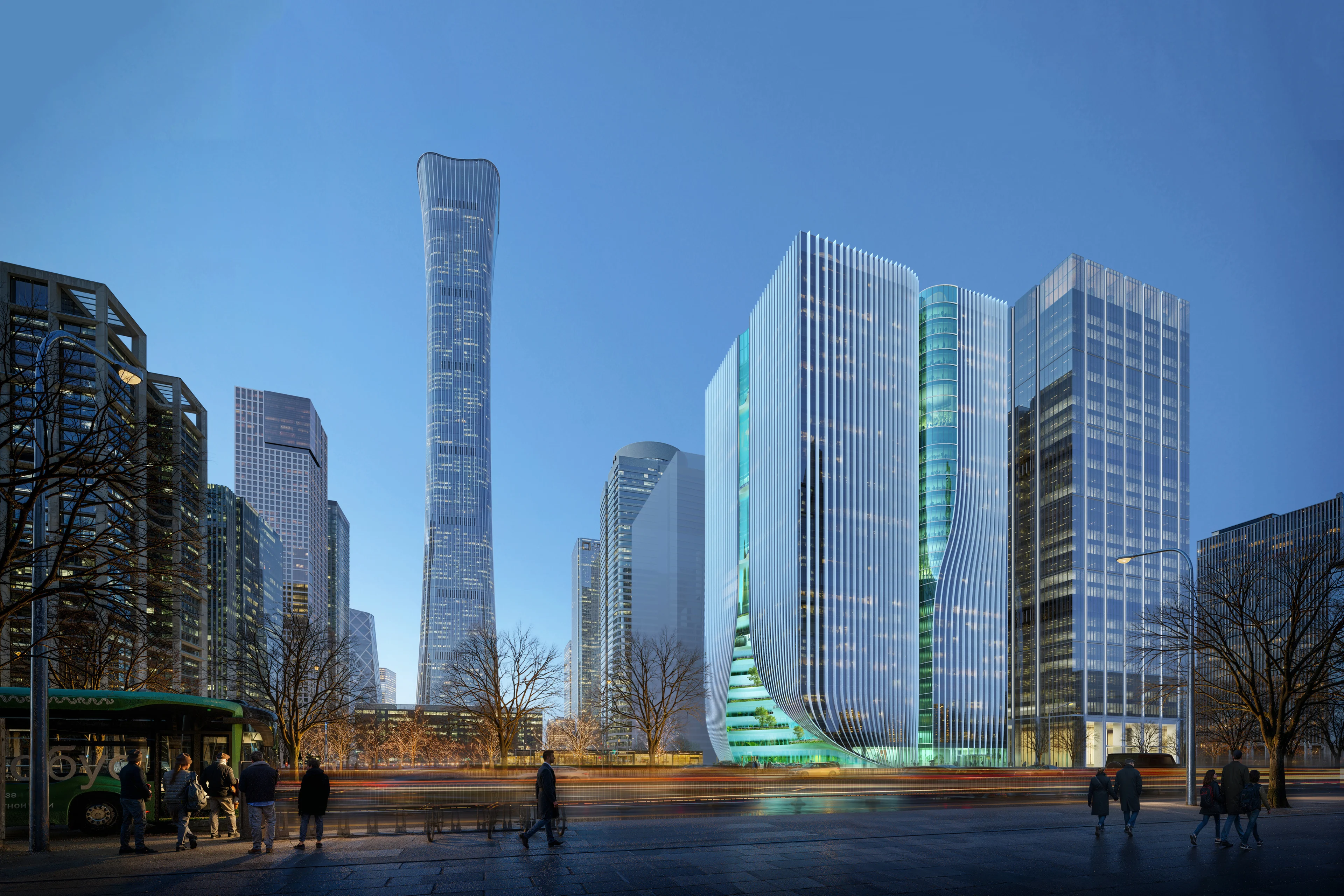
Located in the core of Beijing’s Central Business District (CBD) at the intersection of Jianguo Road and Jinhe East Road, the new Z8 Tower faces the CBD’s central park and is defined by the historic alignment and urbanism of the city’s Chang’an Avenue.
Songshan Lake Performance and Exhibition Centre
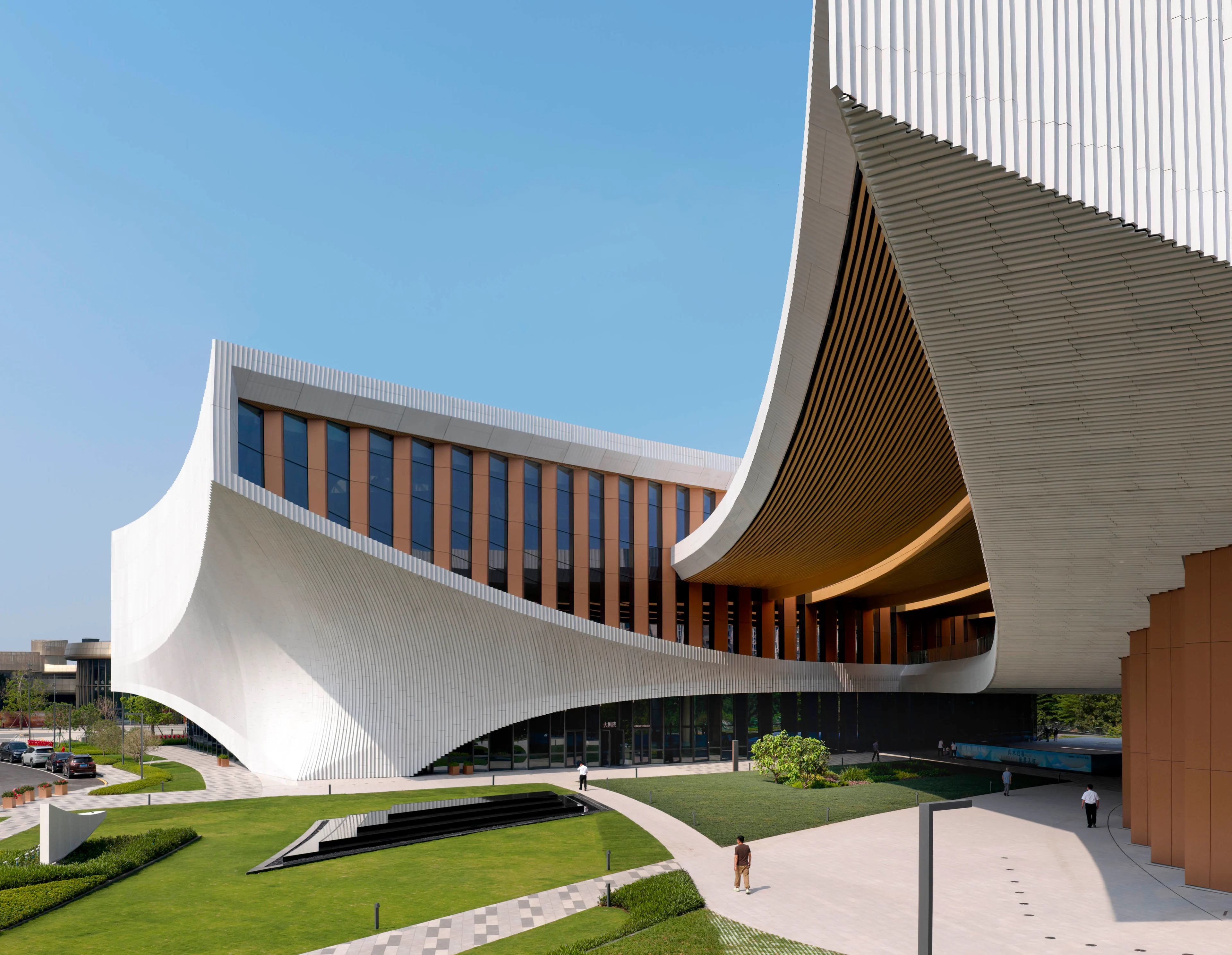
Located in Dongguan within the Greater Bay Area of southern China’s Pearl River estuary, the new Songshan Lake Exhibition and Performance Centre is at the heart of a mixed-use masterplan to revitalize the Yuehe Lake waterfront.
Qiantang Bay Cultural District
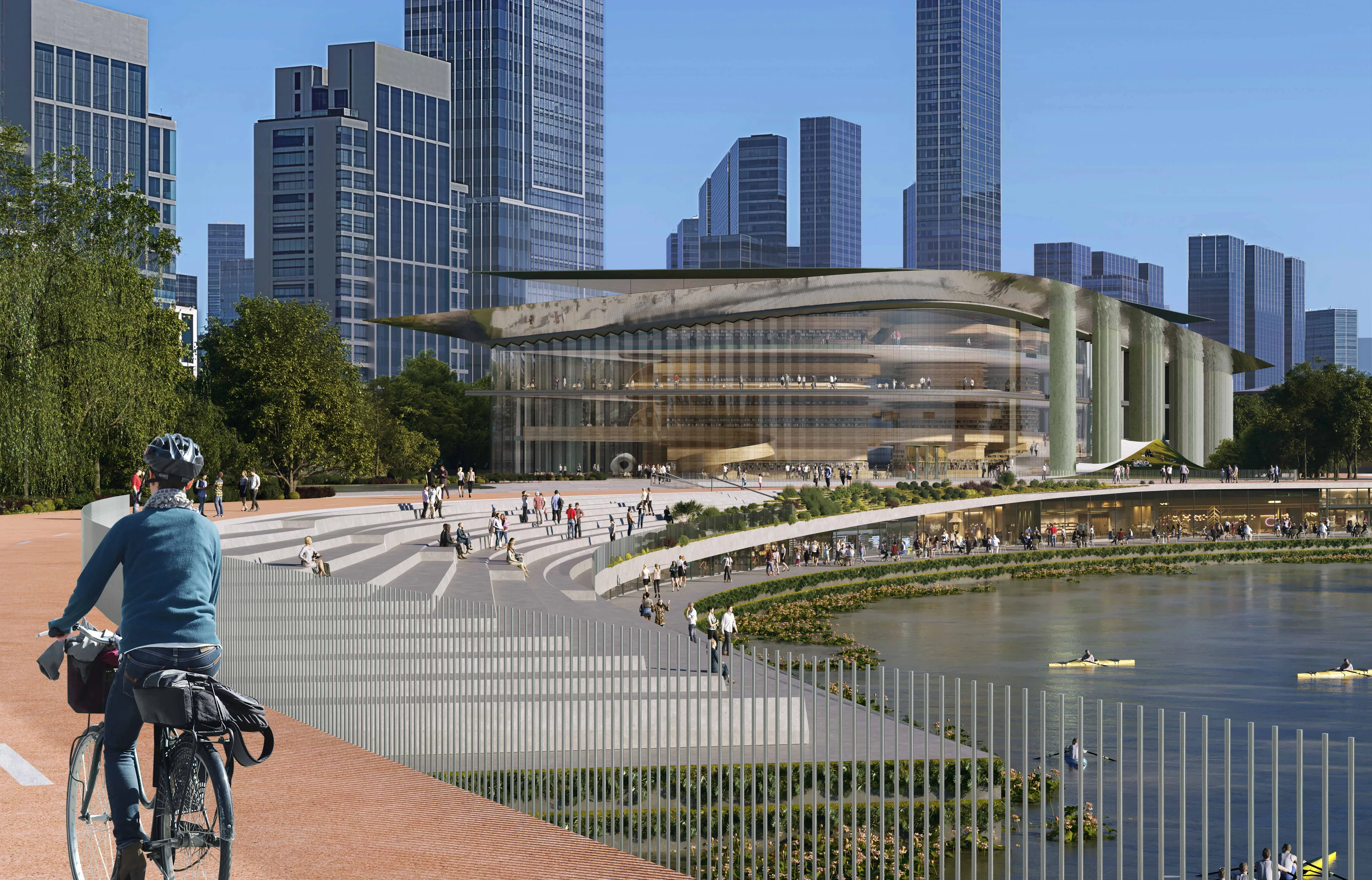
A series of new landscaped parklands, terraces and gardens along the Zhedong Canal within the Xiaoshan district of Hangzhou
Render by Atchain
Yidan Center
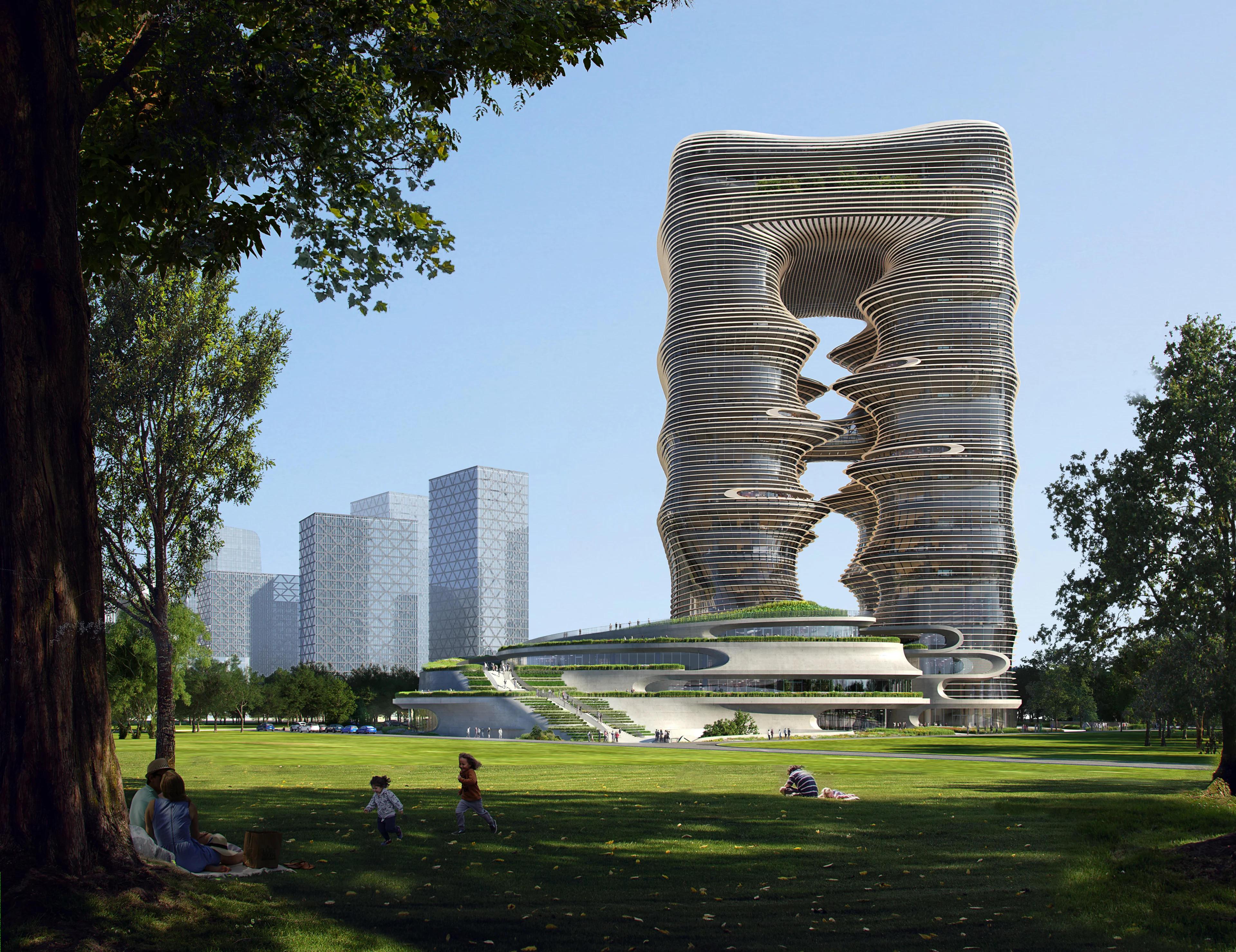
A place of convergence and collaboration, the Yidan Center will be home to the Chen Yidan Foundation in its work to promote lifelong learning and innovation in education.
Render by Proloog
Elevation River
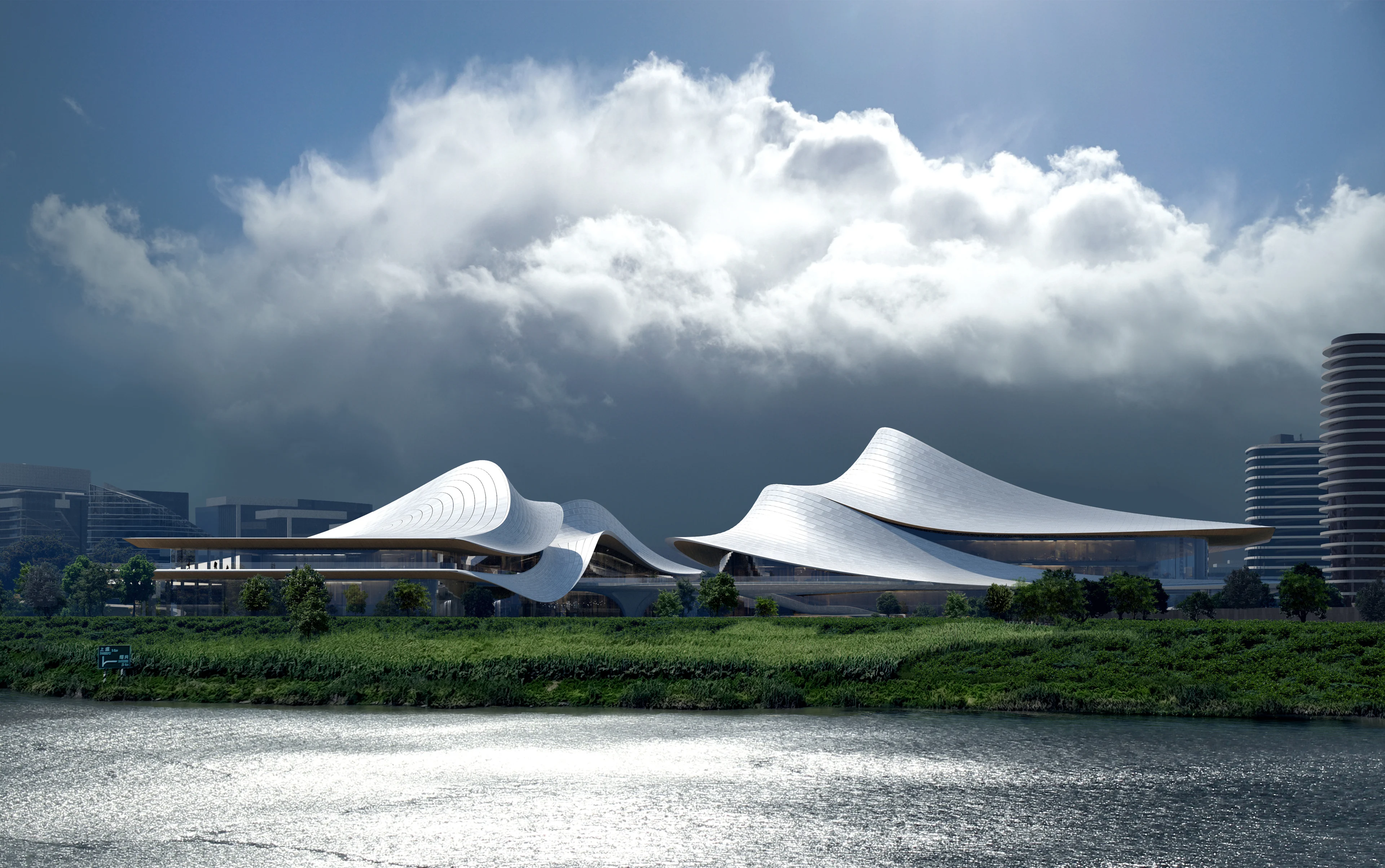
Zhejiang Shaoxing Shangyu District Cao’e River Culture and Art Centre
Designed to host local and international productions of opera, dance and drama together with large-scale symphonies and musical theatre, the Art and Culture Centre includes a 1,400-seat Grand Theatre, 500-seat Black-Box Multifunctional Hall, 2,900 sq. m Arts and Education Centre, 3,000m² Conference Centre, 7,500m² Heritage Museum and a 10,000m² Digital Art Gallery.
Render by Specto-Digital
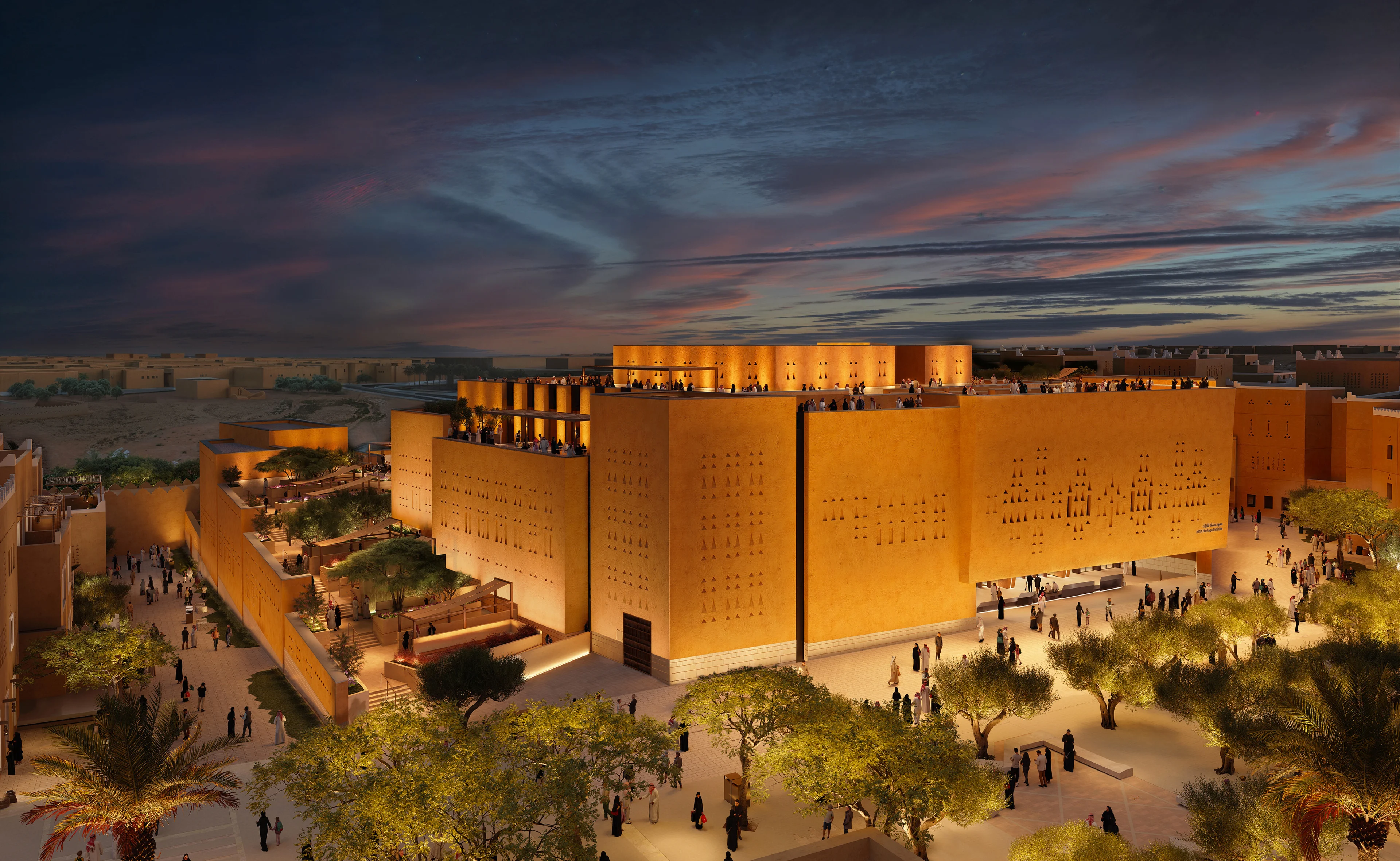
Asaan Museum
Meaning ‘inheritance passed down through generations’, Asaan will be an institution dedicated to preserving and celebrating this rich heritage, in addition to promoting creativity and knowledge sharing.
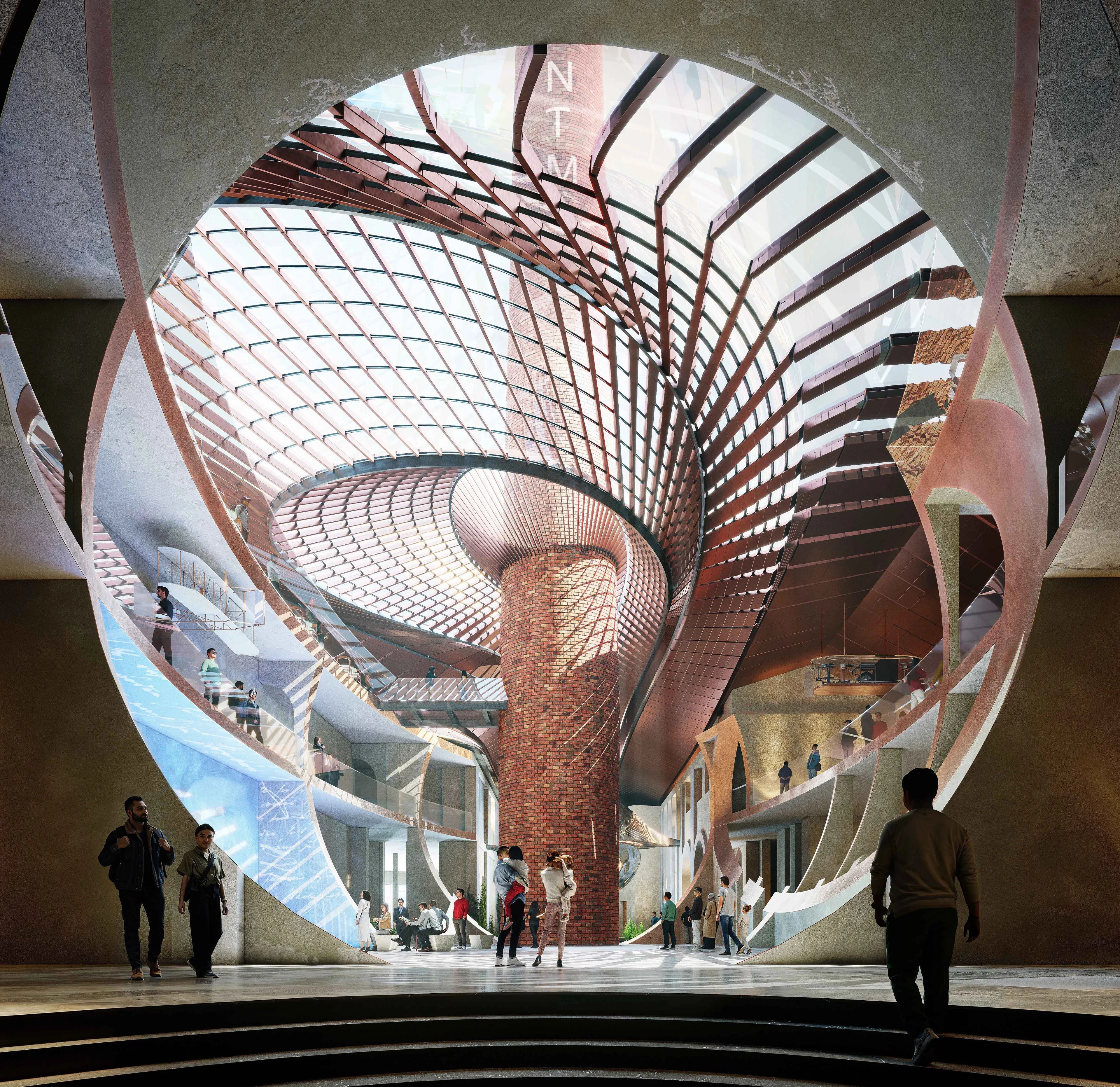
Nikola Tesla Museum
The new Nikola Tesla Museum renovates Belgrade’s historic Milan Vapa Paper Mill into a cultural destination celebrating Tesla’s legacy while preserving the city’s architectural heritage and creating a variety of new public spaces for local residents and visitors.
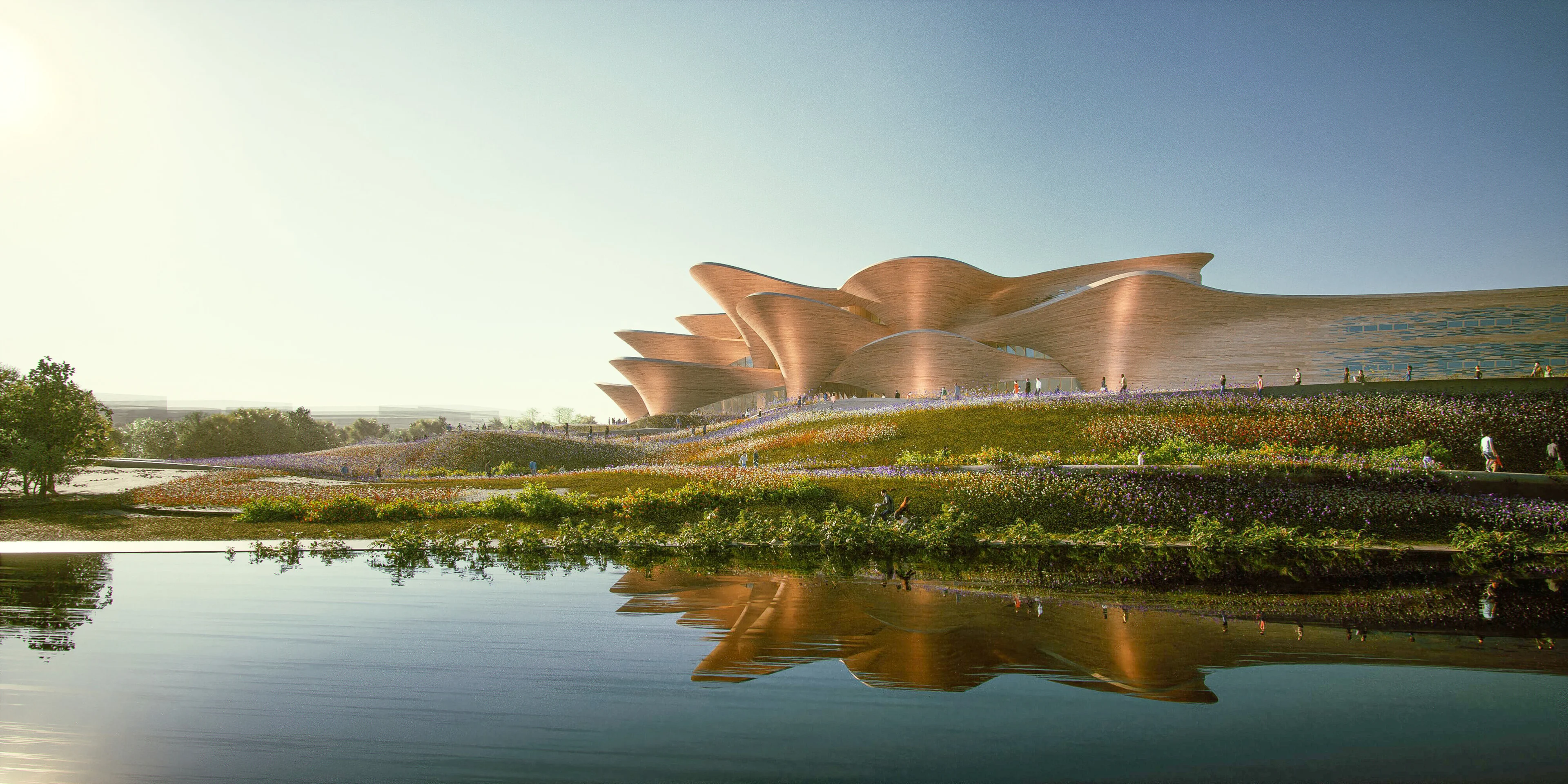
Courtesy of ZHA
River View
Alisher Navoi Institute
The Alisher Navoi International Scientific Research Centre will incorporate the Navoi State Museum of Literature, Auditorium, International Research Centre and School.
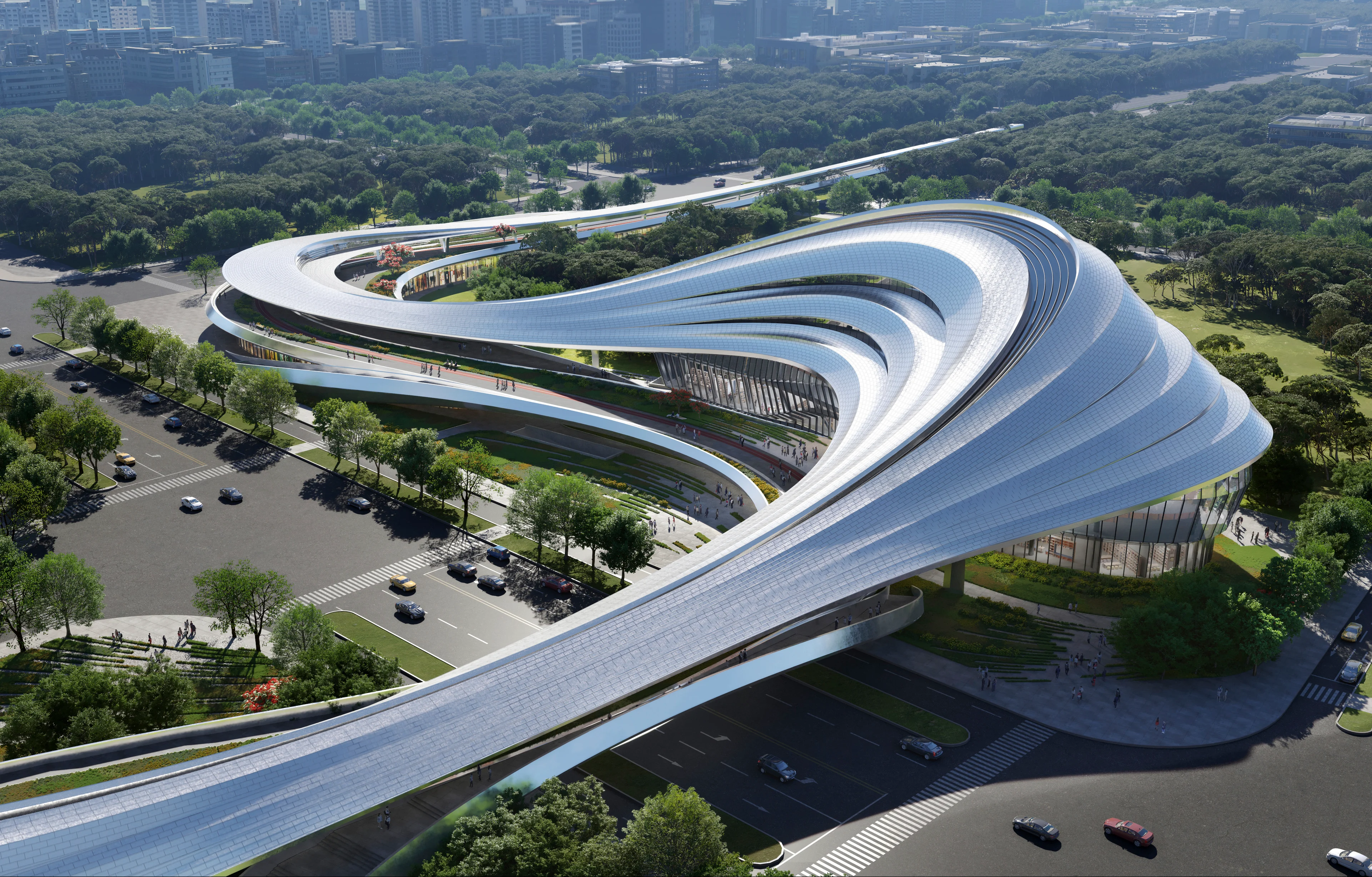
Render by Atchain
Jinghe New City Culture and Art Centre
Jinghe New City is growing as a science and technology hub north of Xi’an in China’s Shaanxi province. Supported by new scientific research institutes and driven by environmental considerations, the city is becoming a centre for developing industries focusing on new energy and materials, artificial intelligence and aerospace.
Photograph by Virgile Simon Bertrand
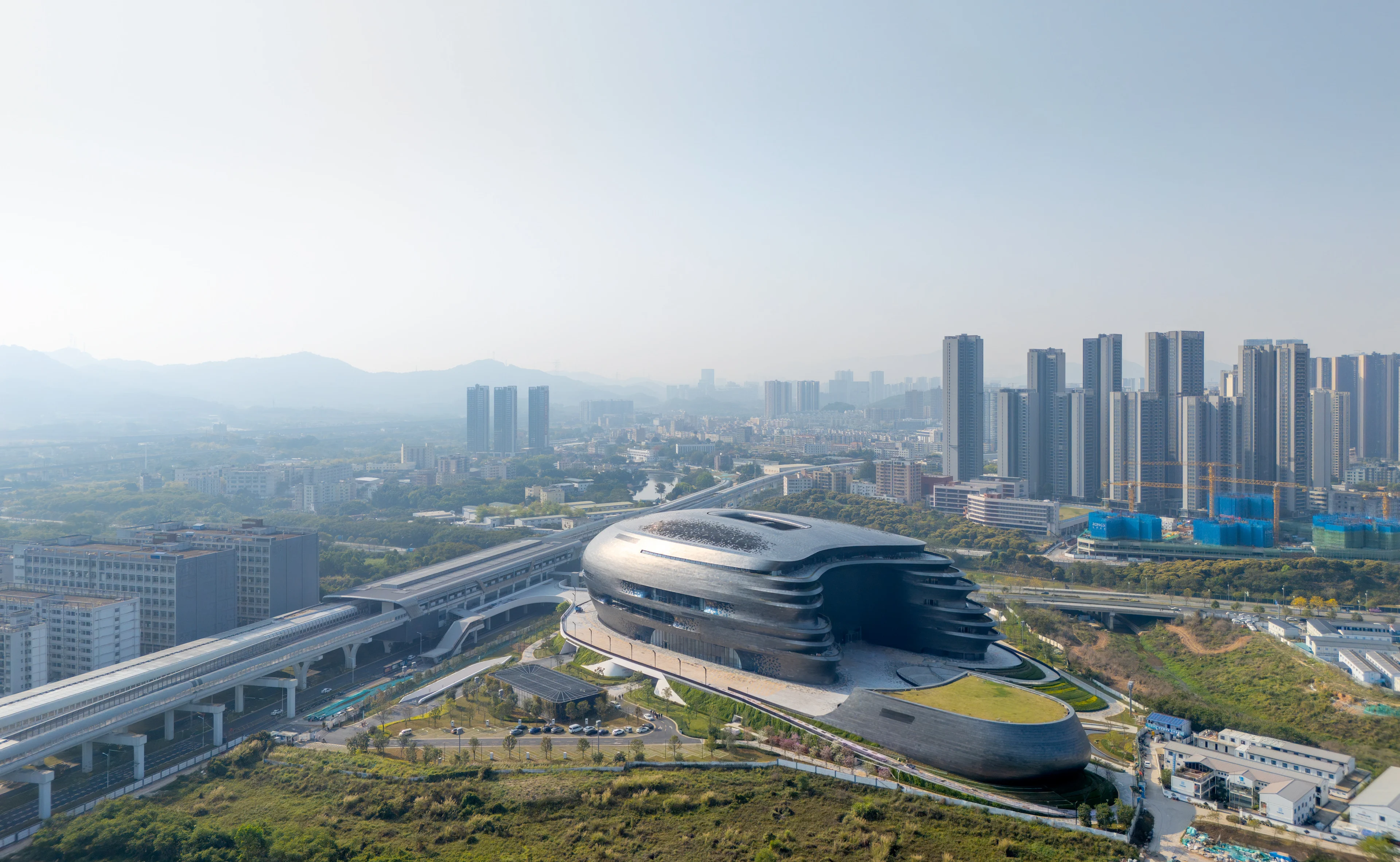
Shenzhen Science & Technology Museum
Showcasing the scientific endeavour, ground-breaking research and future possibilities of technology, this new institution will explore the power of science and the technological advancements defining our future.
Photograph by Luke Hayes
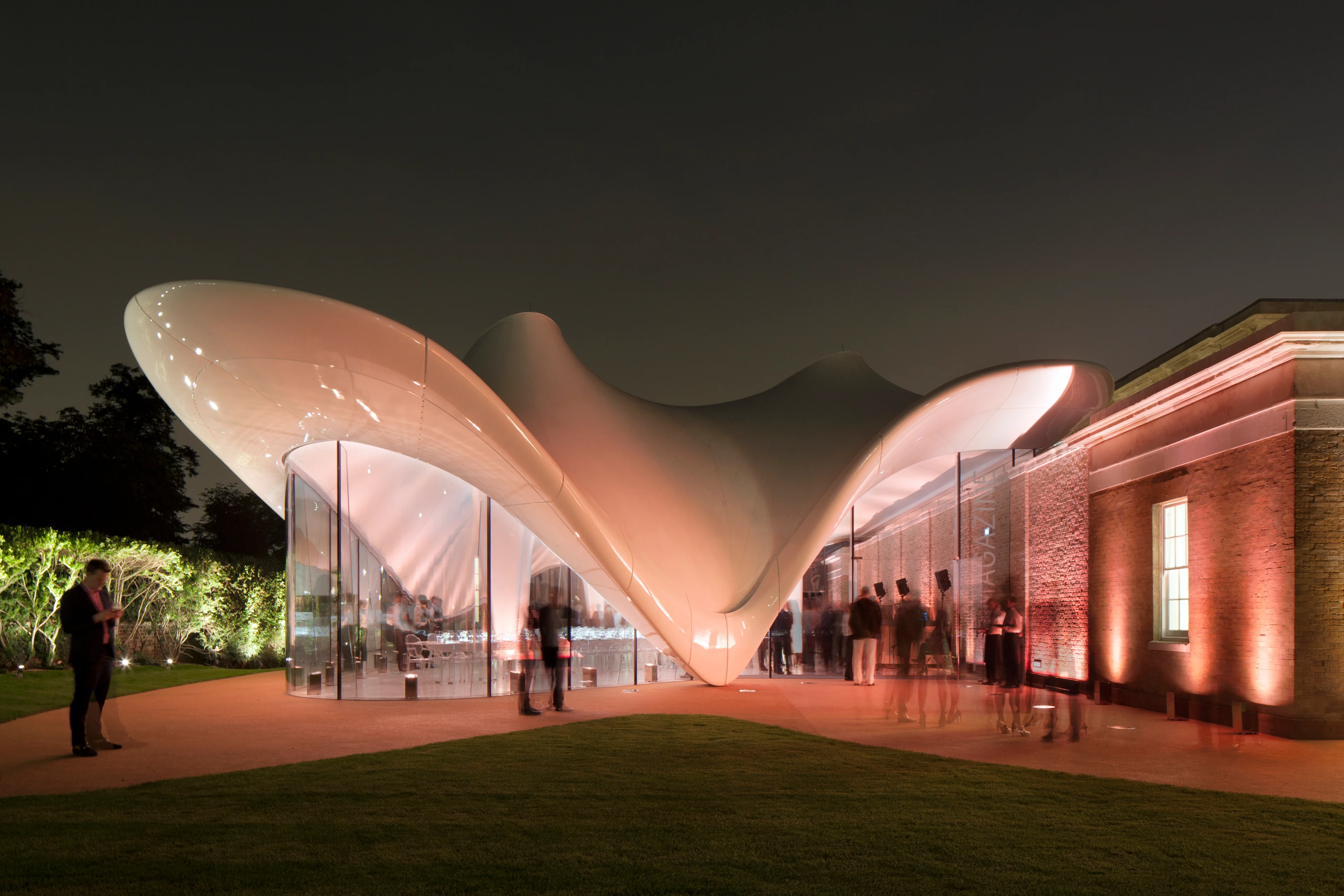
Serpentine North Gallery
The Serpentine North Gallery consists of two distinct parts, namely the conversion of a classical 19th century brick structure – The Magazine – and a 21st century tensile structure. The Serpentine North Gallery is thus – after MAXXI in Rome – the second art space where ZHA has created a synthesis of old and new.
Photograph by Fernando Guerra
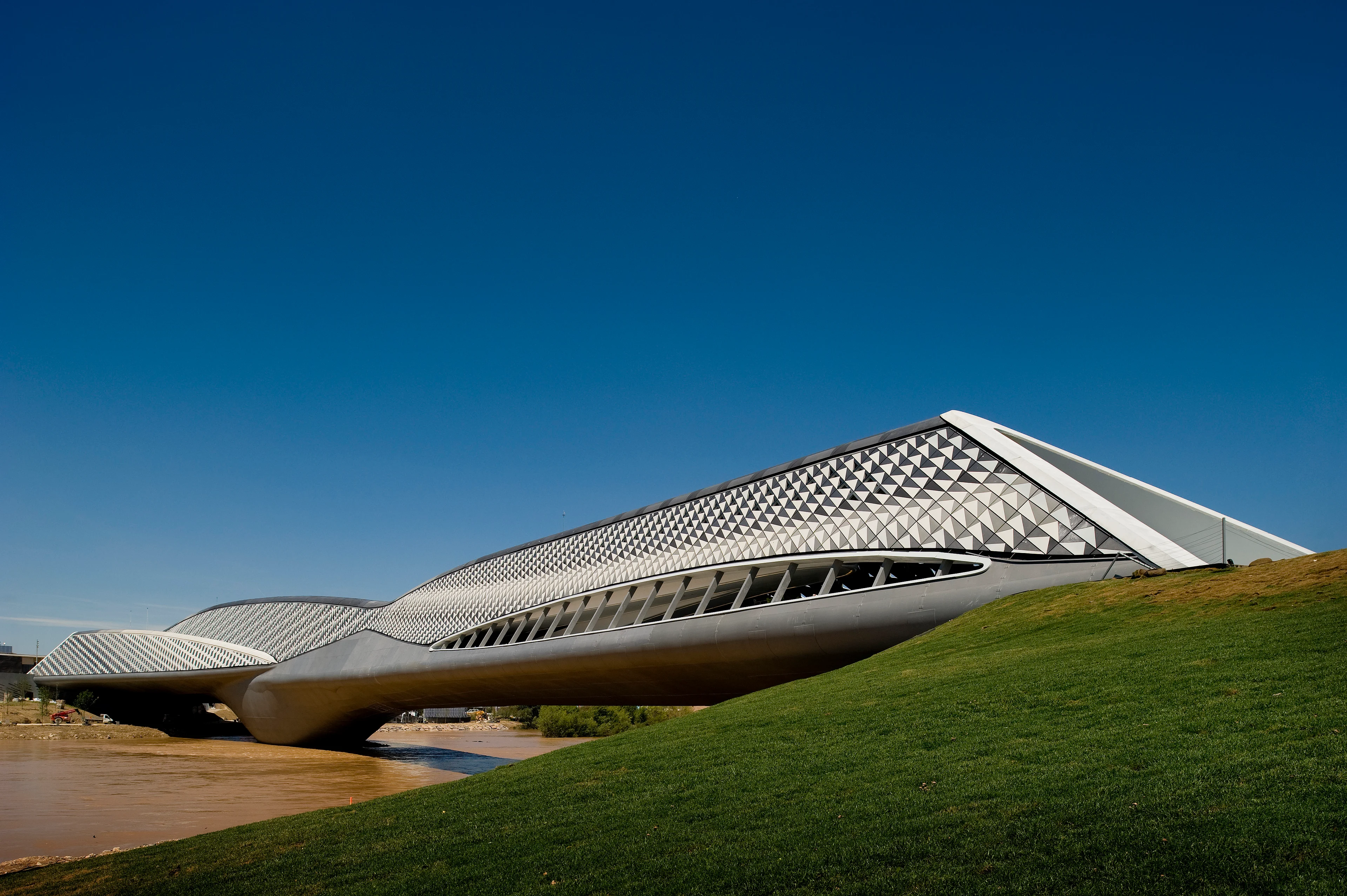
Zaragoza Bridge Pavilion
An enclosed interactive space spanning the River Ebro to form a gateway to the Zaragoza Expo 2008, a hybrid of pedestrian footbridge and exhibition pavilion. Four structural elements correspond to specific spatial enclosures, which intersect and brace each other. This fluid, dynamic design interprets the Expo’s theme: ‘Water and Sustainable Development.’
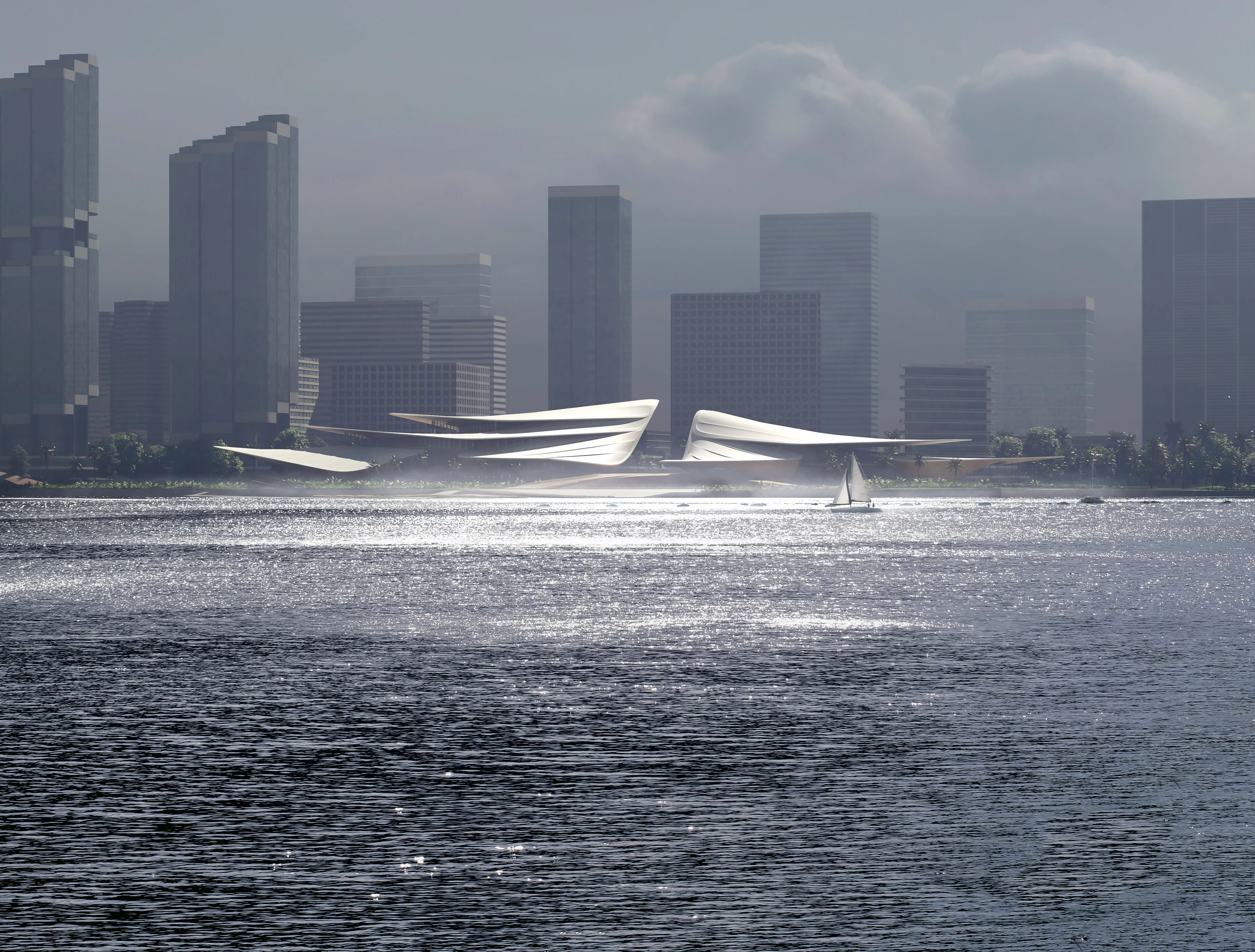
Sanya Cultural District
Located at the entrance to Sanya’s harbour, the new cultural district by ZHA is adjacent to the Jiangang Road terminus of Sanya’s tram network that connects many of the residential and hotel districts on Sanya Bay with the city’s high-speed rail station.
Courtesy of Arch-Exist
default
Chengdu Science Fiction Museum
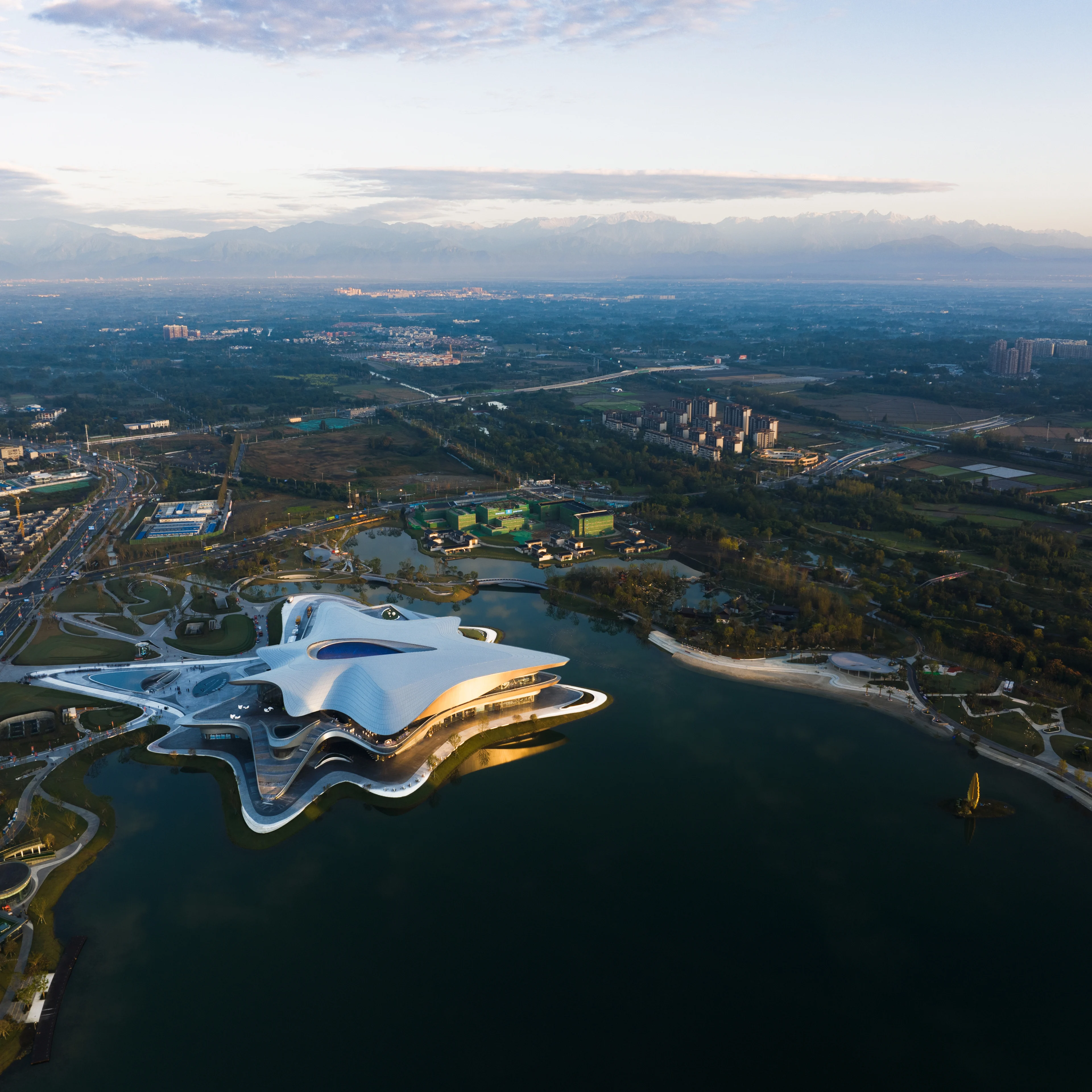
The new Chengdu Science Fiction Museum is situated on Jingrong Lake within the Science & Innovation New City of Chengdu’s Pidu District.
Render by Negativ
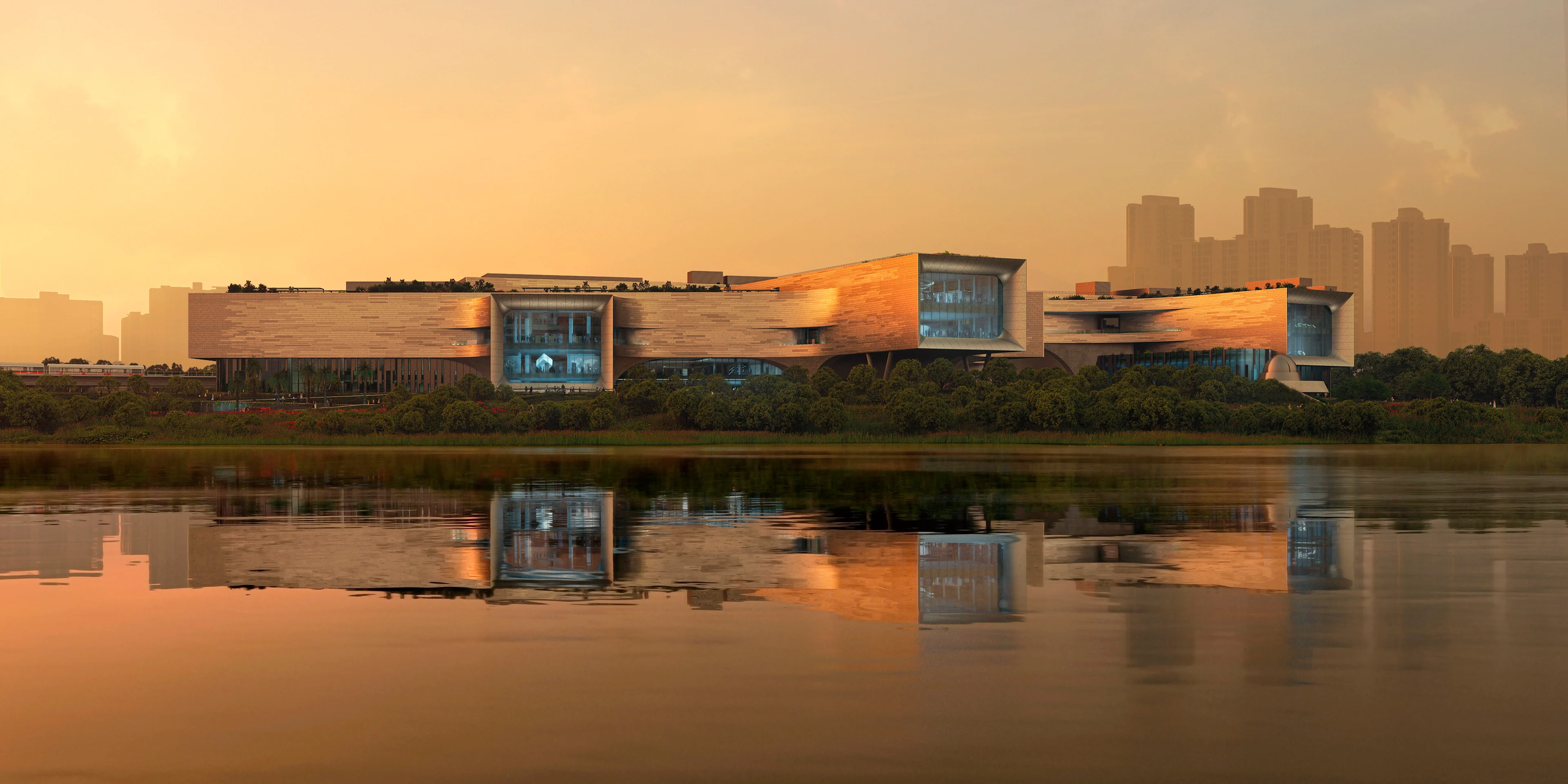
Waterfront view of new Science Centre. render by Negativ. The image is an artist’s impression, and final design may be subject to changes.
Singapore New Science Center
Singapore’s New Science Centre will provide unique facilities and programmes as a destination for all Singaporeans to access science, technology, engineering and mathematics (STEM) education and experiences.
01
02
03
04
05
06
07
08
09
10
11
12
13
14
15