
Photograph by Hufton + Crow
East Lansing, United States of America
2007 - 2012
Michigan State University
Eli & Edythe Broad Art Museum
Photograph by Paul Warchol
Photograph by Hufton + Crow
Photograph by Hufton + Crow
Photograph by Hufton + Crow
Photograph by Hufton + Crow
Photograph by Hufton + Crow
Photograph by Hufton + Crow
Photograph by Paul Warchol
01
02
03
04
05
06
07
08
A network of paths and visual connections
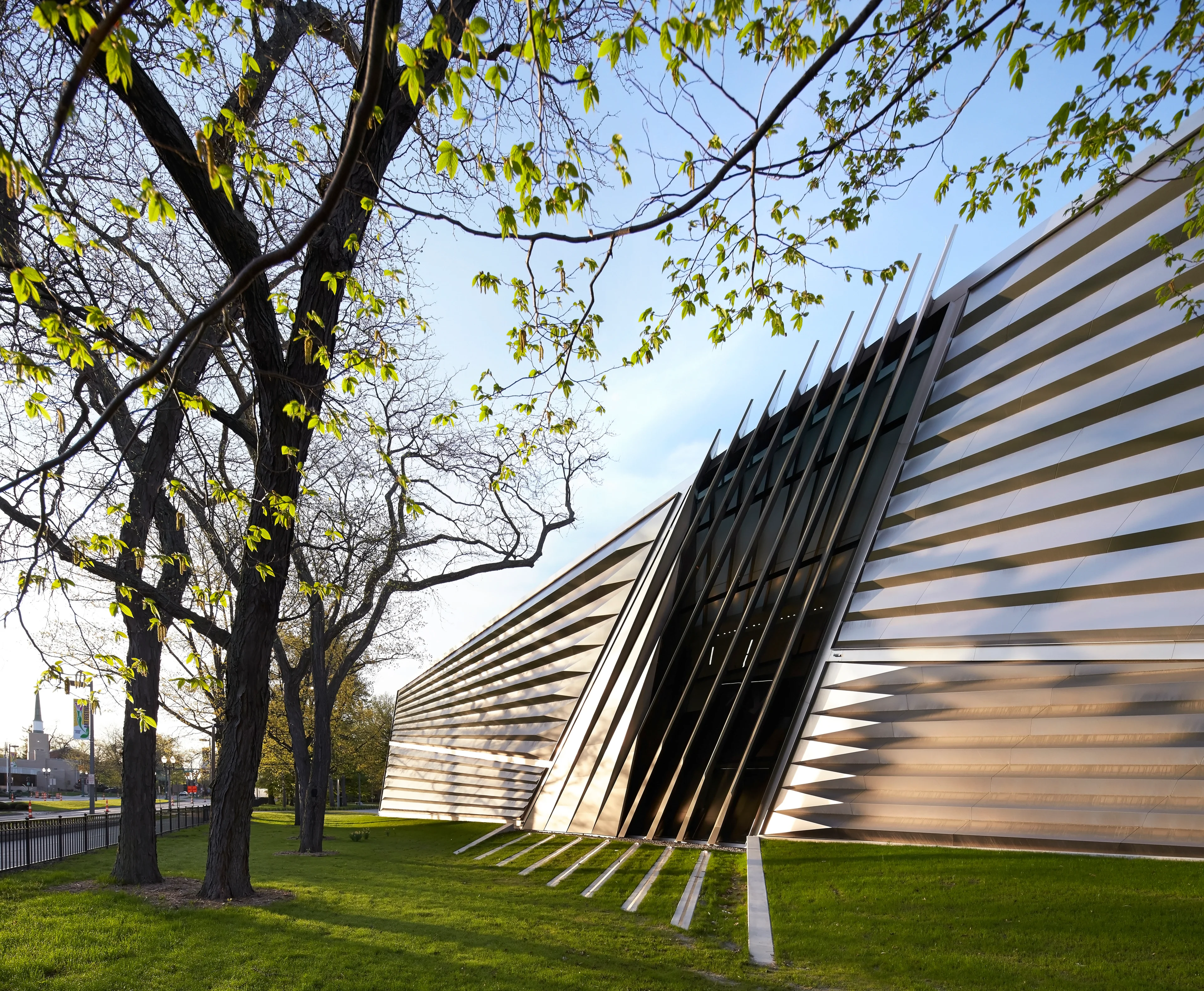
The Eli and Edythe Broad Art Museum, located at the northern edge of the Michigan State University campus, is influenced by a set of movement paths that traverse and border the site. The vitality of street life on the northern side of Grand River Avenue and the historic heart of the university campus at the south side generate a network of paths and visual connections; some are part of the existing footpath layout, others create shortcuts between the city and the campus side of Grand River Avenue.
The circulation travelling in an east-west direction on Grand River Avenue, along the main road of East Lansing and also on the main approach street to the campus produce an additional layer of connections that are applied to this highly frequented interface between city and campus.
Photograph by Iwan Baan
Truly embedded within its unique context
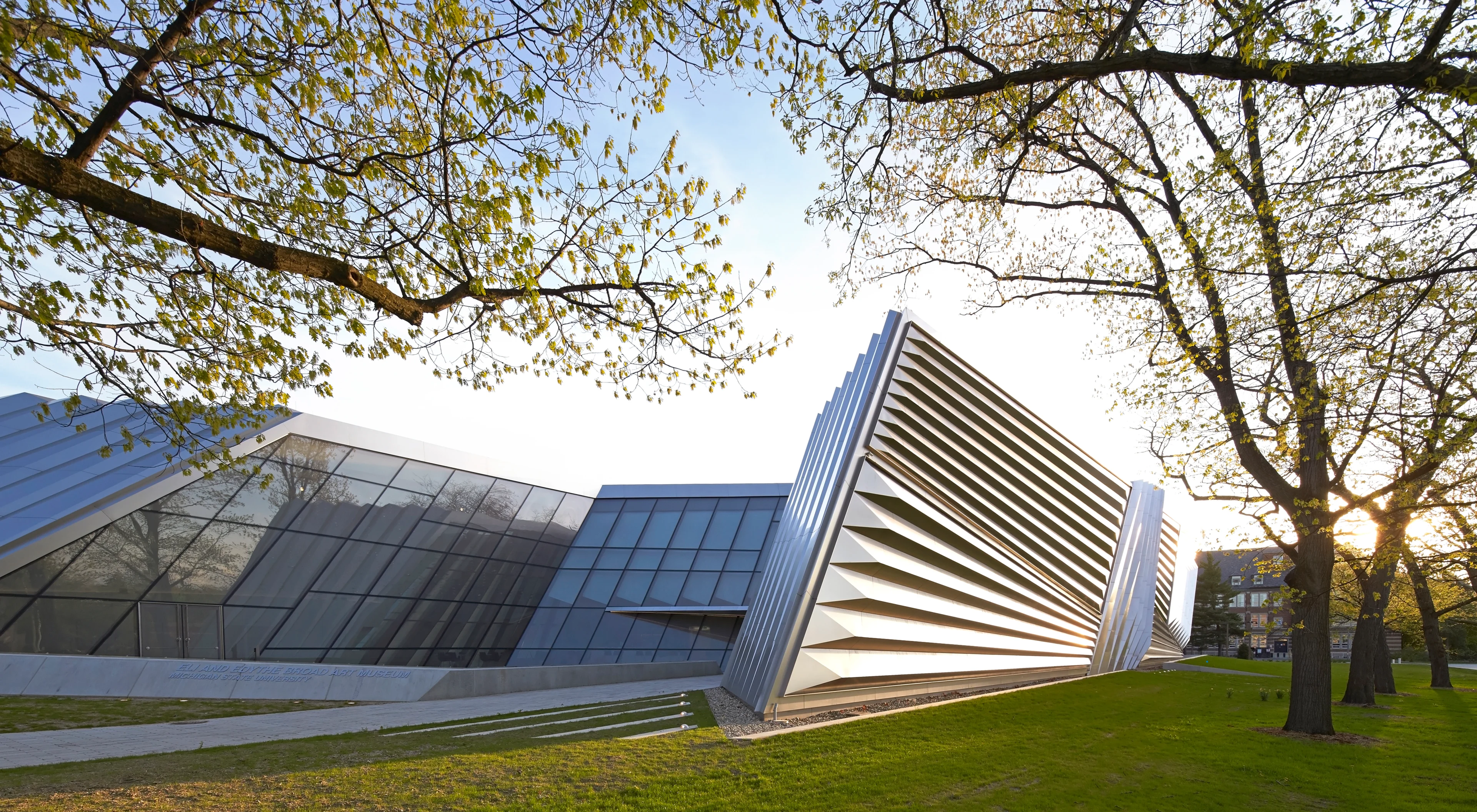
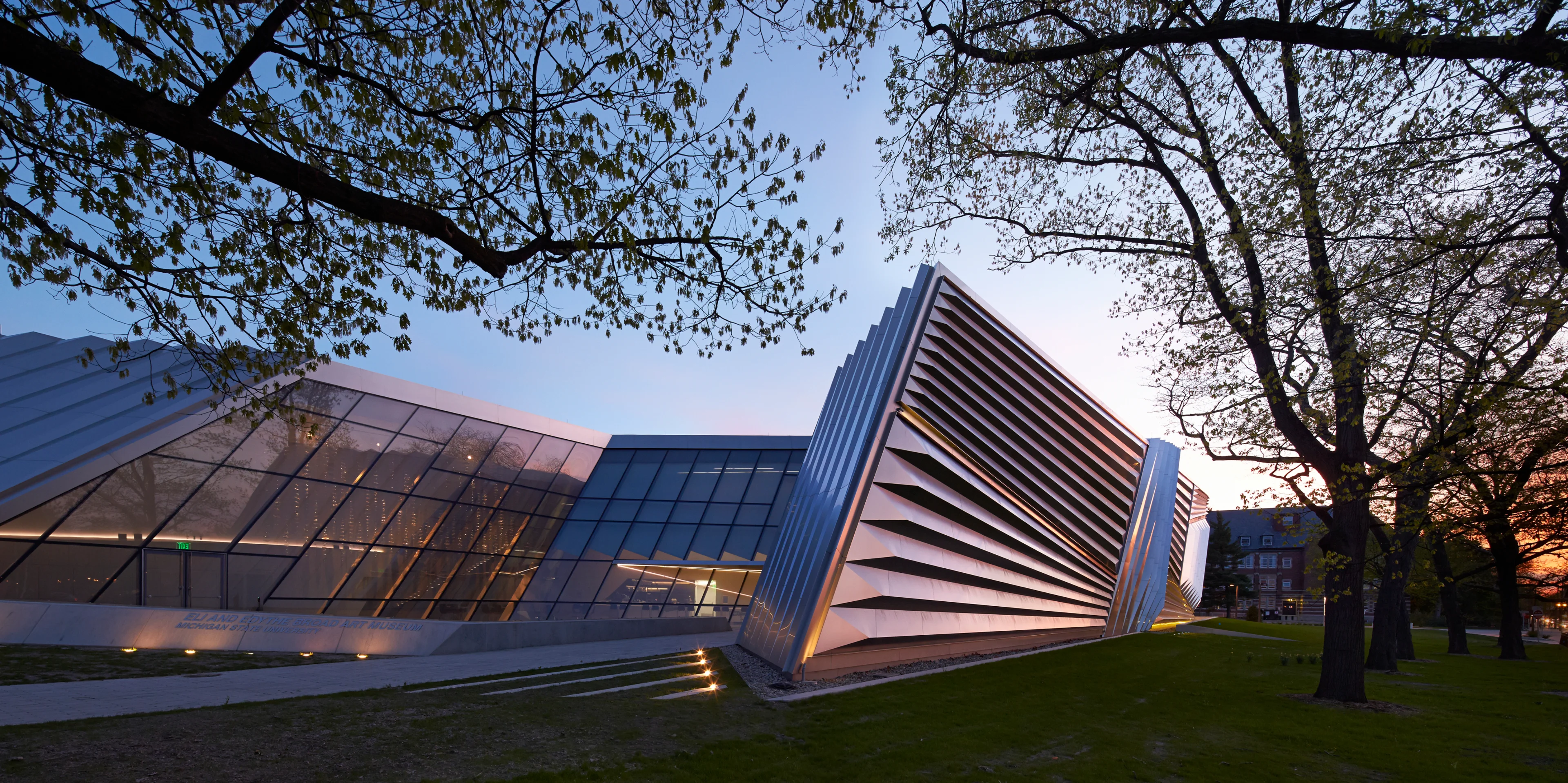
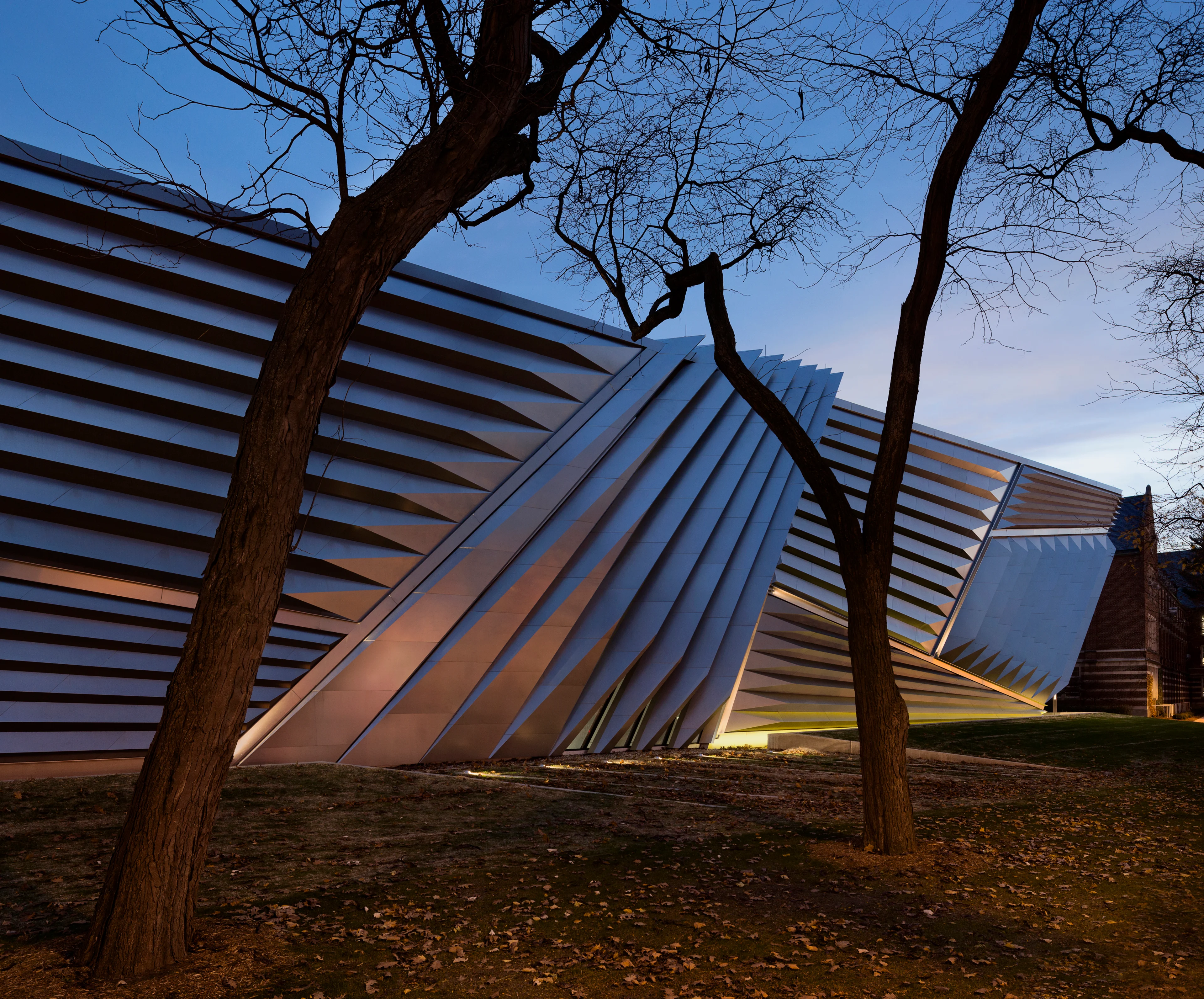
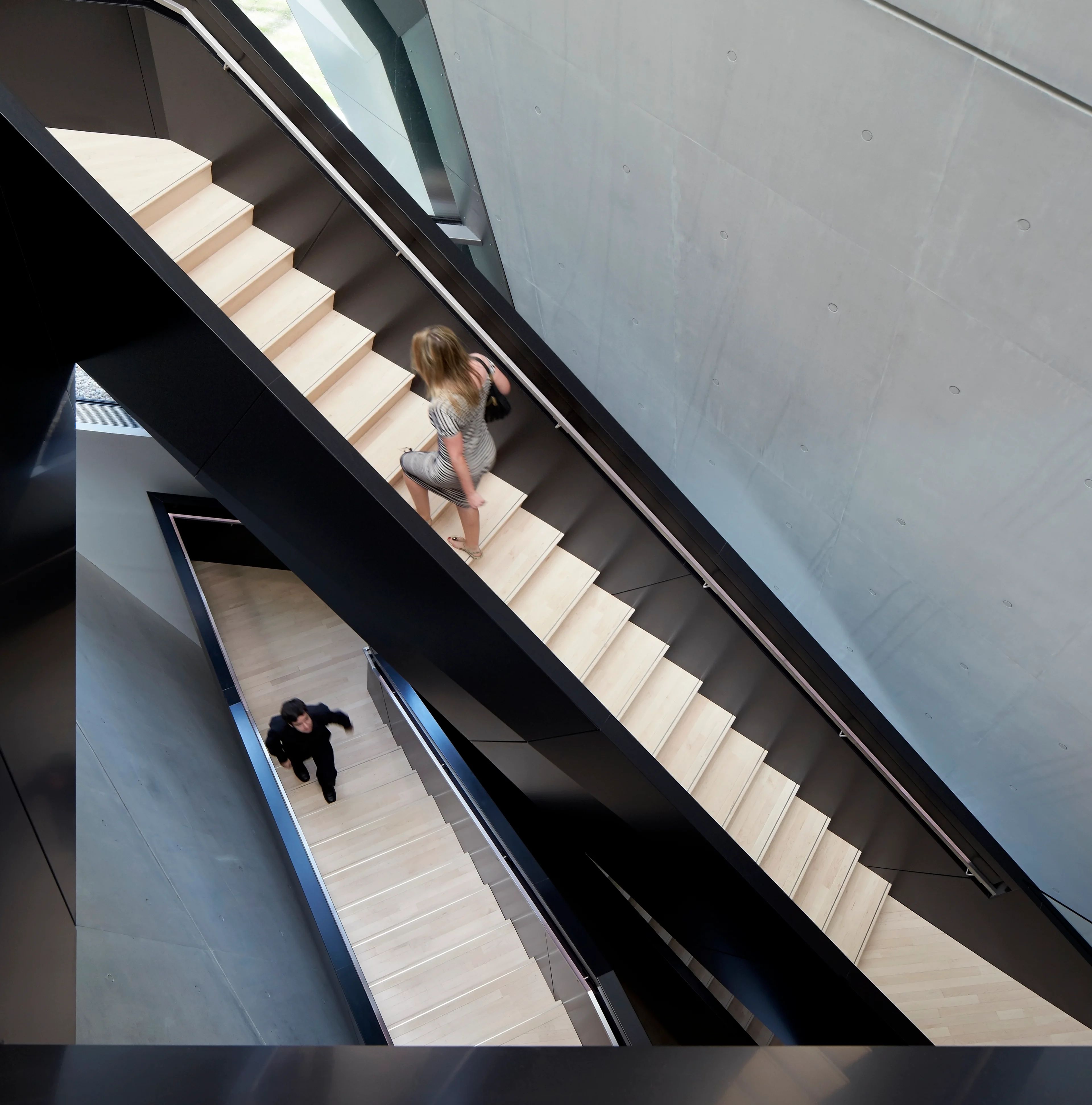
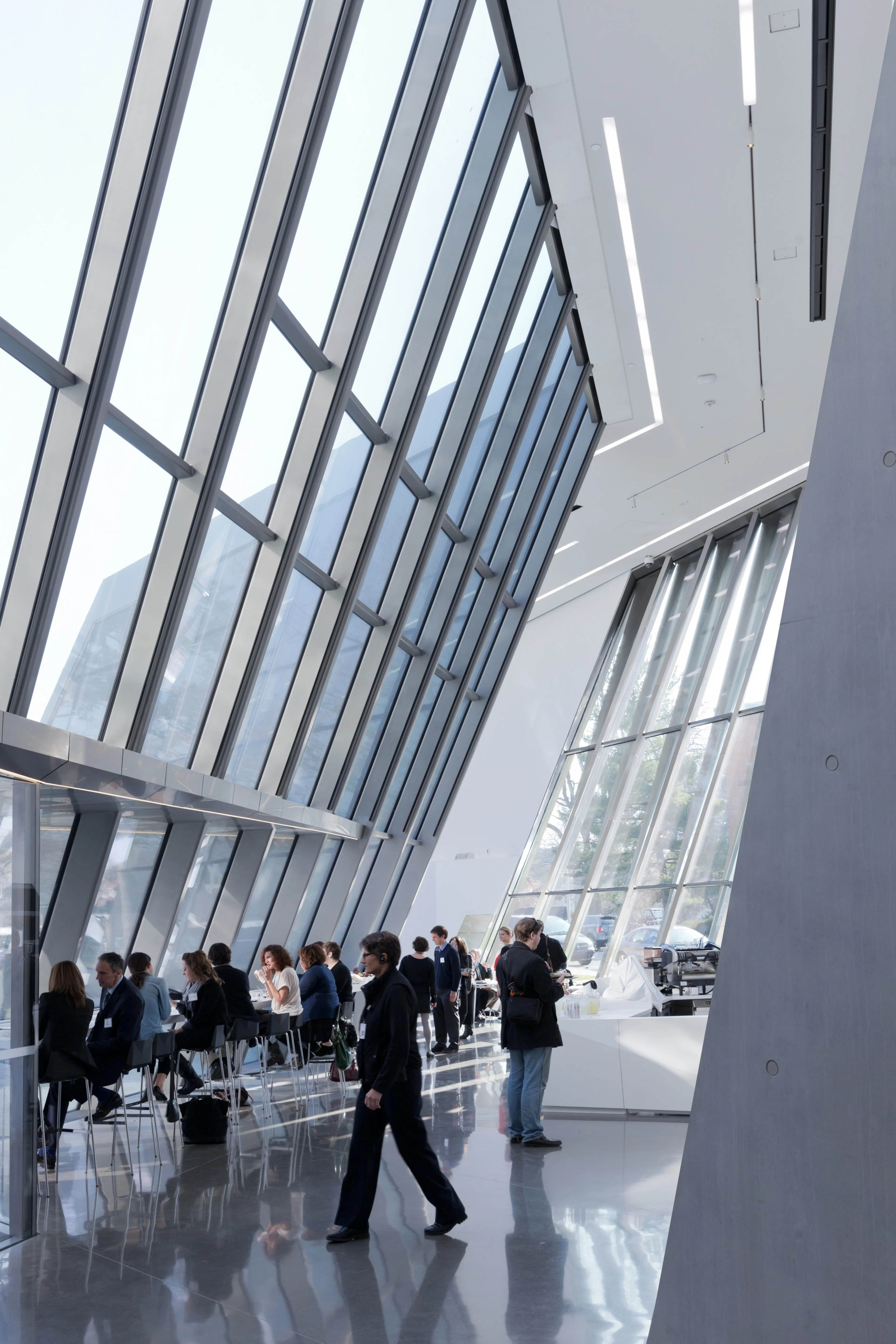
Generating two dimensional planes from these lines of circulation and visual connections, the formal composition of the museum is achieved by folding these planes in three-dimensional space to define an interior landscape which brings together and negotiates the different pathways on which people move through and around the site. This dialogue of interconnecting geometries describes a series of spaces that offer a variety of adjacencies; allowing many different interpretations when designing exhibitions. Through this complexity, curators can interpret different leads and connections, different perspectives and relationships.
These detailed investigations and research into the landscape, topography and circulation of the site, enable us to ascertain and understand these critical lines of connection. By using these lines to inform the design, the museum is truly embedded within its unique context of Michigan State University, maintaining the strongest relationship with its surroundings.
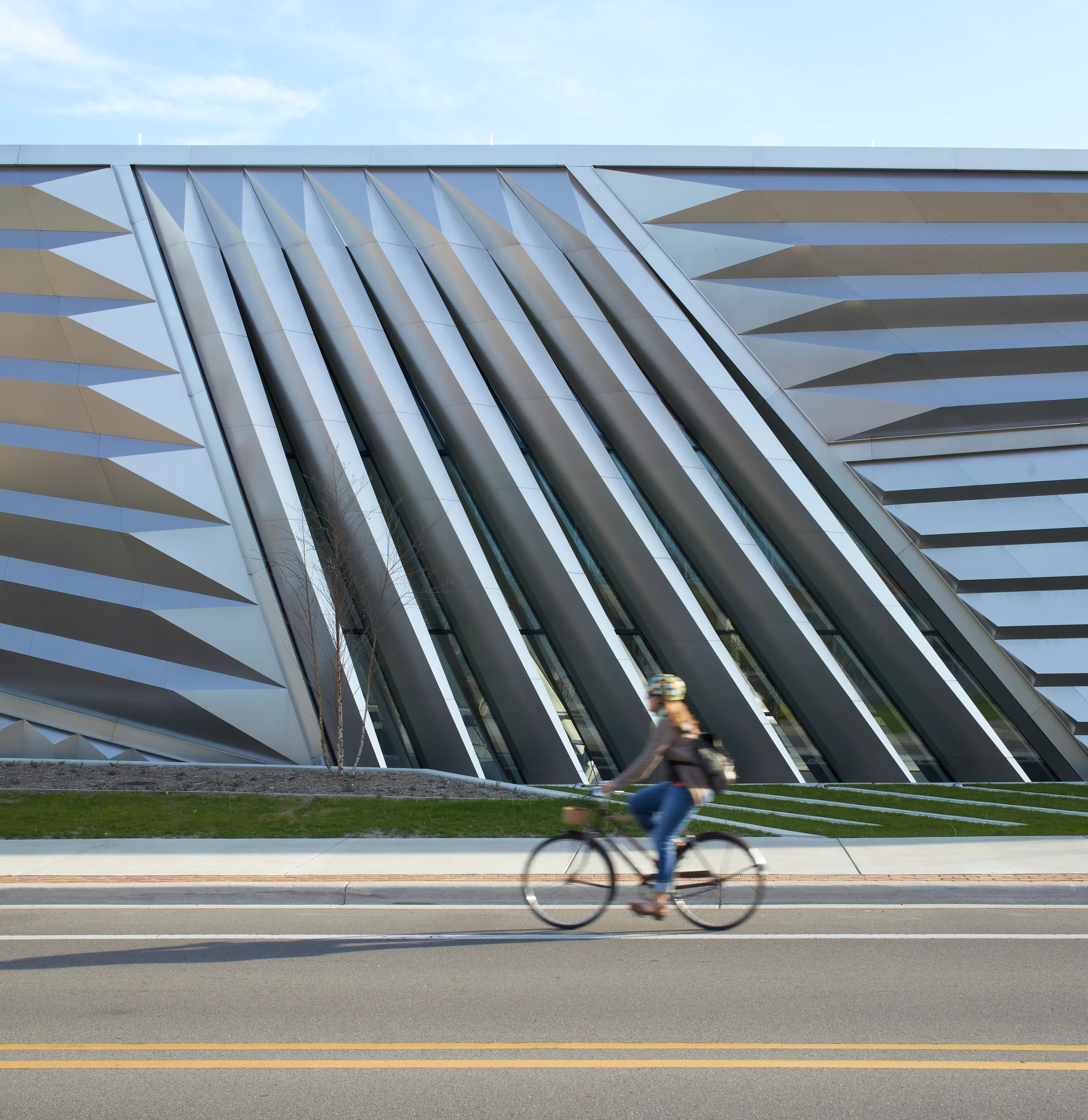
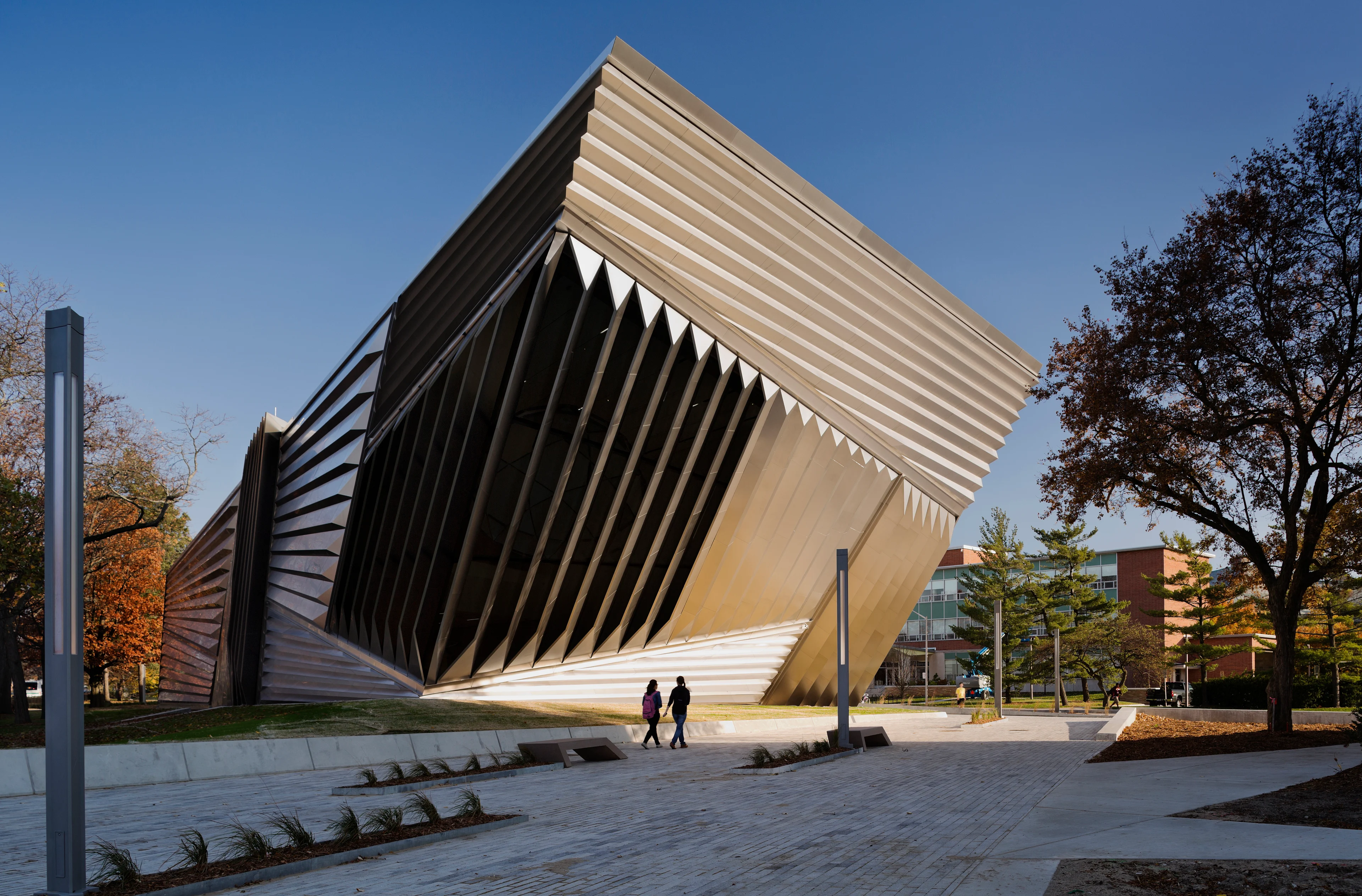
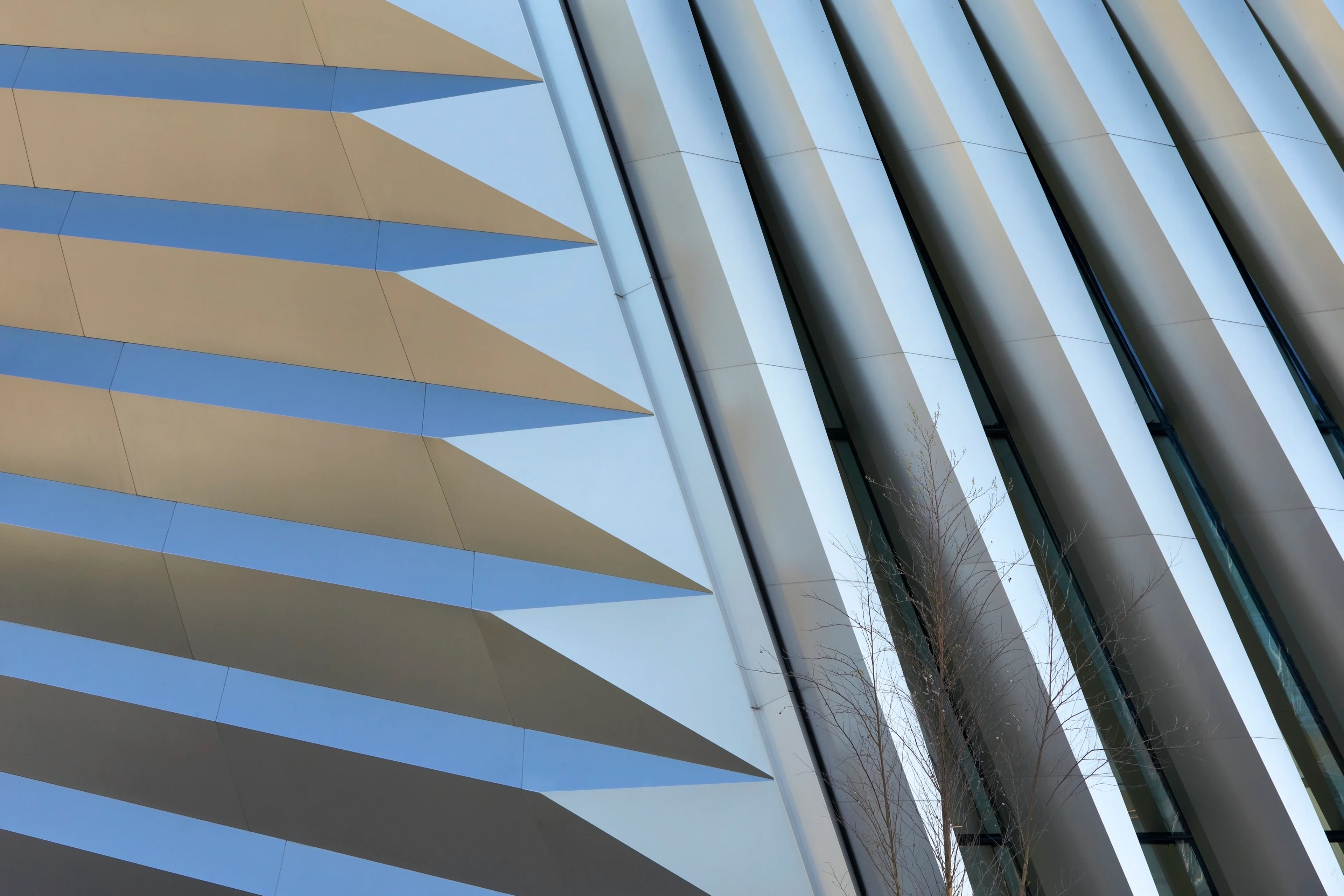
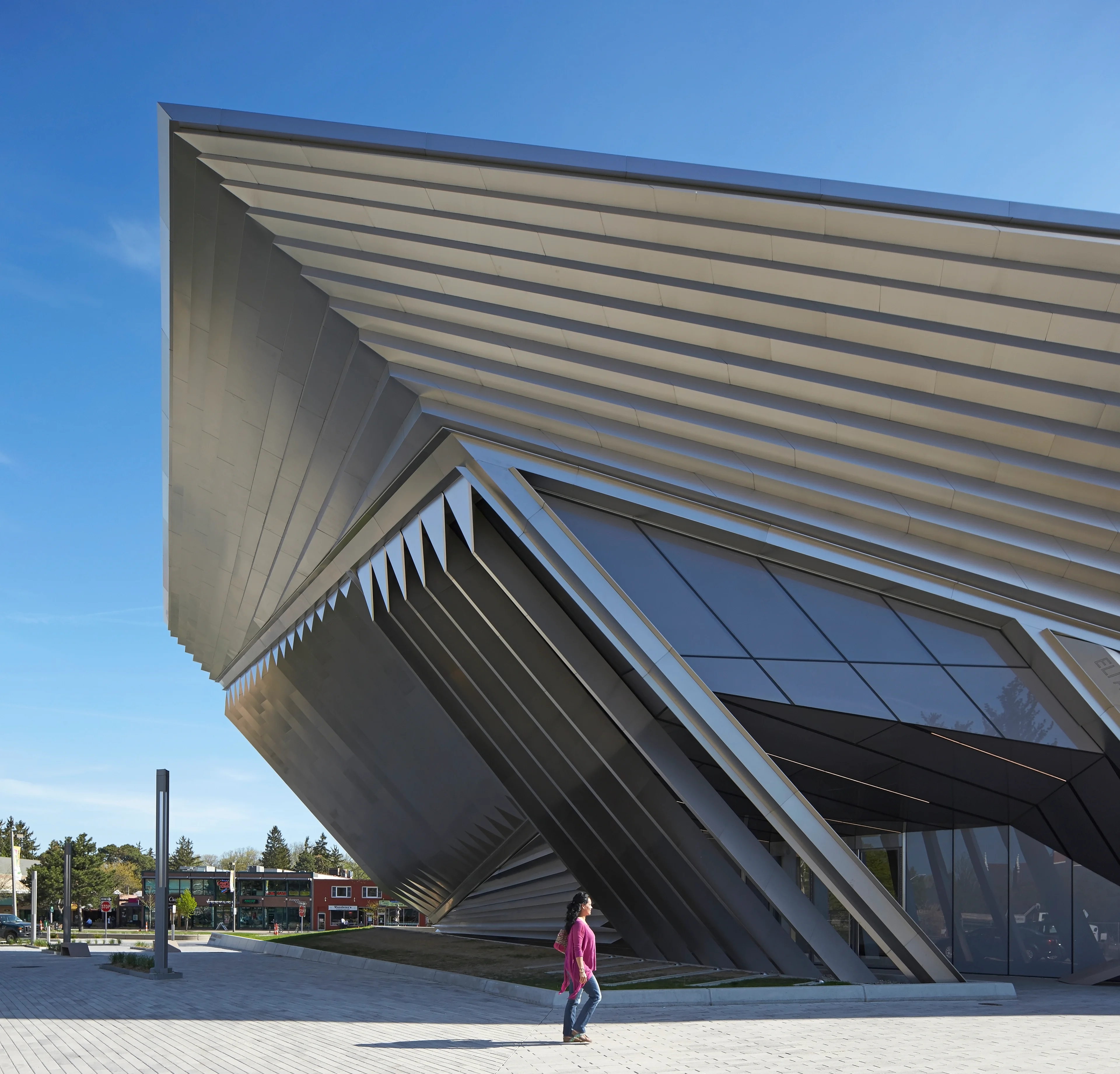
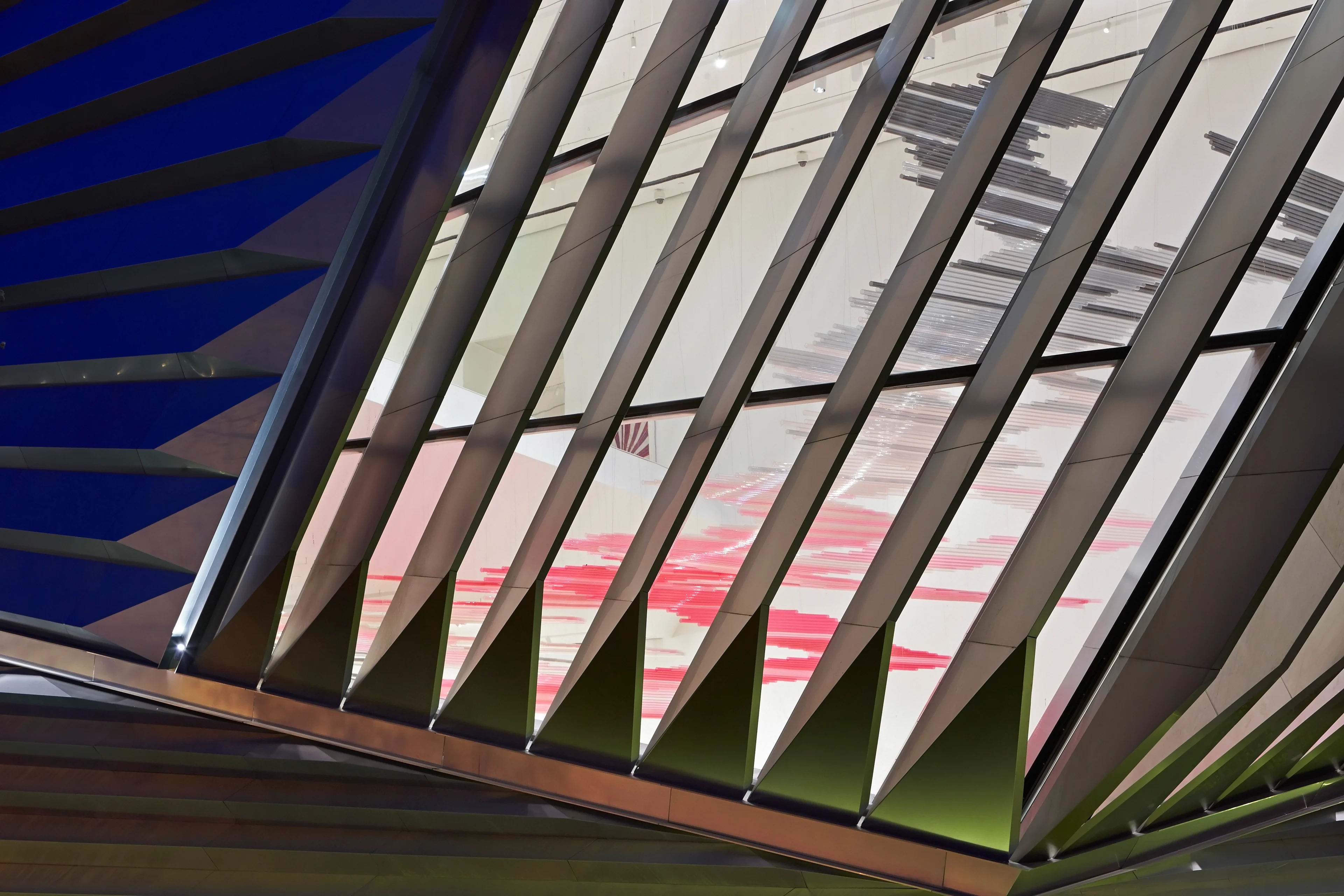
The Broad Art Museum presents as a sharp, directed body, comprising directional pleats which reflect the topographic and circulatory characteristics of its surrounding landscape. Its outer skin echoes these different directions and orientations – giving the building an ever-changing appearance that arouses curiosity yet never quite reveals its content. This open character underlines the museum’s function as a cultural hub for the community.
Cultural
Explore more of our cultural projects
From a civic art centre that unites three distinct cultural institutions to a science fiction museum whose landscaping contributes to the city’s drainage and flood defence systems, discover our latest cultural projects.
Render by Devisual
Z8 Tower
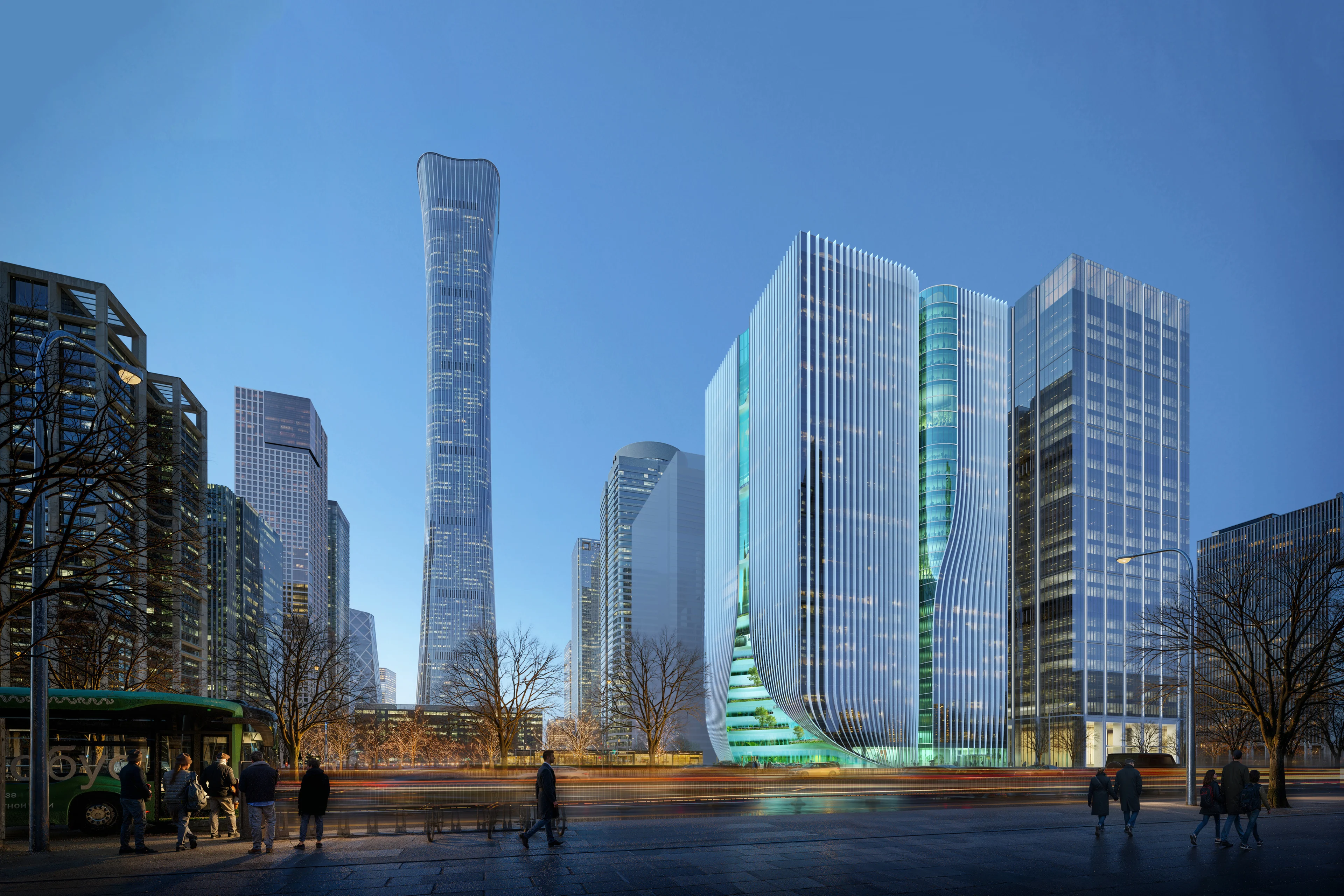
Located in the core of Beijing’s Central Business District (CBD) at the intersection of Jianguo Road and Jinhe East Road, the new Z8 Tower faces the CBD’s central park and is defined by the historic alignment and urbanism of the city’s Chang’an Avenue.
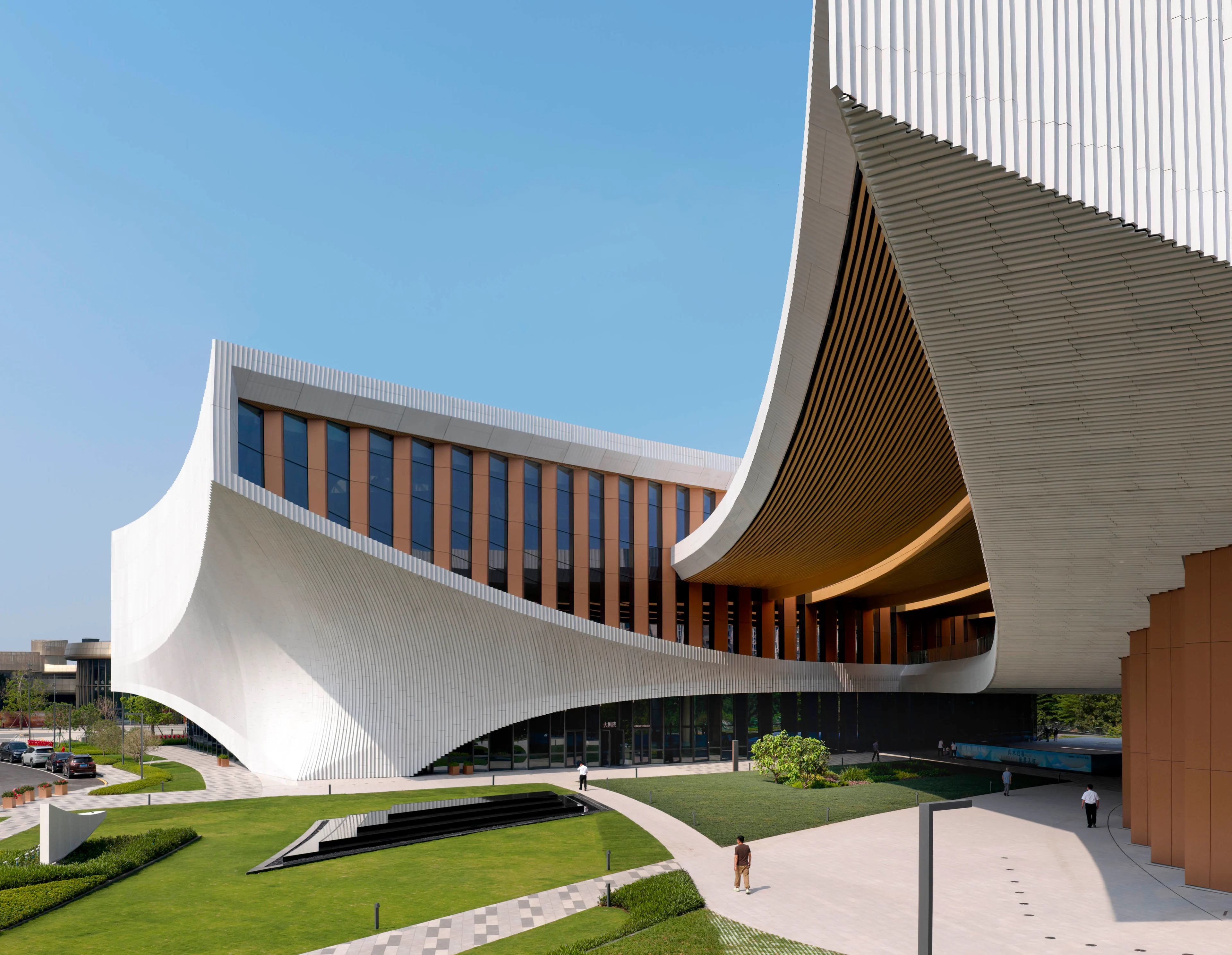
Songshan Lake Performance and Exhibition Centre
Located in Dongguan within the Greater Bay Area of southern China’s Pearl River estuary, the new Songshan Lake Exhibition and Performance Centre is at the heart of a mixed-use masterplan to revitalize the Yuehe Lake waterfront.
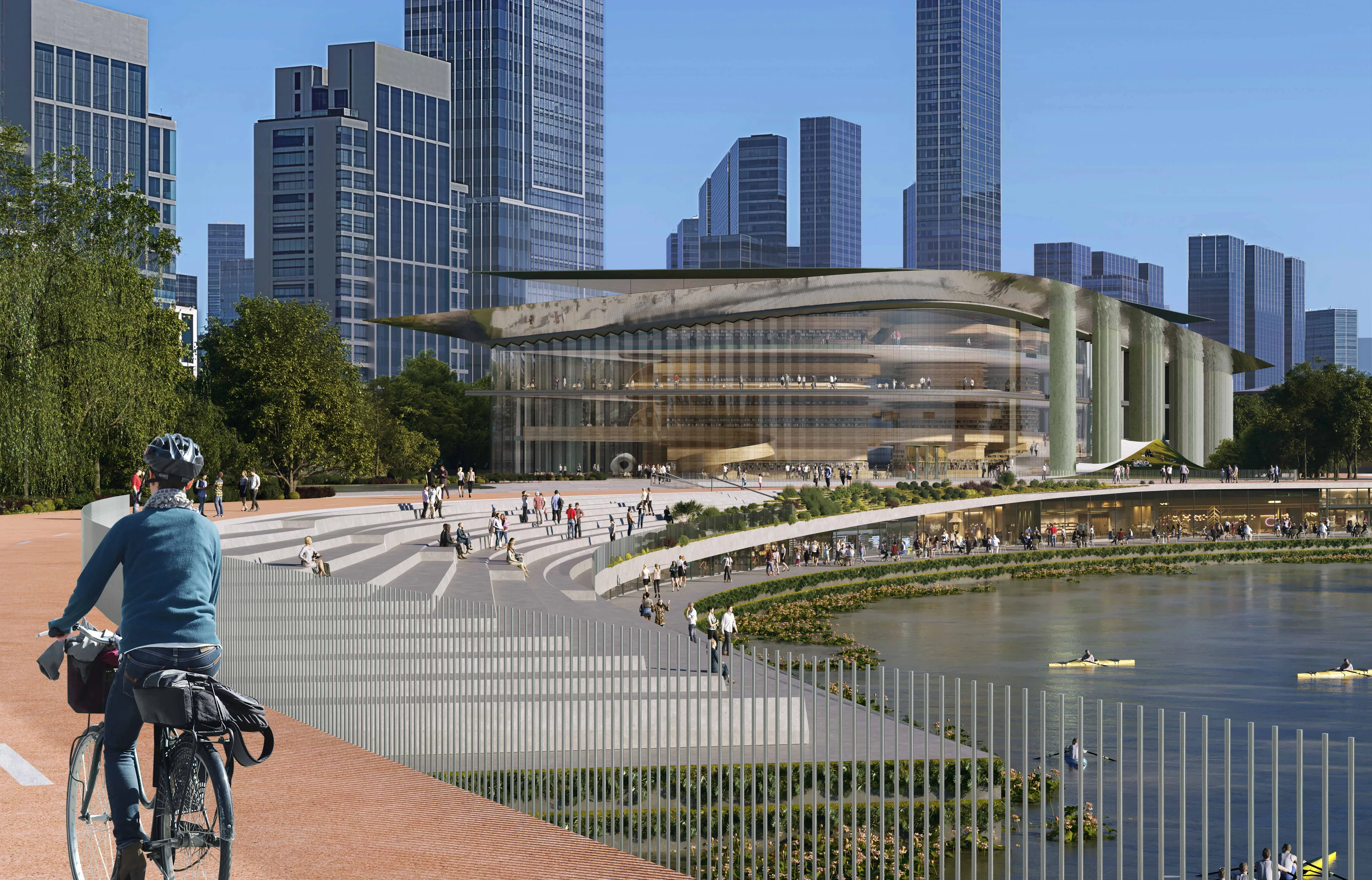
Qiantang Bay Cultural District
A series of new landscaped parklands, terraces and gardens along the Zhedong Canal within the Xiaoshan district of Hangzhou
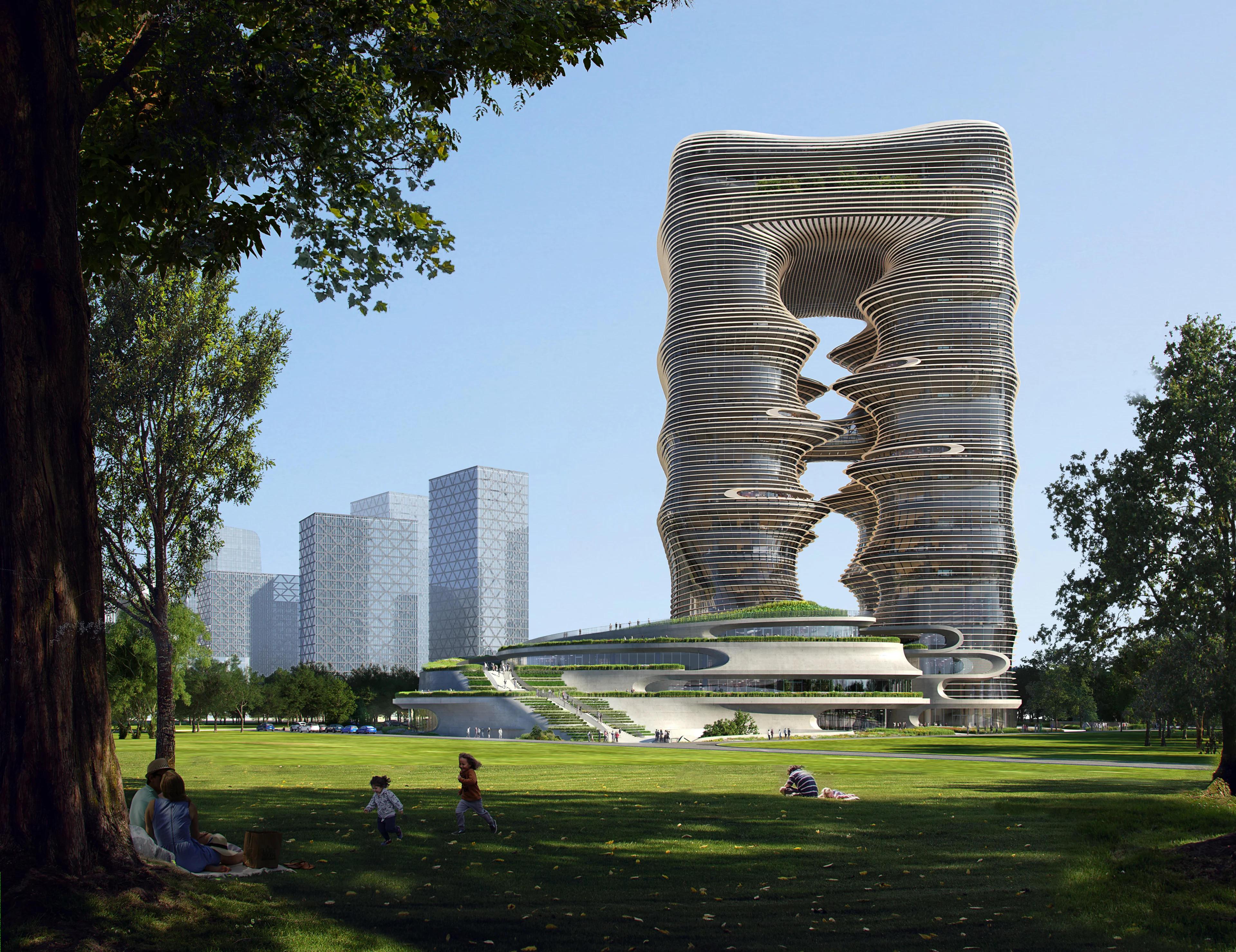
Render by Atchain
Yidan Center
A place of convergence and collaboration, the Yidan Center will be home to the Chen Yidan Foundation in its work to promote lifelong learning and innovation in education.
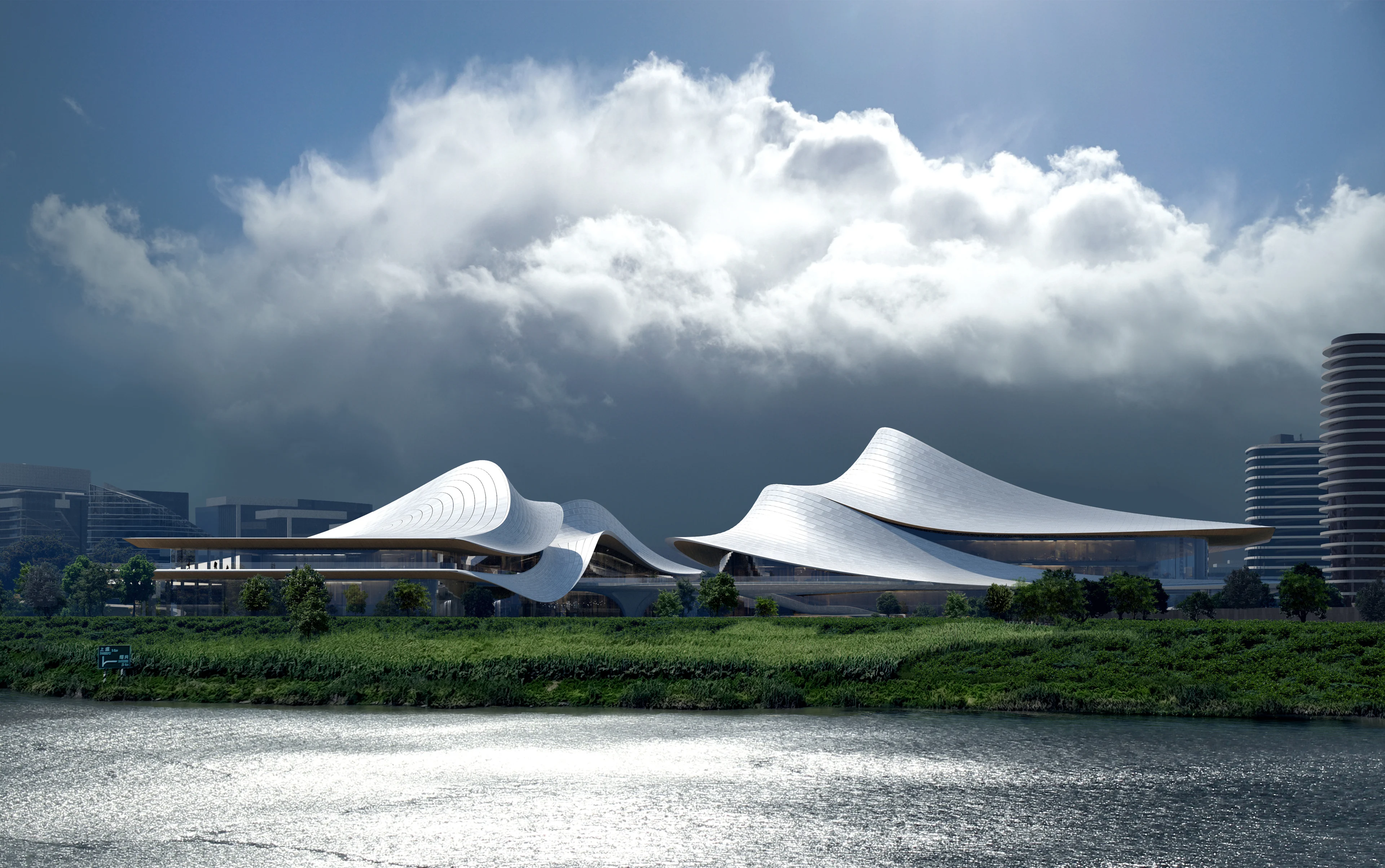
Render by Proloog
Elevation River
Zhejiang Shaoxing Shangyu District Cao’e River Culture and Art Centre
Designed to host local and international productions of opera, dance and drama together with large-scale symphonies and musical theatre, the Art and Culture Centre includes a 1,400-seat Grand Theatre, 500-seat Black-Box Multifunctional Hall, 2,900 sq. m Arts and Education Centre, 3,000m² Conference Centre, 7,500m² Heritage Museum and a 10,000m² Digital Art Gallery.
Render by Specto-Digital
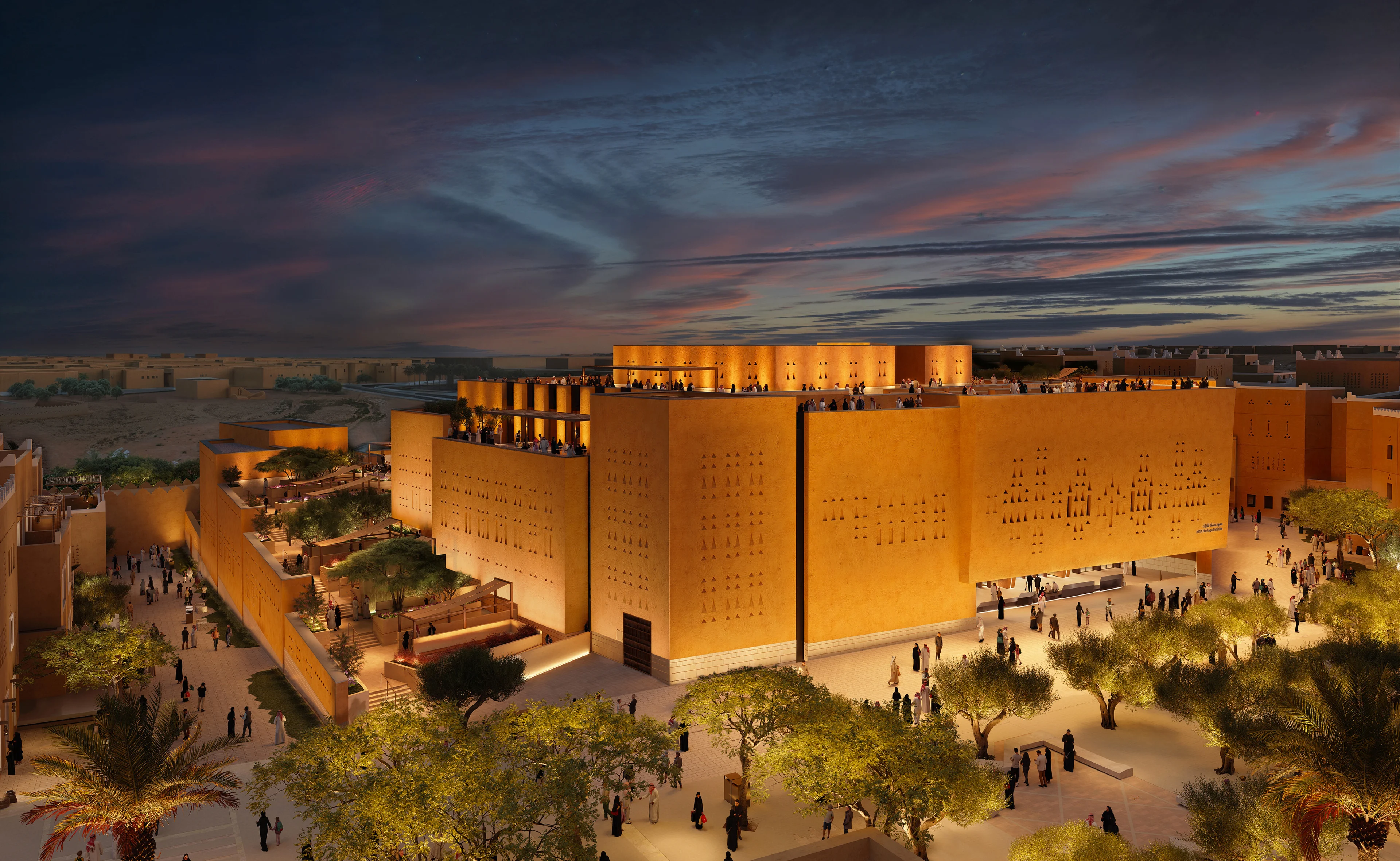
Asaan Museum
Meaning ‘inheritance passed down through generations’, Asaan will be an institution dedicated to preserving and celebrating this rich heritage, in addition to promoting creativity and knowledge sharing.
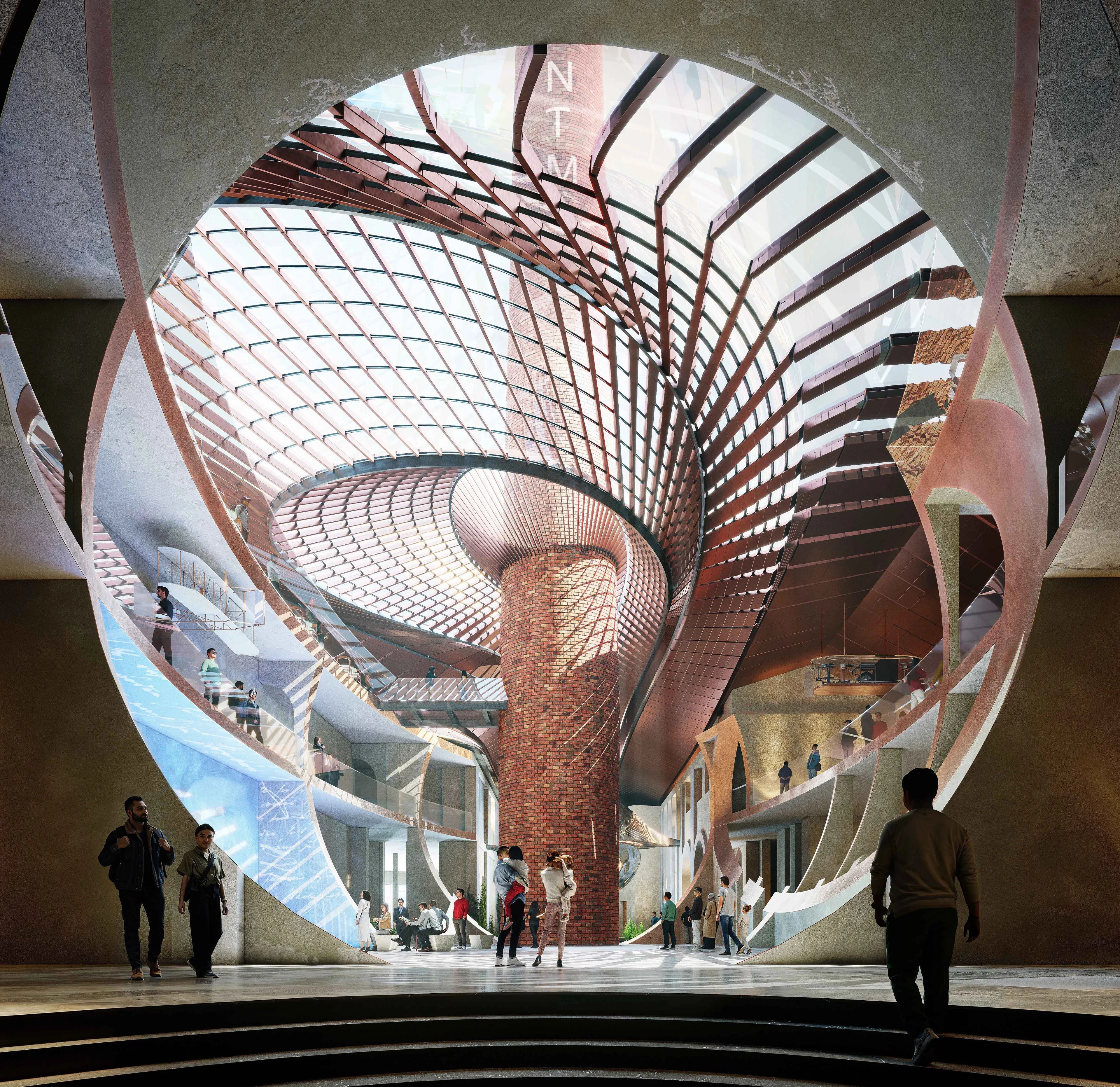
Nikola Tesla Museum
The new Nikola Tesla Museum renovates Belgrade’s historic Milan Vapa Paper Mill into a cultural destination celebrating Tesla’s legacy while preserving the city’s architectural heritage and creating a variety of new public spaces for local residents and visitors.
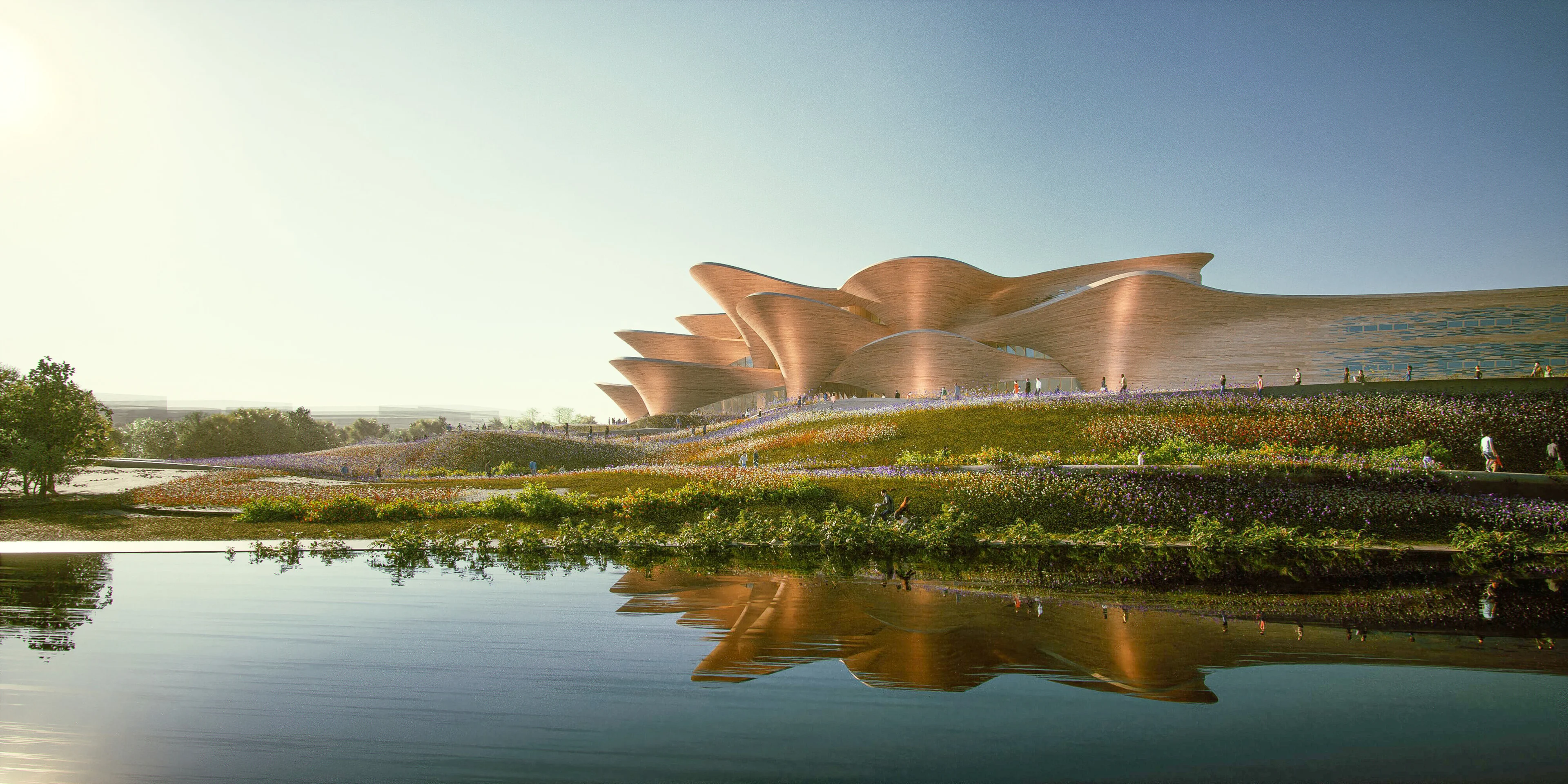
Courtesy of ZHA
River View
Alisher Navoi Institute
The Alisher Navoi International Scientific Research Centre will incorporate the Navoi State Museum of Literature, Auditorium, International Research Centre and School.
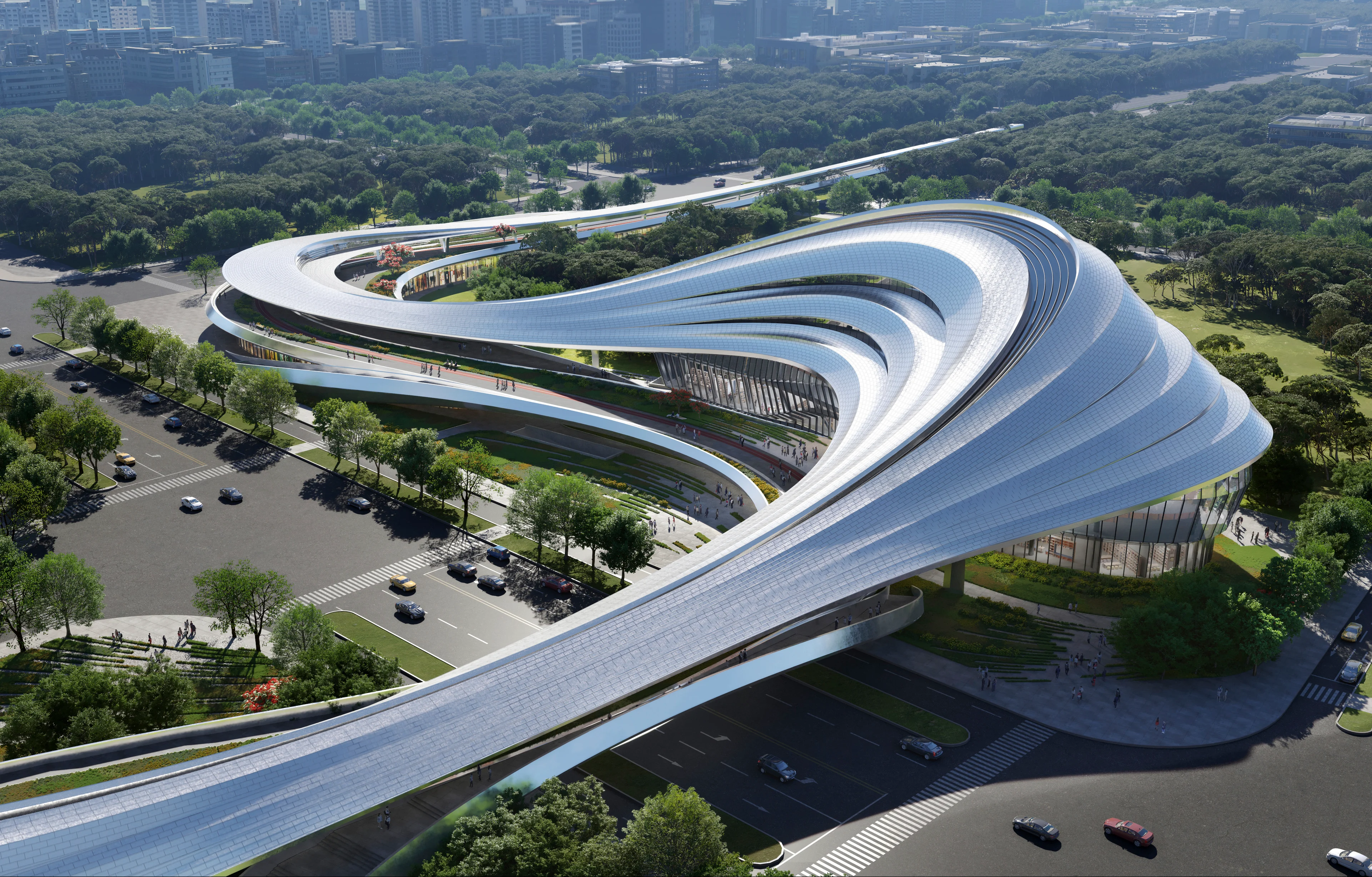
Render by Atchain
Jinghe New City Culture and Art Centre
Jinghe New City is growing as a science and technology hub north of Xi’an in China’s Shaanxi province. Supported by new scientific research institutes and driven by environmental considerations, the city is becoming a centre for developing industries focusing on new energy and materials, artificial intelligence and aerospace.
Photograph by Virgile Simon Bertrand
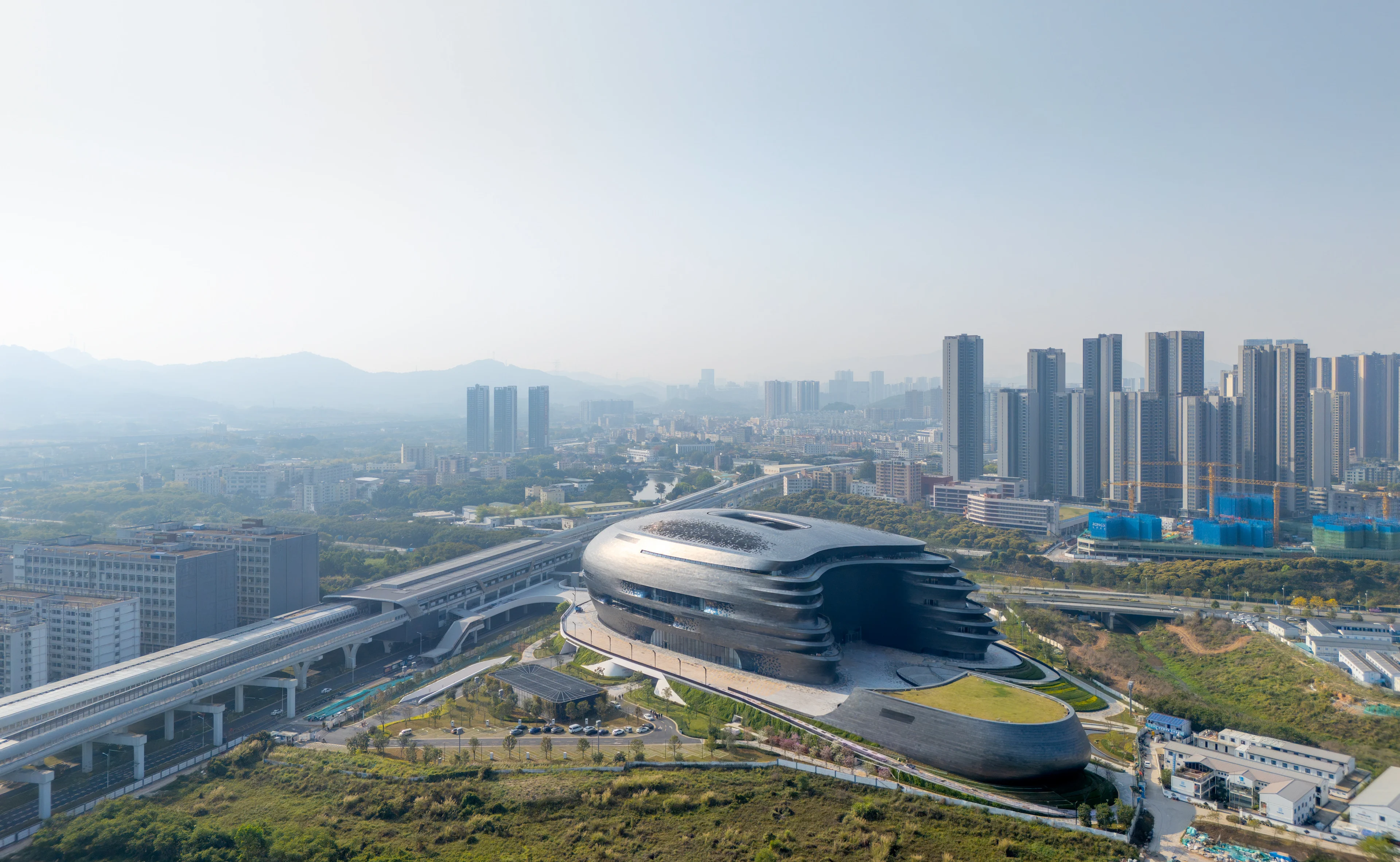
Shenzhen Science & Technology Museum
Showcasing the scientific endeavour, ground-breaking research and future possibilities of technology, this new institution will explore the power of science and the technological advancements defining our future.
Photograph by Luke Hayes
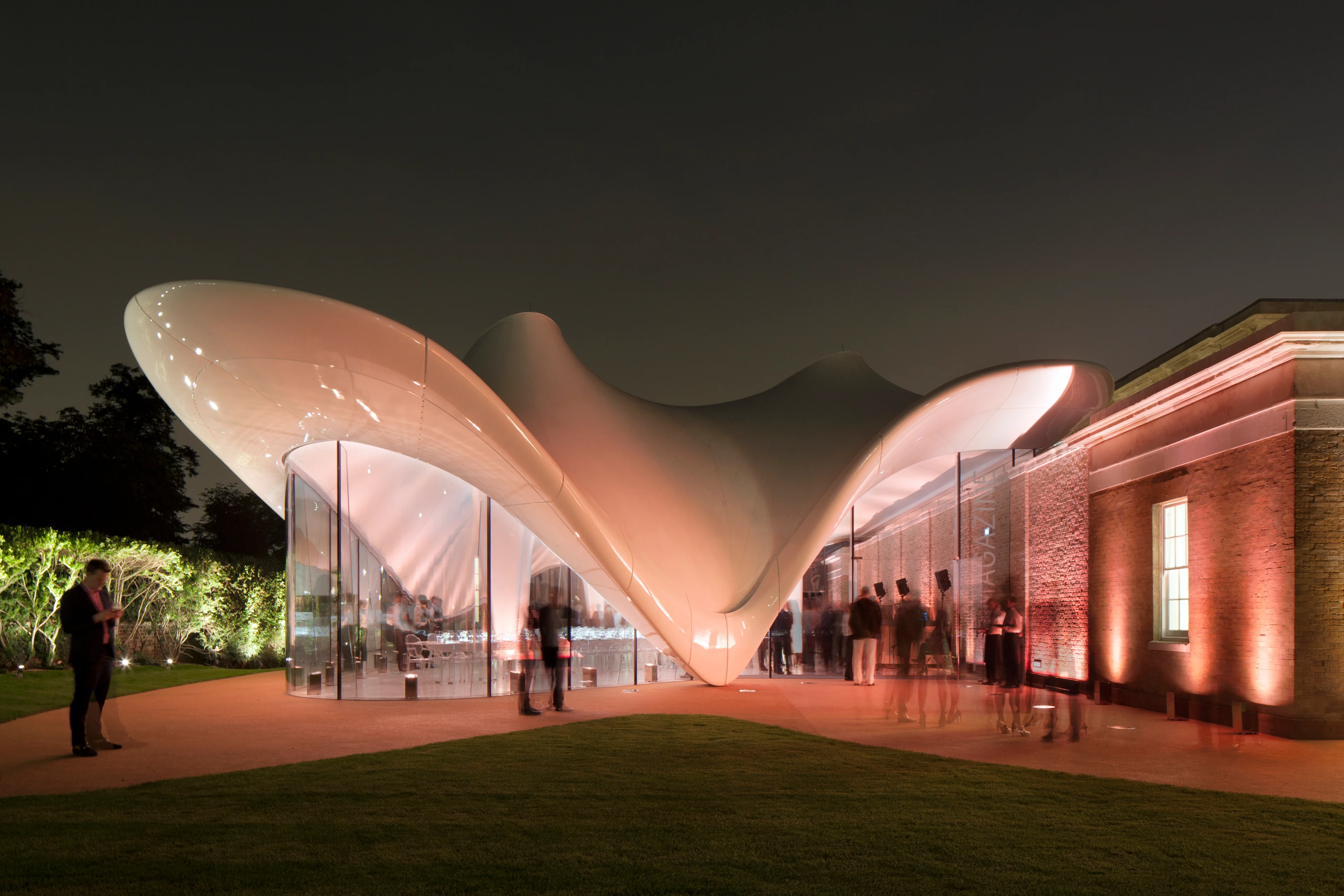
Serpentine North Gallery
The Serpentine North Gallery consists of two distinct parts, namely the conversion of a classical 19th century brick structure – The Magazine – and a 21st century tensile structure. The Serpentine North Gallery is thus – after MAXXI in Rome – the second art space where ZHA has created a synthesis of old and new.
Photograph by Fernando Guerra
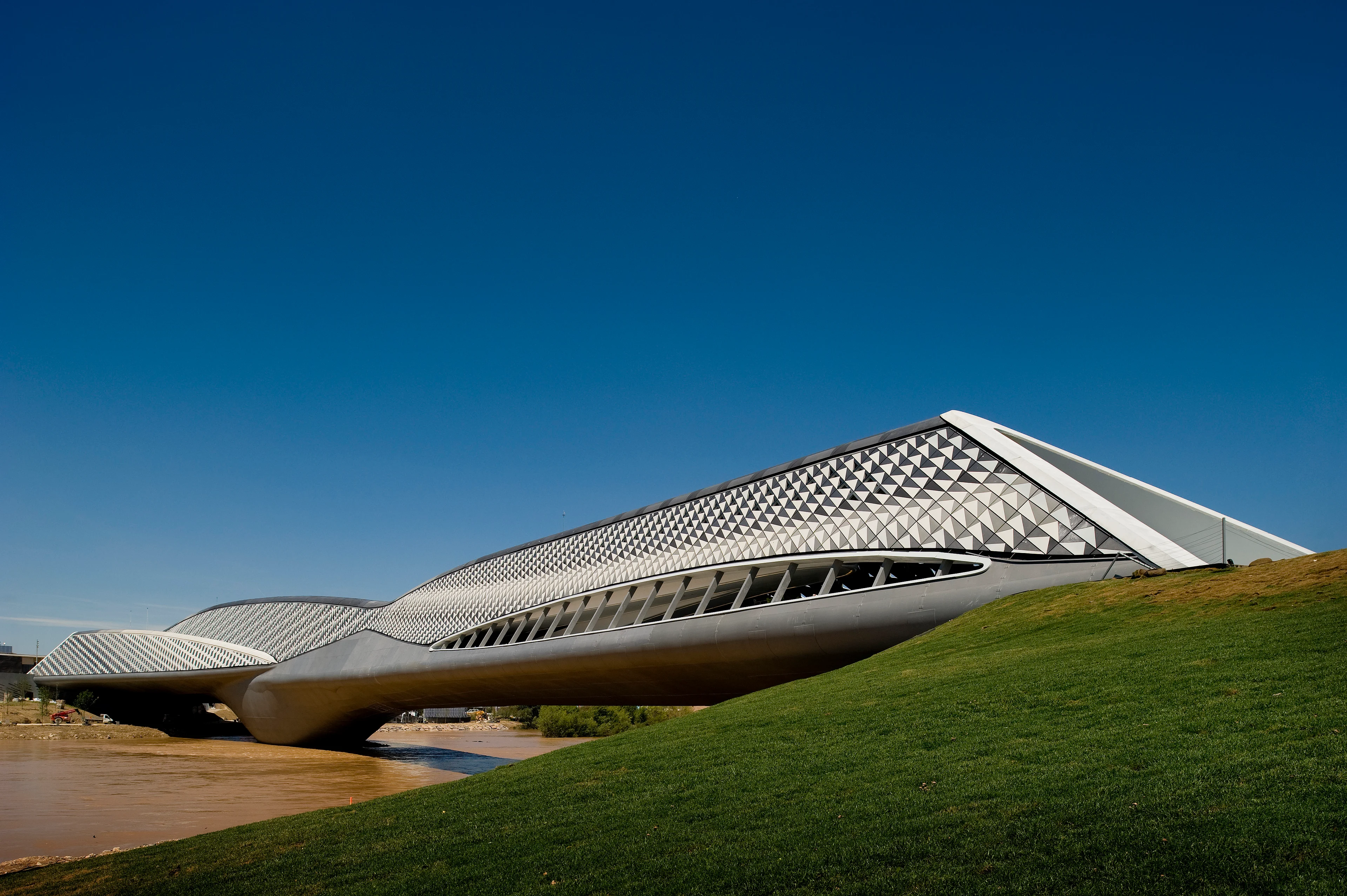
Zaragoza Bridge Pavilion
An enclosed interactive space spanning the River Ebro to form a gateway to the Zaragoza Expo 2008, a hybrid of pedestrian footbridge and exhibition pavilion. Four structural elements correspond to specific spatial enclosures, which intersect and brace each other. This fluid, dynamic design interprets the Expo’s theme: ‘Water and Sustainable Development.’
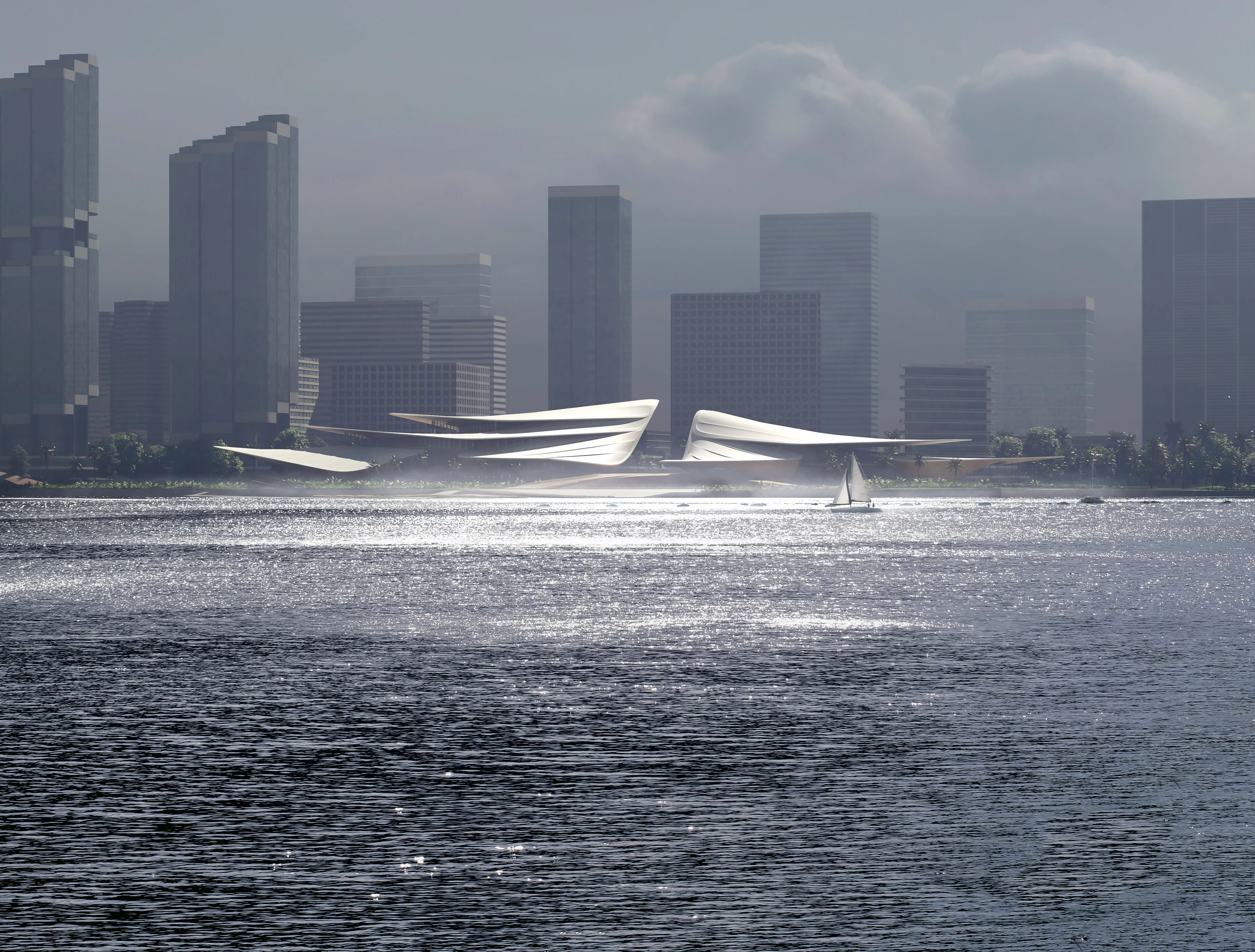
Sanya Cultural District
Located at the entrance to Sanya’s harbour, the new cultural district by ZHA is adjacent to the Jiangang Road terminus of Sanya’s tram network that connects many of the residential and hotel districts on Sanya Bay with the city’s high-speed rail station.
Courtesy of Arch-Exist
default
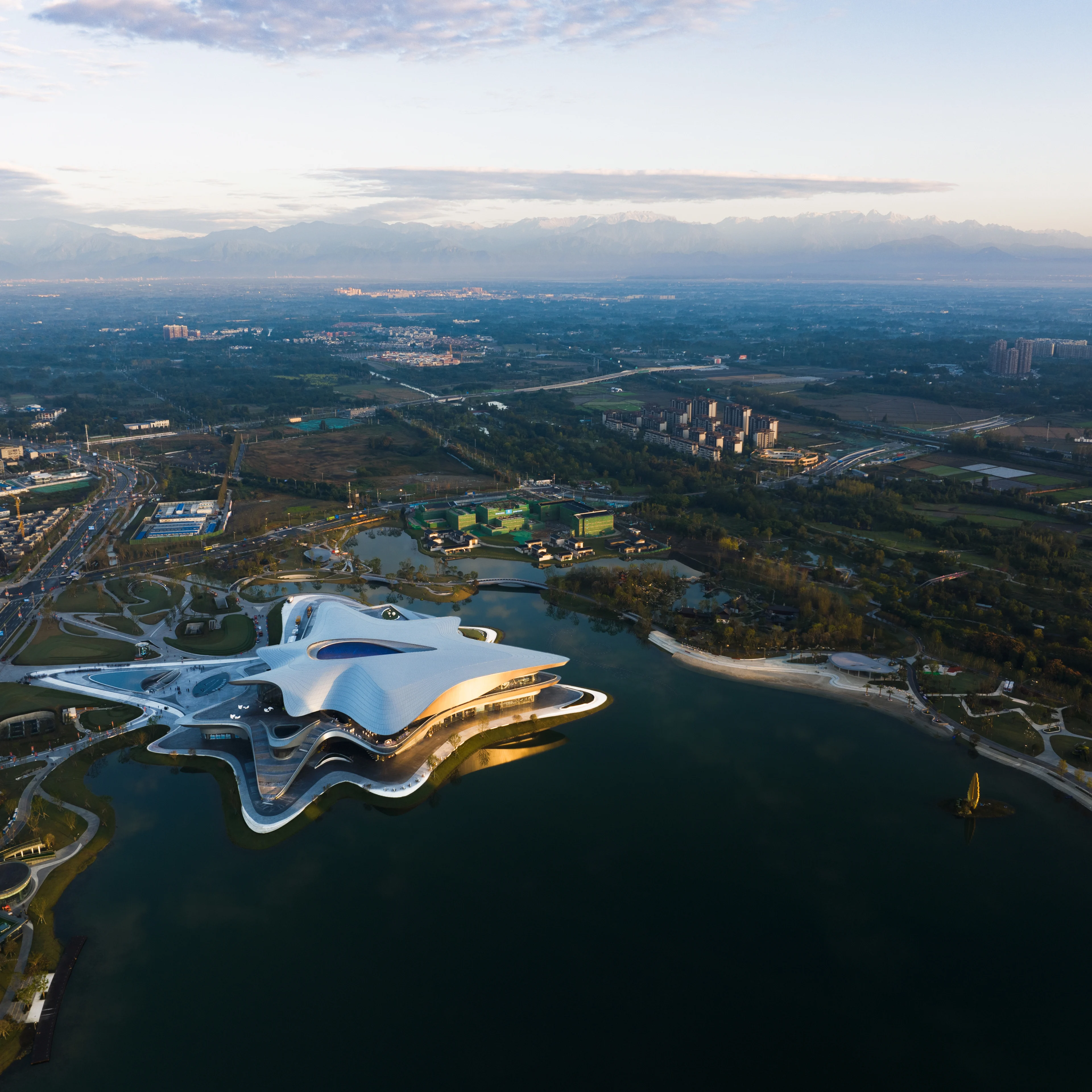
Chengdu Science Fiction Museum
The new Chengdu Science Fiction Museum is situated on Jingrong Lake within the Science & Innovation New City of Chengdu’s Pidu District.
Render by Negativ
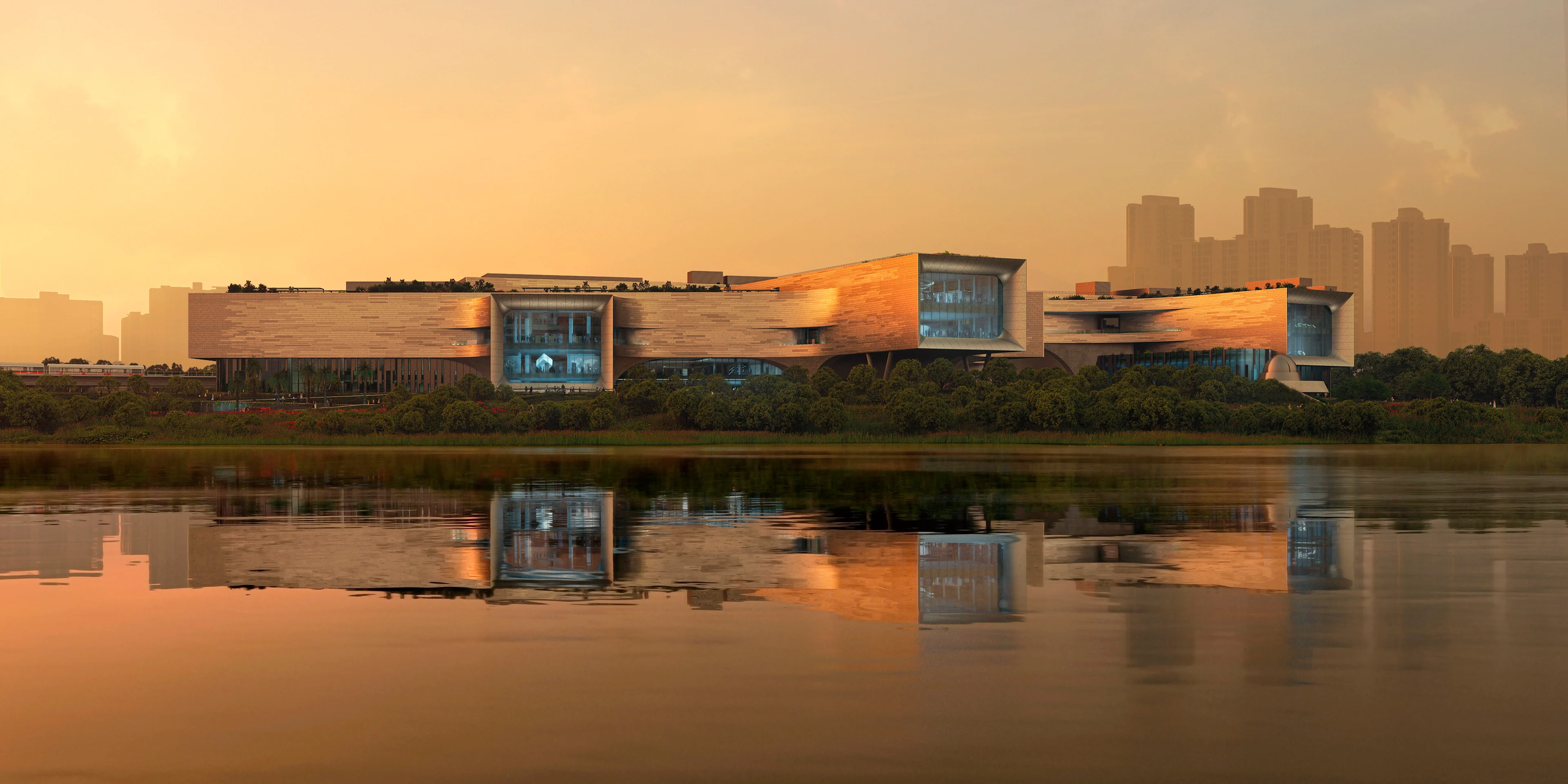
Waterfront view of new Science Centre. render by Negativ. The image is an artist’s impression, and final design may be subject to changes.
Singapore New Science Center
Singapore’s New Science Centre will provide unique facilities and programmes as a destination for all Singaporeans to access science, technology, engineering and mathematics (STEM) education and experiences.
01
02
03
04
05
06
07
08
09
10
11
12
13
14
15