
Photograph by Hufton + Crow
Baku, Azerbaijan
2007 - 2012
The Republic of Azerbaijan
Heydar Aliyev Centre
Photograph by Hélène Binet
Photograph by Hélène Binet
Photograph by Hufton + Crow
Photograph by Hufton + Crow
Photograph by Hélène Binet
01
02
03
04
05
A break from the rigid
As part of the former Soviet Union, the urbanism and architecture of Baku, the capital of Azerbaijan on the Western coast of the Caspian Sea, was heavily influenced by the planning of that era. Since its independence in 1991, Azerbaijan has invested heavily in modernising and developing Baku’s infrastructure and architecture, departing from its legacy of normative Soviet Modernism.
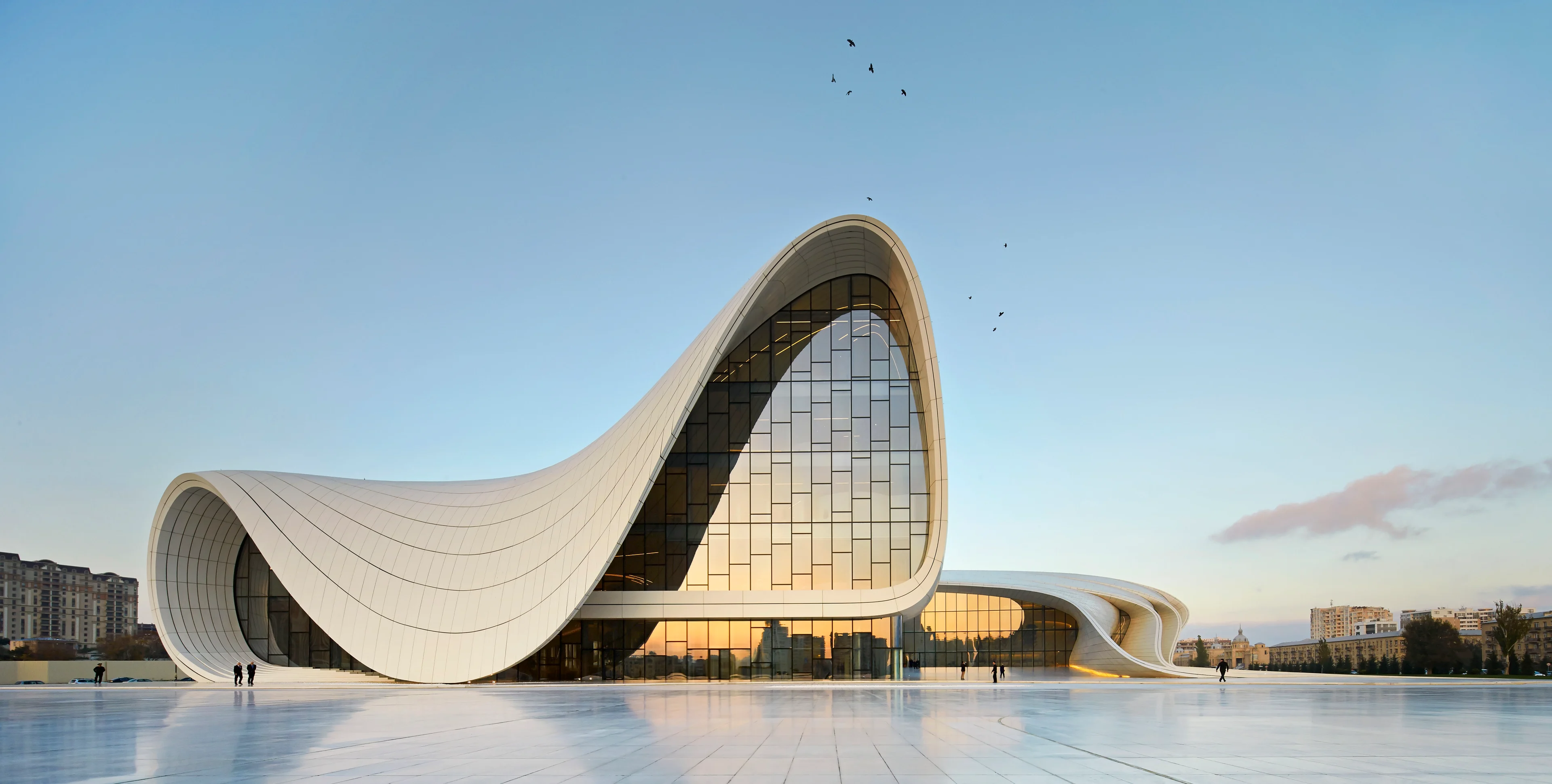
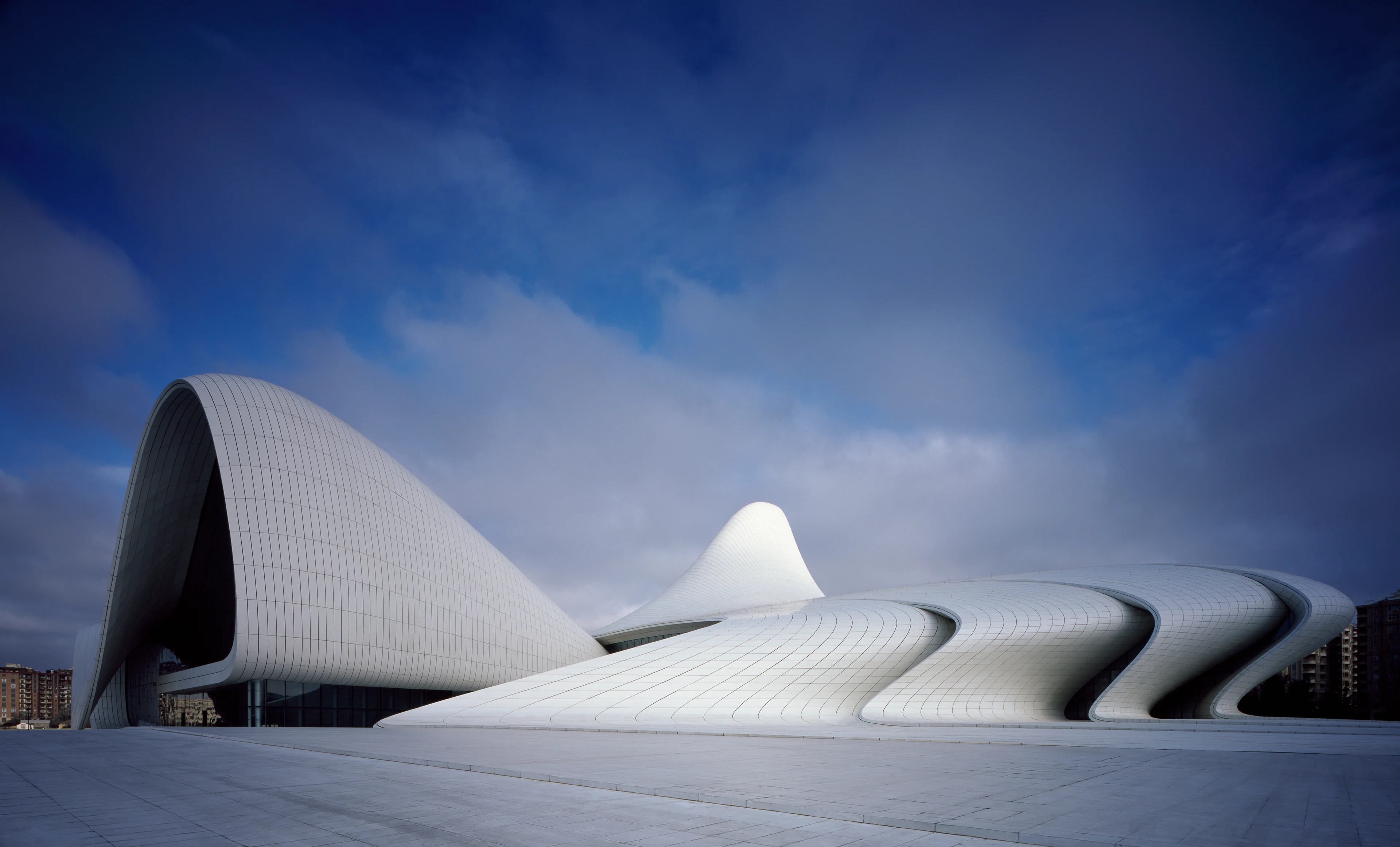
ZHA was appointed as design architects of the Heydar Aliyev Center following a competition in 2007. The Center, designed to become the primary building for the nation’s cultural programs, breaks from the rigid and often monumental Soviet architecture that is so prevalent in Baku, aspiring instead to express the sensibilities of Azeri culture and the optimism of a nation that looks to the future.
Photograph by Hufton + Crow
A continuous, fluid relationship
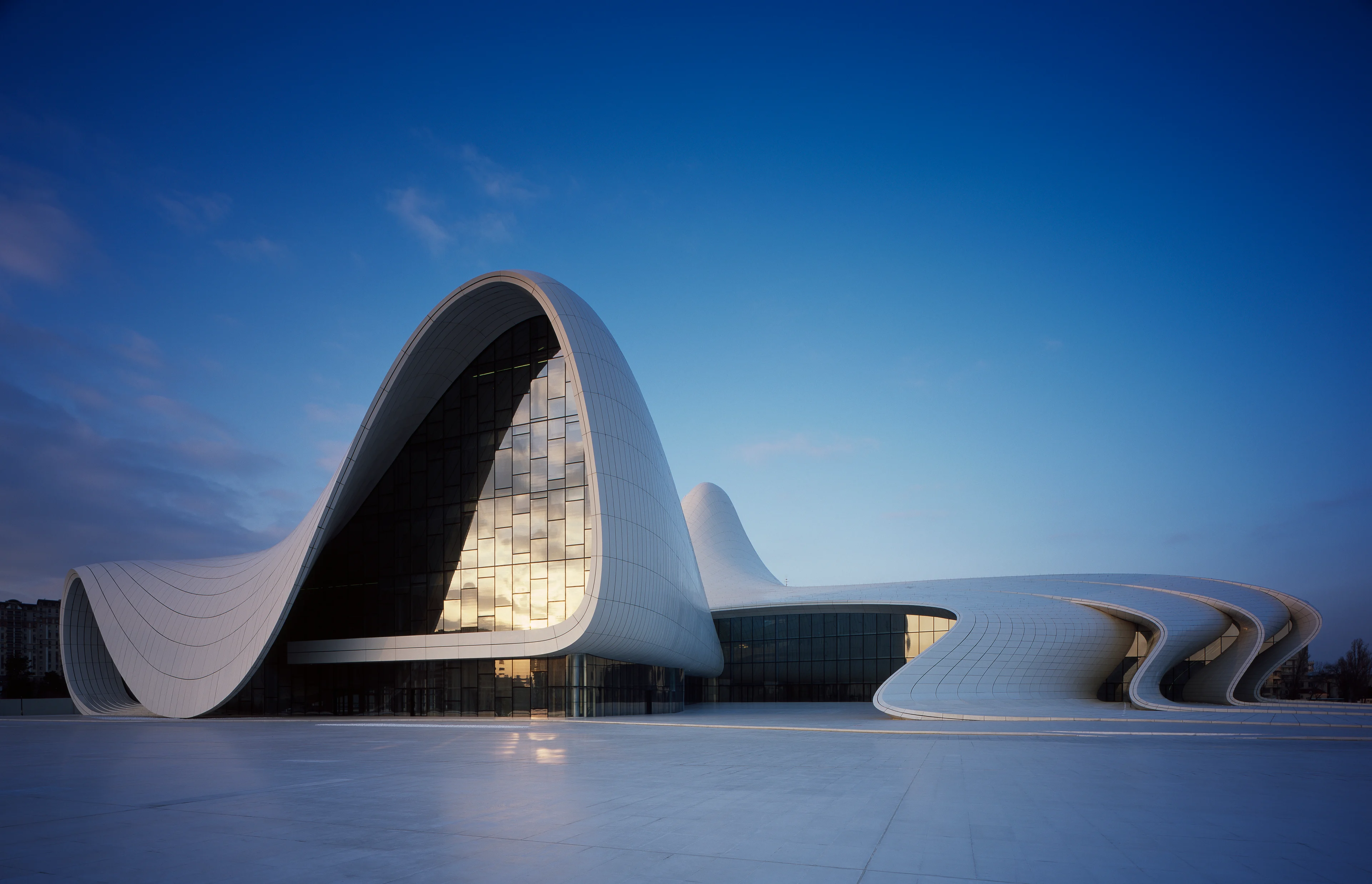
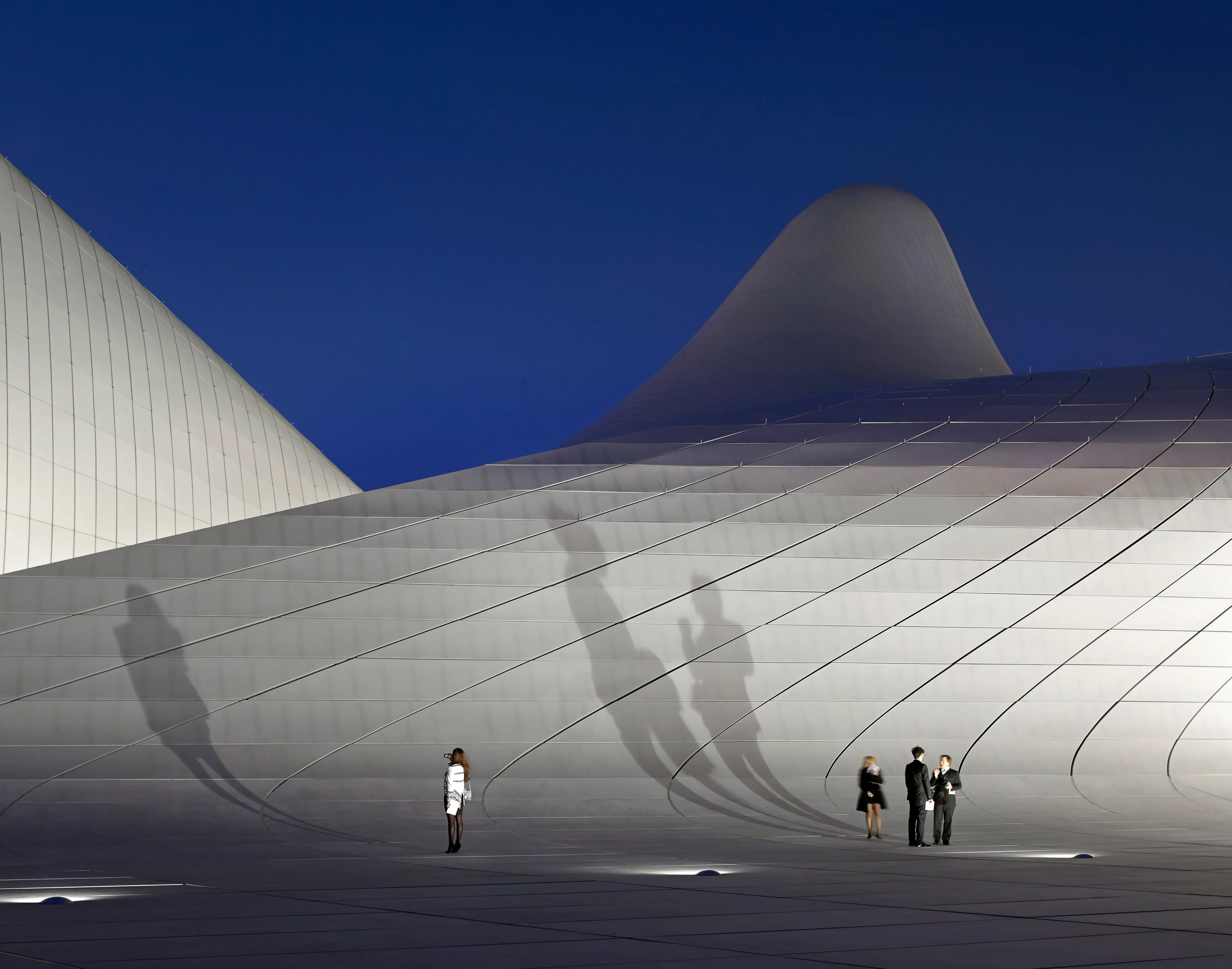
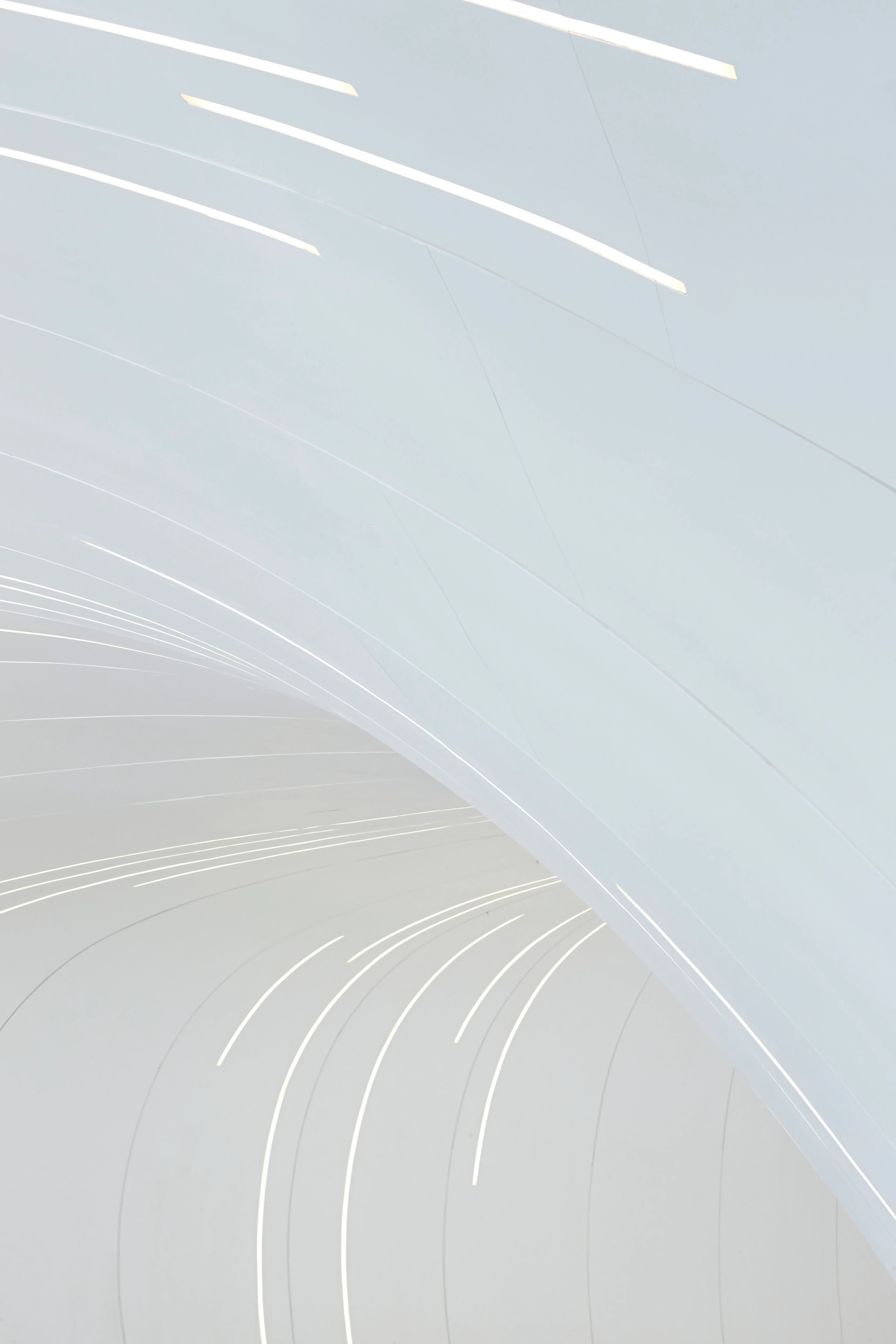
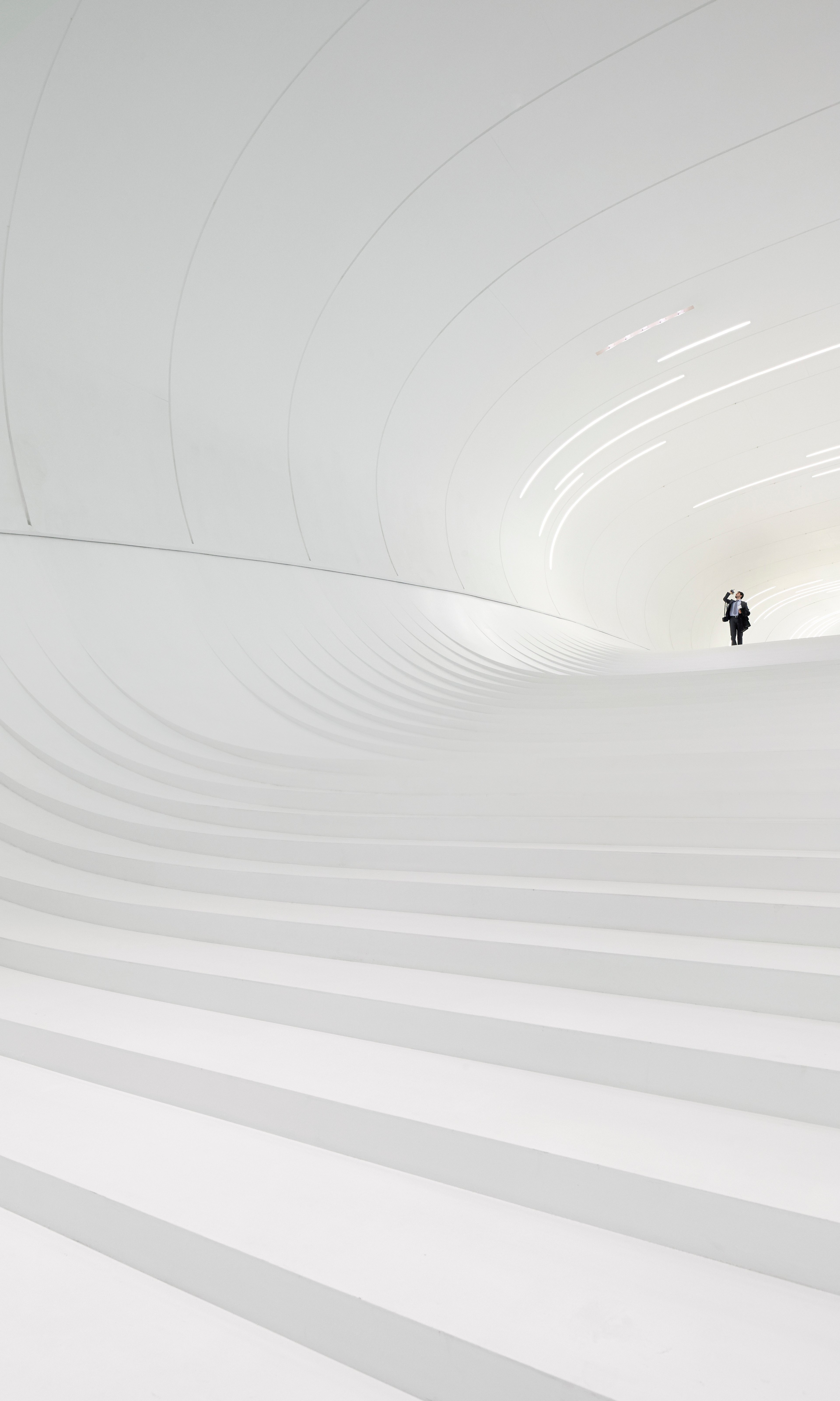
The design of the Heydar Aliyev Center establishes a continuous, fluid relationship between its surrounding plaza and the building’s interior. The plaza, as the ground surface; accessible to all as part of Baku’s urban fabric, rises to envelop an equally public interior space and define a sequence of event spaces dedicated to the collective celebration of contemporary and traditional Azeri culture. Elaborate formations such as undulations, bifurcations, folds, and inflections modify this plaza surface into an architectural landscape that performs a multitude of functions: welcoming, embracing, and directing visitors through different levels of the interior. With this gesture, the building blurs the conventional differentiation between architectural object and urban landscape, building envelope and urban plaza, figure and ground, interior and exterior.
Fluidity in architecture is not new to this region. In historical Islamic architecture, rows, grids, or sequences of columns flow to infinity like trees in a forest, establishing non-hierarchical space. Continuous calligraphic and ornamental patterns flow from carpets to walls, walls to ceilings, ceilings to domes, establishing seamless relationships and blurring distinctions between architectural elements and the ground they inhabit. Our intention was to relate to that historical understanding of architecture, not through the use of mimicry or a limiting adherence to the iconography of the past, but rather by developing a firmly contemporary interpretation, reflecting a more nuanced understanding.
Responding to the topographic sheer drop that formerly split the site in two, the project introduces a precisely terraced landscape that establishes alternative connections and routes between public plaza, building, and underground parking. This solution avoids additional excavation and landfill, and successfully converts an initial disadvantage of the site into a key design feature.
Photograph by Hufton + Crow
Advanced computing allowed for the continuous control and communication
One of the most critical yet challenging elements of the project was the architectural development of the building’s skin. Our ambition to achieve a surface so continuous that it appears homogenous, required a broad range of different functions, construction logics and technical systems had to be brought together and integrated into the building’s envelope. Advanced computing allowed for the continuous control and communication of these complexities among the numerous project participants.
The Heydar Aliyev Center principally consists of two collaborating systems: a concrete structure combined with a space frame system. In order to achieve large-scale column-free spaces that allow the visitor to experience the fluidity of the interior, vertical structural elements are absorbed by the envelope and curtain wall system. The particular surface geometry fosters unconventional structural solutions, such as the introduction of curved ‘boot columns’ to achieve the inverse peel of the surface from the ground to the West of the building, and the ‘dovetail’ tapering of the cantilever beams that support the building envelope to the East of the site.
Unfolding the formal composition
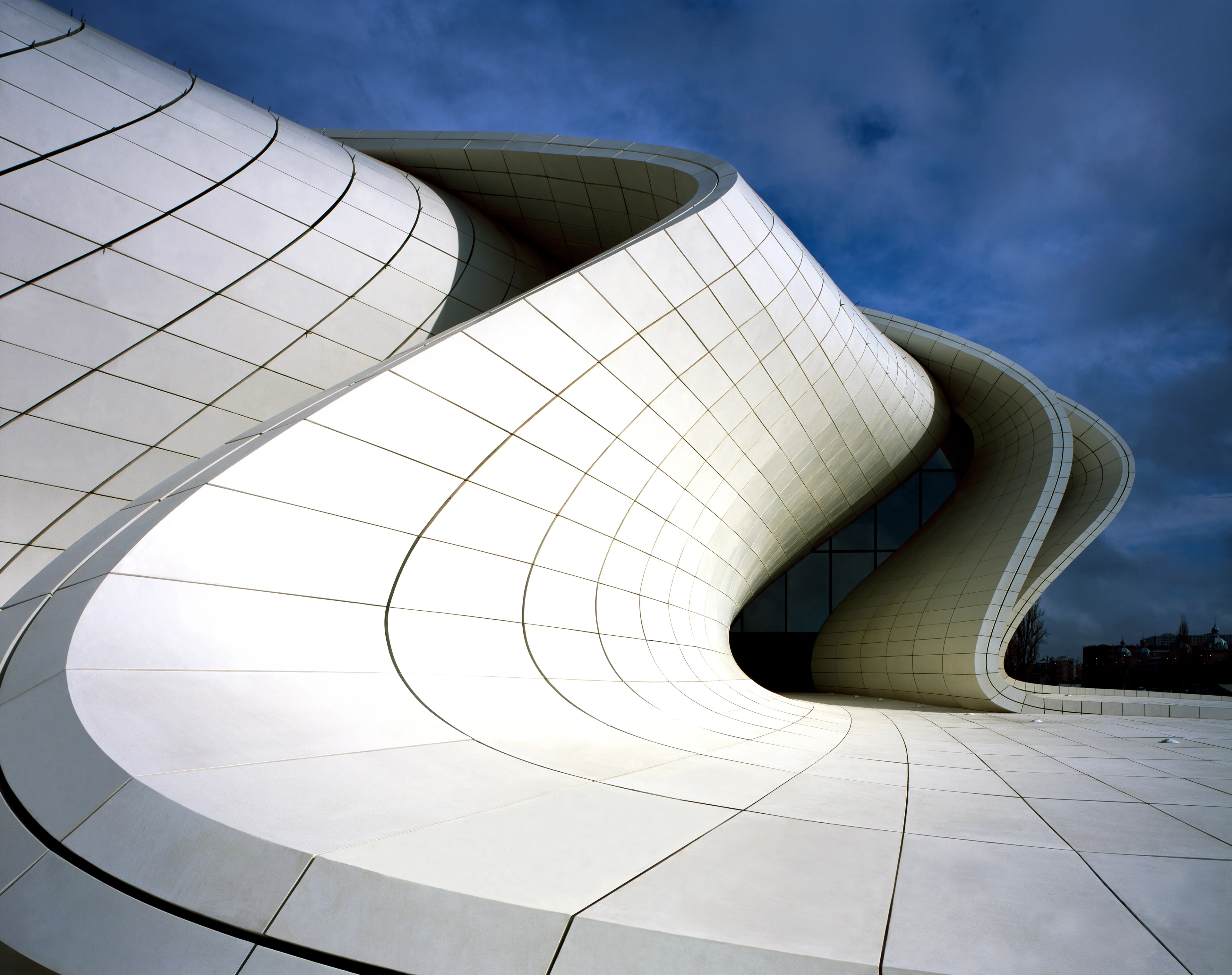
The space frame system enabled the construction of a free-form structure and saved significant time throughout the construction process, while the substructure was developed to incorporate a flexible relationship between the rigid grid of the space frame and the free-formed exterior cladding seams. These seams were derived from a process of rationalizing the complex geometry, usage, and aesthetics of the project. Glass Fibre Reinforced Concrete (GFRC) and Glass Fibre Reinforced Polyester (GFRP) were chosen as ideal cladding materials, as they allow for the powerful plasticity of the building’s design while responding to very different functional demands related to a variety of situations: plaza, transitional zones and envelope.
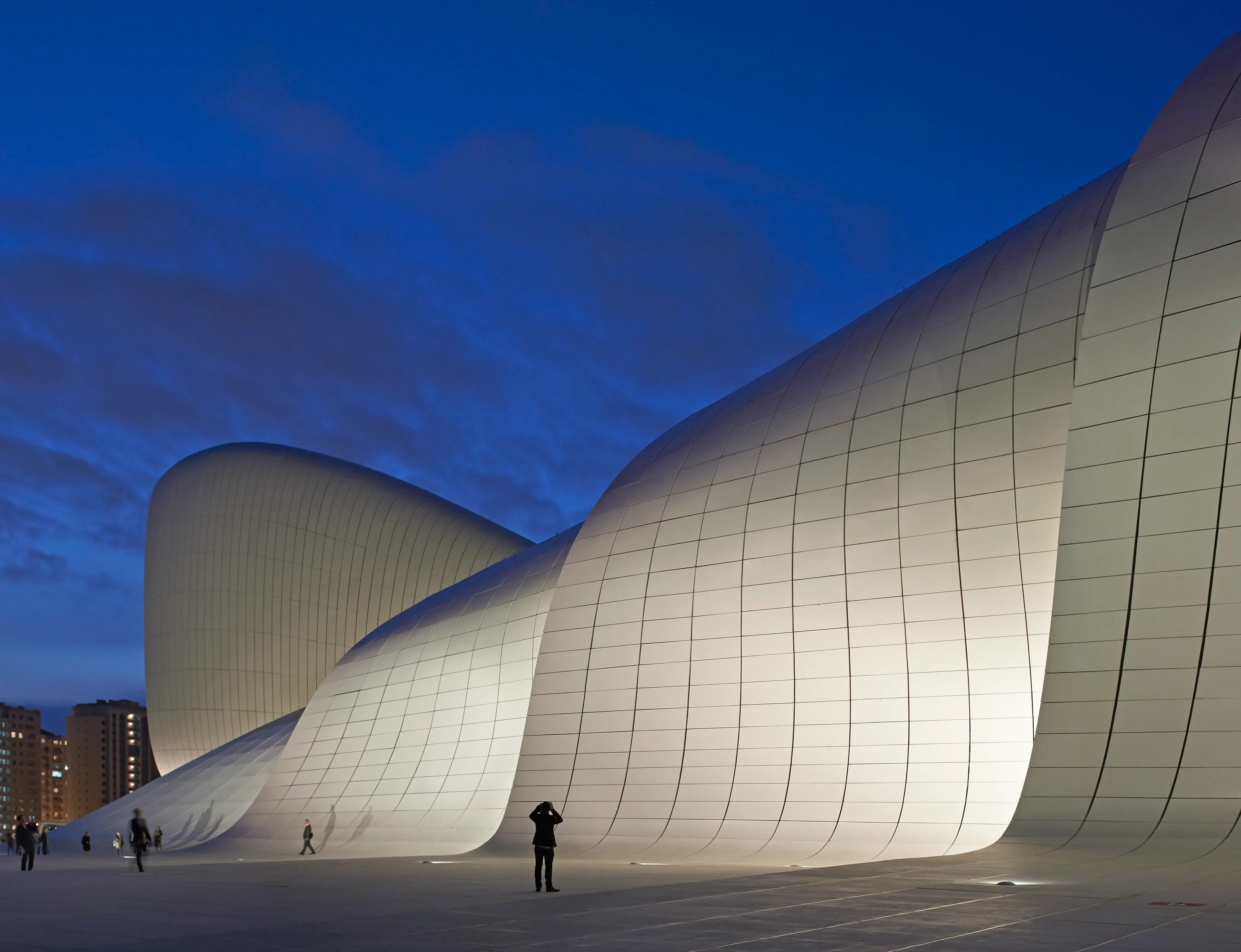
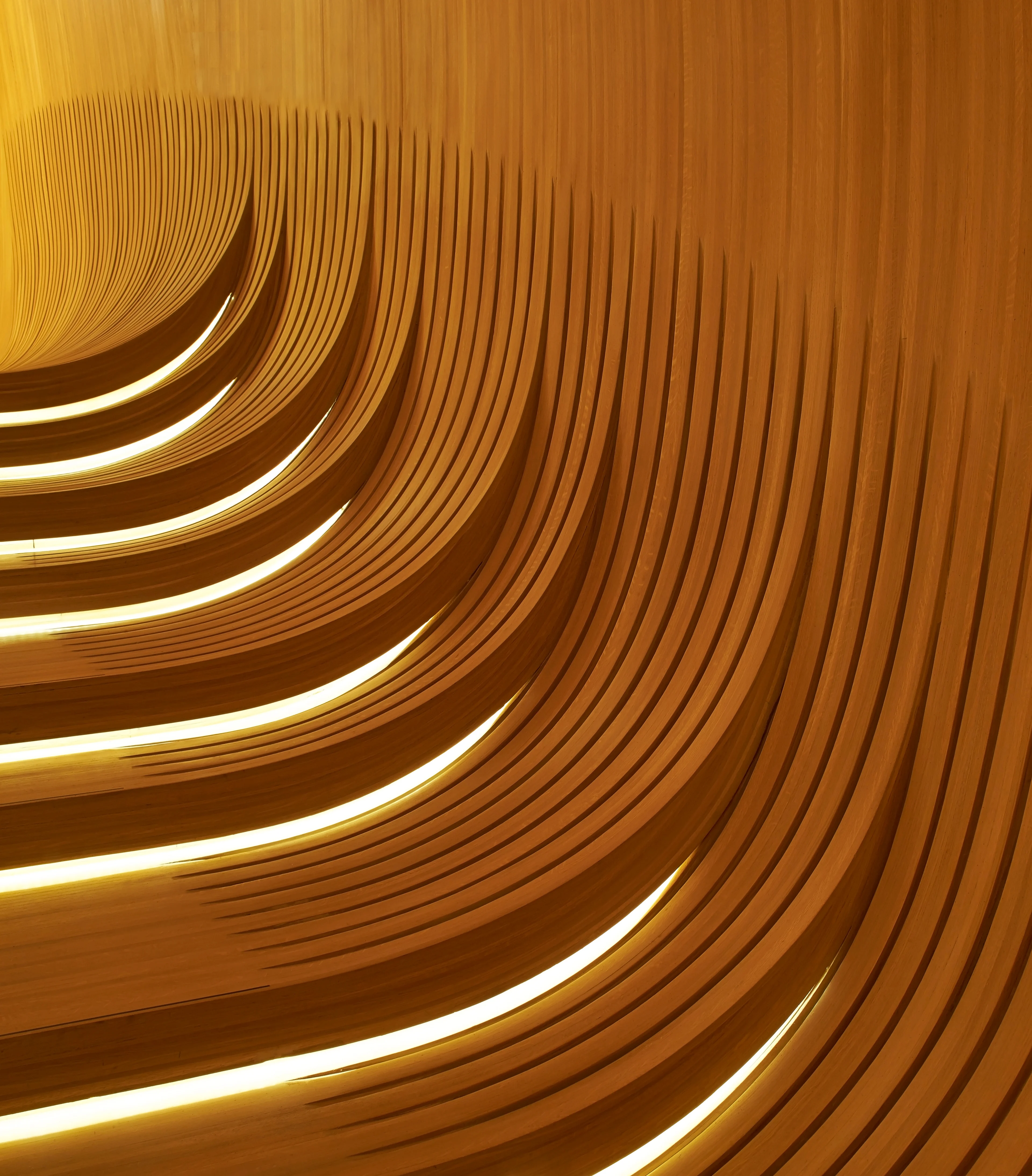
In this architectural composition, if the surface is the music, then the seams between the panels are the rhythm. Numerous studies were carried out on the surface geometry to rationalize the panels while maintaining continuity throughout the building and landscape. The seams promote a greater understanding of the project’s scale. They emphasize the continual transformation and implied motion of its fluid geometry, offering a pragmatic solution to practical construction issues such as manufacturing, handling, transportation and assembly; and answering technical concerns such as accommodating movement due to deflection, external loads, temperature change, seismic activity and wind loading.
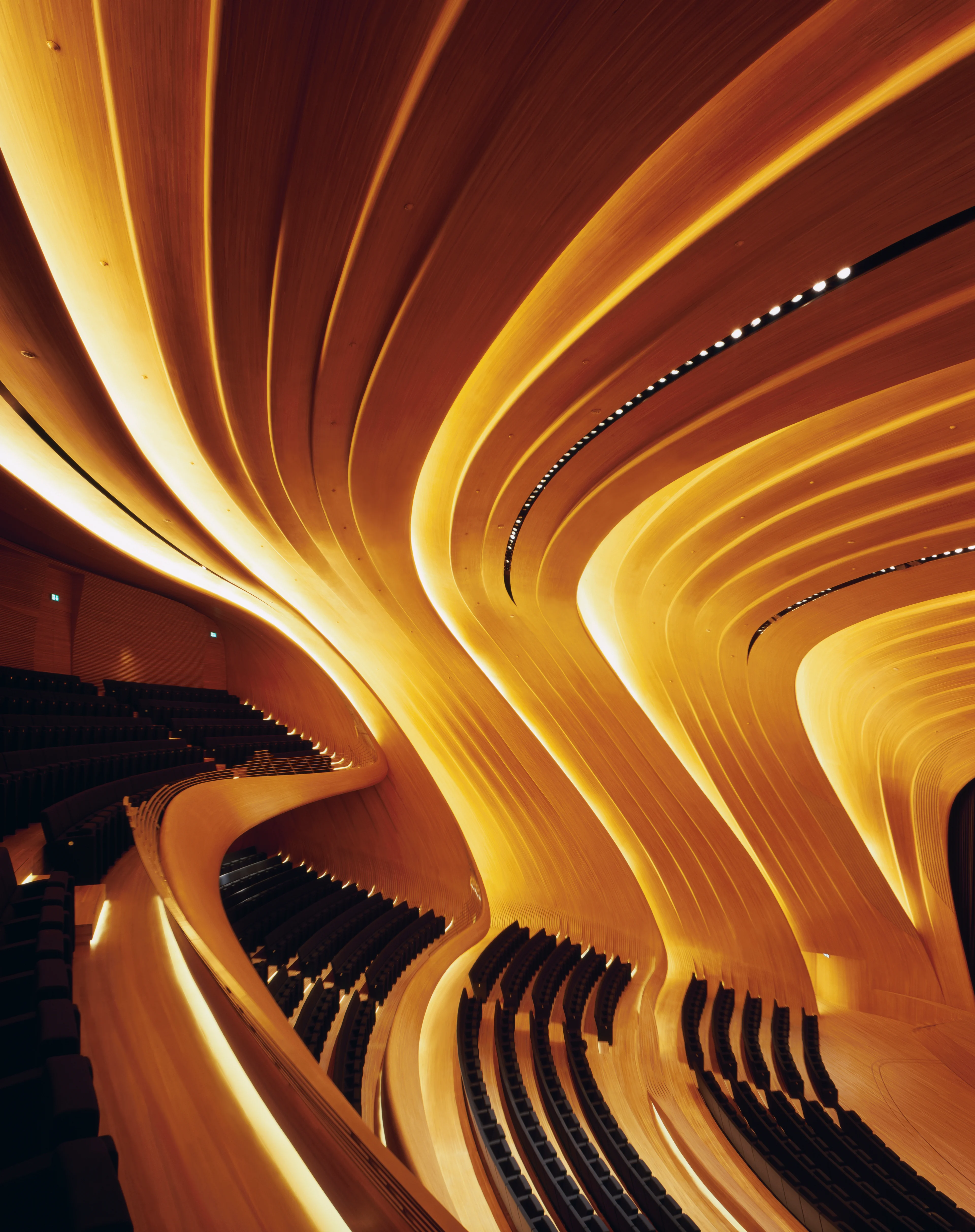
To emphasize the continuous relationship between the building’s exterior and interior, the lighting of the Heydar Aliyev Center has been very carefully considered. The lighting design strategy differentiates the day and night reading of the building. During the day, the building’s volume reflects light, constantly altering the Center’s appearance according to the time of day and viewing perspective. The use of semi-reflective glass gives tantalizing glimpses within, arousing curiosity without revealing the fluid trajectory of spaces inside. At night, this character is gradually transformed by means of lighting that washes from the interior onto the exterior surfaces, unfolding the formal composition to reveal its content and maintaining the fluidity between interior and exterior
Culture
Explore more cultural projects
From a civic art centre that unites three distinct cultural institutions to a science fiction museum whose landscaping contributes to the city’s drainage and flood defence systems, discover our latest cultural projects.
Render by Devisual
Z8 Tower
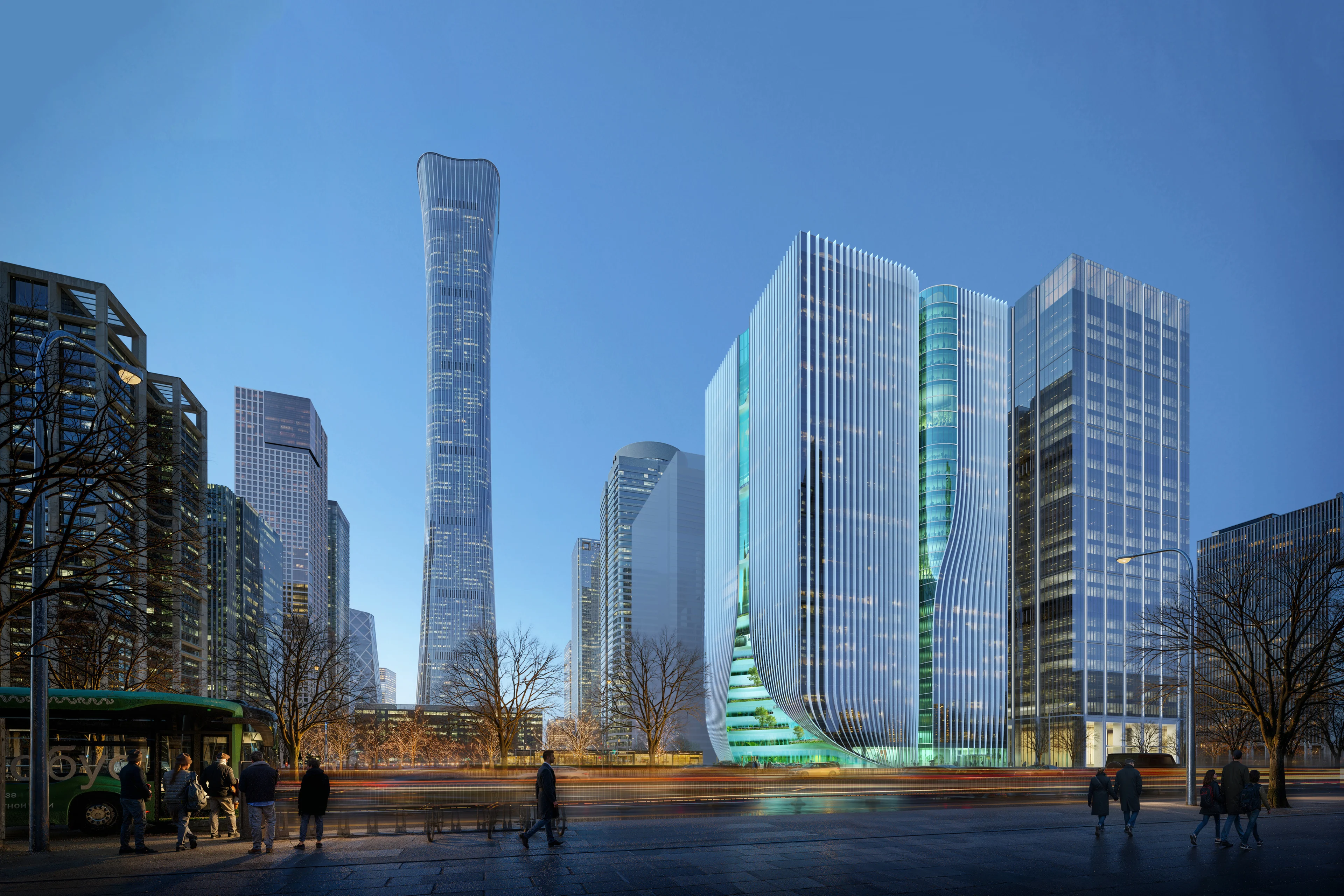
Located in the core of Beijing’s Central Business District (CBD) at the intersection of Jianguo Road and Jinhe East Road, the new Z8 Tower faces the CBD’s central park and is defined by the historic alignment and urbanism of the city’s Chang’an Avenue.
Songshan Lake Performance and Exhibition Centre
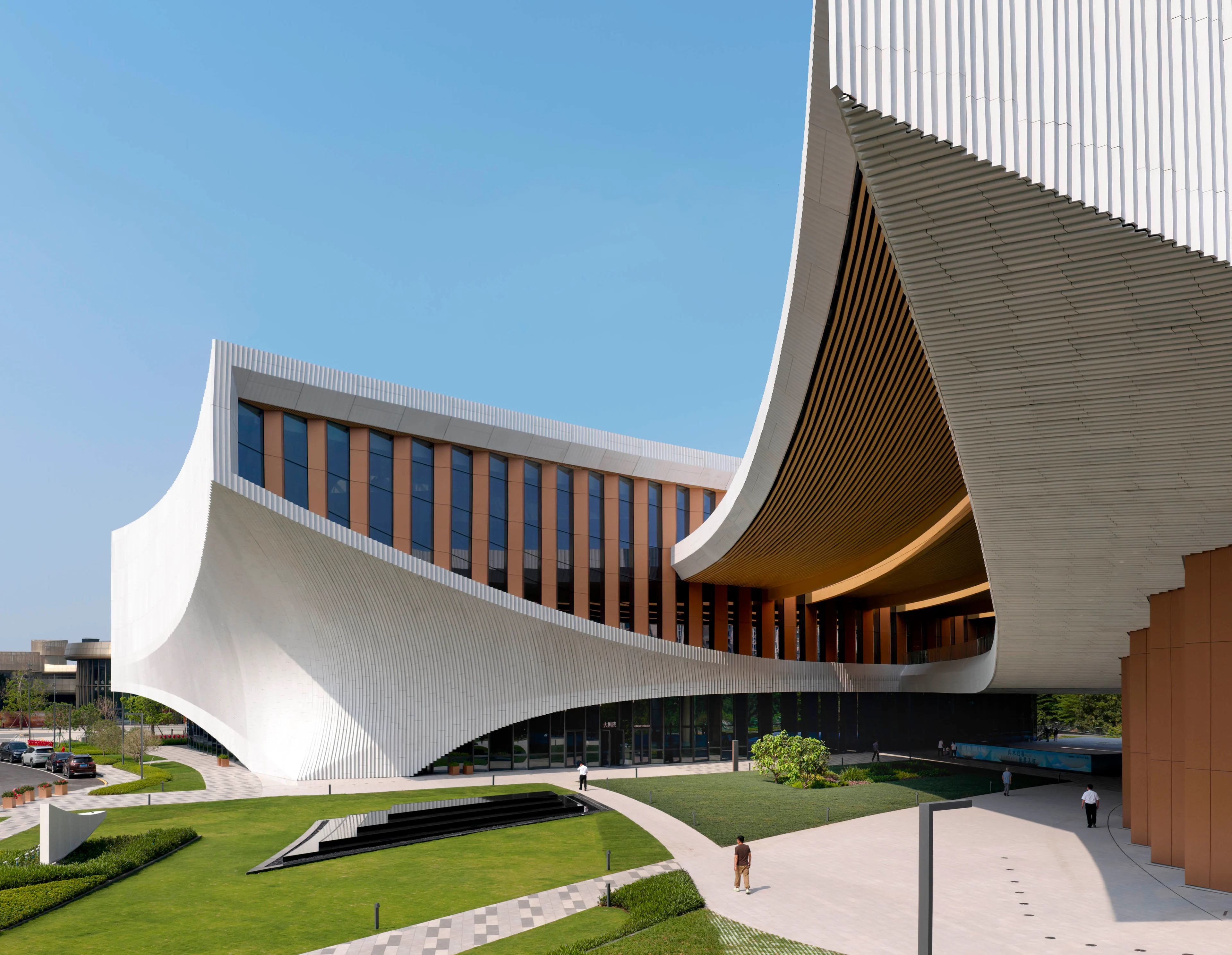
Located in Dongguan within the Greater Bay Area of southern China’s Pearl River estuary, the new Songshan Lake Exhibition and Performance Centre is at the heart of a mixed-use masterplan to revitalize the Yuehe Lake waterfront.
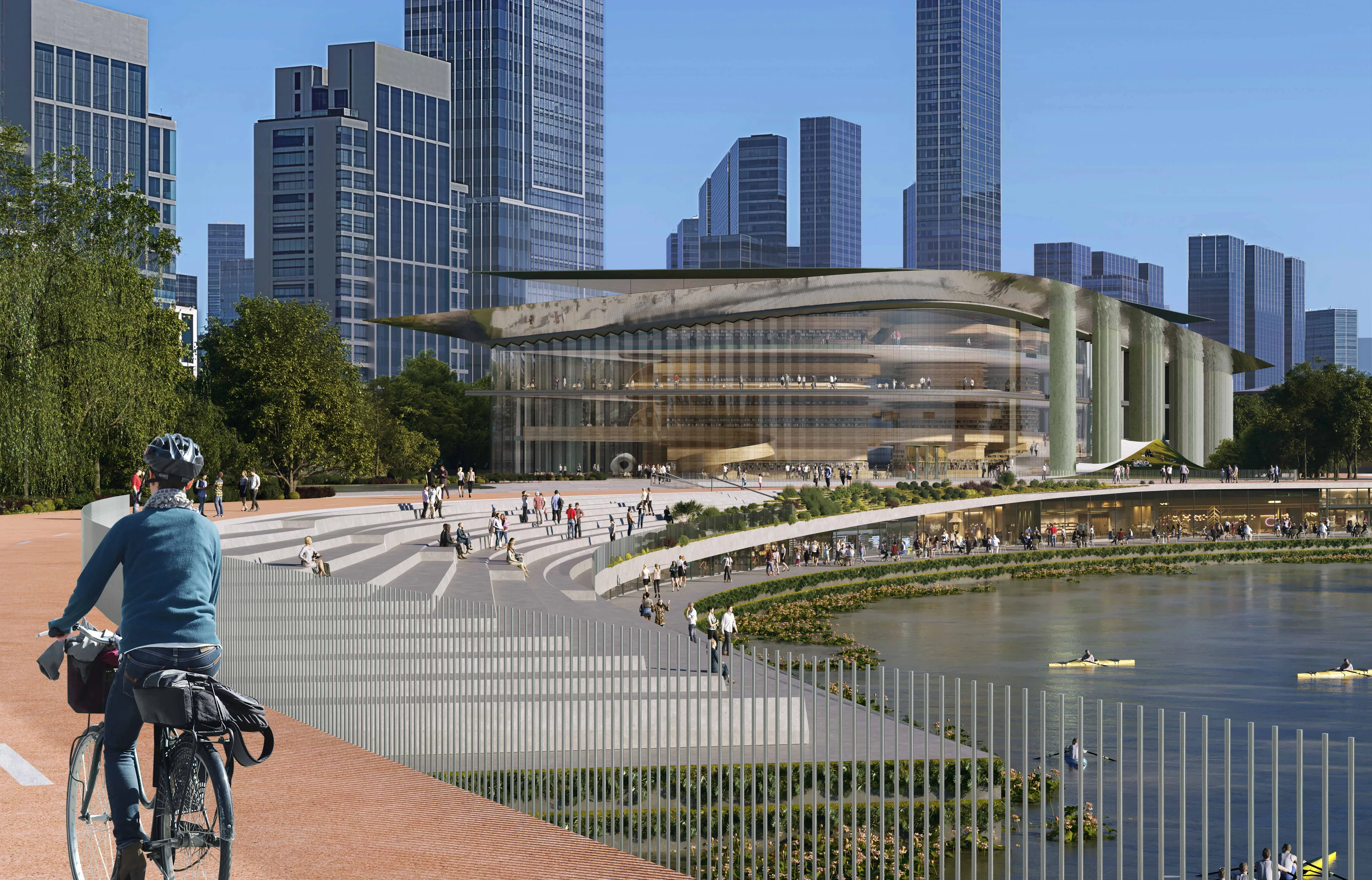
Qiantang Bay Cultural District
A series of new landscaped parklands, terraces and gardens along the Zhedong Canal within the Xiaoshan district of Hangzhou
Render by Atchain
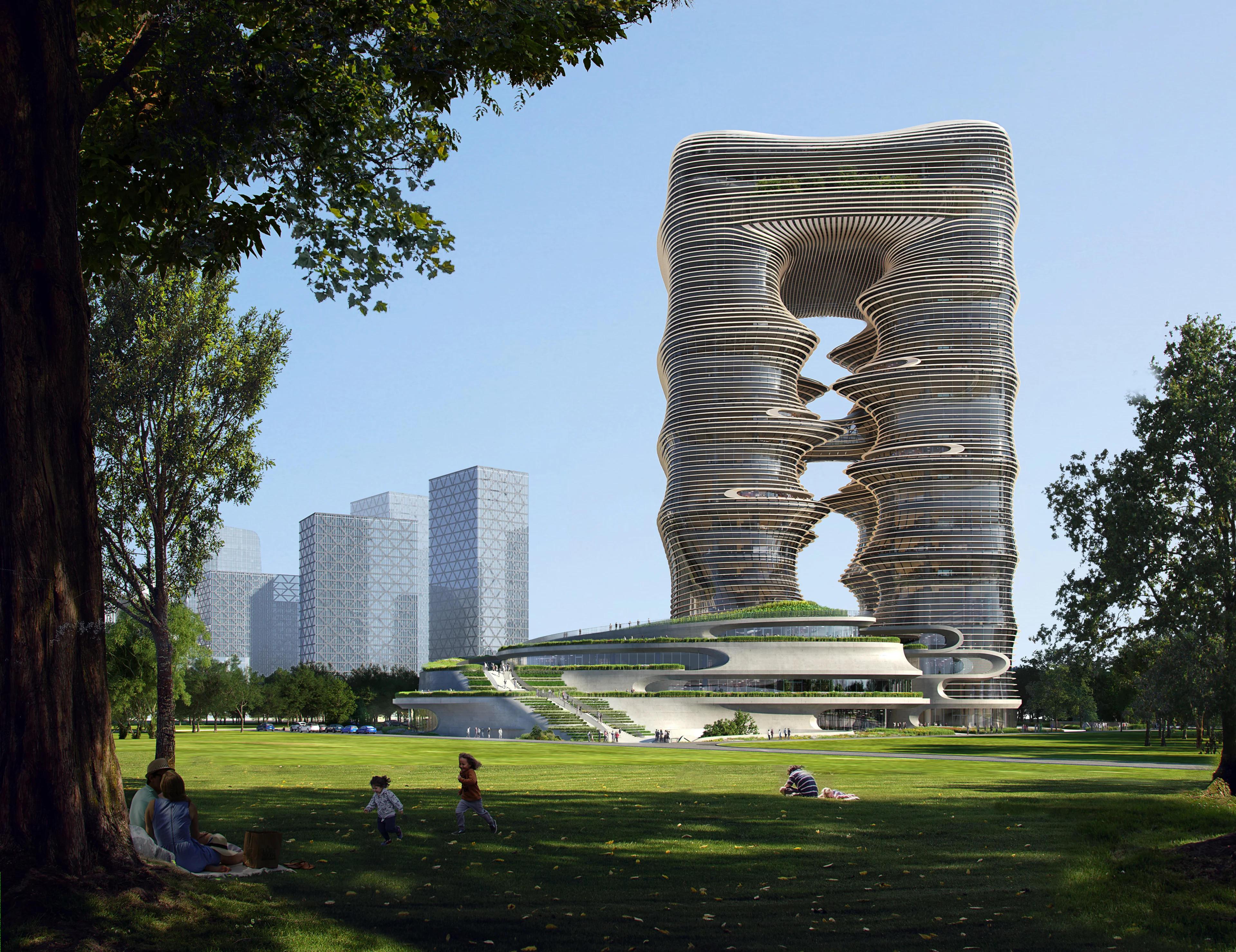
Yidan Center
A place of convergence and collaboration, the Yidan Center will be home to the Chen Yidan Foundation in its work to promote lifelong learning and innovation in education.
Render by Proloog
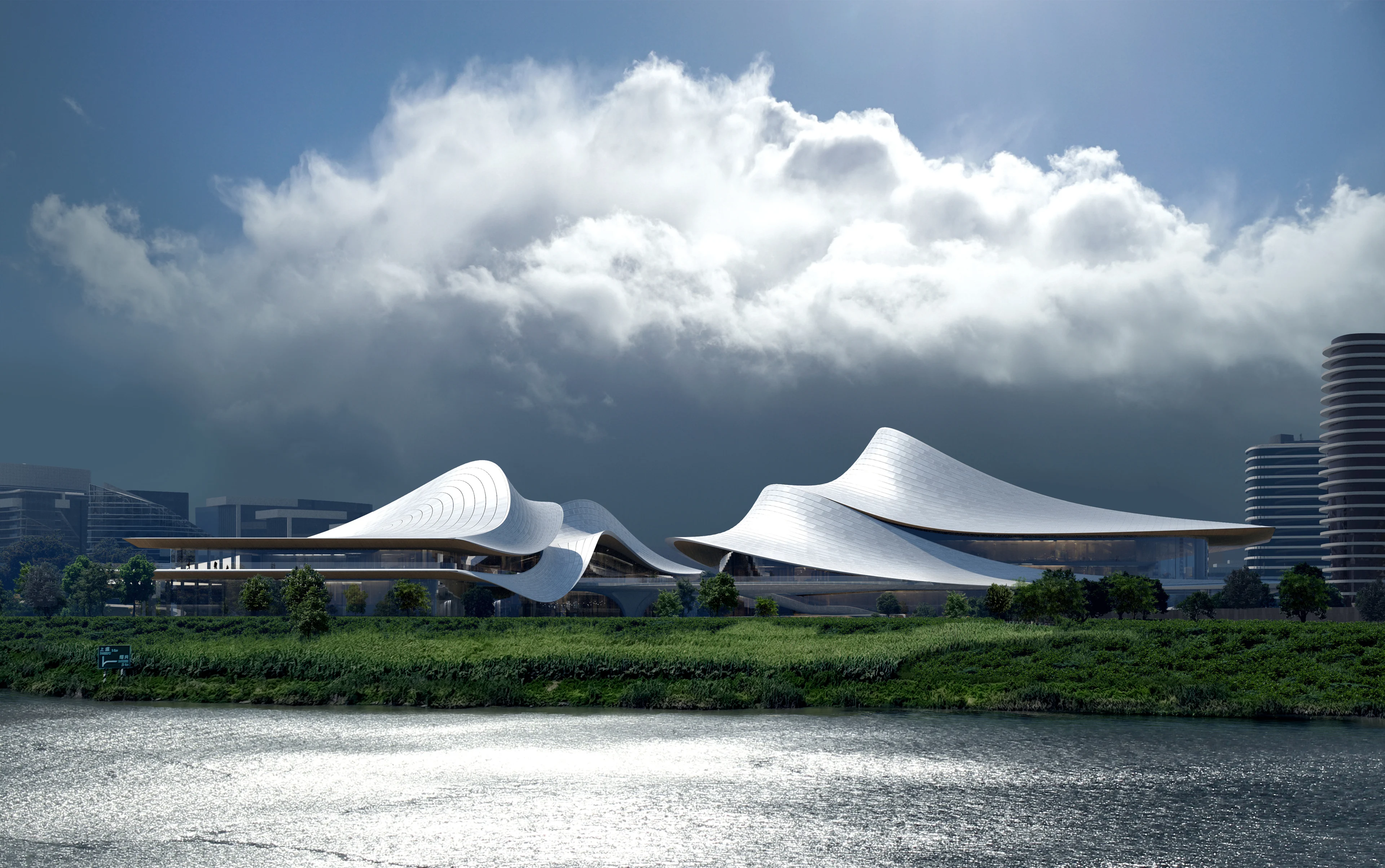
Elevation River
Zhejiang Shaoxing Shangyu District Cao’e River Culture and Art Centre
Designed to host local and international productions of opera, dance and drama together with large-scale symphonies and musical theatre, the Art and Culture Centre includes a 1,400-seat Grand Theatre, 500-seat Black-Box Multifunctional Hall, 2,900 sq. m Arts and Education Centre, 3,000m² Conference Centre, 7,500m² Heritage Museum and a 10,000m² Digital Art Gallery.
Render by Specto-Digital
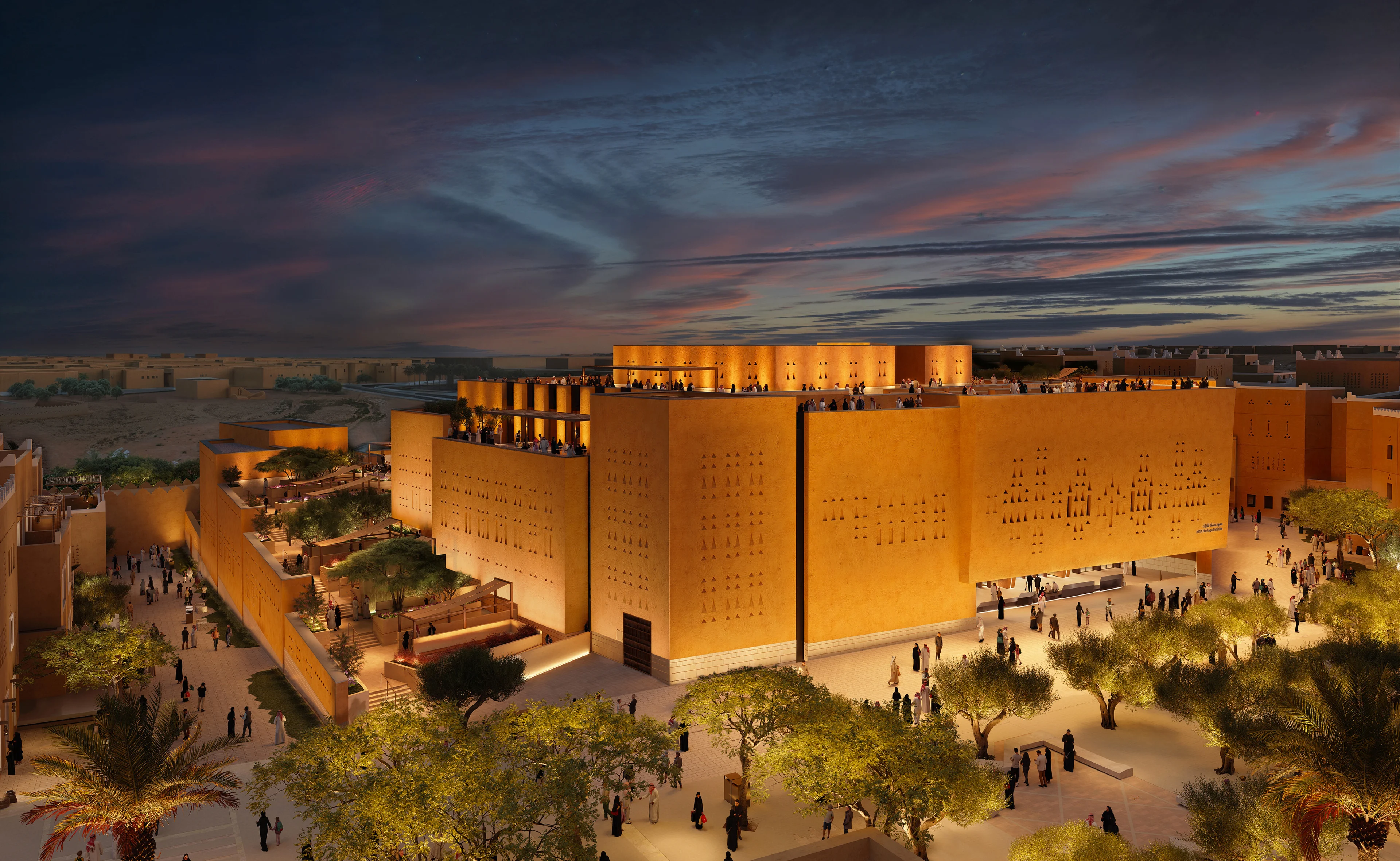
Asaan Museum
Meaning ‘inheritance passed down through generations’, Asaan will be an institution dedicated to preserving and celebrating this rich heritage, in addition to promoting creativity and knowledge sharing.
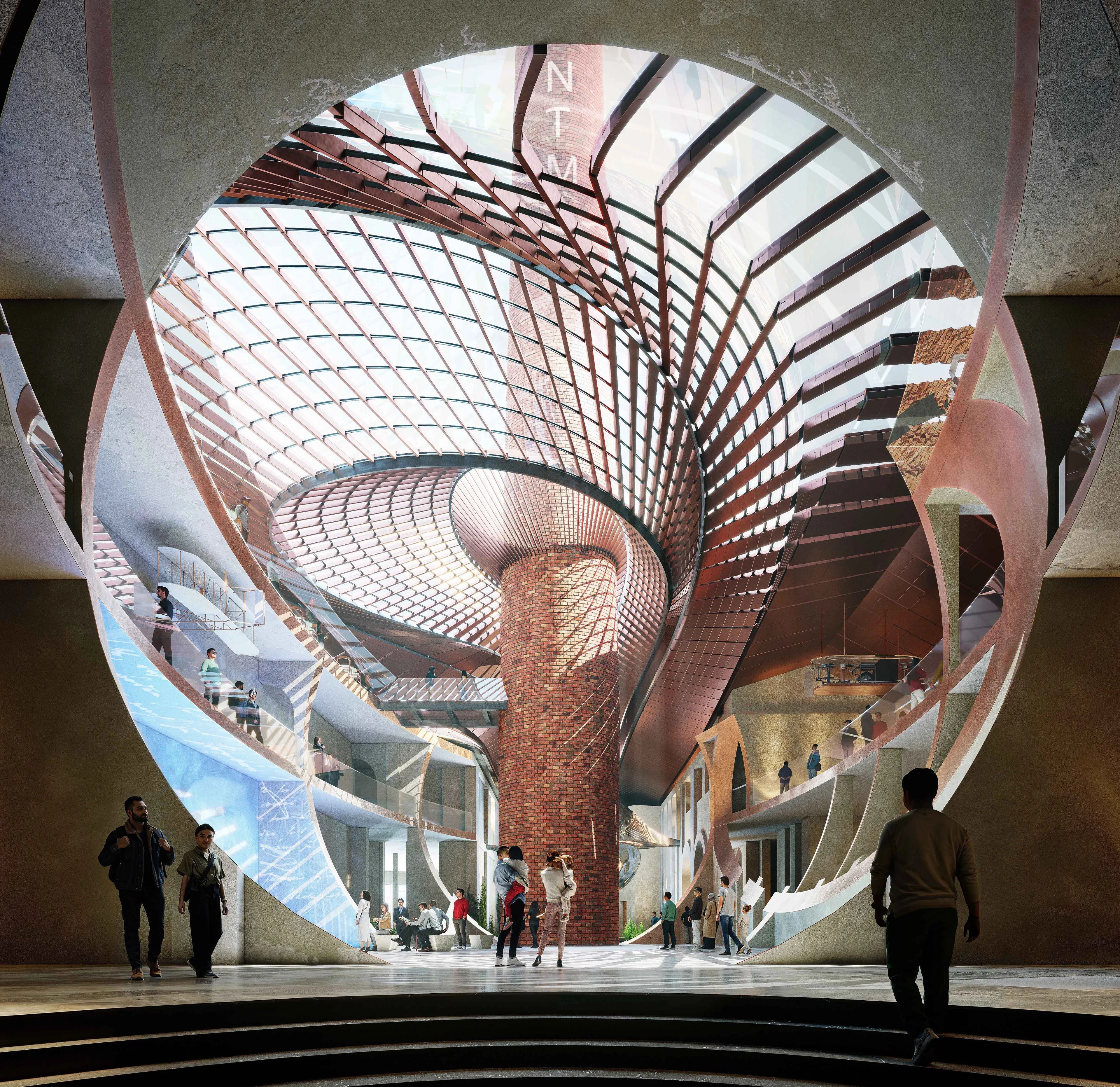
Nikola Tesla Museum
The new Nikola Tesla Museum renovates Belgrade’s historic Milan Vapa Paper Mill into a cultural destination celebrating Tesla’s legacy while preserving the city’s architectural heritage and creating a variety of new public spaces for local residents and visitors.
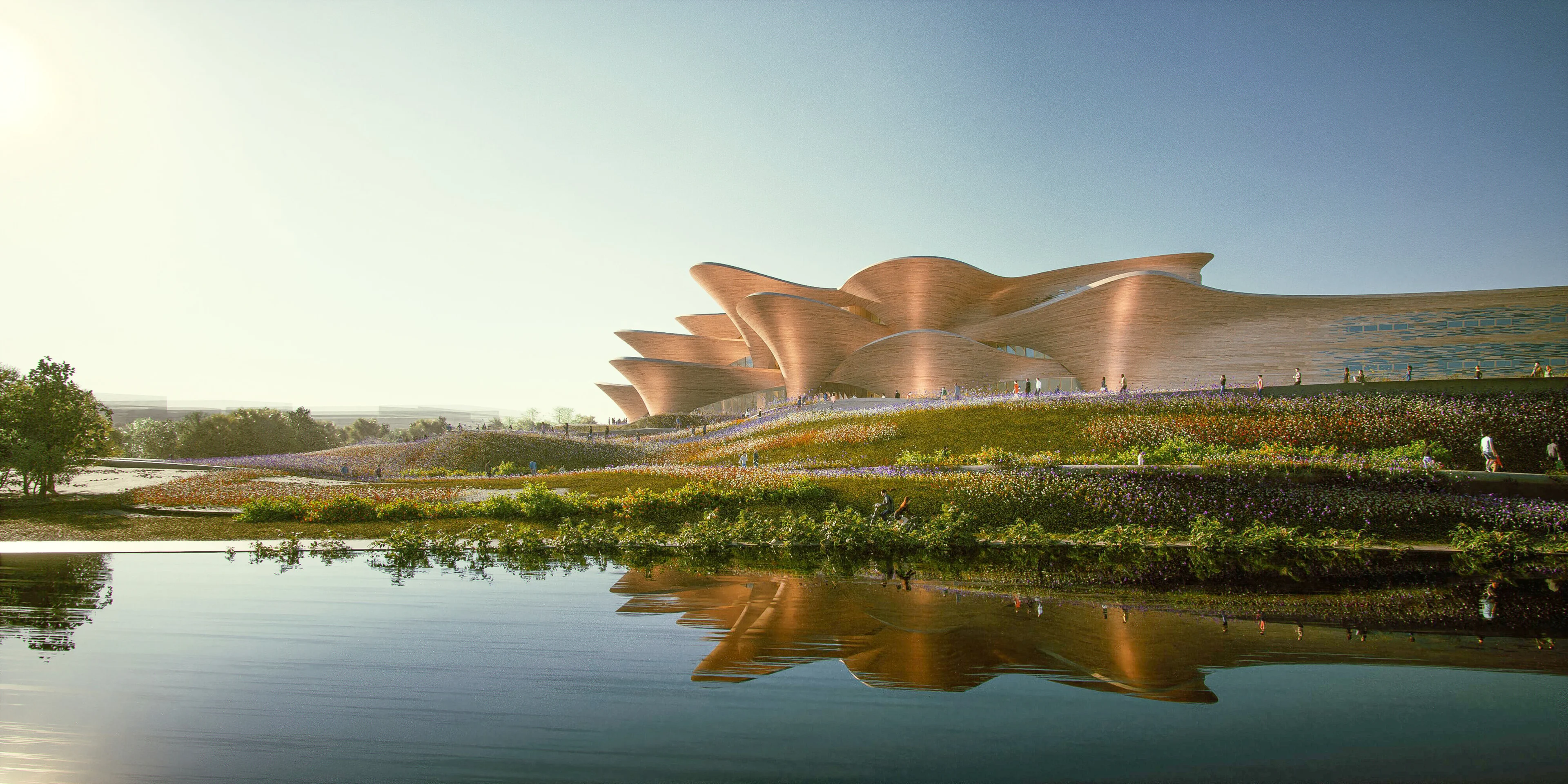
Courtesy of ZHA
River View
Alisher Navoi Institute
The Alisher Navoi International Scientific Research Centre will incorporate the Navoi State Museum of Literature, Auditorium, International Research Centre and School.
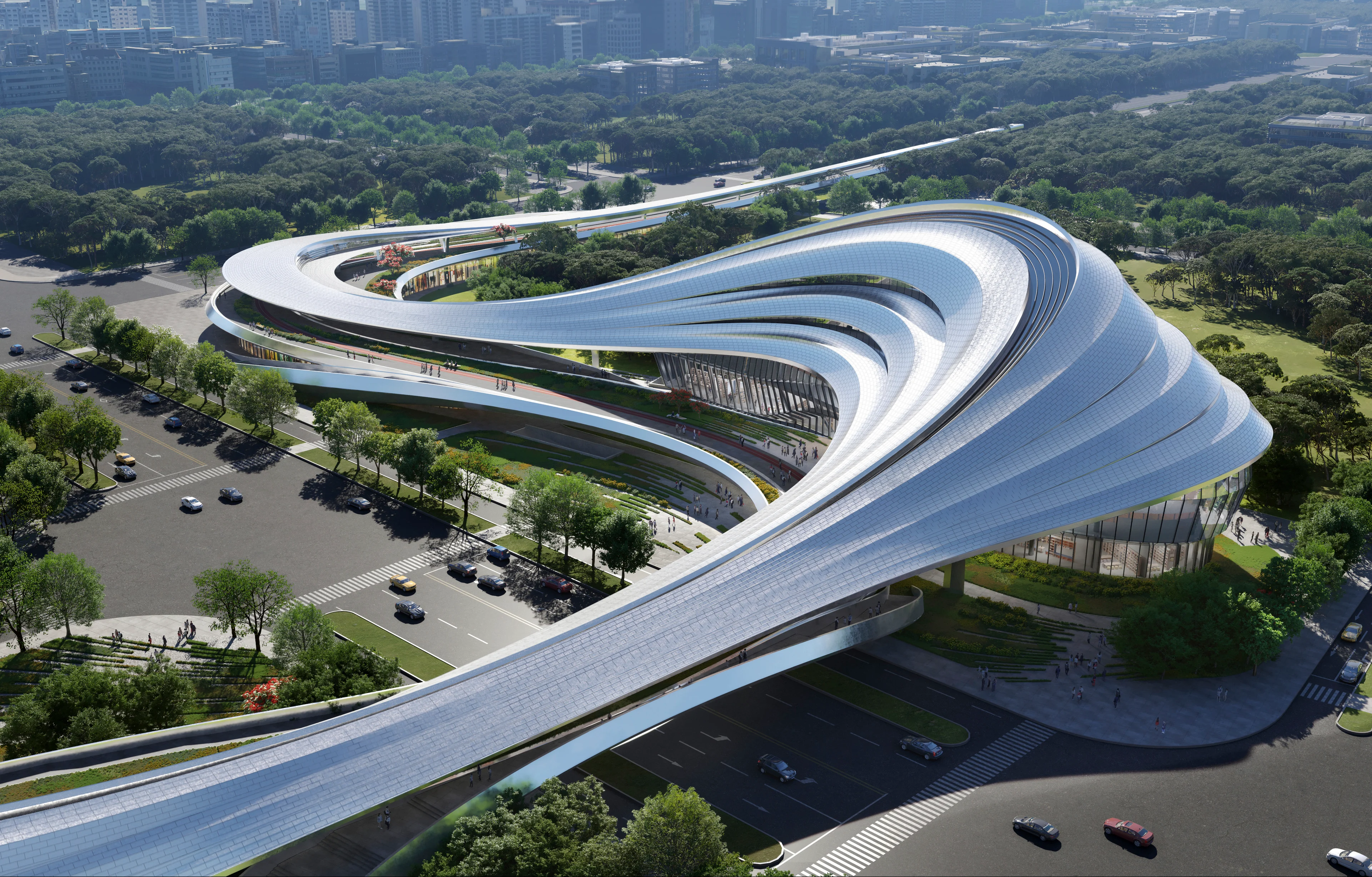
Render by Atchain
Jinghe New City Culture and Art Centre
Jinghe New City is growing as a science and technology hub north of Xi’an in China’s Shaanxi province. Supported by new scientific research institutes and driven by environmental considerations, the city is becoming a centre for developing industries focusing on new energy and materials, artificial intelligence and aerospace.
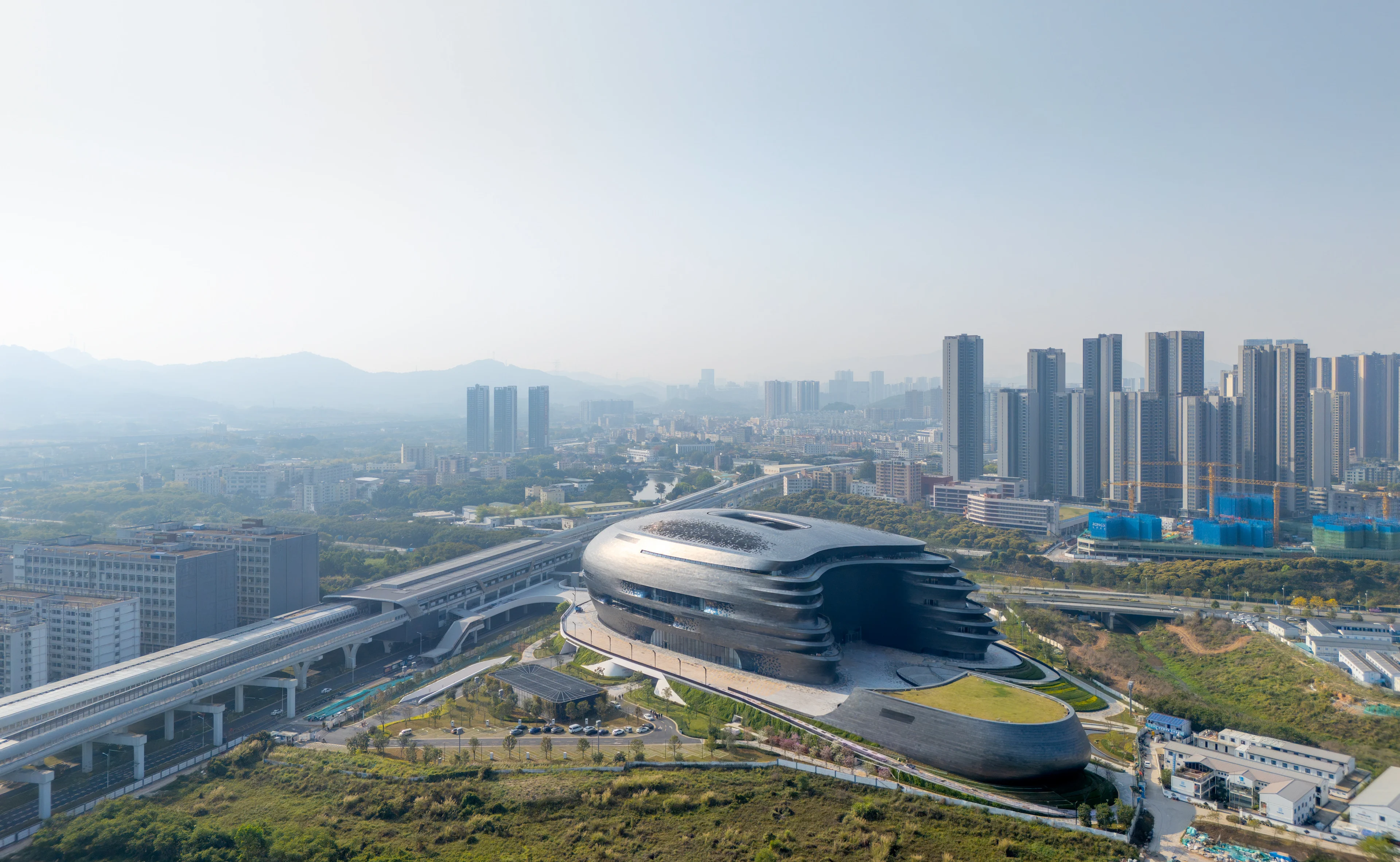
Photograph by Virgile Simon Bertrand
Shenzhen Science & Technology Museum
Showcasing the scientific endeavour, ground-breaking research and future possibilities of technology, this new institution will explore the power of science and the technological advancements defining our future.
Photograph by Luke Hayes
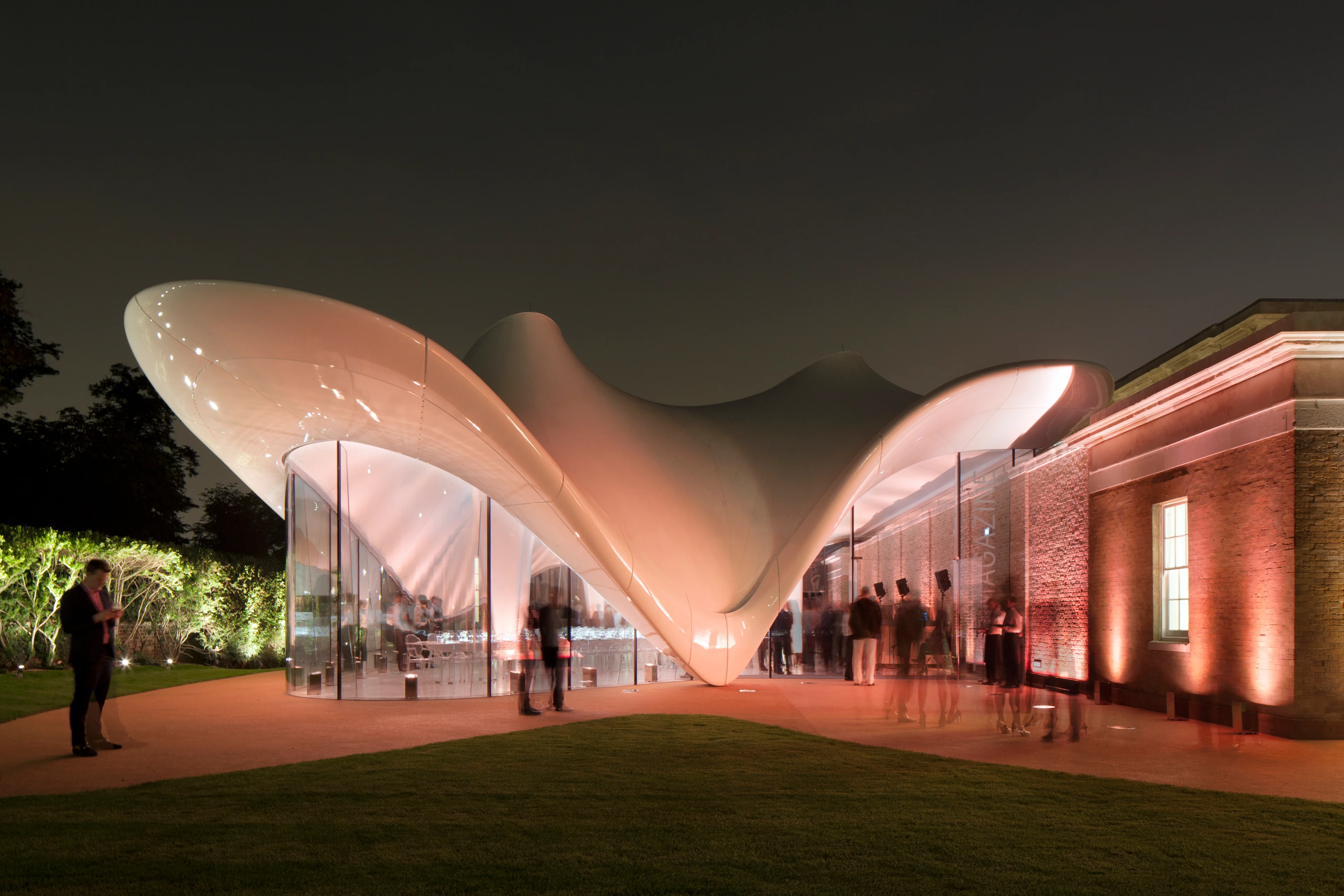
Serpentine North Gallery
The Serpentine North Gallery consists of two distinct parts, namely the conversion of a classical 19th century brick structure – The Magazine – and a 21st century tensile structure. The Serpentine North Gallery is thus – after MAXXI in Rome – the second art space where ZHA has created a synthesis of old and new.
Photograph by Fernando Guerra
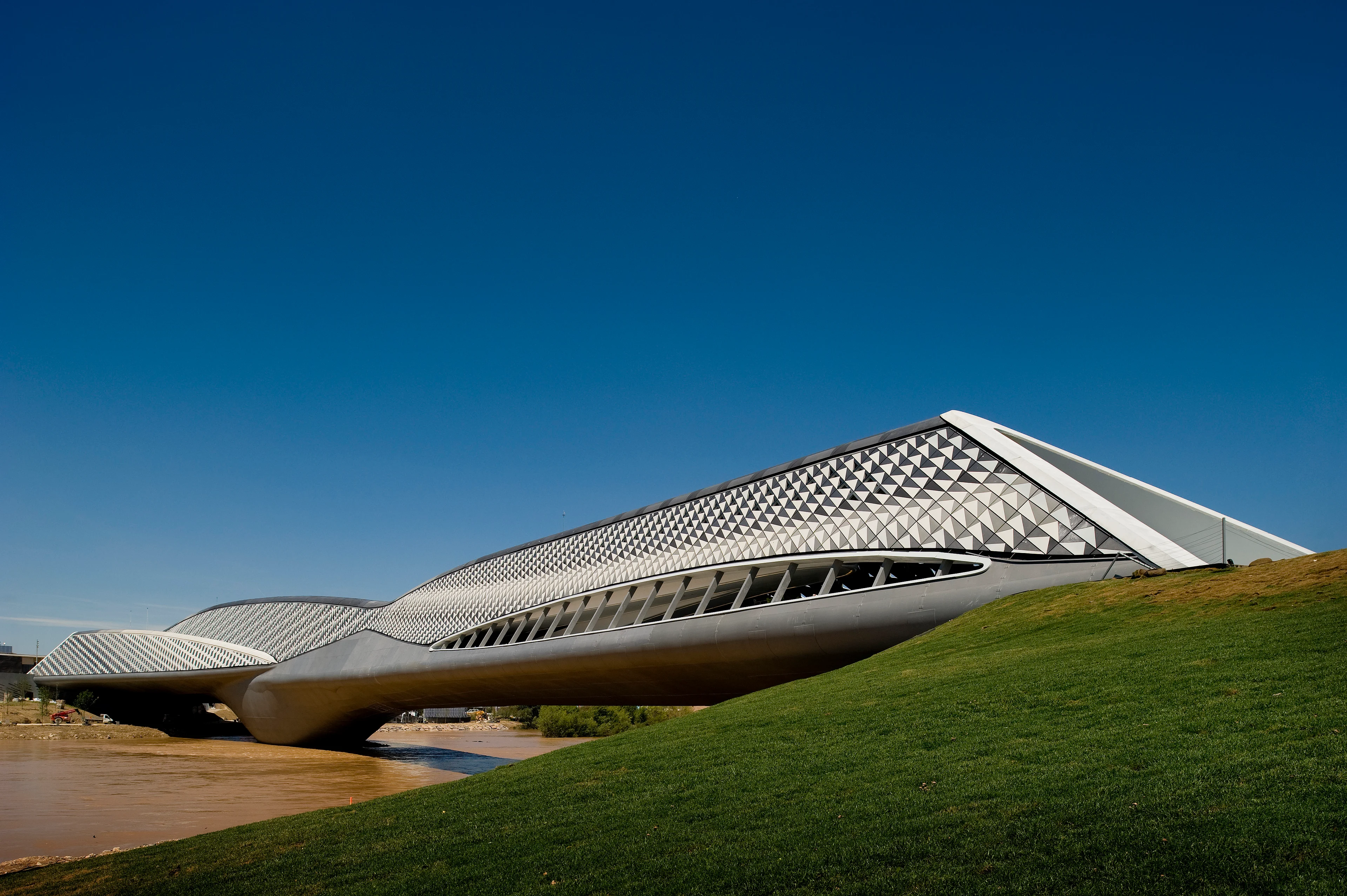
Zaragoza Bridge Pavilion
An enclosed interactive space spanning the River Ebro to form a gateway to the Zaragoza Expo 2008, a hybrid of pedestrian footbridge and exhibition pavilion. Four structural elements correspond to specific spatial enclosures, which intersect and brace each other. This fluid, dynamic design interprets the Expo’s theme: ‘Water and Sustainable Development.’
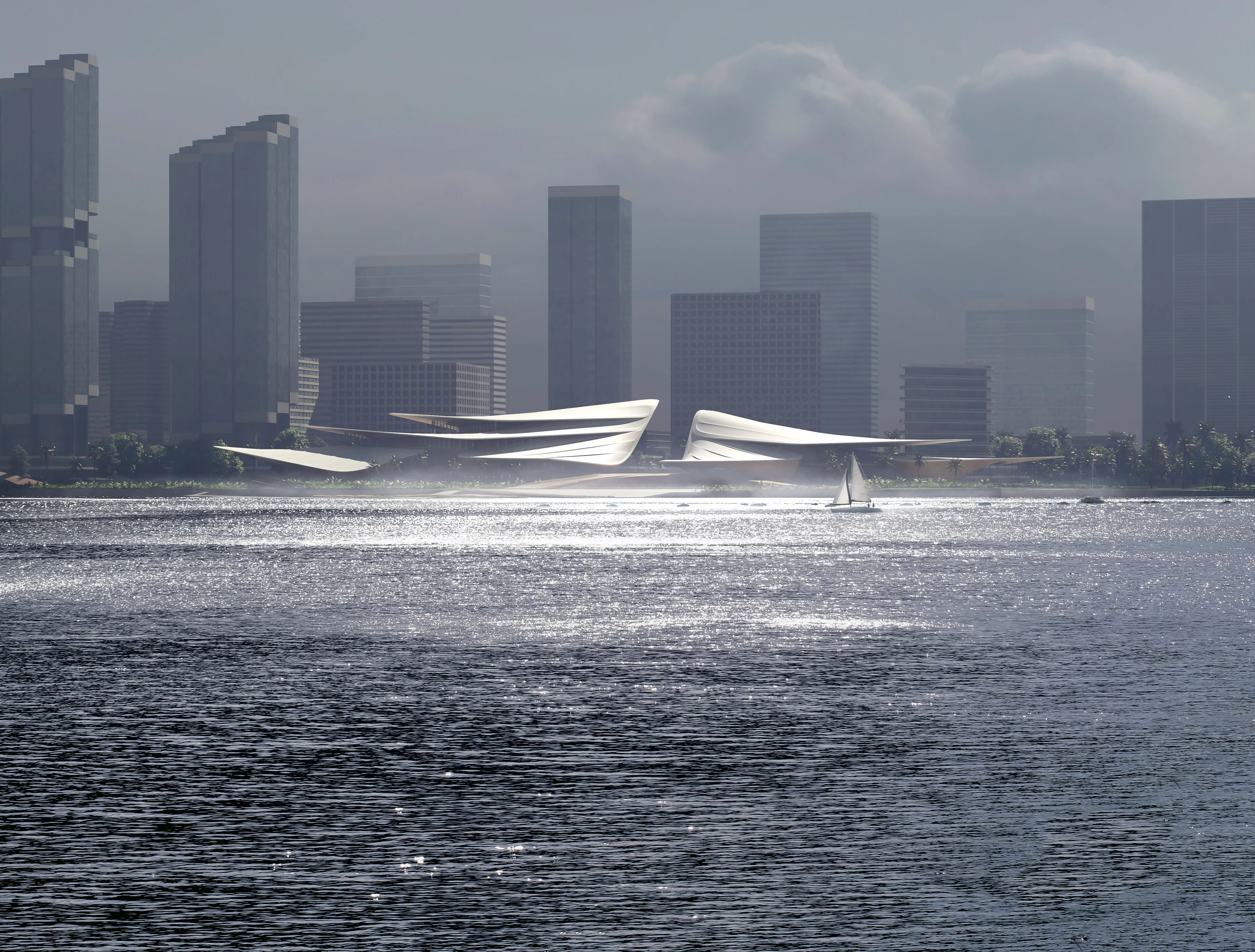
Sanya Cultural District
Located at the entrance to Sanya’s harbour, the new cultural district by ZHA is adjacent to the Jiangang Road terminus of Sanya’s tram network that connects many of the residential and hotel districts on Sanya Bay with the city’s high-speed rail station.
Courtesy of Arch-Exist
default
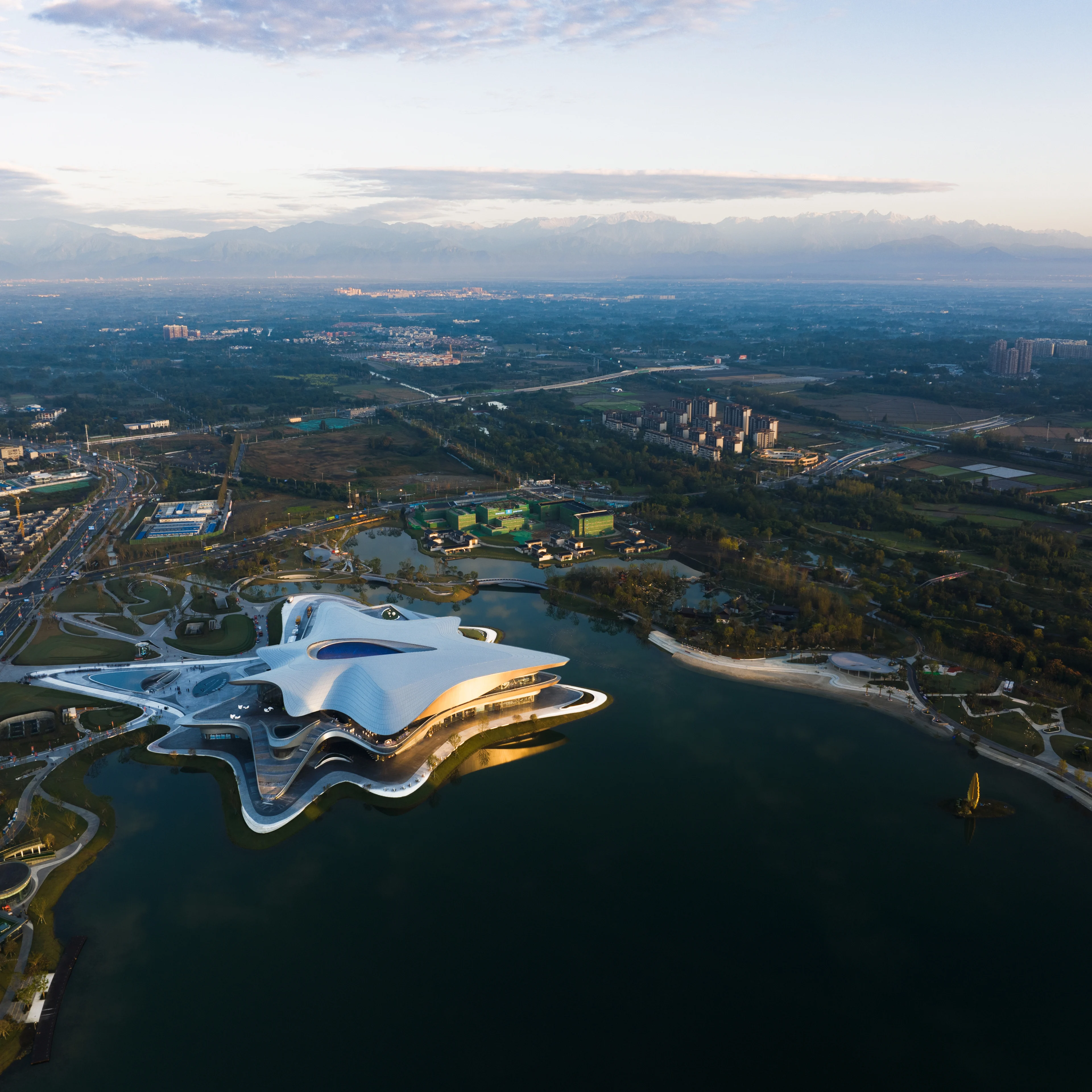
Chengdu Science Fiction Museum
The new Chengdu Science Fiction Museum is situated on Jingrong Lake within the Science & Innovation New City of Chengdu’s Pidu District.
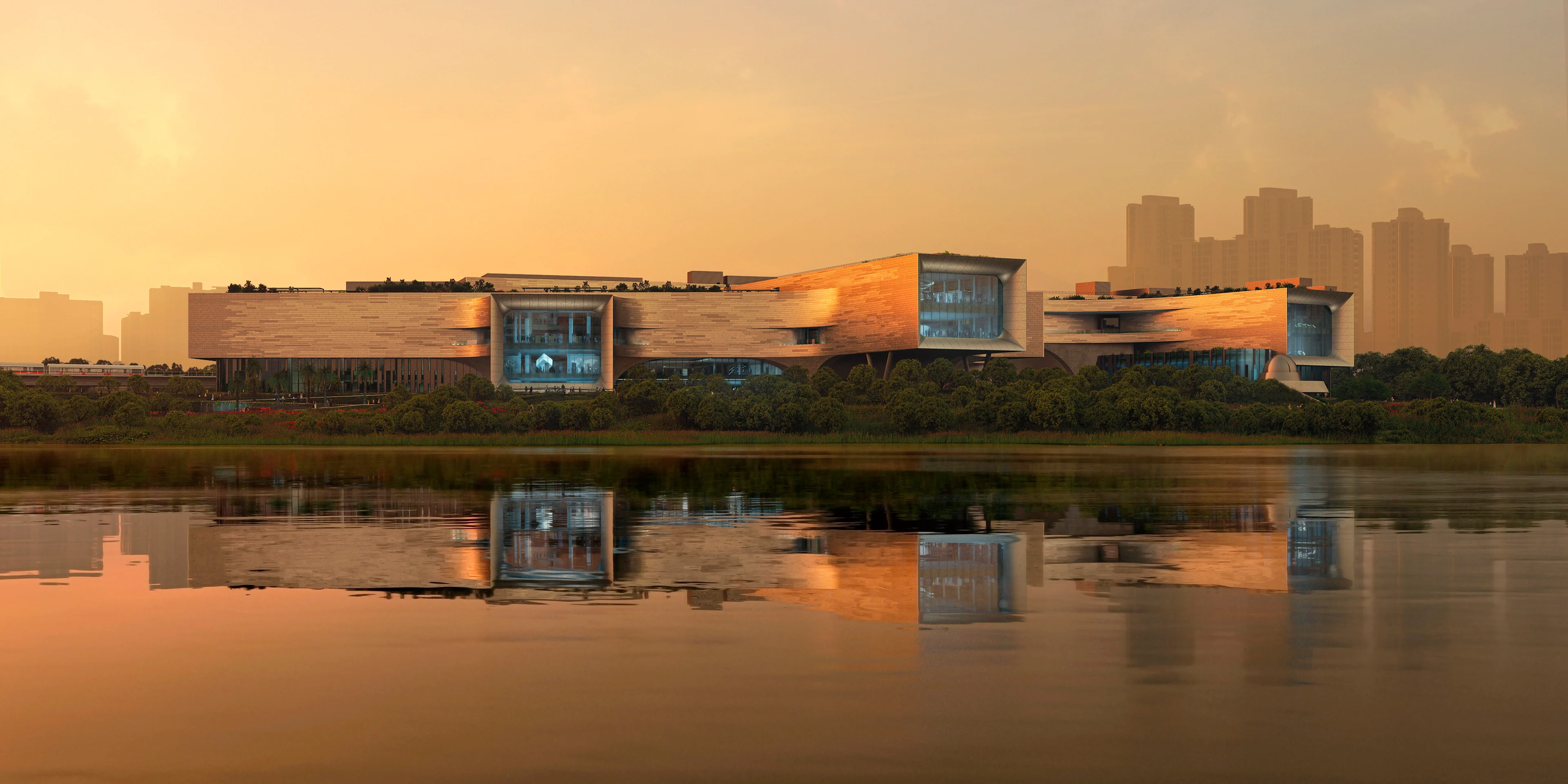
Render by Negativ
Waterfront view of new Science Centre. render by Negativ. The image is an artist’s impression, and final design may be subject to changes.
Singapore New Science Center
Singapore’s New Science Centre will provide unique facilities and programmes as a destination for all Singaporeans to access science, technology, engineering and mathematics (STEM) education and experiences.
01
02
03
04
05
06
07
08
09
10
11
12
13
14
15