
Reggio Calabria, Italy
2007 - 2030
Comune di Reggio Calabria
Museum of the Mediterranean
Render by Nightnurse
Render by Nightnurse
Render by Nightnurse
Render by Nightnurse
01
02
03
04
Essential upgrading of the city’s coastline
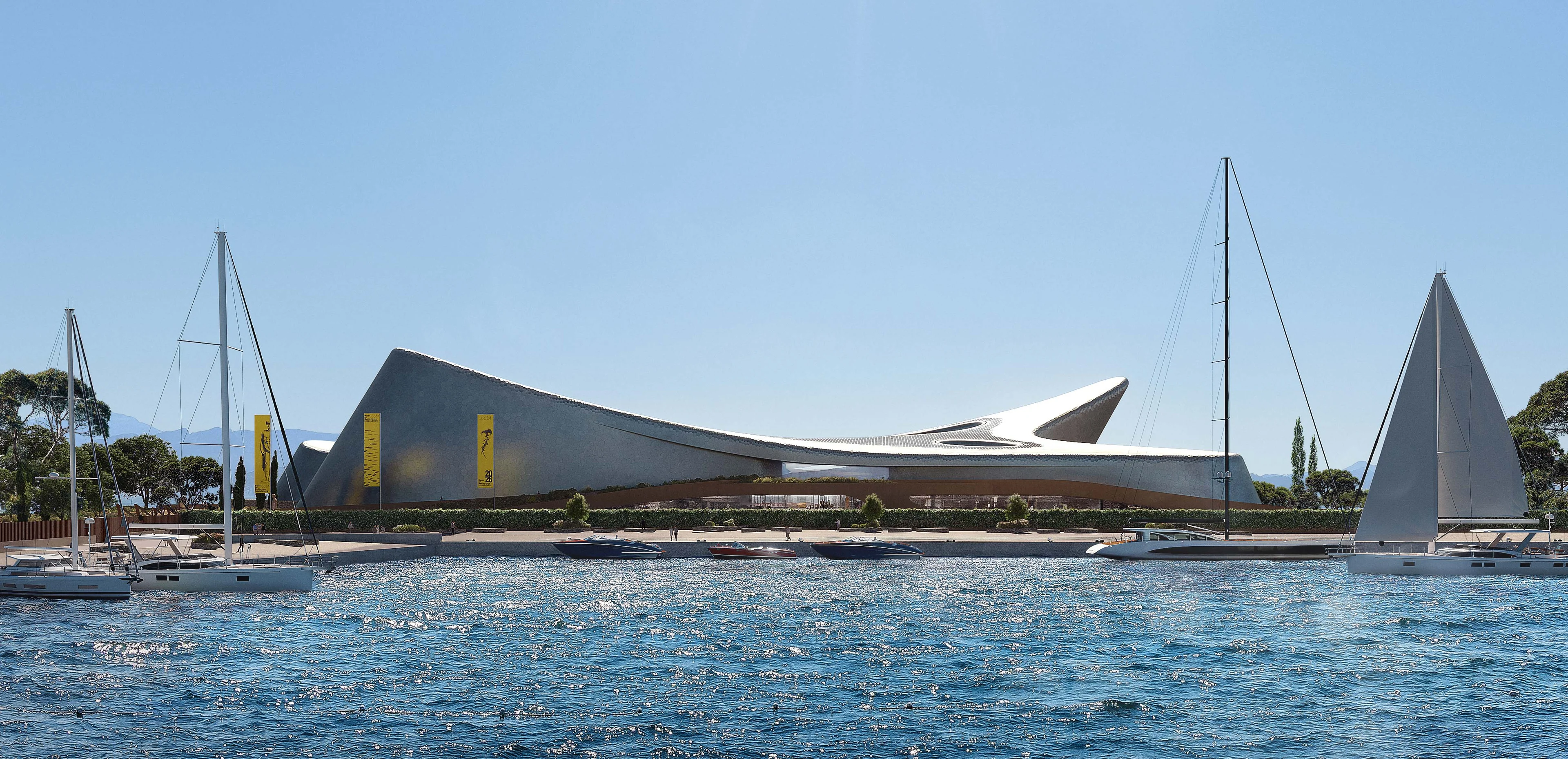
Strategically located on the Strait of Messina in southern Italy, Reggio Calabria has been a gateway between the eastern and western Mediterranean for thousands of years. The city also serves as the gateway between Italian mainland the island of Sicily. Being at the centre of trade routes and marine ecosystems of exceptional biodiversity has placed Reggio Calabria at the heart of the Mediterranean’s history—and places the region at the heart of its future.
Maritime civilizations from across the Mediterranean have influenced Calabria’s rich local culture and traditions. The new Museum of the Mediterranean will complement Reggio Calabria’s existing archaeological and art museums by exploring the profound relationship between Calabria and the Mediterranean Sea that has defined the region’s past and will continue to shape its future.
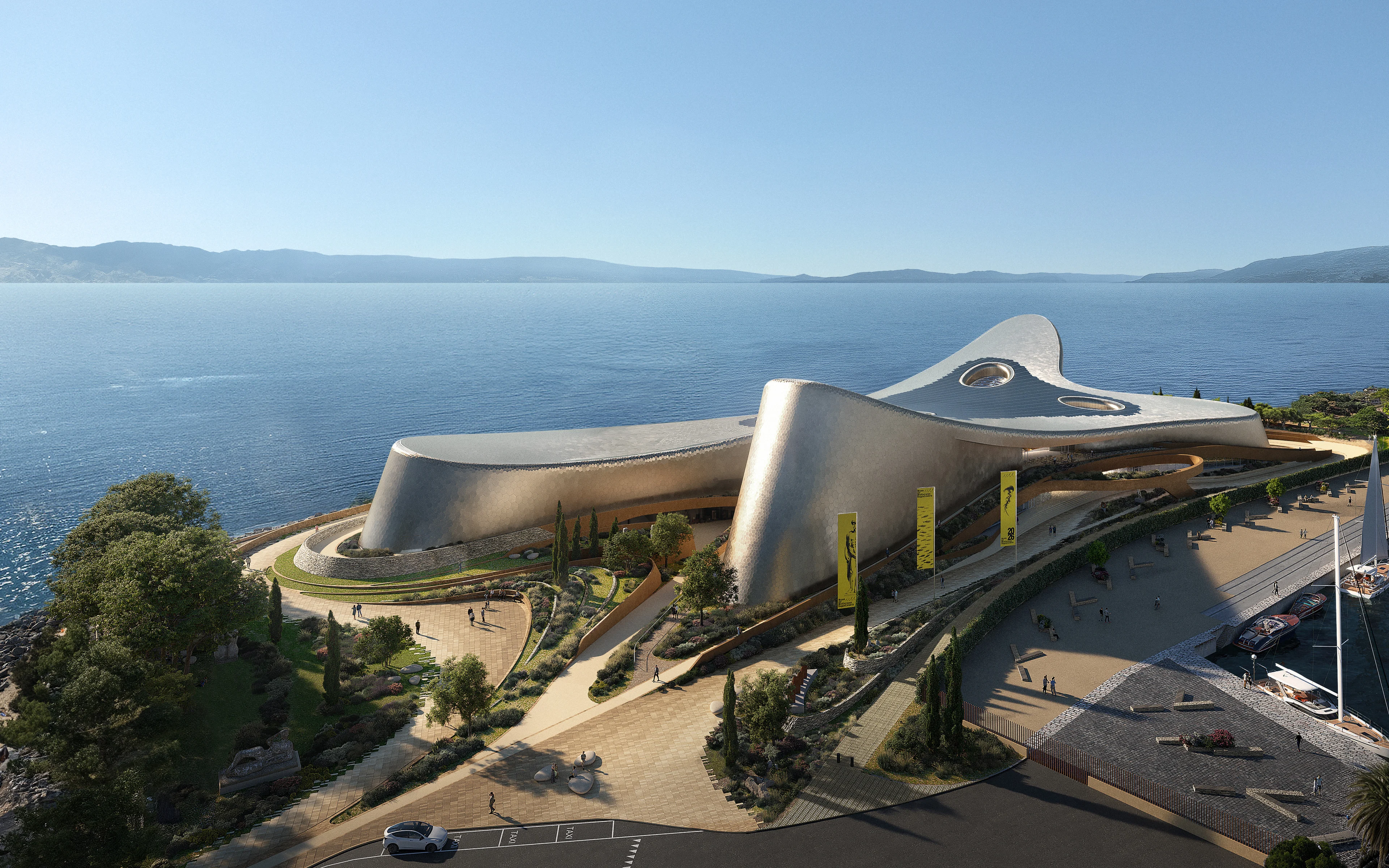
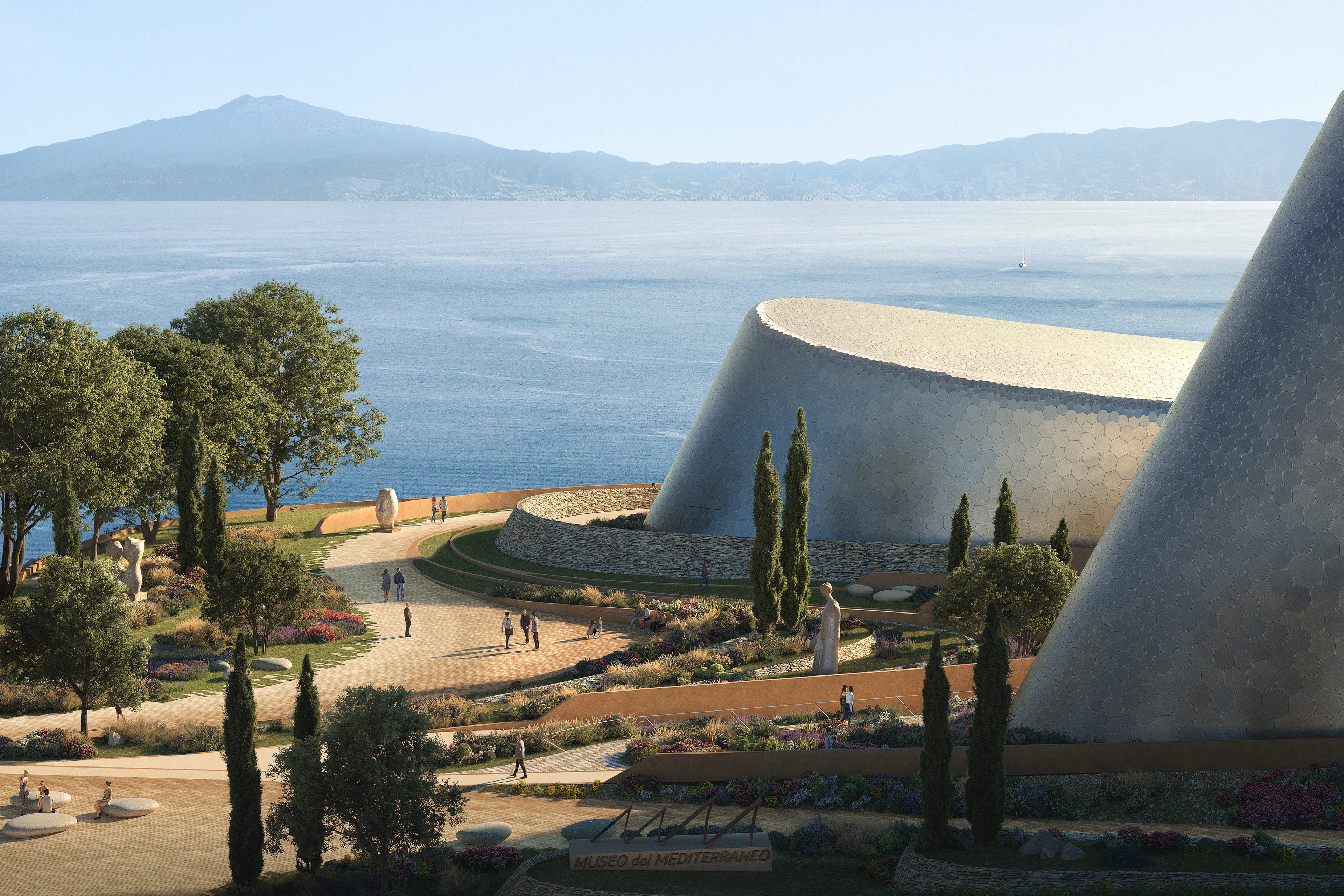
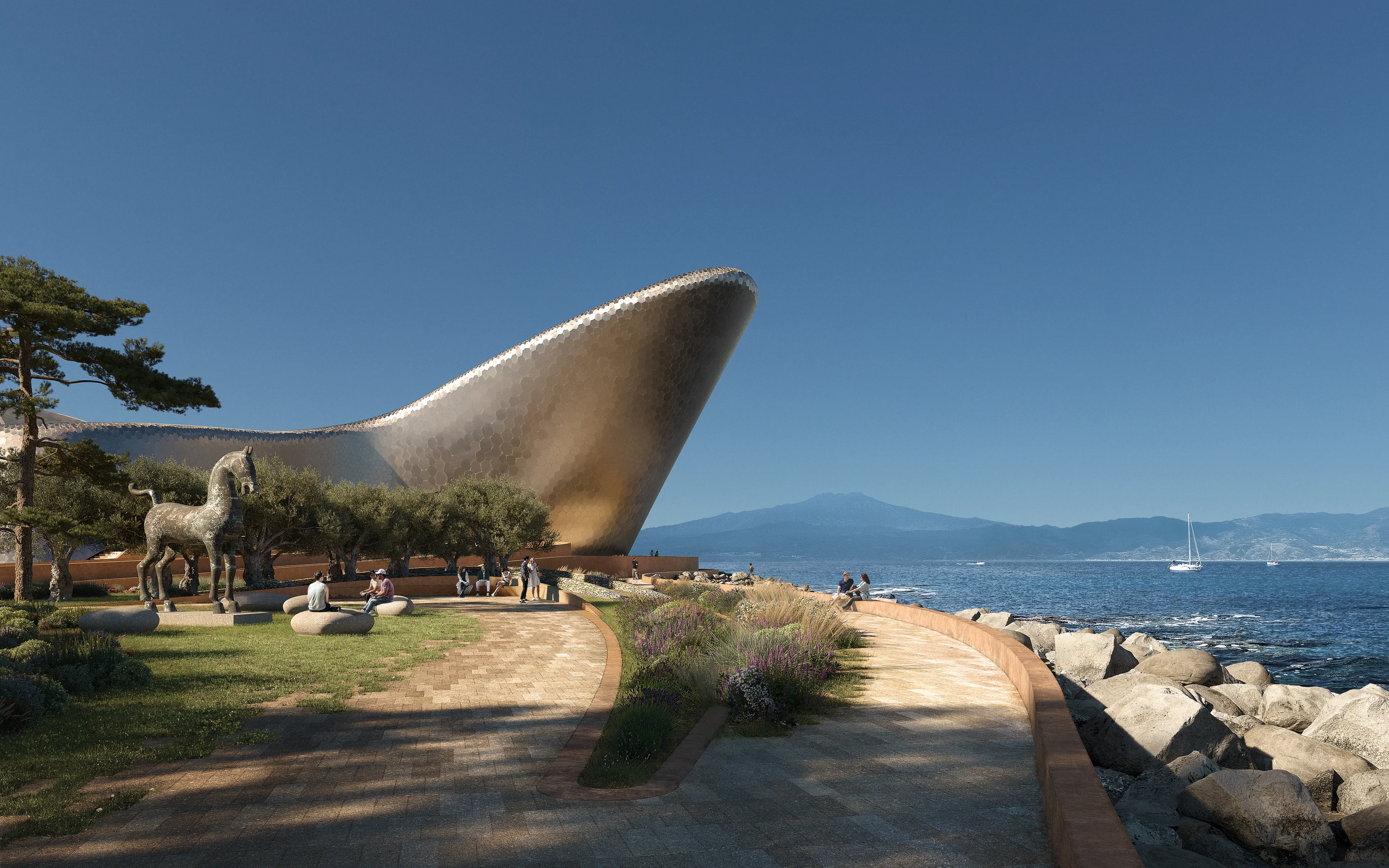
Incorporating the essential upgrading of the city’s coastline which has experienced environmental degradation and erosion over several decades, the Reggium Waterfront redevelopment significantly enhances accessibility to this prominent section of Reggio Calabria’s shoreline, creating a new coastal urban park with extended promenade that encompasses the city’s most iconic views of the Straight of Messina and the island of Sicily.
Reconnecting Reggio Calabria’s working port to be an integral element of the city’s public realm, the Museum of the Mediterranean has been designed within the waterfront redevelopment as a primary civic and cultural gathering space for the city—hosting events, exhibitions and forums, as well as showcasing the history and relationship between humankind and the sea within a Calabrian context.
Render by Nightnurse
Creating a visual and sensory narrative
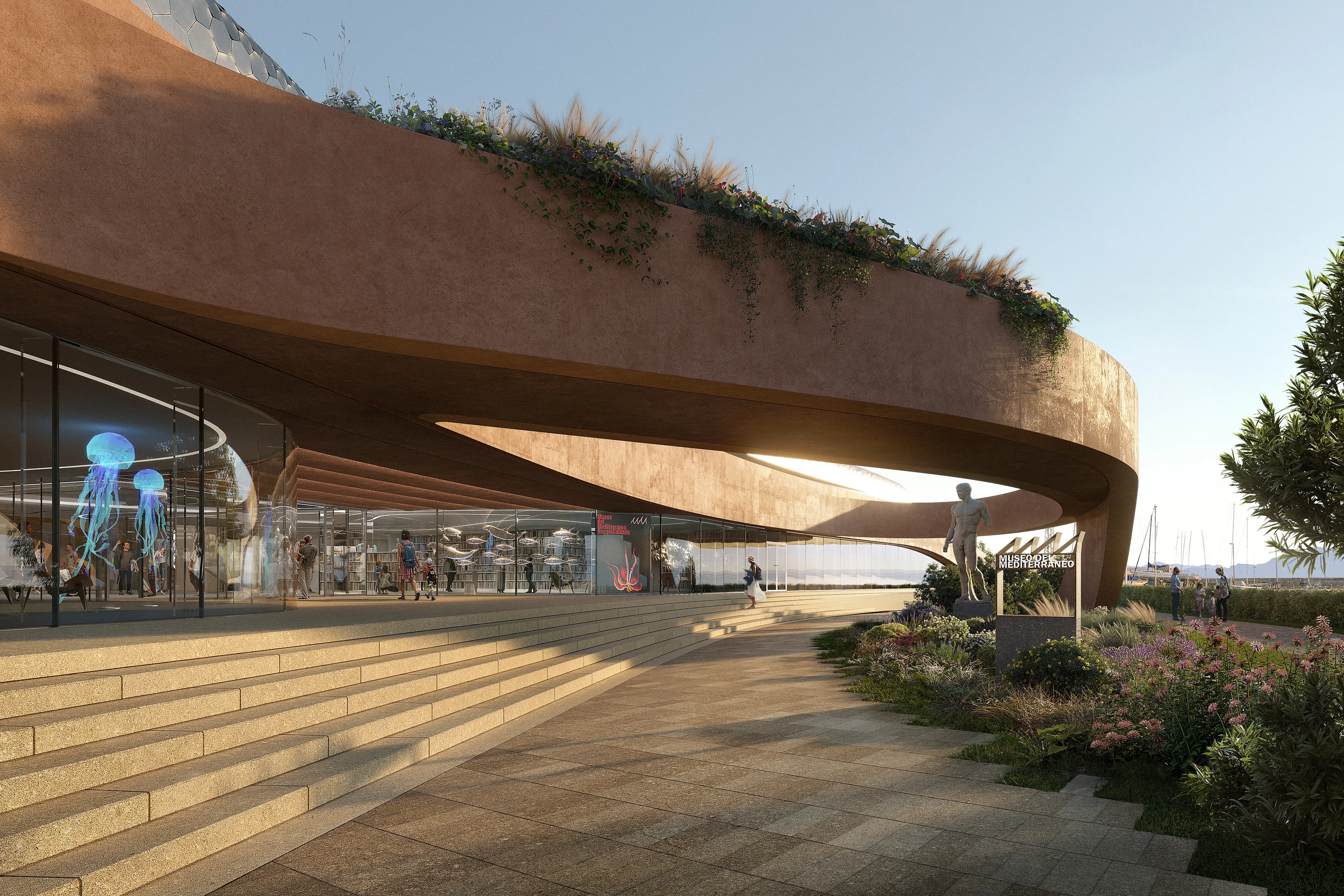
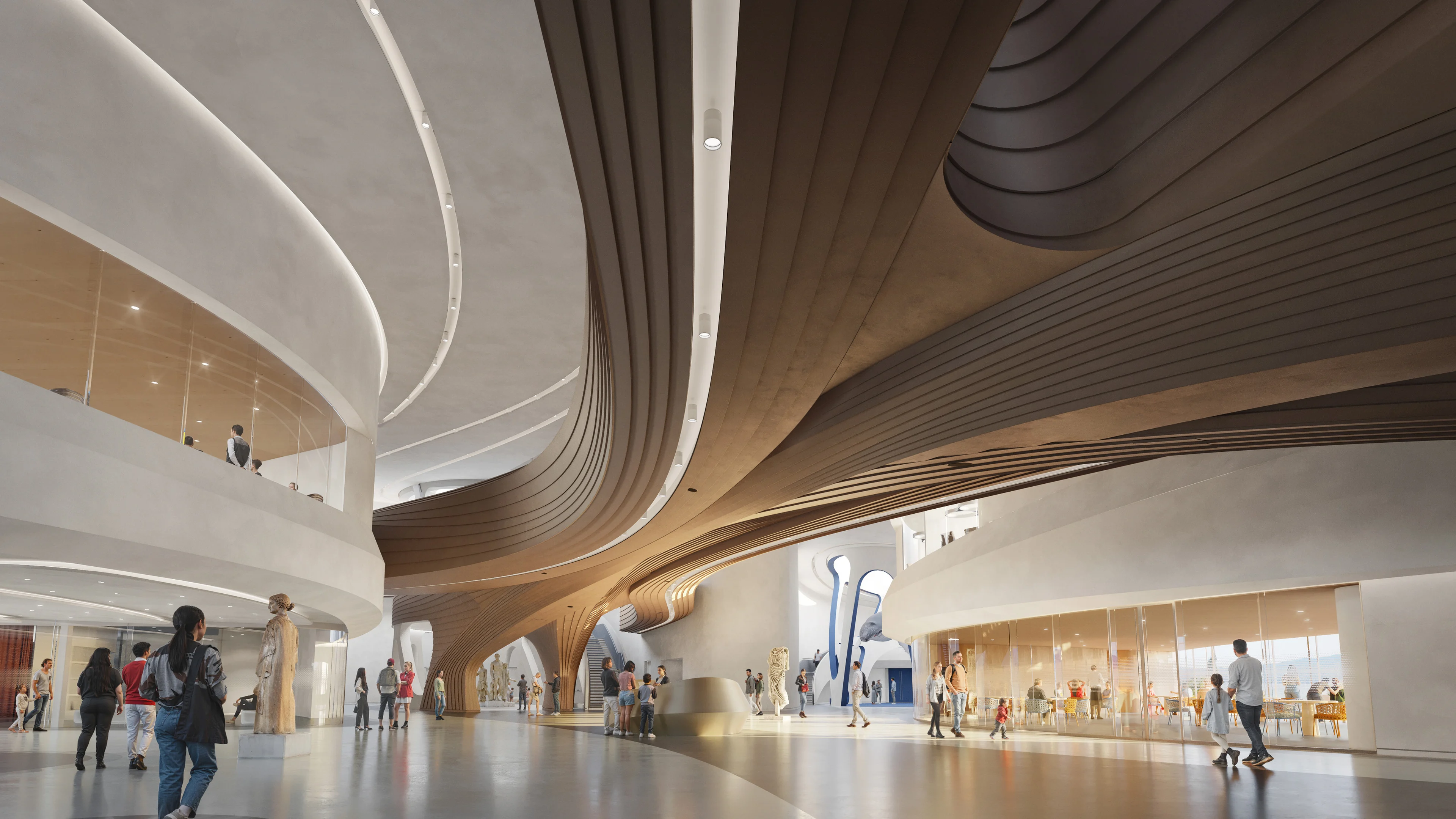
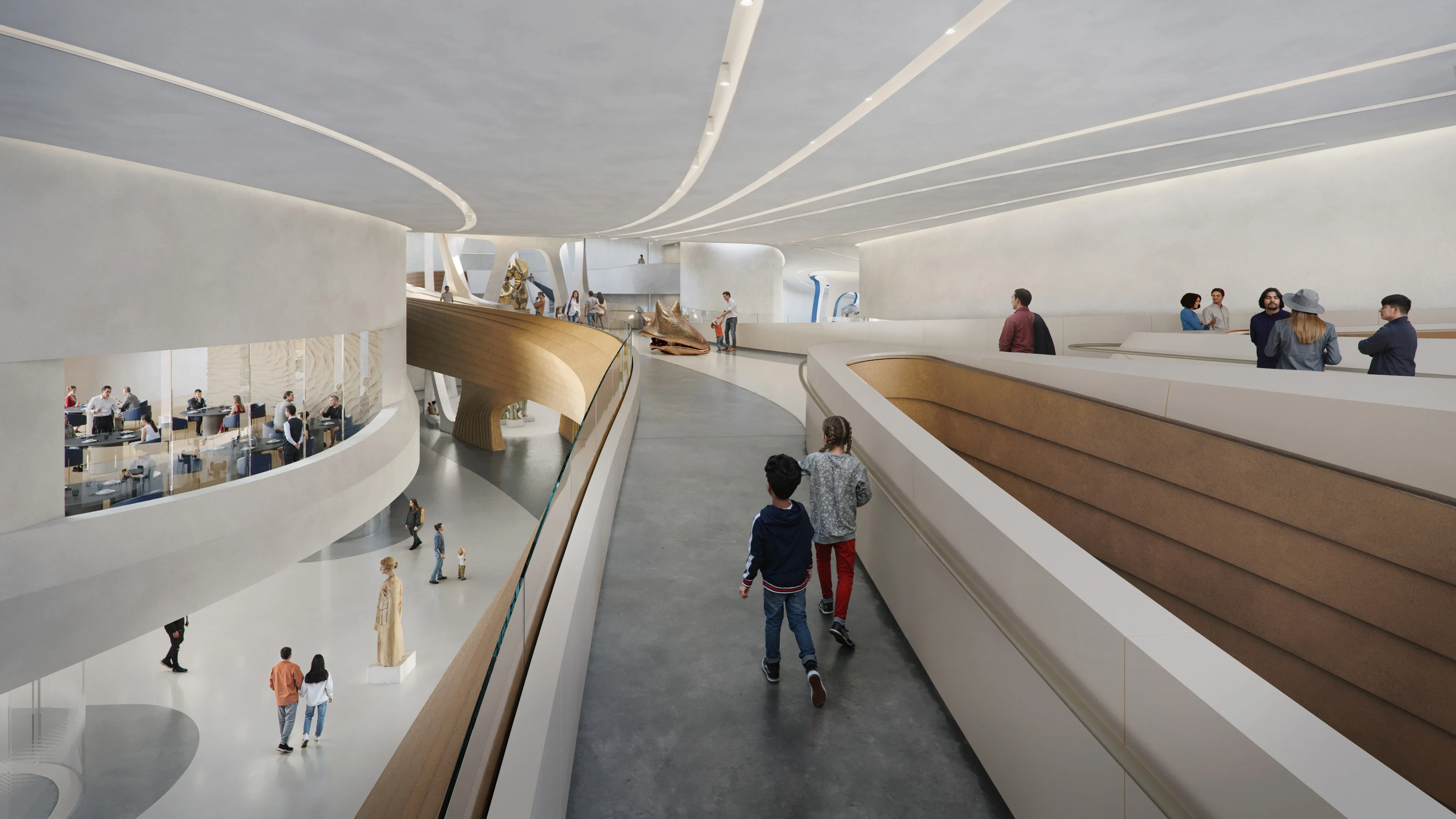
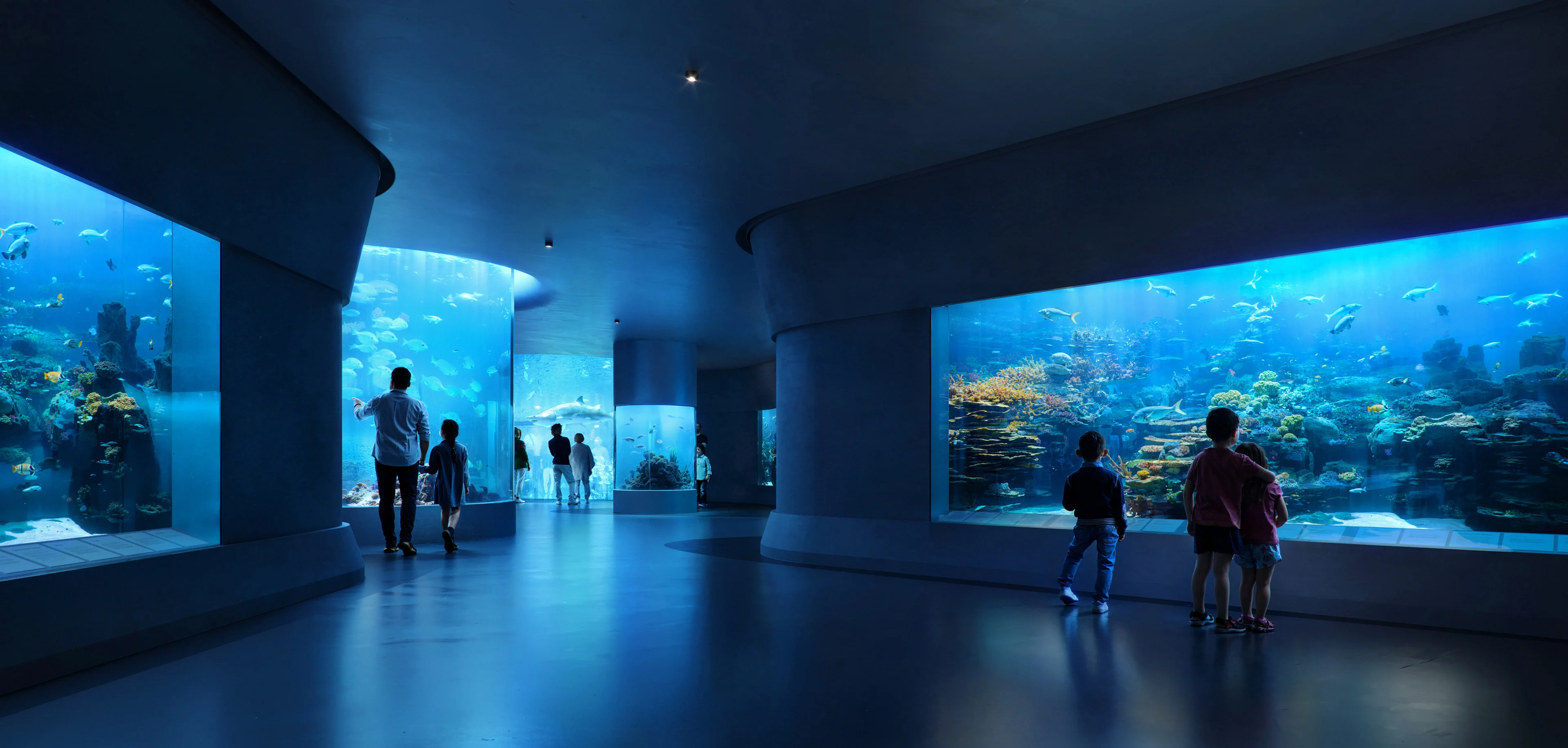
The 24,000m2 Museum of the Mediterranean incorporates a series of permanent and temporary exhibition galleries, in addition to an aquarium, essential new multifunctional conference facilities for the city with an auditorium for performances, public presentations and industry events, as well as new educational spaces to be used by the region’s schools. The centre also includes supporting leisure amenities for visitors that include a bookshop and restaurant & bar overlooking the port.
The centre's four wings of facilities lead from a double-height atrium that serves as the entrance from the city. Advanced computer simulation modelling has determined the building's composition which alternates architectural volumes between public courtyards that will be sheltered from the sunlight of one of Europe’s southernmost cities and the strong prevailing winds from the north that are funnelled through the straight in summer. Depending on its orientation, each sheltered courtyard overlooks the port to the east, the city to the south, or leads to the west-facing terrace with its panoramic views of the straight and Sicily beyond.
Creating a visual and sensory narrative, the centre’s interiors are informed by the Mediterranean and the rich marine environment of the straight. With its wealth of colours and organic forms, marine life serves as the source of inspiration for the auditorium’s interiors where coral hues evoke the vitality of the straight’s ecosystem.
The fluidity and purity of water is echoed in the aquarium’s interior spaces, creating an immersive experience inhabited by the marine fauna within the aquarium. The sense of discovery embodied within the Mediterranean’s long history of navigators is expressed in the galleries’ use of light and shadow, inviting visitors to explore the new possibilities presented by each exhibition.
Render by Nightnurse
Locally sourced, marine grade anodized aluminium panels
The centre’s sustainability strategies are informed by local climate conditions, resource efficiency, and ecological enhancement. The straight’s strong prevailing winds have been carefully analysed to guide architectural composition and mitigation strategies that will optimise visitor comfort and natural ventilation during Reggio Calabria’s summer months.
A key aspect of the building’s passive design is its façade, which is 90% opaque with generous overhangs to significantly reduce direct solar heat gain from all directions—including reflections from the sea—to lower internal thermal loads. The façade’s locally sourced, marine grade anodized aluminium panels reflect the renowned natural light of the Mediterranean while also decreasing cooling demand to support long-term energy savings.
The panels’ lighter weight and local supply chain reduces transportation and installation energy consumption, while its durability in marine environments, recyclability and ease of fabrication will minimize maintenance, replacement, and material waste—all contributing to a lower environmental footprint throughout the centre’s life cycle.
Complementing these architectural measures is the creation of a Mediterranean maquis landscape that includes sixty varieties of native plants. Their adaptation to Calabria’s local climate minimises water usage while enhancing biodiversity. Rainwater captured on-site contributes to both landscape irrigation and building requirements.
Collectively, these strategies—responsive building orientation, a high-performance façade, hybrid ventilation, considered material selection, integrated water management, and native planting—reflect the centre’s commitment to sustainability, biodiversity and visitor comfort.
ZHA won the centre’s 2007 international architectural competition with an organic design concept informed by the radial symmetry of starfish. Funding was secured in 2021 from Italy's National Recovery and Resilience Plan (PNRR) as well as the country’s 2021–2027 National Operational Programme for Metropolitan Cities (PON Metro), enabling the formal commissioning of ZHA to proceed with the detailed design which has been refined to meet the advanced environmental criteria and standards of future decades.
Culture
Explore more of our cultural projects
From a civic art centre that unites three distinct cultural institutions to a science fiction museum whose landscaping contributes to the city’s drainage and flood defence systems, discover our latest cultural projects.
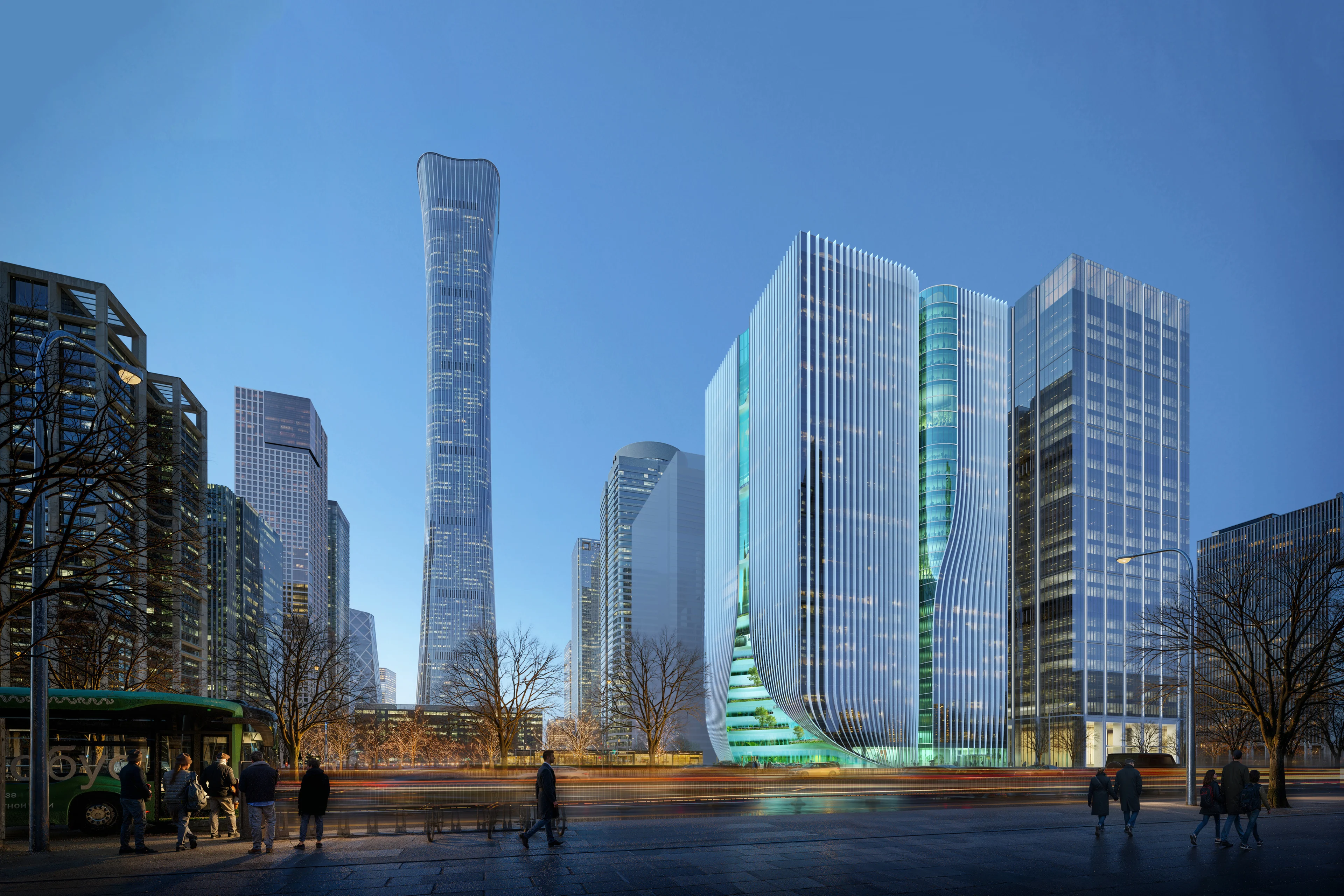
Render by Devisual
Z8 Tower
Located in the core of Beijing’s Central Business District (CBD) at the intersection of Jianguo Road and Jinhe East Road, the new Z8 Tower faces the CBD’s central park and is defined by the historic alignment and urbanism of the city’s Chang’an Avenue.
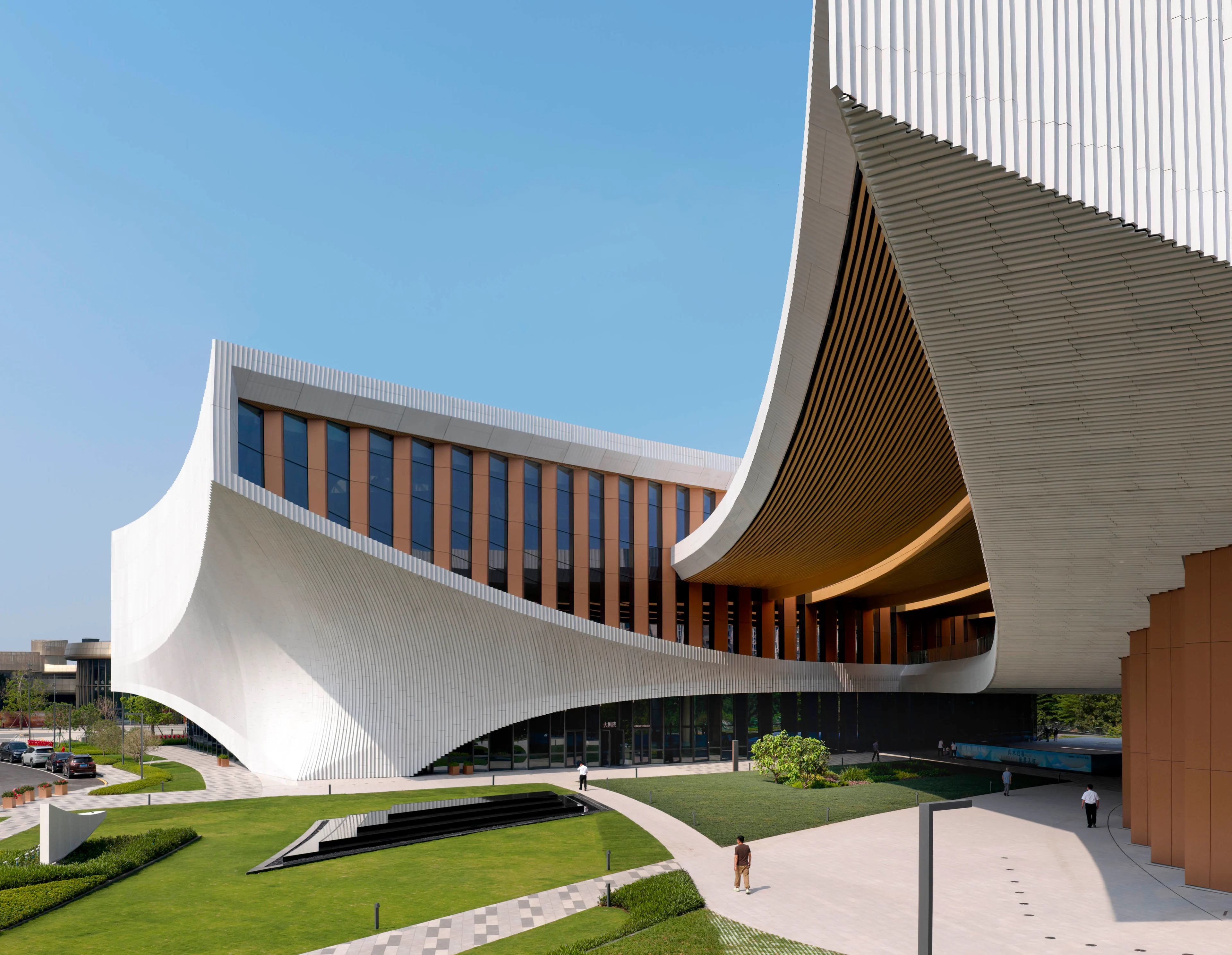
Songshan Lake Performance and Exhibition Centre
Located in Dongguan within the Greater Bay Area of southern China’s Pearl River estuary, the new Songshan Lake Exhibition and Performance Centre is at the heart of a mixed-use masterplan to revitalize the Yuehe Lake waterfront.
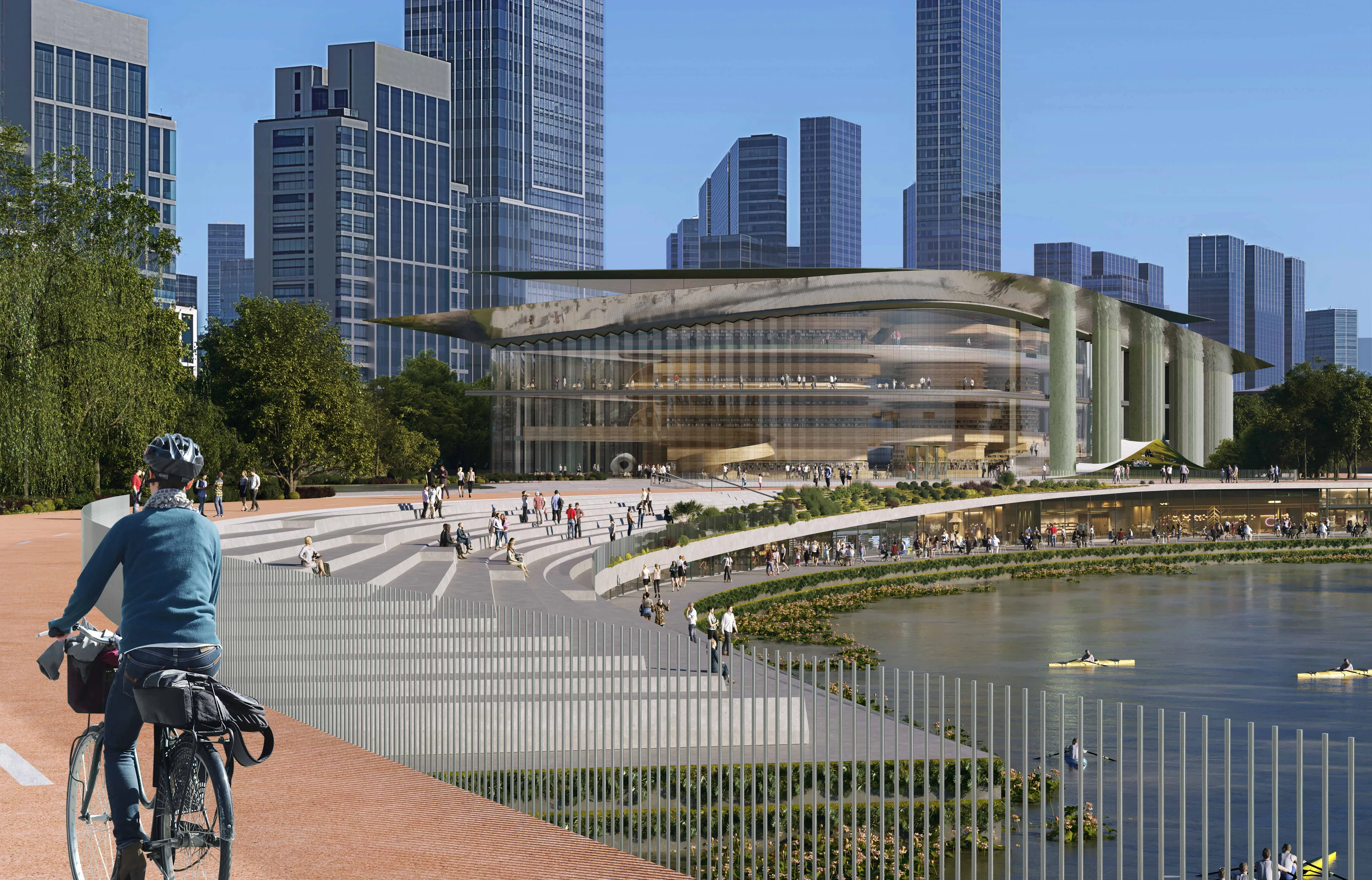
Qiantang Bay Cultural District
A series of new landscaped parklands, terraces and gardens along the Zhedong Canal within the Xiaoshan district of Hangzhou
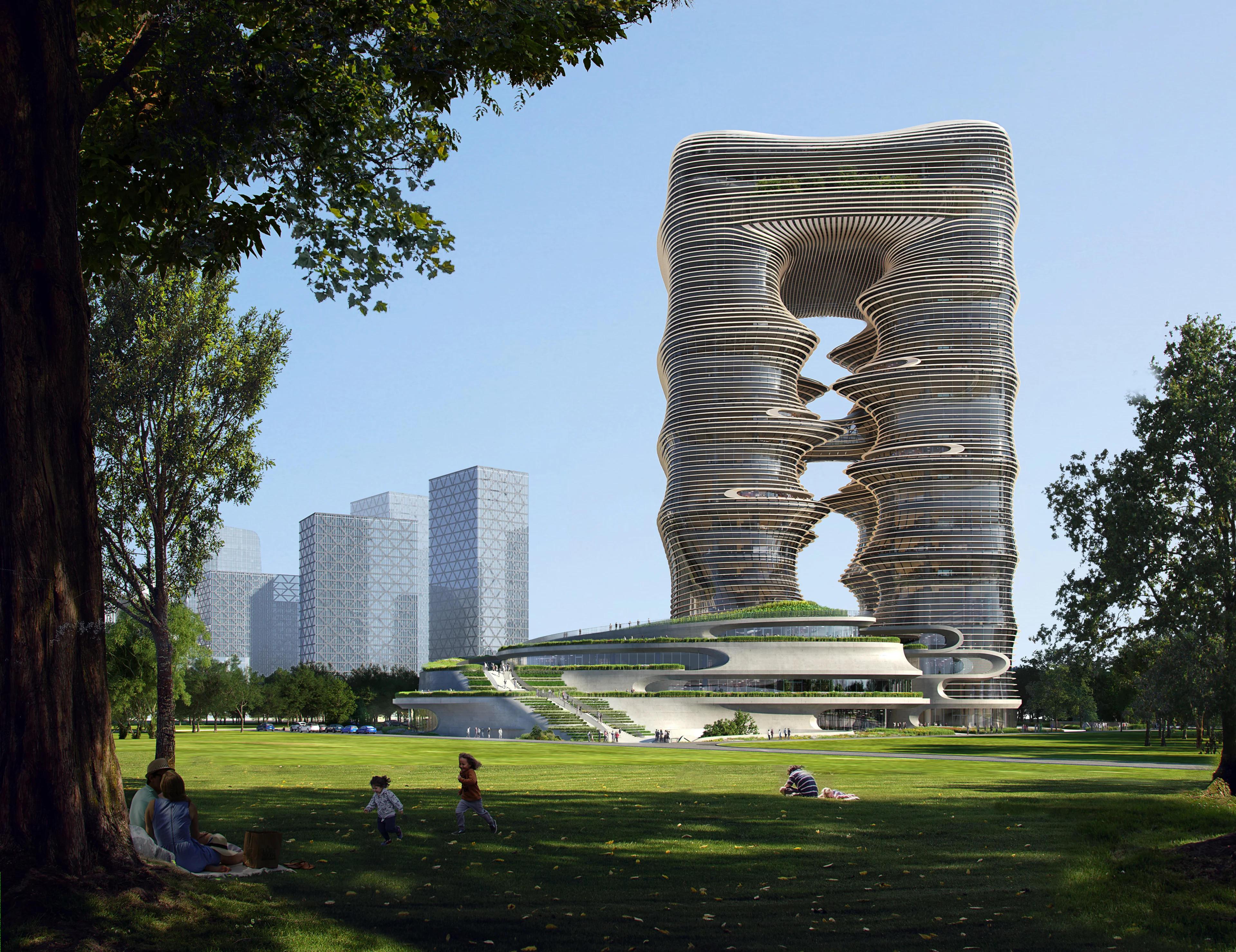
Render by Atchain
Yidan Center
A place of convergence and collaboration, the Yidan Center will be home to the Chen Yidan Foundation in its work to promote lifelong learning and innovation in education.
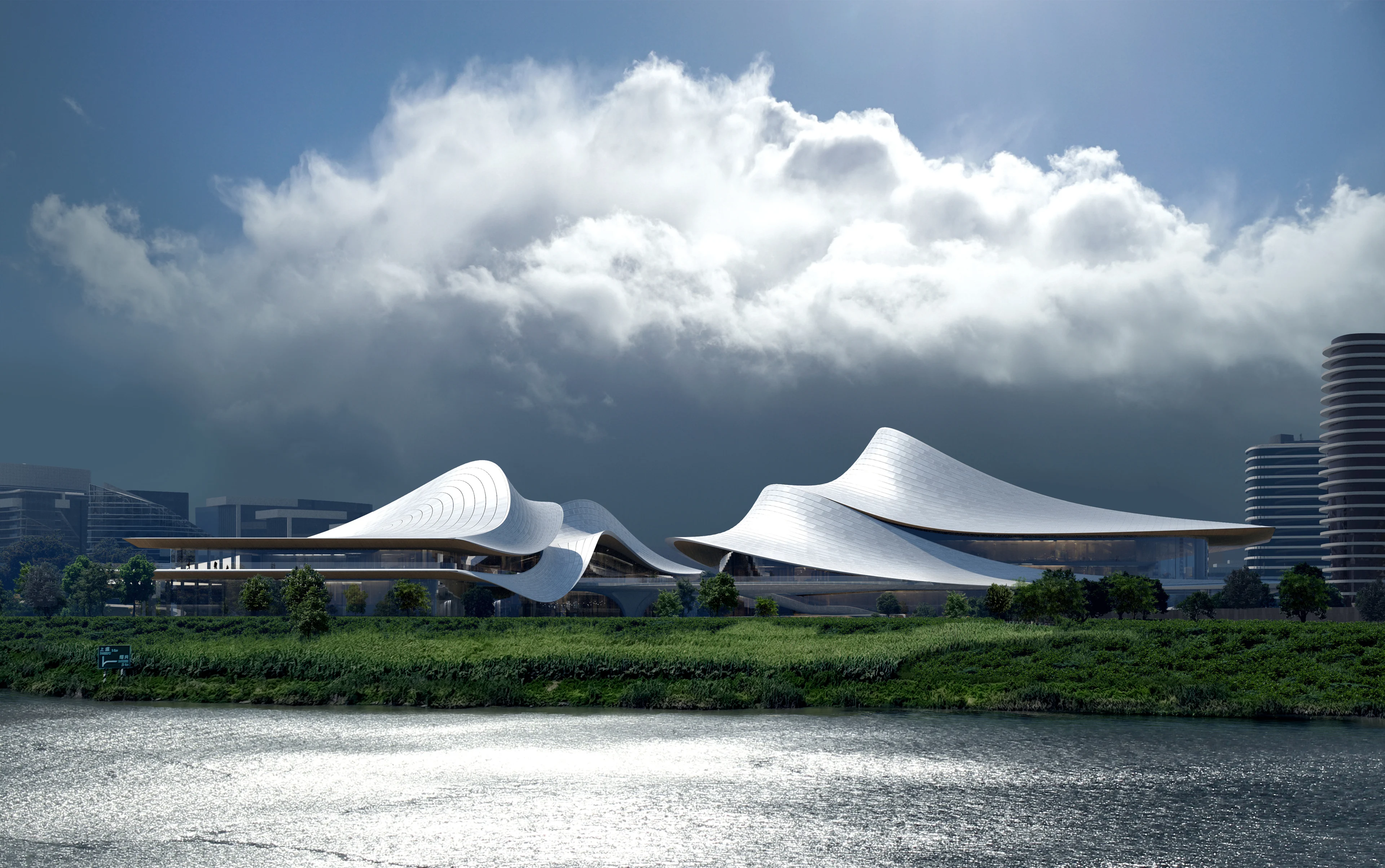
Render by Proloog
Elevation River
Zhejiang Shaoxing Shangyu District Cao’e River Culture and Art Centre
Designed to host local and international productions of opera, dance and drama together with large-scale symphonies and musical theatre, the Art and Culture Centre includes a 1,400-seat Grand Theatre, 500-seat Black-Box Multifunctional Hall, 2,900 sq. m Arts and Education Centre, 3,000m² Conference Centre, 7,500m² Heritage Museum and a 10,000m² Digital Art Gallery.
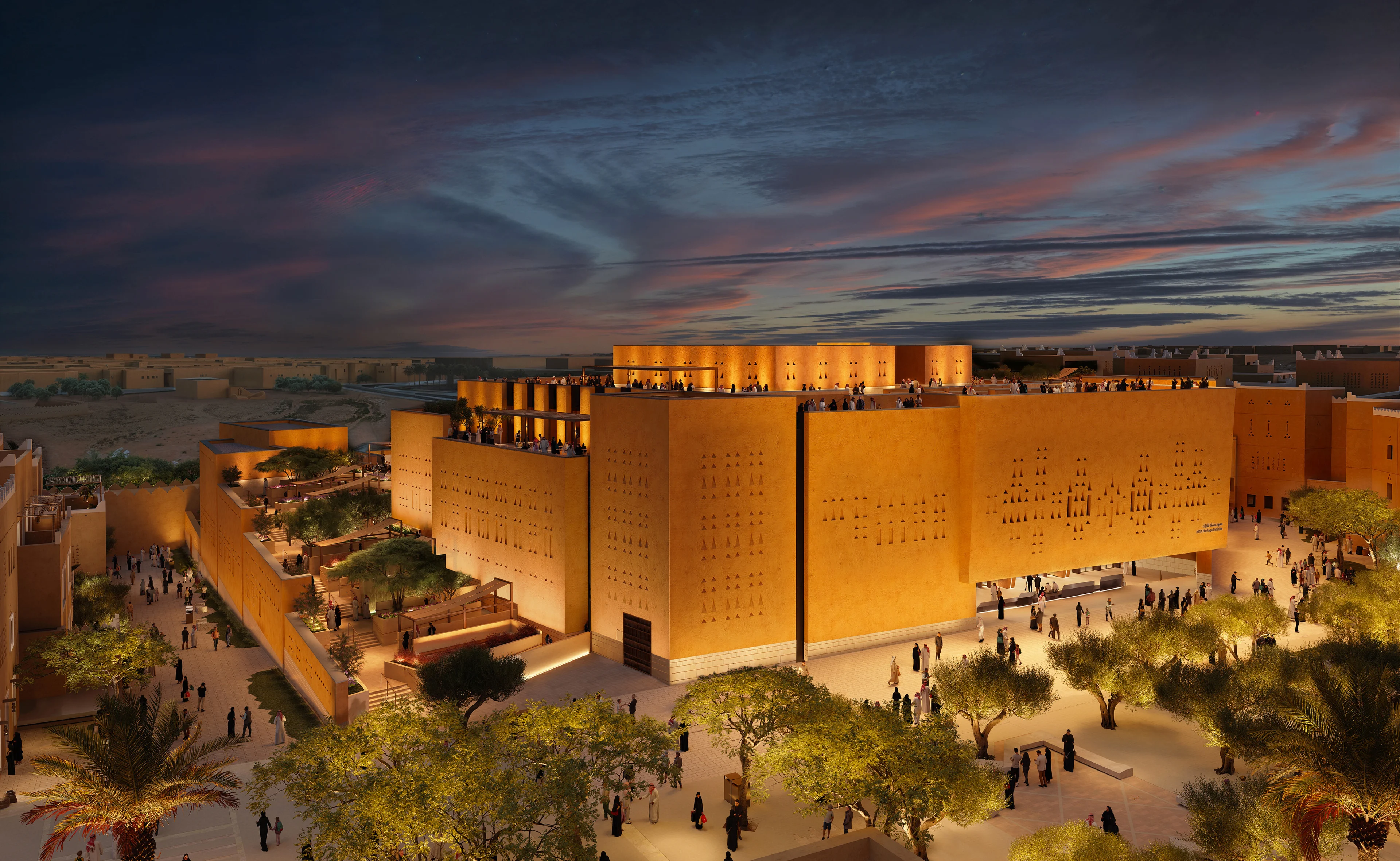
Render by Specto-Digital
Asaan Museum
Meaning ‘inheritance passed down through generations’, Asaan will be an institution dedicated to preserving and celebrating this rich heritage, in addition to promoting creativity and knowledge sharing.
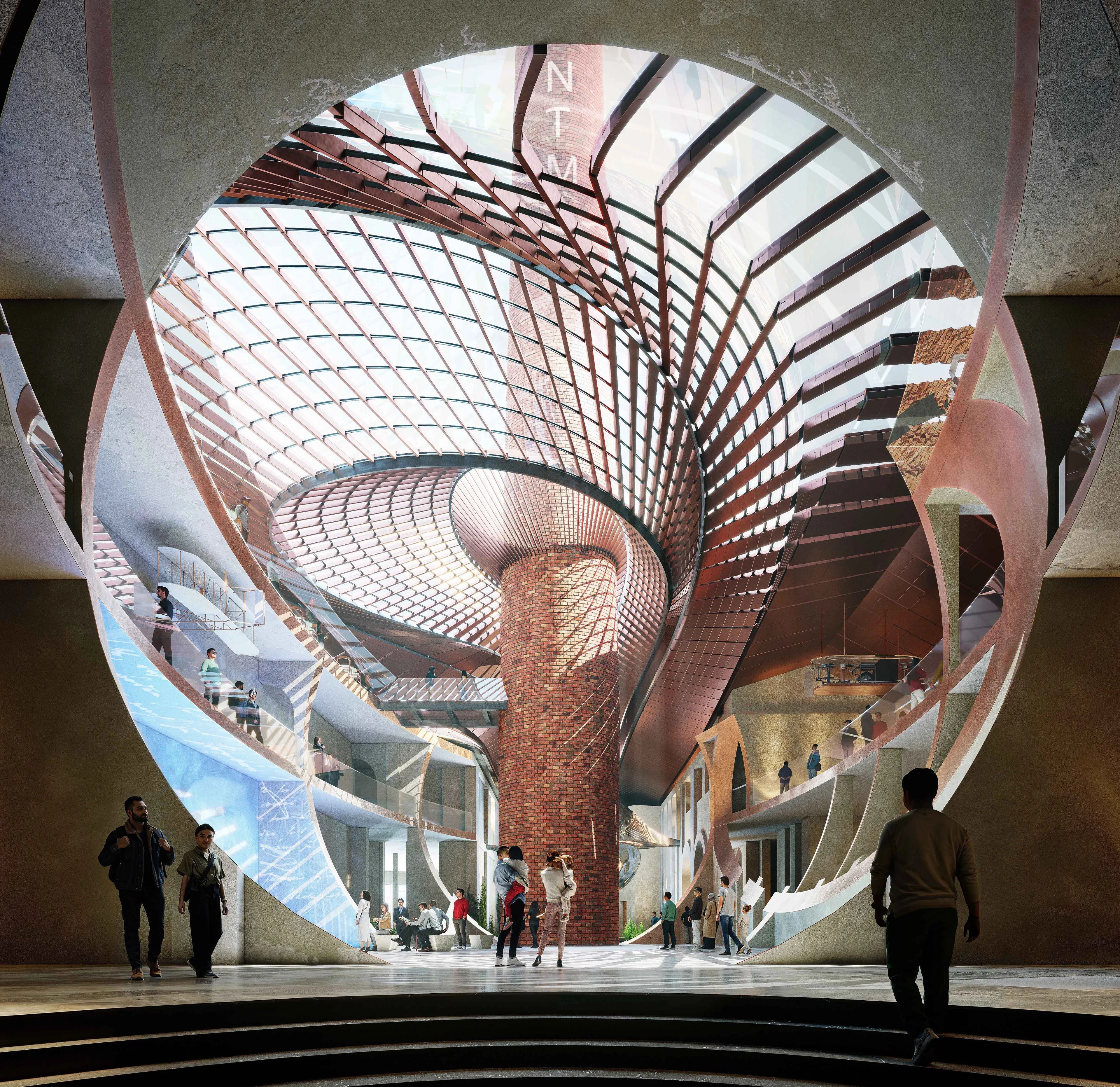
Nikola Tesla Museum
The new Nikola Tesla Museum renovates Belgrade’s historic Milan Vapa Paper Mill into a cultural destination celebrating Tesla’s legacy while preserving the city’s architectural heritage and creating a variety of new public spaces for local residents and visitors.
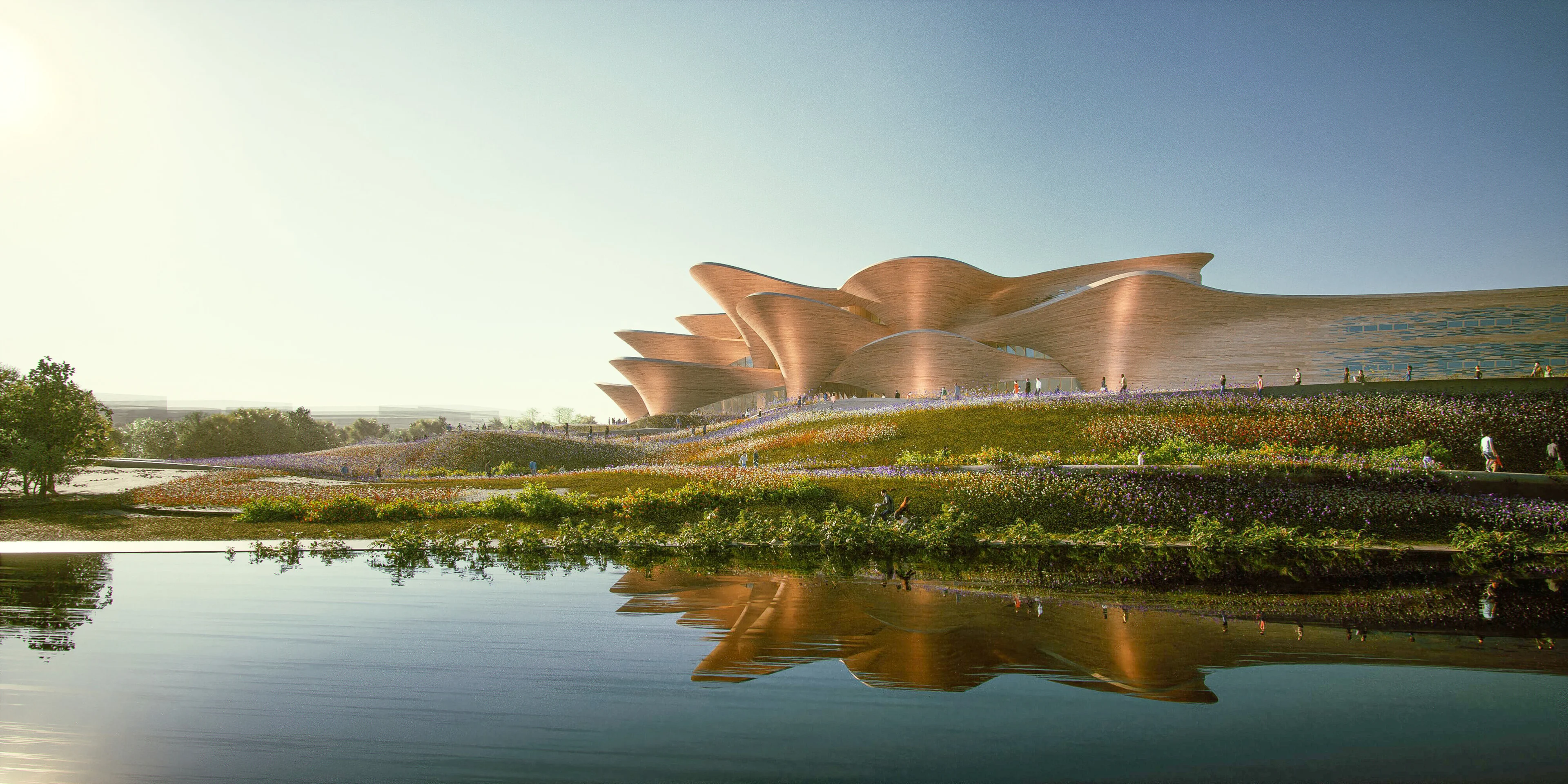
Courtesy of ZHA
River View
Alisher Navoi Institute
The Alisher Navoi International Scientific Research Centre will incorporate the Navoi State Museum of Literature, Auditorium, International Research Centre and School.
Render by Atchain
Jinghe New City Culture and Art Centre
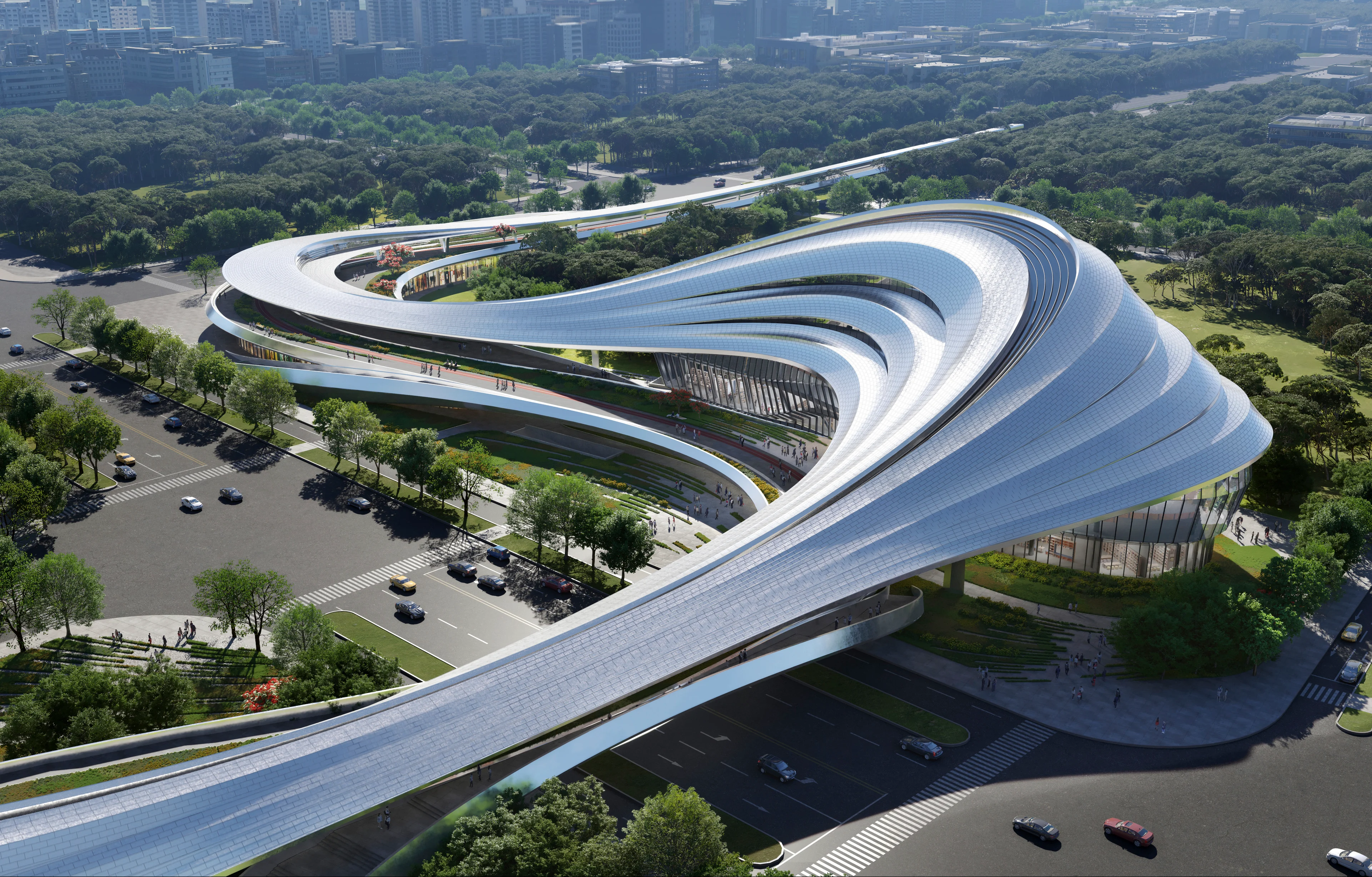
Jinghe New City is growing as a science and technology hub north of Xi’an in China’s Shaanxi province. Supported by new scientific research institutes and driven by environmental considerations, the city is becoming a centre for developing industries focusing on new energy and materials, artificial intelligence and aerospace.
Photograph by Virgile Simon Bertrand
Shenzhen Science & Technology Museum
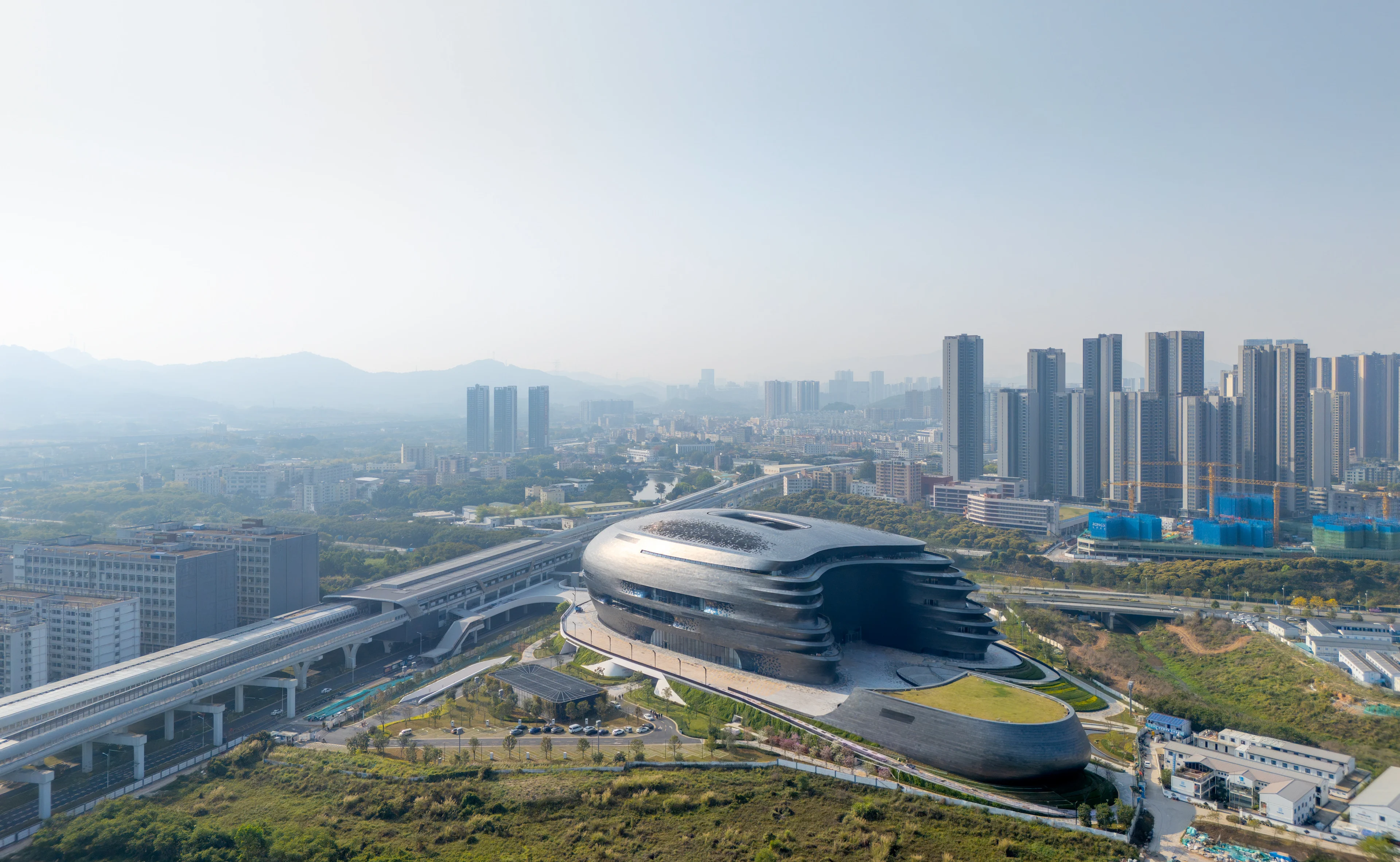
Showcasing the scientific endeavour, ground-breaking research and future possibilities of technology, this new institution will explore the power of science and the technological advancements defining our future.
Photograph by Luke Hayes
Serpentine North Gallery
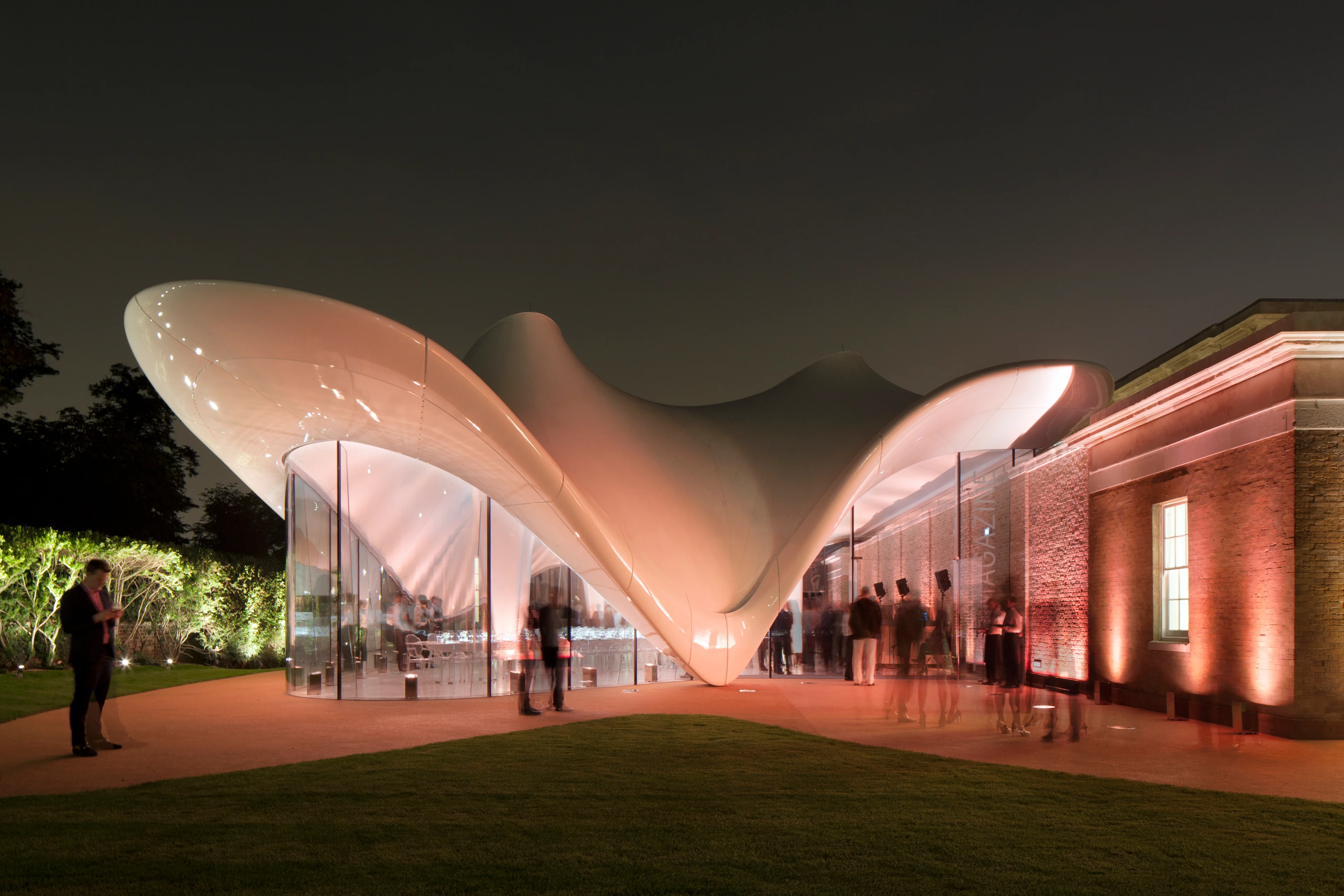
The Serpentine North Gallery consists of two distinct parts, namely the conversion of a classical 19th century brick structure – The Magazine – and a 21st century tensile structure. The Serpentine North Gallery is thus – after MAXXI in Rome – the second art space where ZHA has created a synthesis of old and new.
Photograph by Fernando Guerra
Zaragoza Bridge Pavilion
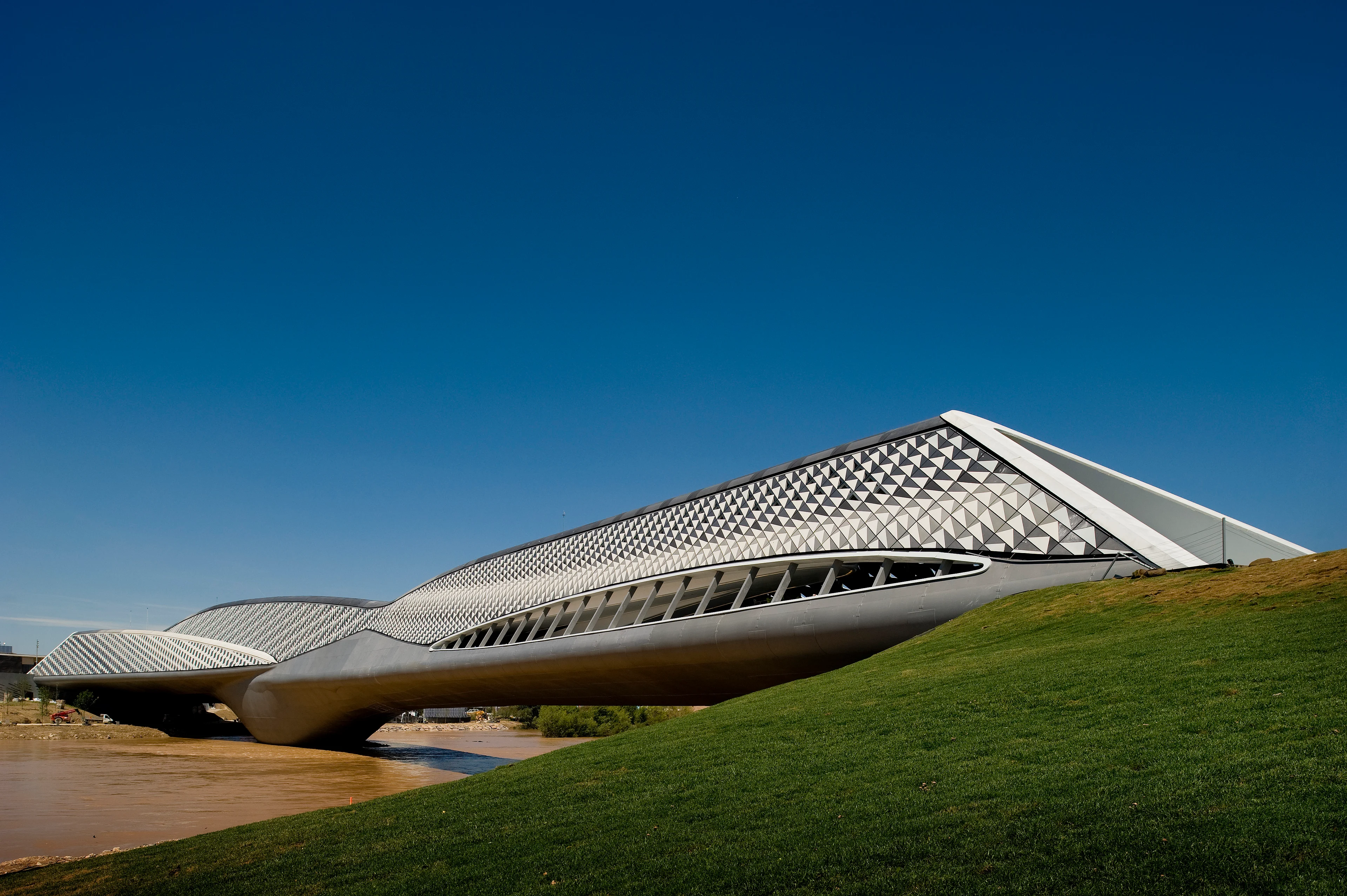
An enclosed interactive space spanning the River Ebro to form a gateway to the Zaragoza Expo 2008, a hybrid of pedestrian footbridge and exhibition pavilion. Four structural elements correspond to specific spatial enclosures, which intersect and brace each other. This fluid, dynamic design interprets the Expo’s theme: ‘Water and Sustainable Development.’
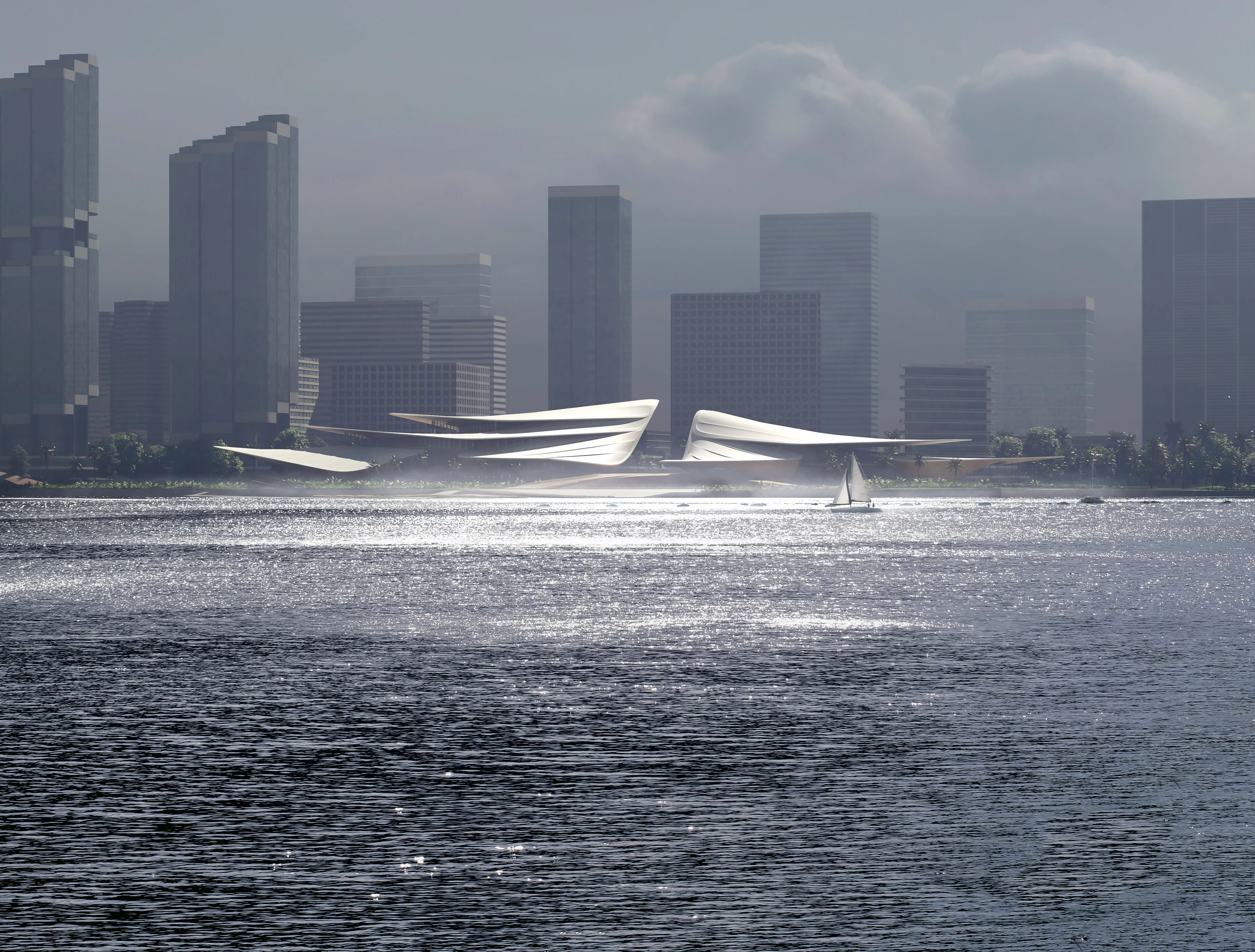
Sanya Cultural District
Located at the entrance to Sanya’s harbour, the new cultural district by ZHA is adjacent to the Jiangang Road terminus of Sanya’s tram network that connects many of the residential and hotel districts on Sanya Bay with the city’s high-speed rail station.
Courtesy of Arch-Exist
default
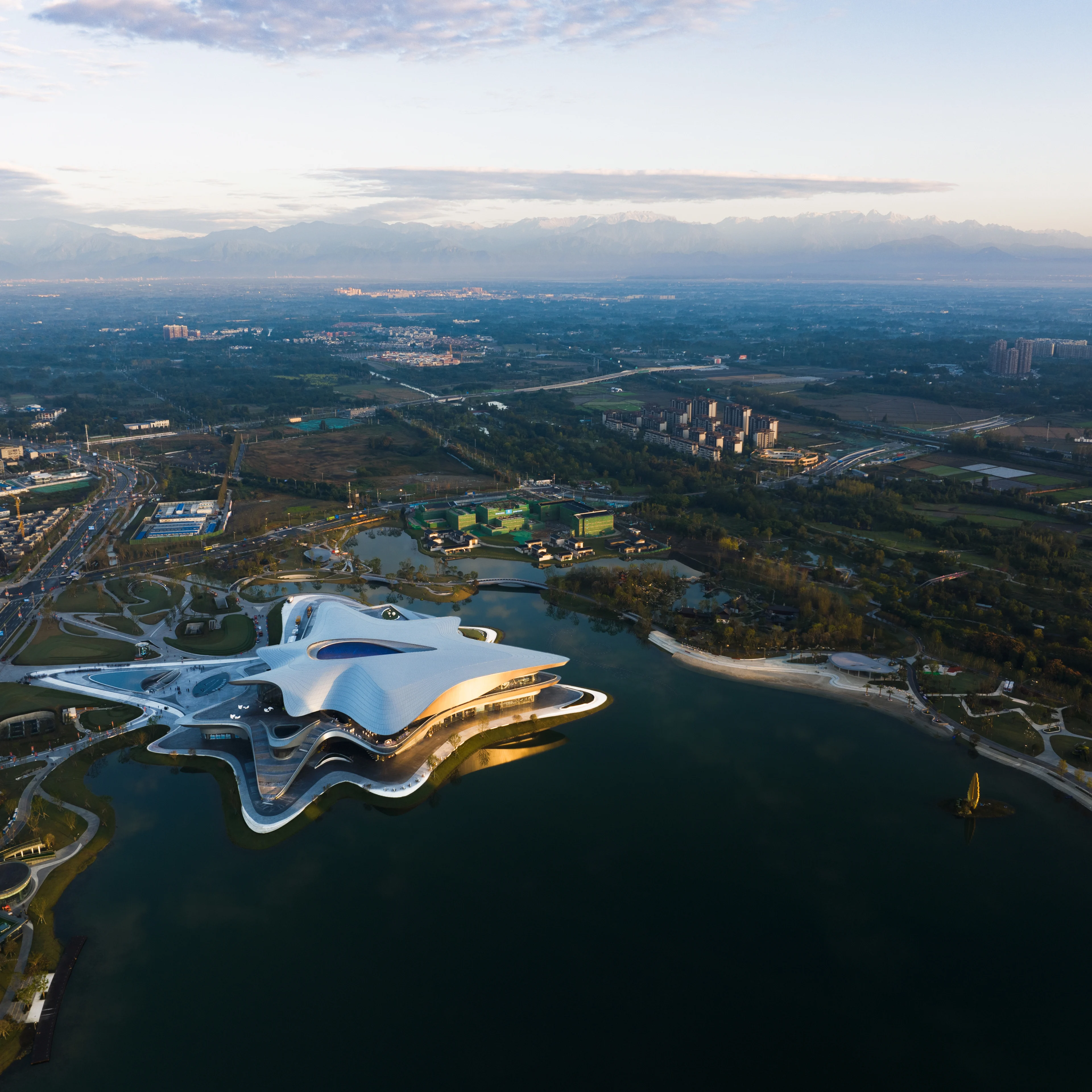
Chengdu Science Fiction Museum
The new Chengdu Science Fiction Museum is situated on Jingrong Lake within the Science & Innovation New City of Chengdu’s Pidu District.
Render by Negativ
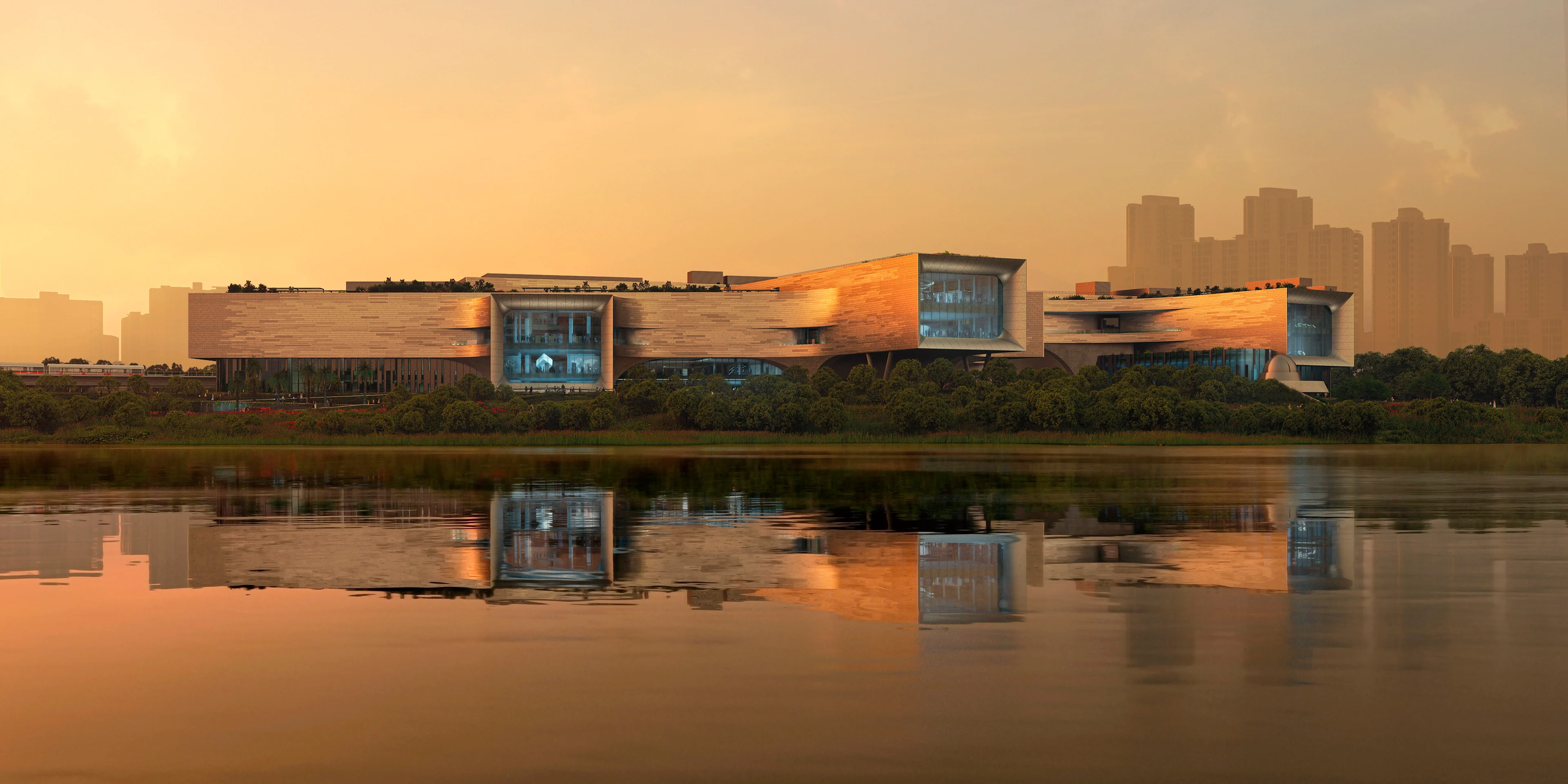
Waterfront view of new Science Centre. render by Negativ. The image is an artist’s impression, and final design may be subject to changes.
Singapore New Science Center
Singapore’s New Science Centre will provide unique facilities and programmes as a destination for all Singaporeans to access science, technology, engineering and mathematics (STEM) education and experiences.
01
02
03
04
05
06
07
08
09
10
11
12
13
14
15